Chapter 7
In This Chapter
 Identifying the different periods of poetry from 1800 to the present
Knowing the great poets from each period
Figuring out where to find great poetry from every era
In this chapter, we follow the amazing story of poetry through Romanticism, Symbolism, Modernism, and Postmodernism, and touch down lightly at the present moment. We define each period and recommend some of the finest poets of each era. With all the excitement packed into three centuries, the most recent 300 years of poetic history is just about a match for the preceding 4,700!
The 19th Century
This century saw the Industrial Revolution reach full throttle, bringing great strides in technology, creating great wealth and great poverty, and introducing many social and political changes across the world. Poetry, too, was changing rapidly. Three developments especially marked this eventful poetic century: Romanticism, Symbolism, and the beginning of modern American poetry.
The Romantic Period
Some readers get confused by the term Romantic. People in the Romantic period weren’t any more inclined to love than those who lived in other periods. The word Romantic came to mean a new, often revolutionary outlook, emphasizing the importance of personal emotions, the inspiration of the artist, innovation in ideas and the arts, the feeling of new beginnings, and unity with nature (which in some writers almost became a religion). Some of these developments came about as a reaction to the industrial revolution.
The Romantic era is one of the three or four greatest periods in the history of poetry. In Europe especially, poetry was the most-read literary form. Several novels in verse, including Don Juan (by English poet George Gordon, Lord Byron) and Eugene Onegin (by the Russian poet Alexander Pushkin) were international bestsellers. But the real poetry of the era was lyric poetry, personal, intense, titanic. When many people think of the image of The Poet, they’re thinking of Romantic poets and poetry.
One of the great geniuses of this age, or any age, was Johann Wolfgang von Goethe. As a poet, playwright, novelist, philosopher, and politician, he helped create and sustain the notion of Romanticism and of the Romantic poet. His ideas about nature, the emotions, the soul, and the importance of poetry found their way into poetry all across Europe. Goethe was very prolific, and his lyric poetry fills volumes. Perhaps his best-known work is his monumental verse drama Faust (1808).
As with Shakespeare in English, so with Pushkin in Russian. Almost every Russian can recite some Pushkin. He was a true innovator of the Romantic school, a fiery Byronic figure just as good at love poems as he was at vast epic tapestries. And he had a great ear for the music of the Russian language.
Pushkin’s Eugene Onegin is one of the most successful of all tales told in poetry; it was and is an international success. The tale is unforgettable yet puzzling: Eugene, the main character, is by turns admirable and frustrating. Tatyana, the girl who loves him, is the type of romantic heroine doomed by love. Pushkin wrote several verse tales, as well as important verse drama, including the historic Boris Godunov, a sort of ethnic creation myth for the Russian people.
In the British isles, Romanticism brought in a rush of fresh, visionary poetry. Some of the names of this poetic explosion include Scotland’s Robert Burns and England’s William Blake, Samuel Taylor Coleridge, William Wordsworth, John Keats, George Gordon, Lord Byron, and Percy Bysshe Shelley. Each of these poets had his own voice, but there was an energy in common, a new vision of the universe and humanity’s place in it, a revolutionary fervor, a feeling of new beginnings.
Here’s “Love’s Philosophy” by Shelley. Watch how he moves from a joyful vision of all creation as one — and focuses down to his own interests:

The fountains mingle with the river
And the rivers with the Ocean,
The winds of Heaven mix for ever
With a sweet emotion;
Nothing in the world is single;
All things by a law divine
In one spirit meet and mingle.
Why not I with thine? —
The gusty pleasure of this verse, the way the poet connects the joy in nature with his own desires — that’s a Romantic moment.
The Romantic period brought about a revolution in the kind of language poets used. England’s Wordsworth and Germany’s Friedrich Schiller, among many others, sought simpler, more direct language. The ode — passionate, serious, elaborate, meditating on nature as a way to explore the soul of the poet — was perhaps the era’s most characteristic verse form. Because of the emphasis on sincerity and emotion, lyric poems — shorter, often songlike poems usually of a personal nature (what most people today think of when they think of poetry) — became the dominant genre and have remained that way. Sonnets were widely written for the first time since the Elizabethan period (the time of Shakespeare); epics, when written at all, tended toward personal subjects rather than public events.
The Greats: The Romantic standouts include lyric poetry by the German poet Johann Wolfgang von Goethe and other German Romantics, including Friedrich Hölderlin, Friedrich Schiller, and Heinrich Heine; the plays, verse novels, and lyric poetry of Russia’s Alexander Pushkin; Victor Hugo, the huge presence in French Romantic poetry; Giacomo Leopardi of Italy; Robert Burns of Scotland; the English Romantic poets, including William Blake (Songs of Innocence and Experience), William Wordsworth, Samuel Taylor Coleridge (“Kubla Khan,” “Rime of the Ancient Mariner”), John Keats (“Eve of St. Agnes,” “Ode on a Grecian Urn”), Percy Bysshe Shelley, and Byron.

To read more Romantic poetry, check out the following:
 Don Juan, by George Gordon, Lord Byron, edited by Leslie A. Marchand
Eugene Onegin: A Novel in Verse, by Aleksandr Pushkin, translated by Vladimir Nabokov
Faust: A Tragedy, by Johann Wolfgang von Goethe, translated by Walter Arndt, edited by Cyrus Hamlin
Poets of the English Language, Volume 3: Romantic Poets, edited by W.H. Auden and Norman Holmes Pearson
The Prelude, 1979, 1805, 1850, by William Wordsworth, edited by Jonathan Wordsworth
Selected Poems, by William Wordsworth
Women Romantic Poets: 1785–1832: An Anthology, edited by Jennifer Breen
The Victorian Period
The Victorian Period was a time of big changes in society. The industrial revolution — and the intense ambivalence it caused among people of the world — was in full swing. The United States was growing up. Science and technology had started transforming human life at an astonishing rate. And many poets wrote about those changes. A heightened interest in human psychology, in the interior life of human beings, led to the popularity of the dramatic monologue, in which a speaker delivers what appears to be a speech about his or her personal situation. England’s Robert Browning; Alfred, Lord Tennyson; and Matthew Arnold all wrote masterful dramatic monologues.
The Greats: English Victorian poets, including Alfred, Lord Tennyson (In Memoriam and much very accomplished poetry); Robert Browning and Elizabeth Barrett Browning; Christina Rossetti; Matthew Arnold; Gerard Manley Hopkins; the French Symbolists, including Charles Baudelaire (Fleurs du Mal), Jules Laforgue, Tristan Corbière, Arthur Rimbaud, Paul Valéry, Paul Verlaine, and Stéphane Mallarmé; Americans Walt Whitman and Emily Dickinson (well-represented in many fine anthologies); and Japanese poet Masaoka Shiki.
Here are some great books to check out if you’re interested in exploring poetry of this period:
The Essential Browning, by Robert Browning, edited by Douglas Dunn
French Symbolist Poetry, translated by Carlyle Ferren MacIntyre
In Memoriam, by Alfred, Lord Tennyson, edited by Robert H. Ross
Leaves of Grass, by Walt Whitman, edited by Harold W. Blodgett and E. Sculley Bradley
The Norton Anthology of Literature by Women: The Tradition in English, edited by Sandra M. Gilbert and Susan Gubar (for an excellent representation of Emily Dickinson)
Selected Poems, by Alfred, Lord Tennyson
Selected Poems of Baudelaire, translated by Joanna Richardson
The Symbolist movement
In France, a poetic movement called Symbolism got under way. Symbolist poets sought to evoke states of feeling through their poetry, rather than spelling out exactly what their poems meant. They were interested in the intense, almost magical spell language could cast on the beholder, and they explored new uses of metaphors and images in an effort to get language to mean new things.
Symbolist poets build entire poetic worlds out of intensely private symbols. Some people consider the English poet Blake to be one of the first symbolists. Romantic poets such as Hölderlin of Germany and Shelley of England used symbols in a strong, new way, too.
But the Symbolist movement began in 1857 with the publication of Fleurs du Mal (Flowers of Evil) by Charles Baudelaire. It culminated with the Big Four of French Symbolism: Arthur Rimbaud, Stéphane Mallarmé, Paul Verlaine, and Paul Valéry. These poets come close to creating a completely symbolic world, evoking states of feeling or awareness, often without locatable, concrete meanings. Their poetry suggests things, in other words, without stating those things directly. That’s difficult to do.
Read this stanza from “Memory” by Arthur Rimbaud:
Longing for thick, young arms of pure grass!
Gold of April moons in the heart of the holy bed! Joy
Of abandoned woodyards by the river, prey
To August nights that made the rotten things sprout!
Each of the pictures in this passage is full of emotions — crowded, conflicting emotions. You can’t really tell what the images mean, but still you can feel some of the longing and joy. This stanza is really just a group of symbols, but you’re not told exactly what the symbols are connected to. Because the poem is titled “Memory,” you can assume these are pictures from the speaker’s memory, with which the speaker associates various states of feeling. The idea is to feel your own way along these surprising bursts of images — to feel the implications, the suggestions that arise, without trying to impose too much of a sense on it all.
The layering of these symbols, one on top of the other, was key to the 20th-century movement known as Modernism, in which the meaning of a poem sometimes bounced among images rather than being stated straight- forwardly. This required a more agile reader capable of following a series of complex associations. It also helped create the public image of modern poetry’s difficulty.
As a movement in France, Symbolism reached a peak in the 1870s and 1880s, but it never really went away. It was a bridge into 20th-century poetry. Two of the finest Symbolist poets, Valéry and Paul Claudel, wrote poetry well into the 20th century. Among the 20th-century poets in whom Symbolism is a strong influence are France’s Marguerite Burnat-Provins; Austria’s Rainer Maria Rilke; Nicaragua’s Rubén Darío; Russia’s Marina Tsvetaeva; Ireland’s William Butler Yeats; U.S. poets Wallace Stevens, T.S. Eliot, Hart Crane, and Adrienne Rich; Mexico’s Octavio Paz; and Chile’s Pablo Neruda.
American poetry: Whitman and Dickinson
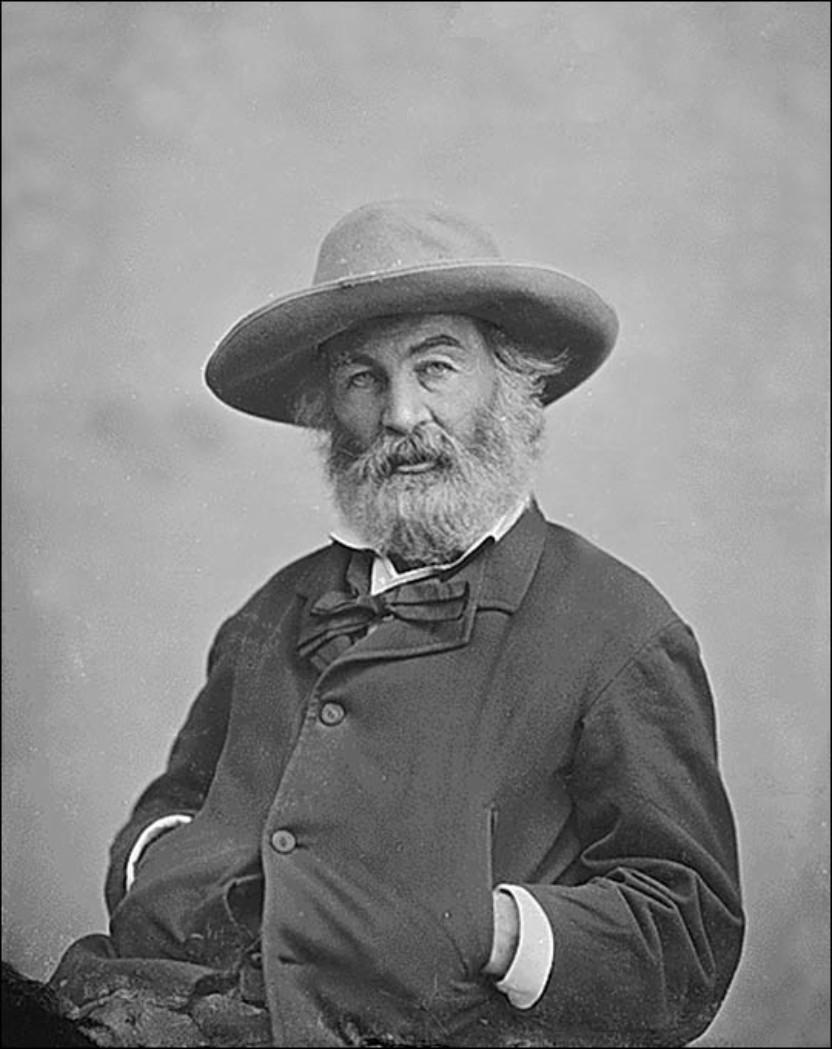
Leaves of Grass, written by U.S. poet Walt Whitman (shown in Figure 7-1), was a book mostly of long-lined, open-form poems Whitman kept editing and re-editing his entire life. Although lengthy, Leaves of Grass is inviting and comfortable to read. Its expansive free verse cast a vibrant, personable shadow over world poetry for the next 150 years.
|
|
Dip anywhere into Whitman’s poetry, and a celebratory gust of wide-openness hits you in the soul, as in these lines from “Spontaneous Me” in Leaves of Grass:
Spontaneous me, Nature,
The loving day, the mounting sun, the friend I am happy with,
The arm of my friend hanging idly over my shoulder,
The hillside whiten’d with blossoms of the mountain ash,
The same late in autumn, the hues of red, yellow, drab, purple, and
light and dark green,
The rich coverlet of the grass, animals and birds, the private, untrimm’d
bank, the primitive apples, the pebble-stones,
Beautiful dripping fragments, the negligent list of one after another as I
happen to call them to me or think of them
You don’t see traditional end-rhyme or regular meter in this passage. (It has a great deal of rhythm but no strict meter repeated from line to line.) Just as traditional meters and stanza forms had characterized poetry of the previous 1,300 years, Whitman’s expansiveness, his open and free manner, his boundary- busting, led the way into modern poetry.
Meanwhile, living in her parents’ house in Amherst, Massachusetts, Emily Dickinson was writing short, intense poems that experimented with rhyme and form, fearlessly exploring death, immortality, pain, and paradox, as in Poem 1732:
My life closed twice before its close;
It yet remains to see
If immortality unveil
A third event to me,
So huge, so hopeless to conceive
As these that twice befell.
Parting is all we know of heaven,
And all we need of hell.
In her personal life, Dickinson was as inward as Whitman was outward, but her tight, short, concentrated poems are just as original as his. She seldom sought publication, and the first collection of her works appeared in 1890, four years after her death. She blended the compression of the metaphysical poets with ballad forms and rhymed stanzas related to the hymns she heard in church. Whitman and Dickinson are, for many people, the beginning of American poetry.
Shiki and the New Style in Japan
Japan had always been an isolated country and culture. But in the latter half of the 19th century, that began to change. In 1868, the emperor Meiji was restored to the throne after a long period of Shogun rule. Leaders began to reorganize and modernize Japanese society and customs. One result was an opening of culture to Western influences, especially to French Symbolism. A movement known as the New Style, an attempt to forge a new, contemporary Japanese poetry, arose in the 1880s.
One of the most important figures in Japanese poetry of this period was Masaoka Shiki. He was a scholar of both Japanese poetry and Western poetry. Shiki undertook to purify the rules of the haiku, and it is his understanding of that tradition that is best known in the West today. When Western poets write haiku, they are practicing the ways Shiki taught. Shiki was at the forefront of the movement to modernize Japanese literary art, and he wrote some of the century’s best Japanese verse.
The 20th Century
The 20th century was the Century of Poetry. The world had never seen such an explosion of styles, such a diversity of audiences, such a widening of the poetic horizon.
What made the 20th century so poetic? The first half of the 20th century endured an economic depression preceded and followed by the trauma of two world wars. These three events called into question almost everything people knew about the world. So did the global triumph of technology: the automobile and airplane, the atom bomb, and the coming of the computer and the Internet. Several of these innovations — radio, telephone, and television, in particular — helped spread information and learning. That started to change society, very rapidly so, especially after World War II, when the world saw the rise and expansion of middle-class society in many countries. Poets were able to be in touch with one another’s work more quickly and easily, which led to new influences and new combinations of tradition, style, and even subject matter.
The Modern Era (1901–1945)
We know: It’s weird to think that the modern period is over. But modern, used as the name of a period, means a particular combination of things:
Experimentation and innovation in poetry; the notion that the old ways of writing couldn’t address the novelty and chaos of modern life.
A radical break with the past.
A new interest in psychology and the forces of history.
The rising dominance of free (or open-form) verse as opposed to traditional forms.
A new interest in writing about the forbidden side of life. The poetry of Whitman and Hart Crane, for example, contains homoerotic themes.
Many people think of Modernism as starting a little bit before World War I and ending with Hiroshima and Nagasaki in World War II.
The Greats: Ezra Pound, T.S. Eliot, William Butler Yeats, Hilda Doolittle (“H.D.”), Robert Frost, William Carlos Williams, Langston Hughes, Gertrude Stein, Wallace Stevens, Marianne Moore, André Breton, Jacques Prévert, Eugenio Montale, Rainer Maria Rilke, Georg Trakl, Marina Tsvetayeva, Anna Akhmatova, Federico García Lorca, Leopold Sédar Sénghor, Pablo Neruda, and Octavio Paz. And they are just the beginning.
Try the following anthologies of Modern poetry for more excellent examples:
The Norton Anthology of Modern Poetry, 2nd Edition, edited by Richard Ellmann and Robert O’Clair
Poems for the Millennium, Volume 1, edited by Jerome Rothenberg and Pierre Joris
We cover ten important Modernist poets in the following sections.
Rabindranath Tagore
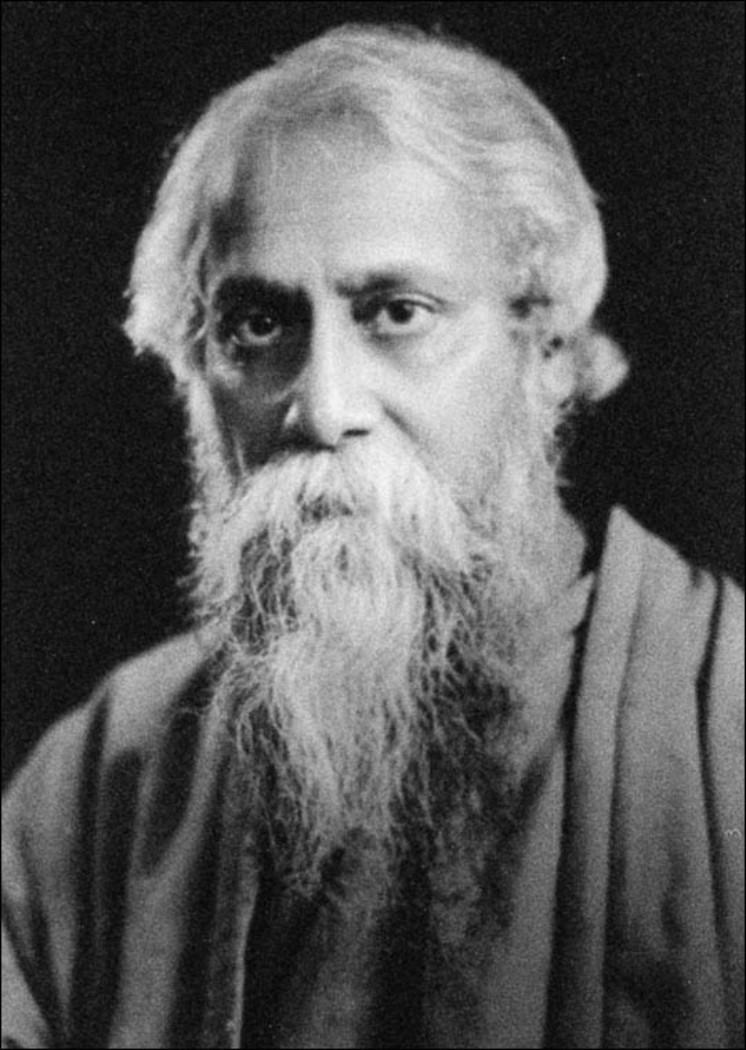
The poetic career of Bengali poet Rabindranath Tagore (shown in Figure 7-2) bridged the 19th and 20th centuries. A prolific writer of fiction, essays, travel diaries, as well as other works of non-fiction, Tagore wrote 100 books of poems. Tagore was a mystical, philosophical poet, deeply influenced by the Bengali and Sanskrit traditions. For his visionary, sensuous poems, Tagore won the Nobel Prize for Literature in 1913. He was knighted in 1915 but resigned his knighthood in 1919 in protest over the British massacre in Amritsar. His well-known books include Gitanjali,Songs of Kabir, and The Gardener.
|
|
William Butler Yeats
The Irish poet William Butler Yeats transformed himself from a late Romantic poet to a Modern poet with a wild, vivid voice. One of the most often-quoted of all Modernist poems is Yeats’s “The Second Coming.” In this poem, the speaker seems to think the present is a mess and the future about to be born is worse:
Turning and turning in the widening gyre
The falcon cannot hear the falconer;
Things fall apart; the centre cannot hold;
Mere anarchy is loosed upon the world,
The blood-dimmed tide is loosed, and everywhere
The ceremony of innocence is drowned;
The best lack all conviction, while the worst
Are full of passionate intensity.
Surely some revelation is at hand;
Surely the Second Coming is at hand.
The Second Coming! Hardly are those words out
When a vast image out of Spiritus Mundi
Troubles my sight: somewhere in the sands of the desert
A shape with lion body and the head of a man,
A gaze blank and pitiless as the sun,
Is moving its slow thighs, while all about it
Reel shadows of the indignant desert birds.
The darkness drops again; but now I know
That twenty centuries of stony sleep
Were vexed to nightmare by a rocking cradle,
And what rough beast, its hour come round at last,
Slouches towards Bethlehem to be born?
Published in 1923, this poem had much to say both about the chaotic state of Yeats’s Ireland and about the state of the world. It is a horror movie of the soul. The music, as in all Yeats, is unearthly and gorgeous.
Ezra Pound
The American poet Ezra Pound helped the rest of the century’s poets “make it new” (a favorite saying of his). Influenced by Chinese and Japanese poetry, Pound wrote poetry focused on the image (a concentrated moment of revelation, epiphany, or complex emotion), showing the occasion for emotion but not talking about it. Perhaps the best example is his poem “In a Station of the Metro”:
The apparition of these faces in the crowd;
Petals on a wet, black bough.
There it is: A single moment of vision and revelation. You see faces in the crowd and immediately are confronted with an image from nature — unexpected, with an unexplained connection with the faces. You are supposed to forge that connection yourself — think, perhaps, of how both the faces and the petals may be beautiful. That’s a Modern moment.
Hilda Doolittle
The American poet Hilda Doolittle (“H.D.”) was a protégé of Ezra Pound and part of the movement Pound called Imagism. Sick of the “blurriness,” “messiness,” and decadence of late-19th-century verse, the Imagists started the movement to make poetry tougher and more precise. Their main inspirations were Greek classical poetry, Japanese haiku, and French Symbolism.
One of the most memorable of the Imagist poems is “Oread,” by H.D.:
Whirl up, sea —
whirl your pointed pines,
splash your great pines
on our rocks,
hurl your green over us,
cover us with your pools of fir.

An oread is a nymph of the mountains or woodland.
Imagist poems, at their best, were short, direct, and, like this one, breathtaking. H.D.’s main inspiration here is Greek poetry. A nymph appears to be addressing the sea. Notice that exhilarating metaphor, the notion of “pines,” green and pointed, as waves. This poem is saying something about perception — that a wood nymph can understand an ocean wave only in terms of the forest. By the end, you’re really feeling the stinging reality. It’s both a visual and tactile image and a metaphor for being overwhelmed by experience. And that’s an image.
Marianne Moore
Famously eccentric, the American poet Marianne Moore carved out her own unmistakable niche in Modernism. Humor can be seen throughout Modernism, but Moore is perhaps the most consistently delightful of the era’s poets. She keeps the reader off-balance, starting with her selection of topics.
She also is famous for her original stanza forms. The following stanza, from “The Monkeys,” has six lines. Each line contains a set number of syllables: 15-16-10-10-10-11. And there is a rhyme scheme on top of that — the first two lines rhyme with one another, the third line is unrhymed, the fourth and sixth lines rhyme with one another, and the fifth line is unrhymed:
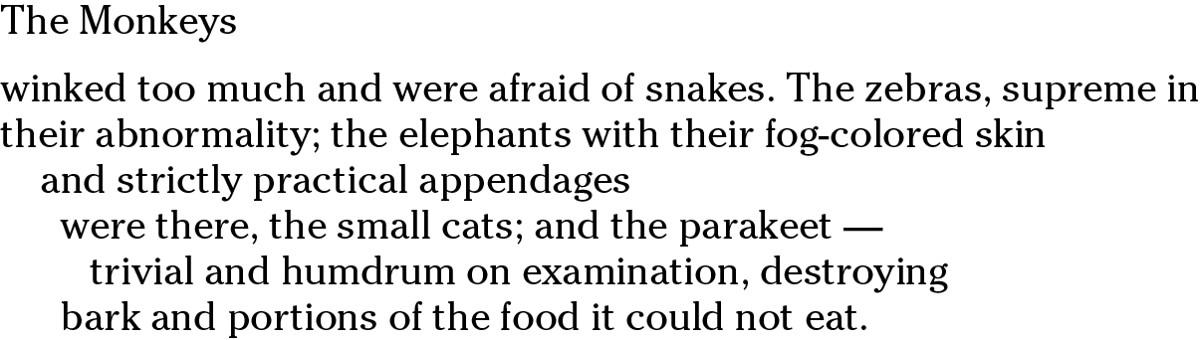
Notice how much fun Moore seems to be having: the title that also begins the poem, the “fog-colored” skin of the elephants, the behavior of the parakeet. Moore was a Modernist in her sheer originality.
T.S. Eliot
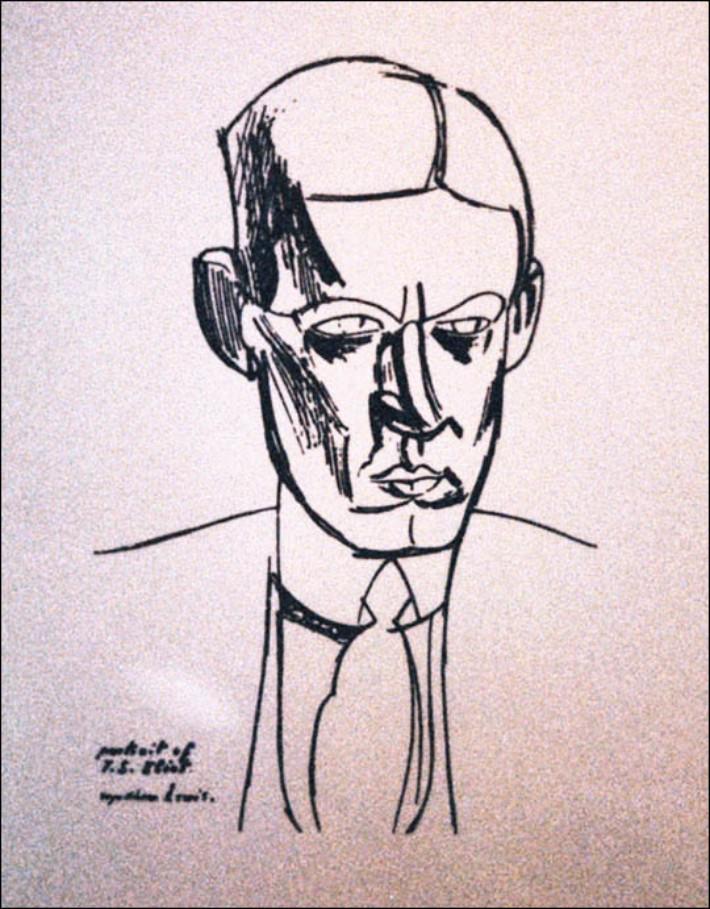
The American poet T.S. Eliot (shown in Figure 7-3) combined French Symbolism, a wide reading in the classics, English literature (especially the metaphysical poets of the Elizabethan and Jacobean eras), and a frightening sensitivity to the modern world to create a new kind of poetry. “The Love Song of J. Alfred Prufrock,” The Waste Land, and Eliot’s religious poetry, including The Four Quartets, are among the monuments of the first half of the 20th century.
To many, Eliot’s The Waste Land expresses the spiritual decay and moral paralysis of the 20th century. It’s also a repository of the Modernist influences discussed in the previous sections of this chapter, including Symbolism and Imagism.
The Waste Land is a nightmare, like Yeats’s “The Second Coming,” yet with its own ineffable music:
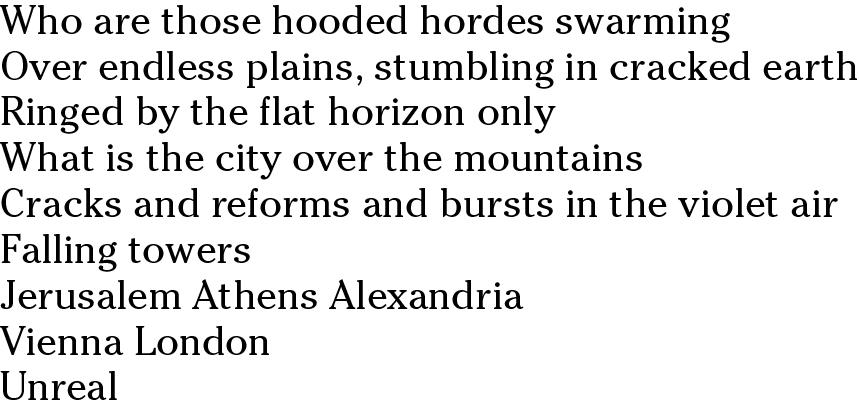

Take a tour of The Waste Land with a good teacher, who can help you breast the tide of its images and references (the poem comes complete with footnotes).
|
|
Marina Tsvetayeva
The Russian poet Marina Tsvetayeva’s passionate, often tortured verse recorded love, suffering, and the sweep of history in jagged yet songlike poems.
In “The Poem of the End,” she writes about a bridge, one of the most familiar of all symbols:
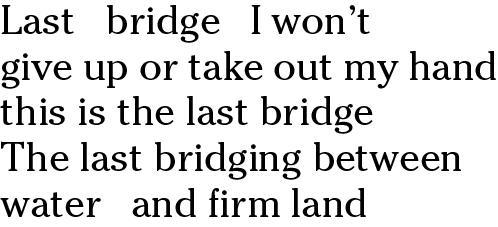
Bridges symbolize all sorts of passages — from youth to age, from ignorance to understanding, and (as here) from life to death.
André Breton
The French poet André Breton helped create Surrealism, a movement in the arts, literature, and film that explored the unconscious and its role in producing art.
New voices, new audiences
Throughout the 20th century, poets from various cultural groups, often long repressed or discriminated against — ethnic and sexual minorities, women, the poor, the young — began to forge their own poetic identities. An aboriginal poetry scene emerged in Australia. In South America, indigenous peoples contributed some of the century’s best verse, as in the agonized Surrealism of Peru’s César Vallejo, a poet of mixed Inca and Spanish heritage. In India, a country of great poetic traditions, a dizzying number of poets began to publish in many languages. African poetry prospered on two tracks: an ancient oral tradition, and a newer written verse, including the work of Ghana’s Kofi Awoonor, Mozambique’s Noémia de Sousa, Nigeria’s Christopher Okigbo, and Uganda’s Okot p’Bitek.
Modernism deeply affected Chinese poets, but writers were prevented from participating fully in this world revolution by the political convulsions that shook China all century. Mao Tse-tung, leader of Communist China, was also an accomplished poet. Suspicious of the free-thinking, questioning experiments of modernism, he imposed standards that stressed realism, folk poetry, and patriotism. That forced China’s best poets to find a way to please the censors while writing exquisite verse. (Much the same thing happened in the European Communist countries.) An ironic, resigned, symbolic kind of verse emerged. Some of the poets of this period include Lu Hsun, Hu Shih, Feng Chih, and Yen Chen.
In “Since Akkad, Since Elam, Since Sumer,” by Aimé Césaire of the island nation of Martinique, the speaker reflects on the way people of African descent have been made to carry the weight of oppressors’ history:
I have borne the body of the commandant. I have borne the railroad of the
commandant. I have borne the locomotive of
the commandant, the cotton of the commandant. I have borne on my
woolly head (which does so well without a pad) God, the machine, the route —
the God of the commandant.
Master of three roads I have borne under the sun, I have borne in the mist I have borne
over smoldering shards managing ants
I have borne the parasol I have borne the explosive I have borne the iron collar.
In the Arabic-speaking world, the Tammuzi poets looked for a way to break away from tradition and explore modern experience in Arabic poetry. Two of the most famous Tammuzi poets are Lebanon’s Yusuf al-Khal and the astonishing Syrian poet Ali Ahmad Sa’id, known as Adonis, author of the following passage:
thus I no longer hesitate to say:
“the I and the other
are me,”
and time is but a basket
to collect poetry
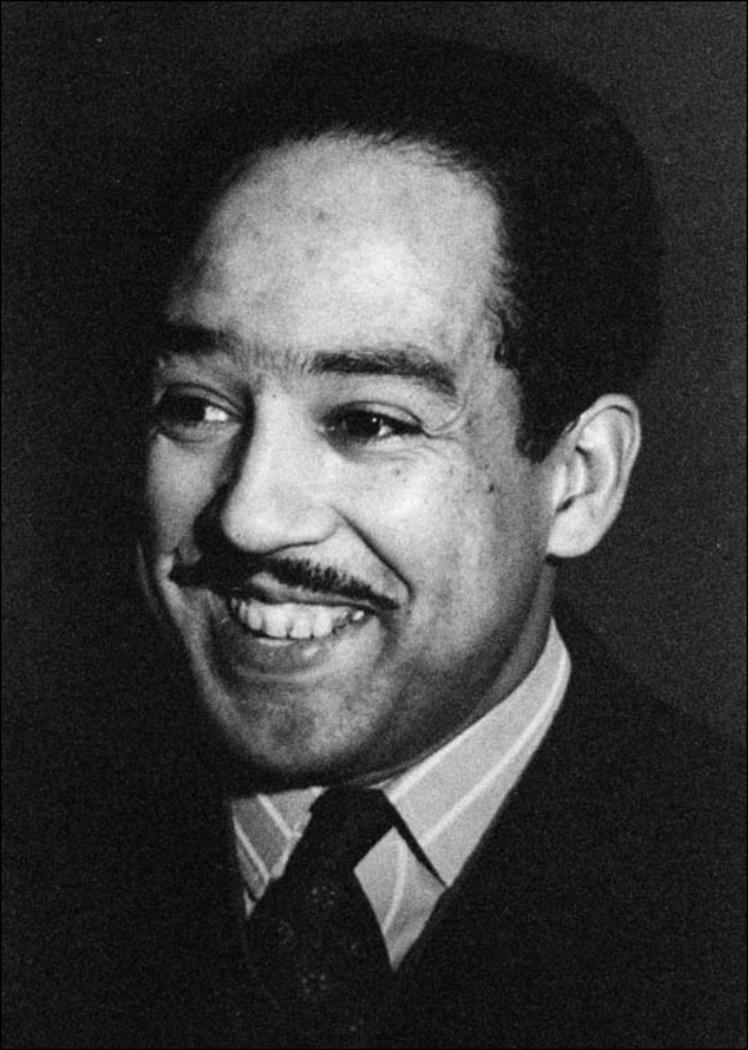
In the United States of the 1920s, the Harlem district of Manhattan saw the rise of a distinctive African American culture expressed in all the arts. This decade of activity came to be called the Harlem Renaissance. Poets such as Claude McKay, Countee Cullen, and Langston Hughes (shown in the figure in this sidebar) first came to widespread notice. As the century closed, African American voices were among the most prominent of American poets, including, Robert Hayden, Gwendolyn Brooks, Maya Angelou, Amiri Imamu Baraka, Lucille Clifton, Al Young, Yusef Komunyakaa, Rita Dove, June Jordan, and Audre Lorde.
For a brief taste of Surrealism, read this passage from Breton’s “A Man and Woman Absolutely White”:
In the depths of the parasol I see the marvelous prostitutes
On the side near the streetlamps their gowns are the color of polished wood
They are walking a great piece of wallpaper
At which one cannot look without that choking feeling about the heart of
ancient floors in buildings being demolished
Where a slab of marble lies fallen from the fireplace
And a skein of chains is tangled in the mirrors
Even though the images and phrases in a Surrealist poem don’t work together in conventional, conscious ways, their novel combinations nevertheless do produce associations in your mind. You look into a parasol and somehow see prostitutes. Depending on your associations regarding that world, you already may feel an element of the degraded and the forbidden. They are carrying wallpaper — and suddenly you’re in the midst of a demolished building. You may feel sadness in reading these lines somehow: Demolition involves endings, abandonment, and violence. And demolished buildings are usually forbidden places.
Notice how the poem challenges you to analyze yourself as you analyze it. Surrealism is, thus, not just about the workings of a single poem; it’s also about the workings of the mind — and that is part of its fascination.
Pablo Neruda
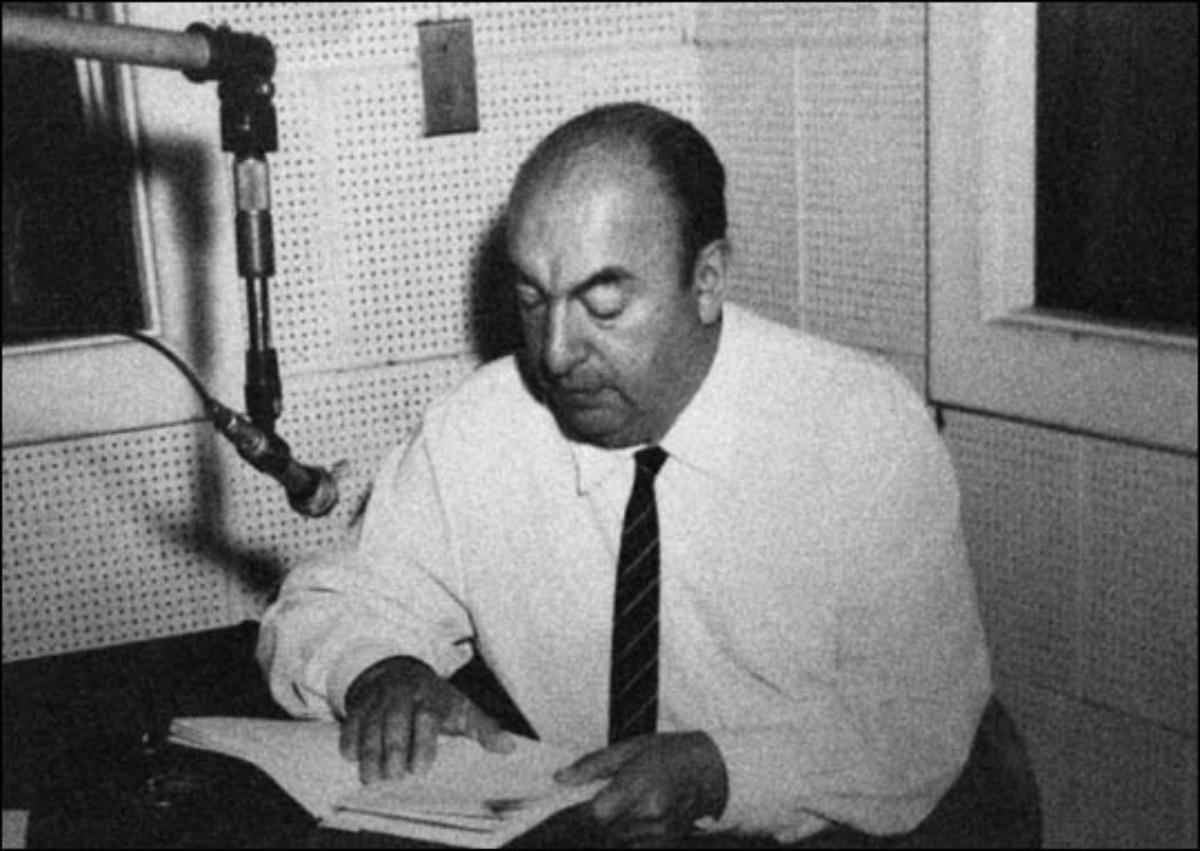
The Chilean poet Pablo Neruda led a whole generation of South American writers to renovate poetry in Spanish. Neruda (shown in Figure 7-4) created a poetry based on “the things of this world,” as he put it. See and feel the concreteness of the images in his famous poem “Walking Around.” The speaker is a man “tired of being a man.” He is restless and sad, ready to burst out:
The smell of barber shops makes me sob out loud.
I want nothing but the repose either of stones or of wool
At the end, the speaker walks among the surprising, mundane things of the world:
I stride along with calm, with eyes, with shoes,
with fury, with forgetfulness,
I pass, I cross offices and stores full of orthopedic appliances,
and courtyards hung with clothes on wires,
underpants, towels and shirts which weep
slow dirty tears.
Léopold Sédar Senghor
Senegal’s Léopold Sédar Senghor combined French Symbolism with Surrealism and an awareness of African origins and traditions. With the poets Aimé Césaire and Léon Gontion Damas, Senghor helped found a movement called Négritude, whose adherents were aware and proud of their African heritages. Senghor eventually was elected prime minister of Senegal and served from 1960 to 1980, becoming the first black member of the Académie Française in 1984.
The Postmodern Era (1945–1989)
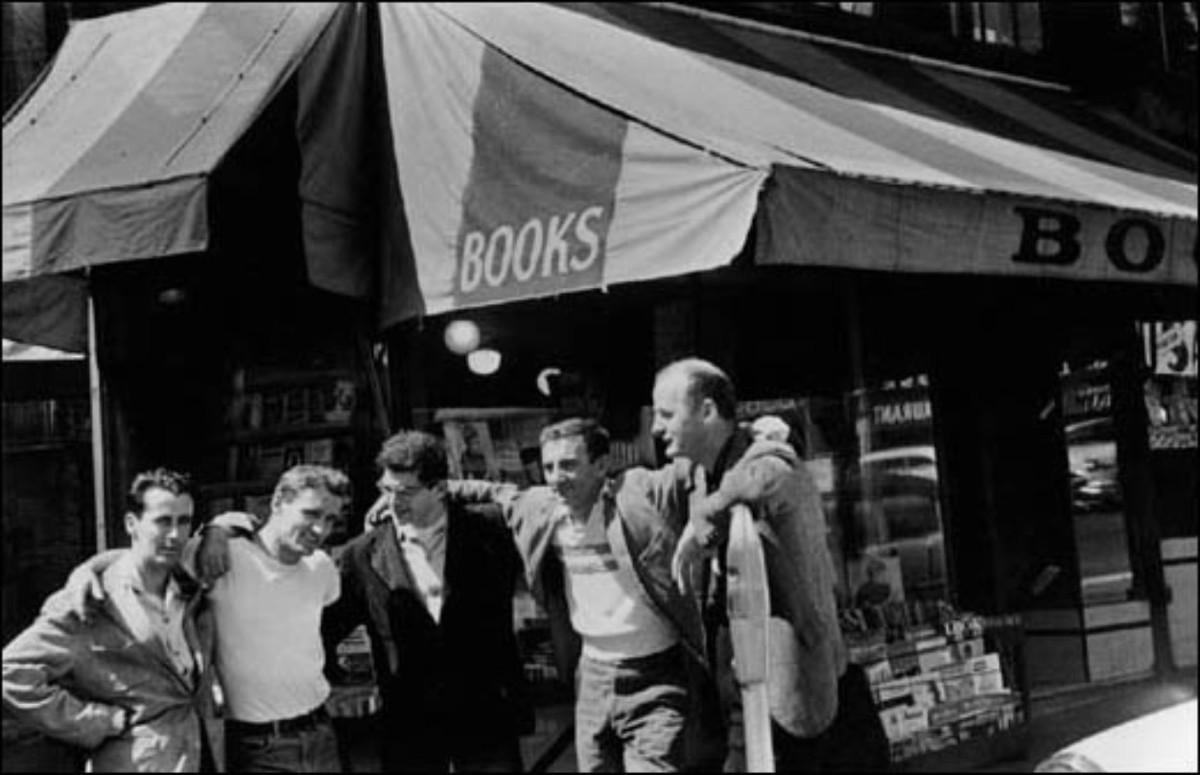
If the Modernist period was marked by anxiety, the Postmodern period was marked by irony. There was much to be ironic about. Big business dominated much of the politics of the world, prompting poets to point out the many ways in which making money doesn’t guarantee a good life. Many lines of poets — including the Hiroshima poets of Japan, the Beat poets of 1950s America (some of whom appear in Figure 7-5), and folk, pop, rap, and performance poets — insistently parodied and questioned the assumptions of the political establishment and the company man.
|
|
|
|
© Allen Ginsberg Trust
The Cold War and the threat of global annihilation were seldom far from artists’ minds. To many writers, this threat sapped life of all meaning, and despair was not far away. In poetry, a sense of the breaking up of the old and an uncertain future emerged in the poetry of many languages.
A Stein is a Stein is a Stein. . . .
Gertrude Stein is one of the 20th century’s best-known and most influential poets. She played a double role: as cultural hostess and as poet. In 1907, Stein moved to Paris, where, with her companion, Alice B. Toklas, she held a long-running salon, a meeting place for poets, artists, and thinkers, one of the central nodes of the Modern and Experimental eras. People as diverse as Picasso, Hemingway, and James Joyce were her visitors. Many Americans became expatriate artists in the first half of the century, and the Stein/Toklas salon was a favorite resort. Stein encouraged and helped many standouts in 20th-century literature and art.
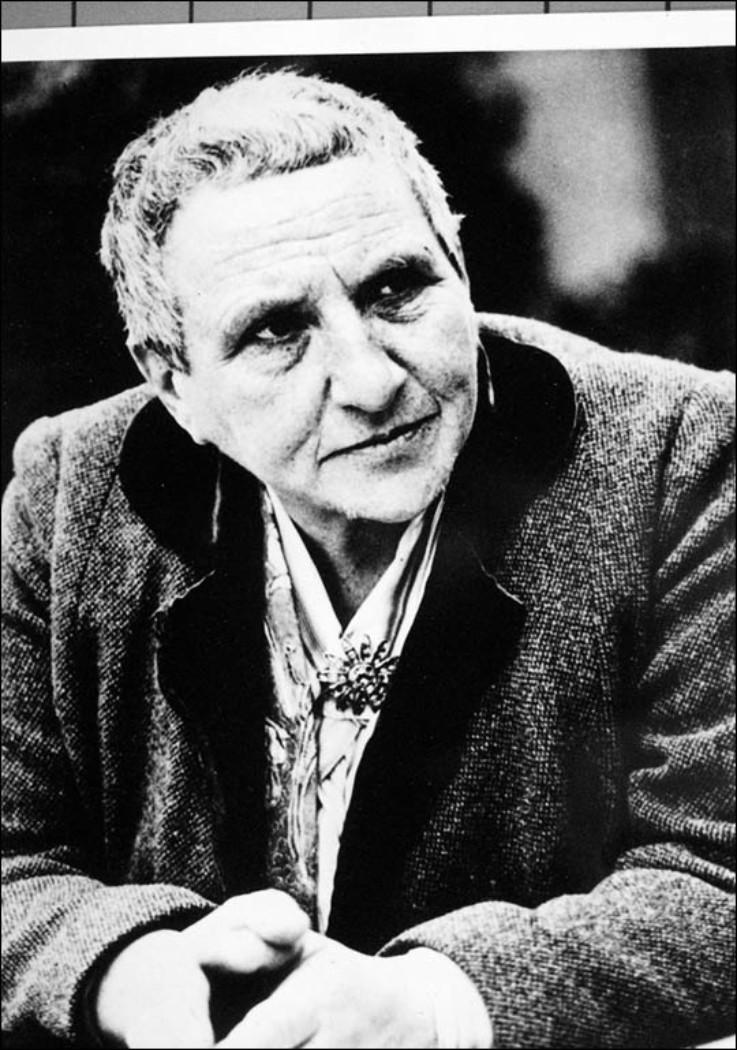
Stein also was and is a very influential Experimental poet. She constantly and boldly tested the distinctions between poetry and prose, writing stories, books of poems, opera librettos, and memoirs in a rhythmic (“a rose is a rose is a rose”), humorous (“I am because my little dog knows me”), and surprisingly philosophical and profound style. Her reknown and reputation have never been higher than they are right now.
The Postmodern era was also an age of political contention. Protests against the United States’ involvement in the Vietnam War spread worldwide. And local movements for human rights — which, in the United States, spawned the civil rights movement and feminism — produced a new generation of poets. In China, the failed revolution at Tiananmen Square in 1989 sent several poets into exile. Perhaps the best-known of these (and maybe the best-known Chinese poet of the late 20th century) is Bei Dao. He is one of a group known as the misty poets. They were more introspective than “official” poetry was supposed to be, more likely to examine their subjective lives.
Bei Dao’s poetry is full of protest. These four lines were dangerous ones for a poet to write in Mao’s China:
Listen. I don’t believe!
OK. You’ve trampled
a thousand enemies underfoot. Call me
a thousand and one.
If this poetry seems “Western,” it’s because Western poetry has absorbed so much from the Chinese tradition. That tradition is as large and various as the country from which it comes. As China changes, so does its poetry. Following those changes will be one of the great pleasures of the 21st century.
The Greats: Postmodern greats include Amiri Imamu Baraka, Robert Lowell, Elizabeth Bishop, Charles Olson, Allen Ginsberg, Frank O’Hara, John Ashbery, Basil Bunting, Ed Dorn, Gary Snyder, A.R. Ammons, Sylvia Plath, Anne Sexton, Robert Creeley, Adrienne Rich, Sharon Olds, Bob Dylan, John Lennon, Paul McCartney, Nicanor Parra, and Violetta Parra.
Check out the following for a sampling of Postmodern poetry:
The Harvard Book of Contemporary American Poetry, edited by Helen Vendler
The New American Poetry: 1945–1960, edited by Donald M. Allen
The Norton Anthology of Modern Poetry, edited by Richard Ellmann and Robert O’Clair
The Pittsburgh Book of Contemporary American Poetry, edited by Ed Ochester and Peter Oresick
Postmodern American Poetry: A Norton Anthology, edited by Paul Hoover
The Postmoderns: The New American Poetry Revised, edited by Donald M. Allen
The Vintage Book of Contemporary World Poetry, edited by J.D. McClatchy
Women’s voices
The 20th century also saw important women emerge in poetry everywhere. Americans H.D., Marianne Moore, and Gertrude Stein were three great pioneers. Among the many extraordinary North American female poets of mid-century, we may include the work of Muriel Rukeyser, Lorine Niedecker, and Elizabeth Bishop. Other fine women poets are Russia’s Anna Akhmatova, Poland’s Wislawa Szymborska, Canada’s Margaret Atwood and Nicole Brossard, France’s Anne-Marie Albiach, China’s Shu Ting, and Japan’s Shiraishi Kazuko. South American poetry can boast of the work of Uruguay’s Delmira Agustini, Mexico’s Rosario Castellanos, and Chile’s Gabriela Mistral. And that’s just a start.
Howling about Howl
In the summer of 1955, ringleader Beat poet Allen Ginsberg wanted to write a fearless poem that would sum up his life. He intended this highly personal work to be read by himself and a few others, and it wasn’t originally intended for publication. But a few months later, he recited the first part of his now-famous poem Howl to a packed crowd at the Six Gallery in San Francisco. City Lights book publisher and poet Lawrence Ferlinghetti published Howl and Other Poems the following year, and controversy soon followed. Copies of the book were seized and banned by U.S. Customs and the San Francisco police. Ferlinghetti was arrested and accused of distributing indecent writings, and a long obscenity trial ensued.
With a host of prominent literary figues and the ACLU backing Ginsberg, Judge Clayton W. Horn ruled that the book was not obscene. The Howl trial was thus a landmark case for the freedom of speech and for the press. The national publicity surrounding the trial put Ginsberg and Ferlinghetti in the national spotlight, and Howl and Other Poems became a bestseller.
As of about 1970, poets began to write what became known as feminist poetry. Feminist poetry explores the lives of women and often tries to make the reader conscious of how the social or political realities of our society affect women. Some of the poets most influential for feminists include Sylvia Plath, Anne Sexton, Adrienne Rich, Carolyn Kizer, Marge Piercy, Alicia Suskin Ostriker, Sharon Olds, and Judy Grahn.
A strain of feminist experimental verse evolved, in which poets explored the notion that there may be a characteristically feminist way of pushing the boundaries. Some of the most interesting women experimental poets include Kathleen Fraser, Beverly Dahlen, Maureen Owen, Joan Retallack, Lyn Hejinian, the sisters Fanny Howe and Susan Howe, Marie Howe (who was unrelated to Fanny and Susan), Norma Cole, Carla Harryman, Rae Armantrout, Mei-mei Berssenbrugge, Leslie Scalapino, Haryette Mullen, Erin Mouré, Cole Swensen, Myung Mi Kim, and Maxine Chernoff.
Experimental poetry
As the 20th century progressed, poets experimented more and more with new ways to make artworks out of language. Here’s a Cubist poem, “Departure,” written in France in 1919 by the French poet Pierre Reverdy, a forerunner to the Postmodern experimental poets. It’s a good example of the ways poets experiment with the fragment.
The woman’s voice and protest poetry
Three of the most interesting writers of political protest poetry in this century are women, and all three have suffered heroically under persecution, imprisonment, and exile. Noémia de Sousa of Mozambique was very active in her country’s struggle to free itself of colonial rule by Portugal. Her outspoken public statements, and her poetry critical of the ruling regime, brought official denunciation and persecution, and she was forced to live in exile in France and Portugal.
Cuba’s Maria Elena de Varela, self-taught and idiosyncratic, won her country’s National Award for Poetry in 1989. Two years later, she published poems and essays critical of the Castro regime. She was thrown into prison, beaten, and starved. Since 1994, she has lived in Puerto Rico, where she continues to write poetry calling for freedom and justice in Cuba.
Naslima Tasrin is a Bangladeshi poet. Her poems are feminist, often secular, and often critical of Islamic fundamentalism. (In fact, some of the mullahs, Islamic religious leaders of her country, have offered to pay anyone who will kill her.) In 1994, she was driven into hiding, surfacing in Sweden, where she continues to write some of the best feminist protest verse in the Islamic world.
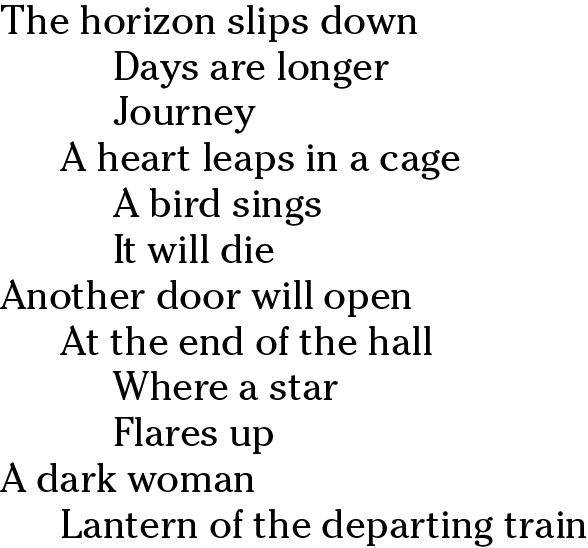
Reverdy condenses the feelings of taking a journey into a few shards of language like a Cubist collage. First, an awareness of horizon. The long days mean spring, summer, time to travel. The heart becomes a bird that leaps up and sings. Its death is predicted flatly; it’s a shock. The poem turns there, as if from the knowledge of death. You are already looking out on the platform: There is a dark woman (more foreboding? or just waiting for a train?), and the train’s lantern comes into view, “flares up.” Or perhaps the lantern is the dark woman, who has become a star to lead the traveler.
If you want to read about the poetic theories behind such poetry, you may want to consult publications such as Poetic Journal, L=A=N=G=U=A=G=E (available through The L=A=N=G=U=A=G=E Book, edited by Charles Bernstein and Bruce Andrews), and How(ever).
Prose poetry (another form of experimentation) has enjoyed a major surge in popularity since the 1970s. Think of prose as part of the ceaseless flow of language itself. Here is a passage from a.k.a. by Bob Perelman. Watch how different kinds of language intrude on each other, how the passage starts to portray the way these languages relate to one another.
The speakers vibrate through the entire house. Brahms’ lust scans the swept garden. Number streams down onto the trees. Born witness to his own fragmentation, a child breaks into speech. Hear against it a matter of course.
The reward you were tacitly promised when you began reading this sentence is now yours. You are that smoke. Black wisps of leaf tended by an orange flame, iced antennas against a starry sky. I dressed as a tiger and knocked at the varnished doors.
Here you have not one voice talking but a mosaic of voices. You’re tossed among images, statements that seem to make sense and others that fall apart. The “you” in the second paragraph seems to be an address to the reader — but you can’t really be sure. Perhaps it is some other “you,” some person known to or created by the poet alone. Again and again, your attention is brought back to how words and their relations bring out meanings as your mind considers them.
This form, poetry in prose, or mixed with prose, has inspired some of the most ambitious work of the last 20 years. Perelman’s a.k.a.; Lyn Hejinian’s My Life; Ron Silliman’s Age of Huts; Barrett Watten’s Bad History; Beverly Dahlen’s A Reading; Monique Wittig’s Lesbian Body; Fanny Howe’s Lives of a Spirit; Carla Harryman’s The Words; Aaron Shurin’s The Paradise of Forms; Bernadette Mayer’s Proper Name; Leslie Scalapino’s The Return of Painting, The Pearl, and Orion; and many, many more.
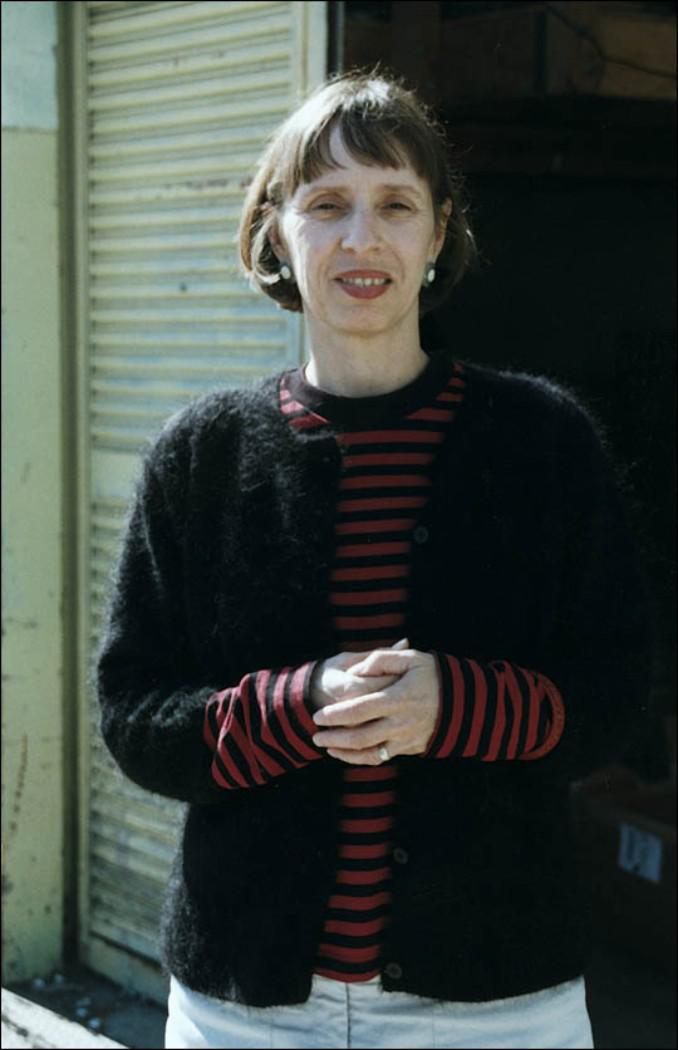
New York, Paris, Vancouver, and London have writing scenes where innovative poetry flourishes, but the San Francisco Bay Area is the world’s hotbed of experimental poetry, with many presses, reading series, and a faithful audience. Here’s a poem, “The Mouth,” by San Francisco Bay Area poet Laura Moriarty (shown in Figure 7-6) that moves between fragment and prose.
We have words
Over definition
Terror
Something to lose
Loose
In us
Harshness
Oracularity
A stone bath or wood room vivid and liquid ritual means the wished for repetition against the sense of what is said at the same time taking in the heart the belly the groin the mouth and legs the ass the chest and eyes.
|
|
© Emily Grossman
This poem is strung between two concepts about meaning, linear meaning (“over definition”) and meaning that includes the supernatural, the body, and the sublime. It is very much a lyric: Notice how the heavy syllables of the word oracularity almost separate in your mouth. Are you in the stone room of a Greek oracle or a hot tub? The parts of the body are opposed to the “sense of what is said.” The “wished for repetition” may be a chant, a prayer “loose in us” or simply the refrain of a song. Could the words of that prayer or refrain be “Over definition” in the sense of “beyond definition”? Would those words include this poem? Certainly the open form of this poem is not going to allow a single resolution; it will continue to be available to alternate interpretations. For example, the “wished for repetition” could be the list of body parts, so perhaps the body itself is the refrain, or the spell. The meanings of the poem hold together, but not inside one interpretation.
Performance poetry
The 1980s saw a surge of interest in poets reciting their work in public. It was a world movement: For Ghana’s Ama Ata Aidoo, Peru’s Eduardo Calderón, and the Zuni storyteller Andrew Peynetsa, poetry is primarily to be spoken and heard.
Up sprang an immediate, often impromptu poetry, often harsh or crass, designed to be delivered in a dramatic or histrionic way before an audience. This kind of poetry made use of everything poets could get their hands on: music, television, movies, humor, slang, confession. Its main gods were poets such as Whitman, Neruda, Ginsberg, and Bob Dylan — poets interested in a poetry close to the pace and impact of speech.
African American poetry has always had a strong element of performance, from the earliest days of slavery through the poetry of the Harlem Renaissance to the 1970s work of Gil Scott-Herron to the cultures of rap and hip-hop at century’s end. One of the birthing moments of the performance poetry movement was the “choreopoem” For Colored Girls Who Have Considered Suicide When the Rainbow Was Enuf by Ntozake Shange, a major contributor to the Nuyorican Poets’ Café (founded in 1974), a venue on the Lower East Side of New York for multicultural performance art. Shange, an African American poet, combines popular culture, jazz, African and American history, feminist politics, urban legend, and dance.
Events called poetry slams became widely popular in the 1980s and 1990s. The slam was founded in Chicago in the 1970s by Marc Smith, at the Green Mill Lounge on Broadway Avenue. Prominent slams were held annually in Chicago, San Francisco, New York, and Boston. Very often, slams are competitive poetry readings in which audience reaction is used to determine the “winning” poet. Several venues throughout the world put on annual slams to determine the champion poet of the year.
The Global Era (1989–Present)
We hereby declare a new period in literary history: the Global Era. Poetry now participates in the Internet age, the connected era, in which worldwide influences join together in poetry to mix traditions, ethnicities, and even genders. Mixtures — that’s what global poetry explores. Television, radio, and movies have taught people how to think in rapidly shifting images; they mix almost anything with almost anything else. It can be confusing and exhilarating at the same time. Global poets try to tap into both the confusion and the exhilaration.
In the Global Era, you can find poetry that rhymes and poetry that doesn’t. Forms are joining with other forms, new with old, to make all sorts of hybrids. Prose poetry (which has been around since at least 1842) is a hallmark of the Global period; you could take it as poetry written as prose, or prose with the concentration and rhythm of poetry. And performance poetry is challenging written poetry as the premier poetic form of the age.
Anne Waldman, who began her career in the Postmodern era, is a bridge to the Global era. Her poetry, as in this passage from “Iovis XIX,” often shifts back and forth in history, tone, and mood, and it’s usually well worth the ride:
my friend dark night a result
friend a light of me combine
to find alas no woman at the table
of Israel, of Lebanon, Palestine
how do they sleep? of Syria
& shine or shrink the tale as of void
& radio it says hands-on broadcast
a hundred deejays wait, not one a woman
the scholar & savage equal points of light
rub dry sticks together
a sham, a delusion, kind of affectation
never felt lonesome in it
At first, you may find this poem hard to read. But if you read it aloud — or hear Waldman, a remarkable performance poet, read it — the poem becomes clearer. The question isn’t, “What is this about?” but rather “What’s happening here?” Notice how all sorts of ideas and images interrupt one another and rub together. There is even rhyme in the combine / Palestine / shine passage.
In Waldman’s poem, you get images from politics (the absence of women), personal life, popular culture. You can even catch glimpses of statements, as when the speaker tells of a world in which “the scholar and savage” may be “equal points of light.” (Both may have important things to tell us these days — both rub “dry sticks” together, the savage to make fire, the scholar to enlarge human knowledge.) And in a whirling, infinitely active, always interesting world such as ours, the speaker says he or she “never felt lonesome.” It would be difficult to feel lonely, with all these different voices around.
The Greats: Global greats include Miguel Algarín, Victor Hernández Cruz, Charles Bernstein, Ron Silliman, Lyn Hejinian, Arkadii Dragomoshchenko, L.L. Kool J, Dr. Dre, Patricia Smith, Ntozake Shange, Barrett Watten, Fanny Howe, Norma Cole, Francisco Alarcón, Kathleen Fraser, Erica Hunt, Michael Palmer, Tom Raworth, Emmanuel Hocquard, Rosmarie Waldrop, Ammiel Alcalay, and Anne Waldman.
Check out any of the following to get an idea of the kind of poetry being written in the Global Period of the here and now:
Aloud! Voices from the Nuyorican Poets Café, edited by Bob Holman and Miguel Algarín
An Anthology of New (American) Poets, edited by Chris Stroffolino, Lisa Garnat, and Leonard Schwartz
Moving Borders: Three Decades of Innovative Writing by Women, edited by Mary Margaret Sloan
Poems for the Millennium, Volume 2, edited by Jerome Rothenberg and Pierre Joris
Poetry: Over 5,000 years old and still youthful, still growing. An amazing story. The great thing about this story is that it’s far from over. New chapters are being written all over the world at this very moment.