
Campaigns are a coordinated marketing effort amongst different mediums to promote a product, message, or service. A campaign that runs without a target or goal is not a campaign; it’s just marketing activity, which may be OK. My larger point is that these are separate enterprises. While SEO tends to be a more long-term play, it is entirely possible to do a campaign in the short term that will cross-pollinate through to SEO efforts.
Without campaigns, there is no start nor finish to any major marketing event. Specific goals and timeframes can help to galvanize stakeholders and coalesce teams. Just as we sometimes feel more inspired when there’s a push, it also gives us an end to look forward to where we can reset, look at the accumulated data, and evaluate metrics.
Campaign SEO Juice
When done correctly, campaigns help boost traffic, user engagement, awareness, and therefore search prominence of a site. The goals tend to vary, but typical ones are branding, launching a new product, or cultivating new business from existing customers. Campaigns can be short or long, but the thread tying it all together is always the overarching goal. A campaign without a goal is like a warrior without a battle ahead.
Some organic search efforts are viewed as a failure because of the sheer amount of time it can take to to see statistically significant results. This is especially true in established long-running SEO programs. Campaigns actually help SEO politically as well as technically. By picking select targets and getting those target goals refined, you can start to achieve results in a way non-SEOs understand. A battle many SEOs must fight is gaining consensus that their activities are fruitful (i.e., is this stuff working?).
When a campaign is pulled off correctly, it enhances a company’s organic efforts. The correlation between SEO and campaigns does not feel like a direct one, but a logical connection does exist. To go out and crusade for traffic can feel as though you’re the only one gaining visits to your site or seeing assets that are being promoted. However, the more users enjoy the content on your site, the higher the visibility and relevancy. Everything we do on the web is tracked. Every handshake is culled for information. What’s relevant to humans will eventually interest the other aforementioned creatures of the internet—crawlers, spiders, etc. Interesting traffic garners more traffic in a way that corresponds to Benjamin Franklin’s “Magic of Compound Interest”.
Performing SEO by campaign is not a classical (i.e., historical) mode of thinking; it is perhaps more akin to twin growth hacking. However, it’s opportune to have both short- and long-term goals with any given search program. Campaigns can sometimes be like an off-road reconnaissance mission: you’re putting things out beyond the safety of the homepage, resulting in valuable traffic and data from different sources, aka signals.
Viral campaigns are the golden chalice to every marketer. Just like winning an Oscar, they are the gold standard for proof of success. No viral video or asset I’ve ever seen (for commercial purposes) happens without the assistance of a coordinated campaign. The type of campaigns classified as “grassroots” or “guerrilla” tend to involve risks. It can be difficult to demand attention without evoking some type of emotion, so remember to make sure your risk exposure does not exceed your risk appetite. Unoffensive risks are best; follow what you were taught about the dinner table with guests—no politics, no religion, etc. Sometimes comedy can allow for hilarity in tone that will elicit a response, but tread carefully. Anthropology and sociology are interesting areas to study if you want to understand what compels a group of people to become offended or endeared.
CAMPAIGN HESITATION?
If you’re devising a campaign that doesn’t feel right, consider sleeping on it. Delay the launch. Everyone can wait one more day for your offer. If you sleep on it and do not hit send on a campaign, you can reconsider the next day. Post-slumber, it may only take a hot second to figure out what about it is still bothering you. Shower ideas are real. With fresh morning eyes, if your campaign still seems like a good one, huzzah! Go for it!
If you’re still struggling with your campaign after a night’s rest, phone a colleague. Send the creatives to someone who can give an honest opinion, preferably under NDA (by the way I am so not a lawyer and cannot give advice in this realm).
Remember, just because something may reach the height of hilarity does not necessarily mean by itself that the consumer will get out their wallet. A more conservative stance to endorse could be the grandma rule: do not send out anything publicly that your elder relatives wouldn’t like.
The goal of search is to get content in front of the right people at the time they are looking for it. Successful campaigns lead to notoriety you wouldn’t otherwise get by just hanging about. A focused light always brings the most heat. One of my mentors once taught me to always be the laser, not the flashlight. At the data level, strive for as much accuracy as possible. At the high level, your goal is to weave these data sources into a rich tapestry of information. Don’t get distracted by one-offs. While others are fighting about whether to use a flashlight or a laser focus, your goal is to turn on the lights in the room when all the elements line up correctly. Shine the brightest wherever you can online with all the sources you have at your disposal; campaigns are designed to do this masterfully.
Mobile Campaign
The best campaigns vary by location, target, and budget, but one tenet remains constant: use what you’ve got. Combined forces give you more strength. If you have a landing page template ready to go, an idea, and an email list, then run with those together. You might be tempted to keep an ace or two in your back pocket like an Old West poker player, but for continuous success you want to design a system, not “cowboy it up” every time.
Don’t end up with a bullet in your back. But that doesn’t mean you can’t be imaginative. There are so many amazing and free services available these days that you can construct a campaign without breaking the bank. Your wildest imagination coupled with a harness to the real world will produce the strongest campaigns. This chapter will cover some different types of campaigns that, when done right, can provide great wealth, eternal youth, or probably just traffic and SEO benefits.
Banner ads and in-app purchases were the first way advertisers were able to reach users on mobile. Click rates, however, were about as abysmal as you’d expect. It’s hard to say equivocally that banner advertising is dead, but it’s not something a client has asked for in at least five years. We know people are spending significant time on their phones, so do not interrupt—try to add to their day. Make someone feel better or solve a problem. Mobile campaigns that seek to jump in front of the user with no value will get left behind by the user.
The proliferation of mobile phones in our lives means local geo-campaigns are super en vogue for advertisers. There are also some organic components to mobile SEO such as the NAP (see “Local Search”), good usability, etc. There are a few campaigns that need to tie heavily into local search to truly work, such as location-based campaigns like scavenger hunts, geocaching, and contests.
We have increased capabilities (opportunities) on mobile to engage with people, from location to camera to gyroscope. Tablets have touch experiences that can transform user experiences immensely. Typically a responsive mobile landing page or website is all that’s needed as an asset for a directed offer campaign on mobile. There’s little reason to create an app for campaign purposes unless it is to elicit money for app purchases, sharing of content, or another well-defined business goal. A top-performing mobile page will suffice to help direct email into traffic.
We have only begun to skim the surface of augmented reality (AR) and virtual reality (VR) marketing campaign integrations with too many industries to count at this point.
Email Marketing
Whether it’s a webinar or a landing page, email moves the needle when done right. Email is not the most exciting type of campaign, but it can be the least expensive to produce. Experimentation can be done with so many tiny elements, like the size of the subject line, that it can seem silly. There are higher email open rates when your subject is shorter, but readers tend to click more on emails with longer subjects. There are no limits to experimentation with this type of campaign. The amount of time an email is opened versus the clicks it receives is but one metric to consider when measuring an email campaign.
Perhaps some adorable baby eagles are about to hatch, and you want people to find it on mobile. Think about what you have to offer in your email campaign. Is it a freebie or are you asking people to pay for a preview of an eagle cam?
What’s old is new again with email. I fondly recall the LISTSERV! Email was the first killer app of the internet, but it was surpassed by the World Wide Web long ago. Or was it? Even the nontechnical and the elderly understand email—even seven-year-olds understand email. It’s not just spam: it’s newsletters, coupons, and all kinds of updates. These are the children of the “community newsletter” or “‘zines.”
The content is already there. The users are already there. It’s some of the most targeted audience out there. So you don’t purchase the mailing list, you purchase space in the newsletter. The user can click on these and get sent to your product. They don’t even have to maintain an infrastructure, they just use someone else’s (like mailgun). The advertisers, however, still have to maintain a website; otherwise, there will be nothing to click through to! You could start your own newsletter, but unless you’re committed to original content on a consistent basis, don’t. You’re just creating spam, and you won’t get a very good retention or click-through rate.
The real value of these newsletters is that people trust them because they have used them for months or years, much longer than the duration of the usual web campaign. Of course, once you obtain that level of trust, the next level is the old “form letter.” Fast-forward to today, and this translates to a unique message sent “only to you,” updated with your likes or dislikes. Maybe only people interested in yellow pool toys got this message. Maybe people who liked any kind of pool toy got a different message or no message at all.
EXAMPLE MOBILE EMAIL CAMPAIGN
The following are some steps for how to run a renegade email campaign with mobile in mind:
1. Collect emails from customers and prospects during all marketing activities such as trade shows, happy hours, and any website(s).
2. Establish a weekly mobile-friendly email with updates, news, coupons, or loyalty programs. Make sure the email contains information that conveys the perception of value. Classic examples would be a coupon code or some tangible reward like access to exclusive events and information.
3. Gain readership by aggregating data. Start including links within the emails to website blog content (surrounding the business) and include community information where relevant.
4. Include mobile-friendly links as the call to action (CTA) for users, which could prompt for further user activity like an app install or sharing the content on social.
Years ago, I coined a term to explain our attraction to offers and the feeling we need to create in order to get a response to landing pages (or anything with an offer). I call this the Velvet Rope (see Figure 6-1). There are two types of people, those who wait in lines and those who will do anything to jump them. It became clearer to me that the more exclusive an offer is, the more excited people feel about it. Waiting in line doesn’t feel good, but skipping the line does. Campaigns that have a virtual velvet rope make people feel special because they are part of a chosen few.
It’s difficult to convey exclusivity in an offer that’s made to everyone without appearing transparent. It helps to have specific dates with the offer, meaning that if it’s running for one month only, then say as much.
An exclusivity-style campaign works best with email or social media. You’re looking for people who already have some type of peripheral relationship or familiarity with you. You have to compel them to want to wait in line or give them a way to feel like they’re jumping the line.
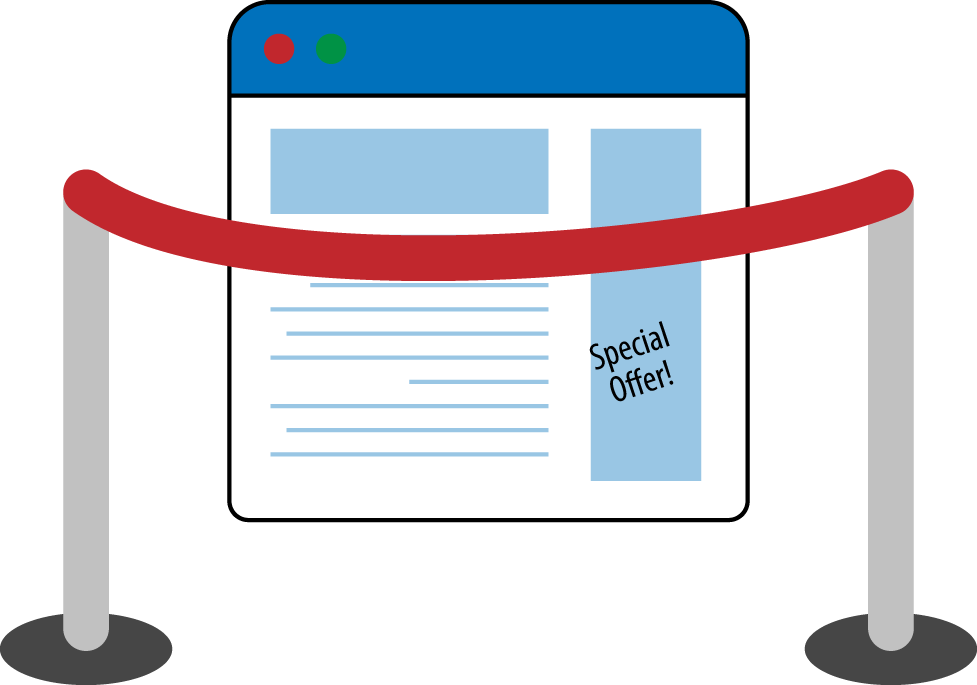
Figure 6-1. The Velvet Rope makes offers feel more exclusive and therefore more exciting
In an old campaign, we offered three devices from a new product line our client was about to put out on a popular crowdfunding site. These were cool gadgets nobody could get yet, but everyone wanted them. We had a segmented email list so we were able to identify who had signed up for email (and when), who was mostly opening those emails, and who had visited the site from said emails. We sent messages to the loyal visitors thanking them for their interest and offered the coveted device to the first responders by a certain date chosen at random. They had to fill out a quick form with two choices: to opt in to communications by the company and future product announcements (via a newsletter).
CONSENT MATTERS!
It doesn’t feel exclusive to anyone to hit a site and then get spammed immediately afterwards, especially if they have not signed up for email or any other offers. Asking for the opt-in is always worth the extra step because overall adoption rates are lower but click-throughs are higher.
The numbers feel lower when you ask for opt-ins, but the response is so much stronger that it’s always worth it. Do not place a high value on the number of subscribers in an email list, but rather ongoing trends. Are you getting more unsubscribes and spam reports each month or less?
Social Campaigns
Social fire has a way of making online things light up. Many companies create videos in hopes of making them viral from the outset, but that’s not really how it works. Every overnight success takes vast networks and channels to promote the content: it’s not just Reddit. If the social media campaign is thoroughly planned out and targeted to the right folks, a campaign will generally outperform more traditional marketing practices like direct mail and press releases.
Leverage built-in product features to get existing users to share the experience with new users. Cleverly integrating social sharing into post-sales only stands to benefit a company. Dropbox once gave away huge chunks of free storage in return for referrals, which helped them grow virally. Twitter noticed that users without followers in the first use of the platform seldom came back, so they curated choices for people to follow their interests.
Cross-posting across social media platforms is great when done correctly, however each platform needs a tailored approach. I would not share a picture of someone on a beach or at a bar if it was LinkedIn unless the company was selling vacations.
Real-time audience interaction is what makes social so fun. We’re seeing more and more publishers leverage Facebook Live’s capabilities because people can interact with friends, celebrities with fans, and the like. Periscope has made it easy to connect quickly with people who follow you. It’s not uncommon to see social media sites appearing more and more in the top of the SERPs.
SOCIAL CAMPAIGN TIPS
Social and SEO are like peanut butter and jelly. Put them together thoughtfully and reap rewards; here are a few tips:
· Use tracking URLs from your analytics suite, not just the tool you use for posting.
· Do not auto-post during a live event; it can get weird if the schedule slides a bit or unplanned events like inclement weather happen.
· Don’t pick a Twitter hashtag that is more than 14 characters, 10% of the total Tweet limit.
· Consider like-gating or action-gating to get what you want from the user.
· Maintain and build your list of contacts from social; they can be used to target ads or future promotions.
· If you’re worried about how something feels to your audience, then read those posts aloud before sending them out; it helps makes them more human.
Content Campaigns
When crafting content, it’s more important for it to make sense to the reader than for it to contain a bunch of keywords. The Google quality guidelines use an analogy I find a little funny but sweet, E-A-T: expertise, authoritativeness, and trustworthiness. Focus on creating compelling content. Always ask yourself, “Why on earth should they care about what I want them to?”
Blogs in the form of lists (i.e., listicles) do amazingly well as articles because people know what they’re getting. One can trust that the listicle will give them a TL;DR perspective of an article; it’s supposed to be an outline. TL;DR was very popular for a little while as a way to say, if you’re thinking this is too long, don’t read, then here’s all you need to know in a concise sentence or two. For example:
TL;DR: the steppe eagle (Figure 6-2) enjoys a majestic stature and plumage, which is notably dark brown.

Figure 6-2. Our steppe eagle friend is just hanging out, so effortlessly cool.
It was popular for a while to include a “TL;DR: insert summary here” at the top of an article to build user interest in a post. I could not find definitive statistics on how much the inclusion of said acronym and synopsis helped build trust. I do know from many years of experience that giving users what you are actually promising invariably reaps rewards. Retargeting is the subtle way to track people who’ve visited your site for a paid infusion of traffic. Sending out emails with recaps of blog posts, events, and sweet Tweets are always solid campaigns. If people are interested in what you’re doing, they’re likely to talk to you, so keep it real.
One campaign to coordinate boosting traffic bumps is sending out email to remind people within an organization to share content at coordinated times. It helps to also do external content creation like guest posting on Medium, LinkedIn Pulse, or other sites that allow guest contributions. Link to others when it makes sense from your content; this will help the engines categorize you.
Content does really well when it’s regularly created and promoted—if people are interested, of course! One of the reasons I believe that trending topics on Twitter happen is the regularity. Content can have the same effect with a group of opted-in followers. Over the years I have followed a myriad of companies’ email lists who simply did a good job of keeping me informed on things I wanted to know. Weekly recaps of top stories and content that’s useful to the person getting it can move mountains for a company.
Content also lies at the heart of SEO, so it’s not a horrible idea to post emails to the site if the content is new. Many companies have dozens of PDFs with rich product information that do not have consistent titling or meta descriptions, which are a good idea for branding alone. For a long time, we’ve been able to embed some extra information in PDF assets; it only takes a few minutes.
Typical digital content campaigns I’ve worked on often include the following mediums: landing pages or microsites tied to email, organic social, and paid social. It is considered a little more experimental by some to use social for traffic, but not as much as social bookmarking. Using Reddit to push out a press hit is definitely experimental, but some element of spice must be present to get a spark.
Crowdfunding Campaigns
Another great way to generate revenue for a site is to simply ask for it. The Maker Movement has inspired thousands of entrepreneurs to boldly go forth and create incredible new products and services. Millions of dollars have been raised via crowdfunding to support the efforts on these sites. People have also been using Kiva for over ten years to perform microlending on an international scale.
Launching a campaign to boost a crowdfunding campaign takes a lot of muscle. When done correctly, the rewards are monumental. Some of the most popular crowdfunding sites at the time of writing are GoFundMe, IndieGoGo, and Kickstarter (in no particular order). These crowdfunding sites have their own built-in audiences, but coordinated efforts can also be used to boost rankings. There have been a number of famous crowdfunding campaigns, but one of the most controversial (and viral) was for potato salad by Zach “Danger” Brown, who raised more than $50,000. LeVar Burton’s Reading Rainbow Kickstarter was also a very interesting campaign and raised a significant amount of literacy awareness and money for an important cause.
The most winning combination that I’ve used for crowdfunding success combines offline and online, social and paid. The common denominator between all activities should be hustle.
EXAMPLE CAMPAIGN
Every business wants to raise money quickly when they have a hot idea or new product to promote. I’ve worked on some hugely successful crowdfunding campaigns. The following are some tips from those experiences:
· Start talking to people you know; they will be the most motivated to help you. Just like selling knives door to door, a random stranger is less motivated to open the door to buy a knife than your mom is. It also generally helps to offer something before asking for something, like the classic offer of free pizza for helping someone move.
o Throw parties.
o Have lunches.
o Pick up the phone and tell people what you’re doing.
· Live events can catapult social if you own it and go full Tweet cover. People have gone viral simply by tweeting what they’re overhearing on airplanes. Some folks might consider this super rude. Hijacking events doesn’t mean being rude at events. There are ways to gain attention without having to host. Go to relevant conferences or meetups, attend them virtually if possible, or just participate in their Twitter hashtag discussion. Join the virtual conversation while taking part in the real-life conversation. Schedule the things you can ahead of time.
o Sponsor or cosponsor events that are relevant to your campaign audience.
o Host an event and list it on all locally relevant business sites.
· Use any and all email contact lists for Facebook dark ads.
· Places social ads targeted to friends of friends or people in a tight geological area.
· Coordinate a Product Hunt launch that is timed with the release of the post. Get friends and family lined up if you have to. It’s never a good idea to use a bunch of new accounts to vote on Product Hunt, as their algorithm tries to prevent this. Instead, they prefer to rely on the community.
· Identify relevant influencers.
o Outreach to individuals to invite them to participate.
o Deploy targeted ads on Twitter using their handles.
o Set up automated RSS via Twitter with a service like Twitterfeed to RT what they share.
Line up any press mentions or consider contributing guest blogs to news sites. Call upon your network for help and consider coordinating the publicity pops with sites like Reddit and Product Hunt.
Most stuff happens in meatspace. It can be argued that most of our lives will become virtualized, but until then we have to consider that offline activity can work in conjunction with online. There’s an increasing trend of growth marketers leveraging services like ring-down and outsourced call centers to give the appearance of a larger company.
CALL CENTER MAGIC
Organized effort when exerted via different mediums can have a cumulative effect. A recent new growth hacking trend has been to deploy low-cost call centers to provide services and follow-ups for potential customers. You can hire college interns or overseas vendors to create massive amounts of content. It’s considered more of a mechanical approach, but it can work effectively when part of an integrated campaign.
Growth Hacking IRL
Tying in offline rewards to online efforts reaps rich benefits. This section will cover a personal example of a guerilla marketing campaign turned into online social magic. Web forms are the transactional handshake of a website, because they contain the offer for a next step with the site. The growth hacker’s duty is to find the path to the acquisition: a promise of future communication, a booked appointment, or even a final sale.
SXSW (South By Southwest) is a digital marketing summit in Austin, Texas put on by top internet marketers; it’s their Catalina Wine Mixer (hat tip: Step Brothers). If you can kick off a successful campaign at the SXSW festival, then you’re sure to become internet-popular. I created my most successful campaign when I experienced a problem in real life. I had a seemingly valuable asset, but the luck of the draw was mixed: renters left my Austin rental house in extremely poor condition right before SXSW Interactive.
Sometimes the best growth campaigns are born out of pure fire, drama, or chaos. I was fired up both as a landlord and also as a marketer. The challenge then became clear to me: I needed to leverage a somewhat questionable asset for marketing purposes at SXSW instead of money. Eureka! The solution came to me while deep in thought; I would run a contest!
It was clear to me after surveying the house that I could not charge people money to stay there, even if I did get it cleaned up in time. The cosmetic damages were extensive and the time was short. I had very little furniture, and most of it was camping gear my parents kindly contributed. My roster was already full of clients to launch that year at SXSW so I knew I didn’t have time to run an Airbnb or rental situation. There was no time to throw together a bed and breakfast. Money comes with obligations (and expectations), ones I knew I couldn’t meet. For three days, my friends, my parents, some TaskRabbits, and I scrubbed and painted as best we could.
Quickly we put together a site with the contest rules and placed it on a bunch of social sites like Twitter, Facebook, and Reddit. My contest offer was this: help me on some of my projects and you can stay with me for free (Figure 6-3). It blew up (in a good way). There were too many entries to even respond to everyone.
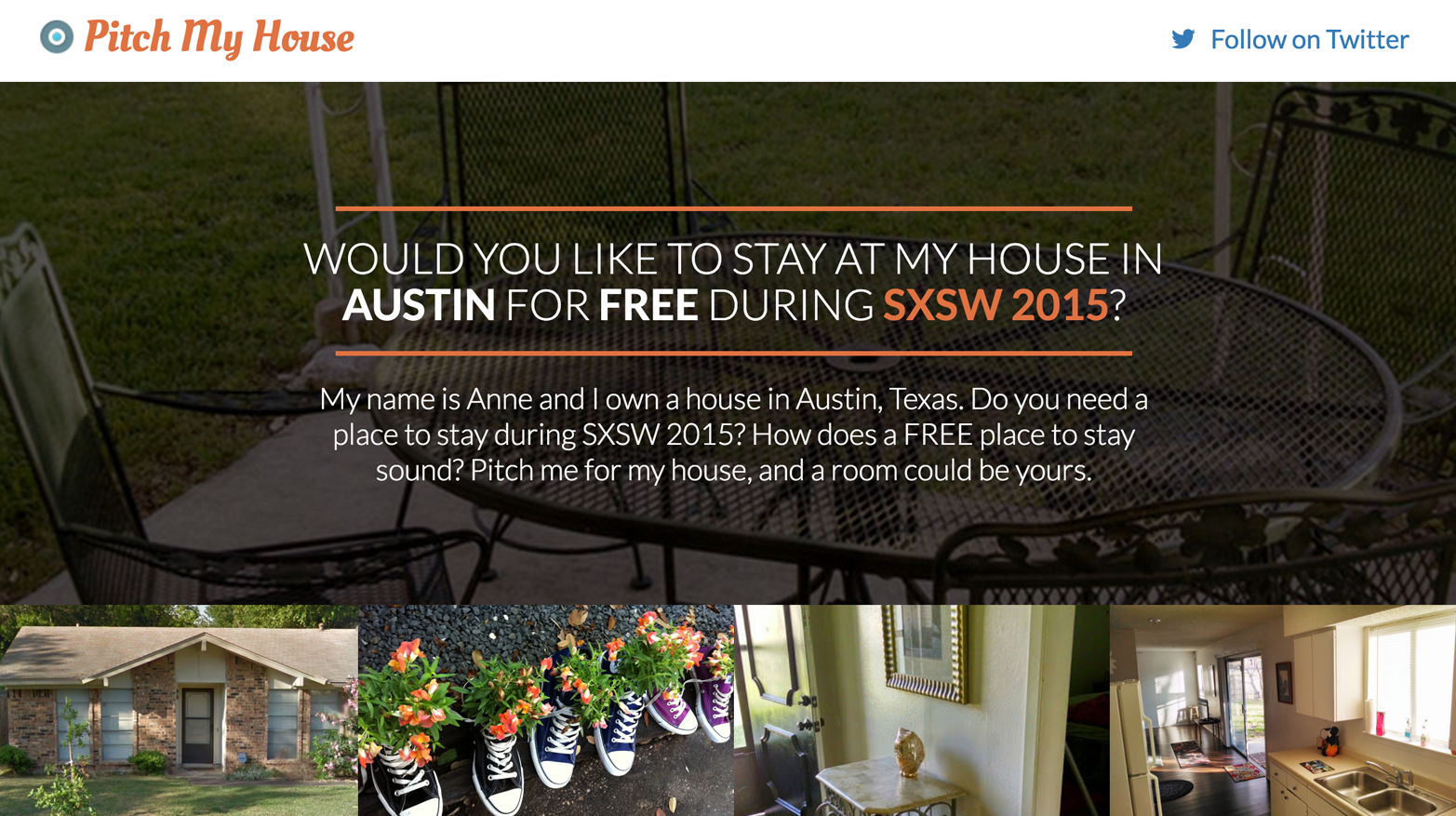
Figure 6-3. The last year we ran the SXSW contest.
People pitched their hearts out for a free place to stay at SXSW. Traffic jumped up overnight and we got press coverage. The winner of the contest that year was Funny or Die. We enjoyed some joint press coverage, thrilled all of our clients, and have been friends with Funny or Die ever since.
There is nothing wrong with a purely online campaign, but offline action is generally required for a transaction to occur. Campaigns combining offline with online experiences have the capacity to become the most powerful.
There have been a myriad of successful campaigns launching companies into the zeitgeist at SXSW and other conferences with a concentration of the right audience. Attention from a large marketing conference helps to boost a campaign, but it is not the only way. The best campaigns are those with a strong offer or CTA.
In the early internet marketing days, the most popular CTA used was “Click here” to evoke a user to click. Offers like “Learn More” and “Get Started” are convenient mainstays for internet marketers; these offers are so widely used that they often come with the templates themselves (not kidding). Offers become a tired concept to people when they’re overused. Boring or generic offers coupled with a lack of demonstrable value will prevent people from clicking a button on any website. A strong offer will also benefit overall search prominence by boosting the click-through rate.
The website or landing page’s CTA must convey value to intrigue the person enough so that they want to click through. Offers can vary wildly from classic to zany: get free assessments, talk to an expert, get more sleep tonight, stay awesome.
Time-based offers also perform well when the perception of value is communicated properly: an ending at a specific time or 50% off on President’s Day, for example. If your offer is for an open-ended amount of time, then do not attempt to use a time-based offer. If someone returns to the site more than once and sees the same time-based offer, it will create an aura of disingenuousness. It’s important to study analytics so that you can understand how well your CTAs are doing, and if they are translating into success.
An organization’s ability to learn, and translate that learning into action rapidly, is the ultimate competitive advantage.
Jack Welch, American business executive and author
Value comes directly from the perceptions of the individual on the other end of the screen. To convey value can be difficult, but it is entirely possible when you are in touch with your audience. What do they really need? Do you have it? Are you manufacturing a need or did it exist already? If so, how will you set the stage? These questions are at the heart of all marketing campaigns, be it paid or organic. If we’re going to ask someone to part with their hard-earned money, always expect that they will want an explanation with regards to who, when, where, what, and why. Failing to execute on the “why” of an offer almost always results in a click away from the site.
SNAPCHAT IS NOT BRIC-A-BRAC
Many analysts have postulated that Snapchat is the first augmented reality social network. I predict that augmented and virtual reality–based platforms will someday become one of the most popular ways we interact with marketing campaigns. Coupons will be delivered to us when we’re using tilt brush or playing games.
I have seen demonstrations of virtual-reality retail experiences and they’re breathtaking. Advertisers and marketers will seek to give customers a seamless online retail experience. More about the futuristic stuff later!
Whether your aim is guerrilla growth or the more consistent long-term type of growth, it’s important to get yourself into the right mindset. If you’re not the person who has creative ideas, work with someone who does. Elton John, Michael McDonald, and numerous other artists have performed some of their finest works in collaboration with others. All the stars in the sky burn just as bright. Brainstorm to find what’s compelling about what you’re promoting; it’s there if you’re looking.
You should also take a deeper look at the product you’re using, or actually use the service you’re promoting. On more occasions than I’d like to admit, I have found kinks in the flow of a new product or service. Every time we take on a new product or service at my agency, I sign up for it as a potential customer start-to-finish.
We once worked with a local moving company that was printing out all of the leads we were getting them. If the paper got lost, so did the lead. We created a simple pick-list CRM for them that acted as a spreadsheet. By being able to tag and put a status or a quick note on the lead, they were closing them at a much higher rate. If we had wanted it to at that time, our little gizmo could have become a product small companies needed. We knew the market was changing and it didn’t make sense to take that product to market, but it could have gone many different ways. By consistently identifying opportunities to connect the dots for other people’s needs, you’re able to identify growth in a sustainable way.
It’s not easy to be an agent of change for even the healthiest of organizations. The best marketers I’ve worked with are those who tinker, start trouble, and/or like to learn new things. They are not people who necessarily ask for permission before trying new things or follow a rigid path set by past glory. The best growth hackers I’ve seen are friendly but not necessarily socially outgoing. There is no one set personality type—just a general willingness to learn, measure, and persevere.
Now you’ll have the mad skills to run campaigns and drive traffic with the best of them. You’re going to need to make sure the site your SEOing is ready to handle the traffic, whether it be on mobile, tablet, or desktop. Optimizing your site before the campaign starts will make you more likely to succeed.