
6
Based on the primary principles underlying microbial physiology, it seems to be logical that soil enzymatic activity would be a good measure of soil biological activity and metabolic potential. Enzymes are the primary catalysts of biological transformations. Indeed, a variety of enzyme activities have been shown to directly relate to soil biological potential (e.g. Dick 1984; Nannipieri et al. 1979; Tate et al. 1991) but frequently, little or no correlation between the levels of essential enzymatic activities and microbial processes, such as soil respiration, is observed, suggesting that at least in some soil systems, synthesis of new enzyme molecules, total enzyme present, and substrate levels for specific enzyme activities are uncoupled. Clearly this is a seemingly contradictory situation involving basic principles of biochemical processes and the importance of a variety of enzymes as controllers of microbial growth and sustenance. Thus an initial consideration for understanding enzyme activities occurring in soil and the properties of the soil controlling these essential catalysts must involve elucidation of properties of the soil system that enable this apparent incongruity to occur.
Examples of the impact of soil physical and chemical properties of soil on biochemical processes catalyzed by extracellular enzymes (enzymes released from the cell producing it in order to catalyze a reaction providing a benefit for the cell) yield insights into the complexity of the forces limiting as well as supporting biological processes in soil systems. Barriers to benefit recovery by the cell include the probabilities of (i) the enzyme encountering its substrate in the soil matrix and (ii) the product of the reaction reaching the enzyme‐producing microbial cell. The first hurdle controlling this process results from fact that the microbes and the extracellular enzymes exist in a three‐dimensional environment. Once outside the cell, there is no assurance that the enzyme will move in the direction toward or away from its substrate. Similarly the driving forces controlling return of the product of the enzymatic reaction to the cell are also independent of control by the microbe. Thus, the probability is large that the enzyme may not encounter its substrate or that the product of its reaction may not return to the enzyme‐synthesizing cells.
For example, consider that a microbe is producing cellulase, the enzyme that converts cellulose to simple sugars. At first glance, considering that the cellulose may not be evenly distributed around the microbe, the enzyme molecule may not encounter the pool of cellulose existing in the vicinity of the microbial cell. Additionally, if the enzyme and its substrate interact, the glucose produced may diffuse or be transported away from rather than toward the microbe. The amount of cellulose in the soil, the total potential enzyme activity and any change in microbial population could be measured. If all or a meaningful portion of the glucose fails to reach the microbes synthesizing the cellulase, the logical, but wrong, conclusion that the cellulose is not supporting microbial growth could be reached. Everything required for the process to occur as understood from study of laboratory cultures occurred, except the spatial heterogeneity precluded return of the product to the microbes expending the energy to support the process. Were the process considered to involve retrieval of a required growth factor or vitamin, the enzyme‐producing cell must have an alternative means of supporting cell growth such as synthesizing the required product of the enzyme reaction de novo.
Another example of the complexity of soil structure complicating soil microbial development relates to the concurrent occurrence of the enzymes and the microbes producing them. The microbes and requisite processes could be separated in time. Again, our concept of enzymes in the field must be expanded beyond that normally acquired in general microbiology or biochemistry courses. After completion of those basic science studies, enzymes may be viewed as reasonably labile components of living cells. In a soil system, enzymes synthesized by members of the soil community may become separated from the cell producing them in time. In this situation, enzymes become covalently bound to soil humic substances; that is, they could be humified. Should this occur and the binding of the enzyme to the humic acid does not obscure the active site (location on the enzyme where the substrate interacts with the enzyme to be transformed into the product), the enzyme could still be active. The physical structure of the enzyme could be altered sufficiently for a change in the kinetics of the reaction to occur. Once humified, these enzymes assume degradation susceptibilities similar to those of the humic acid; that is, weeks, months, years, decades, even centuries. Thus, the bound enzyme can survive in soil long past the lifetime of the cell that produced it; that is, they are separated in time. A specific term – “abiontic” – has been coined to describe this situation (Skujins 1967). Recall abiotic indicates without life whereas biotic refers to the living systems. An abiontic substance is produced by the living system, but has been separated from the microbes synthesizing it. That is, the substance is a product of the living world but has become part of the nonliving world.
These introductory observations reveal the complexity of the ecosystem in which enzymes must function in soil and the importance of assessing the chemical and physical limitations to biological activity therein. Soil enzymes are essential in assessing ecosystem function yet the complexity of the soil system complicates interpretation of data involving these catalysts. Thus, this chapter is presented with the overall objective of developing a basic understanding of the nature of soil enzymes and their role in their ecosystem.
6.1 A Philosophical Basis for the Study of Soil Enzymes
Soil enzymology has been an accepted scientific study area for about 100 years. A large body of published reports document extensive scientific effort directed at (i) the evaluation of the variation in the quantities of numerous enzymatic activities with soil and ecosystem type as well as at (ii) the optimization of the procedures for measuring these activities. These data provide a basis for developing a conceptual model of the soil interactions affecting enzymatic activity.
As a starting point for understanding the diversity of soil enzymatic activity, it can be reasonably assumed that all enzymes necessary to support growth and replication of indigenous soil populations are present in all soil samples with active microbial populations. The impact of soil particulates (e.g. adsorption), chemical properties (e.g. pH, salinity), or the presence of inhibitors (e.g. heavy metals) may preclude direct quantification or result in underestimation of the total level of a enzymatic activity present in a soil sample, but the principles of comparative biochemistry predict that all essential metabolic enzymes are produced by metabolically active soil microbes. Levels of enzyme activities detected in a soil and their utility are impacted by (i) the diversity of natural and xenobiotic organic compounds of the soil system, the chemical and physical complexity of the system, and the extreme heterogeneity of the microsite wherein the enzymes must function as well as (ii) the history of the site (e.g. growth of invasive species, conversion of native lands to agricultural production or simply changing the cropping practices).
As noted above, all enzymatic activities required to sustain microbial life logically must be present in a biologically active soil. With this basis for anticipating the diversity and function of enzymes in soil, the next logical concerns in assessing their activity become how the varying physical and chemical properties of the soil matrix control the levels of enzyme activity expressed therein, which enzyme activities are best suited as indicators of the microbial potential, and how do enzyme levels relate to overall soil function and ecosystem sustainability? These questions will be considered through the examination of current and historical reports concerning use of soil enzymes as assessors of such concerns as properties of highly managed soils, chemically polluted soil systems, and reclamation of degraded soil ecosystems. Examples of studies relating to our general understanding of soil processes as well as practical applications to increase our understanding of soil biological responses to societal development on the productivity and sustainability of soil systems are examined. (For additional insight into these topics, see the review prepared by Burns et al. 2013.)
· Evaluation of basic properties of enzymes in soils: This would include determination of the source of the enzymatic activity, the kinetics of the process catalyzed, physical limitations to enzymatic activity, stability of the enzymatic activity in soil, and the variation of activity with soil and ecosystem type (e.g. Duxbury and Tate 1981; Sarkar et al. 1989; Tateno 1988; Zantua and Bremner 1975) as well as the basic reactions associated with nutrient cycling (e.g. the nitrogen, carbon, and phosphorus cycles) (e.g. Bowles et al. 2014; Turner et al. 2014). Specifically, phosphatases, sulfatases, and nitrogen oxide reductases have been used to estimate potential to catalyze essential portions of the carbon, phosphorus, sulfur, and nitrogen cycles, respectively (e.g. Häussling and Marschner 1989; Tarafdar and Jungk 1987; Tate 1984). General application of such studies is exemplified also by Stone et al. (2014) who noted that several enzymatic activities were useful for examining microbial physiological properties across several orders of magnitude of soil carbon in two soil orders (Oxisols and Inceptisols) at different elevations at six soil depths tropical forests in northeast Puerto Rico.
· Enzymes as an indicator of soil fertility: Soil fertility is based on a composite of soil traits, including both biological and abiotic soil properties. Examples of enzymatic activities studied as indicators of soil fertility include dehydrogenase, a variety of carbon cycle enzymes (e.g. cellulose, α‐glucosidase, β‐glucosidase, N‐acetyl‐β‐D‐glucosaminidase, β‐xylosidase, peroxidase, phenol oxidase, and cellobiohydrolase), nitrogen cycle enzymes (e.g. N‐acetyl glucosamindase) and phosphorus cycling enzymes (acid and alkaline phosphatase). Historically, considerable research effort has been expended to elucidate the relationship between these and other basic enzymatic activities and overall soil fertility (e.g. Moore and Russell 1972; Verstraete and Voets 1977). Considering the diversity of soil properties controlling enzymatic activity, contrasting conclusions regarding the utility of assessing specific soil enzymatic activities as direct indicators of soil fertility must be anticipated. For example, Moore and Russell (1972) found little linkage between dehydrogenase activity, an activity directly associated with microbial respiration, and soil fertility. Similar results were noted by Brendecke et al. (1993) with sewage sludge‐amended desert soils. Verstraete and Voets (1977) noted that yields of winter wheat related positively to phosphatase activity whereas a negative relationship of this enzymatic activity to sugar beet yields was observed. Soil enzymatic activity has also been shown to reflect cropping and soil management practices (e.g. Chander et al. 1997; Curci et al. 1997; Kramer et al. 2013; Mangalassery et al. 2015; Ross et al. 1995; Serrawittling et al. 1995).
The contrasting observations do not negate conclusions supporting the utility of enzymatic data in documenting enzyme–fertility relationships but rather they reveal the complexity of the relationships of enzyme, soil fertility, and associated soil properties. Thus, soil enzyme profiles may serve as an indicator of changes in soil structure and organic matter levels due to alteration of system management programs.
· Enzymatic activity as an indirect measure of microbial biomass: Considerable effort has been expended in determining the relationship between the levels of particular enzymatic activities and total microbial biomass or soil respiration. Theoretically, any metabolic activity expressed in active cells in concentrations proportional to the number of cells could be used to measure microbial biomass. This activity must be directly associated with the microbial cells and be rapidly inactivated or destroyed with cell death. A common enzymatic activity used to estimate microbial activity is dehydrogenase (e.g. Casida 1977). Dehydrogenase activity may be proportional to soil respiration but direct correlation with microbial population density is frequently not observed (Frankenberger and Dick 1983; Tabatabai 1982). Frankenberger and Dick (1983) found that alkaline phosphatase, amidase, α‐glucosidase, and dehydrogenase activities significantly correlated with microbial respiration in glucose‐amended soils. No correlation was measured in unamended soils. Alkaline phosphatase, amidase, and catalase activities did correlate with microbial biomass.
· Indicator of the effects of pollutants: General overall ecosystem stability is related to the “general health” of the soil microbial community. Disruption of soil microbial activity as shown by changes in levels of metabolic enzymes can serve as an estimate of ecosystem disruption. This relationship is clearly shown when soils are polluted with heavy metals or a variety of toxic organic compounds. In regard to the metals, the metal may combine with exposed enzymes through association with sulfhydral groups, thereby altering the tertiary structure of the protein sufficiently to reduce or destroy the enzymatic function (e.g. Cole 1977; Doelman and Haanstra 1979, 1989; Mathur and Sanderson 1980; Tyler 1981). For example, Doelman and Haanstra (1979) found increasing inhibition of soil respiration and dehydrogenase activities with increasing lead concentrations from 375 to 1500 μg Pb g−1 dry soil. Similarly, Cole (1977) noted inhibition of amylase, β‐glucosidase, and invertase in lead amended soils. Similarly, enzymatic activities can be reduced by inputs of toxic organic compounds. For example, Stromberger et al. (2005) noted that acid phosphatase and sulfatase were impacted more by methyl bromide than were dehydrogenases and β‐glucosidase. An example of differing impacts of organic pollutants on enzymatic activity was provided by Bello et al. (2013) for soils amended with 2,4‐dichlorophenol and 2,4,5‐trichlorophenol. In the latter study, the amount of pollutant added to the soil, the total soil carbon content, and soil pH appeared to be major controllers of the enzymatic activities. Fluctuations of soil enzymatic activities have been shown to be useful for quantification of changes in soil biological activities due to inputs of molecules ranging from carbon dioxide (useful for evaluation of soil community responses to global climate change) (e.g. see Kandeler et al. 2006; Nie et al. 2014) to complex organic wastes, such as organic compost from sewage sludge residues, municipal solid waste, or sheep manure or manure‐based biogas fermentation residues (Insam et al. 2015).
· Enzymes as a predictor of bioremediation: As the biological community is reestablished in damaged soils, associated enzyme activity increases. Similarly, in organic chemical‐contaminated soils, increases in enzymatic activities involved in mineralization of the pollutant serve as a predictor of capacity of native populations to return the soil to previously existing conditions (e.g. Burns and Edwards 1980; Dick et al. 1988; Klein et al. 1985; Stroo and Jencks 1982). Accordingly, a variety of enzymatic activities in soil have been used to monitor metal polluted sites, such as ecosystems associated with metal smelters (e.g. Brookes 1995; Kandeler et al. 1996; Kelly and Tate 1998). Enzymatic activity utility in assessing responses of soil quality to management processes is exemplified by research of Quideau et al. (2012), using β‐glucosidase, acid phosphatase, and phenol oxidase to examine the effect of amendment with several soil materials plus a range of fertilization treatments for oil sand reclamation in western Canada. Similarly β‐glucosidase activity was used along with various soil physical and chemical properties to assess the microbial response to use of high lime flue gas desulfurization product for reclamation of an abandoned surface coal mine in Ohio (USA) (Chen et al. 2013).
· Indicator of soil quality: Although soil is a renewable resource, restoration of damaged soil sites to their optimal functional level requires decades to centuries. (See Hillel (1991) for a discussion of the decline in the quality of world soils and the resultant impact on society.) Normal soil usage for sustenance of society commonly results in declines in soil quality. Therefore, it is vitally important to manage soils in a manner that maintains or optimizes soil quality. To accomplish this end, indicators are needed to assess changes in soil quality due to normal usage as well as determination of the success of reclamation‐management procedures (see Doran and Parkin (1994), Karlen et al. (1997), and Sims et al. (1997) for discussions of soil quality definitions, its assessment, and the importance of soil microbial communities in optimizing soil quality). One such tool for assessing changes in soil quality is measurement of basic soil enzymatic activity. Soil enzymes vary with management and are impacted by soil pollution. Therefore, they could be anticipated to be an indicator of variations in soil quality. For example, soil enzymatic activity has been used to assess remediation effects on industrially disturbed soils (Rowell and Florence 1993) and impacts of cropping history on soil quality parameters (Halvorson et al. 1996; Jordan et al. 1995; Miller and Dick 1995). Similarly, revegetation of desertified lands has been assessed with a variety of enzymatic activities (dehydrogenase, catalase, α‐ and β‐glucosidase, protease, and phosphatase) (Zhang et al. 2015).
With each of these examples, research results can be presented that demonstrate successful application of enzymological data to the achievement of the study objectives, but numerous failures have also been recorded. These conflicting results are frequently the product of a failure to fully consider the complexities of the soil environment. For a selected enzymatic activity to reflect the level of soil biological processes, the following criteria should be met.
· The enzymatic activity must be associated with living cells.
· The enzyme must be a participant in a biological reaction essential for the process of interest. (This point is particularly critical when attempting to relate enzymatic activity to soil fertility levels.)
· The activity measured must be proportional to the quantity of enzyme present. Active enzyme must not be obscured by large pools of soil‐stabilized, abiontic enzyme or occurrence of spontaneous chemical transformations of the same or similar processes as are catalyzed by the enzyme.
· The enzyme activity must be essential for the process of interest (i.e. alternate synthetic pathways must not be major contributors to the conversion or the proportion of the reaction rate contributed by the alternate route must not change as the soil condition is altered.)
These observations regarding the utility of enzymes as an indication of soil biological activity as well as the considerations regarding valid interpretation of the data reveal an underlying conceptual viewpoint of the soil enzymologist. The philosophical understanding of the soil enzymologist resembles that of a biologist evaluating the enzymatic activities of plant or animal tissue more closely than it does that of a bacteriologist studying pure cultures of bacteria growing under defined conditions. For the soil enzymologist, activity of the individual microbial species is less important than the sum of all metabolic activities occurring in the soil system. Each cell, enzyme, animal, or plant tissue sample is considered merely to be a part of the larger entity, the soil. From the view of a soil microbiologist (or perhaps a better term – ecosystem microbiologist), the function of the whole is frequently more important than the intricacies of the parts. This is not to say that the identity of the individual has been trivialized. Indeed, to gain a complete understanding of the contributors to ecosystem homeostasis, as well as ecosystem potential, the potential and expressed communities of each individual life form must be elucidated and understood, but it is their interactions as a “team” rather than their “stellar performances” that are generally of utmost importance for the sustenance of the total ecosystem.
6.2 Basic Soil Enzyme Properties
At the outset, it must be noted that the basic biochemical concepts relating to enzyme function and kinetics do not differ between soil ecosystems and those grown in test tubes. That is, enzymes are proteins whose activity is characterized by parameters reflective of the interaction between the enzyme, its substrates, and the products of the reaction. Synthesis rates of de novo enzymatic activity are controlled by cellular metabolic processes. Some enzymes are always produced by the cells (constitutive). Others are only produced when their activities are required (inducible). A third group is intermediate between these two groups. In the latter situation, some enzymatic activities are synthesized in low levels when no inducer is present and at high levels when the activity is fully induced. Apparent variation in enzyme properties as measured in soil, which appears to be contradictory to data collected in axenic cultures or with partially purified or characterized enzyme preparations, results from the interaction of the enzyme molecules and biological cells with the variety of chemical and physical components existent in the soil microsite. Thus, the following analysis is directed at delineating the common points between in situ function of enzymes in soil microsites and properties of these catalysts in purified or semi‐purified preparations studied in the laboratory as well as the divergence associated with understanding these entities in the laboratory and field. These observations do not indicate that unexpected results (compared to laboratory studies of more defined systems) are not encountered. Such situations present a challenge in that they can indicate that our concepts are wrong or that more research is needed to reveal the true conditions in the soil.
Soil enzymes as proteins: Enzymes are proteins that combine with their substrates in a stereospecific manner to catalyze biochemical reactions through the modification of stress on the molecular configuration around the chemical bonds at the site of catalysis, thereby lowering the activation energy of the reaction. This rather simple definition provides a basis for predicting modifications in enzymatic activity and limitations to the longevity of these activities that are imposed by soil properties.
Initial considerations relate to the proteinaceous nature of enzymes. These proteins are folded into a three‐dimensional structure that optimizes interactions with the substrates for the reaction. Located within this three‐dimensional structure of the protein is the enzyme's active site. The active site is the cleft in the molecule where the substrate(s) fit and are transformed into the product(s). The configuration of the active site is critical for the occurrence of the reaction. Minor changes in the structure of the protein in or around the active site can have major consequences on the rate of reaction. Thus, any soil properties that modify the protein's three‐dimensional structure can alter the enzymatic reaction rate. Examples of how the structural properties of the enzyme can be affected by chemical processes within the soil components include interactions with multivalent ions, by the ionic changes induced by variations in soil pH, changes in hydration due to desiccation, as well as by a covalent linkage to soil humic substances. The enzymatic reaction rate in soil is therefore dependent on the substrate concentrations, pH, ionic strength of the interstitial water, temperature as well as the presence or absence of a variety of enzyme inhibitors and activators. Some of these factors affect molecular configuration, whereas others involve the probability of interaction or collision of the substrate and the enzyme molecules.
Extreme disruption of the enzyme three‐dimensional structure is termed denaturation. This could be likened to the changes that we observe when egg albumin is heated to high temperatures. Denaturation of enzyme proteins in soil may be induced by pH extremes, high temperatures, and interaction with a variety of polyvalent metallic anions (such as mercury, copper, and cadmium).
Enzyme vs enzymatic activity: A basic aspect of describing soil enzymes is the terminology used to designate the nature of activity measured in a soil sample. It is not unusual to hear soil enzymologists state that a particular enzyme, e.g. phosphatase, was measured in a soil sample. Generally the activity assessed is the catalysis of an organophosphate‐producing inorganic phosphate under defined assay conditions. Considering that a variety of phosphatases capable of catalyzing the same reaction but with different reaction kinetics and differing optimal chemical and physical environments commonly occur in soil, for clarity, the only time that the specific name of the enzyme (i.e. phosphatase) should be used is when it is clearly demonstrated that the activity of a single enzyme has been measured especially; otherwise the specific reference should be to the enzyme activity (i.e. phosphatase activity for our example enzyme). This is particularly important for soil enzymology assessments since soils support complex biological communities functioning under highly varying optimal chemical and physical conditions. This nomenclature acknowledges the important concept that the amount of activity detected in a soil sample is the sum of contributions of all of the individual enzymes types functioning under the conditions existent in the soil sample at the time of assay. Thus, it is likely not characteristic of any specific individual enzyme.
A further qualification of the description of the soil process measured involves an indication of whether potential or actual field activity is being estimated. This point relates to enzyme kinetics parameters to be discussed later in this chapter and the specific assay conditions used to characterize the soil enzyme. Enzyme activities are generally measured in the laboratory under optimal chemical conditions with nonrate‐limiting substrate levels; however, in soil, rate‐limiting substrate concentrations generally occur and the enzyme must cope with such difficulties as suboptimal moisture, pH, or salinity conditions. Thus the activity measured in a test tube is the maximum rate at which the enzyme activity could be expressed, something probably rarely experienced in the soil sample. Thus, the value measured in soils is best referred to as the potential enzymatic activity.
Role of enzymes in soil: The most clearly delineated enzymatic activities in soils are those cytoplasmic activities associated with intermediary metabolism, especially energy production. Less distinct is the contribution of extracellular enzymes to the metabolism of living cells. Extracellular enzymes are secreted by soil organisms to solubolize or metabolize substrates external to the cell in order to produce nutrients needed by the microbes, to detoxify environmental substituents, or to modify the microenvironment of the living cell in a manner to improve the probability of cellular survival and ultimately replication. These enzymes are highly valuable for total ecosystem function as long as the products of their activity are available to living cells. Note that a positive benefit for ecosystem function may be credited to extracellular enzymes as long as any living entity benefits. Thus, the cell producing the enzyme may be at a disadvantage, but the community gains. Should these products or cells requiring the products of their activity not concurrently exist, the extracellular enzymes could be classed as having no ascribable role in the soil ecosystem. For stabilized enzymes involved in processes associated with soil nutrient cycles, a community benefit is more easily postulated. For example, phosphatase catalyzes the conversion of organic phosphates to mineral phosphate. This production of a required nutrient by a common soil enzyme clearly has a role in maintaining general soil fertility – in agricultural systems as well as in native, unmanaged ecosystems (i.e. those not receiving external phosphate sources).
Soil enzyme activity longevity: Since soil enzymes, be they within the living cell, existing free in soil interstitial water or bound to colloidal soil organic matter and clay particles, are proteins and since proteases (enzymes which hydrolyze proteins to amino acids) are ubiquitous in soil, enzymes are reasonable labile soil substituents. As indicated above, some enzymes may be stabilized in soil organic matter and therefore have a half‐life of decades or even centuries (Skujins and McLaren 1969), but most enzymatic activities are reasonably short‐lived. Those enzymes contained within cellular protoplasm, i.e. associated with intermediary metabolism, turn over at rates dictated by normal cellular metabolism. The change in enzyme concentration within the cell with time (dE/dt) is described by the following general equation:
(6.1)
For intracellular enzymes, these rates are controlled by the metabolic status of the cell. In a starving cell or even a resting cell, the decomposition rate may actually be much larger than the synthesis rate – especially for enzymes catalyzing nonessential processes – so that the quantity of a particular enzyme activity rapidly declines.
External to the cell, some enzymes may be stabilized by covalent linkage to soil humic acids. The physical attachment of the enzyme to these substances limits access to the enzyme by proteolytic enzymes, thereby reducing the potential for proteolysis. This covalent linkage of the enzyme proteins to soil organic matter also stabilizes the enzyme structure in a manner that reduces the potential for denaturation of the protein. For enzyme activities that are a combination of endo‐ and extracellular activities, the apparent change in total activity in soil is modulated by the quantity of stabilized enzyme. That is, total enzyme activity (ET) is described as follows:
(6.2)
where the quantity of cellular enzyme and its turnover rate are described by Eq. (6.1). The practical result of this relationship is that in systems containing large quantities of a particular stabilized enzyme, such as phosphatase, the changes in newly synthesized enzyme can be obscured by the quantity of stabilized enzyme. In these situations, quantities of enzyme measured in soil samples do not reflect variation in activity of the living biomass.
Stabilization of soil enzymes: Since a significant portion of the enzymatic activity detected in soil samples may be the result of enzymes covalently bound to colloidal soil organic matter or associated with clay particles, consideration of the nature of these stabilized proteins and the processes leading to their long‐lived state is meaningful. There are two major fates of enzymes lost from cells due to cell lysis or to active secretion of the proteins into the extracellular milieu: the proteins may be decomposed or they may be stabilized through linkage to soil humic materials or adsorption to clay minerals.
Enzymes whose native environment is the cell cytoplasm, the cell membrane, or the periplasm generally find the environment external to the cell harsh. These proteins are vulnerable to suboptimal pH, unfavorable ionic strength of soil interstitial water as well as the presence of denaturing agents, such as heavy metals. Sensitivity to the external milieu varies with the nature of the enzyme protein. For example, Frankenberger and Bingham (1982) found a differential sensitivity of a variety of intra‐ and extracellular enzyme activities to soil salinity. Dehydrogenase activity was limited by salinity whereas a variety of hydrolases were more resistant. The authors concluded that osmotic desiccation of the microbial cells may have resulted in release of the intracellular enzymes into the soil interstitial water and their subsequent proteolysis.
Adverse conditions tend to disrupt the protein structure in a manner to increase susceptibility to proteolytic activity. Within the cell, proteins may be protected by physical separation of the proteins and proteases as well as existence of the protein in a structure that limits or perhaps even precludes proteolytic attack. For example, should the terminal amino acid residues be protected by being embedded within the protein molecule, C‐ or N‐terminal‐specific proteases would not be able to initiate hydrolysis of the protein. This protection could be lost once the protein normally contained in the cytoplasm enters the soil environment. The conditions external to the cell encourage unraveling of the normally intracellular resident enzyme so that proteases may more easily attach to and cleave the protein.
Those enzymes that are synthesized by the cell and secreted for function external to the cell wall or membrane (extracellular enzymes) generally have a tertiary structure that is more strongly held together by covalent, hydrogen bonding, and ionic linkages than occurs with intracellular enzymes. Thus, extracellular proteins are more resistant to denaturation and proteolytic activity than are enzymes whose prime site of function is the protected core of the cellular protoplasm.
As indicated above, enzymes can be stabilized through ionic, hydrogen, or covalent bonding to soil humic materials. In situations where the linkages is through ionic or hydrogen bonds, the enzymes can be easily removed from the soil by washing in buffer suspensions. For example, peroxidases can frequently be easily extracted from soil suspensions (Bartha and Bordeleau 1969). Few enzyme molecules are extractable from soil with buffer solutions, so it is logical to conclude that this type of association between enzyme proteins and soil organic matter is somewhat uncommon. Similarly, although there are numerous reports of separation of soil enzyme activities from mineral matter (e.g. Ladd 1972; Perez‐Mateos et al. 1988), these purified enzyme preparations still contain humic substances associated with the proteins. Gosewinkel and Broadbent (1986) did separate about 3% of the phosphatase activity from a field soil with electron‐donating substances, suggesting a disruption of the enzyme‐humic acid covalent linkage. The proteins may be bound to humic acids through quinones by nucleophilic substitution, to sulfhydral groups, or to terminal and ε‐amino acids. In these situations, enzymatic activity of the proteins is maintained if the protein configuration is maintained and the bonding does not obscure the active site. Should either of the conditions not be met, then the enzyme would enter the class of humic acid‐bound proteins rather than being considered to be a soil‐stabilized enzyme.
The quantity and type of enzymatic activities stabilized in particular soil samples may be distinctive for the individual soil site, such that their analysis could be of value for forensic investigations. Thornton et al. (1975) found that phosphatase, arylsulfatase, urease, invertase, and trypsin activities in three soil series were sufficiently characteristic of the soils that soil samples collected within close proximity could be distinguished by their enzymatic patterns. Michaelis constants of the enzymes could be used to characterize the soil samples.
6.3 Principles of Enzyme Assays
To quantify a specific enzymatic activity in soil samples, knowledge of a variety of properties of the enzyme is essential, even if the activity of interest has been studied previously. In the latter situation, the enzyme assay must still be optimized for the particular soil of interest and perhaps modified to increase the probability of achievement of the experimental objectives. Contrasting goals for a study may be (i) to quantify total activity of a particular enzyme activity present in a soil sample or (ii) to elucidate the amount of that activity expressed in situ. These values may differ. For example, the enzyme activity may be measured in a buffer with a pH that is optimal for a particular enzymatic activity. This may allow determination of the highest rate of substrate transformation by an enzyme in the soil sample. Unfortunately few enzymes are functioning in soil at their optimal pH. Thus, activity values detected in buffered assays may show little relationship to real field catalysis rates. To best estimate field activity rates, the assay should approximate the conditions where the enzyme normally functions. Note that even if the assays are conducted at the prevailing soil pH, the level of activity detected still only reflects potential activity. This fact results again from the ideal conditions provided during the quantification of the enzymatic activity. Other variables generally optimized are substrate concentration, interaction of the substrate and enzyme (the assay mixtures are generally mixed while the enzyme is being quantified to maximize interaction between the enzyme and its products), and temperature.
To provide a reasonable and reproducible estimate of activity of an enzyme in situ in the soil sample, several properties of the enzyme and the reaction catalyzed must be understood in detail (see Tabatabai 1982 for a more detailed discussion of this point).
· The reaction catalyzed should be understood in stoichiometric detail. This includes knowledge of the reactants, the products as well as an understanding of the chemical and physical properties of each of these chemicals. These properties may be useful for quantification of the reactants and products of the enzymatic quantification. For example, a strong ultraviolate or visible light adsorption maximum could be exploited for a quick assay of product formation or substrate disappearance.
Competing fates of the product, or of the substrate, also must be understood. These can lead to over‐ or underestimation of the actual enzymatic activity. For example, sorption of the substrate to soil particles (such as clay) could result in production of data that suggest greater transformation of the substrate than actually occurs (if substrate disappearance serves as the indicator of the reaction). Alternatively, if product appearance is quantified, utilization of the product in another reaction could result in underestimation of the enzymatic activity.
· The requirement for chemicals besides the substrates for optimal enzyme reaction should be understood. This would include any necessary metal requirements for the proteins as well as electron acceptors. This is less of a problem for assay of enzymes in a crude milieu such as soil, but becomes a greater difficulty as the enzyme activity is “purified.”
· The kinetics of the reaction in relationship to substrate concentration must be elucidated. Enzyme assays are generally conducted with enzyme rate saturating concentrations of the substrate. This procedure results from the necessity of having the assay proportional to the quantity of enzyme present and not limited by the substrate levels. An exception to this is encountered when saturation levels of the substrate are inhibitory to the enzyme. In this situation the Vmax of the reaction can be used to estimate the quantity of the enzyme present. (See Section 6.4.)
· Even though the experimental objective may be to quantify the enzyme activity under field conditions, the optimum pH, temperature, and ionic strength of the enzyme activity should be understood. This is particularly important when a variety of soil types are to be assayed. Similar levels of enzyme protein may be present in each soil, yet the expressed activity could vary significantly due to occurrence of suboptimal chemical or physical conditions in either the soil or the reaction mixture.
· A suitable means of monitoring changes in the substrate or product must be developed. This is particularly important in the soil system since the altered conditions of the soil in the assay vessel could cause synthesis of new enzymatic activity or even, in rare situations, result in a decline in enzyme levels. Generally, it is more expeditious to measure changes in product levels since it is generally more accurate to quantify increases in level of a compound from zero than to measure slight changes in a substrate that is present in high concentrations.
Methodological difficulties of assessing soil enzymatic activity: Even after developing an apparently ideal assay for the enzyme activity of interest, application of the procedure to soil samples may be precluded or special considerations may be necessary in interpreting the results of the procedure. As has been stressed above, these difficulties arise primarily because of the complexity of the soil system and the reactions occurring therein. Four specific problems will be used to illustrate these difficulties: (i) biologically versus chemically catalyzed processes, (ii) complications due to microbial growth or enzyme synthesis during the assay time, (iii) stability of the enzyme products in the reaction mixture, and (iv) impact of sample treatment prior to enzyme assay.
Biological vs chemical catalyzed processes: Within the reasonably defined confines of a microbial culture vessel, it is somewhat easy to assign cause and effect to a particular process, i.e. biological and chemical reactions are usually easily distinguished. In soil, because of the potential for catalysis of organic transformations by clay particles, abiontic enzymes, as well as occurrence of spontaneous chemical reactions, such distinctions are much more difficult. It is not unusual for a chemical conversion to be catalyzed both biologically and chemically within the same soil sample, and perhaps even within the individual microsite. Although it is catalyzed by intracellular enzymes, denitrification provides an excellent example of the overlap between biologically catalyzed and spontaneous chemical reactions at acidic pH values. Denitrification is predominantly the result of enzymological catalysis of the reduction of nitrogen oxides in agricultural soils with mildly acidic (5.5–7.0) pH levels. As the soil pH declines, nitrogen oxides may be denitrified through spontaneous chemical reactions. At the acid pH extremes (<3.5), although it has been shown that biological denitrification can occur (Muller et al. 1980), it is generally assumed that chemical reactions predominate. At the intermediate pH ranges, both chemical and biological reactions can occur.
The question thus becomes, “How can biological and chemical processes be distinguished in soil?” Three reaction properties that may separate abiotic or biotic contributions to a soil process are the impact of sterilization of the soil on the reaction, heat stability of the enzymes, and reaction kinetics.
The most commonly used procedure for distinguishing biological processes from spontaneous chemical reactions is to assess activity in sterile soil controls. Biological activity may be destroyed by steam sterilization (121 °C, 15 psi), but a variety of chemical sterilants as well as radiation sterilization have been used. The assumption underlying these methods is that only the biological aspects of the soil are altered by the sterilization procedure and that the chemical processes continue at unaltered rates in the treated soil.
Ideally, an all‐or‐none effect on the reaction rate by sterilization is observed. Unfortunately, frequently, such easily interpreted data are not produced. The reaction rate may be reduced by sterilization but not precluded. Contributions to the intermediate effect include the possibility that the soil samples may not have been rendered sterile by the sterilization procedure, the process may actually be occurring as a result of chemical processes, at least in part, or sterilization of the soil created conditions where the chemical reaction could occur when it would not necessarily be anticipated to occur in the native soil sample. Radiation‐sterilized soil samples are particularly vulnerable to the latter problem. Radiation sterilization creates free radicals in the native soil organic matter. For transformations such as polymerization of aromatic ring‐containing compounds, formation of free radicals increases the probability of incorporation of aromatic ring‐containing chemicals, for example, into native soil organic matter as well as polymerization of the test compounds. Alternatively, the assumed sterility of the soil may not have been achieved or maintained during the analysis period. A sterility control must be conducted. Samples of the treated soil should be examined for surviving microbial populations, or any that developed subsequent to sterilization but prior to use in the experiments, by culturing soil samples in a variety of media. Testing for microbial growth in a single growth medium does not exclude the existence of viable microbes unable to grow in the test medium but capable of growth in an alternate medium.
Heat stability of the catalysts can also be used as a measure of enzyme‐catalyzed reactions. Proteins are denatured quickly (within minutes) by temperatures above 55 °C. Thus, heating of a soil sample at 55 °C for approximately 30 minutes should result in destruction of an enzyme‐catalyzed reaction. Again, interpretation of soils data must be tempered with the realization that proteins stabilized in native soil organic matter may become reasonably heat resistant. Thus, a portion of the enzyme activity may survive the heat shock.
A further consideration in differentiating chemical and biological soil processes relates to reaction kinetics. As shown below, saturation kinetics are observed with enzyme‐catalyzed processes. As the substrate concentration is increased in the reaction mixture, a level is reached where no further increase in reaction rate is detected (see Figure 6.1). The reaction becomes proportional to the quantity of catalyst present rather than the substrate concentration. In contrast, increased concentrations of reactants in a chemically catalyzed mixture generally leads to increased product yields until another rate limitation is imposed, such as substrate solubility. Therefore, an evaluation of the reaction kinetics can frequently be used as an indicator of biological vs chemically catalyzed reactions.
Complications due to microbial growth or enzyme synthesis: Another methodological difficulty is associated with the assay procedure itself. Again, with a defined mixture of enzyme substrates, cofactors, and buffer, it is reasonably easy to keep the principles (the enzyme concentration and substrates, including any requisite cofactors) at constant or saturating levels throughout the assay period. This is frequently difficult, if not impossible, in evaluating soil enzyme activities. Soil samples are a complex mixture of substances that may allow replication of enzyme‐producing cells as well as de novo enzyme synthesis by preexisting microbial populations. Conditions are generally ideal for growth of the enzyme‐producing microbial cells or synthesis of nascent enzyme during enzyme assays.
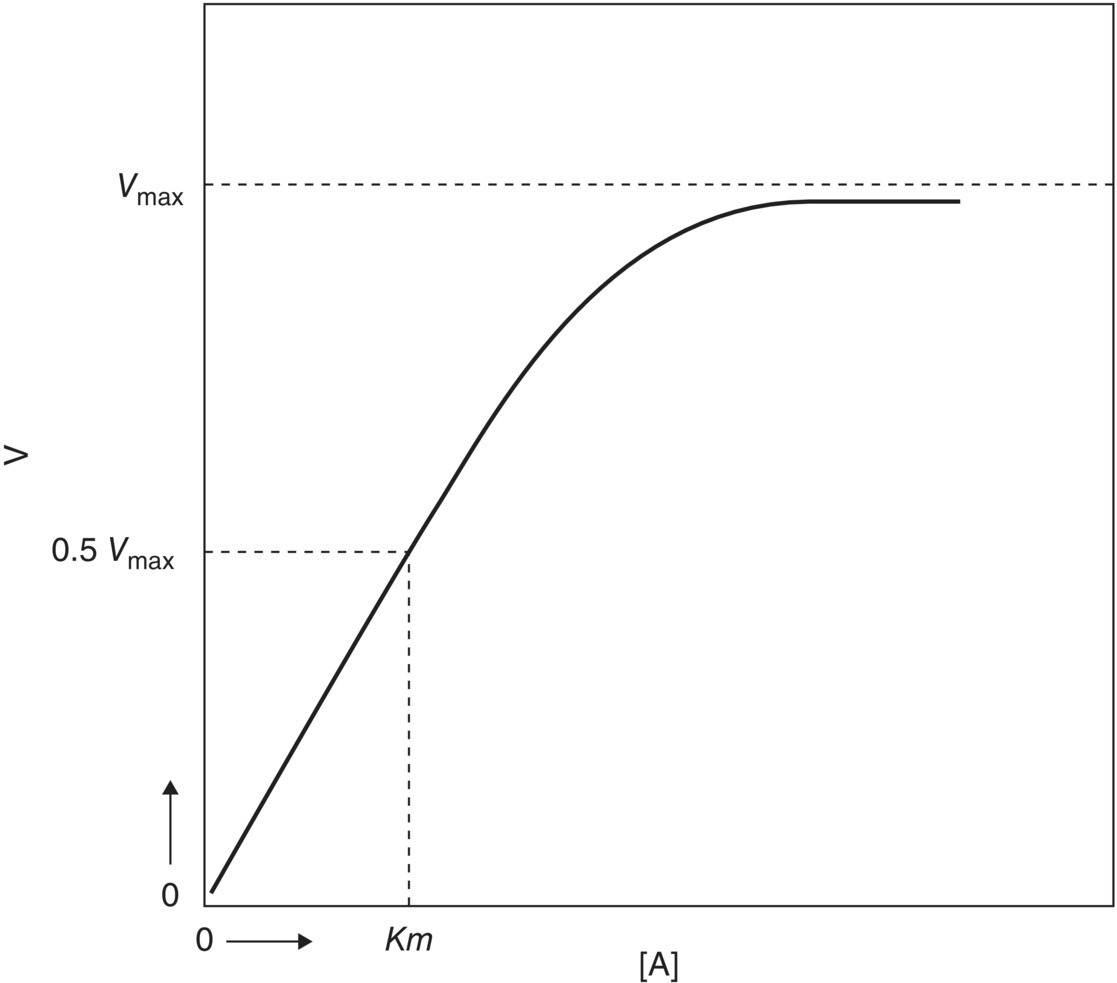
Figure 6.1 Generalized rate curve for an enzyme‐catalyzed reaction where Vmax is the maximum reaction rate, v is the reaction rate, and [A] is a substrate for the enzyme.
Since the objective with any assay procedure is to determine the quantity of enzyme activity present in the soil sample prior to assay, not that produced during the quantification procedure, enzyme synthesis must be prevented, or at least minimized. For assays of a few minutes duration, enzyme synthesis is not a significant problem, but some procedures require incubation times of several hours for adequate product to be synthesized for accurate quantification. For example, phosphatase and some protease activity measurements require 4–6 hours or longer. A variety of microbial growth or protein synthesis inhibitors may be incorporated into the enzyme assay mixture. Inhibitors of microbial growth commonly used in soil enzyme assays are toluene, γ‐irradiation, and antibiotics. Toluene (10–25% [volume/volume] concentrations) is the oldest, and is still relatively commonly used. The inhibitory mechanism of toluene is primarily the dissolution of cell membranes. Therefore toluene inhibition of cell growth is most useful for assessment of extracellular enzyme activity and for those activities where disruption of the cell membrane does not affect the activity. It has been used for phosphatase and invertase activities. Dehydrogenase activity – a nondescript enzyme activity that is associated with intact cell membranes – is inhibited by toluene inhibition.
In contrast, irradiation of cells with 5–10 Mev electron bean, hard x‐rays or γ‐rays is useful for assay of intracellular as well as extracellular enzymatic activity. Of consideration in using irradiation is the differential sensitivity of soil biomass and the potential to effect spontaneous chemical reactions. (See Skujins (1967) for a more complete discussion of radiation sterilization applicability to enzymatic assays.)
Antibiotics have also been used to prevent de novo protein synthesis during soil enzyme and respiration measurements. Considerations in interpretation of data derived from use of antibiotic inhibitors relate to the differential sensitivity of soil biomass (bacteriocides versus fungicides), inactivation of the antibiotic due to adsorption to soil components, and biodegradation susceptibility of the inhibitors. The degree of inhibition and specificity of the antibiotic should be examined for each soil type to be used in the individual study.
Stability of enzyme products in the assay mixture: Further methodological complication to be considered in developing enzyme assays involves the fate of the reaction product. As indicated above, the most sensitive enzyme assays involve quantification of the reaction product. With defined systems, it is relatively easy to chose a substrate or modified substrate that yields products that are not further metabolized within the reaction mixture. This goal is frequently not possible with an ill‐defined soil sample. The product of the enzyme activity may be an ideal substrate for other microbes or enzymes existent in the soil mixture. For example, it is common to measure carbohydrases by quantifying the monosaccharide production rate, but in soil, monosaccharides are easily degraded, and frequently short‐lived. Thus, a control for such assays must involve a determination of the longevity of the monosaccharide yielded by the enzyme.
Impact of sample treatment prior to enzyme activity assessment: The final methodological problem to be analyzed herein relates to soil sample storage techniques. Few enzymatic activities can be measured immediately upon selection of representative soil samples. Soil samples must be collected, transported to the laboratory, generally stored for some period of time, and then assayed. Procedural details that may impact the accuracy of the enzyme assay include conditions during sample storage (temperature [−21 or 4 °C, or room temperature] or moisture [field moisture or air dried]), sterilization procedure for the assay, reaction conditions (pH, temperature, etc.), and static versus agitated incubation of the reaction vessel. Controls must be used to estimate changes in field enzyme levels by each of these procedural variations.
Along with the controls indicated above, any enzyme assay procedure must include a no soil control (to demonstrate stability of the reaction mixture and with colorimetric assays, to indicate background absorbance of the reaction mixture) plus a no substrate control. With the chemical complexity of soils, the possibility exists for compounds to occur in the soil sample that mimic the product to be assayed or sufficient substrate may preexist in the soil sample to allow the synthesis of the reaction product in the absence of amended substrate.
6.4 Enzyme Kinetics
Evaluation of the impact of substrate concentration on rate of product formation of an enzyme catalyzed reaction (i.e. measurement of the kinetics of the enzymatic catalyzed reaction) is a valuable means for elucidating such enzyme and ecosystem properties as the following:
· the properties of the soil microsite in which the enzyme is functioning
· the number of enzymes catalyzing the reaction of interest that are present in the soil sample
· the total amount of enzyme in a soil sample, and the impact of soil properties on expression of the enzyme activity.
This type of assessment generally involves determination of process reaction rates with increasing substrate concentration, under otherwise constant assay conditions. Rates of soil biological processes are generally either zero‐order (the reaction rate is constant and independent of the substrate concentration) or first‐order (the rate is proportional to the substrate concentration). Modification of incubation temperature, pH, ionic strength of the incubation solution, plus alteration in concentration of minor elements or cofactors required for the reaction may have a significant impact on the reaction rates.
Zero‐order biological processes in soil: The disappearance of substrate (dS/dt) for zero‐order reactions is described by the following simple equation:
(6.3)
The constant k is independent of substrate concentration and thus is proportional to total enzyme. Although first‐order kinetics are more commonly recorded with soil enzyme‐catalyzed reactions, zero‐order kinetics are frequently encountered, especially in situations where the substrate concentrations used in the assay procedure are meaningfully larger than would normally exist in the soil site.
Observations of zero‐order kinetics for soil processes commonly reflect availability of the rate‐limiting substrate for the transformation rather than a basic property of the enzyme protein. Note that with the first‐order reaction curve (as depicted in Figure 6.1), in the presence of high substrate concentrations the reaction rate is independent of increased substrate amendment. That is, the enzyme present in the reaction mixture is saturated and no further increase in the reaction rate due to increases in the amount of substrate in the mixture is possible. Any enzyme reaction may thus appear to be zero‐order if rate‐saturating quantities of substrate (i) are used in the reaction mixture to quantify the enzymatic activity or (ii) are already existent in the soil sample due to the presence of high indigenous levels of reactants. (This saturation velocity will not be apparent with enzymes that are inhibited by high substrate concentrations. With inhibition of the enzyme, the reaction rate actually declines with increasing substrate availability is elevated too high.) Thus, it is highly probable that some reactions considered to be zero‐order in native soil samples are in reality first‐order processes functioning at saturating levels of substrate.
Alternatively, zero‐order kinetics are also observed when access to the enzyme by the substrate is limited. In this situation, the reaction rate is controlled by the rate of encounter of the enzyme and protein. This situation occurs when the substrate must diffuse to the site where the enzyme is located or where the substrate availability is controlled by its limited water solubility. In the latter situation, the effective concentration of the substrate is controlled by its dissolution rate.
First‐order processes in soil: In contrast, rates of first‐order processes are substrate dependent. The most commonly used mathematical representation for first‐order reactions is the Michaelis–Menten equation. This relationship and some common transformations are presented in Figure 6.2. Other mathematical models have been developed for describing first‐order reaction kinetics, but most soil enzymology is still based on the Michaelis–Menten equation. Note that the Michaelis constant (Km) is proportional to three rate constants in the general enzyme reaction depicted and the maximum reaction velocity (Vmax) is proportional to the total quantity of enzyme in the reaction mixture. (Those unfamiliar with the derivation of the basic Michaelis–Menten relationship should consult an elementary biochemistry text.)

Figure 6.2 Michaelis–Menton equation and some conversions which are useful in calculating kinetic constants.
Plotting the reaction rate vs substrate concentration yields a hyperbolic curve (Figure 6.1). Note that the Michaelis constant is that concentration of substrate that allows the reaction to proceed at one half the maximum velocity (0.5 Vmax = Km). whereas 0.1 Km and 10 Km are approximately equivalent to 0.1 and 0.9 Vmax.
It is difficult to derive rate constant values from a hyperbola. The maximum velocity is an asymptote and it is reasonably difficult to distinguish with precision the substrate concentration yielding half the maximum velocity for determination of the Michaelis constant. Therefore, a variety of mathematical transformations have been derived for the reaction which result in straight lines when plotted (Figure 6.2). With the Lineweaver Burk Transformation, the slope of the line is equal to the Michaelis constant divided by the maximum velocity (Km/Vmax) whereas the x‐intercept is the reciprocal of the maximum velocity. These values can thus be easily determined by linear regression of the reciprocals of the reaction velocity and substrate concentration data.
Compromises associated with determination of Michaelis constants in whole soils: Michaelis constants derived from study of whole soils rather than purified extracts in defined mixtures are best termed apparent Michaelis constants (Kapp). This conclusion is based on the following enzymological principles. Michaelis constants are a parameter characteristic of purified enzymes. The reaction kinetics are determined using carefully defined conditions. Therefore, values derived for enzyme activities assessed in suspensions of soil particulates may not reflect the same properties that would be derived from study of the same enzyme molecules exclusive of the undefined soil matrix. Difficulties in interpreting and assigning Michaelis constants to soil enzymatic activities result from the following.
· The existence of multiple enzymes capable of catalyzing the reaction in the soil system.
· Competing reactions for the substrate (resulting in a lower concentration of substrate available to the enzyme than assumed by the experimenter).
· The existence of a rate‐limiting step before the substrate reaches the enzyme of interest, which may include the enzymatic activity facilitating transport of the substrate into the cell where catalysis can occur or diffusion limitations of the substrate into the microsite of enzyme activity.
Additionally, abiotic difficulties in assessing and interpreting Michaelis constant data include complications associated with substrate adsorption to clay particles (whereby desorption of the bound substrate becomes the factor controlling enzyme substrate encounters). Suboptimal conditions for the occurrence of the reaction (e.g. presence of inhibitors, unfavorable pH, or salinity levels) may also cause inaccuracies in assessing Michaelis constants of soil enzymes.
The importance of site variation in substrate concentration on enzyme reaction rates can be seen in a classical study conducted by Tabatabai and Bremner (1971). The arylsulfatase and phosphatase activities in a variety of Iowa surface soils were assessed. These workers found that the Michaelis constant varied with soil type (as would be expected) as well as with incubation procedure. Continuous mixing of the soil samples resulted in lower Michaelis constants than were detected in static samples. The elevated Michaelis constant in the static samples reflected the reduced availability of the substrates to the enzyme. Soil particles containing the enzyme activities of interest settled to the base of the test tube during the incubation period in the static soil samples. The reaction rate was dependent upon the quantity of substrate present therefore in the base of the tube and not the total concentration in the reaction vessel. Furthermore, the quantity of substrate in the settled soil was controlled by diffusion, a slow process. Once the localized substrate in the soil mass was exhausted, its restoration was slow. Thus, the Michaelis constants derived from the static systems were a product of the assay procedure and not necessarily related to the actual enzyme capability of the soil samples.
Application of K m values to detection of occurrences of isoenzymes in soil: Apparent Michaelis constants can be used to demonstrate multiple enzyme forms in soil. For example, Nannipieri et al. (1980) measured a variety of enzyme activities in soil and plotted the results using Eadie–Scatchard plots. Generic examples of the types of data from this analytical procedure are shown in Figure 6.3. With a single enzyme, a linear relationship is observed (Figure 6.3a), whereas with two distinct enzymes a break in the kinetics curve is detected. The data actually appear to be nonlinear, but in reality fit two straight lines (Figure 6.3b). In the situation for activity resulting from two enzymes, the reaction rate is described by the following equation:
(6.4)
As the number of different types of enzyme proteins increases, clearly the complexity of the reaction increases. The procedure cannot be used for all combinations of enzymes. Problems are encountered with isoenzymes having highly divergent kinetics constants (Figure 6.3c). The rate curve for an enzyme with a high maximum velocity and low apparent Michaelis constant would totally overshadow the curve descriptive of an enzyme with a low maximum velocity and a high apparent Michaelis constant. In this situation, the reaction would appear to result from the activity of a single enzyme. This is an excellent means of analyzing multiple forms of enzymes in soil under the simple conditions described, but frequently the data are too complicated for such an analysis.
6.5 Distribution of Enzymes in Soil Organic Components
Experimental design for study of soil enzymological activities and interpretation of data derived from such studies must be based on a thorough understanding of the complexities of distribution of the enzyme proteins within the soil matrix. As indicated above, enzyme reaction kinetics are controlled by the degree of exposure to a variety of inhibitors and limiting chemical conditions in soil. Differential protection is derived from containment in cellular structures, suspension in soil interstitial water or linkage to soil colloids. A conceptual model of enzyme pools in soil and the movement of these materials between the various organic matter pools is presented in Figure 6.4. Central to the concept of enzyme function in soil is the living cell. From a teleological viewpoint, it is for the function of the living cells that enzymes are initially synthesized. Thus, the cell must occupy the central position of the model. Two classes of enzyme molecules are linked to the living cell (for this consideration, the classic definition of a living cell will be used, i.e. a living cell is one that is capable of reproduction). The cell contains intracellular enzymes and is the primary source of extracellular enzymes.

Figure 6.3 Use of Eadie–Scatchard plots to distinguish multiple forms of enzymes in soil. (a) Example of plot of data resulting from activity of a single enzyme; (b) plots demonstrating occurrence of two distinct enzymatic activities; (c) situation where multiple forms of an enzymatic activity are obscured by divergent kinetics of the two isoenzymes.

Figure 6.4 Conceptual model of the distribution of enzymatic activity within major soil enzyme reservoirs.
Intracellular enzyme activities are those found in living microbial, plant, and animal cells. In most studies of soil enzymes, those activities associated with animal and plant cells are of less significance than those of fungal, actinomycete, and bacterial cells simply because of the mass of each cell type and their contribution to total soil respiratory and metabolic activity. Recall that in preparation of soil samples for analysis, recognizable plant material is generally removed. Most intracellular enzymes are involved in the various aspects of cellular metabolism, e.g. glycolysis, Krebbs cycle, etc. These enzymes cannot function outside the cell due to cofactor requirements and sensitivity to variation in pH, redox potential, heavy metals and other inhibitory physical conditions. For example, a variety of polyphenyl oxidases contain ferrous iron in their active center. Exposure to molecular oxygen results in oxidation of the ferrous ion to ferric ion and inactivation of the enzyme. Some intracellular enzymes are capable of maintaining their activity upon cell lysis (e.g. some proteases), but generally intracellular enzymes are short‐lived outside the protective environment of the cell.
Other enzymes that are directly associated with respiring microbial cells and therefore are not classed as extracellular enzymes per se are periplasmic (the enzymatic activities of gram‐negative bacteria and enzymes attached to the outer surface of viable cells). The activity of the latter enzymes extends into the ambient medium. In culture, periplasmic activities are distinguished from cytoplasmic enzymes by conversion of the cell to spheroplasts. This determination is clearly difficult to accomplish with soil samples, but it can be concluded that enzymes that exist in the periplasmic space in culture would also exist in soil. Examples of this class of enzymes include alkaline phosphatase and penicillinase. Leakage of periplasmic enzymes into the external milieu would results in their being classified as extracellular enzymes.
Enzymes attached to the outer surface of viable cells are usually defined as extracellular since their activity is directed toward external functions. These enzyme activities are exemplified by a variety of bacterial polysaccharidases, but enzymes embedded in the extracellular gum of plant roots (mucigel) may also be included in this category. These enzymes catalyze the conversion of molecules whose structure precludes transport through the cell membrane into the cell into small permeable molecules.
True extracellular enzymes are those enzymes that are secreted by living cells during normal cell growth and division. These activities are found soluble in soil interstitial water. Most extracellular enzymes have low molecular weights (20 000–40 000) and are produced abundantly in soil by gram‐positive bacteria, fungi, and plant roots. An easy means of differentiating extracellular enzymes is by their function. If their substrates cannot enter the cell, then it may be concluded a priori that the enzymes catalyzing their hydrolysis must function external to the cell membrane. Examples of such enzymes include those responsible for hydrolysis of high molecular weight or water‐insoluble polymers (cellulose, hemicellulose, etc.), those involved in destruction of toxins, and those associated with dissolution of host tissue prior to invasion by a pathogen.
Other pools for activities normally classed as being intracellular are those enzymes contained in nonproliferating cells (fungal spores, protozoan cysts, plant seeds, bacterial endospores), attached to or contained within entire dead cells, and those linked to cell debris. Enzymes of nonproliferating cells are generally surrounded by thick, biodegradation‐resistant walls. Thus, these activities are not detected in enzyme assays as commonly conducted unless a procedure is included that disrupts the cell structure. This task can be accomplished through sonic oscillation. Cell debris‐associated enzymes are those linked to cell membranes, cell walls, plus internal structures of eukaryotic cells. These structures are rapidly decomposed, but the continuing turnover of microbial biomass assures a constant, low level of enzymes existent in this class. These group of enzymatic activities mostly includes hydrolytic activities. Longevity of enzymes in this grouping is dependent upon the degree of protection afforded by and the life‐time of the cellular structure in which the enzyme is contained (cell membrane or wall) as well as the sensitivity of the enzyme to the soil environment.
Enzymes that have become stabilized in humic matter and associated with clays (abiontic enzymes) are more problematic in developing enzymes study protocols and in interpretation of experimental results than any of the enzyme pools outlined above. Synthesis of the former enzymes was induced in the cells to meet an existing need but the enzyme activities were uncoupled from the soil biomass through association with abiotic soil components. Thus, although these enzymatic activities may be significant contributors to total activity detected in a soil sample, their presence in the soil sample may not relate to actual biological processes occurring therein. Soil‐stabilized enzyme activities are a major contributor to weak or negative correlation of enzymatic activity with soil biogeochemical processes. They provide a background from which it may be difficult, if not impossible, to distinguish the modulations in cell‐associated enzymatic activity. The stability of extracellular enzymes relates primarily to the longevity of humic polymers and any association with cellular function may be fortuitous. Benefit to soil biomass from these activities results entirely from the potential for enzymatic catalyzed products to diffuse to active cells.
An example of a practical implication of this dynamic distribution of soil enzymes among biotic and abiontic soil fractions is the interpretation of data derived from the analysis of air dried soils. Drying of the soil may result in redistribution of enzyme proteins among these intracellular, extracellular, and abiontic pools. Desiccation may result in death of some viable cells, lysis of viable cells and whole dead cells, as well as disruption of soil aggregates where humic or clay‐associated enzymatic activity may have been occluded and therefore not able to be an active participant in soil biochemical activities. Thus, although an enzymatic activity level can be measured in air‐dried soils, extrapolation of the results to actual field conditions may be difficult, if not impossible. In reality, drying of the soils creates a new ecosystem with some relationship to the native site from which the soil was collected but with new and perhaps unique properties resulting from the altered physical state of the soil.
6.6 Ecology of Extracellular Enzymes
If we may take the liberty of personifying the soil microbe, we may note that the microorganism residing in soil is faced with a major dilemma. Considerable potential energy resources that are not water soluble exist in the soil. These cannot be consumed by microbes until they are converted to a form that is moved to the microbial cell and readily transported across the cell membrane. A survival advantage is derived by any cell capable of using these substances as a carbon and energy source. The difficulty encountered is that extracellular enzymes must be used in transforming the external energy sources into units that can be consumed. These enzymes are an inefficient but essential means of procuring this energy since the probability of their function in soil and the subsequent recovery of the product of their action by the enzyme‐producing cell is limited.
As indicated above, soil is an unfavorable environment for any enzyme. Even if the protein is not denatured, adsorbed, or inactivated, it may not encounter its substrate because of the heterogeneity of soil and the tendency of soil organic components to be occluded by soil mineral particulates. Furthermore, if the substrate and enzyme are found in the same microsite, the substrate concentrations may not be sufficient for optimal enzyme activity. Even if the enzyme encounters substrate in sufficient quantities to produce beneficial levels of the product, the transformation may be hindered by soil physical or chemical conditions. For example, enzyme reactions occur in a water matrix. Drying of the soil may result in too little moisture for continued enzyme activity. Even if all impediments to expression of an extracellular enzyme activity are avoided, one final difficulty must be overcome before the cell which originally synthesized the enzyme benefits from expenditure of energy resources to produce the extracellular enzyme protein. The product of the reaction must reach the cell. Since soil is a three‐dimensional entity, the water‐soluble product of extracellular enzyme catalysis may diffuse or be leached in paths that lead it away from the “hungry” cell. The product of the extracellular enzyme may also be consumed by cells other than the extracellular enzyme‐producing cell.
A variety of adaptations increase the probability of success of extracellular enzymes. Synthesis of the extracellular enzyme may be dependent upon the presence of the substrate in the vicinity of the cell. This phenomenon reduces the probability of synthesis and excretion of enzymes with no possibility of energy gain. One means for this adaptation to be effective is for the cell to continuously synthesize a low level of the enzyme. Full enzyme production occurs only when the enzyme's substrate is present in the region of the cell. When the extracellular enzyme synthesized during the noninduced period encounters its substrate, a product is yielded that induces full enzyme synthesis. The reduced enzyme production in the absence of the enzyme substrate reduces energy expenditure and is of survival advantage to the microbe. This mechanism would only be advantageous to the growing cell in sites where there is a reasonable probability of encountering the substrate. Otherwise, the synthesis of even low levels of the enzyme would be a waste of metabolic energy.
A variation on the limited induction mechanism involves organisms for which the synthesis of the extracellular enzymatic activity is totally inducible, i.e. no extracellular enzyme is synthesized in the absence of its substrate. This condition is advantageous in that no energy would be wasted in synthesis of unnecessary enzyme molecules. A price is extracted in that the response to an influx of metabolizable substrate is slow since de novo enzyme synthesis must be induced. Enzyme induction would involve one of the following mechanisms: (i) production of soluble inducer molecules could be the result of activities of coresident microbes in the microsite. This would be an example of commensulism. (ii) Inducers could be yielded by nonbiological catalysis of the substrate. Some substrates may be decomposed chemically into intermediates that could stimulate enzyme synthesis. (iii) The inducer could be produced by death and lysis of a proportion of the population. In this case either the inducer or enzymes necessary to yield it are released from the cell. (iv) Lastly, the inducer could be produced through action of the humic acid fraction, i.e. catabolism of the enzyme substrate by the stabilized enzymes present in the soil microsite.
Other potential adaptive mechanisms involve physical limitation of the distance the enzyme could migrate from the cell. This adaptation includes enzymes that by definition are not classified as extracellular enzymes, but they certainly are synthesized for external activity. Activities grouped in this category include periplasmic enzymes as well as those linked to cell walls or retained in cell polysaccharide layers. Linkage to the cell of externally active enzymes requires cellular adaptations to optimize the potential for the cell to encounter the substrate. For this mechanism to be successful, the microbe must be in direct contact with the substrate. Generally, this mechanism would be advantageous to the motile organism capable of a chemotactic response to available substrates. This adaptation is commonly observed with plant cell wall decomposers, for example colonies of cellulolytic bacteria growing on the surface of plant debris.
6.7 Concluding Comments
Soil enzymes have been shown to be useful, if not essential, tools in evaluating soil life processes. When properly applied, enzyme assays reveal the nature of the biological processes occurring in a particular soil and the impact of external forces on these transformations. Interpretation of data is limited by our capacity to relate activity measured in the laboratory‐manipulated soil sample to conditions at the actual field site; yet, with a proper appreciation for soil heterogeneity and the limitations to biological processes occurring therein, such analyses provide a useful depiction of the soil system. Such data can be useful in evaluation of biogeochemical process rates in situ, determining the impact of reclamation management on microbial community recovery, and estimation of soil quality.
References
1. Bartha, R. and Bordeleau, L. (1969). Cell‐free peroxidases in soil. Soil Biol. Biochem. 1: 139–143.
2. Bello, D., Trasar‐Cepeda, C., Carmen Leirós, M., and Gil‐Sotres, F. (2013). Modification of enzymatic activity in soils of contrasting pH contaminated with 2,4‐dichlorophenol and 2,4,5‐trichlorophenol. Soil Biol. Biochem. 56: 80–86.
3. Bowles, T.M., Acosta‐Martínez, V., Calderón, F., and Jackson, L.E. (2014). Solil enzyme activities, microbial communities, and carbon and nitrogen availability in organic agroecosystems across an intensively‐managed agricultural landscape. Soil Biol. Biochem. 68: 252–262.
4. Brendecke, J.W., Axelson, R.D., and Pepper, I.L. (1993). Soil microbial activity as an indictor of soil fertility – long‐term effects of municipal sewage sludge on an arid soil. Soil Biol. Biochem. 25: 751–758.
5. Brookes, P.C. (1995). The use of microbial parameters in monitoring soil pollution by heavy metals. Biol. Fertil. Soils 19: 269–279.
6. Burns, R.G. and Edwards, J.A. (1980). Pesticide breakdown by soil enzymes. Pestic. Sci. 11: 506–512.
7. Burns, R.G., DeForest, J.L., Marxsen, J. et al. (2013). Soil enzymes in a changing environment: current knowledge and future directions. Soil Biol. Biochem. 58: 216–234.
8. Casida, L.E. Jr. (1977). Microbial activity in soil as measured by dehydrogenase determinations. Appl. Environ. Microbiol. 34: 630–636.
9. Chander, K., Goyal, S., Mundra, M.C., and Kapoor, K.K. (1997). Organic matter, microbial biomass and enzyme activity of soils under different crop rotations in the tropics. Biol. Fertil. Soils 24: 306–310.
10. Chen, L., Stehouwer, R., Wu, M. et al. (2013). Minesoil response to reclamation by using a flue gas desulfurization product. Soil Sci. Soc. Am. J. 77: 1744–1754.
11. Cole, M.A. (1977). Lead inhibition of enzyme synthesis in soil. Appl. Environ. Microbiol. 33: 262–268.
12. Curci, M., Pizzigallo, M.D.R., Crecchio, C. et al. (1997). Effects of conventional tillage on biochemical properties of soils. Biol. Fertil. Soils 25: 1–6.
13. Dick, W.A. (1984). Influence of long‐term tillage and crop rotation combinations on soil enzyme activities. Soil Sci. Soc. Am. J. 48: 569–574.
14. Dick, R.P., Myrold, D.D., and Kerle, E.A. (1988). Microbial biomass and soil enzyme activities in compacted and rehabilitated skid trail soils. Soil Sci. Soc. Am. J. 52: 512–516.
15. Doelman, P. and Haanstra, L. (1979). Effect of lead on soil respiration and dehydrogenase activity. Soil Biol. Biochem. 11: 475–479.
16. Doelman, P. and Haanstra, L. (1989). Short‐ and long‐term effects of heavy metals on phosphatase activity in soils: an ecological dose‐response model approach. Biol. Fertil. Soils 8: 235–241.
17. Doran, J.W. and Parkin, T.B. (1994). Defining and assessing soil quality. In: Defining Soil Quality for a Sustainable Environment, SSSA Special Publication 35 (eds. J.W. Doran, D. Coleman, D. Bezdicek, et al.), 3–21. Madison: Soil Science Society of America.
18. Duxbury, J.M. and Tate, R.L. III (1981). Enzyme activities in cultivated Histosols. Soil Sci. Soc. Am. J. 45: 322–328.
19. Frankenberger, W.T. Jr. and Bingham, F.T. (1982). Influence of salinity on soil enzyme activities. Soil Sci. Soc. Am. J. 46: 1173–1177.
20. Frankenberger, W.T. Jr. and Dick, W.A. (1983). Relationship between enzyme activities and microbial growth and activity indices in soil. Soil Sci. Soc. Am. J. 47: 945–941.
21. Gosewinkel, U. and Broadbent, F.E. (1986). Decomplexation of phosphatase from extracted soil humic substances with electron donating reagents. Soil Sci. 141: 261–267.
22. Halvorson, J.J., Smith, J.L., and Papendick, R.I. (1996). Integration of multiple soil parameters to elevate soil quality – a field example. Biol. Fertil. Soils 21: 207–214.
23. Häussling, M. and Marschner, H. (1989). Organic and inorganic soil phosphates and acid phosphatase activity in rhizosphere of 80‐year‐old Norway spruce [Picea abies (L.) Karst.] trees. Biol. Fertil. Soils 8: 128–133.
24. Hillel, D. (1991). Out of the Earth: Civilization and the Life of the Soil. Los Angeles: University of California Press.
25. Insam, H., Gómez‐Brandón, M., and Ascher, J. (2015). Manure‐based biogas fermentation residues – friend or foe of soil fertility? Soil Biol. Biochem. 84: 1–14.
26. Jordan, D., Kremer, R.J., Bergfield, W.A. et al. (1995). Evaluation of microbial methods as potential indictors of soil quality in historical agricultural fields. Biol. Fertil. Soils 19: 297–302.
27. Kandeler, E., Kampichler, C., and Horak, O. (1996). Influence of heavy metals on the functional diversity of soil microbial communities. Biol. Fertil. Soils 23: 299–306.
28. Kandeler, E., Mosier, A.R., Morgan, J.A. et al. (2006). Response of soil microbial biomass and enzyme activities to the transient elevation of carbon dioxide in a semi‐arid grassland. Soil Biol. Biochem. 38: 2448–2460.
29. Karlen, D.L., Mausbach, M.J., Doran, J.W. et al. (1997). Soil quality – a concept, definition, and framework for evaluation. Soil Sci. Soc. Am. J. 61: 4–10.
30. Kelly, J.J. and Tate, R.L. III (1998). Effects of heavy metal contamination and remediation on soil microbial communities in the vicinity of a zinc smelter. J. Environ. Qual. 27: 609–617.
31. Klein, D.A., Sorensen, D.L., and Redente, E.F. (1985). Soil enzymes: a predictor of reclamation potential and progress. In: Soil Reclamation Processes. Microbiological Analyses and Application (eds. R.L. Tate III and D.A. Klein), 141–171. New York: Marcel Dekker.
32. Kramer, S., Marhan, S., Haslwimmer, H. et al. (2013). Temporal variation in surface and subsoil abundance and function of the soil microbial community in an arable soil. Soil Biol. Biochem. 61: 76–85.
33. Ladd, J.N. (1972). Properties of proteolytic enzymes extracted from soil. Soil Biol. Biochem. 4: 227–237.
34. Mangalassery, S., Mooney, S.J., Sparkes, D.L. et al. (2015). Impacts of zero tillage on soil enzyme activities, microbial characteristics and organic matter functional chemistry in temperate soils. Soil Biol. Biochem. 68: 9–17.
35. Mathur, S.P. and Sanderson, R.B. (1980). The partial inactivation of degradative soil enzymes by residual fertilizer copper in Histosols. Soil Sci. Soc. Am. J. 44: 750–755.
36. Miller, M. and Dick, R.P. (1995). Thermal stability and activities of soil enzymes as influenced by crop rotations. Soil Biol. Biochem. 27: 1161–1166.
37. Moore, A.W. and Russell, J.S. (1972). Factors affecting dehydrogenase activity as an index of soil fertility. Plant and Soil 37: 675–682.
38. Muller, M.M., Sundman, V., and Skujins, J. (1980). Denitrification in low pH spodosols and peats determined by the acetylene inhibition method. Appl. Environ. Microbiol. 40: 235–239.
39. Nannipieri, P., Pedrazzini, F., Arcara, P.G., and Piovanelli, C. (1979). Changes in amino acids, enzyme activities, and biomass during soil microbial growth. Soil Sci. 127: 26–34.
40. Nannipieri, P., Ceccanti, B., Cervelli, S., and Matarese, E. (1980). Extraction of phosphatase, urease, proteases, organic carbon, and nitrogen from soil. Soil Sci. Soc. Am. J. 44: 1011–1016.
41. Nie, M., Pendall, E., Bell, C., and Wallenstein, M.D. (2014). Soil aggregate size distribution mediates microbial climate change feedbacks. Soil Biol. Biochem. 68: 357–365.
42. Perez‐Mateos, M., Gonzalez‐Carcedo, S., and Busto Nuñez, M.D. (1988). Extraction of catalase from soil. Soil Sci. Soc. Am. J. 52: 408–411.
43. Quideau, S.A., Gupta, S.D., Mackenzie, M.D., and Landhäusser, S.M. (2012). Microbial response to fertilization in contrasting soil materials used during oil sands reclamation. Soil Sci. Soc. Am. J. 77: 145–154.
44. Ross, D.J., Speir, T.W., Kettles, H.A. et al. (1995). Soil microbial biomass, C and N mineralization, and enzyme activities in a hill pasture – influence of grazing management. Aust. J. Soil. Res. 33: 943–959.
45. Rowell, M.J. and Florence, L.Z. (1993). Characteristics associated with differences between undisturbed and industrially‐disturbed soils. Soil Biol. Biochem. 25: 1499–1511.
46. Sarkar, J.M., Leonowicz, A., and Bollag, J.‐M. (1989). Immobilization of enzymes on clays and soils. Soil Biol. Biochem. 21: 223–230.
47. Serrawittling, C., Houot, S., and Barriuso, E. (1995). Soil enzymatic response to addition of municipal solid‐waste compost. Biol. Fertil. Soils 20: 226–236.
48. Sims, J.T., Cunningham, S.D., and Sumner, M.E. (1997). Assessing soil quality for environmental purposes – roles and challenges for soil scientists. J. Environ. Qual. 26: 20–25.
49. Skujins, J.J. (1967). Enzymes in soil. In: Soil Biochemistry, vol. 1 (eds. A.D. McLaren and G.A. Peterson), 371–414. New York: Marcel Dekker.
50. Skujins, J.J. and McLaren, A.D. (1969). Assay of urease activity using 14C‐urea in stored, geologically preserved, and in irradiated soils. Soil Biol. Biochem. 1: 89–99.
51. Stone, M.M., DeForest, J.L., and Plante, A.F. (2014). Changes in extracellular enzyme activity and microbial community structure with soil depth at the Liquillo Critical Zone Observatory. Soil Biol. Biochem. 75: 237–247.
52. Stromberger, M.E., Klose, S., Ajwa, H. et al. (2005). Microbial populations and enzyme activities in soils fumigated with methyl bromide alternatives. Soil Sci. Soc. Am. J. 69: 1987–1999.
53. Stroo, H.F. and Jencks, E.M. (1982). Enzyme activity and respiration in minesoils. Soil Sci. Soc. Am. J. 46: 548–553.
54. Tabatabai, M.A. (1982). Soil enzymes. In: Methods of Soil Analysis. Part 2. Chemical and Microbiological Properties (ed. A.L. Page). Madison: American Society of Agronomy, Inc.
55. Tabatabai, M.A. and Bremner, J.M. (1971). Michaelis constants of soil enzymes. Soil Biol. Biochem. 3: 317–323.
56. Tarafdar, J.C. and Jungk, A. (1987). Phosphatase activity in the rhizosphere and its relation to the depletion of soil organic phosphorus. Biol. Fertil. Soils 3: 199–204.
57. Tate, R.L. III (1984). Function of protease and phosphatase activities in subsidence of Histosols. Soil Sci. 138: 271–278.
58. Tate, R.L. III, Parmelee, R.W., Ehrenfeld, J.G., and O'Reilly, L. (1991). Enzymatic and microbial interactions in response to pitch pine root growth. Soil Sci. Soc. Am. J. 55: 998–1004.
59. Tateno, M. (1988). Limitations of available substrates for the expression of cellulase and protease activities in soil. Soil Biol. Biochem. 20: 117–118.
60. Thornton, J.I., Crim, D., and McLaren, A.D. (1975). Enzymic characterization of soil evidence. J. Forensic Sci. 20: 674–692.
61. Turner, S., Schippers, A., Meyer‐Stüve, S. et al. (2014). Mineralogical impact on long‐term patterns of soil nitrogen and phosphorus enzyme activities. Soil Biol. Biochem. 68: 31–43.
62. Tyler, G. (1981). Heavy metals in soil biology and biochemistry. In: Soil Biochemistry, vol. 5 (eds. E.A. Paul and J.N. Ladd), 371–414. New York: Marcel Dekker.
63. Verstraete, W. and Voets, J.P. (1977). Soil microbial and biochemical characteristics in relation to management and fertility. Soil Biol. Biochem. 9: 253–258.
64. Zantua, M.I. and Bremner, J.M. (1975). Comparison of methods of assaying urease activity in soils. Soil Biol. Biochem. 2: 291–296.
65. Zhang, Y.L., Chen, L.J., Chen, X.H. et al. (2015). Response of soil enzyme activity to long‐term restoration of desertified land. CATENA 133: 64–70.