
7
Soil is an harsh habitat for microbial community development. A variety of common soil physical and chemical properties exists that singly or in combination could easily preclude or minimize microbial growth and activity. These physical and chemical conditions of the soil ecosystem may appear to provide a sufficient barrier to invading microbes to prevent their colonization of a soil ecosystem. Interestingly, as long as life‐precluding extremes in physical and chemical properties are not encountered by invading microbes, it is the biological community that frequently determines the ultimate destiny of the alien organism. That is, the invader may be able to adapt to the physical and chemical environment, but dealing with the competitive and defensive mechanisms of the indigenous community is more problematic. This conclusion is based on the long‐understood fact that microbes do replicate when introduced into sterile soil samples (e.g. Conn and Bright 1919; Katznelson 1940). Although the microbial population may be functioning at the margins of their acceptable physical and chemical limitations in a sterilized soil sample, if all the metabolic and physical requirements of the microorganism are met, growth occurs.
Typical data exemplifying this principle are provided by an evaluation of the behavior of Escherichia coli in a sterile organic soil, Pahokee muck (Figure 7.1) (Tate and Terry 1980). With initial populations of approximately 1.0 × 10⁵ propagules g−1 dry soil, more than a 100‐fold increase in population density resulted. Note that when large populations of bacteria were added to the soil, growth was limited or prevented, as was shown when bacterial populations of greater than 3.0 × 10⁷ propagules g−1 dry soil were added to muck samples. In this case, the population density of the added E. coli in the sterile soil remained stable over the 10‐day incubation period. The limitation to cellular replication when excessive population densities are added to soils samples may result from space limitations (i.e. the physical space for cellular replication is not available) or from biological interactions between the soil‐amended bacterial propagules themselves inhibiting or preventing growth. Furthermore, it should be noted that over the duration of the study (10 days), a significant decline in the microbial populations did not occur in sterilized soil.

Figure 7.1 Survival and growth of Escherichia coli in sterile Pahokee muck. The shaded bars represent soil samples amended with approximately 1.1 × 10⁵ bacterial propagules g−1 soil whereas the open bars depict soil samples receiving approximately 3.0 × 10⁷ cells g−1 soil.
These laboratory observations should not be surprising, since colonization of sterile soil habitats or sites with low population densities must be assumed a priori to occur naturally. The most obviously related situation, i.e. colonization of a newly established, essentially sterile soil site, is the invasion and colonization of nascent soils, such as volcanic ashes. Conditions may be extremely stressful, especially in newly formed volcanic soils, but as the physical and chemical limitations to microbial growth are ameliorated (e.g. surface area increased through fragmentation of rocky structure, incorporation of fixed carbon and nitrogen as the result of growth and death of pioneer microbial communities), extensive microbial population densities and the intricate microbial communities characteristic of mature soil ecosystems do develop.
These somewhat simplistic laboratory observations and rare‐case field situations do not represent the most common experience involving behavior of invader populations in native field soils. When mature field soils are amended with foreign microbes (such as through application of sewage effluent), the introduced organisms generally quickly die. Data exemplifying this natural phenomenon are easily recovered from an examination of the public health literature. For example, Reddy et al. (1981) noted half‐lives for fecal coliforms amended to a variety of soil samples of 2–150 hours, for Salmonella sp. of 2–185 hours, and for poliovirus of 7–416 hours. This short‐term survival of microbes foreign to the soil community is fortuitous for purification of pathogens from societal waste materials and has provided the scientific justification for approval of land‐based sewage and similar waste material disposal methods.
In contrast, the failure of soil‐amended microbial populations to survive for extended periods is more troublesome in situations where development of new microbe‐based catabolic activity in a soil site is desirable. This situation can be exemplified by the efforts to develop genetically engineered or laboratory selected bacterial strains for use in soil renovation procedures. The limited probability of survival and/or activity of the laboratory‐derived or ‐selected microbial strains when inoculated into the contaminated soil site raises a significant concern regarding the practicality of soil bioremediation with use of laboratory‐produced microbial strains.
Since alien organisms readily survive when added to sterile soil samples, it is logical to conclude that the primary barriers to establishment of exogenous microbial populations in soil relates to a limited capacity for the introduced organisms to cope with preexisting soil populations. This minimal survival of alien propagules in soil may involve a variety of biological exclusionary mechanisms, including the inability of the invader organisms to compete successfully with indigenous populations; sensitivity to biologically produced toxicants existing in soil; and susceptibility to common soil predators or parasites.
These contrasting observations between native and sterile soil samples underscore the importance of biological interactions in the determination of the nature of the soil microbial community composition and function. Soil communities are logically in a constant state of flux. As nutrient supplies are exhausted or reduced by microbial community respiration and growth or alternatively expanded through influxes of plant biomass, the stresses on microbial activity and selective forces on microbial communities are continually changing. Thus, situations are readily envisioned where minorities or newly imported members of the community may become more competitive due to the changing ecosystem properties and therefore become major players in community dynamics. The soil dynamic forces controlling these changing community dynamics are the same delimiters determining successful soil inoculation for bioremediation or purification of sewage effluent. Thus, to understand situations where insufficient die‐off of undesirable microbes occurs in soil or the contrasting inability to establish desirable microbial species in a soil site, a clear delineation of the interactions within the total soil community (i.e. viruses, bacteria, fungi, protozoa, nematodes, and higher animals) is required. Thus this chapter is presented with the objective of analyzing the general traits or types of microbial interactions in soil and determination of the impact of these interactions on community adaptation and resilience following ecological insult. This chapter plus Chapter 8 (The Rhizosphere?Mycorrhizosphere) provide a preview of the concepts of soil, plant, and microbial interactions supporting soil biological remediation processes such as those presented in Chapter 16 (Soil Microbes: Optimizers of System Sustainability and Reparation of Damaged Soils).
7.1 Common Concepts of Microbial Community Interaction
To elucidate the basic principles of the interactive nature of the components of the soil biological community, the nature of the soil ecosystem must be appreciated. Thus, a consideration of the terms delimiting an ecosystem and the life contained therein is necessary. Foremost among these relationships is emergence of a common concept regarding the meaning of the statement “ecology of the organism.” The word “ecology” is commonly misused by both the general public and the scientific community. By definition, ecology is the study of the relationship of organisms to their environment. This environment includes all abiotic and biotic factors impacting on the cell. Biotic properties of an ecosystem include not only those traits commonly classified by a society as being “natural” but also must include any consequences of anthropogenic intervention or interaction with the site. Although the effects of human activities on a particular soil ecosystem are by definition natural, or are a normal portion of the driving forces in an ecosystem (since people are commonly a component of the aboveground ecosystem), they are usually distinguished in evaluation of ecosystem function. Perhaps this mental separation of anthropogenic factors from that which is generally considered “natural” results from an impression that they can be eliminated, minimized or at least are to some degree managed.
Anthropogenic interactions do alter the properties of the soil biological community and the nature of the interactions between members of that community when they modify a controlling property of the soil ecosystem in sufficient magnitude to shift the equilibrium of the site. This alteration of system descriptors can be exemplified by examining the conditions that must be met for amendment of a chemical to a soil site to alter the biological equilibrium. Three preconditions for effect may be highlighted.
· The chemical must be added in concentrations that significantly change the levels preexisting in the site. For example, nitrogen contained in sewage effluent could be a major nitrogen source to plant communities in land disposal systems. There are notable situations where the nitrogen contained in sewage effluent would be an insignificant contributor to the total soil mineral nitrogen pools. Drained histosols (i.e. organic soils) provide an example where effluent nitrogen would not significantly change the in situ soil nitrogen concentration. The soils of the Everglades agricultural area are composed of approximately 85% organic matter, which is in part biodegradable. Decomposition of this organic soil results in the mineralization of about 1400 kg N ha−1 annually (see Tate 1980). Thus, addition of a few kg of mineral nitrogen to these soils through sewage effluent disposal would not make a meaningful change in the soil nitrogen concentrations.
· The chemical must be added in sufficient quantity to alter the steady‐state equilibrium. For example, there is considerable concern regarding the impact of acid rain on environmental systems. In well‐buffered, calcareous soils, the impact of the acid content of the rain water is modulated by the buffering action of the calcium carbonate and soil organic matter.
· The chemical may be toxic to the soil organisms. The toxic impact may be of short duration (e.g. as might be observed with a readily mineralized organic toxicant) or longer lived (e.g. a biodegradation‐resistant toxicant). Biodegradable toxicants temporarily inhibit microbial processes. Examples of biodegradation‐susceptible compounds commonly encountered by soil communities are pesticides and petroleum components contained in accidental spills or used as carriers during pesticide application. In contrast, a nonbiodegradable compound would have a more lasting impact on ecosystem function if toxicant‐resistant microbial communities are not developed.
Due to the interactive nature of soil biological communities, soil alterations that might be expected to stimulate only a few species (e.g. those capable of mineralizing a specific pesticide added to the soil) may cause reverberations throughout the entire biological hierarchy, due to the simple change in population density of a single group of organisms. For example, significant increases in easily metabolized carbon will increase microbial competition for the new nutrient and energy source. The augmented bacterial population density resulting from the increased energy and nutrient supply will stimulate the activity of secondary feeders, such as bacterial feeding nematodes and protozoa. If sufficient carbon resources are introduced into the soil system, competition for mineral nitrogen or space could be accentuated. Thus, the anthropogenic activity associated with the chemical spill or even the purposeful amendment of the soil ecosystem with biologically decomposable organic matter may alter the biological interactions at all trophic levels.
The impact of an environmental insult on the basic properties of an undisturbed site are commonly of interest at the ecosystem level, but full explanation of the processes occurring therein requires specific targeting of a particular portion of the soil biota. Interactions may be evaluated at the individual organism, population, community, or total ecosystem levels. For most soil inhabitants, definition of the individual is reasonably simply accomplished – the single bacterial, archael, algal, or protozoan cell. This entity is more difficult to define for filamentous organisms, fungi, and some actinomycetes. For most of these organisms, the total mycelial structure developing from a single spore could be considered to be the basic entity of this ecological hierarchy, the individual.
Above the individual level is the more easily evaluated population. A population is defined as being constituted of all the individuals of the same species or function. More rigorous definitions require a species definition, but in soil microbiology it is not unusual to discuss populations of nitrifiers, denitrifiers, or diazotrophs as well as populations of Bacillus or Pseudomonas spp. The summation of the populations in a particular ecosystem constitutes the community. As indicated above, the ecosystem is the combination of both the living and nonliving components of the environment.
7.2 Classes of Biological Interactions
In simple situations, for example an axenic culture growing in a laboratory, the microbial population could be said to be controlled by its nutrient supply, moisture (for colonies growing on solid media), energy source, and a variety of other reasonably defined chemical and physical traits defining the ecosystem. But, even in a defined growth medium, the determinants of cultural development extend beyond the more easily described physical and chemical conditions to the more ill‐understood biological interactions. The microbes are not alone in their ecosystem. Each individual must deal with the physical presence and activity of their progeny. Even if a microbe enters a new habitat as a single spore and no other organisms are present – a highly unlikely situation – the primary product of the pioneer is its progeny. That is, for successful colonization of the site to occur, the growing, respiring microbe must replicate. At the least, the presence of this new cell results in competition for nutrients and space as well as an increase in waste materials accumulated in the vicinity of the developing microcolony. These parent–progeny interactions are simple in that the phenotypic and genotypic differences between the cells are minimal. Except for any mutations that may have resulted during the division cycle, each cell is essentially identical. Thus, each microbial cell may be considered to have equal capability and opportunity in the competition for available resources.
As the complexity of the community increases, this simplicity is replaced by a variety of more complex, positive and negative interactions. There are few, if any, monocultures in terrestrial ecosystems. Microbes must cope with actions of a variety of individuals with greater or lesser capability to deal with cohabitants of their microsite. A summary of the classical designation of the types of interaction affecting soil microbial community development is presented in Table 7.1. Each of these processes will be analyzed individually from the view of their importance to soil microbial community as well as to total ecosystem development.
Table 7.1 Biological interactions occurring in soil ecosystems
|
Type of interaction |
Species A |
Species B |
|
Positive interactions |
||
|
Neutralism |
0 |
0 |
|
Commensulism |
+ |
0 |
|
Mutualisms: protocooporation |
+ |
+ |
|
Mutualisms: symbiosis |
+ |
+ |
|
Negative interactions |
||
|
Competition |
− |
− |
|
Amensalism |
0 |
− |
|
Parasitism and predation |
+ |
− |
7.2.1 Neutralism
Neutralism is included on the list of interactions of soil microbes for completeness, but it is unlikely that such minimal impacts of an organism on its neighbors occur in a soil ecosystem. By definition, in a neutralistic association the organisms living in the same habitat would have absolutely no effect on their neighbors. The rather simple situation of pioneer communities described above belies the possibility of occurrence of neutralistic interactions of microbes existing in the same habitat. Due to limitations to growth afforded by soil physical structure (space limitation) as well as restrictions resulting from supplies of growth factors, carbon resources, and the generally harsh conditions of soil, such a degree of noninteraction of adjacent populations is highly unlikely.
7.2.2 Positive Biological Interactions
7.2.2.1 Commensalism
In this opportunistic relationship, one organism is able to grow or function as the result of the action of a second organism. The second organism gains no benefit from the relationship. Commensalism is most likely the most common soil microbial interaction. Examples include such critical soil processes as existence and function of anaerobes, organic matter decomposition, cross‐feeding of nutrients, provision of growth factors, and toxin inactivation.
Obligatorily anaerobic bacteria cannot function in the presence of free oxygen. These organisms are highly sensitive to even low levels of molecular oxygen and die quickly in its presence. Clearly, adaptations are necessary for these organisms to exist in an aerobic world. The co‐occurrence of aerobes in the mosaic of aerobic and anaerobic microsites of the surface of most soil ecosystems facilitates the development of colonies of strict anaerobes. This enhancement of anaerobic processes is demonstrated by evaluation of microcolony development in and about a soil aggregate. Soil aggregates commonly occur in soil in situations where aerobes are growing on the aggregate's surface and anaerobes are replicating internally. Facultative organisms may exist and function throughout the soil aggregate. For a benefit to be accrued by the internal, oxygen‐sensitive anaerobes, populations of aerobes on the aggregate surface must utilize molecular oxygen at rates faster than it can diffuse into the interior of the aggregate. Thus, the anaerobes functioning within the soil aggregate do so at the behest of the rapidly respiring surface‐residing populations. Those organisms on the aggregate surface do not necessarily gain any benefit from the internal populations. (The qualification “necessarily” does not pertain specifically to the matter under discussion directly. Conceivable benefits could be derived from the potential for products of the anaerobic metabolism to diffuse to the aggregate surface where they could contribute to the metabolism of the aerobes. Such benefits would only be incidental to the commensual interaction involving molecular oxygen.)
Similar beneficial, gratuitous associations can be noted with the decomposition of plant tissue in soil. Many soil microbes are capable of decomposing the easily metabolized substituents of cellular cytoplasm (e.g. amino acids, proteins, amylose, simple sugars), but those materials are separated from the general soil microbial community by the cellulosic cell wall. Cellulose‐degrading microbes disrupt the cell wall, thereby rupturing the cell and making the internal contents available to noncellulytic microbial populations. Since, in general, cellulytic microbes are poor competitors for easily metabolized substrates, the cellulose degraders gain no or minimal benefit or detriment from the activity of those populations stimulated by the release of internal cellular substituents.
Similar metabolically based relationships are associated with production of metabolic by‐products and growth factors. A variety of products are yielded by the respiring microbes. These substances may include ammonium as well as a variety of partially oxidized carbonaceous substances, such as a variety of organic acids. For example, methanogens use the organic acids produced from catabolism of such complex organic substances as cellulose by clostridia to produce methane, a greenhouse gas. Additionally, the organic acids may be used by other soil organisms as carbon and energy sources.
Table 7.2 Vitamin‐producing and vitamin‐requiring populations in soil
|
Vitamin |
Requirea (percent of isolates) |
Producersb (percent of isolates) |
|
Thiamine |
19.4 |
35.5–56.7 |
|
Biotin |
16.4 |
15.2–32.7 |
|
Vitamin B12 |
7.2 |
29.9–34.6 |
|
Pantothenic acid |
4.6 |
– |
|
Folic acid |
3.0 |
– |
|
Nicotinic acid |
2.0 |
– |
|
Riboflavin |
0.6 |
35.2–67.3 |
a From Lochhead and Burton (1957).
b From Lochhead (1957).
Bacteria requiring vitamins (prototrophs) are commonly isolated from soil. In a study of 499 soil bacterial isolates, Lochhead and Burton (1957) found that 27.1% of the organisms required one or more vitamins for growth whereas 63% of these more fastidious organisms required more than one vitamin. The most common essential vitamins required by soil bacteria were thiamine and biotin (Table 7.2). Necessarily, any organism that can grow without an external vitamin source must be synthesizing that vitamin (auxotrophs). Thus, the latter organisms provide the essential substances to the prototrophic population. Most organisms synthesize only the quantities of vitamins required to meet their own metabolic needs. These vitamins become available to prototrophic members of the community upon death and lysis of the auxotrophic cell. Perhaps of more significance to the active soil community is the fact that many auxotrophs excrete vitamins. More than 50% of the isolates studied by Lochhead (1957) excreted one or more vitamins. These latter organisms encourage development of commensual relationships with other soil inhabitants.
A variety of toxic substances that enter an ecosystem through anthropogenic intervention or that are produced internally as by‐products of microbial metabolism may have a generalized inhibitory effect on microbial respiration. For example, acidification of a soil site by acid mine drainage or the internal production of sulfate from elemental sulfur or sulfide oxidation (see Chapter 15) results in the inhibition of acid‐sensitive organisms. Reduction of sulfate by sulfate‐reducing bacteria causes a generalized improvement of ecosystem conditions for the members of the soil community.
7.2.2.2 Mutualism
Mutualism involves an association in which both organisms benefit. Special cases or related terms include protocooperation and symbiosis. In protocooperation, any microbe that can catalyze the requisite reaction(s) can function in the combination. Thus, the association is neither obligatory nor specific. In contrast, symbiotic associations are obligatory for the function to occur and only specific microbes are involved. A generalized example of protocooperation is a process that could be postulated to occur in any environment. For this example, a soil system is proposed within which neither growth factors A or B are present. Microbes requiring either of these growth factors would not be expected to grow in the system. Yet, both groups of organisms can be found to be active in the absence of their prerequisites for replication. For this combination of organisms to exist in the absence of the requisite nutrients for their grown, the microbial population that requires substance A must produce compound B. Similarly, the substance B‐requiring strain must produce substance A. Neither of these organisms would be capable of growth in the absence of the coexisting population, but both can function in combination. The combination of organisms existing in this bimember community is determined by metabolic capacity, not species designation. That is, a third species with the requisite traits could just as easily participate in the development of the community. Specifically, such a system could be envisioned to occur in soils lacking both fixed nitrogen and carbon (newly formed volcanic soils). Successful biological associates in the pioneer community could include a green alga (a photoautotroph) and a nitrogen‐fixing bacterial species (a diazotroph).
7.2.2.3 Symbiosis
To some, symbiosis is the most restrictive form of mutualism, whereas for others, it is considered to constitute a separate class of biological associations. Symbiosis is an obligatory, nontransitory, mutually beneficial interaction. This association is essential for either the existence of the organism in the ecosystem or for the occurrence of a particular processes, such as nitrogen fixation. The nature of this association does not mean that either of the partners cannot occur singly, under different circumstances. For independent existence, all the requirements for growth must be supplied. For example, Rhizobium sp. and legumes combine in a symbiotic relationship to fix nitrogen. In soil, the association is obligatory for nitrogen fixation to occur, but both the legumes and rhizobial strains are capable of growth separately as long as all of their nutrient requirements are met. In soil, association of the bacteria with legumes is obligatory for nitrogen fixation to occur. In laboratory culture, the rhizobial strain can be induced to fix nitrogen exclusive of the symbiotic association, but this independence is not expressed outside laboratory cultures.
Commonly encountered symbiotic associations in soil systems are the Rhizobium sp.–legume interaction, an actinomycete–higher plant nitrogen fixing interaction, and mycorrhizal associations involving plant roots and a variety of fungi.
7.2.3 Negative Biological Interactions
Negative interactions or antagonisms are of interest from a variety of viewpoints. These detrimental associations may explain the failure to successfully inoculate soil communities with propagules of beneficial organisms (including genetically engineered microbes). Also, the principles of antagonistic associations underlie the use of soils as purifying agents for pathogen‐containing waste materials and may be exploited in development of biological control methods for control of plant pathogens.
7.2.3.1 Competition
Competition, rivalry over a limiting factor, is generally described in relation to a less active species being suppressed by a second, more vigorous species. In theory, it is considered that one species derives full benefit from the available resources, whereas development of the second population (the weaker competitor) is reduced. Should the competition be sufficiently intense, the poorer competitor is eliminated (competitive displacement). Generally, with competition for limiting nutrients, if the supply is continuous, the poorer competitor is eventually displaced.
This “all or none” effect of the competition is clearly not representative of the true field situation. If the weaker population replicates at all, it will exhaust at least a small portion of the object of competition (e.g. carbon, nitrogen, molecular oxygen, phosphorus, space). Thus, the ultimate density of the more successful population as well as its growth rate must be reduced. Furthermore, in natural ecosystems, competition based on availability of a single resource is unusual. A variety of ecosystem properties tend to mitigate the intensity of competitive interactions, thereby allowing coexistence of both competitors (Fredrickson and Stephanopoulos 1981).
An obvious question regarding competition is: What makes a microorganism a good competitor? An understanding of these factors would be useful in such environmentally important projects as developing genetically engineered organisms for bioremediation. An organism with exceptional ability to mitigate environmental hazards is of limited or no value if it is not capable of competing with indigenous soil microbes. Thus, selection of desirable genetic traits in bioremediation inoculants should include survival as well as the desired metabolic capacities.
Several reasons why certain cell properties provide a competitive advantage have been proposed, but none fully explains the outcome of population interactions and community development in all situations. Most likely, there is no single phenotypic microbial trait essential for successful domination of an habitat. Rather, a variety of capabilities contribute and are expressed depending upon the properties of the competitor, the habitat in which they are growing, and the population density‐controlling condition. Four properties that clearly are beneficial for successful competition are (i) growth rate, (ii) efficiency of nutrient utilization, (iii) capacity to catabolize a variety of metabolic substrates, and (iv) motility.
Growth rate can be proposed to be effective in competition for nutrients and space. Succinctly stated, the organism with the shortest generation time, all else being equal, would be the most effective competitor. This property is actually linked to a second mechanism (efficient nutrient utilization) in that efficient energy management is a necessary contributor to an augmented growth rate. The lesser the quantity of energy that must be expended for growth, the greater the potential for a faster growth rate. An excellent means of preserving energy for the microorganism is to avoid the unnecessary synthesis of enzymes. For example, an organism that synthesizes its own growth factors even in the presence of adequate levels of those substances would necessarily have its growth yields reduced by the quantity of energy used in synthesizing the growth factor and the requisite enzymes.
Substrate versatility and motility both offer contrasting advantages to the competing microbes. Less fastidious members of a community escape competitive limitations by catabolizing alternate carbon and energy resources. This capacity to utilize a second carbon or energy source once the original substrate has been exhausted would provide a competitive advantage for molecular oxygen and space competition. Motile organisms reduce their competitive pressures by migrating to another microsite. Environmental factors can determine the outcome of a competitive interactions (for example, see Rosenzweig and Stotzky 1979). In a competition between the fungus Aspergillus niger and the bacterium Serratia marcescens, amendment of soil with 3% kaolinite reduced the antagonism and higher concentrations of the clay totally eliminated it. The antagonism was also influenced by soil pH and carbon availability (Rosenzweig and Stotzky 1980). The data suggested a direct correlation between the degree of inhibition and the rate of glucose utilization by the bacteria, indicating that the antagonism resulted from competition for carbon. This competition was influenced by the clay content (kaolinite) of the soil and the soil pH.
7.2.3.2 Amensalism
Amensalism is the suppression of the growth of one organism by products of growth of a second. This growth inhibition may result from as simple a situation as alteration of the soil pH or it may be derived from production of a growth‐inhibiting or lethal biological product (e.g. antibiotics). For example, Thiobacillus spp. commonly reduce soil pH through the oxidation of sulfide to sulfate. Since the pH may reach values as low as 2, the growth of any pH‐sensitive microbes is inhibited.
Two major types of biological inhibitors or toxins are produced by soil microbes: those effective at high concentrations (organic acids, chelators) and those inhibitory at low concentrations (antibiotics). The growth‐controlling impact of the former compounds in soil has been reasonably well accepted, since the substances can be easily quantified in soil samples and their interactions with soil microbial populations easily shown. The role of antibiotics within the soil ecosystem is more problematic.
A conceptual barrier exists that has, for some time, prevented appreciation of the impact of antibiotics in complex, heterogeneous systems such as soil. When a soil system is examined as a whole, it is difficult to demonstrate either the presence or activity of any antibiotic in situ at concentrations inhibitory to microbial growth. Although the antibiotic may be present in inhibitory concentrations in a soil microsite, averaging this localized concentration with that portion of the soil sample containing little or no antibiotic leads to an underestimation of the potential impact of these microbial products in situ.
Further conceptual difficulties are encountered when it is noted that in culture, antibiotics are commonly produced by microbes in a resting stage following a period of rapid growth. Since one could reasonably hypothesize that the primary benefit of antibiotics would be derived during active growth, it is difficult to conceive of a role of these substances in native soil sites. This hypothesis is developed from the consideration that during growth, the microbes would be involved in intensive competition for space and nutrients. There are other opportunities for microbes to benefit from antibiotic production. Resting cells could gain protection from predators. Also, during outgrowth of spores, the antibiotic could suppress susceptible members of the community sufficiently to allow the nascent microbes to become established. That is, the antibiotic could provide a release from competitive pressures. This possibility has been shown for streptomycin production by Streptomyces griseus (Szabo et al. 1985). Streptomycin was synthesized by vegetative mycelia and bound by spores. Release of the antibiotic from the spores during germination was proposed as a competitive advantage for the young hyphae in the microenvironment.
A simple argument in favor of the role of these substances in soil relates to the fact that a major portion of the soil community is capable of producing antibiotics. The complexity of the molecules suggests a priori that the substance would not be synthesized without some selective advantage being conferred on the producer. The logic of this hypothesis is clear, but its truth in complex soil systems is difficult to prove or disprove.
At this point, it must suffice to say that gains from antibiotic production may be accrued at the point of cell‐to‐cell contact. Furthermore, although no obvious macrosite effects can be documented, the effects of community function observed at the macrosite level are clearly the product of the intensity of competition at the microcolony level. That is, although direct effects of antibiotics at the total system level are difficult to demonstrate or quantify, any impacts of the antibiotics at the microsite level would have at least some effect on the system as a whole.
The actual importance of antibiotics in native ecosystems is still conjectural but their potential has been clearly shown in laboratory, greenhouse, and field studies. For example, Streptomyces olivocinereus, which produces the antibiotic heliomycin, was shown to be antagonistic to Arthrobacter crystallopoites in laboratory media and in sterile soil (Polyanskaya et al. 1983). Also several antibiotic‐producing bacterial strains tentatively identified as Bacillus subtilis and a fungus, Penicillium nigricans, protected onions from infection with Sclerotium cepivorum in native muck soil in a controlled environmental chamber. These organisms also reduced the occurrence of the resulting disease, onion white rot, when used as a seed treatment in the field (Utkhede and Rahe 1980). Similarly, amendment of the antibiotic streptomycin or streptomycin producers to the Rhizobium inoculum for soybeans (Glycine max L. Merrill) and alfalfa (Medicago sativa L.) increased nodulation and plant biomass (Hossain and Alexander 1984; Li and Alexander 1986, 1988). Thomashow et al. (1990) found that inoculation of wheat roots with antibiotic‐producing (phenazine‐1‐carboxylic acid) Pseudomonas fluorescens resulted in antibiotic synthesis in the rhizosphere of the wheat plants and a reduction in the occurrence of take‐all disease caused by Gaeumannomyces graminis.
Another group of biologically synthesized compounds that appear to be useful in reducing plant disease through antagonism of pathogens are siderophores (see Leong 1986 for a review of this topic). These substances appear to be active at higher concentrations than is characteristic of antibiotics, but when they result in suppression of microbial growth at low concentrations, they can be classed as antibiotics. Siderophores are extracellular, low molecular weight (500–1000 dalton) iron‐transporting compounds synthesized by a variety of microorganisms growing under low iron conditions. These substances selectively complex ferric ion with a high affinity, thereby reducing iron availability to competing organisms. Most commonly studied siderophore‐synthesizing microbes from the view of controlling plant pathogens are members of the P. fluorescens‐Pseudomonas putida group. Inoculation with a variety of Pseudomonas strains appears to be useful in controlling G. graminis var. tritici (Hamdan et al. 1991; Thomashow and Weller 1990) and Rhizoctonia solani (de Freitas and Germida 1991) on wheat. Siderophores may also be instrumental in reduction of pathology in disease‐suppressive soils (see Kloepper et al. 1980 as an example of these studies and Hornby 1983 as a review of suppressive soils).
7.2.3.3 Parasitism and Predation
Predators and parasites, organisms that feed upon living biomass, also play a key role in the soil ecosystem. Soil bacterial and fungal populations are capable of producing resting structures or of entering resting stages (metabolic states where respiratory and metabolic activity are reduced to the minimal level necessary to maintain cellular integrity). Thus, without a means of encouraging the recycling of these nutrients contained in the resting cell biomass through the biogeochemical cycles, essential nutrients (e.g. carbon, nitrogen, phosphorus) as well as space could be retained in or by these structures to the detriment of more active soil organisms. Facultative predators encourage the cycling of growth substances and liberation of space through parasitic and saprobic consumption of microbial biomass. Parasites and predators maintain the soil bacterial and fungal populations in an active state and enhance nutrient cycling between soil reservoirs through consumption of microbial biomass. This feeding activity of predators and infectivity of parasites maintains a younger, more active, soil microbial population.
Essentially, all types of predators or parasites are present in the soil ecosystems. Bdellovibrios, bacteria which prey on other bacteria (e.g. Casida 1980, 1983); bacteriophages; protozoa and nematodes are all active in soil ecosystems. These organisms may ingest their nutrients by consuming intact cells (holozoic feeding), as is commonly described for protozoa, or by producing extracellular enzymes, which lyse other bacteria, fungi or algae. This latter process is exemplified by the predatory bacterial populations.
A key consideration in evaluation of predator or parasite behavior in any ecosystem relates to the observation that both the host and parasites or prey and predators coexist in the same ecosystem. Thus, it may be asked, “Why do predators and parasites not totally eliminate their prey and hosts?” A variety of laboratory studies have been conducted to elucidate the causes for coexistence of prey and predators. These studies generally involve incubation of a suscept with a predator (e.g. Danso and Alexander 1975) or a parasite (e.g. Wiggins and Alexander 1985) in a liquid culture. Most analyses of the specific survival adaptations outlined below were derived from study of these simplified microcosm type interactions. It is commonly noted in these studies that the prey populations achieve an equilibrium density of approximately 106 propagules mL−1 of culture. (Furthermore, in the Wiggins and Alexander (1985) study, a minimal host population of approximately 104 colony‐forming units mL−1 was required for bacteriophage replication.) If prey population densities significantly greater than 106 propagules mL−1 are amended to the test system, they decline to about 106 propagules mL−1. In studies where low prey densities were incubated in growth‐supporting media in the presence of a predator protozoan population, the prey population increased to the limiting population density of about 106 propagules mL−1 culture which was subsequently maintained.
Clearly, some mechanism must preclude total elimination of susceptible populations. Otherwise, eventually both groups of organisms would cease to exist. Extinction of prey would result in starvation of the parasite or predator. Some exceptions to this observation are noted. The continued survival of a “food” reservoir is essential for obligate predators, but facultative organisms are freed of this limitation in that they can use living prey or consume organic matter saprobically. Some relief from this limitation to parasitic or predatory behavior is also gained by the organism that can consume a variety of host or prey species. Once one, perhaps even the prime, food source becomes limiting, consumption of an alternate food source not only spares the original prey population but also reduces the energy expended by the predator in search of food, since it is reasonable to assume that selection of the host is driven to a significant degree by the probability of encounter.
A variety of mechanisms have been proposed to explain the balanced attack by parasites or predators (for a detailed review of this subject, see Alexander 1981). Examples include the following.
· Interactions among predators: Increased predator density due to localized consumption of the prey may result in competition among the protozoa. This interference with grazing due to frequent contact among the animals could actually result in cannibalism of the predator population. This means of population control may occur in native sites, but it is not the primary mechanism in that in laboratory studies, amendment of stabilized bacterial–protozoan systems with more bacteria causes further increases in the protozoan population densities.
· Predators under biological control: With biological control of predator/prey or parasite/host associations, the predator and parasite populations may be controlled by populations that feed on them directly or by biologically formed toxins. Because of the complexity of the biological community in soil, it is likely that organisms that feed on bacterial predators or parasites would commonly occur. Again, since stabilization of predator–prey populations occurs readily in model systems with one protozoan and bacterial species present, feeding on the bacteriovorous organisms by higher organisms cannot be the sole explanation of population stabilization.
Toxic interaction is an attractive hypothesis, but insufficient data have been accumulated to allow its evaluation.
· Genetic feedback: The primary assumption behind this mechanism is that a spontaneous mutation and population selection can occur. These mutations would result in changes in the prey cells that would reduced their susceptibility (desirability per se) to the predator. This mechanism is certainly a plausible adaptation of the prey population yet, at least in short‐term laboratory cultures, such selection appears not to occur. In studies of the interactions of Rhizobium meliloti and the protozoan Naegleria, the surviving population appeared to be as susceptible to protozoan attack as the original population encountering the predator (Danso and Alexander 1975). In contrast, development of bacteriophage‐resistant cultures through modification of receptors on the bacterial cells is commonly observed. Thus, it is logical to assume that modification of the bacterial cell wall or even production of chemoattractants could reduce interactions with predator populations, but this has yet to be demonstrated in laboratory studies of predator–prey interactions.
· Refuge: Neither soil or aquatic ecosystems are homogeneous. Both systems are composed of mixtures of particulates (detritus in aquatic systems) intermixed with a somewhat contiguous aquatic system or water layer. Thus, predators could be physically screened from the presence of prey. Pores between the particulate matter can easily be envisioned to be of a size through which the predator cell could not pass. Thus, even though its food source may be within a few microns of its cell, the predator may die. The more heterogeneous the environment, the greater the probability of the occurrence of refuges. This is particularly true of soils since a vast diversity of pores of varying sizes interconnect the various microsites suitable for microbial growth. Unfortunately, since survival of bacteria occurs in both soils and liquid cultures, refuges are not the universal mechanism for prey survival in soil, but it is certainly logical to propose some importance for this mechanism. Evidence that refuges can occur was provided in a study of a model system where Paramecium caudatum was protected from Didnium nastum by refuge.
· Switching: Most predators are capable of consuming a variety of prey species, although one or a few may appear to be more desirable. For example, Casida (1989) noted that nonsoil bacteria (E. coli and Bacillus mycoides) amendment to soil samples resulted in protozoan population density increases. In contrast, no response in the predator population was detected following amendment of soil samples with the native bacterial species Arthrobacter globiformis. Should the predator exist in a complex community, the random attack of a variety of bacterial species could result in less stress of each individual species or strain. No volition of the predator is implied in this process. The statistical probability of random encounter with the various species present in the system results in a reduction in destruction of any single population.
An exception to this probabilistic evaluation of the occurrence of this switching prey concept was suggested by Mallory et al. (1983). They observed that if alternative prey population densities were above the threshold for active predation and the growth rate of the prey was less than the predation rate, then elimination of the prey species could occur in their microcosm study.
Again, the data to support switching as a mechanism for survival of prey cells are scant. Logic suggests that in a soil ecosystem, there may at least be a contribution of this probabilistic sparing of microbial cells from attack. Contributing factors in soil are low microbial growth and predation rates as well as limited population densities of all species.
· Density dependence: As with the above sparing mechanism, density dependence relies on the probability of the encounter of the predator and the prey. The higher the density of each population, the greater the probability of feeding. Danso and Alexander (1975) noted that at high population densities of R. meliloti cells in a defined cultures, final densities of the predators (Hartmanella sp., Naegleria sp., and Vahlkampfia sp.) were proportional to the initial prey populations. The rate of elimination of the prey cells was proportional to initial abundance of the predators, but the final populations of both predators and prey were independent of this number. This observation leads to the conclusion that although many parameters of the feeding curve are determined by participant population densities, the population density of surviving bacteria is not. Similarly, in a study of Bdellovibrio feeding on a bioluminescent bacterial prey, Varon and Zeigler (1978) found that a minimal population of 3.0 × x106 prey mL−1 culture was required for Bdellovibrio cells to have at least a 50% chance of survival. A prey density for development of population equilibrium in their system was 7 × 10⁵ cells mL−1 culture. It appears that once the prey density has been reduced to the point where energy expenditure in food acquisition exceeds that returned by prey consumption, sparing of the prey population occurs. That is, the prey population density must be sufficient to provide the requisite energy for the predator or parasite to replicate and search for new food supplies. A population of 106 cells mL−1 of liquid culture apparently approaches that minimal density for adequate energy return to the feeding organisms. Density‐dependent sparing of prey cells likely contributes at least a portion of the survival of suscepts in native environments.
· Replication to compensate for killing: With high population densities of host cells, the probability of encounter between them and predators or parasites is reasonably high. Thus, a reasonably rapid population decline is anticipated to occur. But as the host populations recedes, the rate of destruction is reduced simply because of the lower probability of encounter of feeders and host or prey cells. Should the latter populations be replicating, a point is reached where the rate of predation or parasitism is equivalent to the rate of growth of the prey. Considering the low bacterial growth rates commonly occurring in soil, replication to compensate for killing would only be significant in situations with low predator or parasite stress, such as would be associated with low feeder populations.
It is clear from analysis of these hypothesized means of controlling suscept population densities in soil that no single explanation is adequate to answer our initial question of “Why do predators and parasites not totally destroy their prey and hosts?” All of the mechanisms proposed are logical. Although specific ecosystems can be sited where they are not functional, environmental situations can be proposed wherein they would be important. Data invalidating an all‐inclusive role of a particular survival adaptation in sparing of suscept populations have generally been derived from study of two or three member liquid cultures. These microcosms, per se, are special cases. In themselves, they lack the complexity of a soil microsite. Thus, a particular survival adaptation dismissed in the liquid culture may be crucial for continued existence of individual, predator‐stressed microbial populations. Thus, the final conclusion regarding host or prey survival in soil is that a variety of properties of both the feeding populations and their food source contribute to the equilibrium population densities reached. The exact mechanisms contributing to this process vary with species involved and the nature and properties of the individual microsites wherein the interactions are occurring.
7.3 Trophic Interactions and Nutrient Cycling
To this point, this analysis of microbial interactions has been concentrated at the somewhat simplistic level of single or bilevel trophic interactions, that is, bacterial population – bacterial population or bacterial populations – protozoan community interactions. Clearly, all trophic levels of the soil biological community contribute to ecosystem development. This loosely associated cooperation is best illustrated by examining the trophic interactions involved with oxidation of plant biomass and some of the factors limiting the process rates and population densities. (For a more comprehensive evaluation of trophic level interactions in soil, see Anderson 1988; Anderson et al. 1985 [invertebrates]; Bamforth 1988 [protozoa]; Freckman 1988 [nematodes]; Visser 1985 [invertebrates]; Usher 1989 [arthropods].)
7.3.1 Soil Flora and Fauna
Although microbiologists tend to concentrate their attention on the biochemical contributions of bacterial and fungal species (and to some degree actinomycete populations) to organic matter decomposition in soil, the overall rate of this process is dependent upon viability of the protozoan, nematode, microarthropod, and animal populations indigenous to soil. Although considerations of specific biochemical transformations and their rates are generally emphasized in evaluation of organic matter decomposition in soil, without the contributions of higher organisms (many of which are only indirectly related to organic matter transformation), nutrient cycling in most ecosystems would be severely limited. This is best exemplified by listing and evaluating some specific roles for protozoa, nematodes, mites, and other animals in soil ecosystems.
For decomposition of plant debris to occur at rates essential for the return of mineral nutrients contained therein to the aboveground biomass, it must be populated with soil microbes. This occurs through mixing of the debris within the soil profile as well as by inoculation of the plant litter retained on the soil surface. Mixing of organic matter within soil profile is accelerated by the activity of earthworms, ants, termites, and even burrowing animals. For example, by collecting surface litter and storing it within their nests, termites and ants may create islands of plant debris within a sea of nearly litter‐free soil. The biodecomposition of this organic matter alters plant nutrient availability, soil structure, and soil humic and fulvic acid composition (e.g. see Anderson and Wood 1984; Gupta et al. 1981; Pomeroy 1983; Wood 1988; Wood et al. 1983). This localized improvement of soil properties is revealed by studies of tropical savanna soils (Lee 1974; Ofer et al. 1982). Ofer et al. (1982) found that harvester ants in semi‐arid pastures enhanced plant growth in the vicinity of the mound, increased soil humic and fulvic acids, and altered the distribution of organic nitrogen within the various colloidal soil organic matter fractions. For a more detailed evaluation of the role of ant and termite activities in tropical soils, see Anderson and Flanagan (1989).
A contrasting situation is found in ecosystems where the plant litter remains distributed in a surface organic layer, as is commonly observed with temperate forest soils. Since the primary decomposers of plant debris are soil microbes, stimulation of the decomposition rate results from inoculation of the litter by animal movement between the A horizon soil and the litter layer. This transfer of microbial propagules may be accomplished by a variety of organisms including earthworms, mites, and ants. Generally, the inoculation of plant debris results from passive transport of the microbial propagules on the surface of the animal body.
Soil animals may also modify the soil structure in a manner that stimulates organic matter decomposition. The activity of aerobic soil microbes may be controlled in part by the rate of oxygen diffusion into soil pores or by saturation of the pores with moisture due to low water infiltration rates. Each of these limitations may be reduced by earthworm tunneling and ant hill construction. Soil structural modification by earthworms and the resulting impact on plant residue decomposition are exemplified by studies of Zachmann and Linden (1989). Treatment of surface‐applied corn residues with earthworms (Lumbricus rubellus Hoffmeister) resulted in more rapid residue decomposition and altered water balance of the soils.
As was indicated in Chapter 5, surface area can be a primary controller of biological decomposition. This is particularly acute with plant biomass. A primary indirect means of stimulating microbial decomposition of leaf tissue and frass is to increase its surface area. Soil animals both directly (through their own feeding) and indirectly (through physically breaking the plant structure by their passage through the litter layer) accelerate break‐up of the biomass physical structure. Clearly, even higher animals, including human activity, accelerate breakdown of the plant physical structure.
A variety of soil animals directly catabolize soil organic matter. The contribution of these organisms to total organic matter respiration in soil is generally minuscule compared to the activity of soil bacterial and fungal populations, but it may be significant. Elliott et al. (1988) suggest that protozoa, nematodes, and microarthropods may in concert contribute up to 40% of the nitrogen mineralized in North American grasslands. Populations instrumental in this process include earthworms and isopods. For example, the woodlouse Porcellio scaber feeds on decaying pine needles. Its activity is primarily limited by the structural toughness of the needles themselves (Soma and Saito 1983).
Probably, the major contribution of trophic levels above soil bacteria, fungal, and actinomycete populations to soil organic matter cycling results from their use of the primary feeders (bacteria, fungi, actinomycetes) as food sources. These secondary feeders include protozoa and nematodes. This feeding on the primary feeders has two effects on soil microbial activity.
· Augmentation of nutrient cycling: As exemplified by nitrogen mineralization (Woods et al. 1982), nutrients yielded from mineralization of organic nitrogen sources in soil are usually incorporated into the microbial biomass first. These sequestered nutrients are not made available to other participants of the biological community until the microbial biomass is mineralized. This is accomplished by the action of soil predators.
· Stimulation of microbial activity: The secondary feeders stimulate microbial growth, thereby keeping the primary organisms in a more active state (e.g. Anderson et al. 1981). The activity of the secondary feeders can increase the rate of metabolism of soil organic matter by keeping the bacterial population young and active but it must be remembered that the total amount of carbon mineralized does not change. All that is altered is the time frame over which the organic matter is decomposed. The quantity mineralized is controlled more by its degradation susceptibility and the quantities present.
Alteration of the activity of secondary feeders can also result in a reduction in the rate of organic matter decomposition. In this situation, the primary population is reduced sufficiently that mineralization is reduced. Santos et al. (1981) and Santos and Whitford (1981) examined the metabolism of creosote litter in desert soils by a community composed of microarthropods (tydeid mites), bacteriophagic nematodes, and bacteria. Destruction of the mite population resulted in an increase in their food source, the nematodes. This increased nematode density created greater stress on the bacterial population upon which they were feeding. The resultant decline in bacterial density was expressed as a reduction in litter decomposition. In contrast, elimination of both secondary feeders, nematodes and mites, increased bacterial numbers and litter decomposition. Therefore, it could be said that the mites were effective in controlling litter decomposition by indirectly stressing the soil bacterial population. Lower mite populations lead to reductions in the nematode density which in turn increased bacterial population densities and organic matter mineralization. Similarly, Grant et al. (1983) found that destruction of the invertebrate ostracod populations in wetland rice fields resulted in a 10‐fold increase in nitrogen fixation rates, which results from the parallel threefold increase in blue‐green algal populations upon which the ostracods were feeding. Previous work by Grant and Alexander (1981) indicated that the selective feeding traits of the ostracod could be exploited to increase nitrogen fixation in flood soils. They found that animal size and temperature affected feeding rates of the animals, as did cell age of the cyanobacteria. (See Ingham et al. 1985 for further analysis of bacterial, fungal, and nematode interactions in the soil community.)
7.3.2 Earthworms: Mediators of Multilevel Mutualism
To conclude that the summation of the effects of biological interactions in microbial communities is strictly limited to population control and invigoration plus nutrient supply interactions would be to totally miss the beauty of the intricacy of interactions of the macrobiological world. Not only do higher plants and animals provide nutrients to microbes, but they engineer the soil structure in a manner that enhances life function in both realms and optimizes the mutualistic interactions at all trophic levels. An appreciation of the interdependent nature of plant roots and microbes in the rhizosphere is gained through study of Chapter 8. This analysis is concentrated on elucidation of the impact of earthworms as ecosystem engineers and as major controllers of total community function.
An initial insight into the complexity of earthworm biology in soil is gained when it is noted that earthworm species are grouped into three major categories based on their site of activity. Endogeic species are active in mineral soil layers, epigeic species in surface litter, and anecic species move between deeper soil layers and soil surface litter (Coleman and Crossley 1996). Thus, the direct impact of each earthworm species on ecosystem function depends on its site of residence and activity. Endogeic species are major soil or ecosystem engineers because of their production of casts, galleries, burrows, and chambers (Fragoso et al. 1997). A less obvious effect of earthworm activity on soil structure is the potential to increase the quantity of macroaggregates in soil. For example, addition of low densities of Pontoscolex corethruus in Peruvian Amazonian soils caused an increase in macroaggregates and a decrease in the proportion of small aggregates (Alegre et al. 1996; Blanchart et al. 1997; Gilotvillenave et al. 1996; Pashanasi et al. 1996). The region of the soil where soil is penetrated by earthworm burrow walls is commonly referred to as the drilosphere.
Soil community benefits easily ascribable to modification of soil structural elements – both aggregation and increased macropores – by earthworms in the drilosphere include increased water infiltration and gas exchange between the soil and atmosphere. Enhancement of aerobic microbial activity by the greater potential for import of molecular oxygen and export of carbon dioxide is clear. Also, the gains in water movement could both reduce the incidence of water‐saturated conditions (resulting in waterlogged soils) and increase the amount of water stored in the soil during drying conditions. Less obvious are the effects of earthworm behavior on organic matter mineralization and community interactions in the drilosphere. Evidence that earthworms increase the rates of plant nutrient generation through enhancement of organic matter mineralization is seen through increased total phosphates in earthworm casts (Bossard et al. 1996), and increased maize production in the presence of endogeic earthworms (Gilotvillenave et al. 1996).
Görres et al. (1997) examined soil directly affected by the anecic earthworm (Lumbricus terristris) and found that carbon mineralization was enhanced. Interestingly, microbial biomass carbon was decreased and nematode populations were augmented. These authors suggested that the indirect effect of the earthworms was to stimulate nematode populations and their resultant interactions with the microbial biomass within the drilosphere. The feeding of the nematodes would reduce the bacterial populations, thereby allowing for active growth of the latter. The actively growing bacteria would be expected to mineralize more organic matter than the less active populations, i.e. those not affected by nematode feeding.
7.4 Importance of Microbial Interactions to Overall Biological Community Development
In the above analysis, a dissection of system function has occurred. Truly, these essentials of the soil system cannot exist, and must not be studied, in isolation or even as isolated pieces of a puzzle, per se. They must be assembled into a conceptualization of the working whole. Indeed, the ultimate importance of any biotic or abiotic trait or interaction is its contribution to community stability and resilience; that is, the capacity of the ecosystem to be maintained and its resistance to disruptive perturbations. Classically, this stability of the soil community is defined as homeostasis (the tendency of a biological system to resist change and to remain in a state of equilibrium).
Maintenance of the equilibrium that defines the existing ecosystem conditions is most commonly accomplished by negative feedback (a change in one or more populations induced by a modification of some environmental variable that brings about a response in other populations in such a manner that the original fluctuation is opposed or damped). Negative feedback could be said to be a biological equivalent to the physics action–reaction principle.
Applicability of the principle of negative feedback to maintenance of community stability can be exemplified by a hypothetical situation wherein a biodegradable toxin is added to a soil community (Figure 7.2). The system is defined to be composed of three biological groups – toxin‐sensitive bacteria, protozoa capable of feeding upon the bacterial populations, and bacteria that decompose the toxin. For this example, it is not necessary that the toxin be mineralized, but rather a simple detoxification would be sufficient to allow return to the steady‐state condition. Note that the initial reaction to the toxic situation is a decline in population densities of those organisms sensitive to the toxin. Because of the time necessary for induction of the enzymes associated with detoxifying the aggravating amendment, a delay in toxin destruction is commonly noted. Increases in the population of toxin degraders can result from utilization of the toxin for carbon or energy. Similar increases in toxin decomposer population densities may result if they derive their energy from the biomass of the killed toxin‐sensitive populations. In either situation, a finite quantity of carbon and energy is available for growth of the toxin degrader populations.
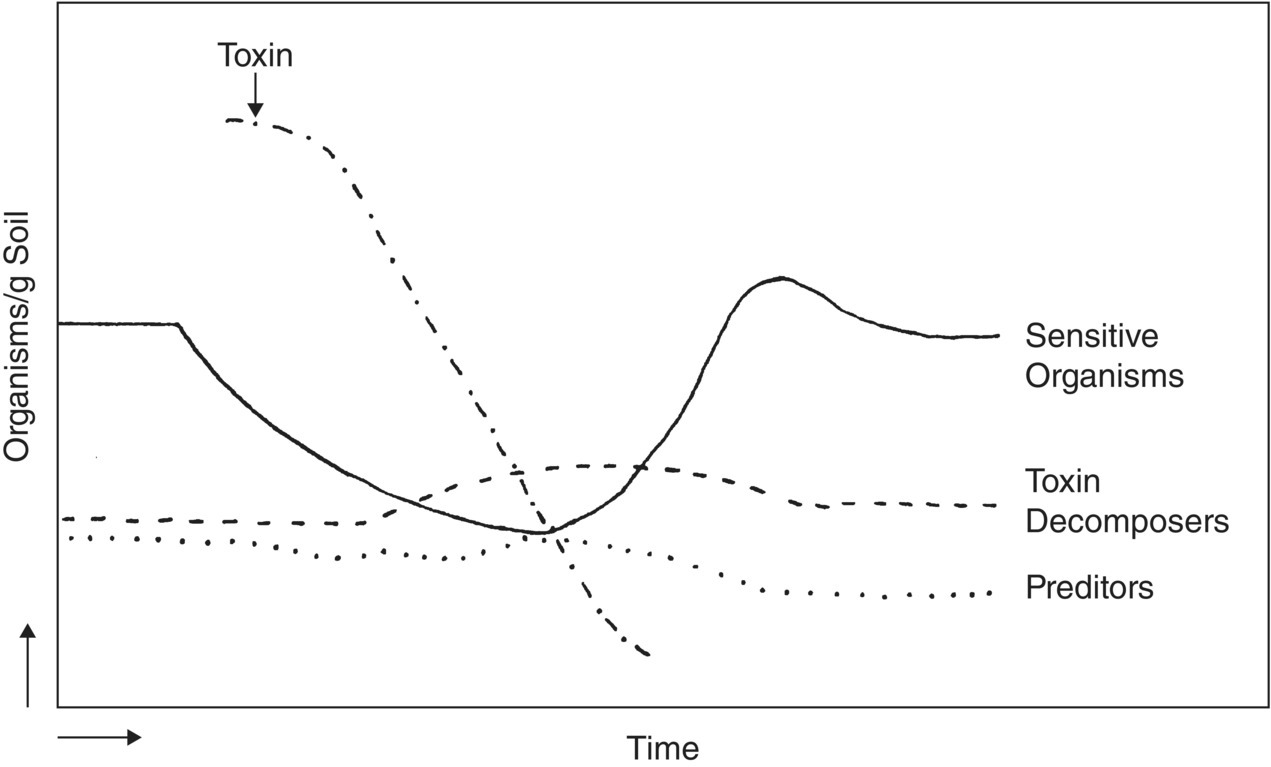
Figure 7.2 Adaptations in a generalized microbial community to reestablish conditions existent prior to input of a biodegradable toxicant.
Once the toxin has been removed from the system, the toxin‐sensitive populations may again reproduce. At this point, conditions favor return to preinsult equilibrium population densities, but a further induction or negative feedback process must occur – protozoan populations increase to “assist” in the return of toxin degrader population density to preamendment levels. With the loss of the nutrient source (exhaustion of the toxin or depletion of the biomass of cells killed by the toxin), the toxin decomposers cease to grow. Protozoan activity facilities the return to steady‐state levels by consumption of the excess biomass. With time, the preamendment equilibrium can be reestablished. This is in reality an idealized situation in that it relies upon (i) the toxin being totally destroyed, (ii) sensitive populations not being totally eliminated by the toxic material, and (iii) no permanent change in the controllers of population densities.
The overall manifestation of soil microbial populations may appear to represent a complete return to the preexisting equilibrium, but in reality, it would be more common for the system to move to a new equilibrium condition approximating the pretoxin insult conditions. A visible manifestation of the interaction at the microlevel on the total ecosystem would not occur unless the newly established microbial community differed from that which preceded it sufficiently to alter overall system properties.
7.5 Management of Soil Microbial Populations
With anthropogenic intrusions into native sites as well as intensive management of developed soil systems, alteration or control of the nature of the soil microbial community is becoming more desirable, if not, obligatory for system survival. Common soil microbial population modification considerations range from alteration of dominant microbial strains (e.g. replacement of indigenous Rhizobium sp. strains with varieties possessing more efficient nitrogen fixation capacities) to enhancement of the activity of specific biological decomposition capabilities (e.g. petroleum degraders in oil‐polluted soils). In either of these situations, the underlying question regarding success of the inoculation or site management techniques rests at least as much, if not more, on the competitive abilities of the alien organism as on possession of the phenotypic capacity to achieve the desired ends of the project.
Most commonly, generalized soil inoculation has been a failure. Whether it is the use of free‐living nitrogen‐fixing microbes (e.g. Azotobacter sp.) or of bacteria highly efficient in the transformation of organic phosphorus to inorganic phosphorus (Bacillus megaterium), negative results predominate in the literature. A common explanation for stimulation of crop yields by soil inoculation with either of these organisms (i.e. the reported successes of soil inoculation) is that sufficient population densities of the alien organism were added to the soil that the death and decay of their biomass significantly increased soil‐fixed nitrogen or phosphorus reserves.
Even with the scattered successes regarding generalized soil inoculation, the preceding evaluation of microbial interactions in soil suggests an explanation for why colonization by alien organisms should not be expected. Soil is a complex ecosystem in which a vast array of microbial populations have developed. It is reasonable to assume that in a mature (climax) system, if a niche exists for a microbe to function, organisms will most probably already have been selected to fill it. The occupant of the niche would be the most efficient organism to fulfill that function. Thus, to alter the composition of the soil microbial community through inoculation, the added organism must be able to survive in the ecosystem sufficiently long to become established and either (i) to fill a niche that is not occupied in the soil ecosystem, or (ii) to be capable of dislodging preexisting populations.
These prerequisites underscore the situations where soil inoculation appears or has been documented to be successful. In most cases, a new niche is created in the soil for the inoculated organism to occupy. This is seen in inoculation of root tissue with Rhizobium strains (the new niche is provided by the invasion of the nascent root tissue), addition of nitrogen‐fixing blue‐green algae to rice paddy fields (the new niche is provided by flooding of a previously drained soil), or addition of a specialized degrader population to a site to be renovated (the new niche is provided for the microbes capable of degrading the pollutant). In the latter situation, the probability of enhanced pollutant mineralization due to inoculation still rests partially on the capability of the amended organism to outcompete any indigenous populations with similar metabolic capabilities. Future expansion of the lists of inoculation success will be predicated upon better prediction of the nature of the unoccupied niche in soil and an improved understanding of phenotypic microbial traits that allows for augmented capacity to compete with indigenous microbes, thereby usurping their position in the soil community.
7.6 Concluding Comments: Implications of Soil Microbial Interactions
It is reasonable that the vast majority of soil microbiologically oriented projects have involved evaluation of the native soil procaryotic populations and, to some degree, fungal activity in isolation from consideration of interactions with other soil populations. This emphasis is understandable since the primary organisms responsible for decomposition of native biomass and xenobiotic compounds are bacteria, fungi, and, to some degree, actinomycetes. Yet, it is mandatory to realize that the rate of decomposition processes in soil is controlled by the interactions of these primary feeders with a vast array of secondary feeders. The indirect activities of mixing of organic debris with soil, inoculation of this biomass with degrader populations, and the mincing of large plant structures have a significant and obvious effect on decomposition rates. The rate is further controlled by the feeding activity of parasites and predators. Thus, any evaluation of ecosystem dynamics must not only include consideration of the metabolic capacity of the soil microbial community and their physical and chemical needs but also must be conducted with an appreciation of the impact of higher organisms on the vitality and survival of these front‐line organic matter mineralizers.
Where to next? This analysis provides a reasonable depiction of the breadth of interactions between soil microbes. Adaptation of the microbial community to the soil physical and chemical properties along with the various microbial interactions yields optimally functioning, sustainable ecosystems. The biological components, ranging from viruses to higher plants and animals, not only populate soils but also interact in a manner that optimizes ecosystem function and sustainability, frequently under conditions that could be easily interpretated as life limiting or threatening. The diversity of life in soil is quite impressive, even within soil systems that could easily be concluded to be adverse to biological activity, such as arid desert soils. Even though the size of the living portion of soils is certainly quite variable (consider different energy inputs and moisture limitations between a desert system and a forest), the complexity of the microbial community provides “food for thought” for considerations of how the individual microbial populations compete and survive in the complex soil matrix. Thus, data such as the following for population densities of microbes/g soil only provde an example of the large population densitities of microbes that could be anticipated to be found in soil. Populations g−1 dry soil as large as 1012 bacteria, 104 nematodes, and 25 km of fungal mycelia are commonly cited (for example, see Young and Crawford 2004). Several thousand different bacterial species are commonly said to occur in a single gram of soil yet the surface area of the soil occupied by the soil microbes is said to be only 10−6% (Young and Crawford 2004). Even without considering the complexities of adding higher plants and animals to our deliberations, apparent discrepancies between high population densities and microbial diversities with low occupancy of the soil particle surface area provide impetus for a more detailed examination of the details of microbial habitats within the soil matrix.
Further support for this reexamination of the life factors controlling microbial diversity is derived from situations where observations of actual infield interactions delimiting microbial community development differ from what would be predicted by the processes evaluated in this chapter. Such situations demand further research to determine if our concepts are in error or if they are simply incomplete. For example, data presented earlier in this chapter document the rapid decline of E. coli populations when laboratory cultures of the microbes are amended to a field soil. It is easy to accept this observation as being consistent with our understanding of soil structure and function since it is generally accepted that the survival traits of the fecal coliform would be those associated with growth and development in the intestinal environment (a nutrient‐rich site with controlled temperature, pH, etc.). To survive and become a contributing member of the soil microbial community, the microbe would need to develop the capacity to survive within the biologically, physically, and chemically stressful soil microsite. In the soil environment, the capacity of E. coli to compete with the better adapted soil microbes can be concluded to be limited. Case closed … not quite! DePas et al. (2014) found that this enteric bacterium was protected by the physical structure of its microenvironment from desiccation and chemical toxicity as well as from the predatory bacterium Myxococcus xanthus and the nematode Caenorhabditis elegans. These authors demonstrated this potential protection by growing the enteric bacterium in media that supported biofilm production. That is, inclusion of the E. coli in biofilms protected it from predation.
A further observation that supports the need to consider the importance of biofilms in controlling microbial growth and survival in soil is the fact that the microbial contributions to biofilm development seem to be genetically controlled. That is, genes within the bacteria are required for biofilm formation and function, including both quorum sensing processes as well as synthesis of the extracellular polymeric substances supporting the biofilm physical structure (see Huang et al. 2003, Seaton et al. 2013, and Vivant et al. 2015 for examples of such studies).
These observations support the conclusion that biofilm formation and quorum sensing may contribute to the development and survival of a diverse microbial community (for example, see Wang et al. 2014, Hinsa‐Leasure et al. 2013, and Redmile‐Gordon et al. 2014). Along with the potential for enhanced microbial survival in soil, data also suggest that biofilms have a possible role in movement of bacteria within the soil matrix. Warmink and van Elsas (2009) demonstrated that biofilm formation at the fungal hyphal tip facilitated translocation and growth of the bacteria. These observations alone support the conclusion that more research is justified to elucidate the full role of soil biofilms in selection of the active microbial community members, controlling the interaction between cells, and the optimization of the microbial function. It is not too difficult to conceptualize a small bacterial coloney residing on a soil aggregate being consumed by protozoa or nematodes, especially considering that the colony need not consist of more than perhaps a few hundred cells.
But this somewhat simplistic view is complicated by the array of micro‐ and macropores within which the biofilm would develop. As noted previously, competition for space can become a significant controller of microbial growth in soil. This limitation would not only affect the size of the population of microbes in the biofilm but would also necessarily, due to the presence of the smaller biofilm size, limit the diversity of the microbes composing it. Thus, elucidation of the limiters of biofilm development and function must include consideration of the soil pore structure. Answers to questions such as “How large can a biofilm become before the soils become plugged by microbial cell mass?”, “How does the deformation of the pore structure by biofilm mass affect transport of nutrients and products to and from the cells in the biofilm?”, and “What is the extent of the impact of soil pore structure on the microbial metabolic reaction kinetics?” become pertinent to explaining the factors controlling microbial community development in soil systems.
References
1. Alegre, J.C., Pashanasi, B., and Lavelle, P. (1996). Dynamics of soil physical properties in Amazonian agroecosystems inoculated with earthworms. Soil Sci. Soc. Am. J. 60: 1522–1529.
2. Alexander, M. (1981). Why microbial predators and parasites do not eliminate their prey and hosts. Annu. Rev. Microbiol. 35: 113–153.
3. Anderson, J.M. (1988). Invertebrate‐mediated transport processes in soils. Agric. Ecosyst. Environ. 24: 5–19.
4. Anderson, J.M. and Flanagan, P.W. (1989). Biological processes regulating organic matter dynamics in tropical soils. In: Dynamics of Soil Organic Matter in Tropical Ecosystems (eds. D.C. Coleman, J.M. Oades and G. Uehara), 80–94. Honolulu: University of Hawaii Press.
5. Anderson, J.M. and Wood, T.G. (1984). Mound composition and soil modification by two soil‐feeding termites (Termitinae, Termitidae). Pedobiologia 26: 77–82.
6. Anderson, R.V., Coleman, D.C., Cole, C.V., and Elliott, E.T. (1981). Effect of the nematodes Acrobeloides sp., and Mesodiplogaster iheritieri on substrate utilization and nitrogen and phosphorus mineralization in soil. Ecology 62: 549–555.
7. Anderson, J.M., Huish, S.A., Ineson, P. et al. (1985). Interactions of invertebrates, micro‐organisms and tree roots in nitrogen and mineral element fluxes in deciduous woodland soils. In: Ecological Interactions in Soil: Plants, Microbes and Animals (eds. A.H. Fitter, D. Atkinson, D.J. Reed and M.B. Usher), 377–392. Oxford: Blackwell Scientific Publications.
8. Bamforth, S.S. (1988). Interactions between protozoa and other organisms. Agric. Ecosyst. Environ. 24: 229–234.
9. Blanchart, E., Lavelle, P., Braudeau, E. et al. (1997). Regulation of soil structure by geophagous earthworm activities in humid savannas of Cote D'Ivory. Soil Biol. Biochem. 29: 431–439.
10. Bossard, M., Lavelle, P., and Laurent, J.Y. (1996). Digestion of a vertisol by the endogeic earthworm Polypheretima elongata, Magascolecidae, increases soil phosphate extractability. Eur. J. Soil Biol. 32: 107–111.
11. Casida, L.E. Jr. (1980). Death of Micrococcus luteus in soil. Appl. Environ. Microbiol. 39: 1031–1034.
12. Casida, L.E. Jr. (1983). Interaction of Agromyces ramosus with other bacteria in soil. Appl. Environ. Microbiol. 46: 881–888.
13. Casida, L.E. Jr. (1989). Protozoan response to the addition of bacterial predators and other bacteria to soil. Appl. Environ. Microbiol. 55: 1857–1859.
14. Coleman, D.C. and Crossley, D.A. Jr. (1996). Fundamentals of Soil Ecology. New York: Academic Press.
15. Conn, H.J. and Bright, J.W. (1919). Ammonification of manure in soil. J. Agric. Res. 16: 313–350.
16. Danso, S.K.A. and Alexander, M. (1975). Regulation of predation by prey density: the protozoan‐Rhizobium relationship. Appl. Microbiol. 29: 515–521.
17. De Freitas, J.R. and Germida, J.J. (1991). Pseudomonas cepacia and Pseudomonas putida as winter wheat inoculants for biocontrol of Rhizoctonia solani. Can. J. Microbiol. 37: 780–784.
18. DePas, W.H., Syed, A.K., Sifuentes, M. et al. (2014). Biofilm formation protects Escherichia coli against killing by Caenorhabditis elgans and Myxococcus Xanthus. Appl. Environ. Microbiol. 80: 7079–7087.
19. Elliott, E.T., Hunt, H.W., and Walter, D.E. (1988). Detrital foodweb interactions in North American grassland ecosystems. Agric. Ecosyst. Environ. 24: 41–56.
20. Fragoso, C., Brown, G.C., Patron, J.C. et al. (1997). Agricultural intensification, soil biodiversity and agroecosystem function in the tropics – the role of earthworms. Appl. Soil Ecol. 6: 17–35.
21. Freckman, D.W. (1988). Bacteriovorous nematodes and organic‐matter decomposition. Agric. Ecosyst. Environ. 24: 195–217.
22. Fredrickson, A.G. and Stephanopoulos, G. (1981). Microbial competition. Science 213: 972–979.
23. Gilotvillenave, C., Lavelle, P., and Ganry, F. (1996). Effects of a tropical geophagous earthworm, Millsonia anomala, on some soil characteristics, on maize‐residue decomposition and on maize production in Ivory Coast. Appl. Soil Ecol. 4: 201–211.
24. Görres, J.H., Savin, M.C., and Amador, J.A. (1997). Dynamics of carbon and nitrogen mineralization, microbial biomass, and nematode abundance within and outside the borrow walls of anecic earthworms (Lumbricus terristris). Soil Sci. 162: 66–671.
25. Grant, I.F. and Alexander, M. (1981). Grazing of blue‐green algae (cyanobacteria) in flooded soils by Cypris sp. (ostracoda). Soil Sci. Soc. Am. J. 45: 773–777.
26. Grant, I.F., Tirol, A.C., Aziz, T., and Watanabe, I. (1983). Regulation of invertebrate grazers as a means to enhance biomass and nitrogen fixation of cyanophyceae in wetland rice fields. Soil Sci. Soc. Am. J. 47: 669–675.
27. Gupta, S.R., Rajvanshi, R., and Singh, J.S. (1981). The role of the termite Odontotermes gudaspurensis (Isoptera, Termitidae) in plant litter decomposition in a tropical grassland. Pedobiologia 22: 254–261.
28. Hamdan, H., Weller, D.M., and Thomashow, L.S. (1991). Relative importance of fluorescent siderophores and other factors in biological control of Gaeumannomyces graminis var. tritici by Pseudomonas fluroescens 2‐79 and M4‐80R. Appl. Environ. Microbiol. 57: 3270–3277.
29. Hinsa‐Leasure, S.M., Kold, C., Tiedje, J.M., and Schultzhaus, J.N. (2013). Biofilm formation by Psychrobacter arcticus and the role of large adhesion in attachment to surfaces. Appl. Environ. Microbiol. 79: 3967–3973.
30. Hornby, D. (1983). Suppressive soils. Annu. Rev. Phytopathol. 21: 65–85.
31. Hossain, A.K.M. and Alexander, M. (1984). Enhancing soybean rhizosphere colonization by Rhizobium japonicum. Appl. Environ. Microbiol. 48: 468–472.
32. Huang, J.J., Han, J.‐I., Zhang, L.‐H., and Leadbetter, J.R. (2003). Utilization of acyl‐homoserine lactone quorum signals for growth by a soil pseudomonad and Pseudomonas aeruginosa PAO1. Appl. Environ. Microbiol. 69: 5941–5949.
33. Ingham, R.E., Trofymow, J.A., Ingham, E.R., and Coleman, D.C. (1985). Interactions of bacteria, fungi, and their nematode grazers: effects on nutrient cycling and plant growth. Ecol. Monogr. 55: 119–140.
34. Katznelson, H. (1940). Survival of microorganisms inoculated into sterilized soil. Soil Sci. 49: 211–217.
35. Kloepper, J.W., Leong, J., Teintze, M., and Schroth, M.N. (1980). Pseudomonas siderophores: a mechanism explaining disease‐suppressive soils. Curr. Microbiol. 4: 317–320.
36. Lee, K.E. (1974). The significance of soil animals in organic matter decomposition and mineral cycling in tropical forest and savanna ecosystems. Trans. Int. Contr. Soil Sci. 3: 43–51.
37. Leong, J. (1986). Siderophores: their biochemistry and possible role in the biocontrol of plant pathogens. Annu. Rev. Phytopathol. 24: 187–209.
38. Li, D.‐M. and Alexander, M. (1986). Bacterial growth rates and competition affect nodulation and root colonization by Rhizobium meliloti. Appl. Environ. Microbiol. 52: 807–811.
39. Li, D.‐M. and Alexander, M. (1988). Co‐inoculation with antibiotic‐producing bacteria to increase colonization and nodulation by rhizobia. Plant Soil 108: 211–219.
40. Lochhead, A.G. (1957). Qualitative studies of soil microorganisms: XV. Capability of the predominant bacterial flora for synthesis of various growth factors. Soil Sci. 84: 395–403.
41. Lochhead, A.G. and Burton, M.O. (1957). Quantitative studies of soil microorganisms. XIV. Specific vitamin requirements of the predominant bacterial flora. Can. J. Microbiol. 3: 35–42.
42. Mallory, L.M., Yuk, C.‐S., Liang, L.‐N., and Alexander, M. (1983). Alternative prey: a mechanism for elimination of bacterial species by protozoa. Appl. Environ. Microbiol. 46: 1073–1079.
43. Ofer, J., Ikan, R., and Haber, O. (1982). Nitrogenous constituents in nest soils of harvester ants Messor‐Ebeninus and their influence on plant growth. Commun. Soil Sci. Plant Anal. 13: 737–748.
44. Pashanasi, B., Lavelle, P., Alegre, J., and Charpentier, F. (1996). Effect of the endogenic earthworm Pontoscolex corethrusus on soil chemical characteristics and plant growth in a low‐input tropical ecosystem. Soil Biol. Biochem. 28: 8001–8810.
45. Polyanskaya, L.M., Kozhevin, P.A., and Zvyagintsev, D.G. (1983). The dynamics of populations of an antagonist and an antibiotic sensitive microorganism in nonsterile soil. Mikrobiologiya 52: 145–148. (Russian).
46. Pomeroy, D.E. (1983). Some effect of mound‐building termites on the soils of a semi‐arid area of Kenya. J. Soil Sci. 34: 555–570.
47. Reddy, K.R., Khaleel, R., and Overcash, M.R. (1981). Behavior and transport of microbial pathogens and indicator organisms in soils treated with organic wastes. J. Environ. Qual. 10: 255–266.
48. Redmile‐Gordon, M.A., Brookes, P.C., Evershed, R.P. et al. (2014). Measuring the soil‐microbial interface: extraction of extracellular polymeric substances (EPS) from soil biofilms. Soil Biol. Biochem. 72: 163–171.
49. Rosenzweig, W.D. and Stotzky, G. (1979). Influence of environmental factors on antagonism of fungi by bacteria in soil: clay minerals and pH. Appl. Environ. Microbiol. 38: 1120–1126.
50. Rosenzweig, W.D. and Stotzky, G. (1980). Influence of environmental factors on antagonism of fungi by bacteria in soil: nutrient levels. Appl. Environ. Microbiol. 39: 354–360.
51. Santos, P.F. and Whitford, W.G. (1981). The effect of microarthropods on litter decomposition in a Chihuahan desert ecosystem. Ecology 62: 654–663.
52. Santos, P.F., Phillips, J., and Whitford, W.G. (1981). The role of mites and nematodes in early stages of buried litter decomposition in a desert. Ecology 62: 664–669.
53. Seaton, S.C., Silby, M.W., and Levy, S.B. (2013). Pleiotropic effects of GacA on Pseudomonas fluorescens Pf0‐1 in vivtro and in soil. Appl. Environ. Microbiol. 79: 5405–5410.
54. Soma, K. and Saito, T. (1983). Ecological studies of soil organisms with reference to the decomposition of pine needles. II. Litter feeding and breakdown by the woodlouse, Procellio scaber. Plant Soil 75: 139–151.
55. Szabo, I., Benedek, A., and Barabas, G. (1985). Possible role of streptomycin released from spore cell wall of Streptomyces griseus. Appl. Environ. Microbiol. 50: 438–440.
56. Tate, R.L. III (1980). Microbial oxidation of organic matter in histosols. Adv. Microb. Ecol. 4: 169–201.
57. Tate, R.L. III and Terry, R.E. (1980). Effect of sewage effluent on microbial activities and coliform populations in Pahokee muck. J. Environ. Qual. 9: 673–677.
58. Thomashow, L.S. and Weller, D.M. (1990). Role of antibiotics and siderophores in biocontrol of take‐all disease of wheat. Plant Soil 129: 93–99.
59. Thomashow, L.S., Weller, D.M., Bonsall, R.F., and Pierson, L.S. III (1990). Production of the antibiotic phenazine‐1‐carboxylic acid by fluorescent Pseudomonas sp. in the rhizosphere of wheat. Appl. Environ. Microbiol. 56: 908–912.
60. Usher, M.B. (1989). Population and community dynamics in the soil ecosystem. In: Ecological Interactions in Soil: Plants, Microbes, and Animals (ed. A.E. Fitter), 243–265. Boston: Blackwell Scientific Publications.
61. Utkhede, R.S. and Rahe, J.E. (1980). Biological control of onion white rot. Soil Biol. Biochem. 12: 101–104.
62. Varon, M. and Zeigler, B.P. (1978). Bacterial predator‐prey interaction at low prey density. Appl. Environ. Microbiol. 36: 11–17.
63. Visser, S. (1985). Role of the soil invertebrates in determining the composition of soil microbial communities. In: Ecological Interactions in Soil: Plants, Microbes, and Animals (ed. A.E. Fitter), 297–317. Boston: Blackwell Scientific Publications.
64. Vivant, A.‐L., Garmyn, D., Gal, L. et al. (2015). Survival of Listeria monocytogenes in soil requires AgrA‐mediated regulation. Appl. Environ. Microbiol. 81: 5073–5084.
65. Wang, S., Yu, S., Zhang, Z. et al. (2014). Coordination of swarming motility, biosurfactant synthesis and biofilm matrix exopolysaccharide production in Pseudomonas aeruginosa. Appl. Environ. Microbiol. 80: 6724–6732.
66. Warmink, J.A. and van Elsas, J.D. (2009). Migratory response of soil bacteria to Lyophyllum sp. Strain karsten in soil microcosms. Appl. Environ. Microbiol. 75: 2820–2830.
67. Wiggins, B.A. and Alexander, M. (1985). Minimum bacterial density for bacteriophage replication: implications for significance of bacteriophages in natural environments. Appl. Environ. Microbiol. 49: 19–23.
68. Wood, T.G. (1988). Termites and the soil environment. Biol. Fertil. Soils 6: 228–236.
69. Wood, T.G., Johnson, R.A., and Anderson, J.M. (1983). Modification of soils in Nigerian savanna by soil‐feeding Cubitermes (Isoptera, Termitidae). Soil Biol. Biochem. 15: 575–579.
70. Woods, L.E., Cole, C.V., Elliott, E.T. et al. (1982). Nitrogen transformations in soil as affected by bacterial‐microfaunal interactions. Soil Biol. Biochem. 14: 93–98.
71. Young, I.M. and Crawford, J.W. (2004). Interactions and self‐organization in the soil‐microbe complex. Science 304: 1634–1637.
72. Zachmann, J.E. and Linden, D.R. (1989). Earthworm effects on corn residue breakdown and infiltration. Soil Sci. Soc. Am. J. 53: 1846–1849.