
Chapter Five
INTRODUCTION
Reefs, the greatest structures made by life on earth, seem ageless, immovable and indestructible. Yet they are none of these things. Rather, they are the end products of a combination of geological and climatic events which have acted to change the face of the earth, as well as the products of an evolutionary process which started well before the appearance on earth of any fauna that we now recognize.— VERON 1986
This chapter provides an elementary overview of coral reef development and a description of the various types of major reef-building organisms responsible for building these biogenic structures during geological history. The paleoenvironmental conditions that shaped the evolution of both reef development and the reef-building organisms are discussed. Since the archipelago is a product of tectonic evolution, which has had a major impact on the distribution and development of coral reefs, as well as the evolution of coral reef communities, a certain degree of overlap in the subject matter exists with chapter 2.
Coral reefs that flourish in many subtropical and tropical regions have held a unique fascination for both geologists and biologists alike, especially since 1842 when Charles Darwin proposed his famous geomorphological theory for their origin and development. The strenuous efforts that followed Darwin's publication to either prove or disprove his subsidence theory of atoll formation 'evolved' into a unique association between the fields of geology and biology. Our current knowledge of coral reefs, and of the various organisms that build them, has greatly benefited from this association, yet it is becoming evident that major differences, at the conceptual level, exist between these two disciplines in terms of how coral reefs are perceived in their response to natural and anthropogenic environmental stresses.
The difference of opinion concerns one of the most hotly debated topics in coral reef ecology, which is the question of whether coral reef communities, or coral reef ecosystems in general, are robust or fragile with regard to natural and anthropogenic environmental disturbances (Davies 1988; Grigg and Dollar 1990; Done 1991; Smith and Buddemeier 1992).
The 'robust vs. fragile' debate is primarily the result of failure to define terms and conditions, particularly with reference to scale. The coral reef ecosystem, on a global scale and as a class of communities, is clearly robust with respect to natural climate change and variability over periods of millions of years.—SMITH AND BUDDEMEIER 1992
The 'robust vs. fragile' debate in coral reef science is an extension of two opposing ecological hypotheses which attempt to explain the evolution and nature of natural communities in space and time (see Leigh 1990 and Pimm 1991 for reviews). One view holds that coral reef communities are relatively predictable and stable systems that have evolved in stable tropical environments with a variety of biotic buffering mechanisms (Odum and Odum 1955; Lang 1973; Porter 1974; Johannes 1975; Endean 1976; Sheppard 1982). If this hypothesis is correct, then any major environmental perturbation, for which there has been no evolutionary adaptation (i.e., anthropogenic stresses such as oil spills, pesticides, industrial effluents, sewage, etc.), will result in major changes in community structure, reflecting the relative fragility of the system as a whole. The opposing hypothesis maintains that coral communities in general are inherently unstable or unpredictable systems (i.e., the world of chaos), at least from an anthropocentric perspective, mainly as a result of frequent abiotic and biotic environmental perturbations (Connell 1978), compounded by the apparent lottery of larval recruitment (Sale 1988). This view advocates that since coral reefs have evolved under a wide range of fluctuating environmental conditions (sometimes of catastrophic proportions), they are relatively resilient and robust systems with regard to environmental disturbances (Pearson 1981). Some advocates of coral reef 'robustness' have used this concept to suggest that because of this evolutionary adaptation to the rigors of environmental change, coral reefs "…may not be more susceptible than numerous other ecosystems to pollution…" (Grigg and Dollar 1990). In their review of natural and anthropogenic perturbations, Grigg and Dollar (1990) came to the conclusion that "…it would appear that there is little qualitative difference between anthropogenic and natural stress to coral reefs, and that both sources are important in controlling reef community structure. Nature can be and often is more pervasive than man." A major deficiency in this viewpoint is the lack of holistic perspective, since natural and anthropogenic perturbations are implicitly regarded as separate events. Downplaying the effects of documented anthropogenic impacts, on rather questionable theoretical grounds, may not be an appropriate approach for the long-term management of coral reef resources, considering the fact that they are being degraded and rapidly depleted by the ever-rising human population. Richmond (1993) pointed out that synergistic effects of natural and anthropogenic impacts (the sum of the effects) may be more insidious than natural or anthropogenic events acting alone, and that this factor must be incorporated into any "unified theory" (Grigg and Dollar 1990).
The above discussion may seem to be out of place in a chapter dealing with the geological history of reef development. However, since the current debate on the fragility and robustness of reef ecosystems stems mainly from different scales of observations and hypotheses (Jackson 1992), and apparently along discipline lines (i.e., geology vs. biology), it is important to keep these opposing views in perspective, especially when reviewing the long evolutionary history of coral reefs. What becomes apparent from a review of the geological history of reef development is that environmental changes associated with the expected global climate change (i.e., rise in global sea levels and temperatures) fall well within the evolutionary experience of coral reef ecosystems, in both quality and intensity. Equally obvious is the fact that anthropogenic disturbances (acute or chronic) and their synergistic interaction with natural perturbations have no evolutionary history, and therefore, they should be considered as threats against which coral reef communities may be poorly prepared.
The differences of opinion are not insignificant, or just plain "academic", for they have a direct bearing on the future management and conservation of coral reef ecosystems. To have an understanding of the nature of coral reefs and the reef-building organisms responsible for these unique biogenic structures, a brief review of their geological history seems appropriate. However, we should keep in mind that while an understanding of geological history is instructional, it is likely that the 240-million-year scleractinian history, marked with numerous global cataclysmic events, may not have been sufficient to prepare corals, and other reef-associated organisms, for the new anthropogenically-induced environmental change that seems to be rapidly approaching (Buddemeier 1993; Wilkinson 1993).
The existence of persistent reef communities in the face of Pleistocene climatic changes does not justify complacency about apparent effects of anthropogenic environmental change on local, regional and global scales.—JACKSON 1992
FOSSIL REEFS
The incredible structural and biotic diversity of recent coral-algal reefs is not a recent phenomenon. Highly diverse reefal communities flourished in the past, long before scleractinians first appeared, and built complex limestone structures that rival those of modern reefs. Much of the great complexity of these early reefal structures has been preserved in the earth's geological record in the form of carbonate deposits that can be found throughout the world.
The current coral reef classification system (i.e., fringing reefs, patch reefs, pinnacle reefs, barrier reefs, atolls, etc.) that has remained relatively unchanged since Darwin's work in 1842 is based primarily on geomorphological features that are easy to see by an observer. Few trained geologists, or biologists, would make the mistake of calling a fringing reef a barrier reef, since a brief survey of the reef can easily reveal the presence or absence of a lagoon, which is considered a key characteristic feature of a barrier reef system. The depth, and other features, of the lagoon as well as the position of the reef with respect to the shoreline provide additional information to determine whether a reef is a true barrier type, or rather a fringing reef with a shallow boat channel. These geomorphological features, easily seen above ground, are not very helpful when it comes to describing fossil reefs that may be buried hundreds or thousands of metres below the surface, and whose nature can only be ascertained from seismic profiles or deep cores drilled into them. Obviously, the classical reef classification system cannot be very useful for the petroleum geologist dealing with hundreds of sediment cores in search of possible oil reservoir rocks. The existence of early carbonate platforms, and their importance to oil exploration in Indonesia (i.e., oil-bearing carbonate reservoirs), necessitates a broader view of carbonate reefs. Thus, in addition to the typical modern biogenic limestone build-ups, exemplified by present-day Indo-Pacific and Caribbean coral reefs, geologists developed a broader view of modern reefs dictated by the geological record (James 1983). This broader definition of reefs includes shallow-water carbonate deposits consisting almost entirely of calcareous algae such as Halimeda (Roberts et al. 1987; Phipps and Roberts 1988; Roberts et al. 1988), banks of branching coral and coralline algae, limestone mud banks and deep-water skeletal deposits.
In his seminal paper on the characteristics of carbonate platform margins, Wilson (1974) proposed a classification system of carbonate build-ups based on their depositional characteristics, rather than their geomorphological features. Wilson's classification system is now widely used by sedimentary geologists in their pursuit of new oil reservoirs associated with reefal carbonate deposits. This classification consisted of three main reef types. 'Type F reefs were basically mud-mounds characteristic of calm, enclosed Paleozoic seas (i.e., intra-cratonic basins). These carbonate build-ups, mostly lime mud, were deposited on deep outer reef slopes (foreslope or downslope), sufficiently removed from the influence of wave action. The mudmound-builders were groups of bryozoans and crinoids. These structures are of little interest to us, since none have so far been discovered in the Indonesian seas (Longman 1993). 'Type IF reefs are called knoll-reef ramps and are a more complex version of Type F deposits (Wilson 1974; Longman 1993). These deposits occur mostly on gentle slopes characteristic of shelf margins and moderate sea conditions. Organisms that built these structures from the Paleozoic to Tertiary were corals (rugose and tabulate in the Paleozoic), rudist bivalves and benthic foraminifera in the Mesozoic and Tertiary. However, 'Type IF reefs are not well represented in Southeast Asia, and have so far not been found in Indonesia. 'Type III' reefs have been classified as walled-reef complexes built in high-energy environments by the action of reef-building organisms, such as corals and encrusting calcareous algae. These reefs are well structured with a distinct zonation pattern consisting of back reef, reef flat and reef slope. Recent reefs, such as those of Kepulauan Seribu (i.e., Thousand Islands), are very similar to 'Type IIF reefs which were locally abundant in the Miocene. Fossil evidence indicates that these reefs were very similar in structure, if not diversity of the reef-builders, to Recent coral reefs. Locally, 'Type IIF reef deposits form major hydrocarbon reservoirs (e.g., North Sumatra Basin).
As Indonesian oil exploration accelerated, it became evident that many of the large oil reservoirs were associated with carbonate deposits that did not strictly correspond to any of the three reef types proposed by Wilson (1974). As a result of this deficiency, Longman and Siemers (1992) proposed a new reef type in addition to the three discussed above. Their 'Type IV' reef represents the major oil-bearing carbonate deposits of the Tertiary in Indonesia. 'Type IV' reefs are called low-relief carbonate mudbanks, consisting partly of abundant fragments of branching corals and benthic foraminiferans (Longman and Siemers 1992). Based on the presence of abundant micrite, it is believed that these carbonates were deposited in relatively sheltered environments in low-energy conditions that favour deposition of fine particulate matter. According to Longman (1993), the best example of 'Type IV' deposits are the carbonate build-ups comprising the early Miocene Baturaja reservoirs at Ramba and Air Serdang Fields in the South Sumatra Basin. Other major oil-bearing deposits occur in the Sunda Basin, and Northwest Java Basin as well as at the Walio and Kasim Fields in Irian Java.
THE EARLY YEARS
Long before the study (geological and biological) of modern coral reefs became a scientific field in its own right, early naturalists worldwide had been studying massive limestone deposits in various mountain ranges and the marine fossils found within these limestones. The fact that sea levels change over time was well-known to Greek philosophers. Well before modern scientists had their first glimpse of a living coral reef in tropical seas, or examined the first preserved specimens from these ecosystems, early naturalists were already aware of their presence from the fossilized remains of various reef organisms ranging from the microscopic cyanobacteria to the giant rudist bivalves. It is, therefore, no surprise to learn that reefs are not a new phenomenon in the earth's long geological history. The geological record shows that biogenic limestone structures have persisted throughout much of Earth's turbulent geological past, since at least 1.8 billion years ago, albeit in many different forms and sizes. While the majority of early reef-builders became exctinct, some have survived (e.g., stromatolites).
Coral reefs that we see today, or more accurately the scleractinian corals that build them, have their earliest origins in the middle Triassic, some 240 million years before present (Ma B.P.) (Moore 1952; Veron 1986; Coats and Jackson 1987; Achituv and Dubinsky 1990). However, carbonate platforms that we now call reefs were not always built by zooxanthellate scleractinian corals (Boekschoten et al. 1989). Before the appearance of these first corals, massive limestone structures were being built in the early Triassic by a variety of calcifying benthic organisms that included cyanobacteria, crustose coralline algae and non-scleractinian corals, as well as a diverse associated assemblage of mostly extinct invertebrates (Coates and Jackson 1987).
THE PRECAMBRIAN REEFS
Stromatolites
Millions of years before the first appearance of reef-building metazoans and metazoan herbivores, a group of prokaryotic marine organisms were constructing massive limestone structures (Walter 1976, 1983; James 1983). Many of these early carbonate reefs survived eons of weathering, and their remains now form parts of the North American, African, Asian and Australian landscapes. These early limestone reefs were constructed from stromatolites (fig. 5.1), which are organo-sedimentary structures produced by large mats of filamentous or coccoid cyanobacteria (also known as the blue-green algae, blue-green bacteria, Myxophyceae or Cyanophyta), through sediment trapping, binding and/or precipitation (Walter 1976).
Stromatolites first appeared sometime in the middle to late Archean (3000 Ma B.P.), and by early Proterozoic (2500 Ma B.P.) they were present in a wide range of environments (James 1983). The oldest known stromatolites have been found in southwest Zimbabwe, and are between 2800 and 3100 million years old (Stokes et al. 1978). However, a number of geologists believe that stromatolites may date as far back as 3800 Ma B.P. (Pellant and Phillips 1990).
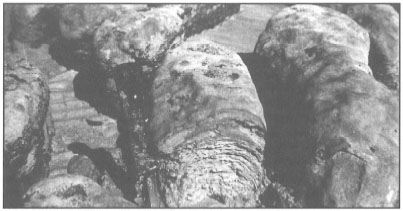
Figure 5.1. A cross-section through a columnar algal stromatolite column in Hamelin Pool, a hypersaline lagoon in Shark Bay, Western Australia.
Courtesy of Dr. R.N. Ginsburg, University of Miami.

Figure 5.2. Geologic history and relative stratigraphic importance of Cyanophyta, Chlorophyta and Rhodophyta associated with, but not confined to, reefs and reef-associated limestones. Age in millions of years; note change of scale. Symbols for geologic periods conventional; C = Carboniferous, Cz = Cenozoic.
Modified from Fagerstrom 1987.
One of the best examples of these early Precambrian limestone reef formations is located near the Great Slave Lake in the Northwest Territories, Canada (Hoffman 1974). These stromatolite limestone formations date back to the early Proterozoic, about 1800 Ma B.P. (James 1983). Stromatolites were the dominant reef-building organisms during the Precambrian and continued to be so until about 600 Ma B.P., when a gradual decline in their importance occurred (Fagerstrom 1987) (fig. 5.2).
This first decline took place during a period when Nature.conducted one of its most interesting evolutionary experiments that heralded the appearance of the Ediacaran fauna (named after a site in South Australia), a group of soft-bodied organisms, that, however, became extinct in the late Proterozoic (570 Ma B.P.) (Cloud and Glaessner 1982).
During the Cambrian and early Ordovician, stromatolites maintained their status as the dominant group of reef-builders, but their importance was waning as other metazoan reef-builders began to take their place (Fagerstrom 1987). The Precambrian profusion of stromatolites has often been attributed to the absence of metazoan grazers, while their subsequent decline in diversity and abundance has been linked to the appearance of animal grazers and burrowers in the early Cambrian and their subsequent diversification (Garrett 1970; Pratt 1982; James 1983; Walter and Heys 1985).
In addition to their reef-building abilities, the stromatolites may have played a significant role in shaping the chemical composition of the earth's atmosphere. It is probable that the photosynthetic cyanobacteria responsible for the massive carbonate structures during much of the Proterozoic, played a significant role in oxygenating Earth's oxygen-poor atmosphere during the Archean and early Proterozoic. The first unicellular organisms that required oxygen appeared sometime in the middle of the Proterozoic (1500 Ma B.P.) and began to diversify as oxygen levels continued to climb. By the end of the Proterozoic, when oxygen levels in the earth's atmosphere reached about 10% of current levels, marine metazoans were well established in the fossil record (Gross 1990).
Extant Stromatolites in Indonesia
Because of the relatively young ages of the rocks comprising the Indonesian Archipelago, stromatolites are absent from the Indonesian fossil record. Stromatolites survived the great Permian and Cretaceous extinctions, but their recent development is restricted to a few unique environments, generally considered hostile to animal grazers. Some of the best examples of contemporary stromatolite build-ups are in Hamelin Pool, a hypersaline lagoon in Shark Bay, Western Australia (fig. 5.3) (Kempe 1991); Lake Van in Anatolia, Turkey, the world's largest soda lake (Kempe et al. 1991); and parts of the Bahama Banks (Longhurst and Pauly 1987).
One of the most interesting discoveries in Indonesia occurred in 1984, during the Indonesian-Dutch Snellius-II Expedition to eastern Indonesia. A group of expedition scientists discovered that Lake Motitoi on Satonda Island, situated north of Sumbawa, (fig. 5.5, see box 5.1) contained extensive calcareous reefs along its lakeshore (Kempe and Kazmierczak 1990). Lake Motitoi is a slightly alkaline crater lake with a surface area of about 77 ha, and a maximum depth of 69 m (Kempe and Kazmierczak 1990; Giesen 1994). Preliminary studies suggested that the carbonate reef-like deposits along the lakeshore may have originated some 4000 years ago and consist of stromatolites produced by cyanobacteria. The formation of these unusual biogenic reefs is possible by the unique hydrological and biogeochemical conditions in the crater lake. The lake is a strongly stratified body of water with a sharp chemocline (i.e., 02/H2S interface) at a depth of 24-26 m, and a pronounced pycnocline between 22 and 26 m below the lake surface (fig 5.8 - see box 5.1).

Figure 5.3. Modern subtidal to intertidal columnar stromatolites at Hamelin Pool, a hypersaline lagoon in Shark Bay, Western Australia. Note that the long axes of individual stromatolites are oriented perpendicular to the shore (i.e., parallel to prevailing wave action).
Photos courtesy of R.N. Ginsburg, University of Miami.
The stromatolite reefs of Lake Motitoi are in fact built through the interaction of four calcifying reef-building organisms. This reef-building assemblage contains both high magnesium (Mg) calcite and aragonite depositors. The reef-building group responsible for the deposition of high Mg-calcite includes the coccoid cyanobacteria, the red coralline alga Lithoporella sp., and an assemblage of nubecullinid foraminiferans. The less abundant, encrusting calcareous red algae Peyssonnelia sp. belongs to a group of reef-builders whose skeletal material consists primarily of loosely packed extracellular aragonite crystals (Johnson 1954; Borowitzka et al. 1974; Wray 1977; Borowitzka 1982, 1987; James et al. 1988; Barnes and Chalker 1990).
Information on the stromatolite-forming cyanobacteria from Lake Motitoi is limited, and their taxonomic classification is uncertain. Current classification of cyanobacteria follows the Bacteriological Code, and is based on the examination of 180 axenic strains (Rippka et al. 1979; Rippka and Cohen-Bazire 1983). So far, these strains have been assigned to 140 possible species (i.e., distinct isolates) belonging to 25 genera (Delaney 1990). Kazmierczak and Kempe (1990) assigned the Lake Motitoi cyanobacteria to the Pleurocapsa, an assemblage of strains pending generic assignment (Rippka et al. 1979; Rippka et al. 1981; Rippka and Cohen-Bazire 1983). According to the latest classification, the Pleurocapsa belong to a large group of cyanobacteria that reproduce by multiple fission, a characteristic feature that separates them from all other cyanobacteria (Waterbury and Stanier 1978; Delaney 1990). However, Pleurocapsa-type cyanobacteria also reproduce through binary fission, which forms irregular cellular aggregates (Delaney 1990) that seem to be the main constructional components of the Lake Motitoi reefs.
The two calcareous algae found in Lake Motitoi are most likely key structural components of the stromatolite reefs. This may not be surprising, since the Corallinaceae and Peyssonneliaceae (Rhodophyta) are, and have been in the past, a key group of reef-builders whose main function is cementation of reefal sediments (Weber and Foslie 1904; Ginsburg et al. 1971; Chave et al. 1972; James et al. 1988; Littler and Littler 1984; Cribb 1990; Kraft and Woelkerling 1990). Lithoporella (Corallinaceae, Mastophoroideae) is the dominant calcifying algae in Lake Motitoi, and belongs to a non-geniculate (i.e., the entire thallus is calcified and lacks joints - geniculae) group of marine coralline red algae (Turner and Woelkerling 1982a, 1982b). Calcification and the deposition of high-magnesium calcite in Corallinaceae occurs internally throughout their cell walls (Adey and Macintyre 1973; Littler 1976; Borowitzka 1977,1982; Barnes and Chalker 1990). Kempe and Kazmierczak (1993) have shown that Lithoporella is a high-magnesium calcite depositor, but specific information on the actual proportion of magnesium is not available. However, it is well-known that the percentage of magnesium in calcite varies (7% to 30%) considerably among species, and is dependent on metabolic rates as well as environmental factors (Chave 1952; Chave and Wheeler 1965; Moberly 1968). The presence of Lithoporella in Lake Motitoi is interesting, since this group of coralline algae, usually in association with Neogoniolithon and Porolithon, are characteristic of high-energy zones close to the low-water mark (Adey and Macintyre 1973; Adey 1975).
In contrast to Lithoporella, calcification in Peyssonneliaceae is extracellular and the aragonite crystals are deposited in the intercellular spaces (Barnes and Chalker 1990). Lake Motitoi provides future opportunities to study in situ calcification rates of these reef-builders under a unique set of environmental conditions that may resemble the environmental conditions of Precambrian seas (Kempe and Kazmierczak 1993).
According to Kempe and Kazmierczak (1993), a group of unidentified nubecullinid foraminiferans are an important component of Lake Motitoi's reefal structures. These foraminiferans are most abundant at depths below 12 m down to the chemocline (Kempe and Kazmierczak 1993). The tests (i.e., external shells) of the nubecullinid foraminifera (Order Foraminiferida) are smooth, porcelaneous and consist of calcite crystals. The porcelaneous appearance of the tests is a result of a specific arrangement of the calcite crystals, which is a characteristic feature of the Suborder Miliolina. Lake Motitoi's nubecullinid foraminiferans belong to the Family Nubeculariidae, whose tests are characterized by either smooth or ornamented surfaces and planar or irregularly coiled chambers. Nubecullinid foraminiferans were an important structural group of middle Mesozoic reefs (Gwinner 1976). These foraminiferans are still common features of many tropical shallow-water habitats, and many have adopted epiphytic lifestyles. Additional foraminifera associated with the reefal structures are cosmopolitan shallow-water euryhaline miliolids (Family Miliolidae) such as Quinqueloculina and Miliolinella (Kempe and Kazmierczak 1993).
Reef accretion in Lake Motitoi was found to be restricted to the upper mixed layer from the surface to the 02/H2S interface, which occurs at a depth of 24-26 m. However, the most active reef accretion occurs in water less than 12 m deep, where the cyanobacteria grow mainly among the abundant foliaceous thalli of red crustose coralline algae Lithoporella sp., and a less abundant genus Peyssonnelia. From a depth of about 12 m down to the chemocline large aggregations of nubecullinid foraminifera become significant contributors to the reef framework, but close to the 02/H2S interface the reef surface is covered mainly by the cyanobacteria (Kazmierczak and Kempe 1990, 1992; Kempe and Kazmierczak 1993).
It was proposed that the stromatolites in Lake Motitoi are formed by two different calcification processes as is illustrated in figure 5.4 (Kazmierczak and Kempe 1990, 1992) (see fig. 5.9; photos C, D; see box 5.1).
It was suggested that the coccoid cyanobacteria grow most rapidly during the rainy season as a result of lowered supersaturation of aragonite and calcite in the lake water, and that during this time they form surficial mats consisting of small dome-like aggregates (fig. 5.4.A). The lowered calcite supersaturation during the rainy season, approaching seawater levels, is brought about by dilution with meteoric water, increase in partial pressure of CO2 as a result of decaying organic material from land runoff as well as a drop in water temperature (Kazmierczak and Kempe 1990). With the onset of the dry season, major changes in lake chemistry occur as a result of increased temperature and evaporation rates. At some point during the dry season, the lake once again reaches the critical calcite supersaturation point that triggers the in vivo calcification of the surface layer of the mat-forming cyanobacterial aggregates by low-Mg calcite (fig. 5.4B) (Kazmierczak and Kempe 1990). Subsequent to the surface layer permineralization, which results in the formation of a calcific cyst, creating a type of cryptic microenvironment, the cyanobacteria in the lower unmineralized layers die and begin to decompose under anaerobic conditions (Kazmierczak and Kempe 1992). The anaerobic microbial decomposition, apparently through sulfate reduction, increases the alkalinity of the encased cysts that triggers the crystallization of fibrous aragonite (fig. 5.4C).
The discovery of stromatolites in this marine-derived environment lends support to the "Soda Ocean" hypothesis, which suggests that Precambrian seas were alkaline and supersaturated with carbonate minerals (Kempe and Degens 1985; Kempe and Kazmierczak 1990). The study of the stromatolites from Lake Motitoi provides new clues to the possible origins of some early problematic fossils, such as Aphralysia or Koskinobullina, since they are remarkably similar to the stromatolites of Lake Motitoi (Kazmierczak and Kempe 1992). In addition, it was suggested that a worldwide decrease in alkalinity, and in carbonate mineral supersaturation, may explain the disappearance of stromatoporoids at the end of the Paleozoic (Kazmierczak and Kempe 1990).

Figure 5.4. Two basic modes of formation of stromatolites in Lake Motitoi. Small surficial mats develop during the rainy season (A-A'). During dry season critical calcite supersaturation point is reached triggering in vivo calcification of the surface layer of the mat-forming cyanobacterial aggregates by low-Mg calcite (B-B'). Formation of a calcific cyst creates a type of cryptic microenvironment, the cyanobacteria in the lower unmineralized layers die and begin to decompose under anaerobic conditions, increasing alkalinity of the encased cysts and triggering the crystallization of fibrous aragonite (C-C).
From Kazmierczak and Kempe 1992.
The reef-associated biota of Lake Motitoi is depauperate. However, Kempe and Kazmierczak (1993) made a very interesting observation regarding the presence of herbivorous cerithiid gastropods, Cerithium corallium. They pointed out that a high abundance of these algal grazers does not appear to have an adverse effect on the cyanobacteria-algal mats, and thus reef accretion is unaffected. This is an interesting observation, since, as was pointed but earlier, the decline of stromatolites since the Precambrian/Cambrian boundary has been largely attributed to the evolution of algal grazers (Garret 1970; James 1983; Walter and Heys 1985). However, it should be stressed that C. corallium seems to be the only macroinvertebrate grazer in the lake. Without competition from other macrograzers, these gastropods may very well prefer to feed on the more nutritious algae, such as Cladophora, Cladophoropsis and Chaetomorpha, as well as on benthic diatoms (i.e., Fragilaria sp. and Mastogloia sp.), which are abundant on the reef surface (Kempe and Kazmierczak 1993).
Box 5.1. Satonda: a porthole view into the oceanic past.
S. Kempe, Geological-Paleontological Institute, Technische Hochschule Darmstadt; Darmstadt, Fed. Rep. Germany; J. Kazmierczak, Institute of Paleobiology, Polish Academy of Sciences, Warszawa, Poland; A. Reimer and G. Landmann, Institute of Biogeochemistry and Marine Chemistry, Center for Marine and Climate Research, University of Hamburg, Fed. Rep. Germany; J. Reitner, Institute and Museum for Geology and Paleontology, University of Gottingen, Gottingen, Fed. Rep. Germany.
Satonda is a small Indonesian island, north of Sumbawa, with a unique habitat: a crater lake filled with seawater (fig. 5.5). Because the lake has lost all direct connections with the sea, the lake water has acquired higher alkalinity, pH and carbonate mineral saturation than the surrounding seawater. Such conditions are apparently unfavorable for most marine macrobiota, which were therefore excluded from the lake. Instead we find calcareous reef-like structures (fig. 5.6, A and B) composed of red algae, serpulids, foraminifera, and, most astonishing of all, mats of in situ calcifying cyanobacteria. The morphology and the microstructure of these deposits are similar to certain types of microbialites (i.e., deposits formed by the permineralization of microbial mats and more commonly known as stromatolites), which were once particularly widespread in the late Precambrian and early Phanerozoic oceans. In a way, Satonda recreates ancient oceanic conditions and provides us with the chance to study the environment under which these ancient microbialites may have grown (Kempe and Kazmierczak 1990, 1993, 1994). Diving into the lake may be described as a time-travel experience, transferring the diver from the modern world into the realm of paleo-oceans much restricted in lifeforms.

Figure 5.5. Site of Satonda and map of Lake Motitoi with stations indicating location of microbialites.

Figure 5.6. Macroscopic views of reef-like structures in Satonda Crater Lake (i.e., Lake Motitoi). A) General view of circular to subcircular calcareous heads at station 1 close to the end of the dry season, with part of the northern steep caldera wall in the background. B) Eroded core (subfossil microbialite) and edge (red algal/cyanobacterial crust) of one of the circular heads. C) Subfossil and partly eroded fringe of serpulid polychaete tubes deposited underneath large volcanic bomb at the shore of Satonda Crater Lake. D) Cerithiid gastropods grazing on tufts of siphonocladalean green algae at the water surface of Satonda Lake. E) Knobby surface of red algal/cyanobacterial crust grown around submerged and later decayed tree branches. Sample S-6 (1986), station 7, depth 7 m. F) Cross-section of subfossil columnar microbialite. Sample S-46, (1986), station 10, surface.
The discovery of this enchanted place dates back to the days of the Dutch-Indonesian Snellius II Expedition in 1984, when one of us (SK) noted the island and its lake on a sea chart. Being interested in the development of the early ocean when water, CO2 and volcanic rock interacted, we landed on the island (22nd of Nov.). The in situ measurement of the pH and alkalinity, in addition to the occurrence of conspicuous circular calcareous reef heads, showed that the lake had a peculiar chemistry and unusual marine lifeforms (Kempe and Kazmierczak 1990, 1993). In the calcareous samples JK discovered microbial structures similar to some early Paleozoic problematic fossils (Kazmierczak and Kempe 1990, 1992). To study the lake and its carbonates more thoroughly we staged a 10-day field study during the German-Indonesian SONNE 45b Expedition together with colleagues from the University of Bandung (Y. Surachman, D. Susanto) in 1986 (3-13 October). More recently we were invited by the Indonesian Forest Service to study the island during a joint three-week survey in 1993 (5 - 25 October).
Not all samples have been evaluated as yet and the history of the lake and its ecosystem is still obscure in many aspects, but we can present at least a substantial part of the story.
Lake Motitoi is 1.2 km long and 0.9 km wide, with a surface area of 0.77 km2. It is 69.5 m deep (average: 44 m) and has a volume of 0.034 km3. The lake occupies two nested craters, the smaller one to the northeast (fig. 5.5). The crater walls around the lake rise up to 300 m above sea level, and are composed of layers of welded ash, lapilli and volcanic bombs with a few volcanic dikes. The depression seems to have been formed by the collapse of the volcanic magma chamber some 10,000 years ago, thus forming a caldera. To the south, the crater wall seems to have slumped seawards, leaving a thin, 60-m-wide, and low (13 m above sea level) remnant of the former wall over which the lake is easily accessed today. The slump scar formed a bay, thus allowing the seawater to percolate into the lake, replacing the former fresh water. Below the quasi-marine carbonate deposits in the lake we found extensive peat layers which were dated to be 3150 years old (14C-years B.P.) at their top. Thus, the flooding of the lake occurred at about 1000 B.C. and seems to be connected with the high sea level stage occurring throughout this region.
The digs at the shore of the lake indicated that several species of marine bivalves and gastropods colonized the lake, together with foraminifera, ostracods and serpulids (Kempe and Kazmierczak 1993). In fact, serpulid reefs formed along the beach (fig. 5.6, C) and down to a depth of at least 35 m (fig. 5.7). But then the depth of the lake became its ill fate: the lake started to stratify. The bottom waters could not be mixed upward by the wind below a depth of 50 m. In addition, during the dry season, water was evaporated along the shore, acquiring high salinities and slumping all the way to the bottom, thus making the stratification even more stable. The bottom waters finally became anaerobic (fig. 5.8). At the same time the sea level slowly retreated, leaving the bay filled with beach deposits and cutting the lake off from its seawater exchange.
If marine waters stratify, then the oxygen is quickly consumed by bacteria which remineralize settling organic matter. Once the oxygen is consumed, NO3, NO2, Mn4+ and Fe3+ serve as electron acceptors. Due to their low concentrations, they are, however, expired quickly as well. In the end, sulfate reduction commences, utilizing the large sulfate pool of seawater to remineralize organic matter. In the process deadly H2S is produced, which purges all higher life from depth. Furthermore, because of the consumption of the sulfate ion another anion must be generated in order to balance charges; this is the bicarbonate ion:


Figure 5.7. Scheme of facies succession in Satonda Lake calcareous reefs.
In total, 424 electrons are transferred in the process to reduce the sulfur, oxidize the organic matter (written here in its overall average elemental composition known as the Redfield ratio) and to transfer the charge balance to the bicarbonate ion. H2S and bicarbonate are produced at a molar ratio of 1:2. A system such as Satonda, in which a significant excess of alkalinity is produced, is called an alkalinity pump (Kempe 1990). At the bottom of the lake almost all of the sulfate has been consumed and the alkalinity has increased to over 50 meq/kg, c. 25 times that of normal seawater (fig. 5.8). Because some mixing still occurs across the interface, even the upper water column became more alkaline than seawater. This has grave geochemical consequences: the pH and the total saturation of carbonate minerals rise dangerously until they are so large that spontaneous aragonite precipitation can occur. Saturation with regard to a certain mineral is defined as the ratio between the ion activity product (IAP) of the ions forming the respective mineral and the solubility (at a certain temperature and salinity). The Saturation Index (SI) is the log of that ratio:

Normal surface seawater is already carbonate-mineral supersaturated (Slcalcite = 0.40.6) but the biocalcifying organisms keep this supersaturation at a level precluding spontaneous precipitation (which seems to necessitate an SI of >0.8) (Kempe and Kazmierczak 1991). In Satonda (fig. 5.8) the Slaragonite has reached 0.84 and the Slcalcite 0.98 in the surface layer down to 20.5 m. In the modern ocean, anaerobic bottom waters only rarely occur, mostly deep below the surface or in brackish water regimes such as in the Black Sea and in the Baltic. In Satonda we can study the consequences of an alkalinity

Figure 5.8. Vertical structure of the water column in Lake Satonda. Data were collected during the 1993 survey of Satonda Island. Units: salinity in parts per thousand (measured by salinometer and CTD-sensor); density in sigma units (difference from 1g/cm3 * 1000) (calculated from salinity and temperature); temperature in degrees Celsius (measured by CTD sensor); pH (measured immediately after sample recovery); oxygen in mmol/l (measured by Winkler titration in the field); H2S in mmol/l (measured by titration in the field); CO2 pressure in log of parts per volume (calculated from pH, temp, and total ion concentrations by PHREEQE); total alkalinity in meq/l (measured by titration in the field); sulfate in mmol/l (measured by ion chromatography on preserved samples); Saturation Index of calcite and aragonite (calculated with PHREEQE). Note the separation of the water column by two high-density gradients (pycnoclines), which prevent mixing of the water column.
Below 22 m the water column is anaerobic while aragonite is slightly undersaturated in with very high concentrations of H2S and free the middle layer. Supersaturation of both calCO2 in the bottom layer but only moderate cite and aragonite is much higher in the sur-concentrations in the middle layer. Calcite is face layers of the lake than in the open ocean, supersaturated throughout the water column, pump to surface ecosystems at a near-normal salinity. Among the changed hydrochemical factors responsible for the elimination of most of the marine macrobiota from the lake, the excess alkalinity was probably most critical. The significantly increased level of carbonate supersaturation apparently enhanced the formation of in situ calcified cyanobacterial microbialites in the lake epilimnion (fig. 5.7; fig. 5.6, F). These internally well-laminated (i.e., stromatolitic) or cystous (Wetheredella-like) microbialites are often overgrowing individual filaments or tufts of non-calcifying siphonocladalean green algae (mostly Cladophoropsis) or intergrowing with arcuate thalli of calcareous red algae (Peyssonnelia). The microbialitic layer is up to 80 cm thick at the lake surface (fig. 5.6, B) but decreases in thickness to a few cm at 20 m depth. In thin sections (fig. 5.9, C and D) the microbialites show distinct, dark laminae composed of fine-grained high-Mg-calcite alternating with usually much thicker, light laminae composed of fibrous, finely striated aragonite.
Inspection of acid-etched cross-sections of microbialite laminae under the scanning electron microscope shows (fig. 5.9, E and F) that both dark and light laminae originally are composed of cells, 2-4 μm in diameter, gathered in subglobular groups, 30-100 μm in diameter. These groups are surrounded with a capsule-like common organic wall, which can be easily identified as remnants of gelatinous sheaths of benthic coccoid cyanobacteria (Pleurocapsales), identical with those living today on the reef surface (fig. 5.9, A and B). We think that the lamination and the varying mineralogy of the microbialites are the result of seasonally changing supersaturation in the lake. During the wet season (November-April) the supersaturation of the lake is lowered due to the dilution of the surface waters by rain, and the mat can grow unimpeded. During the dry season (May to October) the CaCO3-supersaturation rises and in vivo precipitation of rnicrogranular high-Mg-calcite proceeds at the mat surface. Once the surface is permineralized, the mat below decays (mostly by sulfate-reducing bacteria and fungi) under anaerobic sulfate-reducing conditions. The alkalinity is raised internally and, due to the ongoing crystallization of CaCO3, the Mg/Ca ratio rises, causing aragonite instead of calcite to form post mortem. This picture is consistent with the observation that the remains of the sheaths are not as well preserved in the aragonite as in the calcite layers.
The importance of finding these microstructures cannot be overestimated: In recent marine environments, in situ calcification of cyanobacterial mats does not occur. Almost all modern calcareous stromatolites are either formed by trapping of suspended material or the sites are clearly non-marine (e.g., in Lake Van, Turkey; Kempe et al. 1991). In the past, in-situ calcification of marine cyanobacterial mats must, however, have occurred. Throughout the Precambrian the stromatolitic deposits they produced were the only widespread macrofossils.
The most recent phase of Satonda reef development, showing continuity with the biota living today on the reef surface, is characterized by domination of encrusting red algae and nubecullinid foraminifera with only a subordinate role of coccoid cyanobacteria (fig. 5.10, E, G and H). A dense cyanobacterial and red algae (mainly Lithoporella) crust comprises the few-millimeters-thick top layer of the reefs (fig. 5.10, A-C and F). Below this a 15-20-cm-thick, much looser red algal crust occurs composed of the aragonitic thalli of Peyssonnelia (fig. 5.7; fig. 5.6, B and E; fig. 5.10, D). Shells of a small cerithiid gastropod are often found immurated in this layer. Very similar gastropods inhabit the lake today in large numbers (fig. 5.6, D) which are now identified as Cerithium corallium with the possibility of being a subspecies endemic to Satonda. These graze on the thick felt of siphonocladalean green algae overgrowing the reef surface together with a large community of sponges which also appears to represent a new endemic species of the hadromerid demosponge taxon Suberites/Polymastia (fig. 5.7).

Figure 5.9. Microscopic views of cyanobacterial microbialites from Satonda Crater Lake. A) Surficial SEM view of living coccoid cyanobacterial mat (dry specimen). Shrunken subglobular capsules of pleurocapsalean cyanobacteria are sparsely covered with fine grains of in situ precipitated Mg-calcite; rare epilithic pennate diatoms (?Cocconoeis) are growing on the mat surface (arrow). Sample S-311 (1993), depth 9 m. Scale bar = 10 urn. B) SEM view of a capsular aggregate of living coccoid cyanobacterial cells; the outlines of individual cells are well visible due to dehydration shrinkage of the outer gelatinous wall of the capsule. Sample S-29 (1986), depth c. 23 m. Scale bar = 5 urn. C) Transmitted light photomicrograph (vertical thin section) of a columnar subfossil microstromatolite composed of light aragonitic laminae alternating with dark Mg-calcitic laminae. The stromatolite grows on tufts of filamentous green algae. Sample S-310C (1993), at lake surface. Scale bar = 500 urn. D) Transmitted light photomicrograph (vertical thin section) of a subfossil cystous microbialitic structure composed of alternating aragonitic (light) and Mg-calcitic (dark) laminae overgrowing from both sides arcuate thalli of squamariacean red algae(Peyssonnelia) indicated by arrow. Sample S-8 (1986), depth 6 m. Scale bar = 250 urn. E) Vertical section of an acid-etched laminated subfossil microbialite (as shown in C) in SEM view. Distinctly visible is the fibrous character of the Mg-calcitic lamina; in the latter, remnants of the original coccoid organization of the cyanobacterial mat are recognizable in many places. Sample S-47 (1986), at lake surface. Scale bar = 10 urn. F) Vertical section of EDTA-etched aragonitic laminae from a subfossil stromatolitic microbialite in SEM view. The numerous etching depressions in the finely striated aragonitic material represent traces of early post mortem almost entirely decomposed cyanobacterial capsules. Sample S-47 (1986), at lake surface. Scale bar = 30 μm.
The onset of the new biofacies type, which apparently heralded less alkaline and supersaturated conditions in the lake, may have been connected with the further stratification of the lake's water column. Today a well-defined pycnocline (density interface) exists at a depth of 22 m (fig. 5.8), separating the former epilimnion layer into a wind-mixed, oxygenated surface layer from a moderately anaerobic middle layer. The present aerobic surface layer has been diluted by rain water to about 90% of seawater salinity and the layer below has a salinity of 108% of ambient seawater. The freshening of the surface layer may either have climatic reasons, or it may have been initiated after the Tambora eruption in 1815 A.D. Then, the island was almost completely deforested and, due to the missing evapotranspiration, much more rain water may have collected in the crater annually than previously, causing the freshening of the upper water column and inhibiting deep mixing for some time. At the same time, older, more salty, and anaerobic water was slowly pressed out of the lake through the porous volcanic rocks. Even today the lake level is - at the end of the dry season - c. 80 cm above that of the high water line in Satonda Bay.
Even though conditions today seem to be more favorable to life in the crater lake than before, the alkalinity pump still works vigorously at depth. Between Nov. 1986 and Oct. 1993 the alkalinity in the surface layer increased from 3.6 to 4.2 meq/kg and the pH increased from 8.4 to 8.6. Apparently strong downward mixing occurred, eroding a small section of the pycnocline and causing the upwelling of alkalinity. At the same time, a certain amount of H2S must have been released, an event which we think caused the death of most red algae at depth prior to our visit in 1993.


Figure 5.10. Calcareous red algal/coccoid cyanobacterial crusts from Satonda Crater Lake reefs. A) Knobby living surface of red algal/cyanobacterial crust in top view. Sample S-5 (1986), depth 3 m. Scale bar = 1 cm. B) Vertical section through a red algal/cyanobacterial crust near the living surface. Arrow indicates the sharp boundary between the uppermost part of the reef composed of calcified thalli of Peyssonnelia and Lithoporella, alternating with thin layers of in situ calcified coccoid cyanobacteria, and the older part of the specimen built of clotty (peloidal) calcium carbonate embedding numerous cerithiid gastropods, nubecullinid foraminifera and tubes of serpulid polychaetes. Sample S-29 (1986), depth 23 m. Scale bar = 1 cm. C) Transmitted light photomicrograph of vertical thin section through the living reef surface close to the lake chemocline. The surface of the reef framework is composed of monostromatous thalli of Lithoporella overgrowing crustose Peyssonnelia. Sample S-29 (1986), depth 23 m. Scale bar = 100 um. D) Transmitted light photomicrograph of vertical thin section through the subfossil part of the calcareous red algal reef framework composed of loosely distributed arcuate thalli of the squamariacean Peyssonnelia and irregular accumulations of dark pelletoid (fecal) and peloidal (?cyanobacterial) calcareous material. Sample S-29 (1986), depth 23 m. Scale bar = 500 urn. E) SEM view of surface of living non-calcified coccoid cyanobacterial mat (dry specimen) showing capsular character of the common gelatinous sheaths (glycocalyx) surrounding individual cells and groups of cells. Sample S-311 (1993), depth 9 m. Scale bar = 5 urn. F) SEM view of surface and cross-fracture of strongly in vivo calcified coccoid cyanobacterial (pleurocapsalean) mat encrusting a monostromatous thallus of the corallinacean Lithoporella. Sample S-10 (1986), depth 9 m. Scale bar = 10 urn. G) SEM view of the surface of in vivo with Mg-calcite permineralized coccoid (pleurocapsalean) cyanobacterial mat (dry specimen) with well-visible capsular organization. Sample S-10 (1986), depth 9 m. Scale bar = 25 um. H) SEM view of tangentially broken subfossil red algal-cyanobacterial sandwich showing remnants of capsular gelatinous sheaths (glycocalyx) of pleurocapsalean cyanobacteria preserved between two monostromatous thalli of Lithoporella. Sample S10 (1986), depth 9 m. Scale bar = 25 um.
Lake Motitoi is, therefore, one of the most interesting "paleoceanographic laboratories" presently known. Its microbialites are reminiscent of marine microfossils occurring in the Precambrian and during events noticed in the younger, Phanerozoic sedimentary record. These events are often associated with ecosystem collapse (species-poor biota), mass appearance of calcareous microbialites, and often with the prolific occurrence of sponges, a feature which also fits for Satonda.
Given high suspended particulate matter concentrations, possibly of bacterio-plankton origin, and high benthic primary production rates by other algae, organic-rich detritus may also be a significant source of food for these cerithiid gastropods. Thus, the effect of high abundance of one particular group of grazers is not comparable to the evolutionary explosion of marine metazoan grazers that took place since the Precambrian/Cambrian boundary.
THE PALEOZOIC REEFS
Archaeo cyatha
As stromatolites began their slow decline a new reef-building group of organisms emerged at the end of the late Proterozoic (600 Ma B.P.). These early pioneer metazoan reef-builders are the extinct calcareous sponge-like Archaeocyatha, about 3 cm in maximum diameter and up to 5 cm in height (James and Debrenne 1980; Debrenne and James 1981). Archaeocyatha was a group of solitary or colonial organisms with cone-, goblet-, or vase-shaped morphologies, that were structurally similar to both sponges (e.g., presence of pores and intervallum with rods and bars) and corals (e.g., presence of dissepiments and septa) (fig. 5.11).
Archaeocyathids were most likely filter-feeders, resembling in function some of the present-day sponges. However, it has been suggested that the generation of passive flow currents, a function of archaeocyathid morphology, may have considerably enhanced the efficiency of the sponge-like flagellar pumping system (Balsam & Vogel 1973). During the early Cambrian, archaeocyathans had a worldwide distribution and formed conspicuous bioherms or biostromes that also contained fragments from a diverse group of associated reef mound flora (e.g., stromatolites, calcified algae Epiphyton, Renalcis and Girvanella) and fauna (e.g., sponge spicules, skeletons of trilobites, etc.) (James 1983). Archaeocyatha achieved their greatest diversity and abundance during the early Cambrian, coinciding with the great explosion of metazoan life that ushered in the Cambrian period (Dalziel 1995).

Figure 5.11. Basic body plan of a reef-building fossil archaeocyathan (Archaeocyatha). Ow: calcareous outer wall. P: simple pores or dissepiments. Iw: inner body wall. Int: intervallum (space between the outer and inner body walls). Ds: horizontal dissepiments in the intervallum. Vs: vertical septa in the intervallum. Sp: septal pores. Ba: calcareous basal attachement.
After Pinna 1980. Drawing by B. Rahmad.
These early pioneering reefal ecosystems may have resembled present-day reef systems in terms of skeletal accretion, sedimentation and bioerosion (James and Debrenne 1980; James 1983), if not in diversity of the new metazoans. By the end of the early Cambrian, the role of archaeocyathans in reef-building declined considerably, and they became extinct at the end of the Cambrian.
Porifera and Stromatoporoidea
From about the middle Cambrian to the early Ordovician, reef-building was once again dominated by stromatolites and calcified algae, mainly Giruanella, Renalcis and Epiphyton (James 1983). However, in the early Cambrian another group of early metazoan reef-builders, whose evolution is closely tied to reefs, started to dominate reef communities. These relatively primitive metazoans were the calcareous and siliceous sponges (Porifera) (Fagerstrom 1987). The evolutionary origin of sponges is enigmatic, as they possess a specialized body architecture that is built around an intricate flagellated water canal system, but they are characterized by a low level of ' cellular differentiation and lack organ systems (Barnes 1980). Because of their unique cellular differentiation, it has been suggested that sponges evolved from a distant and different group of protozoa than did the other metazoans (Barnes 1980). The sponges appeared with three basic body plans that remain unchanged to this day (fig. 5.12).
Sponges were among the dominant components of reef communities from the early Cambrian to the end of the Jurassic. The most abundant sponges at this time were the Demospongiae, a group of siliceous (lithistid) sponges dating to the Precambrian (Fagerstrom 1987) (fig. 5.13). Demospongiae exhibited leucon body structure and became important components of reef communities during the Ordovician and Silurian. Demospongiae continued their presence, but subordinate to other reef-builders in the reef communities until the late Jurassic, when they once again became one of the dominant components of reef communities. Nonetheless, many patch reefs in the Jurassic were coral-dominated (A. Logan, pers. com.).

Figure 5.12. Basic body plans of sponges (Porifera). A) Asconoid sponge; B) Synocoid sponge; C) Leuconoid sponge. Pinacoderm and mesohyl in white; choanocyte layer in black. Symbols: Os - osculum; At - atrium; Ip - incurrent pore; Ic - incurrent canal; Ec - excurrent canal; Fc - flagellated chamber; Dp - dermal pore; Pp - prosopile.
After Barnes 1980.
Fossil records from the middle Ordovician suggest that while Demospongiae began to decrease, another group of sponge-like organisms, the Stromatoporoidea, underwent rapid expansion. The Stromatoporoidea are a problematic fossil group; however, the stromatoporoids are now considered to be related to sclerosponges (Stearn 1975). The fossil evidence of stromatoporoids exists as calcareous masses, generally a few tens of centimetres across in tabular, encrusting, dendroidal, domal or bulbous form (Bates and Jackson 1980). The internal structure consists of horizontal laminae and vertical pillars. Stromatoporoidea were among the dominant reef-builders between Ordovician and Devonian times, but disappeared from the fossil record in the early Carboniferous. However, another similar group of stromatoporoids reappeared in the Triassic and once again dominated reef communities during the Jurassic. Fagerstrom (1987) suggested that because of the great discontinuity in the fossil record between these two stromatoporoid groups, they are not phylogenetically related, but rather that their structural similarities are homoplastic. The Mesozoic Stromatoporoidea became extinct at the end of the Cretaceous.

Figure 5.13. Relative stratigraphic importance of the Phylum Porifera. Absolute age in million years. Symbols for geologic periods conventional; C = Carboniferous, Cz = Cenozoic.
From Fagerstrom 1987.
In addition to the Archaeocyatha, stromatoporoids and demosponges, various other groups of sponges played a key role in reef-building from the early Cambrian to the end of the Cretaceous (Fagerstrom 1987). Among the most important reef-builders during the Carboniferous and late Jurassic were the calcareous sponges (Calcarea). Most calcarean sponges displayed a leucon body plan; however, sycon and ascon forms also occurred. Calcarea possessed hard skeletons consisting of calcareous spicules and, sometimes, formed massive structures that were up to 3 m in height and 0.8 m in diameter (Fagerstrom 1987). A group of deep-water sponges, Hexactinellida, became abundant during the late Jurassic. These 'glass' sponges were characterized by six-rayed siliceous spicules and a leucon body plan. The descendants of the early sponges, with the exception of Archaeocyatha and Stromatoporoidea, continue to be among the most abundant groups in present-day coral reef communities; however, their role has shifted from that of reef-builders to that of bioeroders of reef framework. Note that many extant sclerosponges are reef framework builders in caves and deeper parts of the reef slope (A. Logan, pers. comm.).
Tabulate Corals
The first corals to appear in the fossil record are the long-extinct Tabulata. These early corals were an exclusively colonial group of simple well-skeletonized anthozoans that originated sometime between the late Cambrian and the early Ordovician (Fagerstrom 1987) (fig. 5.14).

Figure 5.14. Relative stratigraphic importance of various major taxa of reef-building Coelenterata. Absolute age in million years. Symbols for geologic periods conventional; C = Carboniferous, Cz = Cenozoic.
From Fagerstrom 1987.
During the early Ordovician, these primitive corals (e.g., Lichenaria), as well as other metazoans (e.g., demosponges and stromatoporoid-like organisms), formed important communities on predominantly algal-built structures (James 1983). The tabulate corals were characterized by distinct honeycomb-shaped corallites that formed sometimes massive (domal) colonies up to 2 m in diameter (Fagerstrom 1987).
The corallites of tabulate corals were slender tubes with prominent horizontal partitions or plates, called tabulae (Veron 1986). The two features that clearly distinguish tabulate corals from all other corals are the absence of both the vertical septa and columella (Achituv and Dubinsky 1990). However, corallites of some tabulates had very rudimentary spinose septa (Pellant and Phillips 1990). Tabulate corals exhibited various corallum morphologies not unlike those of present-day scleractinian corals, including massive (domal-hemispherical), encrusting, foliaceous and branching forms.
Another similar group of corals that is often combined with Tabulata are the schizocorals, which multiplied by fission and lacked true septa. The main expansion of tabulates and schizocorals occurred between middle Silurian and middle Devonian followed by a gradual decline to the end of the Permian (Fagerstrom 1987).
Rugose Corals
The second group of more structurally complex corals to appear in the late Ordovician were the Rugosa, a group of well-skeletonized (calcite-secreting) anthozoans (Scrutton 1979; Fagerstrom 1987). The Rugosa were either solitary or colonial with corallites of various shapes and sizes (Veron 1986). Their name is derived from the presence of distinct external horizontal ribs or rugae. The corallites of rugose corals may represent the first attempt at polyp skeletonization, even though some believe that they may have lacked zooxanthellae, an important question that still needs an answer (Fagerstrom 1987; Risk et al. 1988; Achituv and Dubinsky 1990). Unlike the tabulate corals, which lack vertical corallite septa, corallites of rugose corals were partitioned by primary septa inserted serially during ontogeny. The serial septal arrangement makes rugose corals distinct from scleractinians, whose septa are arranged in cycles. Rugose corals had variable corallum morphologies, but were never foliaceous. The greatest expansion of rugose corals, in terms of abundance, diversity and functional importance in reef-building, occurred between the late Ordovician and middle Devonian. Working with Devonian solitary rugose corals, Wells (1963) made a major discovery that the earth's rotation around its axis is slowing down. Based on evidence from skeletal banding of rugose corals, Wells (1963) estimated that the length of the Devonian year was about 400 days. With additional refinements of the technique pioneered by Wells, Scrutton (1964) was able to estimate that the Devonian year has 13 synodic months of 30 days each. Using the cyclicity of algal borings in well-preserved Ordovician solitary rugose corals from Kentucky (U.S.A.) and southern Manitoba (Canada), Risk et al. (1987) estimated that the growth rates of these early reef-builders were about 2 cm.yr-1. The congruence between the skeletal growth rates of these Ordovician reef-builders, as well as Devonian stromatoporoids, with present-day scleractinians seems to support the earlier hypothesis that the evolution of animal-algal (e.g., coral/zooxanthellae) symbiosis may date to early Paleozoic (Ordovician) (Dodge and Vaisnys 1980).
Corals and Stromatoporoidea
Both tabulate and rugose corals were important builders of Silurian and Devonian reefs, a role they shared with the stromatoporoids. Fagerstrom (1987) referred to the middle Paleozoic as the "age of stromatoporoids and corals" and to the late Paleozoic as the "age of algae, sponges and bryozoans." The Siluro-Devonian was the peak of Paleozoic reef development in terms of taxonomic diversity as well as reef diversity (James 1983). The profusion of reef development coincided with the maximum diversification of tabulate and rugose corals as well as stromatoporoids. Both corals and stromatoporoids seem to have actually benefited from the late Ordovician mass-extinction event (about 436 Ma B.P.) that significantly reduced other reef-associated fauna. The stromatoporoids were the dominant component of the shallow-water reef crest and reef-flat environments, while the tabulate corals dominated the deeper reef slopes. This association was responsible for the deposition of large reef structures with high taxonomic diversity until the late Devonian. Risk et al. (1987), studying the microborings of early Devonian stromatoporoids (Geronostroma) from the Canadian Arctic, were able to estimate that the average vertical growth rates of stromatoporoids (about 1 cm.yr1) were rather similar to growth rates of present-day massive scleractinians (0.5 to 2.5 cm.yr1).
The great Siluro-Devonian period of diversification of reef-building organisms, and widespread reef build-ups, occurred during a tectonically-active period that was characterized by the destruction of many continental margins through plate collisions and orogenesis (James 1983). Slow subsidence of continental intracratons created new shallow-water environments (i.e., new habitats) that provided new opportunities for colonization and reef development. The tectonic events that changed the position of the continents had a profound effect on the paleoceanic circulation patterns. During this period the tabulate and rugose corals, together with stromatoporoids, sponges, bryozoans and algae, built a variety of reef types ranging from small reef mounds to barrier reefs and reef-rimmed platform atolls (James 1983). This great profusion of reef development came to an end during the late Devonian (367-360 Ma B.P.) mass-extinction event. The stromatoporoids were almost eliminated and the tabulate and rugose corals greatly reduced. The algae survived and became the dominant reef-builders (Fagerstrom 1987).
PALEOZOIC FOSSIL RECORD
There is general agreement among geologists and biogeographers that from late Proterozoic to early Paleozoic, Southeast Asia was structurally part of Gondwana, most likely attached to the northern part of Australia (Hamilton 1979; Lin et al. 1983; Burrett and Stait 1985, 1986;'Gatinsky 1986; Gatinsky and Hutchison 1986; Hutchison 1989b; Michaux 1991). The evidence that both Australia and south China (and most likely the regions in between) were part of Gondwana came from paleomagnetic studies in south China (Lin et al. 1983). Based on their reconstruction of the paleogeography of early Cambrian, Lin et al. (1983) proposed that south China was attached to the northwestern Australian part of Gondwana between the late Proterozoic and Ordovician. Hutchison (1989) commented that the juxtaposition of the Australian and south China marine basins in the Cambrian explains the similarity of Cambrian trilobite faunas between these two widely separated biogeographic regions. The Cambrian reconstruction (Lin et al. 1983) received further support from Burrett and Stait (1985), who demonstrated that the Cambrian and Ordovician fossil faunas of Thailand and Malaysia show close affinity to those of Australia, and from Buffetaut (1982) who studied Mesozoic vertebrates in Thailand. The breakup of Gondwana may have begun sometime during the Ordovician or Silurian, with an initial rifting of blocks that later developed distinct Cathaysian flora (Hutchison 1989b). However, Audley-Charles (1983) is of the opinion that the initial breakup of Gondwana did not occur until the Jurassic.
While most of Indonesia has a strong Gondwanic affinity, the West Borneo Basement (Haile 1974; Hutchison 1989) has a distinct Cathaysian character, while Sumatra is most likely a "jigsaw-puzzle" of Cathaysian and Gondwanic blocks (Hamilton 1979; Cameron et al. 1980; Asama 1984; Hutchison 1989). The origin of southwest Kalimantan is still uncertain, since it may have a close affinity with either peninsular Malaysia (Hartono and Tjokrosapoetro 1986) or with Indochina (Gatinsky and Hutchison 1986). However, since about the middle Cretaceous, West Kalimantan and Malaysia have behaved as a single unit, maintaining their location near the equator (Hutchison 1989b).

Figure 5.15. Halysites catenularia (middle Silurian), illustrating the general morphology of genus Halysites, a colonial group with worldwide distribution from the middle Ordovician to late Silurian. A) The corallum is built up of numerous thin tubular corallites. B) Individual corallites are partitioned transversely by numerous tabulae. C) The corallites are linked together in a chain-like manner.
After Black 1988. Drawing by B. Rahmad.
The oldest carbonate deposits in Indonesia, bearing early mid-Paleozoic coral fossils, occur in the western region of the Maoke Mountains (formerly known as the Snow or Sneeuw Mountains) in Irian Jaya. The green fossiliferous limestones of the Jayawijaya range contain Halysites wallichi Reed, a tabulate coral that is one of the oldest known fossils in the region, dating to the late Silurian (Teichert 1928; Musper 1938; van Bemmelen 1949). Halysites is a. colonial genus whose corallites, oval or rounded, are linked in a chain-like manner and contain tabulae as well as very short, but well-developed, septa (fig. 5.15) (Pellant and Phillips 1990).
Halysites fossils occur worldwide (e.g., Himalaya Mountains, Mediterranean and North America) and are found in deposits dating from middle Ordovician to late Silurian (Teichert 1928). Apparently, the oldest known fossil from the Irian Jaya- Papua New Guinea region is a graptolite (Hemichordata, Monograptus sp., dating to the early Silurian (Best, pers. comm.).
Recent analysis of geological samples from two stratigraphic units in Irian Jaya, collected in 1979, revealed a rich collection of conodonts (Nicoll and Bladon 1991). Conodonts are tooth-shaped fossils, phosphatic in composition, that are believed to be produced by small marine animals of uncertain affinity. The oldest conodont elements were recovered from the dolomitic limestone deposits (i.e., Modio Dolomite) found in the Sudirman range, which is the eastern extension of the Maoke Mountains. Among the recovered conodonts was one element of Panderodus simplex, which is a species known to be restricted to the Silurian (478 Ma B.P. to 414 Ma B.P.) (Nicoll and Bladon 1991). The collection also contained a number of elements that were similar to conodonts found in the early Devonian. Another collection of conodont elements was recovered from the Aimau Formation in the southwestern region of the Tamrau Mountains (i.e., Doberai Peninsula or Vogelkop). This collection contained Hindeodus minutus and Neognathus sp. that were restricted to the late Carboniferous.

Figure 5.16. General corallum morphology of genus Favosites. Colonial tabulate group characterized by tightly packed prismatic corallites with numerous tabulae, and porous corallite walls. From late Ordovician to middle Devonian.
After Black 1988. Drawing by B. Rahmad.
The stratigraphy of the Maoke Mountain range indicates that by the middle Devonian the dominant reef-builders were tabulate corals, such as Favosites reticulatus, Favosites sp. (fig. 5.16) and Heliolites barrandei (fig. 5.17). Other reef-builders present were the solitary rugose corals Cystiphyllum sp. and Cyathophyllum douvillei as well as brachiopods (van Bemmelen 1949).
The late Devonian deposits contain tabulate corals, but the most abundant fossils are brachiopods (e.g., Spirifersp., and Retzia sp.) and bivalves (van Bemmelen 1949). Kalimantan is the only other region with mid-Paleozoic limestone deposits containing shallow-water fossils. The Devonian limestones of northeast Kalimantan (Mangkalihat Peninsula Block and Mahakam River) contain stromatoporoids (e.g., Clathrodictyon cf. spatiosum) and tabulate corals (e.g., Heliolites porosus) (Rutten 1940). The low abundance and diversity of corals and other reef-building organisms in the fossil record at the end of the late Devonian reflects the collapse of the complex reef ecosystem that evolved during Siluro-Devonian times (James 1983).

Figure 5.17. General corallum morphology of Heliolites. A colonial tabulate coral common in Devonian. Corallites are widely spread with nonporous walls, well-defined tabulae and rudimentary septa.
After Black 1988. Drawing by B. Rahmad.
From about the late Devonian, both tabulate and rugose corals began a gradual decline along with many other groups of reef-builders. The stromatoporoids were reduced to only a few genera and brachiopods became insignificant (James 1983). The Carboniferous was a period of evolution of new calcifying organisms such as the phylloid (leaf-like) calcareous algae (Peyssonneliacae) and Tubiphytes, a tubular calcareous microfossil with a tube diameter of 0.7 to 2 mm (Fagerstrom 1987). During the Carboniferous, the build-up of carbonate structures continued, but on a much smaller scale. During the early Carboniferous, carbonate deposits lacking in large skeletal biota were often formed near shelf margins and in deep-water environments (James 1983). In late Carboniferous the phylloid calcareous algae, and other newly-evolved calcifying organisms, began to colonize the limestone mounds. By Permian times, phylloid algae were still predominant, but Tubiphytes and other calcifying organisms were becoming locally important.
During the early Permian (280 Ma B.P.), the Australian craton was still structurally part of Gondwana, which was located close to the South Pole. However, Sumatra most likely drifted northward away from Gondwana at the end of the early Carboniferous, which would explain its early Permian Cathaysian-type flora (Gatinsky and Hutchison 1986; Hutchison 1989). The early Permian was characterized by a cold climate during which glacial deposits occurred in high latitudes. New Guinea, as well as Timor, Sumba, Kai, Aru and Seram, were at the time situated on the northern extension of the Australian continental margin (Audley-Charles 1981). By late Permian, however, these northern extensions of the Australian Plate had moved into a region with a warmer subtropical climate. In west Irian Jaya, shallow marine limestones were deposited containing fusulinids (i.e., foraminiferans belonging to the Family Fusulinidae) as well as some elements of Cathaysian flora.

Figure 5.18. General corallum morphology of Lonsdaleia, a colonial rugose coral common in Carboniferous and Permian strata. Corallites are arranged close together with small spaces in between. The walls are nonporous and strongly calcified. The calyces are divided by long septa and a well-defined central axial structure.
After Black 1988. Drawing by B. Rahmad.
Large Permian coral limestone deposits, containing the colonial rugose coral Lonsdaleia fliegeli, are found in the Maoke Mountains in Irian Jaya (van Bemmelen 1949) (fig. 5.18). Lonsdaleia is a genus with closely packed corallites with long septa, strong walls, and calices with a well-defined axial structure.
The western Paleozoic orogenic complex of Doberai Peninsula, in Irian Jaya, is overlain unconformably by Permian strata of fossiliferous marine limestones containing brachiopods, crinoids and rugose corals (Visser and Hermes 1962; Hamilton 1979).
In Timor, Permian limestones contain a great wealth of fossils amongst which corals, bryozoans, crinoids, cephalopods, blastoids and brachiopods are the most abundant (van Bemmelen 1949). The most common coral fossils are the colonial rugose species Lonsdaleia timorica and L. molengraaffi as well as solitary rugose species Clisiophyllum torquatum and Carcinophyllum cristatum. Clisiophyllum was a genus with a very wide axial structure. The dominant tabulate corals from the Permian deposits are Favosites permica and Pachypora curvata. In contrast, some of the Permian limestones in East Timor contain mainly crinoid fossils, bryozoans (e.g., Fenestella), brachiopods (e.g., Productus and Rhynchonella; note: these genera may now have new names), as well as primitive cephalopods (van Bemmelen 1949). The Permian ammonoid fauna in Timor is considered to be the richest in the world in terms of both genera and species (Smith 1927). As Smith (1927) pointed out, the Permian was the "golden age" of ammonoids, with most of the genera branching out in all directions. Smith (1927) suggested that during the Permian, the tropical east Tethys Sea was the last refuge and home for numerous ancient ammonoids, a role that he also attributes to the present-day Indonesian Archipelago.
Since the Permian limestones of Timor are considered subtropical, and contain fusulinids and rugose corals, Hamilton (1979) suggested that the shallow-water Permian limestones were deposited on the warm north margin of Gondwana. It is of interest to point out that the Timor limestone fauna has very close affinities with that of northern India, which suggests that when the limestones were deposited these two landmasses must have been in close proximity to each other (Hamilton 1979). It was further suggested that Timor limestones were: "…formed on the warm side of the critical winter water-temperature isotherm that separated carbonate from noncarbonate terrains and subtropical faunas from temperate ones." (Hamilton 1979). In Sumatra, Carboniferous to Permian limestone deposits containing fusulinids and corals have been found in a number of locations, but especially at the northwest tip of the island (Hamilton 1979). The discovery of lower Permian corals in a mixture of limestone and volcanic rock deposits in Jambi has prompted some to speculate that the depositional environment during the lower Permian consisted of a volcanic chain of vegetated islands in a shallow sea favourable for reefal build-up (Fontaine 1986; Fontaine and Gafoer 1989). The presence of coral fossils is indeed indicative of possible reefal development during the lower Permian, which would suggest that Jambi may have been located in a subtropical to tropical climate. This finding adds some support to the suggestion that Cathaysian flora has generally evolved in tropical climates (Hutchison 1987).
The Permian Extinction
By the late Paleozoic, as new calcifying groups evolved, reef communities, especially the higher taxa, were exhibiting similar diversity patterns to modern coral reef communities (James 1983; Veron 1986; Fagerstrom 1987). The major reef-builders of the Devonian, tabulate and rugose corals, were in a steady decline since the devastating extinction event at the end of the Devonian (360 Ma B.P.). Their existence was finally terminated in an almost simultaneous extinction at the end of the Permian, during one of the greatest perturbations in geological history (McLeren 1983; Raup 1988). The great late Permian mass-extinction event had a profound impact on reef development and on most of the shallow-water and deep-water fauna and flora of that time. This extinction event (about 245 Ma B.P.), while eliminating about 50% of then-existing families of marine organisms, had less of an impact on the terrestrial biota. According to Raup (1988), the marine familial losses represent an extinction of about 75%-95% of marine species at that time. These staggering losses prompted Raup (1988) to comment that: "If these estimates are even reasonably accurate, global biology (for higher organisms at least) had an extremely close brush with total destruction". Other reef-builders suffered heavy losses as well. Two of the major reef-building algae (i.e., Archeolithophyllum and the Codiaceans) became extinct, the rest suffered about 45% losses. The sponges came very close to extinction, and the bryozoans, crinoids and brachiopods lost their reef-building families, with only the non-reef-building groups surviving. A large number of the 5000 known fossil coral species most likely became extinct during that time.
What caused the late Permian cataclysm is still being debated; however, global climatic changes associated with tectonic events are most likely the main cause. By the end of the late Permian (250 Ma B.P.) the earth's continents collided to form a single supercontinent called Pangaea. Prior to this 'continental rendezvous' the tectonic movement of the continents, as they were converging upon each other, created new landmasses and barriers that most likely altered paleoceanographic circulation patterns, thus possibly altering planetary heat transfer which may have eventually resulted in a cooling trend during the Permian (Stanley 1987). Continental collisions were most likely associated with extensive orogenesis and volcanism along continental subduction zones. Renne and Basu (1991) provided some evidence of massive volcanic eruptions during the Permian, which could have had a significant impact on climate, thus compounding already deteriorating (from the tropical biota's viewpoint) environmental conditions.
During the Permian, widespread continental conditions existed in the Northern Hemisphere, while extensive glaciation was occurring in the Southern Hemisphere. Fossil evidence of a significant reduction in reef development and a narrower tropical zone suggests that global temperatures (atmospheric and oceanic) were declining, as was the sea level (Erwin 1989). Falling sea levels during the Permian had a significant impact on the mostly tropical shallow-water communities. As the sea continued to retreat, wide areas of continental shelf were subaerially exposed, thus greatly reducing shallow-water habitat diversity and causing extinction of benthic invertebrates ranging from corals to trilobites.
The end of the Permian saw the extinction of a majority of marine species and, on the other hand, the birth of a new supercontinent that created new evolutionary opportunities for the survivors. It took about 65 million years for the marine fauna and flora to regain their Devonian diversity and stature; however the marine biota of the Jurassic was composed of a completely different cast of characters. During this recovery period, the supercontinent Pangaea continued to dominate one hemisphere (i.e., longitudinally) for 60-80 million years (Dalziel 1995), and the Panthalassa Ocean dominated the other hemisphere (fig. 5.19).
The northern half of Pangaea is generally referred to as Laurasia, while Gondwana formed the southern half (Briggs 1987). The two halves were initially separated by the Tethys Sea, which was the eastern extension of the global Panthalassa Ocean. Tectonic events that are relevant to the formation of the present-day Indonesian Archipelago, and to the evolution of Recent coral reef communities, date to the initial breakup of Pangaea and the subsequent widening of the Tethys Sea sometime at the end of the Triassic (210 Ma B.P.).
The Mesozoic Reefs
Scleractinian Origins. The extant scleractinians (Order Scleractinia) are represented by six suborders, 24 families, between 1200 to 1800 genera and perhaps as many as 2500 species (Hyman 1940; Wells 1986; Achituv and Dubinsky 1990; Veron 1995). The first scleractinian corals appeared in the early mid-Triassic, about 240

Figure 5.19. The map of Pangaea during the Triassic (245-210 Ma B.P.).
From Briggs 1987.
Ma B.P. (Vaughan and Wells 1943; Wells 1956, 1957, 1969; Stanley 1981; Boekschoten et al. 1989), on the northern and western shores of the still-expanding Tethys Sea (Potts 1981; Veron 1986), as well as along the northern margins of Australia and Papua New Guinea (i.e., the western margins of Pangaea). Figure 5.20 illustrates the evolutionary history of the extant families of Scleractinia since the Triassic.
According to Veron (1995), none of the Triassic Scleractinia have a known ancestor. Based on all available information Veron (1995) has recently concluded that: "The Order Scleractinia is not monophyletic: groups of families, forming suborders, appear to have different origins". However, it is a widely held view that scleractinian corals evolved from a group of organisms resembling sea anemones (Corallimorpharia or Actiniaria) (Scrutton and Clarkson 1989). This (majority) view has been challenged by Hand (1966), who suggested that sea anemones are not the ancestors of scleractinian corals, but rather that they are their descendants. In a recent study using radioimmunoassays, Fautin and Lowenstein (1993) provide data which indicate that scleractinian corals seem to be in fact ancestral to both actinians and corallimorpharians, thus supporting the view of Hand (1966). If this is true, then the scleractinian record may go back as far as the Ordovician (about 460 Ma B.P.) (Veron 1995).

Figure 5.20. The evolutionary tree of Scleractinia.
From Veron 1995. Reproduced with permission of the University of New South Wales Press.
The great evolutionary success of Scleractinia is linked to the evolution of symbiosis between the scleractinian polyp and the zooxanthellae (Wells 1956). This significant breakthrough in scleractinian evolution occurred sometime between the middle and late Triassic, as is suggested by the appearance of the first scleractinians in the fossil record (Stanley 1980, 1981; Veron 1986). However, Risk et al. (1988) suggest that if coral zooxanthellae symbiosis dates to early Paleozoic, as is suggested by high growth rates of rugose corals, then the sudden increase in reef-building abilities by Scleractinia may not be a priori evidence of zooxanthellae acquisition. The early scleractinians (small, solitary phaceloid forms), however, did not build reef structures. It was not untill the early middle Triassic (about 230 Ma B.P.), that colonial scleractinians (now well-skeletonized) became an abundant and diverse component of reef communities, which were nonetheless dominated by cyanophytes, sphinctozoans, Tubiphytes, and bryozoans (Fagerstrom 1987). By the early late Triassic (about 227 Ma B.P.) scleractinians became increasingly more important as reef-builders. The first significant carbonate build-ups that can be clearly attributed to scleractinians did not appear until about the middle late Triassic. This apparent time lag, from the hypothesized establishment of symbiosis between corals and zooxanthellae, and the first appearance of scleractinian-built reefs (Stanley 1981), has prompted Veron (1995) to speculate that:
…it can well be argued that zooxanthella symbiosis is an ecological and physiological correlate of reef-building rather than of the evolutionary history of corals themselves.
Whether or not early scleractinians were zooxanthellate remains to be determined. What is clear, however, is that the symbiotic association ultimately gave the scleractinians the necessary competitive advantage over other Mesozoic reef-builders.
Triassic
During much of the middle Triassic, the scleractinians, mostly colonial forms, were subordinate as reef-builders to other groups such as stromatoporoids (hydrozoans), calcareous (i.e., calcisponges) sponges (e.g., Sphinctozoa and Inozoa) and calcareous algae (James 1983; Fagerstrom 1987). By the late Triassic, scleractinians became well established and were the dominant reef-builders of the late Triassic early Cretaceous shallow-water reefs that formed along the north and southwest margins of the Tethys Sea as well as along the western coastline of North America (James 1983; Fagerstrom 1987). Carbonates were deposited along the outer margin of the northwestern shelf of Australia as well as off the islands of Timor, Misool and Seram, which were, at the time, located in a region of warm subtropical climate. Massive coral limestone formations, containing various species of late Triassic brachiopods (e.g., Cruratula subeudora and Spiriferina cassiana), were laid down in the eastern part of Central Sulawesi (i.e., Tokala Mountains) (van Bemmelen 1949). Massive late Triassic reefal limestones containing corals were also deposited on Misool and Buru. Based on paleomagnetic measurements of Mesozoic pelagic sediments during the Snellius-II Expedition, Wensink et al. (1989) suggested that Misool was a part of a microcontinental complex that rifted from the Australian continent sometime in the late Triassic or early Jurassic. The Misool fragment continued to drift away from Australia, and by the late Cretaceous (80 Ma B.P.), it was most likely located at a paleolatitude of 20° S, and to the northwest or north-northwest of its present location relative to the Australian continent (Wensink et al. 1989). Misool is at present the westernmost extension of Irian Jaya.
Some of the best examples of late Triassic coral reef formations are in the Mollo and Miomaffo regions of Timor. Similar limestone deposits in East Timor have so far not been found (van Bemmelen 1949). During a recent Indonesian-French oceanographic cruise to eastern Indonesia, late Triassic fossiliferous carbonates were dredged from the north-northwest slope of Sinta Ridge, located in the northwest Banda Sea. (fig. 5.21).
The carbonate samples were dredged from a depth of 3600-3900 m, and contained numerous fossil fragments of Dascycladaceae (a family of green algae often encrusted with calcium carbonate), echinoids, gastropods, ostracods, bivalves and corals (Villeneuve et al. 1993). An important fossil constituent of the Sinta Ridge deep-water carbonate samples was a benthic foraminiferal assemblage consisting of Aulotortus ex gr. sinuosus, Triasina oberhauseri and large-size Duostominidae. The presence of the Triasina oberhauseri assemblage, which has a Tethysian distribution - from Western Australia to the European Alps - indicates that these carbonate deposits are from tropical shallow-water late Triassic (about 210 Ma B.P.) environments (Villeneuve et al. 1993). The presence of dasycladic algae and coral fragments further suggests that the shallow-water tropical environment was most likely of reefal origin. While not much is known about the coral fragments, we know that dasycladic algae are common in many shallow-water tropical and subtropical seas, usually growing on either hard or soft substrates (Phillips 1990). Because of cell-wall calcification, the fossil record (150 fossil genera) of this family extends back to the Ordovician (Phillips 1990).
The discovery of shallow-water reefal Triassic deposits on the deep slope of Sinta Ridge provides new support for a hypothesis suggesting that the submarine ridges of the Banda Sea are fragments of the former late Triassic Banda micro-continent (Silver et al. 1985; Villeneuve et al. 1993). These carbonate deposits may have been formed thousands of kilometres from their present location. Interestingly enough, shallow-water carbonates, specifically coral fragments heavily coated with manganese, were also dredged from a depth of 1300-1600 m on September 1, 1900 during the Siboga Expedition to eastern Indonesia. The deep-water samples were dredged at a station that was about 42 km from the nearest island that could possibly have been the source of the coral fragments. According to Siboga reports, the corals were of relatively recent origin. The remote location of the Siboga sampling station led Molengraaff (1929) to speculate about the existence of drowned reefs.
In order to explain the result of this dredging, I should rather suppose that on that spot in the Ceram Sea from the sea-bottom, which lies at a depth of about 1600 meters, a drowned coral island rises to about 1300 m below sea-level.— MOLENGRAAFF 1929
In a brief reference to the Siboga dredging, Umbgrove (1947) also concluded that the samples must originate from a drowned reef that subsided so rapidly that the corals could not keep up. Unfortunately, since the coral samples were never dated, their origin still remains unknown. However, it is likely that they also originated far from their current position.
The early scleractinians that formed the late Triassic reefs, together with stromatoporoids, calcareous sponges, calcareous algae and foraminifera, exhibited a great diversity of growth-forms that rival those of present-day coral reefs. Late Triassic scleractinians, especially the newly-evolved branching types, became the dominant group of reef-builders in high-energy environments, while the calcareous sponges and stromatoporoids relocated to more sheltered reef environments (James 1983; Fagerstrom 1987). Just as the scleractinians were beginning to dominate reef communities as the master builders, a mass-extinction event, at the end of the Triassic, resulted in the demise of about 70% of scleractinian genera. The causes of this event are not fully known, but once again, climatic changes and a major drop in sea level (well below present sea level) may be responsible. The extinction had a major impact on carbonate deposition.
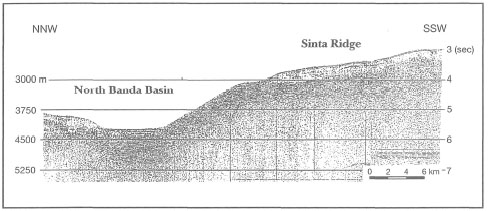
Figure 5.21. Seismic profile of Sinta Ridge, Banda Sea, illustrating Triassic carbonate deposits.
Modified from Villeneuve et al. 1993.
Jurassic
The latter part of the Jurassic was a boom period for both reef development and coral evolution, even though scleractinians suffered major losses during the end-of-Triassic extinction event. The survivors from the Triassic extinction event were mostly small and solitary corals. However, even though the generic diversity was greatly reduced, their systematic diversity was relatively high (Veron 1995). Reef development throughout the Tethys Sea and Panthalassa Ocean was significantly reduced, not only in size of reefs built, but also in their geographic distribution (Beauvais 1984). Early Jurassic reefs are very rare in the geological record, and according to Beauvais (1989) none of the Triassic genera survived.
By the end of the middle Jurassic (170 Ma B.P.), the breakup of Pangaea resulted in the widening of the western Tethys Sea that separated Gondwana from Eurasia, a continental mass that was formed by the breakup of Laurasia (fig. 5.22).
The fragmentation of Pangaea resulted in the formation of new shallow continental shelves, with environmental conditions most likely suitable for development of shallow-water tropical communities. By the late Jurassic, the separation of Gondwana and Eurasia resulted in a connection between Tethys and the paleo-Atlantic Ocean, thus creating the first circumtropical sea connection. The Jurassic proliferation of new scleractinian species and reef development was most likely associated with major changes in the paleoceanographic circulation patterns. During this time (170 Ma B.P.) there was a direct sea connection between the Indonesian Archipelago and the Mediterranean region as is clearly indicated by the fossil record (van Bemmelen 1949). Thus the development of a new circumtropical circulation system may have been the impetus for the great Jurassic scleractinian and reef proliferation.

Figure 5.22. Possible arrangement of continents during the middle Jurassic (170 Ma B.P.).
From Open University 1989.
It is generally accepted that the evolution of symbiosis between corals and zooxanthellae in the early Triassic played a significant role in the subsequent great coral speciation that occurred during the Mesozoic (Stanley 1981), especially in the middle Jurassic along the western and northern shores of the Tethys Sea (Veron 1986). Most of the scleractinian families we know today were present at the end of the Jurassic (see fig. 5.22) (Veron 1986), when scleractinian reef-building was at its maximum. About 200 new genera appeared in the fossil record, with 70% of them in the Tethys Sea and the rest in the Panthalassa Ocean (Beauvais 1989). However, many groups of sponges and bivalves that, at earlier times, were the dominant groups of reef-builders, experienced a major ecological shift"and became dominant groups of bioeroders (Fagerstrom 1987).
Jurassic Deposits. During the Jurassic, the Laurasian (Asiatic) portion of the present day Indonesian Archipelago (i.e., southwest Kalimantan, part of Sulawesi, etc.) was located in the eastern tropical regions of the Tethys Sea (see fig. 5.22).
However, the Australian/New Guinea (Gondwanic) components of the Indonesian Archipelago (i.e., Moluccas, outer Banda Arc, Sumba, Timor, Irian Jaya, and eastern half of Sulawesi) were still attached to Antarctica, but were slowly moving in a northerly direction towards Asia. In early Jurassic, the northern Australian margin was dominated by clastic sedimentation and no evidence of carbonate build-ups has been found. Subsequent to the major Jurassic orogeny (Belov et al. 1986; Sengör 1984; Sengör and Hsu 1984) that resulted in the elimination of the paleo-Tethys Sea from continental Southeast Asia (Hutchison 1989b), marine deposition spread into former fluvial and deltaic environments as the sea levels continued to rise above the end of Triassic low-level sea stand. Some Jurassic formations in southeast Kalimantan are neritic deposits containing the gastropod Cylindrites (van Bemmelen 1949); however coral limestones have so far not been described. The Jurassic deposits in Central Sulawesi are not well-known, but late Jurassic deposits in the eastern part of Central Sulawesi contain Belemnites (Belemnitida - coleoid cephalopods), a squid-like animal with a cigar-shaped internal shell 2-20 cm long. In contrast, the limestones of East Sulawesi are almost entirely non-fossiliferous. On Misool, which at the end of the Jurassic was just starting to move with Australia and New Guinea away from Antarctica, the Jurassic deposits are rich in invertebrate fossils. The early Jurassic deposits are non-fossiliferous; however at the end of the early Jurassic, limestone beds are rich in molluscs, ammonites (a four-gilled cephalopod with a chambered external shell), belemnites and some corals. The middle Jurassic deposits are not very extensive; however, the fossil fauna has a close affinity with the European fauna of the same period, demonstrating a Tethys Sea connection (see fig. 5.25). Late Jurassic Misool limestones contain sponges, brachiopods and large ammonites (van Bemmelen 1949). The late Jurassic limestones in East Seram contain abundant fossil deposits, especially of spongiomorphs (e.g., Lovceniopora vinassai).
Cretaceous
The Jurassic assemblages of reef-builders, consisting mainly of corals, coralline algae and stromatoporoids, persisted to about the early Cretaceous. The early Cretaceous, however, saw a brief decrease in the diversity of scleractinians, and other reef-building organisms in general, as well as a major reduction in reef-building (Veron 1986, 1995). This can be nicely illustrated by an example from the stratigraphy of the Bau Limestone Formation in Sarawak, west Borneo. The Bau Limestone Formation is a late Jurassic to early Cretaceous, massive shallow-water marine limestone deposit rich in fossils. This reefal build-up indicates that Sarawak and southwest Kalimantan (i.e., West Borneo block) were at the time located in a shallow-water tropical sea favorable for reef development (de Coo and Lau 1977). According to de Coo and Lau (1977), the reefal build-up ended suddenly sometime during the early Cretaceous, most likely as a result of increased sedimentation. The drowning of the reefs by increased influx of sediments seems to coincide well with the Cretaceous transgression (fig. 5.23), which resulted in a great flood that affected about 40% of the continental landmasses (Howarth 1981).

Figure 5.23. Relative global sea-level changes during the Phanerozoic time.
Modified from Esteban and Klappa 1983.
Global sea levels attained their maximum level at the late Cretaceous/Paleocene boundary (Vail and Mitchum 1979). Rapid transgression may have resulted in increased erosion of flooded landmasses, thus significantly increasing turbidity and sedimentation in coastal waters. Higher sedimentation rates may therefore partially explain the buried reefs of the Bau Limestone Formation. Reduction of water quality (i.e., sedimentation, turbidity and perhaps nutrient enrichment) was most likely associated with major climatic swings and continuously rising sea levels (Ginsburg and Beaudoin 1990). However, high-frequency sea-level fluctuations were superimposed on the increasing sea-level trend (Vail et al. 1977; Haq et al. 1987), with a major sea-level drop at the early and late Cretaceous boundaries (Schlanger 1986).
During the Cretaceous (100-66 Ma B.P.), the Tethys Sea was connected with the Panthalassa Ocean (i.e., present-day Pacific Ocean) at both the western and eastern margins. These connections resulted in a circumtropical seaway stretching between the eastern and western realms of the Tethys (fig. 5.24). Paleoceanographic evidence indicates that major climatic changes were occurring (Barron and Washington 1982), and that global oceanic circulation was dominated by an east-to-west-oriented equatorial oceanic current system (Lloyd 1982; Haq 1984). Climatic swings were associated with major volcanic activity that is believed to have caused significant increases in atmospheric CO2 concentrations, especially during the middle Cretaceous, that affected the chemical balance of the oceans (i.e., increasing pH of surface waters) (Crowley 1991). High atmospheric CO2 concentrations may have been directly linked with climatic conditions that resulted in average global temperatures that may have been more than 10°C above present.

Figure 5.24. Middle Cretaceous sea connections between the Panthalassa Ocean and the Tethys Sea.
Modified from Briggs 1987.
Through much of the Cretaceous, the gregarious, cornet-shaped, aragonite-secreting rudist molluscs (Bivalvia; Hippuritacea) displaced scleractinian corals, and other reef-builders, as the dominant group in many shallow-water environments throughout the western (i.e., the Caribbean extension of Tethys) and central Tethys Sea (Kauffman and Sohl 1974; Fagerstrom 1987; Kauffman and Johnson 1988). Veron (1995) recently suggested that rudists may have been zooxanthellate. Major rudist-dominated, carbonate build-ups occurred along the passive margins of the Eurasian, African and American lithospheric plates, especially along the lower latitudes of the northern and southern coastlines of the central Tethys Sea (i.e., present-day Mediterranean region) (Philip and Airaud-Crumiere 1991). In the western extension of Tethys, rudist-dominated carbonate build-ups occurred in the present-day Caribbean region (e.g., Jamaica), while in the eastern Tethys, deposits were laid along the northeastern margin of the Australian continent. However, the suggestion that rudists were the dominant reef-building organisms during the Cretaceous (Kauffman and Sohl 1974; Kauffman and Johnson 1988; Collins 1988; Camoin et al. 1988) continues to be questioned (Gili et al. 1990; Donovan 1992).
By late Cretaceous, the rudists reached their peak diversity, and occupied a greater diversity of shallow-water habitats (e.g., from muddy lagoons to reef slopes) than at any other time of their 100-million-year history (Jones and Nicol 1986; Fagerstrom 1987; Donovan 1992). Most of the rudist-dominated reefs grew on broad shelves and semi-enclosed seas with restricted circulation (James 1983). Their success may have been linked to the low aragonite content of their skeletons (about 45%) when compared to the 100% aragonitic scleractinians, since aragonite is more soluble in acidic environments (Veron 1995). Interestingly enough, scleractinian diversity, (especially of the branching forms), was rapidly rising during this rudist-dominated period (Jackson and McKinney 1990). While there were only about 50 scleractinian genera at the end of the early Cretaceous, by the late Cretaceous, or 20 million years later, there were over 100 genera (Fagerstrom 1987).
Good examples of rudist-dominated, shallow-water communities of the late Cretaceous are found on Misool, which is geologically part of the Australian Plate formerly connected to Gondwana. However, in Central Sulawesi, the late Cretaceous limestones, west of the Latimodjong Mountains, contain mainly a fungid-type coral Astrarea cf. columellata (van Bemmelen 1949). The late Cretaceous of Southeast Sulawesi differs markedly from that of Central Sulawesi, since the limestones consist mostly of Foraminifera such as Globotruncana rosetta, Guembelina globulosa and Pseudotextularia frusticosa (van Bemmelen 1949). Umbgrove (1938a) reported that Globotruncana-bearing Cretaceous limestones are found in Timor, East Sulawesi and the Vogelkop of Irian Jaya. These different fossil faunas reflect distinctly different depositional environments, ranging from turbid coastal shallow-water habitats dominated by rudists, to clear shallow-water coastal or offshore environments favourable for coral growth and reef development, to deep oceanic environments where foraminiferal deposits predominate.
Since the Cretaceous, the greatest scleractinian speciation occurred in groups with erect corallum morphologies. The evolution of branching growth-forms with fast growth rates (i.e., skeletal extension rates) may have been a response to increased predation, associated with the increased diversity of new predators which evolved since the middle Mesozoic (Jackson and McKinney 1990). Fast-growing branching corallum morphology allows the coral to "escape" its benthic predators and competitors by growing upwards. Since the Triassic, there has been a unidirectional increase in species with highly integrated corallites (i.e., porous walls between corallites, no walls at all, or meandroid), suggesting that strengthening of physiological interactions between polyps may have provided some competitive advantage (i.e., faster growth) over other groups (Jackson and McKinney 1990).
In addition, tighter packing of corallites provides greater structural strength of the corallum that allows the corals to thrive in high-energy environments, where they are exposed to clear waters and a continuous supply of food. Since corals are basically phototrophic organisms, tighter packing of the corallites results in a rigid carbonate skeleton that allows the animal to expose more surface area to the elements to meet the basic metabolic needs of the colony. However, even though scleractinian corals were experiencing rapid speciation, shallow-water carbonate reefs of the late Cretaceous were dominated mainly by the rudists. Rudists achieved their greatest familial and generic diversity during the late Cretaceous (Fagerstrom 1987).
Cretaceous Extinction
The great mass extinction at the end of the Cretaceous had a profound effect on most terrestrial and aquatic communities; however, the impacts were variable. What caused the Cretaceous mass extinction is still being debated. The most popular hypothesis evokes a cosmic event (Alvarez and Muller 1984; Davis et al. 1984; Hallam 1984). Fagerstrom (1987) points out that tropical Tethys marine taxa suffered higher extinction rates than their temperate counterparts, and that the pelagic taxa suffered higher extinction than deep-water benthos. Scleractinian corals suffered considerably, with about 30% of families and 70% of the genera eliminated. Global sea levels during the late Cretaceous mass-extinction event reached about 350 m above present-day sea levels, the highest in geological history (Vail and Mitchum 1979) (see fig. 5.23). Hutchison (1989) suggested that the late Cretaceous maximum sea-level stand extended from about 85 to 55 Ma B.P., with maximum transgression occurring at the late Cretaceous - Paleocene boundary (about 60-55 Ma B.P.). The mass extinction at the end of the Cretaceous marked the end of the rudists and Stromatoporoidea as well as the near-extinction of Sphinctozoa, Inozoa, Demospongiae, and Hexactinellida (James 1983; Fagerstrom 1987). However, it seems likely the reefs of the Cretaceous were very similar to present-day (Recent/Holocene) coral reefs found throughout the Indo-Pacific (James 1983).
CENOZOIC REEFS
The pre-Tertiary rocks are of course important for the knowledge of the older stages of development of the Indian Archipelago. But in the Cenozoic Era (Tertiary and Quaternary) orogenetic movements occurred which gave the region its present physiography.—VAN BEMMELEN 1949
By geological standards, the Indonesian Archipelago is a relative newcomer to the world stage. According to van Bemmelen (1949), 75% of the surface deposits on most of the islands in the archipelago are of Cenozoic age (i.e., less than 65 million years old). Not surprisingly, Tertiary marine deposits, including coral, foraminiferal and algal limestones, are a common occurrence throughout the archipelago. The Tertiary was a period of great geological upheaval through the gradual movement and redistribution of the earth's major tectonic plates (e.g., Australia began to separate from Antarctica in early Tertiary, about 54 Ma B.P.) as well as a period of wide global eustatic sea-level fluctuations (Weissel and Hays 1972) (see fig. 5.23). Until about the middle Eocene, the tectonics of the Southeast Asian region were dominated mainly by the interaction of three major tectonic plates, namely the westward-drifting Pacific Plate, the south-southwesterly-drifting Eurasian Plate, and the slow northward-drifting Indo-Australian Plate (Isacks et al. 1968; Katili 1985). During this time the Eurasian Plate was in contact with the Australian Plate with an interplate motion of about 2 cm/yr. Since the late Cretaceous, India was moving rapidly northwards away from Antarctica, and by the middle Eocene made "soft" contact with Eurasia (Hutchison 1989). The final or "hard" collision of India and Eurasia in the late Eocene (about 40 Ma B.P.) had a significant impact on the tectonics of Southeast Asia, and was responsible for the formation of most of the Tertiary basins in Southeast Asia (Hutchison 1989).
During the early Tertiary (Eocene), the Tethys Sea was a circumtropical seaway stretching from the present-day Caribbean through the Mediterranean and into the Indian Ocean (Martin 1914, 1919; Umbgrove 1929b). Based mainly on his stratigraphic studies of molluscan fossil fauna from Java and other parts of the archipelago, and their similarity to the European fossil fauna, Martin (1914) suggested that a Tethys connection existed between the European region and Indo-Pacific during the Mesozoic and early Tertiary. The analysis of the various fossil faunas in the archipelago (e.g., foraminiferans, molluscs, echinoids and anthozoans) led Martin and Umbgrove to conclude that the Tethys connection was open until the middle Eocene. Martin's earlier data suggested that the Tethys connection was severed sometime during the late Eocene, and remained closed thereafter. However, according to Umbgrove (1929a), it seems likely that while the full separation of the European and Indo-Pacific marine faunas may have occurred since about the late Eocene, there is some evidence that a number of genera may have managed to penetrate into the Indo-Pacific region from Europe during the Oligocene, probably through a partial restoration of the connection via the Indian region (Umbgrove 1929a).
The Paleogene
During the early Paleogene the northern shelf of the northward-drifting Australian Plate was still in high latitudes, generally not suitable for extensive reef development. However, by the late Oligocene, the northern shelf of Australia reached the subtropical latitudes, which resulted in reefal development dominated by scleractinian corals. Following the India-Eurasia collision in the Eocene, there was a major rearrangement of terrains in the Southeast Asian region, which led to the present-day configuration of the Indonesian Archipelago. By the middle Eocene, Australia became an integral part of the Indo-Australian Plate, and the initial subduction of the "super-plate" commenced along the Sunda Trench sometime in the late Eocene (40 Ma B.P.). During the middle Oligocene (30 Ma B.P.) the spreading of the South China Sea Basin was also in full swing, which resulted in displacement of the West Borneo Basement in a southerly direction into equatorial latitudes. Active sea-floor spreading in the South China Sea Basin (22-30 mm/yr) from early Oligocene to mid-early Miocene (31-19 Ma B.P.), with a concurrent southward drift of the West Borneo Basement, resulted in the opening of the paleo-South China Sea (Taylor and Hays 1980; 1983; Hutchison 1989).
Following the final rifting of the Philippine Arc from the Pacific Plate sometime in the middle Eocene, the Pacific Plate lost most of its direct influence on the tectonics of the Southeast Asian region (Daly et al. 1987). At present, the Pacific Plate is being subducted under the Philippine Plate at the Mariana Trench. One of three major tectonic events of the late Oligocene was the merging of the Philippine and Melanesian Arcs into the single Philippine Plate. The evolution of the Philippine Plate involved a northward movement of the pro to-Philippine archipelago, which was then the western extension of the Melanesian Arc, and subsequent clockwise rotation into the present position (Petroconsultants Australasia 1991). The rotation of the Philippine Plate also helps to explain the formation and isolation of the Sulawesi (Celebes) Basin, which is considered to be a fragment of the Philippine Plate (Daly et al. 1987). The clockwise rotation, which was greater than 90°, during the middle Eocene resulted in the formation of the Sulawesi Sea (Weissel 1980). The rotation ended the sea-floor spreading of the Sulawesi Basin, and caused a subsequent subduction of the South China Basin lithosphere under the Philippine Plate at the Manila Trench (Fuller and Lin 1984). The continuous motion of the Philippine Plate has dominated the tectonics of northeastern Southeast Asia from the middle Eocene to the present. The second event was the eastward extension of the Sunda subduction zone that gave rise to the Banda Arc. The third tectonic event was the westward motion of the Banda Complex with the Philippine Plate (Petroconsultants Australasia 1991). It should also be noted that the global eustatic sea levels that began to fall at the end of the Cretaceous had finally reached an all-time low of about 250 m below present-day sea level sometime during the late Oligocene (20 Ma B.P.) (see fig 5.23). This has important biogeographical implications, since Sundaland would have achieved its maximum land surface area, and numerous land connections (i.e., bridges) would have appeared between some of the island groups in the archipelago. However, in terms of carbonate deposition, this was an all-time low period of deposition.
Epting (1980) showed that reef development, and deposition of carbonates in general, in the Southeast Asian region was most pronounced during periods of rising sea levels (i.e., transgressions). A wealth of data obtained from oil exploration during the past two decades in Indonesia and the rest of Southeast Asia has shown that the late Eocene to early Oligocene, and the late Oligocene to early Miocene, were long periods of rising sea levels. The geological record shows that during these transgressions, and sea-level stillstands (there were actually 44 periods of significant coastal "onlaps" during the approximately 65 million years of the Cenozoic), major reef build-ups occurred throughout the Southeast Asian region, particularly in Indonesia (Epting 1980; Petroconsultants Australasia 1991). For example, locally important Eocene reefs developed in the Java Sea. From these massive build-ups, it is evident that rising sea levels in the past have created optimal conditions for reef development. Major transgressions during the early Miocene flooded large areas of Oligocene flood plains, creating conditions favourable for massive reef development throughout the Southeast Asian region. Some oceanic reefs located just off the western edge of the Sahul Shelf, such as the Scott Reef and Rowley Shoals, originated from the early Miocene and are still flourishing today. Globally, major reef development occurred along the northern margin of the northward-drifting Indian continent, as well as along the northern margin of the shrinking Tethys Sea.
In contrast, the middle to late Oligocene was a period of major sea-level low-stand, with a corresponding drop in carbonate deposition throughout Southeast Asia. During the maximum lows of the sea-level lowstand in the late Oligocene, most of the shelf areas in Southeast Asia were exposed. However, as a result of tectonic activity, massive regional, carbonate build-ups occurred along plate margins, or in areas of significant subsidence. Excellent examples of this regional build-up during the sea-level lowstand are the Kutai and Barito Basins in East Kalimantan, where massive carbonate deposition occurred during the middle to late Oligocene as a result of subsidence (Petroconsultants Australasia 1991). It appears that subsidence and lack of clastic sediment influx were the main factors responsible for this major carbonate build-up.
However, it is important to point out that massive carbonate deposits in the past were not always associated with scleractinian corals, or reefal build-ups. In fact, the nature of reefal build-ups has changed considerably during much of the Tertiary. Climatic conditions, tectonic setting, eustatic sea-level changes, topography and water chemistry were the main determining factors in the depositional characteristics and nature of these early carbonate deposits. For example, during the early Paleogene (Paleocene and early Eocene) carbonates were mostly dominated by foraminiferan fauna, and only very limited reefal build-ups occurred (Fulthrope and Schlanger 1989). In general, Paleocene reefs are absent in Southeast Asia with only marginal development along the northern margin of the Australian Plate. During the middle Eocene, significant carbonate build-ups occurred in the east Java Sea Basin as well as along the northern margin of the Australian Plate. However, according to Kohar (1985), the Eocene carbonate build-ups in the east Java Sea do not have normal reef morphologies (e.g., pinnacle reefs, etc.), but rather they are eye-shaped lenses most likely consisting of foraminiferan deposits (i.e., foraminiferan banks). Scleractinian corals, which are among the dominant reef-builders of present-day reefs, were generally rare during the Paleocene and early Eocene. Reef-building corals became dominant components of reef structures again during the late Oligocene to middle Miocene transgression (see fig. 5.23), when sea levels reached about 220 m above present levels (Hutchison 1989).
The Neogene
During the late Oligocene to middle Miocene transgression, carbonate deposition and reef build-ups were widespread, especially along the northern Australian margin and Papua New Guinea, where extensive platforms covered the northwestern shelf. In Southeast Asia, economically significant oil-bearing reef deposits, such as the Arun field in Sumatra (Houpt and Kersting 1976) and the Bintuni and Salawati Basins in Irian Jaya (Vincelette and Soeparjadi 1976), were laid down during the early-middle Miocene high sea-level stand. Kenyon (1977) describes the distribution and morphology of early Miocene carbonates and pinnacle reef bioherms in the east Java Sea that were deposited during a period of epirogenic subsidence of a broad carbonate platform. The east Java Sea Miocene carbonate deposits comprise six types of structures ranging fom shelf coral reefs to basin slope pinnacle reefs as well as carbonate mudmounds. In terms of tectonic setting, the area north of Madura is considered to be an open shelf on the Asiatic continental margin, while the southern east Java-Madura Basin is a structural foreland basin formed in the late Tertiary. It has been suggested that Tertiary deposition was initiated sometime in the Eocene with a marine transgression over an irregular base topography of Mesozoic age (Kenyon 1977). The transgression continued until middle Miocene with an accumulation of about 330 m of carbonates. The development of the numerous pinnacle reefs has been attributed to fast subsidence of the basement and rapid growth of the reef framework which kept pace with the sea level.
Widespread early-to-middle Miocene oil-bearing limestone deposits also occur in Kalimantan (e.g., Barito and Kutai Basins), northwest Java and the Java Sea (e.g., Pulau Seribu), and South Sumatra (e.g., Baturaja) (Nayoan and Siregar 1981). Massive carbonate deposition also occurred on the microcontinental blocks in the Banda Sea and Halmahera. Coral reefs were also developed along the southern margin of the Lesser Sunda Islands.
The mountain range along the south coast of Java consists of various volcanic deposits mixed with Miocene fossiliferous limestones bearing Lepidocyclina, Cycloclypeus and Miogypsina (foraminiferans). Along the southeast coast of Java, extensive middle Miocene limestone deposits occur from the Blambangan Peninsula to Wonosari on the south coast of Central Java. Miocene reefal deposits are a dominant feature along the coastline south of Seremu volcano, and Nusa Barung to the east. The mountains of the Blambangan Peninsula are of Miocene reefal origins. The Miocene tectonics of eastern Java are a series of ups and downs. According to van Bemmelen (1949), the early Miocene (22-18 Ma B.P.) was characterized by volcanism, partially submarine. The subduction of the Indo-Australian Plate under the Java Trench resulted in slow uplift of the southern coastline and rise of granite batholiths (i.e., plutonic mass of magmatic origin with surface area >100 km2, and no basement). Subsequent subduction of the region resulted in transgression and major carbonate deposition. Following the formation of the carbonates, both reefal and non-reefal, in late Miocene, sea levels dropped considerably thus exposing the limestones. As a result, the surface topography of the southeast Java mountains has been heavily karstified under the onslaught of a humid tropical climate.
Similar heavily karstified limestone deposits occur along the south coast of Central Java (i.e., Gunung Sewu range - fig. 5.25). The largest, and the most studied Miocene carbonate deposits are the Wonosari limestones, found in the Wonosari district. The Gunung Sawu reef-limestones have a thickness of about 800 m (van Bemmelen 1949). Uplift, tilting and block faulting of these carbonate deposits in the middle Pleistocene resulted in extensive karstification. Stratigraphic studies indicate that Wonosari limestones were at sea level during most of the Neogene. Along the north coast of Central and East Java, major limestone deposits were laid down in the Rembang beds, a narrow mountain chain running roughly from Purwodadi to Tuban. These oil- and coal-bearing deposits are economically significant. Early Miocene coral fossils have been found in relatively rich reefal deposits. According to Umbgrove (1946c), about 17% of recent coral and molluscan fauna is represented in the early Miocene (about 20 Ma B.P.) Rembang deposits, while a number of coralliferous deposits from the Oligocene of the Indonesian Archipelago contained no extant species (see table 5.1).
During Leg 5 of the Snellius-II Expedition to Linta Strait and northeastern Komodo, two Miocene reef deposits were discovered on two volcanic islands, Pulau Sabita and Gili Lawa Laut (fig. 5.26). Table 5.1 indicates that the Miocene scleractinian fauna of this region was similar to present-day communities; however, the absence of Acropora has been noted as remarkable (van der Land and Sukarno 1986). The two fossil fauna, with a total of 23 genera, are very similar in character, suggesting that they may have been from the same period, but not older than early Miocene as is indicated by the presence of Seriatopora. The Sabita deposit also contained interesting fossils which apparently resembled Mesozoic stromatoporoids (sclerosponges) (van der Land and Sukarno 1986).

Figure 5.25. Map of the south coast of Central Java showing location of limestone formations, highlighted by a heavy line.
From van Bemmelen 1949.

Figure 5.26. Map of east Komodo showing the locations (stars) of Pulau Sabita in Linta Strait and Gili Lawa Laut off the northeast coast of Komodo.
From van der Land and Sukarno 1986, p.3-6; Leg 5.
Further to the northwest, reefs and carbonate platforms were deposited along the margins of the South China Sea. In comparison, deep-water clastic sediments were deposited in the Gorontalo and Bone Basins. Further to the west, a massive carbonate platform extended from southern Sulawesi to the western side of the south Makassar Basin. More importantly, however, is that reefal build-ups and associated carbonate deposition formed thick reefal units, many of which may be important oil reservoirs (Haq et al. 1987).
The late Oligocene to middle Miocene transgression was associated with climatic warming (Savin et al. 1985), which resulted in widespread latitudinal expansion of coral reefs (i.e., from Japan to New Zealand), mainly as a result of a reduced oceanic latitudinal temperature gradient (Fulthrope and Schlanger 1989). From the middle Miocene high sea-level stand, global sea levels dropped in three progressive stages, reaching a low of about 200 m below present-day sometime during the end of the late Miocene. From the late Miocene to Quaternary, global sea levels experienced a number of cycles of rapidly fluctuating sea levels. The most impressive rise in sea level occurred at the Miocene/Pliocene boundary (about 5 Ma B.P.) when sea levels reached 140 m above present (Hutchison 1989). Early Pliocene was a period of large-scale carbonate deposition along the northwest shelf of Australia, as well as a period of active tectonism throughout eastern Indonesia. The central uplands of Papua New Guinea as well as the Tamrau Mountains of Doberai Peninsula, Irian Jaya, were uplifted by tectonism. Fossil-rich late Neogene carbonate deposits abound in the Van Rees Mountain range of northern Irian Jaya. Some of these have shed some light on the longevity and persistence of some coral species groups. For example, Umbgrove (1946c) found that about 66% of fossil corals in the early Pliocene deposits of the Van Rees Mountains belong to extant species (see table 5.1). Just to the west, Seram and Buru Islands were partially uplifted as a result of a dextral shear along the Seram Trough. Thick, deep-sea sediments were deposited throughout the Moluccas Sea.
The Sula Platform (i.e., the Banggai-Sula microcontinent), which is considered to be a fragment of the North Australia-New Guinea passive continental margin, collided with Sulawesi sometime in the late Neogene (Klompe 1956; Hamilton 1979; McCaffrey et al. 1981; Pigram et al. 1985; Garrard et al. 1988; Davies 1990). As a result, the eastern part of Central Sulawesi (e.g., Luwuk) was subsequently uplifted, creating a series of uplifted coral reef terraces that reach an altitude of about 400 m above present-day sea level (Sumosusastro et al. 1989). Using U/Th dating techniques, and a sea level curve from Huon Peninsula, Papua New Guinea, Sumosusastro et al. (1989) were able to determine that the highest coral terrace (410 m) was uplifted at a rate of about 184 cm.ka1. Deep-water elastics derived from the uplifted deposits in North Sulawesi were deposited in the Gorontalo Basin. To the south, the Buton continental fragment collided with the southeastern arm of Sulawesi, which subsequently raised Pleistocene coral reefs up to 703 m above sea level at the southern part of the island (i.e., Mt. Kontu) (van Bemmelen 1949; Hutchison 1989). During the early Pliocene, Java was an area of marine deposition; however, uplifting did not occur. To the north, the present location of the South China Sea became established, but most coral reefs in the East Natuna Basin were drowned by the rapidly rising sea levels.
Table 5.1. Miocene scleractinian genera from Pulau Sabita and Gili Lawa Laut, Lesser Sunda Islands. Numbers indicate number of samples collected. See figure

From a global perspective, the most important event that took place during the mid-Pliocene was the closure of the Central American Seaway and the rise of the Panamanian land bridge (about 3 Ma B.P.). This event effectively isolated the Caribbean Province from the Indo-Pacific, which greatly influenced present-day biogeographical patterns.
The Quaternary
Wide and rapid eustatic sea-level fluctuations that followed in the Pleistocene were all associated with the growth and melting of polar and continental glaciers. The Pleistocene is generally known as the Ice Age period. Associated with the wild swings in climatic conditions were corresponding changes in ocean circulation patterns. However, the development of modern reefs has been mainly influenced by recent sea-level fluctuations, especially since about 120,000 years ago.
Coral stratigraphy of the Tertiary and Quaternary of Indonesia has been extensively studied since the 1920s (Umbgrove 1924, 1926, 1938, 1939b, 1942, 1943a,b, 1945, 1946a,b; Osberger 1956). Based on the extensive fossil record, Umbgrove (1946c) was able to show that since the Miocene there was a progressive increase in the percentage of Recent (Holocene) scleractinian species (table 5.2). The pattern in table 5.2 has shown to be applicable in a global context, and we now know that many of the extant scleractinian coral genera have survived since at least the early Tertiary. The table illustrates that scleractinian species in Indonesia have undergone major changes since the late Miocene; however, the work by Veron (1995) shows that at the generic global level, changes were relatively minor.
The data presented in table 5.2 suggest that in spite of great climatic upheavals, and wide eustatic sea-level fluctuations during most of the Plio-Pleistocene, scleractinian corals survived without major extinctions in their generic ranks (Wells 1956; Pauly 1991; Buddemeier 1993). However, at the species level major changes have occurred within the past few million years. None of the extant Indonesian species have a fossil record beyond the late Oligocene.
The latest drop in sea level (i.e., 135 m below present) that occurred about 18,000 years ago apparently had very little impact on scleractinian diversity, but it had a major impact on present-day biogeographical distribution patterns. The Indonesian and Philippine Archipelagoes became refuge places, from which adjacent regions, such as the Great Barrier Reef, became repopulated. The post-glaciation Indonesian/Philippine source pool may explain, at least partly, the surprising absence of scleractinian endemism in the region (Veron 1995). However, C. Wallace has recently found a number of new endemic Acropora species in various parts of the archipelago (C. Wallace, pers. comm.).
Potts (1983) suggested that the lack of endemism in the Indo-Pacific region is related to reduced rates of speciation during periods of rapidly fluctuating sea levels that were common during the Plio-Pleistocene. He proposed that during these environmentally stressful times, corals did not have sufficient time for speciation, but instead they maximized their intraspecific variability, which resulted in extensive variation in external morphology (e.g., Acropora and Montipora). He also suggested that since the late Pliocene, speciation in corals has been suppressed, at least in the Indo-Pacific region. This, however, seems contrary to recent studies by Boekschoten et al. (1989) who, based on their Indonesian field data, concluded that, at least for Acropora, evolutionary stasis has not set in. An alternate theory by McManus (1985), however, suggests that the rapid sea-level fluctuations did not retard, but rather facilitated, speciation on both land and sea. A full knowledge of Indonesian endemics would go a long way to reconcile these different viewpoints; unfortunately, very little can be said of Indonesian endemics since there is a serious lack of quantitative data on the subject.
While some information exists on the distribution of the early scleractinian communities (Gerth 1923; 1925,1932; Umbgrove 1924,1926, 1946a, 1946b; Oosterbaan 1985), there is little information on zonation and community structure of these early coral reef communities. Boekschoten et al. (1989) were among the first to gather paleontological evidence which suggested that the generic composition of Indonesian coral reefs has remained relatively unchanged during the past 25 million years. Indeed, present-day coral reef communities are most likely very similar in terms of community structure and function to coral communities that existed during the interglacial periods or sea-level stillstands during the Plio-Pleistocene (Jackson 1992).
In general, the Pliocene scleractinian deposits in Indonesia contain mostly extinct species belonging to extant genera (Boekschoten et al. 1989). Nevertheless, there are some coral species that show remarkable persistence in maintaining their general morphology. For example, Boekschoten et al. (1989) found a Pliocene Pachyseris speciosa (Dana) in a reef talus deposit on Guang Island, southwest Selayar, that is identical to the extant species (i.e., the species has maintained its form for the past 5 million years). Guang Island (fig. 5.31) is a part of a small horst, running parallel with the Selayar horst, whose geological setting and coral fauna suggest Pliocene age (van der Land and Sukarno 1986). A total of 23 scleractinian genera (table 5.3) were found in the outcrop, including specimens of Tubipora, which has previously not been described as a fossil in the scientific literature.
Table 5.2. Percentage of Recent (Holocene) scleractinian coral species in the fossil record since the early Eocene (57 Ma B.P.). 'Ma B.P.' refers to million years before present.

Box 5.2. Evolution of Indonesian coral reefs.
G.J. Boekschoten; Earth Sciences, Free University Amsterdam; M. Borel Best; National Museum Natural History, Leiden.
The Indonesian Archipelago is a result of a collision of three major tectonic plates (Indo-Australian Plate, Pacific Plate and Eurasian Plate) during the Tertiary. Prior to the collision, each of these three crustal elements had their own unique marine biotic identity. The collision resulted in a wide range of passive and active underwater slopes, consisting of older rocks and newer sediments or lava streams. The variety of provenance of the reef organisms, and the great range of ecological opportunities offered by the complicated ranges of island arcs and continental fragments, may explain the unique species richness of the eastern Indonesian coral reefs.
The Asian portion of the western part of the Indonesian Archipelago (i.e., Sunda Shelf) had little coral reef development. However, fringing and barrier reefs developed around the seaward edge of the shelf. During the low sea-level stands in the Tertiary and Quaternary, many of the coral reefs fringing the Sunda Shelf were smothered in mud and sand, and some barrier reefs drowned.
In contrast, coral reefs flourished in the Pacific part of the Indonesian Archipelago, the Luzon-Kalimantan-West Irian triangle. Many coral reefs in eastern Indonesia developed on topographically steep ridges that supported high species diversity. These submarine ridges may have been important refuges for corals and other reef organisms during the Quaternary, characterized by wide sea-level fluctuations. The islands in this region did not have much upward movement, and, as a result, fossil reefs and terraces that are characteristic of southern Indonesia were not formed.
In the Australian portion, technically the most active, of the Indonesian Archipelago (southern Indonesia, Moluccas, western part of Sulawesi and lower Sunda islands), a variety of coral reefs (e.g., fringing, patch, barrier reefs and atolls) developed. Tectonic events associated with the rapid northward motion of the Sahul Shelf (Northern Australia) towards the Eurasian Plate resulted in many elevated reefs and reef terraces (fig. 5.27). Fossil reef limestones occupy a considerable surface portion of many Indonesian islands (fig. 5.28). The limestone ranges along the southern coastline of Java and the Lesser Sunda Islands consist partly of this reefal material.
Indonesia's considerable oil reserves are held in the subsurface of fossil Tertiary reef rock. These limestone outcrops are also an important source of "marble" slabs embellishing banks and shop fronts. The polished surfaces of most marble contain many lentil-shaped shells of fossil foraminifera (Lepidocyclina a.o.), reef-dwelling benthic organisms characteristic of the middle Tertiary reef assemblages (fig. 5.29). Foraminifera became less important in younger Tertiary reef assemblages.
Sea-level changes associated with the growth and melting-down of polar ice caps became more important towards the Pleistocene Ice Ages. A low sea-level stand of at least 110 m below present-day sea level still existed some 14,000 years ago. The sea level rose rapidly to about the present level afterwards. The coral reef zone must have migrated up and down several times during the Pleistocene within this range. The remarkable paucity of the genus Acropora in Pleistocene reefs has been linked with this process. The preference of Acropora species for reef flats and upper reef slopes, areas that were first destroyed during the transitional phases of rapid transgression, may have been the key factor responsible for their low abundance during the Pleistocene.
The spasmodic history of the Pleistocene sea level resulted in the development of reef terraces along the coasts, that were also shaped by local tectonic uplifts. The sea level during the last 10,000 years did not remain stable, but fluctuated mainly as a result of changes in wind and current patterns. Present sea-level stand, in much of Indonesia, is about 2-3 m below the highest Holocene sea-level stand. Consequently, many sandy reef flats have emerged as coral cays with low flat surfaces. The Spermonde Archipelago in southwest Sulawesi is a good example (fig. 5.30); the Kepulauan Seribu, northwest of Jakarta, is another.

Figure 5.27. The elevated reef terraces of Binongko Island, Tukang Besi Islands, Southeast Sulawesi. Note an unusual barrier reef at centre right.

Figure 5.28. Uplifted Pleistocene reef limestones on Sumba Island, East Nusa Tenggara.

Figure 5.29. Fossil foraminifera Lepidocyclina (Foraminiferida) in Miocene limestone deposits.

Figure 5.30. Coral cays of the Spermonde Archipelago, South Sulawesi.
The latter possibly reflects a pre-existent pattern of Pleistocene hills that were covered by coral reefs since the onset of the Holocene.
Table 5.3 illustrates that the generic diversity of the Pliocene reefs at Guang and Bahuluang Islands was remarkably similar to present-day reefs, even though species-level taxonomy was most likely much different. The most frequently found specimens were Goniastrea (16), Acropora (12) and Pontes (10) (table 5.3). The abundance of these large massive genera may be a reflection of their greater resistance to weathering rather than of ecological significance. The Guang outcrop also contained Pecten (Pectinidae) and Tridacna (Tridacnidae) fossils. Another limestone outcrop bearing fossil fauna of the Pliocene was found on Bahuluang Island, which is located just to the south of Guang Island. According to van der Land and Sukarno (1986), the limestone outcrop on Bahuluang Island belongs to the Selayar member of the Walanae formation. While the fossil fauna of the Bahuluang outcrop was similar to Guang, it was much less extensive.
Studies of the Plio-Pleistocene and early Pleistocene fossil reefs in Indonesia revealed a conspicuous absence of Acropora from die coral communities. Table 5.4 demonstrates the species composition of Plio-Pleistocene reefs in Nias, off the west coast of Sumatra and Pleistocene communities of Sumba. The absences of Acropora and Montipora are striking, since Acropora is considered the most important reef-builder in recent Indonesian reefs, as well as the most diverse genus (Moll 1983). According to Boekschoten et al. (1989), the total absence of Acropora from Indonesian Pleistocene reefs is characteristic of this region, and is most likely related to rapidly fluctuating sea levels (see box 5.2).
About 40% of the Nias Plio-Pleistocene fauna in table 5.4 are massive species by today's standards(sensu Moll 1983), compared to 28% in recent communities (Boekschoten et al. 1989). In contrast, 61% of the species in the Melolo Pleistocene collection are considered as massive. This difference suggests that sea-level fluctuations may have had a disproportionately greater impact on branching or sub massive shallow-water species than on the more massive species with greater depth range. However, the apparent low number of branching species may also be a sampling bias, since coralla of massive species are likely to survive longer. Additional data are clearly needed before more in-depth analyses can be conducted.

Figure 5.31. Aerial photograph of Guang Island illustrating the extensive reef complex that surrounds the limestone-capped island (on the right). Malimbo Island is located to the north (left). The reef system is exposed to weather during the Northwest Monsoon, but sheltered during the Southeast Monsoon. Sediment deposition occurs at the leeward side of the reef complex. Karst landscape of Guang Island is noticeable.
Photo by Tomas and Anmarie Tomascik.
The picture that emerged from the studies of Plio-Pleistocene fossil reef communities, was that following each glacial epoch and sea-level low stand, coral reef communities have always managed to reestablish themselves (Jackson 1992). Veron (1995) points out that only about 25%-30% of all extant hermatypic coral species have a fossil record, which may be indicative of species stability. Umbgrove (1946c) was the first to make an attempt to quantitatively interpret the Indonesian coral fossil record from an evolutionary standpoint. He came to the conclusion that during the past 30 million years the evolution of Indonesian coral fauna went through two distinct accelerations (i.e., speciations), one in the late Miocene and the second in the Pleistocene. To explain these two accelerated evolutionary tempos, Umbgrove (1946c) alluded to the diversification of marine habitats (i.e., intense geographic changes and formation of new deep-sea basins) as the principal factor which stimulated and facilitated Pleistocene coral speciation. However, he also commented on the relatively sparse database on which he based his analysis.
Probably the East Indies were at the time only slightly influenced by climatic changes, but the geographic changes were very intense. It is in the Pleistocene that mountain building (in the geographical sense) took place…. It seems probable to a high degree that we may look upon these events as the principal factor which stimulated the plastic group of corals to an intensive acceleration of their evolution; the more so, as the same epoch wrought great geographical changes over the whole of the tropical area of the Indo-Pacinc.—UMBGROVE 1946c
The accelerated coral speciation in the Indonesian Archipelago during the Plio-Pleistocene, as suggested by Umbgrove (1946c), seems to have been paralleled by a major acceleration of species turnover in the Caribbean Province during the middle Pliocene to early Pleistocene (4-3 Ma B.P.) (Budd et al. 1993). It seems that most affected by the extinctions were groups of shallow-water species, especially from reef flat areas. Umbgrove's view of physically facilitated speciation is compatible with the latest concept in coral evolution, which evokes surface circulation vicariance (a function of both divergence and hybridization) as the primary driving force behind coral evolution (Veron 1995). The main thesis of this hypothesis is that alterations in surface oceanic circulation patterns will control the amount of genetic connectivity among different interbreeding populations, which may ultimately result in genotypic divergence. The necessary mechanisms for the alteration of circulation patterns are implicit in Umbgrove's argument. It is accepted that climatic changes, as they relate to either atmospheric or seawater temperatures, had at the most a minimal effect on the evolution of Indonesian coral communities. However, the rapidly fluctuating sea levels during the Plio-Pleistocene and active orogenies have left their mark.
Table 5.3. Early Pliocene scleractinian genera from Guang and Bahuluang Islands, southwest Selayar. Numbers indicate the number of specimens found.

On a global scale, paleoclimatic cycles are most likely of greater significance than geological processes (i.e., tectonics). However, in a relatively small area such as the Indonesian and Philippine Archipelagoes, intense geological activity (volcanism and tectonic uplift or subduction) combined with rapidly fluctuating sea levels can be relatively fast on geological and evolutionary time scales. The formation of island arcs and submarine ridges alters the surface circulation patterns, either through subsea deflection of deep currents or through direct interference at the surface. The Plio-Pleistocene was a period of renewed orogeny in the archipelago, creating new substrates and new habitats for coral colonization (Umbgrove 1946c). Rapid colonization of lava flows (i.e., <5 years) has been recently shown to occur under favourable environmental conditions (Tomascik et al. in press). It is maintained that these conditions are part of the normal environmental character in eastern Indonesian waters that are unaffected by anthropogenic impacts. Earlier estimates for coral community recovery following major environ-mental perturbations, such as lava flows, have been relatively slow (i.e., 20 to 50 years) in comparison (Grigg and Maragos 1974).
Table 5.4. List of Plio-Pleistocene scleractinian genera from Nias, West Sumatra, and Pleistocene scleractinian genera from Melolo, Sumba Island.

Based on his evaluation of the Caribbean fossil record, Jackson (1992) concluded that coral reef communities may be considered as stable systems when viewed from a geological time scale (105 of years), but relatively unstable when viewed from an ecological time scale measured in decades or human life spans. This observation has some bearing on one of the most important and controversial issues in coral reef ecology that addresses the general question of whether coral reef communities are inherently stable (i.e., predictable) or unstable (i.e., unpredictable) systems (May 1973; Dahl and Lamberts 1977; Dahl 1981; Strong et al. 1984; Diamond and Case 1986; Dahl and Salvant 1988; Sale 1988; Roughgarden 1989; Leigh 1990; Pimm 1991; Jackson 1992). The answer to this question is more than academic, since it will directly influence the public's perception of the seriousness of reef degradation, and thus to a great extent influence the action or inaction of decision-makers. One has only to look at the rapid degradation of the Florida Keys (Bruns 1985; Dustan and Halas 1987; Lapointe et al. 1993) and the demise of reefs in Jakarta Bay (Sukarno et al. 1981; Harger 1986; 1992; Tomascik et al. 1993; Suharsono and Tuti 1994) to realize that the development and implementation of appropriate management plans for present-day coral reef ecosystems, especially those located near centres of human habitations, is a must.