
Chapter 14
In This Chapter
● Uncovering the purpose of crucifixion
● Meeting those who were in power when Jesus was crucified
● Welcoming Jesus to Jerusalem
● Joining Jesus for his last meal, betrayal, arrest, and trial
● Witnessing the crucifixion
● Discovering how early Christians explained the passion
The steady drumbeat of opposition to Jesus throughout the gospels builds to a climax by the end of the story. Jesus visits Jerusalem with throngs of other pilgrims one Passover, and within a week he’s dead after being crucified by the Roman authorities. In this chapter, you discover the political purpose of crucifixion, you join Jesus for his triumphal entry into the city, you witness his final hours, and you assess the gospel portraits to see how historical they are.
Crucifixion in the Time of the Romans
By the time of Jesus, the Romans had adopted crucifixion as a common death penalty for low-level criminals. The manner of death was so gruesome and humiliating that it became an effective deterrent for Rome’s enemies and a favored penalty for Rome’s rulers, as I explain in the following sections.
Advertising Rome's power
Rome used crucifixion to prove who was boss, and it reserved this gruesome torture for its worst enemies — those who dared to challenge the pax romana (Roman peace) through banditry, theft, and rebellion. But given the public nature of crucifixion, the target audience was also the general population. People couldn’t avoid seeing Rome’s victims even if they wanted to. Rome counted on this as a deterrent to future unrest. As you can see, crucifixion was one of Rome’s most effective propaganda techniques.
The Romans wouldn’t just crucify anybody. It all depended on social class and what crime had been committed. Crucifixion was considered to be such an obscene form of execution that Roman citizens and the “well-born” were usually exempt. This death penalty was meted out only to the lowest classes, such as the slaves, thieves, rebels, and brigands.
Developing new Ways to inflict agony
The Romans didn’t invent crucifixion, but they developed quite a reputation for using it. According to the Greek historian Herodotus (400s BCE), the first people on record for using the practice were the Medes and the Persians. However, some credit the Egyptians.
In any case, it isn’t until the Roman period that we get detailed accounts of the gruesome variations on a theme that the Romans had devised. According to the Roman philosopher and statesman Seneca (first century CE), the convicted person could be impaled on a stake or tied or nailed to a tree or beam with arms stretched out to the sides or above the head (see Figure 14-1). He could be hung upside down, trussed right-side up with a stake through his genitals, or hung from his shoulders with legs broken so that he couldn’t support his weight (Seneca, To Marcia on Consolation 20.3). When a person was hung from the shoulders, the pressure on the two sets of muscles needed for breathing — the intercostal muscles and the diaphragm — was intense. The muscles gradually weakened until the person was asphyxiated.
Victims were flogged in advance so they would die more quickly when crucified (and even then it could take days). Also, the Romans always stripped the victims (the loincloth in Jesus’s case is a respectful artistic addition) and positioned them in a public place just outside the city walls, near the main road into the city. Birds would peck at the bodies, and when they were finally removed from the wood, the corpses were tossed to dogs or dumped into mass graves.
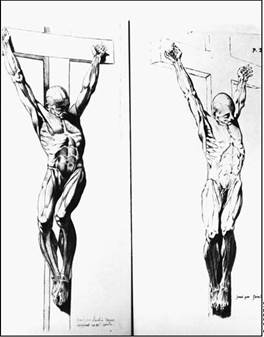
Figure 14-1: Crucifixion in Roman times.
The Main Players in Charge When Jesus Was Crucified
In Roman Palestine during Jesus’s life, the right to execute by crucifixion was Rome’s alone. In capital cases, Rome often worked with local aristocrats who shared its interests (I discuss this power pyramid in Chapter 13). During Jesus’s life, the local Roman representative was the prefect Pontius Pilate, and the local leaders who collaborated with him were a small group of leading Jews.
Provoking the people: Pontius Pilate
Pontius Pilate served as prefect for ten solid years (26-36 CE), which is one of the two lengthiest tenures of any Roman ruler in Judea. A long run like Pilate’s indicates successful control of the province. After all, the emperor would quickly yank anyone who couldn’t keep the province quiet and the taxes flowing.
Although the gospels portray the Jewish leaders as the aggressors in Jesus’s arrest and death, historically it was Pilate who had a reputation for provoking the Jews. The Jewish philosopher Philo, painting Pilate in the worst possible light, reports secondhand that Pilate had an “inflexible, stubborn, and cruel disposition” and was known for “venality, thefts, assaults, abusive behavior, and his frequent murders of untried prisoners” (Legacy to Gaius 38.302; Luke 13:1-2 also recalls these murders).
But Pilate’s worst offense was the mass murder of unarmed pilgrims who gathered in Samaria a few years after Jesus’s death. The Samaritans complained to the Syrian legate, and Pilate was pulled back to Rome for good (Josephus, Jewish Antiquities 18.4.1-2).
Despite what other sources say, the gospels portray Pilate as a rather limp leader who was swayed by the Jewish crowds and manipulated by the Jewish aristocracy. This portrayal may be partly due to the gospel authors’ desire to blame the Jewish leaders for Jesus’s death (see the later section, “Understanding the Roman trial,” for details). But it’s probably also the gospel authors’ way of showing the impotence of Rome against the kingdom of God. Either way you look at it, both motives compromise the historicity of the portrait.
Collaborating with Rome: The Jewish leaders
Even though he liked to throw his weight around and show who was boss, Pontius Pilate’s long tenure depended on an effective working relationship with the high priest and the handful of other high-ranking priests and aristocrats he relied on for tax farming and local governance. The High Priest Joseph Caiaphas, for instance, who had taken office in 18 CE, remained in that position when Pilate arrived in 26 CE and wasn’t deposed until Pilate was in 36 CE. So, they worked as a team, and they operated quite effectively in that partnership during the period of Jesus’s ministry.
Caiaphas may have been Pilate’s buddy, but that doesn’t mean that their interests were identical. In fact, whenever Pilate did something provocative, Caiaphas would have to troubleshoot the situation. Like Pilate, Caiaphas wanted to stay in power and keep the peace, but unlike Pilate, he also had to protect Jewish people and represent their religious sensibilities to the pagan prefect.
John’s gospel, which doesn’t normally cut the Judean Jews any slack, surprisingly presents a fairly nuanced portrait of the high priest’s motives for arresting Jesus (see the later section, “Judas: Giving Jesus the kiss-off,” for more about Jesus’s betrayal and arrest). John’s gospel says that when Jesus’s following grows to dangerous proportions, Caiaphas tells the Jewish aristocracy, “It’s better for you that one man should die for the people, so that the whole nation isn’t lost” (John 11:50).
The Entrance of Jesus into Jerusalem
The four gospels record that Jesus went to Jerusalem for the Passover festival. They give no precise date for this event, but scholars speculate that it would have been between 29 and 31 CE. The roads to Jerusalem were filled with pilgrims, some of whom had no doubt heard about Jesus. In the following sections, I explain the expectations about Jesus when he entered Jerusalem, and I discuss possible causes of his eventual arrest.
Riding in on high expectations
As Jesus entered Jerusalem, expectations ran high. Passover was, after all, the festival of liberation, celebrating God’s act of freeing the Israelites from the Egyptian Pharaoh. Folks wondered whether this could be the moment that God had chosen to inaugurate a new kingdom and overthrow Rome.
We have no way of knowing whether Jesus himself thought this was the case. But because he had always spoken of a coming reign (see Chapter 10 for details), it’s reasonable to assume that the crowds expected the inauguration of the kingdom of God; it helps to explain why the Jerusalem leadership and Pontius Pilate considered Jesus a threat. And, given the way the gospels describe Jesus’s arrival, it’s certainly true that the gospel authors believe that his entrance into Jerusalem is his messianic moment. For example, consider these descriptions of his arrival:
● Psalm 118:22-23 and 26-27 infuse the story of his arrival, setting the stage for the Passion:
“The stone rejected by the builders has become the cornerstone. By the Lord has this been done; it is wonderful in our eyes . . . Blessed is he who comes in the name of the Lord; we bless you from the house of the Lord. The Lord is God, and he has given us light. Order the festival procession with boughs up to the horns of the altar.”
In Mark’s gospel, Jesus quotes the first two verses himself in a climactic scene that’s set in the temple soon after, when he compares himself to the rejected cornerstone (Mark 12:1-12).
● The crowd praises Jesus and calls him a “Son of (King) David” or King himself (Mark 11:9-10; John 12:13).
● The fact that Jesus enters Jerusalem riding a colt alludes to a prophecy from Zechariah 9:9 that says that Jerusalem’s “king” will enter the city this way. In fact, Matthew and John cite the prophecy explicitly (Matthew 21:4-5; John 12:14-16):
“Say to daughter Zion, Look, your king comes to you, meek and riding on a donkey, and on a colt, the foal of an ass.” (Matthew 21:5)
Matthew has Jesus arrive astride both a donkey and a colt at the same time, fulfilling the prophecy literally (and uncomfortably).
Two sources usually treated as independent witnesses, Mark and John, report this event, leading some scholars to wonder whether they share some common source or tradition. But even if they are independent witnesses, the passage is heavily layered with biblical allusions that reflect post-resurrection Christian reflection on Jesus’s life (John admits as much in 12:16 of his gospel).
Attracting attention from leaders
All four gospels try to explain how the week will end by offering a sequence of worsening events in Jerusalem. They include a lot of Jesus’s parables and teachings (you can read about these in Chapter 11). The gospels differ from each other, however, on just what triggers the arrest of Jesus, and scholars today continue to debate why Jesus was so angry during one of the crucial events.
Looking at causes in the gospels for Jesus's arrest
Jesus’s entry into Jerusalem to the acclaim of the crowds would have been enough historically to trigger both Joseph Caiaphas’s and Pontius Pilate’s attention. After all, they would have been wary of all those pilgrims turning on them, so they wanted to eliminate Jesus to quash the hope of the crowd.
But while the gospels acknowledge the crowd’s role in Jesus’s popularity, they don’t report Pilate’s concern. Their focus is entirely on the Jewish leaders. They give different reports of what triggered the Jewish leaders’ attention:
● In Mark’s gospel, Jesus enters the Jerusalem Temple the day after arriving in Jerusalem, driving out the buyers and sellers and overturning the tables of the money-changers and the stools of the pigeon sellers. Then he says, “you have made (my father’s house) a den of robbers” (Mark 11:15-17). This fills the chief priests and scribes with so much rage that they plot to destroy him (Mark 11:18-19).
● In John’s gospel, the preceding Temple scene inaugurates Jesus’s entire ministry, occurring on the first of several annual trips to Jerusalem (John 2:13-17). So, the scene can’t be the catalyst for Jesus’s arrest because it happens a few years beforehand. Instead, the reason that the Jewish leaders plot Jesus’s death is because he has raised Lazarus from the dead (see Chapter 12), which was inspiring too many people to believe in him and threatening to attract Rome’s wrath (John 11:45-53).
Explaining the Temple tantrum
Say for the sake of argument that you follow the synoptic gospels of Matthew, Mark, and Luke and that you take the Temple scene as a cause of Jesus’s arrest. Scholars have spent years debating what exactly made Jesus so angry about the Temple. Here are some of the questions they ask regarding Jesus’s Temple tantrum:
● Did he think that the Temple’s time had come — that it had to be replaced? Christians would definitely start to say that after the Temple was destroyed in 70 CE. But if that’s what the historical Jesus meant, why did he and the early Christians keep going there? (Mark 11:27; 12:35; Q 21:1-4; Mark 13:1-3; Luke 21:37-38; Acts 2:46-4:4; 5:12-42; 21:15-22:22, and so on).
● Did he think that the Temple was fine in principle, but that it had become corrupt and needed to be “cleansed”?
Despite the popularity of this argument, there’s no hint of this concern in Jesus’s subsequent behavior and the prayer practices of his disciples. Once again, they keep going there to pray, preach, teach, and heal (Mark 12:41-44; Acts 21:15-36).
● Did he expect some ideal replacement Temple like some other Jews did, taking inspiration from Ezekiel’s vision of a colossal building (Ezekiel 40:1-47:12)? This argument doesn’t seem likely because there’s no hint of such a hope in the New Testament. In fact, Revelation envisions a new Jerusalem that has no Temple at all (Revelation 21:22).
The problem with all these explanations is that they presume Jesus is attacking the whole Temple. But that argument doesn’t make sense because Jesus claims to be restoring it from a den of robbers to a house of prayer (Mark 11:17). John’s gospel makes it even clearer by quoting a Jewish Psalm: Jesus is zealous for God’s house; he’s not out to destroy it (John 2:17; see Psalm 69:10).
There’s a clue regarding the source of Jesus’s fury in the targets of his attack: the money-changers and the pigeon sellers. Both of these groups were necessary for the Temple’s proper function. The moneychangers converted — with a small surcharge — local and international coins to the silver Tyrian tetradrachms that were required for the annual Temple tax. The pigeon sellers were important because the pigeons were the cheapest animal offering, which meant that the poor bought them rather than the more expensive animals (Luke 2:24; Leviticus 12). The poor had a hard enough time surviving without having to pay to participate in the sacrificial system. But the law was that everyone had to pay.
So, it appears that Jesus was furious because he opposed making the poor pay. He thought that they were the ones being robbed. In support of this argument, elsewhere in the gospels, the gospel authors characterize Jesus’s message as good news for the poor (Q 7:18-23) and show Jesus teaching people to trust that God will care for them (Q 12:22-32). Jesus is shown to deserve trust when he feeds a huge crowd of people, recalling how God fed the Israelites during their 40 years in the wilderness (Exodus 16:1-35). This contrasts the rule of Herod’s family and the Romans, who take taxes (Mark 12:13-17; Matthew 17:24-27) but don’t provide for the people (Mark 6:17-34; Matthew 2:1-18; 11:28-30; Luke 13:1-2).
If this is actually what the historical act symbolized, that means that it didn’t symbolize the destruction of the Jerusalem Temple, as Mark’s gospel and so many modern commentators think. It also means that this act could have been viewed as politically disruptive but was probably not the sole catalyst for Jesus’s arrest that Mark’s gospel makes it out to be.
Suffering through the Passion
By the late 900s CE, the sufferings of Jesus around which the gospel proclamation revolves came to be called the “Passion” in the Latin West. The term comes from the Latin passio, or “suffering.” The stories of the conspiracy against Jesus, his anointing at Bethany, his Last Supper, the prayer in Gethsemane, and his arrest, trial, execution, and resurrection (see Chapter 15) are collectively called the “Passion Narrative.” In the following sections, I walk you through Jesus’s final days, from the predictions of his death to his final meal with his followers, his arrest, his trials, and his crucifixion. I help you examine what the gospels report and reconstruct what most likely happened.
Predicting a bad end
Whatever the immediate cause of Jesus’s death, it’s quite likely that he saw it coming. His message of a coming reign of God (see Chapter 11), his charismatic power (see Chapter 12), and the celebratory manner of his welcome to Jerusalem (which I cover earlier in this chapter) set him against Rome and the Judean aristocracy.
It doesn’t take a prophet to see how the story might end.
Prophesying the Passion
The gospel narratives begin alluding to Jesus’s death quite early on (Mark 3:6; Matthew 1-2), and they show Jesus predicting it while still in the north (Mark 8:31-33; 9:30-32; 10:32-34). In addition, all the gospels organize their plots around Jesus’s death, giving an even greater impression of Jesus’s foreknowledge and intent. For example, consider these telling events:
● The synoptic gospels of Mark, Matthew, and Luke depict Jesus resolutely turning from the Galilee to Jerusalem (Mark 10:1 II Matthew 19:1-2 II Luke 9:51). According to these gospels, Jesus knows that he’ll be killed in that city (Mark 8:31-33 II Matthew 16:21-27 II Luke 9:22-26), and so his decision to go there represents his willingness to endure that fate.
● In John’s gospel, Jesus goes to Jerusalem more often, but the whole gospel is organized around the “hour” when Jesus would be “glorified,” which is John’s phrase for the death and resurrection (John 2:4; 12:20-33; 17:1).
For earlier disciples who viewed Jesus as a prophet, death in Jerusalem was par for the course — it’s where many of the prophets had died (Q 13:34-35; Mark 12:1-12; Luke 13:33-34). But if, like the gospel authors, you believe that Jesus is the messiah, you have a lot of explaining to do. Why? Well, every prediction about the messiah was that he’d be accepted by the Jewish people and would successfully usher in a new age (Mark 8:31-33; Luke 24:13-35). Given Jesus’s execution, he didn’t quite fit that bill.
When you see the gospel authors supplying these elaborate explanations and motives that help to explain later events, you’re no longer standing on historical ground. Instead, you’re on the ground of faith. The authors explain the unpredicted end by asserting that it was foretold in scripture (see the later section “Seeking Solace in Scripture”), it was Jesus’s intent, and it was part of a divine plan of redemption. All of these are faith claims, however, not historical claims. Just because they’re faith claims doesn’t mean that they’re untrue, however; it simply means that, if they are true, they’re true in another way. They can’t be proven to everyone’s satisfaction on the basis of the historical evidence — which is the kind of historical “truth” that historians aim for. Instead, they are interpretations of the evidence that communities judge to be valid because the story makes sense of the world in light of their experience.
Foreseeing the fait of Jerusalem
Several passages in the gospels say that Jesus predicted the destruction of the Temple (Mark 13:1-2; 14:58-59; John 2:19-22). Such a prediction may have been part of his vision of God’s coming reign — a kind of “out with the old, in with the new” message that we find in other Jewish end-time literature from the same period. Another criterion in favor of the episode is that it seems to have been a somewhat embarrassing tradition because John’s gospel reinterprets it so that Jesus is speaking instead of the temple of his body. And Luke moves this prediction from Jesus’s trial to the trial of the early Christian deacon Stephen (Acts 6:12-13; compare Luke 22:66-71 with his source Mark 14:55-64).
But it’s also possible that the prediction appears in so many different forms and places because Jesus never actually said it, or he said something much more modest. After the actual destruction of Jerusalem and the Temple in 70 CE, the gospel authors most likely embellished the predictions with details from the actual war (see the detailed descriptions of the war in Mark 13:14-20; Luke 19:41-44; 21:24; 23:27-31). And Jesus’s death was likely reinterpreted in terms of the Temple’s loss (note how the Temple curtain tears at the moment of Jesus’s death in Mark 15:37-38). The inconsistency of the gospel sources and the concern of the later gospel authors to connect Jerusalem’s fate with Jesus’s make the historicity of these predictions questionable, especially the notion that the historical Jesus himself connected his death to the “death” of the city.
Anointing Jesus for burial before his death
Both Mark and John independently report that a woman poured expensive ointment on Jesus in the village of Bethany near Jerusalem, just before his death (Mark 14:3-9; John 12:1-8). In these two gospels, this act is presented as a kind of anointing (don’t forget that messiah or Christ means “anointed one”) and as an advance embalming because Jesus will have to be buried so hastily.
Luke, on the other hand, tells the story much earlier in his gospel and changes the details so that the act is no longer about Jesus’s anointing or death at all (Luke 7:36-50). Something like this anointing probably happened, but the interpretation of it in light of Jesus’s death may be a later addition.
Celebrating a final meat
Jesus shared one final meal with the Twelve on the night he was betrayed and arrested (see Chapter 10 for more on this group of disciples). Trouble is, you have two very different versions of the event: The first appears in the apostle Paul’s first letter to the Corinthians and in the synoptic gospels, and the second version occurs in John’s gospel. Multiple attestation and chronological priority favor Paul and the synoptics, so that’s where I start.
The body and blood of Jesus: Paul and the synoptics' view of the meal
Table 14-1 shows a synopsis of the Last Supper (check out Chapter 3 to read more about the usefulness of a synopsis). If you look closely, you really have two traditions here rather than four: Luke follows Paul and Mark, and Matthew follows Mark. The two early and independent sources, Paul and Mark, agree that
● This meal occurred on the night Jesus was betrayed (it isn’t clear in Paul that it was the first night of Passover).
● Jesus took bread, broke it, and distributed it, calling it his body.
● After breaking bread, he then took a cup, which he called either a “new covenant” (evoking Jeremiah 31:31-34) or the “covenant in my blood” (evoking Exodus 24:8).
● The body and/or blood are given for others.
A meal certainly happened, but some scholars won’t venture to say much beyond that. They think that references to the bread as body and the wine as blood must be later reflections on the significance of Jesus’s death. Also late, in their view, are the biblical allusions and notions about the purpose of Jesus’s death (like Matthew’s forgiveness of sins). Others, however, think that it’s possible that Jesus knew his death was coming and so tied this final meal to it, commanding his disciples to remember him this way.
Focusing on service, not food: John's view of the meal
John’s gospel tells a somewhat different story than Paul or the synoptic gospels do of that last meal. Here are the two main differences in John’s version of the supper:
It isn’t the Passover dinner eaten on the first night of the festival. In John’s gospel the Passover begins the following day (John 13:1; 18:28; 19:31). See the nearby sidebar, “The symbolism behind the dates of the Last Supper,” for details.
You never hear what they eat. Instead of breaking bread and sharing wine, Jesus takes off his outer garment and goes around the room washing the disciples’ feet. It’s a smelly, disgusting job that was done only by servants. So, the fact that Jesus does this for his followers sets the bar pretty high for them. Following Jesus isn’t about dominating people, but about serving, as his death the next day makes clear.
|
Table 14-1 |
Synopsis of the Last Supper |
||
|
Mark 14:22-25 |
Matthew 26:26-29 |
Luke 22:19-20 |
1 Corinthians 11:23-25 |
|
And as they were eating, he took bread, blessed, broke, and said, "Take; this is my body." |
As they were eating, Jesus took bread,and blessed, broke it, and giving it to the disciples said, "Take, eat; this is my body." |
And he said to them, "I have earnestly desired to eat this Passover with you before I suffer; for I tell you I will not eat it until it is fulfilled in the kingdom of God." |
For I received from the Lord what I also delivered to you, that the Lord Jesus gave it to them, and on the night when he was betrayed took bread, and when he had given thanks, he broke it,and said, "This is my body, which is for you. Do this in my memory." |
|
And he took a cup; when he had given thanks he gave, it to them and they all drank of it. And he said to them, "This is my blood of the covenant, which is poured out for many. Truly, I say to you that I will no longer drink of the fruit of the vine until that day when I drink it new in the kingdom of God." |
And he took a cup, and when he had given thanks he gave it to them, saying, "Drink of it, all of you; for this is my blood of the covenant, which is poured out for many for the forgiveness of sins. I say to you I will not drink from now on of this fruit of the vine until that day when I drink it new with you in the kingdom of my father." |
And he took a cup, and when he had given thanks he said, "Take this and divide it among yourselves; for I say to you that I will not drink from now on of the fruit of the vine until the kingdom of God comes. And he took bread, and when he had given thanks, he broke it and gave it to them, saying, "This is my body, which is given for you. Do this in my memory." And likewise the cup after the supper, saying,"This cup is the new covenant in my blood, which is poured out for you." |
And likewise the cup after the supper, is given saying, "This cup is the new covenant in my blood. Do this, as often as you drink it, in my memory." |
The symbolism behind the dates of the Last Supper
Did Jesus's last meal with his disciples take place on the first night of the Passover festival, as the synoptic gospels say, or on the night before the festival, as John says?
No matter what date you choose, both options are highly symbolic. For example:
● The synoptic supper takes on all the symbolism of the Passover meal, when Jews recalled their liberation from slavery and ate the food that their ancestors ate in Egypt (Exodus 12). The foods included the lamb slaughtered in the Temple, which recalls the lamb whose blood on Israelite doorposts spared their firstborn sons from the angel of death in the final Egyptian plague. The unleavened bread symbolized their haste to leave Egypt. The Passover meal in the synoptic gospels carries all those biblical resonances into a new ritual memorializing Jesus's saving death.
● John loses the opportunity for all that symbolism, but he gains it back in another way. For instance, if Jesus eats the meal the night before the festival, he dies on the first day of the festival, and that's when the priests are slaughtering the Passover lambs in the Temple. In the symbolism of John's gospel, Jesus becomes the "Lamb of God," whose death saves those who believe in him (see John 1:29, 36 and Revelation 5-7; 17:14).
Either way, it's a safe bet that Jesus dies around the time of Passover, when large, hopeful crowds massed in Jerusalem and the leaders were on edge.
Praying on the Mount of Olives
After the Last Supper, Jesus and the disciples sang a hymn, and then went out to the Mount of Olives, which was just a stone’s throw from the eastern wall of the Temple Mount (see Figure 14-2). The Mount of Olives was famous for its olive trees (“Gethsemane,” the place on the Mount of Olives where Jesus goes to pray, literally means “oil press”). But the mount was also known as the place where God would stand to battle the nations (Zechariah 14:3-4). This prophecy wasn’t about the messiah; it was about God’s final battle with all the nations. But early Christians probably had Zechariah’s prophecy in mind when they painted this as the place where Jesus would begin the battle of his life (see Mark 11:1; 13:3).
After Jesus and his disciples arrive in Gethsemane (John 18:1 just calls it “a garden”), the synoptic gospels report that Jesus steps away from his disciples to pray alone (Mark 14:32-42 II Matthew 26:36-46; Luke 22:39-46). During this time, the disciples can’t manage to stay awake. Luke says they fell asleep “for sorrow”
(Luke 22:45). Nice excuse, huh?
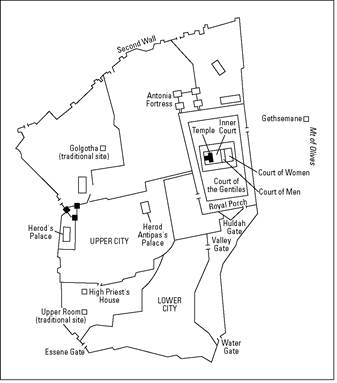
Figure 14-2: Jerusalem during the time of Jesus.
With all the eyewitnesses asleep, no one could have recorded Jesus’s prayer. It’s another case of the gospel authors giving you the significance of the moment rather than the historical facts. They’re attempting to characterize Jesus’s final temptation in his final moment of freedom. Here’s how the story goes: Knowing that he’ll likely be killed, Jesus struggles between his love of life and his sense that his mission has led him to this end. He prays, asking that this “cup” of suffering pass him by, but then he finally agrees to endure the suffering if it’s his father’s will.
Later Christians had trouble with Jesus’s prayer. After all, if Jesus was God — as they believed — how could his will and God’s will be two different things? John finds a way around this dilemma. In his gospel, Jesus doesn’t pray in the garden — he just gets arrested. And when his soul is troubled in John 12:27, Jesus doesn’t pray for escape because he knows that his death is his purpose on earth.
Judas: Giving Jesus the kiss-off
As Jesus prays in Gethsemane (or the garden in John’s story), his disciple Judas draws near with a crowd of armed men. Judas can identify Jesus to the armed guard, and he does so by the ironic gesture of friendship, a kiss. The fact that one of Jesus’s closest followers betrayed him is attested by multiple sources (Paul in 1 Corinthians 11:23; Mark 3:19; John 12:4) and is certainly embarrassing. Both of these facts argue for its historicity (check out Chapter 3 for more on these rules of historicity). Why Judas betrayed Jesus is another question. (And the gospel explanation that Satan entered him isn’t particularly helpful for historians.)
In the following sections, I trace the series of events that start with Judas’s betrayal and end with the abandonment of Jesus by the other members of the Twelve.
Betraying loyalties
In Mark’s gospel, Judas seeks out the chief priests to negotiate a bounty on Jesus’s head. As usual, Matthew and Luke follow Mark’s version. Paul just says that Jesus was handed over, and John identifies Judas as the betrayer but doesn’t offer any scene of Judas negotiating with the Jewish leaders.
So why does Judas do this? Is he disappointed that Jesus will die rather than usher in God’s reign? Is he trying to hasten a confrontation with the leaders? It’s difficult to tell. The moment he takes those 30 pieces of silver as his reward for betraying Jesus, his greed becomes a new conversational thread in the gospel tradition (see John 12:4-6; 13:29).
Only Matthew offers a sympathetic portrait of Judas. In Matthew’s gospel, Judas regrets his role after the chief priests and elders convict Jesus. He throws his reward money at them and then hangs himself. Later traditions would be less sympathetic; they imagined in increasingly gruesome detail exactly how he died (see Table 14-2 for three versions of the tale; Matthew and Luke’s date to the first century, and the story told by the second century Christian leader Papias embellishes).
|
Table 14-2 |
The Three Deaths of Judas |
|
|
Matthew 27:3-10 |
Luke in Acts 1:18-20 |
Papias |
|
“ . . . And throwing down the pieces of silver in the Temple, he departed, and he went and hanged himself." |
“Now Judas bought a field with the reward of his wickedness and falling headlong (or “swelling up"), he burst open in the middle and all his intestines gushed out." |
“Judas walked about this world a great example of impiety, his flesh so swollen that he found it impossible to pass through a place where a wagon easily passes . . . His genitals appeared more loathsome and larger than the private parts of anyone else; and even when he relieved himself, there passed through them to his shame, pus and worms which flowed together from every part of his body." |
The death of Judas has become an important tradition, especially in art. Figure 14-3 depicts a carving at the Autun Cathedral in France in which Judas, flanked by demons, commits suicide. It’s important to recognize that in later Christian art, Judas comes to represent the Jewish people. His presumed monetary motives, the assumption that he’s in league with Satan, and even his physical features shape and are shaped by stereotypes of the Jewish people (see Chapter 16 for more on the dark side of Christian piety). These later interpreters conveniently forget Matthew’s tale of Judas’s regret, and that Jesus’s other disciples, and of course Jesus himself, were Jews, too.
Arresting developments
Judas knew Jesus liked to go to Gethsemane, and so he picked an opportune time when a crowd wouldn’t be around to lead the authorities there for his arrest.
The crowd that accompanies Judas was most likely composed of the Temple police force (John 18:3), variously described by the gospel authors as “a crowd . . . from the chief priests, scribes, and elders” (Mark 14:43) or “some officers from the chief priests and the Pharisees” (John 18:3). John adds that a band of (Roman) soldiers came along, too. John’s reference to “officers from the Pharisees” isn’t likely because the Pharisees as a group weren’t in power, didn’t have “officers,” and didn’t generally get along with the ruling priests in the Sadduceean party (see Chapter 13 for details).
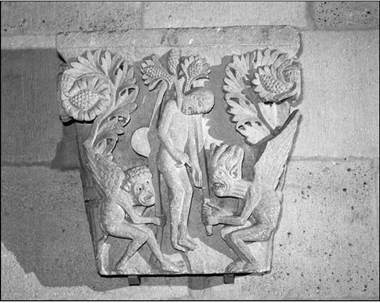
Figure 14-3: A sculpture of the death of Judas.
The report that the police came out to arrest Jesus “as against a robber, with swords and clubs” (Mark 14:48), has a ring of authenticity to it, given that Jesus will be crucified as if he were a thief (crucifixion was reserved for bandits, murderers, and rebels, like the two other men Jesus is crucified between and the man Pilate releases instead, Barabbas). The authorities must have viewed Jesus as that sort of man in order to merit that sort of death.
The gospels, however, try to make it quite clear that Jesus wasn’t that kind of threat, later in the Barabbas scene but even here in Jesus’s pointed remarks to the arresting party (Mark 14:48-49), in his rebuke of his sword-wielding follower (Matthew 26:52-56; Luke 22:51; John 18:11), and in his restoration of an amputated ear (Luke 22:51). These added details indicate not history but apologetics — the defense of the tradition of a nonviolent Jesus. That tradition has a pretty strong claim to authenticity, even if some of these details have been added. It’s a question of the most plausible scenario. We know that Jesus wasn’t arrested earlier and that his followers weren’t crucified alongside him. Both of these facts indicate that his movement wasn’t viewed as violent. The authorities weren’t out to quash an actual rebellion here, but to nip one in the bud before the crowd of pilgrims got out of control (see Chapter 13).
Scattering disciples
The gospels report the embarrassing fact that all of Jesus’s male disciples scattered from Gethsemane and abandoned Jesus to his fate (and don’t forget that because it’s embarrassing, it’s more likely to be true; see Chapter 3 for details). Peter is an exception: In two independent witnesses, he at least follows Jesus to the house of the high priest, but then he promptly denies knowing him (Mark 14:53-65; John 18:13-24). John’s gospel offers another exception: A follower identified only as “the beloved disciple,” who gets Peter in to the high priest’s courtyard, follows Jesus to the cross, takes Jesus’s place as Mary’s son, and is the first to “believe” when he sees Jesus’s empty tomb (John 18:15-16; 19:25-27; 20:1-10).
Putting Jesus on trial
The four gospels offer much more detail on Jesus’s various trials than they do on his actual scourging and execution. And yet the historian must ask what the sources would be for this trial material. After all, the gospel authors have just reported that all the disciples have fled, and the one or two who follow Jesus to the Jewish trial are stuck out in the courtyard. It’s possible that some people present at the Jewish trial at least provided testimony to Christians later, such as Joseph of Arimathea (described as a member of the “ruling council” in Mark 15:43) or the Pharisee Nicodemus (described as a “ruler of the Jews” in John 3:1). But no gospel reports their presence at the trial or their testimony later; there’s no explicit chain of tradition here.
In this sense, the trial scenes are like the scene of Jesus’s garden prayer (which I cover earlier in this chapter). In other words, the gospels aren’t providing historical, eyewitness accounts. Instead, they’re portraying the significance of what’s at stake for them through scenes that have been percolating in the Christian imagination for decades.
Trumping up charges at the Jewish trial
The Jewish leaders and high priest, in their administrative body called the Sanhedrin (Greek for “sitting together” or “assembly”), most likely played an important role in Jesus’s arrest and death. Their place at the top of the power pyramid meant that their goals were often similar to Rome’s: Keep unrest at a minimum and preserve the beneficial status quo (see Chapter 13 for more about the power pyramid). The Jewish leaders would have understood how Jesus’s words and actions could lead a crowd to messianic agitation, and they would have had an easier time locating Jesus than the Romans would have. So, it’s quite likely that they arrested Jesus and turned him over to Rome.
The gospels, of course, give the Jewish leaders a much bigger role in Jesus’s arrest and death. However, the narratives are riddled with historically unlikely details, including the following:
● In Mark, which is the earliest account, the council of the chief priests, elders, and scribes (the Sanhedrin) hold two full meetings — one the night Jesus is arrested and another the next morning (Mark 14:53-65; 15:1). Two meetings of the whole group are unlikely, particularly on the first night of Passover (ask any pastor how he or she feels on Easter night after Holy Week and you’ll get the idea). Matthew keeps Mark’s two Jewish trials (Matthew 26:57-68, 27:1). John’s gospel, on the other hand, presents the Sanhedrin meeting well before Passover, a more likely scenario (John 11:45-53).
● In Mark and Matthew’s gospels, the leaders of the Sanhedrin seek out testimony against Jesus, and multiple witnesses offer false and contradictory testimony (Mark 14:55-59 II Matthew 26:59-63). This isn’t mentioned in Luke’s and John’s accounts, raising the possibility that Mark and Matthew are adding gratuitous details to paint the Sanhedrin’s actions in the worst possible light.
● Only Mark’s and Matthew’s gospels report that the Sanhedrin delivers a formal capital sentence against Jesus (Mark 14:64 II Matthew 26:66); neither Luke nor John say this. Once again, it looks like Mark and Matthew are adding extra details to make the Sanhedrin look as bad as possible.
● The gospels claim that Jesus received a blasphemy conviction for words that aren’t clearly blasphemous (blasphemy is a Greek word for taunting or insulting a person or God). Here are some of the rebuffs:
• The claim to be “messiah” didn’t insult God; on the contrary, God had promised one (a king in 2 Samuel 7:11-16; Psalm 18:51; 132:17; a high priest in Leviticus 4:3-5; a coming figure in Daniel 9:25).
• The claim to be “the son of the Blessed One” was a traditional term (for David, for example, in 2 Samuel 7:14, and for Israel in Exodus 4:22 and Hosea 11). Even assuming that the high priest meant by “son of God” what later Christians would mean, where in Mark’s gospel does Jesus ever claim that identity publicly? Mark seems to think the Temple tantrum implies it (I discuss this scene earlier in this chapter), but that’s far from clear.
• Quoting scripture was certainly not blasphemous. In Mark 14:61-64, Jesus cites Daniel 7:13: “You will see the son of man seated at the right hand of power . . .”).
The terms “messiah,” “son of God,” and “son of man” from the preceding list become titles for Jesus after the resurrection and come to bear meanings that they don’t carry in Jewish scripture, such as meanings tied to Jesus’s unique role as God’s son and thus as divine himself (see Chapter 15). Most historians think that these later Christological beliefs (theological views of what it meant to be Christ or messiah) weren’t at stake during his actual life. But by the time the gospels are written, these beliefs are at stake, and so the gospel writers focus the Jewish trial around the matter of Jesus’s identity. Had Jesus actually claimed divine power equal to God’s, he might have been guilty of blasphemy, at least as the Sadducees likely defined it (they were pretty strict about such things compared to the Pharisees; see Chapter 7).
In addition to historically unlikely details in the gospels, Jesus’s Pharisaical foes and their concerns about Sabbath, purity, and fasting are nowhere to be found. That’s at least odd, given that they’ve been Jesus’s chief adversaries everywhere else in the story.
Luke, who tries to present an “accurately investigated” and “more orderly account” of Jesus’s story (Luke 1:3), has only one interrogation in the morning, no trial before the high priest, no false witnesses, and no charge of blasphemy (Luke 22:54, 63-71). The issues at stake aren’t temple predictions or blasphemy, but political agitation and failure to pay Roman taxes (Luke 23:2). Luke’s gospel seems to further emphasize the political nature of Jesus’s “threat” by including a trial before Herod Antipas (Luke 23:6-12), although this produces the same verdict of innocence that Pilate is leaning toward. (This scene is also reported in the Gospel of Peter, although Herod condemns Jesus there.) John’s gospel reduces this entire Jewish “trial” to a conversation between Joseph Caiaphas’s father-in-law, Annas, and Jesus (his Sanhedrin trial is in John 11:45-53). For Luke and John, the chief concerns are political; for Mark and Matthew, they’re religious.
Understanding the Roman trial
In their provinces, Rome allowed its representatives the “power of the sword” in the cases of threats to the peace. In other words, they could use capital punishment if they deemed it necessary. The Jewish leaders in Jerusalem and the Galilee could execute people for certain religious offenses. As you find out in Chapter 10, for example, Herod Antipas beheaded John the Baptist (Mark 6:21-29) for his alleged offenses.
Only Rome could convict and execute rebels and robbers, which places the historical blame for Jesus’s death squarely on its shoulders. There were supposed to be trials of the accused, but Pontius Pilate had a reputation for summary judgment (Philo, for example, has a reference to Pilate’s “frequent murders of untried prisoners” in Legacy to Gaius 38.302).
If the Jewish leaders denounced and handed over Jesus as a political threat, he could have been crucified for one of two crimes:
● Being a major public enemy
● Being a detriment to the reputation of the Roman people and those holding its mandate
It’s usually assumed that the last charge was the one Pilate used in Jesus’s case (if he actually followed the law). And it wouldn’t have been necessary for Jesus to call himself the “messiah” in order for this charge to stick; the hope of the crowd would have been enough to worry Rome.
In Mark’s early gospel (written somewhere between 65 and 75 CE), Pilate realizes or declares Jesus’s innocence three times; Matthew and Luke about a decade later have five or six such statements; and the latest gospel, John, claims it seven times (see Table 14-3 for a synopsis). If the Romans supposedly killed Jesus, why do these gospels present Pilate as an increasingly unwilling participant in Jesus’s execution?
There are at least two contributing reasons for letting Pilate off the hook in the gospels:
● The Jewish people as a whole didn’t accept that Jesus was the messiah. So, as the split with the Jews grew, Christians blamed the Jews more and more for Jesus’s death, especially after the Roman destruction of the Jewish Temple. At that point, as Jews and Christians wondered why God had allowed that to happen, one Christian answer was that the Jews had brought it on themselves for rejecting and killing God’s messiah.
● As the Christian Church became increasingly non-Jewish and fell under increasing scrutiny by Rome, the Church found it natural and beneficial to present the Roman prefect as a sympathetic figure.
This tendency to exonerate and even Christianize Pilate (and his wife) continues in later Christian literature. It’s not historically plausible, given what we know about Pilate, unless perhaps he pretended to think that Jesus was innocent in order to win points with the pro-Jesus crowd. He wasn’t normally known for that kind of sensitivity, but it could have been a calculated move to make him appear more tolerant than the Jewish elite. That way, the crowd’s anger over Jesus’s death would have been deflected off Rome and onto the Jewish leaders.
The flip side of exonerating Pontius Pilate is that the gospels blame the Jews for Jesus’s death. The gospels consistently present the
|
Table 14-3 Letting Pilate Off the Hook |
||||
|
Event |
Mark (65-75 CE) |
Matthew (75-85 CE) |
Luke (75-85 CE) |
John (90-100 CE) |
|
He doesn't want to try Jesus at all. |
18:29-32 |
|||
|
He tells the chief priests and multitudes that he finds no crime in Jesus. |
23:4 18:38 |
|||
|
He passes Jesus off to Herod for trial. |
23:6-12 |
|||
|
He declares Jesus innocent and says that Herod Antipas agrees. |
23:13-16 |
|||
|
He offers to release Jesus, but the crowd chooses Barabbas instead. |
15:6-14 |
27:15-23 |
23:17-23 |
18:39-40 |
|
He realizes Jesus is innocent and the leaders are just envious. |
15:10 |
27:18 |
||
|
He desires to release Jesus. |
23:20 |
|||
|
His wife has a dream and warns him to "have nothing to do with that righteous man." |
27:19 |
|||
|
He asks the crowd what evil Jesus has done, because he can't find anything. |
15:14 |
27:23 |
23:22 |
|
|
He washes his hands of Jesus's blood. |
27:24 |
|||
|
He scourges Jesus before conviction hoping this will satisfy the crowd. |
19:1-6 |
|||
|
He "finds no crime in Jesus." |
19:4 |
|||
|
He tells the Jews, "take him yourself and crucify him, for I find no crime in him." |
19:6 |
|||
|
He seeks to release Jesus when he finds out that Jesus is the "son of God." |
19:7-15 |
|||
Jewish leaders as the aggressors. The leaders bring the accusation. They whip up the crowd to demand Jesus’s crucifixion.
In Matthew and John’s gospels, it’s no longer just the leaders who are guilty, but the entire people. For example, in Matthew’s gospel, when Pilate dramatically washes his hands, symbolizing that Jesus’s blood is not on him (only this gospel and the gospel of Peter report this), “all the people” cry out, “His blood be on us and on our children!” (Matthew 27:25). Matthew, writing after Jerusalem’s destruction, probably wrote that line to advance his view that the generation after Jesus paid the price for Jesus’s death. But his move to blame all the Jews for that calamity has proven to be a greater calamity for Jews: Christians have used this line to legitimize untold violence against all generations of Jews ever since.
The Jewish crowds were responsible for Jesus’s death, but not in the way that the gospels portray. They supported Jesus. They must have, or this particular death sentence wouldn’t make any sense. Crucifixion was a public death that was meant to send a message to sympathizers. If Jesus didn’t have sympathizers, Rome wouldn’t have killed him in this way (see Chapter 13).
Crucifying the king
The gospel accounts of Jesus’s crucifixion are terse. He was scourged (probably just with a stiff reed), humiliated as a mock king with a crown of thorns and purple robe, loaded up with the crossbeam, and then led out to a place called Golgotha (or “Calvary” from the Latin Calvaria). There he was stripped and crucified between two bandits, with a titulus (a placard posting his crime) above his head that read “The King of the Jews.” None of the gospels say that Jesus was nailed to the cross, although it was customary to nail at least the ankles, as the unearthed remains of one crucified man from this period demonstrate. However, the resurrection narratives in the gospels do suggest that Jesus had been nailed through his hands and feet (see the later sidebar “The five wounds and the stigmata”).
The gospels make a point to say that some Christian disciples witnessed the crucifixion. But because the men had scattered, only female followers like Mary Magdalene remained (see Chapter 10 for more on the women; John 19:26-27 adds the male “beloved disciple” to the scene).
Jesus died within several hours, which was more quickly than most victims (Mark 15:25-37; John 19:33). Most of the crucified were left on the cross for the vultures or dumped in mass graves, and one biblical tradition indicates that Jesus was buried by his enemies (Acts 13:27-29). Two other independent sources — the gospels of Mark and John — state that one of Jesus’s disciples, Joseph of Arimathea, received permission to bury the body hastily in a tomb (Mark 15:42-47; John 19:38-42).
Seeking Solace in Scripture
Jesus’s arrest and execution were profoundly traumatic for the early Christians, and these events remained difficult to explain even after the “victory” of the resurrection (see Chapter 15). As the Christians pondered the meaning of this horrific set of events, they sought comfort and insight in scripture. They believed that Jesus’s death was part of a divine plan, and so they reasoned that the plan could be found in God’s prior revelation (Matthew 26:24, 54, 56; Luke 24:25-27, 32, 44-46; Acts 13:29, 32; 1 Corinthians 15:4).
By the time the gospel accounts of Jesus’s death were written, the early Christian teachers, preachers, and prophets had found several scriptural solutions to the most troubling aspects of Jesus’s arrest and death. These solutions were then woven into the gospel Passion Narratives to reflect the later Church’s faith. Christians found in Jewish scriptures the details for scenes that no Christian disciples could have witnessed (for example, the trials). The early Christians found four major patterns in Jewish scripture that presaged what would happen to Jesus. Here are those patterns (see Table 14-4 for specific citations and allusions):
● God’s prophets and God’s wisdom were often rejected, just as Jesus was rejected by the Jewish people (Q 13:34-35; Amos 7:10-13; Jeremiah 20:10; 26:1-24; Proverbs 1:20-33; 8:22-36). This allowed Christians to console themselves that Jesus’s rejection by God’s people didn’t mean that he was out of sync with God. On the contrary, it means that he fit a pattern described in God’s revelation.
● A righteous, innocent man would suffer (1 Peter 2:22-25; Isaiah 53:4-12; Job). The early Christians believed that Jesus was innocent but had to account for why God would let one who was righteous and innocent suffer so much and fail. Christians found consolation in biblical texts that praised those who suffer without cause.
● Suffering would precede restoration, which is a pattern visible in the Exodus, the return from exile, and the painful apocalyptic birth of the new age (Mark 13:3-37; Hosea 6:1-2). The messiah was supposed to usher in a new age of justice and peace, but Jesus didn’t. Christians found in the scriptural narratives repeated occasions when restoration was deferred, allowing them to await the completion of Jesus’s messianic work.
● The suffering and death of God’s servant would redeem or save the people (see 1 Corinthians 15:3; Isaiah 53:4-12). This passage in Isaiah allowed Christians to imagine that there was a purpose in Jesus’s suffering.
|
Table 14-4 Seeing Jesus's Death through Scripture |
||||
|
Event in Jesus's Passion |
Gospels |
Jewish Scriptures |
||
|
Leaders gathered and plotted to kill Jesus. |
Matthew 26:3-4 |
Psalm 31:13-14 |
||
|
Jesus was killed by cunning. |
Mark 14:1 || Matthew 26:4 |
Psalm 10:7-8 (LXX 9:28-29) |
||
|
The one eating with Jesus turned against him. |
Mark 14:18, 20 || John 13:18 |
Psalm 41:9 (LXX 40:10) |
||
|
The disciples scattered. |
Matthew 26:31 |
Zechariah 13:7 |
||
|
Jesus was silent before his accusers. |
Mark 14:61; 15:5; Luke 23:9; Matthew 26: 62-63 |
Psalm 38:13-14; Isaiah 53:7 |
||
|
Jesus testified, "You will see the Son of Man seated at the right hand of power." |
Matthew 26:63-64 |
Daniel 7:13 |
||
|
Jesus was mocked by Jews at his trial. |
Matthew 26:67 |
Isaiah 50:6 |
||
|
The Jewish crowd said, "His blood be on us and on our children." |
Matthew 27:25 |
Jeremiah 26:15 (LXX 33:15) |
||
|
Jesus was mocked by the Romans. |
Matthew 27:27-31 |
Isaiah 50:6 |
||
|
The bystanders offered the crucified Jesus gall/vinegar. |
Matthew 27:34 |
Psalm 69:21 (LXX 68:22) |
||
|
The soldiers divided Jesus' garments. |
Mark 15:24 |
Psalm 22:17-19 (LXX 21:18-20) |
||
|
Bystanders mocked Jesus at cross: "He trusts in God; let God deliver him." |
Mark 15:29; Matthew 27:43 |
Psalm 22:8-9 (LXX 21:9-10) |
||
|
Jesus's final cry was one of abandonment. |
Mark 15:34 |
Psalm 22:1 (LXX 21:2) |
||
|
Table 14-4 (continued) |
||||
|
Event in Jesus's Passion |
Gospels |
Jewish Scriptures |
||
|
When Jesus died, the earth quaked, and the holy ones rose. |
Matthew 27:52-53 |
Daniel 12:1-2 |
||
|
The Romans didn't break Jesus's legs. |
John 19:31-36 |
Exodus 12:46; Numbers 9:12; Psalm 34:20 (LXX 33:21) |
||
|
The Romans pierced Jesus's side. |
John 19:34-37 |
Zechariah 12:10 |
||
|
John's gospel views Jesus as the Lamb of God, who takes away the sin of the world. |
John 1:29, 36 |
Exodus 12; Isaiah 53:7 |
||
|
*LXX refers to the Septuagint (the Greek version of the Jewish scriptures; verse numbers sometimes differ from the original Hebrew text). |
||||
The five wounds and the stigmata
Christian tradition holds that Jesus was nailed through his hands or wrists and his ankles and was pierced in his side, yielding five wounds. This tradition is based on John's crucifixion scene and the resurrection appearances in Luke's and John's gospels. In Luke, for example, the risen Jesus shows his disciples "his hands and his feet" as proof of his identity, presumably because these would bear the characteristic wounds of crucifixion (Luke 24:36-43). In John's gospel, Jesus's side is pierced while he's still hanging on the cross (John 19:34-37). Also, when Jesus rises and appears to doubting Thomas, he invites Thomas to probe the holes in his hands and side (John 20:24-29).
Later Christians so identified with the suffering of Christ that they claimed to bear the marks (which in the Greek plural are called stigmata) on their bodies as well. A stigma is a tattoo or brand that slaves would get to mark them as someone's property. The apostle Paul is the first to say that he bears the stigmata of Christ. He's probably referring to his scars from flogging or stoning during his frequent arrests (Galatians 6:17; 2 Corinthians 11:22-31), not to replicas of Jesus's actual wounds. Still later, Francis of Assisi, Catherine of Siena, John of God, Padre Pio, and others would claim the actual wounds of Christ or physical pains in their hands, feet, side, forehead (recalling the crown of thorns), back (recalling his flogging), or shoulder (recalling the carrying of the cross). Some reported sweating blood (based on Jesus's agony in the garden).