
Chapter 5
In This Chapter
● Following the trail of the earliest Christian evidence
● Tracing Christian traditions in heretical and hidden books
● Investigating Jewish and Roman sources
● Excavating the physical evidence
You might suspect that someone as important as Jesus would have left a trail of physical evidence behind. After all, almost everyone who lives in the world does. For instance, if you’ve ever tried to research your family tree, you know that there are often all kinds of records, from birth certificates to marriage licenses to newspaper articles. Then there are also the physical artifacts, such as diaries, personal belongings and, of course, the skeleton and grave (or ashes and urn). Combine all these items with the many oral stories that your family tells, and you have a treasure trove of tangible proof that helps paint a portrait of your ancestors. So, it’s reasonable to ask whether this kind of evidence exists for Jesus as well.
In this chapter, you find out what information is available about the life of Jesus. You hear from early Christians, Jews, and Romans, you sift through the physical artifacts, and you discover traces of tradition in the books that didn’t make it into the Bible.
All the evidence in this chapter reveals that Jesus really existed in Roman Palestine in the first century CE and that he was crucified by the Roman authorities. For the details of his life, the earliest Christian sources remain our most important witnesses. Modern historians count the Gnostic Gospel of Thomas as an important early witness as well, and the Dead Sea Scrolls provide general clues about Jewish society in Jesus’s time.
Exposing the Earliest Christian Evidence
Jesus’s followers left behind the biggest body of evidence about him, which makes things tricky if you’re a historian because the evidence is so biased. So how do you read a text for history when its authors were interested in giving you so much more? In addition to the rules that I outline in Chapter 3, the most basic thing you have to do is to figure out what your earliest sources are. For Christian evidence, that’s the sources behind the gospels, Paul’s epistles, and the Gnostic Gospel of Thomas.
Peeling back the gospel layers:
An alphabet soup of sources
When the authors of Matthew, Mark, Luke, and John sat down to write their gospels, they did what many college students would do: They gathered all the sources they could and then combined the information from them with their own thoughts. However, these authors often added their own special traditions, too, such as particular sayings or stories told by Jesus or deeds that he did. So, to uncover the historical Jesus, you have to peel back the gospel layers to expose all the earlier sources and traditions underneath.
The sources in the following sections are early and independent of each other, which makes them valuable as historical evidence because they haven’t influenced each other.
The source with Jesus's sayings and parables: Q
Behind the gospels of Matthew and Luke is a list of Jesus’s sayings and parables. This list includes some famous passages, such as
● The three temptations of Jesus (Luke 4:2-13; Matthew 4:2-11)
● The beatitudes (Luke 6:20-23; Matthew 5:3-12)
● The lesson on loving enemies and turning the other cheek (Luke 6:27-30; Matthew 5:39-44)
● The Lord’s Prayer (Luke 11:2-4; Matthew 6:9-13)
Because Matthew and Luke have nearly identical sayings and parables for 50 separate passages that aren’t in Mark, it looks like they were both copying from some prior list that modern scholars simply call Q (from the German Quelle, which means “source” — flip to Chapter 3 for more on Q). Though we’ve never found this list, it can be reconstructed easily by simply listing those 50 parallel passages in Matthew and Luke. And it must predate those gospels by about 10 to 15 years to buy time for Matthew and Luke to hear about it and get their hands on copies. If the list was in fact written around 5060 CE, it can be considered our earliest testimony to Jesus.
When the Gospel of Thomas was discovered in 1945 (I discuss this gospel later in this chapter), it gave the theory of Q’s existence a big boost. The Gospel of Thomas is a “gospel” composed almost entirely of sayings and teachings of Jesus. It even overlaps with Q material in some cases. It proves that such “sayings gospels” did circulate in the early Christian churches.
Q includes mostly Jesus’s teachings. It doesn’t tell many stories, and most importantly, it doesn’t narrate Jesus’s death and resurrection (though it predicts a bad end). Q gives the impression that Jesus was a wandering preacher, calling others to an itinerant life and preaching that the end was near. But unlike the guy with the apocalyptic sandwich board standing on a street corner in New York City, Jesus has status. Q never calls him a messiah, but it does refer to Jesus as the wisdom of God and the “Son of Man.” Both titles convey that he’s clearly the unique agent of God’s salvation.
Most Q scholars believe that Q was written in stages, and whatever they identify as the earliest stage would be closest to the message of the historical Jesus. But they don’t agree on what those stages were. Some think that the earliest Jesus movement presented Jesus as a wisdom teacher and that later Christians made him over into an apocalyptic prophet of judgment as they encountered opposition to their preaching. Others think the transformation went the other way: The end-of-times judgment material was earliest and it was made over later with wisdom teachings. The existence of these two camps is one reason why there are two types of portraits of the historical Jesus today. One camp views him as a Hellenistic Jewish wisdom teacher, and the other views him as a Jewish apocalyptic prophet (flip to Chapter 4 for more about that).
Matthew’s missing source: M
M is what scholars call a special Matthean source that’s thought to be behind the stories that are found only in Matthew’s gospel, including several parables (Matthew 13:24-52; 18:23-35) and the famous story of the final judgment (Matthew 25:31-46). But if these teachings of Jesus were really written by a single person before Matthew, you’d expect all the stories to have similar vocabulary, style, and themes. And, frankly, they just aren’t that consistent. The result is that the three scholars who have attempted to trace M’s contents — B.H. Streeter (1927), T.W. Manson (1935, 1949), and G.D. Kilpatrick (1946) — all have come up with different lists. So, it’s doubtful that M existed as a single written source, as more recent authors admit (S. H. Brooks, 1987; U. Schnelle, 1994; R.E. Van Voorst,
2000). Whether Matthew had one or more sources, these early traditions emphasize the authoritative role of Jesus as the founder of the community and the interpreter of Jewish law.
Luke's special source: L
Luke’s special source L may well have been written down before the author of Luke pulled his gospel together. L includes about 25 sayings, parables, and stories that are only in Luke’s gospel. These stories, such as his famous parables of the Good Samaritan (Luke 10:29-37), the rich fool (Luke 12:16-21), the prodigal son (Luke 15:11-32), and the rich man and Lazarus (Luke 16:19-23), all sound similar to one another and are different from Luke’s typical vocabulary and style. This suggests that someone wrote or told these stories before Luke did. Then Luke came along and incorporated them into his own gospel along with Mark and Q, adding his own ideas, settings, and themes. If Luke’s gospel was composed around 75-85 CE, as many scholars think, all of his written sources would have to have been written before then, and thus somewhat closer to the historical Jesus.
What does Jesus look like in L? He was a powerful teacher offering God’s grace to people. He raised up the poor, healed the broken, and restored people to the family of God. Like Q, L ends before Jesus’s death and resurrection. However, in L (unlike in Q), Jesus wasn’t a radically poor and nomadic preacher who was calling people to leave family and society behind. Instead, he appealed to the wealthy and the poor — and thus to settled communities.
The gospel of Mark
Mark’s gospel is the earliest existing gospel and therefore an important source for reconstructing the historical Jesus. In Mark’s gospel, the picture of Jesus is that he is the messiah and Son of God and that the crucifixion of Jesus is central to those roles. While these are features of the post-resurrection Christian faith rather than the historical Jesus’s life, the rough-cut and awkward nature of Mark’s version of Jesus’s life story suggest that the gospel has some early material (see Chapter 3 for more information on awkwardness as a clue to the likelihood that an event happened).
The miracles behind John's message: SQ
The author of John’s gospel includes seven signs or miracles that demonstrate Jesus’s power and status as messiah. These miracles include the following:
Turning water into wine at a wedding in Cana (John 2:1-11)
Healing a royal official’s son (who was in Capernaum) from the city of Cana (John 4:46-54)
● Healing a man who had been paralyzed for 38 years (John 5:2-15)
● Feeding 5,000 people with five loaves of bread and two fish (John 6:1-14)
● Walking on water (John 6:15-21)
● Healing a man who was born blind (John 9:1-8)
● Raising Lazarus from the dead (John 11:1-44)
Toward the end of the gospel, the author also says something like this: “Jesus performed many other signs in the presence of the disciples, which are not written in this book . . .” (John 20:30). This statement suggests that the author knew of other signs performed by Jesus, and perhaps that he had a gospel or source that included all of them, from which he chose seven. This source is sometimes called SQ, for semeia Quelle (semeia is Greek for “signs” and Quelle is German for “source”). SQ was written before John’s gospel, and some scholars believe it’s later than Q and L. SQ emphasizes Jesus as messiah, whose power and status are proven by these signs. This emphasis is different from Q and L, which both focus on Jesus’s teaching rather than his superpowers (I discuss these sources earlier in this chapter).
The Gospel of Thomas
The Gospel of Thomas is another early Christian gospel that bears on the historical Jesus — only this one didn’t make it into the Bible. This gospel was branded a heretical book, and people thought it was lost for good until a collection of codices (bound books) containing Gnostic and Greek materials was discovered in the Egyptian desert of Nag Hammadi in 1945. (Gnostic comes from the Greek word gnosis or “knowledge”; it was a term used for certain Christians who claimed a secret knowledge about the true nature of the universe and Jesus’s role in it.)
The unearthed copy of the gospel is written in Coptic, a language of upper Egypt that uses mostly Greek alphabetical characters to transcribe Egyptian language. The gospel has 114 of Jesus’s sayings, a quarter of which are almost identical to sayings in Q and Mark. Add the three other gospels in the New Testament (Matthew, Luke, and John), and about half of the 114 sayings in the Gospel of Thomas are similar to biblical sayings. The rest represent the teaching of the Gnostic Christians (who I discuss in the later section,
“The most famous heretical texts: Gnostic notions of Jesus”).
One of the most important things about the Gospel of Thomas is that it proves that sayings or parable sources like Q circulated among early Christians (I discuss Q earlier in this chapter). Another point is that the order of the sayings in the Gospel of Thomas is different than in the biblical gospels, which suggests a separate, independent source.
At times, the Gospel of Thomas seems earlier than the biblical gospels, too, because its versions of sayings are shorter and haven’t been layered with as much interpretation as the biblical versions. But then there are other times when later Gnostic teaching about the corruption of the world enters in. Consider saying 56, for example: “He who has known the world has found a corpse, and he who has found a corpse, the world is not worthy of him.” This saying makes it sound as if Jesus had a pretty low opinion of this world and a pretty high opinion of those who recognized its limitations. That’s somewhat out of sync with Q, where Jesus certainly privileges God’s world over this earth (Luke 12:4-5; Matthew 10:28) but also has a good time enjoying himself (Luke 7:31-35; Matthew 11:16-19). Which of the two traditions about Jesus is earlier, the world-hating Jesus or the world-loving Jesus? Because the Thomas teaching sounds like some later Gnostic Christian ideas about the evil nature of this world, it seems to be later. This example shows that you have to treat the Gospel of Thomas as you would a biblical gospel. If you’re going to reconstruct the historical Jesus from it, you first have to identify which verses are late and which are early.
Studying Paul's epistles
The early Christian apostle Paul gives the earliest surviving written testimony about Jesus (Q may have been written about the same time, but it hasn’t actually survived). However, Paul himself never met Jesus; in fact, when he first heard about Jesus, he made up his mind to harass everyone who followed him because of the threat he thought they posed to the law and the traditions of the Jews (Galatians 1:14; Philippians 3:4-6). But then something happened to transform him from a persecutor to a promoter: He had an experience of the risen Jesus (Galatians 1:11-17; Acts 9:1-22; 22:4-16; 26:9-18). From that point on, Paul took it as his job to share the good news with Jews and Gentiles (non-Jews) alike. He started traveling around the Mediterranean preaching, and then he wrote epistles (Greek for “letters”) to Christian communities between 51 and the mid-60s CE, when he was killed.
What’s interesting about Paul’s references to the historical Jesus are how different they are from Q, L, and SQ. These alphabet soup sources (which I discuss earlier in this chapter) emphasize Jesus’s teachings and miracles and barely mention the death and resurrection. However, Paul is just the opposite. For him, Jesus’s cross and resurrection are the good news (1 Corinthians 1:18-25; 15:1-28; Romans 1-8). In fact, that’s all he talked about!
Paul may have been focused on Jesus’s death and resurrection because the people he was writing letters to in the various parts of the Mediterranean region already knew about Jesus. Preachers regularly visited cities and shared stories of Jesus (some probably with scrolls of Q tucked in their tunics!). So, Paul didn’t need to make reference to Jesus’s teachings unless a particular problem came up. For example, when the Corinthian Christians contacted Paul to tell him that they were debating whether Christians could divorce each other, he gave a command from “the Lord” that divorce wasn’t allowed (1 Corinthians 7:10-11) — and then offered some exceptions! But these citations of Jesus’s teaching are few and far between. He was more interested in explaining the central piece of the gospel, which for him was Jesus’s death and resurrection.
Paul said the following other historical things about Jesus, which later appeared in the gospels:
● In Romans 1:3, Paul said that Jesus came from the line of King David (see Matthew 1, Luke 3:31, and Mark 10:46-11:11).
● He said that Jesus’s mission was to the Jews, not the Gentiles (Romans 15:8; compare to Mark 7:24-30).
● In 1 Corinthians 11:23-25, he preserved a tradition of Jesus’s words at the Last Supper with his disciples (see Luke 22:19-20; Chapter 14 has more about the Last Supper).
● In 1 Thessalonians 4:15, he seemed to refer to a saying of Jesus (or the risen Christ?) about how believers who have died will nevertheless participate in the end-time return of the Lord.
This evidence is pretty limited, especially if the passage from 1 Thessalonians is a revelation of the risen Lord rather than the historical Jesus. Taking just the other three passages, there’s nothing here that isn’t in the gospels, though the fact that Paul corroborates the gospels on these traditions is important.
Examining other New Testament texts
A couple of other New Testament texts outside the four gospels and Paul’s epistles may refer to sayings of Jesus, but the pickings are pretty slim. Here’s a list of the available material, with parallels to sayings of Jesus in the gospels and Paul:
Paul quotes one of Jesus’s sayings in Acts 20:35: “It is better to give than to receive.”
Hebrews 5:7 mentions Jesus’s prayer for deliverance just before his death (see Mark 14:34-40).
● Hebrews 7:14 admits that Jesus is from the tribe of Judah.
This fact agrees with the gospel view that Jesus is from the line of David but it complicates the epistle’s claim that Jesus is the new high priest (the priests came from a different tribe).
● Jesus’s teaching against oaths is referred to in James 5:12, though Jesus isn’t cited by name (see Matthew 5:34-37).
● The teaching about “the stone which the builders rejected” is mentioned in 1 Peter 2:7 (see Matthew 21:42; Luke 20:17).
● Jesus’s teaching that one should not return evil for evil comes up in 1 Peter 3:9 (see Matthew 5:44; Luke 6:28; Romans 12:14).
● Revelation 3:3 and 16:15 refer to the approaching end of time and how it will catch many people unaware. The language parallels material in Q (see Luke 12:39 and Matthew 24:43).
None of the previous texts give free-standing new material that’s independent of Q or the gospels, so the gospels and their sources, along with corroborating evidence from Paul’s epistles, remain our most important literary evidence for Jesus.
Recovering Traces in Later Christian Sources
Christians continued to write books about Jesus in the centuries after his life. Sayings and complete stories were told in these books, and many of them were quoted by early Church leaders. These newest books add some (but not much) information to the historical record of Jesus.
Sayings in the agrapha
The word agrapha literally means “unwritten things” in Greek. It’s a bit of a misnomer in gospel studies, though, because it refers to sayings and traditions about Jesus that were actually written down. What makes them less reliable is that either they were late additions to gospels that made the New Testament cut or they were recorded in books that didn’t make the cut at all.
The story of the woman caught in adultery, for example, counts as one major agraphon (John 7:53-8:11). The woman is thrown before Jesus for judgment as the crowd stands ready to stone her. Jesus first stoops to draw in the dirt, and then he says, “Let the one among you without sin be first to cast a stone.” At that point the crowd slowly dispersed. This story is a popular one in Christian tradition, but it’s considered an agraphon because it isn’t in the earliest manuscripts of John’s gospel.
Overall, 225 such sayings are scattered in early gospel versions and other writings that aren’t included in the New Testament. The most frequently mentioned agraphon is also one of the briefest. The one I’m talking about is when Jesus says, “Be competent money-changers” (it’s cited more than 70 times by the early Church fathers but isn’t found in the New Testament at all).
Some agrapha seem to depend on the canonical gospels, which means that they aren’t independent witnesses to traditions about the historical Jesus (see Chapter 3). Others can be ruled out as evidence of the historical Jesus because they address second-century issues and debates (such as Jesus’s sinless nature or Gnostic notions of how people are saved). Because they’re so short, so late, quoted out of context, and only able to be tested against Matthew, Mark, and Luke, it’s difficult to know whether even a few of these agrapha are authentic. Scholars estimate that only 7 to 18 of the original 225 agrapha may actually go back to Jesus.
Heretical and hidden traditions in complete texts
More significant than the brief agrapha sayings are the many complete books about Jesus that circulated in early Christianity, apart from the 27 that later made it into the New Testament. Here’s a rundown of the types of books:
● Some of these books were gospels, apocalypses, and dialogues that were judged by early Christian leaders or later church councils to be heretical (contrary to mainstream teaching).
● Other books were gospels, acts of the various apostles, teachings, and legendary tales that were very popular in the early Church but just weren’t considered worthy enough to become actual “scripture” (see the sidebar “Making the New Testament cut” for more information). This last group of books is considered apocryphal, or hidden. These books weren’t called this because they were actually hidden by anyone, but because they weren’t in the final published lists.
Because scholars look at any early sources they can get their hands on and because they can’t afford to rule books out based on judgments that later Christians made, they tend to read all this material for possible evidence of Jesus. However, as you find out in the following sections, these books offer little help in the hunt for the historical Jesus.
Making the New Testament cut
As early as the first century CE, Christians were publishing all kinds of books about Jesus. At some point, though, believers had to decide which ones were the most important for all Christians. Church leaders made the final decisions, but the criteria they used respected both history and the wider community of Christians. To make the New Testament cut, a book had to be
● Apostolic: By apostolic,the leaders meant that the book had to be traceable to one of the apostles or eyewitnesses. This criterion ruled out later texts.
● In traditional use: To be in traditional use, a text had to be in use from an early period of the Church, and therefore cited by early Church fathers whose dates are known.
● Catholic: When the Church fathers said that a text had to catholic,they meant catholic with a small c, which is the Greek word for "universal." The book therefore had to be in use in many Christian communities around the Mediterranean — not just in a select few.
● Orthodox: By orthodox, the Church leaders meant that the book had to be in sync with emerging mainstream Christian teaching.
Some Christian leaders also felt that books had to be suitable for public reading at worship services; this meant that they had to meet the previously listed criteria and be edifying rather than merely entertaining. And no doubt there were political factors as well. For example, gospels popular in the major urban centers, such as Rome and Alexandria, would carry a lot of weight.
By about 180 CE, a consensus on 20 books was emerging. However, each person's list of 20 added a couple of other titles that differed from list to list. Eusebius, the great Church historian under Constantine, published a list of 22 books in 325 CE. Athanasius's definitive EasterLetterin 367 CE provides the earliest evidence for the current total of 27 books.
The most famous heretical texts: Gnostic notions of Jesus
The Gnostic gospels, dialogues, and apocalypses are the most famous heretical books in early Christianity. These books are famous not only because so many second-century Christians denounced them, but also because many of them were actually found in 1945.
The Gnostic gospels are very different from the canonical gospels (Matthew, Mark, Luke, and John). This difference was due to the Gnostic teaching that the material world was evil and that the path to salvation lay in cultivating the spark of gnosis (from the Greek word for “knowledge”) implanted in each person. So, for this group of Christians, Jesus’s earthly life was irrelevant, which meant that they rarely told stories about it in their gospels.
In one of the most famous archaeological finds of the 20th century, a farmer digging for fertilizer found 13 codices (or bound books) in an earthenware pot near Nag Hammadi in upper Egypt. These 13 books contained 46 separate works in Coptic (the language of upper Egypt), including the following:
● The Gospels of Thomas and Philip
● The Gospel of Truth
● The Gospel of the Egyptians
Additional Gnostic materials were discovered in Oxyrhynchus and other Egyptian sites, including the Gospel of Mary (Magdalene), Greek fragments of the Gospel of Thomas, and most recently, a third-or fourth-century codex containing pages and fragments of these books along with the Gospel of Judas.
I mention earlier in this chapter how the Gospel of Thomas is made up of all sayings, no stories. So, Jesus may as well be disembodied!
In several of these books, he is disembodied — all the action takes place after he’s risen and all the revelation is secret wisdom. In these gospels, you won’t find any bodies healed, any meals with sinners, any enjoyment of the earth, and any teachings about marriage. In fact, the only intercourse that happens in these texts is the union of human reason with divine reason (see the nearby sidebar “The Da Vinci Code and the Gospel of Judas” for more information).
These gospels were labeled heretical because the mainstream Church had a more positive view of human bodies, sexuality, and the material world in general. They valued the human and historical Jesus. Besides, these gospels were written too late and were popular in only a few isolated places. Apart from some sayings in the Gospel of Thomas, they don’t help reconstruct the historical Jesus.
Apocryphal texts
The early Church generated a lot of traditions regarding Jesus that were wildly popular but didn’t make it into the Bible. The traditions take the same forms that the canonical books do: gospels, acts of various apostles, letters, and apocalypses.
One of the most entertaining traditions is the infancy gospel tradition. The gospels of Matthew and Luke are the only canonical texts to mention Jesus’s conception and birth. But they narrate very little about his childhood. So, inquiring early Christian minds wanted to know what his infancy in Egypt was like. They wanted to know more about Jesus’s parents, Mary and Joseph, than the canonical gospels dish up, particularly as the issue of Jesus’s virginal conception grew in importance. And most of all, these early Christians wondered what he was like as a child. After all, with all those divine powers, what would Jesus do when another kid bullied him or a teacher tried to discipline him? Your guess is right: The apocryphal infancy gospels are littered with the bodies of playmates and adults who rubbed little Jesus the wrong way.
The Da Vinci Code and the Gospel of Judas
The Gnostic gospels have been in the media spotlight because of Dan Brown's bestseller The Da Vinci Code and because of the publication of the Gospel of Judas.
Here's a rundown on these two texts:
● The Da Vinci Code uses the Gnostic gospels of Philip and Mary to argue that Jesus and Mary Magdalene were married and had a child. It's true that both gospels say Jesus kissed Mary or loved her more than the other (male) disciples, but it's only because she receives and understands Jesus's special revelation and the other disciples don't. It's difficult to imagine that the kiss between Jesus and Mary was sexual because the Gnostics considered the material world a corpse and they were absolutely uninterested in perpetuating it (Gospel of Thomas 56; Gospel of Mary 4:30-31). It's more likely that the kiss is a metaphor for the intimate, divine revelation that passes from Jesus's lips. To the Gnostics, it's the wise word — not the sexual body—that saves (flip to Chapter 10 for more on Mary Magdalene).
● The Gospel of Judas preserves a tradition that Judas was Jesus's favorite disciple and that he was the recipient of special revelation. Toward the end of the gospel, just before Judas turns Jesus over to the authorities, Jesus predicts the event: "But you [Judas] will exceed all of them [the disciples]. For you will sacrifice the man that clothes me." In other words, the canonical gospels condemn Judas for betraying Jesus, but the Gnostic Gospel of Judas praises him for freeing Jesus from his material body. Is the gospel historical? No. But it is a perfect example of the later Gnostic teaching that salvation lies beyond the body and this world.
It’s tough to reconstruct anything about the historical Jesus’s infancy and childhood from Matthew and Luke’s gospels because they contradict each other on important points (see Chapters 2 and 9 for more on their accounts). However, later traditions in the apocryphal infancy gospels that are merely legendary or entertaining or that “prove” later Church teachings are on even shakier historical ground. In the end, the Infancy Gospel of Thomas, the Arabic Infancy Gospel, the Protoevangelium (pre-gospel) of James, and the Gospel of the Nativity of Mary don’t help reconstruct Jesus’s actual infancy at all.
The same can be said of a few other apocrypha that are sometimes alleged to offer evidence of the historical Jesus. The Gospel of Peter, for example, has an account of Jesus’s passion and death that some scholars believe lies behind the canonical passion accounts. But its anti-Jewish stance, its emphasis on Jesus’s miracles, and its hints of Gnosticism indicate second-century developments and legendary additions. It reworks the canonical texts and so must be later than them. Plus, it recounts that the cross itself marched out of the tomb and spoke, which strikes most people as unhistorical — if not downright odd. Other apocrypha, such as the Ascents of James, the Secret Gospel of Mark, and Egerton Papyrus 2 also seem to largely rework the earlier material in the synoptics (Matthew, Mark, and Luke) and John. They’re late, they’re dependent on earlier material, and they demonstrate later historical developments. Three strikes and they’re out of the running as accurate historical sources.
Seeking Out Early Jewish Views of Jesus
Given how many nasty things the gospels say about the Jews (did they forget that Jesus was one?), you might expect that the Jews had some choice words to say back. But in fact, that’s not the case, as you find out in the following sections.
The lack of Jewish records may simply be an accident of history, or it may suggest that Jesus didn’t make quite the splash that later Christians imagined he did. But they do provide important background information on Jewish society at the time of Jesus and in the decades just after, as the stories about Jesus were developing.
The Dead Sea Scrolls
From 1947-1955, thousands of fragments of Jewish texts written in Hebrew, Aramaic, and Greek were found in 11 caves along the northwest corner of the Dead Sea, near a site called Qumran. (Figure 5-1 shows fragments from a Dead Sea Scroll that was found in the fourth cave at Qumran.) The texts date from about 300 BCE-68 CE, which means that they overlap with the time when Jesus lived. If Jesus were as major a figure as the New Testament made him out to be, you would expect that this huge cache of scrolls (known as the Dead Sea Scrolls, of course) would preserve some scrap of evidence about him. But despite many efforts to connect Jesus to the scrolls, no connection can really be made.
In fact, the name “Jesus” never even comes up in the texts.
Granted, the community’s leaders and enemies aren’t referred to directly either. Instead, these folks are referred to through more mysterious epithets like “the Teacher of Righteousness” and “the Wicked Priest.” Several people have tried to argue that these are veiled references to Jesus or other gospel characters. The major problem with all these theories, however, is that handwriting analysis (called paleography) and carbon-14 tests on the parchment, as well as some historical references in the texts themselves, would place the teacher and the priest a hundred years or so before Jesus’s birth.
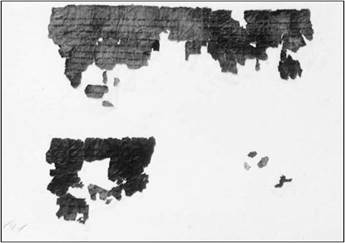
Figure 5-1: A fragment of a Dead Sea Scroll.
Another controversial claim comes from Spanish Jesuit scholar Jose O’Callaghan. He argued that pieces of the Greek New Testament were found among in the seventh cave at Qumran, but these fragments are so small that each preserves only 9 to 14 clear letters at most, and no complete words other than the word kai (“and”) are visible. That’s pretty weak evidence to build on, especially given that nothing else — graffiti, testimony from people at the time, or New Testament references — can place Christians at the scroll site.
Does all this evidence mean that the Dead Sea Scrolls are irrelevant to the study of the historical Jesus? No way! The scrolls may not give any explicit references to him, but they do give a ton of information about Jewish society in his time, such as the different ethical and ritual practices of various Jewish groups, the formation and structure of Jewish religious movements, the shape of the scriptures at the time of Jesus, and the diversity of beliefs about the messiah and the end-times. And because one of the indisputable things about the historical Jesus is that he was a Jew, the scrolls give us a treasure trove of information that we can use to understand what his world was like (as you discover in Chapter 7).
The infamous testimony of Josephus
Josephus was a well-educated Jewish man who lived in Roman Palestine and Rome, just after the lifetime of Jesus (roughly 37-100 CE). He fought against the Romans during the First Jewish Revolt. When the Romans captured him in 66 CE, however, he allied himself with them, predicting that the Roman generals Titus and his father Vespasian would prevail and become the next emperors of Rome. When his prediction came true, they rewarded Josephus for his accurate prophecy by adopting him, setting him up in a villa in Rome, and funding his writing projects, which were about the war and about the antiquities, or history, of the Jewish people. Needless to say, none of this special Roman treatment endeared him to his fellow Jews, who ignored his work for centuries.
It was a different story with the Christians, though. They prized Josephus for his brief references to John the Baptist, James “the brother of Jesus called Christ,” and Jesus himself. When Josephus describes Jesus in his writings, he says this:
About this time lived Jesus, a wise man, if indeed it is right to call him a man. For he was a doer of incredible works, a teacher of people who receive the truth with pleasure, and he won over both many Jews and many Greeks. He was the Messiah. And when he heard him accused by the first men among us, Pilate condemned him to the cross; those who had first loved him did not stop. For he appeared to them on the third day alive again, because the divine prophets had spoken these and myriad other wonderful things about him. To this day the tribe of Christians named after him has not disappeared.
—Josephus, Jewish Antiquities 18.3.3
Most scholars today are suspicious about this passage because it presents as fact some things that only Christians would believe (underlined above). Because it was Christians who preserved and copied Josephus’s works, it’s quite likely they added these underlined passages to make this Jewish man appear to admit that the Christians were “right.”
Josephus did write most of the paragraph in the passage, however, so his testimony from the late first century does actually give some important historical information: Jesus had a reputation as a teacher and miracle worker, and he was crucified under Pontius Pilate.
Sifting Through Roman Records
All the gospels agree that the Romans executed Jesus. Did the Romans themselves record anything about it?
Several first and second century Roman authors mention small details. For example, around 55 CE the historian Thallos refuted the Christian claim that God caused the sky to darken at Jesus’s death (see Mark 15:33), reporting that it was merely an eclipse. But the quote is preserved for us third-hand by a much later author and tells us more about what Christians were claiming than what Jesus did. Likewise, in 112 CE the Roman governor of Pontus Bithynia in modern-day Turkey, Pliny the Younger, mentions that Christians sang hymns to Christ “as if to a god.” It’s not Roman testimony to Jesus, but it’s Roman testimony to Christian beliefs about Jesus.
The most important Roman evidence comes from the pen of the Roman historian Tacitus (c. 56-120? CE). He was a careful scholar, so his brief reference to the historical Jesus is very important. His collection of books called The Annals includes the famous story about the six-day fire (likely set by Emperor Nero himself) that burned much of Rome in July 64 CE. To put that rumor to rest,
Nero blamed Christians for setting the fire:
Nero fastened the guilt and inflicted the most exquisite punishments on a class hated for their disgraceful acts, whom the crowd called Chrestians. The founder of this name, Christ, had been executed in the reign of Tiberius by the procurator Pontius Pilate. Suppressed for a time, the deadly superstition erupted again not only in Judea, the origin of this evil, but also in the city, where all things horrible and shameful from everywhere come together and become popular.
—Tacitus, Annals 15.44
Tacitus misspelled Christian in the passage, but he reported that typo as a mistake of the crowd that he then corrected when he mentioned “Christ.” The fact that he calls Jesus “Christ” doesn’t imply any belief that Jesus is the messiah; it probably just reflects how Christians were referring to Jesus at that time. His reference that Jesus was executed doesn’t refer specifically to crucifixion, but the fact that some Christians were crucified suggests that Nero at least was aware of the tradition. Finally, Tacitus confirms the canonical gospel portrait that Pilate executed Jesus as an enemy of Rome; there’s nothing about any Jewish involvement.
Following the Physical Evidence
As you see from the earlier sections in this chapter, the bulk of the evidence for the historical Jesus is literary. But it’s common sense to imagine that there might be some physical evidence as well, and it’s human nature to want to find some. So, is there any out there? In short, yes — but as always, it takes a little training to tell the difference between authentic and unauthentic evidence.
The legitimate evidence
Archaeological evidence has been discovered that confirms the existence of some of the places and people mentioned in the gospel narratives. Here’s some of the most important physical evidence:
● The basalt foundation of a synagogue that dates to the first century CE has been unearthed in Capernaum. The gospels note that Jesus preached in a synagogue in Capernaum (Mark 1:21-28; 3:1-6); it might have been this place.
● You can still see the platform and retaining wall of the Jerusalem Temple where Jesus preached. You can also still see the monumental staircase along the southern wall.
● The Church of the Holy Sepulchre in Jerusalem lies in an old quarry that was just outside the city walls in Jesus’s time. Crucifixions took place outside city walls, and early Christians preserved the memory that this particular quarry was the place where Jesus died and was buried (see Chapter 20).
● A stone that mentions Pontius Pilate was discovered in 1961 in Caesarea Maritima, on the coast of Israel. This stone slab is part of an inscription for a temple that Pilate had apparently built in honor of the Roman Emperor Tiberius. The inscription is broken and worn off, but the existing letters read, “[To the honorab]le [gods] (this) Tiberium [Po]ntius Pilate, [Pref]ect of Jud[e]a, [had d]e[dicated].”
● In 1990, a tomb was discovered south of Jerusalem that contained pieces of 12 ossuaries (bone boxes). Ossuary 3 has the inscription “Qafa” (the Aramaic version of the Greek “Caiaphas”). Ossuary 6 was more ornate and had two inscriptions mentioning “Yehosef bar Qayafa,” or Joseph son of Caiaphas. The unusual name and the quality of the ossuary decoration persuade some scholars that this tomb belonged to the high priest mentioned in Jesus’s trial scene (see Chapter 14).
● In 2007, the location of Herod the Great’s tomb at Herodium was identified. There’s not much of it left, and no inscription has yet been found to confirm the identification, but the ornamental stone carvings and an ancient description of Herod’s funeral make the identification likely (see Chapter 7 for more about this tomb).
The not-so-legitimate evidence
A lot of artifacts and sites out there are neither early nor authentic. For example, a cave was discovered in 2004 near Jerusalem that some people claimed was where John the Baptist baptized (see Chapter 10 for more information). But the graffiti dates from the Byzantine period, and the location in Jerusalem doesn’t match up with where the gospels and Josephus say John was working.
There are several reputed relics of Jesus himself that have been circulating for some centuries. Here are a few of these reputed relics:
● The Veronica: “The Veronica” refers to a veil used to wipe the suffering Jesus’s face on his way to crucifixion that miraculously bore the image of his face thereafter. Though this moment has been memorialized in the devotional Stations of the Cross, the veil has little historical basis. The fact that the veil exists in at least four separate locations in Europe doesn’t help either. (For more on the growth of this and similar traditions, see Chapter 17.)
● Fragments of the true cross: When the Emperor Constantine’s Christian mother, Helena, made a pilgrimage to Jerusalem around 325-327 CE, she allegedly was shown the three crosses on which Jesus and the two insurgents crucified with him were hung (Mark 15:27). But which was the cross of Jesus? As the fourth-century story goes, all three were placed on a dying woman, and when she was healed, Helena knew where to pull her souvenir splinters from. Fragments from the “true cross” have since proliferated so widely that one could likely build many crosses from all the slivers.
● The Shroud of Turin: This linen cloth bearing the image of a crucified man as if in photographic negative first emerged in 1357 in Lirey, France. Carbon-14 testing on a scrap of the shroud in 1988 suggested that it was of medieval manufacture (1260-1390), but questions were raised in 1993 about whether the tests had dated the contaminants rather than the linen itself. There are records from 14th-century France in which the painter of the shroud confesses he created it. These records obviously compromise the authenticity of the shroud.
Similarly, the bone box of “James, son of Joseph, brother of Jesus” came to light in 2002 (see Chapter 9 for details). This finding appears to be less the product of early piety than of modern ingenuity. The box is a legitimate first-century ossuary, but the part of the inscription that reads “brother of Jesus” appears to be a later engraving. (The so-called “family tomb of Jesus” promoted in a 2007 television special is likewise more ingenious than genuine.)
In the end, none of these spurious relics satisfies the criteria historians look for. There’s no early testimony about these relics, and their existence is most easily explained by the natural human desire to have tangible proof of Jesus.