
Chapter 5

And when the rains come not, all seed life and vegetation, all trees that yield medicine, palms and giants of the jungle become parched and dried up and are no more. Thus impermanent, thus unstable, thus insecure are all compounded things. Be ye dissatisfied with them, be ye repelled by them, be ye utterly free from them!
—Anguttara Nikāya
Scholars have amply demonstrated over the last twenty years that Buddhism was not an inherently environmental religion,1 but few have connected this lack of concern about the natural world to the related issue of wealth and status creation in the Buddhist social system. This chapter explores Buddhist views of nature and how they complemented a growing market economy.
Nature earns little notice in the Buddha’s teachings, but when nature does appear in early Buddhist texts, it is typically in terms of impermanence, decay, and as something to be avoided.2 One will search in vain for anything that could be interpreted as an appreciation of nature in the early Buddhist canon.3 In a rare passage that mentions a beautiful mountain lake, it turns out to be a manifestation of hell.4 The Vessantara Jataka, one of the most popular stories of the Buddha’s previous life as prince who gives everything away, urges practicing the Dharma in order to tame nature, not to respect or honor it. Many early Buddhist texts are even hostile toward the natural world.5 In the epigraph above, for instance, Buddhists are urged to disfavor nature because of its impermanence. Or consider this telling passage from the Culasaccaka Sutta recounting the Buddha’s debate with the son of Saccaka the Nigantha. It compares the Buddha’s debating skill to a child’s slow dismemberment of a crab:
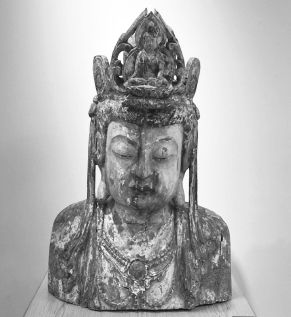
Figure 9. Bodhisattva Guanyin at Neiman Marcus (Northpark Mall, Dallas, 2016).
Photo by author.
Suppose, venerable sir, not far from a village or town there was a pond with a crab in it. And then a party of boys and girls went out from the town or village to the pond, went into the water, and pulled the crab out of the water and put it on dry land. And whenever the crab extended a leg, they cut it off, broke it, and smashed it with sticks and stones, so that the crab with all its legs cut off and broken, and smashed, would be unable to get back to the pond as before. So too, all Saccaka the Nigantha’s son’s contortions, writhings, and vacillations have been cut off, broken, and smashed by the Blessed One, and now he cannot get near the Blessed One again for the purpose of debate.6
In likening the Buddha’s defeat of his debating partner to the mutilation of an animal for sport, the passage effectively captures the Buddhist tradition’s disregard for the natural world.7 It glorifies the Buddha by comparing his actions to the casual and mindless destruction of an animal, and it aligns early Buddhism with the destruction of nature, not its protection.8 One scholar has summed up the Buddhist relation to nature thus: “A prepared and moderately manicured version of wilderness is of more appeal to early Buddhism than nature ‘red in tooth and claw.’”9
This general attitude toward nature spread with the Buddhist tradition across Asia. For example, the famed Chinese Buddhist scholar Daoxuan, in his writings on plants and animals, considered animals to be mute, stupid, and inferior, and classified them, along with slaves, in purely economic terms.10 Later Chinese Buddhists challenged these ideas when they argued that plants were capable of enlightenment.11 To some, the novelty of this argument might suggest a growing environmental consciousness, but Fabio Rambelli has convincingly shown that such Buddhist discourses about plants were concerned not with nature but with monasteries gaining economic control of agricultural and forestry resources.12
Indeed, as scholars have shown, Buddhists only began to glorify nature when they realized that undisturbed natural areas were disappearing.13 Thus although the fifth-century poetry of Haiyan might seem to be concerned with nature for its own sake, the truth is more complicated. As Mark Elvin has explained: “What we are seeing, though, is the beginning of something with which full-scale industrialization has made us more familiar: Haiyan was living in what was partly, so to speak, an ‘invisible environment,’ that is, one of whose determining conditions were no longer part of daily experience, or subject to direct observation, but mostly far away and linked to it only through a market mechanism and second-hand information.”14 Thus Haiyan’s literary romanticization of nature was actually a reflection of its loss. And thus it is no surprise that it was at the same time that this “invisible”—or no longer known—nature came to define the highly aestheticized Chinese garden and the love of cultivated flowers, neither of which were “natural.” Rather, they exemplify what Haruo Shirane has called “secondary nature”: glorified representations of nature occurring precisely when people were losing touch with it on account of urbanization.15
The growing aesthetic appreciation of nature in East Asian Buddhism was a consequence not only of environmental destruction and urban distance but also of wealth, because, in the premodern period, only those with the means could appreciate and aestheticize nature. As Craig Clunas has shown in his historical study of the development of Chinese gardens, it is only possible to cultivate such a formal garden when freed from having to feed oneself and to work the land. This is why the cultivated, aesthetic garden is a marker of status.16 Consider the work of the first so-called nature poet, Xie Lingyun (385–433). He wrote the famous poem “Living in the Hills,” which praises nature, seclusion, and a Buddhist vegetarian diet,17 but he was able to do so only on account of his family’s enormous wealth. His father’s one hundred serfs worked the land, which allowed Xie Lingyun to romanticize the land while living a life of leisure.18
The appreciation of nature in Chinese and later Japanese Buddhism was thus less about an environmental ethos and more about status maintenance. Activities such as writing nature poetry, making bonsai trees, or practicing ikebana were the preserve of the elite, and, as such, practices that aestheticized nature contributed to the status distinctions within the monetized and socially stratified urban economy, which the Dharma had fostered. In tenth-century Buddhist Dunhuang on the Silk Road, for example, ornithology was a high-status activity because it required the means and wherewithal to travel to places where exotic birds could be found:
What creates the exotic bird’s value is the effort of its acquisition, which involved not only wealth but political relations—domination over others—through which the physical and political constraints of distance could be overcome to bring creatures from far away. Knowledge is the same. Especially before the rise of printed books and a market in them, familiarity with unusual birds is a mark of privilege, since it involves connections with a world beyond the domain of common knowledge, the knowledge of ordinary experience. Mastery of the names and attributes of birds which are not “all around” is the product of a labour of acquisition, which can only be undertaken by those with the means to do so. The social appropriation of rare birds therefore conforms to and confirms the existing division of society, divided between the distinguished and the common; the immutable difference between crane and sparrow equated with the division between ruler and commoner.19
The aesthetic appreciation of nature was rarely afforded to people who had to work the land. Rather, as was the case with birding in Dunhuang, one’s knowledge—of the best tea and its serving ceremonies, the latest furs from Siberia, or the newest incense from Indonesia—indicated status and were only accessible to the wealthy.20
To understand this dimension of the Dharma—namely, its willingness to exploit and consume nature for status maintenance—we must first overcome the popular image of Buddhism as antimaterialist or even anticonsumerist. As I have pointed out in the previous chapters, Buddhism was deeply involved with the expanding economy of early India. It fueled wealth production among both the new urban merchant elite and the rural landed gentry through the practice of dana, giving to the monastic community. The Buddhist canon is filled with stories about and paeans to the value of hard work and the moral value of creating wealth. In them, happiness is explicitly linked to prosperity, and the types of bliss available to the average man are ownership, wealth, and being free of debt.21 While men are encouraged to act in the world and make money, women are told to be diligent with the purse strings: “And in this way also, girls: The money, corn, silver and gold that our husband brings home, we will keep safe watch and ward over it, and act as no robber, thief, carouser, wastrel therein. Train yourselves thus, girls.”22 The wealthy are “clever fellow[s], full of energy,” and the poor are condemned for failing to take advantage of situations where they could have made money. The Buddha repeatedly praises rich men because “when the occasion to produce wealth arises, [they are able] to produce prosperity as grain or silver or gold.”23 He even offers entrepreneurs advice on how to stay levelheaded within the volatile financial market: “A clansman, while experiencing both gain and loss in wealth, continues his business serenely, not unduly elated or depressed.”24 Regardless of whether this is sound financial advice, it is further evidence of the Buddhist tradition’s constant concern with economic matters.
Contrary to the modern image of Buddhism, the Buddhist canon never extols poverty as a virtue, only wealth. Being poor is the negative foil for the righteousness that wealth confers. Poverty is a sign of personal incompetence or failure, while wealth demonstrates virtue and goodness. Wealth demonstrates moral rectitude, as in Buddhist visions of heaven: “In … celestial gardens a vast imagery linked jewels and precious substances with plants, in a sense continuing the older tradition of wish-yielding trees. Though such descriptions clearly excited fantasies of opulence, importantly they also embodied an aesthetics of plentitude. The fabulous plants of Buddhist heavens, whose growth, blooming and fructification are copiously described, relied on a sort of aesthetics of plenitude. This aesthetics saw flowers, jewels, and ornaments as the necessary, felicitous and beautiful accoutrements of a morally sanctioned world.”25 This aesthetics of plenitude extended to the mortal realm as well, as in the trope of the rich Buddhist who lives lavishly: “In Benares there was a young man of family, the son of a (great) merchant, delicately reared, called Yasa. He had three mansions, one for the cold weather, one for the hot weather, one for the rains. Being ministered by bands of female musicians for four months in the mansion of the rains, he did not come down from that mansion.”26 The Vinaya, the Buddhist monastic code, presents such images of the idle rich in a positive light. As in the story of Suna Kolvasa, a merchant’s son who was so “delicately nurtured” that down grew on the soles of his feet.27 When Suna later joins the monastic order, he must give up “eighty cartloads of gold” and a “herd of seven elephants.” Although the higher calling requires such sacrifice, his wealth, had he remained a layman, would have continued to confirm both his social and moral standing.
The mandate to the laity, as I have shown, was to participate in worldly endeavors and to produce wealth to support the Buddhist monastics and thereby generate merit. Because of that, economic expansion was intrinsic to the architecture of the whole system in every Buddhist tradition—Nikaya, Mahayana, and Tantric Buddhism. And yet, no matter how extensively historians and other scholars document this dynamic throughout the Buddhist expansion in Asia, the popular image of Buddhism as a tradition of renouncing with an implicit environmental sensitivity has proven very difficult to dislodge. But there is no doubt that the pro-development, expansionist, pro-tocapitalist economy of early Buddhism entailed the antithesis of an environmental ethos, and little about it changed as Buddhism spread across Asia.
This expansionist dynamic at the heart of the Buddhist social system explains why, in its canonical texts, nature is presented in terms of the commodities made from it and not something worthy of regard in and of itself. In describing the objects to focus on while meditating, the Buddha describes their color in relation to nature, but more so in relation to the famous cloth produced in Varanasi: “Just as for instance the flower of flax is blue-green, of the color blue-green, blue green to look at, a shimmering mass of blue-green; or just as Benares muslin, smooth on both sides, is blue-green … Just as for instance the kanikari flowers is yellow … or just as that Benares muslin, smooth on both sides, is yellow…. Just as bandhu-jivaka flower is blood-red … Benares muslin is blood-red.”28 Similarly, the Buddha defines good and evil in terms of the quality of lumber (sapwood versus heartwood,29 or Kasi’s sandalwood and red sandalwood).30 Elsewhere, the Buddha uses wood quality to explain how to find the right teacher.31 Regarding the ocean, its “treasures” are the gems that can be extracted from it: “Monks, the great ocean has many treasures, diverse treasure: these treasures are there, that is to say: pearl, crystal, lapis lazuli, shell, quartz, coral, silver, gold, ruby, cat’s eye.”32 Even the value of the Buddha’s teachings is expressed through reference to luxury goods: “Just as black orris root is reckoned as the best of root perfumes and red sandalwood is reckoned as the best of flower perfumes, so too, Master Gotama’s advice is supreme among the teachings of today.”33
The Buddhist view of trees may provide the best evidence of Buddhism’s commodified view of nature. Trees are clearly needed for everything from cooking to building cities, and thus no Buddhist text proclaims it improper for the laity to cut down trees or that cutting them will have any negative consequences.34 According to the Vinaya, a special monk, titled Navakarmika, was even commissioned to secure wood for construction projects.35 Monastic institutions cut trees not only for their own building but also for agricultural expansion,36 or to sell as lumber.37 And perhaps because wood was such a valuable commodity, the Buddha decreed in the monastic code that the deliberate setting of a forest fire was an “offence of wrong-doing.”38 The imperial edicts of Asoka echo this commodity view of trees. In Pillar Edict V, Asoka decreed that “forests must not be burned without reason.”39 The Buddhist community eventually took this mandate further by declaring that in order to protect forests from such conflagrations monks were allowed to set counterfires, and the Buddha even explained how it should be done. On account of such a high value being placed on timber and forestry in the early Buddhist canon, it is perhaps unsurprising that in later texts a well-managed tree plantation appears in a description of paradise: “At the foot of the royal Sumeru mountain is a large lake called Simbali Lake; it is 500 yojana wide and is surrounded by kapok woods. The tops of the kapok trees are at the same level and thus look as if they had been planted; they are delightfully green and beautiful.”40
Indeed, Buddhism’s economic and extractive view of nature is perhaps best captured in the Vinaya. The Vinaya was an evolving tradition of monastic jurisprudence that developed over time in response to the world in which monks operated. Its rulings determined how monks could properly interact with the laity, and its purpose was to ensure the sanctity of the monastic community. Most of the rules in the Vinaya follow the same narrative structure. A monk does something improper whereupon the Buddha explains why such an act is improper and decrees whether punishment is in order (such as mandatory expulsion from the community or a reprimand).
The first ruling in the Theravada Vinaya, for example, is about sex. It involves the early Buddhist monk Sudinna, whom we met in the last chapter. Sudinna had come from a wealthy merchant family, but, after falling under the sway of the Buddha’s preaching, he left his wife and family to join the monastic community. His parents pleaded with him to produce a male heir in order to maintain the family fortune (and to conduct the funeral ceremonies), and Sudinna eventually acquiesced, slept with his wife, and produced an heir. The Buddha uses this story as the occasion to present a long disquisition on sex, in which he argues that sex perpetuates the ego and that desire and attachment produce karma with its inevitable consequence of suffering. On the basis of this Vinaya ruling, sex came to be forbidden for monastics in the Theravada tradition.
Because the Vinaya codes grew to cover virtually all situations that monastics might find themselves in, they provide fascinating insight into the social world in which early Buddhist monks operated. As they obsessively maintained the ideals of renunciation, the many rulings addressed what a monk or nun could use, own, or even come into contact with. As a result, their detailed lists and descriptions of goods provide extensive documentation of the material realities of the early Buddhist world.41
One good example can be found in the Vinaya ruling concerning Suna Kolvasa, the rich merchant mentioned above who had lived such a pampered life that down had grown on the soles of his feet. After becoming a monk, he was grievously injured from the extensive walking required of a Buddhist monk: “Because of his great output of energy in pacing up and down his feet broke [and] the place for pacing up and down in became stained with blood as though there had been slaughter of cattle.”42 This situation became the grounds for the Buddha’s ruling on what kind of shoes or sandals a monk is allowed to wear. The ruling includes a list of the types of sandals and shoes that a monk is not allowed to wear: “sandals pointed with ram’s horns … with goat’s horns … sandals ornamented with scorpion tails … sandals sewn round with peacocks’ tail feathers … sandals decorated with lion-skins … tiger skins … panther skins … black antelope skins … with otter-skins … with cat-skins … with squirrel skins … with owl skins … woolen shoes should not be worn, shoes made with gold … with silver … with gems … with lapis lazuli … with crystal … with bronze … with glass … with tin… with lead … shoes made with copper should not be worn.”43
In order to understand this curious list, it helps to recall that the Dharma resonated most significantly with the wealthy. The Buddha held up their world for emulation and respect, and during their begging and teaching rounds monks operated in their world. This explains why Buddhist texts, even the monastic code, are filled with descriptions of the wealthy, their numerous houses, and their extravagant possessions, such as a rich man’s “eighty-four thousand couches … of gold, silver, ivory, sandal-wood, covered with fleece, wool, with kadali-deer hide … eighty-four thousand carriages, covered with lion-skins, tiger-skins, leopard-skins, or with orange colored cloth.”44 Ostentatious wealth, again, was not a problem for early Buddhists.
Nevertheless, even if it was acceptable for the Buddhist laity to own luxury goods, it was not appropriate for monastics to own them. But because monastics often interacted with the rich, the question arose as to how monks and nuns should relate to these objects in the course of their religious peregrinations. In one ruling, the Vinaya surveys available sofa coverings: “silken sheet with jewels, a sheet made with silk threads and studded with jewels, a dancer’s carpet, an elephant rug, a horse rug, a chariot rug, rugs of black antelope, a splendid sheeting of the hide of the kadali-deer” and so on.45 After listing all the costly items, it concludes that monks are forbidden to own such things. Elsewhere, it rules that when visiting with the laity, monks are allowed to sit on such fancy couches and their expensive animal-skin coverings, but they are not allowed to lie down on them.
As Buddhism expanded and moved into new regions, the situation became even more complicated. The rulings I have discussed so far reflect the world where Buddhism initially took hold: among the wealthy, urban elite of the Gangetic Plain. In that limited context, it might have been possible to provide an exhaustive list of forbidden possessions, but when monks and monastic institutions started to push out into the frontier, they came into contact with other peoples, other customs, and other types of objects. With regard to these new goods, the Vinaya distinguished between the luxury items that exist in cities and the cruder goods on the frontier. With regard to couch covers, for example, the Vinaya forbids monastics to own those made from fur (“a lion’s hide, a tiger’s hide, a panther’s hide”).46 However, on the frontier, where the coverings were markedly less prestigious,47 and where perhaps the rules were more lax, monks were allowed to possess locally produced hide coverings. As the Buddha decreed: “So, monks, in the southern region of Avanti hides (are used as) coverings: sheep-hide, goat-hide, deer-hide. I allow, monks, in all border districts, hides (to be used as) coverings: sheep hide, goat-hide, deer-hide.”48
This ruling is complex and touches on many issues, including class and status distinctions between the metropole and the periphery, and Buddhist accommodation strategies. However, my interest is what this ruling (and the others) can tell us about Buddhist views of nature. Most notably, Buddhist jurists never object to the laity owning any of these objects. Nowhere in the Vinaya is there any suggestion that the laity should avoid such wanton materialism, much less refrain from buying, say, a tiger-skin couch cover because it entailed the killing or suffering of an animal, or any such modern environmental concerns. Rather, by cataloguing early Buddhist consumption patterns and making many such lists, the Vinaya actually valorizes such objects as it makes it clear that the acquisition of such goods was wholly acceptable for the laity. As a result, the lists of items proscribed for monastics but allowed for the laity fit the message of the Dharma that wealth confers high social and moral stature.
As much research has shown, such ever-increasing displays of wealth and consumption—as well as attendant rituals of aesthetic refinement, such as the Japanese Buddhist incense-sniffing party49—were an inherent part of the process of status seeking within a world of commodification. Such conspicuous consumption defined the moral rectitude of the Buddhist elite, and the Dharma did not critique any aspect of this world of wealth and status one-upmanship. Furthermore, it said nothing about the ruthless exploitation of the natural world that sustained such consumption. Rather, the Buddhist tradition saw nature as something that needed to be tamed and made useful to civilization through wealth production. If anything, the Dharma idealized precisely those who had the wherewithal and business acumen to transform the riches of the natural world into material wealth, which could in turn be transformed into both karmic and cultural capital.
Thus, contrary to popular notions, the Dharma did not enshrine or promote the protection of nature. Instead, it specifically promoted the exploitation of nature for economic and societal ends. The Buddha held up for praise those who could manipulate the natural world,50 and those who could skill-fully evaluate various commodities (such as cloth, gemstones, and aromatic woods).51 The glorification of merchants and traders reached such levels that later Buddhist texts, such as the Purnavadana, included instructions on their education: “When he was an adult, he was taught in writing, calculation, accounting, coinage, debts, deposits, open-deposits, in the examination of goods, in the examination of gems, in the examination of elephants, in the examination of horses, in the examination of boys, in the examination of girls—in the eight types of examination—he became an expounder, a reader, learned of sharp conduct.”52 And, as it happened, Buddhist traders came to dominate Eurasian trade. They moved out onto the commodity frontier where they spread Buddhism’s prosperity theology, built monasteries, and established the institutions that allowed the system of trade to flourish.