
CHAPTER FIVE

He comes to govern societies he does not know, to administer laws he has not studied, to immerse himself in customs he has not experienced, to deal with peoples he has never seen, and look for answers to the equally inexpert family that usually surrounds him. He comes full of the maxims of Europe unsuited for these places.
—“REPRESENTACIÓN VINDICATORIA” OF MEXICO CITY, 1771
 FRANCISCO XAVIER DE GAMBOA, ONE OF THE TOP LETRADOS IN Mexico City in the 1740s and 1750s, took on a radically new set of responsibilities upon his return from Spain in 1764. Now a member of the Real Audiencia of Mexico, albeit in its less prestigious criminal chamber, the Sala de Crimen, Gamboa was tasked with cracking down on crime and disorder in the viceregal capital. This chapter examines his years as an alcalde del crimen in the rough-and-tumble world of criminal justice in New Spain of the 1760s. Gamboa took part in a wide range of activities as a criminal magistrate, from investigating the mistreatment of Native workers confined to the bakeries of Mexico City to breaking up violent melees in front of pulquerias to mediating the first industrial strike in Mexican history, the uprising by mine workers at Real del Monte in 1766. Despite the commendations he received for his handling of these matters, he quickly fell out of favor with the viceroyalty’s top officials, the viceroy, Carlos Francisco de Croix, and the visitor general, José de Gálvez. The main problem was his uncompromising defense of the established system of criminal justice, especially the jurisdiction and independence of the audiencia. As part of an ambitious program to reassert Spanish authority in New Spain, Croix and Gálvez wanted to trim the sails of the high courts in matters of crime and punishment. They saw the Sala de Crimen especially as an obstacle to reform. Gamboa, on the other hand, while admitting its weaknesses, still thought it a vital institution to protect the administration of justice in New Spain.
In November 1766, Viceroy Croix extinguished the jurisdiction of the Sala de Crimen over the police outside of Mexico City. This was the result of a police corruption scandal in Puebla that implicated the captains and lieutenants appointed by the sala. Croix, with the backing of Gálvez, transferred policing throughout New Spain to the Tribunal of the Acordada, a quasi-independent constabulary created in the early eighteenth century to fight rural banditry. The Acordada had been effective in this mandate but at a significant cost: it ignored basic rules of criminal procedure, such as the substantiation of charges with sworn testimony. It carried out summary trials and frequently mutilated the bodies of those it found guilty. There was no appeal of its sentences to a higher court. A few months later, in May 1767, Croix, again backed by Gálvez, ordered that all the criminal courts of New Spain, including the Sala de Crimen and Acordada, send their convicted prisoners to serve terms of forced labor at the presidios, or fortresses, of Veracruz, Havana, and Manila. This meant the effective end of the collera, the practice of sentencing convicts to labor for private employers at obrajes, butcher shops, and bakeries.1 The Sala de Crimen profited from the collera: it charged the private employers for the convict labor it supplied and used the proceeds to pay its support staff. In one year, therefore, soon after Gamboa had joined the court, the Sala de Crimen lost not only jurisdiction over the police outside of Mexico City but an essential source of income.
In the Comentarios a las Ordenanzas de Minas of 1761, Gamboa had endorsed the existing juridical order of New Spain. In particular, he defended the pluralistic legality of New Spain, the force of local custom, and the expansive jurisdiction of the audiencias. After 1764, as an audiencia magistrate, he could act upon these convictions. He thought the criminal justice reforms of 1766 and 1767 were abominable. In his view, the officers of the Acordada, unconstrained by formal procedure, would inevitably harm ordinary, law-abiding people. Meanwhile, the presidio decree would weigh heaviest on the Native population of New Spain, who would be forced from their highland villages to serve their sentences in distant and insalubrious coastal fortresses. He considered both measures part of an ill-considered scheme to strip power from the judiciary and shift it to executive officials, like the visitor general himself, who lacked experience and knowledge of American conditions. Although the most junior member of the Real Audiencia of Mexico, Gamboa’s opinion carried weight. He had a depth of knowledge about New Spain and its legal culture that only the most veteran audiencia magistrates could match.
Gamboa’s outspoken opposition to the criminal justice reforms and, more generally, the visita itself did not sit well with top policymakers in Madrid. They wanted no obstacles to the success of the reform mission. During the tumultuous summer and fall of 1767, when the expulsion of the Jesuits threatened to set New Spain aflame, the Spanish crown began to see Gamboa as a threat to peace and security. He was ordered to leave New Spain as a supposed opponent of the government. Just five years after returning home in triumph, the first locally born jurist appointed directly to the Real Audiencia of Mexico in decades, Gamboa sailed back to Spain in despair in the fall of 1769.
The Sala de Crimen
On December 6, 1764, Gamboa took his oath of office as an alcalde del crimen before the viceroy of New Spain, Don Joaquín de Montserrat, the Marqués de Cruillas.2 He was just shy of his forty-seventh birthday, relatively old for a new audiencia magistrate. On the bench of the Sala de Crimen, he joined Antonio de Rojas y Abreu and Diego Antonio Fernández de Madrid. Rojas y Abreu, born in Tenerife in 1703, had been an alcalde del crimen since 1742 and by 1764 his health no longer allowed him to carry out his duties.3 Fernández de Madrid, born in Guatemala in 1726 and educated in Mexico City, was just twenty-five when the crown appointed him in 1751 but he too was frequently incapacitated by ailments.4 The sala’s crown attorney at the time of Gamboa’s appointment, Miguel José de Rojas Almansa, was in no better shape and would die in 1767.5 One seat remained vacant on the court, not filled until early 1768 when Francisco Leandro de Viana, a healthy Basque judge, arrived from Manila. Gamboa was thus the only truly able-bodied member of the sala during the crucial years of 1766 and 1767.6
The Sala de Crimen was the highest court of criminal jurisdiction in the viceroyalty. The Spanish crown authorized it in 1568, some forty years after the Real Audiencia of Mexico itself. Its main responsibility was the maintenance of public order in the capital. The alcaldes del crimen were expected to patrol the city streets at night, assisted by the sala’s sheriff and its volunteer police officers. They heard in first instance serious criminal cases within a five-league radius of Mexico City, as well as so-called casos de corte, serious crimes against vulnerable people like widows and orphans from anywhere in the Real Audiencia of Mexico’s judicial district.7 They also heard local civil cases in their capacity as jueces de provincia. The two alcaldes ordinarios elected annually by the municipal council of Mexico City handled lesser criminal matters. In theory the sala could hear appeals from lower-level judges, alcaldes ordinarios in the cities and alcaldes mayores in small towns, although in practice this meant, at most, reviewing death sentences. The sala operated one of Mexico City’s six jails, which was located, like its chambers, in the viceregal palace.8 Besides their regular judicial duties, the sala’s magistrates handled special commissions at the request of the viceroy, such as the pacification of village riots. Unlike the oidores, the more senior civil court magistrates of the audiencia, the alcaldes del crimen did not take part in the Acuerdo, the viceroy’s advisory council.
The Sala de Crimen followed formal procedures in criminal cases, derived from Roman law, transmitted to Spain through Las Siete Partidas. The standard procedural text in the eighteenth century for both civil and criminal proceedings was the Curia Philipica, written in 1603 by Juan de Hevia Bolaños, a former scribe on the Audiencia of Lima.9 The formality of proceedings offered parties a modicum of due process. A criminal process began with a simple statement filed before a judge, which set out the alleged offense and a plea for justice. In a typical case before the sala, after the complainant filed the accusation and paid the required fee, the court’s staff attorneys would prepare the formal charge. A prosecution could also commence ex officio, at the instigation of the crown. On the basis of the sumaria, the court could then send one of its police officers to arrest the accused. If the accused then confessed, the court proceeded directly to sentencing. Otherwise, court personnel would begin to substantiate the case by gathering evidence from witnesses, who typically answered a set of questions under oath prepared by the court’s attorneys and recorded by its scribes. All of this material made up the sustancia. If the accused was indigent, the court might appoint an attorney to assist them at no cost. Once the evidence was compiled in written form, the parties could submit legal arguments. To be sure, the vast majority of criminal cases in New Spain, including before the sala itself, were handled with much less formality. Judges, including the alcaldes de crimen, were encouraged to resolve cases expeditiously, to save everyone time and money.10
Formal, paper-based proceedings required a large staff, including scribes, attorneys, fee collectors, jail guards, and even a doctor and pharmacist to look after sick prisoners.11 Some positions, such as scribes, could be purchased from the crown with the expectation that the officeholder would recoup his investment through court fees.12 Income from fees, however, was never enough to cover the salaries of all staff members. Employees of the sala could be tempted by the gifts and gratifications offered by parties with business before the court. Deep-pocketed individuals could launch vexatious actions against their enemies by putting enough money into the right pockets.13
The Sala de Crimen also needed men for the more physical aspects of law enforcement. Besides the sheriff, the sala commissioned private citizens to patrol the streets, break up brawls, search homes for stolen goods, arrest suspects, and escort convicted prisoners to obrajes and other places of punishment. These appointed police captains were typically small businessmen or the trusted dependents of big merchants or landowners. They would have the interest in maintaining public order and the wherewithal to manage unruly plebeians. They could appoint their own subordinates.14 The captains and their lieutenants received no official salaries but could be compensated from the proceeds of fines or the sale of sequestered property. The sala’s police received no special training and were quick to use strong-armed methods, such as beating up apprehended delinquents. This was hardly remarkable for the period. Even London had notoriously rough volunteer cops, at least until the Metropolitan Police Act of 1829 created its first professional force.15
To be sure, it was not easy to enforce the law in Mexico City or elsewhere in New Spain. First, the commissioned police of the Sala de Crimen were expected to oversee the prohibition on domestic alcoholic spirits. To protect Spanish brandy imports, the crown outlawed in New Spain the manufacture and sale of distilled liquors like chinguirito (rum) and mezcal. The only locally produced alcohol sold legally was pulque, fermented agave juice. This popular beverage, consumed in Mesoamerica for thousands of years, generated considerable tax revenue for the government as well as steady profits for a number of big landowners who grew the agave, produced the pulque, and often operated the pulquerias as well. Despite the wide availability of pulque, demand was still strong for more potent drinks, and there were plenty of places to buy prohibited alcohol.16 You could even enjoy chinguirito in la Botellería, a tavern located within the walls of the viceregal palace.17 Besides the impossible challenge of controlling the sale of illegal booze, the police of the Sala de Crimen were also called upon to suppress illegal gambling. This was another futile endeavor in a colonial society full of risk-takers and fortune seekers. Under such circumstances, what could the unpaid and part-time police officers reporting to the sala realistically do? No wonder many sought to profit from activities they had no chance to suppress. The Sala de Crimen’s poice force in Mexico City had a terrible reputation. In 1755 Viceroy Revillagigedo complained that they were a bunch of rogues, “more inclined to swindle, injure and extort than to fulfill their legal duty.”18
The Case of the Natives and the Bakers
In February 1765, in his first major initiative as an alcalde del crimen, Gamboa ordered the release of over one thousand Natives confined to the bakeries of Mexico City. In a letter to Viceroy Cruillas, Gamboa said he acted because “there is not in all of the Recopilación de las Indias laws and ordinances more emphatically recommended than those that look to the liberty and good treatment of the Indians, excusing them from personal service, from being abused for protracted periods, defrauded of their just labor, or tormented by confinement, deprivations, and whippings.”19 Gamboa accused the bakers of flogging their indigenous workers, depriving them of adequate food and shelter, and forcing them to take on debt they could never hope to repay. Perhaps the oath of office he took just weeks earlier was still fresh in his mind. It enjoined him not “to cause [Indians] any harm or vexation, since it is necessary to attend to their comfort and conservation.”20
Why were Natives locked up in the city’s bakeries in the first place? In the eighteenth century, bakeries served as places of punishment. Since the 1560s, the Sala de Crimen and lower-level courts had sentenced convicts to labor for private businesses such as the obrajes; the textile mills found in Mexico City, Puebla, Querétaro; and other places of cotton and wool production. This system, known as the collera for the yoke that shackled prisoners together in public, alleviated labor shortages brought on by the postconquest collapse of the indigenous population. By the eighteenth century it was the standard punishment for serious offenders, Natives, and non-indigenous alike. It supplied businesses with cheap labor; it allowed Natives and people of African descent to keep up with tribute payments to the crown while in custody; and it spared the government the expense of building prisons. The collera also served another important function: it provided a regular source of income to the Sala de Crimen and other courts of criminal jurisdiction. Yet as Gamboa recognized in 1765, the system was rife with abuse. In 1716 the Viceroy Fernando de Alencastre Noroña y Silva, Duque de Linares, accused owners of obrajes of forcing their convict laborers to rack up debt on such items as food, clothing, and even religious services as a way to keep them in bondage long after their official sentences expired. If prisoners escaped or died, obraje owners sometimes even seized their wives or children to complete their terms.21 On the other hand, business owners had their own complaints. They accused the sala of forcing them to buy workers they did not need just to make money for the court.
While Gamboa justified his writ to release the Native prisoners on humanitarian grounds, he did not try to conceal an ulterior motive. He wanted to punish the bakers for their audacity in proposing a plan to create their own artisanal guild, which would allow them to restrict the bread market to the detriment of consumers and also exempt them from the ordinary jurisdiction of the Real Audiencia of Mexico. According to Gamboa, bakers would then be able to “resist the rulings of the Justices, even when they were so well-grounded in the Laws of the Indies as those that protected the liberty and good treatment of the unhappy Indians.”22 His liberation order thus served notice to the bakers that the audiencia would not surrender its authority lightly.23 This concern for the jurisdictional integrity of the audiencia appeared to outweigh his concern for the well-being of the Natives. Despite condemning the abuses the bakers inflicted on their convict labor, he did not recommend the abolition of the collera. He knew it was too important for the financial health of the Sala de Crimen. He just called for stricter enforcement of existing rules to protect prisoners, such as the requirements that business owners pay cash wages and provide adequate food and shelter.
The Arrival of José de Gálvez
José de Gálvez arrived in Veracruz in July 1765, eager to get to work on the most ambitious reform project in New Spain since the sixteenth century. The case for a general visita to New Spain had first been floated by government minister José Campillo in 1743. He saw it as a way to kick-start a radical remaking of the entire colonial system, which would include the abolition of the fleet system, the appointment of intendants for regional government, and land reform to help turn Natives into profit-seeking farmers.24 But it took the shock of the British occupation of Havana in 1762 for the crown finally to authorize the ambitious undertaking. The first candidate for the position of visitor general, Francisco Carrasco, a veteran treasury official, declined the assignment. The second, Francisco Anselmo Armona, the intendant of Murcia, agreed reluctantly but then died en route to New Spain.25 Finally, on the recommendation of Carrasco, the crown turned to José de Gálvez, a crown attorney in the treasury department without any colonial experience.
Gálvez carried with him from Madrid a long list of instructions. His main tasks were to crack down on abuses in the treasury and judicial branches, establish a crown tobacco monopoly, take measures to spur silver mining, implement the intendancy system, and secure the viceroyalty’s northern frontier. Besides visitor general, with the authority to initiate legal proceedings against anyone accused of wrongdoing, Gálvez was also named the intendant of the army in New Spain, which allowed him to supervise the military reforms begun the previous year by General Juan de Villalba. The objectives here were to station more regular Spanish troops in New Spain, increase the size of local militias, and refurbish the presidios, especially the fortress of San Juan de Ulúa off Veracruz. To enhance his status further, the crown named Gálvez to the Council of the Indies before he left Spain. As visitor general, he outranked the viceroy for the duration of his mission.
Born near Málaga in 1720, Gálvez had studied law in Salamanca and Alcalá before starting a legal practice in Madrid. Like many young lawyers at the time, including his contemporary Gamboa, Gálvez aspired to enter royal service. And like Gamboa, he wrote something on his own account that he hoped would attract the attention of ministers of the government. The title alone of this 1759 policy paper on colonial affairs gave away his general thinking: Discurso y reflexiones de un vasallo sobre la decadencia de Nuestras Indias.26 Gálvez simply assumed that the Spanish colonial system was in a state of advanced decay. The tract reflected more the thinking of the men in Madrid he wanted to impress than the reality of America, which Gálvez had never seen.27 He drew upon several of the critical reports on America that had been circulating in royal offices for decades, such as the so-called Noticias secretas. This scorching indictment of government in Peru was written in the late 1740s by the young naval officers Jorge Juan and Antonio de Ulloa, the official Spanish representatives on a French scientific expedition to South America to determine the sphericity of the earth.28 According to historian Colin MacLachlan, Juan and Ulloa, who went on to distinguished naval and scientific careers, had little understanding of the colonial system at the time, particularly the negotiated quality of Spanish rule in America: “Their rational, economically oriented frame of reference was narrow and the degree of flexibility and accommodation they believed proper correspondingly narrow.”29 Yet they helped to buttress an assumption of colonial decadence that Gálvez gladly accepted. Only the energetic assertion of royal authority could correct the worrisome drift in Spanish America. As he put it, “it is not possible to summarize all the abuses introduced into Spanish America, since they have been multiplying over time and at such great distance from the beneficial influences of the throne.”30 Gálvez naturally viewed with suspicion any American custom or practice that deviated from metropolitan norms or any instance of locals dominating Spaniards in America. He worried that the recently restored fleet system gave too much power to American-based merchants over their Spanish counterparts. He criticized manufacturing in America, even the obrajes that produced rough cloth for domestic use, as inimical to Spanish industry. The worst example of the decay of the colonial system was the inordinate role played by creoles in American government. He warned of the danger of appointing American lawyers to their local audiencias. “Experience in the handling of various matters has taught me that it would always be best to place them in positions far from their place of origin, since in the Indies the spirit of party and partiality reigns so strong.”31
In his Discurso y reflexiones de un vasallo sobre la decadencia de Nuestras Indias, Gálvez made the unusual recommendation for wholesale law reform in America. He proposed a revision of the 1680 Recopilación de las leyes de Indias, the massive compendium of royal legislation. Experts should comb through this text, he said, striking out obsolete provisions, inserting new ones in their place, and putting the whole thing in a clear and orderly manner. This would create in his words a “decisive law code” for America. This would mean there would no longer be a need to look to the ius commune or local custom to determine the applicable rule in a given situation. Codification would strike at legal pluralism and casuistic adjudication; judges would just have to enforce the written code, not scour juridical materials to find just solutions to particular cases. To be sure, Gálvez later discovered, as the minister of the Indies, that law reform was much easier said than done. The committee he appointed in 1776 to undertake the project was disbanded in the early 1790s, having made scant progress in the effort to replace the 1680 Recopilación de las leyes de Indias.
From the moment Gálvez arrived in Veracruz in July 1765 he took actions that alarmed officeholders in New Spain. For example, without first notifying the viceroy, the Marqués de Cruillas, he ordered the seizure of British vessels suspected of contraband trading off the coast of Campeche.32 Cruillas, an aristocrat of the old school, found Gálvez a “hot-headed and resentful official,” who was determined “to take for himself unlimited authority.”33 The viceroy was particularly perturbed by Gálvez’s plan to examine his conduct in the investigation of treasury operations.34 Juan Antonio de Velarde, the crown attorney of the audiencia and Cruillas’s official legal advisor, argued that Gálvez’s mandate was dangerously broad. Velarde told the visitor general to his face that the visita was bound to fail.35 Madrid however was determined to make sure it succeeded. One decision already made but not yet implemented was to replace Cruillas with a more pliant viceroy. In October 1765 the crown named Carlos Francisco de Croix, a French-born army officer, as the next viceroy to New Spain. He received strict instructions to support the work of Gálvez.
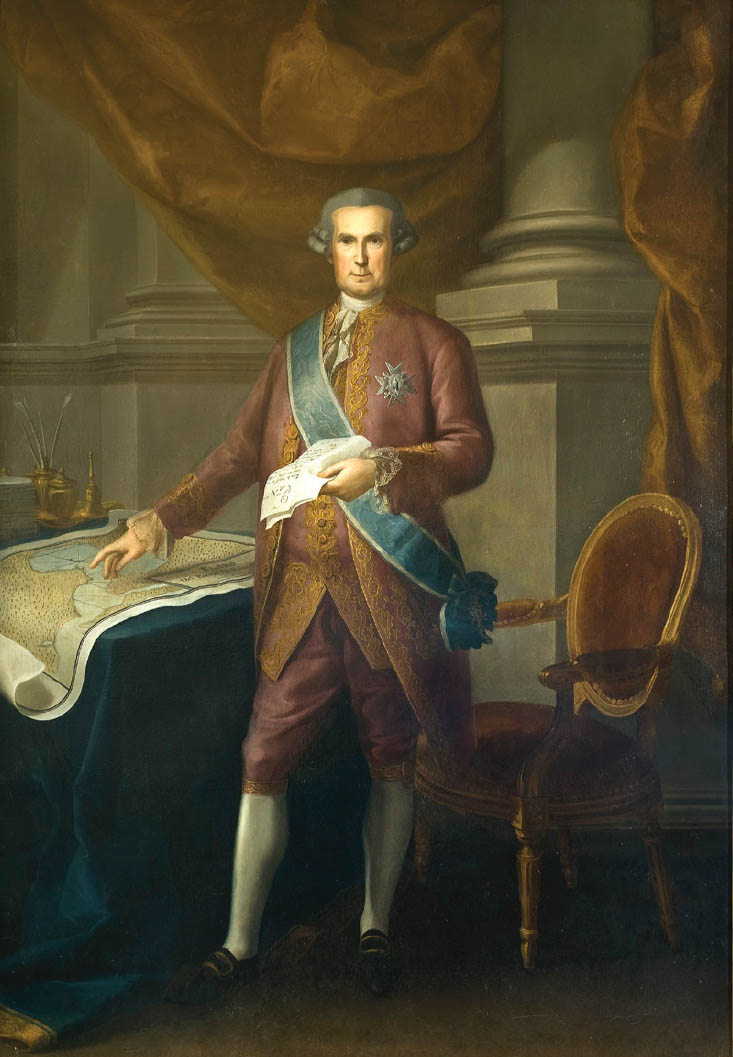
Figure 8.Painting of José de Gálvez, the visitor general of New Spain and later secretary of state for the Indies. Reproduced by permission of the Instituto Nacional de Antropología e Historia.
The Troubles of 1766
On Palm Sunday 1766, an angry crowd congregated in the Puerta del Sol in central Madrid. They proceeded to loot the homes of government ministers, including that of Leopoldo de Gregorio, the Marqués de Esquilache, the Sicilian-born chief minister of Charles III. People were incensed by high food prices, caused by bad harvests and a poorly implemented liberalization of the grain market. They also resented recent urban and cultural reforms in Madrid, notably a ban on wearing long capes and broad-brimmed hats. The next day twenty-five thousand protestors gathered outside the newly completed royal palace to demand, among other things, the ouster of Esquilache. The king’s Walloon Guards charged the crowd, killing several dozen people.36 That night Charles, fearing that the mob could turn on him, fled the palace with his family. He also acceded to the main demands of the protestors: he disbanded the Walloon Guards, revoked the hat and cloak ban, authorized food subsidies, and dismissed Esquilache as his chief minister. The king turned to Pedro de Abarca y Bolea, Conde de Aranda, a tough but well-educated military man from a distinguished Aragonese family, to head the government and restore order.37
New Spain faced its own spate of unrest that same year. In July 1766 thousands of mine workers marched into Guanajuato, demanding that the city council rescind new taxes on maize and tobacco ordered by the visitor general. To avoid violence, the council agreed not to collect the new taxes. There was also unrest in San Luis Potosí and Michoacán. Just like Madrid, people in New Spain were upset by government reforms that disrupted accustomed routines and dug into their pockets. In particular, they were angry with measures implemented by Gálvez, such as forced recruitment into the local militias, stricter enforcement of tribute collection, the end of tax exemptions on maize, and the establishment of new crown monopolies for tobacco and playing cards.38
In August 1766 mine workers rioted at Real del Monte, the most important mining district close to Mexico City. They were protesting local working conditions more than the impositions of the visita. Their main grievance was the decision of their employer Pedro Romero Terreros, perhaps the richest man in New Spain at the time, to cut the partido, the distribution of ore that went to underground mine workers.39 They had already drawn up a petition, with a thousand names attached, which they submitted to the alcalde mayor of the nearby town of Pachuca and sent as well to Viceroy Cruillas in Mexico City. By drafting a petition and addressing authorities, the disgruntled workers were following correct legal procedure. But the alcalde mayor of Pachuca, Miguel Ramón de Coca, a recent arrival from Spain, refused to hear their plea. He even arrested the spokesmen of the workers on the charge of inciting rebellion.
Ilarione da Bergamo, an Italian Capuchin friar collecting alms in the district, reported what happened next:
On August 15, 1766, the day set by the rabble for the total destruction of Real del Monte, many of them gathered in the mine of San Cayetano. There, after some quarrels between them and a mine foreman, they stoned him so that he died a few hours later. When the alcalde mayor of Pachuca, a young man recently arrived from Spain, attempted to bring these people to a halt by drawing his sword, they flung themselves on him with such ferocity and cruelty that they left him there dead, completely crushed by stones. Señor Terreros, having heard about the uprising and the two fatalities that had already occurred, hid in a room where he kept plenty of fodder for his horses, burying himself up to his neck. However much the rebel Indians tried to hunt him down and kill him, they could not find him. It was necessary for the parish priest to lead a procession with the Blessed Sacrament, which I also accompanied, to convey Señor Terreros from his hiding place and guide him to the church.40
Riots were also a common if unwelcome part of the system of righting wrongs. If a plea for justice was ignored by local authorities, people felt entitled to take to the streets to get the government’s attention. Attacking symbols of authority, such as treasury offices and jails, was also part of the ritual. As long as rioters did not go too far, did not for instance question Spanish sovereignty, the government was usually prepared for reconciliation rather than vengeance.41
The riot in Real del Monte certainly got the attention of Mexico City. The mines there were too important to lose to a prolonged work stoppage. Viceroy Cruillas, in one of his last acts before leaving Mexico City, appointed Gamboa as mediator of the conflict. The alcalde del crimen was the obvious man for the job, both an expert in mining law and experienced, after two years as a criminal magistrate, in handling plebeian disturbances.42 He set off for Pachuca immediately, accompanied by a company of Spanish grenadiers. Although he had the authority to order a military attack on the workers, he refrained. Instead Gamboa initiated a legal process by inviting all members of the community, including the rebellious workers, to give sworn testimony before him. The goal was not to punish the rioters but to come to a solution that would restore order and harmony in the district. As he put it, he needed to figure out “the best arrangement of the labor of the mines to serve the interests of the owners and workers in equal measure.”43
The main question for him was whether the partido, the distribution of ore to the workers as a form of compensation, was a custom that should be enforced with the power of law, as the workers argued. Gamboa consulted with many members of the community, including his old mentor Manual Aldaco, who had spent thousands of pesos in a futile attempt to rehabilitate a flooded mine along the Vizcaína vein.44 Aldaco, like all financiers and mine owners, resented the partido but admitted there was no alternative: it was the only way to maintain a stable labor force. Gamboa already knew the utility of the partido. In the Comentarios he had written that no one undertook hazardous mine labor, “for a daily wage, which could be found anywhere, but for the partidos.”45 It more than supplemented the regular wage; it offered humble workers the chance of a small windfall, if the ore they sold to third-party refiners was high in silver content. It also benefitted the owners of small or fledgling mines as it relieved them of much of the cost of paying cash wages.
After just a few weeks, Gamboa concluded his work at Real del Monte. After hearing from all parties to the conflict, he drafted a new labor code for the district, which explicitly recognized the legality of the partido. Mine work should proceed, he said, “with such justice and equity that, without fraud, the owners should receive the first fruit of their mines while the miners receive the moderate gratification of the partido, by virtue of the custom observed in this district.”46 To address the legitimate complaint by owners that workers stole everything they could get their hands on, Gamboa included in the code strict penalties against theft, including corporeal punishment. He also issued arrest warrants for the ringleaders of the August violence but offered amnesty for the rest of the laborers as long as they returned promptly to work. This too was standard procedure in the mediation of riots: leaders were punished, often with exemplary cruelty, but their followers were forgiven. With his commission apparently completed in Pachuca and Real del Monte, Gamboa returned to Mexico City in late September 1766. While he was away, Cruillas had left office and Croix had been sworn in as the new viceroy. Both Croix and Gálvez commended Gamboa for his success in quickly settling the violent dispute in Real del Monte.47
The Puebla Police Scandal
To support the visitor general, Croix turned his attention to public order. He knew from the events in Spain and New Spain in the spring and summer of 1766 that plebeian unrest could easily upend government reform initiatives. Croix was thus determined to crack down on all potential sources of trouble in New Spain, including the vagrants, drunks, and common criminals of the capital. In some of his first letters as viceroy he admonished the Sala de Crimen to do more to prevent crime in the capital. He wanted more of the city’s troublemakers sent to hard labor at the presidios.48 A few months later, Croix would issue a draconian decree against vagrancy: anyone in Mexico City without regular employment would have to find a job within one month or face either obligatory militia service or banishment to the presidios. He blamed the Sala de Crimen and the other judicial authorities for tolerating vagrancy, “one of the dominant vices of this kingdom, and the cause of so many fights and quarrels in gambling houses and pulquerías.”49 A military officer without experience in America, disturbed by the unruliness of Mexico City, as newcomers typically were, Croix seemed to believe that he could simply decree away long-standing social problems.
In September 1766, his first month in office, Croix received an alarming letter from Puebla, the second largest city in the viceroyalty. It accused the captains that the Sala de Crimen had appointed to police the city of rampant corruption. According to the anonymous author, the sala’s captains profited from prostitution, gambling, and bootlegging. The worst of the bunch, Ignacio Soto, reportedly lived in a brothel and hosted raucous gambling parties popular with the dissolute sons of the poblano elite. Soto had also killed a man in custody but had been exonerated, without trial, by the sala. The whistleblower pointed out that Soto and the other eight captains of the sala commanded a force of over sixty lieutenants, who did little more than harass people in the streets. The city lived in fear, the informant claimed, not of common criminals but of the Sala de Crimen’s police force.50
Croix asked the top Spanish officials in Puebla, its bishop, Francisco Fabián y Fuero, and the head of its military garrison, Francisco Fernando Palacios, for advice. They corroborated the allegations and added new details. Fabián y Fuero, most famous for his campaign to impose discipline in the city’s convents, agreed that the Sala de Crimen’s men were more inclined to commit than fight crime. He named two other corrupt captains, Manuel Pacheco, the excommunicated owner of a pulqueria, who was neck-deep in gambling and prostitution, and Juan José Leal, who had killed a young man seized unlawfully on church property. The bishop found the police’s involvement in gambling particularly disturbing, perhaps because it was a vice that tended to undermine the honor of elite families.51 For Palacios, the military commander, the bigger concern was the illegal liquor trade, which affected military discipline. Palacios told Croix, “I believe that if your Excellency rids this city of all the commissioners of the Sala de Crimen and their dependents you would do a great service to God and the King, to this community, and even to the Royal Audiencia itself, whose reputation suffers for its tolerance of such men.”52 Both the bishop and the general had the same recommendation for the viceroy: disband the sala’s police force and invite the Tribunal of the Acordada to take over policing in the city.
Croix then turned to the Sala de Crimen. By what right did it appoint police captains not only in Puebla but throughout New Spain when laws contained in the Recopilación de las leyes de Indias clearly limited its first-instance jurisdiction to Mexico City?53 Gamboa, recently returned from Real del Monte, answered for his colleagues on the bench.54 The court’s authority over the police in Puebla rested, he said, on “practice, custom and use, rooted by the force of the superior authority of the Tribunal, supported by the Laws, for the exercise and handling of the entire universe of criminal actions.”55 In other words, the court’s jurisdiction was based on custom, not statute. The practice originated in the early seventeenth century when the sala first named captains to fight rural bandits. At the time, no other institution in New Spain could handle this necessary job. When the Santa Hermandad, comprised of volunteer companies that patrolled rural areas in Spain, was set up in New Spain later in the seventeenth century, it also fell under the jurisdiction of the sala. In fact, according to Gamboa, for almost 150 years no superior authority had questioned the sala’s right to appoint men outside of Mexico City. Indeed, as recently as 1740 the viceroy had expressly endorsed the power. The five-league jurisdictional limit, Gamboa claimed, applied only to adjudication. Alcaldes del crimen could not hear cases in first instance arising outside of Mexico City since these fell to local justices.56
In the Comentarios, Gamboa had analyzed a similar situation. Even though written law prohibited the audiencias from hear mining cases, they did so anyways since no other institution could do it. The crown had never established the separate mining tribunal contemplated in the 1584 ordinances. Gamboa wrote that the audiencias’ assumption of jurisdiction beyond the scope of royal law was not only necessary but desirable. It saved money and guaranteed miners the right of appeal to authoritative royal courts.57 The Sala de Crimen’s authority over the police was analogous: it too rested on well-founded custom that might conflict with statute but nevertheless served the greater cause of justice. Gamboa could have cited here both Jerónimo Castillo de Bobadilla’s Política para corregidores (1597) and Juan de Hevía Bolaños’s Curia philipica (1603), two authoritative law books that advised officials always to respect local custom, even if it contradicted written law.58
Gamboa concluded the Sala de Crimen’s letter to the viceroy by challenging the allegation of widespread misconduct among the police of Puebla. Sure there were some bad apples, as occurred with any group of men, but the majority, he asserted, fulfilled their duties honorably. Since the sala’s jurisdiction over them was founded on unimpeachable custom, the viceroy should defer to the court. It would discipline any men found guilty of abuse, but only after a proper investigation and legal process. The wild claims of an anonymous letter writer had to be substantiated with evidence before final action could be taken.
Croix also asked his official legal advisor, Diego de Cornide, for an opinion.59 A Spanish lawyer new to Mexico City, Cornide’s advice to the viceroy reflected the thinking of Bourbon reformers, not that of jurists familiar with colonial legal culture.60 First, he read the provisions in the Recopilación de las leyes de Indias narrowly; they clearly barred the magistrates of the sala not just from adjudicating cases beyond a five-league radius but from appointing police officials as well. There was no need then to consider Gamboa’s argument about custom; royal law on the matter was clear and should prevail. This insistence on the supremacy of state legislation echoed what several reformist jurists in Spain were writing at the time. In 1765, Juan Francisco de Castro, an audiencia magistrate in Galicia, argued in his Discursos críticos sobre las leyes y sus interpretes that lawyers and judges should decide cases solely on the basis of legislation, not on Roman law or unwritten custom.61 In fact, he wrote, “it would serve the public peace to eradicate completely all custom that derogates from the law.”62 The main problem with custom, according to Castro, was that it was inherently vague. It was impossible to determine with certainty when it arose or how much community support it enjoyed. For him and other legal rationalists of the time, certainty was a higher value in the legal order than flexibility and royal legislation was its best guarantee.63
Cornide’s opinion also nodded in the direction of the long-standing Bourbon desire to standardize administration throughout the empire. In 1713 Philip V, the first of the Spanish Bourbons, abolished the separate legal regime of the kingdom of Aragon to extend the reach of Castilian law and institutions. Then in the second half of the eighteenth century, the crown pushed for greater uniformity in regional government through the implementation of the French-style intendancy system. This was one of Gálvez’s main directives for New Spain, the replacement of alcaldes mayores with a new class of officials, the intendants, who would report directly back to Madrid. Consistent with this preference for standardization based on Castilian norms, Cornide wondered why the Real Audiencia of Mexico, through its Sala de Crimen, exercised powers unknown to the Chancelleries of Valladolid and Granada, the highest courts of royal justice in Spain. They did not appoint police captains outside of their home cities; why should the Sala de Crimen? Solórzano had an answer for this in Política Indiana. The magistrates of the audiencias in America exercised more powers than their counterparts in Spain because they were much farther from the king, the ultimate font of justice. To prevent delays that could cause injustice to the American vassals of the king, audiencia magistrates needed additional powers.64 In addition, Solórzano had recognized that the government of the Indies could not be squeezed into a peninsular mold.65 Reformers in the eighteenth century, however, did not share Solórzano’s equanimity with local variations.
In late November 1766, Croix, after consulting with Gálvez, who had final say in New Spain, announced his decision. All police serving the Sala de Crimen outside of Mexico City would immediately be stripped of their commissions. He invited the Acordada to assume the responsibility for patrolling New Spain’s cities. This force, authorized to ignore formal proceedings and operating independent of outside judicial supervision, would become, in effect, Mexico’s first national police force.
The Tribunal of the Acordada
The Acordada was created in the early 1700s to combat an outbreak of banditry in rural New Spain.66 The Santa Hermandad, the volunteer companies of horsemen who patrolled the roads, could not cope with the problem; its captains complained that their hands were tied by their obligation to report to the Sala de Crimen before punishing miscreants. In the early 1710s, Viceroy Linares gave Miguel Velázquez Lorea, the Hermandad captain in Querétaro, free rein. He could pursue bandits anywhere in New Spain and act on his own initiative. There were certainly precedents for this in Spanish law. The medieval Las Siete Partidas basically authorized vigilante justice against bandits, stating that individuals who killed “any robber who publicly frequents the highways . . . shall not be liable for punishment.” 67 The prescribed penalty in Las Siete Partidas for bandits and livestock rustlers was death.68
The Real Audiencia of Mexico, much to its later regret, consented to this derogation of its authority, evidently believing it would be temporary, until Velázquez managed to restore security to the roads of New Spain. In 1722, the crown endorsed the agreement between the viceroy and the audiencia that gave Velázquez his extraordinary powers. This accord provided the legal foundation and the name for what thereafter was known as the Tribunal of the Acordada. This was a peculiar institution. It operated outside ordinary jurisdiction, completely exempt from the authority of the audiencias. Audiencia magistrates could not hear appeals of its sentences or even inspect its jails, the basic mechanism by which the courts ensured that people were not held arbitrarily without legal charge. The Acordada had the freedom to practice summary methods of law enforcement. In addition, the first judge of the Acordada, Miguel Velázquez, exercised propriety control over the new tribunal. He could choose his own regional commanders and even select his successor. The merchants of the consulado, early cheerleaders of the Acordada because of their interest in keeping the roads safe for commerce, provided an annual sum to fund its operations.69
Velázquez and then his son and successor José Velázquez did manage to turn back the tide of banditry. Free to disregard the formal procedures observed by the Sala de Crimen, members of the Acordada acted decisively against suspected criminals. They frequently garroted apprehended bandits on the spot and then displayed severed body parts in public. The head of the gang leader who had tormented Celaya was stuck on a pole in the town’s main square.70 José Velázquez, who succeeded his father Miguel in 1732, became known in the next twenty years as the “general terror of the whole kingdom.”71 In a three-year span in the 1740s, when capital punishment was declining in Mexico City, the Acordada executed fifty-five prisoners.72 According to the admiring Viceroy Revillagigedo, the younger Velázquez “managed with inflexible justice, tenacity, and integrity to exterminate execrable crimes, condemned to death or presidios innumerable criminals, for which his commission has earned all the protection of my predecessors.”73
In the late 1740s and early 1750s, with the support of Revillagigedo, the Acordada began to expand its operations. In 1747, the viceroy assigned it control over the Guarda Mayor de Caminos, a separate security branch that operated fixed garrisons with salaried troops along the major roads of New Spain. In 1749 Revillagigedo wanted to give it responsibility for prosecuting prohibited liquor offences but Velázquez refused, claiming his men were too busy chasing down bandits.74 In the early 1750s Revillagigedo invited the Acordada to patrol the streets of Mexico City, a decision that outraged the Sala de Crimen.75 The viceroy dismissed the complaints of the magistrates and praised Velázquez, whose “energy, diligence and zeal have filled delinquents with terror, which the alcaldes, for all their position and power, have not achieved.”76 When José Velázquez died of illness in 1756, command of the Acordada passed to one of his trusted lieutenants, Jacinto Martínez de la Concha, since his own son was too young to take over.77
The decision to extend the jurisdiction of the Acordada to all of New Spain posed an existential threat to the Sala de Crimen. In a letter to the Council of the Indies, Gamboa, again writing on behalf of the court, complained that Croix, lacking knowledge and experience, had acted contrary to both law and custom.78 The viceroy had no legal power to create or expand exemptions to the ordinary jurisdiction, as his decision to expand the Acordada effectively did. Only the king had such authority. Furthermore, by dismissing the sala’s police on the basis of an anonymous letter, the viceroy had ignored basic procedures of justice. As for Soto, whom Croix charged with murder, Gamboa pointed out that the sala had already absolved him on the basis of self-defense. If that was not enough, Soto was eligible for the royal pardon issued in 1762. Gamboa demanded that the Council of the Indies reverse Croix’s decision and reaffirm the sala’s jurisdiction over the police outside of Mexico City. In return, the sala would undertake to discipline any captains found culpable of misconduct.
Gamboa also wrote—in far from deferential tones—to Croix himself. He accused the viceroy of acting “unilaterally, without consultations, against the Laws, with their effects not corresponding to their purposes but rather with unavoidable and manifest harm to the vassals” of New Spain.79 He warned that expanding the powers of the Acordada would threaten the well-being of ordinary novohispanos. With unlimited authority to take action against every class of criminal offense in the viceroyalty, the men of the Acordada “would live without restraint, harassing and destroying the vassals of His Majesty without recognizing another superior in the midst of these distances than the Judge of the Acordada, with scorn for the Audiencias, Governors, and Judges, against the Laws, practice and style always observed and the determinations of this government.”
The Council of the Indies, despite the recommendation of its crown attorney in support of Gamboa’s plea, refused to reverse Croix’s decree.80 Indeed, in a royal cédula dated December 16, 1767, the council endorsed it. And it is not hard to see why. The Sala de Crimen, if we accept the evidence at hand, had abjectly failed to supervise its commissioned captains. It had appointed men of dubious moral quality and ignored their corrupt behavior. The Acordada, on the other hand, was fast, effective, and cheap. Why not give it a chance to impose order in the cities as it had in the countryside?
The expansion of the Acordada was admittedly not part of the instructions Gálvez carried with him from Spain. The measure nevertheless enjoyed his full support since it served the essential purposes of his reform mission. First, the move reinforced executive authority at the expense of the judiciary, which was much more likely to resist than welcome structural reforms. Secondly, the decision affirmed the sanctity of royal legislation over contrary local custom. How else would the crown restore order in America if not by insisting that vassals obey the written law? And thirdly, shifting responsibility to the Acordada saved the government money. Without the obligation to hold formal proceedings, the tribunal was much cheaper to operate than the Sala de Crimen. Funds were needed for military purposes, not formal trials for New Spain’s troublemakers.
It did not take long, however, for the problems forecasted by Gamboa to emerge. Bishop Fabían y Fuero of Puebla, who had welcomed the arrival of the Acordada in 1766, complained two years later that their jail in the city was full of prisoners held without charge.81 Without any court personnel and the habit of proceeding summarily, the Acordada was depositing people in the jail without even recording their names or offenses. The Sala de Crimen told Croix the same thing was happening in Oaxaca, which the Acordada took over in 1767.82 In Mexico City, Croix’s decision to deploy regular troops to police the streets led to similar problems, as the city’s jails filled up with prisoners whose guilt or innocence could not be ascertained since no one had bothered to collect evidence against them.83
As the Acordada became the busiest agency of criminal law in New Spain, it stuck to its old ways.84 While it did adopt a code of formal procedures in 1776, the new rules were “too refined for an organization like the Acordada,” in the words of historian Colin MacLachlan.85 By the late 1780s, it employed almost 2,500 men throughout the viceroyalty, handling four times as many cases as the Sala de Crimen. From 1782 to 1808 the Acordada handled over forty thousand cases, sentencing 246 people to death and over 10,000 people to terms of labor at presidios.86 In the late 1780s, after decades of complaints by the audiencia, the crown did authorize a panel to review Acordada death sentences. It consisted of an independent lawyer, the viceroy’s legal advisor, and a member of the Sala de Crimen. But this panel lacked teeth and rarely reversed an Acordada decision.87 In the late eighteenth century a sign hung above the door of the Acordada’s jail in Mexico City that proudly advertised its approach to law and order: “Passerby, be wary of this place / And see that you avoid entering / Since once its hard door closes / It will only open again for your execution.”88
Punishment by Presidio
The Sala de Crimen lost jurisdiction over the police outside of the capital in November 1766. A few months later, in May 1767, it lost a principal source of funding. Under pressure from Madrid to contribute more manpower to the refurbishment of coastal fortifications, Croix, again with the enthusiastic backing of Gálvez, ordered that all courts in New Spain, including the Sala de Crimen and the Acordada, send convicted prisoners to the presidios in Veracruz, Havana, and Manila.89 The prisoners would supplement the black slaves and free laborers engaged in construction work and even serve as auxiliaries in the event of enemy attack. Mandating presidio labor as punishment would obviate the collera, the practice of selling convict labor to owners of obrajes and other private employers, by which both the sala and Acordada made money. Rather than question the inherent abusiveness of a system that consigned convicts to a form of slavery, Bourbon reformers considered the collera an illegitimate subsidy that helped American textile manufacturers compete against Spanish imports.90 The viceroy agreed to compensate the Acordada for its loss of collera income by assigning it a share of pulque revenue. But for the Sala de Crimen, far more dependent on the income since it employed a much larger staff, Croix did nothing.
Gamboa and his colleagues on the bench fired off a fifty-seven-page letter to Madrid protesting the viceroy’s move.91 Gamboa, again the lead author, began by arguing that the viceroy had no right to interfere in such basic judicial matters as the sentencing of criminals. This was a matter solely for the courts to decide. Croix could certainly request that the sala send more convicts to the presidios, as previous viceroys had done, but he had no legal power to compel it. Gamboa also invoked, as he had done in liberating prisoners from Mexico City’s bakeries in February 1765, the Spanish crown’s duty to care for the Native population. “Sentencing an Indian to a presidio would indeed punish his offence,” he wrote, “but it would also gradually consume his race and impede its reproduction, very important matters since without the Indians, there would be no Indies, no Agriculture, no Mines, no Irrigation, no work of any sort.” 92 The law had always been clear on this point: Natives should not be subject to either banishment or presidio labor. It was considered too harsh for them and would separate them from their families and fields.93
The best way to punish wayward Indians, according to Gamboa, was to sentence them to labor at private workplaces. Two years earlier he had criticized the collera when he liberated Natives held in inhumane conditions in Mexico City’s bakeries; now he argued in favor of it. He could at least pretend that his 1765 intervention had improved conditions in the obrajes and the like. But if the reason for freeing Indians in 1765 was to protect the audiencia’s jurisdiction from the possibility of a bakers guild, the reason to defend the practice in 1767 was to protect the audiencia’s income. Without the money from the collera, the Sala de Crimen would not be able to pay the salaries of the auxiliary staff it needed to carry out formal proceedings.
In practice, the presidio decree was not as draconian as it first appeared. Many convicts, including the indigenous, were sent to urban work crews close to home rather than to the coastal fortifications. In addition, some obraje owners contracted secretly with the Sala de Crimen for convict labor even after it was outlawed.94 But the financial impact on the sala was real. Over the next few years, the court complained repeatedly of its financial distress. In December 1767 the court told Croix that the abolition of the collera had wiped out “the funds that the Sala had used for the administration of Justice and the processing of cases.”95 In July 1768 the magistrates claimed they lacked the money to buy paper.96 In March 1769 they reported they owed their staff over 15,000 pesos in back pay. The pharmacist who treated sick prisoners in the Sala de Crimen’s jail resigned after not being paid for two years. This departure may have exacerbated the effects of an epidemic that hit the sala’s jail in early 1769.97 With underpaid employees, delays in the sala’s business undoubtedly increased, as did the temptation to accept under-the-table payments.98
Expulsions from New Spain
On June 25, 1767, top crown officials, backed by companies of Spanish soldiers, fanned out across Mexico City to enforce the royal order of Charles III to round up and expel the Jesuits. They had already been forced to leave Spain. The crown was acting on the recommendation of Pedro Rodríguez de Campomanes, crown attorney of the Council of Castile, who accused the Jesuits of instigating the Easter Riots of 1766 in Madrid. He provided no concrete evidence of their guilt, just the usual litany of Jesuit sins in the eyes of regalists.99 According to Campomanes, the order disregarded secular laws, refused to pay taxes on the profits of their numerous properties, and taught suspect theology and philosophy in their extensive network of schools.100 They thus made convenient scapegoats for the troubles of 1766. Charles had been wary of the Jesuits since his years in Naples under the tutelage of Bernardo Tanucci, an Italian jurist and harsh critic of the order. The basic problem, which the monarchies of Portugal and France had already recognized, was that the Society of Jesus was simply too powerful for monarchies, no matter their adherence to Catholicism, that were determined to expand their authority.101
In New Spain, Visitor General Gálvez and Viceroy Croix oversaw the expulsion. They sent Jacinto Martínez de la Concha, the head of the Acordada, to enforce the order at the Colegio de San Ildefonso, the Jesuits’ most important college in New Spain. Gamboa was ordered to accompany the Acordada boss and read out the royal order before the assembled priests.102 This was a cruel assignment for the proud alumnus of San Ildefonso. Gamboa reportedly broke down before he could finish reciting the order.103 Once the Jesuits abandoned their magnificent college, built at enormous expense in the 1730s, Croix turned it into an army barracks. Its library, the best in New Spain, was scattered and lost.104 The ouster of the Society of Jesus decimated higher education in New Spain, forcing the closure of twenty-six schools and twelve seminaries. The almost seven hundred Jesuit priests and novices forced to leave, the vast majority born in America, included twenty-five professors of theology, twenty-four of philosophy, and forty of Latin.105 Dozens of Jesuits died even before they disembarked from Veracruz in October 1767, headed for an uncertain exile in Italy.106
In the Bajío, the expulsion of the Jesuits gave many discontented groups—Natives, mulattoes, and mestizo mine workers—another reason to rise up against the government. To be sure, the Jesuits themselves did nothing to whip up support. They accepted their fate with resignation. One hot spot of unrest was Guanajuato, where mine workers had already marched against higher taxes in the summer of 1766. Another was Michoacán, where mulattoes had rioted in Pátzcuaro and Valladolid in September 1766 on account of the intensified collection of tribute. A third was San Luis Potosí, where measures to enforce labor discipline at mines, including a prohibition on firearms, had riled up the lower class. Local militias led by landowners and mining entrepreneurs quickly suppressed these plebeian uprisings. Then Gálvez arrived on the scene, escorted by six hundred regular Spanish soldiers. In stark contrast to how Gamboa handled the August 1766 revolt at Real del Monte, Gálvez did not seek to reconcile the protestors. Instead, he held summary trials that condemned eighty-five people to death and dozens more to the whipping post or forced labor at the presidios. He ordered the demolition of the homes of rebel leaders and their farms sown with salt. Even their wives and children were banished.107 According to historian William Taylor, Gálvez’s harsh response “amounted to punishment for the sake of punishment as the unbending response of a leading peninsular reformer who had little understanding of the delicate divide-and-rule policies that had governed the Mexican countryside for two centuries.”108
Meanwhile, in Mexico City the move against the Jesuits further upset local elites already fed up with the visita. By July 1767 anonymous pro-Jesuit and anti-government pasquinades circulated in the city, ridiculing Gálvez, Croix, and members of their entourage.109 Croix then issued another one of his decrees, this time imposing “perpetual and absolute silence” on any discussion of the Jesuit expulsion, “whether in favor of it or not.”110 Anyone caught writing or distributing pro-Jesuit propaganda would be considered an enemy of the state.111 In August the German-born chaplain of the visita, Adolfo Falembock, reported to Croix and Lorenzana a rumor that creoles from New Spain and Peru, together with agents of a foreign power, presumably Britain, were conspiring against Spanish rule.112 This prompted the viceroy and bishop to gather names of civil and ecclesiastical officials considered hostile to the government. Gamboa, along with his fellow alcalde del crimen Diego Antonio Fernández de Madrid and crown attorney Juan Antonio de Velarde, appeared on the list.
Gamboa had been in the bad books of the viceroy and visitor general at least since November 1766. He had offended the viceroy with the harsh tone of his letters protesting the extension of the Acordada and the abolition of the collera in favor of presidio labor.113 He also had been overheard criticizing Gálvez and his visita. Croix had already reported to Madrid that Gamboa and Velarde were “inseparable companions in official occasions, meetings, and evening strolls,” and welcomed into their circle all those opposed to the visita.114 Gamboa even had the gall, Croix reported to Julián Arriaga, the aged minister of the Indies, to have accused Gálvez of hosting illegal gambling parties in his house. He made these charges, Croix said, “with such vivid descriptions that I assure Your Excellency that he almost persuaded me that it was true.”115 Circumstantial evidence also linked Gamboa to anti-government writings. A scribe working for Gamboa, Tiburcio Martínez, testified under oath to Lorenzana that in the house of Antonio López Portillo, a pro-Jesuit diocesan priest, he had read part of a libelous manuscript, Crisis Divertida.116 Croix also suspected that Gamboa, with the aid of Velarde, had written a satirical piece against Gálvez.117 Indeed, even before the viceroy had sent his list of anti-government officials to Madrid at the end of 1767, Croix had asked the crown to reprimand Gamboa and Velarde for the “hostility with which they seem to look upon the present government of New Spain and for the damage caused by their criticisms, attacks, and conversations, rash and offensive to the decorum and subordination owed to authority and capable of producing disturbances.”118
Gamboa was mortified to receive a letter of censure from the crown before the whole audiencia on February 5, 1768. He immediately wrote to Madrid to defend himself.119 He highlighted his accomplishments as an alcalde del crimen, claiming to have had no time for anti-government conspiracies. He cited his work suppressing two street fights in Mexico City in January 1766 and his resolution of the August 1766 labor conflict at Real del Monte. He reminded Arriaga, the minister of the Indies, whom he knew from his days in Madrid, of the success of the Comentarios a las Ordenanzas de Minas, which had been “accepted in all the mining districts and tribunals as useful and beneficial, not only for the miners themselves but also for the Royal Hacienda.” Despite appearances to the contrary, Gamboa insisted he enjoyed a good relationship with Croix, regularly visiting him in his private quarters to discuss government business. Any doubts about his loyalty to the government must have come from the “shadow of envy and resentment that always accompanied alcaldes in the court.” Solórzano, who counseled against visitas, had warned in Política Indiana that they inevitably threw dirt on innocent officials, “who, trusting in the security that their good consciences give them of their conduct, do not take any measures to counter what bad- intentioned people say during visitas.”120 Gamboa had a clear conscience. He knew that his harshly worded representations on behalf of the Sala de Crimen had angered Croix, but they had been written, he told Arriaga, “consistent with my duty and ministry . . . in fulfillment of the responsibility with which the king entrusted me.”121
By the time Gamboa was writing to the minister of the Indies to defend himself, the two crown attorneys of the Council of Castile, Campomanes and José Moñino, were already meeting to decide his fate. It was a sign of how seriously the crown took the threat from New Spain that the more senior Council of Castile took responsibility rather than the Council of the Indies, which properly held jurisdiction. In March 1768, Campomanes and Moñino released their report. It made several recommendations, starting with the immediate dispatch of troops to New Spain. The crown attorneys also recommended that the authorities remove from New Spain as soon as possible any officeholder considered hostile to the government. Although they did not mention Gamboa by name, they did note that audiencia magistrates were “the most pernicious for the authority they hold in their hands and the obstacles they can put before the orders of the Viceroy.”122
Campomanes and Moñino did, however, acknowledge the legitimacy of creole grievances.123 “How can they love a Government that they blame for mainly trying to extract from there profits and taxes, and which does nothing to promote love for the Nation; and when everyone who goes there from here has no other purpose than to enrich himself at their expense?”124 But with the exception of a moratorium on new taxes, they proposed nothing that directly assuaged Americans. Rather, Campomanes and Moñino took the opportunity to advocate once again for the abolition of the Cadiz trade monopoly, hardly at the top of the list of creole complaints.125 They also suggested that Americans complaining about Spaniards crowding them out of jobs in New Spain should seek employment in Spain. They could attend Spanish universities, serve in the military, and even represent their regions on royal councils. Americans in Spain would then act like “hostages in order to keep those countries under the gentle dominion of His Majesty.” Although they admitted their plan to encourage Americans to come to Spain needed further study, it was in fact wholly impractical from the start. Spaniards went to America because they lacked opportunities at home; how could Americans compete for scarce positions in Spain? In addition, the high cost of transatlantic travel meant that even viceroys arrived in America in debt; how could young Americans afford the journey in the opposite direction?
A few years later, as Gálvez’s visita was drawing to a close, the city council of Mexico City sent a famous representation to the crown on the plight of Spanish Americans. The 1771 report claimed it was a great injustice to deny locals the opportunity to fill offices in their own countries. It would lead, the council predicted, “not only to the loss of this America but to the ruin of the monarchy.”126 One of the most important reasons for the crown to trust Spanish Americans was that they understood the unique legal culture of the Indies. In contrast, the typical Spanish office holder in America
comes to govern societies he does not know, to administer laws he has not studied, to immerse himself in customs he has not experienced, to deal with peoples he has never seen, and look for answers to the equally inexpert family that usually surrounds him. He comes full of the maxims of Europe unsuited for these places.127
Here was the crux of the case against the Bourbon reform effort spearheaded by Gálvez. America was indeed different than Spain, and only people who took the time to understand its customs and institutions could govern it in a just manner. One American named in the city council’s representation as an exemplary royal official was Gamboa.128
Gamboa was no longer in good standing with the crown when the Mexico City council praised him in its letter defending creole officeholders. The crown had issued orders for the removal of Gamboa and the other suspect officials in March 1768. The operation, however, was bungled in Mexico City as news leaked before the orders could be delivered. Fearing a public scandal with the destitution of audiencia magistrates, Croix and Lorenzana held off and asked for further instruction from Madrid.129 Campomanes and Moñino still believed it was necessary to remove Gamboa, Velarde, and Fernández de Madrid from Mexico City but suggested it could be presented not as punishment but as invitations to serve the king in Spain. “These three ministers,” the crown attorneys wrote, “should not suffer any prejudice in their placement in Spain in equivalent positions, especially the first two [Gamboa and Velarde] who are disposed to serve.”130 Fernández de Madrid, whose health was bad, was allowed to retire. The crown issued new orders on January 29, 1769. Gamboa received what he had long been dreading on August 7, 1769, a summons to report for duty in Spain in a yet to be determined position.
Despite the benign wording of the invitation, Gamboa knew he was being punished for his criticism of Croix and Gálvez.131 He informed Madrid that he was “blindly and humbly resigned to comply with the sovereign will of the king, even in the midst of the great difficulties of his family.”132 The poor health of his wife and daughters prevented them from accompanying him, even if the crown had provided the necessary funds. To pay for his own travel and provide for his family, Gamboa sold his most valuable possessions, including “the best editions from one of the most complete libraries in Mexico, built over many years from my sweat.”133 Gamboa also transferred to his merchant friend Ambrosio de Meave his stake in a trading company.134 In late November 1769, exactly five years after returning home in triumph, the first local lawyer appointed directly to the Real Audiencia of Mexico in decades, Gamboa was heading back to Spain under a black cloud. He and his teenage son Juan José boarded the El Aquiles in Veracruz.135 In Havana they transferred to the Santisima Trinidad, bound for northern Spain.136
Gamboa paid a very heavy price for doing what audiencia magistrates had always done: vigorously defend the jurisdiction of the court. Writing harsh letters to the Council of the Indies or the minister of the Indies accusing viceroys of acting contrary to law and custom was simply part of the job. This was the way the governing system of America operated to check abuses of power and maintain balance between institutions. Speaking up frankly against government policies would normally have been tolerated in an audiencia magistrate, who enjoyed the benefit of the court’s independence. But the mid-1760s was an extraordinary time in New Spain. Under Visitor General Gálvez, assisted by the deferential Croix, the Spanish crown was attempting radical reform, based on the assumption that the old system was decripit. Locals had too much power and autonomy, protected by cherished customs that made a mockery of royal legislation. The centerpiece of the restructuring of colonial government was the intendancy system, the plan for which Gálvez unveiled in 1768. How could the crown implement this new, more direct form of government if powerful audiencia magistrates continued to put up roadblocks at every turn? Punishing Gamboa, a smart and well-connected American jurist with decades of experience in legal combat in New Spain, would send the message the crown meant business in New Spain.