
4
WAVE 1: THE CHEF DIASPORA
It was as if Waters were running a graduate school. Many chefs left Chez Panisse to start their own restaurants or auxiliary services. Mark Miller left to create the Fourth Street Grill, the Santa Fe Bar and Grill, and eventually Coyote Cafe. The year 1984 saw a sudden migration. Steve and Susan Sullivan left to open Acme bakery. Joyce Goldstein created Square One. Jeremiah Tower founded Stars. Dan Barber created the Blue Hill restaurant in Greenwich Village in 2000 and Blue Hill at Stone Barns in 2004. (My wife and I went for dinner at the latter. The room was crowded with waiters moving so expertly and effortlessly, I felt we had somehow ended up at the ballet.) The list is large: Suzanne Goin, Michael Tusk, April Bloomfield, Jonathan Waxman, Deborah Madison, and Dianne Dexter.
It would be wrong to think of these people as mere disciples, traveling like Thomas to spread the gospel in India. The Chez Panisse idea was still forming, still being crafted out of the experience of people on both sides of the house and, increasingly, across the country. Chez Panisse the restaurant would remain in Berkeley. Chez Panisse the idea would prove protein everywhere it ended up.
Chefs taught well and intimately. If you were a regular at a restaurant and if the house believed you grasped the experiment in play, you and your companion could hope for a visit from Chef. In the old days, this was a bit of flattery. An amuse-bouche to begin the meal, a small courtesy to end it. But the visit from a Chez Panisse graduate was more likely to include a discussion of the meal and the movement. This made the status compass spin in the other direction. In the old days a visit from Chef said, Look, everyone, the chef knows me. Nowadays it says, Look, everyone, I know the chef. Guests were touched by greatness, by knowledge, and, hopefully, not by Mario Batali.1
WAVE 2: SOME KEY COOKBOOKS
Cookbooks are a brilliant way for new ideas to find their way into the world. Here are some of the books that helped communicate the artisan message.
· Alice Waters et al. 1982. Chez Panisse Menu Cookbook. New York: Random House, 1982.
· Diane Rossen Worthington. 1983. The Cuisine of California. Los Angeles: Jeremy P. Tarcher.
· Jeremiah Tower. 1986. New American Classics. New York: Harper and Row.
· Norman Van Aken. 1988. Norman Van Aken’s Feast of of Sunlight: The Sumptuous Cuisine of Key West’s Master Chef. New York: Ballantine Books.
· Alice Waters and Paul Bertolli. 1988. Chez Panisse Cooking. New York: Random House.
· Mark Miller. 1989. Coyote Cafe. Berkeley, CA: Ten Speed Press.
· Ruth Reichl. 1998. Tender at the Bone: Growing Up at the Table. New York: Random House.
· Thomas Keller. 1998. The French Laundry Cookbook. New York: Artisan Books.
· Jeremiah Tower. 2002. Jeremiah Tower Cooks. New York: Stewart, Tabori & Chang.
· Michael Pollan. 2006. The Omnivore’s Dilemma: A Natural History of Four Meals. New York: Penguin.
· Carlo Petrini. 2007. Slow Food Nation. With a foreword by Alice Waters. Translated by Clara Furlan and Jonathan Hunt. New York: Rizzoli Ex Libris.
· Alice Waters. 2010. In the Green Kitchen: Techniques to Learn by Heart. New York: Clarkson Potter.
WAVE 3: FIRST RESTAURANTS, THEN NEIGHBORHOODS, CITIES, AND ECOSYSTEMS
The first outposts of empire were the restaurants created by the outgoing chefs. Mark Miller’s Coyote Cafe in Santa Fe was a seventeen-hour drive from Berkeley. Nashville and Pittsburgh, newly ordained as gastronomic destinations, were farther still.2 In the early days, these were lonely places: tiny local radio stations, adored by their fans, but surrounded by Denny’s restaurants, A&W outlets, and other acts of unforgiving skepticism.
Happily, like attracts like. If you bake it, they will come. Eventually, entire neighborhoods sprang up. Brooklyn was the first one that caught my attention. A friend observed that people there looked to him like survivors of the American Civil War and I thought what all anthropologists think in a situation like this: A style of clothing might signal a style of life! I went to look. Sure enough, Brooklyn was on a mission.
The experiment grew and grew. The Civil War metaphor got more and more apt. Brooklyn was a veritable munitions factory, lobbing brand after brand across the East River into Manhattan: Mast Brothers chocolate, Grady’s Cold Brew, Brooklyn Brine Co., Kings County Jerky, Brooklyn Salsa Company. These started showing up on bodega shelves and then in bigger stores. They were little, earnest, experimental. Adoption would take a while. But the effect was remarkable. The inhabitants of Manhattan could hear something stirring.3
Innovation in Brooklyn was relentless. The old Pfizer pharmaceutical factory, closed in 2008, became a warren of artisanal innovation.4 It had been purchased for this purpose by Acumen Capital Partners. For a building this size (a gigantic 660,000 square feet), it didn’t cost much, a mere $26 million. But when capitalists invest, we know a movement is in motion. Brooklyn was becoming a parallel Manhattan, an answer to the question: What if New York City scaled down and scaled back?5
Eventually, entire towns were colonized by the movement. Boulder for instance. We only have to walk the streets there for a couple of hours to begin to feel like, Yes, this is the way the world should feel. We are surrounded by people who grasp the artisanal thing. And that’s the moment the movement goes from ideal to idea to reality. Right, we say to ourselves, it’s a thing. Soon after, Right, it’s the thing. Eventually, we stop thinking about it altogether. We have a new assumption. It’s only when we go home for Thanksgiving to a Butterball turkey, canned cranberry sauce, and green bean casserole, that we go, “Oh, right. America.”6
Restaurants, neighborhoods, and cities together form an ecosystem. Take the case of the Loray Mill building in Gastonia, North Carolina. The mill was founded in 1902 and it grew to become, at six hundred thousand feet, the largest textile operation in the world. The mill lost its last tenant shortly after World War II. You can imagine the building as Joe Lenihan found it a decade ago: cavernous, decayed, and surrounded by a town in the clutches of a serious case of urban blight.
Lenihan rebuilt the place, filling that immense space with condos, a coworking space, an events space, a museum, a retail space, a place for farmer’s markets, an incubator, an athletic club, and a place for artists and artisans. And with this, the town is beginning to come back. Perhaps the most compelling proof: Gastonia just built a new minor-league baseball field.7
WAVE 4: FOODIES
We have the diaspora of chefs. We have cookbooks. We have restaurants, neighborhoods, cities, and ecosystems. And, eventually, we have freestanding individuals to carry the flag. We call them foodies.8
Those conversations with Chef have an effect. The patron takes the gospel home. Buys a cookbook. Visits Brooklyn and maybe Boulder. Knowledge grows. Standards rise. The idea is now truly distributed, with thousands upon thousands of enthusiasts turned sometimes activists.
What are people talking about when they talk about food? Mostly, it’s still a convivial conversation at table, over drinks, out with friends. But at some point, the foodie can be relied upon to tell the story of Alice Waters, Chez Panisse, and the artisanal movement. It’s a diffusion cascade. One person becomes several people, and eventually everyone is working from the same hymnal. Conversation is the opportunity to not just recite the magic words but also engage in discussion that can actually reflect, and advance, the art and practice of this new thing coming out of California.
WAVE 5: MIXOLOGY
Sometime around the turn of the twenty-first century, after a grueling shift in the kitchen, chefs would go for a drink at their own or a neighboring bar. Inevitably, they would talk about the Chez Panisse mission. Bartenders are, by temperament and training, good listeners, and they found this chatter fascinating. The movement now leaps from food to spirits. Let’s call it the mixology wave.
Bartenders were trapped in a stereotype, the one portrayed by Tom Cruise in Cocktail (1988), the flashy, bottle-spinning personality from whom a “Jack and Coke” was the best we could hope for. To be fair, they were working from a narrow menu and obliged to serve prefab combinations. Not much originality, nor even much thought, was called for. (Hence, I guess, the bottle spinning.)
As it happened, mixology was undergoing a transformation of its own. The key moment came nearly forty years ago when Dale DeGroff, working with Joe Baum, embarked upon a new approach to cocktails.9 This was T+0 for the movement, the point of origin. Journalists in the person of Paul Harrington and Robert Hess signed on, and by 2001 mixology was on the map in Manhattan. Several bars sprang up, including Death & Co, Pegu Club, and Employees Only. An efflorescence took place in 2006, and places like Apotheke, Clover Club, and Drink emerged.
The mixologist was sometimes tormented by the new patron. In an article called “Has the Mixology Movement Created a Monster?” Camper English observed:
Like the foodie movement before it, the recent mixology trend has created a new breed of patron, the kind who orders like this: “I’ll have an Aviation, the Hugo Ensslin version, but with Old Tom and Yvette instead of violette, so make it two-one-quarter-quarter. Luxardo, not Maraska, maraschino and who grows your lemons? If you have 2-inch cubes, I’ll take it on the rocks, but not if you’re using Kold-Draft. I know it’s supposed to be served on the stem, but I’m sick of that Nick and Nora glass.”10
Still, even this must have been better than the patron who treated you like a vending machine.
I remember the first mixology bar I visited. It was Drink in Boston, a place too hip to have a name on the door. I walked up to the bar; the bartender looked at me skeptically. (Nothing about my clothing says “hip” or “sophisticated.” He was right to be suspicious.) I was about to order my usual, but he gave me a tiny shake of the head and a slightly censorious look. I stopped. (Canadians respond instantaneously to a censorious look.)
“How are you feeling today?” he asked.
“Um, fine?” I ventured.
He paused. “Happy, sad? What?”
I went with “happy.” (I really wanted to go with “What?”)
I came to understand that this was the new drill. My drink was to be handcrafted, according to my mood and the advice of my mixologist. No drink would ever be quite like this drink. I see that now. If this was a little precious, well, patrons were not the only ones making a show of their discernment. In some cases, the mixologist took pains to let us know how very lucky we were to have access to the depths of their learning. (I asked my Drink mixologist why my drink had square ice and he told me he preferred its “acoustical properties.”) Sometimes the artisan is cheerful. Sometimes she is arrogant. This is a piece of the artisan experiment to which we will return.
WAVE 6: CRAFT BEER
The craft brewery movement wouldn’t have flourished without an artisanal influence. These were two trends traveling in parallel. (And this is where we see the artisanal movement tapping something deeper than itself, the very bedrock of American culture.) They worked together, the Chez Panisse trend and craft beer did, two horses pulling the same troika across the wintry steppes of American hospitality.11
It turns out beer did small really, really well. Nanobreweries, microbreweries, craft breweries, brewpubs—if the artisanal is about being little and local, beer plays as well as or better than food. It turned out that there was lots of room beneath the reach of the mighty brands called Budweiser and Coors. An entire generation of consumers seemed to prefer brands that they’d only just heard of.12
Artisanal beer called for artisanal branding. Now designers aimed for names and labels that sounded vaguely nineteenth or early twentieth century. The recipe often involved something recently discovered in an old chest. The founders were working with inspiration from a distant ancestor often from the old country. Argh. The story got a little predictable.
The connoisseurship could be too, with guys (chiefly guys) rarely needing more than a couple of adjectives to salute the new beer. “Hoppy,” “citrusy,” were plenty. If you were really in a poetic mood, you could go with “biscuity.” (This seemed to imitate the single malt revolution, where a lot of people got by with “smokey” and “peaty.”)
If the Chez Panisse predecessor was an old-fashioned French restaurant with heavy red curtains and well-starched staff, the precursor to craft beer was a pub filled with career drinkers and college kids here to mix youthful spirits with their alcoholic ones. Craft beer gave rise to a more thoughtful producer, local celebrities, and places to drink that did not sneer at or obliterate more complicated conversation. It also produced a certain passion for the drink itself. What had once been simply a vehicle to supply alcohol to the bloodstream was now, increasingly, the point of the exercise.
WAVE 7: FAST CASUAL
Then came “fast casual,” a trend the Washington Post called the “most important food trend” of the 1990s.13 We could call this the artisanal trend coming to fast food—or better, what fast food was now obliged to do if it wanted to continue to prosper in American culture. Food was now made to order while you watched. Flavors were more complex. Branding and design more sophisticated. Ingredients were local when possible (which was actually not very often).
For some people, this was their introduction to the new kind of food. They knew strip malls. They knew fast food. But here were things like Chipotle (1993), Panera (1999), Shake Shack (2004), Eataly (2010) from Mario Batali, and Wolfgang Puck’s Express at the airport. Each was a chance to try less-fast food. And while these places did not aspire to Chez Panisse standards, they did the invaluable work of inducting people into the CP conversation.
WAVE 8: WHOLE FOODS
Capitalism was beginning to see the economic opportunities in the artisanal. But there were several important barriers to entry.
Stores serving the artisanal market worked hard to reassure the shopper that they were not mainstream. This meant they refused the “big brand” approach to packaged processed food. For the millions of consumers who had been raised on vivid design and glossy packaging, these brands looked little, strange, and dubious, as if imported from Eastern Europe.
Whole Foods helped change this. Founded in 1980, it normalized health food. This meant eliminating the cultural baggage created by hippies. We could now change our eating habits without declaring a change in our life philosophy. Some consumers were not ever going to go to the artisanal. They would wait till it came to them. Whole Foods delivered.
The speed of Whole Foods’ ascent is dizzying. It was started by John Mackey and Renee Lawson in Austin in 1978. It went public fourteen years later and was purchased by Amazon in 2017, when it was valued at $13.7 billion. It now operates over five hundred stores with sales of around $16 billion a year.14
The health food stores, once little, chaotic, and smelly, had been gentrified. Not everyone was happy about it. It is fashionable to say that John Mackey managed to destroy some essential part of the slow food movement. But then again, if artisans wanted to speak to a community larger that their local one, the John Mackeys of the world were essential.
WAVE 9: HITTING THE FOOD MAINSTREAM
Here’s a moment from the anthropologist’s notebook. You’re doing an ethnographic interview in the home of a woman who is middle-class, middle-aged, and in most respects, to judge from the furnishings and art you can see around you, a person who belongs to mainstream America. All of a sudden, she calls herself a foodie.
You can’t help thinking back to 1971, when Alice Waters opened Chez Panisse. Only a tiny handful of people grasped what she was up to. Fixed price, set menus, written in French by hand and changed daily, offering dishes that transformed Provençal cooking by letting in Californian light, beauty, and imagination. Most people had never tasted anything like this or indeed imagined it.
And then you think of all the things that had to happen, all the acts of communication that must take place, all the conversions that were called for, to get from the there in the early 1970s in Southern California to this here fifty years later in Columbus, Ohio. And if you stop being an anthropologist and start acting like an economist, you think of all the choices that had to be made, all the risks that had to be taken, all the careers ventured, the restaurants funded, the meals purchased, the reviews written, all the people who had to go, “Oh, that was good. More, please.”
Every revolution begins with the conviction that the world will bow before its will. How often does it happen? Almost never. In American culture, there are maybe four other trends that have done as well as the artisanal food movement: hip-hop, the digital revolution in gaming, networking, and creativity, the new post-genre storytelling, the new expansionary selfhood, and that’s it. Thousands of trends rushed into the world, aiming for the big time and the mainstream. Only five survived infancy to become redwoods in their own right. And one of these came from Chez Panisse.
How well did this trend do? In 2019, half of Americans called themselves foodies.15 Whether they truly are foodies hardly matters. The movement is in full swing.
WAVE 10: AND THEN THE FLOOD?
All these waves ought to make a flood. But no. The old regime was powerful and well installed. Some American palates would scorn artisanal food. Some big-box stores would exclude it. There was still work to be done.
The organic market was making progress. The U.S. Department of Agriculture’s (USDA) National Agricultural Statistics Service (NASS) reported 2019 sales of $9.93 billion in organic products, an increase of 31 percent from 2016. There were 16,585 certified organic farms, a 17 percent increase from 2016. There were 5.50 million certified acres, an increase of 9 percent over 2016.16
Perhaps the biggest indicator of progress was the purchase by big brands of smaller, artisanal ones. The fact that General Mills was prepared to buy Annie’s Homegrown in 2014 for the princely sum of $820 million tells us that even big business now believed this market was robust.17 CNN journalist Alicia Wallace said “organic products have gone mainstream” and they were now poised to penetrate the “neighborhood supermarket, the expansive discount store and the cavernous warehouse club.”18
But there was bad with this good. In 2010, Frito-Lay started applying the term “artisanal” where it surely did not belong. Domino’s launched a line of “artisan pizzas.” This provoked death notices from Lewis Black and Time magazine. In 2013, New York magazine wrote wistfully of a pre-artisanal Brooklyn.19 But we can take this abuse as a measure of the term’s ubiquity. After all, Frito-Lay and Domino’s would never use a term that was still obscure.
Handcrafted goods were also finding their way to a bigger market. Etsy was founded in 2005.20 Forty-five million people made purchases there in 2019, and there were 2.5 million sellers on the platform. In August of 2020 there were 370,000 searches on Etsy for “personalized gifts.”21
Ten waves are a lot of movement. But what does this tell us about the rise (and return) of the artisan? For some it’s not enough merely to hear new lingo or see new restaurant preferences. They need evidence that the trend is reaching deeply into the way people live. Only thus can we say that the artisanal is more than a fad or fashion. Only then will the skeptic say, “I think we have something here.”22
Let’s look at three towns: Darien, Connecticut; Bowling Green, Kentucky; and Stamford, Connecticut. Our objective is to see whether and how the artisan trend works its way into the life of these communities.
TOWN 1: DARIEN, CONNECTICUT
Darien has 6,592 households.23 It sits in the Connecticut panhandle forty miles northeast of New York City on the I-95 corridor that runs up to Boston. Houses are expensive; incomes are high; amenities are rich. There’s a boat club, a yacht club, a hunt club, a social club, four country clubs, and eleven churches.
This is the Connecticut so hated by the avant-garde crowd in New York City and the pop-cultural one in Hollywood. On the one hand, they have portrayed Darien and neighboring towns as the home of robotic women (Stepford Wives, 1975 and 2004), anti-Semitism (Gentleman’s Agreement, 1947), and desperate conformity (The Man in the Gray Flannel Suit, 1956; The Ice Storm, 1997; Revolutionary Road, 2008). On the other hand, the avant-garde and Hollywood never examine their own lives thus. When it comes to moral scrutiny, they tend to give themselves a pass. (Would the #metoo movement in Hollywood have been necessary otherwise?)
To see the old regime at its worst, we need to see what made Saturday night special. This Darien can be a place of unapologetic privilege, dinner with friends, at a table loaded with crystal, china, and silver. Hierarchical sensitivity, conspicuous consumption, insider self-congratulation, comme il faut conformity, an obsession with getting and spending, relentlessly anti-intellectual, anti-artistic conversation, and, above all, a smugness that does not know or care that, for the millions of Americans who endure poverty, the most extravagant meal on offer on Saturday night is a Big Mac.
This is the old Darien, the one now mostly past and largely scorned even by the locals. But not entirely. Darienites still gather some Saturday nights to scratch this ancient itch.
And that’s where Ken Skovron comes in.
Ken runs Darien Cheese & Fine Foods.24 He got started in the cheese business in the early ’70s, when cheese making was an industrial enterprise measured more by the ton than the pound. “In those days,” he says, “Jarlsberg was a gourmet cheese.” He now works with small farms that make cheese by hand in a manner that’s preindustrial. Jarlsberg is a distant memory.
The first thing that happens when you walk into Darien Cheese & Fine Foods is that Ken, his wife, Tori, or someone on his staff offers you a piece of cheese. Conversation ensues. Knowledge is imparted. After a couple of visits, visitors become a little more sophisticated. Many more visits and they stand ready to become connoisseurs.
Ken and company are good at scaling up this education by calibrated stages. And frankly, as an educational exercise it’s not that hard. Virtually everyone in this community of lawyers, bankers, and investors is a good learner. They make distinctions for a living. Connoisseurship comes easily.
But Ken is not inviting people to enter the old temple of connoisseurship. Ken is dead set against the status competition that has ruled this town for so long. He doesn’t want to impart knowledge that will be used as proof of social standing. When I interviewed him several years ago in the back of his always chilly store, he made this clear. His advice to his consumers: “Don’t strive to be an expert. Be an enthusiast and keep on exploring. That’s how you’re going to learn. It’s like a journey. Keep seeking, finding, and tasting.” Connoisseurship knowledge is a way to show and garner status:
“Food was not meant to be treated this way,” he [Ken] says…. “[P]eople [should] just land cheese on the table in the wrapper, open it up, and [say], ‘Hey, we’ve got a great bottle of wine, we’ve got great food.’” It’s not about serving the priciest Bordeaux. It’s about “us talking, sharing a good glass of wine together, hanging out. We let our kids run around and play in the yard… [ellipsis in original] It’s just about enjoying what it is, the beverage, the food, being together, people connecting again.”25
Ken aims for the transformation of the dinner party. In the place of a table groaning with expensive things, Ken hopes that the event takes place around an island in a great room. Of course, stuffed with trophy appliances, the great room will be sumptuous in its own right. (This is Darien, after all.) But Ken sees the place as having a new tone. People are free to move about the kitchen.
Conversation is itself more mobile. In the place of smiling one-upmanship, Ken hopes people will talk about the cheese he recommended and move on to talk about… Well, who knows where it will end up? The status ritual is broken. Expensive things and exquisite choices matter less. If Ken succeeds, Saturday night will be less a theatrical production and more an exploration first of the palate and then of conversational possibility.
Under the relentless pressure of capitalism’s “creative destruction,” Darien’s world is uncertain. Ken’s customers have new and urgent things to talk about. Careers, enterprise, investment are all unstable, and up for grabs. In a sense, all Ken needs to do is to open a space. Once the status stuff has been cleared from the table, richer talk must surely flow.
Those who continue to fight the status battle are a little like generals fighting the last war. They are using the old armaments and strategies. They are still calling people uncouth, vulgar, arrivistes. But there is a new reality coming with a new set of damning keywords. Now, if you really want to diminish someone, you call them clueless or out of touch. Bankers, lawyers, investors can’t afford “out of touch.” Status may come and go, but in the knowledge economy, out of touch is forever.
Ken is, to this extent, a saboteur. Not a firebrand or revolutionary. But he is on a mission.
Everything about his work with cheese is unmistakably artisanal. No question there. No, the question is whether Ken is still being an artisan when embarked upon the reformation of Darien and the way this town socializes on a Saturday night.
Alice Waters, as nearly as I can tell, never talked about transforming social life or social elites. Her objective was to change the relationship between chef and farmer, farmer and land, farm and locality, and farmer, chef, and foodie to one another. This was how she aimed to be an agent of social change.26
Ken goes further. He is reaching into the social life of Darien to change in fundamental ways the way people think about what Erving Goffman called the “presentation of everyday life.”27 And he managed it. Darien is changing. Saturday night dinner is different. Conversation has evolved. All that noise created by status and its dictates (“I wonder if those linens are Frette”). All that is gone (or going). Now table talk is about the changing world of culture and the economy. Ken’s vision of the artisanal transforms food, a community, and then some of the things it cares to care about.
If nothing else, Ken has helped make Darien a happier, healthier place. People take more pleasure in the moment. Their dining experience unleashes a mindfulness that lets them be a little closer to “being here now.” And sharing really good food, he thinks, has the effect of making people more convivial. Actually, good food makes them good or at least better.
But is this proof enough for the skeptic? Are we really seeing a substantial change in a way of life and what we spend scarce resources on? What truly has the artisanal revolution, as prosecuted by Ken and others, really meant to the deep character of Darien?
I think I have a compelling proof point. The good citizens of Darien are leaving.
My little town, Rowayton, sits just across the water from Darien. You could row across the Five Mile River in roughly ten minutes. Rowayton and Darien live cheek by jowl. It has not always been a happy relationship.
From the late 1880s to the early 1930s, Rowayton was a fairground town.28 It featured the Roton Point Amusement Park, which had a roller coaster, a Ferris wheel, a merry-go-round, a dance floor, and visits from big bands like those of Glenn Miller and Duke Ellington. There were prizefights, beauty contests, and all the diversions that make a fairground a fairground: concession stands, a penny arcade, a shooting gallery, games of chance, junk food, and stuffed animals.
It was a noisy place. The town historian tells us that “[r]oller coaster riders screeched without restraint as the coaster dipped and plunged.”29 To make things noisier still, Rowayton was (unofficially) wet, when the rest of the country was dry. There are lots of little coves and bays that made it easy for Prohibition smugglers to spirit spirits onto shore. Rowayton somehow managed to look the other way when these and still less reputable economies sprang up.30
What did this all look like from the Darien side of the water?31 Constant restless movement, crowds surging, things whirling and swirling. More to the point, what did it sound like? Well, you can imagine! A bloody great racket that seemed to go all night long, I can tell you!
Darien held its nose. Darien covered its ears. But there was no concealing the fact that Rowayton was a vulgar affront to everything decent people held dear and sophisticated people thought sophisticated. Rowayton would always be the distasteful, noisy cousin across the water. Even now, nearly one hundred years after Roton Point closed, feelings are still tender. Recently, a few good souls from Rowayton wondered if we should join Darien. The response from Darien was swift, snooty, and something like, “What makes you think we’re a club that would ever dream of admitting the likes of you?”
Which makes it all the more interesting that, over the last ten years, some of the people living in Darien have been quite eager to move to Rowayton. They came seeking a redemption of some kind.
It’s ever so odd. For starters, Rowayton is less well appointed. Darien has all those clubs. Rowayton has, let’s see… no clubs at all. No, that’s not true. It has a beach club and a pocket yacht club noted for its “middlebrow ambience.”32 (That’s Yankee code for “You would not believe the people they let into that place.”)
Houses are smaller in Rowayton. The average size of a home in Darien is ten rooms. In Rowayton, it’s five rooms.33 Lots are smaller. Many Darien homes sit on an acre of land. Rowayton lots are so small a tractor lawn mower is sometimes not required. (I know!)
Why are people leaving Darien for Rowayton? A local realtor told me it’s because of the “walk to town” trend.34 I asked her why people in Darien didn’t just walk to their own little town. The answers are telling. People don’t walk very much in Darien. They are transported from their home to their clubs and back again. As if to discourage walking, there are very few sidewalks there. With big lots, it’s a long way from house to town. And finally, by long-standing convention in this self-important community (and a large part of the rest of America, to be fair), walking was for losers.35
So what happened? What changed? People want to walk to town because they want to live where they reside. They want to make contact with local merchants. They want to chat with neighbors. As long as status was your raison d’être, you lived grandly to show your social standing and kept your distance. But now that social status matters less, the social world matters more. And this makes the grand homes of Darien an encumbrance instead of an augmentation. People matter more than things. Accidental contacts are preferred over the status tableaux of Saturday night.
Darienites are eager for smaller properties, smaller houses, and a smaller town because their places in Darien feel showy (even, a little show-off-y). Those vast lots felt isolating. It turns out Darienites were tired of merely waving to their neighbors. They actually wanted, sometimes, just sometimes, to talk to them. (I know, right?)36
We can’t put this down to the Chez Panisse effect exclusively, or even mostly. It is a holdover from the counterculture. It owes something to the influence of Jane Jacobs and her well-publicized struggle with Robert Moses. It owes something to the mixed-use development trend that favors more urban, dense, and various. It may even have something to do with the bobo trend that David Brooks identified twenty years ago.37 People want out of silos, into a neighborhood with a diversity of things and people.38
The question remains: Is “walk to town” the kind of evidence we’re looking for? Does it say that people are hoping to live differently? I say yes. I think it says Darienites are looking for a life that is more social, intimate, and conversational. It changes us from creatures seen to creatures seeing.
But wait, there’s more. People are not just leaving Darien to get out of Darien. They were also leaving Darien to get into Rowayton. Let me introduce you to a couple of people who come from there: Erin and Drew. They are architects of a different style of life, and they beckon.
ERIN
Erin moved to Rowayton from Brooklyn in 2008.39 She took a fancy to the Rowayton Gardeners Club. With the help of Samira Schmitz and Tory Woodruff, she took control of the “Potting Shed” in the center of town and turned it into a kind of community center.
Erin decided to make an event for kids. In those days, local kids were on a short leash. They were the objects of helicopter parenting, and Erin figured that she could use the Potting Shed and its property to give them the chance to go a little wild.40 Erin was right. The kids turned out to be eager agents of chaos and started turning cartwheels and brandishing sunflower stalks on the grounds of the Potting Shed.
Erin had a clear sense some parents were not happy:
Erin is accustomed to parents coming up to her and saying, “I’m so glad you do this”—in a tone that suggests they are anything but glad. The implication is, This is really nuts and there’s a good chance you are, too. It’s an ambivalence. These parents can see how much “sunflower combat” means to their kids, but they still find the whole thing a little bit, well, scary.41
This makes Erin a little like Ken. She wants to rescue kids from certain kinds of play, the way he wants to rescue their parents from certain kinds of hospitality. She has proposed a looser approach to child-rearing. Kids, she says, should play. She wants to make this town a place where the wild things are.
Does this make her an artisan? Well, not in a literal sense. It’s not clear what she is making, unless we take a metaphoric leap and say “childhoods.” But she is performing a social good that is entirely consistent with the Chez Panisse mission. Chez Panisse aimed beyond food to create social and cultural value, and, well, Erin is entirely keen on that. Without her, some local kids will be confined to playdates and helicopter parents, a house arrest that must serve them ill.42
DREW
Drew entertains a revolutionary impulse of her own. She has created a writing workshop called Taste Life Twice. She believes that ordinarily life rushes past us. When we write, she says, we relive. We get closer to the meaning of things. And that, she says, is a path to a truth.
What Drew doesn’t want is storytelling that starts with something like “Jennifer was a woman in sorrow.” We know where that’s going. But if we choose a random image, say, “scraping Cheerios off a linoleum floor,” that will take us any number of places, some of them sure to be illuminating. That’s what makes Drew’s class so useful as an opportunity for self-exploration.
Dinner parties can be predictable and confining. Certain kinds of childhood are also a kind of captivity, a block on creativity. And here too in the case of storytelling, we find a person, Drew, bent on an exercise that is designed to take us away from conventional into something more authentic.
Drew is aiming for mindfulness. Listening to her reminds me of the story about a conversation between two transcendentalists living in Concord, Massachusetts, in the nineteenth century. One says to the other that he’s seen a young man sitting on a path examining a frog. The second man says, “Surely, that’s not very odd.” The first man replies, approvingly, “Yes, but he was still there when I walked past five hours later.”43
To a transcendentalist, staring at a frog for several hours was an opportunity to remove the filters from sight and consciousness.
Americans are inclined to cultivate a swift self.44 We believe that life is a smorgasbord of opportunities and that we must pursue them feverishly. This has the effect of destroying mindfulness and exposing us to burnout. We are moving so fast everything becomes a blur.
Drew’s workshop is designed to make Americans more attentive to the moment. And this is surely one of the things the artisan hopes for. To encourage an attention to task that encourages a deep engagement with the material, the act, the craft, and the outcome. This is one of the things that distinguishes artisan craft from industrial production. Someone is paying attention, not just banging it out.
But is Drew an artisan? Yes, we could reach for metaphor again and say she is making stories and storytellers. She occupies the same space as Ken and Erin, seeking to tear down certain conventions and set people free. Like Ken and Erin, she is creating an alternative to Darien dinners, childhoods, and stories. Everyone here is working on a new sense of community, authenticity, and self-knowledge. People are encouraged to take charge of the construction of the self. It’s all so very DIY. In the case of Erin and Drew, there’s no manual piece to the exercise, but everything else lines up with the artisan mission.
TOWN 2: BOWLING GREEN, KENTUCKY
Bowling Green is a town in western Kentucky of 68,500.45 The largest employer here is Western Kentucky University, with four thousand jobs. The remaining industrial employers in the top ten supply a mere fifty-five hundred jobs between them. This is precisely the kind of labor market that provokes the rise of an artisanal economy. People invent their own work.
The tradition of individualism in Kentucky will surely help. You get a sense doing interviews. There’s a small edge to the way Kentuckians tell you things. It’s almost as if they’re saying, “Go ahead, contradict me.” There’s no hostility, just fair warning. They are charming but steely. There’s a subtext: I am who I am. I am not obliged to care or accommodate who you are. This “freestanding” quality is a good thing in an artisan.
But, I worried, what if I had merely been talking to a certain kind of person? Maybe my view of Kentuckians was not representative of the state. And then I saw a documentary called Off the Grid.
Thomas Massie is not from Bowling Green or even from western Kentucky. But he communicates the “freestanding” sentiment very well:
My philosophy is live and let live and I think it comes from growing up here in eastern Kentucky where sort of the motto is “You don’t worry about what somebody’s doing in their hollow, if they don’t worry about what you are doing in your hollow.”46
Massie went to MIT, invented new forms of virtual reality, and returned to live in Kentucky on a remote farm with his wife and two boys, entirely off the electrical grid. He captures his own water and solar. He raises his own food. Living off the grid put him at odds with a variety of regulatory agencies. They presumed to tell him how he should live. Massie took umbrage. Kentuckians applauded. Before you knew it, he was serving Kentucky as a congressman.
Massie gives off a simple, rugged individualism, but that doesn’t mean he doesn’t acknowledge a higher loyalty and a greater good. He is, after all, a Kentuckian. It would have been easy for a kid with degrees in both electrical and mechanical engineering, and a knowledge of virtual reality, to graduate and just keep going. Or he could have made Congress a springboard for his post-Kentucky future. But Massie always goes home to Kentucky. And what does he do there? He builds a self-sufficient farm on a distant hillside, well away from other Kentuckians. This is an artisanal tension: to be both freestanding and part of something larger.
Kentucky has other faces. Take, for instance, the Corner Store in Franklin. Strictly speaking, there is nothing artisanal about this enterprise. It is a classic corner store with all the usual things: newspapers, magazines, candy, coffee, Cokes, batteries, motor oil, mops, clamps, pliers, and cigarettes. There’s cereal, Cheez-Its, instant coffee, and up near the ceiling a row of deer head trophies.47
Behind the counter, there’s a giant of a man. (Only cliché can capture him.) Behind the giant is a sign that shows a handgun and the warning:
The average response time of a 911 call is 22 minutes. The response time of a .357 is 1400 feet per second.
Point taken. The giant supplies his own security. That’s not artisanal either.
Where things do get artisanal is when the giant puts four tables along one side of the store. These are called liars’ tables. “Why?” I ask. And I get a look for my trouble. Evidently, this is truth in packaging. People understand that men who gather to talk will end up lying. (Or at least “boast shamelessly, and make stuff up,” especially when a good story demands it.) Everyone gets this. So let’s just call it the liars’ tables. (Canadians would never be this truthful.)
This makes this place a community center. Where would neighbors meet to talk in this county, if not here? This is a staging area. You go for smokes. Oh, there’s your friend Jim. Sure, let’s sit down and talk awhile. Someone joins you. Gossip pools. Speculation begins. Stories launch. Before you know it, everyone’s lying their heads off.
You and Jim are sitting at a liars’ table, so you have a license to let it rip rhetorically. It’s even possible you have an obligation to go big or go home. Kentuckians and Canadian Maritimers have this in common: they are really good storytellers. They expect the listener to fall silent, and you almost always do because, quite clearly, a performance has begun, and before you know it you are completely absorbed.48
Storytelling is an artisanal activity. No, it doesn’t make an object. But it does create something in the world, according to certain rules, to be judged by certain standards, that creates value out of its several effects. These are craftspeople. (Go ahead, tell them they aren’t.) And they are good at what they do because they are constantly putting their work before other talented craftspeople, who either approve or don’t.
Rhetorical criticism can be the kindest criticism. The listener who is unimpressed by the lie can simply withhold the usual nods and murmurs. The speaker doesn’t have to take this to heart. She can merely suppose that the listener “wasn’t really listening” or “never seems to get it anyhow.” The Corner Store is a stage for artisans. If we were feeling pretentious, we would call their work spoken word. But of course, this is a more ancient tradition, one that’s been essential to the construction of self and community here in Kentucky forever.
Erinn is a young woman telling stories with a purpose. She grew up in eastern Kentucky, where, she says, she was touched by an “Appalachian culture of despair.” When she was in her early twenties, her husband fell into opioid addiction. She became an alcoholic. There was no AA for her in eastern Kentucky. But she did have a gift from her family. “My people sit in a living room and talk.” She decided to make this her path to sobriety, her weapon against addiction.49
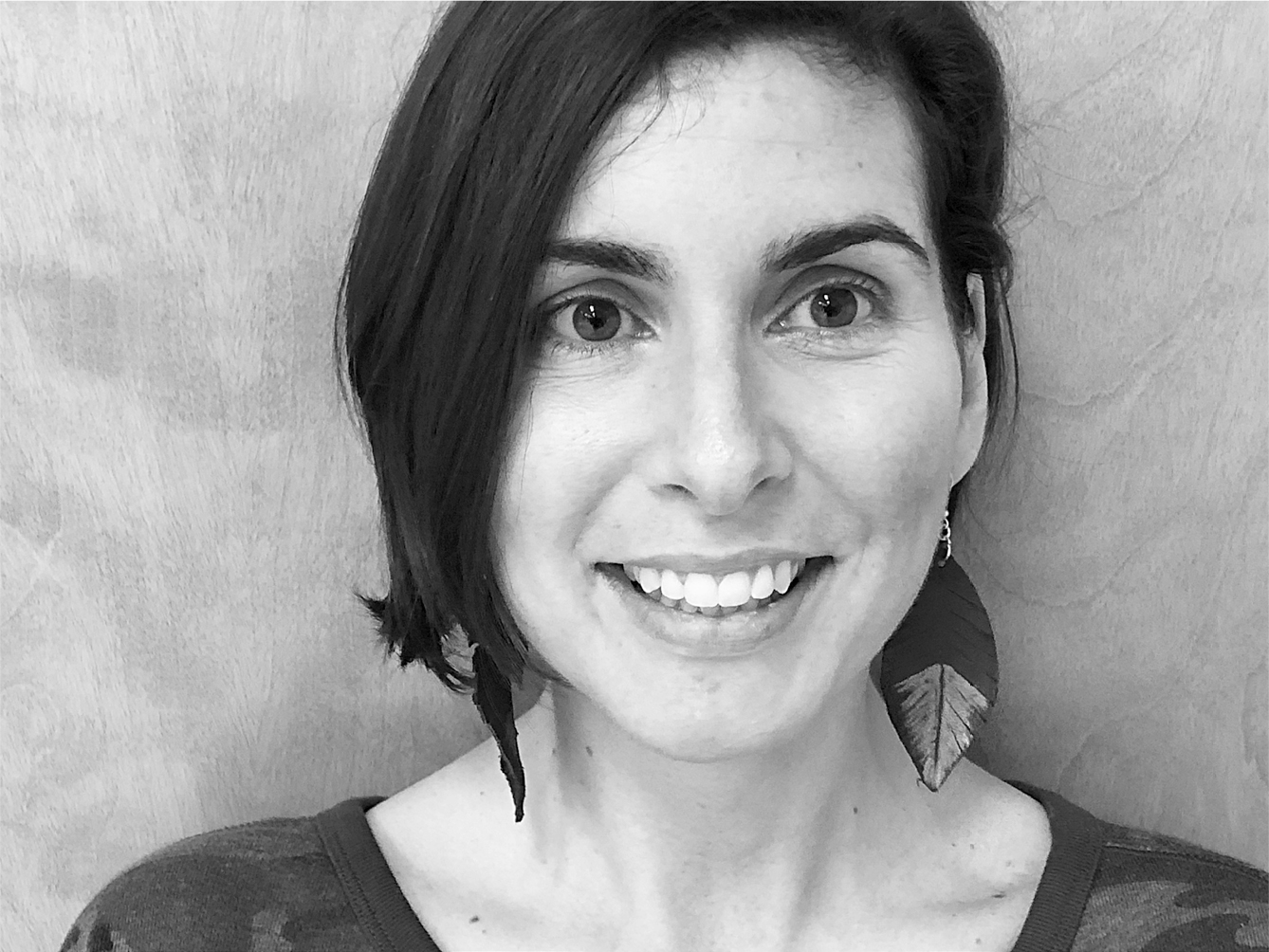
Erinn Williams, journalist and reformer.
Mountain people, Erinn says, are scorned as uneducated and unworldly. “We don’t venture outside the tribe.” Erinn’s plan was to give people a way out of this self-reproach. She does it with talk on and off the page.
She told me, “I’m different, and I know [my readers] can read me and feel that they can be different too. They can embrace the misfit within.”50
Erinn writes for the Times-Tribune. Here’s something she wrote in the summer of 2020:
I’m going to be vulnerable with you in this column, and open up to you about anxiety and fear. Neither of them are friends of mine. I felt the familiar wave of both edge nearer and closer as my chest has remained tight for several days. It’s the worst feeling, truly it is. It comes and goes. Sometimes I’ll go months at a time and not encounter it, I’ll even forget it was ever an issue. However when it returns, it’s horrible…. I consider you, the readers, to be friends, I’m grateful for the opportunity to share my feelings, thoughts, and fears with you. Even on days when my anxiety is through the roof, and fear is hovering like a fog, I find comfort in knowing my struggles are your struggles, and vice versa.51
Is Erinn an artisan? Her talk is authentic, transparent, open sourced, human scale, deeply personal, produces a cultural good, and solves a social problem. So, yes, Erinn is an artisan.
There are some activities that are closer to the conventional artisan model, and while they may have some pre–Chez Panisse precedent, they were surely accelerated by its influence. There is JD Country Milk, a small dairy in Logan County, Kentucky, that sells “real” milk, from pasture-grazed cows untouched by hormones, subject to low or no pasteurization, and sold in glass bottles at stores across the region. JD Country Milk is also the way that very small farmers find a path to market. Without JD Country Milk, certain local farms would perish.
The Home Cafe was opened in 2011 by Chelsey King and Josh Poling, both of whom trained at a culinary school and are determined to change Bowling Green cuisine with local ingredients in a local cuisine.52 They were up against a formidable opponent: a local diet dominated by fast food and prepared food that leaves Kentucky with the eighth-highest rate of diabetes in the United States.53
Poling says cooking is, for him, a way of telling stories, especially his “love story” with Kentucky. He decided four years ago to start a new restaurant called Hickory & Oak:
We tore down all these old buildings and now we realize we really lost a part of ourselves. I feel like when we stop serving a lot of the food we identify with, it’s the same. I feel like Kentucky food shouldn’t be known for chicken tenders. It has a beautiful food history and a beautiful food story. We’re loaded with artisans. We’re loaded with people who can naturally harness fire. From that fire you can smoke meat, you can grill meat. You can make sorghum. That’s the idea of Hickory and Oak.54
Big American brands don’t tell local stories. Artisans do.
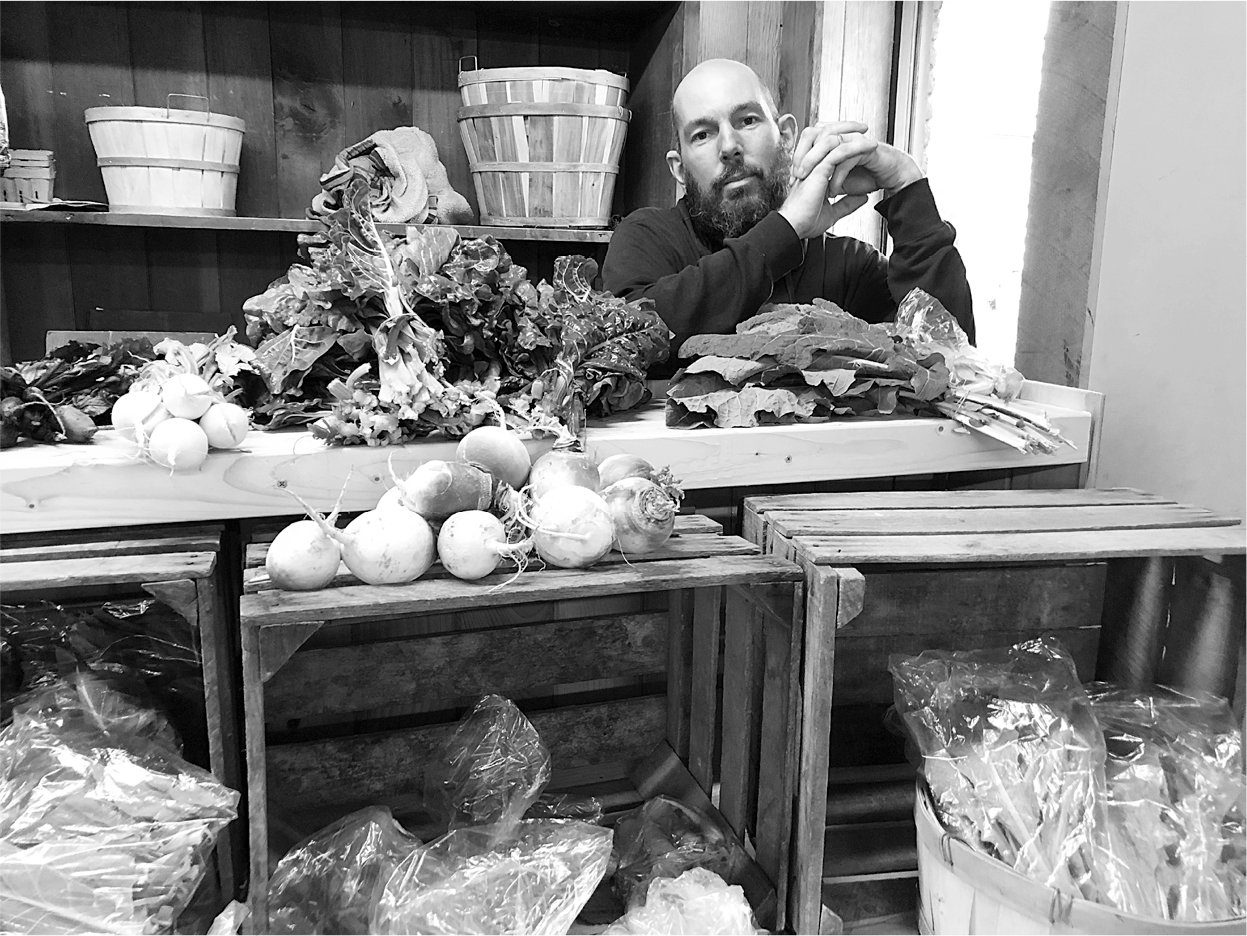
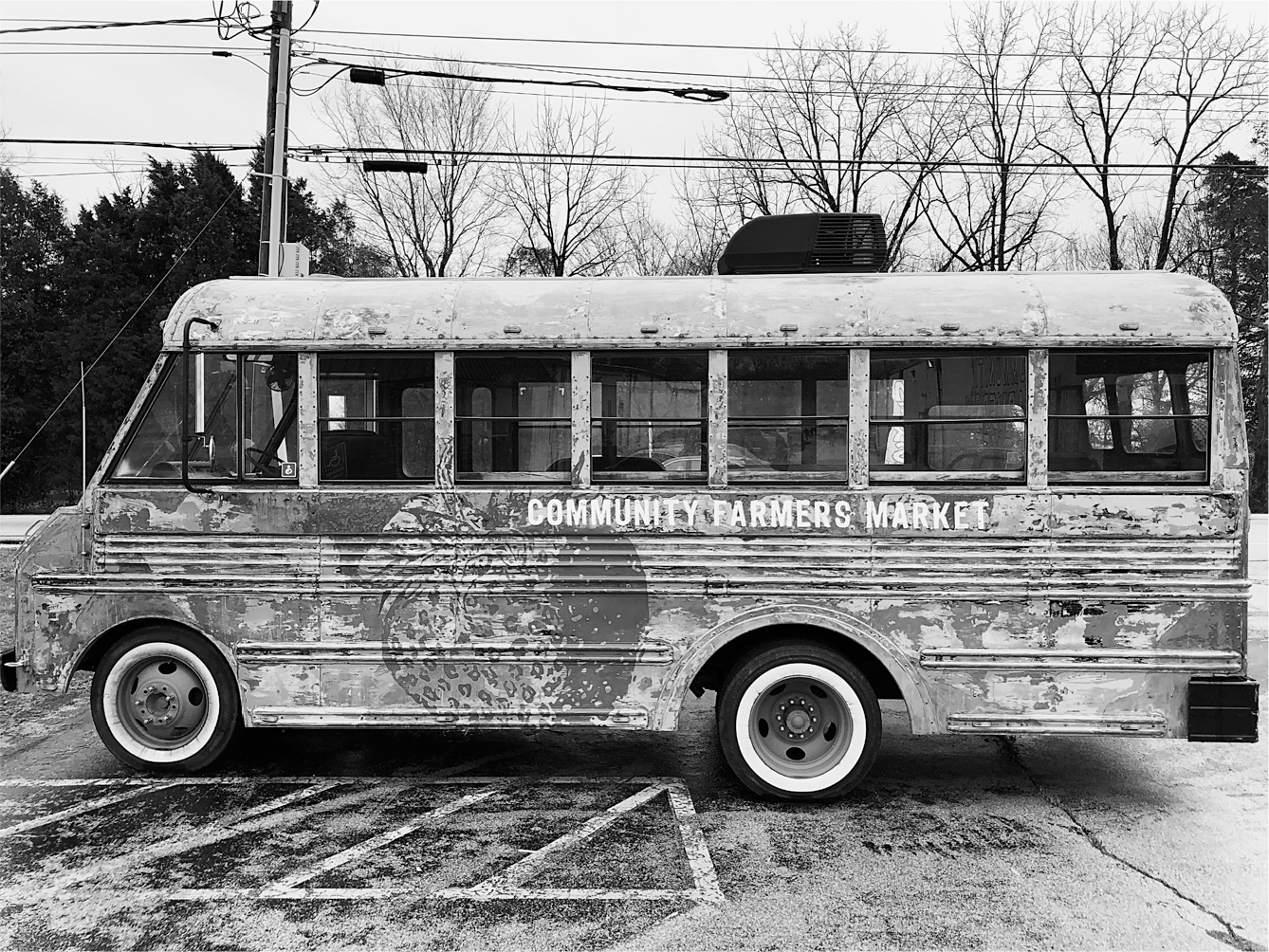
Nathan Howell at the Community Farmer’s Market in Bowling Green, KY.
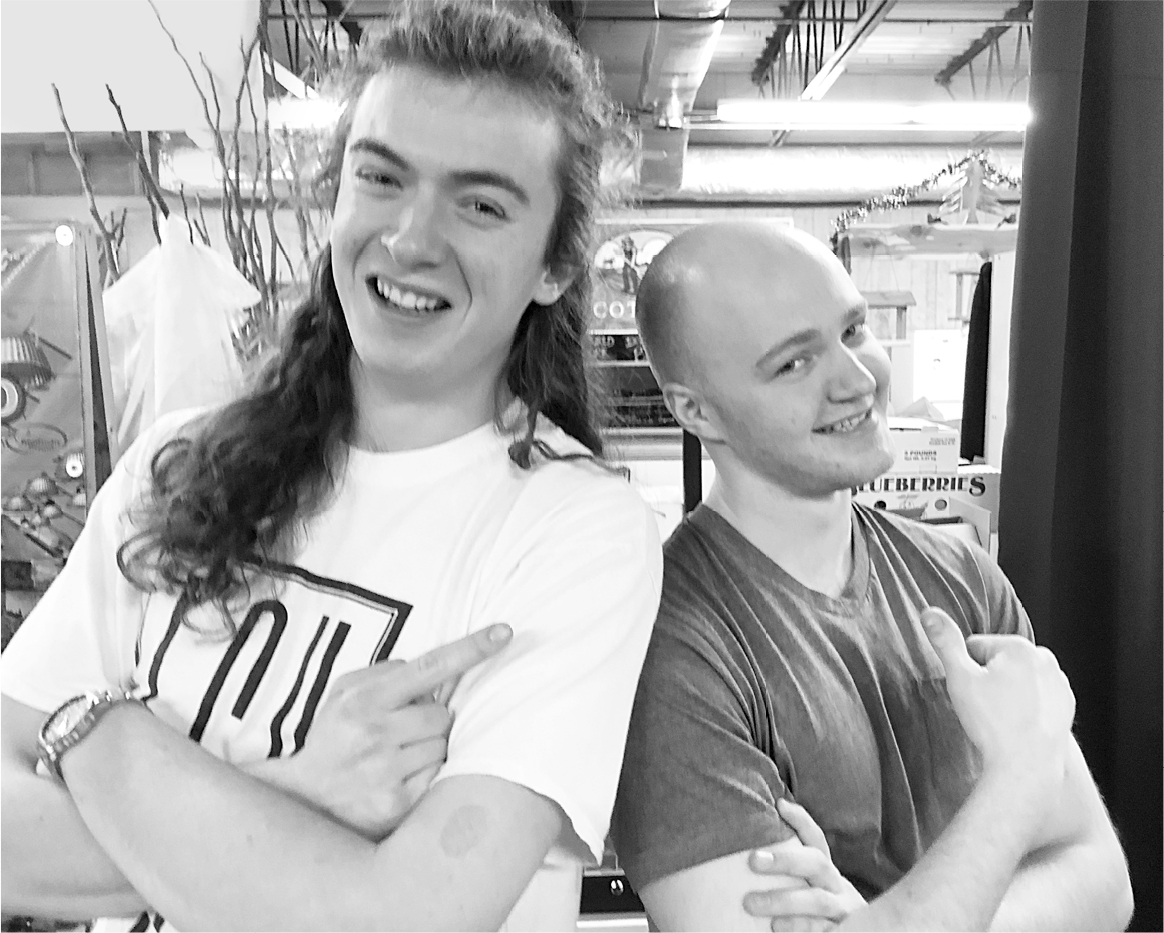
Brothers in Kombucha.
There is a diverse group of artisans at work in Bowling Green now. Need More Acres is a farm run by Nathan and Michelle Howell.55 They met at the University of Western Kentucky and decided that they would grow fruits and vegetables and, working with the meat, bread and dairy from other farms, create a Community Supported Agriculture program (CSA). They now serve thirty-five local families. Michelle says they do this to feed the “food desert” around them, to promote sustainability, and to be part of the farmer’s market in town.56
There are two guys at the farmer’s market who sell kombucha. They are still in school, still living with their parents. They see their product as a substitute for the carbonated soft drinks that put so much sugar into the Bowling Green diet. When I discovered that one of them had a business degree, I asked, “The difference between what you could make [at another job] and what you do make [selling kombucha]? That’s a contribution to the community, isn’t it?” Anthropologists are not supposed to lead the witness like this, but I wondered if these guys saw things this way. They don’t.57
People in the artisan world in Bowling Green routinely make less than they could. We spoke to Kaelin Vernon, a farmer at Peacefield Farms who, with his wife, Heather, raises Leicester longwool sheep. These animals are so labor intensive the Vernons will never recover the time and money they spend on them. And apparently that’s okay.58
It’s okay because some larger good is being served. Kentuckians talk about this larger good in several ways. It might be God. It might be their Christianity. It might be Kentucky. It might be a shared pool of good fortune, the planet, the community, probably not in that order because, hey, this is Kentucky. (I did try to find out why Kentucky has such a powerful hold on the people who live there. The best answer: “Kentucky gives you a tattoo on the inside.”)
My professor at the University of Chicago Marshall Sahlins would call this “generalized exchange.” In a market economy, things are exchanged more directly, tit for tat. I give something to you only if I can expect something in return from you. That’s “direct exchange.” What interests Sahlins are the indirect exchanges, the ones in which we don’t keep track of what we give and get. There’s a feeling that it will all come out in the wash.59
Bill and Carol Greer, who run Top Crop Farms, are using generalized exchange. Volunteers help with cultivation of a garden plot. They give volunteer hours and they get the chance to work with the Greers’ daughter Ginna, a special needs adult.60 What the Greers gave was a vast investment of time to get Top Crops up and running. What they get, they hope, is a world where someone like Ginna will be more likely to be understood and accepted. But again, no one is keeping careful track.61
Derek Guyer runs Kentucky Reclaimed. It turns old tobacco barns into picture frames, Christmas angels, bookshelves, mantelpieces, and tabletops, selling to buyers around the country online.62
That’s the business model. There’s a moral model too, and that’s all about “generalized exchange.” What Guyer gives is emotional, social, and spiritual advice to the kids who work for him. He thinks too many kids get too little parenting. This son of a preacher likes to say he is “fishing for souls.”
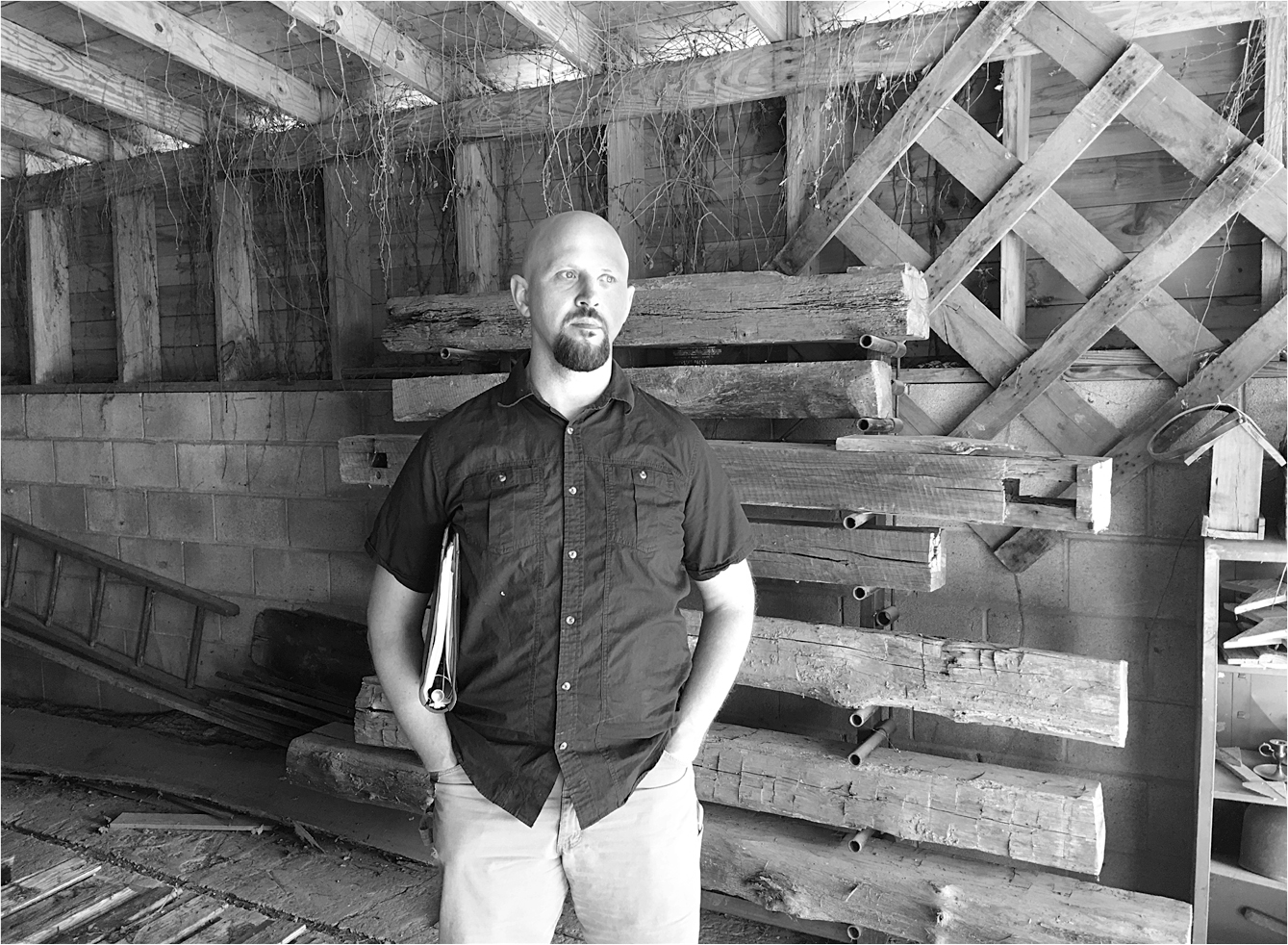
Saving souls with recycled wood.
And here’s what Guyer says he gets. He owns this business in part due to the generosity of his workshop’s previous owner. And what brought his business to life was a Wishing Well competition. Kentucky Reclaimed gives him a chance to involve his kids in a business. And it gives him a chance to reclaim a part of Kentucky that’s otherwise “just gone forever.”
From an economist’s point of view, this is strange and wonderful. All this value pours back and forth between Kentuckians. It might as well be a great pool of oil sitting beneath the city. We don’t have a way to measure and track this value. And people here couldn’t care less. It’s almost as if social good (as opposed to market good) is even better when we don’t measure it. And it’s okay that we don’t get or give credit.
There is no local language for this exchange, no measures, no concepts. This is weird, because Americans measure everything, including pitch counts and thread counts. Surely, a measure for the good might be useful. But no, we just let this good flow into the world.
Bowling Green, Kentucky, takes its own path to the artisanal. People have set up coffee shops, food trucks, kombucha brands, CSAs. They are keeping bees, chickens, sheep, and cattle. They are making mead, soup, beer, nut bars, jams, pies, bread, bags, backpacks, quilts, furniture, wallets, belts, posters, prints, ceramics, stationery, furniture, and ceramics.
In the process, we have seen two things we didn’t see in Darien.
Stories. People are telling stories, at liars’ tables to build a local community, as newspaper columnists to heal the addicted, with food to fill the food desert, with wood to remember Kentucky’s past.
Kentucky. People are pitching in for other artisans, saving or transforming Kentucky cuisine, saving or transforming Kentucky material culture, helping to raise sheep brought to the edge of extinction, making Kentucky a kinder place for people with special needs and a better place for boys who are under-parented. They are using it to get off the grid and to make a place for themselves well removed from other Kentuckians.
The artisan ethos fits in beautifully. Stories are artisanal. They help craft a world that is artisanal. The artisanal makes it possible for everyone to pitch in to help construct a Kentucky, that larger good that makes a pool from which people give and to which they give. (I don’t think anyone in Connecticut ever does anything for “Connecticut.” There are no internal tattoos there. Actually, not even on the outside.)
Big industries, tobacco and coal, have come and are now going. They left addiction and human misery in their wake. The artisanal option has sprung up to fill in. It serves in some of these ways in Darien, helping to craft a smaller, handmade, handcrafted, human-scale world. But here it is more something consumed than produced.
TOWN 3: STAMFORD, CONNECTICUT
I am standing in downtown Stamford, Connecticut, looking for Hi-Top Productions. I can’t find it. I have been up and down Bank Street several times, which doesn’t take very long, because it’s only ten stores long.
What I can find is a barbershop, and what catches my attention is that this guy offers not just haircuts but shaves.
A little farther down is the Connecticut Cigar Company, and sitting in the window is a guy rolling cigars. Wait, what?
Stamford downtown is a grim place. It suffered the twin misfortunes of urban blight in the 1950s and later urban renewal designed to “fix” things. Which yielded the Stamford Town Center mall and a couple of other monstrosities. Together these forces managed to destroy almost every building of architectural interest, and all sense of place. Someone on Wikipedia thinks this makes Stamford look “more contemporary and modern” than other New England towns. Not really. Stamford looks like it has armored itself in concrete and prepared itself for war.
Stamford participated in the fury of innovation that made New England the Silicon Valley of the nineteenth century. Industrial jobs were plentiful thanks to the production of dye, tools, stoves, typewriters, clothing, and the arrival of the Yale lock company.
But by the middle of the twentieth century, things began to conspire against the industrial base. Factory jobs went south. They went offshore. They vanished into the digital domain. Sitting against the highway that connects Stamford to New York in the west and Boston in the east, great towers demonstrate that this town still has great wealth. There’s an enormous UBS building, a brand-new Royal Bank of Scotland, and even a glistening Trump condo to house those who don’t want to commute from the city. But this prosperity belongs to someone else. Unless you are a participant in the knowledge, creative, or capital economies, Stamford is a tough place to find work.63
What doesn’t exist here are a lot of factory jobs. Indeed, you could say that, in Stamford, people are coming back from the industrial era the way they once came back from war. They return to find the world substantially changed. There’s no picking up where you left off, no getting back to “life as usual.” If you want to work here, you’re going to have to adjust and adapt.
For some, this will mean giving shaves or making cigars: a revival of the artisanal economy. Parts of Stamford are beginning to resemble the city as it was a couple of hundred years ago. It’s a scaled-down world. What’s missing is mass. And mass manufacturing. This is a world of small enterprise and “proprietors.” People came back to find themselves in a pre-industrial Stamford. The industrial era is now for some but a dream.
Among the many things killed by the industrial revolution was the barbershop shave. This was still possible and popular as late as the middle of the twentieth century. (My evidence? That scene in Chinatown.) But after World War II, shaving in barbershops began to go DIY. Thanks to the safety razor and Gillette marketing, men came to assume that they should shave themselves. There was something uncomfortably intimate about one man shaving another. Plus, it was time-consuming and fussy. The modern gentleman (up-to-date and on-the-go!) preferred to shave himself.
And now the barbershop shave is back. Not everywhere. Not for everyone. But it’s now possible to get a shave at Montana for Men on Bank Street, where “The Royal Shave” uses a steam towel and a straight razor. Will the barbershop shave ever reach the proportions of the nineteenth century? No. Should Gillette be worried? Not at all. But we can see this preindustrial operation as a sign of things to come. As people return from industrial service, they will, some of them, embrace an artisanal option.
And there is a lot to revive. Think of all those jobs in the nineteenth century that were artisanal in scale if not in practice. In the nineteenth century, people of a certain class and income didn’t do much of anything for themselves. They didn’t shave themselves. They didn’t drive themselves. They didn’t do their own errands. They didn’t shine their own shoes. They didn’t make their own meals. The clothes, food, and furniture didn’t come prefabricated from great thundering factories but bespoke from now-vanished Victorian species: chauffeurs, butlers, tailors, dressmakers, maids, hatmakers, errand boys, bakers, butchers, tobacconists, shoe shiners, and barbers. Eventually, these jobs were swallowed up by DIY as supplied by mass manufacturers like Gillette.
Many of these jobs are on their way back. As more and more people “return” from the industrial era and contemplate their options, thousands will look for a way to evoke the artisanal option. There will be people rolling cigars, doing crafts, making pickles, soap, jam, and soft drinks, baking bread, brewing beer, crafting toys, driving food trucks. Some vanished Victorian species will come back to life.
THE POINT OF SALE
The artisanal economy continues to work its way through American culture. Having commandeered the restaurant and the bar, it takes on the local economy in Darien, Bowling Green, and Stamford. Consumers become producers, making artisanal makeup, candles, beauty products, clothing lines, pottery, and bicycles, and they sell these things via farmer’s markets, craft fairs, Craigslist, and bulletin boards.64
The supermarket had come to dominate the grocery trade after World War II. By 1956, 90 percent of groceries were being purchased there.65 In the early days, these places were welcome, even a little miraculous. They were endless yet somehow immaculate. Everything was beautifully designed and lit. (If you listened carefully, you could hear angels singing.) For some, supermarkets were the very image of American plenty. By turn of century, we were beginning to wonder if they weren’t too large, too full, too illuminated, and too anonymous, and now a hymn to American artifice where once they had been a salute to plenty.
The farmer’s market dramatically changes what people used to call point of sale. What is point of sale anyway? It’s a figment of the mind of the marketer, that’s what. Notice, it takes out everything, the people, product, context, tone, experience, social interaction, and social connection. Everything is out but the sale: national brands shoving for position, shouting for attention.66
The artisanal disruption has other ideas. It wants something that is bigger than a point and more complicated than a sale. The coffeehouse is no longer merely a place to transact the purchase of a caffeine-bearing liquid. In the right hands, it would become a community center, rich in poetry slams, art exhibits, and impromptu conversation of every kind on just about any topic. Farmer’s markets are staged in some interesting part of town, the parking lot of the local library, say, or under a bridge down by the riverside. They offer turnips with dirt on them. They give us things sitting in rough baskets, on folding tables, with the people who did the growing, picking, or making standing there, prepared to say a word or two. There is no national advertising campaign, no big, bright visuals supplied by the ad agency, no blanching light of the grocery store. There’s not even that convenience store smell that says, Something died in here overnight. We just can’t find it. Sorry.
Branding, the Farmer’s Market way.
Now there’s a person at point of sale. A human being being human, as the phrase has it. Not “spam in a can,” in Tom Wolfe’s famous phrase, not people who stand there, robotically hoping we will “have a nice day.” At the farmer’s market, people have personality, even if that means going on a little too long about a daughter’s recent soccer triumph. (“Hey, check out her trophy!”) That’s a new price of doing business.67
Some neighborhoods moved so swiftly away from the supermarket they began to verge on a barter economy. You can see this in Portland, Brooklyn, Boulder, and, fleetingly, Burning Man. There is even an artisanal typeface for the sandwich board outside your shop. And they send these into exchange networks in the construction of a “shared” or a “gift” economy.68 New collaborative resources pour in, thanks to Zipcars, Airbnb, seed swapping, crowdsourcing, community funding, and peer-to-peer cooperation of every kind. This artisanal capitalism lives cheek by jowl with industrial, managerial capitalism and is sometimes meant as a deliberate thumb in its eye.
Here, too, it’s early days. But we expect these farmer’s markets to supplant some of the dispassion, formality, and aridity we find at most retail. The “point of sale” is a high point of the artisanal economy.69
Just as important, or perhaps more important, the artisanal proposition seeks the creation of social value, where once economic value was enough. That café that roasts its own coffee beans started small and means to stay that way. Some of its work is to enrich the community. This is systematically different from boomer parents who went into business hoping Nestlé would buy them out. At the farmer’s market, acts of production and exchange are, in Karl Polanyi’s language, embedded in a larger world, and both constrained by and enriching of this world.70 No reckless, red-of-tooth-and-claw capitalism here. Things get made. Value changes hands. But the exercise is incomplete until some social good is accomplished.
The artisanal economy threatens to divide the world in two. On one side, there’s a village-like world, funded largely by sweat equity, imagination, and the wish to make the local community richer. On the other side, a forest of giant organizations like Unilever, Procter & Gamble, The Coca-Cola Company, and Nestlé, large and powerful, with market caps of $132 billion, $215 billion, $172 billion, and $267 billion respectively, working mostly for the shareholder. The artisanal economy seeks to remain small, personal, rooted in a community, and useful to people living there. Wall Street? At the extreme, an artisanal economy wants less to serve Wall Street than to occupy it.
The industrial half of this duality will never go away. We cannot hope to supply the needs of the whole world with tiny cottage industries. But the industrial half is in the process of losing its prestige and standing. Once great and grand, the industrial piece threatens to become the back office, the infrastructure, the offshore supplier to the artisanal face of capitalism. I think the corporate world can feel this transition taking place. And people on the inside are looking for ways to get out, to make their organizations more nuanced, more humane, and more human scaled.