
8
Plant a Tree and Save the Planet
www.aurlns.com
Stop talking and start planting!
Felix Finkbeiner, One Trillion Trees program
The capacity of terrestrial ecosystems to store carbon is finite and the current sequestration potential primarily reflects depletion due to past land use.
Mackey et al., 2013
8.1Introduction
Global deforestation is increasing rapidly from timber harvesting, charcoal burning, fires, beetle infestations, drought, disturbances, and conversion of forests to managed land for agriculture and pasture. This reduces the global carbon sink and may increase global temperature. It was noted in the previous chapter, however, that observed average global temperatures and carbon dioxide concentrations are lower than would be expected from model estimates. This was attributed to a long-term global vegetation growth and greening effect, caused by increased photosynthesis and increased transpiration. Forest trees probably constitute most of the vegetation responsible. The potential for global greening has greatly increased interest in global large-scale efforts to prevent deforestation, stop forest degradation, restore forests (reforestation), plant new forests (afforestation), and manage existing forests.
The 21st Conference of Parties (COP-21) of the United Nations Framework Convention on Climate Change (UNFCCC) met with delegates from 195 countries in Paris in December 2015. Delegates agreed to climate mitigation targets to keep average global temperature increase at no higher than 2.0 °C, preferably limited to 1.5 °C. Reducing deforestation and enhancing the forest carbon sink through tree planting was one of the climate mitigation targets. Countries established targets for establishing new forests. Each country decided how to address the climate mitigation targets. These Intended Nationally Determined Contributions (INDCs) constituted the Paris Climate Agreement. Because the agreement allows for each nation to determine designation and achievement of mitigation targets, inconsistency in reporting greenhouse gas emissions and forestry gains can lead to decreased credibility for overall results (Grassi et al., 2017).
8.2Reducing Deforestation and Degradation to Mitigate Global Warming
Deforestation and forest degradation release carbon to the atmosphere and have been calculated to rank second in importance to emissions from energy generation (UN-REDD+). Realizing that there is value in carbon stored in forest trees, the UNFCCC established the program REDD+ to encourage nations to reduce deforestation and forest degradation. Countries that develop acceptable programs to reduce deforestation (results-based actions) would receive payments for achievements (results-based payments). REDD+ also includes forest management and increased new forests. Karsenty and Ongolo (2011) question whether politically and economically unstable countries (“fragile states”) can effectively participate in REDD+. Houghton and Nassikas (2017) estimated how global recovery of secondary forest growth following tree harvests for wood, or developing forests on abandoned farm land, and stopping deforestation, would affect negative emissions. They estimated that between 2016 and 2100, this would result in cumulative global negative emissions of 120 PgC, with wood product storage increasing this to 130 PgC.
8.2.1Forest Management to Mitigate Global Warming
Humans have been using forests as sources of wood, fuel, and food for centuries. With increased population and demand for such products, the concept of establishing and managing forests for maximum benefit developed. Much of the early development of forestry management began in Europe, when planting forests to replace extensive native forest loss became necessary. Most European forests are planted with a few tree species and managed for wood harvest. Management practices, such as tree planting, tree species selection or replacement, thinning, fire prevention, fertilizing, and removal of fallen branches for firewood and litter, result in forests that are considerably different than natural forests. Management also includes scheduled tree harvests for wood for building, fuel, and forest products. The nature and extent of these management practices affect the forests’ structure and function, which affects mitigation of climate warming through carbon storage, heat flux exchange, and transpiration to the atmosphere (Naudts et al., 2016).
Nabuurs et al. (2013) used forest inventory data to establish trends for stem volume increment increase in Europe, focusing on the period 1960–2005, as stem increment growth is an indicator of carbon sink strength. Improvements in forest management and practices were concluded to have been the possible cause of trends of growth in stem volume increment from 1960 to 2005. Between 2005 and 2010, stem volume increment growth trends began to decline. By 2010, stem volume growth increment declined by 13 million m3 for an area of 78 million hectares, assessed over all of Europe. Slowing growth in maturing forests, and deforestation and decreases in planting forests, were considered to be possible causes for declining forest carbon sink.
Average yearly forest loss for European countries from 1990 to 2010 is shown in Figure 8.1. Further analysis of data since 1990 indicated regional differences in sink saturation. Sink saturation seemed complete for Alpine and west Atlantic areas, slightly increasing in the north and south of Europe, declining and then increasing again in eastern Europe. The first sign of carbon sink saturation in Europe is evident in the Alpine and west Atlantic areas.

Figure 8.1
Average forest loss.
Light grey bars indicate the average forest loss based on remotely sensed CORINE Land Cover (CLC) data sets from 1990, 2000, and 2006. Dark grey bars reflect the reports to the Kyoto Protocol on deforestation between 1990 and 2010.
Adapted by permission from Springer Nature: Springer Nature Ltd, Nature Climate Change, First signs of carbon sink saturation in European forest biomass, G. J. Nabuurs et al. © (2013)
Forests are generally considered to be negative climate forcing agents. Naudts et al. (2016) proposed that not all forestry contributes to climate mitigation. They reconstructed a history for land-use change and forest management practices for Europe from 1750 to the present, modeling factors such as tree species conversions, wood removal by thinning and tree harvesting, and removal of forest floor litter. During that time period, conifers began to replace deciduous trees in very large afforestation tree planting programs. Albedo values and transpiration decreased with conifers, and warming resulted. Human populations also increased during this time, resulting in greater demand for wood. Their results indicated that wood harvests exceeded the benefits of afforestation, resulting in accumulation of a debt of 3.1 Pg of carbon. They concluded that forest management from 1750 did not mitigate climate warming. Luyssaert et al. (2018) concluded that given current forests in Europe, forest management will not result in mitigation of climate change. Large-scale changes in silviculture and management might result in forests with neutral effects on climate change.
A warming climate will affect forest management, so reconsideration of current practices is needed, and proposals for alternative or active forest management practices are being considered. With warming, some forest tree species may become less productive. Schelhaas et al. (2015) propose replacing tree species with ones that will be more productive, either by removing ones that are there or using the new species in new forest plantings. Only 36% of the area in Europe where species change should occur will be accomplished by 2070. This might be increased to 40% if short rotations (harvests) are accompanied by planting new species. This strategy is likely to be more effective in northern Europe where faster adaptation of new species is anticipated. Progress is estimated to be less in southwest Europe. Bright et al. (2014) used models and meteorological data to investigate alternative management strategies for boreal forests in Norway. They determined daily, seasonal, and annual surface temperature differences for different trees. A 0.13 °C cooling was found at a deciduous tree site. Cooling at a clear-cut site was 0. 25 °C. Albedo was higher at the clear-cut site during the year. Alternative strategies that encouraged natural regeneration of the clear-cut areas by native deciduous tree species resulted in substantial climate cooling.
8.2.2Afforestation and Reforestation to Mitigate Global Warming
Global planting of new forests (afforestation) and reforestation of harvested or former forest sites are widely advocated to partially mitigate global warming. As we have seen, removal of carbon dioxide from air via photosynthesis, at rates exceeding respiration, resulting in increased growth, biomass, and transpiration, means that trees can be effective carbon sinks. Reduction of carbon dioxide, and increased transpiration, result in negative climate forcing.
Achieving this goal of tree planting involves consideration of the long timeline of tree growth and changes that occur along the way. Some trees are propagated by cuttings, but the timeline for most trees begins when seeds germinate and small seedlings emerge. Direct in situ forest seeding can be used for native trees, but most seeds are planted in nursery seedbeds. Seedlings are grown in nurseries for several years before they are large enough to be planted out as saplings in reforestation projects. Mackey et al. (2013) have continued the timeline and have profiled tree age and development relative to carbon sink size. Young trees planted out will grow rapidly, and carbon fixed in photosynthesis exceeds that lost in respiration, leading to a net carbon sink. Carbon begins to be stored in trees and soil. As tree age continues over time, a change begins whereby growth rates decreases in relation to rates of respiration. The net carbon sink begins to decline. As they reach maturity, rates of photosynthesis and respiration begin to be more in balance. Slight differences between them determine the extent of carbon uptake and storage. The soil carbon deficit has been filled, and this sink is no longer functioning. Faster tree growth does not result in greater long-term carbon sequestration. The mitigation value of forest trees lies in their longevity: how long they live and retain their accumulated carbon (Mackey et al., 2013; Korner, 2017).
8.2.3Global Forest Establishment and Restoration Programs
Concern about deforestation, and its impact on climate, has resulted in numerous local, regional, and global tree planting programs. Several of the largest global programs are described here.
The Bonn Challenge was established at a conference in Bonn, Germany, in 2011. Governments pledged to restore 150 million hectares of deforested and degraded land by 2020 and 350 million hectares by 2030. By 2017, 160.2 million hectares had been pledged. To carry out its commitment, Pakistan launched a Billion Tree Tsunami and has reforested 350,000 hectares.
The Trillion Trees Program (2017) has been established as a partnership between the World Wildlife Fund, the Wildlife Conservation Society, and Birdlife International. It proposes a 25-year program of tree planting and forest restoration. A German University student, Felix Finkbeiner, developed a movement called Plant for the Planet, and expanded it to the Trillion Trees Program. Evaluating all the conferences and meetings being held about reforestation and afforestation, he reacted by developing the motto, “Stop Talking. Start Planting.”
In collaboration with Conservation International, Brazil has launched the largest tropical reforestation project in history to establish 73 million trees in the Brazilian Amazon by 2023. The tree establishment practice is unique. Instead of obtaining and planting tree saplings, they will use a “muvuca” strategy. In Portugese, this means many people in a small place. Here, it means many tree seeds scattered inside every square meter of deforested land. Seed of more than 200 native forest tree species will be used. This practice has been used successfully elsewhere. The strongest seedlings survive and become trees.
In the United States, the National Forest Foundation, in collaboration with the USDA Forest Service, proposes to plant 50 million native tree species (Peter, 2018).
New York and Los Angeles successfully established million-tree planting programs. Planting schemes like this work well in cities that have grid layout and are not compact. In older American cities, and many European cities, there is not enough useful space for large-scale tree planting. Boston, for example, planned to plant 100,000 new trees. In addition to lack of space, many of the newly planted trees died after planting from lack of water and care, a common problem in large-scale urban tree planting programs. What is important is not the number of trees planted, but how many survive and flourish.
The value of urban trees is in air temperature reduction by shade and reduction of electricity use. This indirectly reduces carbon dioxide. McPherson et al. (2015) concluded that the carbon sink for trees in Los Angeles was offset by equipment use and by decomposition of wood and wood mulch.
8.2.3.1Seed Availability
Ambitious tree planting programs involve transplanting millions of seedling trees or saplings on large scales over time. Some programs rely on using traditional forest trees. In Europe, this includes Norway spruce (Picea abies), Scots pine (Pinus sylvestris), and beech (Fagus sylvatica). At current planting levels, there should be adequate sources of appropriate seeds for these common forest trees. Jalonen et al. (2017) surveyed forest restoration programs and found problems with availability of very large quantities of high-quality tree seeds, especially for native or minor tree species. Using low-quality seed could lead to long-term problems, with influence on warming and climate change.
8.2.3.2Tree Species Diversity
In planning large afforestation projects, monocultures of one species are easiest to establish, especially if harvests for wood are planned. These plantation-like forests lack the long-term benefits of species diversity. Pedro et al. (2015) found that increasing species diversity decreased the effects of forest disturbance on carbon storage. Diversity increased forest resilience and function. Thom et al. (2017) reported that mixed forests, appropriate for their climate and site, had increased climate forcing capacity. Care should be taken, however, when introducing non-native trees, such as black cherry (Prunus serotina) for forest diversity, as they may become invasive and have negative long-term impacts (Brundi and Richardson, 2016).
Liang et al. (2016) examined a huge forest/ecosystem productivity data set, finding a consistent relationship between biodiversity and productivity. They concluded that an average 10% reduction in tree biodiversity would result in a 3% loss in ecosystem productivity.
In tropical forests, Poorter et al. (2015) found that rare tree species incidence played an important role in promoting above-ground biomass, but rainfall was the major influence, followed by average tree stem diameter and then species richness.
Pataki et al. (2011) includes species composition in factors affecting water use and transpiration. Sap-flow sensors were used to determine different transpiration rates for a variety of coniferous trees in Los Angeles. This technique, together with results in the literature, could be used in selecting tree species for drought tolerance. Vitali et al. (2017) concluded that silver fir (Abies alba) and Douglas fir (Pseudotsuga menziesii) were more drought-tolerant than the widely planted Norway spruce (Picea abies), and planting of Norway spruce should be reduced.
Tree species selection for the carbon content of stem wood is a possible criterion. Lamlum and Savidge (2003) indicate that 50% carbon is often used as the standard for kiln-dried wood. They tested this by determining the carbon content in kiln-dried heartwood of 41 tree species. Hardwood species averaged 46–49.7% and conifer species 47.2–55.2% carbon. They concluded that carbon content in stem heartwood varies between species and even within species.
Changing the diversity of tree species in boreal forests could affect climate forcing. Astrup et al. (2018) proposed that increasing the content of broadleaved deciduous trees in conifer-dominated boreal forests could increase albedo, reduce fire incidence, and reduce positive climate forcing.
One tree selection criterion completely overlooked in planning huge tree planting programs is emissions of BVOCs from tree leaves. Tree species vary widely in emission rates. Broad leaved deciduous trees emit mainly isoprene, and conifers mainly monoterpenes. As considered in Chapter 4, BVOCs can participate in the photochemical oxidant cycle to form ozone, prolong methane in the atmosphere, and form aerosols that affect clouds and climate forcing (Unger, 2014). Planting large numbers of high BVOC emittors would not be a good strategy for afforestation. Rankings of trees for BVOC emissions are available in the literature (Donovan et al., 2005; Aydin et al., 2014; Curtis et al., 2014).
8.3The Nature of Forests
Forests are considered to play an essential role in partial mitigation of global warming. Large-scale tree afforestation (young trees planted in plantations in new areas), reforestation (young trees planted in former forested areas), and restoration (young trees planted in degraded existing forests) programs are intended to increase carbon sequestration and lower temperatures. The resulting forests will function differently. Natural regrowth of native tree species in harvested areas will result in the most effective forests for carbon sequestration.
Undisturbed forests are dominated by native tree species in various stages of development. These forests are naturally regenerated. Structure, composition, and function are determined by natural events, without human influence. Although trees dominate, it is only when they interact with other associated plants, animals, and microorganisms, functioning together, that a forest ecosystem occurs. Undisturbed forests and natural forest ecosystems are rapidly diminishing (Convention on Biological Diversity, 2006).
Climate change awareness has stimulated the development of criteria for assessment of global forest area. The United Nations Food and Agriculture Organization (FAO) considers that forests exist if trees are present and the land is not being used for anything else. More specifically, tree canopy cover must be more than 10% and the area larger than 0.5 ha. Young stands are included that are projected to develop a crown density of 10% and a height of 5 m. Forests include trees in many non-traditional locations, such as windbreaks and national parks. Natural forests and plantation forests are both considered to be forest, without distinction (Convention on Biological Diversity, 2006; Van Holtz and Putz, 2017). Sasaki and Putz (2009) examined a similar set of criteria developed by the UN Framework Convention on Climate Change in 2001. A forest was defined as an area 0.5–1.0 ha with 10–30% cover of plants greater than 2–5 m tall at maturity. They recommended that the criteria be expanded to a height limit of greater than 5 m and tree cover at greater than 40%. Sexton et al. (2015) compared global forest cover in relation to the function of the tree cover criteria that were used to determine it. The criteria determine the outcome, and it matters which are used (Figure 8.2).

Figure 8.2
Global area of forest cover as a function of the tree-cover criterion.
Incremental values represent global area (in units of 106 km2) × tree cover within each bin, and cumulative values refer to the global area with tree-cover values greater than or equal to that of the bin.
Adapted by permission from Springer Nature: Springer Nature, Nature Climate Change, Conservation policy and the measurement of forests, J. O. Sexton et al. © (2015)
8.4Afforestation, Reforestation, and Restoration
8.4.1Native Forests
Native forests are self-generating and not managed. The extent of regenerating native forests, especially in degraded areas, is deemed insufficient if forests are expected to play a considerably expanded role in carbon capture and global temperature reduction. To this end, huge global areas of new and deforested and degraded land are being newly planted or re-planted, and new forest areas are being created. Native tree species are used in some instances. Many of the newly planted forests largely consist of closely planted monocultures of same-aged trees, often of one non-native tree species, managed for eventual harvest for wood and wood products. These are called plantation forests (Grotta, 2015). Plantations provide extensive tree cover, but the question is: are they really forests in terms of long-term forest ecosytems?
8.4.2Afforestation in China: New Plantations
China has the world’s largest continuing tree planting program. More than 100 billion dollars has been spent in the past decade to plant trees (Ahrendts et al., 2016). Since the 1990s, new tree plantings have exceeded 4 million hectares per year, with more promised for the future (Xu, 2011). The 1999 Grain for Green Project was designed to reforest mostly sloping farm land to lessen soil erosion or encroachment of desertification. In 2013, satellite imagery indicated that China is going green (Macias-Fauria, 2018).
Forests in China include primary forests, regenerating forest, and plantations of mostly non-native, often single species, or at most two to five tree species, making up the afforestation effort (Xu, 2011; Hua et al., 2016). Macias-Fauria (2018) indicated that forests in China can be classified as ecological (80%) or economical (20%). Ecological forests could be part of a timber quota and might eventually be logged. Economical forests include fruit orchards and trees for medicinal use. Hua et al. (2016) indicated that most of the trees planted in the Grain for Green forests are intended to be harvested for wood, fruit, and other wood-related products, with biodiversity secondary or incidental. The purpose of the plantation forests is to provide a sustainable source of wood on a scale not available from smaller natural or primary forest resources. This involves carbon capture and long-term storage in wood in trees and wood for construction.
China also established a national tree planting program, the China Fast-Growing and High-Yield Plantation Program, to develop and sustain wood supply (Jiang and Zhang, 2003). Given the size of China, and large variations in climate zones from north to south and east to west, different appropriate fast-growing tree species were chosen to establish plantations. Conifers for softwood production included Masson pine (Pinus massoniana), China fir (Cunninghamia lanceolate), slash pine (Pinus elliotti), Yunnan pine (Pinus yunnanensis), loblolly pine (Pinus taeda), spruce species (Picea spp.), Mongolian Scots pine (Pinus sylvestris var. Mongolica), larch species (Larix spp.), and Korean pine (Pinus koraiensis). Hardwood species included eucalyptus (Eucalyptus spp.), acacia (Acacia spp.), Paulownia (Paulownia spp.), locust (Robinia pseudoacacia), poplar (Populus spp.), and birch (Betula spp.). Slash pine and loblolly pine, and probably Korean pine, are not native to China, nor are eucalyptus and locust. Poplar species may be native, but their origin is not clear.
Hua et al. (2018) reviewed forest tree cover change in China between 2000 and 2015. A 32% increase in tree cover was attributed entirely to conversion of cropland to tree plantations, primarily monocultures. During that time, native forests experienced a net loss of 6.6%. They advocated protecting native forests and encouraging natural regeneration to restore native forests.
Tree plantations are long-term renewable tree plantings that function as agroecosystems, not traditional natural forest ecosystems. Examples of a new plantation in Brazil, an existing eucalyptus plantation in Brazil, and a palm oil plantation in Malaysia are shown in Figures 8.3, 8.4, and 8.5. They do store carbon in wood and soil, but wood is removed, which means tree replacement. Closely planted, they provide closed canopies and tree cover. As such, they do not function as forests (Van Holt and Putz, 2017). Leaf litter and soil nutrients are reduced. Albedo levels will decrease, depending on tree species, and transpiration and low cloud cover may be affected (Williamson, 2016).

Figure 8.3
Deforestation and new plantation in Brazil.
Replacement of original forest.
Credit: luoman / E+ / Getty Images
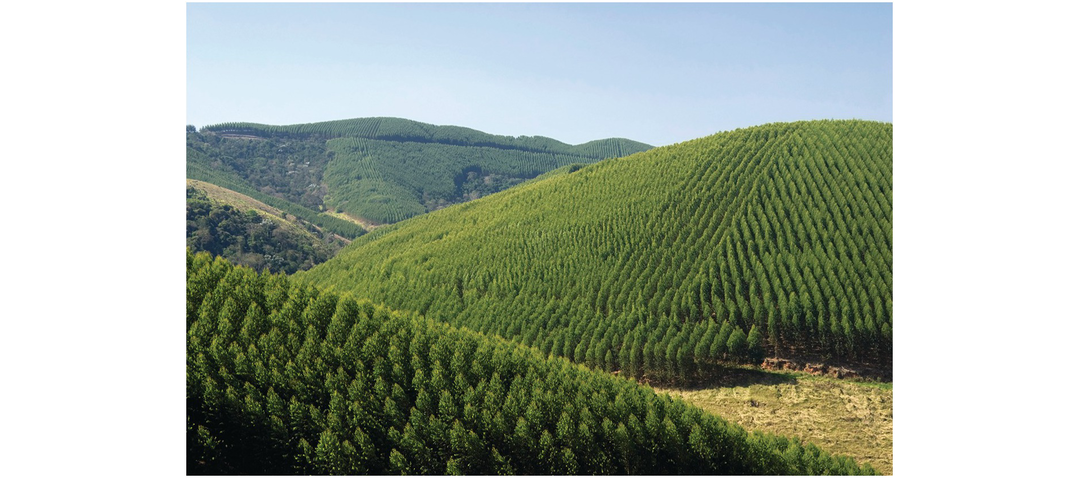
Figure 8.4
Eucalyptus plantation, Brazil.
Credit: FernandoPodolski / E+ / Getty Images
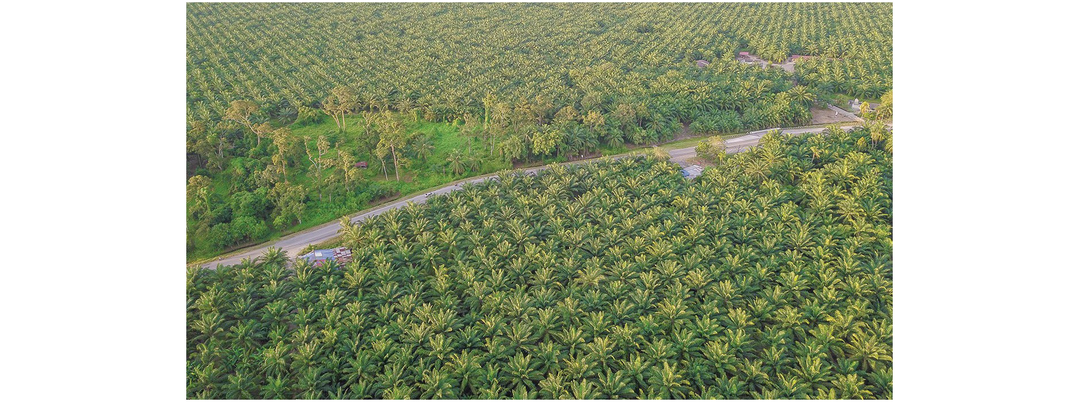
Figure 8.5
Oil palm plantations in Malaysia.
Credit: simonlong / Moment / Getty Images
Competition with agriculture and rapid urbanization may push plantations to unsuitable land areas (Ahrends et al., 2016). Tree plantations are also being established where trees have never been grown before. Xu (2011) considered planting trees in Mongolian grasslands to be unwise. Satellite imagery has been used to demonstrate the success of plantations in China, but Macias-Fauria (2018) indicates that trends detected by satellite have not been validated by ground measurements. Huge numbers of trees have been planted, but how many survived and are functioning well is not evident.
Liao et al. (2010) used a meta-analysis of 86 synthesized experimental comparisons in paired-site design to look at differences between plantation forests and adjacent naturally regenerated primary and secondary forests. Plant and soil carbon (total ecosystem stock) was 284 Mg C ha−1 in natural forests. This was reduced by 28% in plantation forests. Compared with natural forests, there was a general pattern of reduction in plantation forests of NPP (11%), litter fall (34%), fine root biomass (66%), soil carbon (32%), microbial carbon (29%), and lower available nitrogen (22%), phosphorus (20%) and potassium (26%). These patterns were not affected by type of tree, tree age, tree species, or land-use history. Based on their analysis, Liao et al. concluded that they would not recommend replacement of natural forests by plantations to mitigate global warming.
Huang et al. (2018) investigated the role of tree species diversity in carbon accumulation in plantation forests in China. They planted 150,000 trees in 16 different plots, with species diversity ranging from 1 to 16 species. After 8 years of growth, trees in 16-species plots accumulated twice as much carbon as trees in single- or dual-species culture plots.
Peng et al. (2014) reported positive benefits for China from afforestation. They used satellite measurements to determine land surface temperatures (LSTs) for planted forests paired with nearby cropland or grasslands. Averaged out, they reported a decrease in land surface temperatures of approximately 1.1 °C for the forested areas, due to increased evapotranspiration (probably transpiration from increased or closed canopy cover) with a nighttime increase of 0.2 °C. Nighttime warming decreased with average rainfall and increased with latitude. Net daytime warming increased in dry areas owing to offset of daytime cooling by increased nighttime warming.
8.5Population Growth and Afforestation
Population growth is likely to continue in the future, and there will be continuous demand for living space. The great majority of people will live in megacities and associated periurban areas, where land use is intensely managed. Rising incomes and expectations, however, will greatly increase demand for more and better food, including more grain and meat. Global food demand is estimated to increase 59–99% from 2000 to 2050 (Jackson and Baker, 2010). A projected need for more space for agriculture could lead to deforestation to create new cropland and pasture, which would release carbon from soils, decrease forest carbon sinks, and reduce space for afforestation.
8.6Benefits of Afforestation
Afforestation as a mitigation strategy for reducing atmospheric carbon is part of the Paris Agreement climate project to keep average global temperature increase to below 2 °C, preferably at 1.5 °C. How much afforestation would be required in order to contribute to global temperature reduction? Arora and Montenegro (2011) developed scenarios for how afforestation of the global area currently used for agriculture might reduce average global temperature. For a 50-year simulation run-time, they found that if 100% of the area was afforested, the temperature reduction would be 0.45 °C. If only 50% was afforested, the temperature reduction would be 0.25 °C. There would be little reduction produced by areas below 50%. Boysen et al. (2017) consider removal of carbon dioxide from air by fast-growing trees and grasses, and conversion to carbon storage, to be negative emission techniques to offset failure to reduce carbon dioxide emissions from combustion. To accumulate enough biomass carbon to keep the temperature increase no higher than 2 °C, afforestation and grass plantings would have to replace all global natural ecosystems and drastically reduce food production.
With the reductions in carbon dioxide emissions pledged at the Paris Agreement, afforestation and grass areas required would still be huge. One-third of natural ecosystems and one-quarter of current cropland would be converted to forest, reducing food production enormously. Afforestation alone cannot keep global air temperature at or below 2 °C. Partial mitigation increases with irrigation and fertilizer and reduction of emissions of carbon dioxide.
8.7Successional Development: An Alternative to Afforestation
Restoration is an alternative approach to encourage natural regeneration of native trees, after harvesting or degradation, resulting in new-growth forests. Depending on scale and circumstances, natural regeneration can be passive (or unassisted) or assisted for acceleration. The result is forests that closely resemble the native ones that they are restoring (Chazdon and Uriarte, 2016). Lamb et al. (2005) recommend managing and protecting large areas of secondary or natural regrowth regenerated forest. They conclude that successional tree regeneration can be rapid, following deforestation, utilizing available residual tree seeds and any remaining trees, in what they refer to as successional development or self-repair. They report that large-scale natural forest regeneration has been demonstrated in Puerto Rico, Tanzania, Costa Rica, and Brazil.
8.8Summary
Deforestation and forest degradation are continuing at a record pace. This decreases the carbon sink in wood in tree stems and branches and in the soil, and reduces evapotranspiration. Deforestation can be considered as the world’s second highest source of emissions of carbon dioxide and other greenhouse gases. The decreased forest carbon sink contributes to global warming.
The United Nations REDD+ program was established to encourage countries to decrease deforestation through direct payments for results achieved. The Paris Agreement on climate, and other international conferences, recognized that there is value and climate benefit in carbon stored both in trees and in the wood used for construction and other related wood products.
Countries and organizations have pledged to replant deforested land (reforestation) and to plant huge new areas with millions of new trees (afforestation) designated as forests. Afforestation and reforestation are expected to play key roles in partial mitigation of elevated or anthropogenic carbon dioxide to keep average global temperature increases at 1.5 °C and below 2.0 °C. Some of these programs are in progress, while others are in the planning or early activity stages.
This has raised the question: what is a forest? A natural forest contains long-term native tree species in varying stages of development and associated flora, fauna, and microorganisms, resulting in a forest ecosystem that regulates exchange of heat and water with the atmosphere. Many natural or native forests are managed for wood production, and this decreases their mitigation contribution. The response to the call for increased tree planting has been mostly answered by the establishment of huge new tree planting programs. In afforestation, marginal land, former cropland, and even former native forests may be replaced with closely planted fast-growing trees, often of one non-native species. These are called plantations or plantation forests. The purpose is to ensure a reliable source of wood from relatively short-term harvests. China’s enormous new tree plantings result in plantations. The mitigation effects of plantation effects have not been extensively explored, but it is evident they do not function in the same way as native forests. Allowing or encouraging native forests to regenerate after harvest is an effective alternative to afforestation, but regrowth may be slower, and plantations are easier to establish.
It has been clearly established that there is not enough land area available for forests to completely mitigate or offset all anthropogenic carbon dioxide emissions. A combination of reduction of emissions and the mitigating influence of forests, working together, is the only effective strategy to prevent global warming increase above 2 °C.
In the next chapter, everything in the previous chapters will be brought together to determine the answer to the question: do forests warm or cool the atmosphere?
REFERENCES
Ahrends, A., Hollingsworth, P. M., Beckschafer, P. et al. 2016. China’s fight to halt tree cover loss. Proceedings of the Royal Society B 284: 20162559. doi: 10. 1098/rapb.2016.2559.
Arora, V. K. and Montenegro, A. 2011. Small temperature benefits provided by realistic afforestation efforts. Nature Geoscience 4. doi: 10.1038/ngeo1182.
Astrup, R., Bernier, P. Y., Genet, H., Lutz, D. A. and Bright, R. 2018. A sensible climate solution for the boreal forest. Nature Climate Change 8: 2–12.
Aydin, Y. M., Yaman, B., Koca, H. et al. 2014. Comparison of biogenic volatile organic compound emissions from broad leaved and coniferous trees in Turkey. WIT Press 181: 647–658. doi: 10.2495/EID140551.
Boysen, L. R., Lucht, W., Gerten, D. et al. 2017. The limits to global-warming mitigation by terrestrial carbon removal. Earth’s Future 5. doi: 10.1002/2016EF000469.
Bright, R., Anton-Fernandez, C., Astrup, R. et al. 2014. Climate change implications of shifting forest management in a boreal forest ecosystem of Norway. Global Change Biology 20: 607–621. doi: 10.1111/gcb.12451.
Brundi, G. and Richardson, D.M. 2016. Planted forests and invasive alien trees in Europe: a code for managing existing and future plantings to mitigate the risk of negative impacts from invasions. NeoBiota 30: 5–47. doi: 10.3897/neobiota.30.7015.
Chazdon, R. L. and Uriarte, M. 2016. Natural regeneration in the context of large-scale forest and landscape restoration in the tropics. Biotropica 48: 709–715. doi: 10.1111/btp.12409.
Convention on Biological Diversity. 2006. Forest definitions. www.cbd.int/forest/definitions.shtml (accessed on 13 /06/2018).
Curtis, A. J., Helmig, D., Baroch, C., Daly, R. and Davis, S. 2014. Biogenic volatile organic compound emissions from nine tree species used in an urban tree-planting program. Atmospheric Environment 95: 634–643. doi: 10.116/j.atmosenv.2014.06.035.
Donovan, R. G., Stewart, H. E., Owen, S. M., Mackenzie, R. and Hewitt, C.N. 2005. Development and application of an urban tree air quality score for photochemical pollution episodes using the Birmingham, United Kingdom areas as a case study. Environmental Science and Technology 39: 6730–6738. doi: 10.1021/es050581y.
Grassi, G., House, J., Dentener, F. et al. 2017. The key role of forests in meeting climate targets requires science for credible mitigation. Nature Climate Change 7: 220–226. doi: 10.1038/nclimate3227.
Grotta, A. 2015. Plantation forests and climate change. Climate, Forests and Woodlands. http://articles.extension.org/pages/73233/plantation-forests-and-climate-change (accessed 13/06/2018).
Houghton, R. A. and Nassikas, A. A. 2017. Negative emissions from stopping deforestation and forest degradation globally. Global Change Biology 24: 350–359. doi: 10. 1111/gcb.13876.
Hua, F., Wang, X., Zheng, X. et al. 2016. Opportunities for biodiversity gains under the world’s largest reforestation programme. Nature Communications 7: 12717. doi: 10.1038/ncomms/12717.
Hua, F., Wang, L., Fisher, B. et al. 2018. Tree plantations displacing native forests: the nature and drivers of apparent forest recovery on former croplands in Southwestern China from 2000–2015. Biological Conservation 222: 113–124. doi: 10.1016/j.biocon.2018.03.034.
Huang, Y. Chen, Y., Castro-Izaguirre, N. et al. 2018. Impacts of species richness on productivity in a large-scale subtropical forest experiment. Science 362: 80–83. doi: 10.1126/science.aat6405.
Jackson, R. B. and Baker, J. 2010. Opportunities and constraints for forest climate mitigation. BioScience 60: 698–707.
Jalonen, R., Valette, M., Boshier, D., Duminil, J. and Thomas, E. 2017. Forest and landscape restoration severely constrained by a lack of attention to the quantity and quality of tree seed: insights from a global survey. Conservation Letters 11: e12424. doi: 10.1111/coml.12424.
Jiang, Z. and Zhang, S. Y. 2003. China’s plantation forests for sustainable wood supply and development. FAO. http://fao.org/docrep/ARTICLE/WFC/XIIo955-B4.HTM.
Karsenty, A. and Ongolo, S. 2011. Can “fragile states” decide to reduce their deforestation? The inappropriate use of theory incentives with respect to REDD mechanism. Forest Policy and Economics. doi: 10.1016/j.forpol.2011.o5.06.
Korner, C. 2017. A matter of tree longevity. Science 355: 130–131. doi: 10.1126/science.aaa/2449.
Lamb, D., Erskine, P. D. and Parrota, J. A. 2005. Restoration of degraded tropical forest landscape. Science 310: 16281632. doi: 10.1126/science.1111773.
Lamlon, S. H. and Savidge, R. H. 2003. A reassessment of carbon content in wood: Variation within and between 41 North American species. Biomass Bioenergy 25: 381–388.
Liang, J., Crowther, T. W., Picard, N., Wiser, S. and Zhou, M. 2016. Positive biodiversity–productivity relationship predominant in global forests. Science 354. doi: 10.1026/science.aaf8957.
Liao, C., Luo, Y., Fang, C. and Bo, L. 2010. Ecosystem carbon stock influenced by plantation practice: implications for planting forests as a measure of climate change mitigation. PLoS One 5: e10867.
Luyssaert, S., Marie, G., Valade, A. et al. 2018. Trade-offs in using European forests to meet climate objectives. Nature 561: 538–541. doi: 10.1038/s42586-018-05777-1.
Macias-Fauria, M., 2018. Satellite images show China going green. Nature 553: 411–413. doi: 10.1038/d41586-018-00996-5.
Mackey, B., Prentice, I. C., Steffen, W. et al. 2013. Untangling the confusion around land carbon science and climate mitigation policy. Nature Climate Change 3: 552–557. doi: 10.1038/nclimate1804.
McPherson, E. G., Kendall, A. and Albers, S. 2015. Million Trees Los Angeles: carbon dioxide sink or source? www.fs.fed.us/psw/publications/mcpherson/psw_2015-mcpherson001.pdf (accessed on 13/06/2018).
Nabuurs, G.-J., Lindner, M., Verkerk, P. J. et al. 2013. First signs of carbon sink saturation in European forest biomass. Nature Climate Change. doi: 10.1038/nclimate1853.
Naudts, K., Chen, Y., McGrath, M. J. et al. 2016. Europe’s forest management did not mitigate climate warming Science 351: 597–600. doi: 10.1126/scienceaac9976.
Pataki, D. E., McCarthy, H. R., Litvak, E. and Pincetel, S. 2011. Transpiration of urban forests in the Los Angeles metropolitan area. Ecological Applications 21: 661–677.
Pedro, M. S., Rammer, W. and Seidl, R. 2015. Tree species diversity mitigates impacts on the forest carbon cycle. Oecologia 177: 619–630. doi: 10.1007/s00442-014-350-0.
Peng, S.-S., Piao, S., Zeng, Z. et al. 2014. Afforestation in China cools local land surface temperature. Proceedings of the National Academy of Sciences 111 February 2014. doi: 10.1073/pnas.1315126111.
Peter, G. M. 2018. National Forest Foundation launches ambitious effort to plant 50 million trees. www.nationalforests.org/who-we-are/press-news/plant-50-million-trees.
Poorter, L., van der Sande, M. T., Thompson, J. et al. 2015. Diversity enhances carbon storage in tropical forests. Global Ecology and Biogeography 24: 1314–1328. doi: 10.1111/geb.12364.
Sasaki, N. and Putz, F. E. 2009. Critical need for a new definition of “forest” and “forest degradation” in global climate change agreements. Conservation Letters 2: 226–232. doi: 10.1111/j.1755-263X.2009.00067.x.
Schelhaas, M.-J., Nabuurs, G.-J., Hengeveld, G. et al. 2015. Alternative forest management strategies to account for climate change-induced productivity and species suitability changes in Europe. Regional Environmental Change 15: 1581–1594. doi: 10.1007/s10113-015-0788-z.
Sexton, J. O., Noojipady, P., Song, X.-P. et al. 2015. Conservation policy and the measurement of forests. Nature Climate Change 6: 192–196. doi: 10.1038/nclimate2816.
The Bonn Challenge. 2011. www.bonnchallenge.org (accessed 13/06/2018).
Thom, D., Rammer, W. and Seidl, R. 2017. The impact of future forest dynamics on climate: interactive effects of changing vegetation and disturbance regimes. Ecological Monographs 87: 665–684.
Trillion Trees. 2017. New ‘Trillion Trees’ partnership calls for global efforts to protect and restore one trillion trees. www.trilliontrees.org/faqs (accessed 13/06/2018).
Unger, N. 2014. To save the planet, don’t plant trees. New York Times, 19 September.
United Nations REDD+ Program. www.unredd.net/about/what-is-redd-plus.html (accessed on 13/06/2018).
Van Holt, T. and Putz, F. E. 2017. Perpetuating the myth of the return of the native forests. Scientific Advances 3: e160177.
Vitali, V., Buntgen, U. and Bauhus, J. 2017. Silver fir and Douglas fir are more tolerant to extreme droughts than Norway spruce in south-western Germany. Global Change Biology doi: 10.1111/gcb.13774.
Williamson, P. 2016. Scrutinize CO2 removal methods. Nature 530: 153–155. doi: 1038/530153a.
Xu, J. 2011. China’s new forests aren’t as green as they seem. Nature 477: 371.