
5
APARTHEID GOVERNMENT AND AN INCREASINGLY fractious civil war came to an end through a negotiated settlement. The final compromise was itself the product of decades of brokered discussions that progressed in fits and starts. For example, Buthelezi tried and failed to forge a workable plan with a White opposition leader as early as 1975. In 1986, two White politicians formed the Institute for Democratic Alternatives in South Africa (IDASA) as a way to connect exiled Black political leaders with potentially reform-minded Afrikaners. A breakthrough came in 1987 with a successful meeting in Dakar, Senegal. However, despite great interest in the proceedings, the White government officially condemned the meeting because it involved direct communication with banned organizations.1
Throughout the 1980s, while still a prisoner of the South African government, and as violent conflict raged on, Mandela met in secret with White political leaders to consider various democratic and power-sharing proposals. Other ANC leaders did the same at venues inside and outside the country. Only after De Klerk’s 1990 speech did political leaders from the National Party, the ANC, and several other organizations, lawyers, foreign governments, and constitutional experts openly engage in wide-ranging discussions. They debated the merits of the very different options for structuring a new government. They did this in closed meetings and in public forums, in newspaper columns, in books, on the radio, and on television.
A few principles gained quick assent from those deliberating the new rules of the game: full citizenship would be accorded to all irrespective of race; there would be no more legally segregated areas or amenities; and the next government would undertake ambitious projects to redress the social and economic legacies of the past. And at the center of it all would be a constitutional democracy: choosing leaders through the vote and recognizing a new constitution as the supreme law of the land.
That still left quite a bit on the table for deciding how to govern a newly constituted society. Would citizens vote for individuals or for parties? Would power be concentrated or decentralized? How would the chief executive ultimately be selected? What was the vision for the appropriate role of the state in social and economic planning? What role would traditional leaders and former homeland structures play? Even with the best minds in South Africa and around the world trying to steer a mutually acceptable solution, so many obstacles stood in the way. Could you actually reverse engineer the Apartheid system to create a single, democratic polity? Being realistic about all that had happened over the previous several decades let alone the past several centuries, and the depths of divide in the country, success seemed to be a long shot. Even after Mandela’s release and after various political organizations were no longer banned, violent conflicts marred the country, ranging from attacks by the White, right-wing AWB to considerable violence between the ANC and the IFP, let alone sustained conflict in and around the homeland governments. Given skepticism about the prospects for success, many described the attempt to implement a multiracial democracy in this divided society as a “bold experiment.”2
In the remainder of this chapter, I describe the central contours of how this democratic order was established with respect to three key institutions. First, the elections. I explain why the ballots looked the way they did as voters went into their booths—describing the new electoral rules and the particular choices citizens faced. In turn, those rules and choices would channel the “will” of the people into concrete allocations of political power in government. Second, I highlight a few features of the country’s remarkable constitution, including its deep links to the demands of the resistance movement and a strong foundation of protecting human rights. Those principles marked a set of goalposts for evaluating the consequences of democratic practice in the years to come. And third, I describe the plan to reorient the spatial configuration of the country and undo the vision of Apartheid planners. The new local municipality of Mogale City would be established in the context of new provinces and a new local government structure that aspired for integration rather than separation. Finally, I return to Mogale City to consider some of the early challenges associated with implementing this new democracy in practice. In subsequent chapters, I make the link between this brand of South African democracy—the institutions chosen to structure political conflict in this divided society—and patterns of dignified development over the quarter century following the historic April 1994 election.
The Election
The successful implementation of a first multiracial election was a critical step toward consolidating this new democracy. Tellingly, virtually all of the adult South Africans over the age of thirty-five I surveyed or interviewed myself in 2019 in Krugersdorp, Munsieville, Kagiso, and Muldersdrift could recall with some detail where they were and how they felt as the voting process unfolded between April 26 and 29, 1994.
Nomthandazo Sikoto was born in Soweto in 1966 and came to Kagiso in 1987, already a political activist in her early twenties. She woke up on April 27, 1994, at 6 a.m. to join the now iconic winding queues that were photographed at polling stations around the country. She waited until 2 p.m. to finally cast a vote and said that although she hadn’t eaten anything all day, she didn’t feel hungry. It was an emotional day and she gladly participated in the massive celebrations. She would go on to vote in every subsequent election, and when I met her on the eve of the 2019 national election, she told me she had every intention of casting her vote the next day.
Juliana Steyn, a White woman whose name and accent revealed her Afrikaans roots, grew up just outside Krugersdorp. Like most young White adults her age, she joined the South African army as she left high school in 1992. And on that election day in 1994, she saluted the about-to-be-old South African flag—which itself depicted the British flag, as well as the flags of Kruger’s South African Republic and the Orange Free State—for a final farewell. Later in the afternoon, she would salute the new, five-color flag with its bold stripes and angles making a sideways Y. As the other White soldiers had been instructed to do, she ran laps until she could properly sing “Nkosi Sikelel’ iAfrika”—a song performed at the South African Native National Congress in 1912 and adopted as the official hymn of the ANC in 1925.3 At least in the near term, “Nkosi” would serve as one of two dual national anthems in the “new” South Africa. Juliana could already sing the other: “Die Stem van Suid-Afrika,” a holdover from the Apartheid past, which would eventually be edited to avoid references to the Great Trek in deference to post-Apartheid sensibilities.
Leslie Gama was still four years too young to cast a vote. He had grown up on a few different White-owned family farms but never strayed from Muldersdrift. The area was so-called because of a family by the name of Mulder who settled there in the mid-nineteenth century and the presence of a large drift, or ford, that allowed passage over the Crocodile River. That passage connects Johannesburg to Krugersdorp and onward to the rest of the West Rand.
Leslie did what he was told, and that was to remain at home. He was old enough to recognize the enormity of what was about to unfold. The idea of this unprecedented multiracial election filled his head with worst-case scenarios, rendering it the scariest day of his life. Would his parents return home? Would the area be overcome with violence? He had heard nasty rumors that the election itself was just a ploy to round up Black people. These were not simply the imaginations of a child but concerns that were widely shared among adults throughout the area. Leslie would have to wait and see.
For Leslie, Juliana, and Nomthandazo, and for just about everyone in and around the still provisional Krugersdorp District, that day held a mix of joy, excitement, and uncertainty. Over 90 percent of the Black respondents and close to 80 percent of the White respondents I surveyed4 around Mogale City in 2019 said that they voted in that 1994 election.5 Not surprisingly, sentiments divided along racial lines.
For Blacks, virtually all recalled the day as one filled with euphoria.
“I was at home celebrating with my family and I was joyful for a change from the oppressed life I lived before 1994.”
“I was in Kagiso happy with the whole community and chanting the struggle songs.”
“It felt like God was coming … like the struggle was over.”
“I was in Munsieville South—this is not far from where Desmond Tutu grew up—and was happy because everyone was celebrating.”
“That day made me happy.”
For Whites, many also recalled feeling hopeful, happy, relieved. But others saw only doom ahead.
“I was at home and all Whites including me thought the worst is still coming.”
“The only thing that comes to my mind was, Black people will fight White people.”
“I did not mind that much but was afraid, thinking that Blacks may as well do revenge to us.”
“It was a happy and sad mood in our community because of the changes that were going to happen.”
One White man from Dan Pienaarville, who was sixteen at the time of the election, was blunt.
“I was here in Krugersdorp and wasn’t happy knowing that we will have a Black president.”
The election was South Africa’s, but it reverberated far beyond its borders. Given the scope of the anti-Apartheid movement and fascination with the lead actors—the Nobel committee had already jointly awarded its 1993 Peace Prize to De Klerk and Mandela—the day marked a sharp contrast from the images of conflict, protest, and police brutality that for several decades had dominated external views of the country.
Ballots: The Rules and the Choices
When citizens arrived at their voting stations in Krugersdorp, Kagiso, Munsieville, Muldersdrift, and throughout the newly constituted republic in April 1994, they immediately experienced the most important new rules of the game. Each voter received two pieces of paper from the temporary electoral commission employees: one marked “RSA” and the other “Prov”—ballots for the respective national and provincial elections.
The ballot papers were printed in color, both much longer than they were wide. Each contained the sentence, “Make your mark next to the party you choose,” which was repeated in the ten other official languages, a recognition of the country’s cultural diversity. Below the instructions, the national ballot listed nineteen party names, symbols, and a headshot of each party leader—but not their names. In other words, neither “Nelson” nor “Mandela” appeared anywhere on the page.
In this setup, known as a party-list, proportional representation (PR) system, the composition of the Parliament is determined by the share of votes each party receives from the voters. Prior to the election, the parties register ranked lists of their own preferred party members for those positions. Thus if a party is allocated twenty seats after the election results are in, the first twenty names on that party’s list become Members of Parliament (MPs). Each party would develop its own rules and procedures for determining those lists, and not surprisingly, the ANC lists would be replete with liberation heroes.
Once seats are allocated, the MPs must vote on who will be the state president in an election determined by a simple majority. The result is generally straightforward if a single party attains more than 50 percent of the seats: the post goes to the person at the top of that party’s list. Failing that, party leaders engage in bargaining to form a coalition, and typically that means that some parties agree to vote for another party’s leader in exchange for some concessions in terms of policies and/or appointments. Once the leader has been elected, they get to make choices about various government appointments. However, even between elections, the leader serves at the pleasure of the Parliament and can be replaced.
Such a system has many virtues but also carries certain important risks. First, and most obviously, it affords significant power to parties and weighs against a focus on any single individual. If you are wary of unchecked individuals, this is a good system. However, if you are concerned about the quality or transparency of parties, it might be less preferable. When elections become competitive, the system can incentivize ambitious political leaders to split off to form their own, smaller and smaller parties. This can burden voters with simply too many choices, and parties can tend to become more about individual personalities than about ideas and policy platforms.
The design of a PR system is clearly aimed at being more inclusive of a wider variety of perspectives. It allows even relatively small parties to participate in the legislatures, as they can literally get their own seats at the table.6 By comparison, in a typical “two-party” system that tends to emerge with different sets of electoral rules—as in the case of the United States—small parties with a particular focus are almost never officially represented anywhere. In the U.S. system for electing the national legislature, Americans vote for candidates within specific electoral districts, and the individual with the most votes gets the seat reserved for that contest. It is a “winner-take-all” approach, because unless you get the most votes and win the contest, you get zero representation. While representativeness is a virtue, when institutionalized it also implies that more extreme positions will have opportunities to have their voices recognized. Thus, for example, a PR system is more likely to include far-left and far-right parties in the legislature, for better and worse.
No solution is perfect. When there is enormous heterogeneity of preferences, and those are reinforced by cultural differences and economic inequalities, no institutional fix can make everyone happy, let alone guarantee shared prosperity. While it is not possible to know for sure how history would have unfolded under different electoral rules, I am largely convinced that proportional representation was the best system for South Africa in order to keep all organized interests vested in democratic politics.
Beyond the electoral rules, the logistics of administering the election were daunting. Compared with the previous all-White national election in 1989, in which the government prepared for 5 million eligible voters, at least 22 million were eligible in 1994, and the number of polling stations and polling booths more than tripled. Moreover, the majority of the electorate approached election day without the experience of having voted before, a problem that challenged the electoral commission, which did not have a multiracial voter roll to work with.7
My good friend Michael Goldberg, who had traveled with me to South Africa in 1991, returned to the country after our graduation. (Frankly, I still harbor jealousy about that fact.) He spent the run-up to the election in 1993 conducting voter education workshops for first-time voters. The National Democratic Institute (NDI) and other voter education organizations implemented programs to train community-based Black South Africans to run their own workshops in their own communities. Mundane topics and logistics needed to be addressed to avoid calamity on election day. What type of identification documents would be accepted? Would individuals enter the voting booth alone or with a family member or friend? In many of the rural areas where Goldberg worked, citizens expressed fears that White farmers would intimidate their workers to vote for their preferred candidates. Voter education workshops and materials emphasized “my vote is my secret.”
Not surprisingly, many of the faces and symbols printed on the South African ballot in 1994 were those of the leaders and organizations that had been prominent in the political struggles for political change. Although long at odds with much of the rest of the liberation movement, Mangosuthu Buthelezi, the Zulu leader at the helm of the Inkatha Freedom Party (IFP), could campaign on some anti-Apartheid credentials. His opportunity to mount a formal campaign was severely truncated by his own decision to boycott the election, one he reversed just a week before it was scheduled to begin. Buthelezi and the Zulu king, Goodwill Zwelithini, had enjoyed autonomy and a government budget under the Apartheid system. With eight million Zulus in the country, Buthelezi could threaten the stability and legitimacy of the election. In a strange alliance, during the constitutional negotiations process, Buthelezi worked with White separatists and other Black homeland leaders to demand greater provincial autonomy from what would surely be an ANC-run central government. They failed to extract this revision, but perhaps because they did not want to be political outcasts and/or because the ANC promised the maintenance of the monarchy and a royal budget, Buthelezi capitulated. The White Parliament needed to be called back for one last session to amend the interim constitution to allow for this late entry into the electoral contest, but in the end, Buthelezi’s face and party symbol were affixed as a sticker at the bottom of the millions of paper ballots in time for the election.8
And yet, there was no doubt—at least by the time of the election—that the liberation party was the African National Congress, and the photo of Nelson Mandela deserved to be framed on a wall of portraits of other independence leaders, including Ghana’s Nkrumah, Tanzania’s Nyerere, Kenya’s Kenyatta, and others. During Mandela’s time in prison, especially throughout the late 1970s and 1980s, many other individuals and organizations played a critical role in challenging the Apartheid government, including through mass action organized by trade unions and the coalition of civil society organizations embodied in the UDF. The ANC made a formal “tripartite” alliance with the major trade union federation, COSATU, and with the SACP, partners who shared a vision for the future. The arrangement successfully consolidated electoral support as only the ANC would appear on the ballot.
In this sense, one of the country’s greatest blessings entering the transition period was that the mantle of leadership for “Black South Africa” had already largely coalesced around Mandela and his ANC. (In 1993, 56 percent of all South Africans and 81 percent of Black Africans said they favored the ANC.)9
The ANC was a diverse organization committed to a pluralist political order. Many Whites, Coloureds, and Indians had actively participated in and sometimes made the ultimate sacrifice for the struggle. And at least initially, the party visibly maintained individuals within its senior ranks from all four Apartheid-recognized race groups. The non-racialism ideals central to the Freedom Charter were routinely on display, especially in the company that Nelson Mandela kept.
The 1994 election marked an unprecedented milestone in providing the previously disenfranchised a focal moment in which to make decisions about whom they wanted as leaders. And they were reminded that there was a choice to be made: despite the high legitimacy of Mandela himself and the ANC, nineteen parties were on the first ballot, and many of them enjoyed relatively strong bases of support and were able to compete freely.
Amid the profound diversity and inequality of this newly formed polity, millions of people engaged in the exact same process within the period of just a few days: step into a voting booth, mark an X on each of the same two pieces of paper that were distributed throughout the country, and be able to keep their choices secret.10 For the first time ever, Blacks, Whites, Coloureds, Indians, and those not classified under the Apartheid rubric would collectively vote, marking a dramatic new start to what for a very long time would be called the “New South Africa.” And for the first time, being a Black South African citizen was no longer an oxymoron.
The Results: ANC Victory, but Not a Supermajority
For many expecting the worst, the largely smooth election came as a surprise. As an ANC leader recounted to me:
I think with the release of Mandela, the unbanning of political organizations, we then knew that we were going to really have fundamental change in South Africa. So we were preparing ourselves, [but] … just days before the election, people, the whole of South Africa, were really in a tense state. People of all communities, all different walks of life, were really caught up with the fear of the unknown, what will democracy bring? Would it be like some parts of Africa or Europe where things go haywire? And we all caught up the day after elections on that fateful April day. And the sun rose, things were normal, people walked about, and suddenly, it was a huge sigh of relief for all South Africans who have crossed the Rubicon. We’ve done the big change.11
And back in Muldersdrift, Leslie Gama’s parents did come home that day. Despite rumors of a counterrevolutionary force within the military, it did not disrupt the election. For most adults around Krugersdorp and throughout South Africa, fear gave way to excitement. As happened in many new democracies around the world, people proudly displayed the indelible ink marked on their fingers—applied to thwart attempts to vote more than one time. There were a few bouts of violence. And there were some irregularities, including a mismatch between the electoral results in KwaZulu-Natal and preelection opinion polls.12 But none sufficient to impede the consensus that the election was at least “crudely legitimate.”13
Nationwide, approximately 19.5 million votes were cast, and 12.2 million were marked for the African National Congress. By the formulas of the IEC, their 62.7 percent of valid votes counted translated into 252 of the 400 seats in the National Assembly.14 Although the ANC had been widely expected to gain up to 70 percent of the vote, because they received just less than a two-thirds “supermajority,” the party would not be able to unilaterally alter the constitution. This was an outcome that most could live with, and likely a blessing that the party did not come out of the blocks fully dominant.
De Klerk’s National Party—the very one that created and later dismantled Apartheid—captured just over 20 percent of the vote, performing well not just among White voters but also among Indian and Coloured voters, the latter being particularly dominant in the Western Cape. After forty years in power, spearheading one of the world’s most reprehensible systems of modern government, but also helping dismantle it, their campaign rehashed old tropes in new clothes. The party’s leaders continued to market the idea of “Black domination” to minority groups who feared retribution in the new order. For example, the National Party had systematically privileged Coloureds over Black Africans during the Apartheid era, and in the Cape, virtually all Coloureds speak Afrikaans. In turn, the NP successfully mobilized this voting bloc around the idea that they were essentially “Brown Afrikaners” and needed to protect themselves from unchecked ANC power. Many listened, and especially in the Western Cape Province, Coloureds overwhelmingly voted for the NP.15
Buthelezi’s IFP was expectedly strong in the Zulu-dominated region of KwaZulu-Natal where many voters viewed the ANC as virtually an enemy, following years of intense ANC-IFP conflict during the transition. The IFP also did well with Zulu-speaking migrant mine workers, including around Krugersdorp. All told, this translated into 10.5 percent of the national vote share.
Constand Viljoen, leader of the Freedom Front and successor to the same Conservative Party that controlled the Krugersdorp council at the end of Apartheid, also received over 400,000 votes nationwide. At the time the Freedom Front, promoting a Volkstaat, a separate independent homeland for Afrikaners, gained much of its support from the urban periphery—places like Krugersdorp on the West Rand, where it received almost 6 percent of the vote.16 Nationwide it took in just 2 percent.
Despite some strong historical political roots in the country, both the Democratic Party (DP) and the PAC had weak showings; each attracted less than 2 percent of the vote.
And on May 9 the Parliament convened, governed by the new Speaker, an Indian woman and human rights lawyer named Frene Ginwala. Their one order of business was to elect the new state president, Nelson Mandela, and they did so without dissent.
He and scores of other leaders would depart almost immediately for Pretoria, a two-hour flight away, as the new government adopted many of the old government’s rules and traditions, including keeping the Parliament in Cape Town and the executive government offices in Pretoria, which serves as a second capital city. (The third capital, of the judicial branch, is in Bloemfontein.) This multicitied capital was one of many holdovers from the creation of the Union of South Africa, which itself merged four separate entities.
On the following day, May 10, Mandela was inaugurated as the first post-Apartheid president at the age of seventy-five. The ceremony took place at the Union Building, originally completed in 1913 with the two wings meant to symbolize the union of the English and Afrikaner “races.”17 Now, in 1994, South Africa would, once again, mark with an election the unification of people and territory and much greater cultural diversity within its polity. Both within the ruling party and across the parties that had won seats in the new Parliament, citizens of almost any background could find some representative who looked like them and/or represented their interests and values. Very few could have said that they were fully excluded.
The day was nothing short of remarkable. At his inauguration, attended by dozens of world leaders, Mandela proclaimed, “Out of the experience of an extraordinary human disaster that lasted too long, must be born a society of which all humanity will be proud.… Never, never and never again shall it be that this beautiful land will again experience the oppression of one by another and suffer the indignity of being the skunk of the world.”18 It took a century of struggle, but in the final decade of the twentieth century, demographic reality finally became the basis for political power in South Africa and legalized apartness was over. Indeed, South Africans emerged relatively peacefully through the first election. Mandela, a political activist, and once widely recognized by Whites as a terrorist, was now the shining symbol of the “New South Africa.” The country, and the larger world, could not get enough of him.
I also wanted to see for myself. Following my first year of graduate school in June 1995, I traveled with my soon-to-be fiancée, Amy, to Cape Town for a two-week trip to lay eyes on the new version of the country I had last seen under very different circumstances in 1991. As always, it was a painfully long flight from the United States. We stayed in the not-yet-upgraded Breakwater Lodge, on the outskirts of what was still a relatively small waterfront development along the stunning Atlantic seaboard. Sleep-deprived, we were looking forward to getting some rest.
Standing in the way were revelers. There was partying in the hotel. Serious partying. And it went on … All. Night. Long. Earlier that day, South Africa had defeated Australia in the first round of the Rugby World Cup, being hosted in the country for the first time, a dividend of huge proportions for the sport-loving White population. Kegs of Castle Lager flowed through the bars, raising the volume into our room each hour.
On the bright side, my friend Michael, still working at NDI, had thoughtfully bought us tickets to the next game, which would turn out to be South Africa versus Romania at Newland Stadium in Cape Town. The game itself was fun to watch, but I was not a big rugby fan. Why throw the ball backward? For me, the real spectacle was the fans. Black spectators accustomed to cheering for any team competing against South Africa were now rooting for a group of essentially all-White men, resolved, at least for now, that they were actually on the same side. And watching the massive-bodied White rugby fans do as Juliana Steyn had done, awkwardly mouthing their way through “Nkosi Sikelel’ iAfrika,” and the Black fans willing to reappropriate this team and their symbols as their own—if that wasn’t a spirit of reconciliation, it was hard to imagine what would be. Pessimists became optimists, and of course the fact that the South Africans would eventually win the cup helped generate a collective sense of pride about what had been accomplished as a new nation in relatively short order. And Mandela conspicuously displayed his forbearance toward White South Africa when he opted to don the Springbok jersey—previously a symbol of “White” South Africa—at the final awards ceremony, a moment dramatically captured in the movie Invictus.
Constitutional Rights: Foundations for Restoring Dignity
The 1994 election was governed by a temporary, interim constitution, and the resulting Parliament immediately acted as a constitutional assembly to produce a permanent replacement. Signed in late 1996, and in effect as of early 1997, that document set a high bar for the types of rights that would be guaranteed to citizens—protections not simply from a potentially intrusive government (as the American constitution emphasized) but from the everyday realities of social and economic despair. It offered a progressive and inclusive vision of what the New South Africa should look like. Jurists and legal scholars around the world have come to regard the South African document as an extraordinary model—the epitome of a modern constitution.19
Much of the content drew quite explicitly on the demands and aspirations of prior generations of the liberation movement. Since its founding, the ANC leadership frequently comprised educated elites who spotlighted the contradiction between the human rights ideal and the reality of how Black people were treated. Sol Plaatje and other attorneys demanded an unbiased judicial system and equal application of the law as early as the first decades of the twentieth century.20 In 1923, the young ANC produced an “African Bill of Rights for South Africa” to remind the country and the world that Black Africans were also human and deserved to be treated in kind. It called for representation, liberty, and the right to property, arguing that African inhabitants of the Union had, “as human beings, the indisputable right to a place of abode in this land of their fathers.”21
In 1943, the organization adopted a document titled Africans’ Claims in South Africa, also known as The Atlantic Charter from the African’s Point of View. It was a response to the Atlantic Charter, advanced by President Franklin Roosevelt and Prime Minister Winston Churchill, which laid the foundation for the formation of the United Nations, and set out a vision for shared global peace and prosperity.22 As stated in the preface of the ANC document, Churchill had intended the charter to apply only to White people. In their documented response, the ANC wanted to make clear that as human beings, Black Africans were entitled to the same.
Next, there was the 1955 Freedom Charter, perhaps the most critical document outlining ANC aspirations for a post-Apartheid future. As I mentioned in the previous chapter, this document, the product of months of citizen input, was launched by the Congress of the People at Kliptown, less than fifty kilometers from Krugersdorp. It drew explicitly on the notion of universal entitlement to the protection of human rights. The Freedom Charter took center stage at some of the secret negotiations between exiled Black leaders and White politicians during the late 1980s.
And although Nelson Mandela’s landmark three-hour speech delivered in 1964 while a defendant in the Rivonia trial was not an official ANC charter in the manner of the two aforementioned documents, it took on great political weight for its clarity and bravery, contributing to Mandela’s legitimacy as a future leader even as that trial would land him in prison for much of the next three decades. The speech is best known for his final statement in which he proclaimed that for the values and causes he articulated, “I am prepared to die.” Throughout the speech, he reiterated these long-standing human rights demands and expectations.
Although the final constitution made no express reference to Apartheid itself, or to any of these key documents that sought to challenge institutionalized White supremacy, even a casual reading reveals very strong links to this history.
For example, the preamble of the 1996 constitution states, “We, the people of South Africa, Recognise the injustices of our past.” And like the Freedom Charter, it called for “non-racialism.” And just as the Freedom Charter proclaimed that “the preaching and practice of national, race or colour discrimination and contempt shall be a punishable crime,” so did the constitution: “[Freedom of expression] does not extend to advocacy of hatred that is based on race, ethnicity, gender or religion, and that constitutes incitement to cause harm.” A set of fairly standard civil and political rights, including freedom of speech, association, and a free press, that appeared in the final constitution were also echoes from the Freedom Charter.
Perhaps most remarkable was the extent to which calls for specific social and economic rights, demanded in Africans’ Claims, the Freedom Charter, and “I Am Prepared to Die,” were also enshrined in the highest law of the land. This included access to free education, housing, social security, and health care and freedom from hunger. By making these rights, the South African constitution opened the possibility for lawyers to push for material progress in the courts when offered evidence of gaps and shortfalls.
Again reflecting the Freedom Charter, the constitution also emphasized respect for cultural autonomy or group rights by guaranteeing access to education in a choice of one of the eleven official languages. More generally, the constitution reflected the Freedom Charter’s balancing act of advocating “non-racialism” alongside explicit recognition of past racial discrimination and the need for redress.
In his “I Am Prepared to Die” speech, Mandela argued that “the lack of human dignity experienced by Africans was the direct result of the policy of White supremacy,” and in turn, the constitution’s Bill of Rights proclaimed, “Everyone has inherent dignity and the right to have their dignity respected and protected.”
Also revealing is where the documents diverged. Most conspicuously, the constitution did not reflect the aspiration of the Freedom Charter to nationalize the mines, or frankly, to nationalize much of anything. Moreover, the Freedom Charter made very specific demands for “full employment” and a forty-hour work week, which also did not materialize.
These exceptions notwithstanding, the human rights values espoused by the ANC and the resistance movements against institutionalized White supremacy were clearly enshrined in the new constitution. In turn, specific directives invited a wide range of political actors to participate in the quest to extend respect for human dignity to all citizens.
The Redrawing of Administrative Boundaries
The other big question central to the design of democratic government was how to redraw the internal boundaries of the country. After almost a century of intense racial segregation, including forced relocation to several “homeland” governments, a radical reconfiguration was necessary. One option was a centralized approach, more like the French system, which incorporates a high level of uniformity throughout its territory. That might be appealing in terms of its prospects for providing equitable treatment to all South Africans, but it would face the realities of profound disparities in resources and capacities that would make such a system at least initially unworkable. Another option would be to devolve a great deal of decision making and authority to localized governments, as is the case in the United States. By the time of South Africa’s political transition, decentralization and strong local government had become new “international norms.” You want a real democracy? You need to give some power to politicians who live and interact with people in their communities, not in some distant national capital. It was a compelling argument but needed to be implemented in a manner that would be viewed as fair and feasible, not a straightforward task anywhere, let alone in a place with South Africa’s levels of cultural diversity overlaid with inequality.
Boundary-making provides almost limitless possibilities for political conflict. Given that South Africans were already highly segregated into racially demarcated neighborhoods and sometimes regions, and that the conditions in White areas were so much better than the rest (and Indian and Coloured areas were also largely better serviced and more prosperous than Black African areas), and assuming that there would be no more forced movement of people—suddenly the stakes of those internal boundaries became quite high.
As finalized in the 1996 constitution, South Africa would be a “quasi-federal” polity. The nine new provinces would have substantial discretion in their budgets and in the administration of many policies, but they would not be truly autonomous and would remain almost entirely dependent on the national government for revenue. Reflecting this relationship, elections for provincial legislatures would be jointly coordinated with national elections, all under the auspices of a national electoral commission. Krugersdorp, formerly in the “Transvaal” Province of the old South Africa, as of 1994 would now sit in Gauteng (along with Johannesburg and Pretoria). Cape Town would become the new capital of the Western Cape Province. Durban, the old Natal Province, and the former KwaZulu homeland would become KwaZulu-Natal.
In this critical redrawing, the homelands of Apartheid design would be no more. On election day, the borders, laws, and government of Bop, and the three other independent homelands, had no legal basis; Bop’s oddly unconnected territories were integrated into the Northern Cape, Gauteng, and Free State provinces. And similar reconfigurations would occur throughout the country to varying degrees; some provinces would inherit a great deal of former homeland territory, whereas the Western Cape would inherit none. Meanwhile, the hundreds of traditional leaders whose authority was very much vested in the homeland structure would be offered more than a proverbial bone: the government would recognize particular areas as essentially co-governed by such leaders, a government department would be established to provide national-level representation, and the leaders themselves would receive government salaries.23
FIGURE 5.1. South Africa’s post-Apartheid provincial boundaries. Note: What is today Limpopo Province was initially named Northern Transvaal in 1994, and then in 1995, Northern Province; what is today Mpumalanga was initially named Eastern Transvaal in 1994.
Particularly contentious was how the boundaries of the more intimate level of local government would be drawn. In this context, the potential gap between promises, expectations, and realities could be seen most visibly for individual citizens. Again, White South Africa had never fully realized its goal of becoming a White country, and as was the case with Krugersdorp, most of the relatively well-off White towns and cities around the country included and/or were surrounded by racially segregated townships. By the 1980s, many of the latter were formally governed by Black Local Authorities (yes, an official term), and unsurprisingly, as these were generally viewed as illegitimate and underresourced, they did not function well. By contrast, the White local governments generally did just fine and expenditures were matched with sufficient tax revenues. The post-Apartheid challenge was to amalgamate these into integrated polities but also to have local government structures.
The possibility that decentralization could backfire was not lost on the ANC, whose leaders recognized that devolution was frequently a mechanism to protect the privileges of White people.24 For example, if Krugersdorp would be allowed to remain essentially “as is,” a largely White town with a White tax base, independent and separate from the neighboring Black areas such as Kagiso and Munsieville, then race-based Apartheid could largely survive in practice.
Anticipating this possibility, across South Africa’s nine provinces, close to three hundred local governments were either reconfigured or born anew, including a handful of major metropolitan authorities (including Johannesburg, Cape Town, and Durban, and today there are a total of eight).25 While many essentially Black-only municipalities would remain, especially in rural, former homeland areas (where virtually no Whites, Coloureds, or Indians reside), this would mark the end of White-only local government, and municipalities in urban areas and on the urban periphery would now be multiracial polities. For the time being, the mosaic of greater Krugersdorp would be known as Krugersdorp District.
Although the big prizes for electoral politics were clearly the seats in the national parliament and the state presidency, subnational governments soon emerged as important political arenas, perhaps in large part because this was where the ANC was vulnerable—not always able to attain over 50 percent of the seats needed to control governments.
Most prominently, the ANC lost two of nine provinces in that first election: the Western Cape delivered the majority of its votes to the National Party and KwaZulu-Natal to the IFP. As in the national elections, these reflected the fact that race and ethnicity would loom large over voting patterns, and the ANC was defeated in these two provinces because Black Africans were a minority in the Western Cape and because Zulus dominated KwaZulu-Natal. Whatever one might have thought about the merits of these two opposition parties, the fact that they could enjoy visible access to power undoubtedly helped boost their constituents’ confidence in the system.
Local Democracy in Practice
In Gauteng, South Africa’s industrial heartland, where more than a quarter of the population squeezes into less than 2 percent of the landmass, the ANC was strong in the 1994 contest, certainly strong enough to win, but did not completely dominate as it did in some of the other provinces. It took in 59.1 percent of the votes cast for the national election and 57.6 percent for the provincial legislature. In an important province like Gauteng, the ANC deployed some of its best political talent. Toxyo Sexwale, a man who served time on Robben Island, supported Steve Biko’s Black Consciousness movement, and spent several years in exile, became the first provincial premier. Like Cyril Ramaphosa, Sexwale was immediately viewed as a possible successor to Mandela.
By the end of 1994, residents of the newly integrated Krugersdorp District would be led by a trifecta of former political prisoners, because in addition to Mandela as president and Sexwale as provincial premier, in November of that year, a former political detainee, Stephen Motingoa, became the first Black man to be mayor of Krugersdorp. Motingoa was born and raised in Munsieville and in 1986 was detained without trial by the Apartheid government for more than a year. He was subsequently charged with sedition and subversion, but after his release he worked as a union leader and went to London to get a degree in development studies.26
The ceremonial mayoral chain donned by generations of White men would now be worn by a Black man in the town that Pretorius named after Paul Kruger, the site of Paardekraal, a shrine to Afrikanerdom; a town where the British had put Afrikaners in concentration camps and where Whites reconciled their own civil war around the exclusion of Blacks. Like so much in South Africa at the time, the local government was self-consciously provisional—it was called a Transitional Local Council (TLC).
As recently as the late 1980s, many White Krugersdorpers would have described the images of a Black mayor and Black president as the coming of the apocalypse. The West Rander newspaper had to concede that the election went smoothly in the area. However, rather than depicting the images of the new Black voters or Black leaders on the cover, the editor chose instead a portrait of the White mayor of nearby Roodepoort, standing in front of the new South African flag, while glumly holding the old one in his hands.27
In my Historical Memories Survey I asked residents to reflect on this “transition period” from 1994 to 1999: “Was it smooth or difficult?” Their recollections were decidedly mixed,28 and again, predictably cleaved along racial and ethnic lines, but also in terms of where they were living.
For the most part, Black residents recalled feeling hopeful. One man, in his late twenties at the time, said he “hoped that things would change, that I would have a better life, that the government would provide us with skills to make our lives better, as well as land.” The most frequently used words and phrases that Black residents used to describe this period and their vision of the future included “better,” “optimistic,” “better life,” and “free education.”
Particularly for Black Africans in the more urban areas, the memories were largely upbeat: as a Black woman who was fifty-six when Mandela was elected explained, “There was no problem, and we transitioned smoothly.” Another citizen recalled, “It was smooth because houses were built.” But yet another who today lives in the same ward recalls things differently: “I will say it was a tough transition because Whites did not accept the defeat and there were those who still mistreated the Blacks because of that.”
Whites in the more urban areas were also largely positive: “It was smooth because we accepted a better chance to live with and among each other, go to school together, have equal job opportunities,” a woman from Dan Pienaarville explained. “During those years, [we] had a smooth transition because we were able to mix with all races and attend church together.”
But in the more rural areas—in Muldersdrift, for example, where Leslie Gama stayed home on election day—the recollections were more negative. A Black woman who was twenty in 1999 recounted, “In 1999, it was tough because people were not free to walk in the streets at night, there were people on bikes that were patrolling at night beating people who were walking in the streets.” Many other Black Africans from the area recall being beaten or challenged by Whites during the transition. Political tensions were high, and some Whites chose to display the old flag, a symbol of loyalty to the old regime.29
Many White Krugersdorpers, especially the Afrikaner population, entered the democratic era highly skeptical of the idea of Black government and of the economic redistribution this would inevitably entail. As early as January 1995, just a few months into the new administration, the Krugersdorp News ran a front-page story: “Councillors in the Local Transitional Council Get Paid Handsomely to Do Their Job, or Not To.” The article mentioned the 2.3-million-rand budget for councillor salaries and highlighted, “White ratepayers carry the burden for the expenditures and salaries of the town’s 54 councillors.… According to the town clerk, Koos Richards, no contributions are being received from Kagiso or Munsieville towards these payments.”30 These White South Africans resented the notion of even a transitional period of racially redistributive tax payments toward shared public services. And White councillors frequently complained that the new government, just less than a year old, would soon bankrupt the council.
At the most extreme, some still wanted to opt out of the New South Africa altogether. They never gave up on the core ideology that led Paul Kruger’s family to flee the Cape for the Rand. While hundreds of thousands of the country’s wealthier Whites, especially those who spoke English at home, had already departed South Africa for London, New York, Southern California, Sydney, and Perth,31 Krugersdorp was generally not home to such would-be cosmopolitans. Afrikaner-descended families in particular tended not to have social networks or opportunities in Europe or the British commonwealth. As they liked to point out, they are Africans too. In June 1995, a Freedom Front councillor advocated a referendum to include Krugersdorp in the Volkstaat—a proposal Motingoa and others decried.32 That this idea still had traction reflected the degree to which some were resisting the new order.
Nonetheless, the Krugersdorp News would soon accept the reality of political change and published a flattering profile of the mayor five months into his term, sharing his personal history and humanizing a Black person in a manner that had been extraordinarily rare in any of the West Rand news outlets. Motingoa humbly refused to make any analogies between his path and Nelson Mandela’s. However, he did attempt to share the new president’s forgiving disposition: “The torture, humiliation and physical injuries left their mark, but I channel my bitterness into working towards peace and reconciliation.”33 Begrudgingly, the News followed up with a headline, “TLC Is Not Too Bad.” The accompanying story highlighted that many residents were happy about the change: “the TLC has made an effort to beautify Munsieville.” Another, from Dan Pienaarville and with an Afrikaans family name, was cautiously skeptical: “We have to wait and see what is going to happen.”34
Until 2000, the local government system remained provisional as details of demarcation of boundaries and assignment of responsibilities were still under review. But that year, Krugersdorp District was formally consecrated as Mogale City Local Municipality. The new council adopted an African name for the entity while maintaining Krugersdorp as the town that would serve as the seat of that government. Mogale was a freedom-fighting chief, the namesake of the Magaliesberg mountains, who suffered various indignities at the hands of Paul Kruger’s relatives and associates in the early part of the nineteenth century.35 The new mosaic epitomized the opportunities and challenges of post-Apartheid South Africa in localized form.
And at least initially, in electoral terms, the municipality was a bellwether town. In the 1994 national election, the 81,232 votes cast for the ANC in what was then Krugersdorp District represented 62.6 percent of the vote share36—almost exactly the party’s share of votes nationwide (62.7 percent). In the first official local election in 2000, the ANC received 60 percent of the Mogale City vote, as compared with 65 percent of the vote in local elections throughout the country.
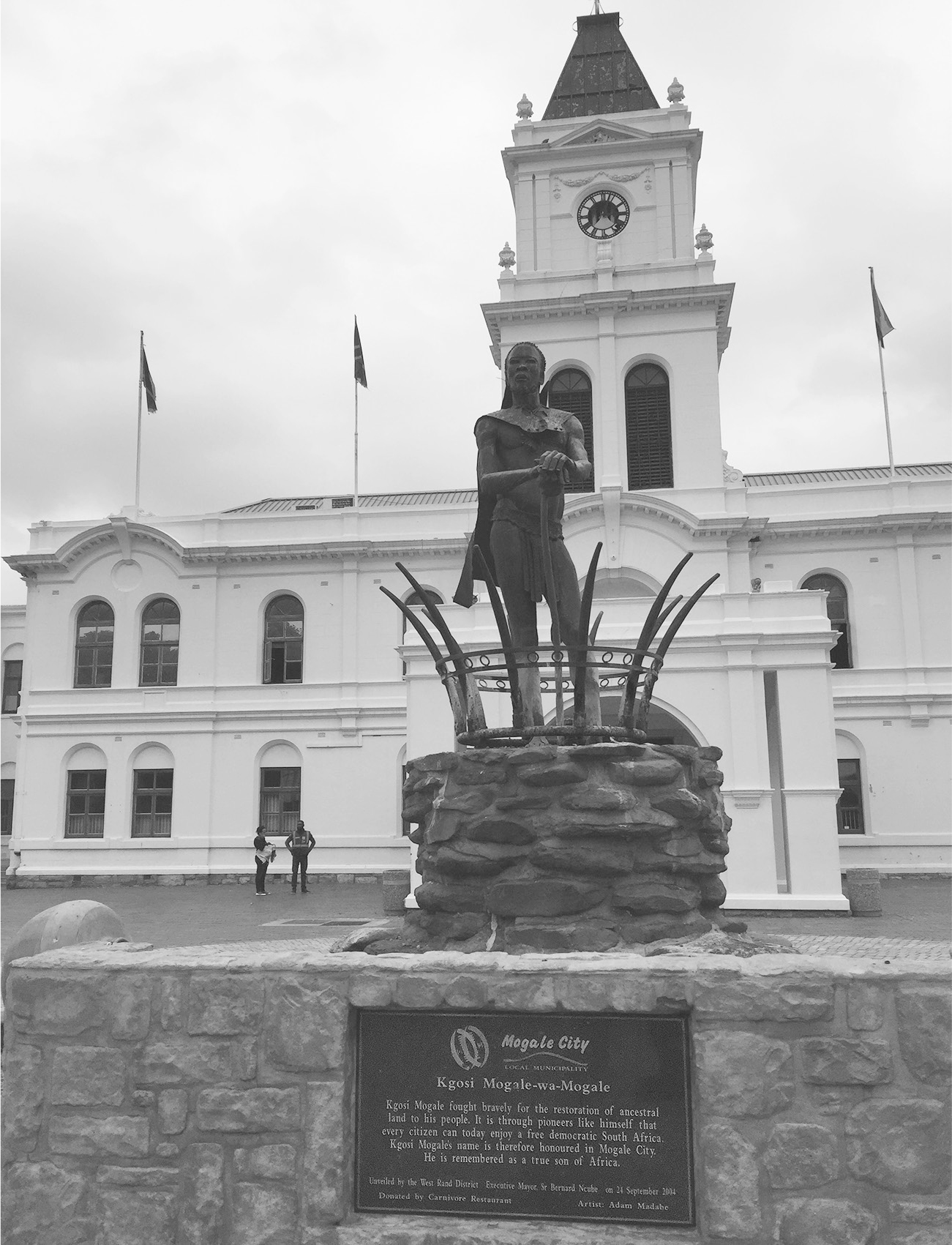
FIGURE 5.2. Statue of Chief Mogale-wa-Mogale in front of Mogale City Local Municipality City Hall, downtown Krugersdorp. Credit: Evan Lieberman.
The new local government institutions added an important wrinkle to democratic practice in South Africa. On the one hand, each local council would function in some ways like the national parliament in the sense that the seats of the council would be allocated via proportional representation, based on voters’ choices for their preferred party. Each municipality would also be subdivided into a series of wards of approximately equal population size, and each voter would cast a ballot for a single ward councillor, some of whom would stand without any party affiliation. In turn, the council would be filled with the ward councillors, and then seats allocated from the various party lists, such that the total number of seats for each party was proportional to the total number of PR votes cast. The ward councillor and committees elected within wards would be citizens’ points of contact to the council. Citizens could also contact “shadow” ward councillors from other parties, as those who had seats from the PR vote would routinely be assigned to wards the party lost in order to stay connected to citizens.37
From “Bold Experiment” to “Miracle”
Considering the elections, the new constitution, the reconfigured administrative boundaries, and frankly the new mood in the country, by the late 1990s, the South Africans had clearly overperformed relative to expectations. Observers inside and outside the country routinely described the new democracy as a “miracle.”38 Others called the few years after 1994 a “honeymoon.” In any case, the formal transition from Apartheid to post-Apartheid government was complete.
There was no civil war, no massive reprisals, no fundamental challenges to the legitimacy of the new order. Where South Africa had once been banned and sanctioned, now the world was coming in to see this beautiful country and to get a taste of what was going on. In just a few dramatic years, the political landscape of southern Africa was transformed.
People around the world, myself included, celebrated the successful transition and the new moral authority the country’s leaders now assumed on the world stage. And it was in this context that Amy and I returned to South Africa in 1997 to live for a year, primarily so that I could carry out research. As part of my preparations, I studied Xhosa—the Black African language spoken most widely in the Cape—and although I never became fluent, I learned to carry on a conversation, and that turned out to be a nice way to break the ice with a lot of people.
In the days after we arrived, I learned that the South Africans were as interested in us as we were in them. To be clear, by “us,” I mean they were literally obsessed with Michael Jackson. The arrival of “Jacko,” as they called him, dominated the front pages of newspapers, even amid reports of gangsterism in Cape Town townships and the forging of a new political party by a former homeland leader and a White National Party politician-turned-anti-Apartheid activist. Jackson’s talent for music and performance, and seeming racial ambiguity, piqued interest across the South African color bar.
We made arrangements to affiliate ourselves with local institutions. Amy worked at the South African National Gallery and taught art history at the University of Cape Town. I was supported as a Fulbright Fellow, and as part of that process I arranged for an affiliation with the successor organization to IDASA. Now it would be called the Institute for Democracy in South Africa (IDASA). With sizable amounts of foreign funding, it became a think tank and aggregator of civil society organizations, carrying out a range of functions, including voter education, parliamentary monitoring, and budget analysis. Located in a spectacular colonial-era, high-ceilinged building in Cape Town, on 6 Spin Street, just around the corner from the Parliament buildings, several government buildings, and the National Library, it was just about the best spot I could have asked for to witness all that was going on, and I made some lifelong friends who would remain in the field of democratic development (and even read drafts of the manuscript for this book).
Outside “experts” were coming through the halls each week, but effectively, those outsiders were learning more than they were teaching—the South Africans were brimming with ideas and high ideals, and I loved coming into the office each day. No one took for granted that in order to build a democracy, citizens needed to learn more about the process and how it would affect them. Government budgets, for example, can be extraordinarily opaque, so members of IDASA’s Budget Information Service would describe the implications of the budget for women or for children in accessible publications and in workshops. Although the organization clearly had great sympathies for the new ANC government, it set up a Parliamentary Monitoring Service to make sure that power was checked and key debates and decisions were shared with citizens. The Public Opinion Service made sure that it was not just government that was carrying out and analyzing surveys and that nationally representative views on key issues could be articulated in representations to government. New policies and practices were sorely needed to realize the ambitions of the new constitution, and creative and energetic South Africans were rising to the occasion to provide these.
I sat in on debates in which various political actors engaged in foundational discussions about what a fair and just society ought to look like. My own research was on the tax system, so I attended parliamentary hearings on proposals to revise that system. Tax experts tried to discuss the highly technical topic in politically neutral language, but they could not avoid falling back on fundamental questions. For instance, when it came time to debate taxes on estates—typically a minor source of revenue for the state—a representative of White farmers said that high estate taxes would force many family farmers to sell off large parts of their farms, effectively ending the family business. In turn, an ANC Member of Parliament stood up and asked, “Would that be so bad?”
My doctoral advisor, Robert Price,39 introduced me to Andrew Feinstein, a White ANC Member of Parliament, who would become a personal friend while Amy and I lived in Cape Town. Feinstein was just seven years older than me, had been an anti-Apartheid activist, and had spent some time at UC Berkeley, where I was a graduate student at the time. I enjoyed talking with him about shared interests in nation-building and public finance. (And I was particularly excited when he mentioned one of my working papers in a parliamentary debate.) The fact that a White former activist had been chosen by party elites to represent the party in Parliament spoke volumes about the sustained commitment to being racially inclusive. And when I got to know him in 1997–98, Feinstein was pro-ANC all the way. He pointed out that tax policy was becoming a balancing act: initially, Whites had been willing to pay a “transition tax,” but by this point, many of the wealthiest Whites had moved much of their money offshore to avoid taxation and just in case they decided to leave the country altogether. Indeed, quite a few had already left. He shared with me his perception that White South Africans would resist more in the way of taxation, and they were complaining of crime and invoking the “Specter of Zimbabwe,” by speaking of South Africa “going the way of the rest of Africa.”40 Ironically, many of the very countries that had sanctioned South Africa for Apartheid, including the United States, were willing to embrace White South Africans who were taking their skills and resources out of the country, claiming they did not feel safe. With such an escape valve, it would be difficult to engage in too much redistributive policy.
During our year in residence, Amy and I happily joined in the sport of Mandela spectating. Where would he be, and could we get a glimpse? We secured tickets to watch him host Julius Nyerere, former president of Tanzania, one of the great African independence leaders, as he addressed the new government in the Parliament building. Nyerere offered an optimistic portrait of Africa’s future and was met with thunderous applause. A personal highlight was the opportunity to stand in the back row of a press conference held jointly with Mandela and President Bill Clinton. As a Fulbright Fellow, I had been invited to tag along with the White House press corps in exchange for my willingness to serve as a tour guide on the bus rides around town, one of which included CNN’s Wolf Blitzer sitting in front and ABC’s Sam Donaldson firing multiple questions at me as he prepared his report. Mandela and Clinton spoke to the world in March 1998 in the gardens of Tuynhuys (pronounced Tane-hace), the Cape Town office of the presidency, used when Parliament is in session. A stunningly clear blue sky hovered above Table Mountain, which itself stands behind, and towers above, the Cape Dutch building. And to our back was the Company’s Garden, created by the very Dutch settlers who had come to these shores in 1652 to cultivate the fruits and vegetables they craved on their transoceanic journeys. We all watched as the leader of the wealthiest and most powerful country in the world was fully eclipsed by the stature of an elder statesman, who deployed grit and forbearance to lead South Africa through a remarkable transition. American presidents were surely used to having their counterparts show deference to them on diplomatic visits, but in this case, the tables were clearly turned.
While South Africa was in many ways burdened by its past, the long legacy of resistance also generated a great deal of political capital useful for democratic development. As described earlier, a strong commitment to a rights orientation especially within the ANC provided a coherent framework for creating democratic institutions. A strong “civil society,” the organized and autonomous associations designed to link citizens to the state, similarly proved to be a favorable by-product of a hard-fought resistance. IDASA and others, including women’s organizations and trade unions, had built strong memberships during the anti-Apartheid era and, at least initially, could credibly give voice to citizens’ wants and needs in the post-Apartheid era.
Although the Apartheid state had occasionally used emergency powers to suppress journalistic freedoms, a fairly robust, critical media environment had nonetheless flourished. By 1994, a very wide range of newspapers and radio and television stations were already established and offered frequent news updates from a variety of perspectives. Within a few years, internet access expanded throughout the country and along with it, unprecedented access to information. I sent my first wireless email while in South Africa. However, as in countries throughout the world, internet access would be disproportionately available to those in urban areas and to those who could afford it.
Moreover, the political resistance to Apartheid produced a number of great legal minds, which helped contribute to the development of a robust and independent judiciary. Mandela appointed Arthur Chaskalson, a member of his defense team at the Rivonia trial (who had formed the Legal Resources Centre [LRC], a human rights law organization), to be the first president of the Constitutional Court. The court would be filled with respected jurists who could make judgments independent of direct political pressures and help legitimate its place in the new democratic constitutional order.
In short, the first post-Apartheid elections and Mandela’s presidency exceeded any reasonable expectations for a peaceful transfer of power. However, the successful introduction of new democratic institutions did not imply that a vibrant multiracial democracy had fully taken root and could survive the long winter of political reality. The initial five years were exceptional in many ways, most obviously because Mandela was no ordinary leader. He would be on the short list, and maybe at the top, of any global ranking of most admired and respected individuals of the twentieth century. This meant that during his presidency, he could broker deals between conflicting parties and elicit compromise over conflict. His profound personal history, sacrifices, and acts of forbearance led even his political adversaries to recognize him as verging on “superhuman.” People followed his directives because of who he was and what he had done in his own courageous life.41
While several of Africa’s most promising independence leaders—Uganda’s Yoweri Museveni, Zimbabwe’s Robert Mugabe, and Ivory Coast’s Félix Houphouët-Boigny—each stayed in power for more than thirty years, generally to the great detriment of their countries, Mandela’s tenure in government was far shorter. Of course, he was different from these men in all sorts of ways, including the fact that he was much older when he took office. In 1998, during the fifth year of his five-year term, he celebrated his eightieth birthday, and the country began to face the reality of his humanity. The tall, powerful freedom fighter walked with a slower gait and spoke more softly. And that year, he married Graça Machel, herself a teacher, former government minister, and human rights advocate from Mozambique, who was the widow of former Mozambican state president Samora Machel. Mandela said he wanted a bit of time to live out of the everyday spotlight, and he chose not to stay on as state president or as head of the ANC.
It is hard to imagine that this period would have been so smooth and peaceful without Mandela’s generous spirit, cloaked in a history of enormous personal sacrifice. Nonetheless, one of the key tenets of democracy is that government should not revolve around a single person. Rather, its institutions are designed with the intention that the people, despite their diversity, can self-govern. The value of introducing this democratic system to South Africa could only be learned over a longer period of time, in the face of new challenges and in the context of very different leaders.