
6
EVEN DURING THE SURPRISINGLY PEACEFUL and productive first years of the Mandela presidency, not everyone was convinced that South Africa’s future was so bright. A group of prominent South African scholars commissioned a collection of essays investigating how democracy had gone awry in other parts of the world. For example, they wondered if South Africa might soon resemble Mexico, where a liberation party managed to secure political control for over seventy years and engaged in wanton corruption to the detriment of the economy and society.1 After only one election, historians and social scientists were already classifying the ANC as a “dominant party” and suggesting that their own country might be incapable of becoming a liberal democracy.
Maybe it was unfair and overly cynical to be worrying about such outcomes this early in the post-Apartheid history. And yet, considering the size of the ANC majority, and the precedents of other liberation leaders and parties becoming autocratic in other parts of the world, it was a plausible concern. If one party got a firm grip on power, would ordinary citizens have any chance of holding politicians accountable?
Fast forward to the 2019 election. If I had shared these early predictions with the voters I encountered all around Mogale City, many would have concluded that these skeptics had been soothsayers. During the two decades from the twilight of Mandela’s presidency until the 2019 elections, the once conventional wisdom that the country had emerged as a democratic “miracle” faded into a distant memory. In its place, the airwaves, headlines, and bookstores shared ongoing sagas of government corruption and failed projects. For millions of South African citizens, corruption indeed emerged as the existential problem, and a dominant ANC was to blame. Several important books documented the illicit practices of government officials at all levels with titles such as Licence to Loot, How to Steal a City, and Anatomy of the ANC in Power.2 The latter two describe the precipitous downfall of the ANC in Nelson Mandela Bay Municipality, the metropolitan municipality centered in Port Elizabeth in the Eastern Cape Province. The various authors painted depressing portraits of the undoing of a high-minded, ideologically driven liberation party and the spreading rot of malfeasance in the daily operations of government. It is worth noting, however, that Stephan Hofstatter (author of Licence to Loot) would later be dismissed from the Sunday Times for false reporting and was confronted at a book launch by angry government officials accusing him of misrepresentations.3
Through such books, as well as from print and broadcast news, everyday conversations, and social media, citizens became aware that more than a few politicians were concocting elaborate schemes to divert government resources into their own pockets, while millions of people remained poor, out of work, and without reliable access to basic services. In the weeks and months leading up to the 2019 elections, even ANC supporters and local councillors in Mogale City—including the ANC mayor, Patrick Lipudi—shared with me their awareness of and concerns about the problem of corruption within ANC ranks. The opposition described the ANC as almost uniformly crooked. In 2015, the majority of South Africans said they perceived substantial corruption in all levels of government; over 63 percent said that the level had “increased a lot” in the previous year.4 In fact, when I mentioned to various South Africans in 2019 that I was writing a book about post-Apartheid South Africa, they essentially responded, “Oh, so a book about the corrupt ANC?”
Meanwhile, citizens were increasingly resorting to protest in a manner reminiscent of the anti-Apartheid days. Many protests turned destructive and violent, and at least as worrying, on a few occasions, the national government and various local governments used violence against protesting and striking citizens. The prevalence of such well-documented political pathologies begs the question: How could I possibly describe South Africa’s democracy as a “success story” if all of this was going on?
It’s a fair question.
Democratic practice in Mogale City and throughout South Africa during this period has indeed been uneven, maybe even downright ugly. Many chapters of this history would not find their way into a textbook of civic best practices. Corruption and violence can seem almost routine in some pockets of the country. Nonetheless, democratic politics has operated in a manner that has been increasingly competitive, with substantial opportunities for citizen engagement and oversight from various guardrails within society. Politicians are frequently held accountable for unethical behavior, undesirable policies, or simply being perceived as not doing a good job. While many might have hoped for or even expected a government in which all public servants operated with complete integrity, and that all disputes would be resolved through deliberative debate, such outcomes were highly unlikely given the country’s political history, let alone the record of other countries that have undergone major regime changes like South Africa’s. In fact, many of the wealthiest and oldest democracies still struggle with such problems to varying degrees. This clearly includes the United States, especially of recent vintage.
In this chapter, I offer evidence of democratic accountability at work—even in the face of substantial challenges and contradictions—in three steps. First, I review some of the most important ways in which democratic institutions constrained the two longest-serving presidents amid all of their deficiencies. Second, I describe democratic accountability at the local level, especially in Mogale City, again while still acknowledging many of its very real problems. And third, I detail some of the South African patterns of democratic performance and accountability and the extent of corruption and violence in a broader and comparative perspective. To hear South African commentators describe their country’s failures at democratic governance, one might think that theirs was a failed state. In fact, in 2015, more than one-third of surveyed Gauteng residents said it was a failed state.5 But if we consider actual failed states—Somalia, Chad, Iraq, Afghanistan, Yemen, Syria, or the Democratic Republic of Congo—we recognize the extent of hyperbole in such assessments of South Africa. The reality of South African government is not nearly so apocalyptic. In many ways, it is highly functional.
Constraining Power at the Very Top
As I discussed in the prior chapter, of the idiosyncrasies that make South Africa unique, a prominent one is Nelson Mandela. The legendary iconoclast gave South Africa many things, but in becoming president, he did not offer a good test for democracy. Mandela embraced his jailers, repeatedly called for calm and forgiveness over revenge, donned the symbols of oppression in a spirit of reconciliation, and chose to leave office after only one term. He revealed that he was no ordinary politician or person. That South Africa could function effectively with him at the helm left it to the imagination whether it was democracy or his demigod-like stature and self-restraint that ordained such success.
Most politicians are instead far more mortal. Almost by definition, they are ambitious and crave power—to a greater extent than the average citizen. Many are very public spirited, but certainly not all, and the pressures and temptations of power can induce greed, unscrupulous efforts to remain in office, and inclinations to favor friends and loyalists for jobs and policies rather than the broader interests of the country. One of the key tests for democratic politics is whether the “people” can constrain such tendencies, especially of those at the pinnacle of power, so that the polity does not become hostage to leaders’ wants and needs or to efforts to divert government resources.
After Mandela, the ANC bench was still deep with qualified and impressive possibilities, but this lot was decidedly mortal and offered a solid “stress test” for democratic politics. The office of the presidency alternated to four different men between the time of Mandela’s retirement and the 2019 election. But just two—Thabo Mbeki and Jacob Zuma—led for eighteen of those twenty years. Given their personal biographies, either would have been a viable national leader, irrespective of leadership selection rules. During their tenures in office, national politics was dominated by their deeds, their misdeeds, and their own struggles for power.
Mbeki was an ANC stalwart. During the years of struggle, he devoted his life to the organization, joining the youth league at the age of fourteen, working in exile, and receiving military training in the Soviet Union; he was based for many years in Lusaka, Zambia. Moreover, his father, Govan Mbeki, was a politicized Fort Hare graduate, an ANC leader, and jailed with Mandela following the Rivonia trial. Despite membership in the South African Communist Party, Mbeki opposed the ANC becoming a party of socialism, citing a desire to remain a “broad church.” This approach served him well for most of his career, allowing him to become the international face of the ANC and to negotiate effectively with White South Africa.6 His appointment to be Mandela’s deputy president in 1994 put him on a clear path to lead the ANC’s party ticket. Mbeki could seem more professorial than a veteran of a militant liberation movement. Not particularly tall or physically imposing, he wore a beard, spoke in measured paces, and routinely exuded the academic prowess of a man with an advanced degree in economics from Sussex University. He put forward many bold ideas, some productive, including positive visions for African regional integration and upliftment.
And yet, like other exiles, especially those involved in the military wing, he had no experience being governed from below. Just prior to becoming state president, one commentator noted Mbeki’s penchant for centralizing power in an essay with the headline, “Mbeki: Democrat or Autocrat?”7
Jacob Zuma was also a former exile from the era of resistance politics. Born in KwaZulu-Natal in 1942, he painted a stark contrast to Mbeki. The son of a policeman and a domestic worker,8 his working-class credentials were a large part of his public appeal: “I never went to school, but I educated myself,”9 he proudly proclaimed. Also not particularly tall, but a sturdier figure, with a clean-shaven face and head, Zuma had been active in the military wing of the ANC, served prison time on Robben Island with Mandela, and also had strong ANC credentials, including working with Mbeki for the cause of liberation. Seen by his comrades as a committed cadre, “fearless, loyal, and affable,”10 he rose in the ranks owing to a strong social IQ and effectiveness as an underground operative. Though visibly proud of his Zulu heritage, he was not a cultural autonomist and stood by the ANC throughout its conflicts with the IFP.11 However, Zuma had few close relationships with White South Africans in the manner that Mbeki or Mandela did.
Compared with Mbeki, Zuma exuded more energy and less introspection. He was an antidote to Mbeki’s air of elitism in substance and style. Though he served as deputy president under Mbeki, his ascendancy to the top position was shrouded in some doubt in the midst of not simply ongoing corruption investigations but charges of rape. The latter resulted in a very public trial. Although the court declared that the sex was consensual, during the course of the proceedings, it was revealed that Zuma had had unprotected sex with an HIV-positive woman, and he famously declared that it was “ok” because he showered afterward, a statement that even the exonerating judge would condemn for its lack of scientific merit. Notwithstanding such sagas, Zuma was elected ANC president in 2007,12 even as many wondered whether he would be South Africa’s populist autocrat.
Both men had great ambitions for themselves, and each tried to subvert democratic procedures in various ways during their respective tenures (1999–2008 and 2009–18). But both were also overtly humbled in their presidential careers through the machinations of direct democratic pressures and internal party struggles for power. The various media outlets challenged each man’s record, and they faced steady and well-organized reactions from civil society; their policies and actions were corrected by the courts; and ultimately their own powers were constrained by their party while the party’s power was constrained by voters at the polls.
Violations of Public Trust
As I will discuss in the next two chapters, many successful policies were enacted and implemented during Mbeki’s and Zuma’s respective terms. Yet, both men violated the public’s trust on various occasions by hiding or participating in illicit schemes and by making self-serving and counterproductive policies and appointments.
One policy episode, for which Mbeki became infamous around the globe, was his heterodox approach to the devastating AIDS pandemic, which had been ravaging southern Africa since the late 1980s. He and his chosen health minister refused to embrace the widely held scientific understanding of the role that the human immunodeficiency virus (HIV) plays in sickness and death. He went so far as to argue that the acquired immunodeficiency syndrome (AIDS) was not caused by a virus.13 He also rejected the use of scientifically proven anti-retroviral drug therapies, depriving the population of their value for prevention and treatment. Mbeki and his chosen group of advisors came to be known as AIDS denialists. Their approach may have cost hundreds of thousands, if not millions, of people viable opportunities to extend their lives.14 It was a stunning blind spot, and Mbeki was relentlessly stubborn. Owing to these retrograde policies, the South African government, once again, became something of a pariah. I was so struck by the extent to which this problem was spiraling out of control and not receiving the response it deserved that it became the focus of my own research for the next several years.15
A second major scandal involved both Mbeki and Zuma; it came to be known simply as the “Arms Deal.” As early as 1998, while Mandela was still president, the government announced its intention to modernize its defense force and that it would procure billions of dollars in heavy equipment. As a start, the initiative was roundly criticized as inappropriate for a country that faced no apparent defense threats. More notably, the companies that wanted to bid on those contracts and their host governments frequently engaged in various forms of bribery to influence the decision makers to throw the highly lucrative business deals their way. ANC officials accepted luxury cars, money, and other perks. The procurement process was repeatedly found to be irregular in the sense that standards for rating certain bids were changed midstream to favor particular firms.16 Although to my knowledge Mbeki has not been directly implicated in any attempts to gain personally from the deals, he was criticized for blocking open investigations.17 Zuma, on the other hand, has been accused of securing various illegal payments while deputy president and was dismissed by Mbeki for corrupt dealings.
In both cases, Mbeki’s wrongdoings were matters of process, of subverting open government and transparency and attempting to centralize power and to protect party insiders while potentially scapegoating political rivals. Zuma, by contrast, sought to enrich himself and his family and friends, taking malfeasance to great new heights. In this regard, his presidency was clearly the blight of the post-Apartheid history.
The most egregious of such transactions involved an Indian-born family, the Guptas. The Gupta saga is long and now legendary in South Africa. The family came to South Africa from India in the early 1990s in initially modest fashion. Over the decades, they became so enmeshed in the work of South African government that they gave rise to a term now used frequently in everyday dialogue: “state capture.”18 In their quest for political and economic influence, the family provided jobs to Zuma family members and to those of other politicians. (By one estimate, ANC politicians skimmed tens of billions of dollars from public funds.) They enticed complicity through first-class plane tickets, rides on private planes, jobs, money, and other perks. And in turn, the president and other government leaders gave the Guptas access to lucrative government deals and control over the selection of key government positions. Naturally, their favored selections treated them extremely well in all business dealings, allowing the Guptas to become one of the country’s richest families—in a country where the richest families are very rich, by any standard.19 In sometimes wanton fashion, the Guptas gained access to a military base for a private wedding; they used their influence to attain the post of finance minister for a loyal crony; and they earned millions from shady business deals involving government contracts.20
Relatedly, Zuma and others in the ANC engaged in similar types of dealings with the Krugersdorp-based company Bosasa. The company routinely traded perks and kickbacks in return for government contracts and influence. A whistleblower from the company recounted the ways in which the Bosasa CEO was able to control Zuma’s public statements and actions,21 furthering the notion of a state captured by private interests.
Finally, on a much smaller scale in financial terms, but symbolically extremely disquieting for South Africans, Zuma spent approximately 7.8 million rand of public money on upgrades to his personal homestead in Nkandla, KwaZulu-Natal. These included a swimming pool, a cattle pen, and an amphitheater, amenities that were hidden as expenses under the otherwise allowable rubric of “security upgrades.”22
Responses and Repercussions
Together, this set of incursions—Mbeki’s AIDS policies, the arms deal, “Gupta-gate,” Bosasa, and Nkandla—left the ANC’s reputation tarnished when it made its case to the voters in 2019. Along with other inevitable scandals and policy failures, they fed critics daily fodder. What does the fact that such betrayals of the public’s trust could unfold over the first quarter century of post-Apartheid government reflect about the quality of democracy?
Here, I think much of the answer lies with how citizens and various actors responded to evidence and allegations. And in this regard, the fact that we know so much about these problems and that government officials have not been able to stem the flow of incriminating information reveals a great deal about the success of South Africa’s democracy. To appreciate the openness, it is important to consider the situation in non-democratic regimes, including Zimbabwe under Mugabe, or in countries such as Bahrain, Qatar, Syria, and Saudi Arabia, where there has been very little space for critics to openly challenge and demand consequences for malfeasance. While citizens in these tightly managed authoritarian countries may perceive corruption or hear about it through rumors, or gain access to some international reporting via the internet or satellite news, the absence of effective opposition parties and the immediate threat of repression have implied a completely different landscape for accountability.
In South Africa, citizens and civil society have been emboldened to challenge the state and its various leaders by name. For example, several former anti-Apartheid activists banded together to forge new organizations and movements to speak out against Mbeki’s retrograde AIDS policies. In particular, the Treatment Action Campaign (TAC)—led by many former anti-Apartheid activists and exiles—emerged as a global leader in the fight for treatment access. They led marches, held press conferences, and built coalitions to criticize the government’s actions. They developed clever slogans and wore T-shirts emblazoned with the phrase “HIV Positive” in order to counter stigma against the disease. The press relentlessly critiqued government policy while political cartoonists and entertainment personalities routinely mocked officials who persisted in denying the well-accepted science around HIV prevention and AIDS treatment. Medical professionals and social scientists spoke out against the government’s policies, as did leaders of various opposition political parties. If the government was trying to silence or repress any of these actors, they did not do a very good job of it.
These organizations won their court cases, and the government obeyed, changing course on its HIV policies.23
Relatedly, throughout the post-Apartheid period, the news media—and as amplified on social media—consistently shined a bright light on allegations and evidence of corruption. In fact, rare has been the day when any major news outlet has not reported on the status of some government corruption allegation or another.
In at least one case, the response and resulting impact were almost immediate. When Zuma installed a Gupta ally into the office of the finance minister, the business community and the various news organizations went ballistic, as seen in these headlines: “Firing Nene Proves Jacob Zuma Is the Dolt behind the Bolt,”24 “Finance Minister Switch Seen as Another Zuma Clanger,”25 and “Van Rooyen ‘Bad for ANC in Polls.’ ”26 Within days of the appointment, Zuma faced so much backlash, along with a sharp drop in the markets, that he shuffled the crony to a less central position and appointed the trusted and reliable Pravin Gordhan to the job. This episode also demonstrated the business sector’s autonomy and ability to challenge the government even publicly in the face of poor governance practice.27
That said, like other parties in power, the ANC has frequently sought to keep such information out of the public view and certainly has tried to clamp down on unflattering news.
As it turned out, a key whistleblower was Andrew Feinstein, the ANC MP I had met in the first month of my yearlong stay in the country in 1997–98. When Feinstein tried to get to the bottom of the arms deal, he met serious resistance. ANC leaders removed him from the parliamentary public accounts committee.28 The more he pressed, the more he was alienated from the party, and in 2001, he resigned from his beloved ANC. He migrated to London and published a popular book, After the Party, detailing this and other scandals that undermined his confidence in the organization.29 The ANC’s treatment of Feinstein is an obvious blemish on its democratic record.
For many, the arms deal was a massive fraud plus cover-up, and critics can point to a weak-toothed commission as having done little to redress the wrongdoing. At the very least, in 2001, the ANC’s Chief Whip, Tony Yengeni, and Zuma’s financial advisor were both sentenced to prison. Even after twenty years, the ANC has not been able to bury the case; public protectors and the media continue to elicit allegations and evidence. A new judge condemned a prior ruling that made light of the case and reopened it for additional scrutiny, a welcome development for many of those who challenged the government in the first place.30
Throughout their tenures, both Mbeki and Zuma faced hard-hitting everyday scrutiny in the news media. In 2004, Archbishop Desmond Tutu began to publicly criticize Mbeki and his administration for bad policies, including on AIDS,31 and for Mbeki’s general failure to encourage open discussion and debate within the ANC.32 Following further public exchanges between them, ANC officials tried to defuse the situation by expressing respect for Tutu’s position.33 Tutu continued to criticize Mbeki throughout the remainder of his term, going so far as to publicly state that neither he nor Zuma would be an appropriate pick for the ANC leadership in 2007.34 By 2008, owing to a wide range of factors, including disappointments about economic policy on the part of trade union and SACP leaders,35 Mbeki lost the support of the ANC and was forced to resign.
Two years into Zuma’s presidency, Tutu once again raised his voice as national muse, and again, his challenges were covered widely. He captured the growing frustration with the governing liberation party in a particularly alarming manner when he described it as “worse than the Apartheid government.” He quickly qualified this bold charge with, “because at least you were expecting it from the Apartheid government.” Ever the conscience of the country, Tutu cast his ire on Zuma to a greater degree than he did Mbeki: “Hey Mr. Zuma, you and your government don’t represent me. You represent your own interests … I am warning you out of love. I am warning you like I warned the nationalists [National Party Apartheid government] that one day we will start praying for the defeat of the ANC government. You are disgraceful.”36 Tutu was particularly upset with Zuma’s refusal to grant a visa to Tibet’s Dalai Lama, a move that seemed to reflect greater sympathies for an authoritarian Chinese government than the core human rights values enshrined in the Freedom Charter and the constitution. Relatedly, he was fingering the growing sense that Zuma was inclined to flout the rule of law and needed to be held to account.
Widely seen as independent, the courts have even held Zuma personally accountable. He was convicted in the highest court for using state money to upgrade Nkandla. In a unanimous judgment, it ruled, “The President has failed to uphold, defend and respect the constitution as the supreme law of the land.” And indeed, the case came to the court in the first place owing to a March 2014 report of the government public protector.37 The court ordered that he respect the earlier report requiring him to repay the government money.38 And indeed, Zuma eventually did pay, taking out a second mortgage to do so.39 Some might say, not enough punishment for what he did. But it’s important to ask: Where else in the world does a president face such consequences while still in power?
By April 2017, protest movements increasingly targeted Zuma directly. A popular hashtag, #ZumaMustFall, circulated widely on social media, and South Africans of every race began to hit the streets insisting that he resign.40 Thousands of South Africans returned to protest following yet another cabinet reshuffle that included the dismissal of Finance Minister Pravin Gordhan. The 2017 protests were organized by Save SA—a collaboration of South African activists41 led by both members of the business community and old ANC stalwarts.42 One protester remarked, “I’m an ANC person but we want our old ANC back.”43
The Gupta-related scandals and the arms deal raised the ire of various government bodies charged with protecting the integrity of the government. The public protector, Thuli Madonsela, forced Zuma to appoint a commission of inquiry to investigate, among other things, his own multiple misdeeds. By the time of the 2019 election, the investigators were hard at work gathering evidence, and in several of my interviews with Mogale City political leaders in the run-up to the election, they had the television on, watching how the inquiry was unfolding and might be reverberating for their own political careers.
Electoral Implications
Given all of the media attention to the growing level of corruption within the country, the big question that remained was whether the general public—that is, voters—would take action. Again, one of the key features of South Africa’s electoral system is that for most contests, citizens vote for parties, not candidates, which meant that ANC supporters who opposed Zuma could not directly punish him without casting a vote for a less-preferred party.
As the 2014 national and provincial election approached, Zuma’s documented bad behavior and various problems in the country amounted to blood in the water for rival political sharks. Political challenges mounted from both the right and the left, from White and Black. Importantly, a generational divide began to split the political arena, as those born in the early 1990s who had never lived under Apartheid—“Born Frees”—were coming of age as voters and as students, and they did not like what they saw.
The most significant sources of political opposition during Zuma’s reign were embodied in two men who were both half his age, but in most ways, they could not have been more different. (And both would still be campaigning in 2019, as detailed in chapter 1.)
First, there was young Julius Malema, who turned thirty-three prior to the 2014 election and was initially strongly favored by Zuma. The ANC had long recognized the political significance of young people, even before they demonstrated their revolutionary potential in the Soweto uprising. Malema’s supporters could liken him to a radical political leader, like Steve Biko, who on principled grounds challenged the ANC for taking its focus away from the needs of Black people. Alongside his working-class credentials, Malema also received multiple degrees, including in philosophy, and studied for an advanced degree at Wits (the University of the Witwatersrand, pronounced “Vits”), where he helped to politicize fellow students. From scratch, he built a new political party, the Economic Freedom Fighters (EFF), a self-described “radical and militant economic emancipation movement.”44 Malema keenly used the symbolism of class identity, including the wearing of red hardhats and jumpsuits, to attract a loyal following.45 The EFF has rejected the racially inclusive approach of the ANC, moving from a discourse of “reconciliation” to one of “justice,” and brought ideas like expropriation of land and mines, without compensation, into the mainstream dialogue.46
Second, there was Mmusi Maimane, born in Krugersdorp, raised in the nearby Dobsonville section of Soweto, the product of a Xhosa-Tswana marriage, and ordained as a pastor. In May 2014, Maimane was elected to lead the DA’s parliamentary representation, and in 2015 he defeated Wilmot James (a Coloured academic who had led IDASA while I was an intern there) to become their new leader. For the first time, a Black African took the helm of a party that had previously relied disproportionately on the votes of Whites and Coloureds. It remained to be seen whether the party’s momentum could continue.
Both Malema and Maimane relentlessly targeted Zuma for his corruption and bad policies in the run-up to the 2014 national elections. Undoubtedly, many ordinary ANC voters held their noses when they ticked their choices. It did turn out to be the ANC’s worst performance to date. Nonetheless, the party enjoyed a comfortable win with 62.1 percent of all votes. The DA took over 22 percent of the vote, and the EFF, just a year old, earned a remarkable 6.4 percent as third-place finisher, delivering 25 seats to the upstart party, which would afford a prominent and vocal platform for their policies.
For now, the ANC and Jacob Zuma were here to stay. However, the everyday problems facing citizens were significant, public sentiment was growing foul, and protests mounted. In 2015, over 60 percent of Gauteng residents said they thought the country was going in the wrong direction.47 And in Parliament in May 2016, Maimane and other opposition party leaders would press and embarrass Zuma in angry exchanges concerning the details of his relationship with the Guptas.48
In this context, in August 2016, South Africans visited the voting booths once again, now to cast ballots to decide local elections. The contest turned out to be a watershed. To begin with, it boasted the highest turnout yet recorded for a local election, alongside an increased voter’s roll from 23 million in 2011 to 26 million in 2016.49 In many parts of the country, that August 3 election was a complete drubbing for the ANC, at least relative to how they had performed in all the previous elections. The party lost political control of several of the largest and most important municipalities, including Johannesburg and Nelson Mandela Bay—the latter centered in Port Elizabeth, a traditional ANC stronghold.50 It still received almost 54 percent of all votes cast nationwide, but that was a huge setback, and the message was clear: the days of ANC “hegemony” were over. Nationwide, the DA increased its take of the vote to 27 percent and despite never having competed in a previous local election, the EFF received over 8 percent.
The pushback was a largely urban phenomenon. The ANC failed to secure a majority in five of eight major municipalities (previously it had solidly controlled seven of the eight). This meant it would be in majority power in just three of the biggest cities and in coalition in two others. For South Africa’s increasingly urbanized, cosmopolitan, and multiracial middle class, Zuma was an embarrassment and an affront to the modernizing project they were advancing.51 While Gauteng was installing a high-speed train to move arriving passengers from Oliver Tambo International Airport to Johannesburg and Pretoria, Zuma would be photographed in traditional African regalia. The print media, including foreign media, made reference to his multiple wives,52 a not-so-subtle reminder that he was a traditional polygamist. It’s not as though the ANC lost all their voters in the urban areas. Rather, it was just enough to be consequential for who would govern. And as this was a local election, Zuma was not even on the ballot. To a large degree, all South African elections are referenda on the combined spheres of government and speak to voters’ views of the party in power.
The opposition parties persisted in their drive to capture vote share. In August 2017, the DA advanced a motion of “no confidence” in the president, and a secret ballot freed up several ANC members to vote against Zuma in Parliament. This reflected splits within the ANC that had been festering since Mbeki’s presidency, but Zuma’s loss of popular support surely boosted the strength of his ANC rivals. While the motion did not pass, based on the vote count, at least 30 percent of the ANC MPs must have supported it, a telling sign in a country where the ANC had previously maintained strong party discipline.53
When it came time to select the future ANC leadership, the party’s elites had to decide whether to support Zuma’s ex-wife, Nkosazana Dlamini-Zuma, for more of the same. Zuma was not attempting a play at a third term, but returning another Zuma to the top of the ballot would have spoken volumes about the collective deafness of party insiders to the broader electorate.
It was a hard-fought internal battle between rival sections of the ANC. At the December 2017 ANC convention, Ramaphosa—who had been serving as deputy president but in an increasingly strained relationship with Zuma—was selected as the next leader by a slim margin. Under consistent fire, in February 2018, Jacob Zuma finally resigned from office, and Ramaphosa moved into the presidency, turning the page on a dark chapter.54 This is how he became the “incumbent” running in the 2019 election.
Closer to the People
Analogous questions of politics and accountability have loomed large in local municipalities like Mogale City. By design, local governments were intended to bring democracy “closer to the people” with the notion that citizens would have more direct voice in government, especially through contact with their elected government leaders. As at the national level, several patterns have gnawed at democratic ideals, including the use of violence in politics and a degree of manipulation of political rules toward the end of securing political power. And perhaps quite understandably, these problems have weighed heavily on the attitudes and perceptions of ordinary citizens who are inundated with information about the failings of their government.
I wondered whether I would wind up finding a story in Mogale City that was reminiscent of the national scandals documented above or local exposés that have become well-known on South African bookshelves. Yes, there was Bosasa, the Krugersdorp-based company implicated in large-scale national malfeasance. But what about in local government?
When I pushed councillors, journalists, and citizens for clear examples of corruption in the form of stealing, they couldn’t come up with any. I didn’t see big luxury cars in the council parking lot, though I was told that at least one councillor maintained an expensive Harley Davidson motorcycle. I heard suspicions of favoritism in the awarding of some local government contracts and read reports of irregularities in processes relative to stated procedures, but I never found any smoking guns in terms of large-scale instances of government fraud. When I pushed for specifics, critics of the local ANC government mostly described bad policies and implementation, inequality, and incompetence. According to the critics, the local government operated with a bloated head count even while being unable to pay certain bulk service providers for the municipality’s access to water or electricity. These are quite fair and important concerns, nothing to celebrate. But this was not massive “state capture” at the local level or an epidemic of greed.
Admittedly, the fact that I did not uncover massive fraud in government should not be taken as dispositive. Unlike other academic researchers, journalists, and disillusioned government employees who were embedded in local governments—as was the case in the examples cited above, including those documented in How to Steal a City—I always conducted my research as an outsider, and perhaps potential whistleblowers didn’t trust me to share their stories. Some DA councillors said they were fairly certain that evidence of corruption would eventually rear its head because there were simply too many irregularities in the government accounts to believe otherwise. But speculation is not evidence.
Moreover, Mogale has had—at least for certain periods—a comparatively strong record on governance. In a rare nod, the Krugersdorp News reported in 2015, “Auditor General Applauds Mogale City,”55 detailing the fact that the municipality had received a clean audit. The regulator announced, “We are impressed highly by the level of governance in Mogale City and hope that we would be able to learn from the way this municipality has done its work.” And while a skeptic might worry that a government organization is likely to sugarcoat, the Auditor General’s reputation is very strong, and its reports have been generally extremely critical of local governments. In fact, the office titled its 2018–19 report on local government performance “Not Much to Go Around, Yet Not the Right Hands at the Till”; in the introduction it leveled a blanket condemnation of poor financial management for most municipalities.56 Nonetheless, even in that report, the office singled out Mogale City as one of two (out of a total of eight) Gauteng Province municipalities for being proactive and upgrading their financial oversight in line with best practices.
Based on these reports, Mogale emerges as one of the better-governed of South Africa’s more than 200 local municipalities, but you would never know it from talking with most residents. In 2017, overwhelmingly, 86 percent of Mogale residents agreed or strongly agreed with the statement, “Corruption is the main threat to our democracy”—the level of agreement was almost identical to that of residents in all other Gauteng municipalities. Overall, sentiment about the municipality was lukewarm: about 29 percent said they were dissatisfied and another 12 percent very dissatisfied with local government.57 Even the Auditor General’s reports made clear that there was lots of room for improvement, but my larger point is that throughout South Africa, there are important success stories, including in local government, and yet those are rarely acknowledged or internalized. For example, one academic study by South Africa–based scholars simply declared that South African decentralization has failed with almost no recognition of within-country variation, appreciation of constraints, or reference to analogous attempts.58
Bare-Knuckled Competition
Especially after 2004, Mogale residents, like millions of citizens across the country, increasingly engaged in some form of protest. (In 2013, just over 2 percent of Mogale residents reported taking part in a protest but that grew to over 8 percent in 2017–18.)59 And like protests in other democracies, these have manifested in a mix of constructive and destructive forms. Sometimes, they offer a unique opportunity for ordinary citizens to have their collective voices heard when it appears that their elected leaders and various elite intermediaries seem oblivious to their wants and needs. Other times, they provide opportunities to play out vendettas, advance agendas for career advancement, and may cause collateral damage in terms of human harm and property destruction.
In a 2011 state of the city address, Mogale mayor Koketso Calvin Seerane couldn’t help but recognize that such service delivery protests were an indicator of citizens’ discontent and needed to be addressed by the government.60 Many citizens expected more than they were getting, and many returned to the streets in the manner of protest politics born of the Apartheid days. By the end of the first twenty years of South Africa’s democracy, the country would be forced to embrace the dishonorable label, “The Protest Capital of the World.”61 Concentrated largely in urban areas, in townships like Kagiso and Munsieville, such protests are usually referred to in quotation marks—that is, as “service delivery protests”—because they are largely, but not entirely, and certainly not always, directly motivated by concerns about basic service delivery, in the sense of water, electricity, sanitation, or housing. As they have come to encompass a broader range of demands and grievances, other observers have used the more apt label of community protest.62
For the most part, the protests are directed at local governments. And as several South African analysts note, citizens have used both ballots and “bricks”—a euphemism for the sometimes destructive quality of the protests—to keep politicians on their toes.63 For example, in 2014, unhappy, landless residents from a rural area in the northern part of Mogale City took to the streets and blocked an important thoroughfare, demanding title to land that would allow them to build their own houses. In July 2015, residents of an informal settlement in Muldersdrift, protesting about service delivery issues, burned garbage and blocked a route into Krugersdorp with rocks and trees. They highlighted that they still had just two water taps for almost twelve thousand people and no flush toilets, and that the settlement was on a swamp, which caused beds and personal belongings to frequently get wet.

FIGURE 6.1. Informal settlement, Munsieville, February 2019. Credit: Evan Lieberman.
Such events no doubt contributed to the general sense of citizen dissatisfaction. Alongside news of national scandals, the monumental 2016 local election was held. As happened in several other municipalities, the ANC took a devastating hit in Mogale City. The party fell just short of a majority with 48.9 percent of the vote. Meanwhile, the largely White but increasingly multiracial DA came in a strong second with 34.9 percent. And the EFF took a significant 11.6 percent.
And under the PR system, parties with even less support wound up with seats, making them politically important in a close election: the right-wing, largely Afrikaner Freedom Front Plus (FF+)—which took in less than 1 percent of the vote nationally in 2014—got 2.2 percent and 2 seats in Mogale; and the Zulu-based IFP received less than 1 percent of the vote, but it was enough for a single seat on the council. Every seat would matter.
With such vote tallies, the ANC wound up just one seat short (38 of 77) of the majority required to vote in its own mayor at the first sitting of the local councillors less than two weeks after the polls closed. A coalition was needed to form a government, and national-level negotiations ultimately determined the political fate of Mogale City: the four opposition parties agreed to band together to kick the ANC out of power. That meant agreeing on who the councillors from these different parties would vote for when asked to select a mayor from among their ranks.
Without too much fuss, they cast 39 votes for Lynn Pannall, from the DA, an older White woman with over a decade of experience as a councillor. It’s hard to know who was more shocked: the White Krugersdorpers who watched a Black mayor take charge more than twenty years earlier or these ANC councillors who looked on—“gobsmacked”64—as a White woman became mayor in a municipality that was comprised of more than 75 percent Black voters.
Despite the high energy and higher hopes the coalition partners envisioned in their unseating of the ANC, coalition government itself proved extremely difficult, particularly with a bureaucracy now filled with ANC supporters (a reverse of the early post-Apartheid years when ANC political leaders at various levels of government would face seas of Afrikaner bureaucrats). The only thing these parties really shared was a disdain for the ANC. When it came to the priorities of the community, the parties represented distinct constituencies and promoted very different party platforms. For example, the DA was resolutely pro-market, while the EFF called for massive land redistribution. Style-wise, they were oil and water.
Less than four months into her mayoral term, Mayor Pannall declared that she was exhausted and in need of medical leave and that she would resign her post just about immediately. (The work of a South African councillor must be one of the most stressful jobs out there; according to my own survey of councillors in 2016, a full 45 percent said they feared violence against them because of their work, a fear that is well-founded given the reality of violence they often face at the hands of rivals and disgruntled constituents.)65
To replace her, the DA put forward Michael Holenstein, a younger, entrepreneurial man, originally from Switzerland. And in short order, he became the second White mayor of the largely Black Mogale City Local Municipality in the post-Apartheid era. Holenstein explained to me that as mayor, he tried to clean house in the administration. Whereas Pannall had indicated a willingness to work with bureaucrats who had long served under the ANC, Holenstein said that he couldn’t get anything done, they were overpaying staff, and there was no clear organization or reporting structures in the administration. He tried to reorganize and to restructure the bureaucracy.
Not surprisingly, the ANC did not see Holenstein in a particularly positive light, let alone the fact that they could not stand the notion of being out of power. Holenstein recalled trying to have community meetings and ANC supporters would dance and shout to interrupt him. Within six months, the ANC tabled a motion of no confidence, charging political interference in the administration and that he had put the municipality in a poor financial situation owing to bad policy leadership.66
Theoretically, the DA should have succeeded in rebuffing the motion with a simple majority. Officially, the coalition still stood. But when the ballots were counted, it passed with 39 votes. And when the council voted for mayor—a process that Holenstein decried because contrary to the rules of order, there was a secret vote, and despite being a candidate, the Speaker presided—now the ANC’s Lipudi came out on top.67
Someone—perhaps as many as three councillors—had turned their backs on the coalition. The ANC had clearly persuaded at least one councillor from a rival party to vote for them and insisted on a secret ballot, which would allow the defector to proceed anonymously. When I interviewed them about the unexpected transition, Mayor Lipudi as well as the new Speaker, Noluthando Mangole, recounted the episode in matter-of-fact terms, smiling. There was clearly a part of the story they would not share: how they persuaded a councillor from another party to vote for ANC leaders and who that person was. Mangole said it was justified that the ANC should be in power as they won the most votes: “We don’t have a party that is called coalition in the elections.” Of course, that was beside the point under the prevailing electoral rules for local government.
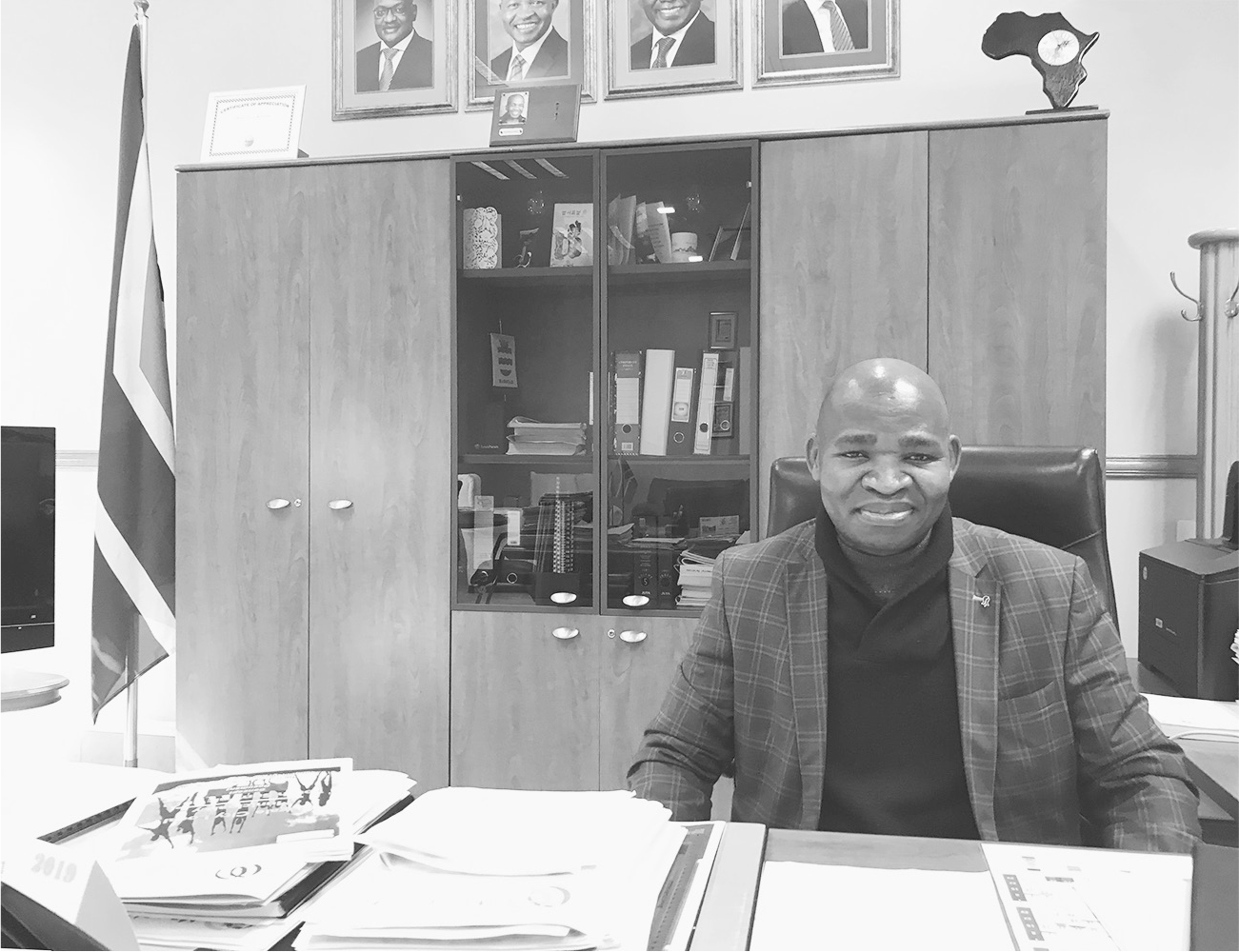
FIGURE 6.2. Mogale City mayor Patrick Lipudi in his office, June 28, 2019. Lipudi passed away from a short illness (details unknown) in January 2020. Credit: Evan Lieberman.
The DA was not happy. It implemented a lie detector test within its ranks. One councillor refused to take the test and offered his resignation instead while maintaining that he had not defected in the vote.68 In interviews, several councillors told me they believed the resigning councillor was the defector. They said he was unhappy to not have had a higher position in the local party and had been demoted from the mayoral committee.
In turn, at least for a few months, the DA and the other opposition parties played their own game of “make-the-municipality-ungovernable,” and they boycotted the council sitting, making it impossible for the ANC, by council rules, to pass its budget. A DA provincial leader explained, “They have demonstrated that they will stop at nothing to get back into power in Mogale City so they can merely further their corruption. The DA will not stop fighting for the change that the people of Mogale City called for. We, along with our partners, will not simply sit back and let the ANC further plunder municipal resources.”69
The situation got ugly. At the end of August, a raucous council meeting involved a fistfight between EFF supporters and the local security agency sitting in the council gallery, spurned by frustrations around the fragile coalition.70
Meanwhile, street protests and revolts continued. In response, the local government sometimes used force to protect property rights or to quell disobedience.71 In particular, when protests involve squatters or land invasions, the municipality has frequently sent in the Red Ants,72 an infamous private security company that specializes in removing invaders.73 Their tactics remind many of the Apartheid days when the National Party government would infamously bulldoze the homes of Black residents living in White areas, arguing that the dwellings were in contravention of Apartheid law.
On the eastern side of Mogale City, a growing informal settlement, adjacent to the thriving and luxurious Cradlestone Mall, stood in the way of further development plans for the owner, ABSA Bank. ABSA coordinated with the municipality to bring in the Red Ants to solve their problem in December 2018. At a cost of over 2 million rand, they moved the squatters to another spot in Muldersdrift, breeding more anger and frustration among residents.74
But Also Accountability
In the wake of headline-catching problems and pathologies, the brief democratic history in Mogale—and across many of the urban and near-urban municipalities in South Africa—also reveals some important gains in terms of empowering citizens. Some of this I’ve observed directly, while other gains are only detectable by studying patterns in available data.
To begin with, while the 2016 election in Mogale did not bring about lasting change in the composition of government, the hard-fought political battle was certainly evidence of growing electoral competition, which in turn seems to be key for political responsiveness in South Africa and elsewhere. Given the electoral cycle, such that no more than three years goes by without either a local or national/provincial election, there is never a time when a contest is both too far in the future or such a distant memory that any aspiring leader can rest on their laurels. In turn, councillors are well aware that their fortunes can always turn and that they depend on the support of the governed. Politicians say they are compelled to show up in various neighborhoods, to hear complaints, and to respond to them.
One could say that talk is cheap, but there is good reason to believe that responsiveness impacts politicians’ careers. For example, Philip Martin, Nina McMurry, and I studied the renominations of elected councillors in Gauteng and around the country and examined whether the leading political parties simply deployed “loyal cadres” to valued local councillor positions or were willing to remove councillors who had lost the faith of citizens. Analyzing the career trajectories of over eight thousand councillors, we found that in areas where political competition was high, the leading parties (the ANC and the DA) were much more likely to end the careers of those who had failed to satisfy their constituents (as measured by responses to surveys). Those who were well regarded by citizens tended to be renominated or promoted. By contrast, in noncompetitive areas, party choices appeared uncorrelated with what citizens said about the quality of services or their own councillor.75
And while citizens may be angered by a lot of what they see, they are nonetheless extremely engaged not simply via protest but in the very institutions designed to channel links between voters and their representatives. In my Historical Memories Survey of Mogale residents who would have been eligible to vote in 1994, almost all Black residents reported having voted in all 5 national elections (average of 4.9 elections) including the 2014 election. For Whites, the average is somewhat lower at 4.7 (although a small share of the sample, those who didn’t vote in 1994, reported having voted much less frequently than those who did).76 Moreover, 41 percent of Mogale residents said they had participated in ward meetings and 41 percent in street committee or residents’ meetings, all of which reflect very high levels of community engagement.77
Despite the common refrain I heard that there is no effective opposition in South Africa, I found several instances of individuals and parties holding the government to account. For example, when I met with Juliana Steyn—the Afrikaner soldier who had to sing “Nkosi” the day of the first election and who in 2019 worked for a government agency—she explained to me that when the opposition parties ask questions in national parliament on designated days, people like her are forced to respond quickly with data and analysis so the relevant government official can provide coherent and factual responses. Such “fire drills” may distract employees from their immediate work, but they also serve an important accountability mechanism given a general fear of embarrassment at all levels.
When I visited Mogale local council meetings I repeatedly saw that opposition questions and challenges were often met with resentful glares and words from ANC officeholders, but nonetheless, the engagement provoked research and responses. Relatedly, the Krugersdorp News publishes stories and pointed letters, which are read by many of the municipality’s top political leaders and, in turn, they frequently feel compelled to reply and to defend their positions. Indeed, several said as much to me.
Moreover, White Krugersdorpers have largely chosen to engage the democratic system rather than exit it altogether, as one might have predicted in the early 1990s. Even the cultural autonomists in the FF+ who remain very interested in the prospects of developing a separate homeland, or Volkstaat, actively participate in local politics: Whites have found representation in political parties, campaigned, held office, and channeled their frustrations with ballots, not the bullets some extremists had threatened to use prior to Mandela’s inauguration. Perhaps this is not surprising, as Whites do still overwhelmingly constitute the local tax base, and they want to have some oversight regarding how money is spent. Yet, their willingness to scrutinize budgets and to highlight inconsistencies almost surely keeps government officials on their toes in a way that would not be true in their absence.
It is also worth highlighting the challenging and important role that ward councillors play, especially in lower-income neighborhoods and townships. These are South Africa’s only directly elected leaders, and for many, this is a tough job. Each councillor represents a constituency of about ten thousand people, and their home address and mobile phone number are known to all. And their phone must be switched on for most of the day. They are regularly called on by their constituents for every type of problem, sometimes way beyond the scope of their legal mandates—including marital and neighborly disputes.
I interviewed several ward councillors in Mogale City, and dozens around the country, and many proudly showed me their extensive WhatsApp chats, containing endlessly long back-and-forths with constituents, replete with lists of questions and needs and the responses they provided. Particularly for Black constituents whose families did not benefit from generations of obtaining access to government services, councillors serve as important intermediaries in helping them attain basic documents like proof of residence or ensuring that an ambulance arrives when they need medical care. Ward councillors vary widely in terms of their efforts and how they are received by their communities. But the logic of electoral competition in competitive wards incentivizes responsiveness toward these needs as such outreach seems to affect citizen perceptions and, in turn, party and voter decisions about whether to keep incumbents in place.78 And because these councillors generally live within the communities they serve, citizens hold them accountable through everyday interactions, what one scholar aptly labeled, in a different context, “dignified public expression.”79 Of course, not all are successful—many are downright derelict in their duties—but for those regarded as effective, citizens report that the key traits are demonstration of efforts to attain access to public services and simply being available to listen to their needs.80
Tshepo Nzwane—who came to be a local councillor after a childhood in which he bombed the local school—said that one hundred to two hundred people show up at each of his community meetings. For millions of people who never had a say in government, their votes and opinions are very meaningful with respect to whether that individual keeps their job, and they have the opportunity to inform and be informed by that representative on a regular basis.
Much of this is the mundane stuff of everyday democratic government. Still, this is what past generations understandably wished for.
Comparative Perspectives: From Laggard to Leader
Democratic “success” is a matter of perspective and requires a field of vision that spans both time and space. The notion that South Africa became a relatively robust liberal democracy during the post-Apartheid era might be difficult to see when buried beneath many quotidian realities. As such, it’s important to consider some of the failures and accomplishments in governance in a more comparative perspective.
First let’s consider the worries that a single party, the ANC, would dominate politics so thoroughly that South Africa would become like the Mexican one-party state under the PRI. In practice, between 1994 and 2016, citizens went to the polls five times to vote in national and provincial elections, and five additional times for local government elections. The elections have been certified time and again without major instances of vote rigging, ballot-box stuffing, voter intimidation, or the like. Looking back now, we know that South Africa did not become a one-party state. It is true that, as shown in figure 6.3, the ANC received the majority of all votes cast in every electoral contest, and gains in 1999 and 2004 contributed to a sense at the time that South Africa was well on its way to single-party domination.81 But the trends have not moved toward a monopolization of political power. In fact, just the opposite has happened. By the time of the 2019 election, an ANC victory was clearly not a foregone conclusion.
Not only has South Africa avoided the problem of “three-termism,”82 no president has served even two full terms. Even when the ANC managed to achieve a two-thirds supermajority in Parliament,83 the party did not use this as an occasion to rewrite the constitution in a manner that would radically tilt the rules in its own favor or to the benefit of its main constituents. While the majority of all constitutional amendments (13 of 17) were implemented from 1999 to 2009, most addressed questions of boundary management and between-election party-switching among elected leaders. To a degree, these may have been designed with ANC interests in mind regarding political control and centralization of power, but they were minor tweaks and, as we know now, certainly did not manage to stem the tide of ANC political losses in subsequent years.
FIGURE 6.3. ANC vote share, elections 1994–2016. Source: Author analysis of IEC data.
Relatedly, there were and continue to be grave concerns about corruption in South Africa. Throughout history, public officials, entrusted to work on behalf of society, have frequently used their powers and influence to secure private gains for themselves and for their families. Corrupt practices were problematic in the early days of the (White) South African Republic and in the postcolonial Nigerian state. As the German sociologist Max Weber documented with respect to India in the early Middle Ages, government officeholders used their positions expressly to secure benefits for themselves.84 Corruption was notoriously prevalent in various American cities, it has been a problem in Asian success stories, including Japan and China, and it has been at the root of many failures in African governance. The Scandinavian countries and a few others seem to have escaped major corruption problems, but not most.
Corruption is highly prevalent in much of Africa, and one compelling explanation for such practice in post-Apartheid South Africa and in other parts of the continent is the theory of the Nigerian political scientist Peter Ekeh. He presciently argued with respect to his own country that following generations of rule under an illegitimate colonial state, many postcolonial bureaucrats felt more compelled to deliver directly to their immediate kinship networks than to serve the broad mandates of what had long been an illegitimate state, designed to plunder.85
When viewed in comparative perspective, the extent of South African corruption, including increases in corruption, does not appear as extreme as South African commentators frequently portray. As a starting point, a substantial amount of government behavior that would be labeled as corruption today was rife under Apartheid. (And that is separate from the fact that the system itself was founded on a wildly unjust proposition, so the degree of bureaucratic “integrity” within such a system is not much to celebrate.) One carefully documented study revealed that the White-run state routinely engaged in corrupt arms and oil deals in order to subvert sanctions.86 The fact that foreign governments and arms corporations would wind up engaged with the ANC in similar practices may say more about the period before democracy than about the recent past. Moreover, on most international comparative scales (based primarily on expert opinion), South Africa still upholds higher levels of government integrity than most. In the 2019 Transparency International rating of 180 countries, South Africa ranked seventieth (least corrupt), tied with Hungary and Romania, above China and India, and fifth among continental countries of sub-Saharan Africa. In fact, knowing a country’s GDP per capita in 1990 predicts two-thirds of the variation in country corruption scores in 2019, and on that basis alone, South Africa’s corruption score is almost perfectly predicted.87 While this may not be much consolation for South African citizens whose public resources are pilfered, it does suggest that the extent of South African corruption may not be as remarkable as sometimes argued.
It’s also important to consider the problems of crime and violence, prominent realities in Mogale City and throughout South Africa. Most South Africans identify these as serious concerns, and the scars of violent confrontations are plain to see. As with corruption, we can expect a degree of violence in all societies, but the question is, how much is there, and to what extent does it undermine the democratic project itself? In fact, the very point of democracy is to resolve questions of leadership selection and other conflicts without violence.88
Once again, post-Apartheid South Africa is very much a product of its past. As I discussed in chapter 4, we cannot lost sight of the fact that Krugersdorp itself was born as a violent town and the Union of South Africa was forged out of extraordinarily violent conflict in its original incarnation in the early part of the twentieth century. The institutionalization of White supremacy was a violent process89 that was eventually met with several decades of violent resistance, culminating in civil war. Half-hearted attempts to introduce Black local government under Apartheid government provoked further cycles of violence. For example, on September 3, 1984—“Bloody Monday”—Black township residents throughout the West Rand protested against service fee increases and the perceived illegitimacy of local councillors, resulting in four killed, events followed by increased state repression and mushrooming body counts.90 Combining such history with the country’s vast inequality, it is hardly surprising that violence has persisted in the post-Apartheid era.
The prevalence of violence is not at all unique to South Africa’s democracy. In many countries of the Global South—including India, Brazil, Mexico, and the Philippines—it is a routine aspect of political life. Along these lines, one analyst proposed the new label of “violent democracy”91 for South Africa, applicable to these other countries as well. In related research and analysis, observers have highlighted the ways in which inequalities of wealth and power frequently result in violent conflict. Claims made concerning violations of public trust around corruption are sometimes themselves the result of frustrated actors who have found themselves shut out of patronage links.92 Particularly disturbing is the extent of violence involved in the struggle to obtain and to maintain positions in local government councils. Between the start of 2016 and September 2018, approximately ninety politicians were killed in the context of turf battles, struggles for office, and reprisals, including against those who acted as whistleblowers in exposing government corruption.93
To recognize that such violence has strong historical and comparative precedents does not imply that it is tolerable. Whether in South Africa or elsewhere, there may be a tipping point at which we can no longer describe these countries as being governed by ballots but rather by bullets. It is hard to say exactly how to draw that line, but for all the violence that finds a home in contemporary South Africa, it is still not the basis for most leadership selections or policymaking. Violence in South Africa and many other countries can still be understood as awful by-products of still incomplete democratic development. And even wealthy and long-standing democracies like the United States remain vulnerable to violent conflict in political life.
Moreover, we should not lose sight of the big picture—that democratic institutions appear to have been central in solving the problem of existential crisis, putting an end to civil war, and lowering the amount of measured political violence in South Africa. For example, based on a systematic coding of social conflicts across the African continent, more than 12,000 deaths resulted from various social conflicts in South Africa between the start of 1990 and April 24, 1994 (preelection). By contrast, for the much longer period after the 1994 election until the end of 2017, the number from such causes was less than 2,500. South Africa went from being the deadliest place on the continent in terms of such conflict-related fatalities to being completely unremarkable in comparative terms.94 While there are important examples of the post-Apartheid government using deadly force against striking workers and protesters, these are still a rarity and the state no longer routinely kills and tortures people to advance its agenda.
In fact, a serious mismatch between trends in crime, including violent crime (which has largely gone down), and perceptions and fears of crime and violence (which continue to go up) during the post-Apartheid period perhaps unfairly contributes to concerns about the quality of democracy. For example, the homicide rate in South Africa has fallen dramatically since 1994. Notwithstanding some uptick in recent years, the number of intentional homicides per 100,000 people dropped from 63 in 1994 to 35.7 in 2017,95 and yet, I am quite sure you would never learn this from talking to ordinary South Africans in Mogale or almost anywhere else. Two different studies, one for the period 1998–200396 and another that extends to 2016–17,97 both highlight that even with corroborated data revealing either stabilization or decline in crime rates, citizens report feeling more unsafe. Part of the problem may be that even with some reductions, overall South African levels are very high, and it is this persistence that shapes attitudes. Or it might be widespread discussion in the media or social media and/or particular crimes that most affect citizen perceptions. In any case, the notion that during the democratic era things have begun to “spin out of control” simply does not accord with reality in the country.
FIGURE 6.4. Electoral Democracy Scores, South Africa compared to other Upper-middle-income countries (1985–2018). Source: Author analysis of VDEM_2019.
Finally, I want to point out that democratic practice itself has been remarkably successful when seen in comparative terms. For example, based on metrics from the Varieties of Democracy (V-DEM) project, and with respect to their Electoral Democracy and slightly more demanding Liberal Democracy indexes, looking back again to the 1980s, South Africa was truly a global laggard in the practice of liberal democracy, ranking 113th out of 169, just above Uzbekistan. But it propelled itself into the top 50 in global rankings in the early 1990s, making one of the biggest jumps worldwide. South Africa’s democratization path is clearly demonstrated in figures 6.4 and 6.5, which depict the V-DEM Democracy scores relative to other Upper-middle-income and other African countries.
FIGURE 6.5. Electoral Democracy Scores, South Africa compared to other African countries (1985–2018). Source: Author analysis of VDEM_2019.
And frankly, when considering just about every dimension measured with respect to democratic process—an open media environment that allows for the free circulation of information, including a free press that actively attempts to monitor government practice; freedom for civil society (organizations of people independent from the state); and a judiciary that can similarly act independently of the government and can rebuke practices that contravene the fundamental laws of the land, as established in the constitution—South Africa performs extremely well in comparative perspective.98 On several dimensions, the expert coders report some decline in democratic performance after 2012, no doubt owing to many of the scandals during the Zuma presidency. Nonetheless, relative to the democratic retreat in many other countries, including in Africa, South Africa’s decline was modest and the country mostly held steady in the eyes of observers with a broad comparative framework in mind.
Recalling the location of a key set of goalposts, the Freedom Charter offered a set of ideals for a political future, including the idea that multiracial democracy should be understood not simply as a means to an end but an end in itself. And on such scores, given the historical record just presented, the shift from “unfreedom” to “freedom” in the political arena was absolutely profound in South Africa.
Many will quite reasonably retort, “You can’t eat freedom.” Which is why it’s also important to consider post-Apartheid trends in material prosperity, the subject of the next chapter.