
– 1 –
Patricia Simons
Just as secrecy has been understood as a process of hiding or obscuring, unveiling is conventionally regarded as revelatory. That supposed opposite of secrecy is conceptualized as sometimes intrusive but always uncovering visual or allegorical knowledge, often embodied in the naked human form. It seems to be the quintessential act of penetrating to an inner secret. Time thus unveils Truth in an iconographic pattern typified by aged Father Time grasping or exposing a virginal, alluring personification in female form.1 Art historical scholarship has often interpreted the nude female figure as a sign for Neoplatonic, abstract truth and divine beauty, or at the opposite Aristotelian extreme, as it were, as merely sensual and material.2 Poetic veils are understood by the literati (of any period) as deliberate masks to hide meaning from all but themselves, that is, those construed as the initiated elite who grasp underlying principles rather than being deluded by superficial charms. So too, the lifting of veils could be a metaphor for the self-conscious perspicacity of metapainting that reveals its creator’s ingenuity and virtuosity. Notably, in such aesthetic and intellectual scenarios, access to the underlying, hidden “truth” is posited as difficult and, like many other kinds of secretive knowledge, is restricted to an echelon distinguished by factors like gender, education, and status.
What is often left out, but will be broadly reviewed here, is a consideration of the dynamics of power and privilege, chiefly in relation to reception. In terms of gender, it will be argued, not all acts of exposure can be explained as merely prurient or voyeuristic. Furthermore, acts of unveiling coexist with and imply a reciprocal covering; hence the orthographic duality of “(un)veiling” better captures the layered, allusive nature of the visual and performative history of secrecy. Many revealed secrets are touched on in this volume, and here the construction and dynamics of the [25] open secret is outlined. To be a meaningful participant in a community of secrecy (that is, any group that shared secrets and invested in the importance of secrets), one had to send visible signals about that advantage while simultaneously maintaining concealment. During the Renaissance, the interplay of secrecy and revelation, hiding and discovering, was presented by such means as words, images, rituals, physical framing of cultural objects, and metaphors for artistic practice, each of which is investigated here.
The hierarchy between the philosophical and the particular, cast in the form of the classically ideal opposed to the shamefully excessive, was influentially applied to the unclothed body in Kenneth Clark’s lectures on The Nude of 1953, which expanded the pronouncement of his mentor Bernard Berenson that “the nude is not the naked.”3 Bared human bodies can apparently be readily distinguished by way of a dichotomy that contrasts the naked with the nude, the obscene with the seductive, the embarrassed with the confident, the view that should remain private with the sight that ennobles the public realm. Almost like clothing, thought Clark, “the formula of the classical ideal had been more protective than any drapery; whereas the shape of the Gothic body, which suggested that it was normally clothed, gave it the impropriety of a secret.”4
Clark’s anachronistic assumptions about shame, privacy, and indecency were common at his time but they still inform judgments made today about objects that are said to belong to what is positioned as a clandestine, illicit, and furtive culture of early modern courtesans and mistresses. The titillated, almost wistful closeting by some modern commentators of an urban subculture of sexual commerce and of the long-standing, chiefly aristocratic habit of keeping mistresses and begetting bastards neglects the degree to which such practices were open secrets, even well-known possibilities available to elite men but also some women and which often aided their political advancement or cultural reputation.5
Commenting on Freud’s claim to unveil truth in dream analysis, Derrida observed, “Exhibiting, baring, stripping down, unveiling—this is an old routine: the metaphor of truth, which is as much as to say the metaphor of metaphor, the truth of truth, the truth of metaphor.”6 The standard metaphor of unveiling truth posits delving beyond the surface to reveal pure truth, but that too is a metaphor, one founded on privilege and insight assumed by the unveilers. My point here is to avoid the “old routine” of claims to an end point of ultimate, universal, moral, or aesthetic truth, and instead examine the entwined processes and rhetoric of secrecy and unveiling in the historical and political context of early modern Europe, primarily Italy. Pervasive and meaningful in practices and texts, the displaying of secrets accrued varying degrees of power to producer, teller, and audience alike.7 So too did their covering, acts that often left a residue in visual culture and the language of artistic praxis. The modern antithetical conditions of the clothed and undressed, the [26] overtly pictured and the ambiguously intimated, were instead constituted as layered, variously veiled states. In a semi-Derridean vein, here intertwined with sociohistorical inquiry, the diametrical opposition between the secret and the known can be collapsed or undone because the terms rely on each other and even become one another in the field of visualization, where a secret paradoxically only exists if it is seen to matter and have being.
Layers
In early modern culture, barriers between secret and explicit knowledge were permeable and interactive more than dichotomous or static. Clear separation between the public and private spheres, crucial to modern assumptions about secrecy, subjectivity, and intimacy, was in many ways a development of later centuries. Spaces tended to be porous and multipurpose, sometimes of equal measure semipublic and pseudoprivate. The Dutch soldertje (a raised platform placed near a window, seen in figure 1.8 below) or window embrasures in the Palazzo Ducale of Urbino, for example, demarcated a quieter, withdrawn space but were laminated between the street on one side and the larger, sometimes bustling room on the other. Spaces supposedly inaccessible to all but an elite few, in the pope’s Vatican Palace or Sistine Chapel or the French king’s château at Fontainebleau, were nevertheless seen more broadly through the medium of reproductive prints that were either actual or more often putative souvenirs of visits. The prints disseminated views of varying accuracy that relied precisely on the confidentiality of the original works in order to be marketable commodities while also publicizing the renown and cultivation of their owners.
Boundaries circumscribing public and private zones of the body were also strategically deployed and subtly charged. Many people bathed in special garments rather than baring their bodies, and fifteenth-century advice on marital conduct reiterated medieval church doctrine that husbands should never see their wives naked.8 Given these proprieties, Florentines might have been especially impressed in the last decades of that century by Botticelli’s life-sized paintings of naked women derived from his depiction of Venus at Her Birth (fig. 1.1).9 Variants by his hand or workshop point to the popularity of the scheme, a glowing form standing on a narrow ledge against a dark background, distinctly bereft of narrative particularities. The type engendered similar figures from other artists but also probably suffered during Savonarolan “bonfires of the vanities,” for the destroyed objects included “painted figures of women” according to an eyewitness in February 1497, and a year later the “dishonest and lust-inciting paintings and statues” explicitly included works by Botticelli.10
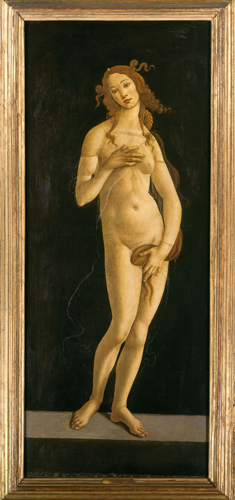
FIGURE 1.1. Sandro Botticelli, Venus, 1480s, oil on canvas, Turin, Galleria Sabauda.
Scala / Art Resource, NY.
Still recorded in the sixteenth century by Vasari and others in numerous households, the overt views of female nudes are instances of what could be called “public privacy” in that they intermingle [28] the showy with the not-to-be-seen. Ostensibly concealing hair at the genitals instead makes a morphological reference to the vulva. Apparently modest gestures taken from the ancient pudica type instead draw attention to the breasts and burrow between her thighs. A light veil in the Sabauda example is so transparent and floating that it conceals nothing and animates the whole. Similarly, the use by other artists like Lorenzo Costa of scanty draperies does little to dampen sexual allusion. The pictorial format achieved international success into the sixteenth century, particularly in the output of many standing Venus figures from Cranach and his workshop, some displaying diaphanous veils and isolated against dark backdrops. Both popular and condemned, less secluded than the reclining, naked figures on the underside of cassone lids and visible on palace walls to at least some visitors as well as known by reputation, the paintings were neither entirely public nor exclusively private images. Marmoreal against featureless darkness like a cult statue, the painted bodies capitalize on the titillation of well-known tales of masturbation inspired by Praxiteles’s statue of Aphrodite (famous exemplar of the pudica type) and thus they might be understood as intensely private and intimate objects. But they also work in defiant dialogue with censorship, displayed despite the strictures, and attaining all the greater fame and allurement precisely due to efforts to keep them secret and unknown.
As suggested by the addition of veils and cloths to otherwise exposed figures, median states between transparency and idealization, between zones of skin and fabric, could be as meaningful and often as erotically laden and exhibitionist as the fully bare body, no matter how much the latter was classicized as “nude.” In the language of piety or the vocabulary of classical and everyday sights, early modern artists dared to visualize tactile sensation, made all the sweeter for its visually oblique or ambiguous suggestion. The gesture of a male hand slipping between layers of female flesh and cloth, in successive moments or in a single gesture, was pictured in both religious and secular registers. The infant savior sometimes engages in playful intimacy with his mother, clasping her bodice or sliding his hand under that clothing in an attempt to assuage his charmingly human hunger, yet at the same time foreshadowing his erotic relationship with her as the mystic Bride of Christ.11
That the Christ child’s gesture was an eroticized one is indicated by several prints attributed to Giovanni Antonio di Brescia (formerly identified as Zoan Andrea), probably datable to the 1510s, in addition to numerous paintings based on a Venetian composition. An anonymous copy in reverse of one of Giovanni Antonio’s engravings (fig. 1.2) pays witness to the gesture’s enticing attraction.12 With a little less modeling, the variant print nevertheless captures the buxom, sleeping woman resting against a cushion and supported by the bent arm of a male youth who takes the opportunity to slip his fingers surreptitiously beneath her bodice. Giovanni Antonio explored the crucial feature of tactile sensation felt between layers in another composition too, in which a grinning fool clasps a simpering maiden by placing one arm around her back and inserting his right arm between her dress and outer cloak under her left armpit (fig. 1.3).13 In the Ambrosiana collection’s sheet of the woman [31] asleep, by means of either pen and ink or intervention on the plate (probably the former), someone awkwardly continued the man’s fingers over the still-visible patterning of the dress’s neckline in order to make the gesture appear more decorous. But the copyist (see fig. 1.2) aimed at buyers interested in the subtle yet undeniable sensuality of the hidden fingers. Unlike either Clark’s nude or naked figures, these two North Italian compositions simultaneously acknowledge secret spaces and hidden layers while at the same time pictorially pronouncing their thrilling contravention.
This image is available in the print edition
FIGURE 1.2. Giovanni Antonio di Brescia (after), Two Lovers, engraving, London, British Museum 1876,1014.177.
© Trustees of the British Museum.
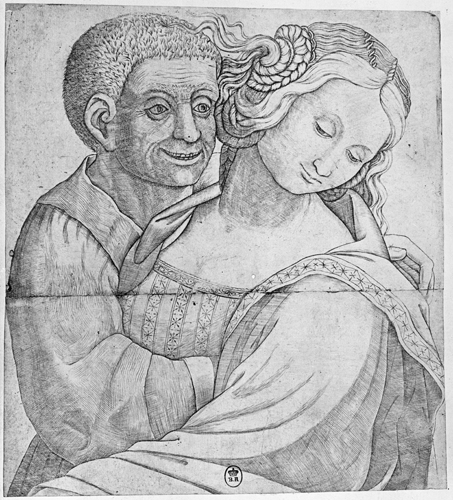
FIGURE 1.3. Giovanni Antonio di Brescia (attr.), The Passionate Embrace, engraving, Paris, Bibliothèque nationale de France.
Image courtesy of Bibliothèque nationale de France.
Notwithstanding the frequent attribution of Giovanni Antonio’s figures or compositions to Leonardo and his Milanese circle, the engraver’s fascination with intimate gestures probably derives, at least in part, from Northern prints. Around 1480, the German engraver known as Master bxg had already depicted a man’s incursion within a woman’s costume, cupping her clothed breast with one hand while sliding the other beneath that outer layering (fig. 1.4).14 Like the Italian image of the fool’s embrace (see fig. 1.3), the German engraver concentrates on two half-length, conscious lovers standing close together, though in the earlier case the female figure looks out at the viewer and lifts the man’s sleeve, suggesting that she is more sexually knowledgeable and active than Giovanni Antonio’s later allegedly coy performer. Central to the works of both printmakers is erotic evocation and satisfaction brought about by the combination of feminine acquiescence with masculine initiative and physical daring to cross the boundaries of what should ostensibly remain hidden and secret.
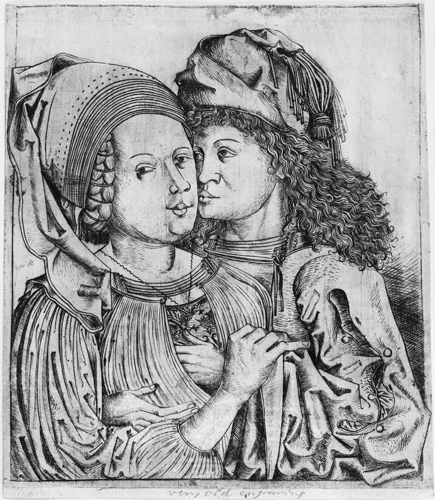
FIGURE 1.4. Master bxg, The Lovers, ca. 1480, engraving, New York, The Metropolitan Museum of Art.
© The Metropolitan Museum of Art. Image Source: Art Resource, NY.
Similar gender differences inform the eroticism of a Venetian composition much debated in origin but often attributed to Titian. It was popular enough to survive in at least ten variants, of which the damaged canvas in the Royal Collection is considered the prototype due to pentimenti (fig. 1.5).15 Scholars date the invention anywhere between 1510 and 1525, so its relationship to Giovanni Antonio’s engravings cannot be fixed in a causal chain. His two prints and the paintings share a gesture of intimate intrusion; in particular, much of the arrangement of the fool’s embrace (including the left hand at the woman’s back, the right slipping between breast and dress) appears in the canvases. However, the Venetian painter bares more flesh and invents a trio by adding a male figure at the upper right, thereby introducing a crucial homoerotic element. The composition also presents a somber, enigmatic mood rather than the print’s sly parody. The coloristic, tonal, and textural possibilities of oil paint are exploited to sensual effect, especially when, as x-rays show, an initial cloth covering was replaced by a more visible right breast, the nipple just escaping its confines to rub exquisitely against the physically raised edge of the white, disordered chemise. The woman’s left breast is cupped in the man’s hand, her nipple resting in the sensitive crook of the V formed between his thumb and index finger, while his fingers and palm are nestled beneath her golden-green dress.16
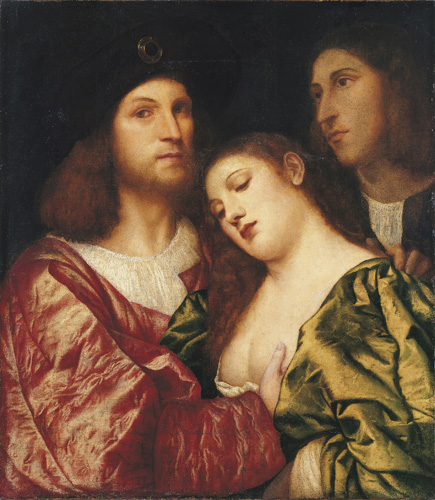
FIGURE 1.5. Titian (attr.), Lovers, ca. 1510–25, oil on canvas, Hampton Court, Royal Collection.
Royal Collection Trust / © HM Queen Elizabeth II, 2012.
[34] Like Master bxg’s female figure or Giovanni Antonio’s male fool, each on the left of the composition, the chief Venetian protagonist looks out, forcing viewers’ direct engagement with his confidential actions. Insertion of the third figure on the right stresses that witnessing is part of the fantasy, and of the multiple erotic stories that could be spun. Its presence further makes the tenderness and familiarity of the embrace a communal, knowable event rather than a private secret kept solely between a single couple. Since the amusing, sexual closeness of the pairs in the prints is related to the pictorial type of “unequal lovers” or “ill-matched couples” popular in Germany and the Netherlands, so too the painted Venetian onlooker may be reminiscent of the third figure who sometimes appears in that scenario. In those cases, the third character can be a fool, a pimp, or a procuress in collusion with the central figure’s underhand appropriation of the dupe’s resources; alternatively, it is a male husband or suitor contrasted in age to the other man receiving favors from a temptress. For instance, while a siren chucks the chin of a leering old man in Quinten Massys’s painting of ca. 1520–25 in the National Gallery of Art, Washington, DC, her other hand surreptitiously passes his money bag to the greedy fool hiding at her back.17 Of special interest in this instance is the suitor’s thumb pressing against the flesh of her chest whereas the rest of his hand is concealed behind her clothed elbow, a variant on the telling thumb in the Venetian paintings—which are not, however, satirical or condemnatory in tone. In both cases, the viewer is granted the privilege of knowing and seeing more than each of the represented figures.
Rather than trying to pin a single profession or iconographic identity on the third character in the Venetian pictures, it is more fruitful to concentrate on visual effect. The figure introduces complex narrative and triangulated interaction within the frame, and ensures that a simple title like “Amorous Couple” does not satisfy because his presence cannot be neglected.18 The suggestion, first made in passing in 1871, that the painted narrative bears some similarity to tales in Matteo Bandello’s Novelle is worthy of reconsideration, albeit in a modulated form.19 In the interests of brevity, I can only point to his version of the famous thirteenth-century story about the châtelaine of Vergi, which Bandello first wrote for a courtly wedding in 1518.20 At the end, the divulging of a man’s “segreto amore” leads him to commit suicide after his lady has expired from grief over that betrayal. The duke, who had leaked the secret to his jealous wife, arrives on the scene too late to prevent the tragic death of his especially favored, beloved courtier. Many of the painting’s details do not correspond closely, but the important point is that early sixteenth-century viewers were [35] familiar with accounts of misplaced trust, undeserved loyalty, lost honor, obstructed desire, clandestine affairs, separated lovers, and secret marriages. While couples unequal in age were the butt of visual jokes and noisy charivari, disparities in wealth, social status, familial accord, dynastic ambition, or sexual norms gave somber piquancy to tales about star-crossed lovers. Stories about amorous obstacles always had the potential to provoke homoerotic subtexts, and the tension between different kinds of desire is central to the painting’s appeal. More allusive than the prints, the Venetian composition intensifies and enriches the erotic possibilities of unresolved, suggestive longing. In the fictional world, obstacles to romance stoked desire to yet more anticipatory heights.
Betrayal, of the “secret love” of Bandello’s ill-fated couple and of the bonds of male friendship, is a plot scenario that entertained and moved viewers while reinforcing societal norms. The tragic consequences of dishonorable publicity are paradoxically conveyed in visible terms and viewers are implicated in the telling of tales while remaining themselves safe from innuendo and free to continue savoring secrets. The viewer is an active witness as the secret becomes open, but it is not disclosed to all because it is enigmatic and evocative besides being displayed to a relatively small circle. The depicted gestures of sensual insinuation encapsulate the delicate nature of boundaries and layers of access to restricted knowledge and bodies. Visceral delight at such complexity is similarly prompted by Venetian prints of a courtesan, standing near the water’s edge, whose masculine breeches are revealed when a paper flap representing her skirt is lifted.21 It is not only the two separate images, of unusually public femininity and tantalizing ambiguity, that delight, but also the kinesthetic involvement necessary to enact a transition back and forth, as though the paper were cloth and the manipulator had control over fictive and actual material alike. Earlier in that region Vesalius pioneered cut-and-paste education, enabling students of anatomy to assemble their own layered illustrations. Around the same time, multilayered, often vernacular flap anatomies provided voyeuristic, vicarious access to organs and what were called “secret” parts, that is, the genitals and a woman’s reproductive system.22 Acquisition of knowledge was constructed like a narrative sequence, as complex, multilayered, moral yet prurient. Farthest away, neither the story nor the secret had much impact or effect, but through a serial process of approach and withdrawal, exposure and concealment, seekers of knowledge were able to manipulate systems of signification and increase their power.
The dialectic between a body’s flesh and its costumed parts interested Giovanni Antonio di Brescia in a third print too, depicting a servant girl, her own skirt partly raised, lifting high the dress of her large mistress to reveal a great deal of bare flesh. The concept may rely on the case of a woman “of high rank, a Venetian” (probably a courtesan), executed in Rome in July 1501 for “having molested [pedicato] a girl of eleven or twelve years, whom she kept in her house.”23 The forbidden was vividly imagined by way of playing on one character’s access beneath the garments of another, a clearly evident power differential adding to the frisson. Other representations of physical relations with servants, especially pages attending to their masters, also concentrate on the [36] process of dressing/undressing, often ambiguous as to what the future result will be so that a viewer can imagine a variety of sexual partners as well as fantasize either draped or exposed splendor or, rather, delight in the play of both possibilities and in the sensual pleasure of textures and anticipation. Is, for instance, Titian’s reclining figure in the Venus of Urbino about to dress or has she finished her disrobing? The standing attendant in the background may be waiting for another item to emerge from the chest, since she makes no attempt to hand the kneeling maid the sumptuous dress hanging over her shoulder. In the process of rolling up a sleeve as though she still has much work to do, the senior woman may be waiting for night attire, or further items of day wear, or she will soon hand the maid the last costume needing storage. Does the light at the window indicate the magic hour of dusk, when the lady might receive her nocturnal visitor, or is dawn breaking as she bids him farewell?
If a definitive closure is sought to the narrative possibilities, an important part of the painting’s affect and evocative indeterminacy is missed. It displays the transitional moment between states of dress/undress. Therein lies some of the erotic charge, as it does in Botticelli’s lightly veiled Venus in Turin (see fig. 1.1), Raphael’s cascading linens and transparent chemise in Donna Velata, Giorgione’s tension between soft fur and flesh in Laura, Palma Vecchio’s courtesan in the Poldi Pezzoli museum with her heated nipples flaring near soft, golden tresses and pure white chemise, and many other paintings that celebrate teasing, imprecise boundaries between skin and cloth.
Most often, either the Madonna exhibiting her naked and often sleeping infant or a satyr or Cupid is represented in the act of lifting a veil. The latter characters reveal the body of a naked female figure that can be variously identified as Natura, Terra, Venus, or a nymph, sometimes asleep. These images offer concrete metaphors for the artist’s capacity to reveal and arouse, granting permission to the presumably male audience to enjoy the spectacle while nevertheless feeling superior to the antics of lusty satyrs or the cheeky infant Amor. Viewing engagement is sometimes heightened by means of acknowledgment, with a figure gazing out at viewers or signaling them to discretion through the gesture of silence. Agostino Carracci’s smiling satyr calling for quiet in one of his engravings in the Lascivie series of the late 1580s thus creates a pact with the viewer to keep a shared secret (see fig. 6 in this volume’s introduction).24 The subject of that conspiracy is the overt view of the naked body of a sleeping woman, and what she does not know but will soon happen. Carracci’s satyr is a parodic intruder, superficially miming the prohibition against disturbing the sleep of a nymph that had characterized earlier images inspired by a pseudo-antique inscription.25 However, his smile and satiric nature involve viewers in jocular complicity, for he will ignore propriety and pastoral etiquette, instead rudely awakening her.
The plot of artist and viewer sharing in a pact of secrecy is also central to the implied narrative of many images of Diana or nymphs bathing, especially but not only if interrupted by Actaeon. As she splashed that young hunter with water that turned him into a stag, Diana’s vengeful, foreboding words threatened, “Now you are free to tell that you have seen me all unrobed—if you can tell” (which, of course, he cannot, being rendered mute as an animal).26 On the other hand, artists making the images and viewers enjoying them can tell tales, freely seeing the forbidden sight of bathing [37] beauties, their pleasure heightened by their triumphant escape from punishment. Although the normative model of viewing heavily gendered such imagery, a female artist like Artemisia Gentileschi parlayed her own sex and her decorous access to female models into a trade secret, as it were. She often specialized in producing images of naked female bodies, reclining or bathing, like Susannah or Bathsheba, and these could be marketed as distinctive not merely because they were produced by a woman but because they made manifest her expertise in the knowledge of women’s bodies.27 In many images, as in the theorization of art as concealment, the artist was constructed as the creator and purveyor of secrets, and viewers benefited too, postulated as worthy of sharing such confidences because they were endowed with sufficient wit and cultural knowledge.
Covers
(Un)veiling was not primarily about obscuring and revealing that which was considered prurient, for it strategically controlled access and enticed viewers of many kinds of images, activating rather than restricting interest. Physical interactions and common circumstances of display ensured that the layering of secrecy and power was embedded in cultural memory. Familiarity with ritualized (un)veiling was especially due to liturgical practices. On a regular basis, from the humblest parish church or nunnery to the highest chapel in Christendom, priests were privileged to reveal and curtain objects of veneration including the tabernacle and ciborium housing the Eucharist, use the humeral veil so as not to touch the Body of Christ directly during mass, place then remove veils over crosses, pictures, and statues during the Lenten cycle, and bestow garments of grace at baptism and monastic investiture. On feast days and other special occasions, the imagery of an altarpiece was disclosed by the pulling aside of curtains or the raising of hangings (each often decorated).28 The most basic of Catholic rituals in early modern Europe was the sight of the Eucharist during the Elevation of the Host. Removal from a tabernacle and exposure of Christ’s symbolic body to the congregation before it was again stored out of direct sight was particularly meaningful since actual ingestion of the Host was restricted. What replaced it was oft-repeated liturgical theater, the spectacle of a Host (sometimes large) visible from far down the nave to an avid populace who rushed into the church at the ringing of the bell simply to see the bared Corpus Christi. In this core moment of the observance of faith, the population was absorbed in the process of unveiling, then withdrawal of access.
Potent pictures like the Florentine Madonna housed in a special tabernacle within SS. Annunziata were uncovered at moments of crisis or worship. So emotive could be the response that crowd control necessitated a reveiling, and usually she was shown only to “the greatest personages.”29 Esteem was also due the cult image itself: a Florentine regulation of 1435 restricted the number of appearances by a miracle image from Impruneta because “sacred objects . . . are [38] normally respected and held in greater reverence if they are rarely seen.”30 Noting that “pictures representing the divine beings [are] constantly kept under coverlets of the greatest price,” Leonardo linked this veneration for the rarely seen with the unique nature of painting because it stimulated devotion and made the multitudes react “exactly as if this goddess were there as a living presence.”31 Immediately before that, Leonardo recalled the habit of “the greatest kings of the Orient going out veiled and concealed, believing their fame to be diminished by showing themselves publicly and divulging their presence.” Thrill at the sight of secreted king, goddess, holy figure, or other esteemed representation was in part about the privilege that ensued for both viewer and viewed, and the benefits were shared amongst others involved in the nexus too, such as priest, patron, or go-between.
The combination of devotional and visual practice is central to Piero della Francesca’s Madonna del Parto of the 1450s in Monterchi, in which a stately mother dressed in a pregnancy gown draws attention to her gravid tabernacle with a hand placed over the spreading seams that reveal her shimmering white undergarment. Angels pulling aside brocaded curtains further stress the metaphorical motif of revealing the timeless mysteries of incarnation, advent, and transubstantiation. Incorporating the manipulation of curtains within the pictorial composition was perhaps first ventured on a large scale in Fra Angelico’s innovative altarpiece for S. Marco of 1443. Fictive curtains gathered at either side accentuate the central opening-out to a bedazzling vision of the courtly audience in heaven. Thereafter, the scenario of revelation and thus implicit mystery was oft repeated in religious imagery, including the green curtain on its brass rings and sagging rod represented at the top of Raphael’s Sistine Madonna (1512–13). Layers of unveiling and ceremonial approach are accentuated in such paintings just as they are for viewers observing the Elevation of the Host or crowding to see one of Leonardo’s unveiled “goddesses.” Liturgy was also remembered in paintings of the Virgin delicately fingering and sometimes lifting a veil that is usually placed near the genitals of her babe.32 The drama of concealment and revelation further accentuates the human, masculine reality of the Incarnation, foreshadows the reuse of the Virgin’s veil when she girds his naked loins at the Crucifixion, prefigures Christ’s winding sheet, alludes to the clerical privilege of manipulating liturgical veils, and embodies the disclosure of theological truths.
It was common to cover by cloth or panel not only ecclesiastical objects but also devotional and secular paintings in the home, and neither erotic subjects nor female figures were the only ones thus secluded.33 In the inventory of Lorenzo de’ Medici’s property drawn up after his death in 1492, sportelli (hinged shutters or doors) served on several cupboards, including one with figures for a little cabinet (armadietto) that contained an anonymous female portrait, as doors for a framed portrait of a woman by Domenico Veneziano, and as the single bronze portal for the Eucharist.34 [39] From what is known of his oeuvre and the visual conventions of the time, Domenico’s portrait was likely to have been as demure as the tabernacle door. In northern Italy, including Venice, the timpano or cloth cover fitted into a painting’s frame was used for a variety of subjects, including religious figures and portraits, of male as well as female figures.35
Yet it has been said of sportelli recorded in the seventeenth century protecting Raphael’s portrait of a seminaked woman called La Fornarina (fig. 1.6) that they indicate “concealment” and “its private and therefore implicitly erotic nature.”36 Similar comments emerged after the cleaning in 2009 of Titian’s canvas dated to the mid-1540s and later cut down into a roundel (fig. 1.7). Cupid stands triumphantly atop a lion and this picture, thought to have been the cover for a woman’s portrait once in Gabriel Vendramin’s collection, is occasionally assumed to indicate that the sitter was a courtesan or mistress simply because her visage was initially concealed and, presumably, because the exterior theme was amorous.37 The evidence, however, points to a more nuanced and multivalent, less personalized, privatized, or lewd meaning and function for such covers.
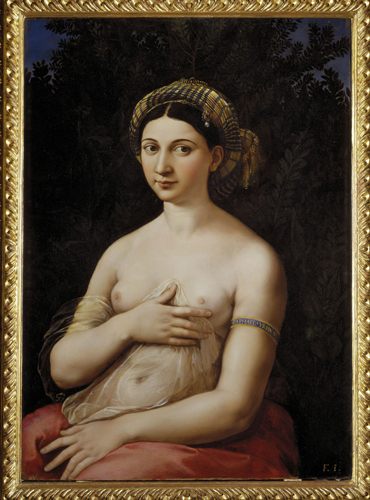
FIGURE 1.6. Raphael, La Fornarina, ca. 1518–19, oil on wood, Rome, Galleria Nazionale d’Arte Antica.
Scala / Ministero per i Beni e le Attività culturali / Art Resource, NY.
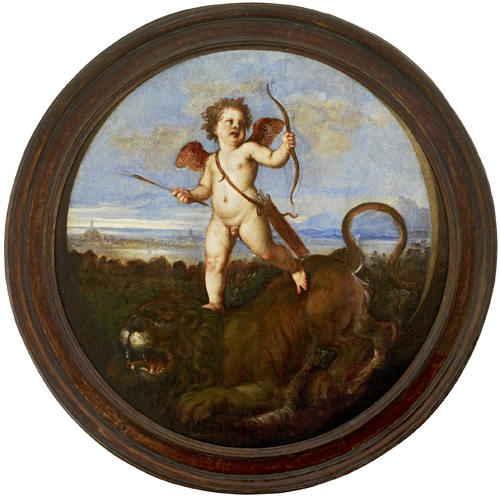
FIGURE 1.7. Titian, The Triumph of Love, ca. 1545–50, oil on canvas, Oxford, Ashmolean Museum.
Ashmolean Museum / The Art Archive at Art Resource, NY.
Titian’s conquering Cupid, for instance, can be interpreted as signifying that “love triumphs over every great ferocity and cruelty in people,” the theme adduced of an ancient sculpture in Vendramin’s collection showing Cupid atop a lion, according to Doni’s report published in 1552.38 The idea applies equally as well to political or marital circumstances, or allegorical morality, as to illicit affairs. Newly remarried marquis of Ferrara, Leonello d’Este, is presented on a medal of 1444 as both king of beasts (his namesake, Leo) and lord of love, conveyed in the reverse image of Cupid teaching a lion to sing.39 Attentive to his instructor, that lion has been tamed by amorous devotion within marriage. If music brings harmony in Ferrara, the associated art of poetry may be key among the elite of Venice. Whereas the medal of the Venetian poet Sperone Speroni showed a putto playfully engaged with a recumbent lion, a theme reiterated on the lost cover of his portrait painted by Titian ca. 1544, in the slightly later roundel that beast has been overcome by the more powerful passion of desire.40 Amorous poetry has grown more triumphant, and the female sitter may be muselike, a manifestation of Beauty that inspires the pen.41 Vendramin was a patrician bachelor, whose family collection contained at least nine anonymous portraits (five female, four male) by [41] the time it was inventoried in 1601, a half century after his death.42 So it is likely that the portrait cover first recorded at that time, “con un Dio d’amor sopra un Lion,” represented not only his virtual impresa but was also an echo of his antiquities; the female figure depicted beneath was probably of symbolic and artistic significance more than of merely personal sentiment.43
It is also possible that there are political implications, as there were in the public affirmation of Leonello’s dynastic alliance. Titian’s cowed lion refers on one level to the Venetian emblem the lion [42] of St. Mark, its wings amusingly appropriated by Cupid. Such a reading makes a wry comment on the state of civic affairs, implying that amorous diversions weakened and distracted the city’s aristocratic ruling class. That theme might suit an unmarried patriarch who worried about the luxurious ways of his nephews and whose civic offices included censor late in his life.44 Positioned in a landscape with buildings to the left, distant mountains to the right, all opposite a watery expanse, perhaps the emblematic figures instead wittily suggest that amorous dalliance in the countryside need not extend to urban environs. By generating several potential meanings, the cover functions as a conversation piece, attracting attention and raising the stakes regarding who will be granted the favor of viewing the image beneath. In general, the favor was accentuated because the ornamentation of covers was usually of a more summary, preparatory kind, executed in thinner paint and quicker brushstrokes, and often of less challenging visual interest.45 To see the exterior was honor enough for many, no matter its degree of elaboration, but especially if it was a work by a renowned master like Titian; to be able to delve further was a mark of even greater status.
Whether an image is erotic or not does not depend on the existence of a physical cover, a hidden space, a solitary or leering viewer, or a strict divide between public and private spheres. The allegorical or emblematic type of cover foreshadowed the persona below, requiring viewers to engage in the imaginative play of interpretation. The secretive practice of covering portraits, male and female, did not so much create a complete separation between layers as invite inquisitiveness and awaken a desire to see and know more about both the owner and the depicted personage, and to share in various intellectual conversations and particular reveries.
Paintings were exhibited in a variety of ways beyond straightforward fixing to a wall, for they were often curtained or covered with hinged, fitted, or sliding fixtures; some folded as diptychs or triptychs and in certain instances they then formed self-contained, portable boxes or display cases. Little is known about the presentation circumstances of reverses, common especially on portraits and deschi da parto (polygonal birth trays). While some covers and backs focus on coats of arms, which proclaim ownership and familial identity, others carry inscriptions, emblems, mottos, or allegorical scenes, such as Titian’s Cupid or the memento mori object of a skull. Rather than secrete the inner or obverse scene, they brand, decorate, foreshadow, or amplify it. Those not able to examine the entire assemblage were given clear indications that they were missing out on the full picture. Like sacred objects or important rulers, access to the sight of them had to be managed carefully in order to foster and maintain their potency and honor.
Furthermore, opening the shutters of a painting like La Fornarina was just one stage in a sequential viewing experience, starting far back when one noticed the object set apart by its framing arrangement and continuing through to a view that may have been as close as that of the painter. The female figure’s pudica pose at breasts and lap refers to classical ideals and modesty, but the red cloth over her thighs is countered by the thin, loosely painted veil that fails to conceal the differently painted compact, highly polished flesh underneath, while her breasts and upper torso [43] are entirely bare.46 Her evasive acknowledgment of the viewer’s presence and the highlighted body set against dark foliage and night sky are other double-sided features that reinforce the innate ambiguity of the pudica gesture, pure yet provocative, genteel but exhibitionist. The shutters help to establish drama and anticipate longing (by which I mean more than blatant sexual desire), which carry on within the painting itself. The modern sense of lascivious, shameful secrecy does little to get at the ensemble’s enticing subtlety.
Shutters and other covers also functioned as shields protecting works valued for their subject and/or their artist. Imitated porphyry or marble surfaces surviving on the backs of some paintings assert their overall object’s prestige, and the theme of preciousness seems to me of more import than rather bourgeois notions of personal privacy. Around 1686, La Fornarina, for instance, was valued four times higher than Titian’s Venus and Adonis in the same collection.47 Raphael’s market and connoisseurial value is also central to Poussin’s seemingly self-effacing homage to the master. Poussin’s Ecstasy of St. Paul was commissioned by Paul Fréart de Chantelou in order to accompany what was thought to be Raphael’s Vision of Ezekiel in the French secretary’s collection. On 2 July 1643 Poussin wrote to the patron that he undertook the task with trepidation and asked that his work serve merely as the cover (“couverture”) to Raphael’s esteemed painting rather than be hung nearby, for the latter arrangement might provoke detrimental comparisons.48
In actuality, the envisaged display would hide Raphael’s picture from all but an elite circle of visitors and only Poussin’s work would be on overt show. Poussin constructs his “cover” as a seeming protection of Raphael’s work and a deflection from his own (which would supposedly follow in the tradition of exterior paintings often being of lesser quality), but it is a rhetorical ruse this strategy, a “cover” of another kind, upstaging his predecessor. To work sufficiently as a mode of courtly modesty, his notion that a painting’s cover protected Chantelou’s prized possession had to be plausible. The cover is presented as preliminary and subservient to the famed master’s work but, like painted covers themselves, the game played with the rhetoric is layered. By means of Poussin’s veiling, the precious antecedent becomes even more valuable, like a secret, existing in a codependent arrangement that works to his advantage and reputation.
Far from being secretive, covers advertise themselves as well as what lies beneath. Or rather, their success depends not only on their outward appearance but also upon their appeal to curiosity. Shown only the silk bundle or wrapping (“invoglio di seta”) within which the Spanish ambassador to Venice kept a woman’s portrait as though it were a precious reliquary (“a guisa di reliquia”), in 1542 Aretino found that almost allegorical encasement a spur to poetic invention.49 His sonnet imagines a contest between Cupid’s arrows and Titian’s brush, and trumps both with his own pen, speaking openly of the man’s “secreto che s’asconde in lui,” the secret that hides within [44] both his heart and his apartment. In Aretino’s poetic conceit, the actual viewing of the portrait becomes less important than the owner’s courtly reverie about it alongside Aretino’s own clever self-promotion. Pictures of outstanding seventeenth-century collections, such as Willem van Haecht’s fictive Studio of Apelles (ca. 1630) in the Mauritshuis or several views of Archduke Leopold Wilhelm’s actual collection by David Teniers, but also images and inventories of more ordinary households, indicate that curtains (placed over individual pictures with the aid of a thin rail attached at the frame’s top) signaled the location of some of the most valued rather than necessarily erotic paintings, protecting them but also announcing their presence.50 For visitors to ask to have a curtain pushed aside made them especially beholden, to the owner and the guides. Notably, Aretino found a way around such an obligation, instead indebting the ambassador by giving him the sonnet and then benefiting them both by printing the verse about a secret that same year. It appeared in his second volume of letters, which began with letters addressed to Henry VIII of England and the king of Portugal, thereby enmeshing himself, his friend Titian, and the ambassador in an international world of culture and power. They all understood that a secret only carries weight and endows power if it is known to exist.
In the case of Metsu’s maid lifting the curtain from an ebony-framed seascape in Woman Reading a Letter of ca. 1665–57 (fig. 1.8), her deceptively incidental action functions as an analogue for traversing a series of layers.51 Unlike visitors to aristocratic collections, the maid takes the charming initiative of lifting a curtain without permission, to reveal a subject that, far from indecorous or secret, alludes to the distance and transportation necessarily involved in the exchange of letters. The yearning of the absorbed letter reader seated on a soldertje at the window to the left is echoed in the maid’s imaginary travel to a storm-tossed sea; each woman is separately intent on her close reading of graphic marks and the visionary crossing of limits so that the divide between intimacy and solitude is both reinforced and suggestively overcome.
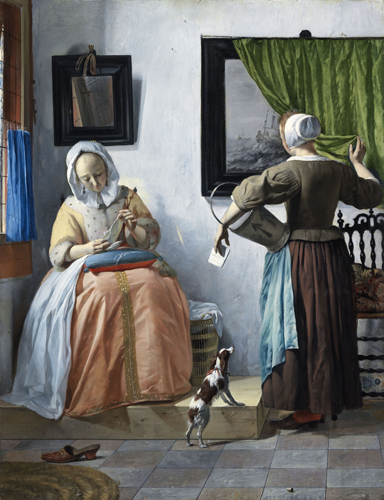
FIGURE 1.8. Gabriel Metsu, Woman Reading a Letter, ca. 1665–67, oil on wood, Dublin, National Gallery of Ireland.
Photo © National Gallery of Ireland.
Veils in Poetry and Artistic Praxis
Ideas about layering, covering, and revealing imbued both the theoretical language and the material practice of artists. Along with the patron class, artists were familiar with thinking in terms of the exegetical tradition of creating meaning through the layers of allegory, for it was widely applied. When expounding on the unveiling of drunken Noah’s genital shame, St. Augustine explained that “the garment stands for a mystery” but also that “all the . . . events recorded in this story were laden with prophetic meanings and covered with prophetic veils.”52 Dante’s reference in the early fourteenth century to doctrine “hidden under the veil of the strange verses” was later developed in a Neoplatonic vein, but in the meantime it resonated in poetic theory.53 According to Boccaccio’s influential study written from ca. 1360 on, poetry “covers truth with a comely veil of fable.”54 The [46] allegorical mode of uncovering matched the metaphors Michelangelo used in his poetry to describe his sculptural process of removing the bodily veil from the concetto hidden within the stone block.55
Around the same time as Boccaccio, Petrarch also presented poetry as a “veil of delightful fictions,” understanding that “truth uncovered is all the more pleasant, the more difficult its quest has been.”56 Hence, truths were to be wrested from beneath their fictional covers, which functioned like secrets to filter access and understanding. Power was bestowed on those who could represent themselves as more astute and discerning, like Michelangelo, or imaginative in the case of an artist like Lorenzo Lotto. Responding in 1528 to his Bergamesque patrons who were puzzled by his hieroglyphic intarsia covers for choir stalls, Lotto would only assert visual primacy: “know that these are things which are not written: imagination is needed to bring them to light.”57
Coverings conversely enabled the theater of revelation, and in the field of the visual arts the process was especially ambiguous and teasing because a two-way dialectic was necessarily set up between secretive veils and equally fictive revelations. Alberti’s deployment of a thinly woven velo “so that the visual pyramid [of rays of light] may pass through the translucency of the veil” was not just a copying device for concentrating the eye but, as Pardo has elucidated, it represented the artfully woven textus of the painting itself (both text and textile).58 Translucent on the one hand and allegorical on the other, it was also opaque material, a surface to be drawn on. More than high-flown rhetoric is engaged, for Alberti’s metaphor was partly based in the materiality of studio practice at his time. The ground of a panel painting was prepared with sizing or glue, layers of gesso or plaster, and strips of what the painter Cennini referred to as “old thin linen cloth, white threaded.”59 Working on that plane, artists were conceptualized not only as revealers but also as clothiers or tailors. They applied flesh in a Promethean manner to the bones, producing the finished object in a series of additive materials, in the fine, layered, blended strokes of tempera or, as more oily substance was added to the pigments, in increasingly more flowing, visible marks. Even when using oil paint, artists such as Titian could mimic tempera technique and add a light veil or skin of egg white before applying the varnish, cohering their art with final, nearly invisible layers.60
Alberti recommended that the painter “first . . . sketch in the bones. . . . Then add the sinews and muscles, and finally clothe the bones and muscles with flesh and skin.”61 To the objection that these things were not visible, he responded by emphasizing the order of superimposed layers: “just as for a clothed figure we first have to draw the naked body beneath and then cover it with clothes, so in painting a nude the bones and muscles must be arranged first, and then covered with appropriate flesh and skin.” Theoretically, the discerning viewer worked back to the innermost structure, judging the skill with which an artist had begun the veiling at the skeletal level and thus demonstrated adequate anatomical knowledge. Practically, the painter applied the covert armature of [47] disegno (in preparatory drawings, underdrawings, and in the artist’s mind). The many drawings executed by Raphael for his Baglioni Entombment (1507)include a study for the Virgin’s swooning body (fig. 1.9), which makes it clear that the realization of flaccid and draped flesh in the final painting nevertheless depended upon an investigation of skeletal engineering.62 The literature of medical learning and natural philosophy had long reinforced the use of corporeal metaphors for art-making. Aristotle, for example, likened embryo formation to the way in which “painters . . . first of all sketch in the figure of the animal in outline, and after that go on to apply the colors,” a parallel also drawn in Alessandro Benedetti’s anatomical text published in Venice in 1502.63
This image is available in the print edition
FIGURE 1.9. Raphael, Study for the Fainting Virgin of the Baglione Entombment, pen and ink over black chalk underdrawing, London, British Museum 1895,0915.617.
© Trustees of the British Museum.
Secrecy, I would argue, was a fundamental dynamic that informed the very basis of artistic illusion. When discussing communicative body language and facial expressions, Alberti’s De Pictura of 1435 advised artists to always imitate expressive movements, “and those [are] preferred in a painting which leave more for the mind to imagine than is seen by the eye.”64 In other words, the painter kept some things secret and unseen, in order for the viewer to join in the projects of fiction-making and naturalistic deception. Realistic details were moderated through the governance of abstract, idealizing principles, for the sake of engaging the viewer’s memory, imagination, and aspiration. Erotic traces heightened what was a more fundamental pleasure in the repression of the real and the strategy of secrecy.
In the sixteenth century, Vasari valued “that sweet and facile grace which hovers midway between the seen and the unseen [fra’l vedi e non vedi], as is the case with the flesh of living figures.”65 The limbs should be “true to nature . . . but veiled [ricoperte] with a plumpness and fleshiness that should not be awkward, as they are in nature, but refined by draftsmanship and judgment.” He adapts the fundamental understanding that the intellectual and poetic enterprise of allegory operated according to veiled meaning. Art, in its rivalry with Nature, was about improving merely superficial naturalism with layers of graceful material and purifying it through the application of skillful disegno and elite discrimination. Members of art’s elite audience practiced their own form of hiding in plain sight, learning from Castiglione’s manual for courtiers that sprezzatura was the wellspring of art. One should “practice in all things a certain sprezzatura [nonchalance], so as to conceal all art and make whatever is done or said appear to be without effort and almost without any thought. . . . True art . . . does not seem to be art; nor must one be more careful of anything than of concealing it.”66 Facilità, appearing uncontrived, was paramount according to Aretino too, as voiced by Dolce in 1557, for “Art is the hiding of art’s presence,” a virtual maxim that echoes Ovid’s praise of Pygmalion’s deceptively real statue.67 The choice of the myth of Pygmalion for a man’s portrait cover, which Bronzino executed ca. 1530–32, was particularly apposite for it cleverly concealed the art of the lifelike Halberdier [49] produced by Pontormo.68 Literally and figuratively, the viewer shifted the cover to penetrate Bronzino’s tiers of art, becoming seduced by the artist as well as by the delusion of both images, captivated like Pygmalion. Art was about concealment, revelation, and the layers in between.
Naturalism itself, seemingly the most transparent and unmediated of pictorial strategies, was represented as an astute unveiling. At the turn into the fifteenth century, Cennini was not interested in naive replication of external superfluities. Instead, his manual taught that a painting “calls for imagination, and skill of hand, in order to discover things not seen, hiding themselves under the shadow of natural objects, . . . presenting to plain sight what does not actually exist.”69 About a quarter of a century later, the architect credited with devising perspectival illusion was criticized for thinking that “uncertain things can be made visible,” but Brunelleschi insisted that his kind of vision was, like Cennini’s, of a sophisticated, less literal kind. As he put it in a sonnet, “We rise above corruptible matter / And gain the strength of clearest sight. . . . / For wise men nothing that exists / Remains unseen; . . . / Only the artist, not the fool / Discovers that which nature hides [natura invola].”70 The artist worked at balance, improving any one model by selecting the best from several in the oft-cited case of the ancient painter Zeuxis, correcting Nature’s deficiencies and uncovering general principles. Discerning judgment was considered the core of art, penetrating beyond surfaces to find underlying secrets. In a sense, naturalism trumped Nature, stripping her to find a fabricated truth.
In 1548, the Venetian painter Pino succinctly expressed a common idea already evident in the writings of Cennini and Alberti, amongst others, and thus of no particular Neoplatonic valence. He defined painting as “truly poetry, that is, invention, which makes that which is not seem to be.”71 Art hid its own artificiality through sprezzatura, yet it also brought forth what Nature had hidden, thus being simultaneously secretive and revelatory. Optical hints about secrets lured viewers and intensified their power and prestige. By coming close to or crossing boundaries of knowledge, they increased their erotic pleasure but even more their understanding and judgment of artistic skill or of instructive fields like anatomy. In turn, they helped maintain secrets, engaged in the superimposition of layers and enmeshed in the reciprocal process of visual concealment and display.
A version of this essay was delivered at a conference I organized, “The Rhetorics and Rituals of (Un)Veiling in Early Modern Europe,” held at the University of Michigan in October 1997. I am grateful to Tim McCall and Sean Roberts for the opportunity to unearth and reflesh that paper for this volume. I am indebted, too, for their comments, as I am also to Louise Marshall and Monika Schmitter.
Bibliography
Alberti, Leon Battista. On Painting and On Sculpture. Edited by Cecil Grayson. London: Phaidon, 1972.
Ames-Lewis, Francis. The Draftsman Raphael. New Haven, CT: Yale University Press, 1986.
Anderson, Jaynie. “A Further Inventory of Gabriel Vendramin’s Collection.” Burlington Magazine 121 (1979): 639–48.
———. Giorgione. Paris: Flammarion, 1997.
Aretino, Pietro. Lettere. Edited by Paolo Procaccioli. Vol. 2. Rome: Salerno, 1998.
Aristotle. Generation of Animals. Translated by A. L. Peck. Cambridge, MA: Harvard University Press, 1942.
Augustine. Concerning the City of God against the Pagans. Translated by Henry Bettenson. Harmondsworth, UK: Penguin, 1984.
Bandello, Matteo. La quarta parte de la novella. Alessandria: Edizioni dell’Orso, 1996.
Barbaro, Francesco. “On Wifely Duties.” In The Earthly Republic: Italian Humanists on Government and Society, edited by Benjamin Kohl and Ronald Witt with Elizabeth Welles, 189–228. Manchester, UK: Manchester University Press, 1978.
Bayer, Andrea, ed. Art and Love in Renaissance Italy. Exhibit catalogue. New York: Metropolitan Museum of Art, 2008.
Benedetti, Alessandro. Historia corporis humani sive Anatomice. Edited by Giovanna Ferrari. Florence: Giunti, 1998.
Berenson, Bernard. Aesthetics and History in the Visual Arts. New York: Pantheon, 1948.
Blunt, Anthony. The Paintings of Nicolas Poussin: A Critical Catalogue. London: Phaidon, 1966.
Boorsch, Suzanne. “Mantegna and His Printmakers.” In Andrea Mantegna, edited by Jane Martineau, 56–66. Exhibit catalogue. New York: Metropolitan Museum of Art, 1992.
———, and Nadine M. Orenstein. The Print in the North: The Age of Albrecht Dürer and Lucas van Leyden. Exhibit catalogue. New York: Metropolitan Museum of Art, 1997.
Borinski, Karl. “Das Novellenbilde in der Casa Buonarroti.” Monatshefte für Kunstwissenschaft 1 (1908): 906–9.
Brown, David Alan, and Konrad Oberhuber. “Monna Vanna and Fornarina: Leonardo and Raphael in Rome.” In Essays Presented to Myron P. Gilmore, edited by Sergio Bertelli and Gloria Ramakus, 2:25–86. Florence: La Nuova Italia Editrice, 1978.
Carlino, Andrea. Paper Bodies: A Catalogue of Anatomical Fugitive Sheets 1538–1687. Translated by Noga Arikha. London: Wellcome Institute for the History of Medicine, 1999.
Castiglione, Baldesar. The Book of the Courtier: The Singleton Translation. Edited by Daniel Javitch. New York: W. W. Norton, 2002.
Cennini, Cennino d’Andrea. The Craftsman’s Handbook: ‘Il Libro dell’Arte.’ Translated by Daniel V. Thompson Jr. New York: Dover, 1960.
Ciardi, Roberto Paolo. Giovan Ambrogio Figino. Florence: Marchi and Bertolli, 1968.
Clark, Kenneth. The Nude: A Study of Ideal Art. Harmondsworth, UK: Penguin, 1960.
Cooper, Donal. “Devotion.” In At Home in Renaissance Italy, edited by Marta Ajmar-Wollheim and Flora Dennis, 190–202. London: V&A Publications, 2006.
Cropper, Elizabeth. Pontormo: Portrait of a Halberdier. Los Angeles: Getty Museum Studies on Art, 1997.
Crowe, J. A., and G. B. Cavalcaselle. A History of Painting in North Italy. London: J. Murray, 1871.
Cust, Lionel, and Herbert Frederick Cook. “Notes on Pictures in the Royal Collections IX—‘The Lovers,’ at Buckingham Palace.” Burlington Magazine 9 (1906): 71–79.
DeGrazia Bohlin, Diane. Prints and Related Drawings by the Carracci Family: A Catalogue Raisonné. Washington, DC: National Gallery of Art, 1979.
del Serra, Alfio. “A Conversation on Painting Techniques.” Burlington Magazine 127 (1985): 4–16.
Derrida, Jacques. Postcard. Chicago: University of Chicago Press, 1987.
———. “The Purveyor of Truth.” Yale French Studies 52 (1975): 31–113.
Doni, Anton Francesco. I marmi. Venice: Francesco Marcolini, 1552.
Dülberg, Angelica. Privatporträts: Geschichte und Ikonologie einer Gattung im 15. und 16. Jahrhundert. Berlin: Geb. Mann Verlag, 1990.
Félibien, André. Entretiens sur les vies et sur les ouvrages des plus excellens peintres anciens et modernes. Trévoux: S.A.S., 1725.
Filipczak, Zirka Zaremba. Picturing Art in Antwerp 1550–1700. Princeton, NJ: Princeton University Press, 1987.
Garrard, Mary D. Artemisia Gentileschi: The Image of the Female Hero in Italian Baroque Art. Princeton, NJ: Princeton University Press, 1989.
Herald, Jacqueline. Renaissance Dress in Italy, 1400–1500. Atlantic Highlands, NJ: Humanities Press, 1982.
Hills, Paul. The Renaissance Image Unveiled: From Madonna to Venus. The Watson Gordon Lecture 2009. Edinburgh: National Galleries of Scotland in association with The University of Edinburgh and Varie, 2010.
———. “Titian’s Veils.” Art History 29 (2006): 771–95.
Honig, Elizabeth Alice. Painting and the Market in Early Modern Antwerp. New Haven, CT: Yale University Press, 1998.
Jaffé, Michael. The Devonshire Collection of Northern European Drawings. Vol. 1. Turin: Umberto Allemandi, 2002.
Joannides, Paul. Titian to 1518: The Assumption of Genius. New Haven, CT: Yale University Press, 2001.
Jones, Jonathan. “The great Renaissance art cover-up.” Jonathan Jones On Art blog, The Guardian, posted 27 July 2009. http://www.guardian.co.uk/artanddesign/jonathanjonesblog/2009/jul/27/renaissance-art-cover-up (accessed 26 June 2011).
Karr Schmidt, Suzanne Kathleen. “Art, a User’s Guide: Interactive and Sculptural Printmaking in the Renaissance.” PhD diss., Yale University, 2006.
Klaniczay, Gábor. “The ‘Bonfires of the Vanities’ and the Mendicants.” In Emotions and Material Culture, edited by Gerhard Jaritz, 31–59. Vienna: Verlag der Österreichischen Akademie der Wissenschaften, 2003.
Kurz, Otto. “HUIUS NYMPHA LOCI: A pseudo-classical inscription and a drawing by Dürer.” Journal of the Warburg and Courtauld Institutes 16 (1953): 171–77.
Lavin, Marilyn Aronberg. Seventeenth-Century Barberini Documents and Inventories of Art. New York: New York University Press, 1975.
Leonardo da Vinci. Leonardo on Painting. Edited by Martin Kemp. New Haven, CT: Yale University Press, 1989.
Lightbown, Ronald. Sandro Botticelli. 2 vols. London: Paul Elek, 1978.
Lotto, Lorenzo. Il ‘Libro di spese diverse.’ Edited by Pietro Zampetti. Venice: Istituto per la collaborazione culturale, 1969.
Loughman, John, and John Michael Montias. Public and Private Spaces: Works of Art in Seventeenth-Century Dutch Houses. Zwolle: Waanders, 2000.
Luigini, Federico. Il libro della bella donna. In Trattati del Cinquecento sulla donna, edited by Giuseppe Zonta. Bari: Laterza, 1913.
Machiavelli, Niccolò. Opere. Vol. 6, Lettere. Edited by Franco Gaeta. Milan: Feltrinelli, 1961.
McCall, Timothy. “Visual Imagery and Historical Invisibility: Antonia Torelli, Her Husband, and His Mistress in Fifteenth-Century Parma.” Renaissance Studies 23 (2009): 269–87.
McNeill, John, and Helena Gamer, ed. Medieval Handbooks of Penance. New York: Columbia University Press, 1938.
Meyer zur Capellen, Jurg. Raphael: A Critical Catalogue of His Paintings. 3 vols. Translated by S. B. Polter. Landshut: Arcos, 2001–.
Mochi Onori, Lorenza, ed. Raffaello “La Fornarina.” Rome: Edizioni De Luca, 2000.
Musacchio, Jacqueline Marie. “Wives, Lovers, and Art in Italian Renaissance Courts.” In Art and Love in Renaissance Italy, edited by Andrea Bayer, 29–41. Exhibit catalogue. New York: Metropolitan Museum of Art, 2008.
Negro, Emilio, and Nicosetta Roio. Lorenzo Costa 1460–1535. Modena: Artiolii Editore, 2001.
Nova, Alessandro. “Hangings, Curtains, and Shutters of Sixteenth-Century Lombard Altarpieces.” In Italian Altarpieces 1250–1550: Function and Design, edited by Eve Borsook and Fiorella Superbi Gioffredi, 177–99. Oxford: Clarendon, 1994.
Ovid. Metamorphoses. Translated by Frank Justus Miller. Cambridge, MA: Harvard University Press, 1960.
Panofsky, Erwin. “Father Time.” In E. Panofsky, Studies in Iconology, 83–91. New York: Harper Torchbooks, 1962.
Pardo, Mary. “The Subject of Savoldo’s Magdalene.” Art Bulletin 71 (1989): 67–91.
———. “Veiling the Venus of Urbino.”In Titian’s “Venus of Urbino,” edited by Rona Goffen, 108–28. Cambridge, UK: Cambridge University Press, 1997.
Payer, Pierre. Sex and the Penitentials: The Development of a Sexual Code 550–1150. Toronto: University of Toronto Press, 1984.
Penny, Nicholas. The Sixteenth Century Italian Paintings. Vol. 1, Paintings from Bergamo, Brescia and Cremona. National Gallery Catalogues. London: National Gallery Company, 2004.
Pino, Paolo. Dialogo di Pittura. Edited by Susanna Falabella. Rome: Lithos, 2000.
Prager, Frank D., and Gustina Scaglia. Brunelleschi: Studies of His Technology and Inventions. Cambridge, MA: MIT Press, 1970.
Procacci, Ugo. La Casa Buonarroti a Firenze. Milan: Electa, 1965.
Ragionieri, Pina. Casa Buonarroti. Milan: Electa, 1997.
Ridolfi, Carlo. Le maraviglie dell’arte. Edited by Detlev Freiherrn von Hadeln. Rome: Società multigrafica editrice SOMU, 1965.
Rosand, David. “So-and-So Reclining on Her Couch.” In Titian 500, edited by Joseph Manca, 101–19. Studies in the History of Art 45. Washington, DC: National Gallery of Art, 1993. Reprinted in Titian’s “Venus of Urbino,” edited by Rona Goffen, 37–62. Cambridge, UK: Cambridge University Press, 1997.
———. “Venereal Hermeneutics: Reading Titian’s Venus of Urbino.” In Renaissance Society and Culture: Essays in Honor of Eugene F. Rice Jr., edited by John Monfasani and Ronald Musto, 263–80. New York: Italica Press, 1991.
Roskill, Mark W. Dolce’s Aretino and Venetian Art Theory of the Cinquecento. 1968. Reprint, Toronto: University of Toronto Press, 2000.
Saslow, James M. The Poetry of Michelangelo. New Haven, CT: Yale University Press, 1991.
Saxl, Fritz. “Veritas Filia Temporis.” In Philosophy and History: Essays Presented to Ernst Cassirer, 197–222. Oxford: Clarendon Press, 1936.
Sframeli, Maria, ed. The Myth of Venus: Il mito di Venere. Milan: Silvana, 2003.
Shearman, John. The Early Italian Pictures in the Collection of Her Majesty the Queen. Cambridge, UK: Cambridge University Press, 1983.
Silver, Larry. The Paintings of Quinten Massys. Montclair: Allanheld and Schram, 1984.
Simons, Patricia. “Anatomical Secrets: Pudenda and the Pudica Gesture.” In Das Geheimnis am Beginn der Moderne, edited by Gisela Engel, Brita Rang, Klaus Reichert, and Heide Wunder, 101–17. Frankfurt: Vittorio Klostermann, 2002.
———. “Portraiture, Portrayal, and Idealization: Ambiguous Individualism in Representations of Renaissance Women.” In Language and Images of Renaissance Italy, edited by Alison Brown, 263–311. Oxford: Clarendon, 1995.
Spallanzani, Marco, and Giovanna Gaeta Bertelà, ed. Libro d’inventario dei beni di Lorenzo de’ Medici. Florence: Associazione “Amici del Bargello,” 1992.
Steinberg, Leo. The Sexuality of Christ in Renaissance Art and in Modern Oblivion. 2nd ed. Chicago: University of Chicago Press, 1996.
Stewart, Alison G. Unequal Lovers: A Study of Unequal Couples in Northern Art. New York: Abaris Books, 1977.
Storey, Tessa. Carnal Commerce in Counter-Reformation Rome. Cambridge, UK: Cambridge University Press, 2008.
Sutton, Peter, et al., Love Letters: Dutch Genre Paintings in the Age of Vermeer. London: Frances Lincoln, 2003.
Syson, Luke, and Dillian Gordon. Pisanello: Painter to the Renaissance Court. London: National Gallery Company, 2001.
Trexler, Richard C. Public Life in Renaissance Florence. New York: Academic Press, 1980.
Vasari, Giorgio. Lives of the Most Eminent Painters and Sculptors and Architects. Translated by Gaston Du C. de Vere. New York: Harry N. Abrams, 1979.
———. Le Vite de’ più eccellenti pittori, scultori ed architettori. Edited by Gaetano Milanesi. Florence: Sansoni, 1906.
Viglione, August. “Giovanni Dominici and the Reformation of Christian Society.” PhD diss., New York University, 1972.
Wethey, Harold E. The Paintings of Titian: Complete Edition. Vol. 3, The Mythological and Historical Paintings. London: Phaidon, 1975.
Whistler, Catherine. “Titian’s Triumph of Love.” Burlington Magazine 151 (2009): 536–42. With a technical appendix by Jill Dunkerton.
———. “Uncovering Beauty: Titian’s Triumph of Love in the Vendramin Collection.” Renaissance Studies 26 (2012): 218–42.
Whitaker, Lucy, Martin Clayton, and Aislinn Loconte. The Art of Italy in the Royal Collection: Renaissance and Baroque. London: Royal Collection Publications, 2007.
Wolk-Simon, Linda. “‘Rapture to the Greedy Eyes’: Profane Love in the Renaissance.” In Art and Love in Renaissance Italy, edited by Andrea Bayer, 43–58. Exhibit catalogue. New York: Metropolitan Museum of Art, 2008.
Zucker, Mark J. The Illustrated Bartsch 25 (Commentary), formerly volume 13 (part 2): Early Italian Masters. New York: Abaris Books, 1984.
[54]