
– 3 –
Timothy McCall
Through mechanisms of secrecy, hiddenness, and revelation, the coretto of Torrechiara castle (fig. 3.1) conspicuously generated the impression of privilege and piety for its seignorial patron, Pier Maria Rossi of Parma.1 Displayed today in the Museo d’Arti Applicate of Milan’s Castello Sforzesco, this remarkably dynamic, even charismatic structure—dating to the 1450s or ’60s and attributed to Arduino da Baiso or, more convincingly, the brothers Lorenzo and Cristoforo Canozzi da Lendinara—seems originally to have been located in the ground floor chapel of San Nicomede within Torrechiara just south of Parma.2 The eleven-foot-tall edifice of intarsiated wood is comprised of polychrome panels bearing Rossi emblems and geometric carvings and is surmounted by a hexagonal pyramid decorated with intarsia floral designs (see figs. 3.1, 3.9, 3.11). Occupying the coretto, Pier Maria and perhaps others participated in masses and court rituals from an honored position. The imposing coretto would have drawn the immediate attention of viewers and would have [78] encouraged active and determined looking within. The structure framed its occupants and magnified their status, and consequently, those located inside the coretto would have been made increasingly aware of their own privilege and of their separation from the other visitors to the chapel.
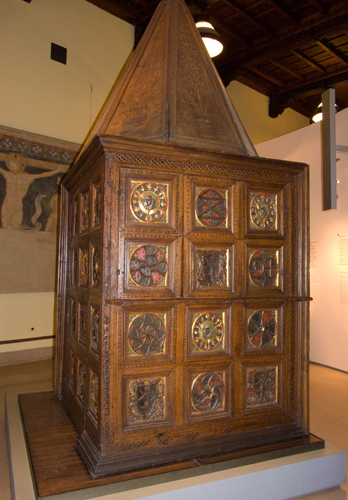
FIGURE 3.1. Coretto of Torrechiara, ca. 1460s, Milan, Castello Sforzesco, Civiche Raccolte d’Arte Applicata.
Photo by author, © Comune di Milano, all rights reserved.
This essay situates the coretto within Torrechiara’s built and experienced environment, investigating the mechanics of the coretto’s portals—its door and window—and courtly actors’ movements in and through these spaces, to account for the ways that it facilitated both connections and exclusions. Considering potential views and sounds from and into the coretto recognizes the significance of embodied, multisensory phenomena—what Bruce Smith has recently called “historical phenomenology”—activated by the structure for the few who inhabited it and for the many who beheld it.3 As scholars have suggested, occupants could have listened to religious functions while hidden within. The coretto, however, animated much more energetic mechanisms of power and revelation through its spatial activations of secrecy. As my discussion of the coretto’s operations will establish, those located inside were never completely hidden, but were rather hidden to be revealed. Ultimately, this essay interprets the ways that social identities and networks were constructed through distinction and exclusion and argues that Torrechiara’s dynamic coretto amplified power, status, and piety through a rhetoric of secrecy.
The Count and His Mistress
Constructed in the 1450s, Torrechiara (fig. 3.2) was one of over thirty castles subject to the Sforza-allied Pier Maria Rossi who controlled much of the Parmense, and at times Parma itself, from the late 1440s until his death in 1482. The historiography of Rossi’s substantial art patronage has been dominated by and filtered through the prevailing interpretation of his most stunning commission, Torrechiara’s camera d’oro (golden chamber) (figs. 3.3–3.4), a lavish multimedia room with gold and azurite frescoes depicting Rossi’s aristocratic mistress, Bianca Pellegrini, wandering through her signore’s territory and performing rituals of courtly love.4 Corrado Ricci’s formative studies (1894) of the camera d’oro established the amorous relationship between Pier Maria and his mistress as the prevailing interpretive mode for these frescoes and indeed for the entirety of the lord’s artistic and architectural patronage.5
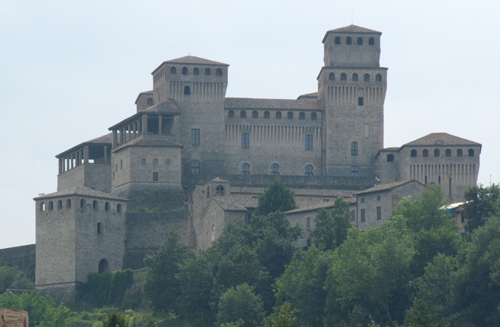
FIGURE 3.2. Torrechiara, built 1450s.
Photo by author.
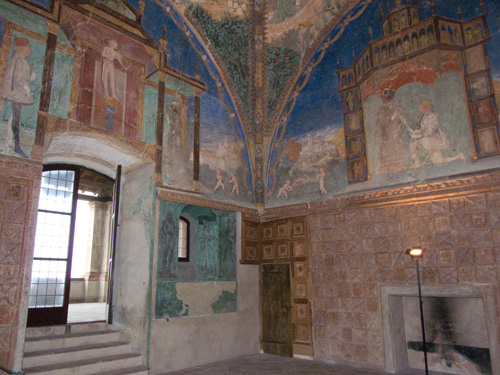
FIGURE 3.3. Bembo workshop, Camera d’oro, Torrechiara, late-1450s.
Photo by author with permission of Ministero per i Beni e le Attività Culturali.
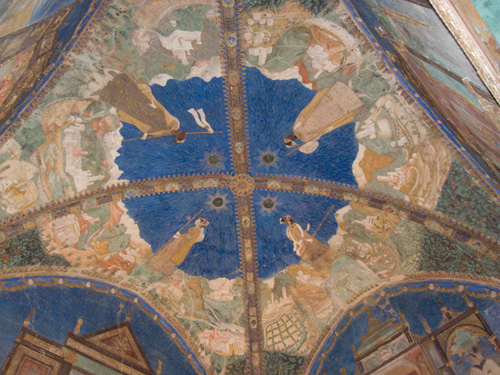
FIGURE 3.4. Bembo workshop, Ceiling of camera d’oro, Torrechiara, late-1450s.
Photo by author with permission of Ministero per i Beni e le Attività Culturali.
Largely sharing Ricci’s sentimental, bourgeois notions of family and individual subjectivity, scholars have followed his lead and have idealized the imagery as reflecting Pier Maria and Bianca’s ostensibly private, authentic, and monogamous love for each other. The construction of Torrechiara, called an “eternal, ideal nest of peace and love,” has consistently been connected to a period of utopian peace—a “happy interval of peace and prosperity . . . dedicated exclusively to love and its diverse phenomenologies”—and Rossi’s commissions for the castle, including the coretto, have been interpreted in predominantly private and personal terms, as art solely for his mistress or [79] merely celebrating their love.6 These interpretations have been characterized by a concomitant, and at times moralizing, emphasis on the secret nature of this love, from the early-nineteenth-century assertion by Lorenzo Molossi—reading quite literally the oxidized silver face of the pilgrims frescoed on the camera’s ceiling—that Bianca furtively visited her lover in the disguise of a Christian pilgrim having colored her face to appear as a Moor (see fig. 3.4), to more recent claims that the camera d’oro celebrated a secret marriage or that Torrechiara was Bianca’s “secret refuge” or a “secret love nest.”7 Rossi’s chivalric devotion to this aristocratic mistress was hardly a secret intended to be kept from his subjects or peers, however. Imagery relating to Bianca Pellegrini was insistently publicized and was deployed to construct a multivalent Bianca: as mistress within regional political networks, as devout pilgrim, as chivalric damsel, and as watchful peregrine falcon. This imagery, moreover, was represented in a wide variety of media, including fresco, manuscript illumination, medals, and painted and sculpted images on the exterior and throughout the interior of castles.8 Pier Maria and Bianca’s love was nothing if not an open secret, though perhaps here the phrase itself might be considered essentially redundant.
[80] Falling back on the dominant narrative explaining Rossi’s art patronage, scholars have approached the coretto with suspicion. Many claim that Rossi commissioned the structure to provide a secret or hidden place to pray, assuming that the coretto straightforwardly maintained Pier Maria’s privacy by separating himself “poco cristianamente” from other worshipers and by providing a place from which the two lovers could attend mass in “total isolation.”9 This analysis, it should be said, reveals an awareness of the plays of privilege performed by the coretto, even if these interpreters have tended to moralize such a “scarcely Christian detachment from lesser worshipers,” or Pier Maria and Bianca’s “guilty love,” made even more reprehensible as it played out under “the view of the saints and of the Virgin.”10 Following Corrado Ricci’s interpretation of the coretto as a place where Pier Maria (whose only faith was love for his mistress) and Bianca “substituted kisses for prayers,” art historians have [81] suggested that the coretto was constructed to provide a space for Rossi’s unholy seduction of Bianca and that it was “probably (used) for love” and was “rather than a secret place for prayer, a refuge of love.”11 The scandalized superintendent for Lombard artistic monuments, for instance, worried in a letter to Ricci in 1933 that the hundreds of drinking, singing, and dancing revelers at a recent banquet “con grande buffet” held at Torrechiara would have assuredly utilized the structure for lascivious ends and would have “played at Pier Maria Rossi and Bianca Pellegrini” (“giocano al Piermaria Rossi e alla Bianca Pellegrini”) had the coretto not by that time been sold from the castle.12
Recent publications assert that Torrechiara was an amorous “refuge” and, presuming that mistresses must necessarily be shameful, that the coretto was used to hide Rossi and his mistress from the rest of the faithful.13 A monograph on the brothers Lorenzo and Cristoforo Canozzi da Lendinara, a [82] thorough and authoritative evaluation of the woodworkers and their oeuvre, stumbles over the conviction that imagery relating to Bianca Pellegrini indicates that the coretto must have been produced after the death of Pier Maria’s wife, Antonia Torelli, in 1468, a date the authors have great trouble reconciling with stylistic evidence.14 The assumption that any visual celebration of Bianca Pellegrini must postdate Antonia’s death, however, reveals more about modern, bourgeois conventions of morality than it does about courtly representations of mistresses in fifteenth-century Italy.15 Mistresses were commonly celebrated in visual and literary productions. Many court rulers deployed representations of mistresses to advertise virile authority and amplify networks of political power.16 Some scholars have written off or apologized for the secret within Rossi’s coretto as essentially shameful and thus having to remain hidden; this study, however, explores the coretto’s secrets through its operations of invisibility and hiddenness, not in terms of disgrace or embarrassment, but in terms of power and authority and the meanings generated by acts of revelation.
Spatial Operations of Secrecy
To reframe and better understand the coretto’s functions and operations, it is necessary to avoid naturalizing the divide between public and private as an inevitable binary. As resilient as the Habermasian public and private spheres have been for modern definitions of family and love, for quattrocento aristocracy the dichotomized construction of a private or familial sphere and a public and political one seems much less tenable.17 The “private,” of course, was largely constitutive of political power in early modern Italy. Power was generative and proliferating rather than proceeding straightforwardly from the top down. Authority was organized and exercised by robust nuclei of powers assembled horizontally, diagonally, and vertically.18 The palaces, castles, and other spaces of these clans, factions, and regimes must not be equated with the enclosed, private dwellings of modern, bourgeois nuclear families; they are, rather, extensions, symbols, and arenas of rule.
Access to these political, factional spaces (indeed, contact with the prince) was continually and vigilantly mediated. Space is, of course, not a static container, but rather the relations between things that reproduce and embody culturally contingent modes of power and social relations and interactions. Spaces are produced through their uses, and allowing or prohibiting access was a potent tool.19 Admittance established boundaries separating insiders and outsiders, constructed social identities based on access and exclusion, and solidified networks and communities through the formation and affirmation of power structures.20 The appearance of privacy, secrecy, and privilege is created, as Brian Massumi and Elizabeth Grosz have argued, by the construction of boundaries that can only be [83] actualized by their crossing.21 Thus, the more access, connections, and networks could be mediated or layered, the greater would be their efficacy.22 As valuable as an audience with the prince no doubt was, just as important could be the act of making known that one was received. The most ostensibly intimate spaces of fifteenth-century Italian courts—Rossi’s coretto among them—were never truly personal or absolutely private or hidden. To be known, they had to be entered into or displayed.
Recent interrogations of secrecy and its operations, moreover, underscore the essential function of revelation.23 The effectiveness of secrets often exists in their disclosure. It is not the content of the secret that is most significant, but the process of its revelation. Secrets, of course, require publics that are differentiated and socially structured. As Karma Lochrie argues, secrecy is “less a function of individual secrets than of social networks” and of power; secrecy’s efficacy “lies less in what is kept hidden than in the dynamic between the ‘knows’ and the ‘know-nots.’”24 Exclusion and distinction are only made possible through boundaries that many recognize but that few are permitted to cross (or through barriers that create, at minimum, a plausible fiction of restricted traversal). The coretto was one such boundary, indeed an efficacious and productive one. More than just hiding the occupants from the chapel’s other worshipers, the coretto of the chapel of San Nicomede displayed and fashioned piety and social hierarchy by activating mechanics of hiddenness, secrecy, and revelation.
Torrechiara and the Chapel of San Nicomede
The interiors of Renaissance castles and palaces were dynamic social arenas in which movement was assiduously scrutinized. Ground floors, particularly near entrances, courtyards, and porticos, were relatively, yet emphatically, open to and traversed by multiple, well-regulated publics.25 As Evelyn Welch has shown through a perceptive reading of Andrea Mantegna’s contemporary depiction of the armed guards mediating access to Ludovico Gonzaga and his court in the Camera Picta in Mantua (see figs. 2–3 in “Introduction”), visitors to fifteenth-century seignorial spaces were visibly watched and their progress and access were conspicuously mediated.26 Guards and uscieri were strategically positioned for surveillance at stairways and gates and controlled the flow of visitors and subjects, and indeed Rossi’s contemporaries would have had to pass through no fewer than five gates to reach Torrechiara’s courtyard. In the late quattrocento, the Rossi ambassador Jacopo Caviceo described the circuitous route into Torrechiara, writing of a journey through six porte and at least five walls, through gardens, past fountains, fishing ponds, deep moats, cisterns, stables, and the castle’s armory before reaching the seventh door marked with the inscription of [84] foundation and a marble statue of Pier Maria Rossi.27 Though Caviceo may have exaggerated his description, Torrechiara retains a remarkable sense of this zigzagging, circuitous route through three imposing porte: the rivellino, the long, covered passage adjacent to the parish church of San Lorenzo, and the final gate bearing the castle’s inscription. Once through this entrance (perhaps the seventh then, but the third today due to the destruction of walls), one reaches the castle’s courtyard and the chapel of San Nicomede (fig. 3.5), but only after surmounting an additional ramp and set of stairs and passing through yet another door.
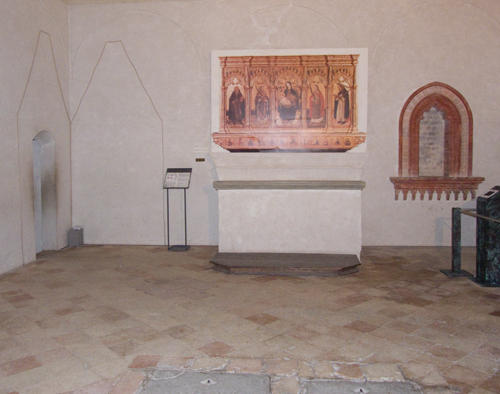
FIGURE 3.5. Chapel of San Nicomede, Torrechiara.
Photo by author with permission of Ministero per i Beni e le Attività Culturali.
Moving into the courtyard, a visitor might enter or look into San Nicomede through the chapel’s massive wooden doors.28 Saint Nicomede, who appears in Benedetto Bembo’s altarpiece for the chapel (fig. 3.6), had been venerated in and around Parma for centuries. Believed to be a first-century priest, Nicomede was put to death for renouncing idols and ministering to Saint Peter’s apocryphal daughter Petronilla. The cult of Saint Nicomede seems to have been particularly fervent in the region, and by the tenth century a church at Fontanabroccola and an altar in Parma Cathedral were dedicated to the saint.29 The importance of the chapel to Pier Maria Rossi is suggested by the fact that his will of 1464 prescribed perpetual masses to be said there for the sake of his soul and for that of Bianca Pellegrini by the Franciscans of nearby Felino. Because numerous period sources record that Pier Maria died at Torrechiara and one fifteenth-century voice specifically claims that he was buried in the chapel of San Nicomede, it seems likely that Rossi and perhaps his wife, Antonia Torelli, and/or his mistress, Bianca Pellegrini, were indeed buried there.30
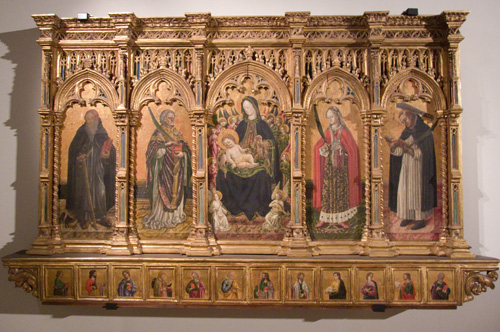
FIGURE 3.6. Benedetto Bembo, Polyptych of San Nicomede (Madonna and Child with Saints Anthony Abbot, Nicomede, Catherine of Alexandria, and Peter Martyr), signed and dated 1462, oil and gold on wood, Milan, Castello Sforzesco, Pinacoteca del Castello.
Photo by author, © Comune di Milano, all rights reserved.
As I have suggested, the many guarded gates, walls, courtyards, and doors of early modern castles and palaces created a carefully controlled and layered arena of access and privilege, producing and visualizing distinction through insiders and outsiders whose traffic was constantly watched and judged. But these surveyed subjects did indeed move through the outer and lower spaces of Rossi’s castles, which functioned as centers of administration, trade, justice, protection, and in the case of the chapel of San Nicomede, religious devotion. Documents demonstrate that this ground-floor chapel served the community of the borgo or town of Torrechiara located within the castle’s outermost wall. The Rossi were obliged to provide the chapel with the liturgical garments and furnishings necessary for the “decent and honorable celebration of the mass” and were granted, from the bishop of Parma, rights of patronage (ius patronatus) over the chapel, including the nomination of priests, who would then have to be approved by the bishop.31 Because two churches associated with Pier Maria Rossi stood in the immediate vicinity of Torrechiara but beyond the castle’s inner walls (the Badia of Santa Maria della Neve along the nearby Parma River and the borgo’s church of San Lorenzo), some scholars have assumed that the chapel of San Nicomede [86] served only the Rossi family.32 However, Laudedeo Testi and Nestore Pelicelli convincingly demonstrated that the cortile was not a domestic, private space and that citizens of Torrechiara’s borgo would have regularly visited the chapel of San Nicomede.33 Masses were performed, in fact, for Torrechiara’s community until the early twentieth century, and Testi and Pelicelli rightly pointed out that no more than one door would have been necessary if this castle was a private and enclosed residence and the chapel was a private ecclesiastical space for the Rossi.34 San Nicomede, even located as it was five walls and seven doors within Torrechiara, was founded with the authority of the bishop and remained the shared jurisdiction of the bishop of Parma and the Rossi.35
These spaces were sites of struggle between powerful dynasties and institutions, and of course even the labels “private” and “domestic” often given to chapels in seignorial palaces and villas hardly align with modern conceptions of those terms. Pier Maria Rossi, moreover, had fraught relationships with a number of Parma’s bishops and many disputes over access to cults, benefices, and, in particular, the town’s episcopal palace, which Rossi argued that his fourteenth-century bishop ancestor Ugolino had left to the dynasty, at least in times of episcopal vacancy. Disputes with Delfino della Pergola, who sued Rossi over control of castles and canals, escalated to the point that Rossi had one of the bishop’s messengers assaulted and left for dead after leaving Torrechiara.36 Pier Maria additionally arranged for the monastery of San Giovanni Evangelista in Parma, controlled by Rossi family members and partisans, to refuse to allow the bishop’s representatives to perform their pastoral visit in 1452, even though the church is located immediately behind Parma’s Duomo.37 The bishop, for his part, threatened the rights of Rossi partisan priests and eventually took his case to Rome, where it was decided in Rossi’s favor.38 Authority over lucrative ecclesiastical benefices, even those located within ostensibly familial residences, was always mediated and contingent. Not only do the many walls and gates of Torrechiara betray the penetrated and layered access within the castle, but the coretto within the chapel of San Nicomede reveals multiple, overlapping publics.
Rossi’s familiari, parenti, clienti, and sudditi would have encountered numerous lavish, expensive furnishings within the chapel of San Nicomede. Benedetto Bembo’s Madonna and Child polyptych (see fig. 3.6), still enclosed within the original frame possibly produced by the same artisans who crafted the coretto, manifests Rossi’s magnificent piety and dynastic devotions.39 The [87] terracotta niche to the right of the main altar (see fig. 3.5) could have encouraged individual piety or served in the chapel’s liturgy. The niche may well have contained a frescoed imago pietatis, an iconography to which Rossi seems to have been particularly devoted, similar to those surviving in the Valeri chapel at Parma Cathedral or the parish church of Sant’Ilario Baganza.40 Even with Bembo’s gilded polyptych dominating the altar, however, for many viewers the most conspicuous of Rossi’s commissions within the chapel of San Nicomede would have been the massive coretto.
The Coretto and Similar Structures
The coretto’s lack of a precise, immediately discernible function is betrayed by the fact that it has been variously labeled by scholars, typically as coretto (small choir), though alternatively as tribuna, tribunetta, inginocchiatoio, cabina, garitta, and bussola.41 The closest surviving parallel, chronologically and geographically at least, may be Federico da Montefeltro’s alcove in Urbino’s Palazzo Ducale, though exactly what form that reassembled object originally took is far from clear.42 Other potentially analogous spaces include prince’s boxes from which royalty participated in masses; raised, enclosed, and often grilled viewing spaces such as that constructed in Roger II’s Palatine Chapel in Palermo or the many deployed throughout Europe to separate nuns or noble women from the presence of men; the space of the Lateran Sancta Santorum or that built for Piero de’ Medici at Santissima Annunziata; or Islamic maqsuras. To my mind none of these putative parallels can be considered direct sources for the coretto. What they share with Rossi’s coretto, however, is that many operate in comparable ways, by enacting spatial rhetorics of secrecy, hiddenness, and revelation to frame and enhance the status and power of their occupants visually.
The coretto has been considered very much sui generis, at least in fifteenth-century Italy.43 The closest extant derivation of this coretto is, in fact, an early-twentieth-century fake crafted by the Paduan artisan and restorer Edgardo Minozzi, active in Parma from 1910 (fig. 3.7).44 The production of this counterfeit coretto in 1912 was encouraged by the profitable sale of the genuine item from Torrechiara two years prior and was likewise inspired by the celebrated reimagination of the camera d’oro by a group of Parmense artisans and scholars for Emilia-Romagna’s pavilion in the Roman Ethnographic Exhibition of 1911. This reconstruction patriotically celebrated the fiftieth [89] anniversary of Italian Unification and, following the Italian press’s effusive praise for the reconstituted room, brought Torrechiara to the attention of all of Italy.45 Though Minozzi based his coretto on Torrechiara’s, the artisan utilized a rather free mix and match of imagery, with a large figure of St. George adapted from St. Eustace of Albrecht Dürer’s early-sixteenth-century Paumgartner altarpiece (fig. 3.8). For decades this geographically and chronologically inconsistent imagery confused scholars.46 Minozzi’s coretto was sold to an English collector in 1913, passed to the London antiquarians Crowther and Son, and finally entered the collection of the Victoria and Albert Museum where it was eventually recognized as a modern fabrication.47
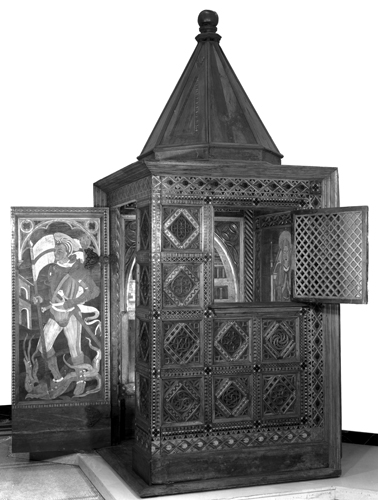
FIGURE 3.7. Edgardo Minozzi, Coretto, ca. 1912.
© Victoria and Albert Museum, London.
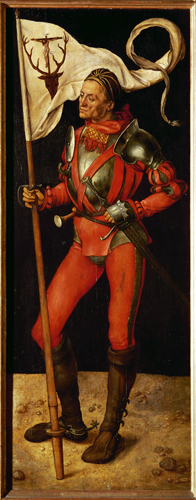
FIGURE 3.8. Albrecht Dürer, Saint Eustace, detail from Paumgartner Altarpiece, ca. 1503, oil on wood, Munich, Alte Pinakothek.
Erich Lessing / Art Resource, NY.
As singular as the coretto seems at first glance, however, documentary evidence from Milan and Ferrara and the remnants of additional intarsia at Torrechiara suggest that mid-fifteenth-century artisans produced similar structures for Northern Italian courts. In the late 1460s, Galeazzo Maria Sforza ordered from the Cremonese woodworker Bartolomeo Stramiti a “camera de asse” (“room of planks”) that could be dismantled and transported between the lord’s various residences.48 Possibly enclosing a bed of some sort, this moveable and versatile furnishing would have served multiple purposes potentially analogous to those of the coretto. The Canozzi intarsia workers, “Christofori et Laurentii fratrum intaliatorum lignaminis”—to whom the coretto has been most recently attributed—were employed at both Ferrara and Parma, moreover, and perhaps should be considered responsible for a number of sophisticated wooden constructions that functioned through dynamics of the concealment and revelation of interior inhabitants and spaces.49 A wooden “oratorio,” for instance, was constructed for duchess Eleanora of Aragon within the choir of the Augustinian convent of Corpus Domini in Ferrara, though the document, like that referring to Stramiti’s camera delle asse, is unsurprisingly vague about the structure’s precise configuration.50
A potential parallel to Rossi’s coretto might have been the “busolla” for the chapel of Ferrara’s Palazzo del Corte located, much like Torrechiara’s San Nicomede, immediately adjacent to a major courtyard. In 1471, the painter Gerardo Costa was commissioned by Ercole d’Este to paint the interior of this bussola green. Though “busolla” in this case has been translated as the chapel’s “inner door,” documentary evidence seems to suggest that the duke conspicuously listened to the [91] mass from within the structure.51 Bussola today indicates the wooden boxlike constructions at the entrances to Italian churches that protect the interior from outside noise and weather, but that also serve to prepare the visitor to enter a sacred space; of course, Torrechiara’s coretto would have served as a transitional structure and would have protected the body in similar ways, from the perspective of anyone entering San Nicomede through it.52 That bussola refers to an enclosed space in fifteenth-century courts, moreover, is further suggested by the fact that the Sforza chancellor Cicco Simonetta, guarded by dozens of armed and mounted men, was transported from Milan to Pavia in a “carretta da bussola” shortly before being executed on Ludovico il Moro’s order.53 It is additionally worth pointing out that the green interior of Ercole d’Este’s bussola would have been considered by the prince and his contemporaries a particularly appropriate or decorous place for prayer and contemplation, as green (terra verde) commonly decorated studies and libraries in fifteenth-century Italy.54
The built environment of Ercole’s chapel constructed within the ducal stables indicates that the Este and their artisans had a sophisticated understanding of the rhetorics of secrecy, space, and privilege deployed by this manner of structure. This chapel was built in the early 1470s to enshrine a Madonna on paper that had been placed on a post by a stable hand and had attracted a lively cult soon after exercising its power and volition by performing miracles. Ercole’s transformation of a portion of the stables into a lavishly decorated chapel can be read as one facet of the duke’s consciously Herculean self-fashioning in which he is here presented as a Christian Hercules cleaning up the Augean stables, though in this case to honor Mary and Christ rather than appease Hera and Eurystheus.55 The dukes and important guests would have viewed the mass separated from the Madonna’s other devotees within this chapel, however, from behind the grilled windows of a balcony. This space was suggestively referred to as a “via segreta,” and documents reveal that it was outfitted with furnishings from the court’s tapestry workshop on special occasions.56 From this “secret” though by necessity only partially covered space, plays of access, (in)visibility, piety, and distinction would have engaged visitors to the chapel, as they did at Torrechiara. Indeed, the space was located immediately above a wall of ex-votos, which of course manifested devotion to the image and amplified both Mary’s prestige and that of the aristocratic sponsors potentially seated above and hidden within.
Even within the context of works commissioned by Pier Maria Rossi to outfit Torrechiara, the coretto of San Nicomede seems not to have been entirely unique. Inventive woodworkers and carvers produced a second ingenious intarsiated structure for the castle, one that likewise imaginatively played on rhetorics of secrecy and revelation: the studiolo (study) in the southeast corner of the camera d’oro, originally covered by large, fold-out, intarsiated wings (portoni) that survived well into the eighteenth century (studiolo visible in fig. 3.3). All that remains of this sophisticated [92] construction, however, are four uomini famosi (illustrious men), intarsia panels adjacent to the exposed frescoes, and a broken hinge from what once was a fold-down wooden platform fit within a rectangular recess and used for writing, reading, and display.57 When the original portoni were swung open, the study would have revealed numerous terra verde uomini on both the wall and wings, a devotional image (apparently an imago pietatis), a Christological inscription, and the studiolo’s reading surface.58 Though the quattrocento studiolo, epitomized by Federico da Montefeltro’s example at Urbino, has come to exemplify the quintessential location for courtly cultivation of secular, Renaissance knowledge, the devotional inscription and image of Torrechiara’s studiolo, together with a documentary reference to this space as a “studiolo oratorio,” suggests that this terra verde study was intended for both sacred and profane contemplation.59 The space’s original structure and its operations, moreover, dramatically activated secrecy and revelation. The studiolo could be opened and revealed to Rossi’s visitors or, because intarsia paneling set the space out from the rest of the room’s walls covered with (originally polychrome) terracotta tiles, it could be closed, flat against the wall, and conspicuously unavailable to them. Through the deployment of each of these intarsia constructions, the built environment was carefully crafted to manage admittance and revelation and thus to amplify prestige and authority.
A closer examination of the coretto’s original placement within the chapel of San Nicomede—ropes are hung on the walls in the chapel today to suggest this position—demonstrates the ways that Rossi’s coretto both reveals and generates distinct publics (see fig. 3.5). Though most photographic reproductions of the coretto (as in fig. 3.1) might lead one to believe that the structure is entirely enclosed, only two of its sides, those intended to face outward into the chapel, are built, wooden constructions, which clearly suggests that the coretto was intended for the corner of a room. The two sides placed against the chapel’s east and north walls are open or nonexistent. Perhaps it is most accurate to describe the coretto as essentially two surfaces set at a ninety-degree angle to form an enclosed space when set into the chapel’s corner. Similarly, only the three front-facing surfaces of the hexagonal structure above are decorated with intarsia floral vases; the three sides not facing outward are unarticulated planks of wood. A door through the chapel’s north wall (visible to the left in fig. 3.5) directly connected the coretto to an adjacent room (and the ground-floor rooms of one of the castle’s corner towers) and allowed the structure’s occupants to enter and exit without being seen by visitors to the chapel. This door, significantly, was entirely occluded behind the taller and wider coretto.
The coretto is ornamented with registers and borders of assorted patterns of intarsia toppi, blocks of wood prefabricated and sliced to create varying decorative motifs.60 The most prominent decorative components of the coretto, however, are the twenty-four panels—twelve on each of the two façades originally displayed to worshipers—comprised of carved tracery placed over backgrounds of painted wood (see figs. 3.1, 3.9). The foreground patterns are in some cases gilded or [93] painted (vibrant polychrome primarily of blue, green, and red), and they alternate between geometric patterns and Rossi emblems. Indeed, fifteenth-century intarsia seems to have been more brightly colored than it often seems today. Arduino da Baiso, for instance, in 1443 received payment for pigments for testing azurite on the intarsia armadio for the sacristy of Ferrara Cathedral, and wood, either naturally cultivated with green fungus or stained or painted, might also appear green in studioli and similar spaces.61 The tracery and bright colors of Torrechiara’s coretto might have invoked the vibrancy of stained glass for some viewers, and the red and blues certainly enriched the magnificent structure. These intense colors align with the rich decoration associated with Arduino da Baiso’s production, while the geometric designs recall the style of the early Lendinara. Stylistically, the late gothic geometric tracery of the wooden square panels also closely resembles midcentury Lombard woodwork, notably that of a door originally from the church of San Maurizio at Ponte in Valtellina.62
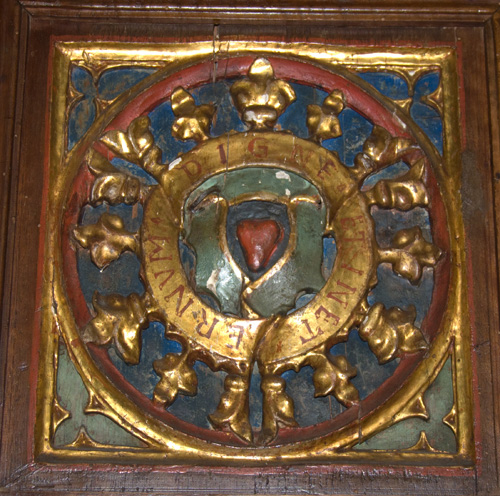
FIGURE 3.9. Rossi heart emblem, detail of Coretto of Torrechiara (fig. 3.1), 1460s, Milan, Castello Sforzesco, Civiche Raccolte d’Arte Applicata.
Photo by author, © Comune di Milano, all rights reserved.
Two emblems of the Rossi are displayed within the coretto’s panels: a crowned heart (accompanied by the inscription “digne et in eternum”) and the rampant lion, in two instances supported by putti.63 The heart imaginatively and poetically figures Pier Maria’s love for Bianca Pellegrini, who was portrayed publicly and multivalently for numerous, overlapping audiences throughout Rossi’s realm. These insignia, however, were not simple, static indices or reflections of Pier Maria’s authentic feelings [94] for his mistress, but were, rather, dynamic images manifesting Rossi dynastic authority.64 These emblems were adapted in various contexts, were visualized in a wide variety of media and in an expansive geographical venue, and were deployed by several generations of Rossi patrons. While the heart (see fig. 3.9), for instance, has been interpreted exclusively in relation to Pier Maria’s private love for Bianca, this device decorated Rossi ecclesiastical spaces as far away as Ravenna and Berceto (in the Apennines, towards Genoa and Lucca), was frescoed on the exterior of Rossi castles, and had ostentatiously marked Pier Maria’s father’s burial monument as a grim relic celebrating the death of his most bitter enemy, Ottobuono Terzi, whose heart had been interred in the elder Rossi’s tomb (fig. 3.10).65 The intarsia panels of the coretto can thus be interpreted as veils scarcely covering secrets, drawing attention to and overtly revealing Pier Maria Rossi’s ostensibly hidden love for his mistress.66 Visitors to the chapel, in fact, would have derived satisfaction and pleasure from being in the know, from being able to understand these emblems (which were, after all, omnipresent for Rossi’s subjects), and from being let in on their lord’s most intimate secrets.
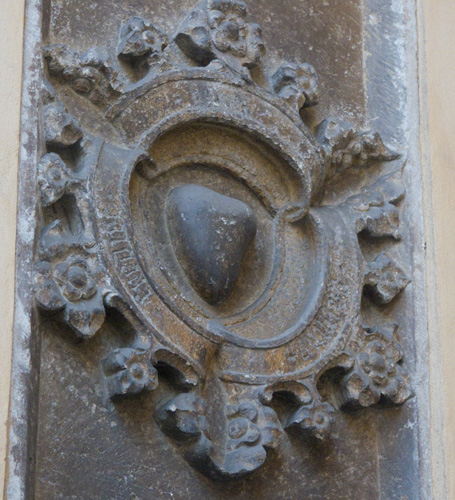
FIGURE 3.10. Rossi heart emblem, tomb of Pietro Rossi, now on the exterior of Sant’Antonio Abate, Parma, 1430s.
Photo by author.
Moving from the conspicuous dynastic imagery on the exterior to the coretto’s less immediately visible portals and fastenings reveals the ways that operations of visibility and hiddenness [95] could be manipulated from the inside, and the ways that secrecy could be made to function. Both outward-facing façades were constructed with apertures that could be locked only from within (see figs. 3.1, 3.11). The west side has a large door—nearly as tall as the main body of the entire coretto and comprised of eight of the side’s twelve intarsia panels—with an interior handle, sliding bolt, and three long, metal hinges artfully decorated at each end (fig. 3.11). When closed, this door disappears into the surface of the coretto, from the exterior at least. Unless one had already seen the door put to use or had inspected it quite closely, the average visitor to the chapel might not realize that the coretto could open thus.
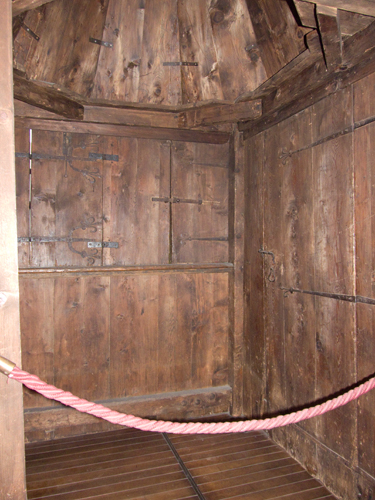
FIGURE 3.11. Interior, Coretto of Torrechiara (fig. 3.1), 1460s, Milan, Castello Sforzesco, Civiche Raccolte d’Arte Applicata.
Photo by author, © Comune di Milano, all rights reserved.
The south side of the coretto faced the chapel’s altar and was outfitted with a folding window equipped with a small ledge (mensola). The mensola is decorated with borders of intarsia toppi patterns on its narrow sides and upward-facing surface, both inside and outside the coretto. The pilgrim staff with hanging wallets associated with the peregrine imagery of Rossi’s mistress, Bianca Pellegrini, and the abbreviation of Rossi’s most commonly advertised noble title, CO[MES] B[ERCETI] (Count of Berceto), are intricately carved on the top surface of the ledge.67 From the exterior, this side of the coretto would also most likely seem, at first glance, to be a solid wall. Its inhabitant, however, would know that the folding window is outfitted with strong and sturdy bolts and with fanciful hinges (see fig. 3.11). Two sections of the window fold outwards, together, while a third opens by turning away from those two. When entirely agape, most of the width of this side of the coretto would be revealed above the ledge. The panels could be easily maneuvered to manipulate the width of the opening, however, and the widow could be securely closed by two different bolts, one latching together the window’s flexible components and another securing the window panels to the coretto’s solid and stable framework.
The Coretto’s Operations of Secrecy
A less cynical or moralizing view than that typically offered to account for the coretto’s use (that this was a secret space for lovemaking or the hidden—almost sacrilegious—confines of an arrogant lord), better frames an understanding of the object’s historical function and effects and is more closely attuned to the mechanisms of secrecy and revelation enacted by it. The passage into the structure from unseen ground-floor rooms just beyond the chapel facilitated movement to and from the castle’s piano nobile through the adjoining tower’s embedded staircase. As this volume’s contribution from the late Henry Dietrich Fernández discusses, hidden staircases and secret passages were common features of Renaissance palaces and castles that permitted princes to operate unseen and to observe others unnoticed. Indeed, the staircase beyond the coretto was just one aspect of Torrechiara’s system of hidden passages; the studiolo had its own secret staircase, deceptively hidden behind the study’s intarsia paneling, but no doubt on occasion revealed, and utilized, to accentuate privileged access.68 The coretto thus allowed for unseen and dramatic entrances and appearances and alerted the chapel’s visitors to the prominence of its occupants.
[96] The hidden door and staircase behind the coretto, moreover, allowed opportune escapes, for both convenience and protection. Such a barrier providing a potential escape route would have been exceptionally valuable in a time when assassinations took place inside churches, as the violent fates met by Pier Maria’s allies Galeazzo Maria Sforza and Giuliano de’ Medici, less than a year and a half apart in the late 1470s, both demonstrate.69 Though the coretto’s thin wood is hardly impenetrable, even a short delay against conspirators coming at the prince with weapons or brute [97] force would have allowed Rossi to abscond to Torrechiara’s more secure environs. Strategic staircases like the one immediately behind San Nicomede and accessible from the coretto, moreover, usefully served signori in critical situations. Holed up in the Sacrestia delle Messe with Lorenzo de’ Medici and men loyal to the Medici following the violent attack on il Magnifico and his brother Giuliano, Sigismondo della Stuffa scaled a spiral staircase to reach a vantage from which to look out into the Duomo and determine whether it was safe to open the sacristy’s large bronze doors and to hurry the wounded Lorenzo to the nearby Palazzo Medici.70
As mentioned above, both the door and window of the coretto were outfitted with metal hinges and bolts, allowing the structure to be secured from within and further heightening the sense of enclosure and safety (see fig. 3.11). These two openings, by their very existence, indicate that the coretto was utilized not just to conceal, but to display and reveal. Likewise, the fact that the coretto’s door and window could only be maneuvered from the interior clearly demonstrates that appearances were intended to be manipulated principally from within. The ledge of the window facing the altar was undoubtedly used to assist the performance of the liturgy for the coretto’s inhabitants, standing or perhaps kneeling on a portable kneeler (prie-dieu or inginocchiatoio) or upon luxurious cushions (if by some means raised), as Rossi does in a portrait from a book of hours.71 Little visible evidence, in the form of remnants of textiles, hooks, or other fastenings, suggests how the coretto might have been outfitted, though it is probable that furnishings or expensive fabrics would have adorned the interior, as they did within the via segreta of Ercole d’Este’s stable cum chapel mentioned above. Such furnishings would have made this rather stark, undecorated space more comfortable for its occupants and more decorously lavish in the minds of Rossi’s subjects gazing within. Depending on the size of (possibly moveable) furnishings, those ensconced within could have knelt, stood, or sat. The thick interior plank a few inches above the ground on the south side may have served to support such an accessory set up near the window and ledge. Though the structure’s present wooden floor is not the original, a similar barrier separating the inhabitants from the chapel’s floor would have additionally provided comfort and warmth.
When the prince remained within, the ledge with its window above allowed Rossi to participate in ecclesiastical functions while on display. The coretto—perhaps not coincidentally located to the side of the altar that early modern Christians associated with the elect—efficaciously framed a pious image of the signore for his subjects. Renaissance lords were keen to publicize their piety, a fundamental seignorial virtue that Rossi’s visibility within the coretto both advertised and amplified.72 The coretto’s door and window suggest that Rossi would have been seen, perhaps only glimpsed at an oblique angle or viewed by those closest to the altar, and indeed the insignia would have made the lord’s presence all the more emphatic. If original, the surmounting pyramid may have even served as something of a baldacchino or honorific canopy, further framing and highlighting the prince’s distinction, as would have splendid decoration within. Entrance or exit through the wooden door facing into the chapel, additionally, would have provided the opportunity for ritual processions into or from the coretto. As ecclesiastical spaces were both religious and social [98] arenas in fifteenth-century Italy, moreover, it is not inconceivable that the coretto could have facilitated audiences with Rossi or other officials before or after religious ceremonies. Because the structure was at once separated from the chapel and the center of attention within it, further distinction would have been conferred upon those granted access to or perhaps the permission to approach the coretto. As I suggested above, the benefits of being seen conversing with the prince could be substantial. San Nicomede served the religious needs of various audiences, including but not limited to subjects, courtiers, clients, relatives, and prominent visitors. Thus, for Rossi, occupying the coretto located within the larger chapel might not be considered merely a private withdrawal, but rather a public or conspicuously visible exercise of status, sovereignty, and piety.73
As important and efficacious as the views into and framed by the coretto were, Pier Maria Rossi’s own position must also be considered. Situated within, Rossi could have heard and observed his subjects in the chapel, and the structure’s very presence in the room would have reminded them to be on their best behavior, that at any moment they may be watched by the prince or one of his representatives.74 A suggestive early modern parallel might be found in a fascinating eighteenth-century proposal for a network of interior cabinets and loges allowing a German ruler to surveil his fiscal officials surreptitiously and thus “instill great fear in the prince’s servants.”75 Closer to Rossi, an early-sixteenth-century Italian treatise recommended that the ideal cardinal’s palace be equipped with “concealed places [that] provide the opportunity to examine visitors with care,” whether through listening or viewing tubes or the grilled windows with which Rossi’s ally Pope Paul II had outfitted his audience chamber.76
Pier Maria too would have been the object of his subjects’ gazes, particularly when the coretto’s window was opened. Perhaps the Rossi, like the Gonzaga just across the Po, had in their library Suetonius’s De vita Caesarum (Lives of the Caesars). If so, Pier Maria might have been mindful of Augustus’s lesson to avoid Julius Caesar’s bad reputation among the Romans for being seen by them answering correspondence and appearing disinterested rather than visibly enjoying public games.77 On display, Rossi would have had to be cognizant of his subjects’ expectations of their lord and the need to present them with an image of a suitably seignorial ruler, magnificent and pious, courtly and commanding. From within, moreover, the coretto provided Pier Maria a privileged perspective from which to behold the adjacent altar and participate in the mass. Fifteenth-century signori sponsored Corpus Christi confraternities and processions as a means to associate their power and even person with the charisma of the Eucharist, and such a correlation or comparison may have been at least suggested here for Rossi’s subjects.78 This honored and immediate point of view for the liturgy and Eucharistic ritual would have bolstered Rossi’s prestige [99] and piety. Because visual access to the elevation was a culminating moment of Christian sacred experience in early modern Europe, this exceptional position provided a direct and privileged view of the revelation of one of Christianity’s fundamental mysteries. In yet another way, secrets were enacted by the coretto.
Operations of vision and visibility were crucial to the production of secrecy and the function of Torrechiara’s coretto, though other sensations and phenomena, sound for instance, would have been equally efficacious. Space is produced not only by architectural frames and boundaries, but by words, movements, and actions, and by the energies, bodies, gestures, and sounds deployed within it.79 Not only views into, but also sounds from within the coretto reinforced the sense of a secret, somewhat hidden or occluded interior presence and may have called attention to the fact that visitors here, as ever within a Renaissance court, were potentially surveilled.80 Traces of the prince inside could certainly be heard in the relatively small chapel, perhaps surprising visitors, further piquing their curiosity about this strange assemblage, and drawing worshipers and subjects to it, thus amplifying the charisma of the coretto and its (real or imagined) inhabitants. Indeed, it is not difficult to envision the ways such a structure could produce astonishment and wonder, particularly for uninitiated viewers who witnessed the window or door dramatically swing open for the first time, emerging from the expertly crafted and only seemingly integral façade, and spectacularly revealing their lord within. Other sounds—singing, for example—emerging from the enclosed space may have likewise surprised or delighted worshipers in the chapel. Whispers and other noises muffled by the structure itself or by interior textiles intimated a presence and perpetuated the sense that Rossi was present. One could even imagine something like a body double deployed here, producing sounds to be heard by the count’s subjects and palpably intensifying the ever-present sense of seignorial surveillance. Secrecy and seignorial presence, thus, could have been performed as a means to direct (or misdirect) the imagination of Rossi’s subjects, including those from whom the revelation of the secret was delayed or entirely denied.
The coretto of Torrechiara served as a carefully designed social framing device; it bolstered and visualized the authority of its occupants. To be sure, the coretto could have encouraged pious concentration, yet by proclaiming that certain individuals were permitted to listen to religious functions without being seen, if they so desired, the structure simultaneously distinguished one class of devotee from another. Arousing the sense that the signore might be within, the coretto resolutely marked Rossi’s presence when he was hidden or even absent. More than just hiding and separating its residents from the chapel’s other worshipers, the imposing yet intimate coretto powerfully displayed and fashioned piety and social hierarchy. The occupants themselves, moreover, would have been made emphatically aware of their own status and privilege by the coretto. They would have no doubt derived pleasure from increased recognition, and from the many visitors who craned their necks and positioned themselves for better views into the coretto and, more importantly, for better views of its inhabitants.
Meanings and insinuations proliferated through the coretto. The effects produced by this space undermine any search for a singular reading of the furnishing and instead encourage the imagination of an array of meanings for both Rossi and his court. The coretto allowed, indeed generated, multiple [100] levels and plays of access, secrecy, and display for visitors to Torrechiara, to help fashion Rossi’s magnificent piety. These plays, however, required revelation. In many ways Torrechiara’s coretto seems emblematic of the economies of access of fifteenth-century seignorial space in general: both were assiduously structured to mediate admittance and passage for various classes of subjects or viewers. The coretto and its decoration were not inherently private or personal, but rather intricately manufactured and made intimate through the activation of a rhetoric of secrecy, thus creating a dynastic, social, and charismatic space that bolstered Rossi’s seignorial authority.
For her generosity and wisdom, I dedicate this essay to Margaret Haines.
Bibliography
Affò, Ireneo. “Descrizione della celebre stanza di Torchiara.” Parma, Biblioteca Palatina, MS Parm. 664, fols. 183–90 (partially published in Pezzana, Storia, 4:60–61 appendix).
———. Storia della città di Parma. 4 vols. Parma: Carmignani, 1792–1795.
Albertario, Marco. “Marmo, legno e terracotta: Appunti sulla committenza Milanese tra settimo e ottavo decennio del Quattrocento.” In Opere insigni, e per la divotione e per il lavoro: Tres culture lignee del Maestro di Trognano al Castello Sforzesco, edited by Marco Bascapè and Francesca Tasso, 27–35. Milan: Silvana, 2005.
Allodi, Giovanni. Serie cronologica dei vescovi di Parma. 2 vols. Parma: Fiaccadori, 1856.
Althöfer, Heinz, ed. Fälschung und Forschung. Essen: Museum Folkwang, 1976.
Bagatin, Pier Luigi. Le pitture lignee di Lorenzo e Cristoforo da Lendinara. Treviso: Antilia, 2004.
Baker, Malcolm. “Noble Works or Base Deceptions? Some Victorian Fakes and Forgeries.” V & A Album 2 (1983): 385–91.
Balestri, Lorenzo. Il colore di Milano: Corrado Ricci alla Pinacoteca di Brera. Bologna: Edizioni Nuova S1, 2006.
Battioni, Gianluca. “La diocesi parmense durante l’episcopato di Sacramoro da Rimini (1476– 1482).” In Gli Sforza, la chiesa lombarda, la corte di Roma: Strutture e pratiche beneficiarie nel ducato di Milano (1450–1535), edited by Giorgio Chittolini, 115–214. Naples: Liguori, 1989.
Battisti, Eugenio. Cicli pittorici, storie profane. Milan: Touring Club Italiano, 1981.
Bertelli, Sergio. The King’s Body: Sacred Rituals of Power in Medieval and Early Modern Europe. Translated by R. Burr Litchfield. University Park: Pennsylvania State University Press, 2001.
Binaghi, Maria Teresa. “I Mobili della Corte Milanese al Tempo di Beatrice.” In Beatrice d’Este, 1475–1497, edited by Luisa Giordano, 161–78. Pisa: ETS, 2008.
Blanchette, Robert, Antoine Wilmering, and Mechthild Baumeister. “The Use of Green-Stained Wood Caused by the Fungus Chlorociboria in Intarsia Masterpieces from the 15th Century.” Holzforschung 46 (1992): 225–32.
Bok, Sissela. Secrets: On the Ethics of Concealment and Revelation. New York: Pantheon Books, 1983.
Burke, Jill. Changing Patrons: Social Identity and the Visual Arts in Renaissance Florence. University Park: Pennsylvania State University Press, 2004.
Callmann, Ellen. “William Blundell Spence and the Transformation of Renaissance Cassoni.” Burlington Magazine 141 (1999): 338–48.
Camorali, Ciliano. “Gli arredi della cappella di S. Nicomede nel castello di Torrechiara.” Parma nell’arte 7 (1975): 53–57.
Campbell, C. Jean. The Commonwealth of Nature: Art and Poetic Community in the Age of Dante. University Park: Pennsylvania State University Press, 2008.
———. “Pier Maria Rossi’s Treasure: Love, Knowledge and the Invention of the Source in the Camera d’Oro at Torrechiara.” In Emilia e Marche nel Rinascimento:L’Identità Visiva della ‘Periferia,’ edited by Giancarla Periti, 63–88. Azzano San Paolo: Bolis, 2005.
Campbell, Stephen. The Cabinet of Eros: Renaissance Mythological Painting and the Studiolo of Isabella d’Este. New Haven, CT: Yale University Press, 2006.
———. “Mantegna’s Triumph: The Cultural Politics of Imitation ‘all’antica’ at the Court of Mantua, 1490–1530.” In Artists at Court: Image-Making and Identity, 1300–1550, edited by Stephen Campbell, 91–105. Chicago: University of Chicago Press, 2004.
Capelli, Gianni. “Vicende storiche e architettoniche.” In Il castello di Torrechiara: Storia, architettura, e dipinti, by Gianni Capelli and Pier Paolo Mendogni, 13–107. Parma: PPSE, 1994.
Caviceo, Jacopo. Maximo humanae imbecilitatis simulachro fortunae bifronti vita Petrimariae de Rubeis viri illustris. Venice, ca. 1490.
Ceruti Burgio, Anna. Parma rinascimentale e ducale: Poesia, arte e società a Parma del tardo ’400 alla fine del ’700. Parma: Tecnografica, 1996.
Chittolini, Giorgio. “The ‘Private,’ the ‘Public,’ the State.” In The Origins of the State in Italy 1300–1600, edited by Julius Kirshner, 34–61. Chicago: University of Chicago Press,1995.
Ciavarella, Angelo. “L’espropriazione del castello di Torrechiara.” In Torrechiara: Rivivere un tempo antico, by Baldassare Molossi et al., 16–47. Parma: Amici della Badia di Torrechiara,1972.
———. “Jacopo Caviceo, biografo di Pier Maria Rossi.” Archivio storico per le province parmensi 26 (1974): 202–15.
Coerver, Chad. “Donna/Dono: Chivalry and Adulterous Exchange in the Quattrocento.” In Picturing Women in Renaissance and Baroque Italy, edited by Geraldine Johnson and Sara Matthews Grieco, 196–221. Cambridge, UK: Cambridge University Press, 1997.
Colle, Enrico. “Un coretto parmense.” In Sembrare e non essere: I falsi nell’arte e nella civiltà, edited by Mark Jones and Mario Spagnol, 261–62. Milan: Longanesi, 1993.
———, and Susanna Zanuso. Museo d’Arti Applicate: Mobili e intagli lignei. Milan: Electa, 1996.
Cortesi, Paolo. I castelli dell’Emilia Romagna. Rome: Newton Compton, 2007.
Crane, Mary Thomas. “Illicit Privacy and Outdoor Spaces in Early Modern England.” Journal of Early Modern Cultural Studies 9 (2009): 4–22.
Cronica gestorum in partibus Lombardie (1476–1482). Edited by Giuliano Bonazzi. Città di Castello: Casa Editrice S. Lapi, 1904.
dal Poggetto, Paolo. La Galleria Nazionale delle Marche e le altre collezioni nel Palazzo di Urbino. Urbino: Novamusa del Montefeltro, 2003.
di Giovanni Madruzza, Marilisa. “L’architettura.” In Corti del Rinascimento nella provincia di Parma, by Roberto Greci, Marilisa di Giovanni Madruzza, and Germano Mulazzani, 41–136. Turin: Istituto Bancario San Paolo di Torino, 1981.
Eamon, William. Science and the Secrets of Nature: Books of Secrets in Medieval and Early Modern Culture. Princeton, NJ: Princeton University Press, 1994.
Ettlinger, Helen. “Visibilis et Invisibilis: The Mistress in Italian Renaissance Court Society.” Renaissance Quarterly 47 (1994): 770–92.
Ferrari, Giuliana. “La corte degli dei: La ripresa del mito di Ercole nella Ferrara di Ercole d’Este (1471–1505).” In “Familia” del principe e famiglia aristocratica, edited by Cesare Mozzarelli, 2:695–710. Rome: Bulzoni, 1988.
Ferrazza, Roberta. Palazzo Davanzati e le collezioni di Elia Volpi. Florence: Centro Di, 1993.
Franceschini, Adriano, ed. Artisti a Ferrara in età umanistica e rinascimentale: Testimonianze archivistiche. 3 vols. Ferrara: Gabriele Corbo, 1993.
Frugoni, Chiara. Medioevo sul naso: Occhiali, bottoni e altre invenzioni medievali. Rome: Laterza, 2001.
Fumerton, Patricia. Cultural Aesthetics: Renaissance Literature and the Practice of Social Ornament. Chicago: University of Chicago Press, 1991.
Galis, Diana. “Concealed Wisdom: Renaissance Hieroglyphic and Lorenzo Lotto’s Bergamo Intarsie.” Art Bulletin 62 (1980): 363–75.
Galletti, Angelo. “Chiesa e religione.” In Torrechiara: Rivivere un tempo antico, Baldassare Molossi et al., 182–216. Parma: Amici della Badia di Torrechiara, 1972.
———. “Erezione dell’abbazia di S. Maria della Neve presso Torrechiara (1473).” Archivio storico per le province parmensi 25 (1973): 101–18.
Gentile, Marco. “Un itinerario devozionale e i suoi orizzonti politici: Pietro Rossi pellegrino a Compostella.” Compostella: Rivista del centro italiano di studi compostellani 26 (1999): 5–13.
———. “Alla Periferia di uno Stato: Il Quattrocento.” In Storia di Parma. Vol. 3, Parma medievale: Poteri e istituzioni, edited by Roberto Greci, 213–59. Parma: Monte Università Parma Editore, 2010.
———. Terra e poteri: Parma e il Parmense nel ducato visconteo all’inizio del quattrocento. Milan: Unicopli, 2001.
Ghirardini, Lino Lionello. Presente e passato a Torrechiara. Parma: UGESO, 1983.
Grosz, Elizabeth. Architecture from the Outside: Essays on Virtual and Real Space. Cambridge, MA: MIT Press, 2001.
Gundersheimer, Werner, ed. Art and Life at the court of Ercole I d’Este: The De triumphis religionis of Giovanni Sabadino degli Arienti. Geneva: Librairie Droz, 1972.
Habermas, Jürgen. The Structural Transformation of the Public Sphere: An Inquiry into a Category of Bourgeois Society. Translated by Thomas Burger and Frederick Lawrence. Cambridge, MA: MIT Press, 1989.
Haines, Margaret. “The Intarsias of the North Sacristy of the Duomo in Florence.” PhD thesis, University of London, Courtauld Institute, 1975.
———. The “Sacrestia delle Messe” of the Florentine Cathedral. Florence: Cassa di Risparmio di Firenze, 1983.
Haskell, Francis. “Botticelli, Fascism and Burlington House—The ‘Italian Exhibition’ of 1930.” Burlington Magazine 141 (1999): 462–72.
Holthaus, Bettina. “La camera d’oro del castello di Torrechiara: Gli affreschi delle pareti e la ricostruzione dello studio.” Aurea Parma 1 (1991): 3–17.
Kent, F. W. “Palaces, Politics and Society in Fifteenth-Century Florence.” I Tatti Studies 2 (1987): 41–70.
Lefebvre, Henri. The Production of Space. Translated by Donald Nicholson-Smith. Malden, MA: Blackwell, 1991.
Legni Sacri e Preziosi: Scultura Lignea in Valtellina e Valchiavenna tra Gotico e Rinascimento. Milan: Silvana, 2005.
Liebenwein, Wolfgang. Studiolo: Storia e tipologia di uno spazio culturale. Translated by Alessandro Califano. Modena: Panini, 1988.
Lillie, Amanda. “The Patronage of Villa Chapels and Oratories near Florence: A Typology of Private Religion.” In With and Without the Medici: Studies in Tuscan Art and Patronage1434–1530, edited by Eckart Marchand and Alison Wright, 19–46. Burlington, VT: Ashgate, 1998.
Lochrie, Karma. Covert Operations: The Medieval Uses of Secrecy. Philadelphia: University of Pennsylvania Press, 1999.
Long, Pamela O. Openness, Secrecy, Authorship: Technical Arts and the Culture of Knowledge from Antiquity to the Renaissance. Baltimore, MD: Johns Hopkins University Press, 2001.
Manca, Joseph. The Art of Ercole de’ Roberti. Cambridge, UK: Cambridge University Press, 1992.
Marina, Areli. The Italian Piazza Transformed: Parma in the Communal Age. University Park: Pennsylvania State University Press, 2012.
Martines, Lauro. April Blood: Florence and the Plot against the Medici. Oxford, UK: Oxford University Press, 2003.
Massumi, Brian. “Everywhere You Want to Be: Introduction to Fear.” In The Politics of Everyday Fear, edited by Brian Massumi, 3–38. Minneapolis: University of Minnesota Press, 1993.
Matarrese, Tina. “Il mito di Ercole a Ferrara nel Quattrocento tra letteratura e arti figurative.” In L’ideale classico a Ferrara e in Italia nel Rinascimento, edited Patrizia Castelli, 191–202. Florence: Olschki, 1998.
McCall, Timothy. “Networks of Power: The Art Patronage of Pier Maria Rossi of Parma.” PhD diss., University of Michigan, 2005.
———. “Pier Maria’s Legacy: (Il)legitimacy, Inheritance, and Rule of Parma’s Rossi Dynasty.” In Wives, Widows, Mistresses, and Nuns in Early Modern Italy: Making the Invisible Visible through Art and Patronage, edited by Katherine McIver, 33–54. Burlington, VT: Ashgate, 2012.
———. “‘Traffic in Mistresses’: Sexualized Bodies and Systems of Exchange in the Early Modern Court.” In Sex Acts: Practice, Performance, Perversion, and Punishment in Early Modern Italy, edited by Allison Levy, 193–212. Burlington, VT: Ashgate, 2010.
———. “Visual Imagery and Historical Invisibility: Antonia Torelli, Her Husband, and His Mistress in Fifteenth-Century Parma.” Renaissance Studies 23 (2009): 269–87.
Mendogni, Pier Paolo. Sant’Antonio Abate: Uno scrigno rococò. Parma: Battei, 1979.
———. Torrechiara: Il castello e la badia benedettina. Parma: PPSE, 2002.
Moffitt, John. Painterly Perspective and Piety: Religious Uses of the Vanishing Point, from the 15th to the 18th Century. London: McFarland and Co., 2008.
Molossi, Lorenzo. Vocabolario topografico dei ducati di Parma, Piacenza, e Guastalia. Parma: Tipografia Ducale, 1832–34.
Mulazzani, Germano. “La pittura.” In Corti del Rinascimento nella provincia di Parma, Roberto Greci, Marilisa di Giovanni Madruzza, and Germano Mulazzani, 137–226. Turin: Istituto Bancario San Paolo di Torino, 1981.
Pelicelli, Nestore, and Laudedeo Testi. Memorie intorno all’oratorio di S. Nicomede in Torrechiara. Parma: Officina d’Arti Grafiche di Parma, 1911.
Pettorelli, Arturo. “La chiesa di San Nicomede a Fontanabroccola (Salsominore).” Archivio storico per le province parmensi 4 (1904): 93–127.
Pezzana, Angelo. Storia della città di Parma. 5 vols. Parma: Tipografia Ducale, 1837–59.
Pignatti, Terisio. Mobili italiani del rinascimento. Milan: Vallardi, 1961.
Podestà, Attilio. “La casa italiana nei secoli.” Emporium 108 (1948): 171–79.
Preyer, Brenda. “Planning for Visitors at Florentine Palaces.” Renaissance Studies 12 (1998): 357–74.
Quintavalle, Arturo Carlo. Cristoforo da Lendinara. Parma: La Nazionale, 1959.
Quintavalle, Augusta Ghidiglia. “Arte a Torrechiara.” In Torrechiara: Rivivere un tempo antico, by Baldassare Molossi et al., 106–36. Parma: Amici della Badia di Torrechiara, 1972.
———. I castelli del Parmense. Parma: Banca di Monte di Parma, 1955.
Ragghianti Collobi, Licia, ed. La casa italiana nei secoli: Mostra delle arti decorative in Italia dal trecento all’ottocento. Florence: Studio Italiano di Storia dell’Arte, 1948.
Randolph, Adrian. Engaging Symbols: Gender, Politics, and Public Art in Fifteenth-Century Florence. New Haven, CT: Yale University Press, 2002.
Ricci, Corrado. “Il Castello di Torchiara: Cappella di S. Nicomede.” Arte italiana decorativa e industriale 3 (1894): 23–24.
———. “Il Castello di Torchiara: La Sala d’Oro.” Arte italiana decorativa e industriale 3 (1894): 7–9.
———. Eroi, Santi, ed Artisti. Milan: Hoepli, 1930.
Roettgen, Steffi. Italian Frescoes: The Early Renaissance 1400–1470. Translated by Russell Stockman. New York: Abbeville Press, 1996.
Romagnoli, Daniela. “Romanticismo, medievalismo, e castelli rossiani.” In Miti e segni del Medioevo nella città e nel territorio: Dal mito Bolognese di re Enzo ai castelli neomedievali in Emilia-Romagna, edited by Maria Muzzarelli, 171–213. Bologna: CLUEB, 2003.
Rubin, Miri. Corpus Christi: The Eucharist in Late Medieval Culture. Cambridge, UK: Cambridge University Press, 1991.
Salsi, Claudio, ed. Il mobile italiano nelle collezioni del Castello Sforzesco a Milan. Milan: Skira, 2006.
Sansovino, Francesco. Della origine et de’ fatti delle famiglie illustri d’Italia. Venice: Altobello Salicato, 1582.
Scudieri, Magnolia, and Michele Ciliberto. “Un’ipotesi per il verde.” In La biblioteca di Michelozzo a San Marco: Tra recupero e scoperta, edited by Magnolia Scudieri and Giovanna Rasario, 45–48. Florence: Giunti, 2000.
Signorini, Rodolfo. Opus hoc tenue: La “archetipita” Camera Dipinta detta “degli Sposi” di Andrea Mantegna; lettura storica iconografica iconologica della “più bella camera del mondo.” 2nd ed., rev. Mantova: MP Marketing, 2007.
Simonetta, Marcello. Rinascimento Segreto: Il mondo del Segretario da Petrarca a Machiavelli. Milan: Franco Angeli, 2004.
Smith, Bruce. The Key of Green: Passion and Perception in Renaissance Culture. Chicago: University of Chicago Press, 2009.
Somaini, Francesco. “Una storia spezzata: La carriera ecclesiastica di Bernardo Rossi tra il ‘piccolo Stato,’ la corte sforzesca, la curia romana e il ‘sistema degli Stati italiani.’” In Le signorie dei Rossi di Parma tra XIV e XVI secolo, edited by Letizia Arcangeli and Marco Gentile, 109–86. Florence: University of Firenze Press, 2007.
Steinberg, Leo. “Guercino’s Saint Petronilla.” In Studies in Italian Art and Architecture 15th through 18th Centuries, edited by Henry Millon, 207–42. Cambridge, MA: MIT Press, 1980.
Stewart, Alan. “The Early Modern Closet Discovered.” Representations 50 (1995): 76–100.
Suetonius, Lives of the Caesars. Translated by John Carew Rolfe. 2 vols. Cambridge, MA: Harvard University Press, 1998.
Tanzi, Marco. “Benedetto Bembo: Polittico di Torchiara.” In Museo d’Arte Antica del Castello Sforzesco: Pinacoteca, tomo primo, edited by Maria Teresa Fiorio, 114–21. Milan: Electa, 1997.
Terni de Gregory, Winifred. Vecchi mobili italiani: Tipi in uso dal secolo XV al secolo XX. Milan: Vallardi, 1957.
Thorpe, W. A. “An Oratory in Intarsia.” Antique Collector 25 (1954): 15–19.
Tinti, Mario. Il mobilio fiorentino. Milan: Bestetti e Tumminelli, 1928.
Tissoni Benvenuti, Antonia. “Libri e letterati nelle piccole corti padane del Rinascimento: La corte di Pietro Maria Rossi.” In Le signorie dei Rossi di Parma tra XIV e XVI secolo, edited by Letizia Arcangeli and Marco Gentile, 213–30. Florence: University of Firenze Press, 2007.
Toffanello, Marcello. Le Arti a Ferrara nel Quattrocento: Gli Artisti e la Corte. Ferrara: Edisai, 2010.
Tonelli, Fabrizio, and Barbara Zilocchi. L’Abbazia Benedettina di Santa Maria della Neve a Torrechiara. Parma: Grafiche Step Editrice, 2009.
Tuohy, Thomas. Herculean Ferrara: Ercole d’Este, 1471–1505, and the Invention of a Ducal Capital. Cambridge, UK: Cambridge University Press, 1996.
Tylney, Edmund. “An Oratory from Italy.” The Connoisseur 133 (1954): 116.
Villard, Renaud. Du Bien Commun au Mal Nécessaire: Tyrannies, Assassinats Politiques et Souveraineté en Italie, vers 1470–vers 1600. Rome: Ecole Française de Rome, 2008.
Wakefield, Andre. The Disordered Police State: German Cameralism as Science and Practice. Chicago: University of Chicago Press, 2009.
Warner, Michael. Publics and Counterpublics. New York: Zone Books, 2002.
Webb, Jennifer. “All is not fun and games: Conversation, play, and surveillance at the Montefeltro court in Urbino.” Renaissance Studies 26 (2012): 417–40.
Weil-Garris, Kathleen, and John d’Amico. “The Renaissance Cardinal’s Ideal Palace: A Chapter from Cortesi’s De Cardinalatu.” In Studies in Italian Art and Architecture, 15th through 18th Centuries, edited by Henry Million, 45–123. Cambridge, MA: MIT Press, 1980.
Welch, Evelyn. Art and Authority in Renaissance Milan. New Haven, CT: Yale University Press, 1995.
———. “Painting as Performance in the Italian Renaissance Court.” In Artists at Court: Image-Making and Identity, 1300–1550, edited by Stephen Campbell, 9–18. Chicago: University of Chicago Press, 2004.
Wilson, Bronwen, and Paul Yachnin. “Introduction.” In Making Publics in Early Modern Europe: People, Things, Forms of Knowledge, edited by Bronwen Wilson and Paul Yachnin, 1–21. New York: Routledge, 2009.
Woods-Marsden, Joanna. “Pictorial Legitimation of Territorial Gains in Emilia: The Iconography of the Camera Peregrina Aurea in the Castle of Torchiara.” In Renaissance Studies in Honor of Craig Hugh Smyth, edited by Andrew Morrogh, Fiorella Superbi Gioffredi, Piero Morselli, and Eve Borsook, 2:553–64. Florence: Giunti Barbera, 1985.
Zanichelli, Giuseppa. I conti e il minio: Codici miniati dei Rossi 1325–1482. Parma: Università di Parma, Istituto di Storia dell’Arte, 1996.
———. “Tra Devozione e Studio: I Codici Miniati dei Rossi.” In Pieve di San Genesio: Storia e archeologia di un territorio nel medioevo, edited by Sauro Rossi, 101–24. San Secondo Parmense: Archeoclub d’Italia, 2004.
[105]