
Two

The right whale was a favorite target for whalers because they are slow, surface-skimming feeders and had a tendency to stay close to the coast. Their high blubber content made them float when killed, and they produced high quantities of whale oil when processed. (National Oceanic and Atmospheric Administration.)

A group walks past huge barrels used to store oil on their way down to the docks in New Bedford in this late-1800s photograph. Around 1850, New Bedford began to supplant Nantucket as a whaling port thanks to its deep harbor and mainland location. (Bourne Historical Society.)
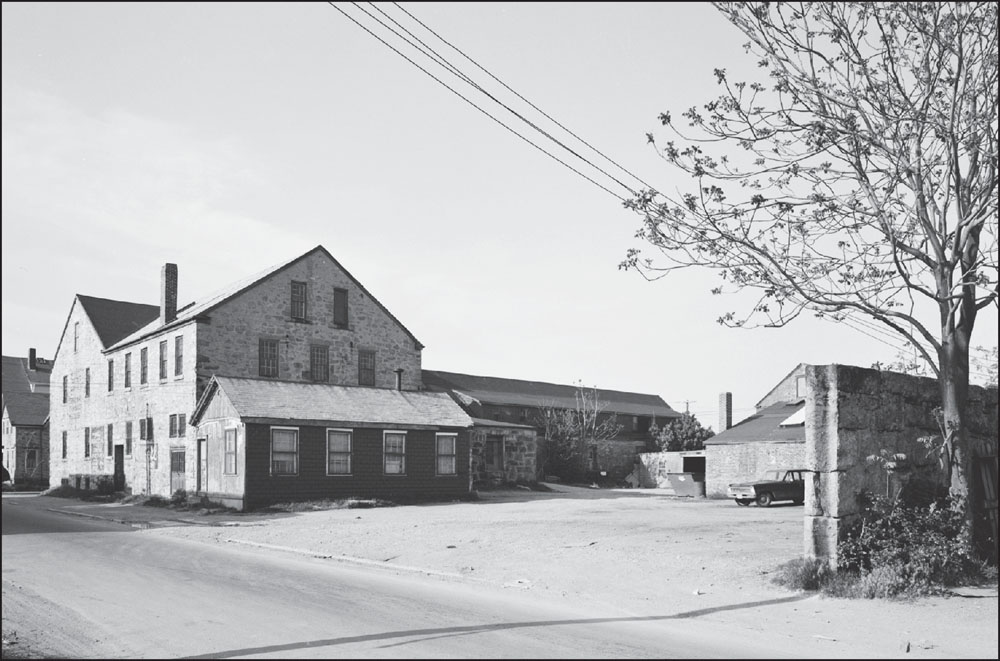
The George Delano & Sons Oil Works, located at South and South Second Streets in New Bedford, is pictured here. The company refined oil from sperm and other whales, elephant seals, fish, and cottonseed, which was used to manufacture spermaceti, candles, and soap, among other products. (Library of Congress.)

Wheels, ropes, and pulleys are part of the lifting apparatus in the attic of one of the buildings at the George Delano & Sons Oil Works in New Bedford. The equipment was used to hoist whales up for processing. (Library of Congress.)

The Custom House in Salem, Massachusetts, with the 1826 wooden eagle carved by Salem craftsman Joseph True in place on the roof, is shown here around 1906. This was the custom house where author Nathaniel Hawthorne worked. This building housed the port’s records and was the office where duties were paid by merchants and captains, including those in charge of whaling ships. Ship captains would file ship enrollments, crew lists, manifests, and other required forms here. (Library of Congress.)

A sign for whale meat—”not fish”—created by the US Bureau of Fisheries was used to encourage people to use whale like one would any meat. (National Oceanic and Atmospheric Administration.)
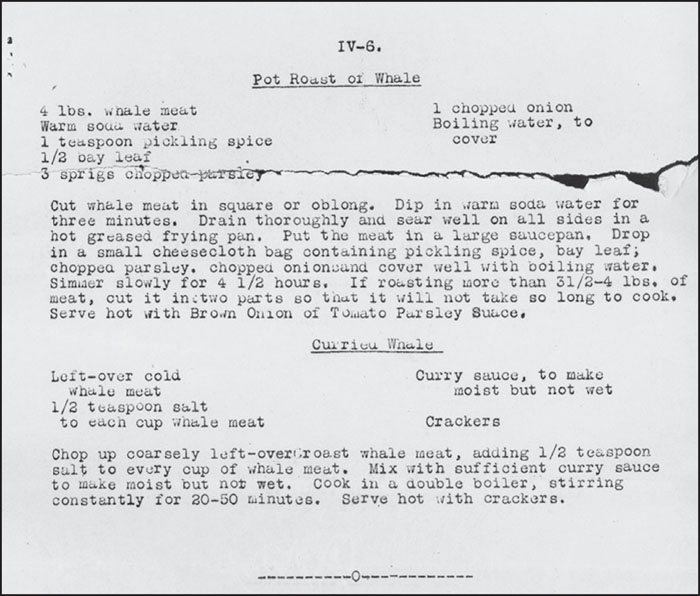
These recipes from the National Archive at Kansas City show how to turn whale meat into a pot roast or a curry. Whale meat was eaten, whale oil was used for lighting and lubrication, and whalebone (baleen) was used in the manufacturing of many products, such as buggy whips and corsets. (National Archives.)

This trade card shows an ad for sperm whale oil used for lubricating sewing machines and bicycles. William F. Nye’s oil company began manufacturing oil for lubrication in 1844 and became the largest maker of oils for watches, clocks, and sewing machines. (Nye Lubricants, Inc.)

This is an old ad for William Nye’s finest oils for small machinery such as clocks, watches, and sewing machines. In the 1860s, a school of some 2,200 blackfish were driven ashore, and the entire catch was secured by Nye, ensuring many years of oil supply for the company. The refining process for whale oil took nearly two years to complete. (Nye Lubricants, Inc.)

William F. Nye, born in Pocasset in 1824, founded the Nye oil company. Nye was the largest manufacturer of the specialty oils used for watches, clocks, and sewing machines. (Nye Lubricants, Inc.)

This is the signature of William F. Nye, founder of Nye Oil Refinery in Fairhaven, Massachusetts. (Nye Lubricants, Inc.)

A small sailboat makes its way past the stone building of the Nye Oil Refinery on Fish Island in 1890. William F. Nye purchased this building in 1877 and expanded his business. At one time, Nye was the largest manufacturer of sewing machine, watch, and clock oils in the world. (Nye Lubricants, Inc.)

A 1901 receipt shows the letterhead for the Nye oil company as well as a transaction for bicycle and watch oil. Whale oil was primarily used as lamp fuel and for making soap and margarine. (Nye Lubricants, Inc.)

This advertisement for Nye oil shows the massive catch of blackfish, or pilot whales, that supplied the company with oil many years. It took nearly two years to refine whale oil enough that it could be used for small instruments like watches and clockworks. (Nye Lubricants, Inc.)
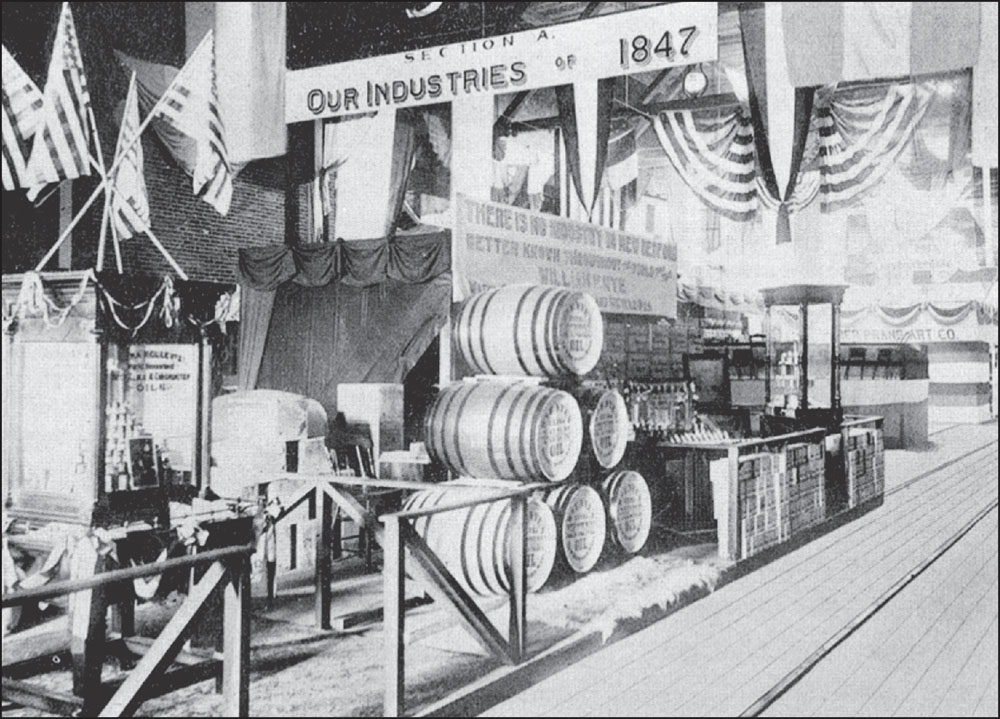
William F. Nye set up this display of Nye oil products at exhibitions and expositions around the country and in Europe to promote his oil. The company was among the exhibitors at the 1893 World’s Fair in Chicago. (Nye Lubricants, Inc.)
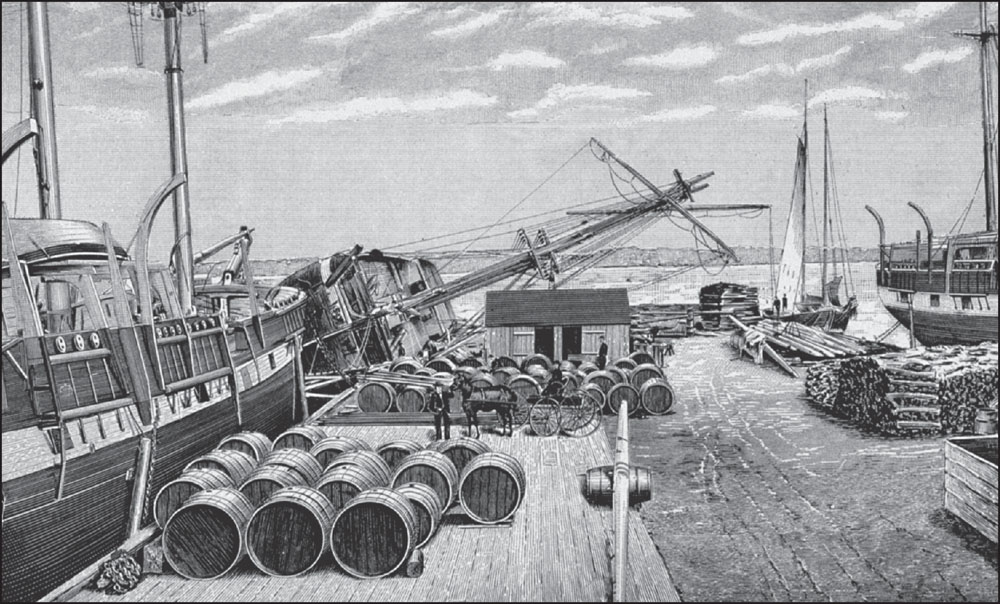
This rendering shows the fishery at New Bedford with whaleships at the dock, a whaleship “hove down” for repairs, and oil barrels. (National Oceanic and Atmospheric Administration.)
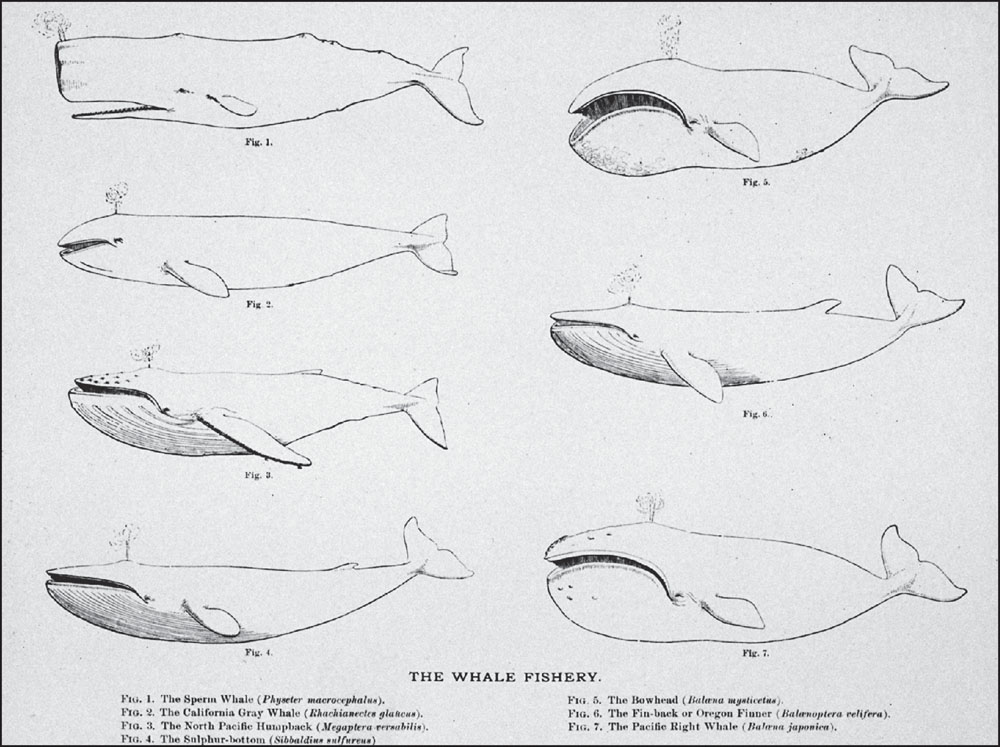
This drawing shows the different kinds of whales traditionally hunted during the age of the whaling industry. As whale populations dwindled, whale ships began taking dolphins, walrus, seals, and turtles to supplement their oil stores. (National Oceanic and Atmospheric Administration.)

Business is conducted over a ship’s mast near the docks at New Bedford, with the rigging of ships in the harbor in the background and whale oil barrels on the ground. (Bourne Historical Society.)
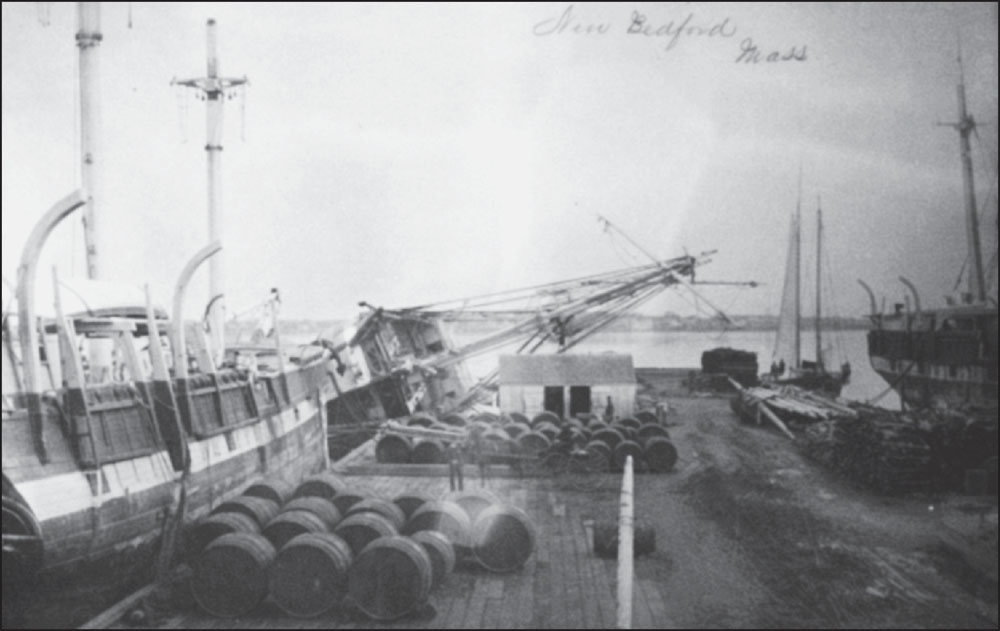
This undated photograph shows whaleships at dock, including one “hove to” for repairs in New Bedford. The barrels on the docks are used for whale oil, which is made from boiling down the blubber, the coating of fat under the whale’s outer skin, or is taken from the head case of a sperm whale—the purest oil that burned clean and was made into candles. (Library of Congress.)
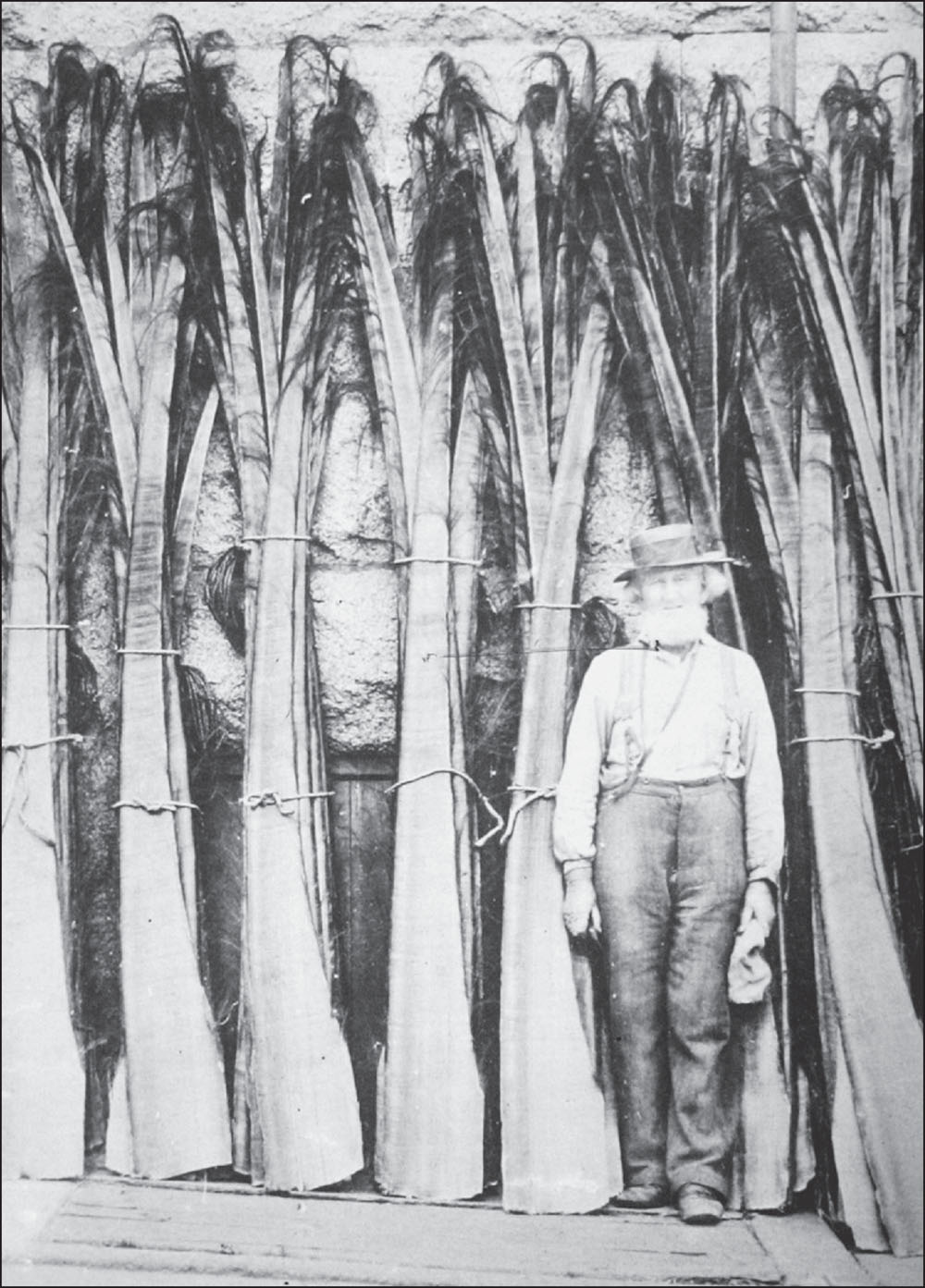
A man poses with baleen (or whalebone) taken from the mouth of whales. Baleen was used for many products on the market in the 1800s, like corsets, umbrellas, buggy whips, and even springs for carriage wheels. (National Oceanic and Atmospheric Administration.)

The tryworks are belching smoke as a crew works on cutting blubber into pieces that fit in the try pots in this undated photograph. Tryworks made long whaling journeys possible because whales could be processed at sea, while the oil was stored below deck and the whalebone stored on deck. (Library of Congress.)

This is the first entry in the log for the whaling ship Sea Breeze that left New Bedford in 1861 captained by Joshua Weeks Jr. Sea Breeze was built in 1853 in New Bedford and returned from this voyage with 960 barrels of sperm oil, 180 barrels of whale oil, and 1,250 pounds of whalebone. (Bourne Archives.)
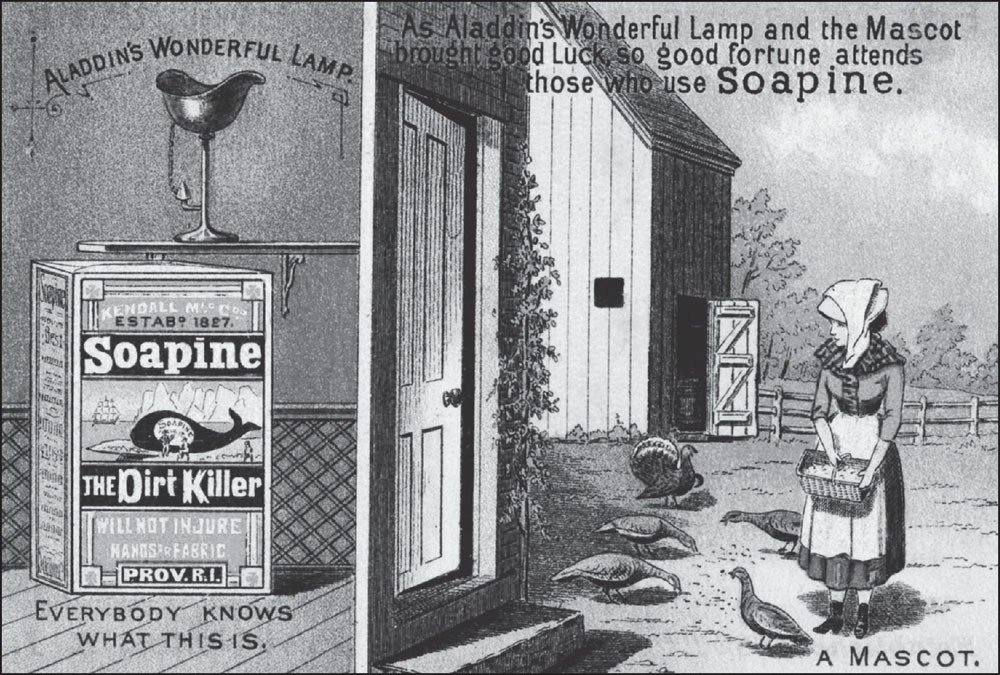
This advertisement for Soapine shows the whale on the package. Soapine was one of many household products made with whale products. (New Bedford Whaling Museum.)

This piece of scrimshaw, as carvings on whale teeth and whalebone came to be known, is referred to as a “Susan’s Tooth” because it was carved by Nantucket Islander Frederick Myrick while on the whaling ship Susan. Myrick was one of the few known scrimshanders and the first to sign his work. Myrick served aboard the Susan from 1826 to 1829 and created 44 signed pieces during that time. (New Bedford Whaling Museum.)

Jonathan Bourne Jr. (1811–1889), one of New Bedford’s most prosperous whaling agents and merchants, was born in the Monument section of Sandwich, now known as Bourne. He made his first investment in the bark Roscoe in 1836, and by 1838, he had devoted himself to financing whaling voyages. Before his death in August 1889, Bourne was the agent for and owned shares in 24 vessels and had interest in 22 others. (Bourne Archives.)

The Jonathan Bourne mansion in New Bedford was located on the west side of Orchard Street at the corner of Clinton Street. Built in 1856 by Bourne, the three-story house was made of brick and boasted a circular staircase inside that rose from the ground floor to the roof. (Bourne Archives.)

This half-size model of the whaling bark Lagoda is shown in the Bourne Building at the New Bedford Whaling Museum in New Bedford. The original Lagoda, built from live oak on the North River in what is now Norwell, was a three-masted ship of 340 tons and made more than $650,000 in profit for owner Jonathan Bourne. In 1915, his daughter Emily donated the Bourne Building to the New Bedford Whaling Museum and funded the creation of the half-size Lagoda for the space in honor of her father. This is the largest whaling ship model in existence. (Library of Congress, Carol M. Highsmith Archive.)

Members and friends of the Mattapoisett Historical Society carefully attempt to bring the chart created by marine artist Clifford Ashley into their museum. The mural, measuring 6 by 16 feet, details the south coast of New England, including Cape Cod and the islands of Martha’s Vineyard and Nantucket. Ashley painted the mural in 1919 for his friend Gilbert Hinsdale, and the work remained in the Hinsdale family home in Mattapoisett for 90 years. Polly Duff Phipps, a great-grandniece of Hinsdale, donated the mural to the Mattapoisett Historic Society. (Mattapoisett Historical Society.)

These sewing and tatting implements made from whalebone belonged to Bourne resident Jane Nam and were brought back from a whaling voyage by a family member. Creating these products was a way for whalemen to break up the tedium as they awaited their next catch. (Bourne Historical Society.)
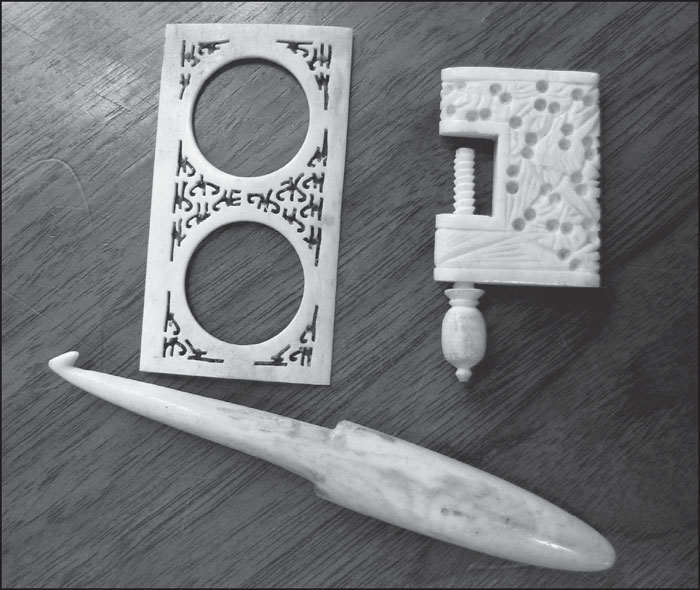
This photograph shows a closer view of the intricate work on three of the pieces from the box in the above image. Apart from the purely decorative art of scrimshaw, sailors on long sea voyages made useful items such as these that were beautifully carved. (Bourne Historical Society.)

This undated photograph of the harbor in Gloucester shows the different types of boats in and around the fishing community. Gloucester was a fishing port and became known for oilskin rain gear that was coated with sperm whale oil. The oil made the outerwear completely impermeable to water. (Library of Congress.)

In this photograph, a Gloucester fisherman works on his nets for his next fishing trip. The unidentified fisherman, with his pipe and oilskins, epitomizes an ideal of the fisherman. Gloucester’s main contribution to the whaling industry was the manufacture of these oilskins, which were coated with sperm oil to make them waterproof. (Library of Congress.)

Sailing vessels are tied up at the wharf in Gloucester harbor. Although Gloucester made its name as a fishing port, whaleships like the Polly, with Capt. Elkanah Mayo, made a number of whaling journeys out of Gloucester in the 1790s, with the last journey bringing in some 1,400 barrels of whale oil. (Library of Congress.)