
Three

The sperm whale became the most sought-after whale because of the high-quality oil that could be taken from the head case in addition to the oil boiled down from the blubber. Sperm whales can live for more than 60 years and have the largest brain of any animal on Earth. (NOAA National Marine Fisheries Service.)

Capt. William Whitfield, master of the whaling ship John Howland, rescued Japanese fisherman Manjiro Nakahama and his crew from Torishima Island on June 27, 1841. They had been shipwrecked after a storm blew their fishing boat to the island. After the rescue, Captain Whitfield invited Manjiro to return to Fairhaven with him. Manjiro became the first Japanese national to live in the continental United States; he attended Bartlett’s Academy in Fairhaven for his education. (Whitfield-Manjiro Friendship Society.)

The whaling ship John Howland (pictured) sailed out of New Bedford captained by William Whitfield of Fairhaven and arrived at Torishima Island, approximately 300 miles off the coast of Japan, to harvest sea turtles for food and to look for fresh water. Manjiro Nakahama, a young shipwrecked Japanese fisherman, swam out from the island to meet the crew, and he and his crew were rescued after five months on the island. (New Bedford Whaling Museum.)

Japanese national Manjiro Nakahama, shown here in his later years, boarded a small boat with a few friends for a fishing trip on January 5, 1841. A freak storm caught them, and they drifted some 300 miles off the coast of Japan. After eight days at sea, they came to Torishima Island, an uninhabited volcanic island that was a breeding ground for albatrosses. The men lost their boat coming ashore and ended up spending five months there until they were rescued by Capt. William Whitfield on the whaling ship John Howland. (Whitfield-Manjiro Friendship Society.)

An entry in the whaling logbook of the ship John Howland for June 27, 1841, written by Capt. William Whitfield tells of encountering the shipwrecked Japanese fishermen. Due to the language barrier, Whitfield could only make out that they were hungry. (Millicent Library.)

This transcription of the crew list for the John Howland, captained by William Whitfield, shows the sailors who accompanied Whitfield on the journey that rescued Manjiro Nakahama and his crew from Torishima Island in 1841. At the bottom is a list of the sailors who did not return and the reasons they did not. (Millicent Library.)

This pen-and-ink image of the ship John Howland is part of the permanent collection of the Jabez Howland House in Plymouth, Massachusetts. (Pilgrim John Howland Society.)
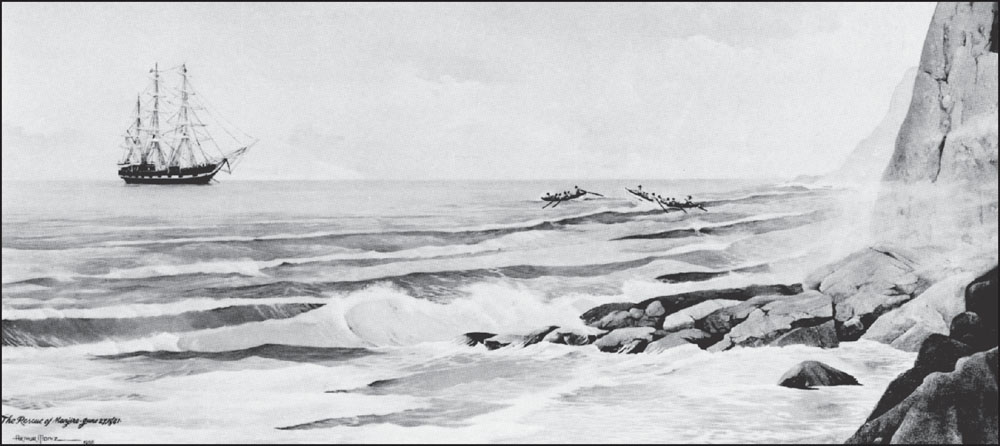
This painting, created by New Bedford artist Arthur Moniz in 1988, shows the rescue of Manjiro Nakahama from Torishima Island on June 27, 1841. That rescue was the beginning of the Whitfield-Manjiro Friendship Society, which operates to this very day with visits back and forth by members of both Manjiro’s family in Japan and the Whitfield family in Fairhaven, Massachusetts. The society is headquartered in the Whitfield family homestead in Fairhaven. (Whitfield-Manjiro Friendship Society.)

A trade card for John W. Howland, shipbuilder, promotes his work building, designing, or repairing ships and also advertises materials for shipbuilding. (New Bedford Whaling Museum.)

This document shows the signal flags used by different whaling vessels that came and went from New Bedford. There are three Howland flags on the document, including one in the upper-left corner, that denote ownership by the different families. (New Bedford Whaling Museum.)
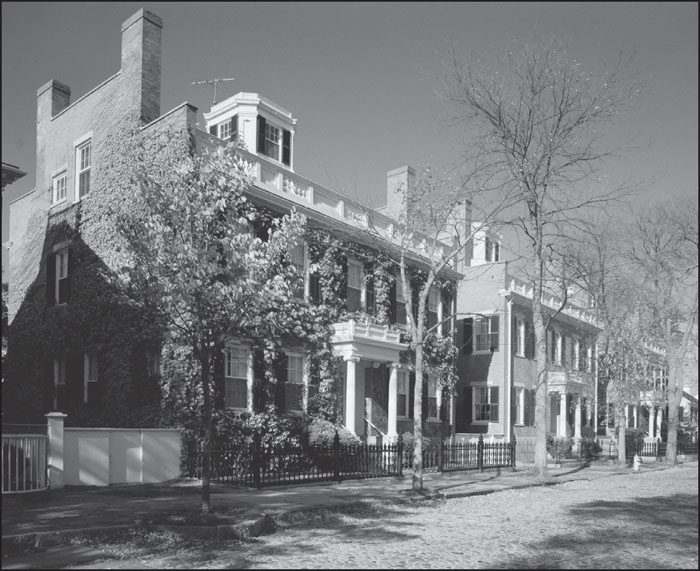
The Joseph Starbuck Houses, nos. 93, 95, and 97 on Main Street in Nantucket, still stood in 2015. Starbuck was perhaps the richest and most successful whale oil merchant of his time. He built three identical Federal-style mansions on Main Street for his three sons. (Library of Congress.)

This map shows the journey of the whaling ship London Packet, captained by Jabez Howland, that left Boston in 1839 and returned to New Bedford on July 4, 1843. The notes along the route were likely made from the logbook at a much later date and note where whales were found, where the crew took on supplies and met with natives, and where there was trouble. (Pilgrim John Howland Society.)
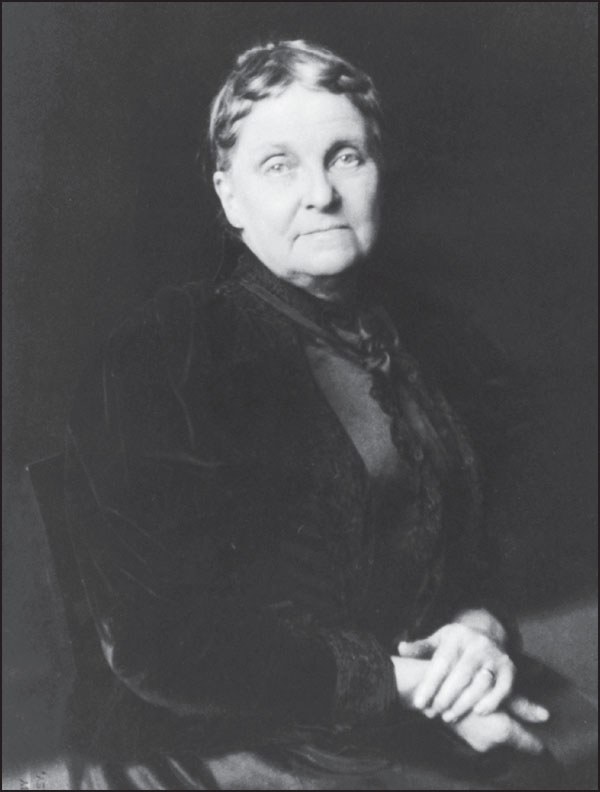
Henrietta “Hetty” Howland Robinson Green (1834–1916) was known by some as the “Witch of Wall Street.” Born in New Bedford as the daughter of wealthy Quaker whaling agent and oil manufacturer Edward Mott Robinson (1800–1865) and his wife, Abby Howland, whose father was another great whaling merchant, Isaac Howland Jr., Hetty inherited a whaling fortune at age 30 and became known for her parsimonious ways. (Library of Congress.)

The whale ship Commodore Morris sports a figurehead of Commodore Charles Morris (1784–1856). Morris was a US naval officer who served as a commissioner in the US Navy from 1823 to 1827. The ship, built in 1841 by the Elijah Swift family of Falmouth using live oak, made some 12 whaling journeys. Live oak, an evergreen species native to the southeastern US, produces a very hard wood thought to be the best for shipbuilding. (New Bedford Whaling Museum.)
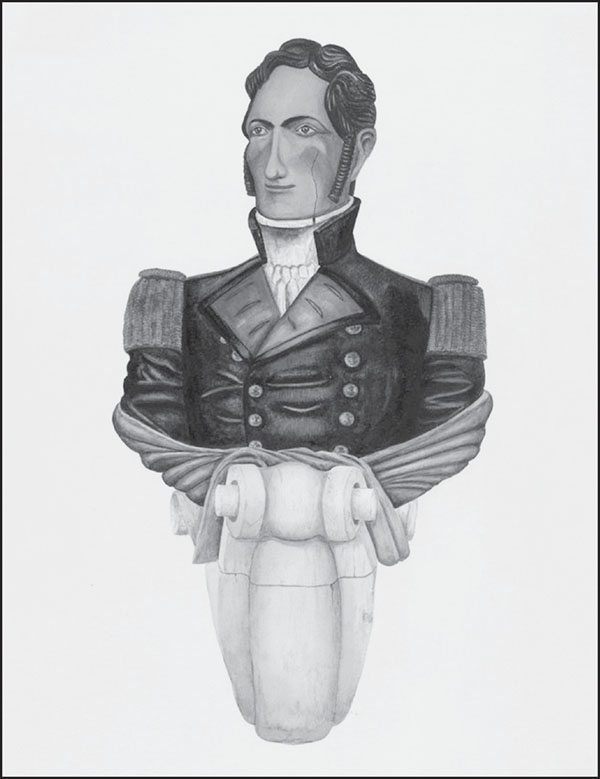
Francis W. Powell created this drawing of the figurehead on the whale ship Commodore Morris around 1938. (National Gallery of Art.)

Capt. Jacob A. Howland began his whaling career at age 21 and won the command of a vessel nine years later. His 12th and 13th commands were aboard the Commodore Morris. (New Bedford Whaling Museum.)

Smoke billows from the Commodore Morris as it tries out a whale while at anchor. The Commodore Morris, built at Bar Neck Wharf in Woods Hole in 1841 by Falmouth’s Elijah Swift family, utilized live oak in its construction. (New Bedford Whaling Museum.)
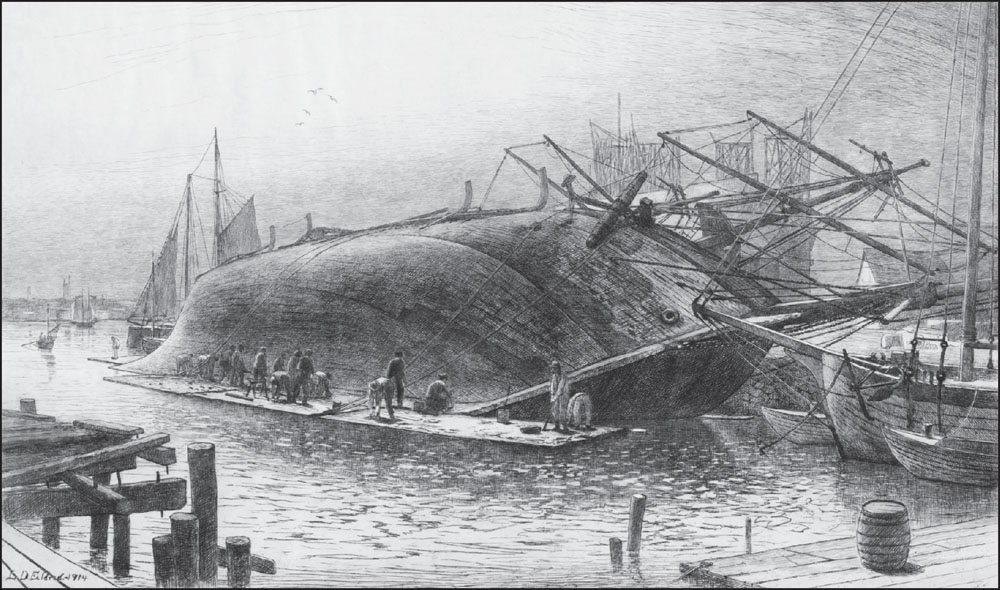
This print by artist Lemuel Eldred shows a whaling ship hove down in New Bedford harbor as men work on the bottom and sides of the ship. (Library of Congress.)

In this lithograph by Louis Le Breton, the whaleship Uncas is shown with crew in action taking whales off the Cape of Good Hope in South Africa. The ship was built in 1828 in Woods Hole, Massachusetts, and Henry C. Bunker was her first captain. The Uncas was part of the fleet of a dozen Falmouth whale ships that sailed out of Woods Hole from 1828 to 1870. (Falmouth Historical Society.)

This etching by marine artist Lemuel Eldred shows what was called Poverty Point (now known as Oxford Point) in the late 1800s in Fairhaven. His most famous work features whaling ships, but he also did scenes of various places, including Fairhaven. (Albert Benac.)

This photograph features artist Lemuel Eldred (1848–1921) working on a painting of a ship in New Bedford harbor. Marine painter and etcher Lemuel D. Eldred was born and raised in Fairhaven near New Bedford’s whaling community. (Albert Benac.)

Lemuel Eldred’s etching “On the Whaling Grounds” shows a harpooner about to strike a whale. (Albert Benac.)

This print by Lemuel Eldred shows a whaling ship returning to New Bedford harbor. The seemingly romantic aspects of whaling captured the minds of artists who worked before photography was in common use as a way to bring whaling journeys home for public consumption. (Library of Congress.)

Maritime painter Charles Sydney Raleigh (1830–1925) is shown around 1915 preparing to paint a portrait from a photograph. Raleigh is credited with some 1,100 paintings related to the sea, with subject matter such as whaling ships, lighthouses, polar bears, and shipwrecks. (Wareham Historical Society.)

This painting of the whaleship Catalpa cutting in a whale is by marine artist Charles Raleigh. In 1876, the Catalpa, captained by George Smith Anthony, came to the rescue of six Irish prisoners in what was then the British penal colony of Western Australia by helping them escape. Captain Anthony could no longer sail in international waters after aiding the escape, and his whaling career was essentially ended. (Bourne Historical Society.)

This undated illustration shows the whaling bark Catalpa with Capt. George Anthony preparing to take Irish prisoners escaping from Australia onboard in 1876. The escapees are in the whaleboat rowing toward the ship (foreground) as a police boat (left) races to intercept and the armed English cruiser Georgette (right) tries to come to the rescue. The Catalpa and the prisoners made it to New York on August 19, 1876. (Eastham Historical Society.)

A whaling scene by maritime painter Charles Raleigh shows a whaleboat rowing toward a whale as the harpooner prepares to spear the whale. A whaleboat in the lower-right corner is not so lucky, as the crew ends up in the ocean. (Bourne Historical Society.)

This whaling scene by Charles Raleigh shows a whaleboat with a harpooner, a boat steerer, and rowers as the harpooner goes after the whale. (Bourne Historical Society.)

Maritime painter Charles Sydney Raleigh painted this rendition of the whaleship Wanderer under full sail at sea. The Wanderer, built in Mattapoisett, measured 116 feet from stem to stern with a draft of 15 feet 8 inches. When fully rigged, the extended bowsprit added 50 feet to her length and her three masts stood 125 feet above the deck. (Bourne Historical Society.)

This painting, created by artist Charles Raleigh of Bourne, shows the whaleship Pace under full sail. (Bourne Historical Society.)

This undated painting of the whaleship Pequot, captained by Seth Baker of Barnstable, was created by maritime painter and Bourne resident Charles Raleigh. (Bourne Historical Society.)

Men harpoon a whale in the foreground and are cutting-in and trying-out a second whale in the background of this c. 1856 Currier & Ives lithograph. The hard work and dangers of whaling were a favorite subject for artists of the day. (Library of Congress.)

Contemporary artists continue to use images of whaling, a central industry during what was considered to be a romantic age, as shown in this drawing by artist Kaki Dimock featuring a whaleship and other images inside the whale. Although photography came into more widespread use during the later age of whaling, drawings and paintings were a more common way for the public to witness the dangers, hardships, and heroism that workers in the whaling industry went through as a matter of course. (Kaki Dimock.)