
Chapter Two
Hitler gathered 20 panzer divisions for the invasion of the Soviet Union, codenamed Barbarossa. By 1938 he had raised just five, which had to rely on the inadequately armed Panzer Mk I and II, as deliveries of the newer Panzer III and IV were frustratingly slow. Remarkably two years later he had over 3,300 panzers, a force that had been created from a standing start. However, just 629 of them were Mk III and IV, plus 371 captured Czech PzKpfw 35(t) and 38(t). Even after this absorption of Czechoslovakia’s tank force Hitler’s panzers were not as strong as he had hoped, although this did not stop him from defeating the Polish and French armies with ease.
After the battle for France Hitler, infatuated by the triumph of the Blitzkrieg, moved to double the number of panzer divisions. This was achieved by halving the number of tanks on the existing divisional establishment. This was not a popular move as it greatly weakened the striking power of a given panzer division. He also sought to double his motorised infantry divisions, adding yet further strain on German industry. In the run-up to Barbarossa the panzer divisions were given an established strength of two or three tank battalions providing 150–202 panzers per division – though in reality they could usually only each field on average 135 operational tanks. The first panzer divisions had originally consisted of four tank battalions.
By the spring of 1941 the Czech armour comprised 25 per cent of Hitler’s tank force. For his attack on Stalin, one panzer division was partly equipped with the 35(t), while six others were armed with the 38(t). The 18th Panzer Division found itself issued with captured French tanks. Subsequent attempts to supply French armour to other panzer divisions for operations on the Eastern Front were declined. While the Czech tanks were capable of taking on the various Russian light tanks, such as the T-26, T-37, T-40 and T-60, up against anything heavier they were in trouble. Although reasonably armoured at the front, the 37mm anti-tank gun was simply not capable of taking on the Russian T-34/76 armed with a 76.2mm gun or the similarly armed KV-1. To compound matters, moves to upgrade the Panzer III’s armament from 37mm to 50mm had not run smoothly. Hitler discovered in April 1941 that the Ordnance Office had fitted the L/42 50mm instead of the L/60 50mm high-velocity gun that he had ordered.
While events in Russia would soon show the need for a more powerful anti-tank gun, the L/60, although useful against the British Grant and Valentine tanks in North Africa, could not cope with the frontal armour of the T-34 and KV-1. The L/60-armed Panzer III did not go into production until six months after the invasion of the Soviet Union and it was a year before a variant with the short 75mm gun became available. The Panzer III turret would not accommodate a larger gun and eventually production was turned over to a turretless assault gun. With the benefit of hindsight, attacking the Soviet Union with so few Panzer IVs seems the height of folly.
Despite deploying three army groups, totalling 145 divisions, for the invasion of the Soviet Union, Hitler was reliant on the manpower and armour of his squabbling Axis allies to help protect his southern flank. This was to contribute to his defeat, as they proved to be his Achilles heel. Forces sent by Hungary, Italy, Romania and Slovakia to take part in his crusade against Bolshevism were not mechanised and lacked tanks, anti-tank guns and transport. At the time Hungary was the only Eastern European country with an indigenous tank capability. In the opening stages of the war Hungary provided two motorised brigades and a cavalry brigade equipped with about 150 Toldi light tanks, Italian-supplied L.35 tankettes and Csaba armoured cars for Hitler’s invasion of Yugoslavia in April 1941.
By June 1941 the Hungarians had just 189 tankettes, light tanks and armoured cars. However, they committed large numbers of troops to Barbarossa, including the Carpathian Group of two brigades and the mobile corps of three brigades. The latter had to seize civilian transport to supplement its obsolete armour. At the time of the invasion Romania had almost 300 largely useless tanks organised into two regiments, including 126 Czech LT-35s. The Romanian 1st Armoured Regiment was the first Romanian unit to take part in the invasion of the USSR.
To this day the role Bulgaria’s panzers played is little understood. While it is widely known that the Hungarians and Romanians fought on the Eastern Front alongside the Germans, it is not generally appreciated that the Bulgarian Army first fought with and then against the Germans in the Balkans. King Boris and his high command were in awe of the panzers’ Blitzkrieg into the Balkans and sought with meagre resources to create their own armoured forces. The Bulgarians formed their 1st Armoured Regiment in June 1941 under the watchful eye of German instructors. Hitler probably hoped that the Bulgarian armour would eventually be committed to the crusade against Bolshevism in the east. In the event it ended up fighting Bulgarian and Yugoslav partisans and the German army. While Bulgaria took part in the destruction of Yugoslavia and Greece, and eventually declared war on Britain and America, King Boris was less keen to cross Stalin; arguing that his army lacked mechanisation, he prudently avoided taking part in Barbarossa.
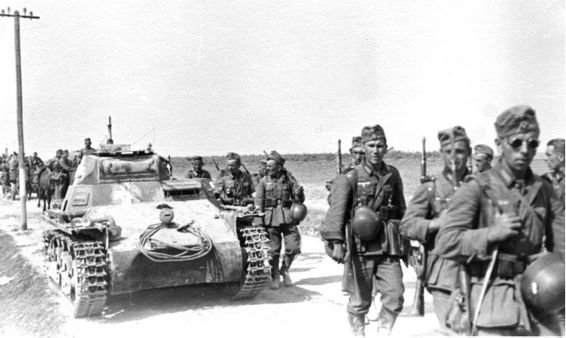
The Germans discovered during the Spanish Civil War that the Republicans’ Soviet-supplied T-26 tanks were far superior to the Panzer Mk I, which first went into production in the mid-1930s. After seeing action in Poland, France, Scandinavia and North Africa, the Mk I was phased out and when Hitler invaded Russia there were only 74 still with the panzer regiments. They were a rare sight on the Eastern Front. (Scott Pick Collection)
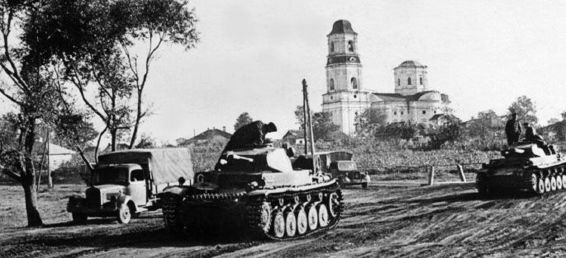
The Panzer II, built from 1936 to 1942, was armed with a 20mm gun and was used in Russia in a reconnaissance role. It too was phased out of service with the tank regiments in late 1943, when the chassis was turned over to self-propelled gun production – most notably the Wespe. (Scott Pick Collection)
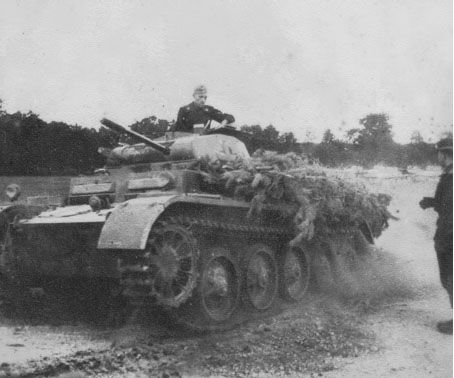
A rare PzKpfw II Ausf D und E; the hull and suspension were of a different design from the normal Panzer IIs, easily identifiable by the four road wheels and no return rollers. These were used on the Eastern Front as flame-throwers until 1942, when they were converted into self–propelled guns using captured Soviet 76.2mm anti-tank guns. (Author’s Collection)
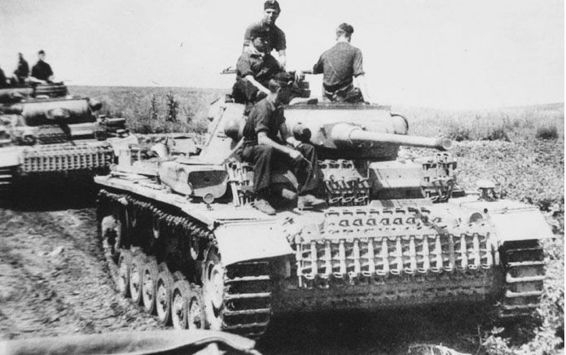
The Panzer Mk III, armed with a 50mm gun, was superior to any Allied armour until 1942. Later F, G and H models were converted to submersible Tauchpanzers and took part in the invasion of Russia in the vanguard of the 18th Panzer Division. While it had its shortcomings, the subsequent Mk IV with its short 75mm gun was able to fire armour-piercing, high explosive and smoke shells. (Scott Pick Collection)
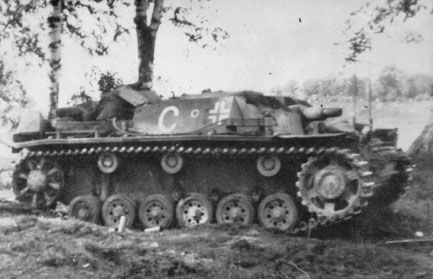
A StuG III Ausf B assault gun in action; note the spent shell cases by the road wheels discarded by the gunner. It was armed with the same L/24 short 75mm gun as the Panzer IV, and over 300 of these assault guns were produced by the time of the invasion. Six sturmartillerie (assault artillery) units took part in Operation Barbarossa. It was intended as an infantry support weapon, but thanks to its low profile it soon proved itself an able tank killer. (Author’s Collection)
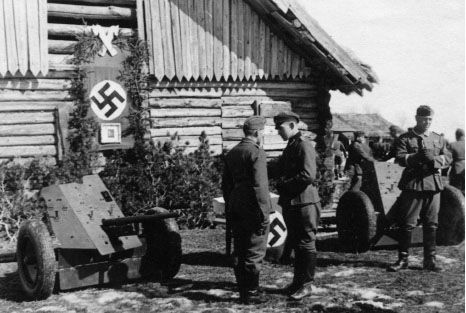
The 37mm Pak 35/36 was the standard German anti-tank gun at the outbreak of the Second World War, and ironically it was sold to the Soviet Union in large numbers prior to 1940. The Soviet Model 1937 45mm anti-tank gun bore a striking resemblance to it (the earlier 37mm Model 1930 was essentially the same design). It could only cope with the panzers at close range and was replaced by the more powerful Model 1942. (Scott Pick Collection)
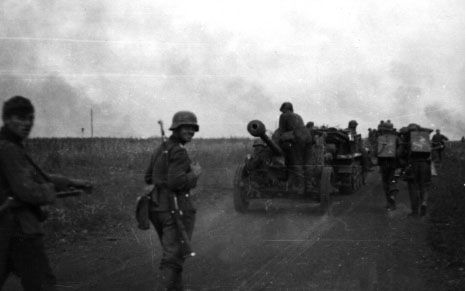
Due to the inadequacy of the Pak 35/36, the 50mm Pak 38 L/60 anti-tank gun designed by Rheinmetall-Borsig was rushed into service, equipping the anti-tank battalions of the German army and Waffen-SS late in 1940. At 1,000 metres it could just about cope with the T-34. This gun was subsequently retrofitted in many PzKpfw III tanks, which had started life with 37mm guns. (Scott Pick Collection)
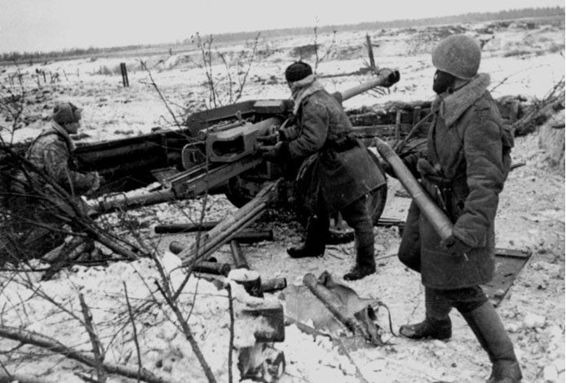
A scaled-up version of the Pak 38, the 75mm Pak 40 entered service in November 1941 and became the German army’s standard anti-tank gun for the rest of the war. Its increased weight meant it was sometimes abandoned to the Russian winter – hence the Soviet gun crew. (Scott Pick Collection)
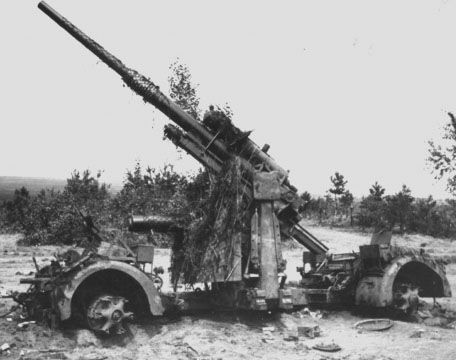
The Flak 36 88mm gun could be deployed in a dual anti-aircraft and anti-tank role and saw continuous service on the Eastern Front throughout the war. Initially it helped compensate for the inadequacy of the German army’s 37mm and 50mm anti-tank guns. Its weight, however, meant that only large vehicles could move it, and the SdKfz 7 half-track became a common tow vehicle. (K175)
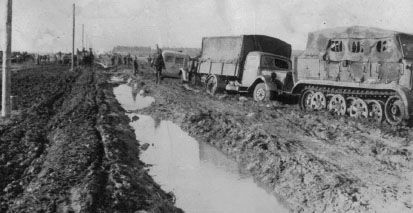
The SdKfz 6/7/8/11 family of half-tracks, used to tow the 88mm Flak gun and the sFH 18 150mm howitzer, also became the basis of a number of self-propelled anti-aircraft variants armed with 20mm and 37mm flak guns. (Author’s Collection)
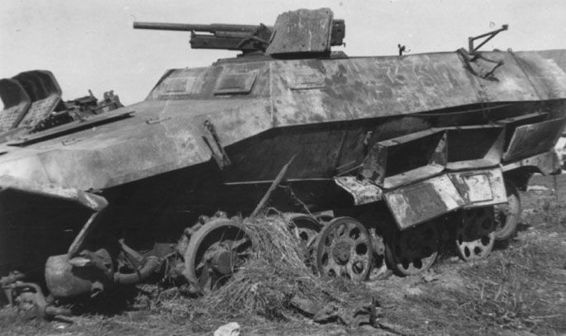
The very distinctive SdKfz 251 was the principal armoured personnel carrier for panzergrenadiers. This particular variant, the 251/10, was armed with the Pak 35/36 37mm gun to provide platoon leaders with extra firepower. Some were later fitted with L/43 and L/46 75mm guns, giving it an anti-tank role. (K174)
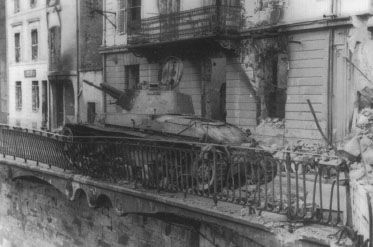
Following Hitler’s occupation of Czechoslovakia, he acquired the Skoda LT-35 light tank (seen here) and the designs for the CKD LT-38. The former saw action with the German army in Poland and France. For the invasion of Russia the 6th Panzer Division was equipped with 103 LT-35s. (Author’s Collection)
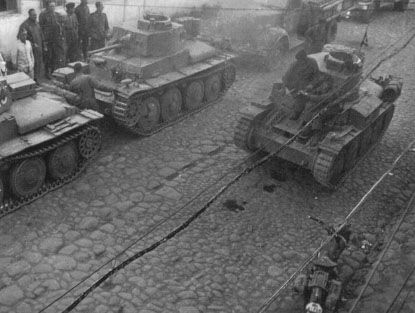
The Czech-designed LT-38, known as the PzKpfw 38(t) in German service, was a key element of Hitler’s panzer force, although it was under-gunned and under-armoured. It lasted little more than just over a year on the Eastern Front. (Author’s Collection)
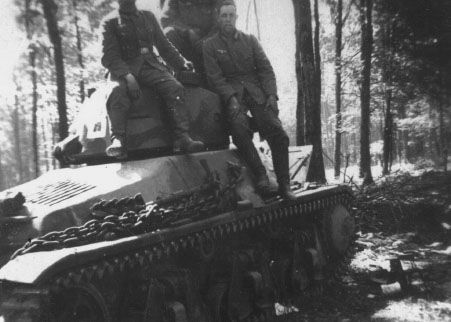
After the fall of France large numbers of French tanks were taken into German service. The Hotchkiss H-35/39 was modified with the installation of a wireless set and a change in the cupola and designated the PzKpfw 39-H 735(f). (Author’s Collection)
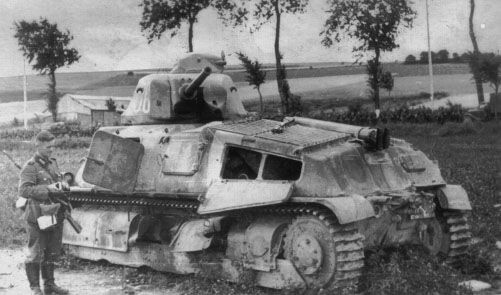
The modern Somua S-35, the best French tank in 1940 and perhaps in Europe, also fell into Hitler’s hands. The 211th Panzer Battalion, supporting the Finnish army’s attacks towards Leningrad, was equipped with S-35s and H-39s. It was the first French-equipped panzer unit to see action in Russia from the very first day of the invasion. (Author’s Collection)
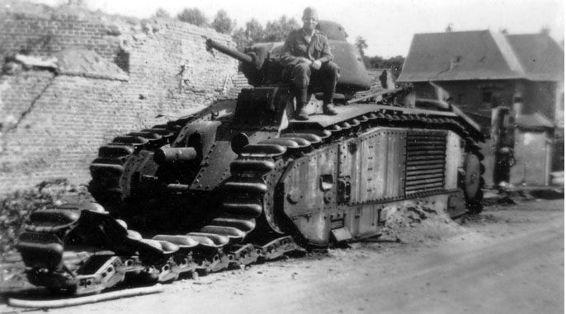
A limited number of German panzer divisions, including the 18th, were issued with captured French tanks. Among them were the Renault heavy Char de Bataille B1 Bis armed with a 47mm turret gun and a powerful 75mm hull gun. The Char B was effective against lighter Soviet armour but was no match for their heavier tanks. French armour did not last long in Russia, and by November 1941 the 18th Panzer Division had lost 70 per cent of its French tanks. (Author’s Collection)
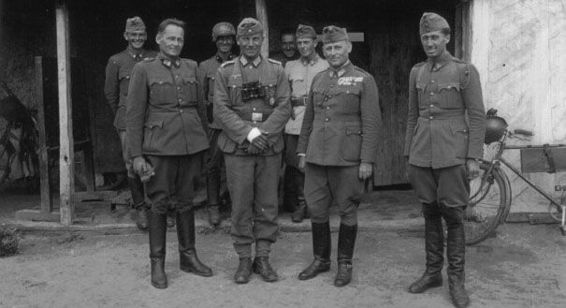
A German liaison officer and his Hungarian colleagues smile for the camera. The Hungarian army eventually provided two armoured divisions for the Eastern Front equipped with Toldi light tanks and Turan medium tanks, as well as Nimrod and Zrinyi self-propelled guns. They were also supplied with some German armour. (Author’s Collection)
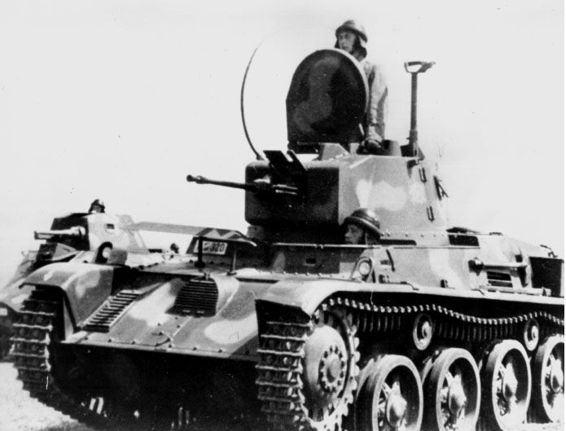
The Hungarian-built Toldi light tank was based on the Swedish Landsverk L60 and was no match for Soviet armour. In the opening stages of the war Hungary’s mechanised forces comprised two motorised brigades and a cavalry brigade equipped with obsolete tankettes, light tanks and armoured cars. (Author’s Collection)
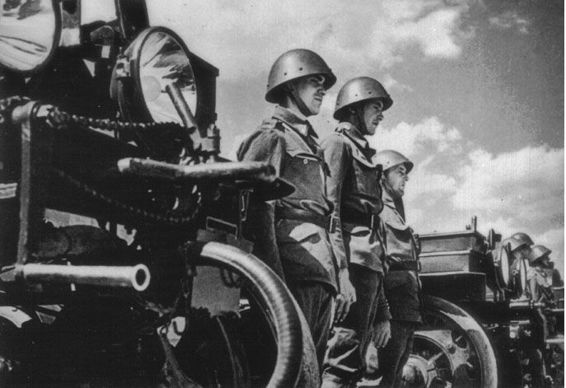
Motorised Slovak infantry on parade. Initially Slovakia provided two infantry divisions to support Hitler’s Army Group South. These were later replaced by the Slovak Mobile Division, which included a solitary Skoda tank company. (Author’s Collection)
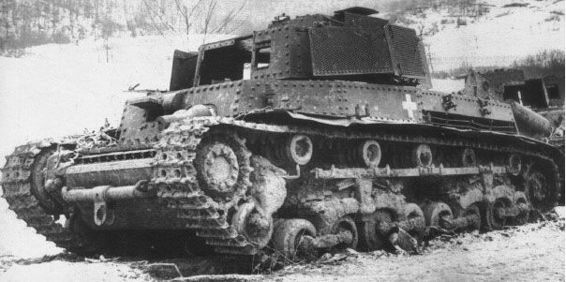
The Hungarian Turan medium tank, based on the Czech LT-35, was obsolete before it even went into production in 1941. The Turan I was armed with a 40mm gun, while the subsequent Turan II had a 75mm gun; in total about 500 of both types were built. (Author’s Collection)
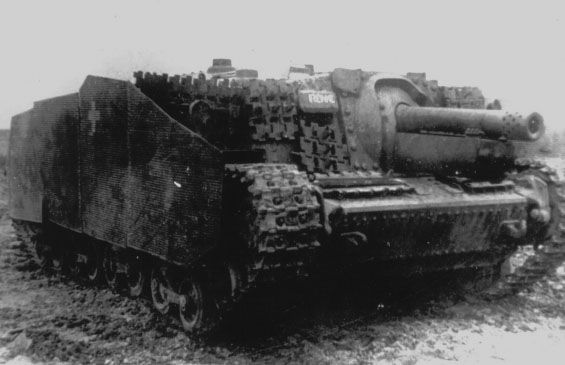
Only 60 Hungarian Zrinyi self-propelled howitzers were built during 1943 and 1944, and they had no impact on the war. (AO38)
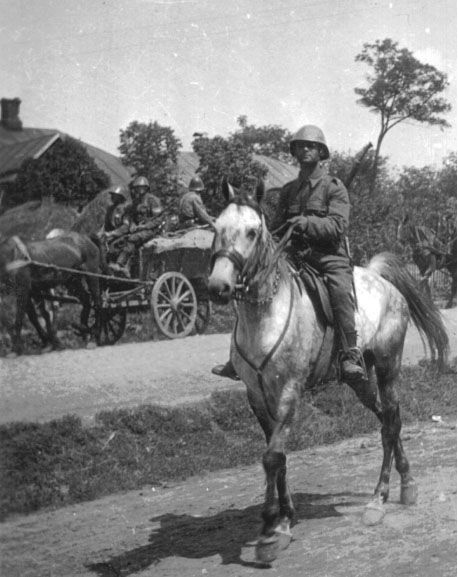
This Romanian cavalryman, and the horse-drawn transport behind, illustrates the extent of the Romanian army’s mechanisation. Its 1st Armoured Regiment, equipped with LT-35s, was the only tank unit to take part in the invasion of the USSR. Romania’s only other armoured regiment, with Renault R-35s, was not committed for lack of spares. (Author’s Collection)