
Chapter Three
In the speech that Hitler made to the German people on 30 January to mark the anniversary of 12 years of Nazi rule, he predicted Germany would be victorious. Within a week the order went out that every German male over the age of 16 would be liable for conscription.
Happily for the Germans, the ice on the Oder river began to melt. The Polish roads, already damaged by the passage of tank-tracks, began to break up and turn to mud, causing delays for the Soviet transport columns.
Guderian, for his part, concluded that the time was ripe for a counterattack into the gap between Zhukov’s First Belorussian Front and Rokossovsky’s Second Belorussian Front. The original plan, codenamed Operation Solstice, was designed as a two-pronged thrust to cut off the head of First Belorussian Front by means of a pincer movement: one attack by Army Group Vistula, from Pomerania, the other by Army Group Centre, from Glogau, on the Oder river. Reinforcements were to be drawn from Italy, Norway and Courland. Hitler vetoed the large version of this plan but demanded it be reduced to a single thrust by Army Group Vistula leading off from Stargard.
Aggrieved, Guderian set about mustering the forces allocated, none of which came from the fronts he had intended, but which proved to be a motley collection of Waffen SS infantry divisions raised mainly in western Europe from fascist sympathisers. No longer the elite volunteers of earlier days, these formations were divisions in name only and remarkably lucky if they numbered more than 4000 to 5000 men with but a tithe of the equipment due to such a formation. However, the armoured element of the strike force, two Panzer divisions, were somewhere approaching 70 per cent of their strength and they were tasked with attacking from the right flank, with the infantry to their left.
The first attack began on 15 February, spearheaded by the 11th SS Division Nordland, probably the strongest of the infantry units. Some success was achieved but Zhukov hit back strongly and the counterattack was called off after three days. However, it did confirm to Zhukov and Stalin that Pomerania and East Prussia needed to be ‘tidied up’ before any more thought was given to assaulting Berlin.
Konev’s First Ukrainian Front began a limited offensive to advance his position up to the Neisse river and take Breslau. However, Stalin warned Konev to keep a watchful eye on his left flank as no clear intelligence had emerged regarding the whereabouts of Sixth SS Panzer Army.
Konev had already been taken by surprise days before by a series of counterattacks mounted by the revived XXIV Panzer and Grossdeutschland corps, which had caused havoc in the rear areas of Fourth Guards Tank Army.
The offensive jumped off from the Steinau bridgehead, cutting off the German bridgehead at Breslau within a week and expanding Konev’s enclave on the west bank of the Oder river to some 930 square kilometres. Pushing on to the Neisse river, First Ukrainian Front established itself along some 100km of that river’s bank and within sight of the Sudeten Mountains. Konev now aligned his front with Zhukov’s to present a continuous front line. This Lower Silesian operation came to an end on 24 February.
The end of Operation Solstice was followed rapidly by an offensive to clear part of Pomerania and East Prussia, undertaken by Second Belorussian Front, utilising the fresh and newly arrived Nineteenth Army. Although progress was slow it was inexorable and by 1 March German Second Army was almost cut off from Army Group Vistula. On the same day First Belorussian Front joined in and within 36 hours the German position in Pomerania began to unravel. On 4 March First Guards Tank Army reached the Baltic coastline along a remarkable 80km frontage.
German Second Army fell back to the fortified area around Danzig, which the bulk of its troops reached by 7 March. Fortifying the area was made somewhat easier by the spring thaw and the rising river levels, which slowed the Soviet pursuit. Nevertheless Rokossovsky’s forces were concentrated around Danzig by mid-March.
Despite desperate German efforts Second Ukrainian Front ground away at the defence system and by 25 March had split the German area into two. Crowded with troops and many thousands of refugees, it was a bomber pilot’s dream. By the end of the month only isolated pockets of resistance remained, protected by flooded ground and the naval guns of the Kriegsmarine, who continually plied back and forth lifting refugees and wounded out and bringing in food and munitions. The last enclave held out until 9 May.
Elsewhere, however, the destination and purpose of the enigmatic Sixth SS Panzer Army had finally become clear during February when its I SS Panzer Corps (1st and 12th SS Panzer divisions, Leibstandarte and Hitlerjugend respectively) opened the first phase of Operation Spring Awakening, codenamed Operation South Wind. The purpose of Operation South Wind was to prepare the ground for Operation Spring Awakening and it began on 17 February.
Over the course of the next week the Soviet bridgehead over the Danube river at Hron was eliminated, thus putting in jeopardy the planned Soviet drive on Vienna, which would have threatened Axis forces in Italy and Yugoslavia with isolation from Germany.
However, German losses of approaching 50 per cent meant that a halt for replenishment of men and machines was essential. Having received a severe censure from Moscow, the Soviet theatre commanders prepared to meet the main German thrust. Tolbukhin, commanding the Third Ukrainian Front, was ordered by Stalin to fight a defensive action. A veteran of the Kursk fighting, Tolbukhin was well aware of the value of defence in depth and made his preparations accordingly. Minefields were liberally sown, anti-tank gun positions dug and camouflaged, and reserves positioned carefully. Across the line, the Germans made their preparations, II SS Panzer Corps (2nd and 9th SS Panzer divisions, Das Reich and Hohenstaufen respectively) was brought up to supplement the efforts of I SS Panzer Corps. Two other, weaker, operations were planned to divert Soviet attention from the main event but both fizzled out for no apparent gain.
Operation Spring Awakening began on 6 March in the worst possible weather. Sunshine had reduced the ground to a soggy morass and the anticipated panzer dash was reduced to an undignified, costly battle of attrition. After a four-day struggle the Soviet line began to crack, but even the commitment of two further Panzer divisions could not carry the advance any further. Stalled, the Germans debated what to do next, giving Tolbukhin the opportunity to make his move.
Sixth Guards Tank and Ninth Guards armies were launched into the northern flank of the German salient, which began to retire. Now the entire German strike force was in danger of encirclement and only the heroic actions of the SS Panzer divisions kept open a narrow passage between two lakes to allow the bulk of the of the force to escape capture. As it was, much of the heavy equipment was abandoned due to the mud and a lack of fuel.
By the end of March Army Group South and Sixth SS Panzer Army were reduced to a shambles. They attempted to hold the Soviet advance on the Austrian border but, with ‘Fortress’ Vienna the clear target, were unable to do so. On 13 April the people of Moscow celebrated the fall of the Austrian capital.
On the Baltic coast Zhukov had driven the remnants of Army Group Vistula across the Oder river. Other than the besieged city of Kolberg, the so-called Pomeranian Balcony was cleared. With Konigsberg also under siege East Prussia posed no threat to the Soviet rear. Now Stalin, Stavka, Zhukov and Konev could call a halt, rest their forces and plan the assault on Berlin.
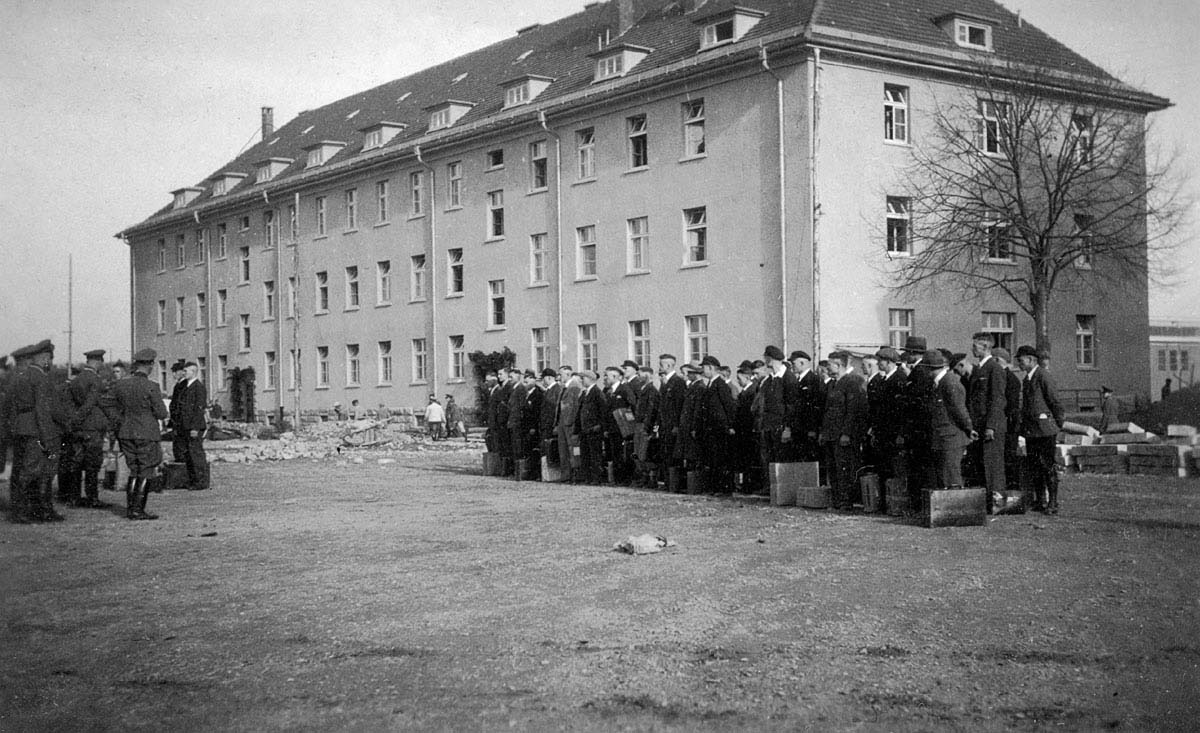
The final call-up of Germany’s manpower took place in February 1945. With the Nazi party exerting more pressure on the civilian population and the threat of summary execution for those apparently shirking their duty, men joined up who would otherwise have been exempt. One such group is shown here.
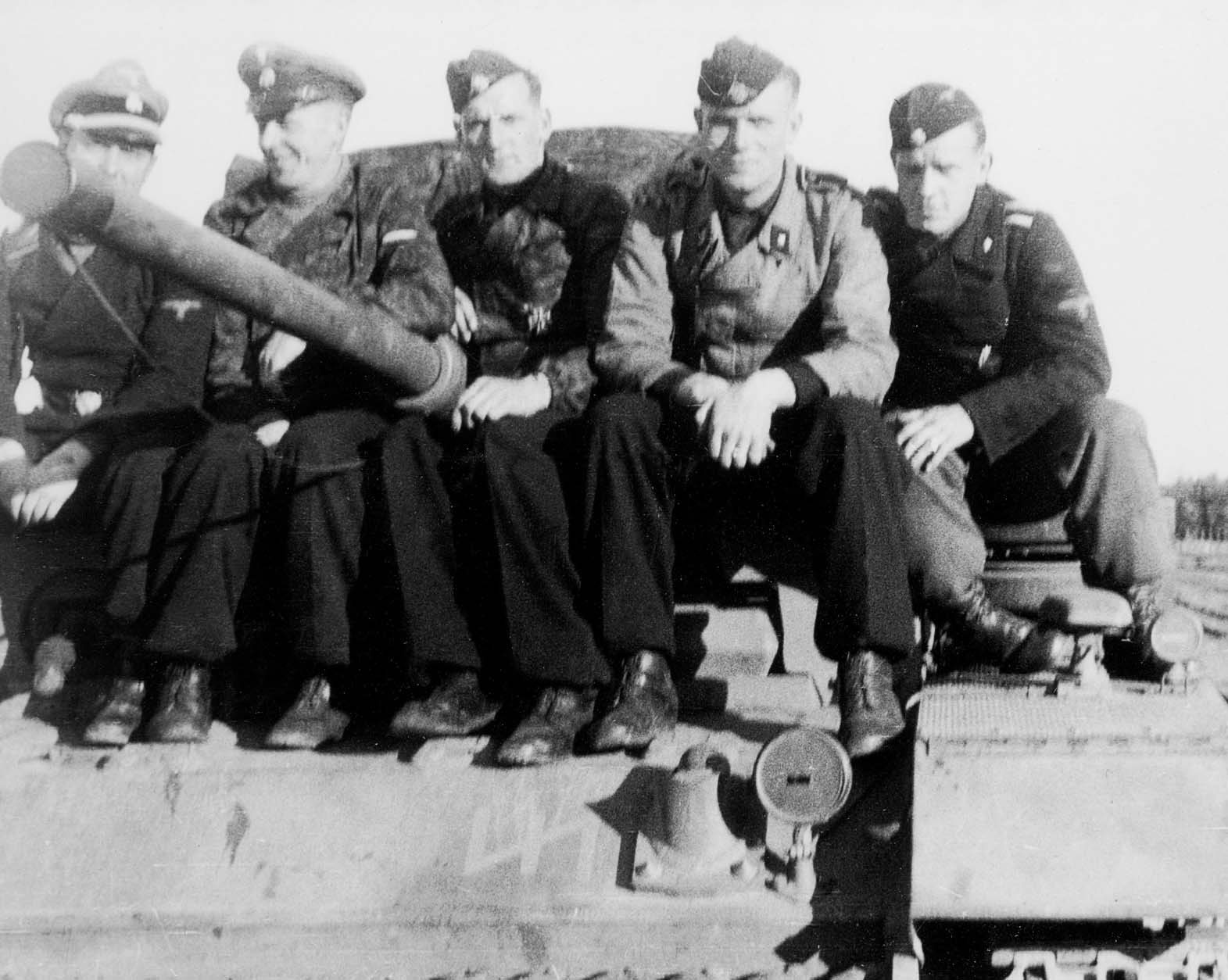
Men of 2nd SS Panzer Division Das Reich, recognisable by the divisional marking on the tank’s armour, seen under way for Hungary in February 1945. Reequipped after the Ardennes counterattack, these officers appear to be sitting on a Panzer III.
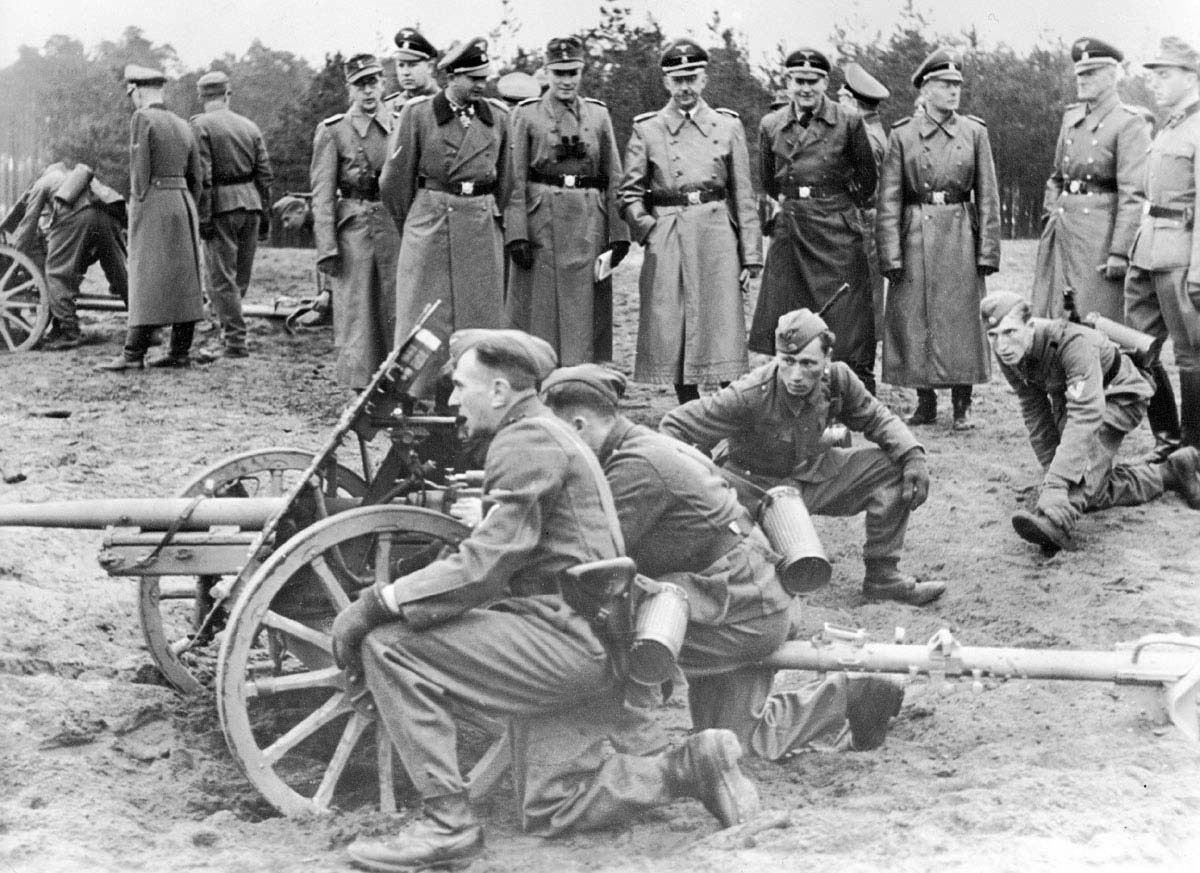
Posing here with a group of officers, Reichsfuhrer Heinrich Himmler (centre) inspects the anti-tank company of a Waffen SS formation. Himmler’s experience of military life had been confined to a clerical position during the First World War. Himmler spent much of his tenure as commander of Army Group Vistula resting in his train and composing draconian orders to deal with cowards and deserters.
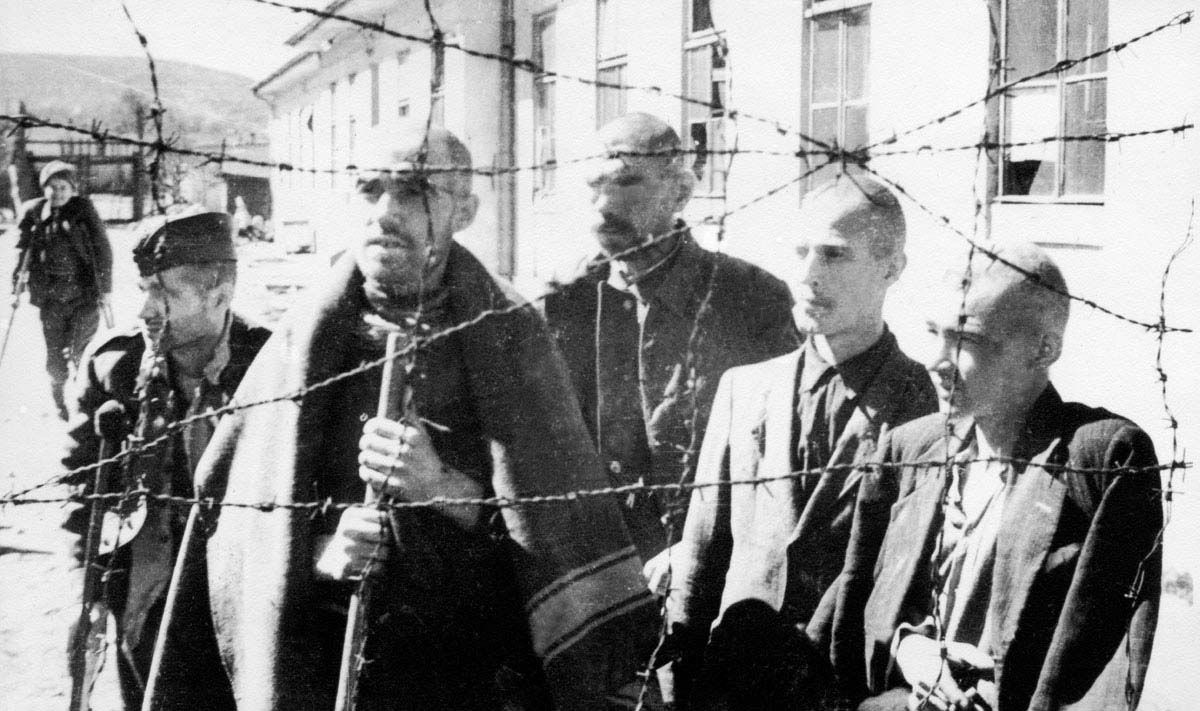
The Red Army also faced a growing manpower shortage. During the advance through Ukraine and Belorussia during 1944 it had solved this by conscripting men from liberated areas. The advance through Poland and into Germany freed hundreds of thousands of Soviet POWs, who were enrolled into understrength infantry units. The physical and mental condition of many of these men left much to be desired, as can be seen from this group.
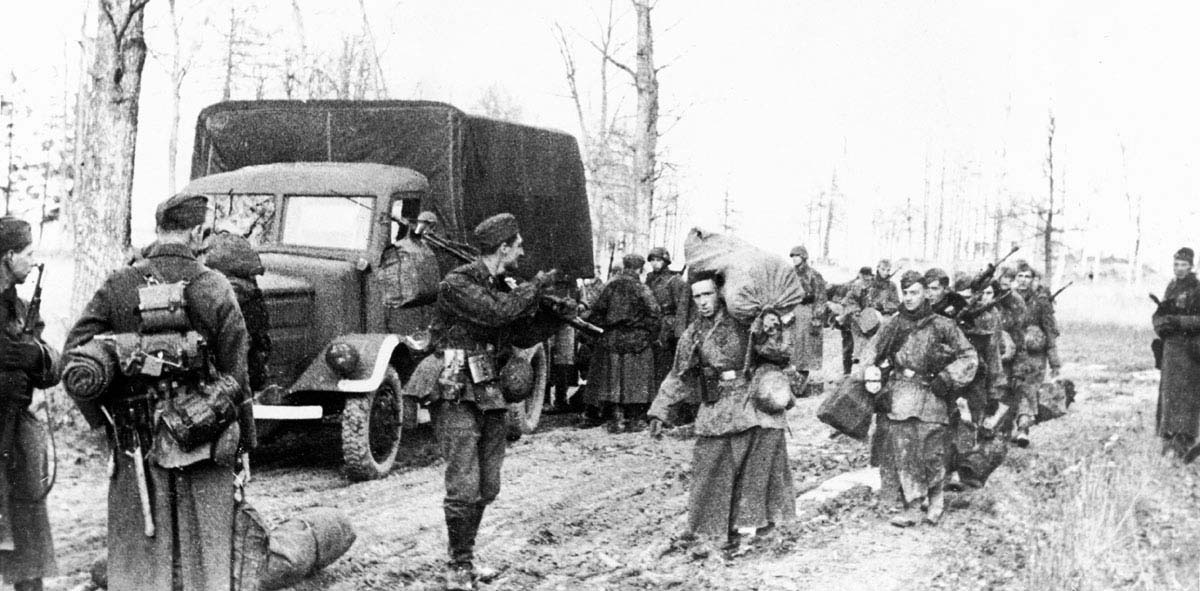
Men of the 28th Waffen SS Division Wallonie leave their transport to move into place for Operation Solstice. Elements of this Belgian unit had seen extensive action on both Eastern and Western fronts. At the end of Solstice the division was virtually destroyed covering the retreat of other units across the Altdamm bridge.
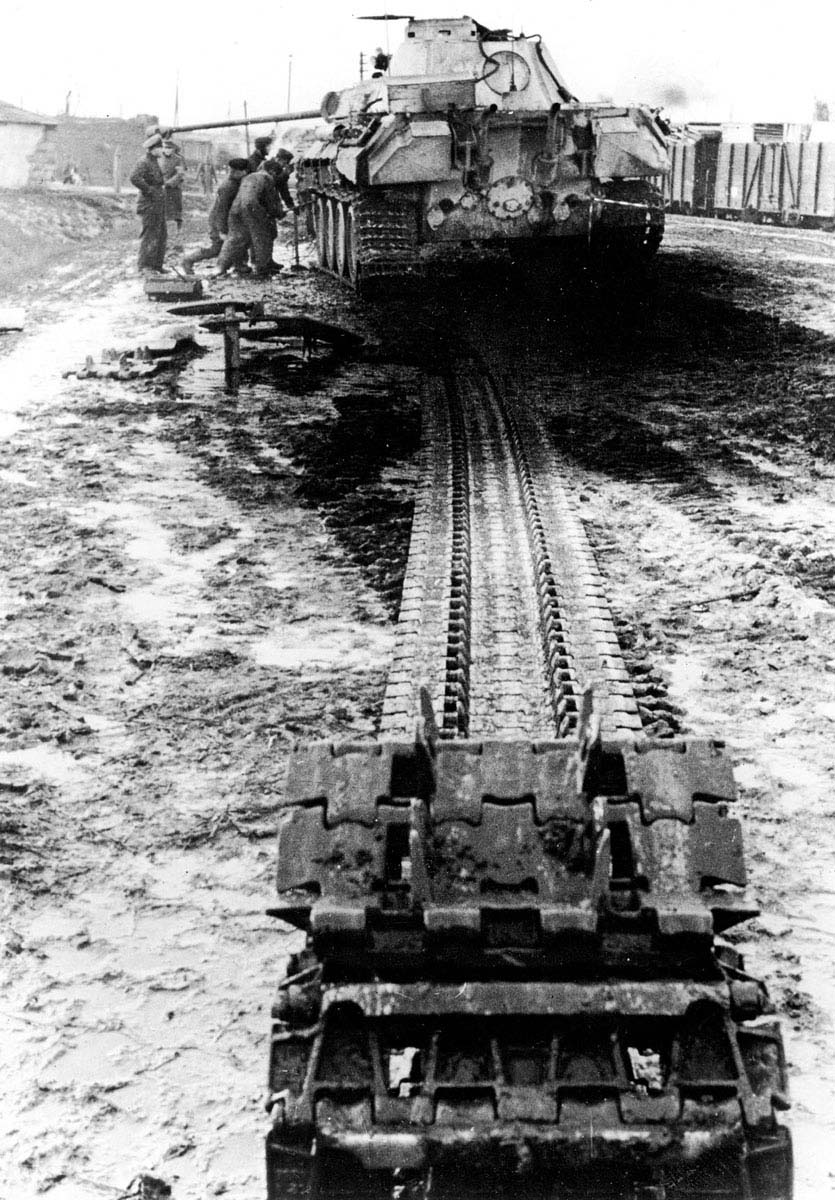
A Panther Model D receives attention for mine damage. The repair crew are apparently adjusting the track tension. The 10th SS Panzer Division was well supplied with Panthers but took heavy losses before being transferred to the reserve of Army Group Centre.
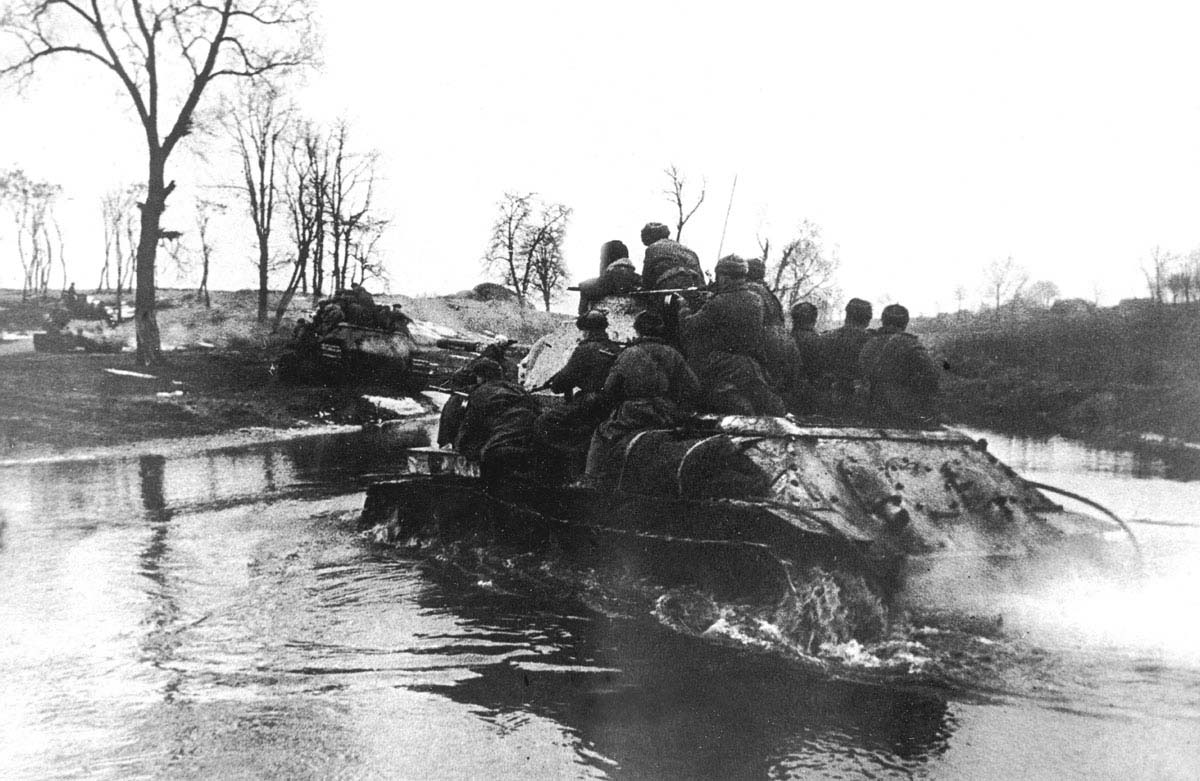
Armour and infantry of First Belorussian Front cross a waterway in Pomerania during the counterattack following Operation Solstice. The transportation of infantry on tanks was a well-established practice stemming from a lack of lorries or personnel carriers earlier in the war.
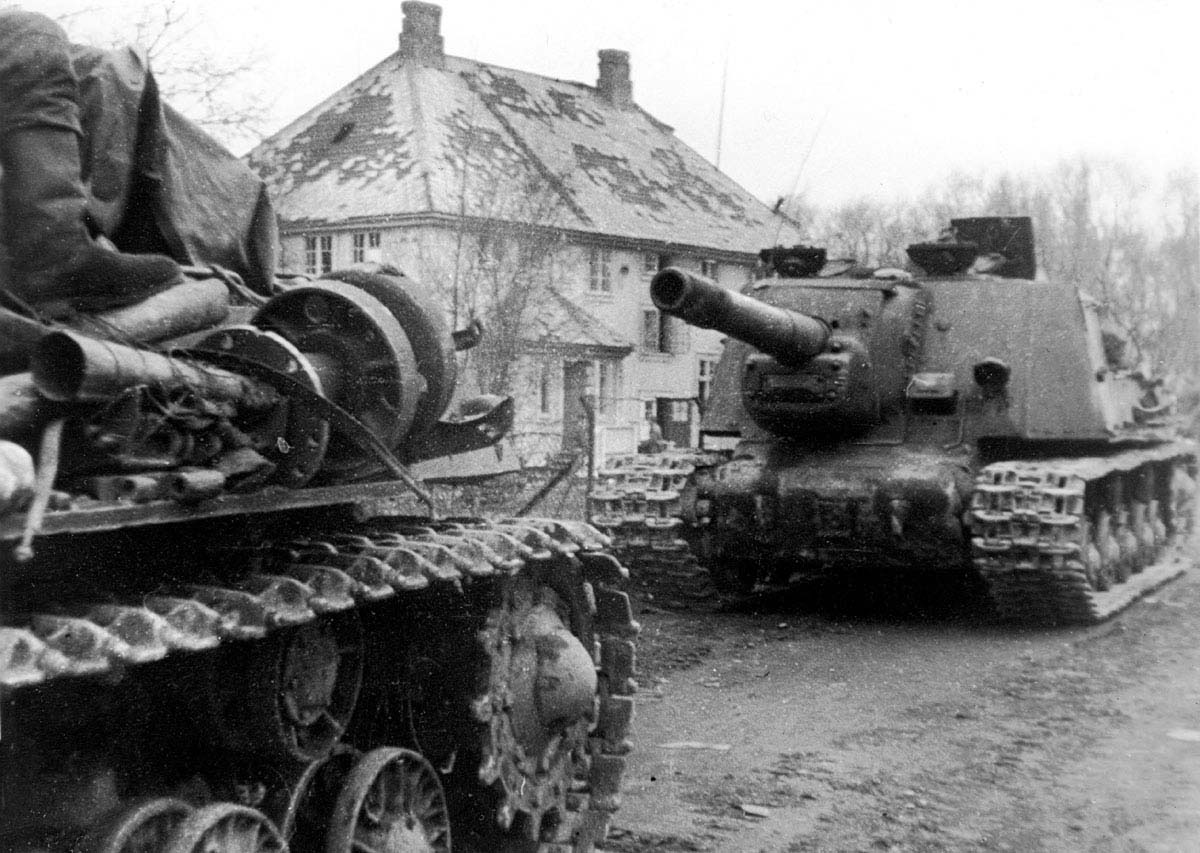
An ISU-152 heavy assault gun unit drives towards Danzig during early March 1945. It is possible that it is part of the 375th Guards Heavy Self-Propelled Artillery Regiment, Third Guards Tank Army. Nicknamed the ‘animal hunter’ because of its ability to destroy both Tiger and Panther tanks, the ISU-152 was able to fire high-explosive as well as armour-piercing rounds.

Tank crews of the newly arrived Nineteenth Army parade in front of their T-34/85s to receive a mission briefing. At first the Nineteenth’s performance was regarded as lacklustre but the replacement of its commanding officer resulted in a higher level of activity.
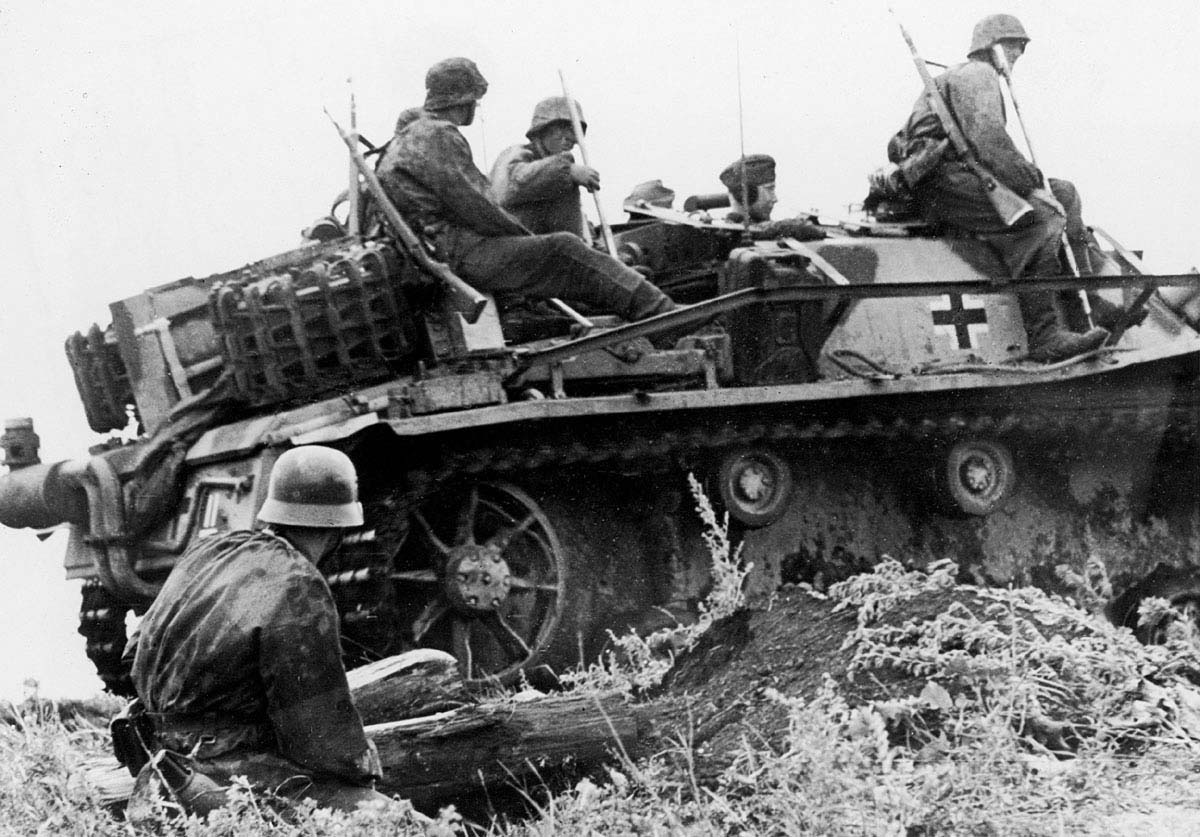
A StuG III of the SS Panzer Division Das Reich moves up to its start line during Operation Spring Awakening. The passengers are carrying marker poles to delineate safe routes through minefields. Hungarian cavalry followed the German advance to flush out any remaining pockets of resistance. Although the AFV had been marked for the Totenkof Division it was common practice for equipment to be interchanged.
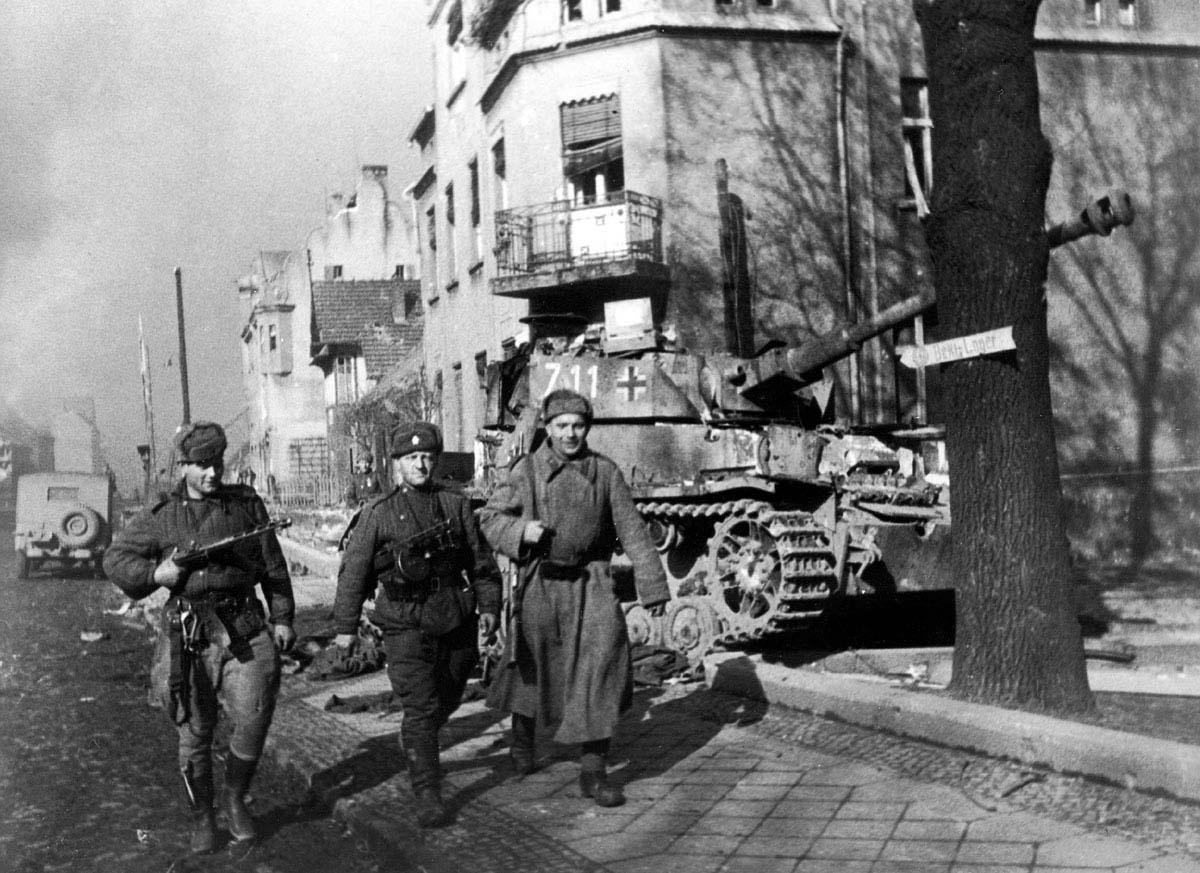
Men of the Third Ukrainian Front stroll through the streets of Budapest on the day of its surrender, 14 February. The industrial area, Pest, had been overrun in mid-January but Buda held out until it was clear that the relief efforts had failed. An attempted breakout was made at 20.00 hrs on 11 February but failed, with considerable loss of life.
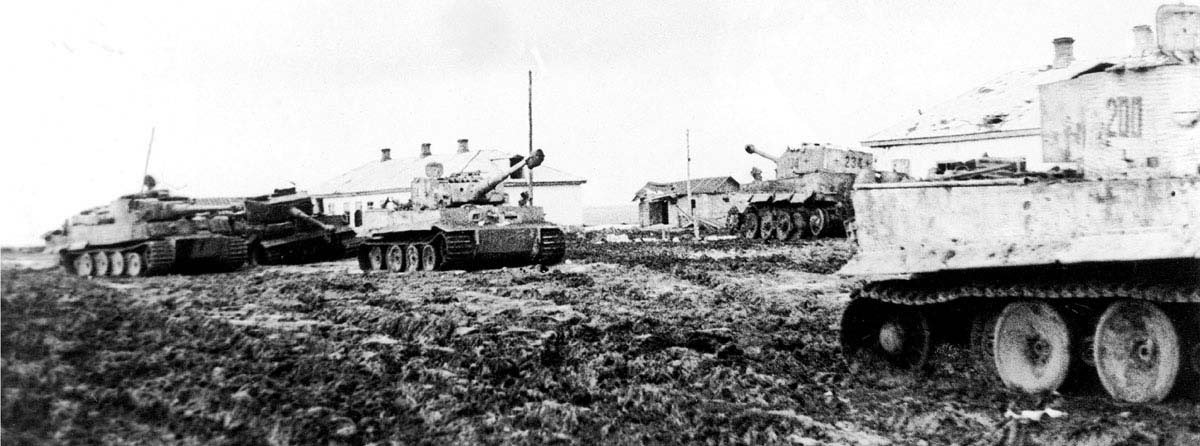
A common sight across Poland and eastern Germany was that of abandoned vehicles. The shortage of fuel had become crippling and even undamaged, precious armoured vehicles such as these Tiger Is had to be left behind. Naturally, anything that could be was cannibalised to keep similar vehicles battleworthy.
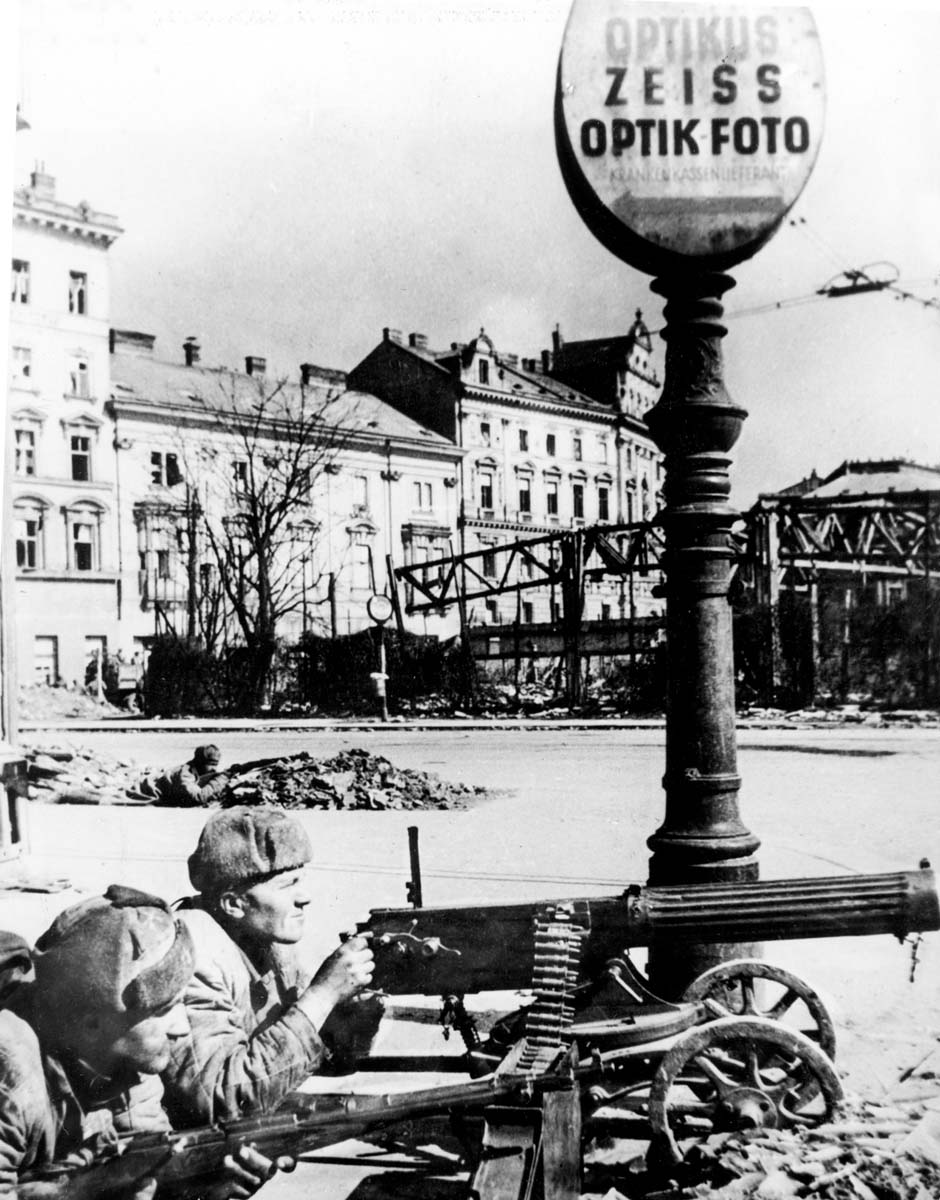
A Soviet machine-gun team on the streets of Vienna: Goebbels noted in his diary, ‘Riots have taken place in the former red suburbs of the city and have assumed such proportions that Schirach (the Nazi governor of Vienna) has [...placed] himself under the protection of the troops.’ The rioting was limited and the ringleaders rounded up and hanged. But with Sixth SS Panzer Army a spent force the defence was bitter but of short duration.
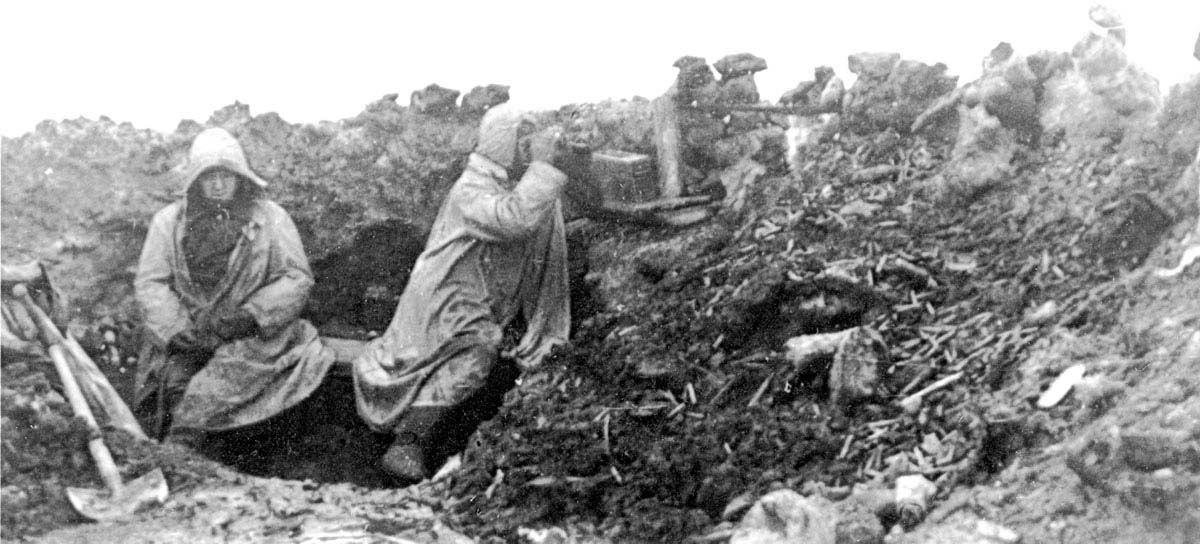
Somewhere on the Eastern Front, in conditions reminiscent of the First World War, a pair of German infantrymen keep a low-profile watch for Soviet tanks or yet another infantry attack.
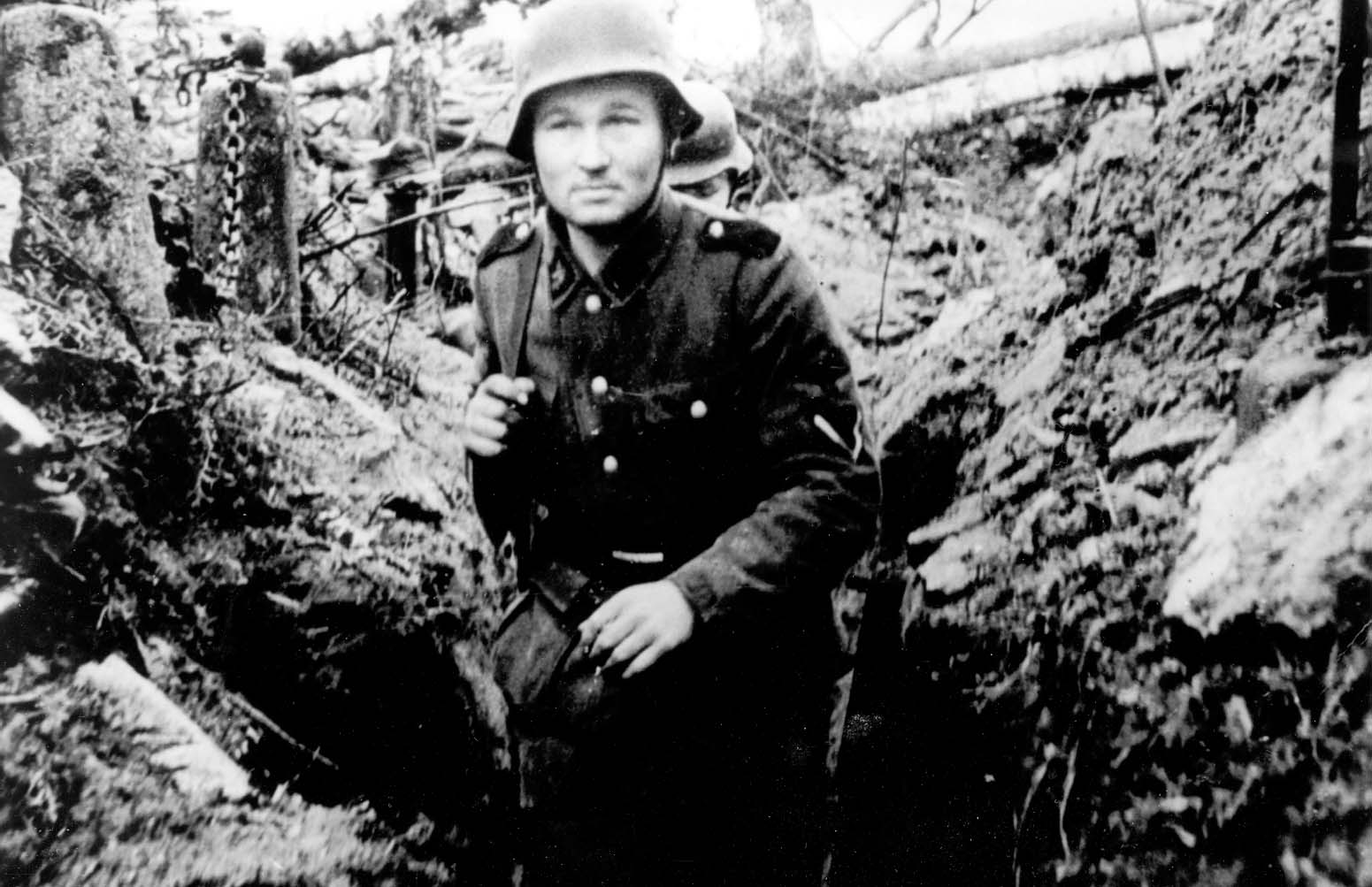
Army Group North numbered many thousands of volunteers from Estonia and Latvia among its fighting men. The Estonian shown here is probably a member of the 20th Waffen Grenadier Division. This division was partially evacuated to Germany during March 1945, but the bulk of the Army Group, over 250,000 men, remained behind.
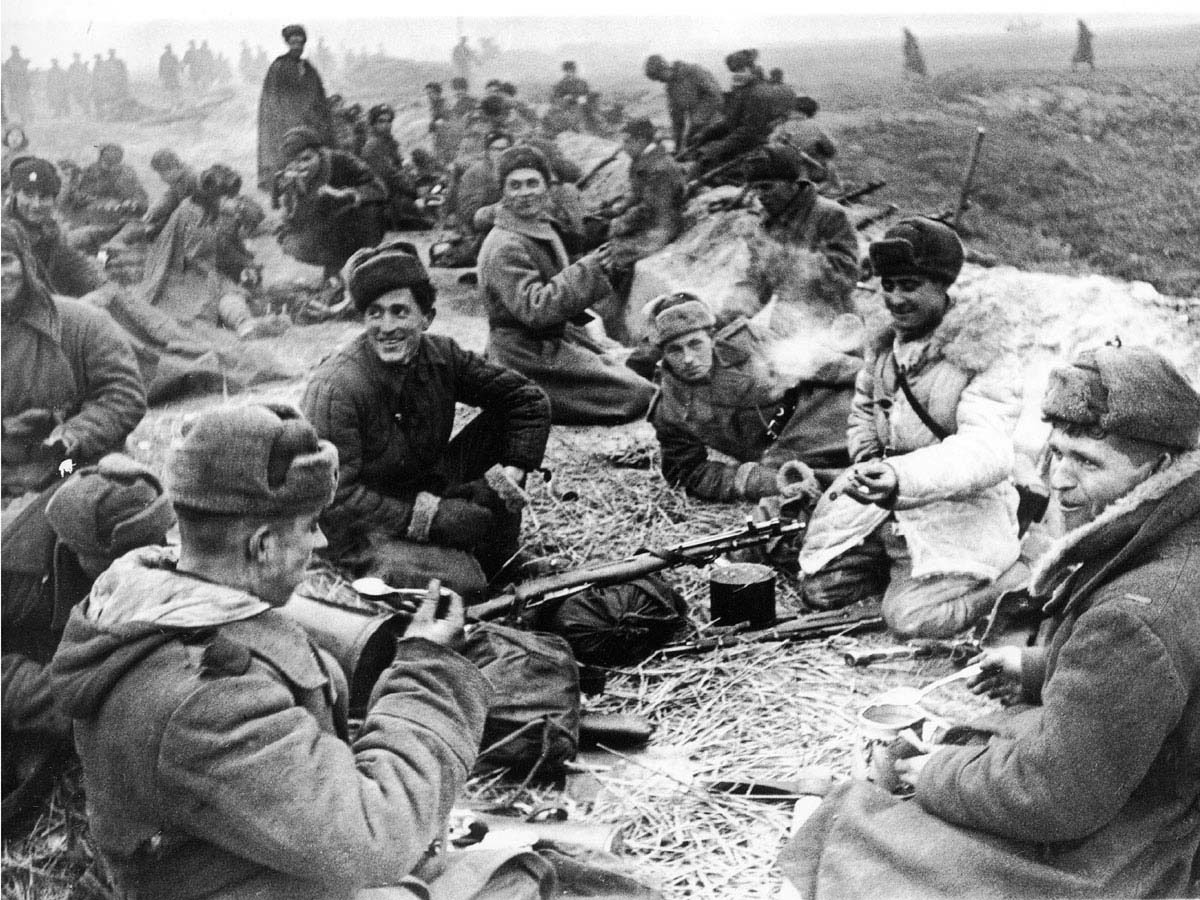
For the men of both First Ukrainian and First Belorussian fronts any and every opportunity to rest and relax was grasped with both hands. They knew the test they faced next would mean an end to the war and for some of them the end of a road they had followed from Stalingrad.
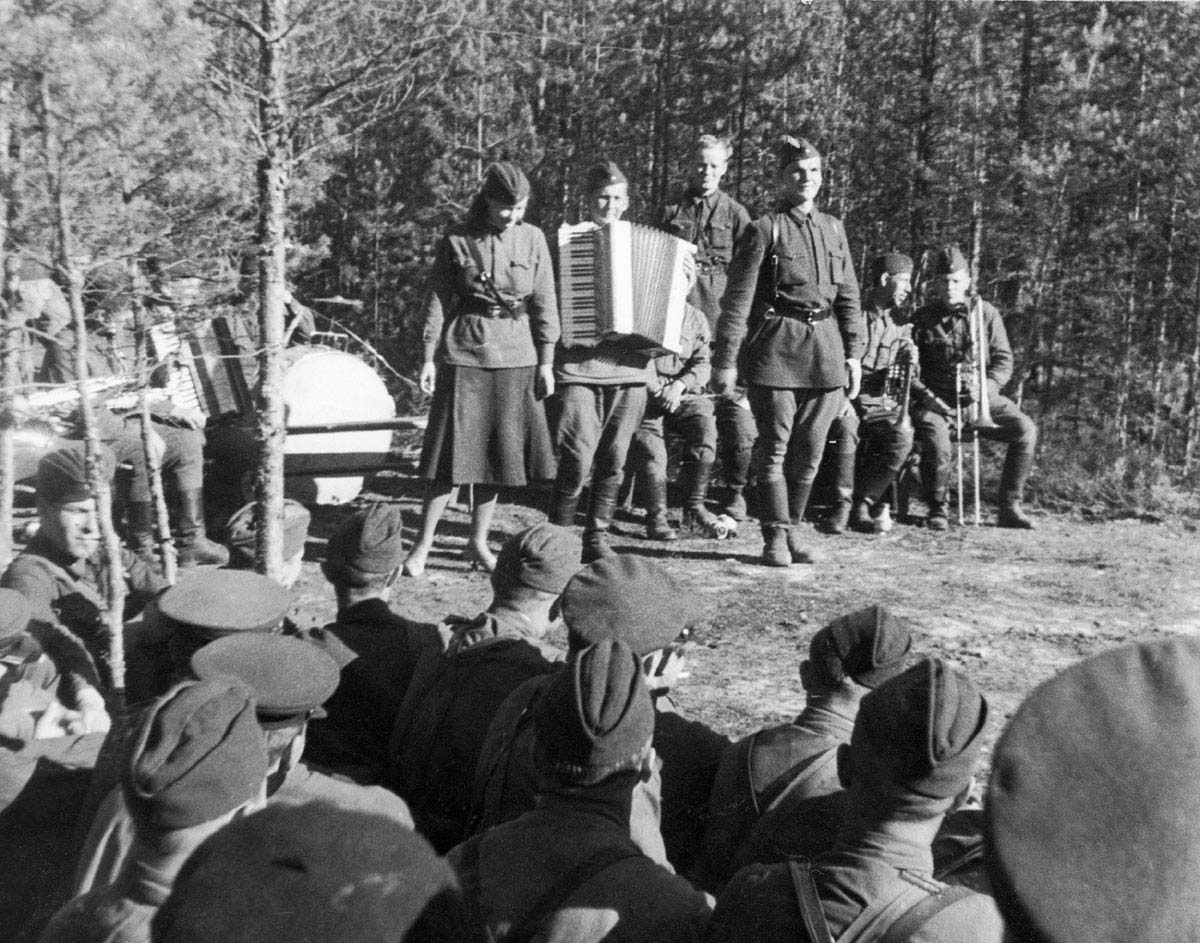
The period of rest and relaxation before the attack on Berlin was occasionally graced with a concert from the Red Army’s entertainment section. A song-and-dance troupe are shown here entertaining a group of junior officers from an unidentified unit. Russian folk songs were always popular, as was the song that named the weapon Katyusha.
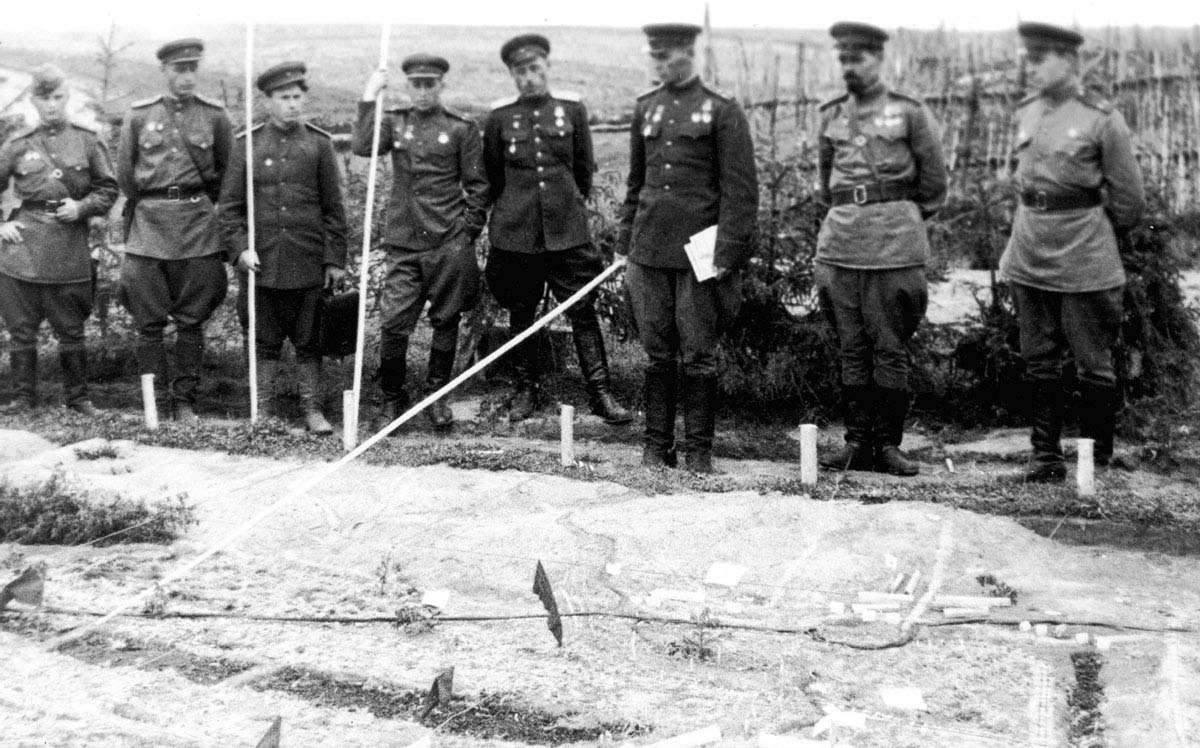
For the staff of Chuikov’s Eighth Guards Army there was little time to relax. Groups of officers, such as these, conducted war games and sand-table exercises to ensure that all eventualities were covered. But as von Moltke said, ‘No plan survives the first contact with the enemy.’
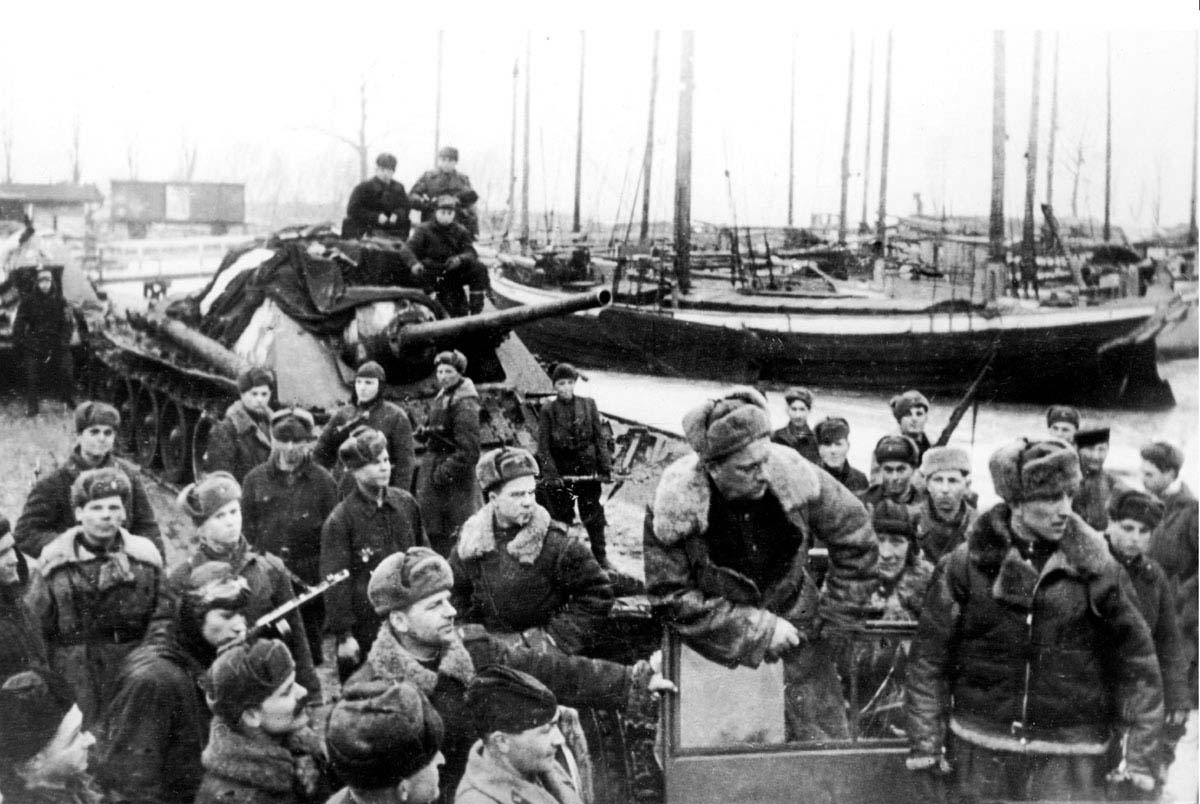
Looking rather glummer than usual for an official photograph, men of First Guards Tank Army arrive at a small fishing port on the Baltic coast. The first senior officer to arrive, Colonel M. A. Smirnov, presented his corps, army and front commanders with bottles of seawater to mark the occasion.
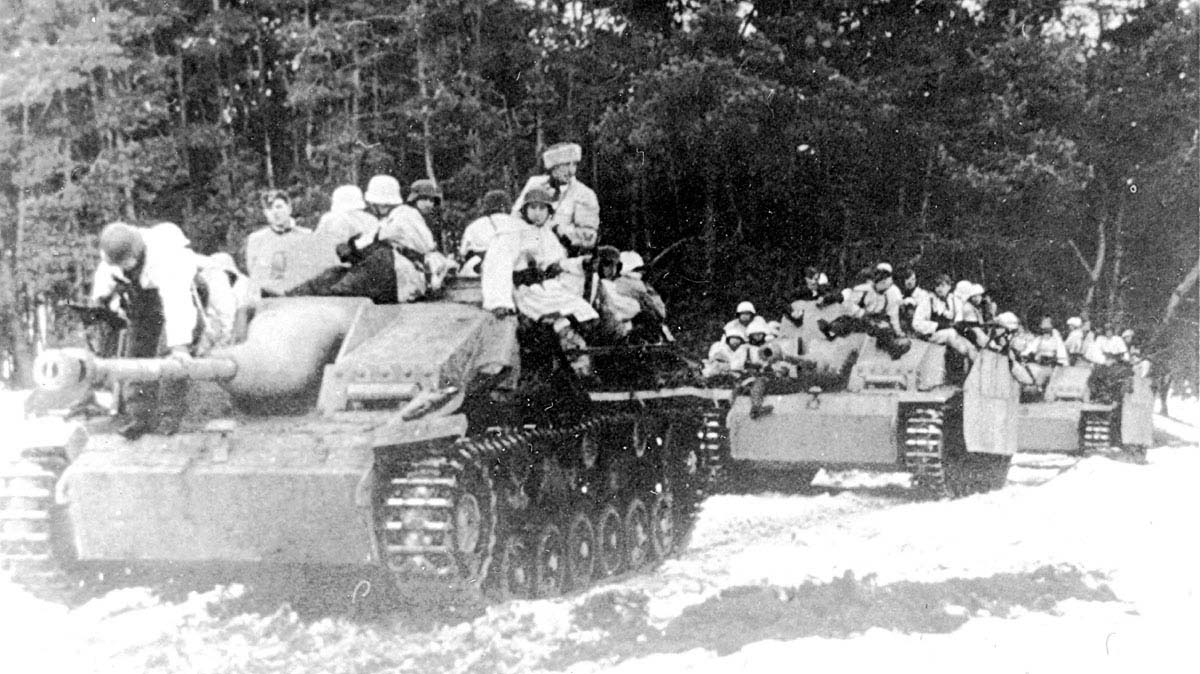
StuG III assault guns with infantry aboard move up to their start line for a counterattack in Pomerania.
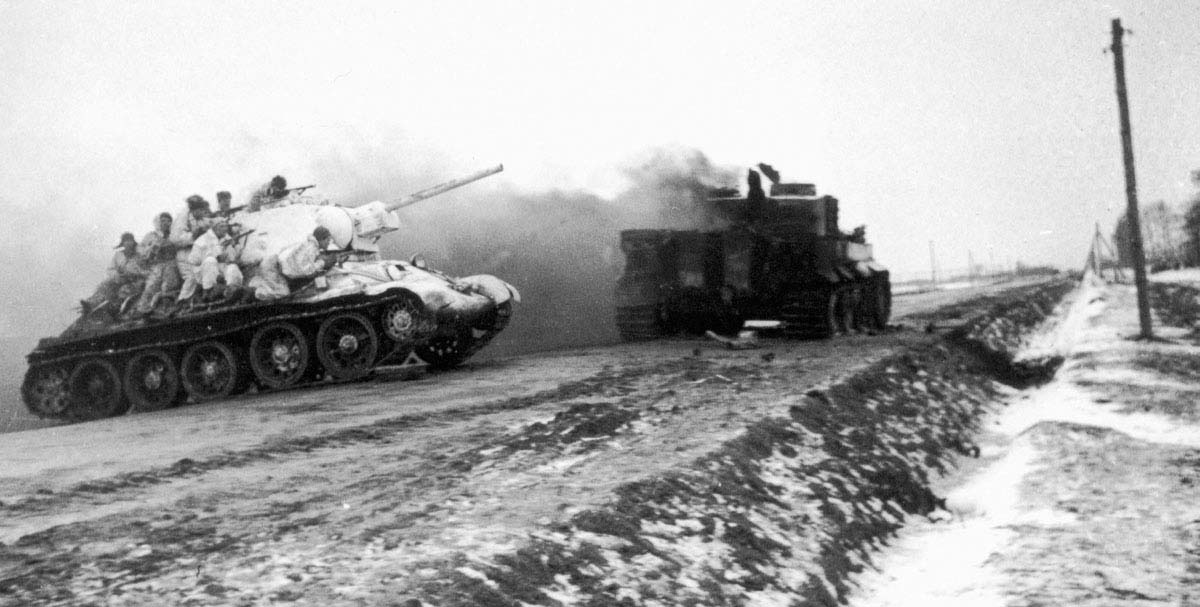
AT-34/76 passes the burning remains of a Tiger I during Konev’s drive to the Neisse river. The weather alternated between snow and frost and sunshine and damp.