
Chapter Four
Reviewing the situation in Germany during the latter part of March 1945 must have been of great satisfaction to Stalin, the Stavka and the Front commanders.
Army Group North was surrounded in Courland and the evacuation of troops from there was clearly not a priority. Bottled up, as it was, by several Soviet armies, it could render little assistance.
Army Group South was a spent force in the wake of Operation Spring Awakening, and Austria was open to invasion by Third Ukrainian Front. Although Fourth Ukrainian Front was making only slow progress towards Prague the German forces tied down there could not easily be transferred to the main theatre along the line of the Oder–Neisse rivers.
Second and Third Belorussian fronts had Pomerania and East Prussia in such a vice-like grip that it would be impossible for the German forces there to interfere with the rear of either Zhukov’s or Konev’s fronts, which were now to prepare for the last and greatest offensive of the war in the east – the capture of Berlin.
The Western Allies’ crossing of the Rhine river, and the speed of their advance into Germany, slowed down only, so it seemed, by the enthusiasm of their opponents to capitulate, merely intensified Stalin’s desire to be first into Berlin.
Zhukov had visited Moscow early in March to discuss the situation, which was eased by the capture of Kustrin on 30 March allowing an expansion of First Belorussian Front’s Oder bridgehead. On 1 April both Konev and Zhukov were interviewed by Stalin, who posed the question, ‘Well now, who is going to take Berlin, we or the allies?’ Both marshals confirmed that they were ready to do so. At that point both were shown the plan which illustrated the scope of the upcoming offensive. The operation would be undertaken along the whole front from the Baltic coast to Gorlitz, in Silesia, and its objective was deceptively simple – the destruction of the entire German defensive network and the capture of Berlin. Following the initial breakthrough, defending groups would be ignored by the tank armies, which would head for the German capital and other goals, leaving the infantry to mop up and follow on. On the right, Rokossovsky’s Second Belorussian Front would cross the Oder river near the sea, separate Third Panzer Army from the rest of Army Group Vistula and protect Zhukov’s right flank. Konev’s First Ukrainian Front, to Zhukov’s left, would cross the Neisse river and aim to link up with the Americans on the Elbe river. Zhukov and First Belorussian Front would smash through Ninth Army and head by the most direct route to Berlin. However, Stalin had modified the demarcation line between Zhukov’s and Konev’s fronts so that, if appropriate (that is, if Stalin thought so), First Ukrainian Front could divert to the north-west and advance on Berlin. Stalin ended the conference with the words, ‘Whoever breaks in first let him take Berlin.’ It was to be a race between Zhukov’s and Konev’s forces and the start date would be no later than 16 April. Rokossovsky was allowed an extra four days to prepare because his forces had to execute an about-face, turn to the west and arrange themselves along the banks of the lower Oder river.
The next two weeks were filled with work as the Red Army swung into its preparations. Infantry armies were shuffled along the line, tanks were prepared and a mountain of ammunition, particularly for the artillery, was brought forward. The Germans could not fail to see what was going on. However, in the words of one Soviet officer, ‘No-one seemed to give a damn what the Germans saw.’ The greater the visibility of the build-up, the greater the enemy’s demoralisation, appeared to be the logic. For those across the swift-flowing Oder the continual stream of lorry-borne reinforcements and munitions must have made them grateful for the milder weather and the snow-melt swollen river that protected them.
Hitler had declared Berlin a fortress in February but had ordered few or no visible preparations for fear of causing public unrest, always a matter of concern to the Fuhrer, particularly as Berlin’s population had always maintained an ambivalent attitude to the Nazi government. Goebbels, in his capacity as Gauleiter of Berlin, was partially responsible for some aspects of its defence. In an ironic twist of fate he consulted General Andrei Vlasov, commander of the anti-communist Russian Liberation Army (ROA) and veteran of the successful defence of Moscow in 1941 for advice. Vlasov was unforthcoming. Goebbels’ propaganda ministry described the Berlin Defence district as ‘a hedgehog position bristling with defences’ which was, as the incoming commander, General Helmut Reymann, discovered, total nonsense. Bureaucratic infighting and interdepartmental rivalry had generated nothing tangible in the way of defences and ensured that what little was in hand was almost buried under forms and the correct procedures at what was clearly the eleventh hour.
On 9 March Reymann signed the ‘Basic Order for the Preparations to defend the Capital.’ When the apocalyptic rhetoric of defence ‘to the last man and the last shot...to the utmost...the battle for Berlin can decide the war’ is removed, the practicalities were as follows.
The entire city area of 832 square kilometres was to be encircled by an outer defence perimeter at a distance of 32km from the city centre, running for roughly 240km through lakes, marshes, forests, rivers and canals. Within that was the strongest barrier, based on the S-Bahn (the suburban railway network), which ran along embankments or through cuttings providing ready-made ramparts, anti-tank ditches and trenches, as well as areas of marshalling yards, which provided open fields of fire, or concrete and brick workshops and depots to house anti-tank guns and machine nests. The final position was the Citadel, which encompassed the city centre, government buildings and utilised the Landwehr canal and the Spree river. Here was the core of Hitler’s empire and his bunker.
The city was divided into eight pie-like segments labelled A–H (there is no apparent significance in the lettering) under the control of an officer with the powers of a divisional commander. But the crux of the defence system’s problems was the chronic lack of manpower. Reymann had virtually no infantry other than a few engineers, roughly 60,000 Volkssturm, some policemen and anti-aircraft gunners plus any wounded he could round up from the city’s hospitals. The arms available to the Volkssturm consisted in the main of foreign trophies from earlier campaigns, as the Oder Front was given priority regarding munitions. Berlin’s infantry would be drawn into the city when the defences along the Oder broke, and by then it would be too late.
As the Soviets prepared, Guderian was replaced by General Krebs, Himmler by General Heinrici, a highly respected defence tactician, who had proved his worth on the Eastern Front since the failure before Moscow. At this point Hitler issued the so-called ‘Nero Order’, which called for the scorching of the earth before both the Soviet and Allied invaders. But as all concerned realised, it was simply a matter of waiting for the swollen waters of the Oder–Neisse to reduce before the attack came.
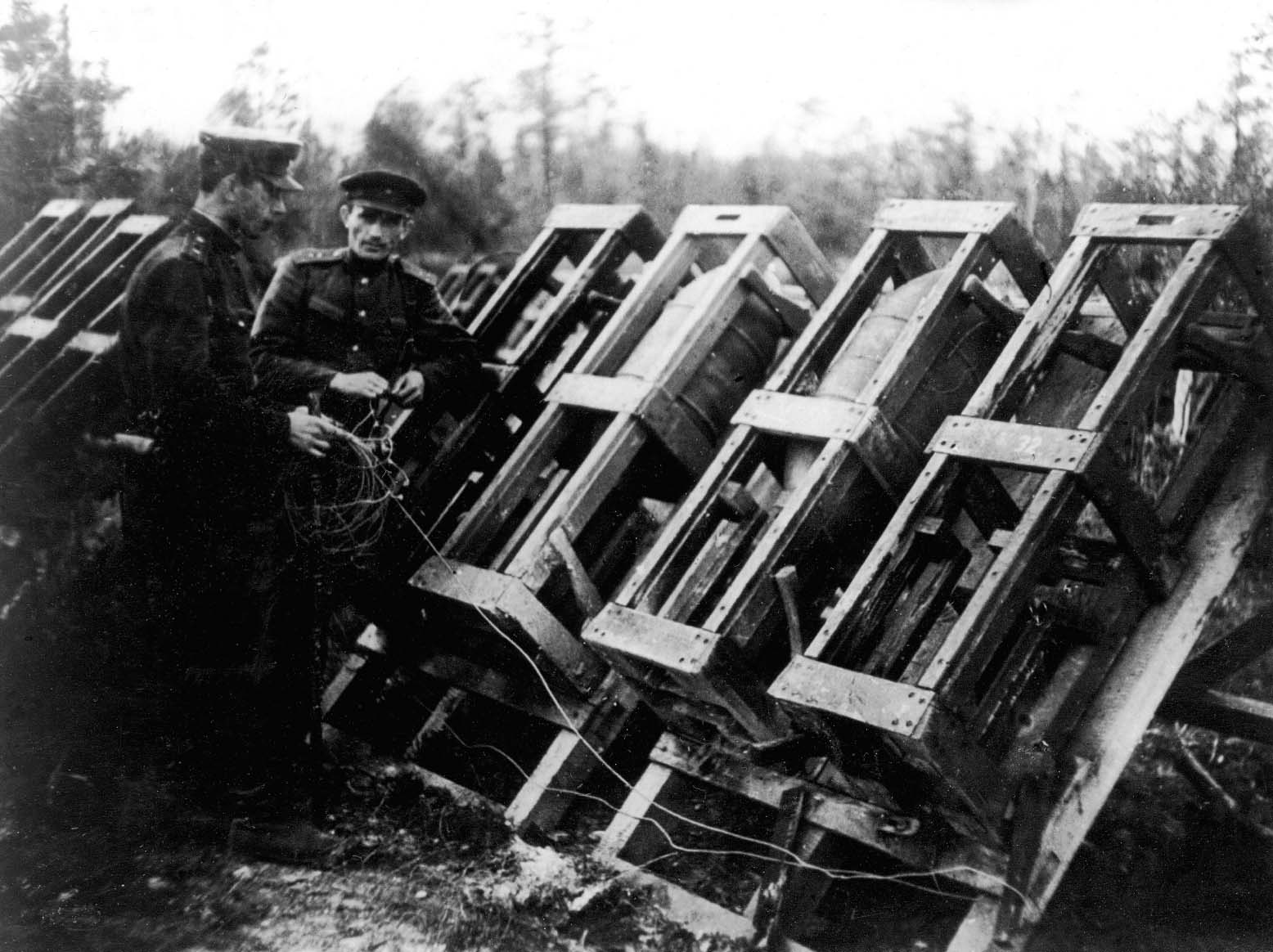
Soviet artillery officers with a captured group of rocket launchers, possibly 30cm calibre, in East Prussia. The projectile nearest to the camera has been removed and the officers are inspecting the electrical trigger wires.
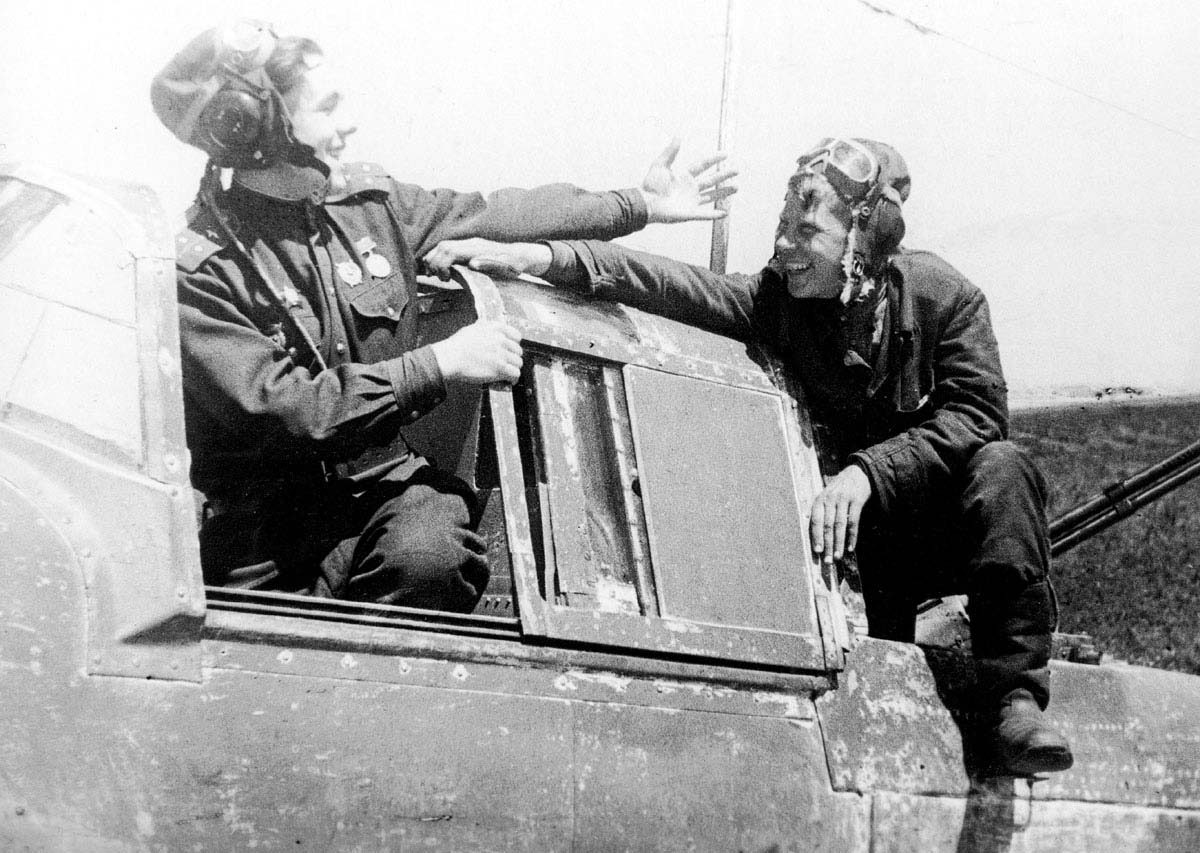
The crew of an Il-2 Shturmovik celebrate returning from the first of the Red Air Force’s daylight raids over Berlin. The raid began at 11.00 hrs on 28 March and is remembered by many Berliners as a series of low-level strafing runs below the angle of many of the anti-aircraft guns’ depression.
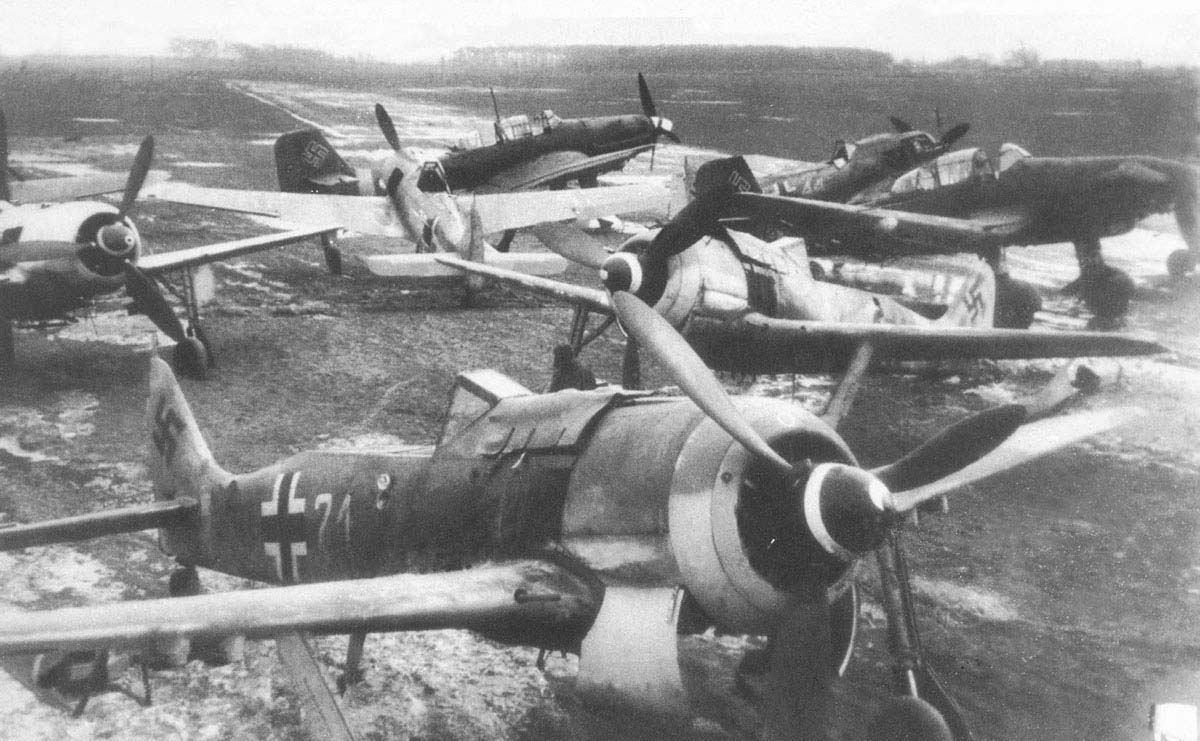
For its part the Luftwaffe was denied the opportunity to strike back on any significant scale due to lack of fuel. The priority target was the Soviet build-up opposite Ninth Army in the Kustrin bridgehead, particularly the bridges themselves. Many aircraft such as the Fw-190s and Stukas shown here were abandoned and their crews and technicians sent to the trenches.
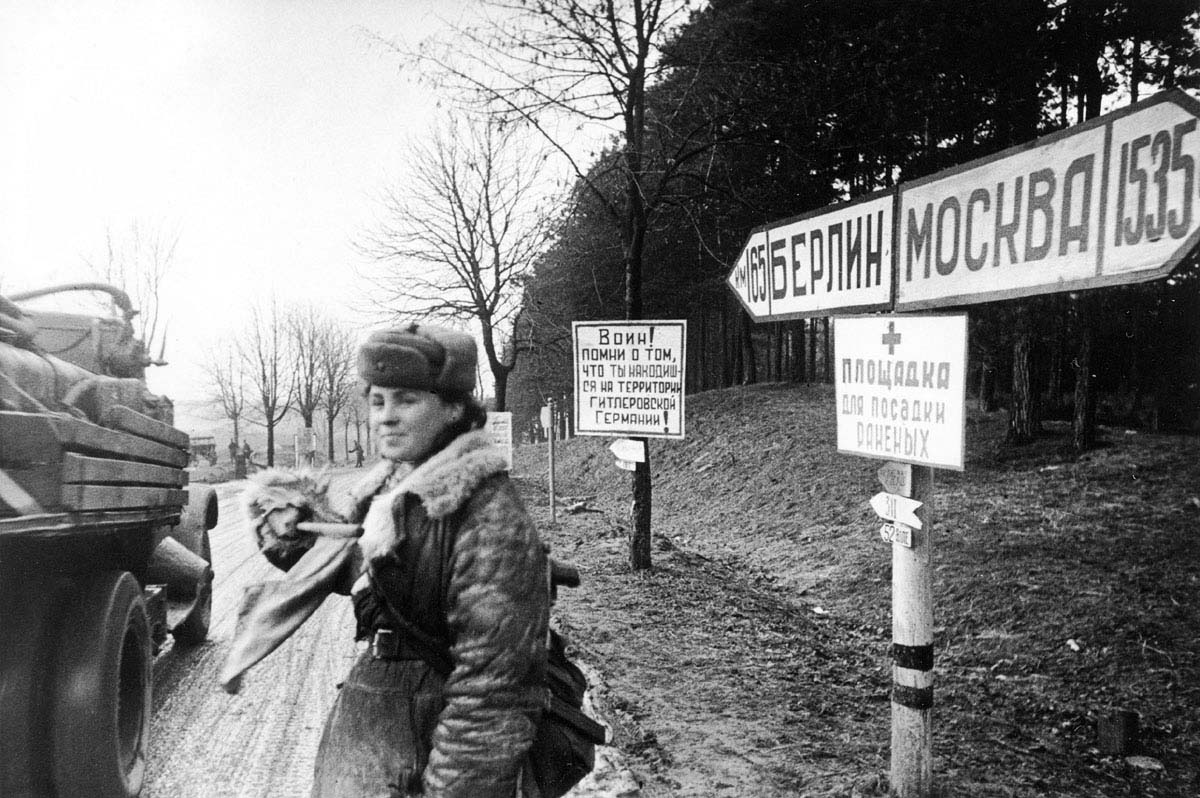
The road sign informs Red Army drivers and soldiers that they are within 165km of Berlin – Hitler’s Germany – and that there is a nearby post for caring for the wounded.
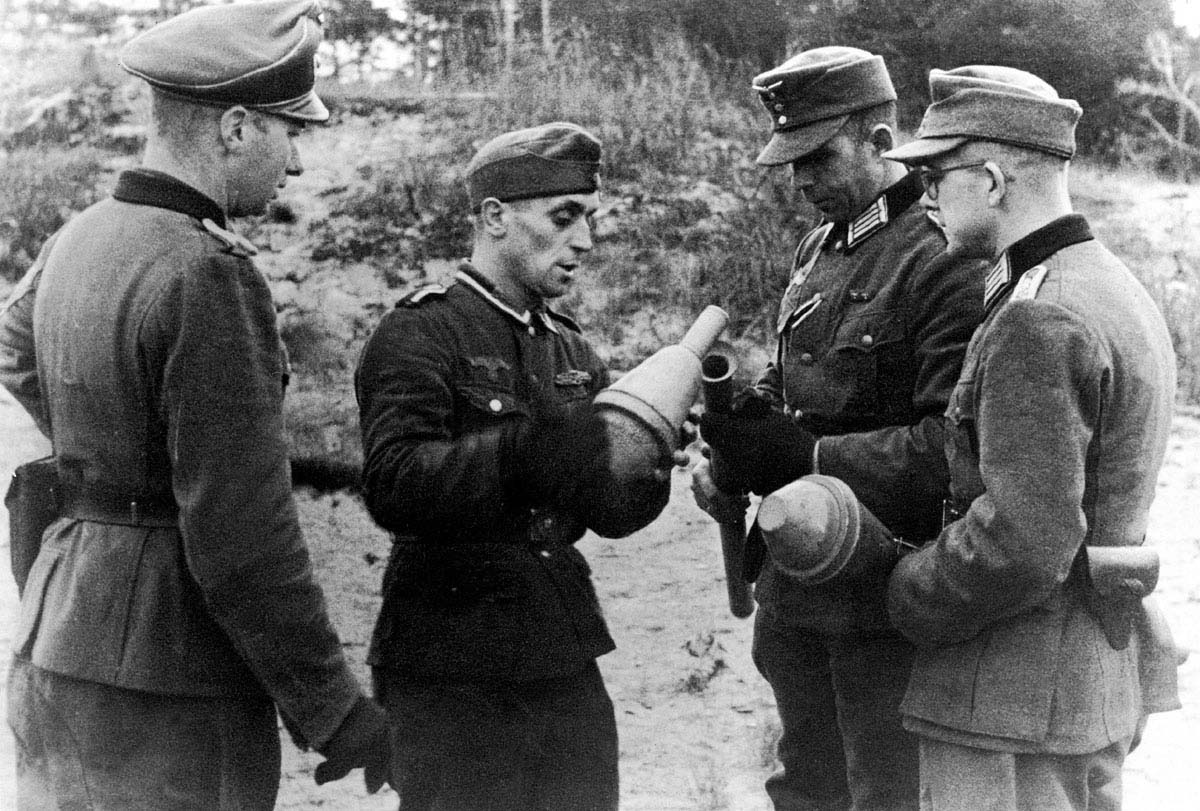
An instructor explains the rudiments of using the Panzerfaust anti-tank weapon. This remarkably simple to use and mass-produced weapon was issued in millions to Axis troops during the last year of the war. During the Berlin fighting a division (although its numbers were considerably less than 2,000–3,000), armed with two Panzerfaust each, rode around on bicycles hunting T-34s. It was an excellent weapon and highly respected by Soviet tankers.
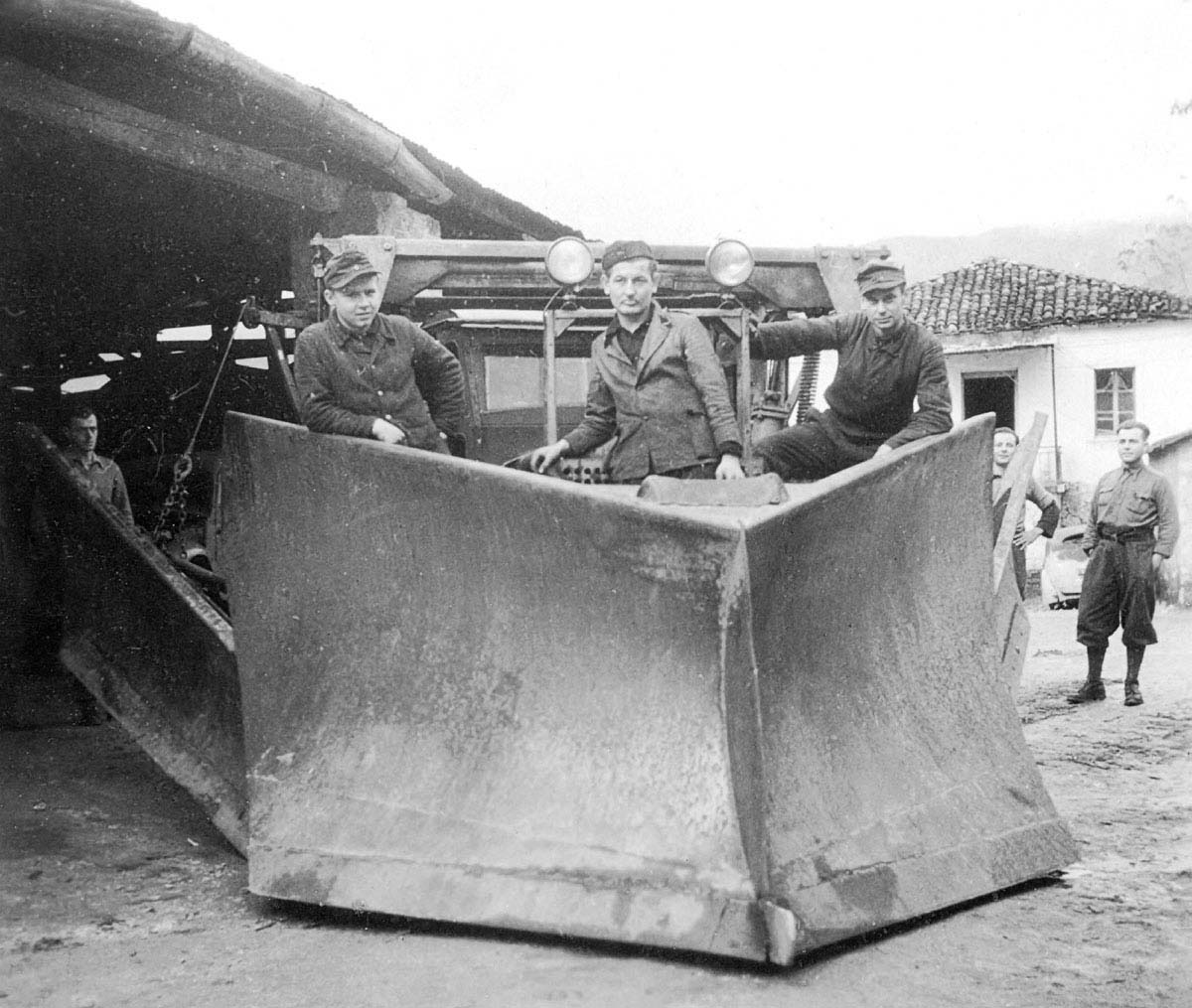
All major earthmoving equipment and the men to operate it, along with the fuel, had been assigned to building the defences along the Oder river. The needs of Berlin were a secondary consideration.
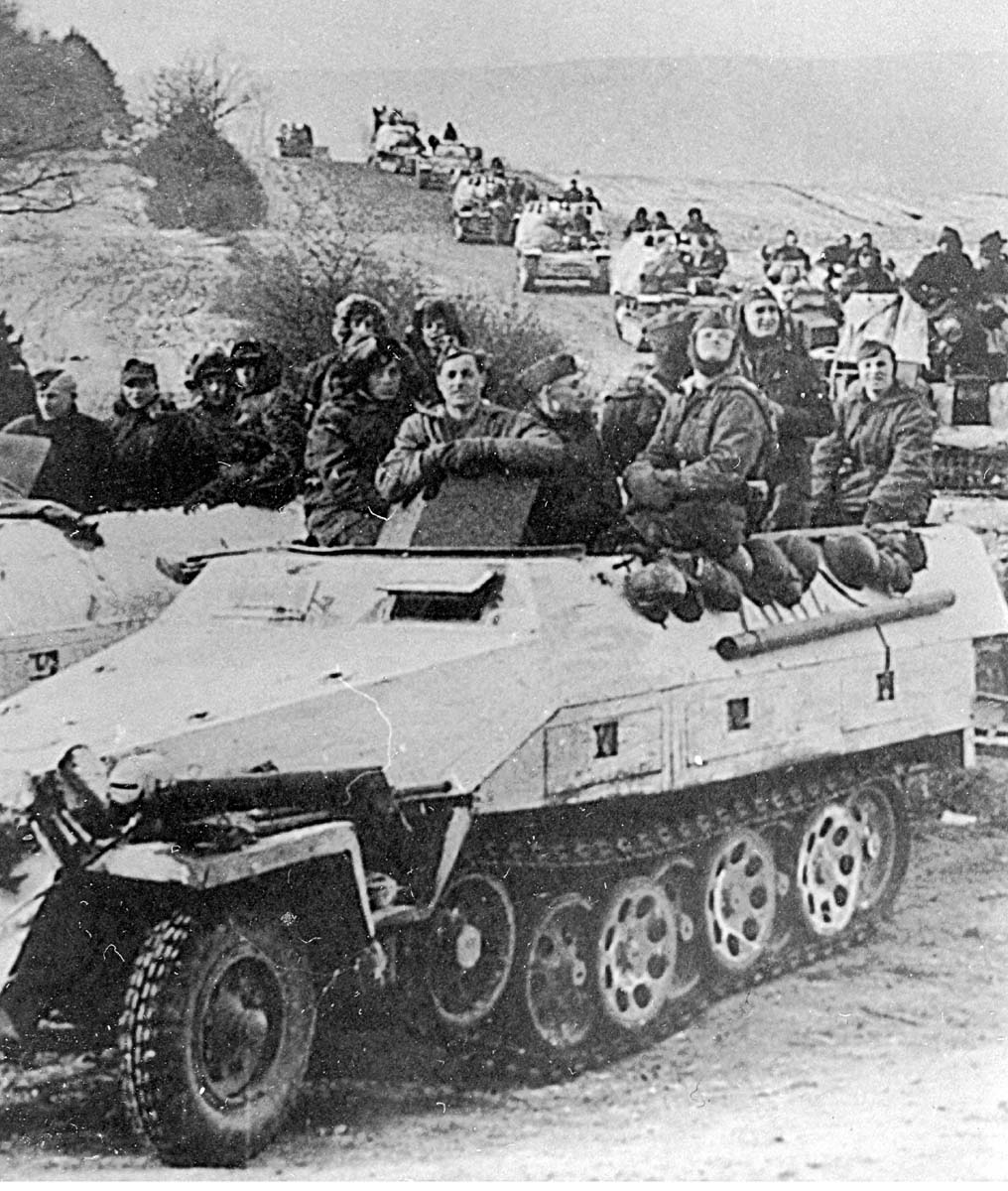
In the mountains of Czechoslovakia Army Group Centre battled to protect Prague. Here Soviet air power was not a major concern to the Germans, as evidenced by the lack of camouflage on these personnel carriers and the calm manner in which their passengers are watching the skies.
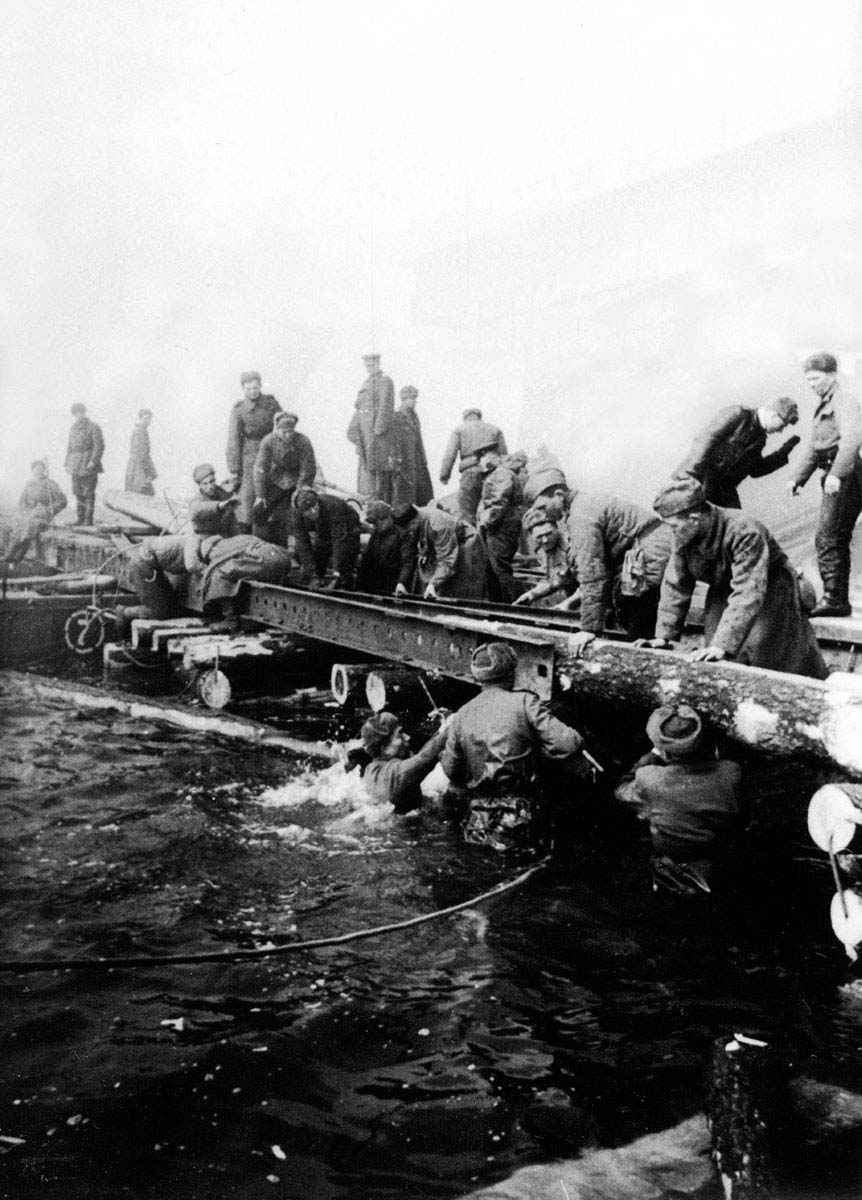
Red Army engineers struggle in the icy waters of the Oder behind the Kustrin bridgehead to maintain one of the newly built bridges that has just suffered a hit by a German bomb.
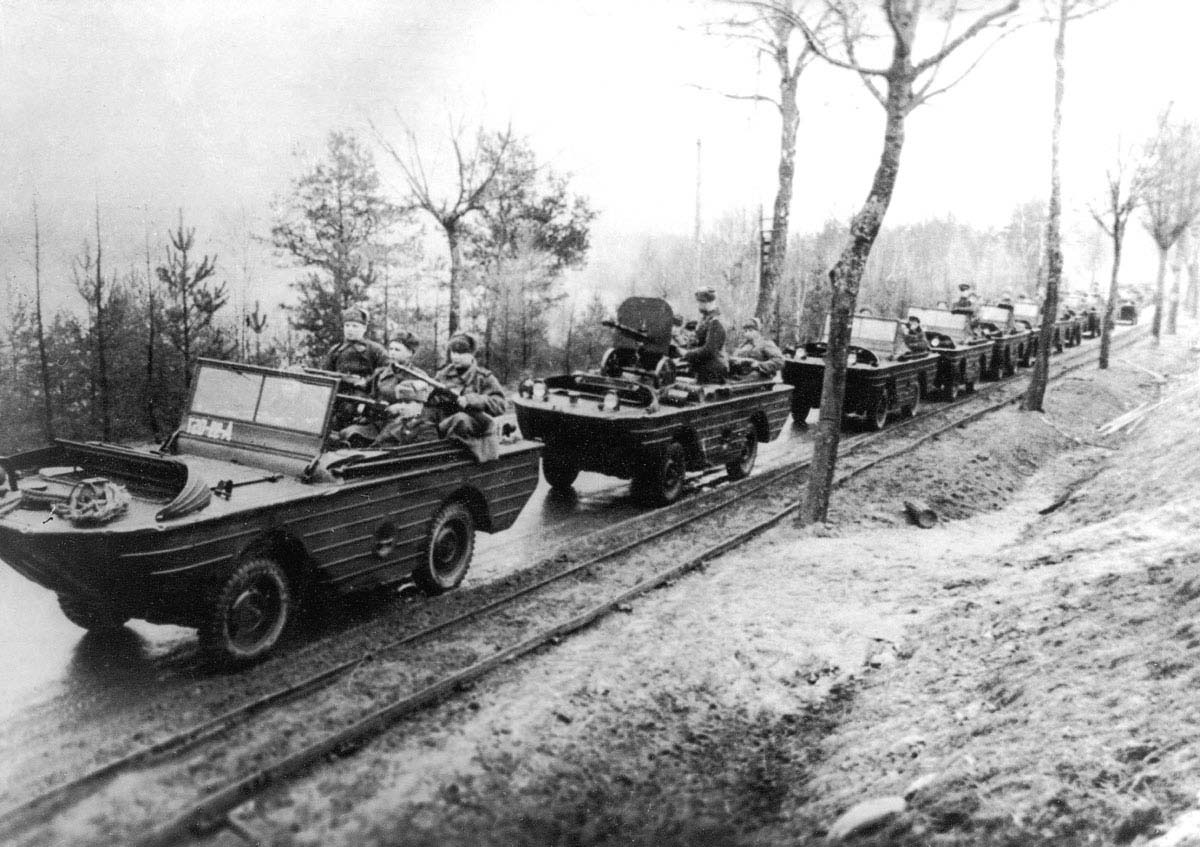
A column of Lend-Lease Seeps (amphibious Jeeps) moves up to the Oder river. These vehicles were used to patrol the rivers and waterways behind the lines to protect the supply routes against any saboteurs. The second Seep has a Maxim machine-gun on the bonnet although images show the armament to be US Army .30-calibre weapons.

T-34/85s of First Belorussian Front: Zhukov had 3155 tanks and self-propelled guns at his disposal. Such was the air superiority enjoyed by the Allies that Soviet armour carried painted large white crosses as air recognition markings to prevent friendly fire incidents, such as had happened in Yugoslavia.
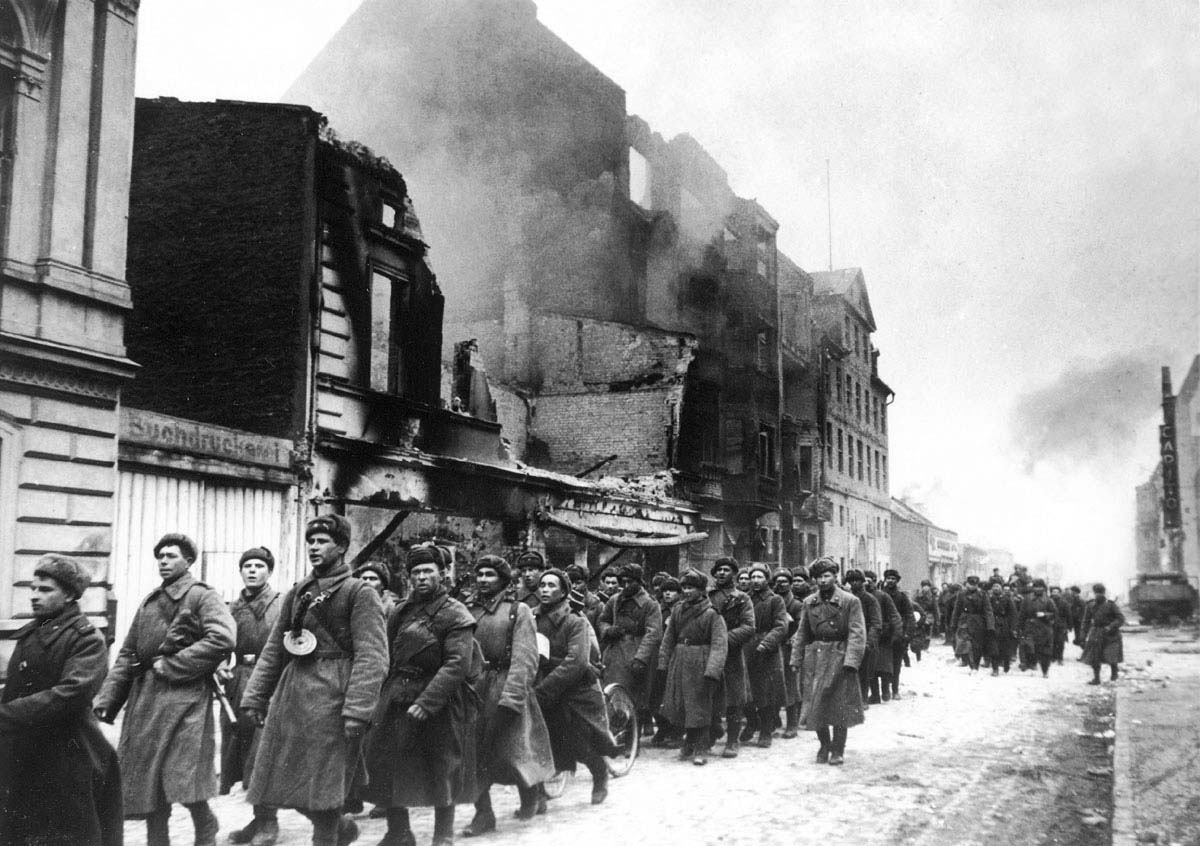
Soviet infantry move into suburban Breslau, the largest city other than Konigsberg left in German hands by April 1945. Under siege from 15 February to 6 May, Breslau justified Hitler’s faith in the concept of fortresses.
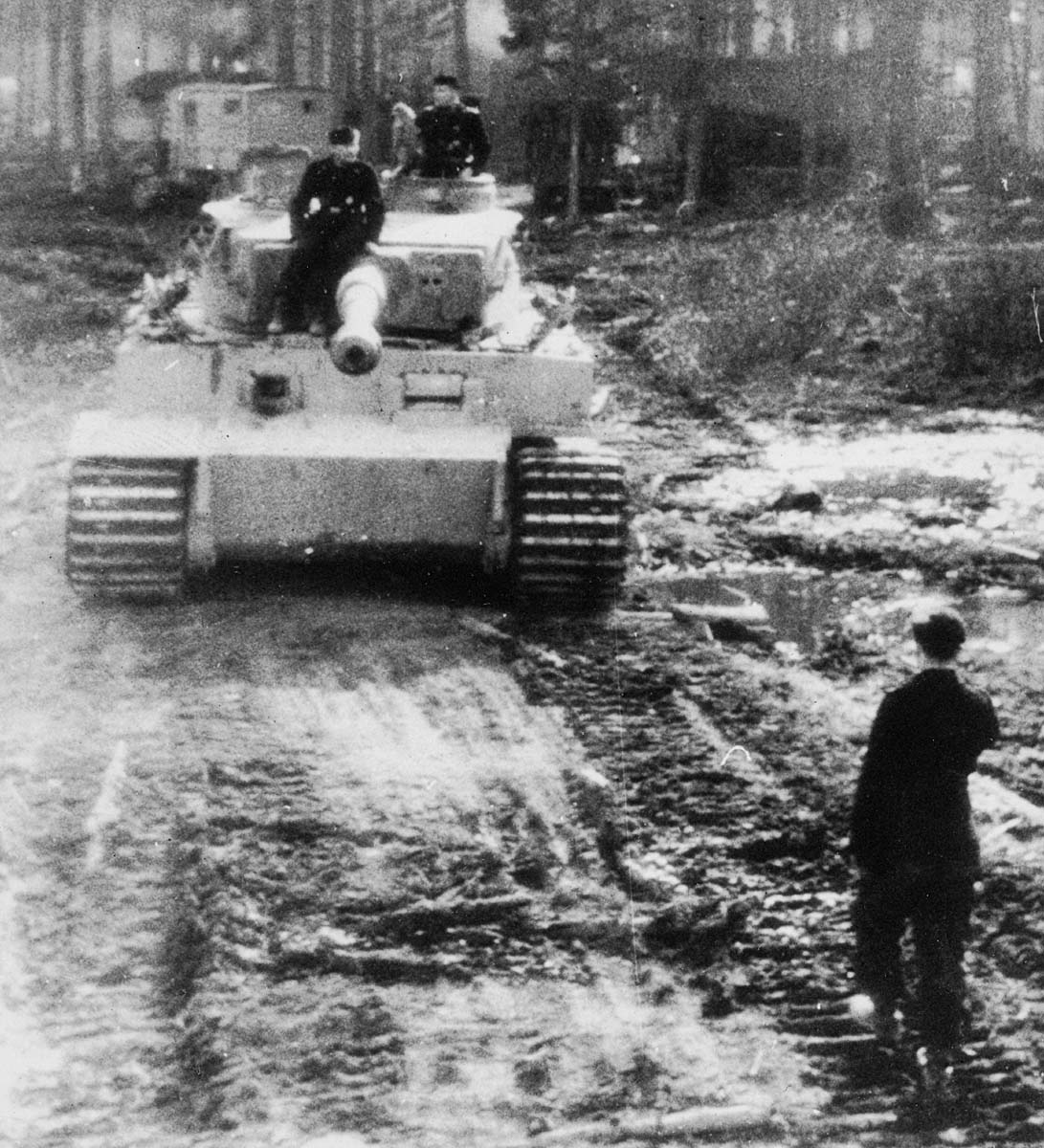
A Tiger I moves out cautiously from its tree cover. Army Group Vistula’s two component armies, Ninth and Third Panzer, had 754 tanks between them. Four Panzer divisions were transferred to Army Group Vistula, where Hitler’s intuition told him the main Soviet thrust would be.
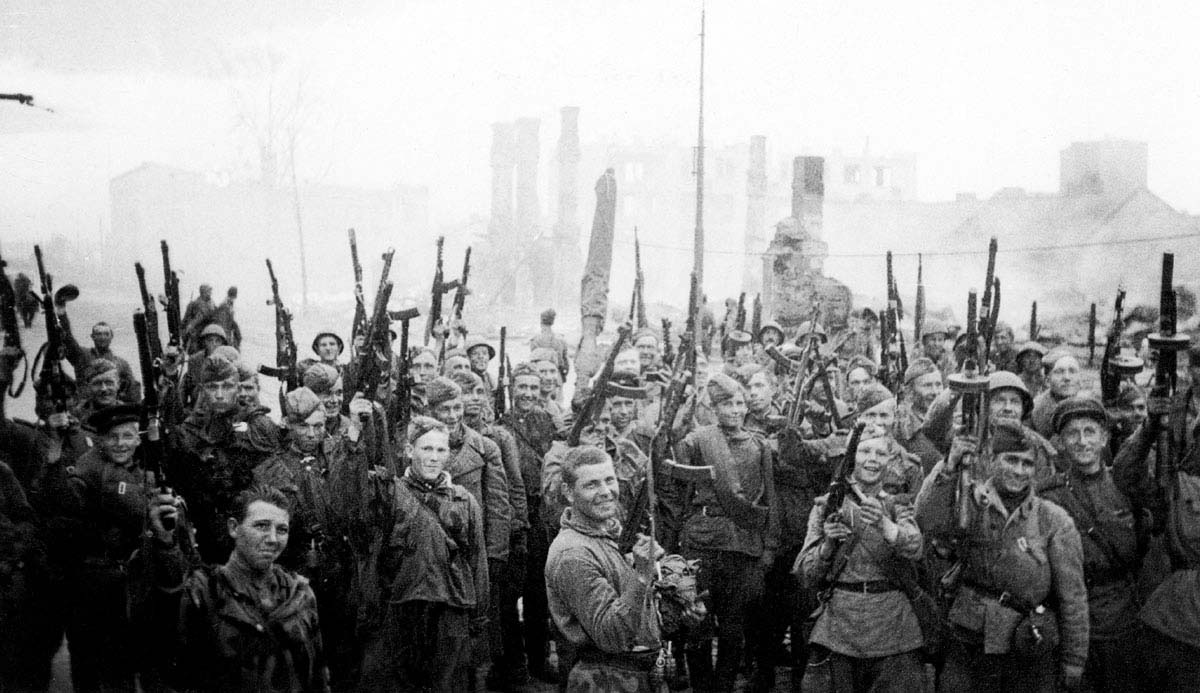
Jubilant men of Third Belorussian Front celebrate the fall of Konigsberg on 9 April. Hitler condemned the garrison commander, General Lasch, to death in his absence. Erich Koch, the Gauleiter of East Prussia, had himself evacuated weeks before. Lasch told his interrogators, ‘The fall of Konigsberg will expedite the final collapse’.
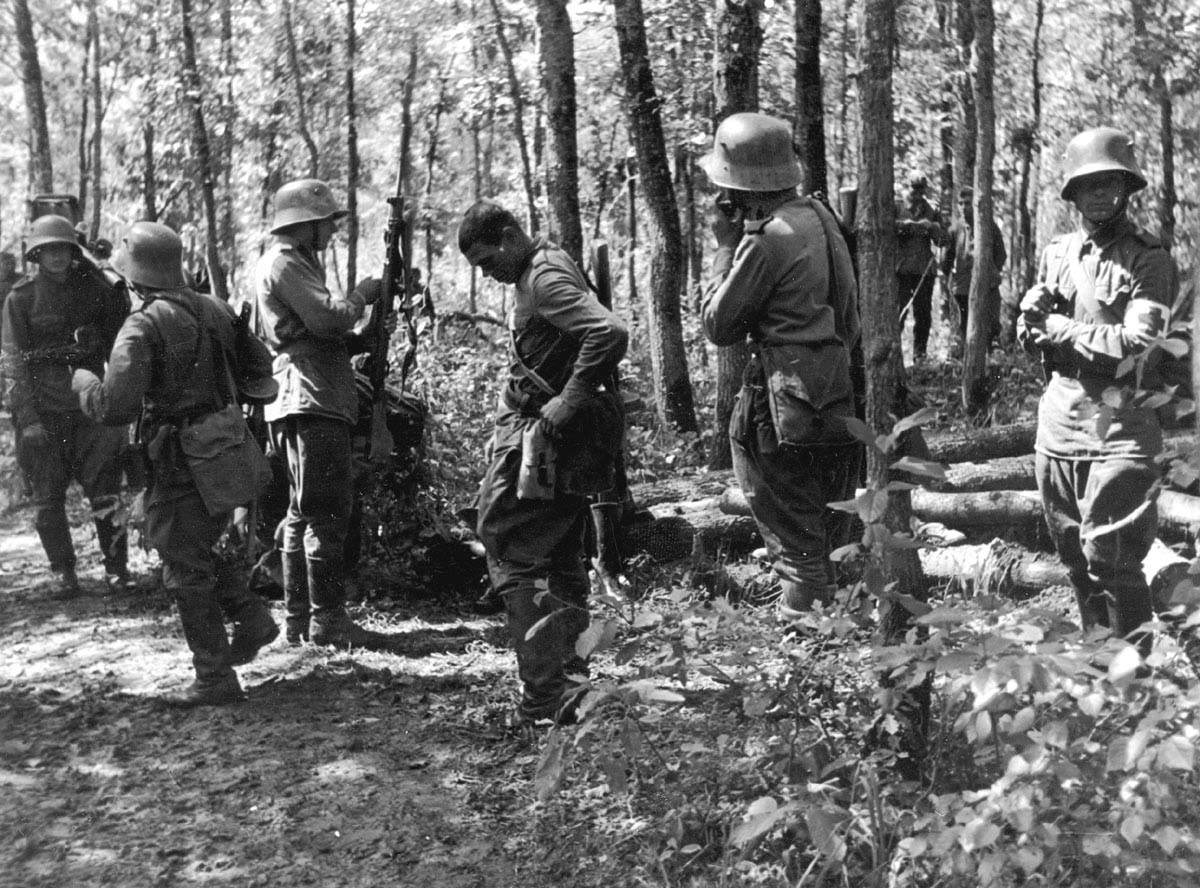
Men of Vlasov’s Russian Liberation Army, dressed in a mix of Soviet and German uniform, prepare to go into the line. Vlasov’s Guard Battalion of Russians carried out a mission on the Oder Front which generated a surprisingly large number of Soviet deserters at this late stage in the war.
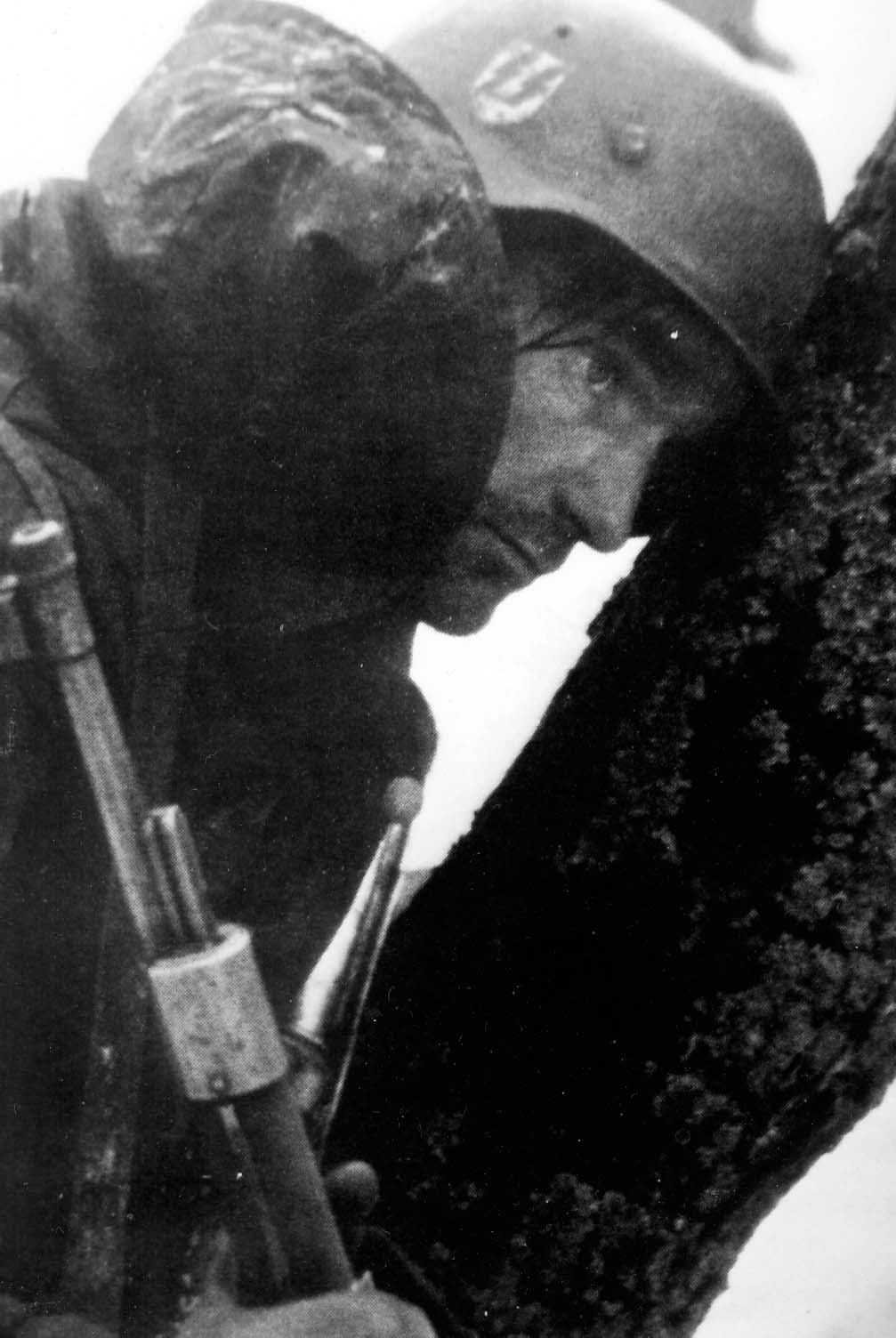
The expression on this SS man’s face encapsulates the despair felt by many members of the German armed forces during April 1945. No promise of V-weapons or any other last-minute miracle, such as the death of US President Roosevelt on 12 April, was going to prevent the defeat of the Third Reich.
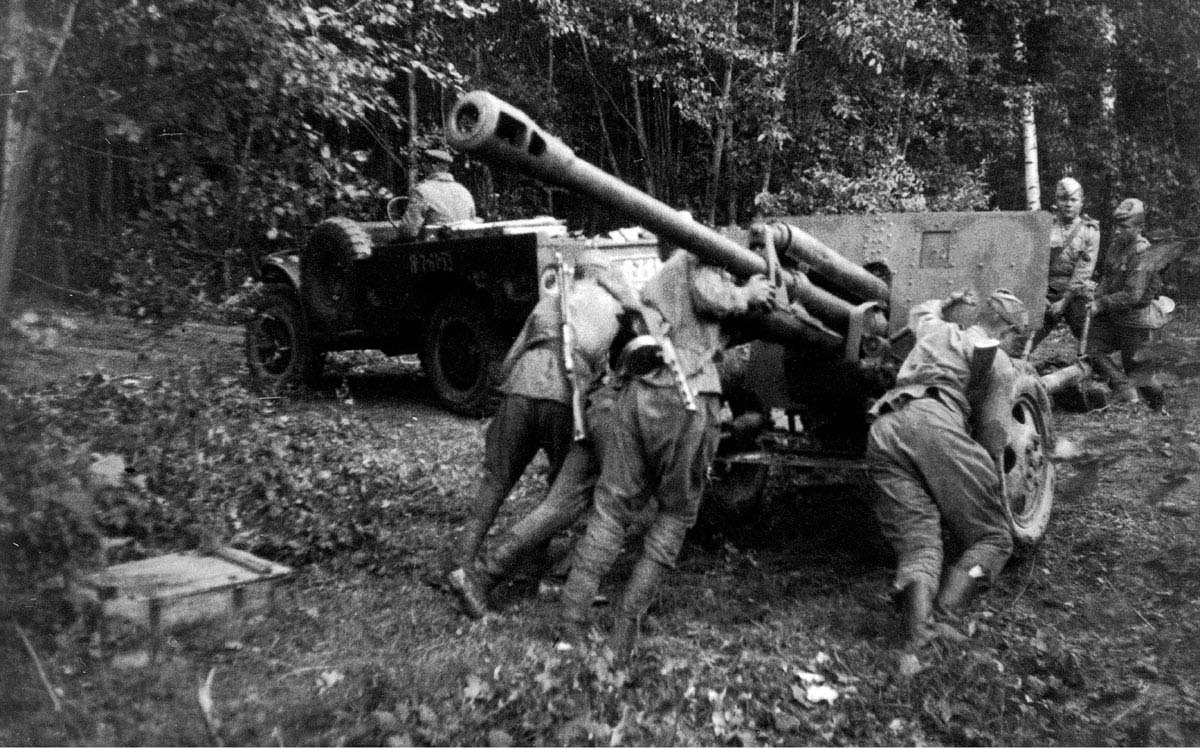
Manoeuvring a ZIS-3 76mm divisional field gun into position under cover was not always an easy task for the crew of five. The gun appears to have slipped off the track into a ditch. Second Belorussian Front was equipped with 6642 guns and mortars, a ninefold superiority over Third Panzer Army.
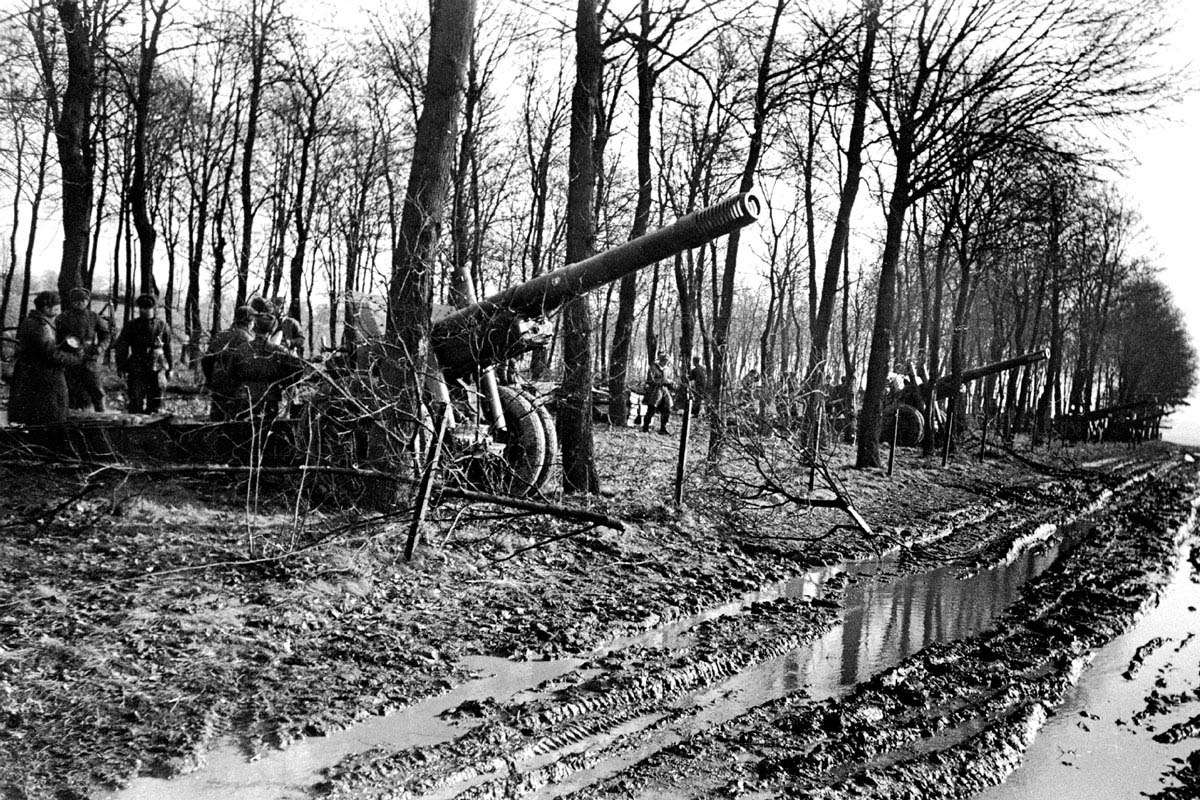
In position but, as yet, lacking camouflage, is a Soviet ML-20 152mm howitzer of First Ukrainian Front. With a range of some 20km, this piece was capable of hitting anywhere within the Fourth Panzer Army’s defensive zone. Part of Army Group Centre, Fourth Panzer Army stood in the path of Konev’s drive to the Elbe, Berlin and Dresden.
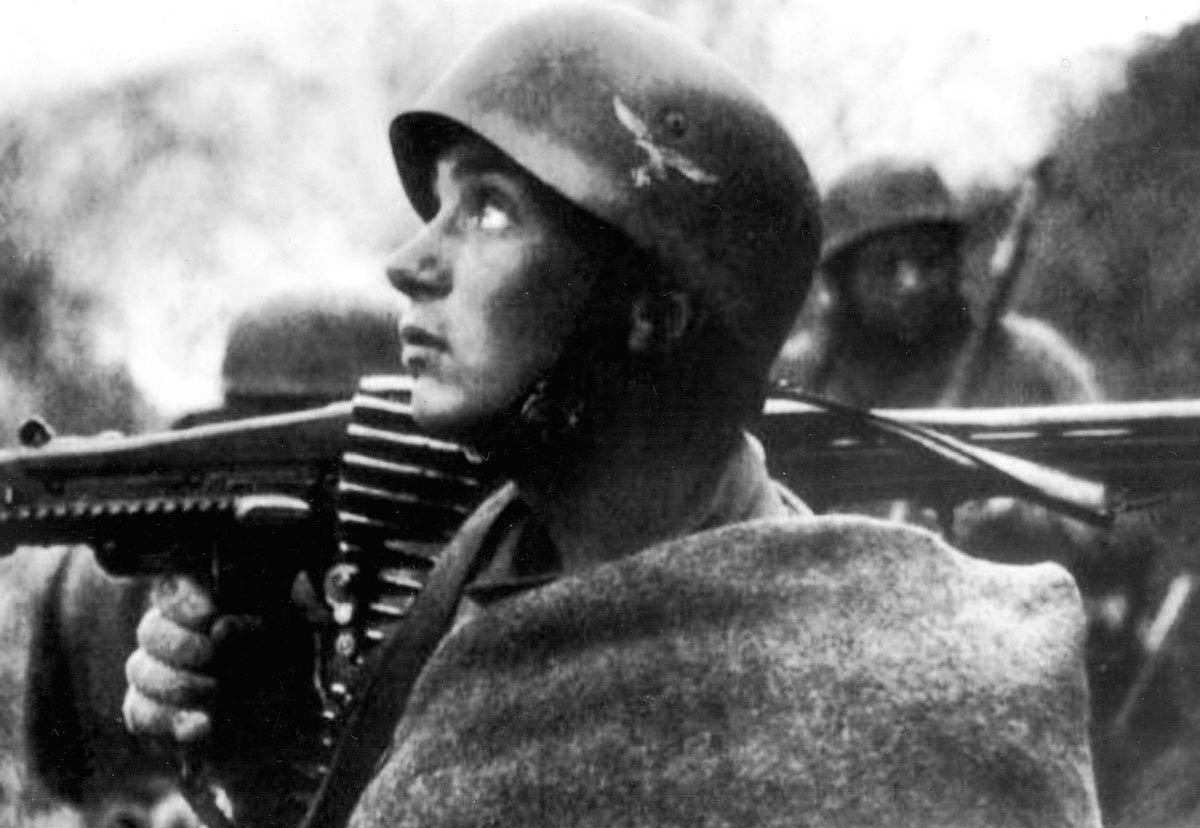
A young paratrooper, possibly of 9th Parachute Division, part of LVI Panzer Corps, on the Seelow Heights position, looks nervously up at the sky. The Seelow Heights was a crucial part of Ninth Army’s defences along the Oder, overlooking the Kustrin bridgehead. Busse, commanding Ninth Army, had some 220,000 men facing three times that number under Zhukov’s command.