
Chapter Five
Hitler’s prediction that the attack on Berlin via the Seelow Heights was merely a diversion from the main thrust on Prague was proved false at 03.00 hrs on 16 April when the artillery of First Belorussian Front began its bombardment of the German defences. Zhukov’s main attack was aimed at the solidly fortified Seelow Heights, which dominated the Soviet bridgehead in the Oder Valley (Oderbruch) and formed the lynchpin of the Oder line east of Berlin.
The bombardment lasted for 30 minutes, and the moment it ended, the infantrymen of Chuikov’s Eighth Guards Army went into action. To support this assault 143 searchlights were turned on to illuminate the German lines and blind the few remaining defenders left in the first line. In fact the lights only silhouetted the attackers and confused their vision as the light reflected haphazardly from the all-consuming dust and smoke. As Eighth Guards stormed forward over the churned and crater-scarred ground, to their left, Thirty-Third and Sixty-Ninth armies moved out to isolate Frankfurt. To the north First and Sixty-First armies crossed the Oder river by all means available, boats, rafts, pontoons and Lend-Lease amphibians, in an attempt to establish bridgeheads.
At first the Eighth Guards’ attack made good progress across the marshy ground and up the slopes towards the German first line of fortifications. However, they began to lose impetus due to ‘the brooks and canals...deciding to wait for the dawn in order to examine the obstacles they would have to cross’, as Chuikov noted in his memoirs. Such delays gave the Germans time to regain their equilibrium, and very quickly their artillery and machine-guns began to pour fire into the Soviets below them. To one German artillery observer the Soviet attack looked like ‘one big traffic jam, a marvellous target’. Frustrated, Zhukov ordered another barrage at midday, followed by an attack by the T-34s of First Guards Tank Army, which was not scheduled to advance until the infantry had cleared the way. This operation also became bogged down and the tank losses began to mount. Progress had been marginal all across Zhukov’s front. As the day drew to a close Krebs spoke with Heinrici, commander of Army Group Vistula, saying, ‘We have good reason to be satisfied.’ Heinrici was not so sure. Zhukov, for his part, spoke to Stalin, who hinted that Konev was the favoured candidate for the role of captor of Berlin.
Konev’s First Ukrainian Front had achieved considerable success on 16 April. With no bridgeheads over the Neisse river the whole operation was amphibious. Covered by an immense smokescreen almost 400km long and a powerful barrage, men of Thirteenth Army had crossed the Neisse river on anything that would float; indeed, a considerable number of them swam. At 08.45 hrs, two and a half hours into the offensive, 130 crossings had been made along 80km of the front and the engineers were building 30- and 60-ton bridges to carry the armour and artillery forward. By the evening of the first day Konev’s bridgehead was already 14km deep and 27km wide, and several counterattacks had been successfully held off. Furthermore, I Guards Cavalry Corps was heading into the Germans’ rear areas. Second Polish Army was also under way and making for Dresden. Konev’s thrusting performance was rewarded by Stalin, who ordered him, ‘Turn your tank armies on Berlin.’
Zhukov’s position was not improving. Despite fighting through the night his troops made little headway. The commander of First Guards Tank Army commented that he had not ‘seen such resistance in the whole of the war’.
At 10.00 hrs on 17 April Zhukov’s artillery again pounded the German lines, while Eighth Guards attacked repeatedly with armoured support. As the German line started to buckle and its gunners began to run out of ammunition reinforcements arrived to stabilise the situation: the 11th SS Panzergrenadier Division Nordland and 23rd SS Panzergrenadier Division Nederland from Third Panzer Army. It was too little too late. After another day of heavy fighting and lacking ammunition and sufficient reserves Ninth Army’s third line of defence disintegrated on 19 April and a 72km gap directly east of Berlin was suddenly open. LVI Corps fell back towards Berlin and XI SS Panzer Corps retired to the south-west.
Meanwhile, First Ukrainian Front’s Third and Fourth Guards Tank armies, leaving the infantry formations behind to mop up any serious opposition, drove furiously for south Berlin reaching the capital’s ring road on 20 April. Zossen, the nerve centre of the German high command, was occupied by Third Guards Tank Army the following day. However, in the Spree forests near the town of Cottbus, units of Ninth and Fourth Panzer armies were gathering in strength and defending themselves against elements of both First Belorussian and First Ukrainian fronts.
To the north of Zhukov’s command Second Belorussian Front, under Rokossovsky, opened its contribution to the Berlin offensive on 20 April, having just completed its monumental regrouping along the banks of the Oder river where the shoreline dissolved into wetlands, marsh and finally the Baltic Sea. It was difficult ground on which to fight. Utilising a 47km-wide smokescreen, Second Belorussian Front’s armies began their crossing. Exploiting the achievement of Sixty-Fifth Army, a bridgehead of some 65 square kilometres was developed by 21 April. In the face of this and events to the south, Third Panzer Army retired steadily, shepherding thousands of refugees with them. Rokossovsky told off several units to occupy the islands and cover the coastline to prevent any last-minute landings by the forces of Army Group North.
With the collapse of the Seelow defence system Zhukov had issued orders that Eighth Guards and First Guards Tank armies pursue the Germans along Reichstrasse 1, and cross the Spree and Dahme rivers to strike at Berlin from the south. To the north Second Guards Tank Army would lead Forty-Seventh, Fifth Shock and Third Shock armies into Berlin from the north and north-east. The retreating Germans fought many brutal rearguard actions against all comers gaining valuable time for the forces in Berlin to put their defences in order.
Between 20 and 21 April the British and American air raids on Berlin ceased but 21 April was also marked by events in Hitler’s bunker. Possibly prompted by the first Soviet shelling of his capital, Hitler ordered a counterattack to be conducted by Obergruppenfuhrer Felix Steiner’s III SS Corps with the aim of smashing Zhukov’s right flank as it moved west to link up with Konev’s forces. This was rooted in fantasy, as Steiner lacked the wherewithal to do little apart from defend himself. To compound matters Hitler also sacked Reymann, the commander of Berlin. This SS counterattack became the focus of all Hitler’s attention for the next 36 hours until he was informed by his senior military advisors that Steiner had not moved. Reportedly Hitler broke down and stated that the war was lost and that he would stay in Berlin, where he would commit suicide rather than face captivity. Eventually he was calmed down by the suggestion that Twelfth Army, holding the Elbe river against the Americans, would regroup and rescue Berlin.
On 22 April Third Guards Tank Army reached the Teltow canal, to the south of Berlin’s outer defence perimeter; on its left flank Fourth Guards Tank Army was approaching Potsdam with only 40km separating its left flank from Zhukov’s extreme right wing.
The following day, Monday 23 April, Stalin announced the final order for the taking of Berlin. The demarcation line between First Ukrainian and First Belorussian fronts was drawn some 140m west of the Reichstag, which placed it within Zhukov’s area of responsibility. Therefore, to Zhukov and his men would go the glory of the final battle, though not all its hardship.
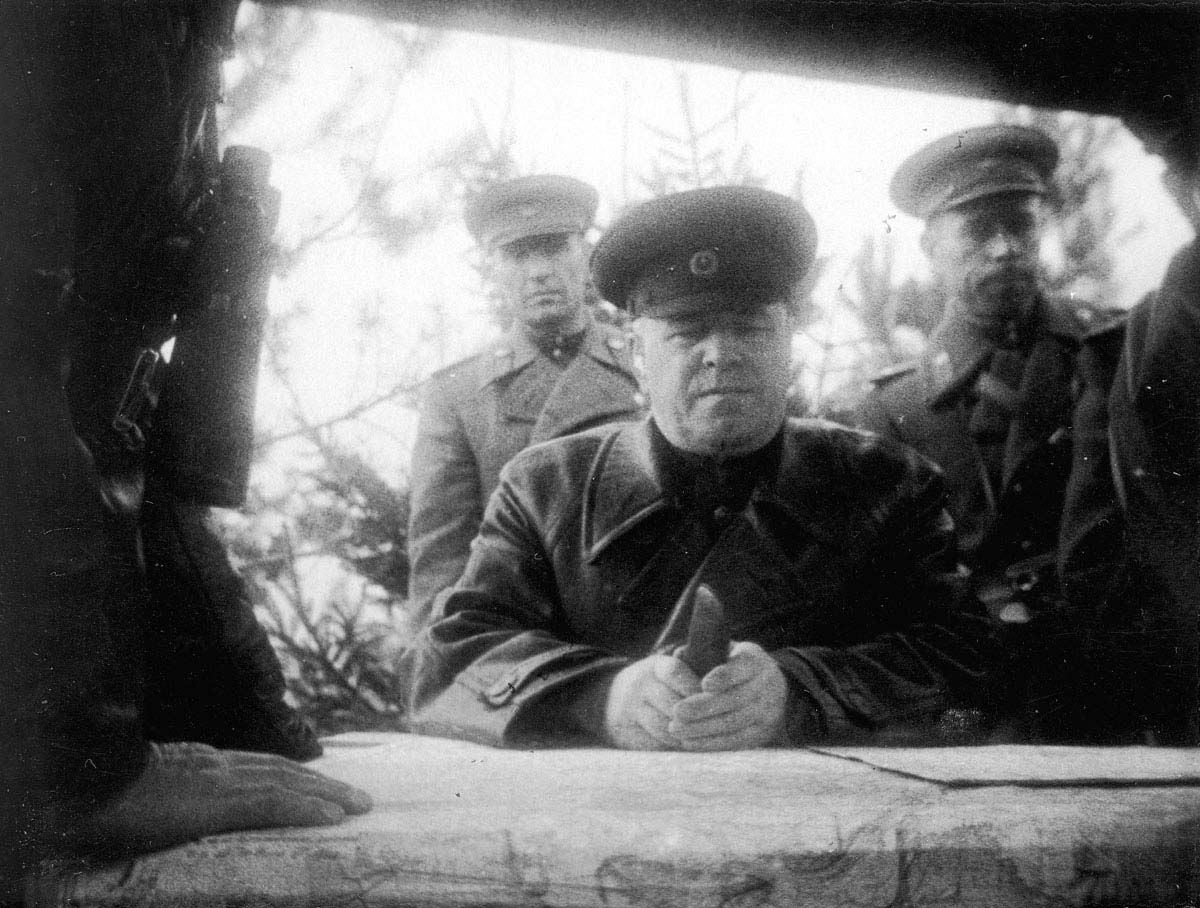
Marshal Georgi Konstantinovitch Zhukov (seated) was an increasingly worried man as his First Belorussian Front’s main attack on the Seelow Heights became bogged down during its first day. Zhukov had promised Stalin that the Seelow Heights would be in his hands on 16 April and had not achieved this goal.

First Belorussian Front’s artillery opens fire on German positions on the Seelow Heights. However, German troops had been withdrawn from the front-line positions following General Heinrici’s orders. Consequently, their losses were not as heavy as those sustained during the bombardment of the Vistula river line three months earlier. Zhukov’s gunners used over 1,250,000 rounds on the first day alone.
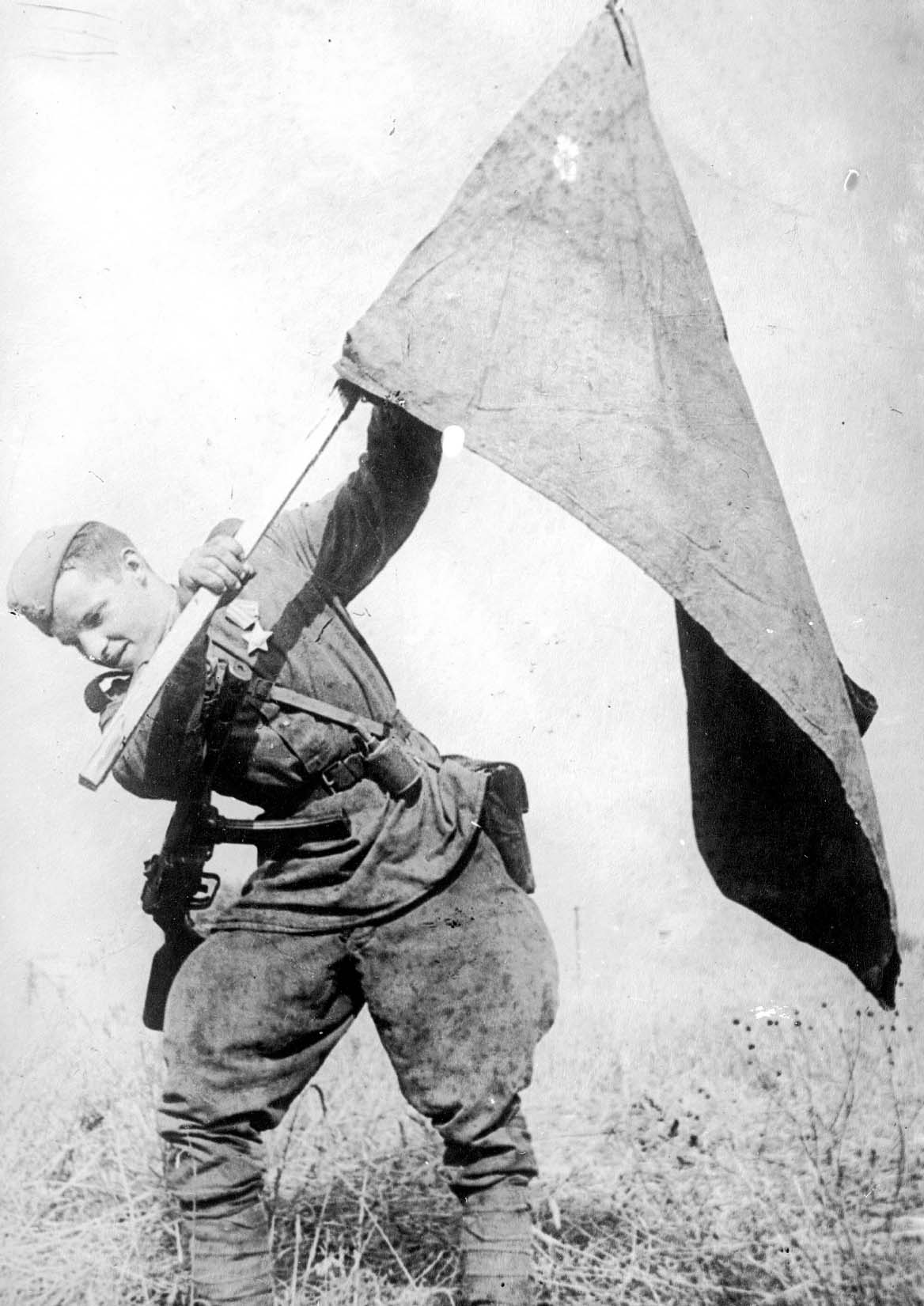
One of Konev’s units marks the point of its newly established bridgeheads on the western bank of the Neisse river. Red flags had been issued for this purpose. The remains of the extensive smoke employed in this operation can be seen behind this man.

Soviet combat engineers struggle with a barbed-wire obstacle in the Oder Valley. To their cost the Soviet senior officers were relearning the lesson of the First World War that heavy artillery bombardments severely damaged the ground over which the attackers were to pass – and did not always smash wire entanglements. The men are wearing camouflage suits reserved for specialists.
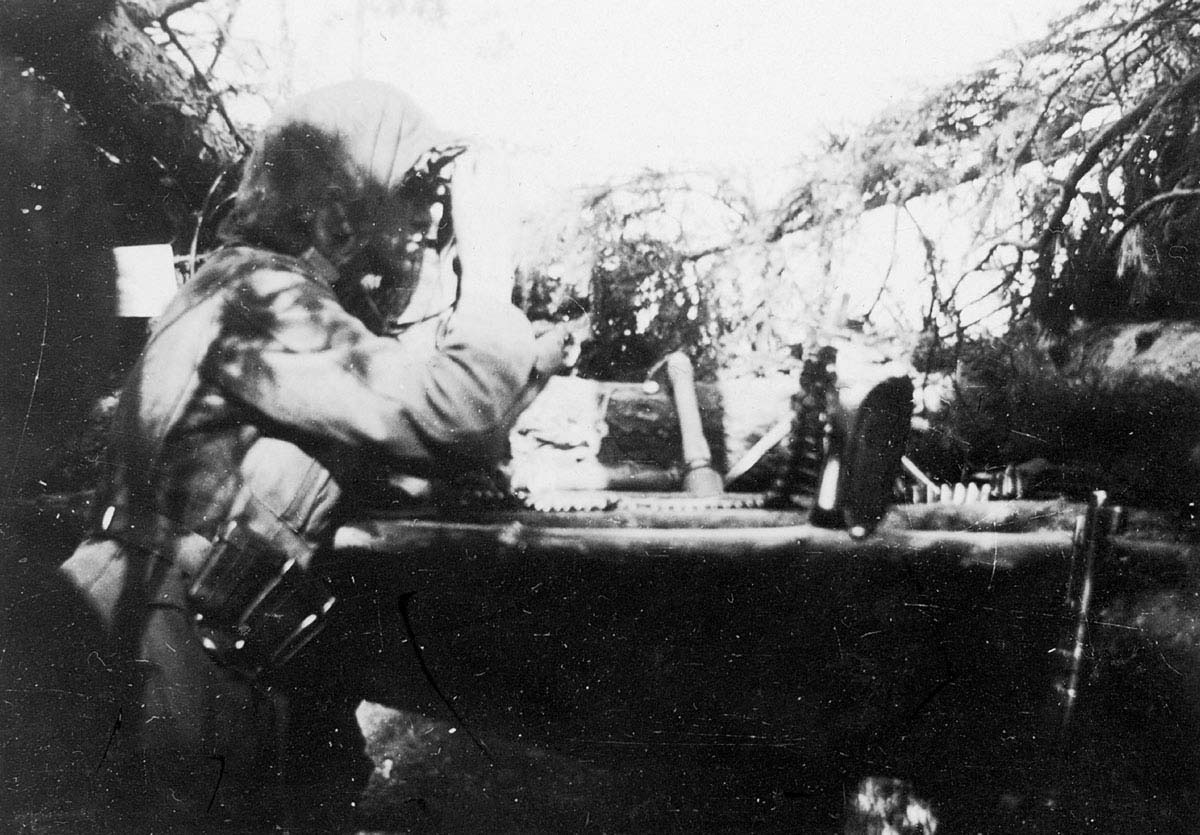
In the defensive lines overlooking the Oder river a German officer observes Soviet movements. Both sides carried out combat and reconnaissance patrols during the days that led up to the Soviet offensive. Army Group Vistula received details of Soviet plans the day before it began from a POW.
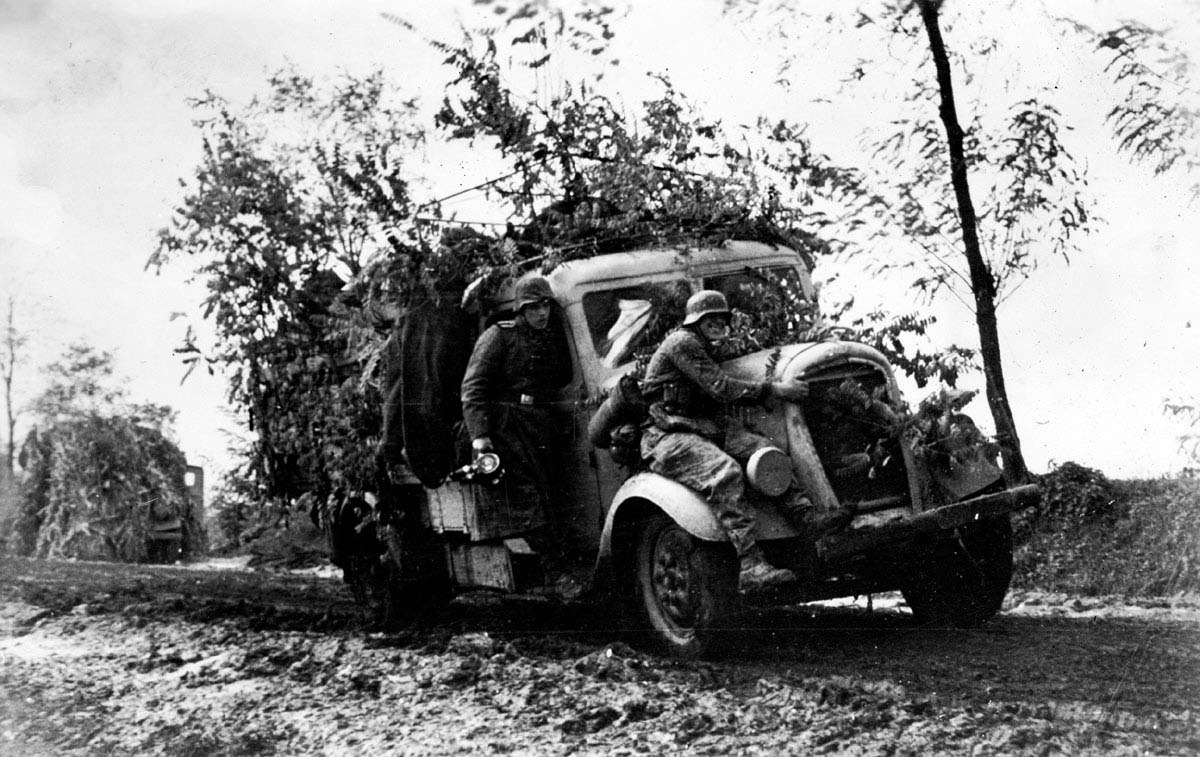
Reserves being rushed up to the Seelow Heights position on 17 April. Incredibly, the heavily camouflaged lorry to the front has just picked up a camera team from an SS Propaganda unit (note the cameraman standing by the cab door). It was on men such as these that Goebbels’ Propaganda Ministry depended for its action footage.
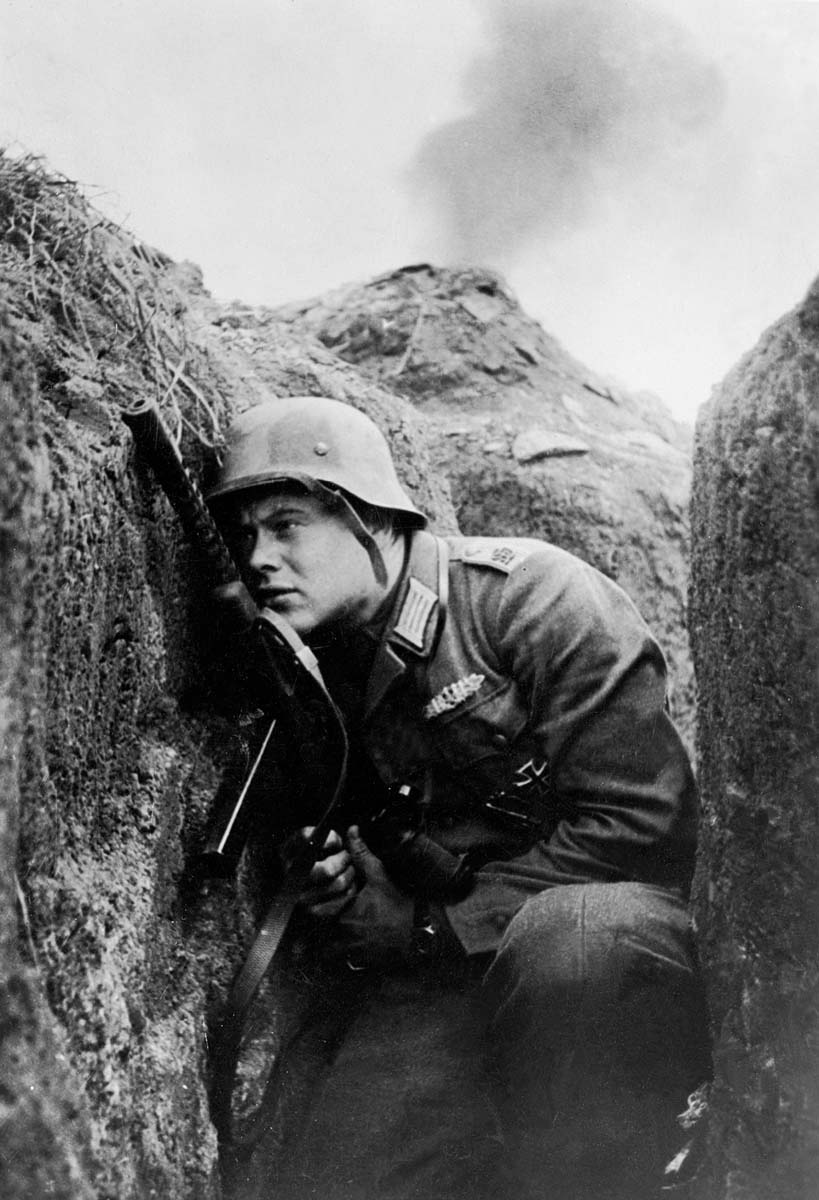
An officer of the Grossdeutschland Panzer Corps takes shelter from Soviet artillery fire. Men and vehicles of this elite Wehrmacht unit appeared at various points along the front line although the bulk were now with Army Group Centre facing Konev’s advance. An officer of this unit described the Seelow fighting as, ‘not a killing field but a slaughterhouse’.
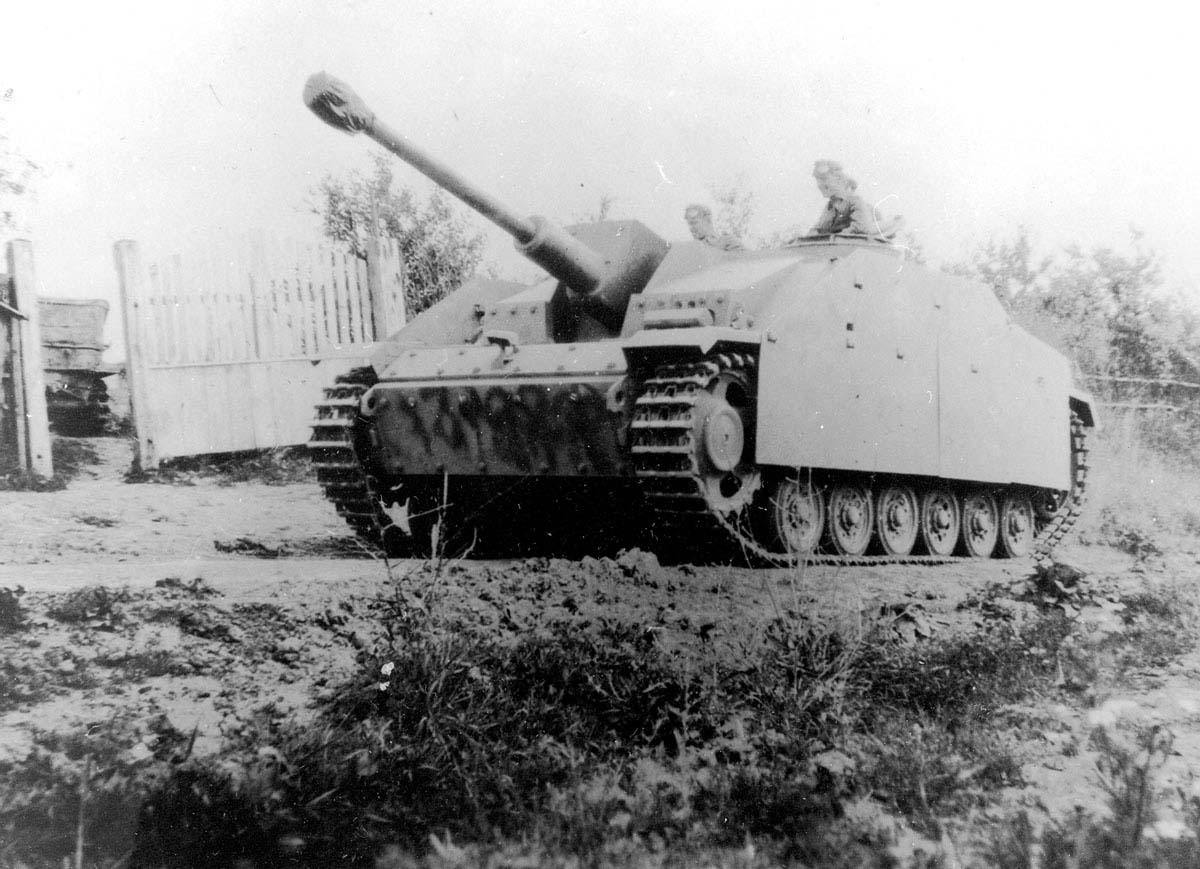
A StuG III moves up through Seelow town to join in with one of the many armoured counterattacks that took place. Groups of German armoured vehicles carried out ambushes that accounted for scores of Soviet tanks during the confusion of the fighting. Particularly active in this role was the 111th Training Brigade.

To the north of Seelow men of Soviet Sixty-First Army embark to cross the Oder in pontoons manned by engineers. The amphibious assault took heavy casualties from concentrated German fire. Of one battalion in the first wave only eight men reached the west bank.
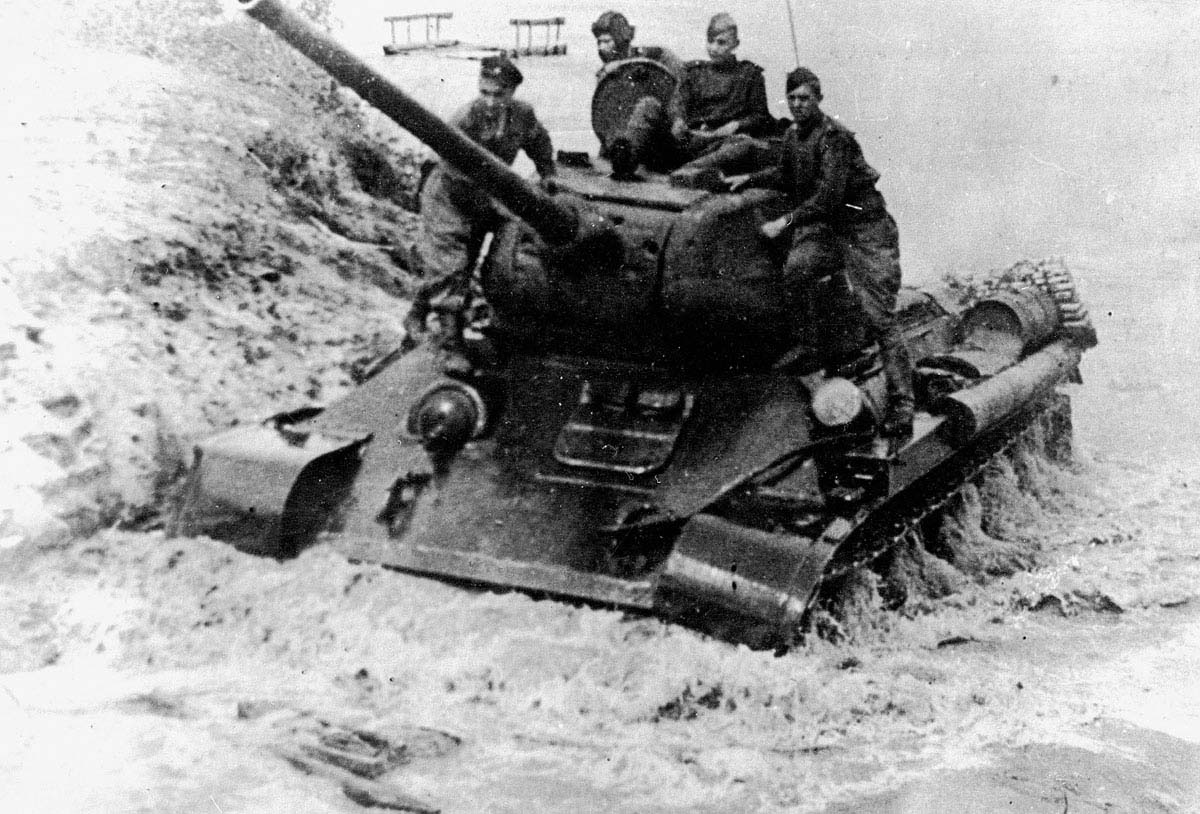
A T-34/85 emerges from the west bank of the Spree river on 17 April. Konev’s Fourth Guards Tank Army crossed the Spree at a point where it was a metre deep. The speed of their advance denied Fourth Panzer Army the opportunity to form a cohesive defence line. Army Group Centre was beginning to fall apart.
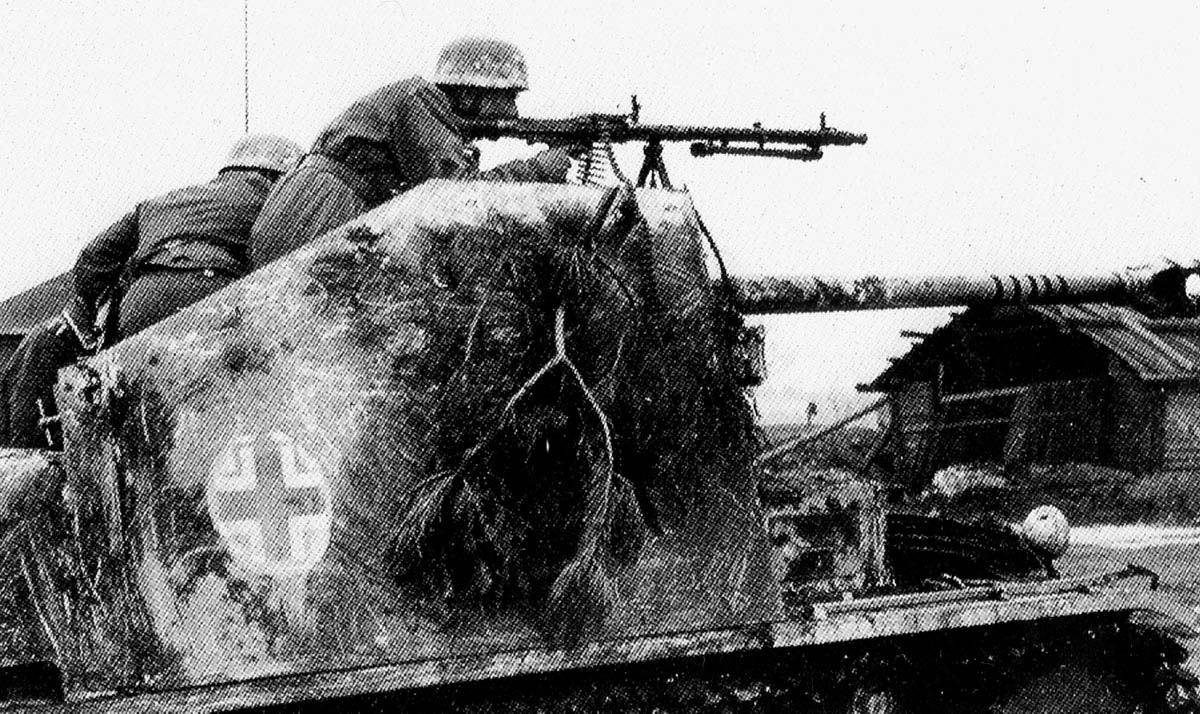
Paratroopers of the 9th Parachute Division prepare to counterattack on 18 April. They are mounted on a Marder II self-propelled anti-tank gun. The paratroopers of 9th Parachute Division were an elite force in name only, being mainly composed of recently ‘combed-out’ Luftwaffe ground crew. Their performance during the Seelow fighting was less than glorious; the division broke and ran.
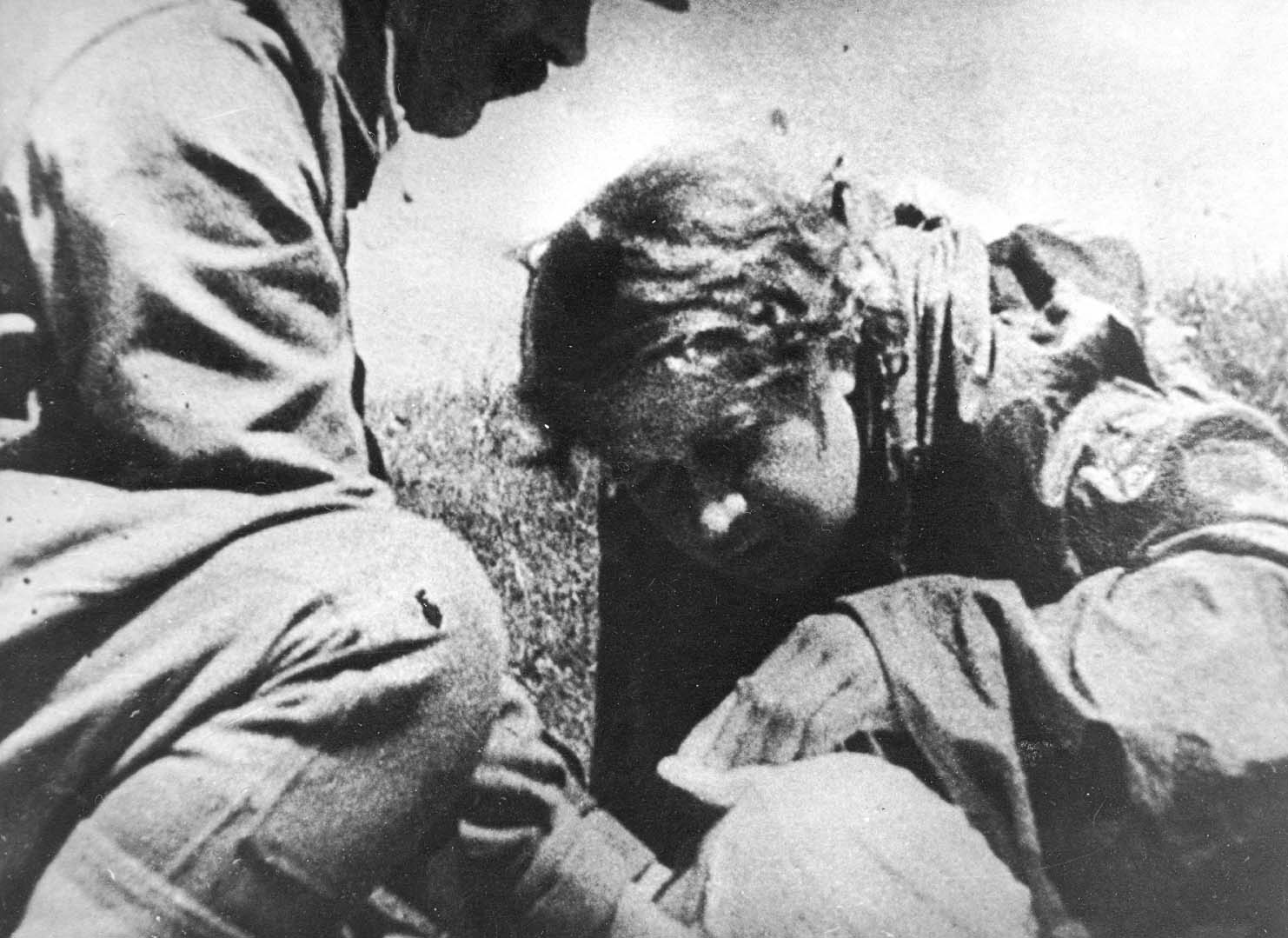
Soviet casualties during the Seelow and Neisse river fighting were high. Casualty evacuation and the treatment of the wounded were areas that the battle’s post-war Soviet analysts criticised. Female medical workers in the firing line, such as the one shown here, had been a feature of the Russian military from at least the First World War.
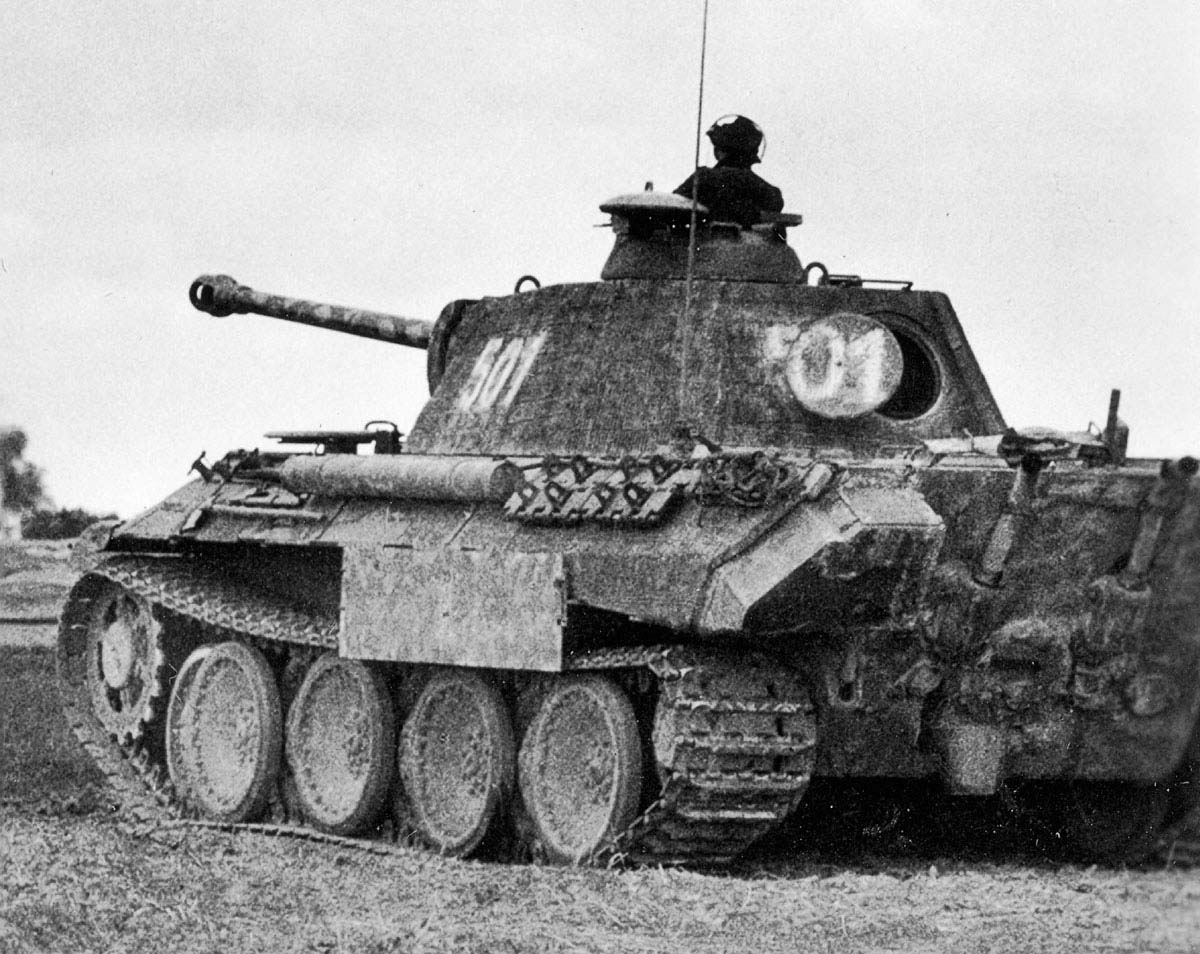
First Ukrainian Front’s advance on Dresden was rudely interrupted by what was the last German armoured attack in any strength. Striking at the junction of Second Polish and Fifty-Second armies, some 100 tanks of German units pushed 25km into the Polish rear, forcing its leading armoured unit to pull back and deal with this incursion. The operation fizzled out due to lack of fuel.
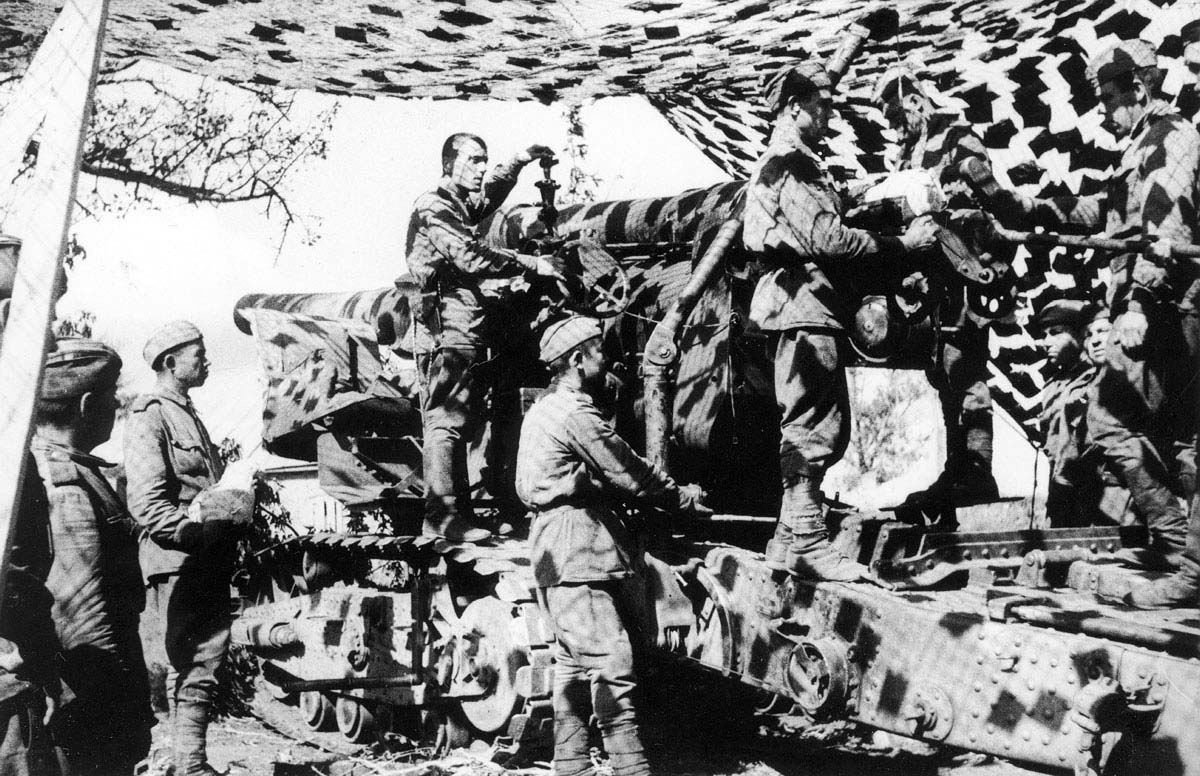
Red Army artillerymen prepare their 203mm B-4 howitzer to fire on Berlin. Camouflage netting was a necessary precaution, as the Luftwaffe was still capable of flying ground-attack missions. At this stage of the war no one was taking any unnecessary chances.

Hitler celebrated his 56th birthday on 20 April by decorating several Hitler Youth members for bravery and the destruction of Soviet tanks in the east. Here, boys so honoured pose for the cameras. It was to be Hitler’s last public appearance. The weather that day was fine and the citizens of Berlin were issued extra rations as part of the festivities.

A shattered German anti-tank gun position, overrun by Zhukov’s armour.
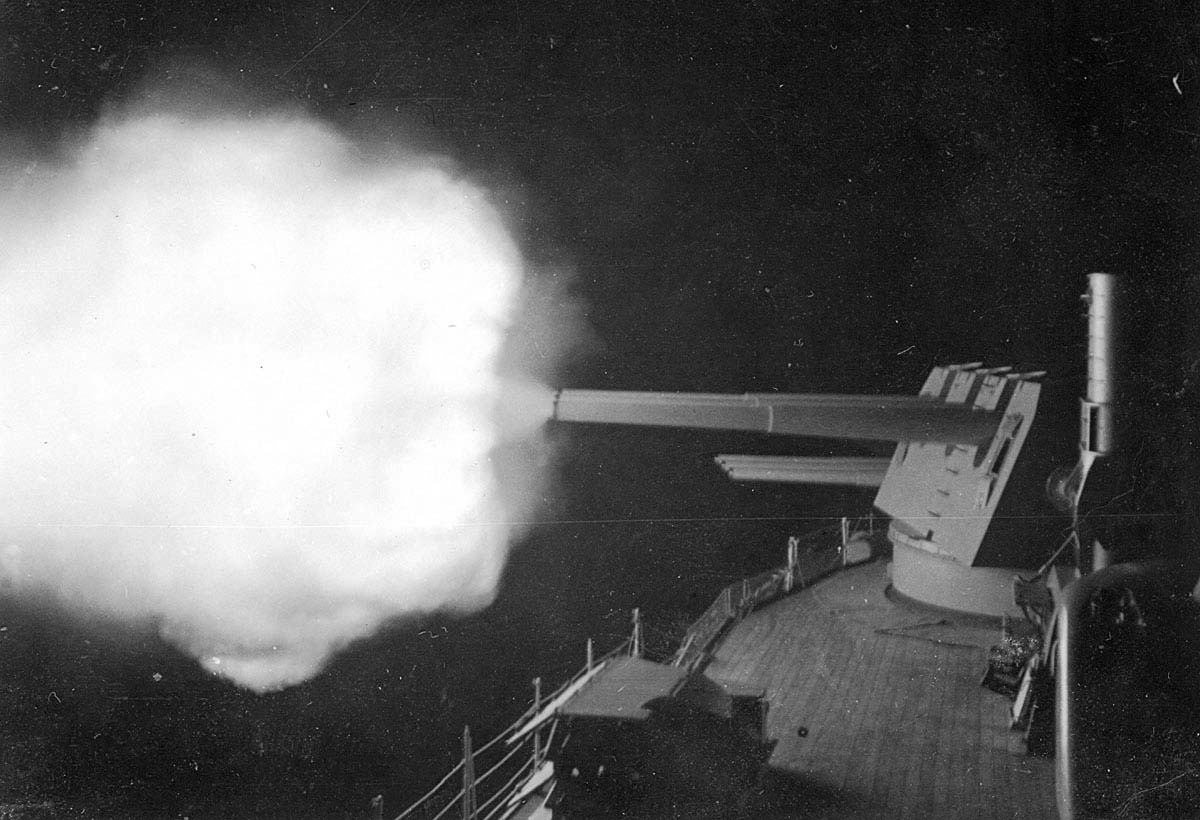
An unidentified ship of the Kriegsmarine fires in support of Third Panzer Army’s withdrawal in the face of Rokossovsky’s advance. It was due to the efforts of the navy that Army Group North and the ports of Konigsberg and Danzig held out for as long as they did. Soviet naval activity in the Baltic Sea was limited.
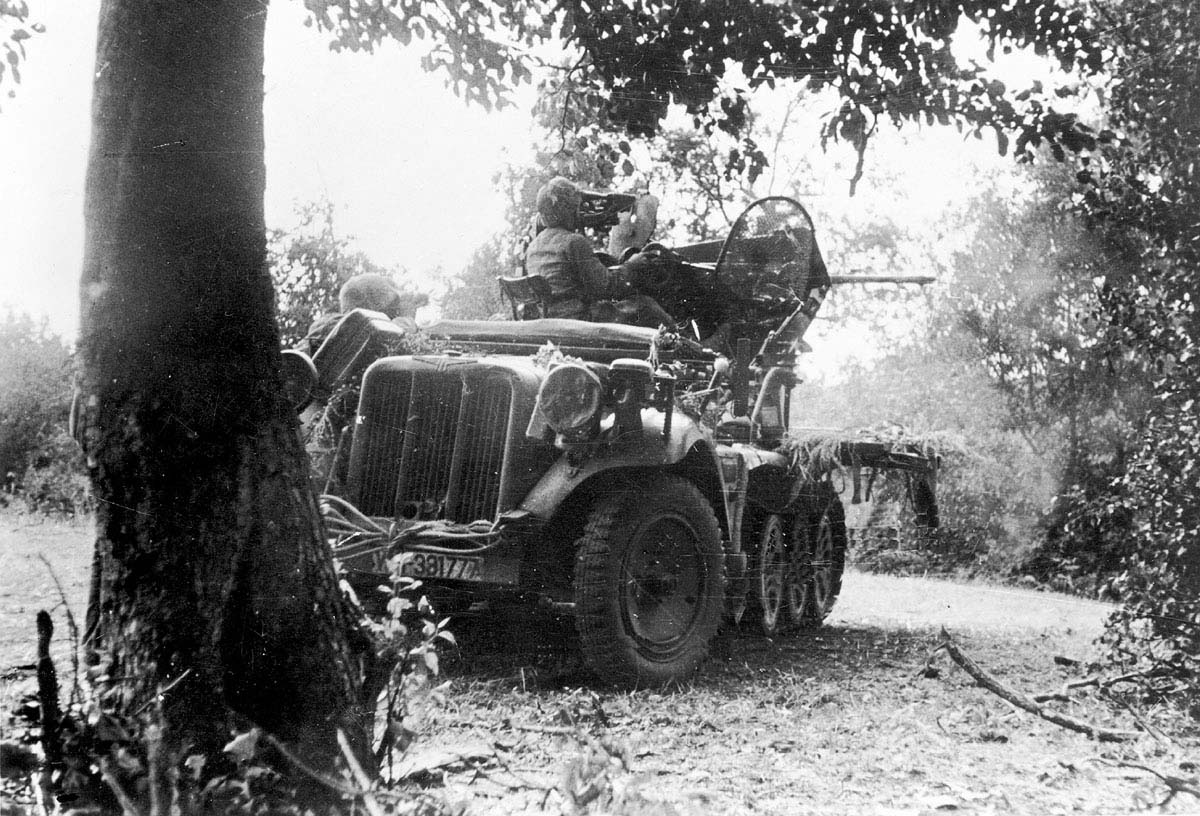
A light anti-aircraft gun fires on Soviet troops as they advance towards Ninth Army’s positions in the Spree forests. Heavily camouflaged, the vehicle is prepared to move rapidly to avoid retaliatory mortar or artillery fire.

In a hastily dug position a man of Ninth Army simply waits for the next Soviet attack. Holding lines before Berlin were of little use as the speed of the Red Army’s advance hardly allowed the time to dig in. What slowed Zhukov and Konev was the wooded areas that were interspersed with waterways, which made ideal ambush positions.
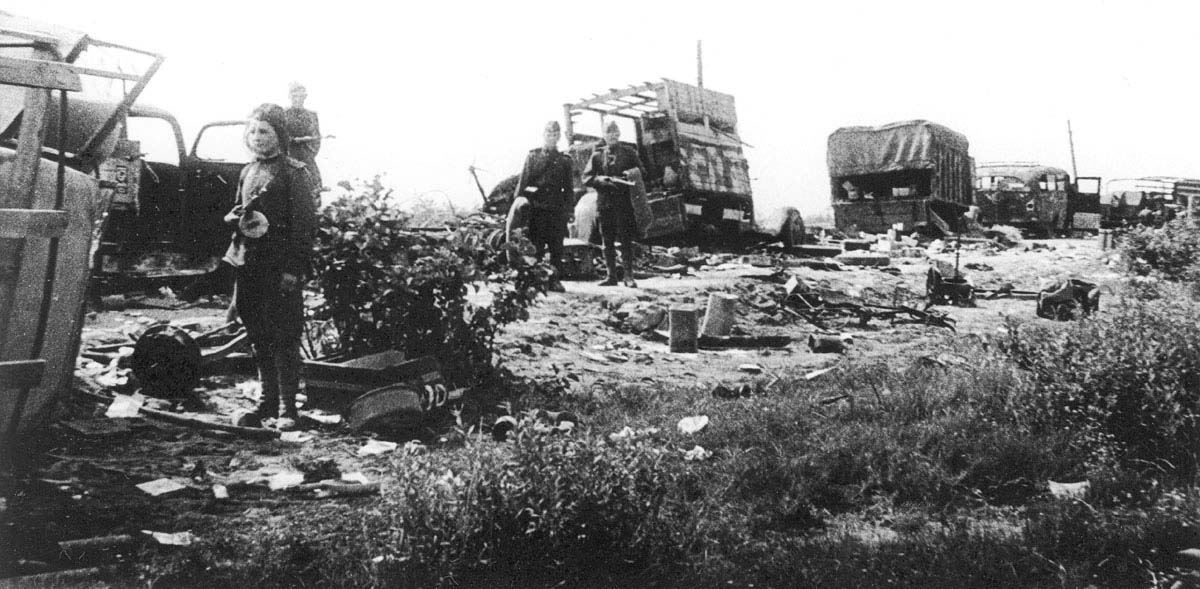
The route to Berlin could hardly have been better signposted. Now with total air superiority the Red Air Force ranged far and wide shooting up any columns of vehicles heading to the west. Sights such as this were commonplace for the pursuers.
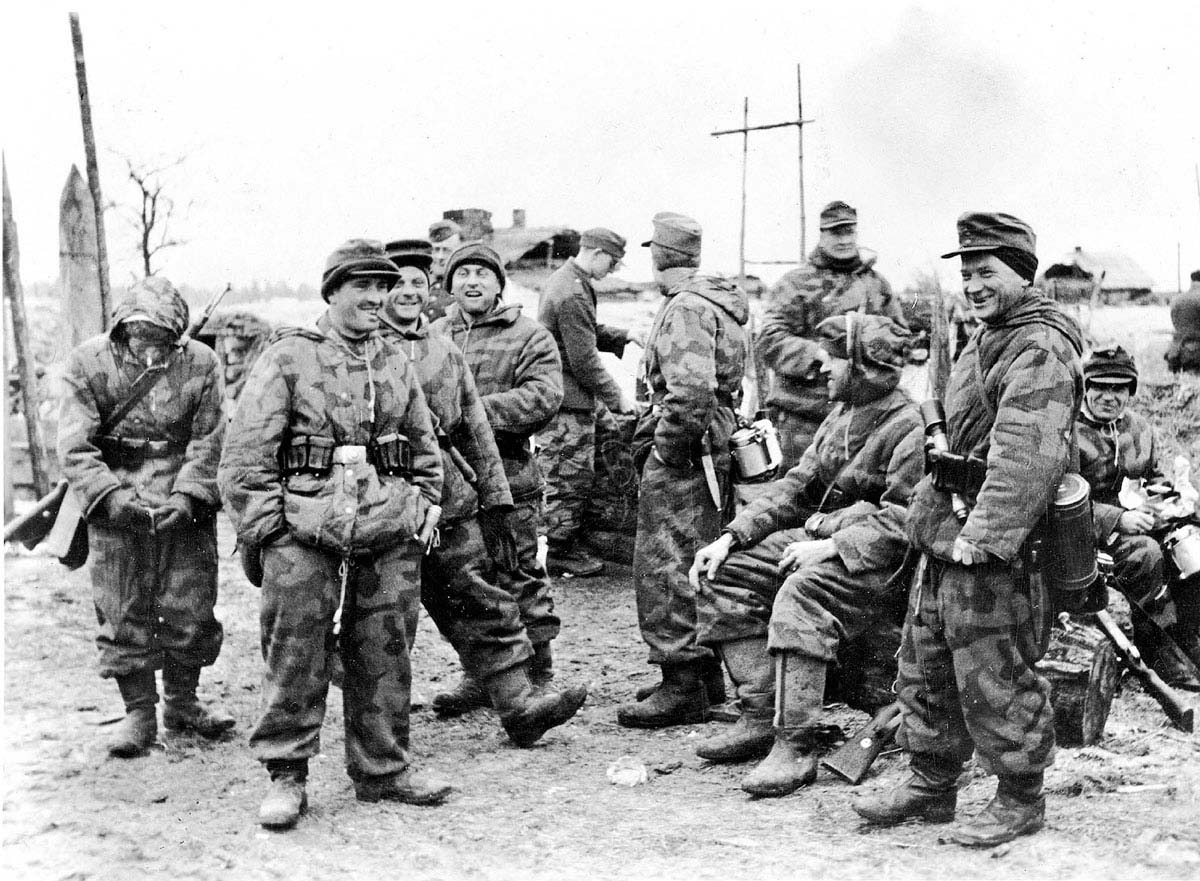
During a strangely quiet moment on the Oder sector a group of German infantrymen wait for a cup of ersatz coffee. They are all wearing the M1943 ‘Marsh’ pattern camouflage suit.