
Chapter Six
On Monday, 23 April in the weakly beating heart of Nazi Germany the less-important courtiers of Hitler’s regime were taking their leave. As some left, others moved in, among them were Magda Goebbels and her six children. Outside the Fuhrer bunker, across the bomb- and shell-ravaged city, Berliners waited for the battle to begin on their doorsteps.
Having fallen back on Berlin, General Helmut Weidling, commanding LVI Panzer Corps, although under sentence of death, arrived at the Fuhrer bunker to find that he was now commander of the capital’s defenders. His own corps consisted of 18th and 20th Panzergrenadier divisions, the Muncheberg Panzer Division, the 11th SS Panzergrenadier Division Nordland and fragments of 9th Parachute Division. All were now at a tithe of their titular strength, therefore Weidling told off all bar 18th Panzergrenadier Division, which constituted his reserve, to strengthen the eight defence sectors. The force available to Weidling numbered approximately 45,000 army and SS men and 40,000 Volkssturm with roughly 60 tanks. It was anticipated that stragglers and more cohesive groups would swell the numbers over the next few days.
However, according to NKVD General I. A. Serov’s report on the condition of the city’s defences there was little for Weidling’s men to stand behind: ‘No serious permanent defences have been found inside the 10–15km zone around Berlin. There are fire-trenches and gun pits and the motorways are mined in certain sections. There are some trenches as one comes to the city, but less in fact than any other city taken by the Red Army.’ Further comments included intelligence gained from Volkssturm POWs who told how few regular troops were in Berlin, how short of arms and equipment they were and how unwilling the Volkssturm was to fight.
Unaware of this report, troops of First Belorussian Front began to move cautiously into suburban Berlin from the north, the east and the south-east. The main thrust was an attack by Fifth Shock, Eighth Guards and First Guards Tank armies. Several units of Eighth Guards crossed the Spree and Dahme rivers in the direction of the suburb of Britz, on the Teltow canal. To their right, Fifth Shock, with the support of gunboats of the Dnieper Flotilla, also crossed the Spree.
Further west along the banks of the Teltow canal Konev’s Third Guards Tank Army, supported by a colossal concentration of artillery, prepared to launch itself across this vital water barrier. Opposing them were numerous Volkssturm battalions braced with elements of 18th and 20th Panzergrenadier divisions.
The Nordland Division, falling back in the face of Zhukov’s Guards infantry and tanks, took the opportunity to refuel its armour at Tempelhof airfield. Any possible repairs were made, and they even received armoured reinforcements. However, the bulk of the fighting rested on the weary shoulders of the infantry, and on 24 April they were launched in a series of counterattacks to push the Soviets back across the Spree river. As Weidling’s counterattacks began, so did Konev’s canal crossing. Soviet artillery and mortars began firing at 06.20 hrs, and 40 minutes later the first footholds had been established. Fighting desperately, the Panzergrenadiers and Volkssturm were unable to hold the line and by midday T-34s began to cross the newly erected pontoon bridges.
To the east Zhukov’s troops held their ground and then counterattacked so successfully in their turn that they overran Treptow Park and reached the line of the S-Bahn railway, where they halted to regroup and bring up supplies.
Third Shock Army, approaching the outskirts of Berlin from the north-east, made steady progress passing through the infamously communist district of Wedding to reach the Schiffahrts canal.
Surrounded though Berlin was to the north-west and the west, the Soviet ring was as yet fairly porous as a group of French Waffen SS men found out as they made their way from the north, passing on the way thousands of refugees, Wehrmacht stragglers and escaping foreign workers. The French were subordinated to the Nordland Division just at the time it was retiring to defend Tempelhof airfield alongside the few tanks and men of the Muncheberg Panzer Division. This latter formation was a remarkable unit, having been formed less than two months previously around a cadre of men and machines from the Kummersdorf equipment-testing facility. Its armoured component included examples of nearly every tank and armoured fighting vehicle ever produced, including one-off experimental types. Even after the losses it had suffered at Seelow Heights and during the retreat into the city the Muncheberg Division could still pack a punch. But even this armoured miscellany could not hold Tempelhof indefinitely. LVI Panzer began to withdraw towards the city centre during the afternoon of 25 April. An officer of the Muncheberg Division described ‘incessant Russian artillery fire...despite strong artillery fire the civilians population tried to escape’ but more ominously the wounded soldiers were ‘left where they were for fear of running into the hands of the mobile courts.’ In the hell that Berlin was becoming, drumhead courts martial roamed the streets rounding up apparent deserters and hanging them from any convenient tree or lamppost with a sign describing them variously as ‘traitors to the Reich’, ‘cowards’ or any other suitable insulting epithet. The officer continued describing the cries of women and children, the whistles of Stalin Organs and the smell of death and explosives mixed with chlorine. His last words were ‘The fight continues tenaciously.’
With Zhukov’s forces heavily engaged around Tempelhof and the Hohenzollern–Schiffahrts canal and the Fifth Shock Army moving into the Freidrichshain district on the eastern edge of the city, First Ukrainian Front had split the defences on the Teltow canal forcing 20th Panzergrenadier Division onto Wannsee Island as its left flank pushed through the Grunwald forest towards Charlottenburg and the centre advanced driving the Volkssturm and 18th Panzergrenadier Division back towards the city centre.
Now, almost everywhere the fighting was taking place in densely built-up areas which neither the Soviets nor the Germans had experienced so seriously since Stalingrad 30 months before. Bombing and shelling had destroyed many buildings creating ready-made fortresses in which defenders could take cover and from which they could launch tip-and-run ambushes. Trams, shattered vehicles, rubble and all manner of everything to hand was pressed into the creation of barricades to block roads and junctions. Where possible, slit trenches and machine-gun or Panzerfaust pits were dug. Railway tunnels were demolished and the guns of the three immensely strong Flak towers were turned to face the approaching Soviet armour.
In the cellars of buildings German troops waited with Panzerfausts, and suddenly Soviet tank and infantry losses began to rise dramatically. Countermeasures were drawn from Chuikov’s notes made during the Stalingrad campaign with updates from his recent experience of urban warfare in Poznan, and the small infantry assault group made its return.
But outside the city events were shaping somewhat differently, and in Hitler’s bunker the last politicking of the ‘Thousand-Year Reich’ continued at fever pitch.
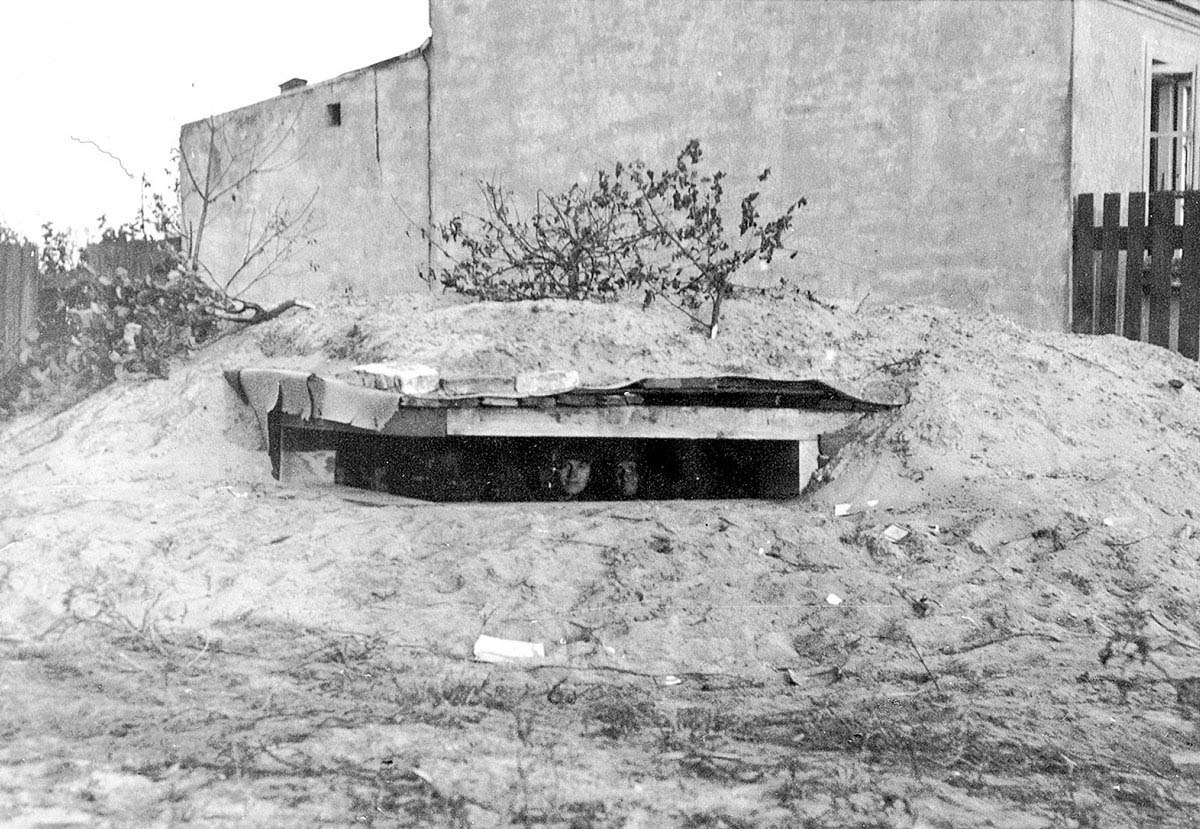
Part of the defences in suburban Berlin: the primitive nature of this bunker demonstrates the paucity of tools and equipment available to the garrison’s construction teams. It also shows the shortage of time that Reymann and his successor, Weidling, had to do anything once the Soviets were across the Oder–Neisse rivers.
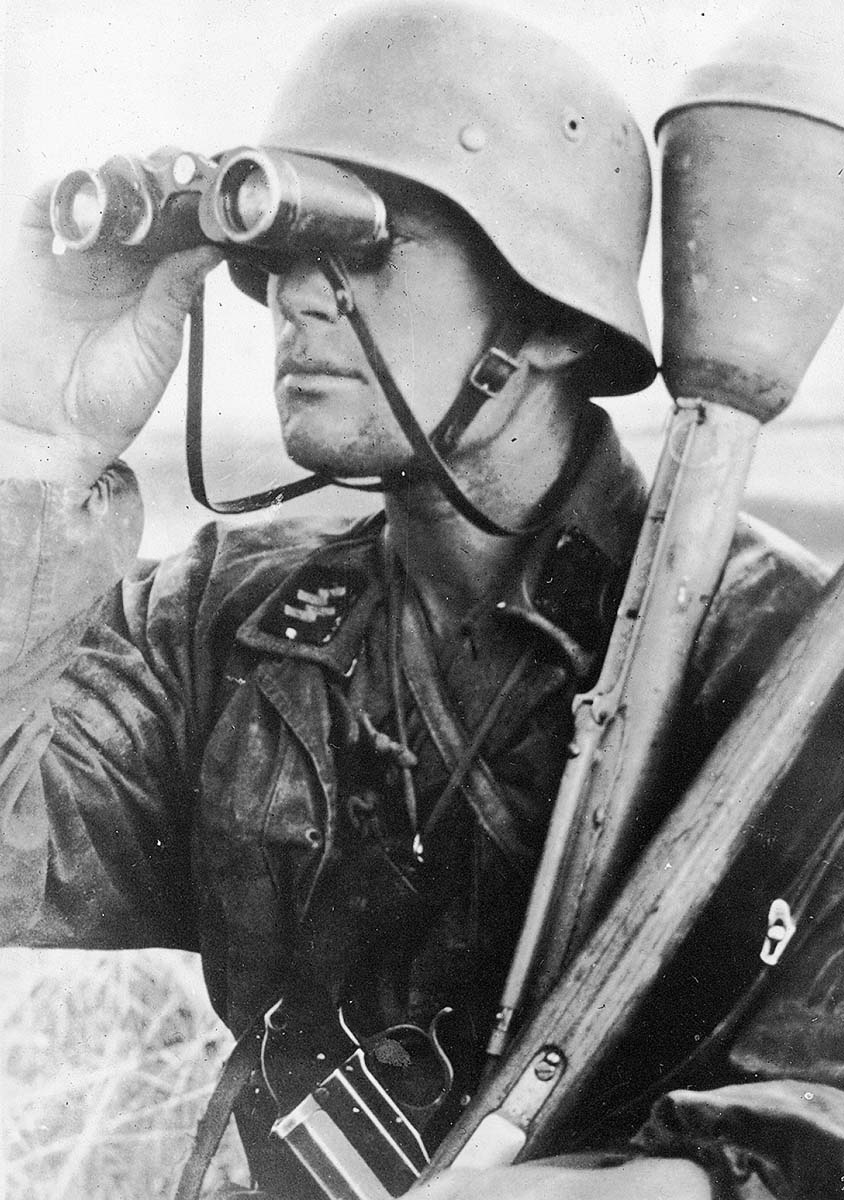
An NCO of an unidentified Waffen SS infantry formation scans the horizon for Soviet tanks on the approaches to Berlin. The ubiquitous Panzerfaust was produced and stockpiled in vast numbers. The simplicity of build and operation made it an ideal weapon for close-quarters and ambush tactics.
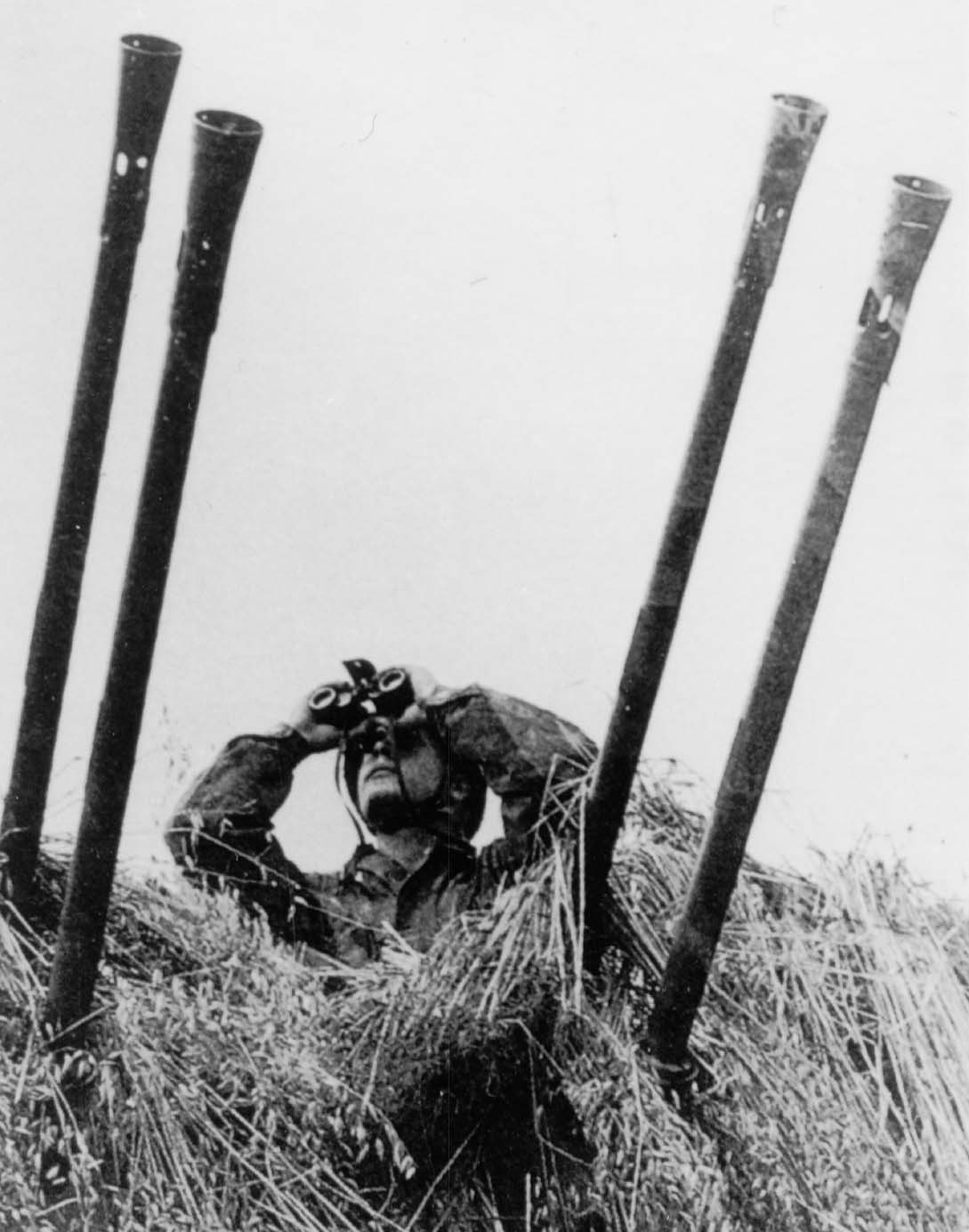
A quadruple-barrelled 20mm anti-aircraft gun and one of its crew under camouflage await the next sortie over Berlin by the Red Air Force. Equally useful against ground targets, this weapon could pump out up to 800 rounds per minute.
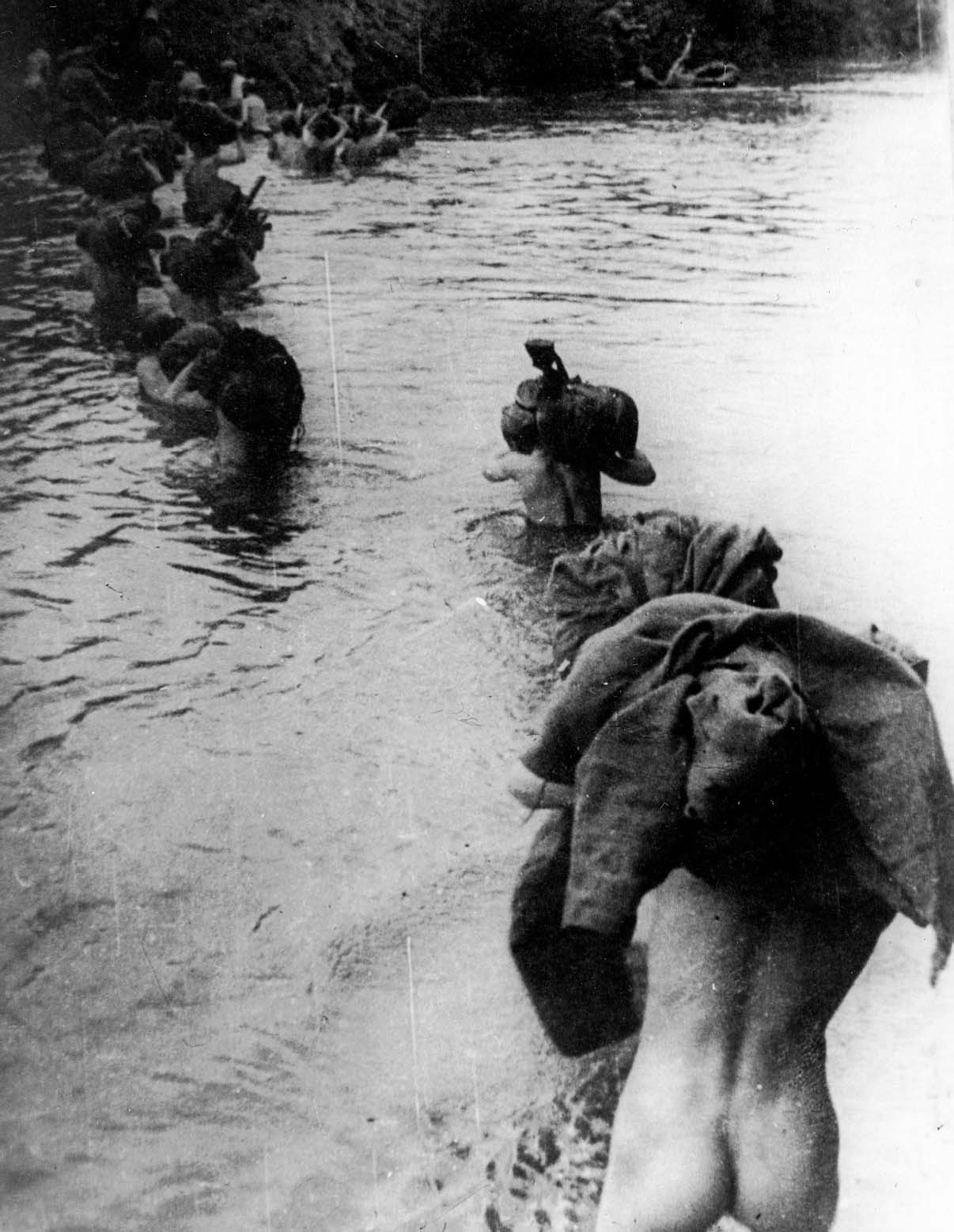
Men of Fifth Shock Army prepare to cross the Spree river on 23 April. The speed of the advance into Berlin precluded the forward movement of assault craft; therefore waterways were crossed by all means available.
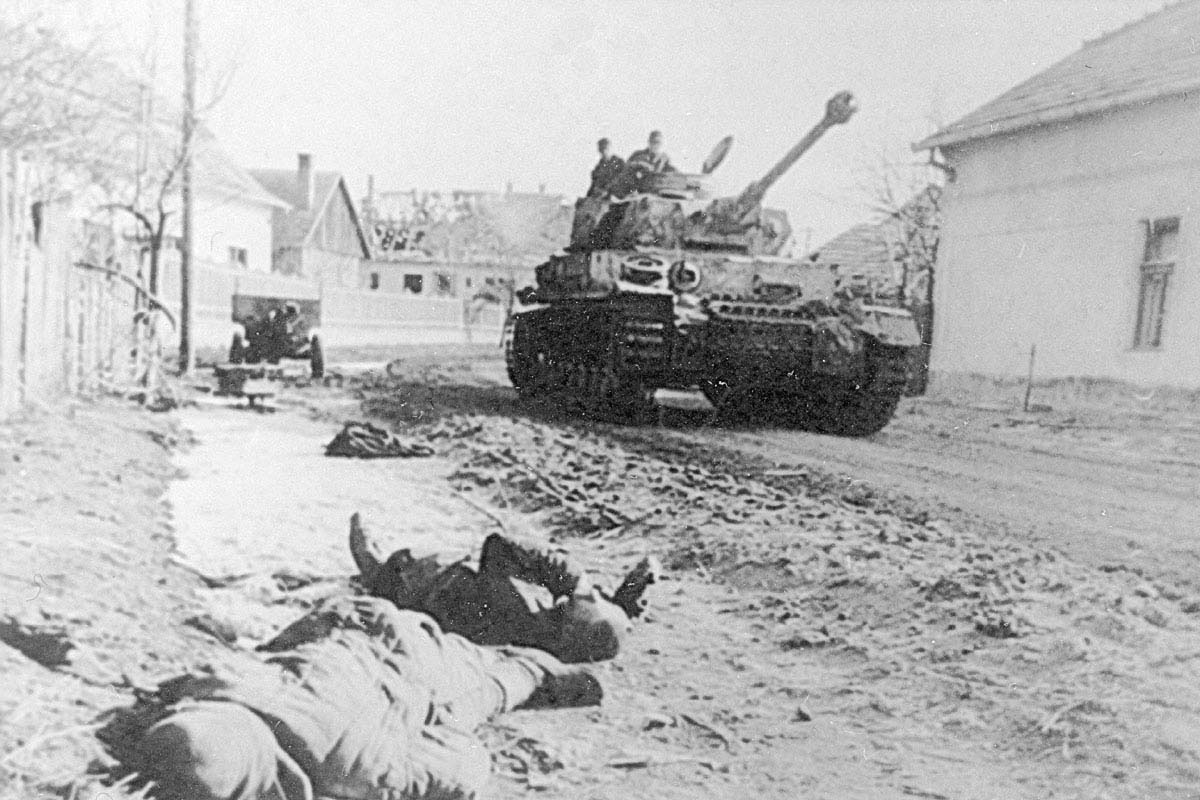
A panzer IV moves through the outskirts of a village near Berlin in one of the small but vicious rearguard actions fought during the withdrawal from the Oder river line. Many such unrecorded skirmishes and localised counterattacks bought time for the city’s defenders to prepare for the coming onslaught.
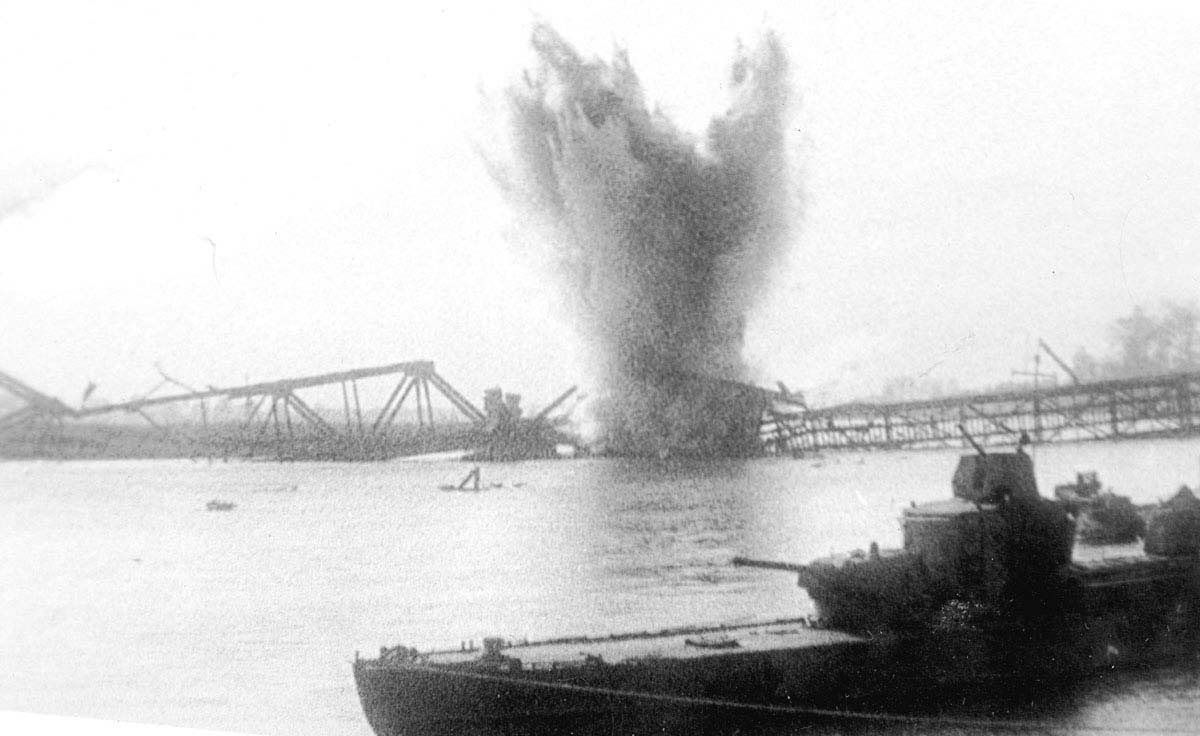
Gunboats of the Dnieper Flotilla had accompanied the advancing armies to provide support with the innumerable river crossings since 1944. Shallow-draught, lightly armoured vessels such as this one were ideal for close-support actions. Mounting a variety of weapons, including T-34 turrets, they could move swiftly to the aid of a tenuous bridgehead.
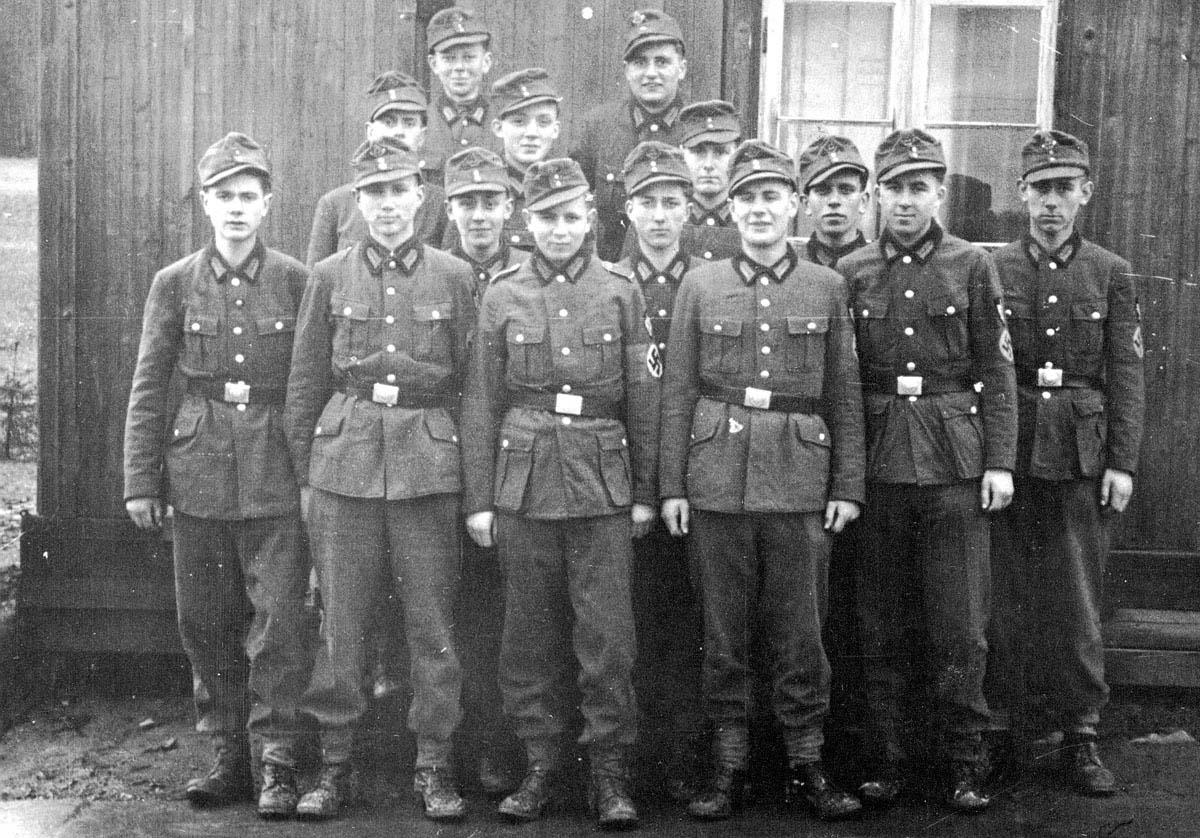
Young men of the Reich’s Labour Service (RAD) pose valiantly for the camera before going off to join their unit. At least they already had a uniform, which was more than could be said for many of the newly formed units at this time. The Red Army was aware of the Volkssturm but regarded armed men out of uniform as bandits and therefore gave them no opportunity to surrender.
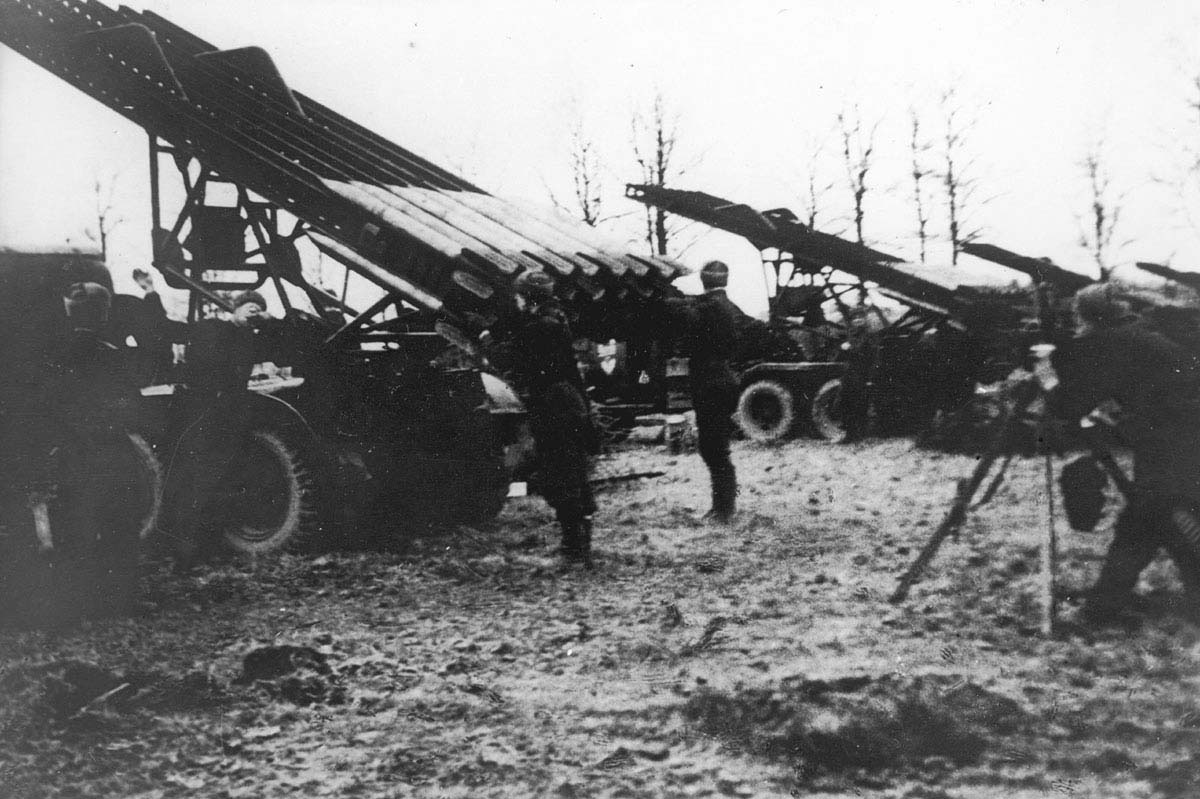
Katyusha rocket launchers of an unidentified Guards mortar unit load up for another barrage in support of Konev’s forces across the Teltow canal. The effect of these weapons, nicknamed ‘Stalin Organs’ by the Germans, was psychological as well as tactical.
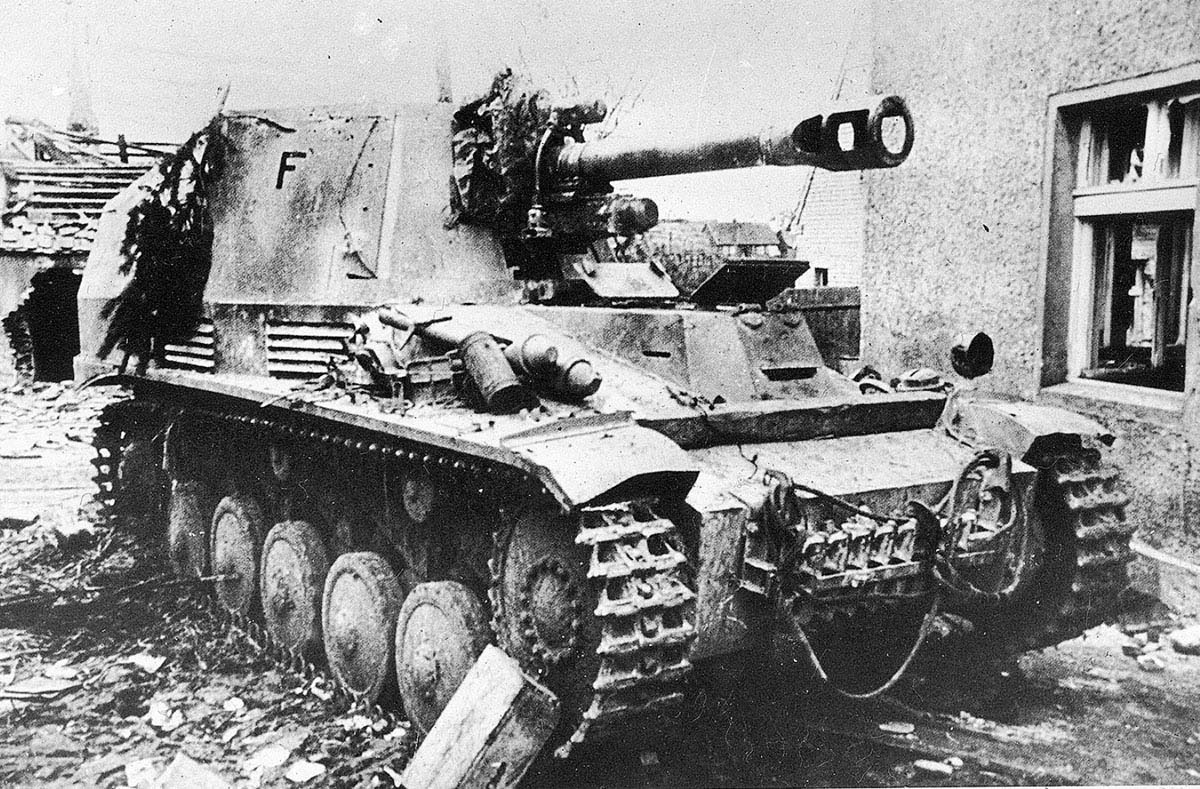
A Wespe self-propelled gun lies abandoned in suburban Berlin. Based on the chassis of a Panzer II, it carried a 105mm howitzer. On the mudguard nearest to the camera can be seen two Panzerfaust left by the crew, who appear to have taken only the machine-gun.
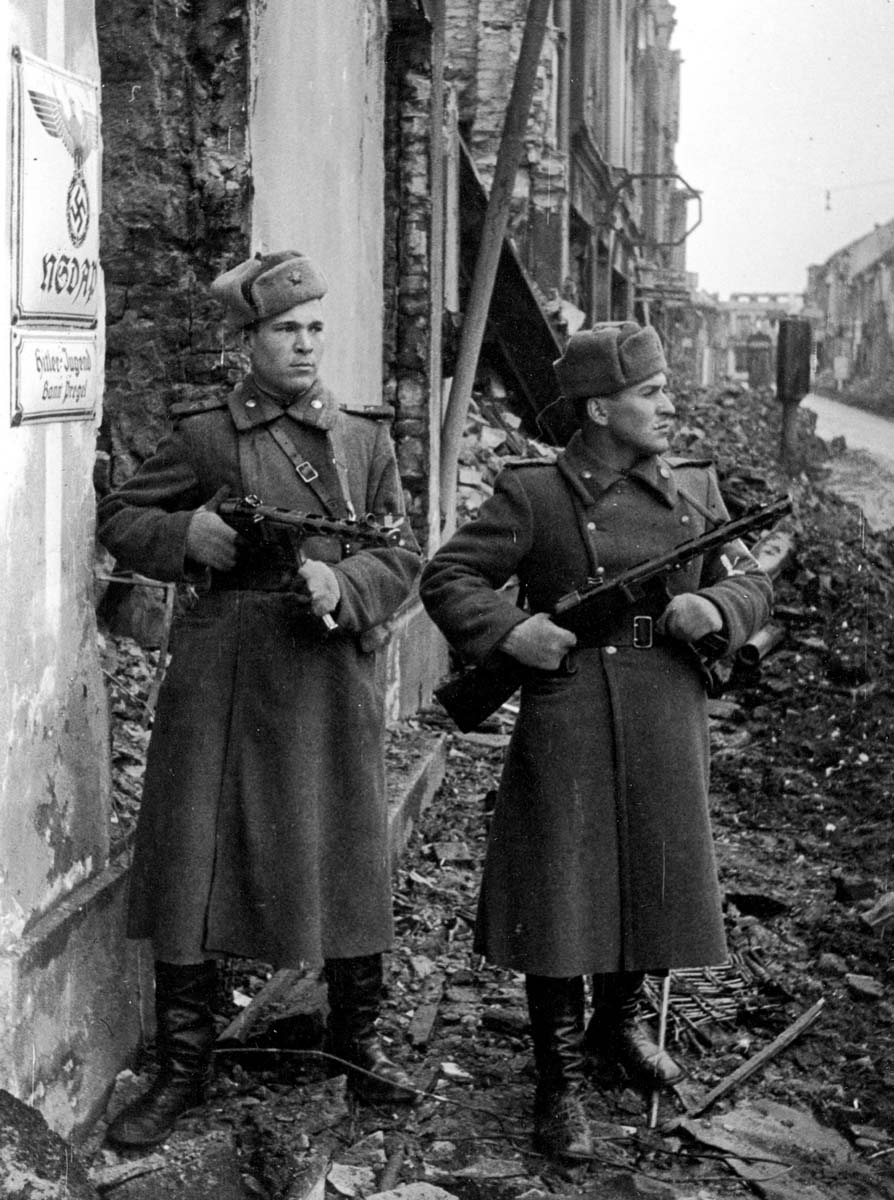
To increase the strength of the pickets around Fortress Berlin three NKVD Frontier Guard regiments were brought in. Here two immaculately turned-out men of 105th Frontier Guard Regiment stand watch over the entrance to a Nazi party office that dealt with Hitler Youth affairs. Both men are armed with PPSh-41 submachine-guns (smg). Their tidy appearance, including woollen gloves, indicates they have seen no action.
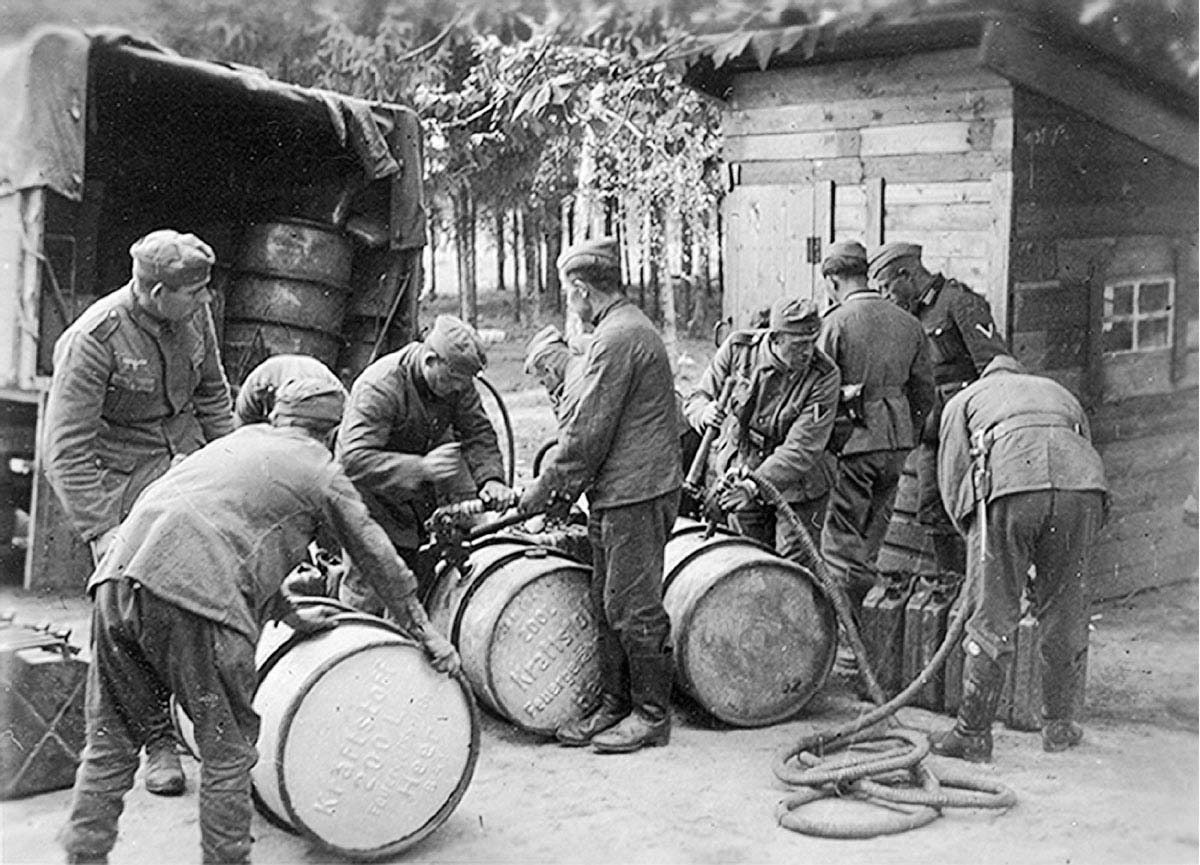
An extemporised distribution point in Berlin doles out fuel for those still with motor vehicles. There were several instances where supply-dump officials refused to issue food or munitions without the correct documentation, preferring to destroy their assets rather than accept no paperwork, even with the Soviets literally at the end of the street. Airfields proved useful providers of petrol and diesel.
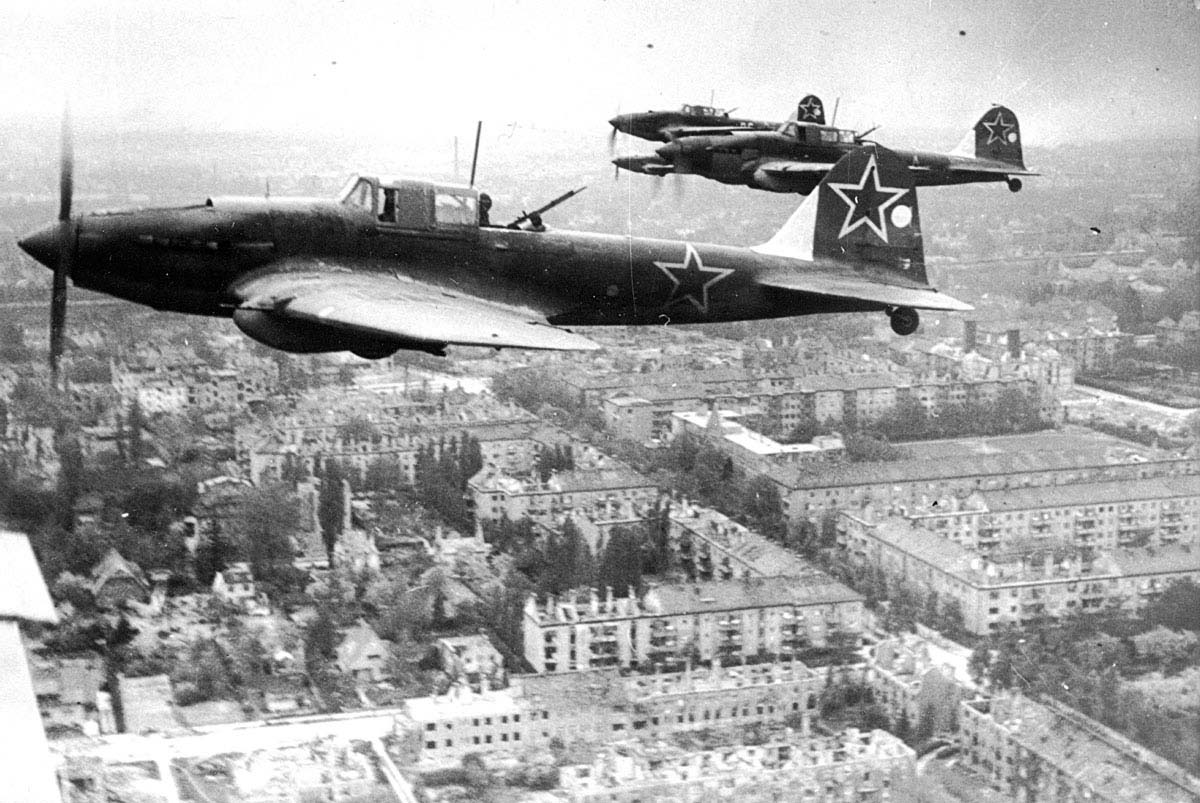
Flying ground-attack missions over Berlin was rarely as hazardous for the pilots of the Red Air Force as it was becoming for the men on the ground. As the fighting became more confused, so the chances of death by friendly fire increased.
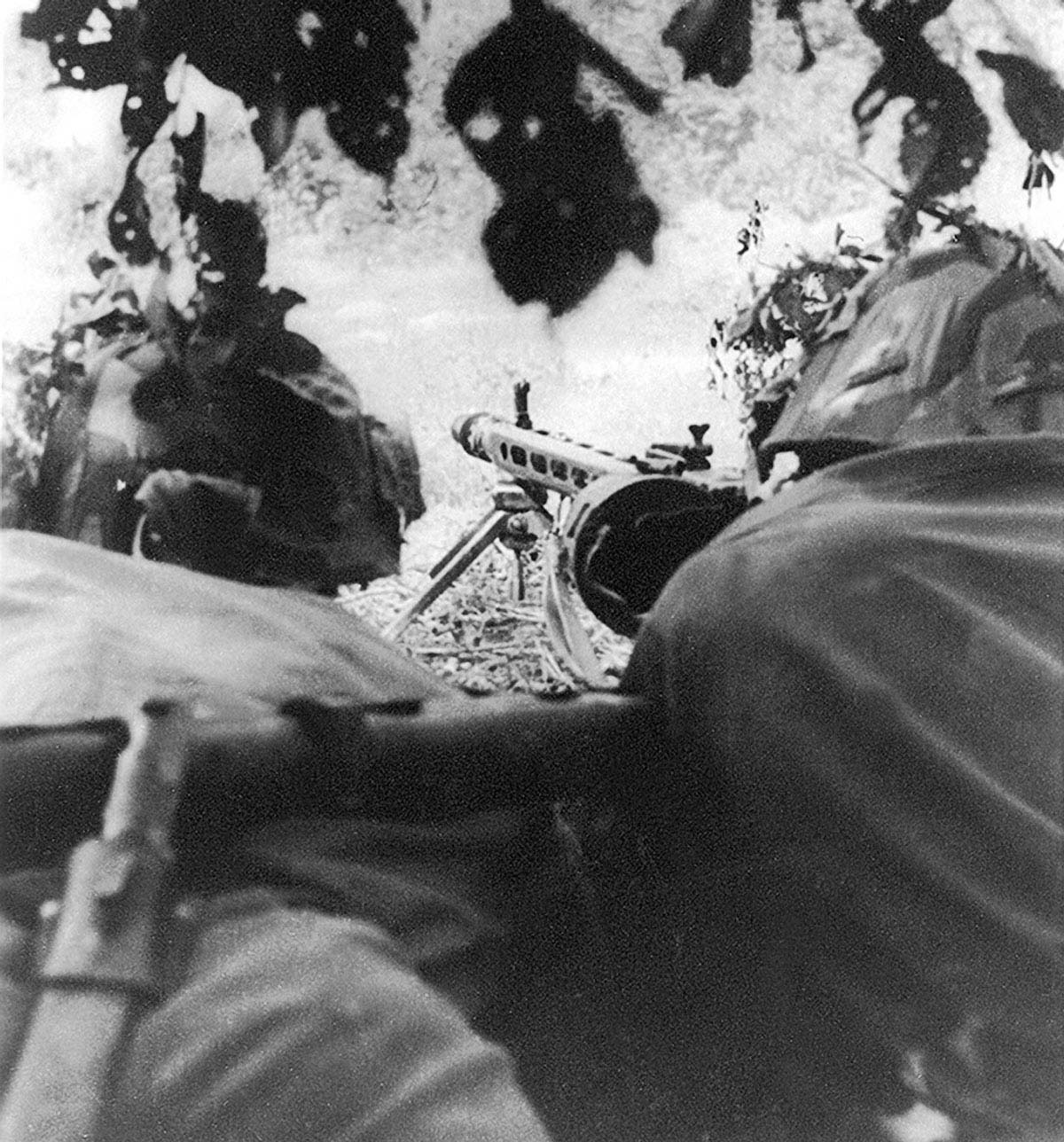
A German team prepares to fire its MG-42 near Berlin Zoo. The saddle-type magazine is evidence that the weapon may have been scrounged from an antiaircraft unit, as these magazines were often used in that role. The high rate of fire, 1200 rounds per minute, made the spare barrel carried by the soldier on the left essential.
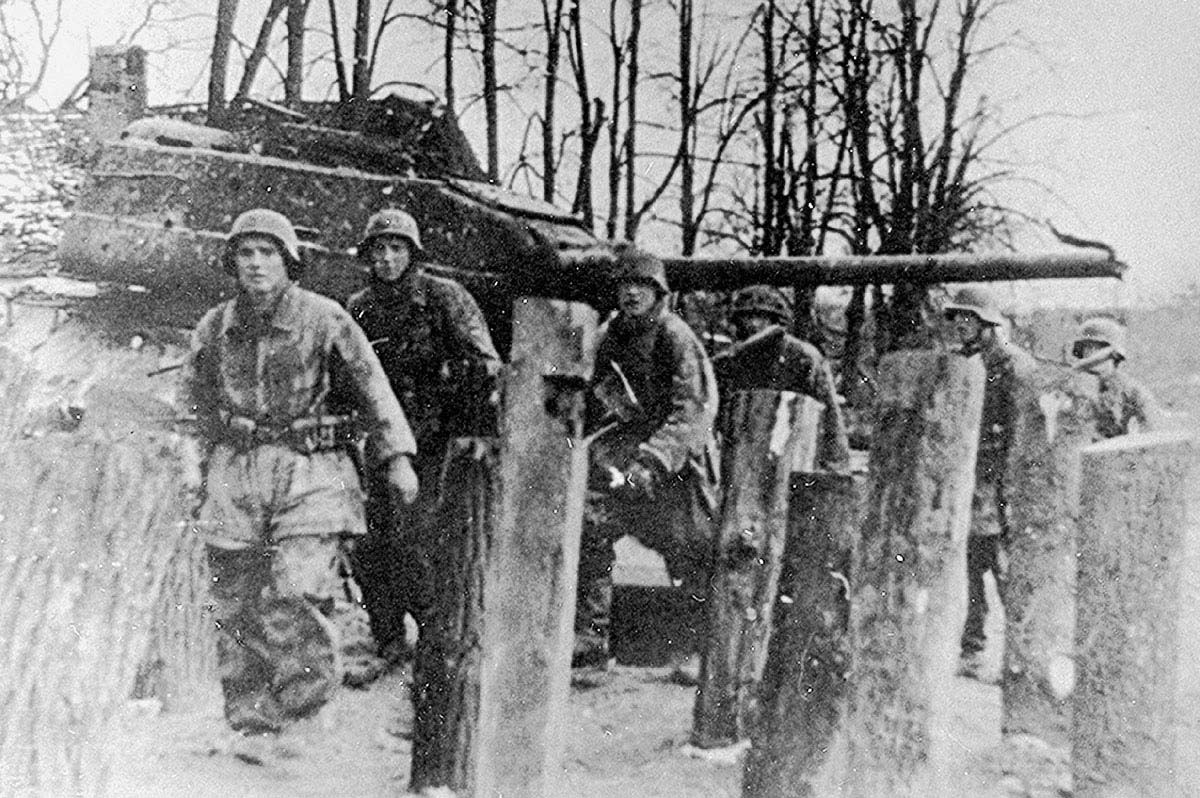
A wrecked T-34/85 is ignored by a weary section of German infantry. Judging by their clothing they are probably men of 9th Parachute Division, the remains of which were tasked with defending north-west Berlin against Zhukov’s Third Shock Army. They are passing wooden antitank stakes.
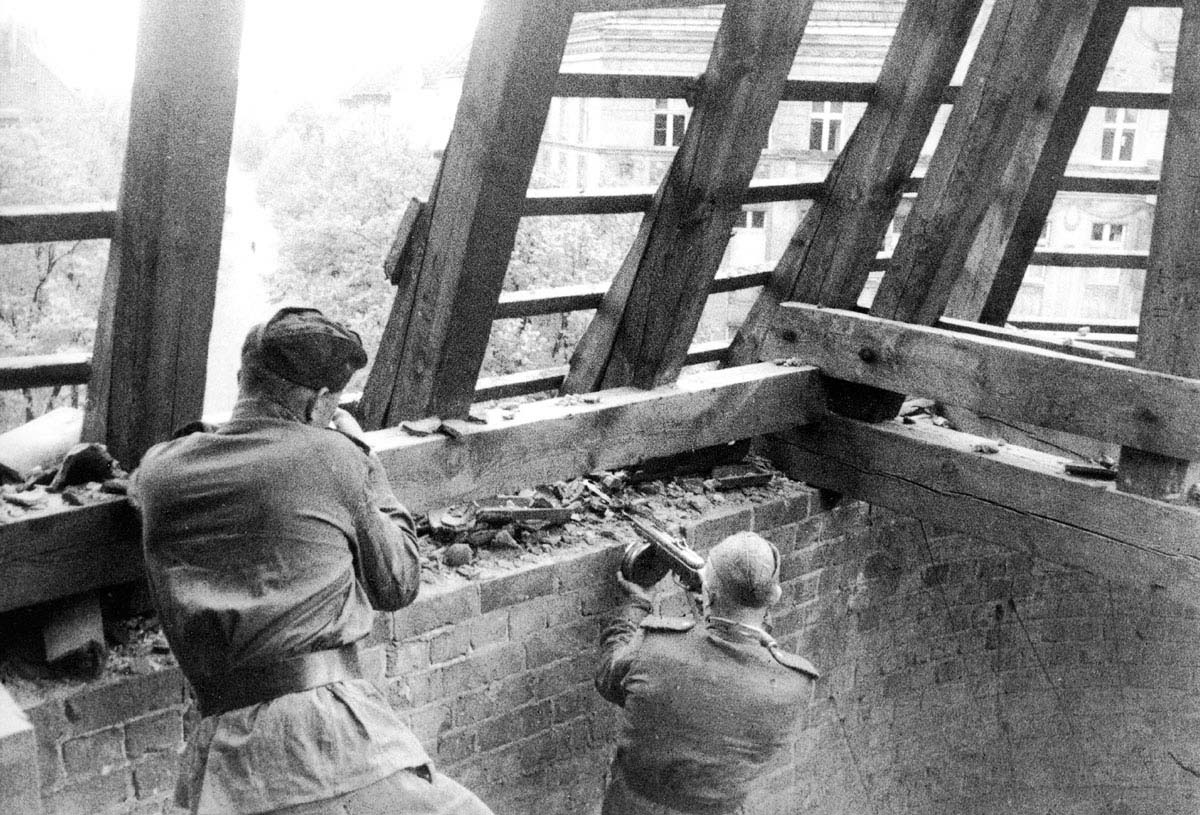
From the attics of an apartment block Soviet submachine-gunners fire across at a German machine nest. Rooftop fighting such as this became a common feature of the street-fighting in Berlin during the last days of April 1945. The men are armed with PPSh-41 smg, a perfect weapon for this type of warfare, with its high rate of fire and ease of maintenance.
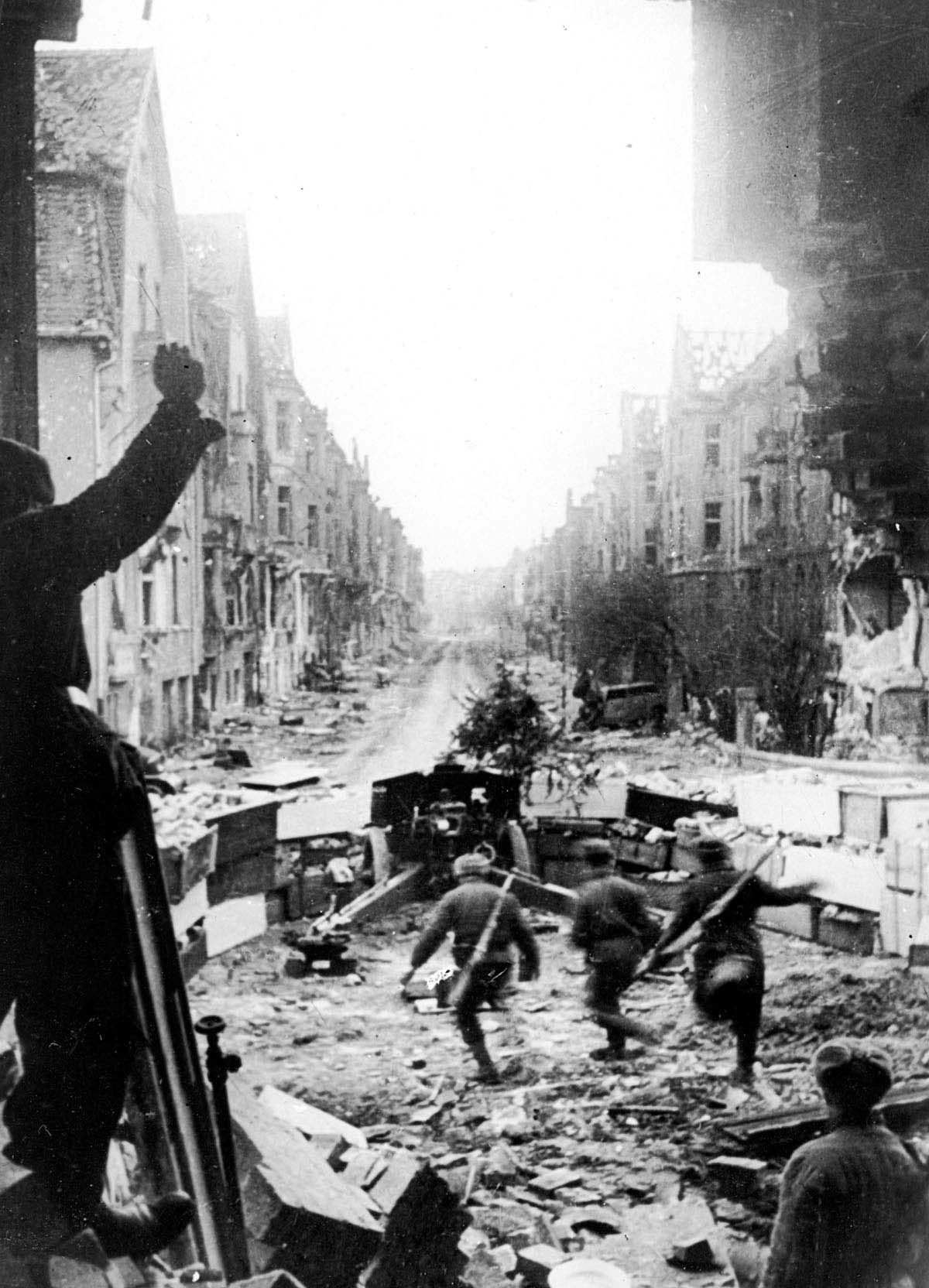
A Soviet gun crew races back to its 76mm mountain gun. Short-barrelled and man-portable, such seemingly out-of-place weapons were simple to move around the city streets and, with an elevation of 70 degrees, lethal for shooting into the higher storeys of buildings.
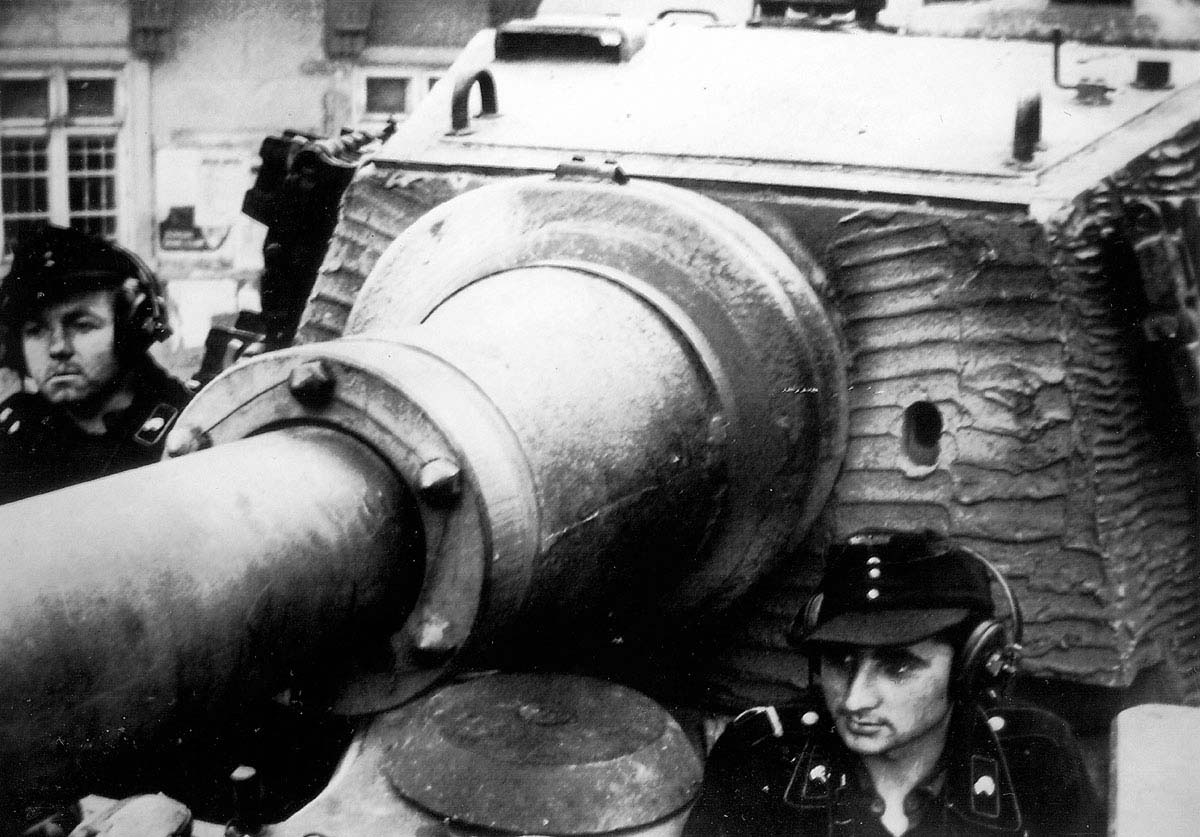
A King Tiger, possibly one of the vehicles of the 503rd SS Heavy Tank Battalion, sent to support SS Division Nordland near Tempelhof airfield. Armed with a lethal 88mm gun, it was heavily armoured, but suffered from mechanical unreliability and high fuel consumption requiring eight litres of fuel per mile. The textured material on the armour is Zimmerit paste to protect against magnetic mines.
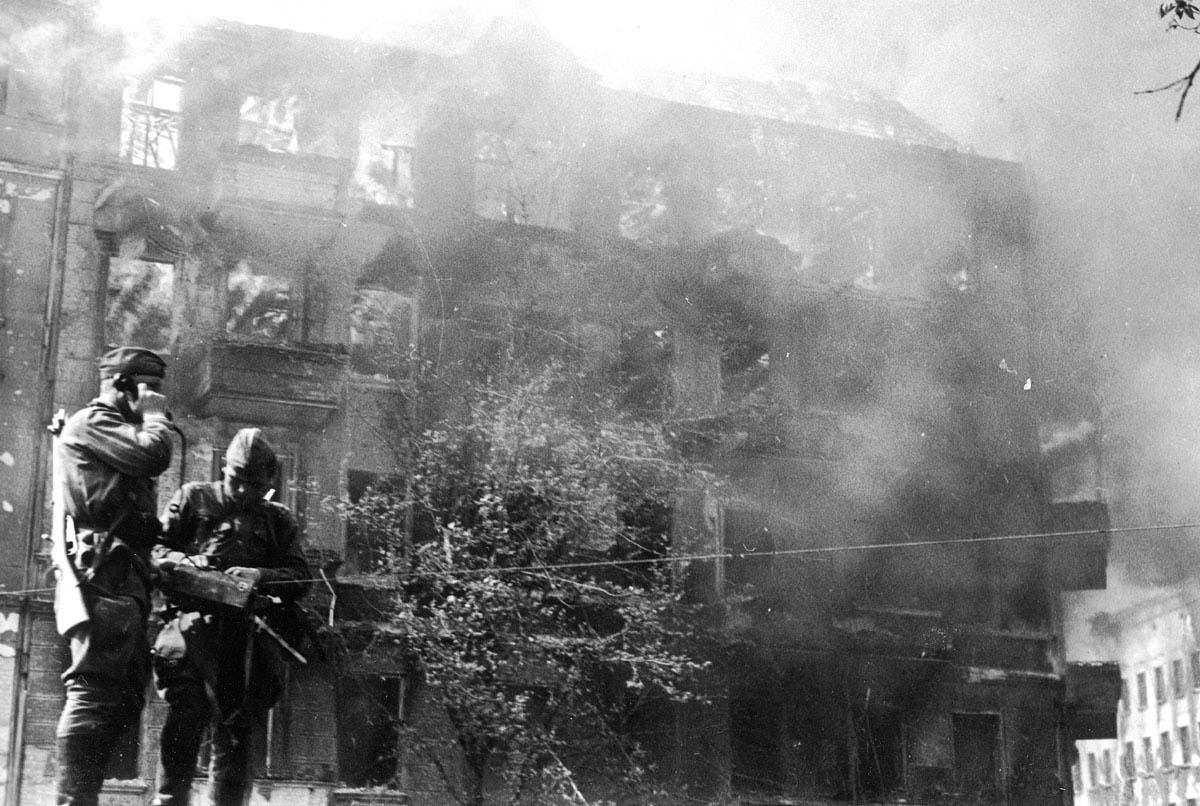
Communications were vital to avoid confusion and death by friendly fire. Here, a pair of Soviet signallers report to the higher command on progress in the lee of a burning building. However, such was the jealousy over the victor’s laurels that senior officers did not always inform their neighbours of their units’ whereabouts.
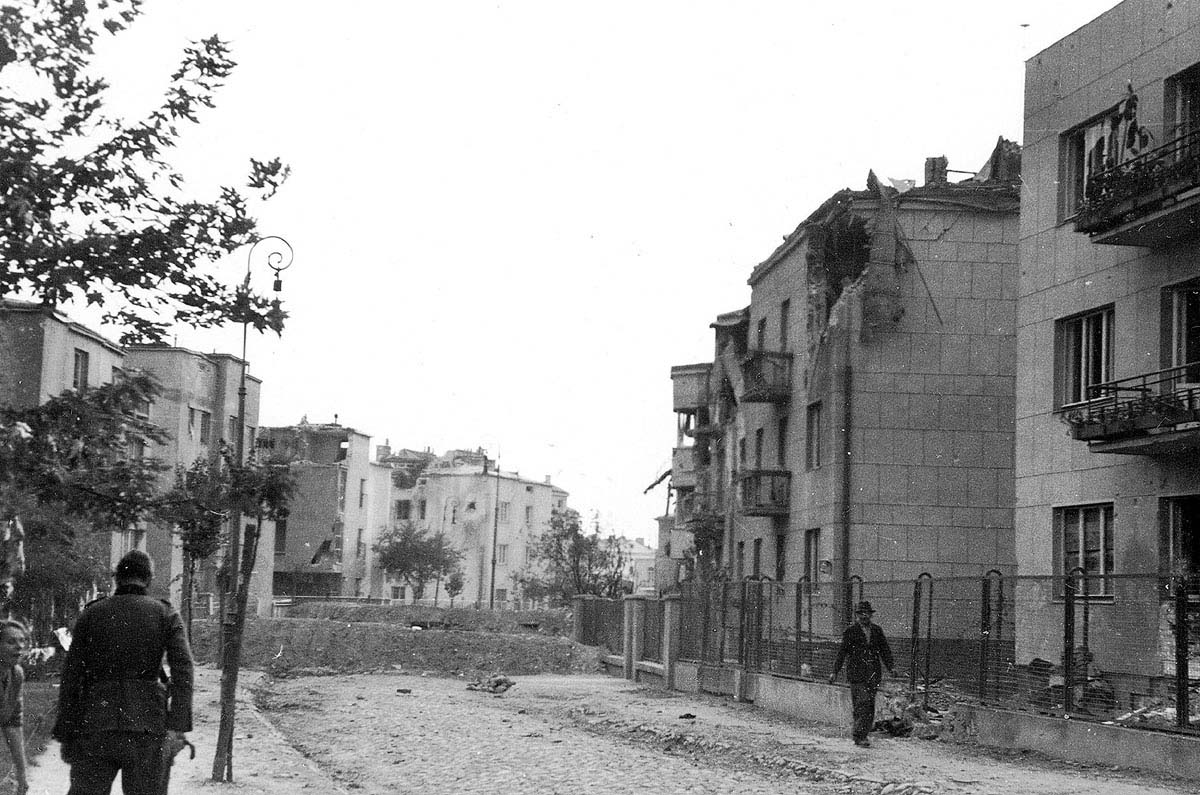
Despite slight bomb and shell damage, this street in western Berlin shows no evidence that elsewhere in the city the fighting has begun. Although there is an earth barricade across the street, there seems to be a complete lack of urgency in the civilians’ demeanour and that of the soldier with a walking stick. However, veterans’ accounts note that some areas were almost unaffected by the war until it drove into their neighbourhood.
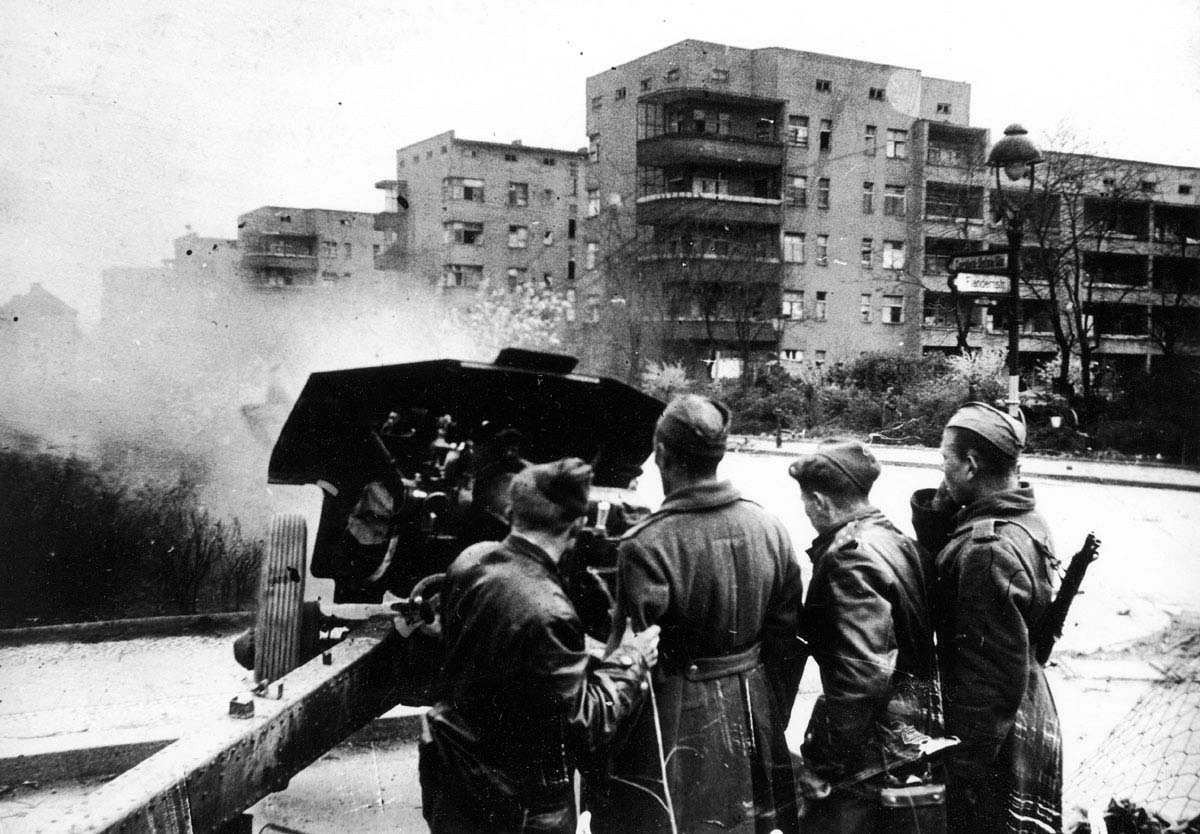
As the fighting intensified, the Soviets became more ruthless in their tactics. In the event of shots being fired from a building the near-automatic response was to demolish it with artillery fire. These workers’ apartments have suffered little prior to the battle but now receive the attention of Chuikov’s gunners.
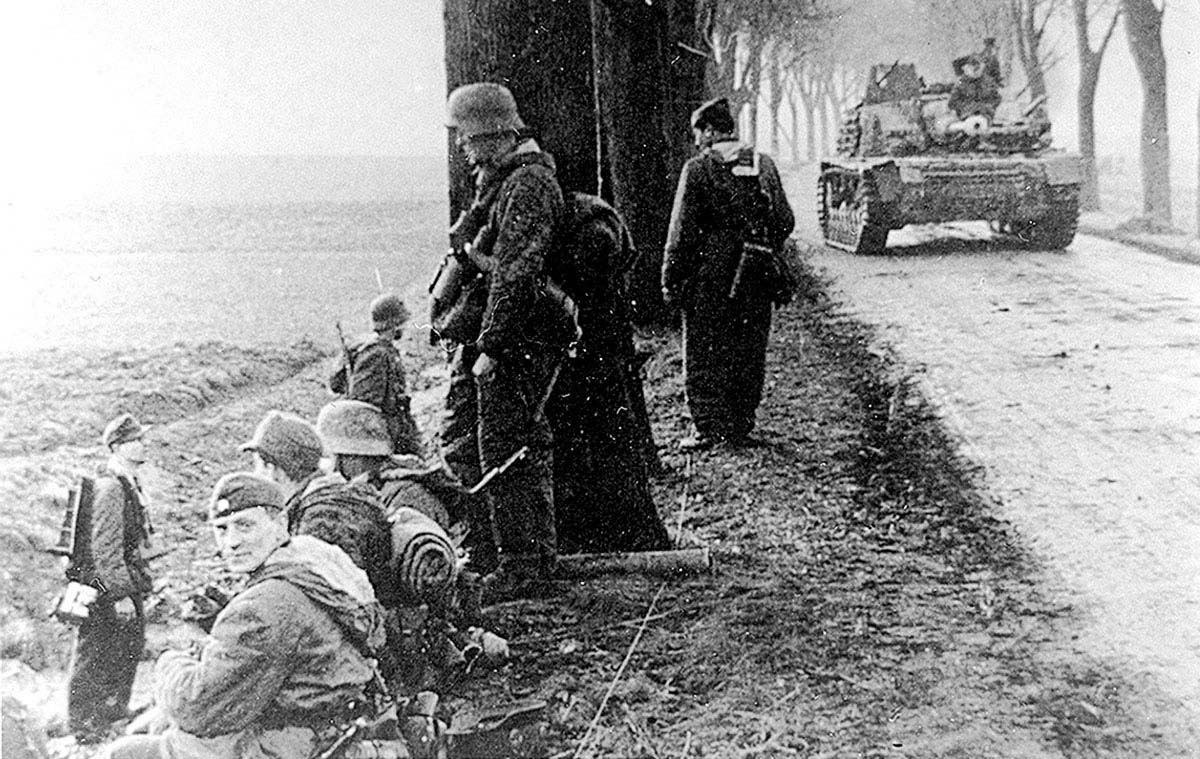
SS Panzergrenadiers and an assault gun north of Berlin. The failure of Steiner’s SS troops to mount a rescue mission led Hitler to lose faith in his elite forces. There was also a rumour among the defenders of Berlin that the SS had been secretly ordered to leave their positions and make for Schleswig Holstein. During the last days of the war, distrust between the SS and the regular army grew significantly.
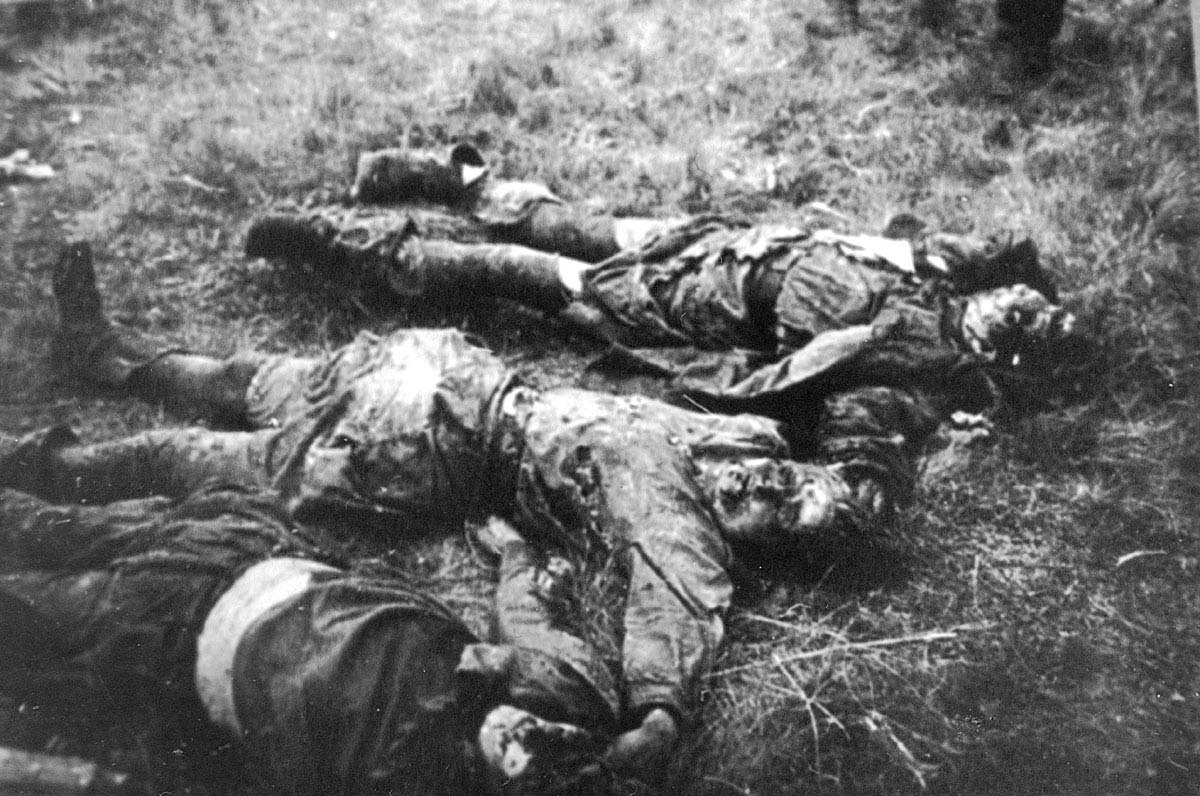
All men are equal in death: Soviet and SS casualties in Treptow Park.
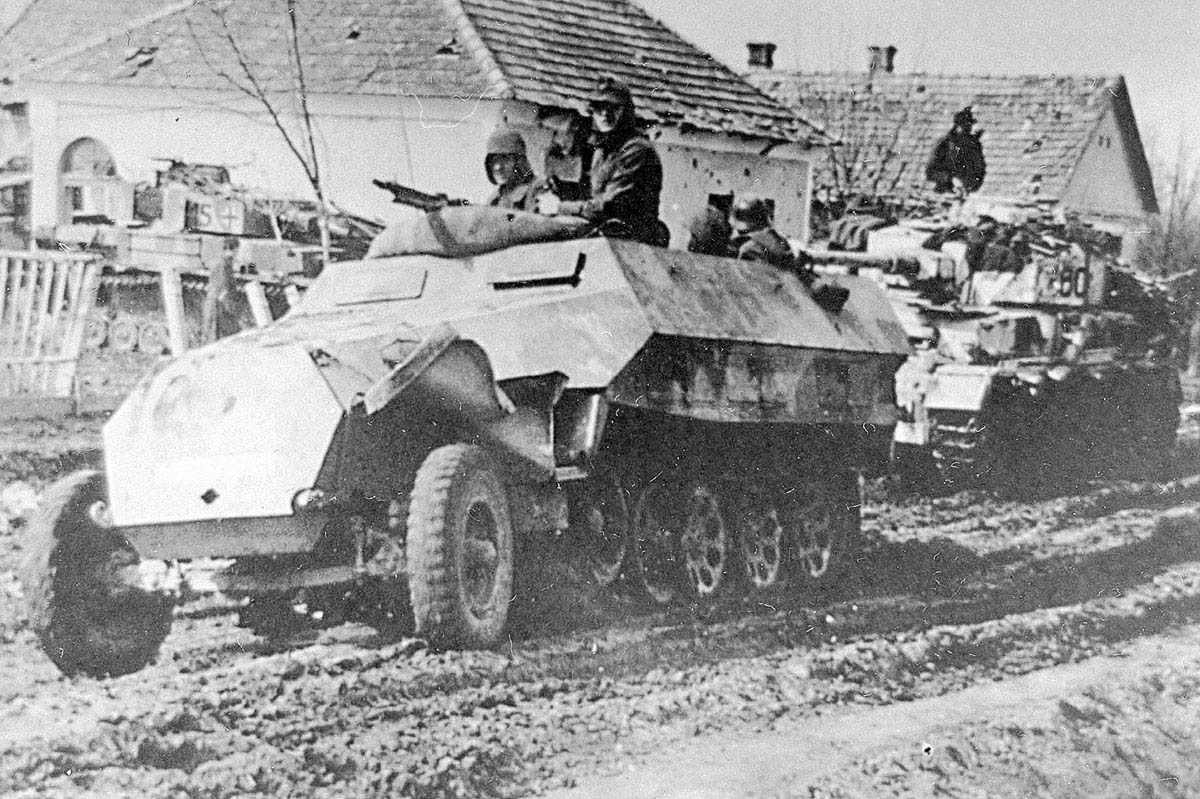
Elements, possibly of the Muncheberg Panzer Division, retire towards Berlin. The vehicles display evidence of hard fighting. The armoured side skirts on the panzers have been removed to avoid clogging of the tracks with mud or debris.