
Chapter Seven
So far the advance into Berlin was proceeding well but German Ninth and Twelfth armies were beginning to fight back and pose problems for Konev’s rear to east and west. Moscow had been lax in dealing with these formations as its focus was the battle for Berlin. However, when it came, the reaction was swift. General Busse’s Ninth Army included men from XI SS Panzer Corps and V SS Mountain Corps as well as survivors of the Frankfurt garrison and V Corps, in all, upwards of 80,000 troops. The number of civilians who had attached themselves to Ninth Army was not recorded. However, Busse still had 31 tanks fuelled from abandoned vehicles. Ninth Army had been in contact with Wenck’s Twelfth Army on the Elbe river. On 22 April Hitler had agreed to General Field Marshal Jodl’s suggestion that Twelfth Army should be rotated eastwards from its position opposite the Americans on the Elbe and set out to rescue Berlin. Ordering General Field Marshal Keitel to ‘co-ordinate the actions of Twelfth and Ninth armies’, Hitler packed him off with brandy, sandwiches and chocolate for the journey to Wenck’s HQ. Back in the Spree forest Busse was heavily engaged fighting off units of First Belorussian Front. Keitel reached Wenck on 23 April and delivered the order to save the capital. Hitler so lacked trust in his senior officers that he demanded that the order to save Berlin be broadcast on the national radio channel. When Keitel departed, Wenck and his staff planned their move. Part of Twelfth Army would march to Potsdam at the extreme western edge of Berlin while the greater part would head east to link up with Ninth Army. The objective was simple – to save as many soldiers and civilians as possible from the Soviet advance and then fall back to the west, where a screening force was to remain on the Elbe. When the men of the Twelfth Army were informed of this operation there appears to have been little dissent. For the people of Berlin, Wenck’s arrival could not come too soon, as it was about their only hope of deliverance from the Soviets, other than the arrival of the Anglo–Americans. Indeed, so wrapped up in the fantasy was Hitler that he informed Weidling on 25 April that Ninth and Twelfth armies would ‘deliver a crushing blow to the enemy’. Just what sort of blow could be delivered by two small, understrength forces that lacked fuel, armour, men and munitions was not detailed.
Wenck’s XX Corps, composed of four inexperienced, newly raised infantry divisions, set off eastwards on 24 April. One of its units, the Ulrich von Hutten Infantry Division, headed for Potsdam, and the others for Ninth Army.
The route that both Ninth and Twelfth armies were to follow led through forests, the most dangerous points of which were the crossing of open spaces, notably the roads that ran across their path. Busse’s force began its exodus on 25 April, ignoring all signals from Berlin. However, behind Ninth Army’s rearguard followed Zhukov’s II Guards Cavalry Corps and elements of Thirty-Third and Sixty-Ninth armies. Konev contributed Third Guards and Twenty-Eighth armies. It was a gap between these two armies that Ninth Army broke through on 26 April after bitter fighting. For the next five days Ninth Army fought its way through three lines of extemporised Soviet defence. Finally, on 1 May, Busse’s advance guard linked up with Twelfth Army at the village of Beelitz. Behind them came the rest, moving, as Busse described it, ‘like a caterpillar’. Roughly 25,000 soldiers had escaped, along with uncounted civilians.
Although Konev had had to switch his focus to his rear flanks the effect on the Berlin operation had not been critical.
Tactically the Soviet style had altered. Tanks no longer drove in column down the centre of a road but operated in pairs, one on each side of the road, giving cover to each other from Panzerfaust-wielding ambushers in the cellars and basements, or Molotov cocktails dropped from windows and rooftops. Supporting infantry operated in assault groups of between six and eight, armed with close-order weapons such as submachine-guns, grenades, knives and sharpened shovels. Artillery of all calibres was deployed to clear away barricades and stubborn pockets of resistance. And everywhere were flamethrowers and engineers with demolition charges for ‘bunker busting’.
Late on 26 April, Tempelhof airfield was abandoned as the Muncheberg and Nordland divisions’ remaining armour was ordered back to the Tiergarten. With room to manoeuvre, Chuikov projected his left flank across Konev’s right, cutting First Ukrainian Front off from the Reichstag and glory. As the fighting began to close in on the central defensive area, the Citadel, German reinforcements arrived in the shape of some Kriegsmarine personnel and Latvian SS men.
Elsewhere, Spandau Prison, on the Havel river to the north-west was taken and Gatow airfield came under ground-attack. Along the Landwehr canal, Fifth Shock Army was making progress onto the Wilhelmstrasse while Third Shock Army crossed the Westhafen canal. Pushing on throughout 27 April, the Soviets reduced the German defence area to a zone 5km by 15km, which roughly ran from the Alexanderplatz in the east to Charlottenburg and the Reichssportsfeld in the west.
News, inside this enclave and outside, as Soviet control of many areas was incomplete despite their best efforts, was at a premium as the radio service had virtually ceased to function, therefore one of the major sources was the tabloid Der Panzerbar – The Armoured Bear, referencing Berlin’s symbolic animal, the bear. Der Panzerbar’s headline for 26 April ran, ‘The battle has reached its climax, German reserves are rushing to Berlin.’ Lower down the page, a box read: ‘Whoever shows cowardice over fighting like a man...is nothing but a low-down bastard.’ The same day an attempt was made to relieve 20th Panzergrenadier Division but failed.
In some areas the defenders established in strongly built structures held out. On Third Shock Army’s front the Stettiner Railway Station posed particular problems, as did the Schleisischer Railway Station and the Lowen Brewery for Fifth Shock Army. In these cases the Germans enjoyed the fire support of the two massive flak towers at Humboldthain and Friedrichshain respectively.
Eighth Guards Army was now responsible for flushing out German resistance in the Tiergarten, where, as various participants in the action recalled, the rhododendrons were just coming into bloom, and the Anhalter Station.
During the course of the next day, 28 April, Wenck’s thrust towards Potsdam linked up with the forces stationed there and began to evacuate them to the west. Commanding a skeletal unit still called a division there was General Reymann, the officer formerly in charge of Berlin’s defences.
However, the crowning moment of 28 April belonged to Third Shock Army’s LXXIX Rifle Corps which, having fought its way down Alt Moabit, came in sight of the Reichstag. During First Belorussian Front’s preparations for the Berlin offensive, senior officers had familiarised themselves with the landscape of Berlin by means of a massive architectural model, on which the Reichstag was objective 105.
With his empire’s capital reduced to a smouldering heap, Hitler, ensconced in his bunker, continued to act as though he still controlled armies by the dozen and subjects by the million. Having decided to remain in Berlin and die, Hitler, on 27 April, having stripped Goering of all his offices for alleged treason, received General von Greim and appointed him commander of the Luftwaffe. Others, such as Albert Speer, the Minister for Arms Production, had already made their farewells. Indeed, on 23 April Speer had described Hitler as an old man resigned to death. Again on 27 April Hitler had repeated his order to Ninth and Twelfth armies that their attacks must be, ‘principally to save Berlin’ but no response was forthcoming. SS Obergruppenfuhrer Fegelein, brother-in-law of Eva Braun, the Fuhrer’s mistress, was arrested and later executed for alleged knowledge of Himmler’s plot to negotiate with the Anglo–American governments. This covert scheme of Himmler’s was, for Hitler, the final straw, particularly when it was confirmed by Reuters News Agency on 28 April. Convinced there was no longer anyone he could trust, Hitler married Eva Braun and dictated his political and personal statements. Appointing Grand Admiral Doenitz Reich President, he blamed an international Jewish cabal for forcing him to go to war. Command of the army was given to General Field Marshal Schorner, who was leading the remains of Army Group Centre in Czechoslovakia. Having completed his paperwork he joined his wife, and the newlyweds retired to bed. It was Sunday 29 April.
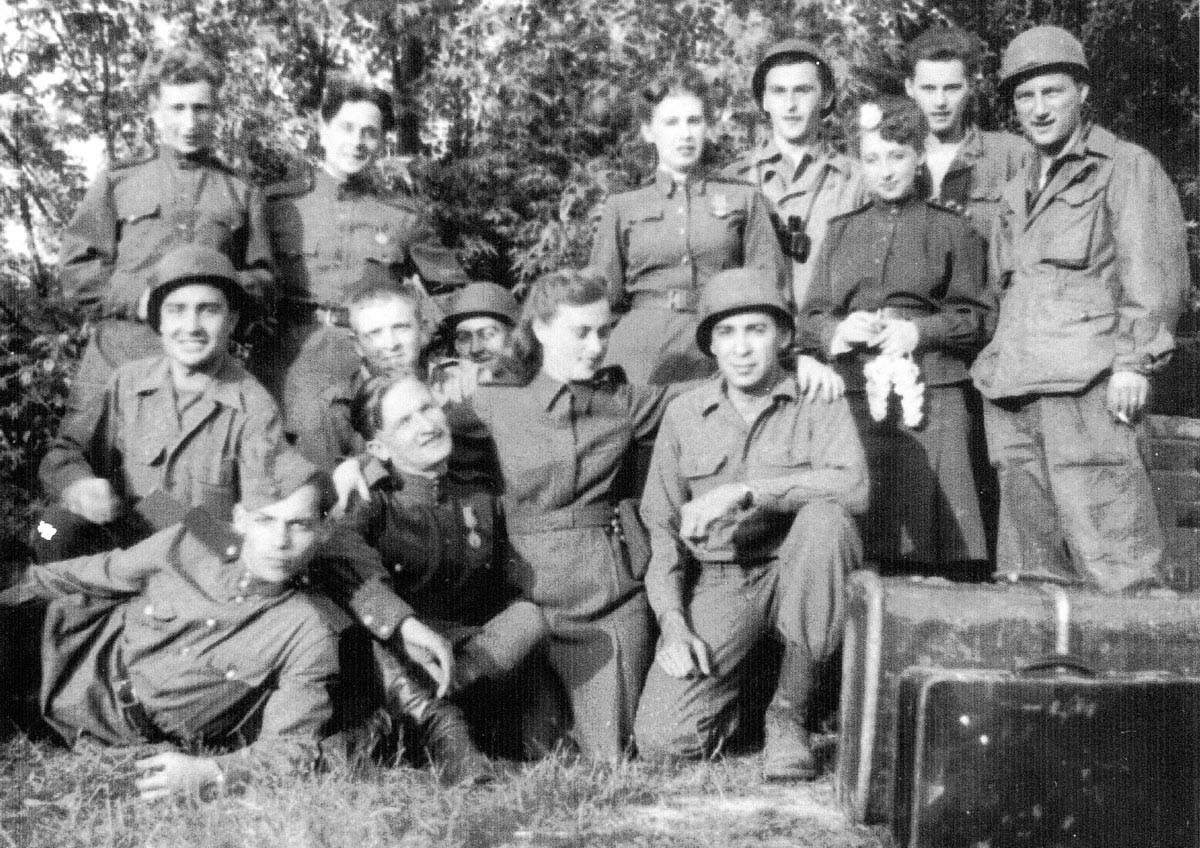
On 25 April the American and Soviet armies linked up at Torgau on the Elbe river. This image of ordinary Soviet and American soldiers includes the artist Philip Stein (famous for his Mexican mural work), who was a meteorologist with US Ninth Army and ‘happened to be there’. Stein returned to the USA but the fate of the Red Army personnel is open to speculation as such contact with westerners was frowned upon severely in the USSR following the war’s end.
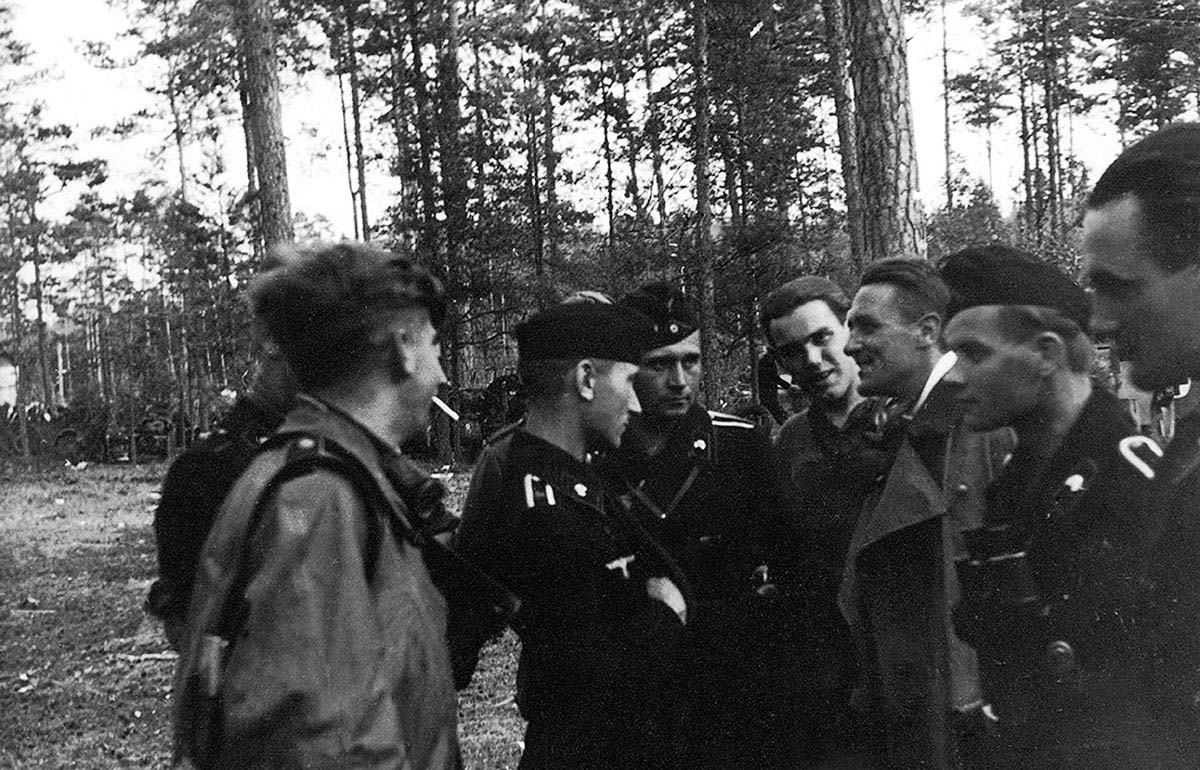
Officers of Busse’s Ninth Army conferring prior to the attempted breakout from the Spree Forest to link up with Twelfth Army. The success or failure of the breakout depended on the panzer troops providing the armoured spearhead; therefore much responsibility lay on the shoulders of the panzer officers such as those seen here.
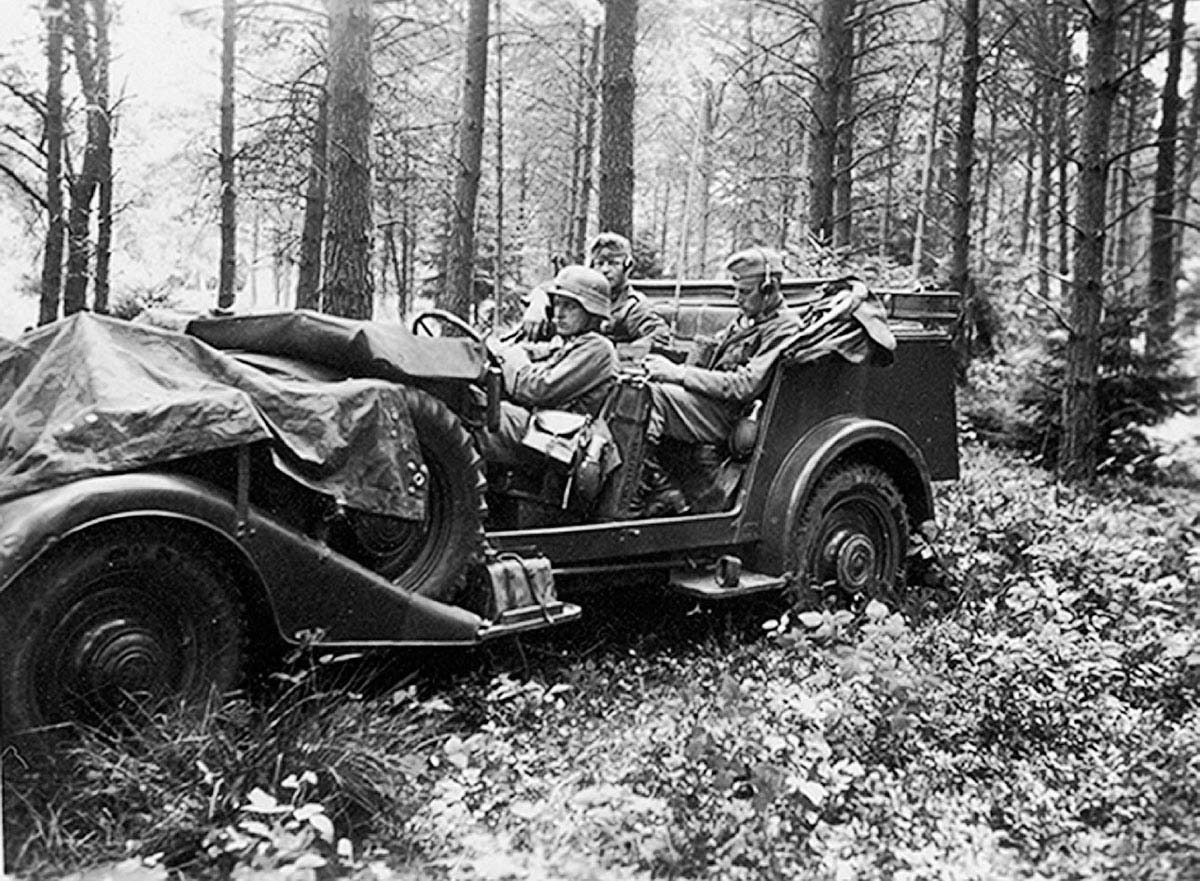
As the main body of Twelfth Army made its way eastwards to link up with Busse, communications were paramount. Mobile units such as this one were essential to keep each army informed of the other’s progress. Signals from Berlin urging both armies to come to the capital’s rescue were ignored.
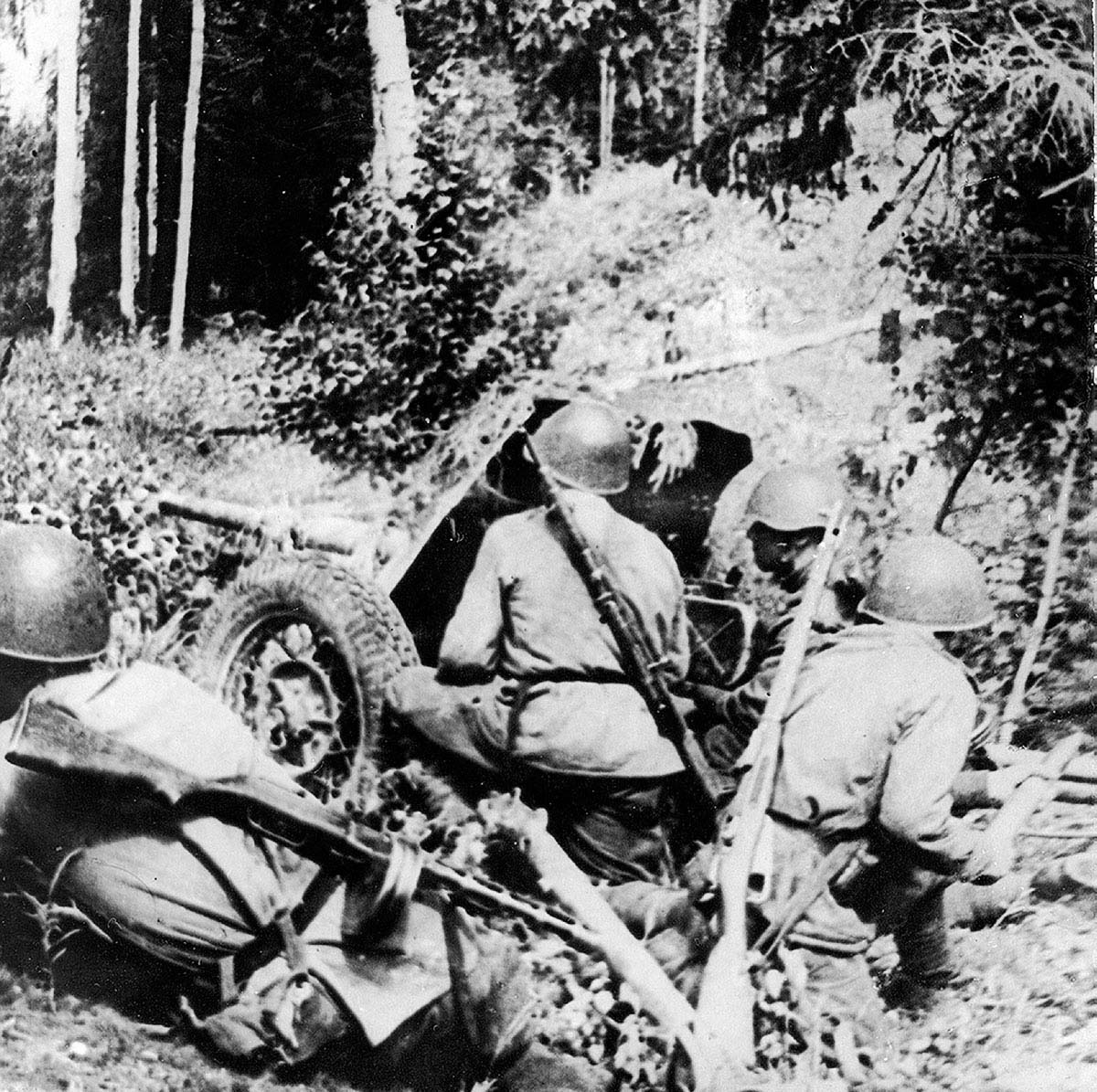
Waiting for Busse’s convoy, a Soviet 45mm anti-tank gun hardly attempts to conceal itself. Light and manoeuvrable, this weapon was more than capable of dealing with soft-skinned vehicles or lightly armoured tanks at close range. The closely wooded terrain provided extra shrapnel.
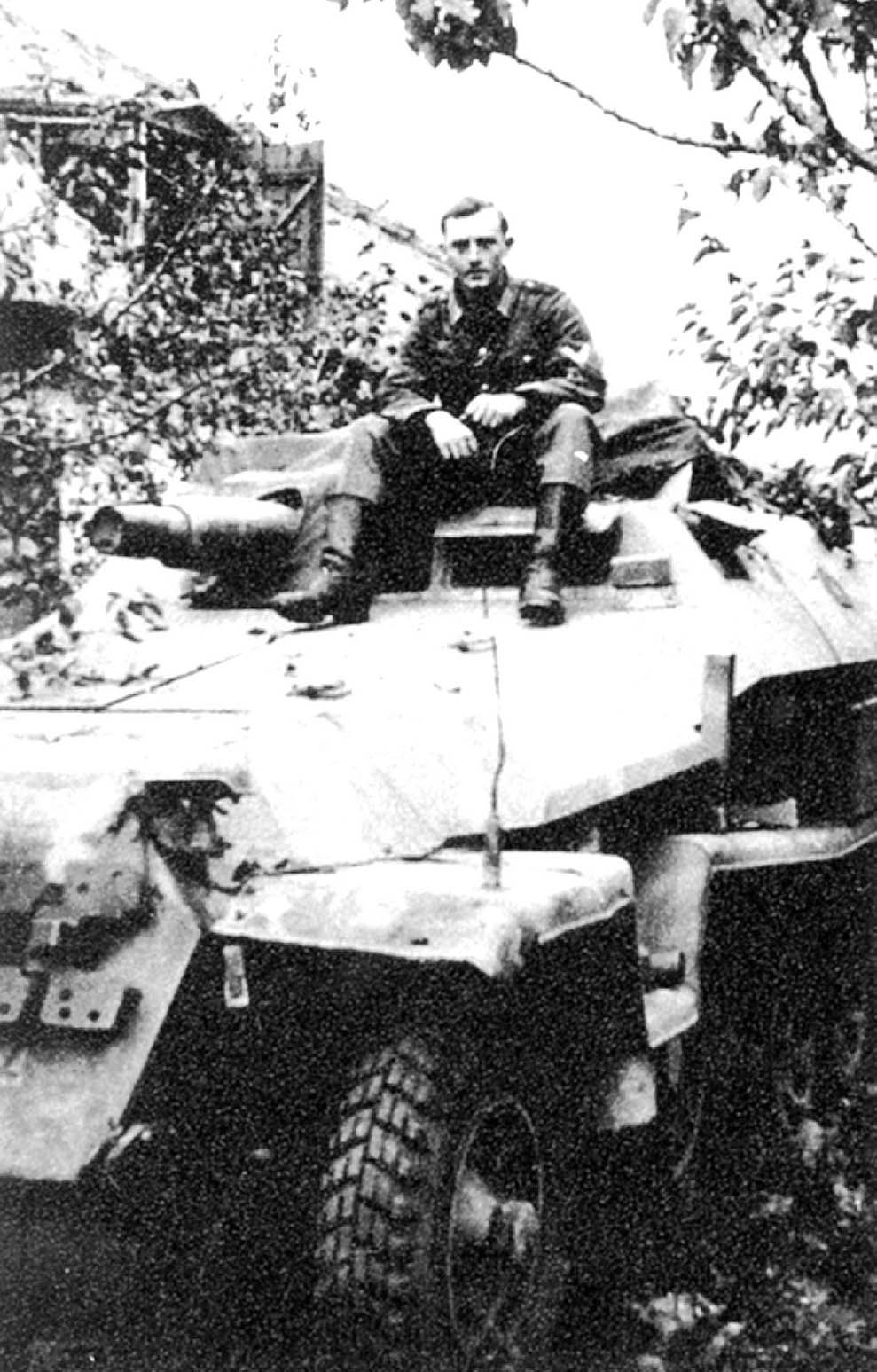
An SdKfz 251/9 half-track mounting a short 75mm gun waits to take on its load of personnel before moving out from under its camouflage screen. As Ninth Army’s journey progressed, such vehicles were sacrificed to provide fuel for the tanks, which were of greater fighting value.
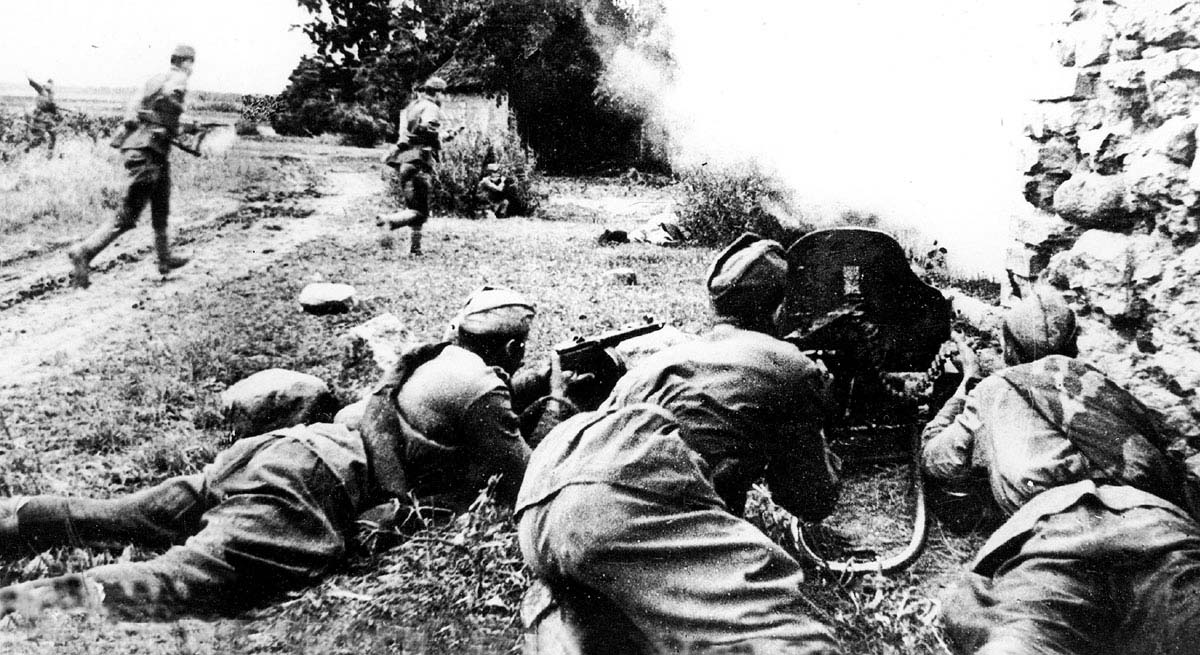
A Soviet Maxim machine-gun team engages with a forward reconnaissance group of Wenck’s Twelfth Army. Fighting was confused as the Soviets were unclear as to the objectives of both Ninth and Twelfth armies.
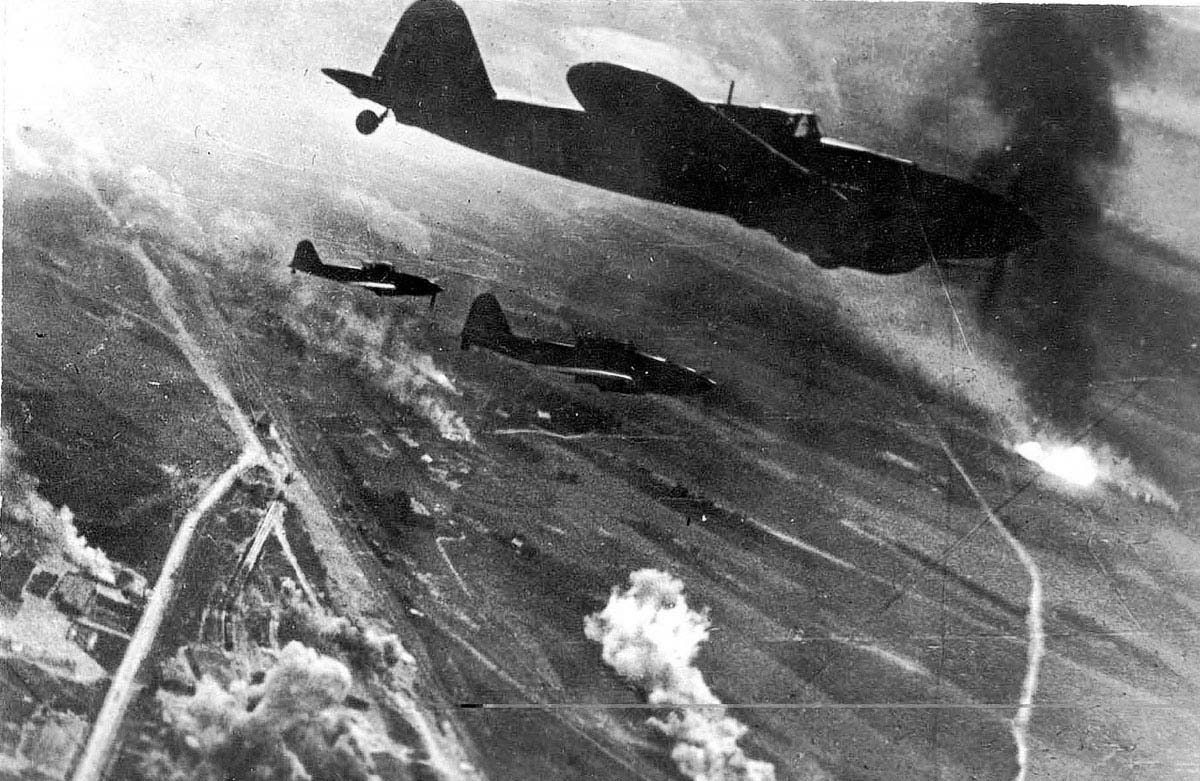
Shturmoviks flying ground-attack missions register on the smoke below before making their run. Three Soviet Air armies, Second, Sixteenth and Eighteenth, were committed against both Ninth and Twelfth armies. Those flying in support of Konev’s forces flew over 3,000 missions.
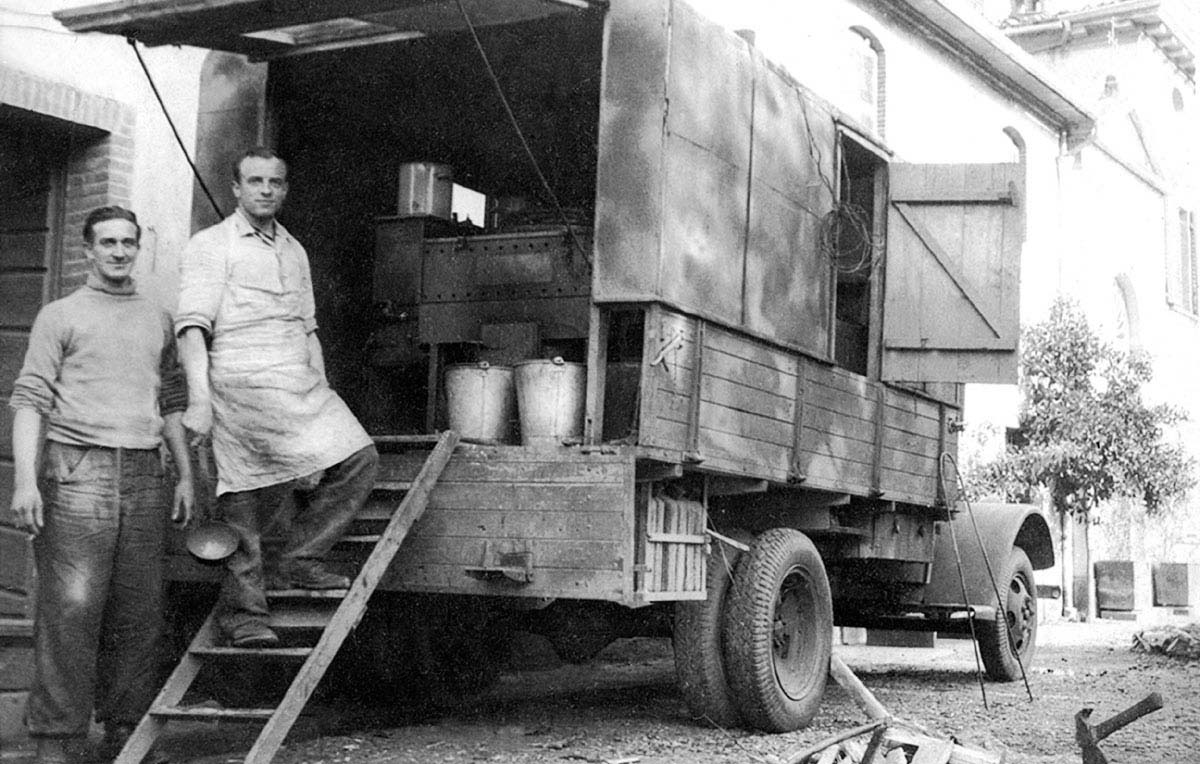
Twelfth and Ninth armies met up on 1 May. Wenck had insisted on providing as much food and transportation as he could muster for the survivors. Some were so exhausted, both physically and mentally, that they had to be beaten to their feet to receive their rations. The shuttle service to the Elbe river began that day.
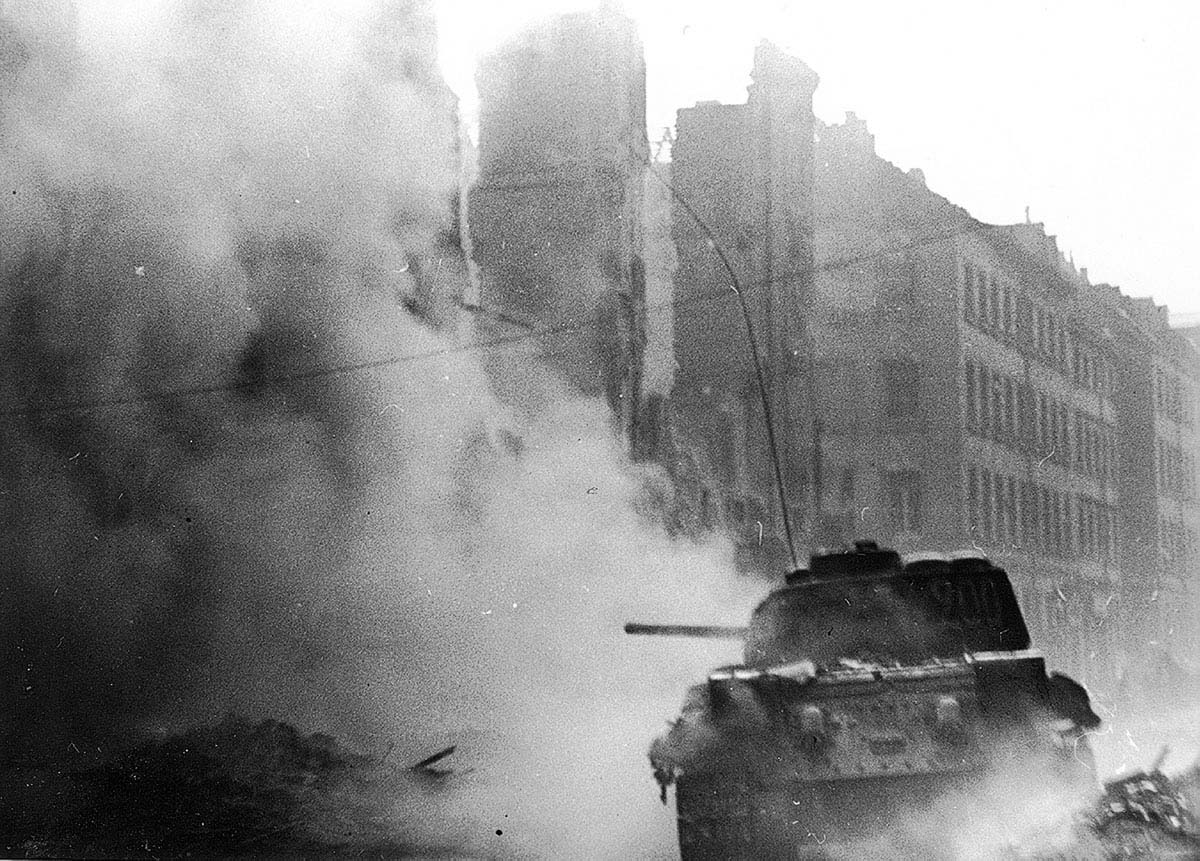
Clearly showing the destruction in Berlin, this Soviet image is, to quote the original caption, of ‘the tank crew of Colonel N. P. Konstantinov driving fascists out of the houses on the Leipzigerstrasse.’
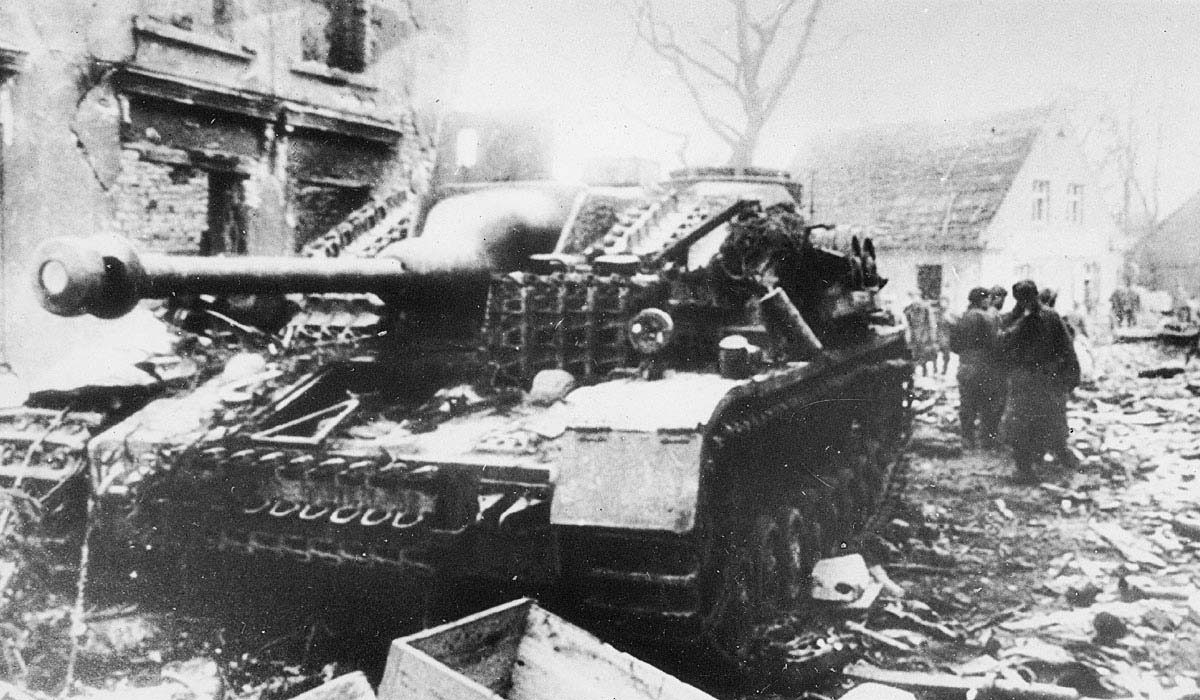
This abandoned StuG IV was destroyed in the fighting with Fifth Shock Army on 27 April. The extra track pieces have been welded to the hull to give added depth to the armour.
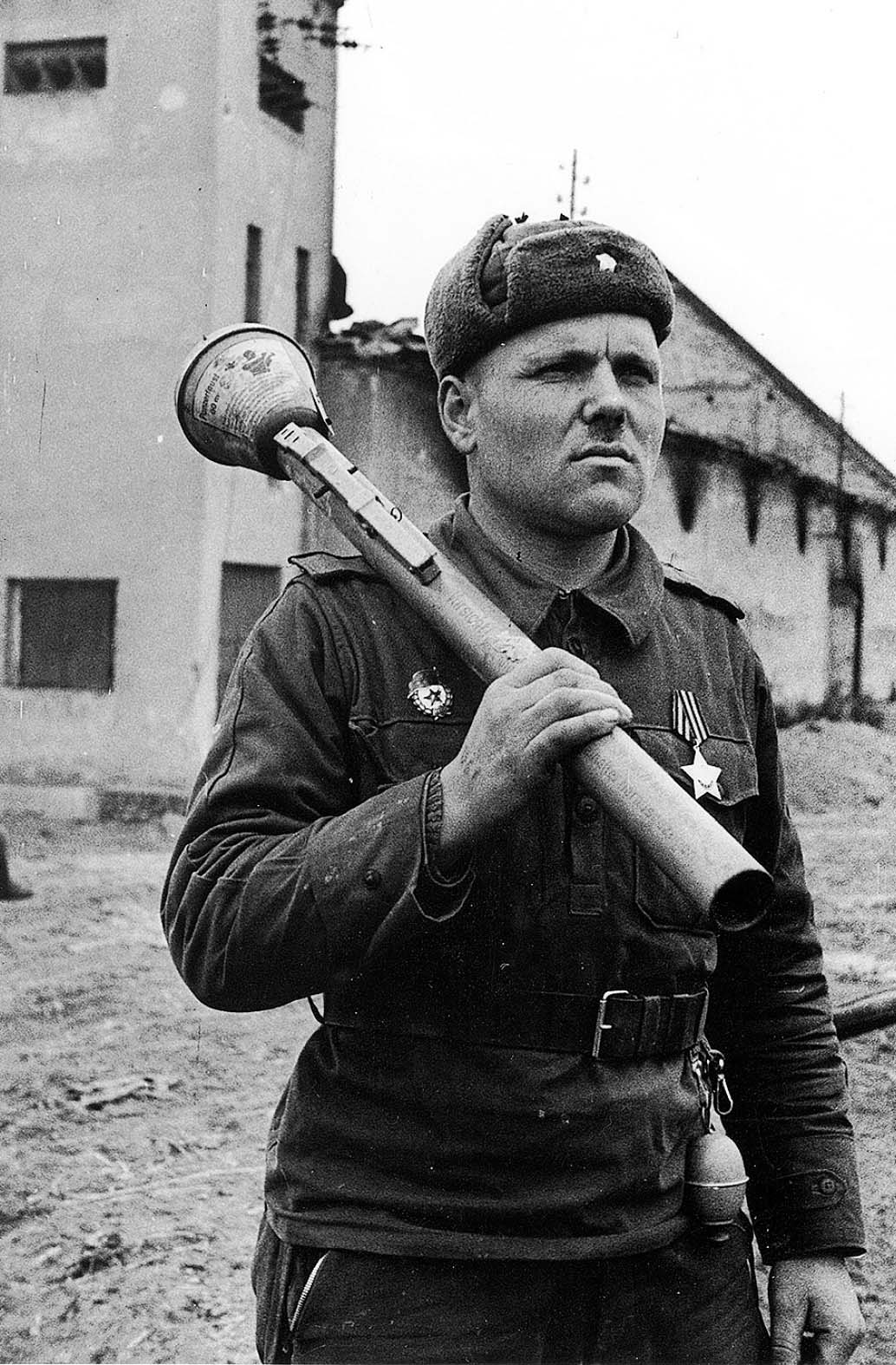
The Soviet troops quickly developed a liking for the Panzerfaust, which they captured in large numbers. In addition to its anti-tank capabilities it was used to blast through the walls of buildings to create safe routes and to destroy bunkers. Guards Sergeant Levchenko is shown here with a Panzerfaust 100, which denoted the range in metres.
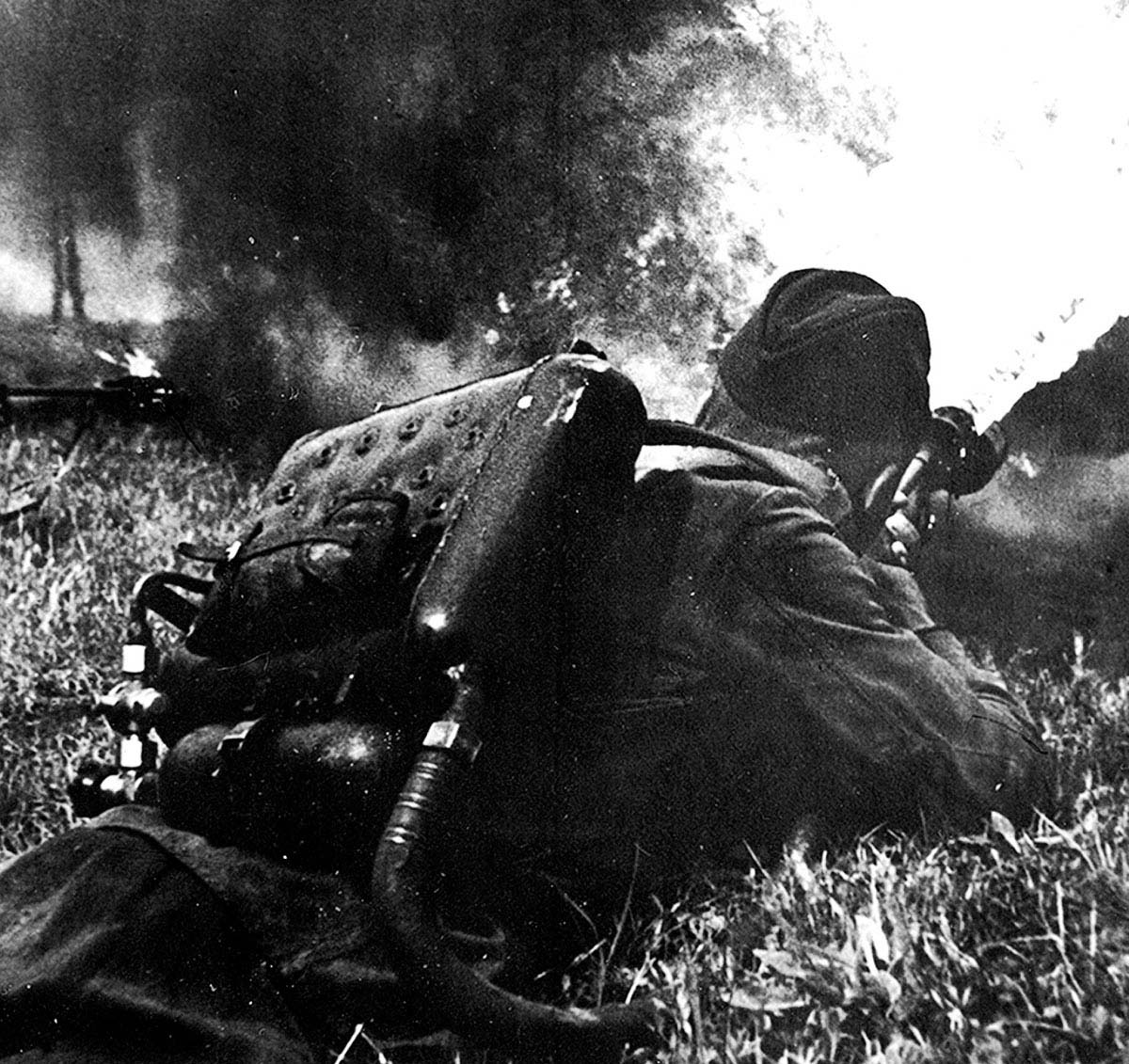
Flamethrowers were an important weapon during the street-fighting in Berlin. If available they were called into action wherever there was the least sign of resistance. This is a ROKS-2 type, designed to look like a soldier’s pack so the operator was inconspicuous until the weapon was in use.
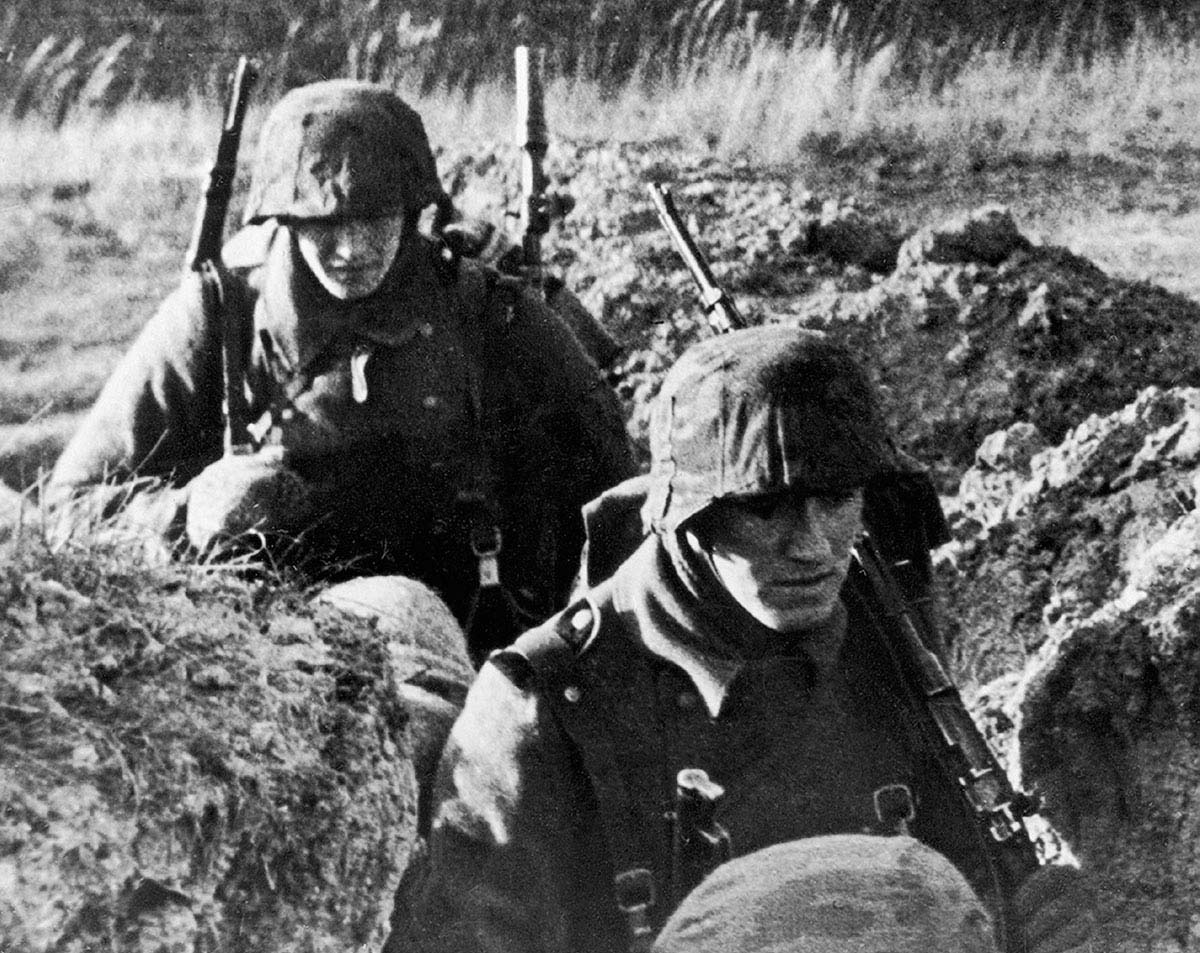
SS infantry of an unidentified unit move into the trenches during the last few days of fighting in Berlin. The man to the rear appears to be carrying a flamethrower.
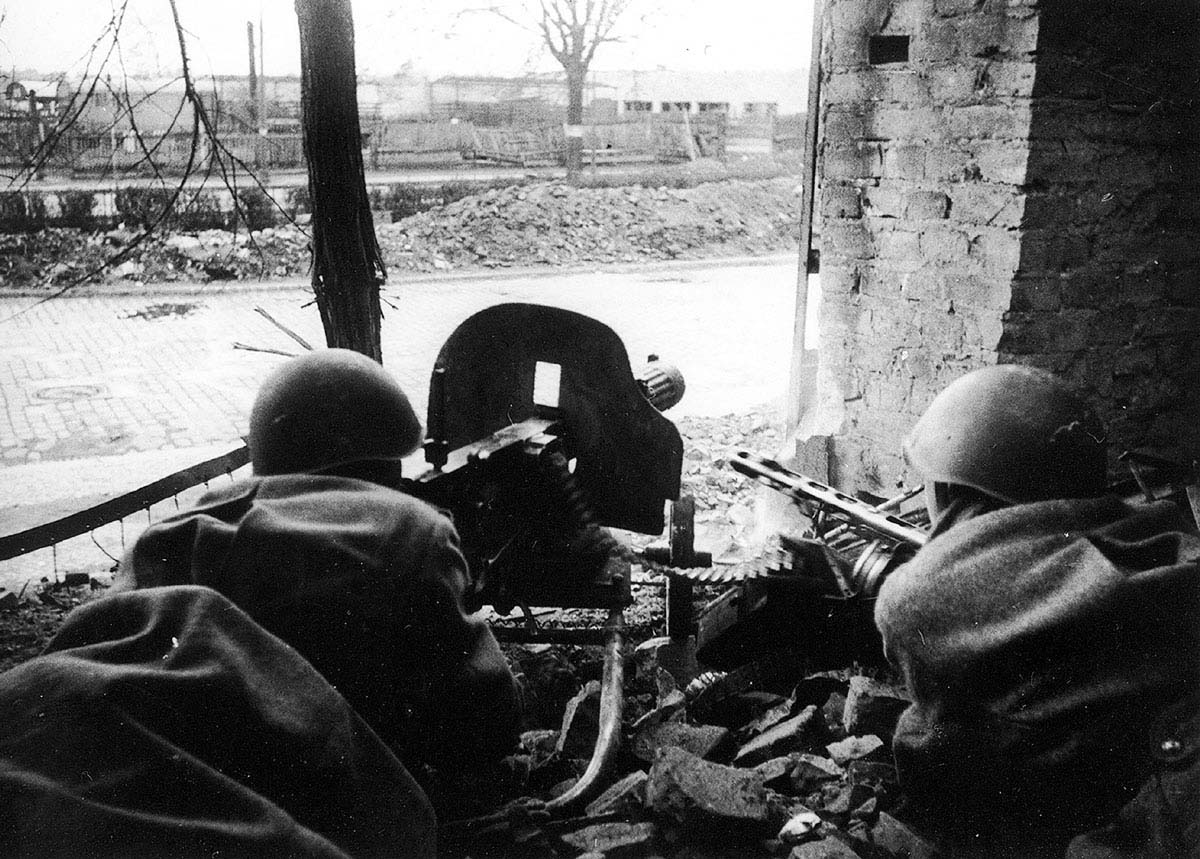
The marshalling yards of the S-Bahn and national railways were difficult areas in which to fight. The open spaces were obvious killing grounds for machine-gun teams. Often overlooked from embankments or solid buildings, they were not a place for the unwary.
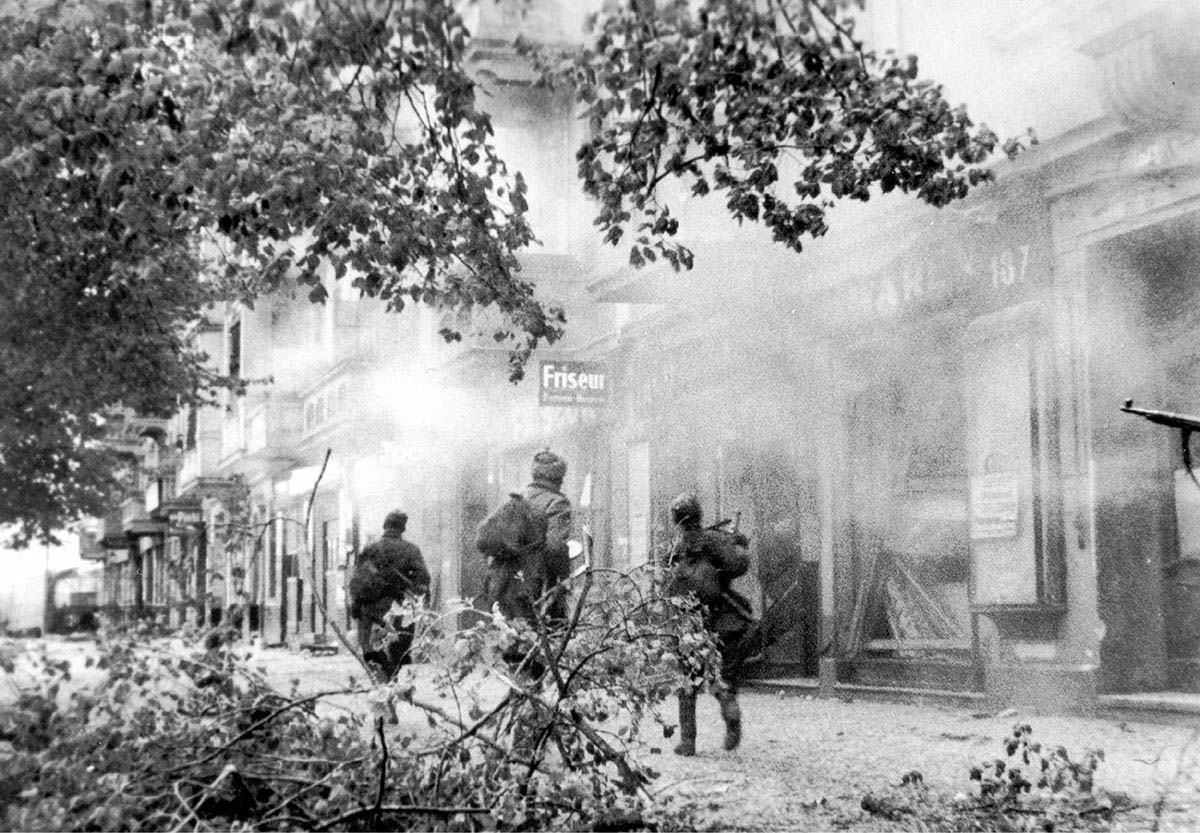
A Soviet assault group moves forward through the city streets. The man to the right is covering the upper storeys of a building with his PPSh-41 as the balconies could provide convenient positions for enemy infantry. As well as looking up it was sensible to look down as mines were scattered like confetti in some areas.
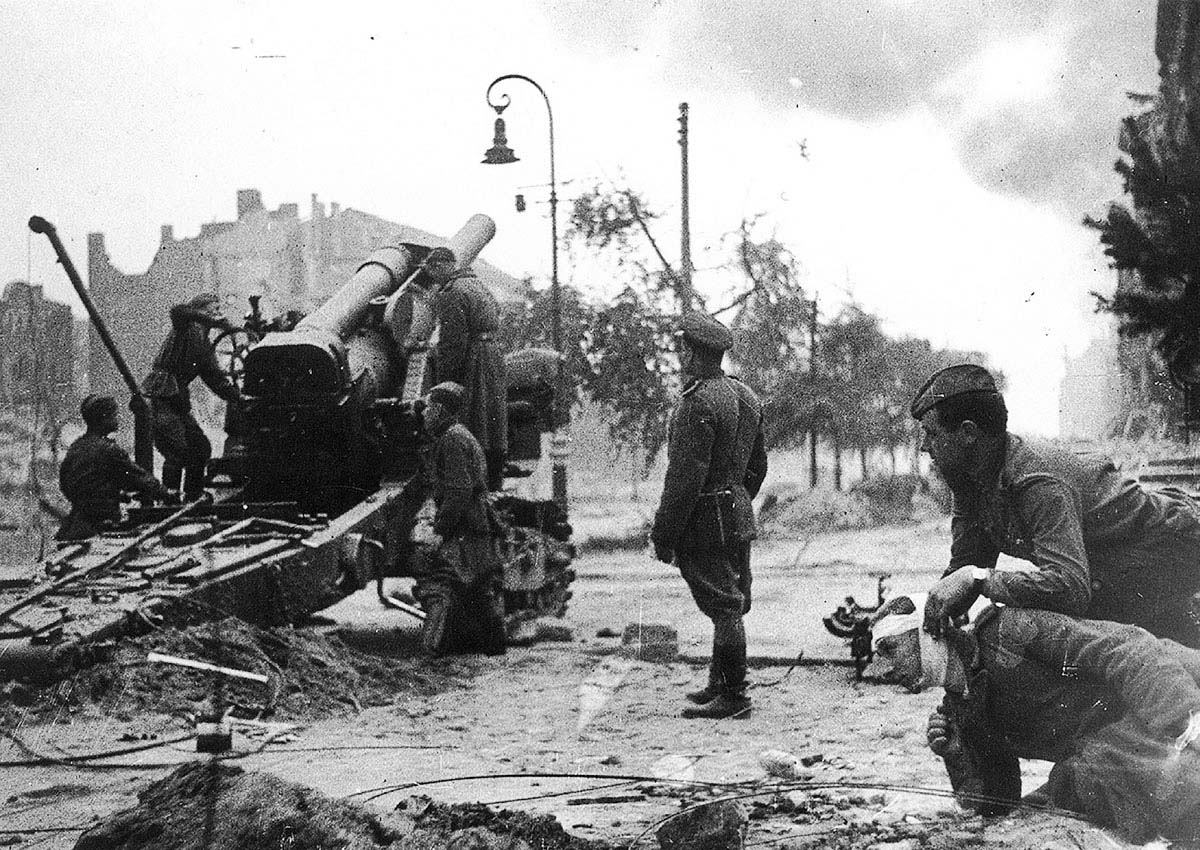
The calibre of the guns that First Belorussian Front brought to bear on the city’s streets increased rapidly. Here a 203mm howitzer is brought into action. Capable of firing one shell every two minutes, it had a range of 16km and a crew of 15. Its tracked carriage proved advantageous in broken terrain when being towed. Apparently the target is the Air Ministr y on Wilhelmstrasse.
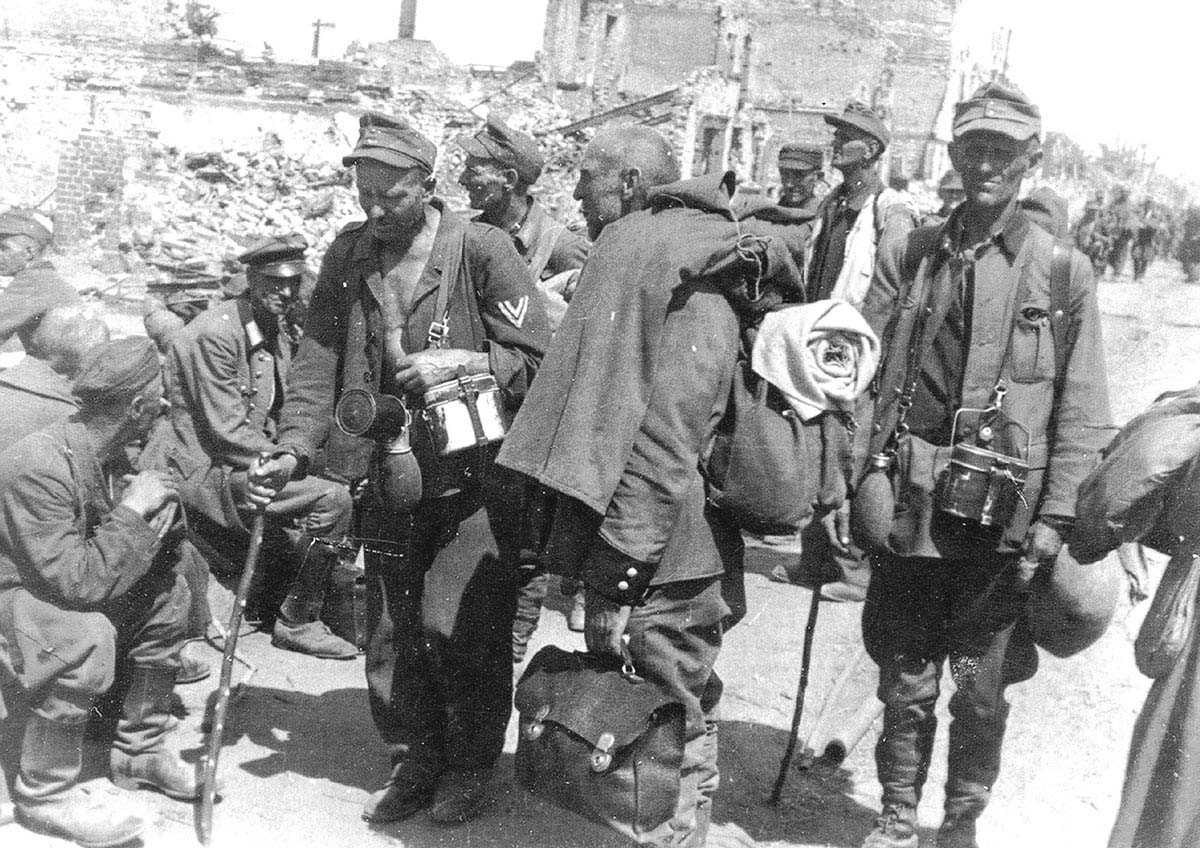
Gaunt, dirty and disillusioned, a group of German POWs awaits orders. Possibly some of these men would be chosen by the Red Army’s Seventh Section to return through the lines and persuade others to surrender. German communist exiles and members of the so-called ‘Seydlitz Army’ arrived in Berlin to carry out such tasks. Clearly such a mission was hugely risky and success was mixed.
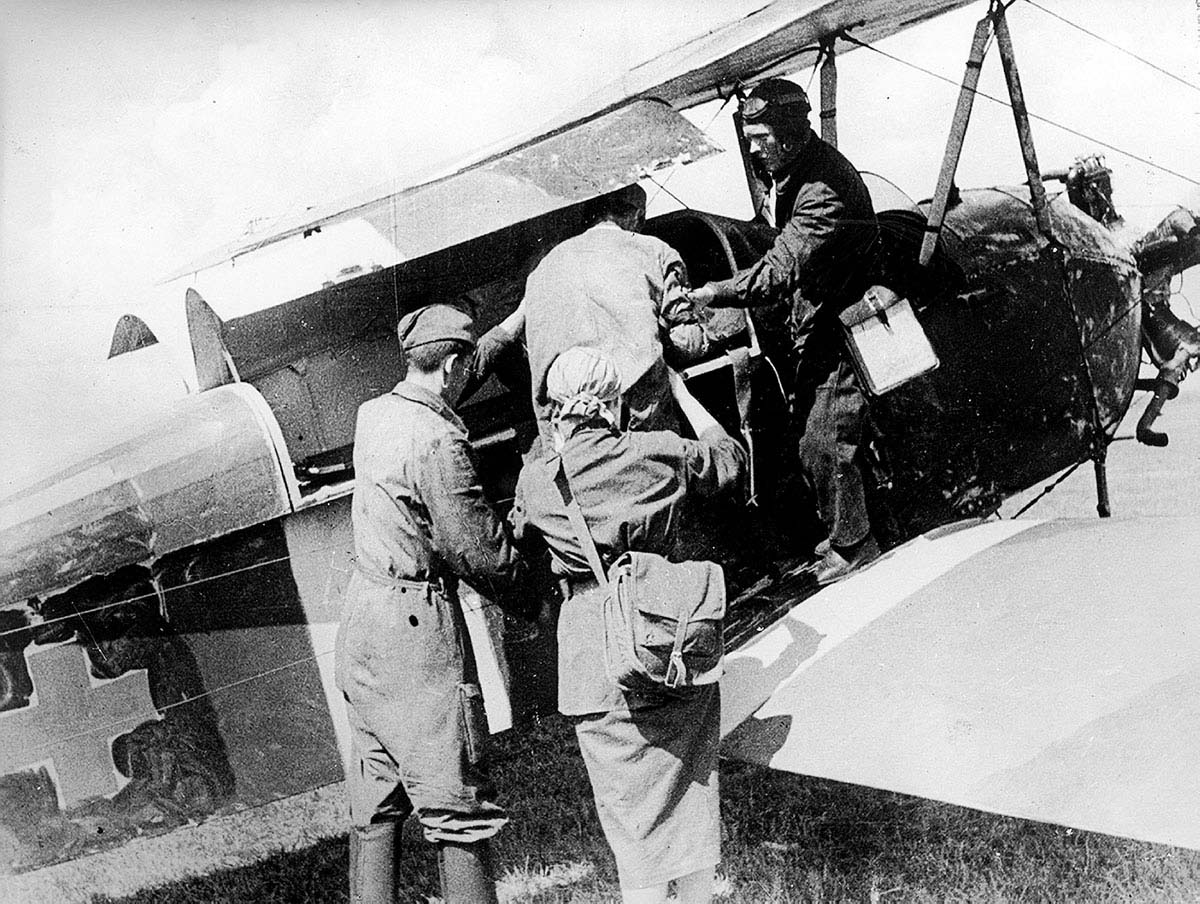
Tempelhof airfield was cleared of its obstacles sufficiently for the Red Air Force to use within 36 hours of its capture. Some 2000 German women were put to work around the clock. One of the results was the opportunity to fly out seriously wounded casualties to base hospitals in aircraft such as this converted U-2.
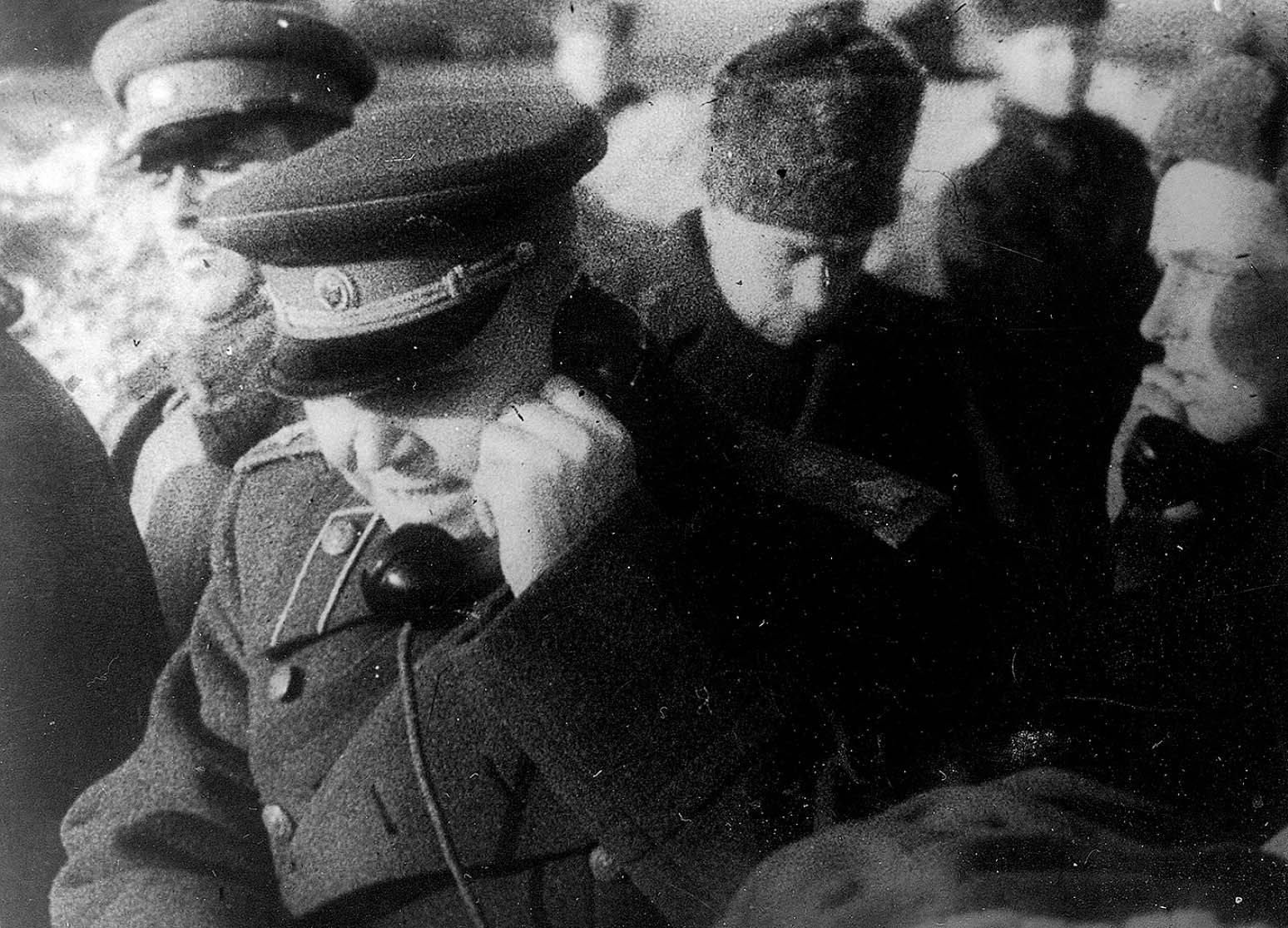
On 28 April, Konev, having reported his Front’s progress for the day, was asked the question by Stalin, ‘Who do you think is going to take Prague?’ Konev replied that First Ukrainian Front was able to do this from west of Dresden. The old adage ‘He who controls Prague controls Europe’ may have been some consolation to the man who almost conquered Berlin.
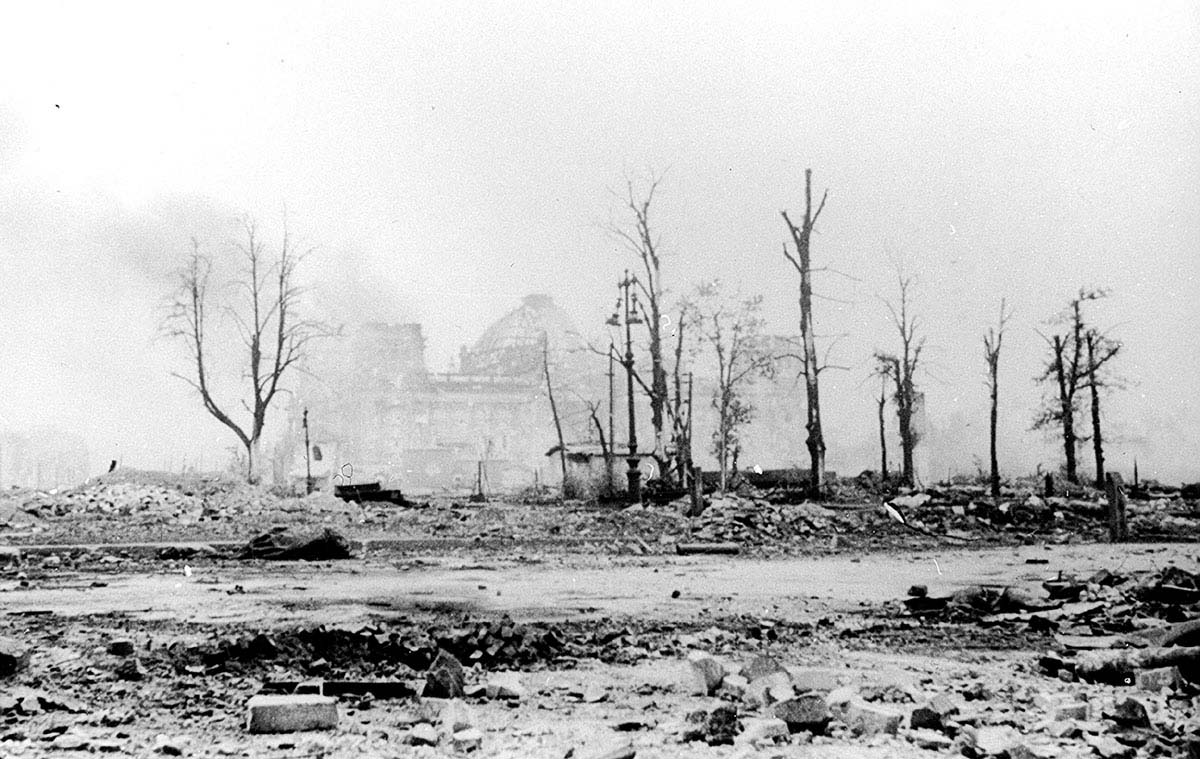
The sight that warmed the hearts of many a Red Army veteran as it appeared through the smoke of battle – the ruins of the Reichstag.