
Chapter Three
BY EARLY JANUARY 1916 the evacuation of the allied troops from Gallipoli had been completed and the troops moved to Egypt. Excerpts from Sir Ian Hamilton’s Despatches were printed in most of the national and county newspapers by the middle of January, chronicling the failure of the campaign, especially the ill fated Suvla Bay offensive. News also reached Britain that the Austrians had captured the important Montenegrin port of Cattaro and were massing on the Greek frontier, along with Bulgarian and German troops.
Another Front opened during December 1915 after a British force, led by Major General Charles Townsend, was surrounded by Turkish troops in the Mesopotamian town of Kut al Amara. A relief force was hastily assembled and moved towards Kut during the first week of January, but failed to prevent the surrender of Townsend’s force. The Mesopotamian campaign would become best known for the terrible conditions and sickness which the troops would incur in the hostile deserts. Among the officers interned at Kut was Lieutenant Colonel William Samuel Anthony of Kidwelly, one of a famous set of brothers. His brother Jack twice won the Grand National prior to the war and another brother, Henry Leonard Anthony, was killed in 1917. William became a major general and Director General Army Veterinary Services after the war.
A multitude of letters from men who fought in the doomed Gallipoli campaign were printed during January, many speaking of the bravery of their fellow soldiers. The heroic deeds did not help to stem the spread of despondency, as realisation dawned that the enemy was gaining the upper hand. The forthcoming year would deliver more bloodshed among the county’s young men than could be thought possible, as it was the year of the infamous Battle of the Somme.
While news of the Gallipoli evacuation filled the headlines, requests for various items by members of the 15th Welsh, newly encamped in trenches in the Fleurbaix sector, also appeared in the columns of The Carmarthen Journal, among them, Private John Jones of Ammanford, who required a football. Private Thacker, a Burry Port man, wrote home: ‘We are having a jolly good time out here. We are resting after some time in the trenches. We play football and have had some fine games. We had a concert last night in a barn and we were able to get a piano, everything being quite up to date. The programme was contributed to by officers and men.’
Meanwhile there were rumbles of discontent in the Gwendraeth Valley, when the workmen of the Great Mountain Colliery at Tumble raised concerns about the Government proposals to invite the South Wales Miners’ Federation to provide ambulance convoys in France, claiming that philanthropy was not the way forward and that the Government should not shirk its own responsibilities and should arrange for its own ambulances. Dark clouds were also forming over the colliery workers, the majority of whom were working in ‘starred jobs’, which deemed them immune from forthcoming conscription, when the Collier Recruiting Committee was set up. According to the Amman Valley Chronicle on 13 January:
‘Twenty-three courts in all have been established. The courts will decide questions which may be raised by the local recruiting officer as to:
(a) Whether any person who is alleged to be a coal miner is in fact, a coal miner.
(b) Whether in the case of any coal miner it is no longer necessary in the national interest to retain him in civil employment.
If any of the parties concerned is dissatisfied with the decision of the court, the Court may grant leave to appeal to the Central Court. “Coal miner” means any man working below ground in a coal mine, or any of the following surface workers at a coal mine: winding engineman, pump man, weigh man, electrician, fitter or mechanic.’
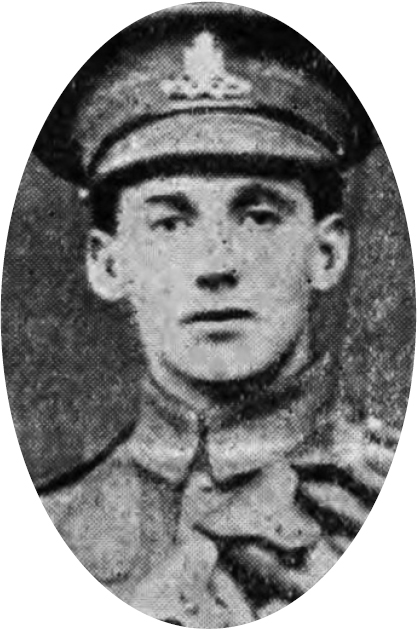
Gunner Evan Thomas Lewis, a former miner at Tirydail Colliery.
During the same week news reached Ammanford that 23-years-old Evan Thomas Lewis, a gunner with the Royal Field Artillery and former miner at Tirydail, had died of wounds on 17 December 1915 at Gallipoli, showing that not all the miners were shirking their duties.
The first local casualty of 1916 was Private Ivor Lewis, of Llanelli, who was wounded at Ypres and died at Remi Siding Casualty Clearing Station, Ljissenthoek, on 1 January. He is buried in the massive cemetery there.
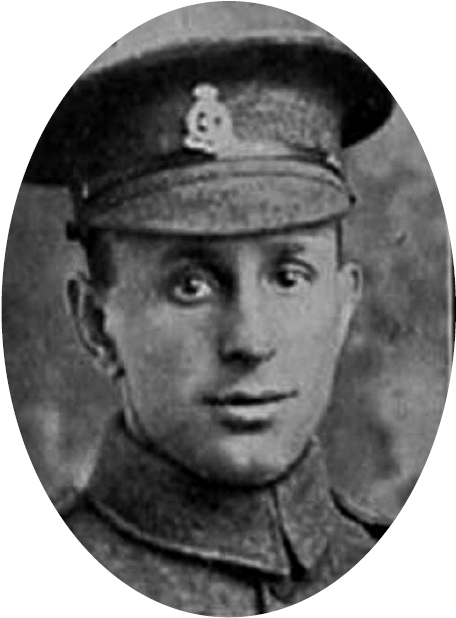
Private Ivor Lewis, one of the few Jews from the county who fell during the war.
During January a local scandal gripped the townspeople of Llanelli when the court martial at Fort Scoveston of two officers from the town began. Major William Thomas Campbell Jones and Captain and Adjutant John Santa Evans of the 2/4th Welsh, based at Hearson Camp, were charged with drunkenness, ill treatment of a waiter and other allegations of misbehaviour. There were twenty four soldiers present at the hearing who gave evidence against the two officers, which centred around a night of drunken foolishness and conduct unbecoming officers. The reporting of the trial took over several issues of the Llanelly Mercury and Llanelly Guardian during January. Jones was charged with three separate counts of drunkenness, but the main offences had occurred on 25 August 1915 after a night out in Haverfordwest, when Jones, Evans and two other officers burst into the Sergeants Mess, causing chaos. The defence attempted to blame the ensuing chaos on one of the sergeants, Frank Boxall, another Llanelli man, and said the officers had been drinking due to the fact that several of their fellow officers were about to be posted to other battalions on active service. Both officers were dismissed from His Majesty’s Army on 16 February. This was to prove an acute embarrassment to the two well known men; Jones was a solicitor and Evans a bank manager. Jones had served with the 16th Battalion, AIF for a short while before joining the 2/4th Welsh. He re-enlisted later in the war and served with the Machine Gun Corps.
On 4 February a letter was printed in The Welshman chronicling the heroism of Private Horace Rees of Carmarthen, who was home on sick leave, recovering from wounds suffered at Loos. His Commanding Officer, Lieutenant Colonel Young, felt so inspired by the bravery of the young Rees that he felt compelled to write to him:
‘I am home now, physically unfit for winter work in the trenches. It was a very bitter disappointment to me to leave the battalion that I was so proud of and the gallant comrades who had worked so cheerily and fought so gallantly together since the battalion was formed. I am glad to hear your wound is nearly healed. I wish you had been awarded a VC, but, like a good many others, you will be content with the feeling that you have tried to do your duty and that your comrades who have served with you know this.’
The bravery spoken of took place during the Battle of Loos, when Rees was first to volunteer to attempt to rescue wounded men from No Man’s Land and he, along with three other men, including Sergeant Williams of Carmarthen, spent two hours under heavy machine gun and artillery fire, bringing in no less than 150 wounded men.

Corporal Tom John of Llanstephan, who was home on leave shortly before his death.
Gladys Winifred Jones, of The Farmers Arms, Llandeilo, wrote a letter to The Carmarthen Journal, published on 28 January, to thank all of the people who had sent her their condolences after the death of her husband in France, Sergeant Edward Thomas Mitchell, of 26 Brigade, Royal Field Artillery. Mitchell was a professional football player at Reading and Swansea prior to the war and died of wounds at Béthune on 6 January, aged 24. Gladys was a widow at just 19 years of age and never remarried. ‘It is a comfort to have so much sympathy in this, my time of sorrow...’ In the same edition was the news that Corporal Tom John, a member of the 9th Welsh, had been killed in the trenches on 17 January. He had been wounded at Loos and, after recovering, had returned to a hero’s welcome at Llansteffan, where he was presented with a purse of gold by the Reverend J. John. He was the grandson of Thomas John, of 4, Stratford Villas, The Green, Llansteffan and is buried in Le Touret Military Cemetery.
Thirteen local men died during January, one at Gallipoli, one man at home and the remainder in Flanders.
Two well connected county men died the following month, both officers with different battalions of the Royal Welsh Fusiliers. The first was Lieutenant William Pugh Hinds, the only son of John Hinds, MP, of Neuadd-Deg, Carmarthen and of Blackheath Park. Possibly due to his father’s political connections, Hinds was commissioned into the 15th Battalion, Royal Welsh Fusiliers, part of the 38th (Welsh) Division. On 30 January 1916 15th RWF were in the trenches at the Boar’s Head, when he was hit in the head by a sniper while at No 2 Post, and fell unconscious to the floor. His men managed to get their revenge on the German, who was killed later that day. The unconscious officer was carried to the Dressing Station at Merville, where he died on 2 February, the first officer casualty of the battalion. While lying in hospital, David Lloyd George paid a visit to check on the young officer and wrote to his father, expressing his sympathies. John Hinds then visited the Prime Minister, Asquith, at Downing Street, where Lloyd George spoke to him of his son’s fatal injuries. He was 19 years old and is buried in Merville Communal Cemetery.
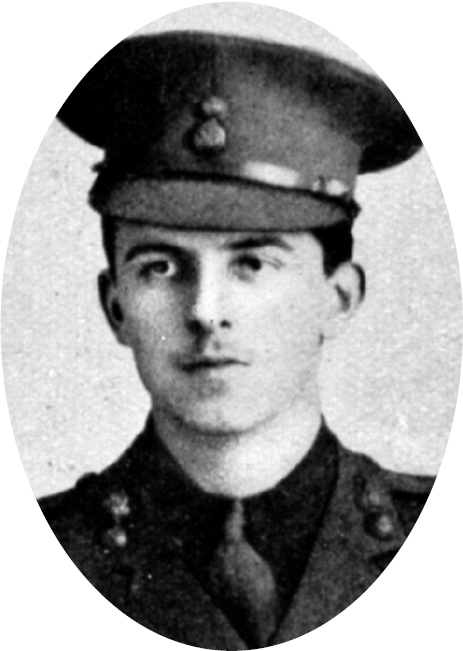
Lieutenant William Pugh Hinds, the first officer casualty of the 15th RWF and the son of a Member of Parliament.
The second man was also from Carmarthen. Second Lieutenant William James Minister Williams, son of William James Williams and Gertrude Elizabeth Williams, of Cambray House, Carmarthen and a former pupil of the Grammar School. In 1915 both he and his elder brother, Harold, were commissioned into the Royal Welsh Fusiliers; William joined the 2nd RWF, the battalion of the well known war poets Siegfried Sassoon and Robert Graves. Over the winter of 1915/1916 the battalion was attached to 19 Brigade, 33rd Division and was still at Loos, based north of the town, near Cambrin. He was killed in action during an attempt to capture the lip of a mine crater near Annequin South on 7 February. He was just 21 years old and is buried in Cambrin Churchyard Extension.
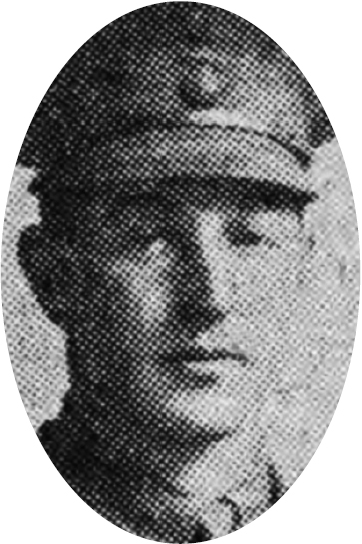
Second Lieutenant William James Minister Williams, who served alongside the war poets Sassoon and Graves.
The deepening of the war did not put an end to civilian pursuits back home; both the Carmarthenshire and the Neuaddfawr Foxhounds published a list of their forthcoming hunts in February whilst the Carmarthen Branch of the London County and Midland Bank caused a stir by recruiting its first female cashier. A battalion of the King’s Liverpool Regiment was paraded at Carmarthen Barracks on 8 February prior to entraining for a move to Egypt. A large number of locals lined the streets to bid farewell to the men, who had made themselves popular in the town during their stay.
Towards the end of February news of the deaths of two young brothers, residents at St Clears prior to the war, stunned the local communities of St Clears and Whitland, where the boys were well known. David and Evan Salmon were born at Lowlands, Narberth, the son of John and Sarah Salmon. The brothers were very close and were both working as farm servants at St Clears before enlisting together on 11 May 1915 into the Royal Field Artillery, with consecutive service numbers 98763 and 98764. Both brothers then transferred into 1st Battalion, Royal Welsh Fusiliers on 18 December 1915. During February 1916 the battalion was on the Somme, holding positions near The Citadel, Fricourt. David was wounded by a ‘moaning minnie’ (a German trench mortar bomb) on 6 February and died of wounds that same day, aged 21. He is buried in Point 110 New Military Cemetery, Fricourt. Evan was mortally wounded and died just a day after his brother, on 7 February, aged 23. He is buried in Corbie Communal Cemetery Extension.
While the first of the groups of county men to have enlisted under the Derby Scheme were leaving Carmarthen to join their units, a landmark moment in British military history occurred early in 1916 when The Military Service Act 1916, introduced by Prime Minister Herbert Asquith, came into force on 2 March. The Act specified that men from 18 to 41 years old were liable to be called up for service in the army unless they were married, widowed with children, serving in the Royal Navy (there was no Royal Air Force until April 1918), a minister of religion, or working in one of a number of reserved occupations. A second Act in May 1916 extended liability for military service to married men and a third Act, in 1918, extended the upper age limit to 51. Men or employers who objected to an individual’s call-up could apply to a local Military Service Tribunal, which could grant exemption from service, usually conditional or temporary.
The move was met with hostility from the coalmining communities even before it came into force. At the miners’ national conference in January a vote was taken among its members, with the dramatic result of 653,190 against the bill and only 38,100 for. The South Wales Union immediately suggested a national strike, but for the moment this was turned down by the other areas. A series of high-powered meetings followed in the coming weeks to attempt to resolve the situation.
In the meantime, The Carmarthen Journal reported that a local teacher had caused much merriment during a hearing with the Carmarthenshire Joint Education Committee after successfully attempting to evade conscription by getting married! During the same meeting, the teachers also pushed their case for a war bonus of £10 per head; whilst the necessity of allowing boys over the age of 13 to leave school to work on their parents’ farms due to manpower shortages was discussed and agreed upon.
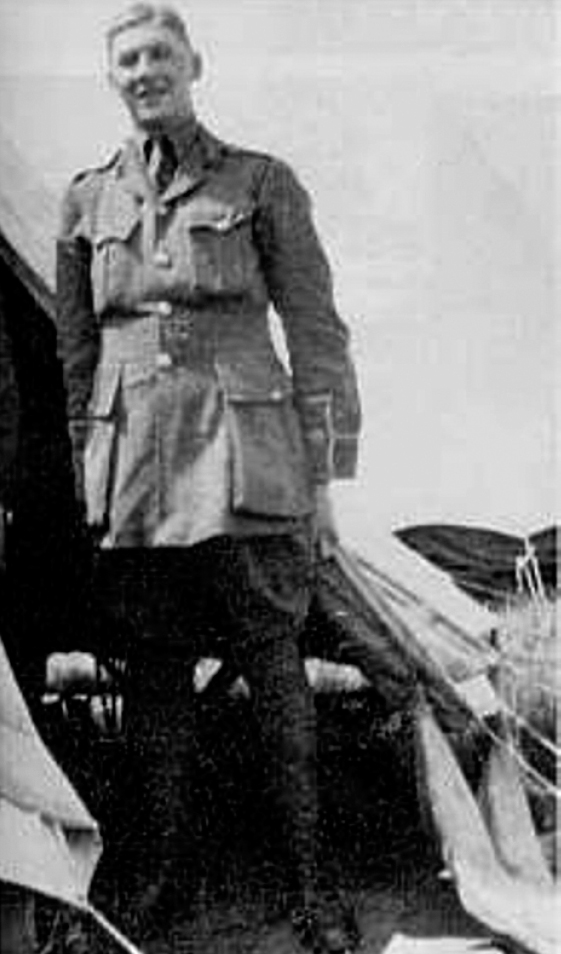
Lieutenant David Cuthbert Thomas ‘Dick Tiltwood’, the friend of Sassoon and Graves.
The 1/1st Pembroke Yeomanry embarked for Egypt at Devonport on 5 March, after first being told they might be used as reinforcements for the 53rd Division. In Egypt, the 29th Division, including the 2nd SWB, readied for a move to France, while the 53rd (Welsh) Division remained there, manning the Suez Canal defences.
During March the local casualty count continued, inevitably, to climb. The 38th Division moved to the Cuinchy sector, widely regarded as one of the most active sections of the front and casualties occurred on a regular basis. Twenty-two local men were killed during March, including five Carmarthenshire members of the 15th Welsh, killed when a German mine was fired under their trench near the Boar’s Head.
Lieutenant David Cuthbert Thomas, the son of Evan and Ethelinda Thomas, of Llanedi Rectory, near Llanelli, was killed whilst in charge of a working party at The Citadel, Fricourt on 18 March. The young officer, of the 1st Battalion, Royal Welsh Fusiliers, was a close friend of both Siegfried Sassoon and Robert Graves and is mentioned several times in their work, under the pseudonym Dick Tiltwood. The death of David hit Sassoon hardest. Distraught with grief for the loss of his friend, he took his grief out on the Germans, winning the Military Cross in so doing. Thomas was hit in the neck by a bullet. He walked to the aid station, seemingly just suffering a minor wound, but choked to death and died within minutes of reaching it. He is buried in Point 110 New Military Cemetery, Fricourt.
Also killed during March was another local officer, Lieutenant Wymond Howard Lloyd, born on 20 March 1883, the eldest son of Mr and Mrs H. Meuric Lloyd of Delfryn, Talley. He was educated at Malvern and New College, Oxford, where he had completed two years’ residence and was half way through his degree and studying for the Civil Service. He rowed for his college in the second eight and was a member of the Oxford University OTC and was commissioned into the Herefordshire Regiment as a second lieutenant in September 1914. Wymond embarked with his regiment to Gallipoli in August 1915 and was five weeks at Suvla before contracting enteric fever and dysentery, which required his return home after many weeks in hospital. Upon his return, he was posted to Park Hall Camp, Oswestry, engaged on light duty and hoped to pass for active service at a medical board on 23 March, but on 18 March he was struck by a train while walking near the camp and brought to Oswestry Cottage Hospital, where he died the following day. He was not commemorated by the War Graves Commission until recent research enabled this to be done; his grave is located at Llangadog Cemetery.
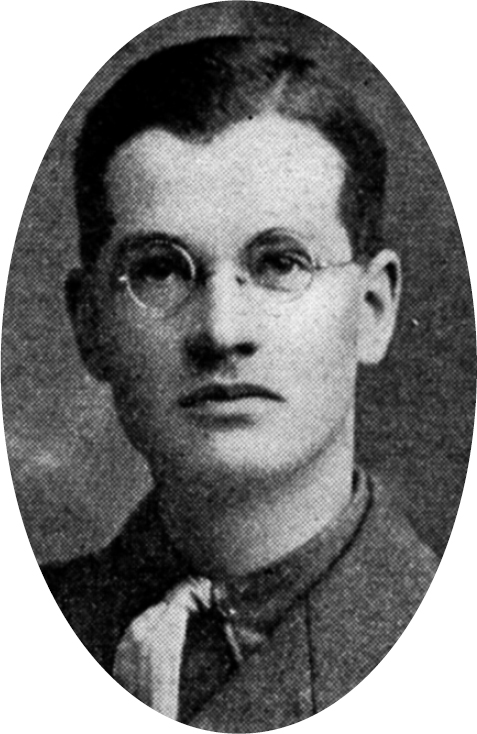
Second Lieutenant Wymond Howard Lloyd, who was not commemorated until the omission was recently brought to the attention of the CWGC.
The miners’ deputation met with the Prime Minister in the meantime and the local press announced that a revision of the Military Service Act as it related to colliery workers would be duly published. The latest batch of local Derby Recruits were called up on 18 March, the result of which meant that all single men between the ages of 19 and 41 would be serving in the army, unless exempted. The number of exemptions was, however, running high and this caused concern to the Government, which ordered the Carmarthenshire Local Tribunal (amongst others) to reduce the numbers of ‘starred men’. Later in March, notices for the call up of married men between the ages of 19 and 27 were put up around the county.
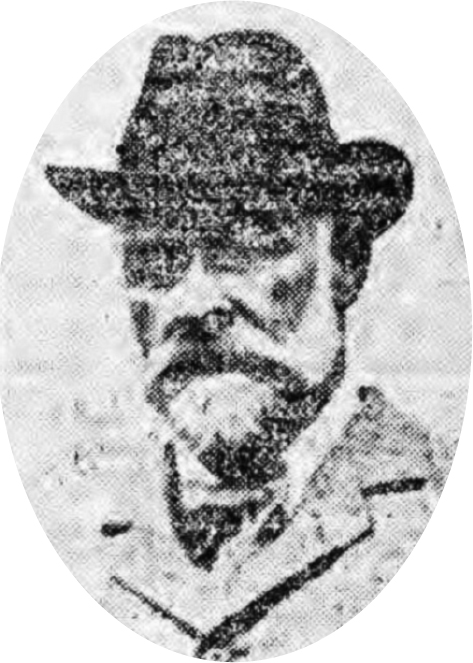
Sir Stafford Howard, KCB, DL, JP. Mayor of Llanelli during the early part of the war, and a very influential figure in local politics. Sir Howard died on 8 April 1916. His widow, Lady Catharine Meriel Cowell-Stepney took over as Mayor of Llanelli for the remainder of his term.
On Monday, 8 April the Carmarthenshire Branch of the National Union of Teachers held its annual meeting at Market Street School, Llanelli. Despite the war a lot of good work had been done in the county as far as education was concerned. The news of the death of one of the county’s most respected men, Sir Edmund Stafford Howard, also swept the county that day, as he died that morning. Sir Edmund was a prominent Liberal politician and the Mayor of Llanelli. His second wife, Catherine Meriel Cowell-Stepney, completed his mayoral term. The family had considerable property and land at Cilymaenllwyd and at Llanelli, and were also major share holders in the Great Western Railway.
Llandovery College suffered one of its blackest days on 9 April, when three of its former pupils were killed on the same day, each serving with a different unit. Sergeant David Jones Capenhurst Jenkins was killed at Ypres with the 5th Battalion, CEF; Captain Gilbert Lloyd Sinnett-Jones, wounded at Suvla Bay, was killed in Mesopotamia whilst serving with the 8th RWF; and Second Lieutenant Oswald Morgan Williams was killed at Cuinchy whilst serving with the 16th Welsh.
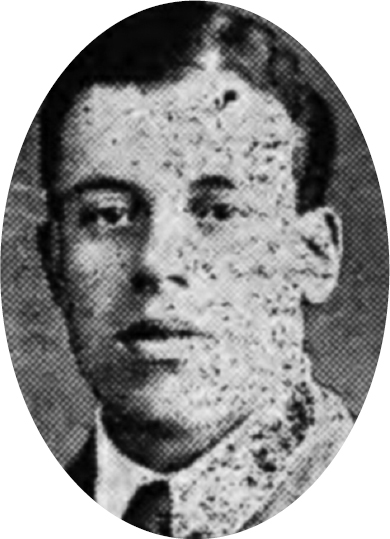
Trooper John Clement Sharman, a young man who made himself extremely popular in his short time at Carmarthen before his death.
On 14 April Trooper John Clement Sharman, a member of the 3rd County of London Yeomanry (Sharpshooters), died at Carmarthen Hospital from the effects of dysentery contracted at Gallipoli. The young man had made himself very popular in the town and hundreds of townspeople lined the streets to pay their respects as the hearse carrying his coffin was taken away to Christ Church, where it remained overnight before being brought to Hampstead for burial.
Of the thirty-three local men killed during April, thirteen were killed in Mesopotamia and Egypt. The month saw the launch of an appeal for 10,000 tunnellers to join the army. A meeting in Ammanford was presided over by Captain Edwards, a Royal Engineer officer from Carmarthenshire, who informed the gathered crowd that:
‘There were twenty-one collieries in the district and he was out for a battalion of 1,000 men and he believed he could get them. More than that, he could promise that the first man who came back to the Amman Valley with the VC would have £100 of War Loan as a present. Two or three gentlemen had guaranteed that. He did not want men who had gone into the collieries since August 18th to hide, but experienced miners, men whose pluck had been proved...
‘They were not wanted to go to the trenches, nor to be taught to shoot or use a bayonet, but simply for tunnelling. It might be called a non-combatant corps, but it was a corps that was absolutely necessary. It was for those present to bring their great influence in getting men from these collieries to enlist and he did not think it was too much to ask for 1,000 men.
‘Enlistment would be for the duration of the war, unless their services were previously dispensed with. Once they had done their tunnelling they would not be wanted to fight. The soldiers wanted to get to Berlin and those of the tunnellers who wished to go with them could do so. He hoped to go himself. All he asked was for those present to become missionaries in raising 1,000 men from Carmarthenshire.’
Tunnelling would become one of the most dreaded forms of warfare on the Western Front. The Germans had made mining an ever present worry to the Allies, for example in the Givenchy sector; but now the allies were fighting back on an organised basis, recruiting for several specialist Tunnelling Companies which would take the war to the Germans. These men worked in terrible conditions underground; the wet, dark and dangerous work was made even worse by the constant fear of German counter mining work, where men could be buried alive by mine explosions or even fight hand to hand in the depths of the earth with bayonet, pistol and shovel. The British had had tunnelling companies since early 1915, but the war underground absorbed more and more men.
The miners were still fighting against forced conscription, calling on the Government to repeal the Military Service Act and by the end of April courts around the County, under the auspices of the Carmarthenshire Appeal Tribunal, were sitting in judgement on men who had not reported themselves to the authorities under the conditions of the Act. One man, Ernest Griffiths, of Garnant, charged with being an absentee, stated that his employers, the Amman Tinplate Co, had appealed. The appeal, however, was unsuccessful and Griffiths was forced into the army.
Women land workers became increasingly common in the county by now, with young hay pitchers at Laugharne reported as acquitting themselves ‘right well’. News of an Irish rebellion at Dublin also appeared in the newspapers during the month, telling of a declaration of a Republic and of fighting which had occurred there over Easter. Significant numbers of soldiers, better needed at the front, would be kept tied down in Ireland for the remainder of the war.
May 1916 saw two historic moments in British history. The less exciting but more lasting moment was the announcement of the decision to put into effect ‘Daylight Saving Time’. The scheme would be for the duration of the war and would come into effect on the weekend of 20-21 May, when the clocks would be put forward one hour, and not put back until 1 October at 02.00. The main reasons were to reduce the hours of street lighting (thus saving on coal and gas) and to increase the number of daylight hours.
The second was the greatest naval battle the world had ever seen, and was also one of the most controversial episodes of the war; the Battle of Jutland. Partly because of the rush to cement its position as the most powerful naval force in the world, the Royal Navy had reacted to a naval race by Germany in the early years of the twentieth century, as each side battled for supremacy. There was a simmering rivalry between the two navies as to who ruled the waves, the British knowing that they were the greatest naval force, the Germans wishing to be at least the equal.
Apart from some smaller actions at sea during the early stages of the war, no major action had taken place between the two major belligerents, the British Grand Fleet and the German High Seas Fleet, as both parties were wary of what damage could be caused to them by the other.
This situation changed on 31 May when the two forces came together in the North Sea off Jutland, with catastrophic results. There were hundreds of local men serving with the Royal Navy at the time, several of whom served aboard some of the most powerful warships in the world: HMS Defence, HMS Black Prince, HMS Indefatigable and HMS Invincible. Confidence ran high throughout both fleets, but at 16.02 hours on 31 May 1916 that confidence was shaken among the Royal Naval personnel, when the Battlecruiser Indefatigable blew to smithereens after suffering direct hits in her magazines, taking 1,010 men to the bottom in minutes. Soon after Defence blew up, with the loss of all of her crew of 903 men, Black Prince sank with the loss of all hands and Invincible was sunk with the loss of all but six of her crew. Fifteen Carmarthenshire men were lost aboard these ships: seven aboard Indefatigable, five aboard Defence, two aboard Invincible and one aboard Black Prince. One of the dead was John Peters, a Leading Seaman aboard Indefatigable, who hailed from Llanelli. Whilst Jutland could be described as a draw, in fact the British aim was achieved, as the German High Seas Fleet never went to sea again during the war.
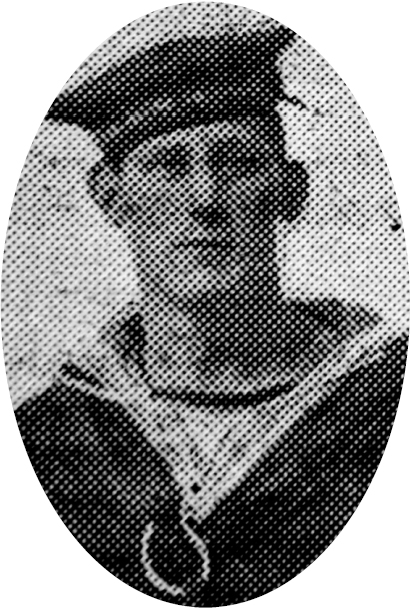
Leading Seaman John Peters, HMS Indefatigable, one of fifteen local men killed at the Battle of Jutland.
On the same day as the Battle of Jutland was raging the 15th Welsh was having a hot time in the trenches at Cuinchy. Lieutenant Frank Roberts, the younger brother of Lieutenant Tom Roberts, who had been killed in May 1915, was wounded by a shell on 31 May. In his first letter home to his parents in Llanelli after the incident, he wrote:
‘No. 20 General Hospital
BEF
My Dear Mam and Dad,
Don’t be alarmed. It’s nothing serious. I’d have written before only I have not had the opportunity. A Chaplain promised to write the day before yesterday, so I expect you know all about it.
Since it happened I’ve been miles on a stretcher, had about five motor rides and one train journey of about twelve hours. So you see, since I have about nine pieces of bomb distributed over different parts of my anatomy I couldn’t very well write.
It was an unfortunate affair altogether. I had been out patrolling for an hour and a half. We couldn’t see 10 yards in front of us owing to shell smoke and fog. Things had been a bit busy - as a result one of our listening posts got a bit nervy and bombed us as we were coming back without challenging.
Well, the first one hit me before it exploded and gave us warning and so I escaped with my life by turning my back on it. I thought I was done for, I can tell you - but I managed to crawl into the trench and find it was one of ours and then got assistance.
They disturbed me halfway through this to put me under the X-Ray. I had five photos taken.
I’m pretty comfortable now and am getting all the attention necessary in a hospital so don’t worry - Cheerio! Yours Lovingly Frank
P.S. Sorry my leave is knocked on the head but still I should get home sometime now.
Tata, Love to All, Frank’

Lieutenant Frank Roberts of Llanelli; badly wounded, he returned to France and won the Military Cross.
Frank would survive the war, and also win the Military Cross. The award was published in the London Gazette of 11 January 1919: ‘For conspicuous gallantry and fine leadership in an attack. With only sixteen men and no officer left he consolidated the position gained, and by judicious use of his Lewis guns he deceived the enemy as to his numbers and held on to his position for twenty-four hours without support on his flank, under heavy shell fire, inflicting considerable casualties on the enemy both with his own guns and with machine guns captured the day before. He did splendid work.’
Thirty-six local men were killed during May, four in Mesopotamia, seventeen on the Western Front and the remainder during the Battle of Jutland. News of that battle reached the public back in Carmarthenshire by 9 June, when reports of a great naval victory filled the newspapers. Alongside stories of the great naval battle was a report of the loss of Lord Kitchener, who had drowned on 5 June when HMS Hampshire sank after striking a mine whilst carrying him over the North Sea to attend a conference in Russia. Two local men were drowned in the sinking; Royal Marine Percy Evans of Carmarthen and Able Seaman Hariph Reginald Littlewood of Llanllwni. The news of Evans’ death, along with a photograph of him, was published in The Carmarthen Journal on 9 June, alongside a photograph of Thomas Elwyn Jones, killed aboard HMS Defence at Jutland.

Royal Marine Percy Evans, who went down with Lord Kitchener aboard HMS Hampshire.
During June, much of Britain’s military might was hard at work getting ready for the forthcoming Somme offensive. The 38th (Welsh) Division was moved from Flanders down to the Somme in stages; other troops began arriving in Salonika, in Greece, opening up another front.
In the meantime the regular soldiers of the 2nd RWF were still in the infamous Givenchy sector. On 22 June the battalion was in the trenches at Cuinchy, enjoying a relatively peaceful day, when their peace was taken away in the most dramatic style. A German mine had been dug beneath their positions and at around 1.30 pm exploded beneath their feet, throwing tons of earth, timber, men and material skywards. Some fifty-four men of the battalion were killed in the explosion, including much of B Company and during the German assault, which rapidly followed, hundreds more were left wounded or shell-shocked. Somehow the men fended the German attack off and maintained their hold on their positions. In honour of the battalion, the resulting mine crater was officially named Red Dragon Crater and its scars can still be seen in the land today.
Among the fifty four men killed were three Carmarthenshire men: Privates William Edwards of Carmarthen, Evan James Evans of Llangynog and William Robert Hughes of Llanglydwen. Hughes’ body was discovered by a farmer ploughing the fields after the war and he was buried at Cabaret Rouge Cemetery, Souchez. The other two men likely still lie somewhere in the remains of the crater.
On the home front, farmers at the Carmarthenshire Recruiting Tribunal, held at Newcastle Emlyn, pressed their claims for the need for Welsh speaking members on the tribunal to John Hind, MP, as many of the farmers in the area did not speak English. News of the loss of the splendid Tonn Mansion near Llandovery was also in the headlines. The recently restored building was raised to the ground after a fire on Wednesday 15 June. On the following day it was reported that a former student at Carmarthen College, Reverend D Marsden Picton, a Chaplain to the Forces at Witham and former minister at Llawhaden, had been killed when a dinner guest showed him a hand grenade that he had brought home from France. The guest, Second Lieutenant James McLagan, pulled the grenade from his pocket during dinner to show to the guests when it exploded, killing him and the curate and seriously wounding the other guests.
Among other news during June was the story of a farmer at St Clears, William Rees Lewis, of Glasfryn Farm, who was charged with using the headlights on his motor car within six miles of the sea, contrary to the Defence of the Realm regulations. Lewis was fined ten shillings, even though anyone knowing the area would realise that there was no possibility of the lights reaching the sea from Glasfryn! Large numbers of men from the county were also home on leave during June; several of these were migrants from the county who had left before the war to build futures in the colonies. Amongst the visitors were Private Philip Owen of Brynamman, 4th Battalion, AIF; Sergeant Leslie Carter and Private James Price of the Canadian Highlanders, Carter visiting family at Carmarthen and Price at Laugharne; and a large number of sailors, fresh from their ordeal at Jutland. Within weeks many of these young men would be dead.
Thirty more county men fell during June 1916, but the worst was just to come. The French loss of Fort Vaux to the Germans during the fighting at Verdun warned of possible disaster after the fortress fell on 7 June. The bloodshed at Verdun had pushed the French army almost to its limits, as its army was being bled white, but it was not doing the German army much good either. As a result of the terrible losses being suffered by the French, the British were pushed to start an offensive as soon as possible to relieve the pressure on Verdun. The Anglo-French attack would become known as the Battle of the Somme.
Preceded by a massive bombardment over seven days, the attack was launched at 7.30 am on the morning of 1 July 1916, prematurely signalled by the firing of the Hawthorn Mine at 7.20 am. At that stage of the war the British had relatively few heavy guns (or, indeed, shells for them) and field artillery was largely ineffectual against well prepared German positions.
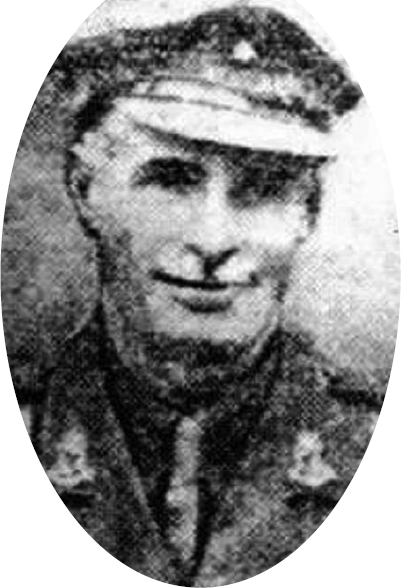
Lieutenant Colonel Herbert Clifford Bernard, a former Llandovery College student, who was killed on the opening day of the Somme offensive.
Attacking over a twenty-two mile front, fifteen British, and several French divisions climbed out of their trenches and began the advance across No Man’s Land. The countless thousands of shells fired at the Germans had not had the desired effect. As the British marched towards the German lines, the Germans climbed from their deep dugouts, set up their machine-guns and rained a curtain of death at the British. During the course of the day few gains were made, except on the right, adjacent to the French front, and the British had lost almost 60,000 men killed, wounded or missing. The French, on the other hand, gained almost all their first day objectives.
Twelve local men were killed on the Somme on that first day, amongst them Lieutenant Colonel Herbert Clifford Bernard of the 10th Battalion, Royal Irish Rifles, a former pupil of Llandovery College, who was killed when his battalion was moving through Martinsart towards Thiepval Wood. He is buried in Martinsart British Cemetery.
The 2nd SWB attacked at dawn at Y Ravine, Beaumont Hamel and was badly hit, losing over 136 men killed and many more wounded, amongst them David Thomas of Llanwrda, who is buried in Y Ravine Cemetery. Later on 1 July, the 19th Division was thrown into the fray and the local men of the 9th Welsh and 9th RWF saw heavy fighting during their famous capture of La Boisselle, near the site of the Lochnagar Crater.
The next major Somme action to involve a large number of men from the county, launched on 7 July, was the operation by the 38th (Welsh) Division to capture Mametz Wood. Mametz Wood was, and still is, the largest wood on the Somme, covering an area of over 200 acres with a maximum length of about a mile. It is situated on a low spur of Bazentin Ridge and is overlooked by the head of the valley which separated the two forces in the early days of July.
The approach to the wood from the south was overlooked by the Germans; it was heavily defended and could also be enfiladed by machine-gun fire from the east. On 7 July, 115 Brigade of the division launched its assault on the wood, but the attack died out, 250 yards short of the wood. Twelve local men were killed during this initial assault, most of whom were with the 16th Welsh.
For political reasons and the sacking of the divisional commander, Major General Sir Ivor Philipps, MP, the second assault on the wood did not take place until 10 July, when the whole division became embroiled in desperate hand to hand fighting within the confines of the wood. A further fifty men of Carmarthen County fell during the second stage of the fighting in the wood, most of whom were serving with the 15th Welsh. Local men gained well earned decorations for their gallantry during the fighting, such as Lieutenant John Evans of Llanelli, who was awarded the Military Cross: ‘For conspicuous gallantry during operations. He held on to a portion of a wood with great determination for several hours till relieved by another regiment.’ [For a fuller account of the fighting at Mametz Wood, see The Carmarthen Pals, by this author]
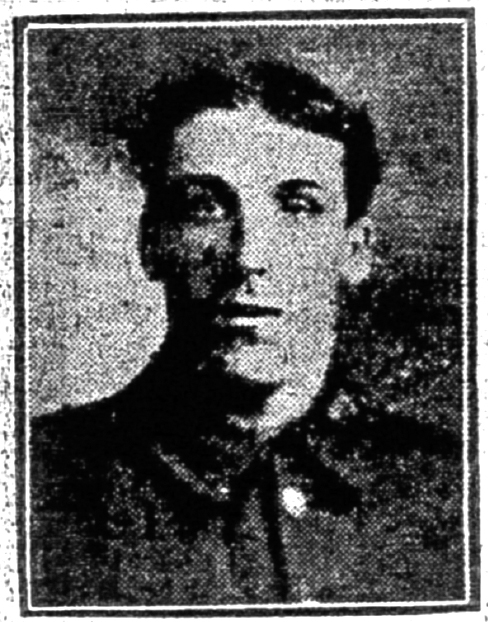
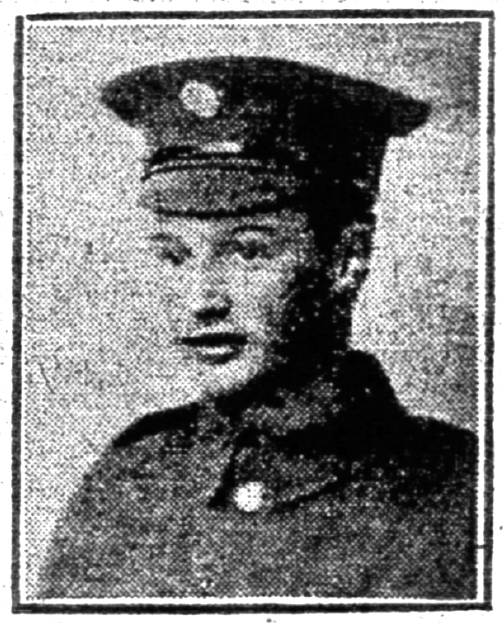

The three Jones brothers of Llandovery, two of whom, James and John, were killed at Mametz Wood.
Several pairs of brothers serving together in the 38th Division were killed at Mametz Wood. The well known brothers Tregaskis of Cardiff and the Hardwidge Brothers of Trealaw were buried side by side, killed in the wood. The less well known Jones brothers of Carmarthenshire were also killed together. James and John Jones were the sons of Daniel and Mary Jane Jones, of 4, Towy Terrace, Llandovery. Both brothers enlisted at Ammanford into the 15th Welsh and were killed together on 10 July. Neither man was afforded the luxury of a known grave, so both are commemorated on the Thiepval Memorial. News of the deaths of the brothers did not reach Carmarthen until August.
Around the same time as the fighting at Mametz Wood was raging, a young man from St Clears was in the process of winning the Military Medal, the first in a string of awards that he would earn by the end of the war. James Ira Thomas Jones, known universally as ‘Taffy Jones’, was a strong headed young man from Backe, near St Clears. He was a member of the 4th Welsh when war broke but, angered by their lack of enthusiasm in calling him to action, he enlisted into the Royal Flying Corps. Winning his Military Medal for his bravery in dragging two men to safety into a dugout while their aerodrome was under fire opened the door for him to begin his flying career as an observer. His fighting spirit recognised, Taffy was sent back to Britain to train as a pilot, returning to France with 74 Squadron early in 1917, under the command of Major ‘Mick’ Mannock. During his time at war Taffy went on to shoot down almost forty German aircraft, becoming one of the top fighter aces of the war and the top Welsh ace. News of his achievements regularly appeared in the local newspapers, proud to advertise his every visit home on leave and to spread the news of his many victories, with headlines such as: ‘Jones of Wales, Famous Welshman who has won laurels in the air and on the football field; That Intrepid Airman; Thrilling Exploits of young Welshman...’
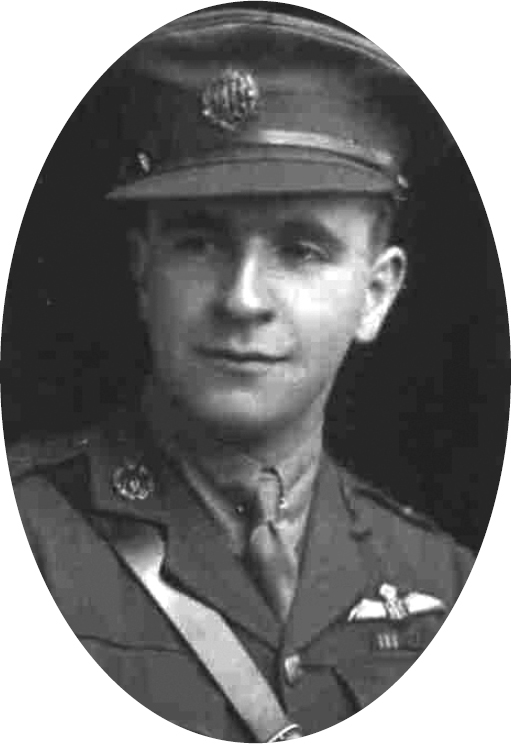
Captain James Ira Thomas Jones of St Clears, the foremost Welsh air ace.
While the 38th Division withdrew from Mametz Wood to Hébuterne, to hold a quieter section of the line, a handful of local men took part in the next phase of the Somme offensive, the Battle of Bazentin Ridge. A number of these men served with the 7th Battalion, King’s Shropshire Light Infantry [KSLI], who attacked the German front line and support line running through the village of Bazentin-le-Grand early on the morning of 14 July. The 7th KSLI suffered heavy casualties during the assault; by the end of the day, all that remained on duty from those who attacked were six officers and about 135 other ranks. Three of the dead men in the battalion were from Carmarthenshire: John Caleb Brick, of Llandeilo; Benjamin Williams, of Llangynog; and Edward David Evans, of Newcastle Emlyn. Ted was born in 1887, the son of Edward and Elizabeth Evans, of 15, Baker Street, Aberystwyth. Prior to the outbreak of war he had worked at the London County and Midland Bank in Newcastle Emlyn and enlisted at Carmarthen with his close friend David Rees Davies. Tom never got over the death of his friend David, who was killed at Ypres just a few weeks earlier.
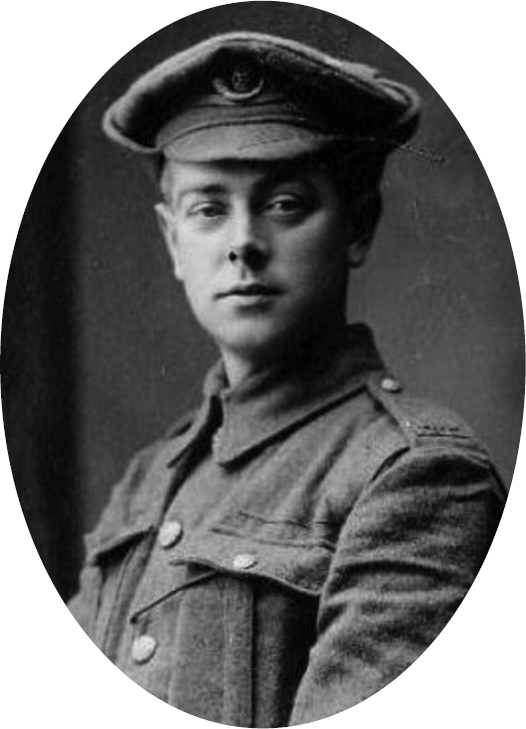
Sergeant Edward David Evans, the popular banker from Newcastle Emlyn.
In the local newspapers, even the optimistic propaganda machine was beginning to worry about the balance of the war, although they noted, on a positive note, that the harvest of crops and hay in the county was going well. Under the headlines, ‘The War Drags On’, which appeared in one local newspaper during July, was the following article:
‘The war drags on its weary way and, notwithstanding substantial gains by the Allies, the most optimistic person can scarcely see any grounds for supposing there will be a sudden collapse of the enemy. Indeed, it has been reported that the latter are already preparing for another winter campaign.
‘On every front the Germans are making a desperate resistance, while at Verdun they are no more than two and a half miles from the fort which has defeated all their efforts for so many months, but whose fall now appears inevitable.
‘This will at best be an empty triumph, but it will have the effect, doubtless, of stiffening the enemy in other directions. On the British front, the fighting, according to German reports, is proceeding with ‘bitter violence’, and the long lists published of killed and wounded prove this. Here, however, the British have regained on Wednesday all the ground lost on the previous day and have all but cleared a wood where an obstinate and bloody battle raged for three days.
‘In the Valley of the Somme, the French have reached the enemy’s last line and are making preparations for forcing the river which lies between them and the town of Péronne. The Germans are established in a naturally strong position and a death-dealing struggle may be anticipated...’
The long lists of wounded made depressing reading, with papers such as The Carmarthen Journal, The Welshman and The Western Mail filling column upon column with names of casualties. The staggering number of casualties suffered by the Allies during the Somme offensive could be seen by reading The Times Casualty Supplement, which published the main casualty lists, listing casualties by regiment. Enough local casualties would fall on the Somme to merit a separate book; over the coming months that the battle would rage on, over 400 local men would be killed.
Probably due to the fact that so many men from the county were serving in the forces, crime had again crept up in the county. The Carmarthenshire Standing Joint Committee held its quarterly meeting on Wednesday 12 July. The Chief Constable, W. Picton-Philipps, reported another rise in crime in the county since the last meeting, an increase of 335 crimes over the previous year. This time drunkenness had decreased, but a surge in juvenile crime, chiefly theft, worried the committee. Cases of people failing to pay their rates had also increased out of proportion, with 208 out of the total of 1,419 crimes during the last three months due to that fact, the majority in Llanelli. Dudley Drummond of Hafodneddyn, Llangathen, one of the committee members, blamed the rise in juvenile crime on the cinemas and a motion was passed to censor locally any films being shown.
On the northern section of the Western Front, a number of local men were in Flanders serving with the 2/7th Battalion, Warwickshire Regiment. A large number of men from the 4th Welsh reserves had been posted to this Midland battalion early in 1916. It was part of the 61st (South Midland) Division, which had filled the gap left in the line in the Fromelles sector when the 38th Division moved south.
On 19 July the 61st Division, alongside the 5th (Australian) Division, made a diversionary assault at Fromelles, with the intention of diverting German reinforcements from the Somme. The attack was an absolute failure, the 61st Division suffering 1,547 casualties and the 5th (Australian) Division 5,533.
At the end of the war, the remains of the dead from the battlefield were gathered up; of these 400 of the Australian dead were buried in two pits at VC Corner. An unusual war cemetery was built on the site, incorporating the two mass graves into it, today VC Corner Military Cemetery and Memorial. The British missing are commemorated on the Loos Memorial. At least six men from Carmarthenshire were killed at Fromelles serving with the 2/7th Warwicks: Thomas Stephen Lewis from Manordeilo; Josiah Harries from Dafen; Robert Clifford Davies from Llanelli; Daniel Harries and William Simon Rees from Llandeilo. William Wood Brailsford from Llansteffan was among the Australian dead, along with Major John Arthur Higgon, an officer of the Pembroke Yeomanry, attached to the 32nd Battalion, A.I.F.
The relevance of these men in the history of the Great War is of interest today as three of them, Daniel Harries, William Simon Rees and Robert Clifford Davies, may be among some 300 sets of remains which were excavated from mass graves on the outskirts of Fromelles in 2009. Robert Davies was the son of David and Ann Davies, of 8, Ralph Terrace, Llanelli. He served with the 4th Welsh from September 1914, with the regimental number 5338, before being transferred to the 2/7th Battalion, Royal Warwickshire Regiment. He was posted as missing in action on 19 July and was later determined by a military enquiry to have been killed.
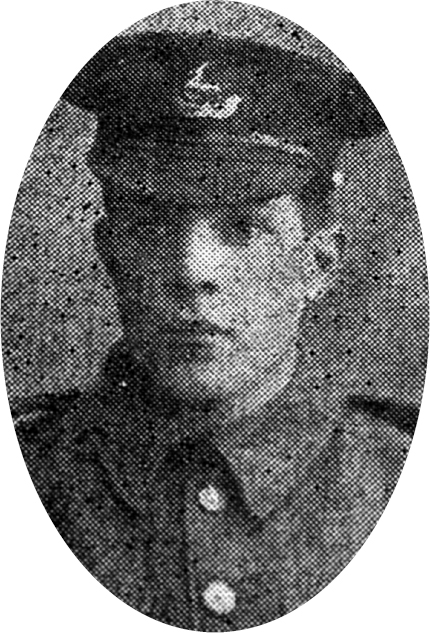
Private Robert Clifford Davies, possibly one of the men buried in the mass grave at Fromelles.
During July a deputation of weavers from Carmarthenshire, most probably from the weaving centre at Drefach-Velindre, travelled to London to appeal for exemption from compulsory service for weavers. Appeals for exemption from service were rising in Carmarthenshire, with several of the local newspapers reporting large numbers of men from all occupations trying to make claims that their positions were vital for the local economy and that they should not be forced into the army. One common excuse starting to rear its head was that the appealer was a conscientious objector and could not be expected to have to bear arms. One such case was of a merchant from Llangadog, who had a thriving trade in buying milk, butter, cheese and eggs from local farmers to sell at markets around the county. His case was that his business was essential to the famers, as he paid them £200 per week for their wares. His tribunal granted him three months freedom from conscription.
One of the most striking headlines in a 14 July edition of The Welshman was about a memorial service which was held at Water Street Welsh Calvinistic Methodist Chapel at Carmarthen in memory of the passing of Cranogwen on 27 June. A talented schoolteacher, mariner and bard, Sarah Jane Rees from Llangrannog was better known by her bardic name of Cranogwen. She founded the South Wales Women’s Temperance Union in 1901 and carried out a lot of work around South Wales, preaching and spreading the temperance message. The Water Street Chapel was packed to the rafters with hundreds of women, all members of the Union.
The appearance of letters from the front began to dwindle as the Somme raged on. One notable letter was published on 26 July from Richard Davies, a stretcher-bearer from Cwmgorse:
‘Just a line to give you a few of my impressions of my experiences of the ‘Big Push’ of these last few weeks, which started July 1st. Well, I have been in the thick of it ever from the start. I saw our Tommies making their charge for one of the first villages they captured and, my word, you ought to see them going after they had the order, ‘Over you go, Boys,’ and they soon had the position well in hand.
‘’The signal of it was too ghastly to mention, as they were bombing and bayoneting the Germans out of their trenches. It is difficult to find out what is the universal feeling amongst the men from conversations I have had with many, that it strikes them in many different ways; but they all seem to say that the half hour previous to going over is the worst, as our Tommies are so eager to ‘go over the top’. [In truth many troops did not even reach the German lines, as most were mown down by artillery and machine-gun fire in No Man’s Land.]
‘After that all seems a blur on their memory. There are many incidents in a man’s life that stand out in his memory and which are unforgettable when he ponders over the past by the side of a bright fire on a dull winter’s night and I can assure you I shall never forget the sight of those tattered and torn heroes as they came fresh from the hell of the 300 yards of ‘No Man’s Land’.
‘As soon as this came off we had orders to go up and attend the poor wounded Tommie’s [sic] that had fallen and all this time we were under heavy shell fire. It was nothing but an inferno of shrapnel flying about everywhere, but our pluck and determination brought our poor Tommies out from danger...’
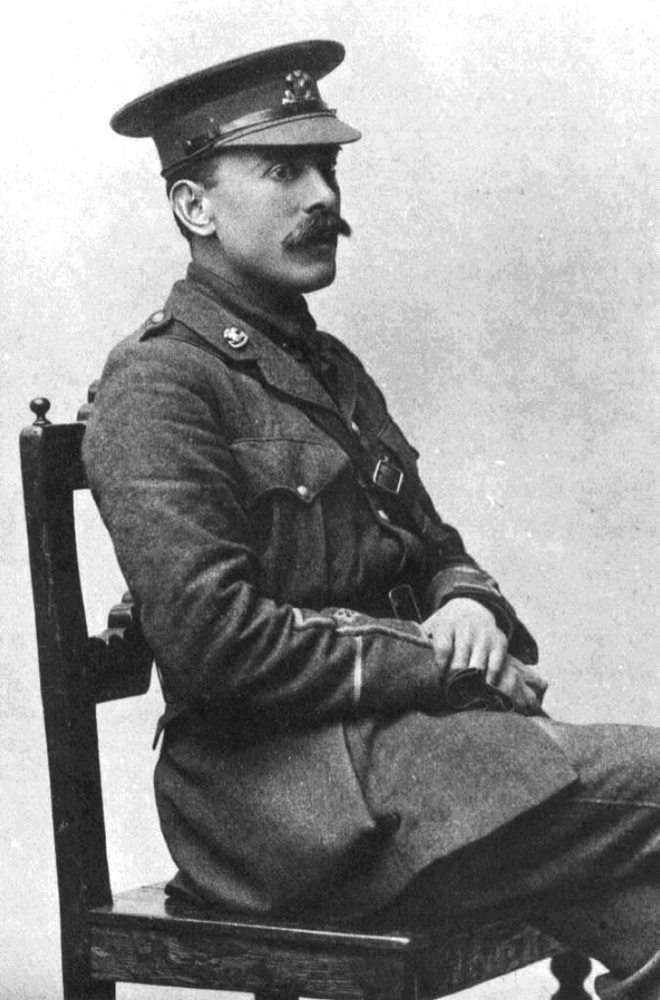
Lieutenant Alan Frederick James, Baron de Rutzen, another member of the county gentry to fall.
The Somme offensive concentrated on attacks against Bazentin Ridge, Delville Wood, High Wood and Pozières throughout the last fortnight of July 1916. There were also minor engagements on other fronts, in Mesopotamia, Salonika and Egypt.
The Pembroke Yeomanry formed a squadron of the Camel Corps after arriving in Egypt and amongst their numbers was a well known member of the aristocracy from west Wales, Alan Frederick James, Baron de Rutzen. Born near Llangadog in 1876, the son of Sir Albert de Rutzen and Horatia Augusta Stepney de Rutzen, he married Eleanor Etna Audley Thursby-Pelham in 1908, and the couple resided at Picton Castle and Glanmarlais Park. He served as a lieutenant with the Pembroke Yeomanry and was killed during an engagement against the Turks near Katia on 7 August, aged 40. He is buried in Kantara War Memorial Cemetery. His only son, Alan, was killed during World War Two.

Doctor Glyn Jones, the victim of a brutal murder at Llansawel.
The peace of the quiet village of Llansawel, in the north of the county, was shattered when a local doctor, David Thomas Gwyn Jones, was brutally shot dead. On Saturday 15 July, Doctor Jones was paying a visit to Blaenrhysglog, an isolated farm on the summit of Caio Mountain, to attend to an elderly farmer, Thomas Davies. For some reason, the farmer’s son, David, attacked the doctor with a gun. The Carmarthen Journal reported that the assailant’s mother heard a shot fired and rushed out of the house to see the doctor trying to wrestle the gun from her son’s hands, but he broke free and shot the doctor, before caving his head in with the butt of the gun. He bundled Doctor Jones’s body over a wall before making his escape. His mother, obviously traumatised, went back into the house, only for her husband to die in her arms.

The accused, David Davies.
During August the Somme offensive was focused on the attempt to capture the stronghold of Mouquet Farm, which was the key to the capture of Thiepval Ridge. The initial assaults were made by the Australians, who at various stages threw their 1st, 2nd and 3rd Divisions into the assault. On 18 August a young man from Laugharne, David Thomas John, a lance corporal with the 4th Battalion, AIF, and the author’s great grandfather, was given the task of leading a patrol to reconnoitre the ground in front of the farm and to ascertain the whereabouts of the German front line. He took three volunteers out with him at around 2 pm, but the men were spotted by a German patrol and a brief but fierce fire-fight ensued. Two of the men managed to escape, but David and another man, Oliver Williams of Sydney, failed to return to the lines. The last time he was seen he was exchanging hand grenades with the German party. He has no known grave and is commemorated on the Villers-Brettoneux Memorial. His brother John was in Egypt, serving with the Pembroke Yeomanry, and was killed in France in September 1918. Also serving in the same battalion as David was Phillip Owen of Brynamman. He was killed later in the day during another attack on the farm and is also commemorated on the Villers-Brettoneux Memorial.
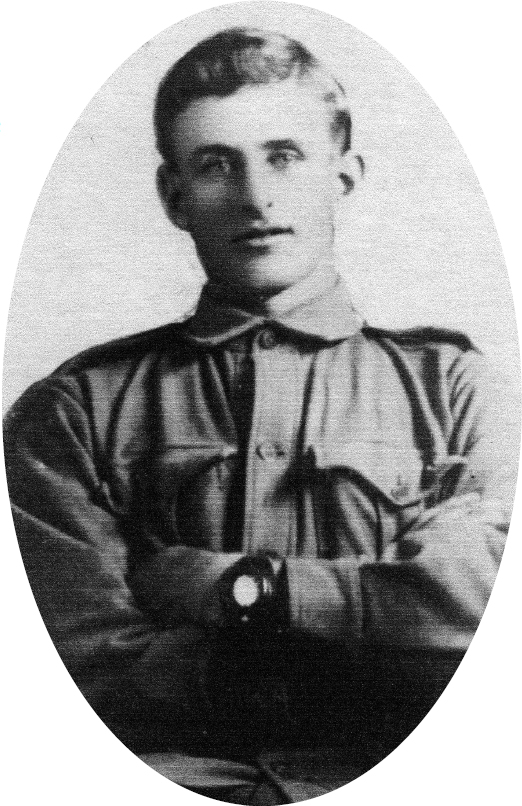
Lance Corporal David Thomas ‘Taffy’ John, 4th Battalion AIF, the author’s great grandfather. He was a veteran of Gallipoli and Pozières.
Back at home, the opening week of September was dominated by the doings of the railwaymen. The industry had been charged with being unpatriotic after the South Wales Railwaymen had threatened to strike because of high food prices and a demand for an extra ten shillings a week. According to an issue of The Carmarthen Journal that month:
‘The following resolution was passed at a meeting under the auspices of the South Wales and Monmouthshire Executive Council of the National Union of Railwaymen, held on Sunday at the Ruskin Institute, Cardiff.
“That this conference, representing South Wales and Monmouthshire railwaymen of all grades, having fully considered that our just demand for 10s. per week increase in our wages, which has been submitted by our executive council, has not been acceded to, we decided that we will accept nothing less as a satisfactory settlement and that the claim must be made retrospective from July 3rd.
“We hereby declare that our executive council shall give notice to the railway companies and the Government that unless the demand is conceded by September 16th they shall declare a national strike and, if that course is not adopted by our executive council, or the demand for 10s. is not conceded in full, we decide that we shall strike on our own responsibility and we adjourn this conference to September 17th to make the necessary arrangements for withholding our labour immediately.”
The Railway Clerks’ Association has presented an application to the railway companies and notified the Board of Trade of their demand for an increase of 20 per cent on existing wages and salaries.’
A large rally at Cardiff voted in favour of a South Wales railway strike, to take effect on 17 September, unless their demands were met. A compromise was hurriedly agreed upon, averting the strike, awarding the railwaymen ten shillings war bonus per week.
While men were losing their lives on the Somme, militancy seemed to be ruling the minds of the men who had not seen fit to enlist. The miners had also been pressing for more pay, looking for a twelve and a half percent increase in their wages to cover the higher cost of living. Their mood was not good after a tribunal turned down the request, especially when the Government began to press for more miners in the army. To add further insult to the miners, three Ammanford miners were arrested in September for being absent from work and a riotous situation had to be resolved by one of their union men. There was also an outcry at Llanelli after local newspapers printed details of the 2,000 Irishmen who had found work at the Pembrey explosives factory, thus becoming ‘starred men’, who would be exempt from military service. With the continuing push to call tinplate workers up for service, there was a lot of anger that these skilled local men would have to go to war while ‘foreign labour’ would be safely sat at home in Pembrey and Llanelli, in jobs the locals should have received.
September saw continued heavy fighting on the Somme, including a large scale attack, the Battle of Flers-Courcelette. The Welsh Guards would play a part in these attacks, having moved south from Ypres. The 38th Division moved to Ypres, taking up the front line along the Yser Canal, north of the ancient city and would remain here for the next eleven months. The ferocity of the fighting in September would cost Carmarthenshire a further eighty one lives, notable amongst them being Second Lieutenants Marteine Kemes Arundel Lloyd, John Edmund du Buisson of Llandybie and Henry Loyn Pugh, a former student at Llandovery College.
Marteine Lloyd was the only son of Sir Marteine Owen Mowbray Lloyd, 2nd Bart and Katherine Helena Lloyd (née Dennistoun) of Bronwydd, Henllan. His father was the only Lord Marcher in Britain and Marteine was his sole heir. He was educated at New Forest, Bournemouth and at Eton, before being commissioned into the Grenadier Guards. He was wounded at Ypres in October 1914 and was mistakenly reported as being killed. He went back to France in January 1916, rejoining his battalion at Loos; he was killed in action at Flers on 15 September. He was 26 years old and is buried in Delville Wood Cemetery, Longueval.
John Edmund du Buisson was the son of Arthur Edmund and Helen Letitia du Buisson, of Swiftsden, Hurst Green, Sussex and Glynhir, Llandybie. The family were descended from Huguenots, who had fled France in 1685. They were gentry in France and became landed gentry in Carmarthenshire, well respected in the county. John was killed whilst serving with C Battery, 99 Brigade RFA in Salonika on 11 October and is buried in Salonika (Lembet Road) Military Cemetery.
Henry Loyn Pugh was the son of Thomas and Mary Pugh, of 7, Alban Square, Aberaeron, Cardiganshire. Educated at Llandovery, prior to the war Henry was a councillor and a scoutmaster at Aberaeron. He enlisted in the Inns of Court Battalion (London Regiment) and was commissioned into the 3rd Battalion, South Wales Borderers in October 1915, and then posted to the 1st SWB in France. Henry was wounded at High Wood on 9 September and died at the Casualty Clearing Station at Heilly, where he was buried, on 11 September.
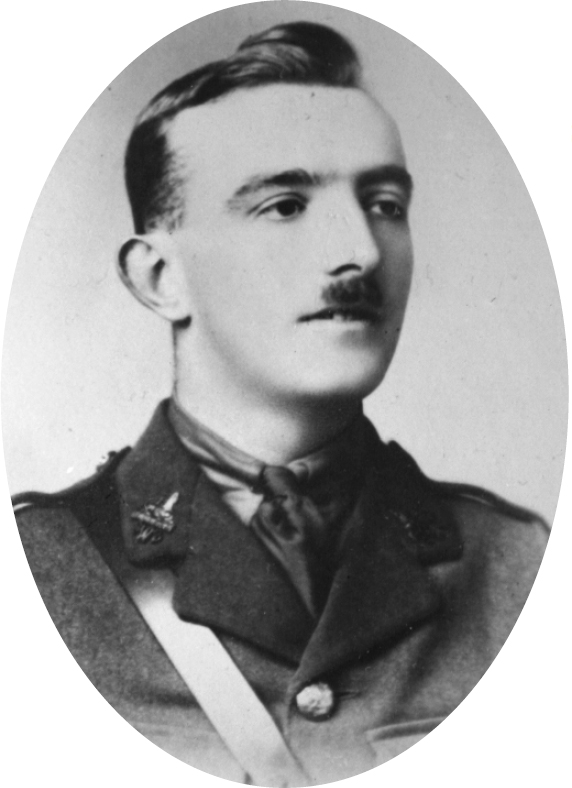
Henry Loyn Pugh, another former student of Llandovery College.
Grumblings of discontent were still coming from the mining communities in the Amman and Gwendraeth Valleys and stinging criticism of their attitude was being hurled at them by disgruntled members of the public. Men serving in the armed forces also expressed anger at the threats by the miners, railwaymen and munition workers who were threatening strikes while the security of the Empire was at stake.
Hundreds of men left the county on Thursday 8 August for Pembrokeshire to attend a service at St David’s Cathedral. The service was to commemorate the anniversary of the landing of the 4th Welsh at Gallipoli and was attended by over 2,000 people, including 700 members of the battalion who were home on leave or recovering from wounds. The service was led by the Bishop of St David’s, who had travelled up from Abergwili, and the guest speaker was Lieutenant Colonel Bramwell Jones, who had commanded the battalion.
The Carmarthen Journal of 11 August printed among its long list of obituaries of fallen soldiers three articles reporting tragedies closer to home. The first was the report of the death of a young Carmarthen man, 17-year-old Frederick Lister Williams. He was spending a weekend visiting his parents when he went swimming with a friend in the River Towy, but got into difficulty and drowned. The young man had recently been turned down by the army as he was underage; he attempted to enlist in the lancers. At Cilrhedyn, a 5-year-old child, Edwin Davies, the adopted son of Mr and Mrs Harries, of the Eden Arms, was climbing a wood pile outside the house when a large piece of timber fell on him and killed him instantaneously. The third tragedy, reported on the same page, was of a double bathing tragedy at Llandyfriog, when an 8-year-old boy and his uncle drowned while swimming in the River Teifi near Llandyfriog railway bridge. The boy, John Frederick Evans, the only son of Roy Evans, a solicitor, of Newcastle Emlyn, had got into difficulties in a deep pool. His uncle, Guy Nell, a businessman from Penarth, dived in to rescue him but was also drowned.
A separate headline in The Carmarthen Journal of 16 August heralded the bravery of a young Laugharne boy, Alf Jackson, the younger brother of Thomas James Jackson, who was killed at Gallipoli in 1915. The estuary at Laugharne is renowned for its difficult currents, which once a year has a tidal bore. Alf was with a group of his friends when he heard a cry and spotted a man in difficulty, being pulled under the water by the bore. The swimmer was a holidaymaker from Pontyates and Alf swam out to pull him to safety, dragging him ashore unconscious.
Further bickering between the towns of Carmarthen and Llanelli was also making the headlines in the same issue, when the outcome of a court case, which had been raised by the former against the latter, went Carmarthen’s way. The case related to Llanelli attempting to drag court powers away from Carmarthen to Llanelli and Carmarthen had decided to fight the young, upstart Llanelli with all its might. The members of Carmarthen Town Council then proceeded to fall out over the costs of bringing the court case!
The National Eisteddfod was under way at Aberystwyth during August and a large number of men and women from Carmarthenshire travelled to the mid Wales town to take part in the festivities. The first prize for the solo tenor was taken by a Llanelli soldier home on leave, Lance Corporal S. Charles, who sang in full uniform. The prize for singing with the harp was split between David Bevan of Glanamman and Llinos Thomas of Garnant. Megan Jones of Newcastle Emlyn took first place for her pianoforte accompanied singing.
On 8 September the news of the first shooting down of a dreaded Zeppelin was published in Carmarthenshire. The aircraft was brought down over Cuffley on the night of 2/3 September by William Leefe Robinson. The gallant airman was awarded the Victoria Cross for his feat and his bravery was splashed across the local and regional newspapers, bringing some positive news among the columns of wounded and killed men.
During August and September a recruiting campaign for more nurses for the military hospitals was carried out by the Carmarthenshire Red Cross after the surge in wounded men returning from the Somme had begun to cause staffing shortages. One of the few women in Carmarthenshire who fell during the Great War also lost her life during September 1916. Frances Ethel Brace was bom early in 1886, the daughter of William and Jane Brace of Beaver’s Hill, Manorbier. By 1901 her mother had died and the family lived at Great Honeyborough Farm, at Neyland, where Frances worked for her father. She then trained as a nurse, obtaining a post at Carmarthen Infirmary in 1912. After four years at Carmarthen, Frances volunteered for service with Queen Alexandra’s Imperial Military Nursing Service on 16 June 1916 and was posted to a Field Ambulance in Salonika. She contracted malaria and was evacuated to the Military Hospital at Malta, where she died on 21 September, aged 30, just three months into her military service; she is buried in Pieta Military Cemetery.
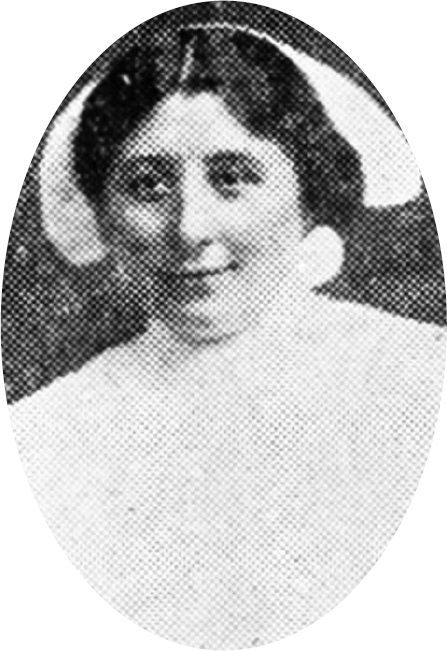
Nurse Frances Ethel Brace, a former nurse at Carmarthen Infirmary.
One of the men who had been home on leave just prior to the opening of the Somme Offensive was fighting with the Canadian Highlanders. Thomas Henry Price was born on 16 August 1891. His parents owned Brown’s Hotel at Laugharne. Thomas’ father died before the turn of the century and his mother, Miriam Price, married William David, a butcher from Laugharne. The family then emigrated to Canada and lived at 277, Carlton Street, Toronto, Ontario. Thomas enlisted on 13 August 1915, in the 92nd Overseas Battalion. He arrived in England on the troopship SS Empress of Britain on 29 May 1916 and joined A Company, 13th Battalion CEF. In September 1916, the 13th Battalion marched from Warloy to billets in Herissart. From there they took over the front line trenches near Courcelette. Three companies of the 13th held the front line trench until the end of the month, suffering over 231 casualties. Thomas died of wounds at the 3rd Canadian Casualty Clearing Station on 27 September 1916 and was buried in Albert Communal Cemetery Extension. News of his death reached Laugharne towards the middle of October, just prior to a visit there by one of his brothers, John Price, who was a pilot with the Royal Flying Corps.
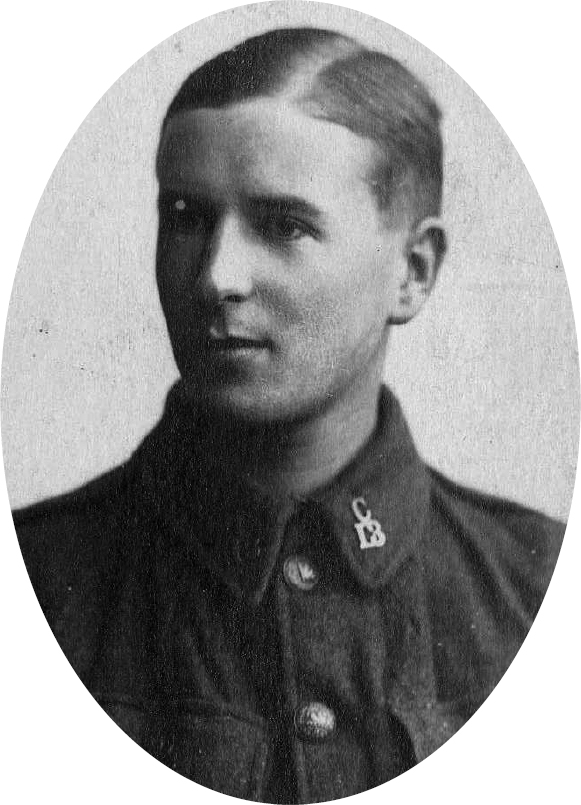
Private Thomas Henry Price, late of the famous Brown’s Hotel in Laugharne, who was killed whilst serving with the 13th Battalion C.E.F.
During October the epic war film ‘The Battle of the Somme’ was first screened in cinemas around the county. Newspapers in Llanelli, Ammanford and Carmarthen all noted the coming of the film with delight and each showing was packed out. News was also coming into the county of some of the dozens of local men who had been awarded gallantry medals for their bravery during the Somme. Among over thirty of these was William Archibald Morris of Carmarthen, who was awarded the Distinguished Conduct Medal for his gallantry on the Somme with the 2nd Welsh: ‘For conspicuous gallantry and devotion to duty in action. By his fine leadership a sap was held against hostile attacks. Though wounded he remained throwing bombs for two hours. He has displayed great bravery on other occasions.’ Major John Vaughan Campbell of Golden Grove was awarded the Victoria Cross for his gallantry on the Somme:
‘For most conspicuous bravery and leadership in an attack. Seeing that the first waves of his battalion had been decimated by machine gun and rifle fire he took personal command of the third line, rallied his men with the utmost gallantry, and led them against the enemy machine guns, capturing the guns and killing the personnel. Later in the day, after consultation with other unit commanders, he again rallied the survivors of this battalion, and at a critical moment led them through a very hostile fire barrage against the objective. He was one of the first to enter the enemy trench. His personal gallantry and initiative at a very critical moment turned the fortunes of the day and enabled his division to press on and capture objectives of the highest tactical importance.’
One notable event recorded in local newspapers throughout the county in November 1916 was the announcement that the Government was placing the Welsh collieries under the control of the Munitions of War Acts, effectively nationalising them by placing the coal trade under the control of the government in an attempt to allay fears of a strike after months of wrangling. During the month, the various unions of the county’s dockers, smelters, gasworkers and tin and shotmen met at Llanelli to discuss the position of their industries.
‘Whilst recognising the urgent necessity for men, we maintain that the trade’s voluntary contribution to the forces will compare most favourably with that of any other trade in the country, over fifty per cent having volunteered their services to the nation.
‘We hereby protest against any more men being taken from the trade, as such action will, in our opinion, cause innumerable and unnecessary hardships and distress and will result in irreparable loss and ruin of the trade in future by allowing the United States manufacturers to capture our trade...’
By mid November 1916 the Somme offensive had bogged down after the last offensive in the valley of the River Ancre during November had incurred further heavy casualties, though with some gain. The continuing crisis of the war and its management, along with vastly increased casualty lists, led to a political show down; Asquith resigned and was replaced as leader of the coalition government by David Lloyd George.
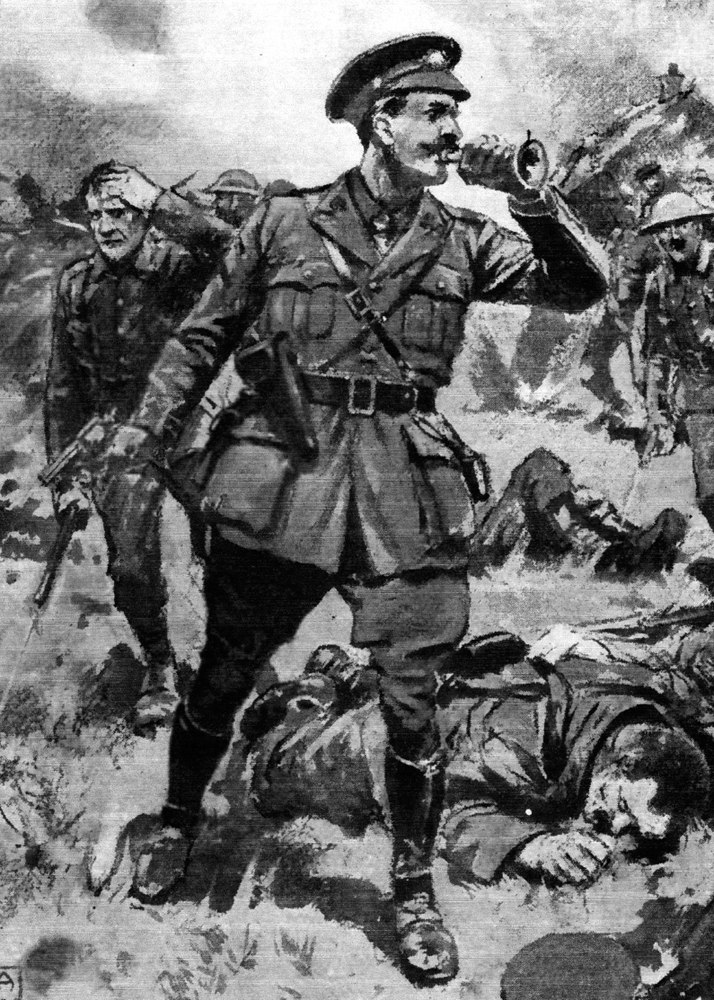
‘Rally to the Huntsman’s Horn’ Major John Vaughan Campbell, VC, CMG, DSO, another well know member of the county gentry, winning his Victoria Cross on the Somme. He later commanded 137 Brigade of the 46th (North Midland) Division, when it famously broke the Hindenburg Line and captured Riqueval Bridge.
The year came to a close with a feeling of some despair in the country. Militancy among the workforce, the partial destruction of Kitchener’s Army on the Somme and a lack of manpower to work local farms all caused a sense of dismay. Almost every family around the country had suffered the loss of a relative; many more had loved ones who were recovering from wounds in one of the many hospitals in France or Britain, whilst tens of thousands of families were awaiting news of sons and husbands listed as missing.
A disparaging letter, printed in a newspaper at the end of December, showed the strong sense of betrayal felt by one local man towards the coal miners of the county:
‘Generations of Nonconformity have made the Welsh the least initiative and the most peaceful in Europe... Such is the stock from which the Welsh coal miner has sprung, the coal miner who has made his name hated because of the frequency of the occasions on which he rebels against the powers that rule over him... I am told that his wages average five pounds per week and that he spends most of this on drink and pianos...’
In total, 1916 had cost the county of Carmarthenshire over 600 men dead and many more wounded. The total for the county was over 1, 100 men dead since the outbreak of war.