
6
AFTER THE JANUARY 6, 2021, Capitol riots in Washington, DC, reporters Rebecca Sagar and Brie Loskota are convinced the greatest threat to democracy is the “mix of white, right-wing identity politics and nationalist Christianity” which have “been stirring for many years.”1 Turn on MSNBC or CNN and it is wall-to-wall coverage about White supremacy, militia groups, QAnon conspiracies, and security threats to the Capitol, all reasons that the military lockdown in Washington, DC, should continue. Director of the FBI, Christopher Wray, testified to Congress about the rise of domestic extremism on the right.2 Four months into his presidency, Joe Biden, building on Wray’s claims, contended that “according to the intelligence community, terrorism from white supremacy is the most lethal threat to the homeland today. Not ISIS, not al Qaeda—white supremacists.” And since it is the number one threat to our democracy, his administration “will soon lay out our broader strategy to counter domestic terrorism.”3
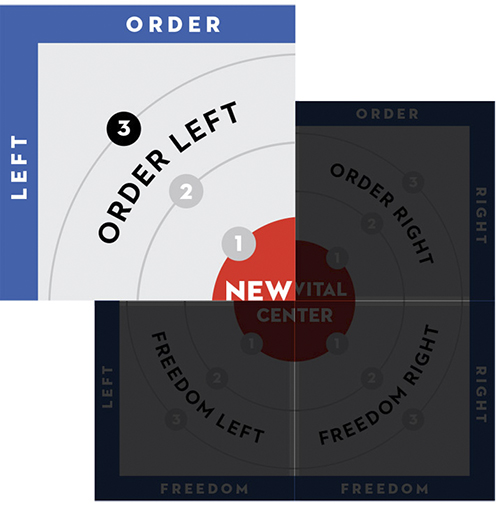
And so with White Christian nationalism on the rise in the Republican Party—an existential threat to American democracy—the time for polite discussion is over, contend many on the left. For those who care about “our democracy,” the moment to choose is here; it is no longer acceptable to be nonracist, one must be antiracist, one must actively oppose White nationalism. White supremacy must be contained, and it must be done now, according to those in order left 3.
Governmental agencies in the Seattle area have heard this call to action. According to whistleblower documents, government officials in King County brought in a private consulting group called Racial Equity Consultants to hold “‘listening sessions’ to root out ‘institutional privileges and systemic inequalities,’” apparently widespread in one of the most liberal sections of the country.4 After people were sorted into segregated groups and discussion took place, “the senior staff have recently required employees to sign an ‘equity and social justice’ pledge and assigned ‘continued training for white employees,’ who must ‘do the work’ to ‘learn the true history of racism in our country.’”5 But that raises the question: What if they reject the view that they are racist or that Seattle is suffering under a regime of White supremacy? What if they refuse to sign the pledge?
One employee who attended the Whites-only workshop felt like he was sitting through a “firing squad” and that any resistance might lead to further retaliation. Others reported that the segregated training sessions “have created suspicion and distrust among employees.” People undoubtedly were worried, scared of the taint of the racist label. Yet one gets the impression that for the senior administrators in King County, if things are going to finally change, they must oppose all policies and systems that promote racism or further unequal racial treatment, and they must work for policies that promote equity. Only when they do this will they be antiracist. Seen in this newfound activism, those in order left 3 have entered a new phase.
POSTMODERNISM’S THIRD PHASE
In chapter four, I mentioned James Lindsay’s three phases of postmodernism. After looking at the first, the high deconstructive phase, and the second, the applied postmodern phase, we have now come to his third phase, what he calls the “reified” phase, where “abstract concepts are treated at though they are real.”6 Around 2010, in this third phase, under the banner of social justice scholarship, activists and scholars, in Lindsay’s words “have come to take for granted a reification of the once abstract and self-doubtful postmodern knowledge principle and postmodern political principle.” In other words, while postmodernism started out deconstructing all truth and metaphysical narratives, contending that objective knowledge was impossible and that “society is made up of systems of power and privilege,” in this third phase the doubt and skepticism are gone, replaced with a new confidence in its grasp of truth, its guiding narrative, and its political ends. Its “principles are treated as fundamental truths,” says Lindsay, becoming “known-knowns—ideas taken for granted as true statements about the world that people ‘just know’ are true.”7 What used to be a theory, a tool used to deconstruct all metanarratives, has now become a “belief” and an “objectively true statement about the organizing principle of society.”8
Does this sound like a metanarrative? Does it sound like they are absolutely convinced their “once upon a time story” is correct and they grasp objective reality with certainty? That’s because it has become an objective narrative. According to Lindsay, “social justice scholarship and its educators and activists see these principles and conclusions as The Truth” and are thrilled that “they have discovered the analogue of the germ theory of disease, but for bigotry and oppression.”9 They have discovered the key to understanding society, how all society is socially constructed around systems of power and privilege, and that in America this means systems of White supremacy, patriarchy, and heteronormativity, which are “literally structuring society and infecting everything,” “present always and everywhere,” often hidden below the surface.10
Now that they have made this startling breakthrough (a new “germ theory”), the key to overcoming systemic racism and bigoted policies is for those to be “constantly identified, condemned, and dismantled so that things might be rectified.” This is the gospel of social justice,
that express[es], with absolute certainty, that all white people are racist, all men are sexist, racism and sexism are systems that can exist and oppress absent even a single person with racist or sexist intentions or beliefs (in the usual sense of the terms). . . . That is the reification of the postmodern political principle.11
This means that the Left has gone from saying there is no objective morality (freedom left 3) and that all metanarratives are oppressive and must be deconstructed, to adopting their own metanarrative, one held in utmost confidence that must be adopted and actively applied by individuals and the state (order left 3).
Clearly, Lindsay’s third phase is upon us. As he says, this “social justice scholarship has become a kind of Theory of Everything, a set of unquestionable Truths with a capital T,” which becomes their new epistemology, their new theory of knowing and grounding reality, and becomes the basis for their new activism.12 They think they have discovered the secret to exactly how the world works, a new knowledge which comes mainly from oppressed groups and their lived experience. And on this new epistemology of grievance, the pedagogy of the oppressed, they are able to condemn the past, to deconstruct the present, and to reconstruct the future. And since White, heterosexual men and women have none of the special knowledge of oppression that unlocks the key to reality, they are thus on the wrong side of the oppressed-oppressive divide and, in fact, are complicit in the systemic injustice of society, infected with a false consciousness, and therefore must be condemned.
While this third phase shares much of the once-upon-a-time narrative of the first two phases, what makes it so different is that any self-doubt or skepticism about objective reality has disappeared and has now reified into a definitive belief, a new metanarrative, and this now has been combined with the postmodern political principle, providing an evangelist’s fervor in antiracism activism, one that no longer stresses freedom as much as order. And this reified postmodernism best describes the order left 3 position on our quadrant.
THE ANTIRACISM OF IBRAM X. KENDI
One of the best examples of this profound confidence in diagnosis and prescription is Ibram X. Kendi’s bestselling book How to Be an Antiracist.13 Along with Ta-Nehisi Coates and Robin DiAngelo, Kendi has shot to fame as one of the main evangelists for the antiracism theory of everything. Through dozens of compelling personal stories and anecdotes detailing America’s racist past and present, Kendi takes for granted this third phase of postmodernism, known under the critical race theory banner.14 With an evangelist’s fervor, he passionately shares the breakthrough insight that racism, both individual and systemic, is objectively true and that nothing else could explain the continued racial disparities in America. For Kendi, to be racist means supporting racist policies built on capitalism and economic freedom, policies that engender economic disparities, and to be antiracist means actively opposing these very same policies and calling for antiracist policies that further equity.15
Yet, at much as Kendi pushes for new antiracism policy, he isn’t under any illusion that changing some policies will end racism because, ultimately, if the racist system remains intact, it will continue to inculcate racist people. So, if we are going to get rid of racism altogether, the racist system will have to be replaced with a new one that assures diversity, equity, and inclusion of all racial groups. Until then, we must remain active to use the levers of political power to oppose racist policies. As Kendi says, “The only remedy to racist discrimination is antiracist discrimination; the only remedy to past discrimination is present discrimination; the only remedy to present discrimination is future discrimination.”16
The bottom line for Kendi is that this new antiracism narrative is gospel truth, taken for granted, obvious to anyone who has the eyes to see. He believes that freedom from “false consciousness” begins with knowing the correct definitions of our nation’s history, the true reality of racism in our country and its philosophical foundation.17 Kendi, like the New York Times 1619 Project, believes that racism defines America; it was present at birth, it shaped our Constitution, and it grounds our systems today, having never been dismantled.
As we saw with Lindsay, this reality is the “germ theory” of racism and bigotry; it is the key to breaking through to a new dawn. According to order left 3, everything relies on this new definition, this new diagnosis. America’s racist past, one that defines the nation in toto, must be rejected, but so must its present, as the racist system of the past has never gone away and continues to be propped up by a certain segment of the population: White men. So, to be antiracist means not only to reject America but the racists themselves, mainly White men, who want it to continue. And this means calling out them, their policies and systems, and actively condemning racism wherever and whenever it appears.
SARAH JEONG’S HATRED OF WHITE PEOPLE
Tech journalist Sarah Jeong heard this call to activism and was rewarded for it. In early 2018 the New York Times hired Jeong to be on their editorial board, hoping it would boost circulation. But then her tweets from the previous few years began to resurface.18
· “It’s kind of sick how much joy I get out of being cruel to old white men.”
· “Are white people genetically predisposed to burn faster in the sun, thus logically only being fit to live underground like groveling bilious goblins.”
· “The world would get by just fine with zero white people.”
· “Have you ever tried to figure out all the things that white people are allowed to do that aren’t cultural appropriation, there’s literally nothing . . .”
Many on the right accused her of racism against White people. Yet many on the left jumped to her defense, claiming that as a woman and a racial minority she can’t be racist. Racism is “not a thing” for people like Jeong. Libby Watson wrote on the website Splinter that Jeong’s tweets “were not racist” but merely “jokes about white people.”19 She went on to say that only those groups who have systematically oppressed people can be racist. Thus people of color and beleaguered minorities are not capable of being racist, only Whites are.20
Zach Beauchamp was Jeong’s strongest defender. He claimed that what her critics don’t understand is that the term White people does not mean a particular group per se but is code for the structure of society that White people control. “To anyone who’s even passingly familiar with the way the social justice left trolls, this is clearly untrue,” Beauchamp argues.21 Because White people are complicit in a violent system of abuse, control, and oppression, it is okay to attack them, regardless of their guilt or innocence, and to do so is not racist. Since Sarah Jeong, an Asian woman and part of the resistance, is attacking the structure, she cannot be racist, no matter how many cruel things she says about Whites. This is a similar argument to justify violence against Whites in the riots.
And this is happening throughout society. Almost weekly there are new examples of this antiracism activism in action, destroying people’s lives and careers, even those who are progressives.22 For a certain group of Americans, including many on the left, we are witnessing in this new definition of racism the end of tolerance and free speech. Upon us now are the days of Orwell’s 1984 “Two Minutes Hate,” justified in the name of tolerance and antiracism.23
EVANGELICALS ON THE LEFT JOIN THE FIGHT
Early on, when this third phase was gaining steam in our universities and entering the culture through antiracism evangelists like Kendi, Coates, and DiAngelo, some evangelicals, many recent graduates from programs influenced by critical race theory, began utilizing critical race theory methods in their writings and books. When they were criticized for adopting “cultural Marxism,” many of them vehemently denied it or said they were just “eating the meat and spitting out the bones.”24 But over the past few years, especially after the George Floyd protests and riots and the rise of Black Lives Matter as a major force in our society, a number of more progressive evangelicals seem to have gone from tentative embrace to strong adherence of critical race theory. In fact, one conservative critic of critical race theory, Neil Shenvi, recently tweeted: “I’m actually glad that many evangelicals are explicitly defending #CriticalRaceTheory. Just a few years ago, people were denying that these ideas had any influence among evangelicals. Almost no one is saying that today.”25
Three months after the protests and riots began, the New Yorker magazine published the article “How Black Lives Matter Is Changing the Church,” reporting that “a growing number of leaders in both evangelical and mainstream churches for whom Black Lives Matter has prompted a crisis in moral conscience.”26 Jemar Tisby is quoted in the article as saying, ““What Black Lives Matter did was highlight the racism and white supremacy that still has a stranglehold on much of white Christianity,” and now “you have this phrase and this movement that is forcing people essentially to take sides.”27 When I read some of the books coming out by evangelicals on the left, I see little daylight between their views and those of writers like Kendi, Coates, and DiAngelo.28
A good example is Daniel Hill’s White Lies.29 Hill is a successful church planter in downtown Chicago and a gifted storyteller. Hill’s goal is to explain the nine lies of racism and how, through nine spiritual practices, White Christians can acknowledge their racism, discover ways to repent of it, and in the process have sight restored, seeing clearly for the first time the kingdom of God. A reader familiar with DiAngelo’s White Fragility and Hill’s White Lies will recognize a lot of similarities. Both cover similar themes, yet with different audiences in mind. While Hill is attempting to introduce the antiracism to his own evangelical tribe, he is providing a biblical grounding for it, one rooted in the Scriptures and the kingdom of God.
To make his case to his evangelical readers, he spends time in each chapter laying out biblical texts that he believes line up with the critical-race-theory view of reality. While he is careful on a number of occasions to say that there is nothing in the Bible that talks about White supremacy, he nonetheless goes on to show how well these texts sync with antiracism and provide the means for people to wake up from their racism, which is proven by antiracism thought.30 I conclude that he is trying to provide critical race theory with a biblical justification, in spite of the fact that it is wedded to metaphysical skepticism or that the Bible says nothing about it. I find this problematic. Why is this?
INFLATION AND ACCOMMODATION
You may recall in chapter one J. Budziszewski argued that evangelicals, devoid of a public philosophy, often jump from the Scriptures to a political platform, inflating the Scripture to accommodate their political platform. Evangelicals on the left and right do this. Furthermore, you may recall that the only way to avoid these twin errors, inflation and accommodation, whether committed to the left or the right, is to have a well-thought-out doctrine of general revelation that contributes to a full-orbed political philosophy that equips one to analyze the current political reality. Yet this is what evangelicals often lack.
And here is the problem. What if the reified postmodernism of antiracism is wrong and we merge it with the Bible? What happens when we don’t have a public philosophy built on general revelation and natural law—God’s purpose and order implanted in his created world—to point this out? If the order left 3 position is wrong, we risk baptizing an erroneous view of reality and politics. What if this has happened with evangelicals like Hill? By taking for granted the antiracist view of reality, their reified postmodernism, he may have baptized a faulty view of America. And if he has, won’t this lead the church and our nation in the wrong direction? Doesn’t our first step, then, have to be this: to interrogate the narrative of antiracism and critical race theory (i.e., its once-upon-a-time story, its “germ theory”) to make sure it stands up to history, reason, and general revelation? Would testing its narrative help us avoid the twin errors of inflation and accommodation, and help the church avoid going down the wrong road?
Here is where the rubber meets the road. On a number of occasions, Hill quotes Bryan Stevenson, the author of the bestselling book Just Mercy, as saying that the North won the Civil War but the South won the narrative war.31 By this he means that while the Union Army may have won the war, the South, whose narrative goes back to the very founding documents of our country, actually won the only war that counts, the narrative war.32 And this Southern narrative still empowers our system today. Hill accepts this contention.33 Hill follows Stevenson’s view, almost by extension, that while they had good intentions, the Civil War and the civil rights movement only attacked the symptoms of racism, leaving the cancer of racism in place, which is why we are just as racist and oppressive today as during the eras of slavery and Jim Crow.
But the Confederate view of America was counterfeit and the Civil War was fought to prove it, to ensure a different view of America, one which was in place from the very start of our nation, and the war was fought for a new birth of freedom, as Lincoln said. If this is true, which I contend, then what antiracism proponents have discovered (their new “germ theory”) is in fact a counterfeit theory of America propagated by the South to defend slavery and the oligarchy of the slaveholders and which was roundly rejected by the North and the vast majority of American historians, including many on the left.34 The Confederate narrative wasn’t the true definition of the founding, as much as the South wanted people to believe it. It was fake. Pure revisionism. Yet, ironically, now the antiracism thinkers themselves have been persuaded by the false narrative and have bought the lie about America. Now, thinking they are opposing it, they have embraced it. At the same time, they have adopted a similar grounding as the racist South, that is, that all politics are about power, the struggle to get it and keep it.
Thus this false view not only perpetuates the wrong definition of America, taking us down the wrong road, but by baptizing reified postmodernism it has also cut it off from the very natural-law grounding of our founding documents that Abraham Lincoln, Frederick Douglass, and Martin Luther King Jr. appealed to in order to transform our society.35 Thus, in the end, by rejecting the Union narrative of the founders and Abraham Lincoln, a narrative based on natural right, and instead adopting the Lost Cause narrative of the Confederacy as their view of America’s founding, many antiracism thinkers (inside the church and out) have fundamentally misinterpreted our founding and our system, leading them to a faulty diagnosis and an erroneous prescription. And since this narrative of the Lost Cause is at the heart of the antiracist position of Kendi, Coates, DiAngelo, and the 1619 Project, they are all taking us down the wrong road, increasing racial division, and impeding improvement for our country, especially lower income minorities.36
OLD VITAL CENTER LIBERALS ISSUED WARNINGS
For over three decades a few vital-center liberals, who have risked being called racist or Uncle Toms by the establishment Left, have tried to sound the alarm. In the 1990s, as a member of the New York Commission on Education, Arthur Schlesinger saw the antiracism narrative taking shape in the battle over curriculum in New York City and vehemently objected, eventually venting his frustrations in his book The Disuniting of America.37 Schlesinger saw that the version of the American past taught to late-twentieth-century schoolchildren was completely different from that taught to previous generations.38
Then, just after the 2016 presidential election, liberal professor Mark Lilla, author of The Once and Future Liberal, also tried to warn Democrats. Lilla lamented that his once great party had now become the party of identity politics, setting one group against another, fighting for recognition from the state and society, demanding rights, both economic and political, and not caring about the larger nation and the good for everyone.
And now, John McWhorter, who we looked at in the last chapter, a man who cares deeply about the Black community, especially the Black underclass trapped in our urban cores, and who knows that he opens himself up to the criticism of “self-hatred of being Black,” nevertheless continues to sound the alarm through his writing and weekly podcasts. According to McWhorter, the self-image of Black America, built on victimology, segregation, and anti-intellectualism, leading to bad policies like affirmative action, have crippled black America.39 And, according to McWhorter, White progressives who help push this victimology view on Blacks are complicit.
Why do White progressive liberals (order left 3) keep telling Blacks they are perpetual victims and that they need the help of welfare, doled out by the liberals, even though it makes things worse? It’s simple, says McWhorter. It’s a form of “atonement activism,” one that makes White woke progressives feel superior and assuages their guilt at the same time.40 When Blacks are kept in a state of victimhood, continually reminded about it and told that they can’t get ahead because of it, it redeems White elites. This narrative, a system perfectly designed to keep Blacks down, is perfectly suited for the order left 3 to feel good about itself and at the same time stay in power.
WARNINGS GO UNHEEDED
But these warnings have gone unheeded. In fact, the order left 3 progressives have doubled down on their radical views. And this includes evangelicals who have baptized reified postmodernism and its critical-race-theory view of reality, including systemic racism and White Christian nationalism. In 2020 numerous books appeared with these same themes: Robert P. Jones, White Too Long: The Legacy of White Supremacy in American Christianity; Andrew Whitehead, Taking America Back for God: Christian Nationalism in the United State; and Kristin Kobes Du Mez, Jesus and John Wayne: How White Evangelicals Corrupted a Faith and Fractured a Nation.41As Robert P. Jones says, “the legacy of this unholy union still lives in the DNA of white Christianity today.”42 Jemar Tisby, writing in his review of White Too Long, argues that we are presented with a “stark choice,” either “Hold onto white Christianity or hold onto Jesus. It cannot be both.”43 So we must acknowledge our complicity in systemic oppression, repent and work toward a new system, one of diversity, equity, and inclusion. But to get here, some may say we also need a new gospel, a new church, and ultimately a new nation.
But again we ask, what if this doubling down, this linking the cart of antiracism with the horse of the Bible, is taking us down the wrong road? What if order left 3 hasn’t found the key that unlocks racism and White supremacy but in fact, by adopting the wrong narrative themselves, has actually been perpetuating racism and been complicit in the reified postmodern takeover of the nation? What if they are taking America down a road it may never get off, one that will mean the end of democracy, free speech, and tolerance, for centuries the hallmarks of classical liberalism? John McWhorter, once optimistic, is no longer so sanguine.
ANTIRACISM AS A NEW RELIGION
McWhorter is no longer so sanguine because the Far Left (order left 3) has been in the grip of a hysteria that he calls a new religion. It is not like a new religion but is a new religion, he contends. In his 2016 article “Antiracism, Our Flawed New Religion,” McWhorter makes the case that antiracism “has a clergy, creed, and also even a conception of original sin.”44 In early 2021 he expands on this thesis in his The Elect: The Threat to Progressive America from Anti-Black Antiracists, where he makes many of the same points, while adding some new ones—that this new religion suspends “disbelief,” especially when the facts of reality contradict it; that it is highly evangelistic, trying to convince and convert as many as they can; and that it is increasingly apocalyptic, preaching a Judgment Day, that Great Day when America finally owns up to its racism and fixes it, most likely through years of “psychological self-mortification combined with the political activism” of antiracist policies.45
And finally, says McWhorter, the progressive antiracists have a natural enemy, anyone who disagrees with their narrative. This new antiracism religion, placed beyond challenge or dissent, scares McWhorter, and he is frustrated it has taken over the Left, setting back race relations by decades. But now that it is upon us, now that the hysteria is reaching Salem witch trial –levels, he wonders if there is any turning back.46 Will we step back from this abyss? It doesn’t look like it. There is just too much at stake.
WHO BENEFITS?
The goal of this new religion isn’t really antiracism, as hard as it is to believe. It’s actually something much greater—the quest for power, influence, and control, the same thing that motivated the Confederate South, ironically. And while Blacks (and other minorities on the left) think they have the most power to gain by taking down White Christian men a notch, in the end, it is not Blacks or minorities who will primarily benefit. The real winner in all this racial division is the bipartisan ruling class, who are using antiracism to attack groups in society who oppose their oligarchic rule, many who are in the lower and middle classes (including many Hispanics, Asians, and Blacks) who still believe strongly in constitutional republicanism, and believe the words of the constitution that “all men are created equal.” This is both a class war—the ruling elite against the middle and working classes—and a war of first principles: ruling class oligarchy versus constitutional republicanism.47 The present bipartisan ruling class have made it clear what side they are on, and why they want to assure that oligarchy wins.
As reified postmodernism wipes away (under the guise of antiracism and antibigotry) natural-law and natural-right grounding and its concomitant view of human nature, biological sex and gender roles, and the original view of America, the ruling class and their antiracism clerisy (which includes some evangelicals) have adopted a new objective faith that is entirely more sinister. And as we will see in chapter ten, this new reality includes, shockingly, a new transhumanism, which is the prelude to a brave new world and eventually life everlasting. They want a golden age beyond race that will eventually not only deny all races but also biological sex and gender as well as all distinctions among sovereign nations.48 But for now, until the time is right and science has delivered the requisite breakthroughs, they are using race as a ruse, as a Trojan horse, a wedge to divide. And our ruling class oligarchs could not care less what color a “human” robot is going to be or what “race” our consciousness will take once it is uploaded into the cloud. By then we will be in this brave new world and we won’t care. But by then it will be too late to wake up.
IN SUM
· We see that for the radical Left the greatest threat to our democracy comes from White Christian nationalism and its merger with violent militia groups.
· Order left 3 represents the third phase of postmodernism, where the radical Left has reified their once skeptical views on objective truth, now accepting critical race theory as objectively true and the theory of everything that provides the diagnosis of what ails America and the prescription for what could transform the nation.
· Antiracism is now a faith, accepted with the certitude of dogmatic religion.
· Many evangelicals have accepted parts of this new faith of critical race theory and have attempted to justify it with a biblical grounding.
· But since the critical race theory and its adherents have adopted a faulty view of America, one built on a shaky grounding, they are leading the nation into racial division, hurting minorities, and opening the door for the ruling oligarchic elites to solidify their hold on power.