
17
DECEMBER 1942–JANUARY 1943
EACH NEW DAY seemed to bring a new rescue attempt for Don Tetley and the remaining five PN9E crewmen, without a resulting rescue.
In mid-December 1942, U.S. military officials turned to a Canadian bush pilot named Jimmie Wade, who volunteered to land a twin-engine plane fitted with skis on the ice near the Motorsled Camp. The plan, almost as daring as Pritchard and Bottoms’s landings in the Duck, called for Wade to pick up the three men there and fly them about 140 miles to the base at Bluie East Two. Then he’d return and do the same for the three men in the snow cave under the PN9E wing.
Wade was a civilian pilot for a private Canadian airline, Maritime Central Airways, but his bosses agreed to loan him to the U.S. military for the rescue effort. Along with Wade’s services, the airline leased the United States government a sleek and sturdy ski- plane called a Barkley-Grow T8P-1. Wade would be the pilot, and a U.S. Army captain named J. G. Moe from the Air Transport Command would serve as navigator.
On December 22, Wade and Moe took off from Bluie West One, heading across Greenland toward Bluie East Two, where they intended to refuel before making the short hop to the stranded men. The weather reports were good, but the weather itself wasn’t.
The flight was at the outer reach of the ski-plane’s range, and Wade and Moe ran into powerful headwinds that forced them to burn more fuel than expected. Unfamiliar with the island’s jagged coastline and hampered by fog, Wade turned into the wrong fjord, thinking that it was the route to Bluie East Two. Before Wade and Moe could correct their flight path, they ran perilously low on fuel. Down to their last fumes, Wade steered toward what he and Moe thought looked like a solid stretch of snow-covered sea ice. They were wrong. Upon touching down, the Barkley-Grow sank through the thin ice. Wade and Moe grabbed whatever equipment they could reach and abandoned ship.
Freezing and soaked, the two men spent several days in a rubber dinghy, slogging across, over, and through a mile of treacherous fjord ice to the coast. Travel on land was only slightly easier. They walked, leaning forward with their heads bowed, into grainy snow driven by fierce winds. A week after Wade and Moe went down, their supplies dwindled to two Fig Newton cookies a day. Rescue planners gave them up for dead.
When hope seemed lost, the downed fliers stumbled upon a band of Inuit hunters. Just as answering an SOS call is the law of the sea, offering aid to lost travelers is the rule of the Arctic. The hunters brought the strangers to their village and nursed them for several days. On January 2, eleven days after their flight, Wade and Moe were delivered by native dogsled to Bluie East Two, where they remained until late spring. Six months after being rescued, Wade received the British Explorer Medal, another example of a would-be rescuer honored for a brave but unsuccessful attempt to help the PN9E crew.
THE END OF Wade and Moe’s mission came the same day that another dogsled team was forced back to Beach Head Station by deep snow. With that latest failure, American military leaders in Greenland reached a breaking point.
Their priority remained the lives of six men on the ice cap, but their own reputations were on the line, too. Military and civilian officials in Washington were being briefed regularly about the rescue efforts. Questions might soon arise about the competence of the men running the war in Greenland.
Five days after Wade and Moe went down, Colonel Bernt Balchen was summoned to Bluie West One from his remote northern headquarters at Bluie West Eight. Aides ushered him into a meeting with the military’s top land and sea officers on the island: Rear Admiral Edward “Iceberg” Smith of the Greenland Patrol and Colonel Robert Wimsatt, commander of the U.S. Army’s Greenland bases. This was the same Colonel Wimsatt whom Balchen had helped to rescue months earlier. When Smith and Wimsatt asked him for suggestions, Balchen outlined what he considered a surefire plan to rescue Don Tetley and the PN9E crew. All he needed was their support and a couple of very valuable airplanes to pull it off.
Balchen’s plan demonstrated why he was a rare and talented airman. Plenty of pilots were fearless or seemed so, but few could match his ability to synthesize experience and knowledge to maximize the potential of flying machines. Balchen told Smith and Wimsatt that he wanted to apply the lessons of John Pritchard’s two glacier landings and takeoffs in the Duck, and then combine those feats with a stunt borrowed from the annals of Arctic exploration.
Despite the Duck’s crash, Pritchard had demonstrated that it was possible for an amphibious plane to use the Greenland ice cap as a belly-down runway. Balchen told his bosses that a much larger seaplane could do the same thing, with even greater effectiveness. As proof, he cited the first attempt to reach the North Pole by airplane. Seventeen years earlier, in 1925, Roald Amundsen and Lincoln Ellsworth attempted to fly two seaplanes to the top of the world. The effort failed, but not before two pilots hired by the explorers took off in large, heavily loaded seaplanes by skidding them across the ice of King’s Bay in Norway. Balchen knew the details firsthand because he participated in rescue efforts for the expedition as a young flier in the Norwegian Air Service.
As he built the case for a belly-down-on-the-ice rescue effort using large amphibious planes, Balchen also had a more recent example. Six months earlier, in June 1942, U.S. Navy pilot Dick Parunak had landed an amphibious plane belly-down on a temporary lake on Greenland’s ice cap, as part of the Balchen-led My Gal Sal B-17 rescue. Now Balchen wanted to try what might be called a modified Pritchard-Amundsen-Ellsworth gambit, with a Parunak twist.
Balchen described his plan as “one last trick to outwit the Arctic.” He proposed using a bigger plane than Pritchard’s Duck. Greenland’s ice cap would serve as a substitute for Amundsen and Ellsworth’s frozen Norwegian bay and Parunak’s temporary lake. Balchen told Smith and Wimsatt that his airplane of choice would be the navy PBY-5A Catalina flying boat, the same model plane that Parunak flew.
Balchen had good taste in flying ships. The plane he’d chosen was a marvel. PB stood for “patrol bomber,” and Y was the letter assigned to its manufacturer, Consolidated Aircraft Corporation. The PBY Catalina was the workhorse of naval aviation, a rugged amphibian with a range of 2,500 miles. Some four thousand would be built before the war ended. They could drop bombs on U-boats on the way into battle, and could rescue drowning sailors on the way out. On bombing runs, crews called the PBY Catalina “The Cat.” But on rescue missions, it was affectionately called Dumbo, a tribute to Disney’s flying elephant, which lit up movie screens in October 1941. At almost 64 feet long, with a wingspan of 104 feet, the Dumbo dwarfed the Duck.
Wimsatt liked the idea, but Smith balked. In the admiral’s view, Balchen’s plan was too dangerous. Only four PBY Catalinas were in service in Greenland, and they were being used to locate and harass U-boats attacking Allied merchant ships during the ongoing Battle of the Atlantic. Smith feared diverting half his PBY fleet to a dangerous and untested rescue attempt.
Danger to crews and equipment was a legitimate concern. A PBY Catalina might suffer catastrophic stress and break into pieces during a hard landing on snow and ice. Smith also knew that the most challenging part of the rescue might not be the belly landing, but the very act of flying over Greenland in the midst of winter. Pritchard and the Duck had done fine in landings and takeoffs, but they went down as a result of storms and fog. In fact, Smith had already squashed discussion of sending the Coast Guard cutter North Star close enough to the east coast to use its Grumman Duck for a rescue attempt. He didn’t want to lose more men and planes to Greenland’s weather.
Smith countered with a more conservative approach. He suggested that a new motorsled be flown to Greenland from the United States and be dropped by parachute to the men at the Motorsled Camp, so they might continue on their own toward Ice Cap Station. In the meantime, he said, Pappy Turner’s B-17 would continue to drop supplies whenever possible.
The meeting ended in a stalemate. Balchen wrote later that he vowed, “If I’m to crawl in on my hands and knees, I’ll get the boys off the Ice Cap.” Balchen described Smith’s reaction as “a glacier-cold shoulder.” He added sarcastically: “No planes for me for such a lunatic purpose.”
To bolster his easy-does-it approach and cover his tracks, Smith enlisted the support of his superiors. He explained in a message that Balchen “desires . . . [PBY] to land on Ice Cap, which I have informed him is considered too great a risk at this time of year. [I] believe other possibilities have not been exhausted.” Smith’s message added, however, that if ordered to provide a PBY he would do so, and he acknowledged that Balchen should oversee such an operation because he was the “most experienced Arctic flier now here.”
Initially, the navy brass supported Smith’s position. One reply from Smith’s superiors echoed his position, declaring that “aircraft rescue missions are warranted only in the event such operations do not unduly hazard the aircraft or personnel concerned. . . . Your reports appear to indicate that aircraft rescue is unwarrantedly hazardous, and the force commander concurs in your decision in the matter, pending further developments.”
But Balchen and Wimsatt also knew how to play the military’s bureaucratic power game. All six men on the ice were army officers and airmen, so they appealed to General Jacob Devers, commander of the Sixth Army Group in Europe. Devers threw his considerable weight behind Balchen’s plan, and pressure soon came down on Smith and the navy via the War Department in Washington. With the muscle of the Sixth Army behind him, Balchen outflanked Smith.
Within days, the navy’s commander in chief began sending defensive messages such as this one, on January 4, 1943: “[At] no time has it been the intention of Navy Department to withhold use of any Navy facility . . . in undertaking rescue [of] crew of [B-17 PN9E] now down on Ice Cap. Use of Navy PBY airplane under direct supervision of Colonel Bernt Balchen is authorized at any time such action is in accordance with best judgment” of Admiral Smith.
Smith had been boxed into a corner. He recognized that he was being portrayed as hindering the rescue, so he reversed course. He gave Balchen two PBY Catalinas and placed him in charge of the rescue mission. The only conditions were that Balchen had to keep Smith in the loop and use all-volunteer crews with as few men as possible.
Finding crewmen wasn’t a problem, as every man assigned to the PBYs stepped forward. They went to work stripping the armor plating and unbolting the machine guns from the chosen planes to make them as light as possible for the unconventional takeoffs being planned. Then they waited for good weather.
In the meantime, rescuers made one more attempt to use a ski-plane. The results would have been comical if men’s lives hadn’t been at stake. One plane, a twin-engine Beechcraft, arrived at Bluie East Two on January 20 to have its skis installed. On a trial run, the skis turned upward and were chopped off by the propellers. That ended that.
WITHOUT WORKING RADIOS or walkie-talkies, the only contact between the stranded men and the outside world came during overflights by Pappy Turner’s B-17. As the long Greenland winter gathered force, neither the men on the ground nor the crew in the air could predict how many days or even weeks would pass between flights. Turner established a policy of only flying on days with enough light for him to see his plane’s shadow on the ice cap. Otherwise, he’d have no idea how high or low he was flying, and his B-17 might end up alongside the PN9E or in Koge Bay.
At the unfinished, undermanned Bluie East Two base, Turner’s flight crew had to maintain their own bomber, heating the engine in the frigid predawn hours and improvising when broken parts couldn’t be replaced. They had no hangar, so they kept the bomber on the unfinished runway, tying its wings and tail to five-ton trucks to keep the plane from blowing over in gale-force winds. When the starter on the number-two engine failed, flight engineers Carl Brehme and Norman Anderson treated the Flying Fortress like a cross between a child’s spinning top and a crank-started Model T Ford. First they attached a rope to the twelve-foot propeller. Then the two sergeants and other crew members set off at a run to pull the rope, spin the blade, and start the engine. Every man among them knew that no replacement planes would be sent to Bluie East Two if they failed. If their B-17 died, so would the men on the ice.
On days when they could fly, they delivered supplies like bombardiers on combat missions. Turner’s two flight engineers and radio operator Ralph Coleman hung on for dear life at the open bomb bay doors to push out the packages, one per run. Each drop was free fall, so they’d wrap canisters filled with twenty-five cents’ worth of kerosene in expensive padded parkas to prevent them from breaking on impact. In the tail gunner’s position, navigator Herbert Kurz fought airsickness and freezing winds to watch where each package landed so the crew could correct for later runs. Kurz also noted which supplies landed too far away, so they’d know which drops to repeat. Based on Kurz’s advice, Pappy Turner and copilot Bruno Garr adjusted their routes and brought their bomber down to less than a hundred feet off the ice cap for pinpoint deliveries. This was especially important at what remained of the PN9E, where a cargo drop beyond a few dozen yards from the plane’s nose might lure Monteverde, Best, and Spina into crevasse territory.
The flying was routinely treacherous. Although Turner wouldn’t fly in storms, he couldn’t escape the winds that toyed with the bomber on every run. Adding to the danger, windblown snow racing across the ice cap looked like the top of clouds. Once when he was blown off course and briefly lost his bearings, Turner nearly flew straight into the ground, all the while thinking that he was heading toward a cloud.
In all, Turner’s crew made thirty-four supply trips and dropped 225 packages to the snow cave at the PN9E, the Motorsled Camp, and the men and dogs at Beach Head Station and Ice Cap Station. The supplies could have stocked a country store, including rations; fuel; toothbrushes and toothpaste; medical supplies; fur-lined mitts; woolen underwear; seventeen-inch wool socks; snowshoes; shovels; rope; pup tents; boxes of chocolate bars; grappling hooks; two dozen white handkerchiefs; sleeping bags; soap and towels; boxes of cigarettes; a dozen bottles of Coca-Cola; copper rivets; bundles of magazines; and two picnic hams.
On nearly every trip, in at least one package Turner and his crew tucked a note, either typewritten or scrawled on paper torn from a notebook. Some notes described the latest rescue attempt, some gave bits of news about the war, and some were written just to lift the spirits of exhausted men living like hibernating polar bears. The notes left out bad news, as they were written mainly to boost morale. For instance, nestled under the bomber wing, Armand Monteverde, Paul Spina, and Clint Best weren’t told that Clarence Wedel had disappeared in a crevasse or that their three remaining companions were stuck six miles away in the Motorsled Camp.
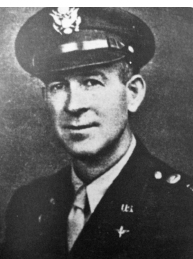
CAPTAIN KENNETH “PAPPY” TURNER. (U.S. COAST GUARD PHOTOGRAPH.)
On Christmas Day 1942, the trio at the PN9E expected Turner’s crew to drop them something special, but the supply plane didn’t come. They had one remaining can of chicken, but that was a delicacy they were saving to celebrate their rescue. Eating it for Christmas would have felt like giving up. So they had a Christmas dinner of meat from C rations. They sang carols and reminisced about better Christmases they’d known.
The following day, Turner dropped a typewritten note, addressed simply, “B-17.” It included the Morse code alphabet, in the event that the men could get their radio working, and also the correct frequency on which they should broadcast. The note read:
We will keep you well supplied with food, etc., until you are removed to the Ice Cap Weather Station. Both the Motor Sled and the Dog Team are encountering difficulties, which is the reason for the delay. We’re sorry that we couldn’t be of more aid on Monday [for Christmas], but the high wind velocity made operations almost impossible. Every day that the weather permits we will be in the area dropping supplies and aiding ground operations. . . . Keep your spirits up as we’re trying to get you off as soon as possible. Capt. Turner.
THE SUPPLY DROPS at the Motorsled Camp were so effective, and opportunities for exercise so scarce, that Spencer packed thirty pounds onto his trim frame. Tetley added fifteen. Most days, they rose in the dark around seven in the morning. After cooking breakfast, they worked to enlarge and maintain their under-snow quarters. They braved the blustery winds to collect newly delivered packages during the few hours of daylight. They also tried to send messages to Turner’s crew by arranging large and small objects in Morse code patterns, but it didn’t work. Neither did their attempts to use black oil to spell out words in the snow. They’d cook dinner in the late afternoon, sleep, then make coffee around midnight. They smoked cigarettes when they had them. One day bled into the next.
All the while, O’Hara was failing, shedding pounds faster than his companions were gaining them. He shriveled from a robust young man into a sunken-cheeked wraith. He dipped into and out of delirium. His legs were useless and his body’s systems were shutting down. O’Hara couldn’t hold down most rations, so Spencer and Tetley fed him soup from cans dropped by the B-17. When those ran out, they boiled rations into a soupy mixture, but that upset his stomach. O’Hara fared better on lucky days when Turner’s crew dropped them sandwiches with fresh meat.
Tetley and Spencer were doing their best to keep him alive, but nothing could save O’Hara’s frozen feet. Not massages, not fresh dressings, not prayer. Deprived of blood flow, they’d been dying for weeks. Dry gangrene did its witch doctor’s work, leaving the twenty-four-year-old lieutenant with blackened, mummified lumps below his ankles. As O’Hara lay helpless in the ice hole, nursed and protected by his friends, living tissue separated from dead flesh.
In layman’s terms, Bill O’Hara’s feet fell off into his boots.
The last thing he ever felt on his feet were Clarence Wedel’s hands sliding across them as Wedel fell into the crevasse.
ON JANUARY 21, 1943, Pappy Turner’s crew dropped a note to the Motorsled Camp with a bundle of wooden stakes and fifty red bandanna handkerchiefs. It described Balchen’s rescue plan and said a PBY Catalina/Dumbo would try to land on the first clear day. The note instructed Spencer to put his pilot training to work and choose a smooth, crevasse-free landing area and mark it with the stakes. Spencer was told to tie two bandannas to each stake, one at the top and one at the bottom, to create a gauge the PBY pilot could use to estimate distance from the ground. The note ended, “Be seeing you soon.” It was signed, “The Boys.” Spencer tucked it away for safekeeping.
On January 25, the two PBYs flew from Balchen’s base at Bluie West Eight across the ice cap to Bluie East Two. There, Pappy Turner and his crew briefed the rescue fliers about conditions. In the lead PBY, Balchen would act as supervisor and adviser to the pilot, Bernard “Barney” Dunlop, a thirty-one-year-old U.S. Navy lieutenant from Long Island, New York. The copilot was Lieutenant Junior Grade Nathan Waters, with two enlisted men, flight engineer Alex Sabo and radioman Harold Larsen, as the crew. Also assigned to Dunlop’s plane was Captain P. W. Sweetzer, the doctor at Bluie East Two, ready to treat O’Hara even before he left the ice. The second PBY would serve as a backup, in case Dunlop’s plane went down.
Also aboard Dunlop’s PBY was an experienced U.S. Army Air Forces dogsled rescue team consisting of Captain Harold Strong, who’d served in Alaska; sergeants Joseph Healey and Hendrik “Dutch” Dolleman, who’d made their reputations in Antarctica; and nine sled dogs. Balchen respected Strong as an Arctic veteran, and he knew he could rely on Healey and Dolleman, who’d been part of the trail team in the My Gal Sal rescue.
The crews and the planes were ready, but the weather wouldn’t cooperate. When January ended with no relief at the Motorsled Camp, Don Tetley grew depressed. A mission that he thought might take a few days had stretched to two months, with no end in sight. Two men had fallen to their deaths in crevasses before his eyes. As days turned to weeks, he focused his remaining hopes on being rescued before February 1, the birthday he shared with his wife.
Tetley’s target date arrived with no sign of a PBY. He became morose, thinking about what he was missing back home and how worried his wife must be. The Motorsled Camp was out of cigarettes, so Tetley glumly passed the hours collecting tobacco from spent butts. Sizing up his partner’s mood, Harry Spencer sprang a birthday surprise. When they’d been flush with cigarettes, he’d set aside a full pack for just such an emergency. Now he made a fuss of presenting it to Tetley with birthday wishes.
The gift was one of untold acts of kindness, large and small, that the men bestowed upon each other. Each one revealed a bond that was crucial to their survival. With every sacrifice, every shared cigarette, the icebound men expressed a stubborn refusal to surrender their humanity.
LATER THAT DAY, Turner’s B-17 crew dropped Spencer the best possible reward for his thoughtfulness short of rescue: a pack of mail, including letters from his wife, Patsy, and a sweater she’d knitted him for Christmas. With it came another note from “The Boys,” saying that the PBYs had reached Bluie East Two and were waiting to fly. “We will try to get you out this time,” the note read. Tetley saved that one.
Two days later, the supply drop included a new walkie-talkie freshly arrived from the United States. The “two-way air-to-ground communication system,” as it was known, was in high demand, especially in battle zones. Now that the Motorsled Camp had one properly tuned to Pappy Turner’s B-17, the airborne cargo team and the grounded men could finally talk to one another. At first, the men’s cold breath froze the mouthpiece, so they thawed it out and put a sock over it. Then they introduced themselves to the air crew that had kept them alive. The contact came as a relief to Pappy Turner, who’d felt frustrated that he could “be so near those men that you could nearly touch them, and yet you couldn’t do anything about getting them out.”
Yet the wait continued for Balchen, Dunlop, and the PBYs. The winds were too treacherous that day and also the next. Blinding sheets of snow raced across Spencer’s chosen landing field, the drifts obscuring the bandanna-topped stakes. Turner and Spencer talked over the walkie-talkie about surface conditions, and Turner asked whether his crew should drop more spare parts for the motorsled. Spencer and Tetley had last worked on the machine more than a month earlier. Since then, it had disappeared under mounds of snow.
“For crying out loud,” Spencer answered, “we’ve been digging for two weeks and can’t find a trace of it!”
O’Hara’s hopes had risen when he’d learned of the latest rescue plans, but now he felt crushed by the delays. Emaciated and dehydrated, his skin a waxy yellow, his feet gone, he grew depressed. Spencer and Tetley feared that O’Hara might give up and die before the PBY arrived.