
CHAPTER 18

Lieutenant General Ulysses S. Grant, U.S.A.
In the early spring of 1864, prior to the traditional onset of the military campaigning season in May, the dominant topic of conversation in New York and elsewhere was the impact that newly promoted Lieutenant General Ulysses S. Grant was likely to have on the course of the war in the east. After he arrived in Washington on March 8, Grant reorganized the Army of the Potomac and, after some delay, confirmed Meade as its commander. Grant planned to travel with Meade’s army and direct its strategic movements, but Meade would remain responsible for its day-to-day management. Grant also assigned William T. Sherman as the commander of the three western armies, and he found employment for three of the Union’s most prominent “political generals”: the German-born Franz Sigel in the Shenandoah Valley, Benjamin Butler with the Army of the James at Fort Monroe on the Virginia coast, and Nathaniel P. Banks with the Army of the Gulf in Louisiana. Grant wanted Banks to seize Mobile, Alabama, but Lincoln’s eagerness to complete the restoration of Louisiana, and Seward’s concern for French adventurism in Mexico, led Banks instead to launch an offensive up the Red River toward Shreveport in partnership with Rear Admiral David Dixon Porter. It proved an ill-fated campaign with near-disastrous consequences both for Banks and for the Union cause — though not for Porter who, as usual, managed to avoid recrimination.
As the redirection of Banks’s operations demonstrated, politics were never very far away during the war. There was already talk about the fall presidential elections. The strongly pro-Lincoln Times was more annoyed than surprised by the short-lived challenge to Lincoln’s renomination from Treasury Secretary Salmon P. Chase. One of the reasons Chase sought to challenge the President (beyond mere ambition) was his eagerness for a more progressive policy toward the emancipated former slaves. Lincoln’s emerging reconstruction policy, evident in his management of the readmission of Louisiana and Arkansas, was moderate and incremental. He insisted on emancipation, but he did not demand that the reconstructed state constitutions grant either black citizenship or black suffrage rights. To Chase and some others, this moderate progressivism was not enough. But when a public letter circulated by Kansas Senator Samuel C. Pomeroy, criticizing Lincoln and praising Chase, failed to generate any support and instead provoked an angry backlash, Chase formally withdrew from the contest.
The issue of black rights asserted itself on the battlefield as well. Though Lincoln had declared that any mistreatment of black Union soldiers as prisoners would initiate a reciprocal treatment of white Confederate prisoners, it did not save the Union garrison at Fort Pillow. A division of 2,500 men under Confederate cavalry leader Nathan Bedford Forrest attacked Fort Pillow, forty miles north of Memphis, on April 12, 1864. Half of the 600-man Union garrison was made up of black soldiers. Most of them were former slaves who feared that if they were captured, they would be treated not as prisoners of war but as escaped slaves and very likely be sold back into slavery. The fort’s commander, Major Lionel Booth, rejected Forrest’s demand for Fort Pillow’s surrender, so when Forrest’s men swept over the barricades and into the fort, they refused to accept the surrender of the black troops, slaughtering them where they stood, and even pursuing them out of the fort and down to the riverbank. Of the 262 black soldiers in the fort, only 62 survived. This episode has gone down in history as the Fort Pillow Massacre and generated the Union rallying cry to “Remember Fort Pillow.” It was one more example of how the increasingly bitter war was bending the rules of combat.
SLAVERY AND THE NEGRO.
NEGRO EQUALITY BEFORE THE LAW.
MARCH 5
WASHINGTON, WEDNESDAY, MARCH 2
The report made by Senator [Charles] SUMNER1 to-day, from the Committee on Slavery and Freedmen, in the bill to secure equality before the law in the courts of the United States, reviews the history of our jurisprudence in respect to the exclusion of colored testimony in the courts, and examines the laws in the several States relative to this subject. South Carolina, it appears, has never had a law excluding such testimony, yet practices exclusion. In concluding this review the report says: “It is difficult to read the provisions in a single State without impatience, but the recurrence of this injustice, expressed with such particularity in no less than fifteen States, makes injustice swell into indignation, especially when it is considered that in every State this injustice is adopted and enforced by the courts of the United States.” It further appears that in no State can a slave testify against a white person, excepting that in Maryland he may testify against a white person who is not a Christian. Only under certain circumstances in Delaware and Louisiana can a free negro testify against a white person. The eccentricities of judicial decisions illustrating this branch are numerously cited — among the consequences of exclusion are mentioned the maltreatment or murder of slaves, with impunity, and the perpetration of crimes against white men, in the presence of colored persons, with the same immunity from punishment. The report traces this proscription to the barbarous ages, and makes it the offspring of Slavery originating in ignorance and prejudice. Among the ancient Greeks, a slave’s testimony was not believed upon his oath, but was admissible under torture. The Romans adopted similar legal practices. In England, under the common law, this proscription was again recognized. The grounds for such injustice are examined at length, and the report concludes as follows: “It is for Congress to determine whether the proscription shall continue to be maintained.”
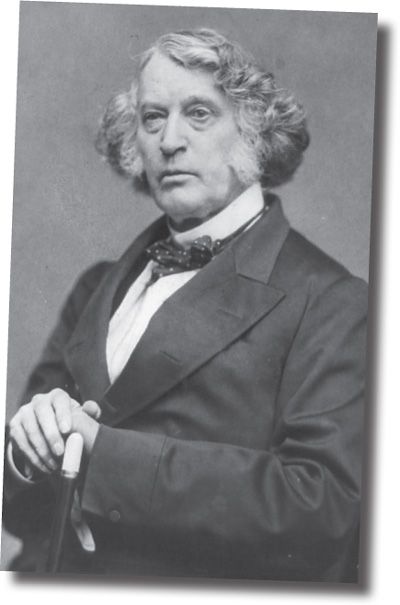
Senator Charles Sumner, Republican of Massachusetts.
1. Senator Charles Sumner of Massachusetts (1811–1874) was the leader of antislavery forces in the Senate.
THE LOUISIANA ELECTION — SECESSIONISM AND COPPERHEADISM SPURNED.
MARCH 5
The first application of the President’s plan of restoring the Union has been grandly successful. Through it Louisiana has been brought completely back; and that State is to-day under a civil rule as loyal as that of New-York itself, and many would say even more so. The State officers, which have been elected by a large majority, are most earnest supporters not only of the Government, but of the administration of the Government, and can be implicitly relied upon, whatever be the effort or the sacrifice demanded.
We confess ourselves surprised, both at the magnitude of the vote, and the comparatively small number received by Mr. [J. Q. A.] FELLOWS, the Copperhead candidate for Governor.1 Before the “secession,” the vote usually polled in the elections of Louisiana was from thirty-five to forty thousand; never, we believe, beyond forty-five thousand. Considering the large numbers (almost all voters) who went at an early day into the rebel army, and also the fact that there are extensive districts in the State which are still under rebel duress, it is surprising that nearly eleven thousand ballots, or more than one-fourth of the regular vote of the State, have been cast on this occasion — and all by citizens who have taken a very stringent oath of allegiance. This election, it must be borne in mind, was confined exclusively to residents, who had the franchise under the State laws. The extent of the response is remarkable; but more remarkable yet is its character.
Of the entire number of votes given, less than one-fifth were received by the Copperhead candidate. No loyal Northern State can show any such preponderance on the side of staunch Unionism. It is particularly gratifying, too, to note in the returns that between New-Orleans and the country parishes there is no essential difference in this respect. If anything, the planting population has polled a stronger vote, comparatively, against FELLOWS, than the city population. This indicates an extraordinary readiness in those who have the most at stake to accept the new order of things; for it was universally understood that the election of [Michael] HAHN would be equivalent to the conversion of Louisiana into a Free State. He had identified himself completely with the Free-State movement, and one of his first official duties will be to make arrangements for the convention to be held in April, to frame a Free-State Constitution2....
This result in Louisiana will soon be followed by similar ones in Tennessee and Arkansas. All accounts betoken that the Unionism which is reasserting itself in those States is of the same sterling cast. It will give no aid or comfort to Copperheadism of any type. It has formally seen and felt the infernal malignity of the rebellion, and, in putting its heel upon that, it cannot by any moral possibility, embrace anything in sympathy therewith.
As it is preposterous to conceive of Gen. GRANT extending his lines down into Georgia, we think it altogether likely that his next movement will be to contract his lines around Chattanooga. The aim and end of the late campaign was to push the menacing rebels from his front — to effectually raise the siege of Chattanooga, if the rebel attempt at investment may be called a siege. This has been done in the most perfect and conclusive manner; and as nothing whatever would be gained by forcing his advance southward, until such time as he is ready to begin the grand advance that shall change his base to the Atlantic seaboard, we have no idea that such unmilitary step will be taken. If, therefore, it should soon be announced that GRANT’s army has fallen back to Chattanooga, there need be no dreadful disappointment expressed. The view of the case and of the campaign just set forth is confirmed by a telegram just received from Chattanooga as we write, which announces that “there has been no fighting for two days,” and that “the campaign in Northern Georgia is probably ended.”
GRANT’s grand campaign, in the direction of Augusta, the final campaign of the war in the Southwest, commences properly with the incoming Spring. A great depot, or base, will by that time have been established at Chattanooga — the army will have recruited from its prodigious labors of the last few months, and it will take up the final march under its great leader, well assured of a final success.

The inauguration of Michael Hahn, sworn in as governor of Louisiana under Lincoln’s Reconstruction program.
1. Louisiana was the first Confederate state to be reconstructed. In an election supervised by Union Major General Nathaniel Banks, a moderate Republican candidate, Michael Hahn, defeated the conservative John Quincy Adams 54 percent to 26 percent, with Radical Republican Franklin Flanders receiving 20 percent. Hahn was sworn in as Louisiana’s governor on March 4.
2. Louisiana’s new constitution abolished slavery and authorized free public schools for children ages six to eighteen without regard to race. It did not, however, grant voting rights to blacks, despite Lincoln’s suggestion to Hahn that it should consider offering the franchise to black veterans at least. Worse (to progressives), when the first legislature was elected, it barred blacks from the new public schools.
THE BUREAU OF FREEDMAN’S AFFAIRS.
MARCH 5
The bill which has passed the House to establish a bureau of freedmen’s affairs creates that office in the War Department.1 It is to be placed in charge of a Commissioner, at an annual salary of $4,000, to whom is to be referred the adjustment and determination of all questions arising under any laws not existing or hereafter to be enacted concerning persons of African descent, and persons who are, or shall become free, by virtue, of any proclamation, law, or military order, issued, enacted, or promulgated during the present rebellion, or by virtue of any act of emancipation which shall be enacted by any State for the freedom of such persons held to service or labor within such State, or who shall be otherwise entitled to their freedom.
The Commissioner is also charged with the execution of all laws providing for the colonization of freedmen, and with the delivery of any bonds of the United States, or any indemnity to any State which shall become entitled by reason of the emancipation of slaves within such State, and of any act of Congress authorizing the issue of such bonds or payment of such indemnity. The bill, among other things, provides for the appointment of Assistant-Commissioners and other officers, who are to permit persons of African descent, and persons who are, or shall become, free, to occupy, cultivate and improve all lands lying within the districts now or heretofore in rebellion, which lands may have been, or may hereafter be abandoned by their former owners, and all real estate to which the United States shall have acquired title, and to advise and aid them when needful, to organize and direct their labor, adjust with them their wages, and receive all returns arising therefrom, which shall be duly accounted for to the Commissioner, and all balances, if any there be, after defraying the charges and expenses of the bureau, are to be annually paid into the Treasury of the United States.
1. The bill authorizing this bureau, renamed the Bureau of Refugees, Freedmen, and Abandoned Lands, triggered heated debate. The House wanted to establish it in the War Department, the Senate in the Treasury Department. The bill was not passed by both houses of the Congress until March 3, 1865, only a month before Appomattox.
FROM CHICAGO.
MR. LINCOLN’S RENOMINATION.
MARCH 6
CORRESPONDENCE OF THE NEW-YORK TIMES.
CHICAGO, MONDAY, FEB. 29
The recent development of an active opposition to the renomination of Mr. LINCOLN, with extensive ramifications, has created no little surprise and excitement in this quarter. People had generally settled down into the conviction that the choice of the Union men would fall unanimously upon the present incumbent, at least so nearly so that there would be no organized opposition. Consequently, the “Chase Circular,” which made its appearance at the Louisville Convention, and which has since turned up in all parts of the country under the franks of leading Republican members of Congress, fell like a bombshell among us.1 The most commonly expressed feeling is indignation that such underhanded means should be resorted to in assailing the Administration. But Mr. CHASE is relieved of any complicity in the scheme, for all hold him to be too high-minded and honorable to be engaged in such intrigues, while holding his present relation to the President.
These men may as well be informed, first as last, that their intrigues will be of no avail. Mr. LINCOLN will as surely be the Union candidate,2 if he is alive when the Nominating Convention meets, as the sun will rise on that day. The signs of the times — the action of State Legislatures and State Conventions — ought to be sufficient to convince any sane man that all factious opposition will be unavailing, and that it will recoil upon those engaged in it. The West, whose voice is somewhat potent in the Union, as it is, knows no other man in connection with the Union nomination for the Presidency but ABRAHAM LINCOLN, and those gentlemen had better “stand from under” who carry their opposition to an undue and unwarrantable extent.
1. Often called the Pomeroy Circular after Kansas Senator Samuel C. Pomeroy, who initiated it, this was a public letter that criticized the Lincoln presidency and openly advocated replacing him with Treasury Secretary Salmon P. Chase. As a “trial balloon,” it backfired and discredited Chase as a rival to Lincoln.
2. In 1864, the Republican Party redesignated itself as the National Union Party to attract War Democrats.
THE SINKING OF THE HOUSATONIC.
ORDER BY ADMIRAL DAHLGREN.
MARCH 6
PORT ROYAL HARBOR, S.C., FEB. 10
ORDER No. 50. — The Housatonic has just been torpedoed by a rebel David, and sunk almost instantly.1
It was at night, and the water smooth.
The success of this undertaking will, no doubt, lead to similar attempts along the whole line of blockade.
If vessels on blockade are at anchor, they are not safe, particularly in smooth water, without outriggers and hawsers, stretched around with rope netting, dropped in the water.
Vessels on inside blockade had better take post outside at night, and keep underweigh, until these preparations are completed.
All the boats must be on the patrol when the vessel is not in movement.
The commanders of vessels are required to use their utmost vigilance — nothing less will serve. I intend to recommend to the Navy Department the assignment of a large reward, as prize money, to crews or vessels who shall capture or, beyond doubt, destroy one of these torpedo boats.
JOHN A. DAHLGREN, REAR ADMIRAL, COMMANDING SOUTH ATLANTIC BLOCKADING
SQUADRON.
1. “David boats” were small steam-propelled vessels that ran on the surface and employed spar torpedoes in an effort to sink blockading ships. The vessel that sunk the Housatonic on February 17, 1864, however, was not a David boat, but the submarine H. L. Hunley.
THE ARMY OF THE POTOMAC. ARRIVAL OF GEN. GRANT.
MARCH 11
HEADQUARTERS ARMY OF THE POTOMAC,
THURSDAY, MARCH 10
Gen. GRANT and staff arrived here today, at 3 o’clock P.M. Gen. MEADE being slightly indisposed, Gens. [Andrew A.] HUMPHREY[S] and [Rufus] INGALLS met him at Brandy Station, whence the party proceeded to headquarters in carriages.
On their arrival in camp, the band of the One Hundred and Fourteenth Pennsylvania Regiment struck up “Hail to the Chief!” with other patriotic airs.1
It was raining very fast at the time, which prevented such a demonstration as would otherwise have been made.
The Lieutenant-General dined with Gen. MEADE, and the evening was spent in social converse. It is understood that the visit of Gen. GRANT will be extended over three or four days.
A letter from the Army of the Potomac says that an order has been issued directing that all ladies within the lines shall leave as early as practicable, and that no more passes shall be granted to such visitors2....
1. Though commonly used to greet the President, this tune was not established as the formal Presidential march until 1954. The use of it here was not intended as a challenge to Lincoln’s leadership.
2. During the winter months, it was not uncommon for friends, relatives, and entrepreneurs of all types to visit the army camp. When spring arrived and the campaigning began again, these visitors were expelled.
THE DECLINATION OF MR. CHASE.
MARCH 12
Secretary CHASE has done himself new honor in refusing to let his name be longer used in connection with the Presidential nomination. His letter to the member of the Ohio Senate is very timely, and in all respects very appropriate. He defers gracefully to the almost unanimous decision of the Union members of the Legislature of his own State in favor of the reelection of President LINCOLN; and thus, without unduly sacrificing any honorable ambition, prevents all use of his popularity for any purpose calculated to generate discord among loyal men.
We say loyal men, and not Union party, for we agree with Mr. CHASE that “persons and even parties are nothing in comparison with the great work to be accomplished.” The term Union party is really a misnomer. Strictly speaking there is no such organization. For a party is political, and has to deal with politics. But the saving of the nation from the rebellion that has threatened to destroy it is not a matter of politics, any more than the saving of a man’s life is to him a matter of business. A party has to do with the mere administration of a government, not with the vital concern of its life or death. The Union party, so called, is in fact nothing more than the great loyal body of the Northern people, who are opposed to the rebellion, and are loyally sustaining the Government in its efforts to put the rebellion down. It is made up of men of all the former parties; and they still have different opinions in regard to the scanty remnants of the old party issues which the war has now swept out of sight forever. The so-called party lives only in the war which is rescuing the nation; and it will come to an end whenever the war comes to an end. It acts for the emergency only. When that is over, and the Republic is once more safe, political parties will again form themselves, and contend, as in former time, for certain political principles on which the Government shall be administered. It is grossly wrong to speak of the Union men of the country as constituting a party, in the sense ordinarily attached to the term. They have an infinitely higher purpose and aim than any which either party spirit or party principle can prompt. They work not that the Government should be managed in this way or that, but that we may have a Government to be managed at all.
Mr. CHASE delivers himself in his letter as a statesman and a patriot, who appreciates the difference between the public duties of this day and the mere political duties of ordinary times. Recognizing that the hearts of the great mass of the loyal people are set upon the retention of ABRAHAM LINCOLN at the head of affairs, and that the persistent efforts of a handfull of politicians to put forward his own name, with an adverse political bearing, were engendering dissension where there ought to be completest harmony, he makes an end of every chance of difficulty by this distinct refusal to be longer considered a Presidential candidate. The magnanimous patriotism will be well noted and remembered by all good loyal men; for there never was a time when the public were more keenly appreciative of genuine public devotion.
This act of Secretary CHASE is all the more to be hailed because it insures his continuance in the position whose extremely responsible duties he is discharging with masterly ability. Though there has not yet been the slightest misunderstanding, or coolness, between him and the President, in consequence of the fact that their names were, of late, so frequently arrayed against each other in connection with the Baltimore nomination, yet there is no denying that a new relation was thus springing up between the two, which might have become so delicate and embarrassing before the meeting of the convention three months hence, as would have been almost intolerable to the sensitive nature of Mr. CHASE, and have constrained him to resign his present place, even against the most urgent remonstrances of the President. No two men, even though of the very highest disinterestedness and singleness of purpose, and most cordial mutual friendship, would willingly be kept in such intimate official connection, when others were scheming to make them rivals and competitors. Even if the two should understand and trust each other thoroughly, there would inevitably be constant misconstruction by the public at large, which no high-souled public man will endure, if there is a way to avoid it. Mr. CHASE, we are very sure, would have found that way by resignation. The withdrawal of his name from all association with the Baltimore nomination relieves the country of all danger of its losing the services of the man who, of all others, is best qualified to manage its finances. He is comparatively young yet — only fifty-six — and the nation will have ample opportunity hereafter, if he lives, to advance him to its highest position.
Much importance has been attached by some of the special adherents of Mr. CHASE to the supposition that he would be more thorough, or as they like to call it, more radical in his public policy than Mr. LINCOLN. The simple truth is, that all this talk of conservatism and radicalism has very little to justify it. It is supported by no essential distinction. The difference, so far as there is any at all, is but a difference in time. President LINCOLN, perhaps, has not been so rapid in his striking at the roots of the rebellion as some other men would have been. He has been circumspect when others, perhaps, would have gone in at a venture on the instant. But nothing has been lost by this prudence, and much gained. The work against Slavery is just as effectually and thoroughly accomplished, and yet public opinion has had time to enlighten and establish itself. Thus the extirpation of Slavery has gone on without any danger of reaction in its favor. The radical end is practically realized, alike whether the Executive Chair is filled by Mr. LINCOLN or by Mr. CHASE, or by some one who has the name of being even more radical than either. Moreover, the mere current of the war has far more to do with the shaping of public policy than have the preconceived theories of any man, or school of men. It is the war itself that has been our greatest schoolmaster — not moral text-books, nor political creeds. All men who have committed themselves to the war, that is to say, all men who are truly loyal, have found themselves borne along, almost whether they would or no, to the same conclusions in respect to all the great questions of the day. The loyal man who distrusted the propriety of the preliminary Emancipation Proclamation eighteen months ago, has long ago accepted its wisdom; and so in respect to every other Anti-Slavery measure of the Government. The whole course of the war, from the outset, has been to bring all true war men, sooner or later, to the same position. For the friends of the war to quarrel about their relative rates of progress is as absurd as it is mischievous.
THE COMMAND OF THE ARMIES — IMPORTANT CHANGES.
MARCH 15
We publish to-day a highly important military order dated on Saturday last, at the War Department. The main provision of the order, and the only one which is of national scope and importance, is that which relieves Gen. HALLECK from the position of General-in-Chief of the Army, and assigns Lieut.-Gen. GRANT to the “command of the armies of the United States.” We presume this order confers upon the new Lieutenant-General plenary powers as acting Chief of the National forces, subject, of course, to the approval of the President. If so it be, we are confident that it will give great and general satisfaction throughout the country.
As a corollary, we suppose, to this order, changes in the command of one, and in the organization of the other, of our two great armies have been made or are in progress. The Army of the Potomac, we learn unofficially, is being reorganized into three corps, which shall be commanded respectively by Gens. [Gouverneur] WARREN, [John] SEDGWICK and [Winfield S.] HANCOCK.1 The late command of Lieut.-Gen. GRANT, designated as the “Military Division of the Mississippi and the armies therein,” has been assigned to Gen. SHERMAN, (W. T.) and it has been enlarged by the addition of Arkansas to its former limits. Still greater unity of action would be secured were it extended southward to the Gulf of Mexico.
The country will look anxiously for speedy and happy results as the consequence of these fundamental changes in command.
1. The Times was correct. Hancock commanded the II Corps, Warren the V Corps, and Sedgwick the VI Corps. Ambrose Burnside commanded the IX Corps, which was technically separate from the Army of the Potomac because Burnside was senior to Meade by date of rank. After the campaign began, Burnside agreed to relinquish his seniority so that his corps could serve under Meade.
THE FREED NEGROES OF LOUISIANA.
HAPPY CONDITION OF THE NEGROES — SUCCESS OF THE NEW LABOR REGULATIONS.
MARCH 21
CORRESPONDENCE OF THE NEW-YORK TIMES.
NEW-ORLEANS, THURSDAY, MARCH 10
Here, in Louisiana, wonders have been wrought. A few months ago, to find a negro who could read was a wonder; to find one who could write was a greater wonder, and to find one who understood arithmetic was a greater wonder still. Fortunately, a good Providence has seen fit to ordain better things, and now here, in this sin-cursed city, nineteen hundred colored children are reading and writing in the day schools which they attend.
One year ago, Col. HANKS1 was feeding from the Government Commissariat more than twenty thousand negroes. Beside this number, there were quite fifteen thousand who hung around the camps and elsewhere, obtaining their living partly by cooking, washing, fishing and stealing; yet these were, to a large extent, an incubus upon the Government.
Now all the negroes have been placed in a condition of profit to the Government and to themselves. Not only does the labor system furnish employment to those within the limits of this department, but had we ten thousand more they could all be employed without expense, but rather with great benefit to the Government.
The benefits that will return to the Government this year, resulting from the operations of this system of labor, will more than pay all the expense that the refugee negroes have been to it since the occupation of the State by our forces.
Facts furnish the best proof of the success of any system; and, when we compare the condition of fifty thousand negroes in this State last year with their condition now, we need hardly allude to a thousand particulars....
1. Colonel George H. Hanks was the superintendent of freedmen’s affairs in Louisiana.
THE RESTORATION OF ARKANSAS.
MARCH 21
Arkansas has given a larger vote for the Union than even Louisiana, and is also ahead of her in the adoption of a Free State Constitution.1 Though the latest reduced “Confederate” State, it is yet the first of any to reconstitute itself on a Free State basis. It has been admirably prompt both in deciding and executing. Undoubtedly the chief cause of this superior promptitude over Louisiana and Tennessee is the fact that the slave population of the State has been at no time more than one third as large. On account of the comparative newness of the country, the large slaveholders were comparatively very few, and the great majority of the people had no slaves at all. It was only by the most villainous chicanery that the Secession Convention was elected which professed to take Arkansas out of the Union. Slavery did not supply the same stimulus in that State that it did in some of the others. It is not at all strange that when brought back by force, she so much more readily accepts the result, and adapts her social system to the new order of things.
There has been some apprehension that a disagreement which has existed to some extent between the Military Commander, Gen. [Frederick] STEELE, and some of the leading citizens, respecting the best plan of restoration, would delay, if not absolutely frustrate, the movement. But the largeness of the vote given, and the decisiveness of the majority, evince that these dissensions were brought happily to an end; and the path now seems to be perfectly clear to the early and complete fulfillment of the will of the people just expressed. The Legislature will meet next month to elect Senators to Congress; the election has already taken place for Representatives to the House. The whole machinery of the State Government will soon be in operation throughout all parts of the State which have been reclaimed from rebel control, now amounting to nearly four-fifths. The rebel authorities are not blind to the fact that Arkansas is about to pass forever from their grasp, and have again put Gen. [Stirling] PRICE in the supreme command of the department, in order to make one last desperate effort for its recovery. We have no belief, however, that the demonstration will be pushed to any great length. It is too palpably impracticable for even rebel insanity to entertain seriously for any long period. PRICE, who has so often failed before in his operations upon that region, will find himself, after such a development and organization of Union feeling, baffled worse than ever.
The vote of Louisiana upon a Free State Constitution takes place next month, as does also that of Maryland. Tennessee will also pass upon the same question before the end of May. We may confidently reckon that before the Spring closes four Slave States will have become transformed by organic law into Free States, leaving but nine still under the thrall of the institution. Kentucky alone of the loyal States will enjoy the unenviable distinction of adhering to a relic of barbarism which is uniformly spurned by every regenerated rebel State, as incompatible with true devotion to the Union. As our arms advance, and the remaining rebel States successively yield to the old flag, beyond all doubt a Free State Government will be adopted in each. This result will be brought about with less difficulty in some than in others, but it is sure to come, sooner or later, to all alike. It will come not simply by the military effect of the President’s Proclamation. It will obtain a more important sanction yet from the direct political action of the people. Arkansas was included in the Emancipation Proclamation; and, so far as that momentous document could avail, the freedom of the slave was already secured. Yet that did not hinder the people of Arkansas from ratifying, with the President’s own approval, this extinction of Slavery in the State. Just such a popular ratification will be given in every other reclaimed State — destroying the last chance for cavilling against the legal effect of the proclamation, which the enemies of the President have denounced with such bitterness.
The President’s method of reconstruction may now be considered to be “in the full tide of successful experiment.” It is progressing with every promise of complete success. Every new application of it only furnishes new evidence of its wisdom. It will soon, we believe, be universally recognized to be the only true way — the way at once perfectly safe and perfectly effective.
1. The new constitution of Arkansas was written in accordance with Lincoln’s so-called Ten Percent Plan: Whenever ten percent of the voting population of any state agreed to denounce secession and ban slavery, delegates could be selected to write a new state constitution. A new Arkansas constitution was ratified under U.S. army oversight on March 4, 1864. It abolished slavery but (like Louisiana’s) it did not define the rights of former slaves. It lasted until 1868, when it was replaced by a more “radical” document that granted civil rights to blacks. That document was replaced in 1874, when conservatives came back into power. The 1874 constitution is still in effect.
THE RED RIVER EXPEDITION.
SUCCESSFUL OPERATIONS ON THE ATCHAFALYA.
A BRILLIANT PIECE OF ‘YANKEE’ STRATEGY.
MARCH 25
CINCINNATI, THURSDAY, MARCH 24
A dispatch from Cairo says: “We have good news from the Red River expedition, which comes from undoubted authority.
Gen. A. J. SMITH landed his forces from transports a few miles below Fort De Russey. The rebel Gen. DICK TAYLOR1 promptly marched against him with his whole force, and attacked him in his rear.
Gen. SMITH, instead of attempting to keep up communication with the river, proceeded by forced marches toward the fort.
When TAYLOR saw the trick, he started for the same destination, and for a time the race seemed doubtful. But finally the Yankees came in about three hours ahead, capturing the fort and eleven guns, four of them Parrotts, one an eleven inch and several thirty-two pounders, and also 300 prisoners.
This gives Gen. SMITH a strong foothold in the country, and will enable Admiral PORTER to proceed to Alexandria with his gunboats without opposition.”2
1. Confederate Major General Richard Taylor (1826–1879) was the youngest major general in the rebel army and the son of former president Zachary Taylor.
2. Rear Admiral David D. Porter called Smith’s capture of Fort DeRussy “one of the best military moves made [in] this war.” It was, however, the last good news to come from Louisiana. For the next month there was almost no news at all, since information had to travel down the Red River, then up the Mississippi to Cairo, then by telegraph to New York, or else downriver to New Orleans and then to New York by steamboat. Not until the last week of April did readers of learn the fate of this expedition. See articles dated April 24 and April 30.
PRESIDENTIAL PROCLAMATION. THE AMNESTY PROCLAMATION DEFINED.
MARCH 28
BY THE PRESIDENT OF
THE UNITED STATES OF AMERICA:
WASHINGTON, MARCH 26
A PROCLAMATION.
Whereas, it has become necessary to define the cases in which insurgent enemies are entitled to the benefits of the Proclamation of the President of the United States, which was made on the 8th day of December, 1863, and the manner in which they shall proceed to avail themselves of these benefits; and whereas the objects of that proclamation were to suppress the insurrection and to restore the authority of the United States; and whereas the amnesty therein proposed by the President was offered with reference to these objects alone.
Now, therefore, I, ABRAHAM LINCOLN, President of the United States, do hereby proclaim and declare that the said Proclamation does not apply to the cases of persons who, at the time when they seek to obtain the benefits thereof by taking the oath thereby prescribed, are in military, naval or civil confinement or custody, or under bonds, or on parole of the civil, military or naval authorities, or agents of the United States, as prisoners of war, or person detained for offences of any kind, either before or after conviction, and that on the contrary, it does apply only to those persons who, being yet at large, and free from any arrest, confinement or duress, shall voluntarily come forward and take the said oath, with the purpose of restoring peace and establishing the national authority.
Persons excluded from the amnesty offered in the said Proclamation may apply to the President for clemency, like all other offenders, and their application will receive due consideration.
I do further declare and proclaim that the oath presented in the aforesaid Proclamation of the 8th of December, 1863, may be taken and subscribed before any commissioned officer, civil, military or naval, in the service of the United States, or any civil or military officer of a State or Territory, not in insurrection, who by the laws thereof, may be qualified for administering oaths.
All officers who receive such oaths are hereby authorized to give certificates thereon, the persons respectively by whom they are made, and such officers are hereby required to transmit the original records of such oaths at as early a day as may be convenient, to the Department of State, where they will be deposited and remain in the archives of the Government.
The Secretary of State will keep a registry thereof, and will on application, in proper cases, issue certificates of such records in the customary form of official certificates.
In testimony whereof I have hereunto set my hand and caused the Seal of the United States to be affixed. Done at the City of Washington [L.S.] the 26th day of March, in the year of our Lord 1864, and of the Independence of the United States the Eighty-eighth.
BY THE PRESIDENT, ABRAHAM LINCOLN.
MR. LINCOLN’S RE-ELECTION AND REBEL DISCOURAGEMENT.
APRIL 1
In a speech just delivered in Portland, Gen. NEAL DOW,1 who for nine months has been a prisoner at Richmond and other points, detailing his personal observations, made the statement that “at present the rebels are looking anxiously at movements at the North in relation to the next Presidential election, and their hope is that some other man than Mr. LINCOLN may be nominated and elected.” He testified that they would regard the election of any other person as a sure indication that the loyal North tires of the war and means to change its policy. This special spite of the rebel press against President LINCOLN, has long indicated the same thing. His “tyranny,” as it is termed, is uniformly treated as the special motive power of the war. Their fixed idea is, that if an end could somehow be made of that, the war itself would speedily come to an end. This idea, doubtless, springs quite as much from blind feeling as from sober thought. When a man is hard pressed, he is apt to fancy that a change of any sort would bring relief. So long as a change is in prospect, even though there may be nothing promising in it, he yet is very sure to keep up his hope by imagining that somehow it may turn to his advantage. This is as true of a whole people as of an individual. It is human nature. There has never been a people so unimaginative and unimpassioned that it did not have some influence over them. It always operates, more or less, even though reason is dead against it.
But in this case reason is not dead against it. Just the contrary. If ABRAHAM LINCOLN shall be superseded by the nominee of the Democratic party, there would almost surely be an abatement of the war, and a resort to negotiation. The rebels would understand that this negotiation, once begun, would result, sooner or later, in securing their independence. It might take a long while to clear the way for this consummation, but it would in all probability be reached before the Copperhead Presidency ended. The war once suspended would never be resumed....
The reelection of President LINCOLN by the unanimous vote of all the vast loyal majority of the North, would do more than anything else to shut off the last hope of the rebels. His war policy, developed through three years, and thoroughly tested, needs only the complete ratification of the people to stand as an adamantine barrier against all possibility of “Confederate” independence. It would confront the rebels like doom itself. Though yet only foreshadowed, the rebels even now shrink from it. The political event which, of all others, they most deprecate, is the election of ABRAHAM LINCOLN to a second term of office. As it is with them, so is it with their Northern sympathizers.

Rear Admiral David Dixon Porter, U.S. navy.
1. Brigadier General Neal Dow (1804–1897) was wounded during the Union assault on Port Hudson on May 27, 1863. Sent to a nearby plantation to convalesce, he was captured there by Confederates in early July. He was imprisoned for eight months in Richmond, and exchanged for Confederate General William H. Fitzhugh Lee, son of Robert E. Lee, on February 25, 1864.
FORREST’S RAID. THE CAPTURE OF UNION CITY — THE REPULSE AT PADUCAH.
APRIL 1
CORRESPONDENCE OF THE CHICAGO TIMES.
CAIRO, SUNDAY, MARCH 27,
The rebel Gen. [Nathan Bedford] FORREST is again on the rampage through Western Kentucky and Tennessee, plundering, burning, killing and doing whatever other damage he can to the rebel cause. Last Wednesday afternoon, about 3 o’clock, Gen. [Mason] BRAYMAN, Commander of the District of Cairo, received information from Col. [Isaac R.] HAWKINS, of the Seventh Tennessee Cavalry, in command at Union City, that FORREST was reported to be advancing with seven thousand men. Gen. BRAYMAN advised the Colonel to hold his position, if attacked; that he would join him in the course of twenty-four hours, if necessary, with two thousand men....
The expedition went within six miles of Union City, where the General was informed that Col. HAWKINS had surrendered his whole force, amounting to four hundred, at eleven o’clock A.M., and had been carried off in the direction of Paducah.
Deeming it useless to proceed any further, the General and his men returned. A negro who escaped reported that the Seventh Tennessee, who were within fortifications, repulsed the enemy, who numbered about one thousand mounted men, twice, when they came up with a flag of truce, saying, if the Federals would not surrender, they would open on them with artillery. No reliable information concerning the capitulation has been received....
By some, Col. HAWKINS is very much censured for not maintaining the fight longer, but it must be remembered that the enemy greatly outnumbered him. He was captured once before by FORREST, but, then, as in this instance, he could not contend against such great odds.1
Last Friday night information reached us that FORREST had made his appearance at Paducah at 2 P.M. with 2,000 men, and had begun an attack on that city. Col. [Stephen G.] HICKS, commander of the post, withdrew all his men, some 800, into the fort [Fort Anderson], and sent the citizens across the river to the Illinois side. The telegraph operator at Mound City said he could see a great light in the direction of Paducah, and supposed the city was in flames.2...

Major General Nathan Bedford Forrest, C.S.A.
1. Colonel Hawkins’s unit was composed of 272 Tennessee Unionists. They were captured by a force variously estimated at from 2,500 to 6,000. Perhaps because Forrest’s men considered them traitors to Tennessee, they were harshly treated, robbed of their personal possessions, and forced to march to Alabama with little food.
2. Forrest took several hundred horses, but he did not burn the town.
WILL THE EMANCIPATED NEGROES INTERFERE WITH NORTHERN LABOR?
APRIL 3
To the Editor of the New-York Times:
No more effectual outcry against the abolition of Slavery has been raised among our laboring population, than the one that the slaves, if emancipated, would come to the North, and would reduce the rate of wages. It was in vain that Democrats were assured of the improbability of such a result. The politician disregarded the facts, that the South was the natural home of the negro, that the slave sought the North only that he might escape from bondage, and that his labor would still be required in his native regions, when they should be brought under a system of freedom. At present laborers are greatly needed in the Northern States, and attempts have been made to procure help from the parts of the South that are occupied by our troops. Allow me to present you with an extract from a letter, written by a teacher of the American Missionary Association, and dated from Fortress Monroe. It effectually answers the objection to which I have referred. I am,
WM. HAMILTON, AGENT OF THE A. M. ASSOCIATION.
“I should have replied to yours before; but I hoped that by delaying I might be able to say I had found some of the young men inquired for. On two successive Sabbaths I have publicly mentioned the main subject of your letter, and of others similar in character, requesting that if any young men would like to go North for good wages and with the assurance of receiving kind treatment, they should report themselves to me on Monday or early in the week; but, up to the present time, not one has appeared to confer with me on the subject.
“Our people here are adverse to going North. They feel that the South is their home; and they suppose that at the North they would be regarded as nothing the better for their color. Besides, the male part of our population have employment hereabouts. So many are in the army or otherwise engaged in Government service, that to find men or boys ready and willing to work for us, even in Hampton, is not generally a very easy matter.”
THE BLACK FLAG.
HORRIBLE MASSACRES BY THE REBELS.
APRIL 16
CAIRO, THURSDAY, APRIL 14
On Tuesday morning the rebel Gen. FORREST attacked Fort Pillow. Soon after the attack FORREST sent a flag of truce demanding the surrender of the fort and garrison, meanwhile disposing of his force so as to gain the advantage. Our forces were under command of Major [Lionel F.] BOOTH, of the Thirteenth Tennessee (U.S.) Heavy Artillery, formerly of the First Alabama Cavalry.
The flag of truce was refused, and fighting resumed. Afterward a second flag came in, which was also refused.
Both flags gave the rebels advantage of gaining new positions. The battle was kept up until 3 P.M., when Major BOOTH was killed, and Major [William F.] BRADFORD took command.
The rebels now came in swarms over our troops, compelling them to surrender.
Immediately upon the surrender ensued a scene which utterly baffles description. Up to that time, comparatively few of our men had been killed; but, insatiate as fiends, blood-thirsty as devils incarnate, the Confederates commenced an indiscriminate butchery of the whites and blacks, including those of both colors who had been previously wounded.1
The black soldiers, becoming demoralized, rushed to the rear, the white officers having thrown down their arms.
Both white and black were bayoneted, shot or sabred; even dead bodies were horribly mutilated, and children of seven and eight years and several negro women killed in cold blood. Soldiers unable to speak from wounds were shot dead, and their bodies rolled down the banks into the river. The dead and wounded negroes were piled in heaps and burned, and several citizens who had joined our forces for protection were killed or wounded.
Out of the garrison of six hundred, only two hundred remained alive....
The steamer Platte Valley came up at about half-past 3 o’clock, and was hailed by the rebels under a flag of truce. Men were sent ashore to bury the dead, and take aboard such of the wounded as the enemy had allowed to live. Fifty-seven were taken aboard, including seven or eight colored. Eight died on the way up. The steamer arrived here this evening, and was immediately sent to the Mound City Hospital, to discharge her suffering cargo....
LATER: CAIRO, THURSDAY, APRIL 15
Two negro soldiers, wounded at Fort Pillow, were buried by the rebels, but afterward worked themselves out of their graves. They were among those brought up in the Platte Valley, and are now in hospital at Mound City.
The officers of the [steamship] Platte Valley receive great credit from the military authorities for landing at Fort Pillow, at eminent risk, and taking our wounded on board, and for their kind attentions on the way up.

An artist’s recreation of the Fort Pillow Massacre.
1. The Union garrison at Fort Pillow consisted of 557 solders: 295 white and 262 black.
THE MASSACRE AT FORT PILLOW.
OFFICIAL CONFIRMATION OF THE REPORT.
APRIL 18
WASHINGTON, D.C., SATURDAY, APRIL 16
Yesterday afternoon, about 5 o’clock, dispatches were received here from Gen. SHERMAN, confirming the surrender of Fort Pillow, and the brutal conduct of the rebels immediately afterward, which bids fair to be amply retaliated in that quarter in due time.
The Star says:
“According to Gen. SHERMAN, our loss was fifty-three white troops killed, and one hundred wounded, and three hundred black troops murdered in cold blood after the surrender. Fort Pillow is an isolated post, of no value whatever to the defence of Columbus, and utterly untenable by the rebels, who have no doubt left that vicinity ere this, having been disappointed, with considerable loss, in the object of their raid thither, which was the capture of Columbus, whence they were promptly and severely repulsed with no loss to us. We are satisfied that due investigation will show that the loss of Fort Pillow was simply the result of a mistake of the local commander, who occupied it against direct orders a contingency incident to all wars.”
“The rebels, according to official dispatches, received here last evening, effected nothing at Paducah, losing a soldier killed or wounded, for every horse they succeeded in stealing, and doing us no other damage than by a few thefts.”
It is believed that FORREST’s raiders will next appear in the vicinity of Memphis, where they can effect no more than at Columbus and Paducah, and stand a very fair chance, indeed, of finding themselves surrounded by overwhelming superior forces.
THE RED RIVER EXPEDITION. DETAILS OF THE RECENT BATTLES.
APRIL 24
CORRESPONDENCE OF THE NEW-YORK TIMES:
DEPARTMENT OF THE GULF,
NEW-ORLEANS, SATURDAY, APRIL 16
The history of the rebellion has had another fearful page added to its record. The gallant soldiers of the East and the West have, side by side, emulated each other in devotion to their country’s cause; they have fallen side by side as they have together triumphed over the common enemy, and throughout all time the fire-side stories of the homes of those who live in the Upper Mississippi Valley will be details of how their fathers fought shoulder to shoulder for freedom along with their brothers of New-England homes.
No information has reached this city, of an official character, but there are continual arrivals of wounded, of prisoners, and intelligent persons attached to the steamers in the Red River trade. From all these witnesses have been gathered such particulars as we have of the battles of the 7th, 8th and 9th.1 The account published in the New-Orleans Era, of the 14th inst., from my most intimate acquaintance with the country where the battles took place, seems to be justly entitled to precedence, and from that source I am almost entirely indebted for the details of the battles.
The country lying between Grand Ecore, which is the river landing of Nactchedotches and Shreveport, one hundred miles in extent, is not alluvial but level land, broken by slightly elevated ridges, bisected in places by bayous, which empty into Red River. The distance between the Shreveport road and the river varies from five to ten miles, which intervening land is almost entirely composed of impenetrable swamp. It is therefore perceivable that the gun-boats are useless to the army after it leaves Grand Ecore. The whole distance from Nactchedotches to Shreveport is more or less a low sandy ridge, broken by straggling forests of pine and scrub oaks. Crump’s Mills consists of one or two miserable houses, and there are no settlements, the plantations that once existed having been long abandoned, until you get to Pleasant Hill, which is a little village situated on a low ridge, containing in place times probably 300 inhabitants. Just beyond the town are still the marks of the track of a hurricane that, some two years ago, nearly destroyed every house in the place. This drift is lower than the ridge on which the town is built; it is very dense, the road having been cut through the fallen timber and the sand-hills, which were thrown up by the roots of the trees. On the left of Pleasant Hill, and on the right, up to the edge of the “drift,” are abandoned plantations, here and there covered with groups of low, second growth pine. Passing on, you come to WILSON’s plantation — a place of cleared land on each side of the road, surrounded by dense woods. Just beyond are Bayou de Paul and the old Sabine Road, which make the place by nature a strong military position. Two miles beyond WILSON’s is Mansfield, the shire town of De Soto Parish, a very pretty place, containing 800 inhabitants.
Our army broke up its encampment on the 6th inst., and marched along the Shreveport Road twenty-one miles, the cavalry in advance, resting at Crump’s Mills, the supporting infantry some four miles in the rear, on a pleasant bayou, famous for affording good spring water in its vicinity. On the morning of the next day, the 7th, at daylight, the cavalry started, and ere it had gone two miles, commenced heavy skirmishing with the enemy. This running fight was kept up for fourteen miles, until our cavalry passed through the drift above Pleasant Hill, and reached the open fields, known as WILSON’s plantation. Here was a heavy body of rebel infantry, 2,500 strong, deployed along the edges of the woods, by which disposition our men were, to avoid them, compelled to charge over the abandoned fields. The only Union soldiers that had advanced far enough to take part in the fight, which was inevitable, was the cavalry brigade of [Albert L.] LEE’s corps, commanded by Col. HARAI ROBINSON. As he had either to attack or be attacked, he decided to take the initiative, and he led his men in with such a dash and vigor, that at last the enemy was completely whipped and driven from the field. This engagement lasted two hours and a half, and our losses amounted to about forty killed and wounded, the enemy’s being at least as many. Col. ROBINSON pursued the retreating rebels as far as Bayou de Paul, where he found they had received heavy reinforcements, including four pieces of artillery, and were again in line of battle waiting attack. As it was nearly dark, and the risk was too great in again attacking with his small force, he placed his men in the most advantageous position available, and awaited the progress of events.
Early on the following morning, the 8th, the cavalry, supported by a brigade of infantry, under Col. [William J.] LANDRUM, resumed its march. The enemy was discovered to be on the alert, and a battle almost instantly commenced. Col. LANDRUM’s infantry brigade was on the right of the road, and Col. [Thomas] LUCAS’ cavalry brigade on the left. The skirmishing was very fierce, and every foot of ground won from the enemy had to be taken by hard knocks, but at two o’clock in the afternoon our forces had compelled the enemy to retreat beyond Pleasant Hill. Our loss, as well as the enemy’s, was very severe during this time. Lieut.-Col. WEBB, of the Seventy-seventh Illinois, shot through the head and instantly killed, and Capt. BREESE, commanding Sixth Missouri Cavalry, severely wounded in the arm, being among the casualties on our side.
From the constantly increasing severity of the fighting, it was evident that a large force of the enemy was near, as it was subsequently ascertained that Gens. DICK TAYLOR, [Alfred] MOUTON, [Tom] GREEN, and [Sterling] PRICE were present with a command of not less than 18,000 men, while our force by comparison was nothing.2
The rebels occupied a strong position in the vicinity of Sabine Cross Roads, concealed in the edge of a dense wood, with an open field in front, the Shreveport road passing through their lines. Gen. [T. E. G.] RANSOM, arriving on the field with his command, formed his line as well as circumstances would permit, after reconnoitering and feeling the rebel position. Col. [Frank] EMERSON’s brigade, of the Thirteenth Corps, was Stationed on the left of the line, with [Ormand] NIM’s Massachusetts Battery. Col. LANDRUM’s forces, parts at two brigades on the right and centre, with RAWLE’s Battery G, Fifth Regulars, and a battery of the First Indiana Artillery in rear of his right and centre. Col. [N.A.M.] DUDLEY’s brigade of cavalry, of LEE’s corps, supported the left and held itself in readiness to repel any attempt to flank; while LUCAS protected the right flank. Col. ROBINSON, with his brigade, was in rear of the centre, protecting the wagon train which was on the Shreveport road.
Gen. BANKS and Staff rode upon the field by the time this disposition of our forces was effected, and word was sent back to Gen. [William B.] FRANKLIN to make all speed for the scene of the momentarily expected battle. It was the design of Gen. BANKS to remain quiet until the remainder of his army came up, and then open the battle himself; but [Confederate General Edmund] KIRBY SMITH, knowing his own superiority of numbers, began the conflict before they could arrive.
About 5 o’clock the firing between the skirmishers become very hot, and in a short time our skirmish line was driven back upon the main body by an overwhelming force. The whole strength of the enemy was then advanced and heavy and repeated volleys were discharged and replied to on our right and centre. Soon this portion of our line became heavily engaged, and all our available strength was required to prevent their being crushed by the masses of the enemy. Our left, which was now, also, hotly fighting, was necessarily much weakened, and it was observed that a strong body of the enemy was massing in a dense piece of woods, preparatory to dashing down and flanking this end of our line. The danger was plain and imminent, but there was no remedy. Gen. [Charles P.] STONE3 ordered Gen. LEE to have NIM’s battery withdrawn, although it was doing great execution, in order that it might not become a prize to the enemy, and Gen. LEE sent his Aid-de-Camp, Col. J. S. BRISBIN, to withdraw the battery. On reaching the point, its removal was found impossible, nearly every one of the horses having been killed. In a few moments more a solid mass of the rebels, under command of Gen. MOUTON, swept down upon the spot and four of the guns were taken, the other two being dragged from the field by hand. The havoc made in the ranks of the enemy at this point of the action is represented as appalling, the whole six guns belching forth double charges of grape and canister; and some five or six rounds were fired between the time the rebels left the woods until the artillerymen were forced from their pieces. As the rebels were in mass, the execution such a shower of missiles caused can be easily imagined. MOUTON fell mortally wounded. The two senior officers of NIMS’ battery were wounded, Lieut. SNOW mortally, he having since died.
The fighting on all parts of our line was now at short range, and to use the expression of one of the participants, “we were holding on by the skin of our teeth only.” It was known that FRANKLIN’s troops had been sent for, and anxious and wistful were the glances cast to the rear. Gen. [Robert] CAMERON, with his brigade came up, and going at once into action on the right, where the battle again waxed hottest, created the impression that the veterans of the Nineteenth had arrived, and a glad and exultant shout went up from our wearied and desperately situated little band. This belief was strengthened by the arrival of Gen. FRANKLIN, who dashed boldly into the thickest of the fray, cap in hand and cheering on the men. Gen. BANKS, too, seemed ubiquitous, riding wherever the men wavered, and by personal example inciting them to renewed deeds of daring and reckless valor. Cols. [John S.] CLARK and [James] WILSON, with other members of the staff, sabre in hand, mixed with the soldiers on foot and horseback, and cheered and encouraged them to continue the unequal fight.
But human beings could not longer withstand such fierce and overpowering onslaughts as our men were bearing up against, and our line finally gave way at all points, and the men fell back fiercely contesting the ground they yielded. Unfortunately a sad mishap befell them at this time. The large and cumbersome wagon train blocked up the way; the frightened horses dashed through the infantry lines, entangled themselves with the artillery, and created a momentary but unfortunate confusion. This gave the rebels, who were rapidly pressing us, possession of several pieces of artillery.
The enemy followed our men step by step for three and a half miles but he was advancing to meet a fearful retribution. The Nineteenth Army Corps had been ordered to stop and form its line of battle — the retreating Union troops passed through this line and formed in the rear. The rebels thinking they had repulsed our whole army, dashed impetuously on, and thought the line, but half visible in the woods before them, was another feeble but desperate stand of a few men.
Gen. EMORY commanded this force, consisting of two full brigades, and he ordered the fire to be reserved until the rebels were within short range, when from both infantry and the artillery posted thickly along his line, a storm of iron and lead was hurled upon the foe that literally mowed them down. The rebels halted in amazement, but still they fought and bravely. Volley after volley was discharged from each side full into the ranks of their opponents, but neither gave signs of yielding, and night charitably threw her mantle over the ghastly scene, and enforced a cessation of hostilities.
The two divisions, under command of Gen. A.J. SMITH, belonging to the Sixteenth and Seventeenth Army Corps, had reached Pleasant Hill, and were there halted. Gen. BANKS determined to withdraw his army to that point, for the sake of the advantageous position which he could there occupy, knowing that the enemy would follow what they supposed to be a demoralized army. In accordance with this plan of operations, all our men were quietly withdrawn from the enemy’s front, and the line of march taken up for Pleasant Hill. This conjunction of his forces was satisfactorily effected, and the result confidently awaited. So well was the movement conducted that although the first body started at 10 o’clock, and the remainder were not under way until nearly day, the rebels had not the slightest suspicion of what was going on.
Gen. FRANKLIN was conspicuous during this part of the day, rallying his men, and two horses were killed under him; Capt. CHAPMAN, of his staff, had both feet taken off by a round shot, and the horse of Capt. FRANKLIN was killed at the same time.
THE THIRD DAY’S FIGHT [BATTLE OF PLEASANT HILL, APRIL 9]
At 7 o’clock on Saturday morning our forces were all at Pleasant Hill, and the rebels were advancing, cavalry in front, endeavoring to discover our position. Col. O. P. GOODING, with his brigade of LEE’s cavalry corps, was sent out on the Shreveport road, to meet the enemy and draw him on. He had gone about a mile, when he came upon the rebel advance. Skirmishing immediately ensued, and according to the plan he slowly fell back. The fight was very sharp between these cavalry bodies, and GOODING lost nearly forty men killed and wounded, inflicting, however, as much damage as he received. Among his casualties are Capt. BECKER and Lieut. HALL, of the Second New-York Veteran Cavalry. Lieut. HALL has since died of his wounds, Col. GOODING made a narrow escape, a ball passing through and tearing out the crown of his hat, and grazing the skin. The brigade behaved very gallantly, covering Gen. [William] EMORY’s front until his line was formed.
The battle-field of Pleasant Hill, as we have already described, is a large, open field, which had once been cultivated, but is now overgrown with weeds and bushes. The slightly-elevated centre of the field, from which the name Pleasant Hill is taken, is nothing more than a long mound, hardly worthy the name of hill. A semicircular belt of timber runs around the field on the Shreveport side. Gen. EMORY formed his line of battle on the side facing these woods, Gen. [James] MCMILLAN’s brigade being posted on the right, Gen. [William] DWIGHT’s on the centre, and Col. [Lewis] BENEDICT’s on the left. TAYLOR’s Battery, L. First Regulars, had four guns in rear of the left wing, on the left of the Shreveport road, and two on the road in rear of Gen. DWIGHT’s line, HIBBERD’s Vermont battery was on the right. In the rear of EMORY, and concealed by the rising ground were Gen. SMITH’s tried troops, formed in two lines of battle fifty yards apart. All his artillery was in the front line, a piece, section or battery being on the flank of each regiment, the infantry lying between them. The Thirteenth Corps was in reserve in the rear under Gen. CAMERON — Gen. RANSOM having been wounded the day before. Gen. SMITH was Commander-in-Chief of the two lines back of the crest, while Gen. MOWER was the immediate Commander of the men. The Commander of the right brigade in Gen. SMITH’s first line was Col. LYNCH; the left brigade was Col. [William] SHAW’s. The second line also consisted of two brigades — the right under control of Col. ____, and the left commanded by Col. HILL. CRAWFORD’s Third Indiana Battery was posted on the right of the Eighty-ninth Indiana Infantry, and the Ninth Indiana Battery on the right of the line of battle. The Missouri Iron Sun Battery, and others whose names and numbers we could not ascertain, were also in this section of the battle.
The skirmishing was kept up with considerable vigor until about 5 o’clock in the afternoon, when the rebels had completed their arrangements for the attack. At about this hour Gen. EMORY’s skirmish line was driven in on the right by the rebels, who appeared in large force, coming through the timber above-mentioned. They soon reached the open ground, and moved on to the attack in three lines of battle. Our batteries and infantry opened with terrible effect, doing great slaughter with grape and canister, while the enemy’s artillery, being in the woods and in bad position, did scarcely any damage.
Col. BENEDICT’s brigade on the left was first engaged, soon followed by DWIGHT’s and MCMILLAN’s. The fighting was terrific — old soldiers say it never was surpassed for desperation. Notwithstanding the terrible havoc in their ranks, the enemy pressed fiercely on, slowly pushing the men of the Nineteenth Corps back, up the hill, but not breaking their line of battle. A sudden and bold dash of the rebels on the right, gave them possession of TAYLOR’s Battery, and forced our line still further back.
Now came the grand coup de main. The Nineteenth, on arriving at the top of the hill, suddenly filed off over the hill, and passed through the lines of Gen. SMITH. We must here mention that the rebels were now in but two lines of battle, the first having been almost annihilated by Gen. EMORY, what remained being forced back into the second line. But these two lines came on exultant, and sure of victory.
The first passed over the knoll, and all heedless of the long line of cannons and crouching forms of as brave men as ever trod mother earth, pressed on. The second line appeared on the crest, and the death signal was sounded. Words cannot describe the awful effect of this discharge. Seven thousand rifles, and several batteries of artillery, each gun with an extra load of grape and canister, were fired simultaneously, and the whole center of the rebel line was crushed down as a field of ripe wheat through which a tornado had passed. It is estimated that one thousand men were hurried into eternity or frightfully mangled by this one discharge.
No time was given them to recover their good order, but Gen. SMITH ordered a charge, and his men dashed rapidly forward, the boys of the Nineteenth joining in. The rebels fought boldly and desperately back to the timber, on reaching which a large portion, broke and fled, fully two thousand throwing aside their arms. In this charge TAYLOR’s Battery was retaken, as were also two of the guns of NIM’s Battery, the Parrott gun taken from us at Carrion Crow last Fall, and one or two others belonging to the rebels, one of which was considerably shattered, besides, 700 prisoners. A pursuit and desultory fight was kept up for three miles, when our men returned to the field of battle.
The accounts from all quarters agree in stating that Gen. BANKS, during the entire contest, showed the greatest possible daring and valor, as did Gen. FRANKLIN, and the staffs of each. They will reap their reward in the grateful hearts and prayers of the American people, and in the increased devotion and love of their soldiers.
Gen. RANSOM, when wounded, was directing the firing of the Chicago Battery, standing among the men, and he had scarcely been removed when the rebels were in possession of the spot on which he fell. This gallant officer, the youngest of his rank in the army, has been, I believe, now three times wounded. He is one of the men chosen by Gen. GRANT to give his celebrated unconditional surrender order. He now lies at the St. Charles Hotel, shot through the leg with a musket ball. He will most certainly recover.
Col. BRISBIN, of Gen. LEE’s Staff, had his horse’s head blown off while riding across the field, by a shell, and would have been taken had not some of the men pulled him out. He succeeded in capturing a rebel horse and leaving the field on his back. Col. BRISBIN lost in his trunk, in the baggage train, the sash taken from Gen. [William] BARKSDALE on the field at Gettysburgh, which had been made a present to him, and Gen, VILLEPIGUE’s sabre, taken from him in Virginia.4
Col. ROBINSON, while defending the wagon train on the first day, was shot in the hip, but refused to leave the field for two hours after. It was supposed he would lose his leg in consequence, but the surgeons now think it can be saved. Among the most regretted of the slain is Col. BENEDICT of the One Hundred and Sixth-fifth New-York.

Major General Nathaniel P. Banks, U.S.A.
1. The two principal confrontations were the Battles of Mansfield or Sabine Crossroads (April 8) a Confederate victory and Pleasant Hill (April 9), a tactical Union victory, but a strategic defeat since Banks decided to continue his retreat.
2. The Confederate army probably numbered no more than 7,000. Counting Franklin’s corps, the Union army actually had superior numbers (around 12,000), but Franklin’s men, in the rear of the column, did not get to the battlefield in time.
3. Charles P. Stone was Banks’s chief of staff. It was his first active duty after his arrest following the Battle of Ball’s Bluff (see Chapter 5). On April 4, 1864, Stanton rescinded Stone’s volunteer commission as a brigadier general and he reverted to his rank of colonel. He served briefly as a brigade commander during the siege of Petersburg, but resigned from the army on September 13, 1864.
4. Brigadier General William Barksdale was mortally wounded on the battlefield at Gettysburg; Brigadier General John B. Villepigue of South Carolina died of pneumonia after the Battle of Corinth.
NAVAL OPERATIONS ON RED RIVER.
ADMIRAL PORTER’S OFFICIAL REPORT.
APRIL 30
MISSISSIPPI SQUADRON, FLAG-SHIP
CRICKET, OFF GRAND ECORE, LA., APRIL 14
SIR:
I had the honor of reporting to you the movements of the squadron as far as Alexandria, and the intentions of Gen. BANKS to move on at once to Shreveport. He deemed the cooperation of the gunboats so essential to success, that I had to run some risks, and made unusual exertions to get them over the falls. The army started on the appointed day, and I pushed up the gunboats to cover them (if there should be need) as fast as they got over the falls. The vessels arrived at Grand Ecore without accident, and had good water, the river apparently about to reach its usual stage at this season.
The Cricket, Eastport, Mound City, Chillicothe, Carondolet, Pittsburgh, Ozark, Neosho, Osage, Lexington, Fort Hindman and Louisville were the vessels sent up, and a fleet of thirty transports followed them.
Grand Ecore was occupied by our forces without opposition — the works deserted. Lieut.-Commander [Seth Ledyard] PHELPS captured one 33-pounder on the river below Grand Ecore, which he destroyed, making twenty-two guns captured from the enemy since we entered the river. The army had arrived at Natchitoches, near Grand Ecore, when I got up here, and were preparing for an immediate march. As the river was rising very slowly, I would not risk the larger vessels by taking them higher up, but started on the 7th of April for Shreveport with the Cricket, Fort Hindman, Lexington, Osage, Neosho and Chillicothe, with the hope of getting the rest of the vessels along when the usual rise came. Twenty transports were sent along filled with army stores, and with a portion of Gen. A.J. SMITH’s Division on board. It was intended that the fleet should reach Springfield Landing on the third day, and then communicate with the army, a portion of which expected to be at Springfield at that time.
I found the difficulties of navigation very great, but we reached the point specified within an hour of the time appointed. At this point we were brought to a stop; the enemy had sunk a very large steamer, the New Falls City, right across the river, her ends resting on each bank, and her hull broken in the middle, resting on the bottom. This was a serious obstruction, but I went to work to remove it. Before I commenced operations, however, a courier came in from Gen. BANKS, bringing the unpleasant and most unexpected news that “our army had met with a reverse,” and was falling back to Pleasant Hill, some sixty miles in our rear. Orders also came to Gen. [Thomas] KILBY SMITH1 to return to Grand Ecore with the transports and the troops he had with him. Here was an end to our expedition for the present, and we reluctantly turned back, after having nearly reached the object we were aiming at.
The information we received was of a very unsatisfactory kind, and we did not know really what was the exact state of affairs, no letters having been sent by post courier.
It would be very difficult to describe the return passage of the fleet through this narrow and shaggy river. As long as our army could advance triumphantly it was not so bad, but we had every reason to suppose that our return would be interrupted in every way and at every point by the enemy’s land forces, and we were not disappointed. They commenced on us from the high banks of a place called Coushatta, and kept up a fire of musketry whenever an opportunity was offered them. By a proper distribution of the gunboats I had no trouble in driving them away, though from the high banks they could fire on our decks almost with impunity. As we proceeded down the river they increased in numbers, and as we only made thirty miles a day they could cross from point to point and be ready to meet us on our arrival below....
On the evening of the 12th instant we were attacked from the right bank of the river by a detachment of men of quite another character. They were a part of the army which two or three days previous had gained success over our army, and flushed with victory, or under the excitement of liquor, they appeared suddenly upon the right bank, and fearlessly opened fire on the Osage, Lieut.-Commander T. O. SELFRIDGE, (iron-clad,) she being hard aground at the time, with a transport (the Black Hawk) alongside of her, towing her off. The rebels opened with 2,000 muskets, and soon drove every one out of the Black Hawk to the safe casemates of the monitor. Lieut. [George] BACHE had just come from his vessel, (the Lexington,) and fortunately was enabled to pull up to her again, keeping close under the bank, while the Osage opened a destructive fire on these poor deluded wretches, who, maddened by liquor, and led on by their officers, were vainly attempting to capture an iron vessel. I am told that their hootings and actions baffle description. Force after force seemed to be brought up to the edge of the bank, where they confronted the guns of the iron vessel only to be mowed down by grapeshot and canister. In the mean time Lieut. BACHE had reached his vessel, and widening the distance between him and the Osage, he opened a cross-fire on the infuriated rebels, who fought with such desperation and courage against certain destruction that it could only be accounted for in one way. Our opinions were verified on inspection of some of the bodies of the slain, the men actually smelling of Louisiana rum. The affair lasted nearly two hours before the rebels fled. They brought off two pieces of artillery, one of which was quickly knocked over by the Lexington’s guns, the other they managed to carry off. The cross fire of the Lexington finally decided this curious affair of a fight between infantry and gunboats. The rebels were mowed down by her canister, and finally retreated in as quick haste as they had come to the attack, leaving the space of a mile covered with dead and wounded, and knapsacks. A dying rebel informed our men that Gen. GREEN had his head blown off, which I do not vouch for as true; if true, it is a serious loss to the rebels. Night coming on, we had no means of ascertaining the damage done to the rebels. We are troubled no more from the right bank of the river, and a party of five hundred men, who were marching to cut us off, were persuaded to change their mind after hearing of the unfortunate termination of the first expedition. That same night I ordered the transports to proceed, having placed the gunboats at a point where the rebels had a battery. All the transports were passed safely, the rebels not firing a shot in return to the many that were bursting over the bills.
The next morning, the 13th inst., I followed down myself, and finding at Canette, six miles from Grand, Ecore, by land, that they had got aground, and would be sometime getting through. I proceeded down in this vessel to Grand Ecore, and got Gen. BANKS to send up troops enough to keep tie guerrillas away from the river. We were fired on as usual after we started down, but when I had the troops sent up, the transports came along without any trouble. This has been an expedition where a great deal of labor has been expended, a great deal of individual bravery shown, and on which occasions the Commander-in-Chief is apt to find out the metal of which his officers are made, and on future occasions it will enable him to select those who will not likely fall in the time offered. To Lieut.-Commander T.O. SELFRIDGE, commanding Osage, and Lieut. GEO. M. BACHE, commanding Lexington, I am particularly indebted for the gallant manner in which they defended their vessels, and for their management during the expedition, always anticipating and intelligently carrying out my wishes and orders.
I found the fleet at Grand Ecore somewhat in an unpleasant situation, two of them being above the bar and not likely to get away again this season, unless there is a rise of a foot. I could not provide against this when over a hundred miles up the river. If nature, does not change her laws, there will no doubt be a rise of water, but there was one year, 1846, when there was no rise in the Red River, and it may happen again. The rebels are cutting off the supply, by diverting different sources of water into other channels, all of which would have been stopped had our army arrived as far as Shreveport. I have done my best (and so have the officers and men under my command) to make this expedition a success throughout, and do not know that we have failed in anything we have undertaken. Had we not heard of the retreat of the army, I should have gone on to the end. A wise Providence, which rules and directs all things, has thought proper to stay our progress, and throw impediments in the way, for some good reason. We have nothing left but to try it again, and hold on to this country with all the force we can raise. It is just as valuable to us and important to the cause as any other portion of the Union. Those who have interests here, and are faithful to the Government, have a right to our protection, and when this point of Louisiana is conquered, we hold Arkansas and all the right bank of the Mississippi, without firing another gun.
There is a class of men who have during this war shown a good deal of bravery and patriotism, and who have seldom met with any notice from those whose duty it is to report such matters. I speak of the pilots on the Western waters. Without any hope of future reward through fame, or in a pecuniary way, they enter into the business of piloting the transports through dangers that would make a faint-hearted man quail. Occupying the most exposed position, a fair mark for a sharpshooter, they are continually fired at, and often hit, without so much as a mention being made of their gallantry. On this expedition they have been much exposed, and have shown great gallantry in managing their vessels while under fire, in this, to them, unknown river.
I beg leave to pay this small tribute to their bravery, and must say, as a class, I never knew a braver set of men. I beg leave to mention favorably Acting Master H. H. GARRINGE, commanding this vessel. He has shown great zeal, courage and ability during this expedition, serving his guns rapidly and well, at his post night and day, ready for anything, and assisting materially in getting the transports by dangerous points; mounting one of his two 10-pound howitzers on his upper deck, he was enabled to sweep the bank in all directions, and one or two fires had the desired effect. He was of great service to me throughout the expedition; was slightly wounded, but nothing of consequence, (owing to his exposing himself so much.) I have the honor to be, very respectfully, your obedient servant,
DAVID D. PORTER, REAR-ADMIRAL.

Admiral Porter’s fleet crossing the dam at Alexandria during the Red River Campaign.
1. Thomas Kilby Smith (1820–1887) commanded a division in Smith’s corps. He should not be confused with Lieutenant General Edmund Kirby Smith (1824–1893), who commanded the Confederate Trans-Mississippi Department.