The purpose of this book is not to confuse the reader with the many complexities arising from the ‘Battle of the Bulge’ (December 1944 - January 1945), nor get involved with the politics or controversial decisions made, but to give an idea, basically, how the battle came about and, because of the vastness of the battleground area, to concentrate on one portion of it.
The battle was the biggest pitched engagement of the Western Front, involving over one million men. It was Hitler’s last desperate gamble and was probably one of the most astonishing episodes of World War II, also the most controversial. It shook the Western Alliance, incredible confusion reigned, and it finally broke the Germans.
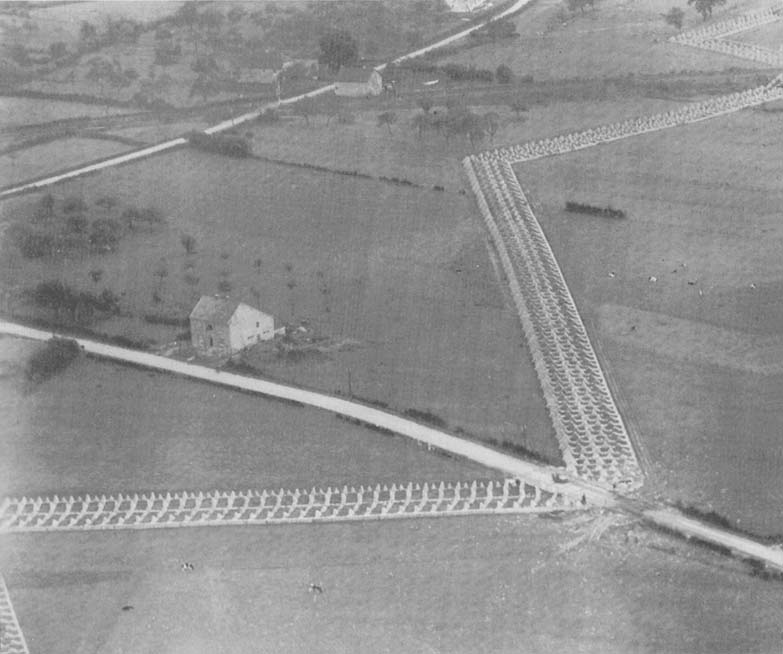
Protecting Germany’s westward approaches from Holland to Switzerland was the much vaunted Siegfried Line or West Wall. Propaganda sold the idea that it would present an impregnable barrier to the Allies. In September 1944, Montgomery’s plan to jump around Germany’s defences at Arnhem had failed.
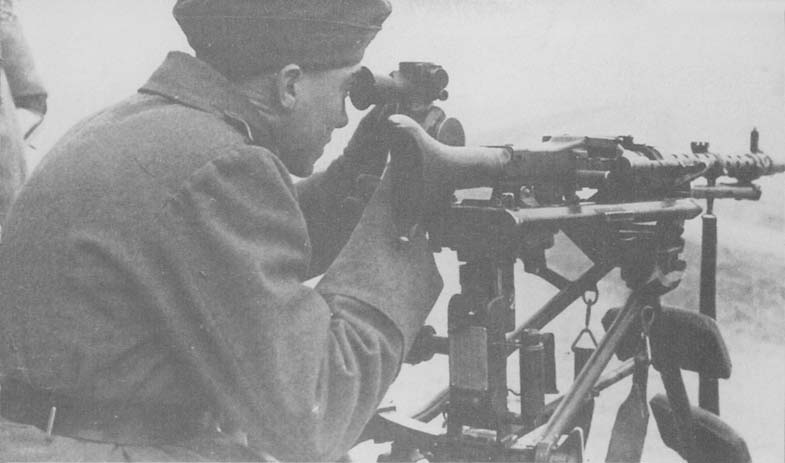
Concrete pillboxes and machine gun posts, with overlapping fields of fire were situated between 200 and 400 yards behind the ‘dragon’s teeth’ of the Siegfried Line. These defences began to be breached in September – the furthest penetration being in the area of the Ardennes.
It was a time of triumph and at the same time deep national humiliation, owing to the fact that the Americans suffered the largest mass surrender or reversal of arms since (with the exception of Bataan 1942) the Civil War (1861–66).
In the beginning of December 1944 it seemed to the Allies that the Germans were on their last legs. They had been under constant pressure since the D-Day landings six months previously, and had been chased back into their own country The end was in sight. ‘Home for Christmas,’ or at the latest New Year, was on the lips of the fighting men.
In September the Allies had forged ahead and had come up hard against the ‘Westwall’ or ‘Siegfried Line’ as it was called. Bitter fighting had found the Allied troops in amongst this formidable obstacle. The long over-stretched supply routes, originating from the Normandy beaches, and the very recently captured port of Antwerp, were now beginning to slow. It was decided to stop the offensive for the winter, straighten the line and allow the much-needed supplies to catch up.
One such part of the ‘Westwall’ was deep in the Belgian Ardennes on the border with Germany. In this area the furthest penetration into Germany had been made. Here on the German side lies a high ridge running north to south. This mass of volcanic hills forms part of what the Germans call the Eifel Region and stretches from Monschau in the north down to the River Moselle in the south. Almost in the centre of this, opposite the Belgian town of St Vith, is the highest portion of this ridge line and is called the ‘Schnee Eifel’ (Snow Eifel). Heavy fighting in September/October had pushed the Germans off the Schnee Eifel and it was now occupied by US troops.
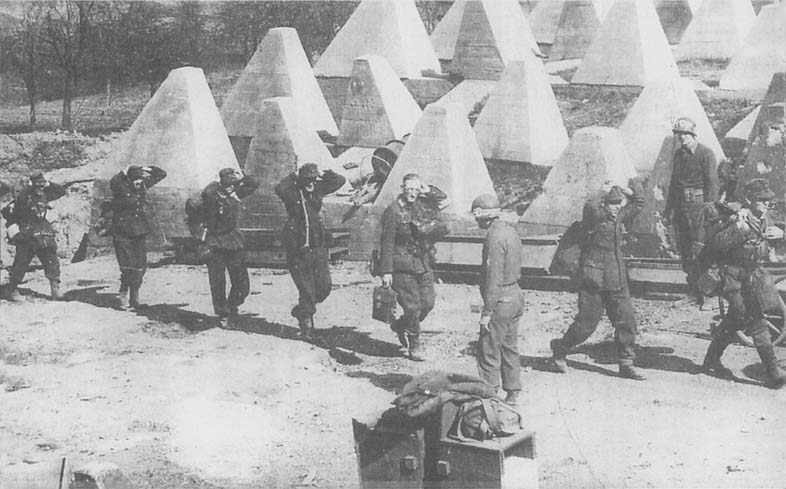
German prisoners stream back through the anti-tank obstacles of the Siegfried Line in September 1944.
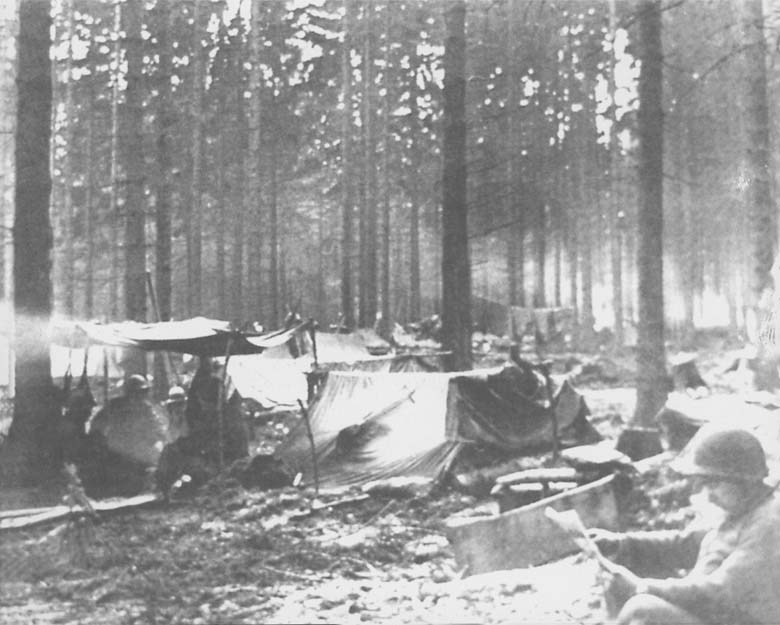
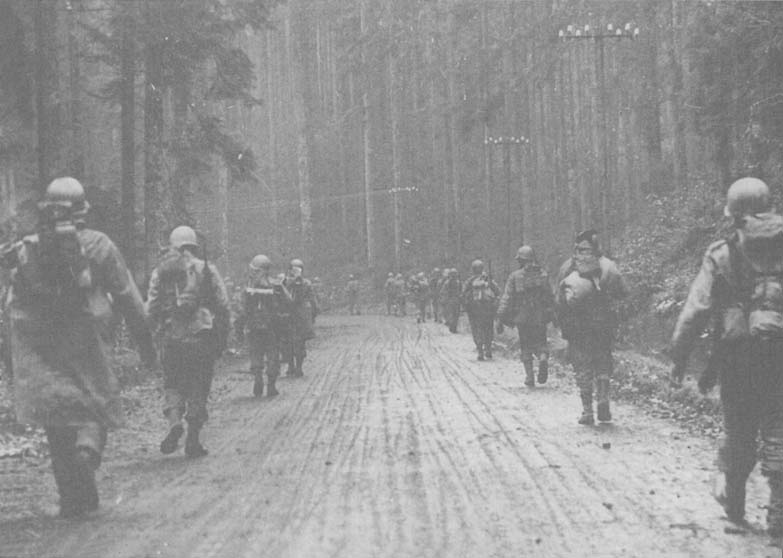
GIs trying to get comfortable among the forests of the Ardennes as the winter of 1944 draws in.
Long famed for its natural beauty and charm, the Ardennes had been popular with holiday makers long before the war. The countryside is criss-crossed with ridges, ravines and rivers, and, in some places, gentle rolling hills. The roads are sparse and narrow, generally following the tracks of the rivers. Everywhere is covered with woods, much of it pine, and in some places quite impenetrable. Because of the nature of the land it was considered a safe area. It became known among the troops as the ‘Ghost Front’, where US Divisions could be sent to acclimatize themselves ready for the coming offensives, or where units, which had already seen heavy combat, could go for a rest and regroup.
Patrolling seemed the only hazard to life; both sides sent out patrols and each reported back that the opposition was light and that all was quiet. The troops made themselves as comfortable as possible, knowing that winter was upon them. All the many small villages that are dotted around the region were occupied by various headquarters and rear echelon staff. The front-line troops made what they could out of the ‘Westwall’ bunkers, captured in September, or lined and covered their exposed foxholes with whatever they could find. As the young GIs quipped: ‘Nothing ever happens in the Awful Eifel’. They were in for a surprise.
On the German side plans were afoot. Already in September 1944, in the midst of apparent defeat, Hitler had decided on one last-ditch offensive. He knew the Allied alliance was shaky. The British and American Generals were always disagreeing about which way the war should go. He decided that, if he could split the two factions there might be a chance he could sue for peace, on his terms.
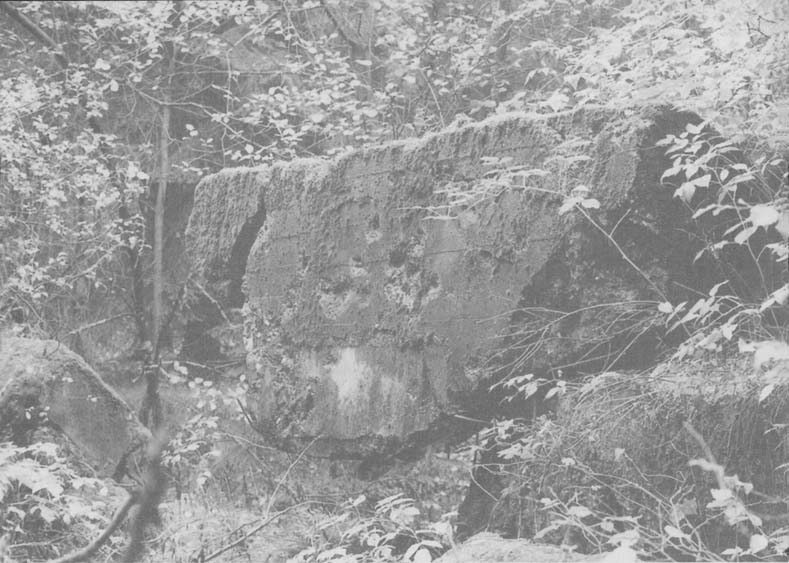
German concrete bunker on top of Schnee Eifel showing heavy damage. These positions were occupied by Americans prior to the German attack in December 1944.
Hitler’s plan was simple. In the north, under old Party bully boy and now SS General, Sepp Dietrich, and his Sixth SS Panzer Army would charge through between Monschau and the Losheim Gap (a natural break in the otherwise hilly terrain which gave easier east-west access) and head straight for Antwerp. This would then force a wedge between the British and American Armies. In the centre, General von Manteuffel’s Fifth Panzer Army was to capture the two major rail and road centres at St Vith and Bastogne deep in the Ardennes and then drive on to Brussels. Finally, the Seventh Army, under General Brandenberger to the south, was to provide flanking protection for the two northern attacks.
But before Manteuffel could get to St Vith and Bastogne he would have to eliminate this furthest penetration, or salient, which by this time was being held by the green and untried US 106th Division. So under complete secrecy and unknown to the Allies, the Germans prepared and massed their armies behind the Eifel Region in the German homeland. To stop them was the greenest, youngest (average age was 22) division in the whole of the Allied Armies in Europe that December.
A tragedy was in the making.
The Purpose of the Guide
To cover the site of America’s greatest military defeat of WWII. Nowhere in the world is there a battlefield like this, left basically as it was in 1945
This guide will enable you to tour this particular portion of the front, see the now celebrated landmarks and ground that both Germans and American alike fought so hard over and where the ill-fated 106th Division would succumb to that onslaught in that terrible winter of December 1944. Here the informed reader can examine the foxholes in which the GIs fought; the German gunpits; see the place where thousands of Americans surrendered, all not much changed in half a century.
Remember – this is a ‘hands on’ guide. – BRING YOUR WELLIES! (Rubber boots).