
Chapter 7
The next phase of the offensive would be the drive towards Jerusalem. Dudley Ward described the country the 24th Welsh had now moved into in his book The 74th Yeomanry Division in Syria and France and the place names concerned are well known:
‘Along the coast, right up to Mount Carmel, 100 miles north of Gaza, runs a very fertile plain of some 10 to 12 miles in width. From this plain there rises a limestone block of tumbled hills, mostly with regular rounded tops, some 3,000 feet at its highest, and 35 to 40 miles in width. To the east of the watershed of this range the ground drops to the Sea of Galilee, the Jordan and the Dead Sea, that curious inland lake 1,200 feet below sea level. Beyond, again, rise the Hills of Moab about the same height as the Judean Hills.
‘Hebron, Bethlehem, and Jerusalem stand just to the east of the watershed. North of Jerusalem there is only the one main ridge of hills, south of it there is a lower distinct range called the Shephelah, separated from it by valleys running north and south. The Shephelah Hills are stony rather than rocky, and are terraced for cultivation, but very few roads run through them.
‘There are only four practicable approaches to Jerusalem; from the south and west, i.e., by Hebron from Beersheba; by a track leading east from Gaza to Bethlehem and thence to Jerusalem by the Wadi es Sarar in which the railway runs from Junction Station; and by the main Jaffa-Jerusalem road.
‘The result of the direction of General Allenby’s attack was to force the Turks away from the hills and up the coastal plain. The nearest east and west line on which the divergent forces could rally was the railway to Jerusalem at Junction Station, and this was accordingly the first objective of the pursuing force.’
Allenby’s plan had been to capture the coastal plain south and west of Jerusalem before embarking on the next stage of the offensive. On 17 November the important town of Jaffa was captured, opening up the only good road towards Jerusalem from the west. Allenby realised that the Turks could unite their two armies along the Tul-Keram to Nablus road, which ran thirty miles north of the EEF’s current positions, so he moved to capture the Nablus to Jerusalem road at Bireh, ten miles north of Jerusalem, preventing Turkish troops from reinforcing the Holy City. With the problems of supply almost solved, Allenby moved his divisions into place for the attack on Jerusalem over the coming days.
On 28 November the 74th Division moved onto Latrun, and the following day marched to Beit Annan. Conditions were awful for the troops, as the way to Jerusalem was now over ancient cobbled roads, which, after months of marching on soft sand, were proving hard on the feet of the men, and featured in many of the letters sent home by the troops at that time. The roads were also too rough for the wagons, so the infantry marched on while the transport remained behind. The war diary shows the difficulty moving over this country:
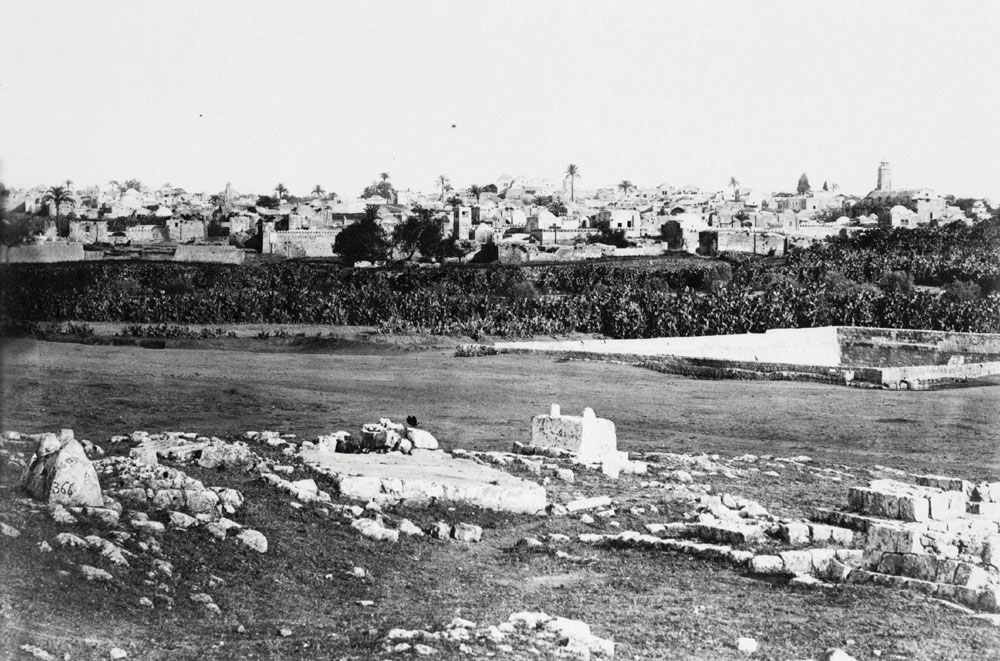
A view of Jerusalem across ancient ruins.
‘28th November. March to Latrun (Ramleh), seven miles uphill all the way, taking four-and-a-half hours to accomplish. Continued march at night, but transport could not go to Beit Annan, as country too rough. Arrived Beit Annan 4.30 am on 29th November, 26 miles of rocky road - men exhausted. Enormous difficulty in taking over outpost line (from 8th Mounted Brigade) in jumble of steep rocky hills, falling precipitously into deep wadis and rising in places to over 2,000 feet. Only means of progress was by native tracks running up and down sides of mountains and along which only one man could move at a time. Only brilliant moonlight made relief possible.’
By now the Turks had established strong defensive positions on the ridges west of Jerusalem, and were ready to defend the Holy City. On 29 November 321 Brigade was ordered to take up a line from the Wadi Zait to Beit Dukka, on the left flank of the 60th Division. The situation here proved confusing to the commanders of the battalions of 231 Brigade. Hugh Edwardes, Lord Kensington, a prominent landowner in Pembrokeshire, was in command of the 25th RWF, and received several confusing reports of where his battalion was to advance to. Unaware of the situation regarding other units of the EEF and positions of the Turks, he sent a company to capture Hill 1750, which it did soon after midnight. His orders had wrongly informed him that the line his battalion was to take was held by British troops, when in fact it was still in Turkish hands. With dawn breaking, his battalion was in a dangerous position, so Kensington formed his men up around the village of El Foka and attacked it that morning, forcing its garrison of 450 Turks to surrender. All of this gunfire brought about a swift response from the Turks, who sent a force to attack El Foka. A company of the 24th Welsh had been sent up to support the 25th RWF, after Spence-Jones had received a request for aid from Brigade HQ but, in the confusion, the Turks had recaptured the village by 5.00 am before launching an assault on Hill 1750, and had regained that by 2.00 pm. While withdrawing with his prisoners, the remnants of Kensington’s unit were allegedly fired at by both Turk and Australian troops.
It was late in the evening by the time the 74th Division HQ had got a grasp of the situation; the 24th Welsh was ordered to fill up the gap between Hill 1750 and the left of the Shropshire’s at Kh Jufna, and to capture el Tireh at dawn. After a long march through the night of 30 November, the battalion took el Tireh, but it was found that the position was untenable, as it was open to enfilade fire from Turkish machine-guns on Hill 1750. Spence-Jones ordered the battalion to withdraw to the ridge overlooking the village and to build a line of stone sangars to consolidate the position. During the morning the battalion saw heavy fighting while defending its newly gained positions; throughout the day 231 Brigade suffered 250 casualties, but captured eight officers and 300 other ranks. The 24th Welsh lost fifteen men killed that day, among them James Goss, a former Royal Navy seaman. Goss left the Royal Navy after marrying his wife Jessie Gillard on 4 November 1911, and worked as a collier at Coytrahen Colliery, Tondu prior to joining the Glamorgan Yeomanry. He was a well known rugby player, having played for Pontycymmer. He is buried in Jerusalem War Cemetery, as are most of the other men killed during the day. Two of his cousins from Pontycymmer also fell: Albert Edward Goss, was killed in France on 24 April 1915, serving with the 2nd Battalion, Royal Lancaster Regiment; and Albert’s brother, Frederick Robert Goss, was killed in Boesinghe on 22 November 1916, whilst serving on the Canal Bank with the 13th Welsh.
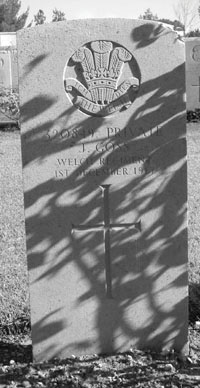
The grave of Private James Goss at Jerusalem War Cemetery.
Spence-Jones wrote home to James’ widow at the Malt House, Penyfai soon afterwards:
‘I knew your husband well, as he was one of my runners, and was constantly with me, and did many personal things for me and always did them well, and I shall miss him very much. The officers and all the men deeply mourn his loss.’
The 24th Welsh held its positions overnight, and at 7.00 pm on the following day, the battalion was relieved by the 12th SLI, before withdrawing to Wadi Marua. During the day, a young soldier who had been wounded at el Tireh died of his wounds at the nearby 321st Field Ambulance. Arthur Stanley Dayson (320871) was the son of John and Mary Ann Dayson, of Blaengwynfi. He was the manager of the Star Supply Tea Company in Narberth prior to the war, and had served with the Glamorgan Yeomanry before to the merging of the regiments in Egypt. He was thirty two years old when he died of his wounds on 2 December, and is buried in Jerusalem War Cemetery.
Private Arthur Stanley Dayson, Manager of the Star Supply Tea Company, Narberth.
With 231 Brigade now out of the line, it was the turn of 229 Brigade to take up the offensive, and on the 3rd the brigade attacked the Zeitun Ridge. Aggressive Turkish defence, coupled with poor terrain, suiting the defender, made the attack stall, but by now the Turks had realised that Jerusalem would fall.
While the fighting was raging west of Jerusalem, a separate force, comprising the 53rd (Welsh) Division, known as Mott’s detachment, was advancing from the south on the Hebron to Bethlehem Road. Outposts at Dahriye, just outside Hebron, were captured by 24 November, and water supplies had been secured there. Included in this force were the 4th and 5th Welsh, who had suffered limited casualties. By 5 December Mott’s forces were north of Hebron, but were suffering from Turkish artillery fire from Bethlehem. This twopronged assault on Jerusalem was proving to be irresistible, and as a result of a series of failed counter-attacks which had been launched on 23 November, and the proximity of Allenby’s forces to Jerusalem, Erich von Falkenheyn, who had already evacuated his HQ to Nablus from Jerusalem on 14 November, began to withdraw the Turkish troops defending the city.
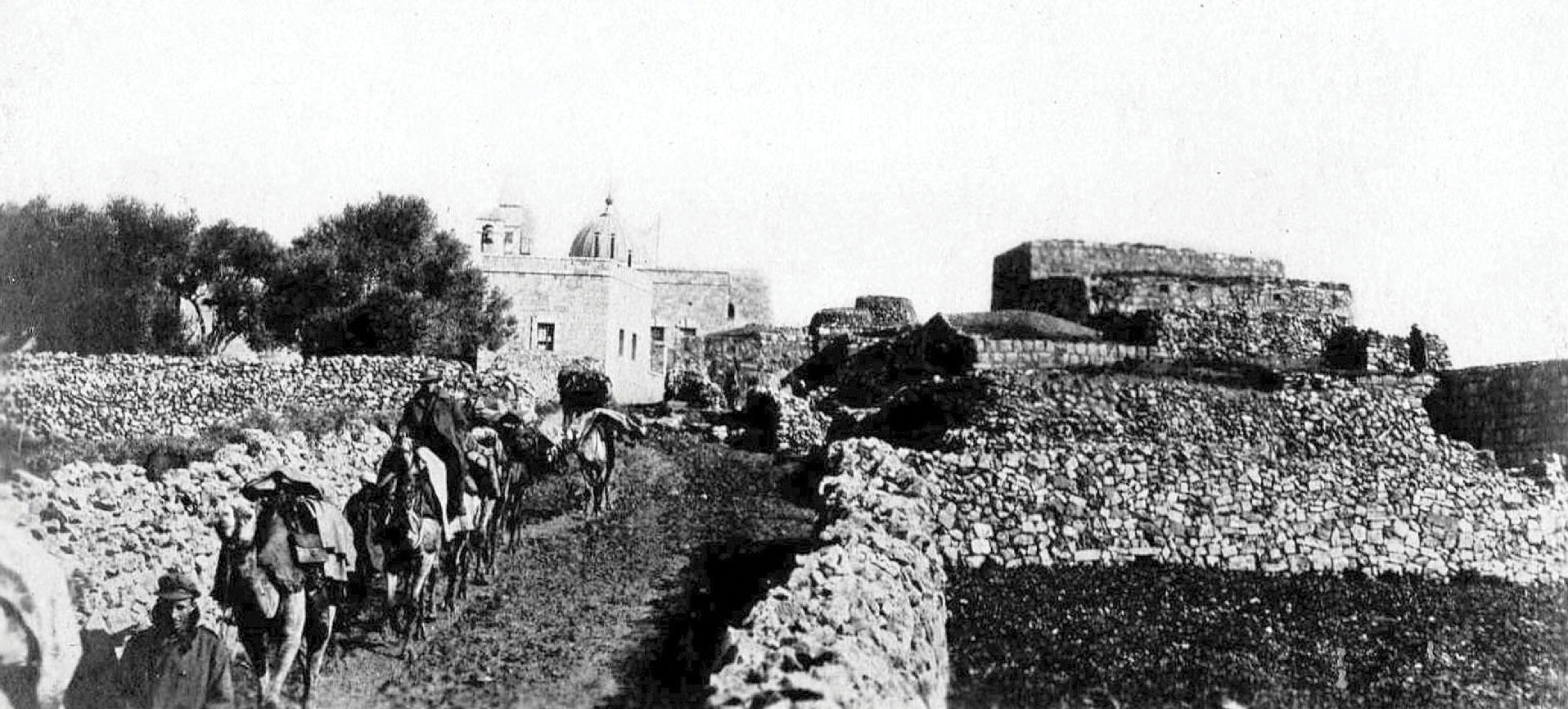
Soldiers of the 74th Division leaving Bethlehem.
The position was as yet unknown to the men of the 24th Welsh, who were now busy building and repairing roads in preparation for the advance of the 74th Division into Jerusalem, working through the Wadi Marua and the Wadi Selman to the well at Ain Jufna. On 5 December 231 Brigade, including the 24th Welsh, took over the Nebi Samwil defences, while Spence-Jones made his HQ in a cave below a mosque.
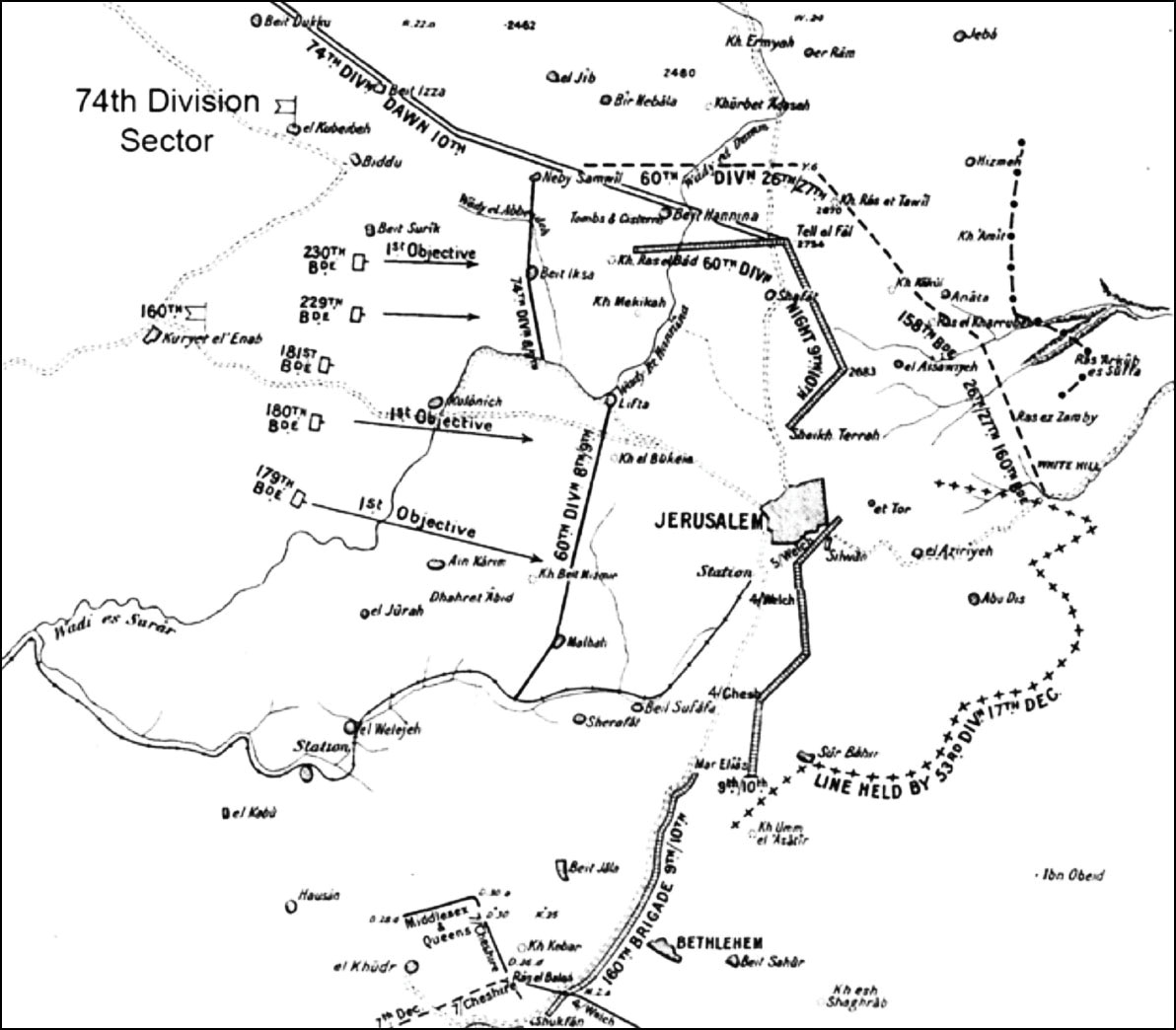
Allenby’s plan for the taking of Jerusalem was already laid out, and the 74th and 53rd Divisions were at the centre of it. The Turks held a strong defensive line covering the Hebron to Jerusalem road, which was bolstered by defensive works in the area of Ras Esh Sherifeh. Behind were a network of trenches near el Khudr (now al-Khadr) and also around Bethlehem from Kh Esh Shugbrab, on the south-east, across the road to Kh Kebah and then northward.
The strength of the Turkish troops opposing XX Corps were an estimated 500 to 1,200 along the Hebron Road and around 15,000 from the right of the 60th Division to the left of the 10th Division, which was at Suffa.
It was thought that the worst difficulty facing Allenby’s forces would be the terrain, as the Turkish defences were deemed as being of insufficient depth to cope with the assault, and as a result he planned to use two brigades of the 53rd Division, the entire 60th Division, and two brigades of the 74th Division.
The two brigades of the 53rd Division would advance twenty miles towards Jerusalem from a point north of Bethlehem, and would then co-operate in the attack along with the remainder of the Corps. If the enemy were to strengthen the defences in front of the 53rd Division, then the 60th and 74th Divisions would drive straight on to the Jerusalem to Nablus road, the 60th Division securing the flank to the south-east, with the objective being to prevent the escape of the enemy by the Nablus or Jericho roads.
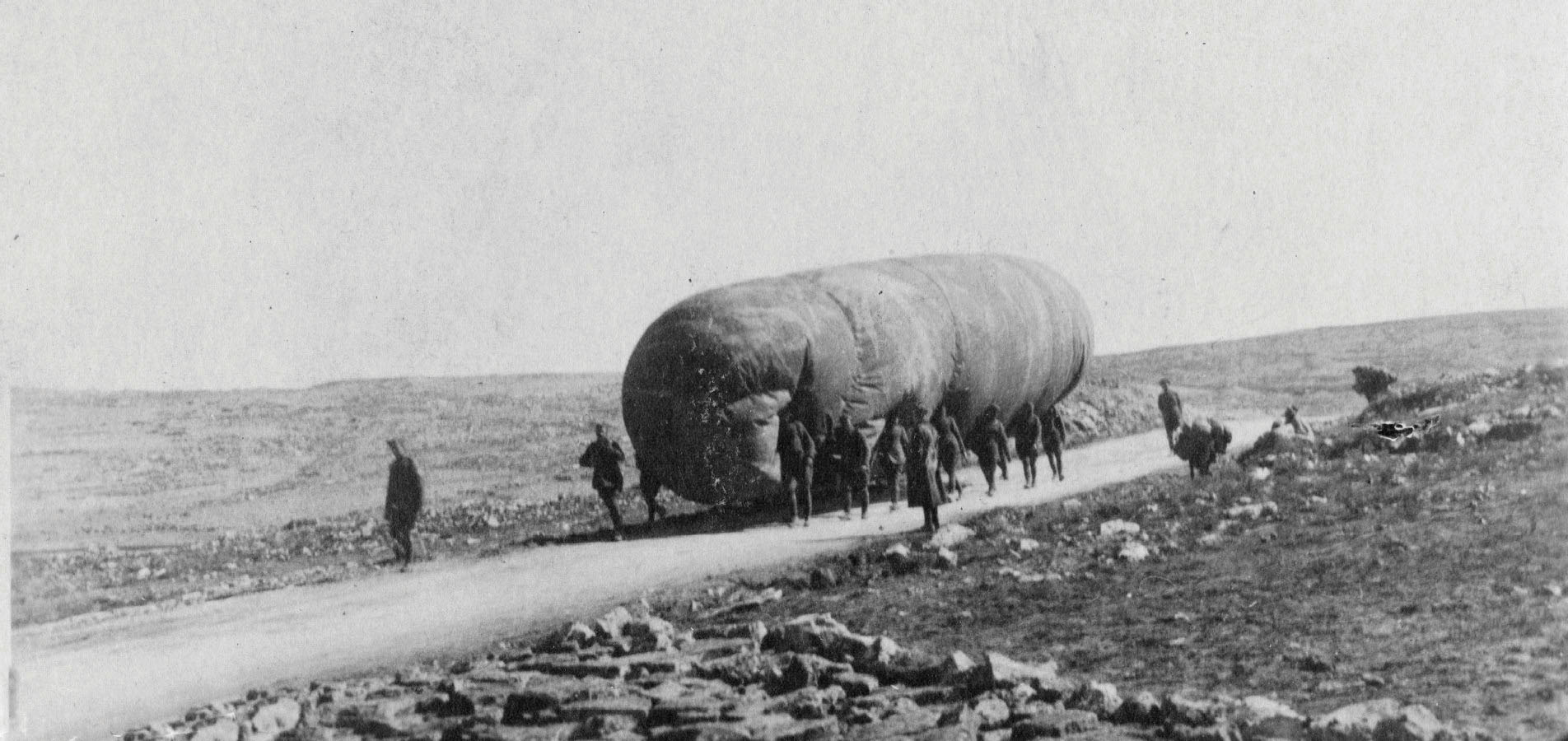
A barrage balloon on the Jerusalem to Nablus Road.
Allenby realised that the enemy might recognise the danger of the aforementioned moves, and also put plans in place to deal with the possibility of attempting a withdrawal from the front of the 53rd Division. This eventuality would require the 53rd Division to directly advance on Jerusalem and for the 60th and 74th Divisions to drive the enemy northwards by pivoting on the Beit Iksa and Nebi Samwil defences and wheel northwards, with the following objectives:
‘(a) a position covering the Jericho Road to be occupied by a portion of the 53rd Division; (b) the 60th and 74th Divisions to seize the general line Shafat - Nebi Samwil, or, if possible, the point 2670 - Kh Ras el Tawil - Nebi Samwil.’
The main intention of Allenby’s plans was to inflict the severest possibly blow on the enemy by capturing as many troops as possible; and in order to do so the 53rd Division troops had to advance as rapidly as possible once it had began its move from its proposed starting line from Surbahir – Sherafat. Allenby’s orders stated:
‘Should the enemy retire from before the 53rd Division, or only oppose that division lightly, the general attack will take, roughly, the following form:
‘1st Phase. The capture as soon as possible after dawn by the 60th Division of the enemy works from the railway to the main Enab Road, and by the 74th Division of the works covering Beit Iksa, as far north as the Wadi el Abbeideh. After this advance it will be necessary to advance more guns of the 60th Division.
‘2nd Phase. The advance of the 53rd and 60th Divisions to the general line Jerusalem - Lifta. It is recognised that difficulties of terrain may prevent the 53rd Division from advancing from Sherafat northwards, and that they may have to work up the main road nearer to Jerusalem before they can gain close touch with the 60th Division.
‘3rd Phase. The advance of the 60th and 74th Divisions to the general line of the track running out of the main road one mile north of Jerusalem.
‘During this 3rd Phase the left brigade of the 53rd Division, if there is any room, will assist the right of the 60th Division. Otherwise the brigade will drop into reserve. The right brigade of the 53rd will endeavour to place itself in a position covering the Jericho Road, and the east and north-east of Jerusalem.
‘4th Phase. The further advance of the 60th Division to a line astride the Jerusalem - Nablus Road about Shafat, and if possible to Point 2670 Ras el Tawil. During this phase the 74th Division will improve its position by throwing its right into Beit Hannina.’
Allenby also made provisions for the 53rd Division in case it was unable to attain its objectives in time due to enemy resistance:
‘Should the resistance of the enemy be so great that you are unable to reach this line in time to co operate with the 60th Division, the G.O.C. 60th Division will be instructed to detach troops to advance east, from about Ain Karim, towards the Hebron Road to prevent the escape of the enemy on your front, either by the Jerusalem - Nablus Road or by the Jerusalem - Jericho Road.
‘In the more likely case that you are able to break the enemy’s resistance south of the line Surbahir - Sherafat, you will advance on 8 December from the line Surbahir - Sherafat in two groups.
‘The right group will move at dawn towards Jerusalem, and pass thence south of the town to seize a position to command the Jerusalem - Jericho Road and to protect the XXth Corps from attack from the east and north-east of Jerusalem.
‘The left group will advance between the Hebron - Jerusalem Road and the general line Sherafat - Malhah, to co-operate with and protect the right flank of the 60th Division.
‘As soon as you are able to pass troops round the southern and south-eastern outskirts of Jerusalem, you will push forward a portion of the Corps Cavalry Regiment to discover whether there are any forward bodies of the enemy on the Jerusalem - Jericho Road within a distance of six miles from Jerusalem.
‘The city of Jerusalem will not be entered, and all movements by troops and vehicles will be restricted to roads passing outside the city.’
Spence-Jones was issued with his orders on 7 December for the battalion’s part in the attack the following day. According to the plan of attack, 229 Light Trench Mortar Battery (LTMB), 231 LTMB and 209 Machine Gun Company would begin firing from their positions at Nebi Samwil, while the infantry of the 60th Division would attack on the right. The attack began at 5.30 am, but was repulsed after the exhausted 53rd Division failed to safeguard its right flank. The failure forced the 74th Division to withdraw and form an outpost line on the Iksa Ridge. The weather during the day was cold and wet, and conditions were miserable for the troops holding the outposts, as no rations had been brought up due to the state of the roads. Turkish snipers were very active still, making any movement during the day exceedingly hazardous. The continuous sniping took its toll on the 8th, when Lance Corporal Ieuan Cranog Jones (320797) was shot and killed. He lived at 12, Coychurch Road, Bridgend prior to the war, and is buried in Jerusalem War Cemetery.
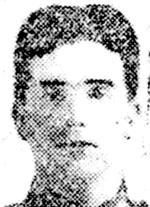
Ieuan Cranog Jones, of Aberdare.
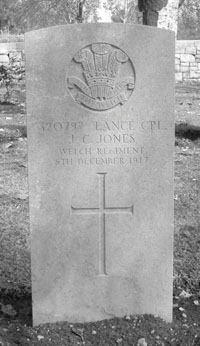
The grave of Lance Corporal Ieuan Cranog Jones, of Aberdare, at Jerusalem War Cemetery
At 8.00 pm, Spence-Jones received the welcome news that Jerusalem had surrendered, and early the following morning sent out patrols to verify the location of the Turks. None was encountered. The Turkish Seventh Army had retreated that day, and had left the ancient city undefended. As a result, the Mayor of Jerusalem, Hussein Salim al-Husseini, delivered the Ottoman Governor’s letter of surrender of the city to two sergeants of the 2/19th Battalion, London Regiment. The men were part of a scouting party, and brought the mayor to 180 Brigade HQ, where they delivered the letter to Major General Shea, commanding 60th Division.
‘Due to the severity of the siege of the city and the suffering that this peaceful country has endured from your heavy guns; and for fear that these deadly bombs will hit the holy places, we are forced to hand over to you the city through Hussein al-Husseini, the mayor of Jerusalem, hoping that you will protect Jerusalem the way we have protected it for more than five hundred years.’
Allenby’s men had made history, becoming the first Christian conquerors of Jerusalem in over half a millennium. During 9 December the 60th and 74th Divisions advanced on Jerusalem from the west, while the 53rd Division advanced from the south, reaching the city walls by 8.45 am. The Mayor had fled the city, and the 5th Welsh sent a detachment of men to mount the first guard over the Jaffa Gate, to prevent any troops from entering the city. During the following day, sporadic fighting took place, notably around the Mount of Olives, where the 5th Welsh attacked and captured a Turkish machine-gun position. Meanwhile, the 4th Welsh took up positions guarding the eastern side of the city, while the 24th Welsh took up positions on the Beitoun Ridge. Interestingly, with the departure of the Ottoman Mayor of Jerusalem, an Egyptian named Borton Pasha, who served for many years with the Welsh Regiment prior to the war and was working for the Egyptian Civil Service, was appointed Governor of Jerusalem.
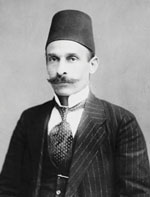
The Mayor of Jerusalem, Hussein Effendi al-Husseini
The stage was now set for the triumphal entry of Sir Edmund Allenby into Jerusalem.At noon on 11 December 1917, two days after the official surrender of the City and six weeks after the fall of Beersheba, to show his respect for the Holy City, Allenby made his entry on foot through the Jaffa Gate, the streets lined by rows of his troops. He had delivered to Lloyd George the Christmas gift he had so longed to give the people of Britain. Inside the Holy City, Allenby marched towards the town hall, where he read out his official proclamation of Martial Law in Jerusalem:
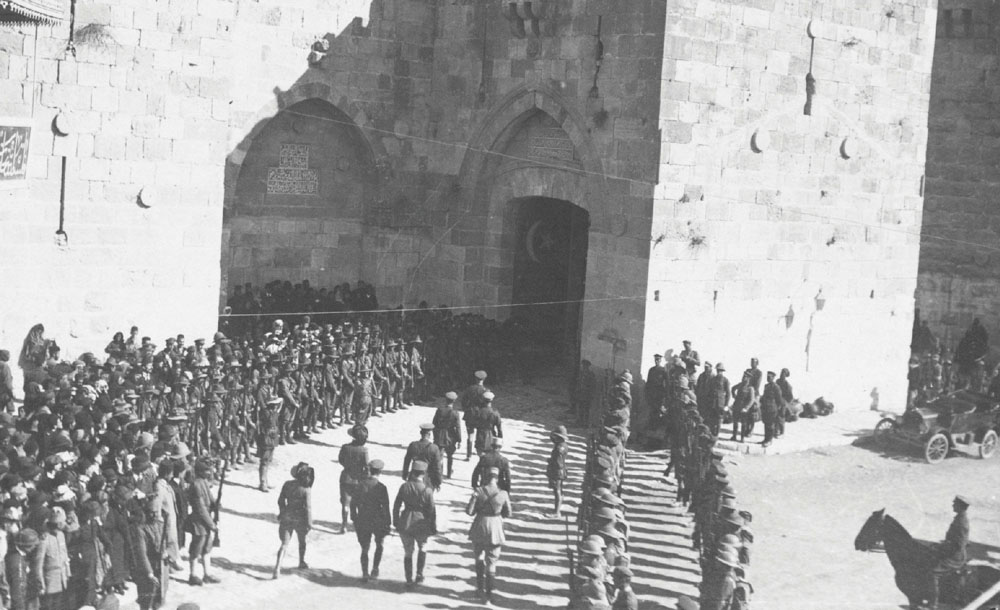
General Allenby’s triumphany entry into Jerusalem through the Jaffa Gate.
‘To the Inhabitants of Jerusalem the Blessed and the People Dwelling in Its Vicinity:
‘The defeat inflicted upon the Turks by the troops under my command has resulted in the occupation of your City by my forces. I therefore here now proclaim it to be under Martial Law, under which form of administration it will remain so long as military considerations make it necessary.
‘However, lest any of you be alarmed by reason of your experience at the hands of the enemy who has retired, I hereby inform you that it is my desire that every person pursue his lawful business without fear of interruption. Furthermore, since your City is regarded with affection by the adherents of three of the great religions of mankind and its soil has been consecrated by the prayers and pilgrimages of multitudes of devout people of these three religions for many centuries, therefore do I make it known to you that every sacred building, monument, holy spot, shrine, traditional site, endowment, pious bequest, or customary place of prayer of whatsoever form of the three religions will be maintained and protected according to the existing customs and beliefs of those to whose faith they are sacred.’
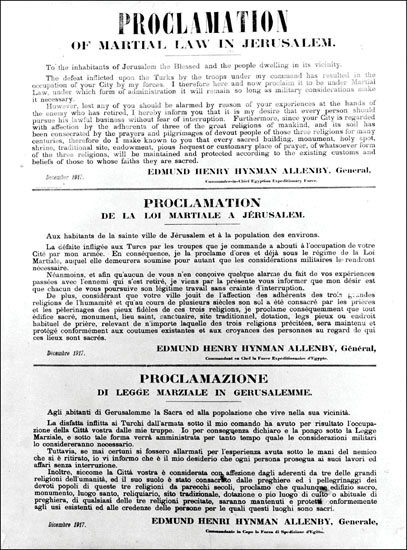
Allenbys Proclamation of Martial Law in Jerusalem on 11 December 1917.
Allenby’s political machine had been in full swing. Muslims were allowed to guard sacred Muslim sites, and Christians stood guard over ancient Christian sites. During the advance to, and capture of, Jerusalem, eleven Ottoman infantry divisions had withdrawn after sustaining around 28,000 casualties; some 12,000 prisoners were captured, along with 100 artillery pieces, and countless machine-guns, while the EEF had lost around 19,500 men.
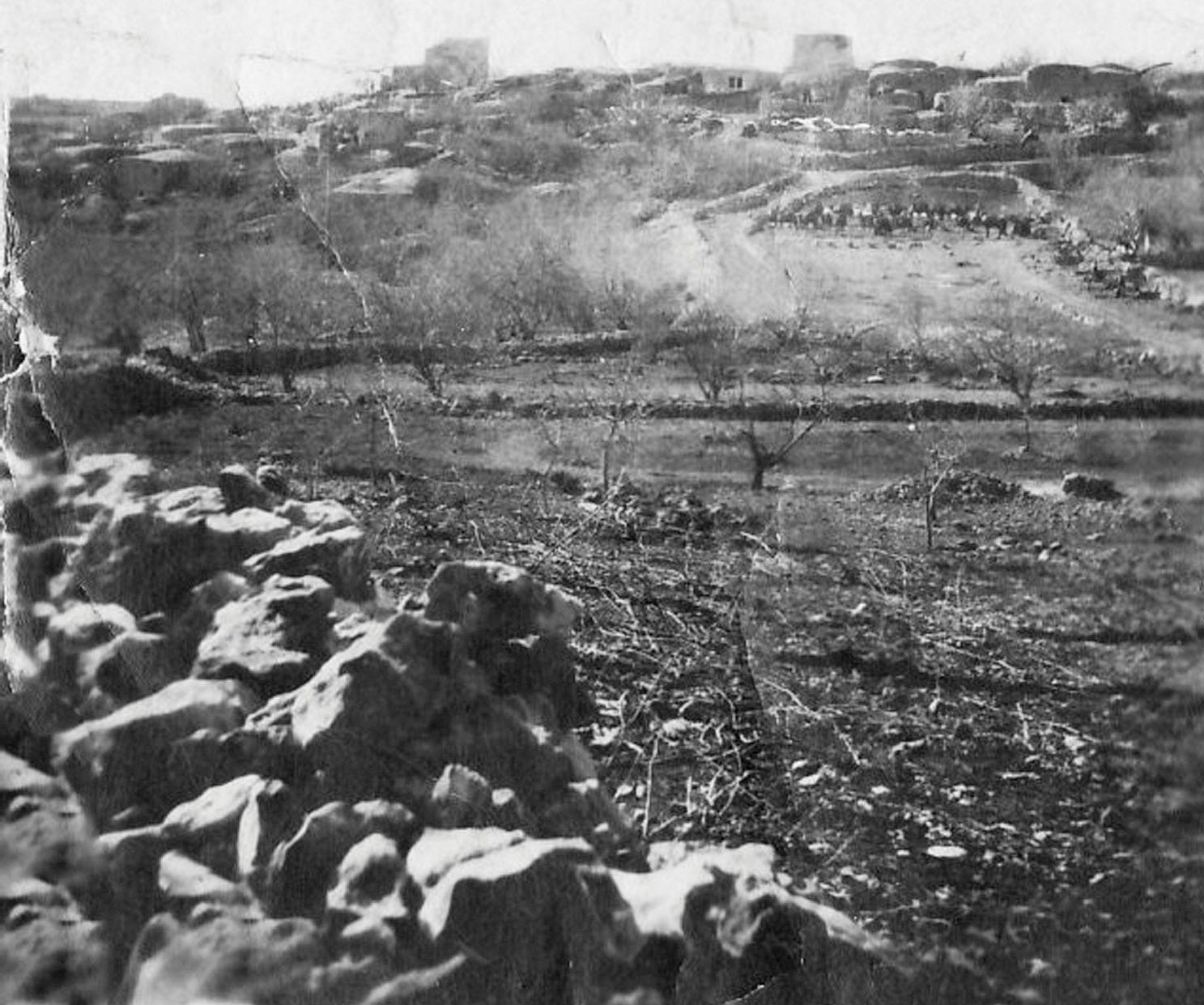
Zeitoun, Palestine.
While this historical moment was taking place, the 24th Welsh was still in position along the Zeitun Ridge, coming under intermittent enemy machine-gun fire from parties of Turkish gunners covering the withdrawal of the main bulk of their forces. Allenby wrote home to his wife later during the day of his entrance into Jerusalem, informing her of the historic moment, but also of the situation of the Turks, who had withdrawn about four miles east towards Jericho, and about eight miles north of Jerusalem. The Biblical town of Bethany was also captured on that same day by the 4th Welsh, and Mott’s detachment consolidated east of the town. Welsh troops had played a large part in the capture of Jerusalem, and the men of the 53rd and 74th Divisions were justifiably proud of their achievements. However, they could not afford rest on their laurels: Jerusalem now had to be consolidated, to guard against any Turkish counter-attack. During the 13th and 14th December, the British shelled the Turkish positions in front of XX Corps: The two Turkish armies had now been split; their Seventh Army was north of Jerusalem, facing XX Corps, part of which was the 24th Welsh.
On 15 December, a special order of the day was circulated amongst the men of the EEF:
‘SPECIAL ORDER OF THE DAY
G.H.Q., E.E.F.
December 15th, 1917.
‘With the capture of Jerusalem another phase of the operations of the Egyptian Expeditionary Force has been victoriously concluded.
‘The Commander-in-Chief desires to thank all ranks of all the units and services in the Force for the magnificent work which has been accomplished.
‘In forty days many strong Turkish positions have been captured, and the Force has advanced some sixty miles on a front of thirty miles.
‘The skill, gallantry, and determination of all ranks have led to this result.
‘The approach marches of the Desert Mounted Corps and the XXth Corps (10th, 53rd, 60th, and 74th Divisions), followed by the dashing attacks of the 60th and 74th Divisions, and the rapid turning movement of the Desert Mounted Corps, ending in the fine charge by the 4th Australian Light Horse Brigade, resulted in the capture of Beersheba, with many prisoners and guns…
‘The attack of the XXth Corps (10th, 60th, and 74th Divisions), prepared with great skill by the Corps and Divisional Commanders, and carried out with such dash and courage by the troops, resulted in the turning of the Turkish left flank, and in an advance to the depth of nine miles through an entrenched position defended by strong forces. In this operation the Desert Mounted Corps, covering the right flank and threatening the Turkish rear, forced the Turks to begin a general retreat on their left flank…
‘The final operations of the XXth Corps, which resulted in the surrender of Jerusalem, were a fitting climax to the efforts of all ranks. The attack, skillfully prepared by G.O.C. XXth Corps, and carried out with precision, endurance, and gallantry by the troops of the 53rd, 60th, and 74th Divisions, over a country of extreme difficulty, in wet weather, showed great skill in leading, and gallantry and determination of a very high order…
‘The Commander-in-Chief desires that his thanks and appreciation of their services be conveyed to all officers and men of the Force which he has the honour to command.
W. DAWNAY,
For Major-General,
Chief of the General Staff,
Egyptian Expeditionary Force.’
On the following morning, Spence-Jones sent a machine-gun crew of the 24th Welsh forward to point 245C and, at dawn, the crew spotted Turkish troops ‘Standing To’, before opening fire on the startled men. Later that day, he was presented with a list of men of his battalion who had been awarded gallantry medals for the battalion’s part in the capture of Jerusalem: Lieutenant Colonel Spence-Jones was awarded the Distinguished Service Order; Captains J. H. L. Yorke, E. J. C. David, Rev. H. Rees-Morgan, and Lieutenant D. L. Popkin Morgan, Lieutenant and QM G. M. Rumball were awarded the Military Cross. Sergeant D. L. Evans (320159) was awarded the Distinguished Conduct Medal, while seven Military Medals were also awarded: Privates Ben Morgan (320351); W. R. Davies (320384); E. W. Maton (320500); W. P. Marks (320932); N. Thomas (320489); W. Beynon (320056); and to Lance Sergeant F. Hindle (320216).
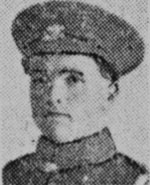
Private Niah Thomas, MM, of Culford Road, Loughor.
The following day was quiet; on 18 December a patrol was sent out by Spence-Jones and found Sh Hasan and point 1910 still held by the enemy. Just one man was killed during the patrol; Private John James Thomas (320114), from the farming community of Llanfynydd, was twenty nine years old. He was the son of David and Mary Thomas of Troedyrhiw, and had served with the Pembroke Yeomanry prior to the formation of the 24th Welsh. He was the fourth man from the small community to fall, and is buried in Jerusalem War Cemetery.
Private William Woodburn (58994), the son of Thomas and Sarah Woodburn, of Rose View, High Harrington, Cumberland, was wounded, and died on the following day, 19 December, at the 231st Field Ambulance. He was a furnace worker before enlisting at Workington on 27 December 1916 and, after being transferred to the Welsh Regiment at Prees Heath on 19 February 1917, he was posted to Egypt in April 1917 with a number of other men destined to join one of the battalions of the Welsh Regiment. Woodburn was originally buried in El Kubeibah Cemetery, east of a monastery, but his grave was relocated after the war to Jerusalem War Cemetery. Woodburn is an example of the changing face of locally recruited battalions during the war, when the neighbourhood identity of the battalion was ever changing due to the necessary replacement of losses.
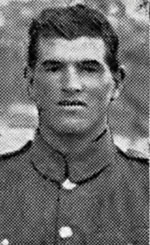
Private John James Thomas (320114), of Llanfynydd. Killed on 18 December 1917.
During the day further patrols were sent out by Spence-Jones, and again encountered Turkish forces in the immediate front. With Jerusalem and Jericho, the two principle cities of Palestine, in the hands of the British, Allenby now ordered XX Corps to advance its line six miles north of Jerusalem, and XXI Corps to advance eight miles north of Jaffa. The 24th Welsh held part of the line of XX Corps, whose overall line ran across the Jerusalem to Jericho and Jerusalem to Nablus roads, four miles north and east of the city, and continued west through the hills to Beit Ur el Foka and Suffa. As part of the preparations for the advance, Lieutenant General Chetwode ordered the 10th and 74th Divisions to make tracks for guns and supplies up the valleys which ran eastward from the Jaffa to Jerusalem road. These tracks would prove invaluable over the coming weeks.
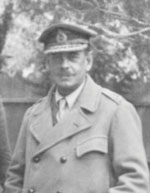
Lieutenant General Chetwode.
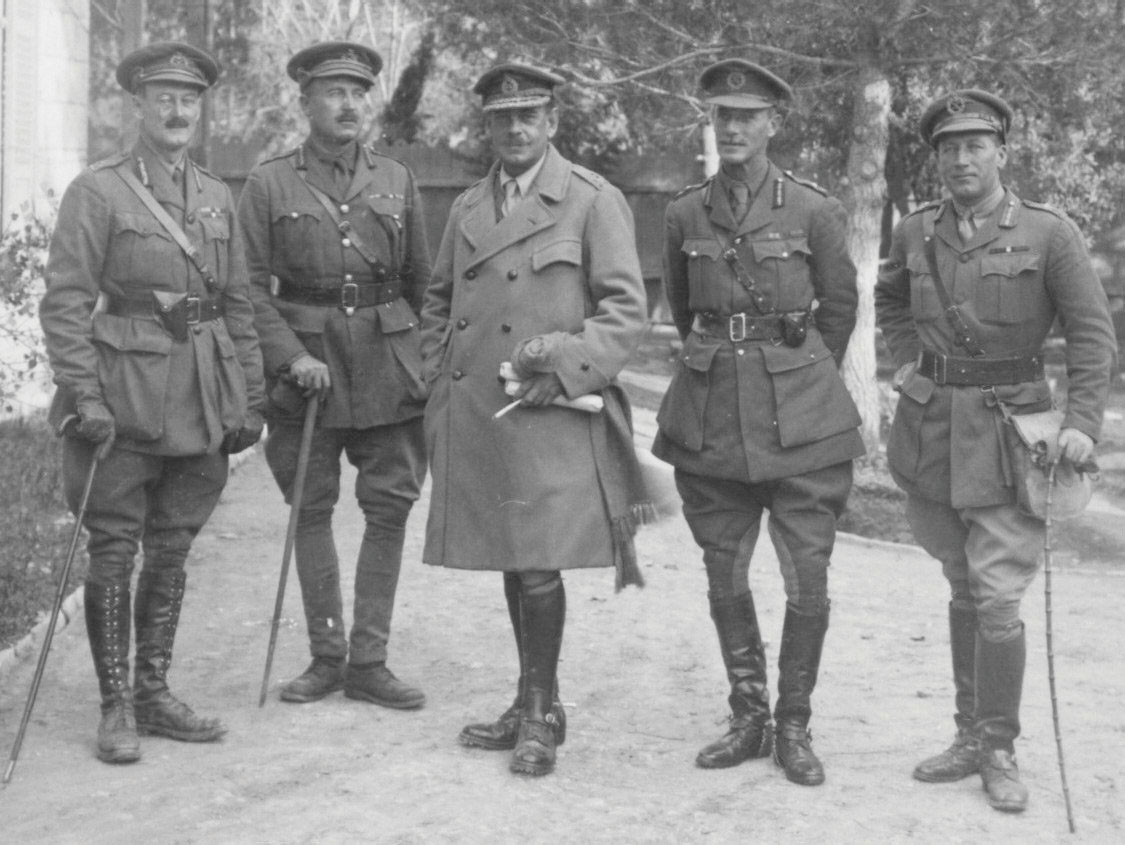
Generals Chetwode, Chauvel and Royston.
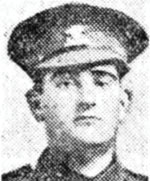
Private William John, of Spring Gardens, Laugharne.
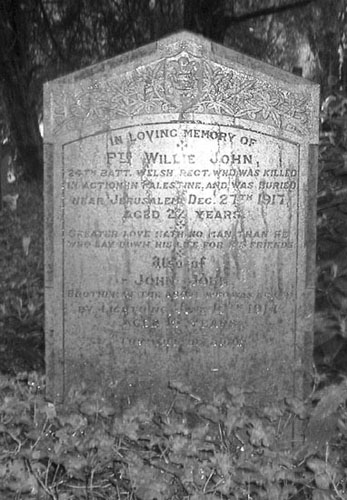
The memorial stone in Laugharne Churchyard to Private William John, which also marks the grave of his brother John, who died after being struck by lightning.
On 20 December, XXI Corps launched its attack towards the maritime plain, crossing the River Auja, which was in flood after the rain of the previous days, and captured all of their objectives with little resistance, as the Turks thought the river unfordable and were caught off guard. The weather remained wet over the coming days while XX Corps was making preparations for its attack, but the Turks had decided to launch a counter-attack, and had noticeably begun strengthening their positions, as was noted by Spence-Jones in the war diary entry on 21 December. In the meantime, EEF HQ had intercepted Turkish communications relating to the planned counter-attack, and Allenby ordered his commanders to alter their plans accordingly.
On the front of XX Corps, Chetwode’s plan was for the 60th Division to attack northwards, assisted by part of the 53rd Division on its right, while the 10th and 74th Divisions attacked eastwards along three parallel ridges. The date for the attack was fixed for 28 December. Knowing that the Turks planned to attack, probably on the 26th astride the Nablus road against the 60th Division, and westwards against the 53rd Division in the neighbourhood of the Jericho road, Chetwode planned to allow the Turks to attack, and then carry out his own counter-attack on them from the south and east.
On the night of 26-27 December the situation began to unfold. While the Turks launched their attacks against the 60th and 53rd Divisions, the 24th Welsh launched an assault on Hill 1910, north of Beit Duqqu. After fierce hand to hand fighting, the Welshmen captured their objectives, but a Turkish counter-attack drove them off before they had time to consolidate their gains. Half an hour later, Spence-Jones ordered a fresh attack; and after much fighting the 24th Welsh retook the position, before digging in and consolidating their gains. The left of the battalion also advanced, taking the high ground overlooking the Wadi Imeish. The Welshmen counted over seventy dead Turks in the positions they had gained, but had also suffered themselves: Captain James Hamilton Langdon Yorke MC, of Fishguard, had been killed, whilst Lieutenant Bonnyman and Captain Oakden Fisher had been wounded. Six other ranks were killed, among them Private William John (320285), the son of James and Sarah John, of Spring Gardens Cottage, Laugharne, a former member of the Pembroke Yeomanry, and a cousin to the author’s great uncle, John James John, to whom this book is dedicated. A friend of both men, also from Laugharne, Private William Raymond, wrote to his parents after the fighting had ceased:
‘I was speaking to Willie John less than an hour before the attack on Jerusalem in which he was killed. He said he hoped to pull through the same as he had done before, and ere we parted we shook hands and wished one another good-bye and good-luck.
‘I have made enquiries and am told that he was shot through the eye and died at once, without suffering. He was buried on the Hill which we captured, and a board has been placed with his name, number etc on it. Dai Saer too was buried with his pals where he was killed. Every one of his platoon deserve the VC, for they went through and captured a position which two other battalions failed to take an hour before. I believe I am right in saying that Willie Roberts was one of three who came back safe from there.’
Dai Saer had in fact been killed on 6 November, and is buried in Jerusalem War Cemetery, but Willie John’s grave was lost, and so he is commemorated on the Jerusalem Memorial and also on the grave of his younger brother John, in Laugharne Churchyard. John was just fourteen years old when he was struck by lightning and killed whilst playing in Laugharne in 1914.
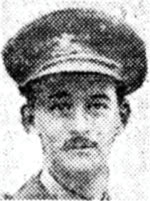
Captain James Hamilton Langdon Yorke, Pembroke Yeomanry.
James Hamilton Langdon Yorke is the only man of the battalion who was killed on Hill 1910 that day to have a known grave. He was the son of James Charles Yorke JP and Katherine Ellen Yorke (née Langdon), of Langton, Durnbach, Pembrokeshire. He married Violet Mary Vincent, of 8 Argyll Mansions, Chelsea, London on 1 December 1910. Educated at Haileybury and Oriel College Oxford, James joined the Pembroke Yeomanry while still a graduate, and at the outbreak of war was employed by the British South Africa Company. Yorke resumed his service in the Pembroke Yeomanry, and was awarded the Military Cross prior to his death. He is buried in Jerusalem War Cemetery.
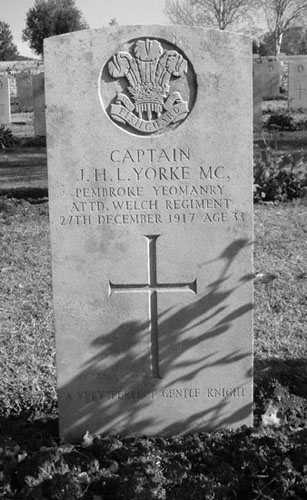
The grave of Captain James Hamilton Langdon Yorke MC, of Fishguard, at Jerusalem War Cemetery
Later that evening, Spence-Jones received orders to advance the battalion to relieve the 24th RWF, who had suffered heavy casualties during their assault on the hills at Kh El Dreihemeh, and by 10.00 pm the relief was completed. The Turkish counter-attacks had by now faltered due to heavy casualties, and although some outposts held by the 60th and 53rd Divisions had been lost, the divisions had stood firm and broken up the Turks’ last ditch attempt to retake Jerusalem. The attack of the 74th Division had been successful: 229 Brigade had captured the Zeitun Ridge, including Hill 2450, and this was the position onto which the 24th Welsh had now moved.
Now it had become clear that the Turkish attacks were spent, Allenby ordered a general advance. On 28 December the 74th Division received orders to co-operate with the advance of the 60th Division on its right, and 229 Brigade was to co-operate with the 10th Division and capture Beitunia and Hill 2435. As the advance began, 231 Brigade moved into reserve, and the 24th Welsh moved to positions south of Beitunia, where the men were put to work on battlefield clearance and road repairing. The unsavoury part of clearing the battlefield was the collecting and burial of dead soldiers, and the men were obliged to bury dozens of Turkish dead.
By the end of December the fighting had all but petered out, and the Turks found themselves to be seven miles further from Jerusalem than they were when they launched their counter-attack. The 24th Welsh had lost during the month one officer (JHL Yorke) and twenty other ranks killed; four officers and forty eight other ranks wounded. On 29 December Spence-Jones received a telegram from Chetwode, congratulating 231 Brigade on its part in the successful operations. Only two more gallantry awards were received by the 24th Welsh for its part in the capture of Jerusalem: Sergeants G. D. Nott (320801) and V. E. Llewellyn (320527) were both awarded the Military Medal.
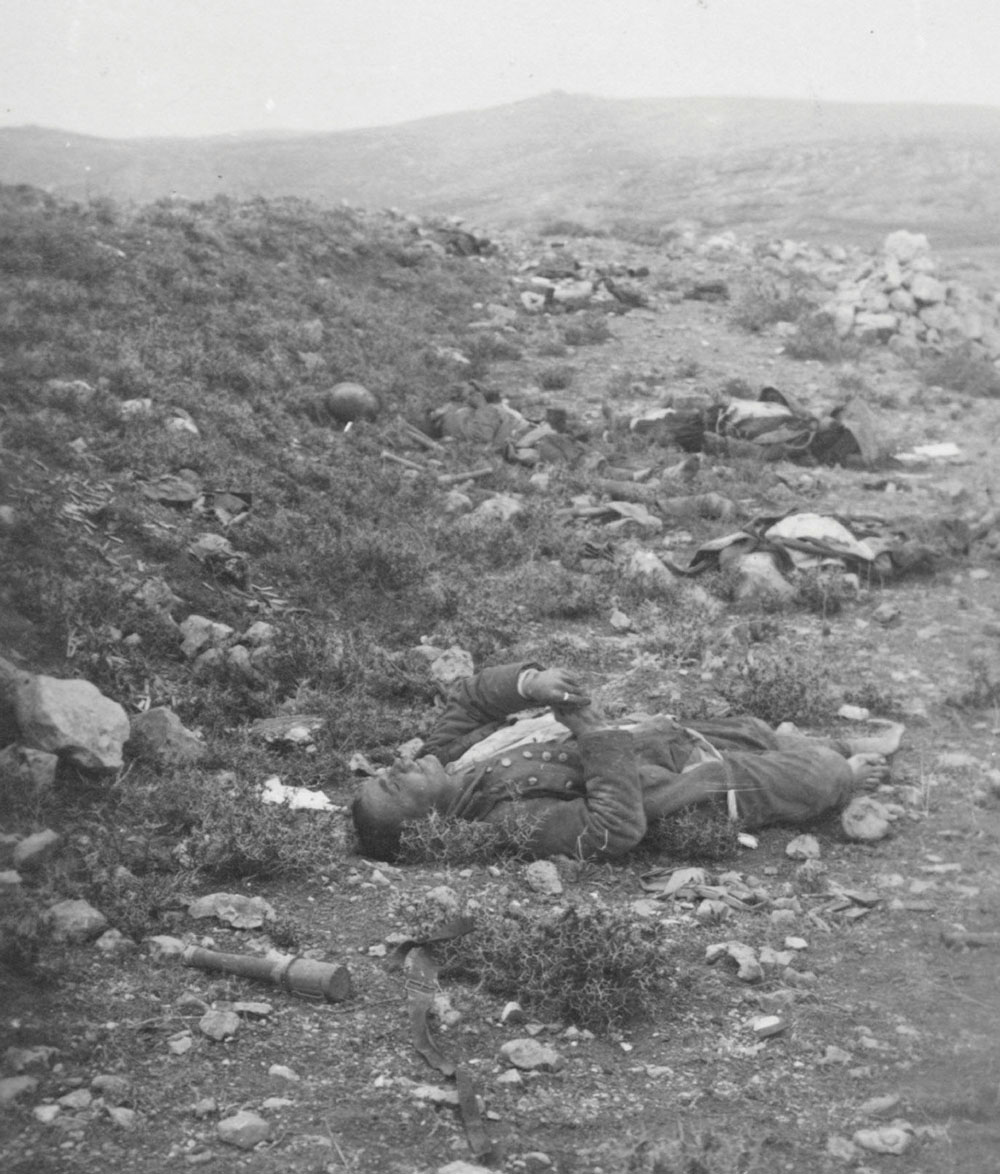
Ottoman dead after the attack on Jerusalem on 26 December.