
4
Greece was only one of many troublesome neighbors of the Macedonians. However, the Greeks posed special problems. Most noticeable was their multiple nature: since the Archaic Age, small communities had taken on the character of autonomous nation states. In each community, known as a polis, a larger common concern had superseded purely private interests. The bond between members and the polis was tight: the needs and interests of members of each polis grew from their relationship to the compact territory of the state and to each other.
A driving intent was to make each polis self-sufficient, a difficult task in mountainous Greece. Consequently, pushing into the territory of adjacent poleis was a natural recourse. A recent inventory lists 1,035 poleis constantly jockeying for more land and greater power. As we have seen, Macedonia had better land and more plentiful resources than most of Greece provided. Thus Greek states, especially in the north, were likely to venture across the Haliakmon River in building a more expansive base.
But Greeks pressed on Macedonia from other directions as well. With the rise in population in the ninth and eighth centuries, the available land became even more inadequate throughout much of southern Greece. The search for livelihood elsewhere led to colonization further afield. Eventually Greek poleis would dot the west littoral of Asia Minor, as well as the Mediterranean coast from eastern Spain to the eastern littoral of the Black Sea. Much of the earlier colonization had been nearer home: in the northern Aegean, especially on the Chalkidike peninsula, and even on the rim of the Thermaic Gulf. Macedonians found independent Greek states not only at the front gate but in their own core territory.
In another respect, too, the Greeks posed a problem: elements of the increasingly rich Greek culture were attractive to others. The adoption of hellenic elements by the Macedonians preceded the reigns of Philip and Alexander: we have suggested that first-hand knowledge of the success of the Greek phalanx in the fifth century may have spurred Alexander I to create his own force of pezhetairoi (foot-companions). Archelaos invited notable Greeks to his capital while continuing to institute hellenic elements into his realm, including Olympic games and dramatic contests in honor of Zeus and the Muses (Arrian I.11.1). If numerous and significant, these influences had the potential to submerge features of the traditional Macedonian way of life.
The issues surrounding the question of Macedonian ethnicity and language have been raised in chapter 2, and the rather general conclusion there was that those Macedonians who laid the foundation for the kingdom of Philip and Alexander were akin to their Indo- European neighbors in both Thrace and Greece, speaking a related language or perhaps, as some scholars believe, a dialect of Greek. It is clear, on the other hand, that political and social institutions were very different, especially in the earliest history of the Makednians, and that the material culture of Macedonia had been influenced by far more elements than Greek ones.
When the small state that would become the extensive kingdom of Philip II and Alexander III began to take shape in a narrow strip of land in Pieria and Hemathia, stretching some sixty miles (almost a hundred kilometers) from north to south during the early seventh century, the Makednians had to come to terms with Greek settlements, particularly those close to the center of the kingdom: Methone and Pydna on the west side of the Thermaic Gulf had been founded by Greeks from Euboia before the end of the eighth century. They were but two of many testaments to the situation in Greece in the eighth and seventh centuries, which forced many states to establish a “home away” - apoikia in Greek. The increase in population coincided with the revival of seafaring, which had declined in the face of widespread destruction in the late Bronze Age. Adventurers, traders, and people in need of land for basic agricultural purposes might hope to successfully sail beyond the waters of the southern Aegean.
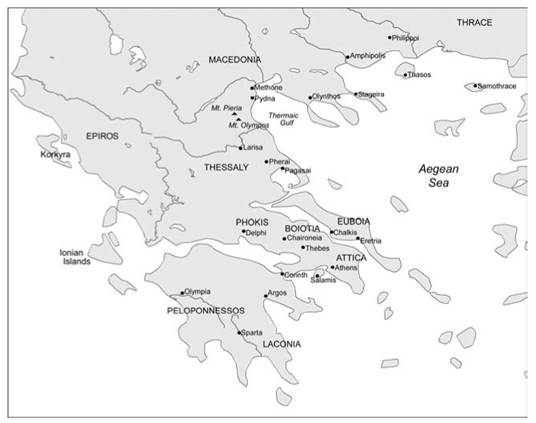
Map 4.1 Major Regions and Sites in the Greek Sphere
The coastline of the northern Aegean was one of the first areas to draw their attention: a ninth-century trading station detected at the site of Sindos is associated with Eretria on the island of Euboia. Desire for land coupled with acumen in taking trading opportunities was vigorous on that narrow island. In the eighth century the Eretrians established settlements on the west prong of the Chalkidike peninsula, while their neighbors on Euboia - the inhabitants of Chalkis - were busy establishing colonies on the central prong of the peninsula, and others from the island of Andros were scouting for sites on the eastern peninsula. Further eastward, inhabitants of the island of Thasos were making their own new settlements on the mainland coast. The northern waters of the Aegean were, consequently, becoming a Greek sea at the same time that the Makednians were attempting to create a kingdom.
Three important consequences emerged from this cohabitation. The most general result was knowledge of one another’s cultures. The Macedonians could not ignore Methone and later Pydna, situated in the heartland of Macedonia, or, eventually, slightly more distant settlements. And with knowledge, cultural influence was likely. Initially, the Greek settlements had certain advantages - knowledge of seafaring, for example, and contact with remote cultures that were far more advanced even than the Greek. Acquisition of these and other skills was facilitated by close acquaintance. Moreover, conflict over territory and the resources of the northern Aegean was predictable. The Greek colonies were sited to take advantage of good harbors to facilitate trade. If the Macedonians became more active traders themselves, disputes over the control of harbors would surely emerge. A third consequence was linked to the colonies’ origins as foundations of the older, southern Greek states. Thus conflict with the poleis of southern Greece could well occur and, to anticipate, it was likely to involve much of the larger Aegean world.
Interaction between these two Eretrian colonies and the Argeads is a barometer of the vacillation of power between Greece and Macedonia. Both colonies were Greek outposts during the reigns of Amyntas I and Alexander I, but their separation from southern Greece made them useful sanctuaries for Greek leaders who had fallen out of favor with the citizens of their states: the Athenian general Themistokles was granted asylum in Pydna by Alexander I in the 460s, indicating the Macedonian oversight of the Greek state. By the late 430s, however, Pydna had come under Athenian control. Some fifteen years later, an Athenian force landed at Methone, from which it raided the Macedonian territory in the vicinity. In another reversal, the year 410 witnessed the taking of Pydna, which had become independent, by an Athenian force allied with the Macedonian king Archelaos, who refounded Pydna as a Macedonian town 2.5 miles (4km) inland from the coast. During the difficult decades of Macedonian history from 399 to 359, Macedonian gains evaporated. Philip II began his reconsolidation of the kingdom by taking Pydna in 357 and Methone in 354, and then turning his attention to Greek states in the western region of the Chalkidike peninsula.
Similar pressures on the land and opportunities for trade led Greeks in other directions. From Corinth, where available agricultural land was constricted and a manageable gulf lay at the state’s front door, potential colonists navigated the Gulf of Corinth, then headed north along the Adriatic coast, where they founded long- lasting settlements on the island of Korkyra, and at Apollonia and Epidamnos on the mainland coast near the territories of the Illyrians and Epirotes. Cultural interaction not unlike that occurring in the northwestern Aegean began in the northeastern Adriatic long before Illyria and Epiros were incorporated into the expanded Macedonian kingdom.
Greek influence on Macedonia was much nearer: the Olympos range of mountains divides Macedonia from the southern Greek sphere but does not prevent access from south to north. Even during the Bronze Age, Mycenaean objects were imported into Macedonia, attesting trade and contact if not settlement, such as at the “Spathes” site on Petra pass. For the Iron Age, Macedonian Aigai/Vergina, noteworthy for its later lavish burials, has produced evidence of contact with the Greek world as early as the tenth and ninth centuries, perhaps again by way of Thessaly. Geographical propinquity brought more than cultural interaction; for instance, it produced alliances, as in the 380s when Thessalian aid was crucial in the efforts of Amyntas III to regain the Macedonian kingship. And it could and did fuel mutual attempts from both sides of Olympos to dominate the territory of whichever region was currently weaker.
Geography also helps to account for the relationship between Macedonia and Greece in the early decades of the fifth century as Macedon became a player, probably an unwilling player, in the expansion of the Persian Empire. During the reign of Dareios I (522-486), the Persians turned their attention northward into Europe. About 513, Dareios led an army through Thrace, where he received the submission of many people. However, on crossing the Danube into Skythian territory he met with no success, and was forced to retrace his path through Thrace. Not long after the expedition, he appointed Megabazos to reduce the coastline of the northern Aegean from the Propontis to the Strymon River. Herodotos reports on an embassy of seven high-ranking Persians dispatched to discuss the relationship between Macedon and Persia. Alexander I, the clever son of king Amyntas I, tricked the envoys by offering them the attentions of young Macedonian women, who, beneath their heavy veils, proved to be armed Macedonian males as yet unbearded, and murdered the Persians. “That was the end of the Persian envoys to Macedon - and of their servants too; Servants, and carriages, and a great deal of luggage of every king - all disappeared together” (V.20). Herodotos also describes the careful concealing of the disappearance of the Persians and their possessions, together with the payment of a sum to the Persians and the arrangement of the marriage of Alexander’s sister to the Persian officer who was investigating the affair. While Macedon does not seem to have been officially annexed to the Persian realm, it was drawn into Dareios’ field of vision.
Events in the coastal region of the eastern Aegean would tighten the connection between Persia and Macedon. A serious revolt broke out in 499 on the part of the Greek states that had been subdued by the Persians in the 540s and since then were controlled by one of the western satraps of the Persian administrative system. Such was the surprise, or perhaps unawareness, on the part of the Persians that the Persian capital in Anatolia, Sardis, was taken and burned by a coalition of Greek states in Ionian Asia Minor with aid from the mainland states of Athens and Eretria. Within five years, however, the revolt was quelled. The aftermath turned Persian attention again to the northern Aegean. The Persian commander Mardonios asserted control over Thrace and Macedonia in 492 in anticipation of reprisals against the two mainland states that had supplied ships and troops for the revolt in Asia Minor. Macedonia served as a useful staging ground, as described by Herodotos in his account of the later, massive campaign planned and led by Xerxes, the son and successor of Dareios. Grain stores were established in both Thrace and Macedonia, the massive army of approximately 250,000 camped along the Axios River near Sindos, and the fleet seems to have harbored at Pydna. If not officially a Persian vassal, the Macedonian king had little choice in the question of use of his kingdom by the Persians at the time of the land and sea expedition to Greece in 480-479. On the part of the Greeks, the Macedonians may well have been viewed as willing collaborators of the feared Persians.
Even so, Herodotos’ portrayal of Alexander I as a well-wisher of the Greeks (VIII. 140-3) may have concrete support in the provision of timber to the Athenians two or three years earlier, to create the fleet of 200 ships that proved to be essential to the Greek stand against the Persian enemy. Inscriptions dating to the reigns of Perdikkas II and Archelaos record later agreements concerning Athenian access to Macedonian timber. As we have seen, timber - described as the best quality in the region of the Aegean and the Black Sea - was among Macedon’s most coveted resources. Access to this source of timber was vital to any state intent on maintaining a fleet. The Athenians’ decision as Persia readied for an attack was the construction of a fleet to confront the naval portion of the Persian force. Access to Macedonian timber was a requisite for the endeavor.
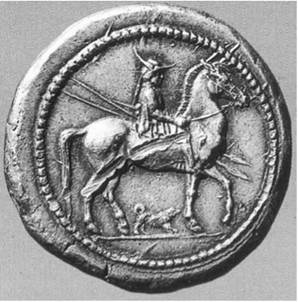
Figure 4.1 Coin of Alexander I, showing him riding a pacing horse, wearing a short chiton (tunic) with a petasos (traveling hat) on his head and carrying two spears in his left hand. His hunting dog is prancing under the horse. Now in the Numismatic Museum in Athens. Courtesy of Dr I. Touratstoglou
With the withdrawal of the Persians from Greece and Macedonia and the confused conditions in southern Greece that the invasion had brought, King Alexander I of Macedon was able to extend the borders of his realm considerably, as noted in chapter 2. He is credited, too, with strengthening the Macedonian military, an essential tool in the expansion. In pushing eastward against the Thracians, Alexander gained valuable mineral wealth, some of which was now employed for Macedonian coinage. The carefully produced coins, some of them of great size, are good indications of the status that the Argeads were achieving not only in the smaller sphere of the northern Aegean but vis-à-vis other significant states and kingdoms further away.
A Macedonian ruler was, however, but one major figure, and within the next two generations a new player in the eastern Mediterranean gained an ascendancy that would bring Macedon and Greece into a changed, often aggressive relationship. Although the Persians had withdrawn from the western and northern Aegean lands, the Greek states of the eastern Aegean remained under Persian control in 479. To restore the freedom of all of Greece, representatives of 143 states gathered on the Cycladic island Delos in 477 to create a league for this purpose. All members would participate in decisions at an annual assembly, each state exercising a vote. States would contribute to the enterprise by providing ships and men or, in lieu of manpower and naval support, funds. Athens provided a large part of the fleet that it had created to meet the Persian threat and served as leader, or hegemon, of operations decided by the full membership. The Athenians also set the required contributions and appointed financial officers to oversee the treasury established in the safety of Apollo’s sanctuary on Delos.
Larger associations of independent Greek states had existed previously. Essentially, they were of two broad types: associations for common religious intents, on the one hand, and for common military interests, on the other. The common concern for the wellbeing of the sanctuary of Apollo at Delphi produced the Delphic Amphiktyony of 12 poleis. The second form of association, a sym- machy (literally a “fighting together”), joined independent states that agreed to have the same friends and same enemies; representatives from the members would assemble at a fixed location - generally that of the most powerful member - to vote on the need for action. The Peloponnesian League, with Sparta as its central power, grew to include most of the states of the Peloponnese and, in the fifth century, even beyond into central Greece. Such expansion is indicative of an increasing swell of larger associations with greater ambitions. It was these ambitions that proved a far more formidable threat to the Macedonian kingdom than the individual early Greek colonies had posed. Athens’ role in molding and then altering the nature of the Delian League was chief among the concerns of the Argeads.
Surprising success greeted the efforts of the League, and by the early 460s the allied fleet won a major naval battle at Eurymedon off the southern coast of Anatolia, defeating the Persian/Phoenician fleet of 200 ships. Persian control in Thrace, the Hellespont, and the Aegean was at an end. The League was not dissolved, however, even though several states attempted to withdraw once the objective had been accomplished. For Athens, on the other hand, the association was valuable in several other ways: policing the seas against pirates, rebuilding sanctuaries destroyed by the Persians, maintaining a confederation in the event of future hostilities with Persia, and establishing a maritime trade empire reaching throughout the Aegean into the Hellespont. From the 460s, and especially under the leadership of the Athenian statesman and general Perikles, the Delian League became an Athenian Empire centered on, and directed from, Athens. The power and brilliance of Athenian life at this time is defined as its Golden Age.
Membership, which was no longer voluntary but often accomplished and maintained by force, rose to some 300 states. Athenian interests in the northern Aegean, which had already been established in the sixth century, increased as access to the Propontis and the Black Sea became vital to secure the grain supplies to feed the state’s now huge urban population. To reach these distant waters demanded a large fleet of sound ships and, thus, ongoing access to the timber resources of Macedonia. Consequently a strong presence in the northern Aegean was a priority of Athens, and it was accomplished by drawing some established states into the imperial network as well as by establishing new colonies, such as Amphipolis in the lower valley of the Strymon River, near the site of the “Nine Ways” that had been brought under Macedonian control by Alexander I. Both Amphipolis and the “Nine Ways” were ideally located to take advantage of trade down the Strymon and along the coast between northern Greece and the Hellespont. During the reign of Alexander I there seems to have been a modus vivendi between Athens and the king of Macedon. However, a contest for survival was likely and Alexander’s successor, Perdikkas, fared less well. Athenian reluctance to recruit new members of the League in territory west of the Axios was replaced by active expansion in Macedonian territory after 431.
Yet another tactic was employed against Perdikkas: the Athenians supported the claim of Philip, a brother of Perdikkas, as rightful heir to the throne. In 432, a coalition between Athens, the brother of Perdikkas, and Derdas king of Elimeia seized the site of Therme in the northwest of the Chalkidike from Perdikkas. Internal dissention along with a threat close to Pella would, hopefully, keep Perdikkas’ vision trained on his own kingdom rather than on the activities of the Athenians on the fringes of that kingdom.
Perdikkas had a recourse: well aware of the divisions between the Greek states, he encouraged known enemies of Athenian activities in the northern Aegean to take action on their own behalf or on behalf of former colonies. The Corinthians responded to the Athenian threat to their colony of Potidaia with volunteers from Corinth and mercenaries from other parts of the Peloponnese numbering 1,600 heavy infantry and 400 light troops, according to Thukydides (1.60). Perdikkas added 200 cavalry, and men from other states in the region also joined. The defeat of these troops played no small part in events in Macedon for the duration of the fifth century. In Thukydides’ narrative of the outbreak of the Peloponnesian War (431-404), the wrath of the Corinthians over incidents including the siege of Potidaia by the Athenians was a burning match that fired the declaration of war and, though not a formal participant, Macedon was torn by the conflict.
Perdikkas was not deposed by his brother and his Athenian accomplices; he lived on to rule until 413. It could not have been a comfortable reign inasmuch as his kingdom was all too often beset by the warring states. Macedon would be allied first with one side and then with another. Early in the Peloponnesian War, Macedon was an ally of Athens, but when Athens added Methone - which was within Macedonian territory - to its empire, Perdikkas sought the aid of the Spartans. He offered support and organized safe passage for a Spartan force to advance into the territory of his kingdom. Once the Spartans were there, Perdikkas supplied a Macedonian contingent, and jointly the forces marched to compel the Lynkestian leader to bring his region of upper Macedonia back into alliance with Perdikkas. Little was accomplished before the Spartan leader determined to campaign in the Chalkidike and Thrace, both regions with strong Athenian connections, to which the theatre of war had now shifted. Great success greeted the Spartan activities in the northern Aegean. When the Spartans returned to Macedon, a second attempt to bring the Lynkestians to heel was made. The joint army was routed by the Illyrians, who had become allies of the Tynkestians. Not surprisingly, the alliance collapsed and by 423 Perdikkas was again allied to Athens, furnishing military support for an Athenian general in 422. In fact, Nicholas Hammond has proposed that “Macedon was [now] to all intents and purposes a member of the Athenian arche [rule]” (Hammond and Griffith 1979: 133). From c. 424 to 416 Perdikkas did not issue coins, a characteristic of once-independent states brought under Athenian control.
A peace accord between the Athenians and Spartans in 421 brought some respite from campaigning even though it did not resolve the issues causing the declaration of war. As those issues intensified again, Greek parties in the war again turned their sights northward, Athens adding more states to its control and the Peloponnesians attempting to draw more allies to their cause. Perdikkas was persuaded to join the Peloponnesians. Blockading the Macedonian coast to impair trade was one of the Athenian answers to the betrayal by the Macedonian king. Another answer was to look elsewhere for important resources, as well as to divert Peloponnesian attention from the Aegean. A large-scale naval expedition to Sicily set out in 415, an enterprise that renewed the bond between Macedon and Athens: when the Persians began to aid Sparta with the creation of naval power, Macedonian timber was again supplied to Athens. Moreover, in 414 Perdikkas was serving with an Athenian commander in an attack on Amphipolis. By the following year, he was dead; his son Archelaos inherited the daunting tasks of maintaining the independence of a unified kingdom and dealing with the ongoing war among the Greek states.
The Fates decreed that Macedon would avoid massive involvement during the remainder of that war. Recalling the confusion during his father’s reign may have been Archelaos’ inspiration to fortify the kingdom’s borders and to link parts of the kingdom with one another through a road system. Externally, his connection to Greece was almost exclusively with Athens. As mentioned previously, in 410, the coastal town of Pydna was taken by a combined Macedonian and Athenian siege, then the settlement was moved inland and refounded as a Macedonian town. Three years later Archelaos and his children were accorded the status of guest-friends, that is, proxenoi, of Athens, an honorary status but one conferring something like an ambassadorial position. Archelaos’ cultural interests too reflected Athenian influence. Under his guidance, Pella became an impressive capital to which important guests were invited. Yet another notable development was the establishment of an Olympian festival in Macedon.
Such encouragement of Greek culture and aid to individual Greeks was not new. As early as the mid-sixth century, the Athenian tyrant Peisistratos settled in the northwestern region of Chalkidike during one of his forced exiles from Athens; while there he gained the friendship of Macedonia. His son and successor, Hippias, was offered shelter in Macedonia when he was exiled from Athens (Herodotos V.96). Accounts of Alexander I in the Histories of Herodotos describe a similar attraction to Greece. The historian reports that Alexander wished to compete in the Olympic games and was allowed to enter for the foot-race. “He came in equal first,” Herodotos concludes his brief notice (V.22). While many modern scholars contest the accuracy of the report, it is indisputable that Philip II sent Macedonian teams to Olympia during his reign. Like Philip, the first Alexander may have been clever in demonstrating his hellenic sympathy and purported affinity, especially in the aftermath of the horrors of the Persian advance into his own kingdom as well as into the lands of the Greek states. As we shall see, philhellenism was a useful tool for both Philip II and Alexander III.
Upon Archelaos’ assassination in 399, Macedonian weakness, combined with the fast-paced struggle for hegemony among the Greek states, undermined the staying power of Perdikkas and the stabilizing efforts of Archelaos. After the defeat of Athens in 404 and the dismantling of the Athenian Empire, a cycle of attempts on the part of the major states to recreate a Greek empire produced intense turmoil, accompanied by destruction of life and property, which would eventually undercut the basis of Classical Greek life, a condition that aided the efforts of Philip IE However, in the first four decades of the fourth century, the struggle nearly ended the independent existence of Macedon.
Sparta, Thebes, Thessaly, and Athens - after regaining its independence and strength - were the main contenders for imperial domination. Sparta took an early lead as head of the victorious Peloponnesian League in its efforts to end Athenian domination. Spartan policy was essentially directed toward turning former Athenian allies/subjects into Spartan allies/subjects. Additionally, Sparta showed little appreciation to its own allies during the Peloponnesian War. Amyntas III, the eventual successor of Archelaos, was drawn into the Spartan sphere through the problematic coastal towns on the Thermaic Gulf: as independent confederation efforts took root in the northern Aegean, towns and small states in that region had been pulled into an expanding Chalkidian Confederacy centered in Olynthos. Amyntas’ demand that the towns in lower Macedonia be returned to his sovereignty was denied, and thus he turned to Sparta for aid. War on the Confederacy was successful, at least temporarily, in collapsing its bonds and in restoring lower Macedonia to Amyntas.
Closer to home than Sparta was Thessaly, where one Jason of the state of Pherai had established himself as overlord, or tagos, of Thessaly as well as of Epiros. That office appears to have been employed when the military force of all four districts was required; the tagos was commander of the unified force for the requisite duration. As warfare became a year-round necessity, the Thessalian tagos assumed a higher, permanent status. Jason’s huge army of 20,000 hoplites, 8,000 cavalry, 6,000 mercenaries, and auxiliary peltasts may have impressed Amyntas sufficiently to create an alliance. On Jason’s murder in 370, however, the balance of power reversed itself. Amyntas’ successor, Alexander II, intervened in Thessaly, taking two major centers. Seemingly uncertain of Macedonian power on the appearance of the Theban army at one of those centers, Alexander then withdrew. He was confronted with dynastic problems at home serious enough to bring about his murder in 367, which, in turn, unleashed new complicated alliances: as noted in chapter 3, his mother joined forces with Ptolemaios, a prominent Macedonian and perhaps a son of Amyntas II. The bond may have been love or aspiration for personal power or part of a foreign scheme. We only know that the pair turned to Athens for support.
Both Athens and Thebes had their own impressive confederacies. At the conclusion of the Peloponnesian War, Thebes had been ill- treated by its ally Sparta. The imposition of a Spartan garrison in 382 bred sufficient anger and determination to free the city in 379- 378. Freedom, in turn, produced a drive for greater power that was marked by victory over the Spartans in 371. That success propelled Thebes to even greater ambitions, one of which involved Macedon. The brilliant Theban general Pelopidas gained an alliance with Macedon, and to ensure that the treaty would be honored he brought hostages for good behavior from the Macedonian royal family: notable among them was Philip, the brother of the ruling king. Philip stayed as hostage in Thebes for some three years at the height ofTheban power. A crucial element of Theban power was a reform of Greek hoplite warfare.
And, of course, Athens was a player in the same contest for empire. Founding a second maritime confederacy with greater control over the coercive powers of Athens, the state drew together former members of the Delian Teague and new members as well, notably Thebes. Its purpose was to eliminate Spartan control of other poleis, allowing them to regain their freedom and autonomy. The Athenians would have appreciated the value of the alliance with Amyntas III concluded in the mid-370s, for it provided access to the vital source of timber. That alliance was renewed in the mid- 360s when Macedonian kingship had passed to Amyntas’s second son, Perdikkas III, even though friendship between Athens and Macedon had eroded within a few years.
Perdikkas, then, had to be ready to deal with the powerful leagues of the Chalkidike, Thessaly, Thebes, and Athens either with sufficient armed force or by clever diplomacy Nor could he ignore the constant threats from northern, western, and eastern neighbors. He did not live long enough to confront all of Macedon’s enemies: an invasion by the Illyrians in 360 or 359 left him dead on the field of battle along with 4,000 of his troops.
Philip’s Relations with the Greeks
With the death of his brother Perdikkas, Philip was a strong candidate for the Argead kingship. If acclaimed by the army assembly and clever enough to elude rivals for power, his inheritance would include the complex set of relationships with the Greek world whose development we have traced from the early fifth to the midfourth century.
We know that Philip was extraordinarily successful, not only in securing and holding the kingship of Macedon but in expanding its boundaries from the Adriatic into the Black Sea. The Greek world became subject to the hegemony of Philip and, before his death, was officially joined with Macedon in his war against the Persians. The accomplishment of these feats demonstrates a solid understanding of the ways of his neighbors to the south and an ability to employ Greek tools, conditions, and ambitions to Macedon’s advantage.
In dealing with these neighbors, it is not surprising that Philip’s earliest attention focused on territories adjacent to Macedonia - Thessaly and the Chalkidike peninsula - and that he proceeded in ways that were familiar to the Greek states, that is, militarily and through alliance. After taking Potidaia in 356, for instance, he turned it over to the Chalkidian League, with which he was currently allied. But, as we have seen, other Greek states had a strong interest in these regions, the states of central Greece casting their eyes on Thessaly and the Athenians looking to the Chalkidike and other
parts of the northern Aegean. Although nominally allied by treaty with Athens, Philip reclaimed Methone from Athenian control in 354. Upon gaining at least a foothold in regions beyond current Macedonian borders, he employed another tool of the Greek states in his founding of new settlements or refounding of established towns as Macedonian centers. In Thessaly, the town controlling the strategic southern access to the pass at Tempe became a Macedonian settlement, while Krenides, valuable for its mineral wealth as well as its location just east of the Chalkidike, was refounded as Philippoi. In regions where he knew the value of the constitutional structure for his purposes, he inserted himself into it: in Thessaly he took the position of tagos, or supreme military commander.
First-hand acquaintance with the situation in Greece was valuable in shaping a Macedonian response to that situation. One of Philip’s first priorities was the expansion and reorganization of the army. While his forces had to be employed against a variety of peoples and their differing tactics, he had witnessed the success of the Theban reforms while detained for three years in Thebes. And in his youth while his father Amyntas was king, he is more than likely to have seen Greek hoplites and their generals in action near or even within the territory of the Macedonian kingdom. To be sure, Philip’s military reforms went beyond the Theban developments, yet they built on the basis that had enabled Thebes to defeat the once formidable Spartan army, and to build an extensive league with alliances throughout much of the southern Greek world.
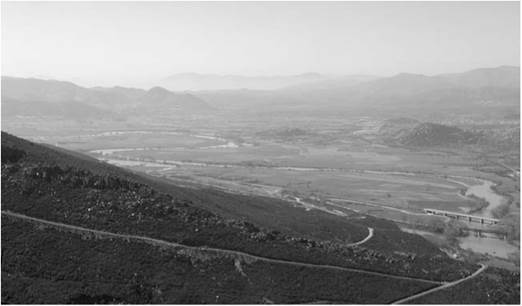
Figure 4.2 Northern Thessaly. Photograph by Richard R. Johnson
There can be little question that Philip appreciated the spirit of treaty-making in Greece. Just as Athens could ally with the Messenians in 355 although it had been since 369 allied to the Messenians’ long-standing, bitter enemy Sparta, so Philip’s own ties could fluctuate as convenience dictated. On the other hand, he appreciated the value of multi-state agreements and employed them in his growing command over the Greek states. During the fourth century, confederations were built through bilateral treaties; when the network of treaties drew together a sizeable number of states, mechanisms emerged for federal decision-making and implementation, such as a council of representatives from the allied states. The state responsible for the confederation was recognized as its leader, or hegemon, for coordinating the common defense and necessary offense of all the members. Macedon became more and more active in this world of alliances. For many decades, as we have noted, Macedonian kings made bilateral agreements that were of the same fluid nature as those negotiated between Greek states. Perdikkas was adept at such maneuvering during the period of the Peloponnesian War. Macedonian kings also dealt with confederacies, especially the nearby Chalkidian League and the Athenian imperial association that had begun as the Delian League. In his first year as king, Philip and Athens agreed to the terms of a treaty; in the following year, the alliance between Macedon and the Thessalian state of Larisa was reaffirmed; three years later found Philip allied with the Chalkidian League; in 346 he sent two of his senior officers - Antipatros and Parmenion - to Athens to present terms for a bilateral peace agreement. A vote of the Athenian assembly affirmed this agreement as the Peace of Philokrates.
Alongside such confederacies were leagues organized for the well-being of major religious sanctuaries, known as amphiktyonies or associations of those states situated around (amphi) the land of the sanctuary. In mainland Greece, the Delphic Amphiktyony had its origins in the Archaic Period. Its membership by the fourth century extended to states that were in no sense physical neighbors of Apollo’s sanctuary, such as Sparta and Athens. Although aggressive action was not the main function of an amphiktyony, protection of the sacred property might demand it. In addition to such earlier associations, a new development in the 380s introduced another form of association that strove for the autonomy of individual states, rather than federation, in pursuit of a common peace. Its origins were not in Greece but in Persia, now once again an active player in Greek affairs. In order to end the ongoing warfare that regularly spilled into Asia Minor, King Artaxerxes II decreed the terms of the King’s Peace in 387.
King Artaxerxes thinks it just that the cities in Asia, and the islands of Clazomenai and Cyprus, shall belong to him. Further that all the other Greek cities, small and great, shall be autonomous. If any refuse to accept this peace I shall make war on them, along with those who are of the same purpose, both by land and sea, with both ships and money.
Congresses were called periodically (375, 371, 366, and 362) to discuss and reaffirm the terms of the Peace.
Philip would be drawn into the affairs of the Delphic Amphiktyony as war surged around Apollo’s land from the mid-350s into the mid-340s. Known as the Sacred War, it resulted from the action of one of the members, Phokis, when the Council of the Amphiktyony levied a fine against Phokis for cultivating part of the sacred land. Rather than paying the fine, the Phokians resisted, raised an army that included mercenaries, and took much of the store of wealth housed at Delphi. With the wealth and a strong force, the Phokians carried their anger into the territory of other amphiktyonic states for the next nine years. To put an end to Phokian power, the Amphiktyony invited an outside power to bring his force into central Greece to accomplish that aim. Philip and his army were successful in defeating the Phokians in 346; their base of power was broken and their membership in the Delphic Amphiktyony went to Philip. Thanks to this position, Philip presided over the Pythian games at Delphi in the same year.
The rising predominance of Macedon in the Greek sphere brought support from many who saw in Philip a solution to the endless conflict between Greek states and leagues of states. Isokrates, an Athenian who lived for 98 years (from 436 to 338), is one of the best examples. War was the abiding condition of those years and its consequences directed Isokrates’ efforts toward a search for peace. He wrote tracts to a number of powerful leaders urging them to reconcile the Greek states and then direct aggression outward, against the Persians. In the Philippos he urged Philip to attempt to reconcile the major states of Argos, Sparta, Thebes, and Athens, since by uniting these major powers it would be made far less difficult to add minor states. Then, Isokrates continued, Philip should extend his activity into Asia against the barbarian Persians, gaining welcome land for the Greeks and eliminating a serious enemy. Philip had other friends: a list of “traitors” provided by the Athenian statesman Demosthenes, who steadfastly remained Philip’s detractor, lists individuals from Thessaly, Arkadia, Argos, Elis, Messene, Sikion, Corinth, Megara, Thebes, Euboia, and Athens (Demosthenes, On the Crown XVIII.295). These and other “traitors” were drawn to Philip through his obvious successes but also because of his personal traits. The Athenian orator and statesmen Aischines reported that his fellow citizen Demosthenes had described Philip as deinotatos when the group of Athenian envoys, of which they were both members, was returning from a conference with the Macedonian king (On the Embassy II.41). As outlined earlier, the Greek word deinos has several meanings: the positive sense of wondrous, marvelous, strong; the equally favorable meaning of clever or skillful; but often the sense of fearful, terrible, dangerous. In the presence of such a person, one might feel all of these qualities in the same rush of experience.
There were warnings against trusting Philip and his Macedonians. Demosthenes spoke out plainly to the Athenians in his First Philippic, declaring that their apathy was removing their potential to prevent Philip from drawing even more Greeks into his net. While the Athenians idly watched, Philip was toiling without stop. In his Third Philippic he repeated his warning that Athenians were only watching as the man grew greater.
Eventually such warnings were heeded by people in other states: Philip’s Greek “allies” were uncertain about the value of his involvement in Greek affairs, and by the late 340s, his Athenian “allies” persuaded his Theban “allies” in the Amphiktyony to join forces against Philip and his Macedonians. Other Greeks also joined this new confederation: Euboians, Achaians, Corinthians, Megarians, and Epidaurians from the Peloponnese and central Greece, and, from the west, Leukadians, Korkyreans, Akarnanians, and Ambrakiots. Philip had Thessaly in his camp. When yet another war divided the members of the Delphic Amphiktyony, Philip was appointed leader of the joint forces against the violator. The presence of the Macedonian army in central Greece was sufficient cause for the states hostile to Philip to prepare for battle. As we have seen, roughly equal numbers - 30,000-35,000 on each side - drew up opposite one another at Chaironeia in the summer of 338. Philip led the right flank opposite the Athenian hoplites while Alexander, on the left flank, was positioned to deal with the Theban infantry. The Macedonians were entirely successful.
Philip turned to new treaty-making, first on the basis of bilateral settlements with the individual Greek states. It may well be that he had the assistance of Aristotle and students in Aristotle’s school in drawing up the formal boundaries of states as one step in reducing warfare. Then an attempt to create a common peace throughout Greece reveals Philip’s appreciation of this recent form of alliance. Calling a congress of representatives from all of Greece at Corinth in 337, he presented terms for an alliance between the Greek states and Macedon that would be both offensive and defensive. Philip would have command of troops furnished by all the members in case of war, but he would not be a member of the council of the allies that was responsible for making decisions and acting as the supreme judicial. Apart from affairs of the League, all states would be independent. Any member state that violated the terms of the alliance would be punished, as would any individual who disrupted the workings of his own state or who became a mercenary for the Persian king. The formalization of these conditions established the League of Corinth. Its existence was valuable in many ways, one of them as facilitating Philip’s incipient plans for a campaign against Persia. If we can safely assume that he read Isokrates’ address to him, his campaign might now be described as one on behalf of the Greeks.
In sum, the long association between Macedon and Greece enabled Philip to speak the Greek language in more than words. He understood the intricacies of treaties and alliances, and appreciated the importance of institutions, such as the Olympic games, or practices, for instance the religious regard for the sanctuary of Apollo at Delphi. He knew well the strife within and between Greek states and was able to exploit it. Familiarity with the different conditions of towns under his own control and with cities - even in his own territory - claiming their independence would have influenced his preference for the former. Just as Perdikkas had refounded the Greek polis of Pydna as a Macedonian-controlled town, so did Philip reorder Krenides to become Philippoi - his city. Leagues, especially Greek associations, were troublesome to the Macedonians, as Philip’s predecessors knew very well. However, they were essential, first, in creating the later Macedonian kingdom and, second, in putting an end to the incessant warfare between the larger coalitions of Greek states. Philip obviously valued the Greek hoplite army and built upon it to craft his own force. As efforts in Thrace proved successful, he realized at first hand that Persia was a problem to regions in the northern and western Aegean. His father had supported the Thebans in their aid to the western satraps against the then Persian king, and Philip seems to have had dealings with one Hermias, who had created a small kingdom in the Troad (the northwestern region of Anatolia around the site of Troy), as well as with one Pixodaros, ruler of part of Karia in southern Anatolia. Such contacts had cultural as well as military significance for Macedon.
Cultural Influences
Greek and Macedonians had been neighbors for at least three and a half centuries prior to the reign of Philip II. The relationship, as we have explored it, was regularly a hostile jockeying for control of territory and access to resources. But accompanying that struggle was knowledge of one another’s cultures, which in the earlier stages of interaction were markedly different in many — although not all - respects. Over time, the similarities increased, notably in religion, language, architecture, the arts, and cultural institutions. Inasmuch as Greek culture was the more sophisticated of the two, by the Archaic Age (c. 750-500) its influence on Macedonia was the predominant direction of borrowing.
We have noted that the major divine and heroic figures of the Argead line were Zeus and Herakles. The explanation of this bond is lost in the mist of Argead origins, and it is not necessary to accept the tale of the departure of three brothers from Argos to acknowledge the Argeads’ own understanding of their ancestral links. What is significant is the similarity the understanding creates with Greek thought. Moreover, in due course, other hellenic deities were incorporated into Macedonian festivals. Late fourth-century temples consecrated to Demeter replaced two sixth-century megara (architectural units consisting of a columned porch and a main room with a hearth and often a third room at the front or back) associated with that goddess. Paintings from the Aigai/Vergina tombs reveal the presence of Demeter’s daughter Persephone in the Macedonian repertoire, while an altar of Dionysos has been identified in the remains of the theater at the same site. Certainly Dionysos is a favorite subject in mosaics from the late fourth century and beyond. Pan figured on coins of Amyntas II, and Apollo appears on coins of Philip II. The occasion on which Philip was murdered was inaugurated by a parade of images of the pantheon of the Greek gods, with an image of Philip included as the thirteenth figure.
That celebration was held in the theater at the old capital of Aigai, constructed during the reign of Archelaos for the purpose of festivals to Zeus and the Muses, contests, and performances of plays. Smaller than Greek theaters, it was nonetheless modeled on Greek examples. Moreover, Greek dramatists had been invited to Macedonia, one of them Euripides, who created the Bakkhai, which is extant, and the Archelaos, which is not. That Athenian poet died in Macedonia. Another Athenian dramatist, Agathon, was the guest of the same Argead ruler, as were the choral poet Timotheos of Miletos and the epic poet Khoirilos of Samos.
Yet another celebration common throughout the Greek world was the Olympic-style contests that Archelaos established at Dion. The dramatic element of competition reveals that Macedonians were receptive to hellenic culture, and common appreciation of athletic prowess is demonstrated in the values of both societies. We have discussed the Macedonian emphasis on physical training in chapters 2 and 3, particularly for members of the royal line, who were expected to lead the Macedonian army by example. The account of Alexander I’s participation in the Greek Olympic games, whether true or not, demonstrates his personal fitness by the outcome: he tied for first place in the foot-race.
It is possible, of course, to understand these borrowings as propaganda - “we Macedonians are truly akin to you Greeks” - or as efforts to civilize a rude, even barbaric population. An argument against such conclusions is that the borrowings took root and grew stronger as well as more numerous. Just as a biological body rejects a transplanted organ that is alien to its constitution, so too will a cultural body reject uncongenial foreign customs.
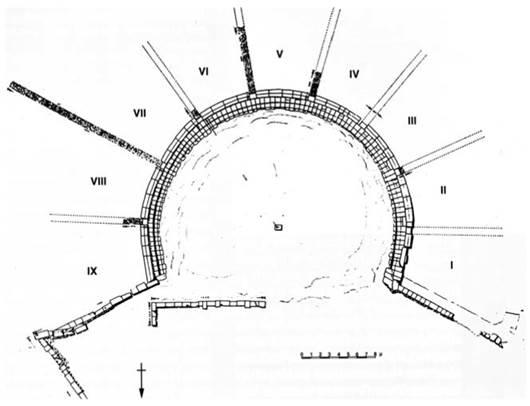
Figure 4.3 Plan of the theater at Vergina where Philip was assassinated in 336 BCE. The numbers I-IX denote the nine segments of the theatre auditorium, with V being the central segment. The rectangle in the center of the orchestra is a stone on which the altar once stood. Courtesy of the Archaeological Receipts Fund Greek Ministry of Culture, Athens
Use of the Greek alphabet became the norm for the written language of the kingdom. Because of the paucity of evidence regarding the spoken language of the Macedonians, the question of its relation to Greek cannot be determined. On the other hand, there is more evidence for the written language. Inscriptions recording agreements between Macedonians and Greeks, particularly the Athenians, have survived, although they derive from Greek states that were parties to the agreements. Versions in Macedonian may have been composed in quite a different form. That this was not the case is suggested by surviving inscriptions of other sorts: 47 grave stelai from Aigai/Vergina dated to the second half of the fourth century record names of the deceased, the majority of which are Greek. As reasoned by the excavator, a date of death at c. 330 suggests a birth date for many of the people during the decade of c. 370-360. Inclusion of a patronymic on most of the stelai suggests a dating of c. 410-400 for the second names recorded. The individuals remembered are not only or even primarily Macedonian nobility; in other words they were more ordinary Macedonians. To be sure, Aigai/Vergina was the original capital of the kingdom. Consequently, the use of alternative Greek names may have been a practice only in this particular location. Yet this conclusion is belied by inscriptions from Beroia in the region of Bermion, where inscriptions that include names were also written in the Greek alphabet. It must be admitted that the Illyrians or others of the neighboring peoples to the north, west, or east would not have provided an alternative script; Greek was the only choice. However, the point, as in the case of hellenic deities, is that the Greek alphabet was found to be satisfactory, and its use became the norm for Macedonian inscriptions both official and personal.
Also respected was Greek knowledge. Pella was organized on the rectangular network of streets associated with the Greek Hippo- damos; theaters, though less impressive than Greek examples, employed the features similar to Greek structures; the Greek painter Zeuxis was a guest of King Archelaos and the forms of the surviving paintings at Aigai suggest the features attributed to that artist, whose Greek works have not survived: shadow, experimentation with color and with perspective, an effort to capture emotion. Knowledge of other kinds was represented by Greeks drawn to the rulers’ service: Eumenes of Kardia as director of the Macedonian records; Nearchos of Crete with his knowledge of the sea. They were employed - used, certainly - but their skills were essential to the efforts of their employers. Thus skills as well as people were caught up in the shaping of Macedonian life. One remarkable example will reveal the degree of interaction achieved over the reigns of Amyntas III and his third son, Philip II.
A Special Relationship
Archelaos’ successors continued his practice of inviting well-known and useful Greek visitors to Pella. Amyntas III established a link that would last through much of his reign and into those of Philip II and Alexander III when he brought Nikomachos and his wife Phaestris of Stageira to his capital. Stageira, located in the northeast Chalkidike, was originally colonized in the Archaic Age by people from the island of Andros off the southern coast of Attica. Over time, Greeks from other regions joined the original settlers. Its location drew it into larger alliances that we have discussed above - the Delian League, the Peloponnesian League, and the Chalkidian League - and with Macedonian expansion eastward, it would be a target for the Argead kings.
Nikomachos is described as both the physician and friend of the king; thus his practice of medicine seems to account for his move to Macedonia with Phaestris and their young son, Aristotle (b.384). Accounts indicate that both parents died while Aristotle was young; he then became the ward of a relative named Proxenos. It is unclear whether Aristotle remained in Pella or returned to Stageira on the death of his parents. In his eighteenth year, he moved to Athens to become a member of Plato’s Academy, and he remained in Athens for 20 years. Aristotle’s subsequent writings reveal the influence of Platonic thought. Another influence came from the rhetorician Isokrates, whom we have seen petitioning Philip to assist in effecting peace in Greece.
A decision to leave Athens in 348/7 can be explained by two events: the death of Plato, followed by the recognition of his nephew Speusippos as his successor, and rising anti-Macedonian emotions after Philip’s capture of Olynthos, a major Athenian ally in the Chalkidike. Aristotle’s earlier ties with Pella may well have made withdrawal from Athens a sensible action. He spent the next three years in northwestern Asia Minor, where Hermias, a former fellow student, had carved out a small kingdom in the Troad during the struggles between the western satraps and the Great King of Persia. Other students of Plato lived in Atarneos at the same time, forming a small circle of intellectuals, a situation that would increasingly be the practice of rulers after the death of Alexander III. The relations of the philosophers with Hermias seem to have been close; the ruler was attracted to Platonic views, and the students of Plato can be seen as following in the steps of their master, who advised the ruler of Syracuse. And in the case of Aristotle, there was a personal closeness demonstrated by Aristotle’s marriage to Pythias, the niece and adopted daughter of Hermias.
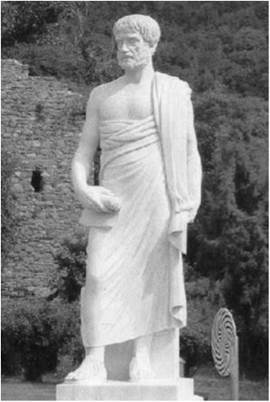
Figure 4.4 Modem statue of Aristotle in his home-town of Stageira. Photograph by Mr T. Voreinos
It has been argued, in particular by Anton-Hermann Chroust, that Aristotle’s connection with Hermias was linked to Aristotle’s role as an agent and informant of Philip. Hermias’ small kingdom was strategically placed for a Macedonian incursion into the northwestern realm of the Persian Empire. In fact, one of the residents at Pella from 353 or 352 was Artabazos, a satrap of Anatolian Phrygia, whose revolt against the Great King had been defeated. With his family, Artabazos remained in Macedonia for some ten years.
Three years later, however, Aristotle moved to Mytilene on the island of Lesbos, perhaps within Hermias’ sphere of influence. Aristotle’s biological studies are associated with this period of his life. After two years, he was to move again, back to Pella; he was summoned, accounts tell us, by Philip to educate his son, Alexander. Plutarch records that Philip [s]ent for Aristotle, the most famous and learned of the philosophers of his time . . . Aristotle was a native of the city of Stageira, which Philip himself destroyed. He now repopulated it and brought back all the citizens who had been enslaved or driven into exile . . . He gave Aristotle and his pupils the temple of the Nymphs near Mieza as a place where they could study and converse ... It was Aristotle, I believe, who did more than anyone to implant in Alexander his interest in the art of healing as well as that of philosophy . . . He regarded the Iliad as a handbook of the art of war and took with him on his campaigns a text annotated by Aristotle. (Alexander VII and VIII)
Not only the nature of this education but even the accuracy of describing Aristotle as Alexander’s tutor is debated by scholars. Its validity may be strengthened by the list of Aristotle’s writings, which included a book On Colonies and another On Monarchy purportedly written for Alexander, as well as by the records of Aristotle’s letters: to Philip, to Alexander (four books), to Olympias (one book), to Hephaistion (one book), and to Antipatros (nine books), the last- named one of Philip’s most influential aides who was named by Aristotle as the executor (epitropos) of his will. Aristotle was closely associated with the most important figures in Pella during the late 340s, and that association rested on some basis or perhaps multiple bases.
In his life of Aristotle, written probably in the third century ce, Diogenes Laertios quotes the philosopher’s belief that a wise man would fall in love and take part in politics; moreover he would marry and live at a king’s court (Lives and Opinions of Eminent Philosophers XXXI). That a philosopher might teach others while living at a king’s court is unsurprising in light of the activities of other wise men. Mounting enthusiasm for and knowledge of Greek culture on the part of the Argead kings would surely indicate the value of instructing potential heirs to power in Greek subjects. Philip’s invitation to Aristotle may have rested on personal acquaintance between the two men, first from the period of their youth when Aristotle lived at Pella with his parents, and more recently through their mutual contacts with Hermias of Atarneos.
Little is known of the nature of Aristotle’s mode of education, whether in Macedonia or later in his own school. Diogenes Laertios provides a clue by listing the philosopher’s definition of the qualities essential to proper education as natural endowment, study, and constant practice (Lives and Opinions XVIII). The later writer also states that Aristotle taught his pupils to speak on a set thesis together with practicing rhetorical ability. Judging by the quantity of Aristotle’s own written works - Diogenes lists 400 items as genuine - it is safe to assume that students were trained in writing as well. Scientific research may well have been another component if the story is true that Alexander ordered Macedonian hunters, fowlers, and fishermen to provide information about the animals, birds, and fish that they had observed or caught. One other feature of Aristotle’s method of education can be added on the basis of the nature of the school he established in Athens in the mid-330s: acquisition of knowledge was a collegial affair both in terms of its academic routine and with respect to its social aspects. Situated in a grove dedicated to Apollo Lyceios, the school also contained a gymnasium, a building with space for lectures and collections of books, maps and objects, and a place for common meals. The tradition that Aristotle instructed a number of youths at Mieza may well have been a precursor to the practices at the Lyceum in Athens.
By 340, when he acted as regent for his father, Alexander’s life precluded devotion to education. Just where Aristotle lived between 340 and 335 is unclear; he may have returned to Stageira. By 335, he was back in Athens to found his own school, described above. It may not be coincidence that his return took place at the time of Athens’ submission to Alexander. Thebes had just been taken and razed after revolting against Macedonian hegemony, and the Athenians feared similar retaliation. Instead, Athens was treated diplomatically through treaty rather than through military retaliation. Aristotle remained in Athens to 323, when he moved to Chalkis on the adjacent island of Euboia. Once again, his connection with Macedon may have provided the impetus. Alexander had died and Antipatros, to whom he had entrusted his affairs, had been recalled to Asia. A person with strong connections to these traditional enemies of Athens might well fear for his life. Later sources report that shortly before his death Aristotle wrote to Antipatros about the danger of living in Athens if one were an alien. This would be especially pronounced in the situation of Aristotle with Alexander dead and Antipatros presumably en route to the east. It is no great surprise to learn that the Athenian assembly voted for war against Macedon on learning of Alexander’s death. A new alliance with Aitolia, Sikion, Thessaly, northwest Boiotia, Messenia, Argos, and parts of the island of Euboia agreed to secure the freedom of the Greeks. After initial success, the return of 10,000 veterans with the Macedonian general Krateros defeated the coalition in 322. Surely Aristotle was wise to have departed Athens. He died of illness in Chalkis in 322.
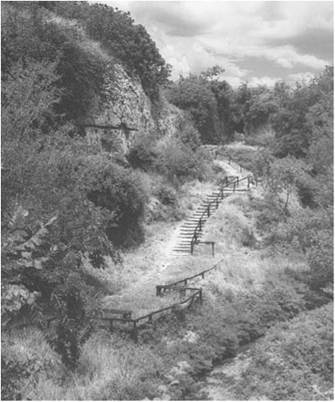
Figure 4.5 Site of the Nymphaion at Mieza. Courtesy of Dr E. Kafalidou, Archaeological Museum of Thessalonike
In sum, the association of Aristotle with Macedonia reveals several characteristics of Macedonian culture - at least the culture of Argead Pella. The recruitment of notable Greeks to Macedonia from the reign of Alexander I through that of King Archelaos slowed but did not cease during the troubled reign of Amyntas III. Expertise especially appropriate to a realm constantly at war was found in the physician Nikomachos of Stageira, who moved to Pella with his wife and young son, Aristotle. The association was ended by the deaths of Nikomachos and Phaestris at a relatively young age - there is no indication of foul play. Although Aristotle did not continue to abide in Macedonia, he would return after his 20 years as a student in Plato’s Academy in Athens. The education of Alexander III is the usual explanation for Aristotle’s return in 343/2, and while his role as educator is questioned by a few modern scholars, his concern with education is illustrated by his founding of his own school in Athens in 335. Other responsibilities may well have been given to this philosopher. As we have noted, he lived at the center of the small kingdom of Atarneos in Anatolia from 348/7 to 345/4 and, for the next two years, on the island of Lesbos off the Anatolian coast. It is interesting to note Philip’s own interest in Atarneos as the Macedonian king became increasingly active in the Propontis and the Black Sea, namely the northern boundaries of the Persian Empire. During this same period of time, a rebel Persian satrap from Anatolia resided with his family in the Macedonian capital.
On his return to Athens, Aristotle was in a position to assist Philip with the terms of settlement of Greek affairs following the Macedonian victory at Chaironeia: as mentioned above, the boundaries of individual Greek states are said to have been determined by Aristotle and his students. His return may also point to abiding links with the ruling Argead king, Alexander III. On Philip’s murder, traditional enemies of Macedon determined that the situation was propitious for revolt from Macedonian control. While Alexander was drawn to deal with northern enemies, several Greek states rebelled. On his return, Alexander dealt quickly with the rebels. Thebes was razed while Athens, in spite of its contributing to the Theban revolt, was generously treated, a consequence, perhaps, of Aristotle’s intercession on its behalf.
The case for Aristotle’s role as envoy, intermediary, and agent is not foolproof but gains support from the role of philosophers of the same and the next generations. Xenokrates, head of the Academy from 339 to 314, was a member of an Athenian embassy sent to negotiate with Philip. Tater he was an envoy to Antipatros to urge the release of prisoners taken in the war that erupted on Alexander’s death in 323. Kallisthenes, who was the nephew of Aristotle, Anaxagoras, and his pupil Pyrrho, known as the founder of the Skeptic School of philosophy, accompanied Alexander on his campaign. Theophrastos, Aristotle’s successor as head of the Tyceum, was invited to Egypt by Ptolemy I. Stoics were part of the court of Antigonos Gonatas, king of Macedon in the early third century. Later in that century the Stoic Sphairos played a role in a program of the Spartan kings, while the Cynic philosopher Kerkidas acted as an ambassador to the then Macedonian king in an effort to halt the Spartan success. An Epicurean mathematician served three Seleukid kings in the second century, and in the middle of that century an embassy of three philosophers representing three different schools was sent to deal with the Roman senate.
Aristotle’s role is important not merely in disclosing the political involvement of intellectuals but also in testifying to the intellectual acumen of the Argead kings. They understood Greek culture well and actively used it for both its inherent value and for their own purposes. The individual connections also provide clues to the true nature of life in the land where, according to Demosthenes, one could not even buy a decent slave. Eumenes, the son of a guestfriend of Philip from the Greek town of Kardia on the Thracian Chersonese, was brought to Pella to serve as head of the secretariat for seven years. He continued in this capacity under Alexander, but in India was appointed to a command position, and, at the marriage ceremony of Alexander and his companions in Susa in 324, Eumenes was wed to a sister of Alexander’s mistress, Barsine. Rising to this elevated status indicates the importance of record-keeping in Macedonia by the reign of Philip, if not before. Greeks may have had greater literacy skills but one Marsyas of Pella, a contemporary of Alexander III, wrote an account in 10 books of the history of Macedonia from the origins of the kingship to summer of 331 bce. An Argead king was well advised to appreciate the skills of the Greeks - and others, of course - and incorporate skills and personnel into his kingdom. Greek states and leagues were bothersome pests, but the tools of the Greeks were essential to Macedonian vitality. In the fullness of time, those tools and customs became integral to Macedonian culture. Lines of distinction between Macedonian and Greek cultures were blurring long before the Hellenistic Age.