
CHAPTER TWO
Instructions arrived on 6 December, 1944, that the Division was to head for the St Vith region of Belgium. Upon arrival hey were to relieve the US 2nd Inf Div. The trucks began to roll; it was a miserable long trip, being bounced about soaking wet through the ever-present rain and it was getting colder. It took two days before the long column of open vehicles reached their destination.
Due to the constant transportation and the inability to change mto dry clothing a number of men were going down with various illnesses. Wags among the GIs began to call themselves ‘The Hungry and Sick’ a pun on the 106th Division’s number. The men accepted this new-found name and laughed and joked about it among themselves. But woe betide any outsider calling them this. For in a relatively new division the men had already achieved a sense of pride and new-found comradeship.
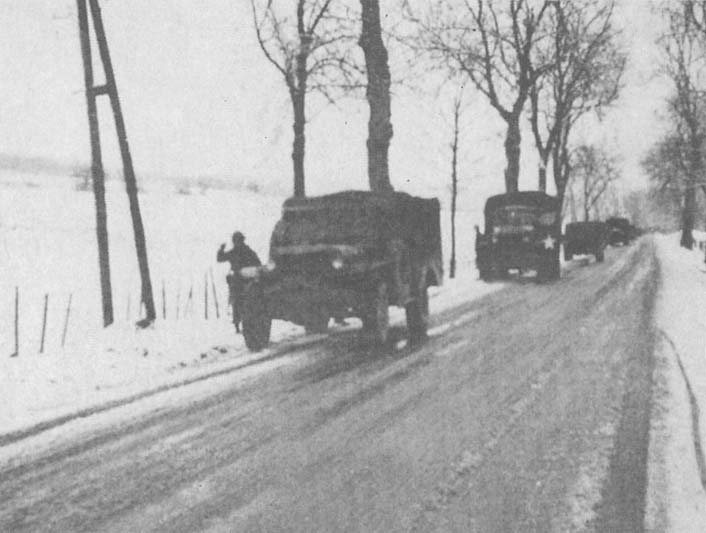
It was a long miserable journey to the front for the 106th Infantry Division. Vehicles of the 589th Field Artillery Battalion halt for a break near St Vith 8 or 9 December 1944.
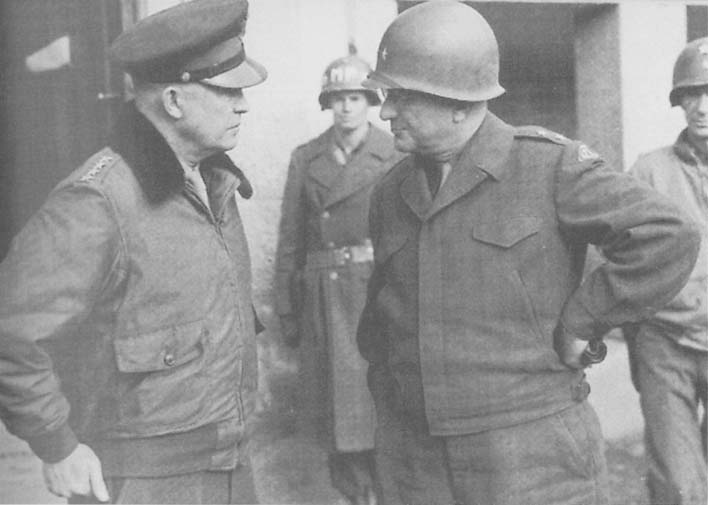
St Vith 9 November, 1944, a quiet sector of the front. General Dwight D. Eisenhower with Major-General Troy H. Middleton, commander of VIII Corps.
Orders from General Troy Middleton, VIII Corps Commander, whose area the Golden Lions had joined, were to simply take over from the now leaving 2nd Infantry Division, man for man, gun for gun.
The Supply Officer, Charles Walsh of the 592nd Field Artillery Battalion recalls:
‘We were a medium Field Artillery Battalion with full track prime movers pulling 155mm Howitzers. Our destination was the front lines near St Vith, Belgium. We were to relieve the Second Division. Our march to St Vith was to be three days. The column moved out at 35mph which, needless to say, caused many problems with our steel-track prime movers. The 592 F.A. Maintenance crew battled the 18 tractors for three days and three nights around the clock, replacing bogey wheels and one complete tractor, that had been in an accident coming down the mountain. The Battalion Maintenance crew consisted of two maintenance trucks and a battalion wrecker, and six men. They did a fantastic job getting the battalion up into the line at Laudesfeld without the assistance of the Division Ordnance Company that was supposed to be supporting them. The Ordnance Company made the trip on schedule with all their tools still packed in the shipping cartons the way they left the States.’
Leading elements arrived in the St Vith area early afternoon on the 8th December and were given bivouac areas on the St Vith-Schonberg road. The Commanders were told to report to General Jones at his HQ in St Vith. They were greeted and given their orders: the take over would be carried out during the night of 9/10 December in blackout conditions and in total silence, the 2nd Division could then slip away to its new position hopefully undetected. Lieutenant-Colonel T. Paine Kelly Jr of the 589th Field Artillery Battalion supporting the 422nd Regiment was told that he had the honour of being the first to take over and occupy its position. This was so it could register its fire in order that the other FAB’s could comply accordingly. One firing battery section and his fire direction centre was to take over after 1600 on the 9th before it got too dark to achieve this. All Regimental and Battalion commanders were to reconnoitre their positions before dark and then meet their counterparts from the 2nd Division for briefing. The following morning Lieutenant-Colonel Kelly found his opposite number’s Command Post in the kitchen of a German house along the Bleialf-Auw road. Its commander was pre-occupied with his own withdrawal. Unable to meet him, Kelly found the Executive Officer, a well-seasoned, experienced major in the HQ mess, situated in a patch of woods adjacent to the C.P. Coffee was poured, and the briefing completed, then the major told Kelly about the fears they had.
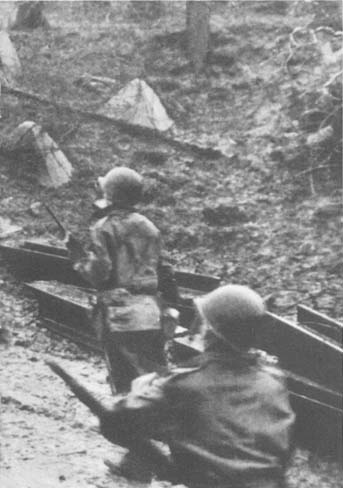
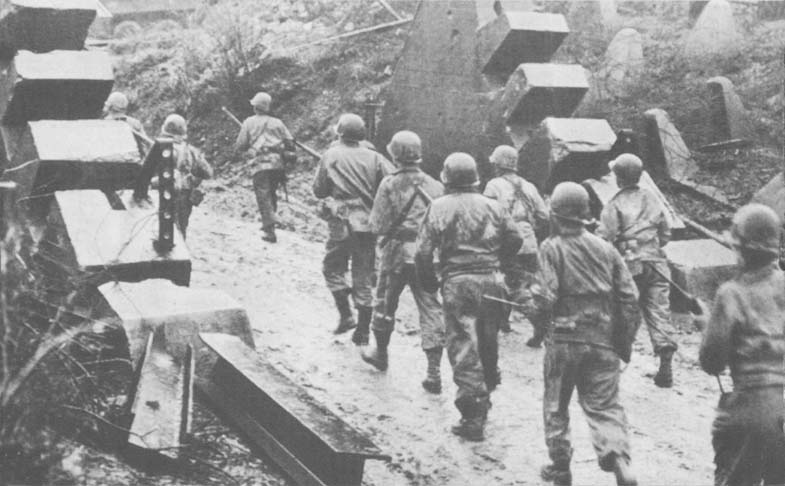
An American unit passes through the much-vaunted Siegfried Line – a toe hold had been gained on German territory.
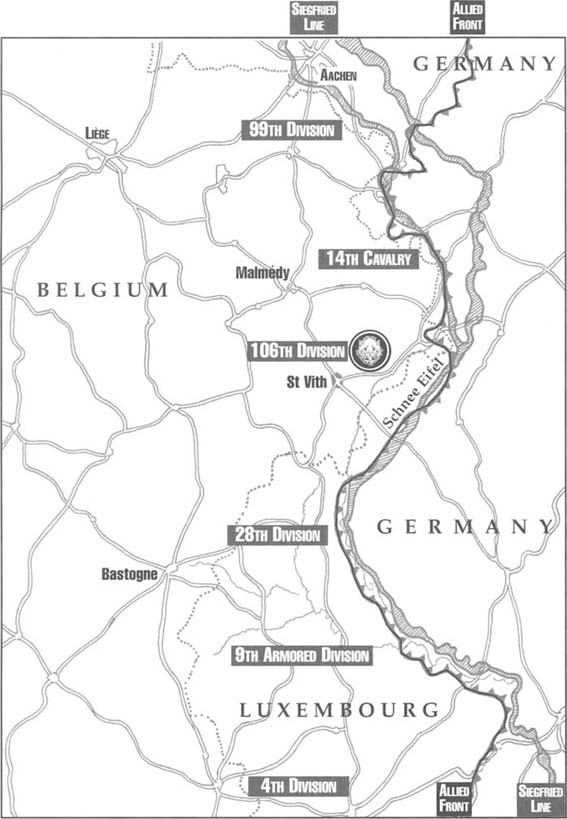
The Ghost Front
By December 1944 the Allies were up against the frontiers of Germany – the Siegfried Line defences had been penetrated at numerous points.
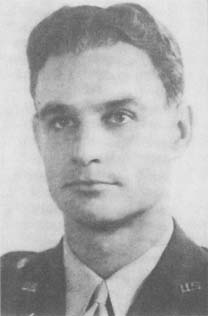
Lieutenant-Colonel T Paine Kelly, Jr
The Divisional front was over-extended. If the Germans decided to attack from the east it was wide open; the Losheim Gap was only defended by a cavalry unit. The infantry was to the south and west of the batteries (See map of positions), and could not be expected to defend the artillery in the event of an attack. Not unduly worried about these reports Kelly started briefing his own staff. After all, he had been told on the way down from France that the Germans were virtually finished and this was a quiet front. His officers were shown on a map where and how to get to their assigned positions. At 11.30 the following morning the first salvo of 105mm shells barked away towards the German lines and the 589th Field Artillery Battalion was at war.
J. Don Holtzmuller was a Corporal Gunner of the number one howitzer of Battery A. He recalls:
‘On 9th December we moved into the line about 1.5 miles south of Auw, Germany. We replaced a battery of the 2nd Infantry Division, gun for gun, as the 106th was relieving this division in the line. We were later told that when we had registered our gun (this is when the guns were aligned and coordinated for battle) our gun had fired the first round for our division. The days between December 10th and the 15th were spent in getting used to living in the field and firing missions at targets in Germany. The men we relieved had built a hut, so we didn’t have to live in tents. Everything was peaceful. We were told that this was a quiet sector and that we were just to get used to combat. We fired a lot of harassing missions at night, mostly aimed at sounds heard by our forward observers. The weather during this period was cloudy, with fog lasting for most of the daylight hours. We saw a lot of German V1 rockets, (more commonly known as Buzz Bombs) fly over our position. We were positioned under the path of their targets in Liège, Belgium and the English mainland.’
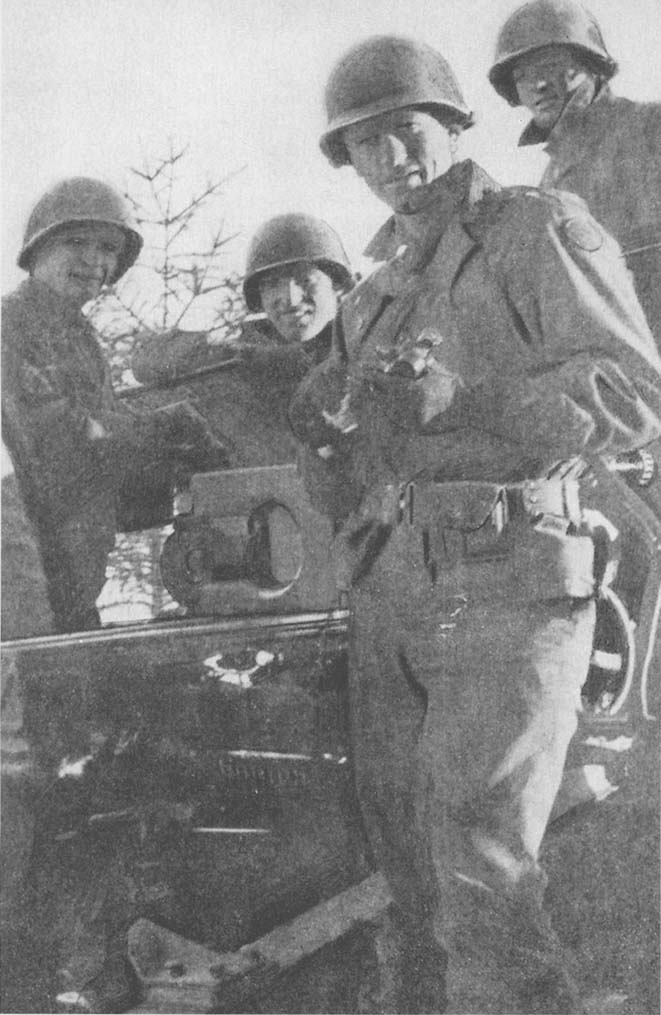
The 4th Section, Battery A, 589th Field Artillery Battalion. It was the 1st Section of this battery that fired the opening round of the war for the 106th Division on 9 December with a registration shot.
The rest of the Division had completed its relief by the 11th apart from the 424th Regt which got in the following day. On 11 December at 1900hrs the 106th Infantry Division officially assumed responsibility for that sector.
During quiet periods Lieutenant-Colonel Kelly went up to see his Regimental Commander, Colonel Descheneaux at his HQ. On one such occasion he brought up the subject of the Losheim Gap being open, and how so much depended on the group of cavalrymen from the 14th Cavalry in armoured cars and light Stuart tanks. Descheneaux just shrugged his shoulders saying, ‘They won’t let us do anything about it, the Roer Dam operation [an offensive to capture the dams of the Roer River, north of the 106th’s positions] has not jumped off and HQ VIII Corps insist that there will be no change in disposition of forces.’
As Lieutenant-Colonel Thomas J. Riggs Jr of the 81st Combat Engineers remembers, ‘The relief of the 2nd was accomplished in three days, man-for-man, and position-by-position’. As the 81st relieved the 2nd Engineer Combat Battalion, there was a lot of banter from these combat veterans about the ‘country club’ atmosphere of the position due to the daily exchange of fire but no real action. Lieutenant-Colonel Riggs went on to say,
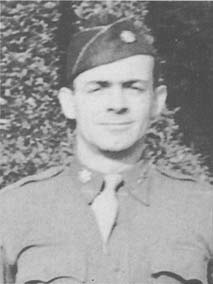
Colonel Descheneaux
‘We inherited the fortifications, mine fields, and barbed wire which had been originally established by the 4th Infantry Division [back in September] and reinforced by the 2nd “The new boys” also inherited the basic problem of these defensive positions.’
But the men in the firing line didn’t know that. They would find out only when it was too late.
So the 422nd and 423rd Regiments of the 106th went into the line, along with their accompanying units. With the 422nd Regiment went the 589th Field Artillery Battalion and with the 423rd went the 590th FAB. Each of the Artillery Battalions was equipped with twelve 105mm howitzers split into three batteries, with a Service Battery for each as back up behind the front. Also part of the Division was the 592nd FAB which served both Regiments with its 155mm howitzers. The other Regiment the 424th, was positioned a little further south of the Schnee Eifel and does not feature in this particular guide, (although I hasten to add, does not mean any disrespect to its members). Most of its action was fought separately around St Vith under the command of General Bruce Clarke’s, US 7th Armored Division
The 2nd Division had been in these quiet positions for some time and had made themselves fairly comfortable. But they were now in a rush to move out, because of a coming attack towards the Roer River dams further north. Whilst speedily moving out they grabbed some of the new equipment the 106th had brought with them saying, ‘You won’t be needing that here. We’ll leave you our old gear’. The turn over by officers was short and sweet and most of it shouted over their shoulders while leaving. For instance Colonel Boos of the 38th Infantry Regiment 2nd Division left Colonel Cavender of the 423rd standing by the side of the Bleialf-Schonberg road after saying, ‘It has been quiet up here and your men will learn the easy way’. If only Colonel Boos had been right!
Into their positions the wet, cold and miserable men went. The 422nd and 423rd were actually in old German positions which were, of course, known to the enemy. The relief was completed by 11 December in thick snow and fog. In all the Division was extended some twenty-two miles; far too much for an infantry division. Normally a divisional front facing the Germans should have been at the most five miles. It was a dangerous scenario, but because it was supposed to be so quiet, VIII Corps overlooked the fact, saying this would not be a problem. Major General Jones and his Headquarters staff were ensconced in the old Sankt Josef’s school in St Vith. The 81st Engineers were at the village of Heuern, approximately two miles west of Schonberg on the road that leads to St Vith. These combat engineers were split up so as to be able to help the infantry regiments by improving roads and general maintenance. Company A based at Auw aided the 422nd, and Company B at Schoenberg was with the 423rd. All these Engineers were commanded by Lieutenant-Colonel Thomas J Riggs. Also, medics of the 331st Medical Battalion had their HQ and clearing station at St Vith and the collecting companies disposed at Andler and Buchet. (These collecting stations are still there, as are most of the buildings mentioned in this guide).
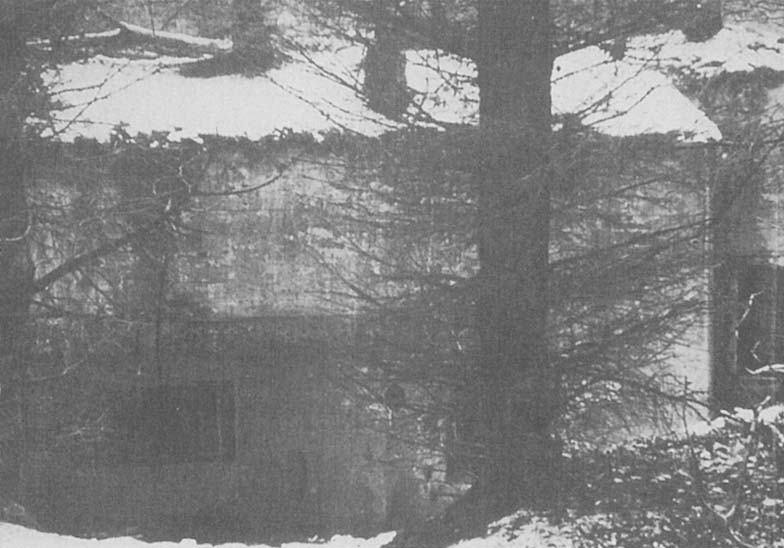
A German bunker in the Siegfried Line defence system. These made excellent shelters for the GIs holding the line, but their exact postion was known to the enemy and were targeted with some accuracy during the coming German offensive.
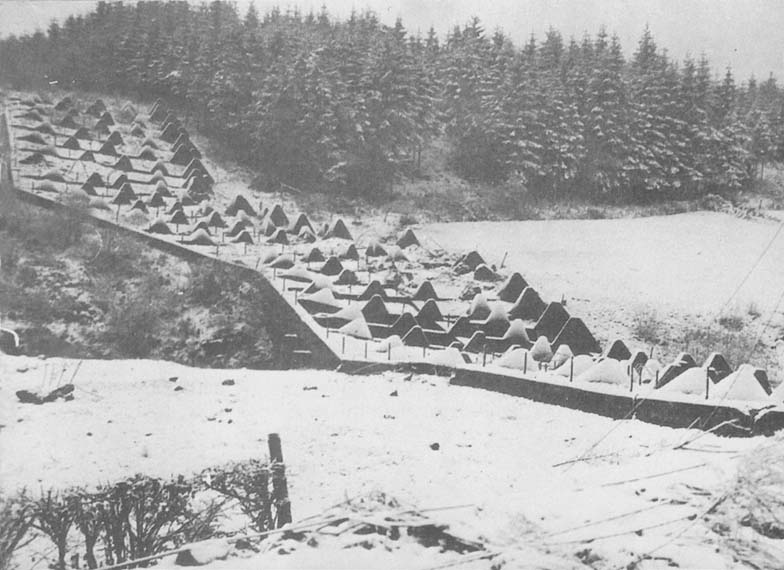
Part of the Siegfried Line where the coming attack would break.
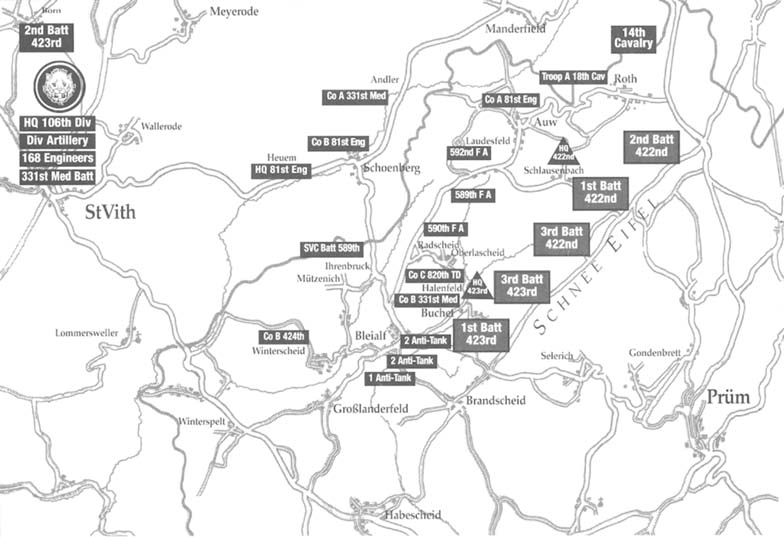
Disposition of main units on the Schnee Eifel and rear areas.
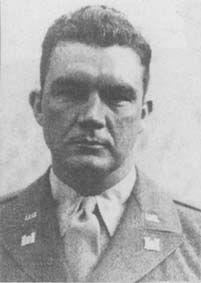
Lieutenant-Colonel Thomas J Riggs
The 422nd occupied the left hand side of the Schnee Eifel and had all three of its Battalions in the line. In command of that Regiment was Colonel George Descheneaux (whose headquarters was in the village of Schlausenbach, to the north). Covering seven miles of what was called the Losheim Gap, between the 106th and its nearest neighbour the 99th Division, was Colonel Mark Devine’s 14th Cavalry. It covered the area the best it could. The 423rd on the right under Colonel Charles C Cavender had Buchet as their HQ. Its 2nd Battalion was in reserve at Born just north of St Vith and the 1st and 3rd Battalions were in the line on the right of the 422nd occupying the old Siegfried positions. From here the front line curved to the rear towards the village of Bleialf across open ground. To defend this exposed three mile gap between itself and the 424th Regiment, a Provisional Battalion from the 423rd was formed, consisting of its Anti Tank Company, part of its Cannon Company, one rifle platoon from the 3rd Battalion and C Company 820th Tank Destroyer Battalion dug in around Bleialf. Then, extending the line to the 424th Regiment, was B Troop 18th Cavalry Reconnaissance Squadron. Defence in depth had been sacrificed in order that the extended line could be covered. That was the defensive structure in the second week of December 1944.
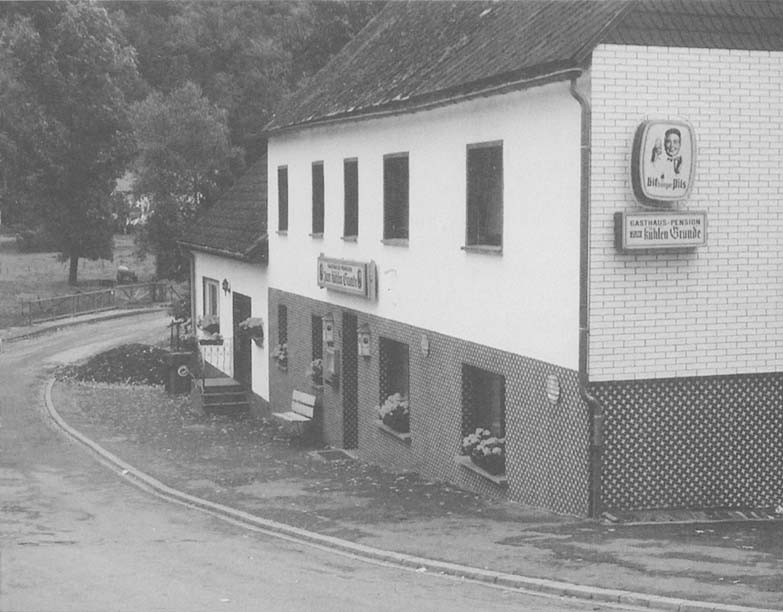
Headquarters of 422nd Infantry Regiment at Schlausenbach
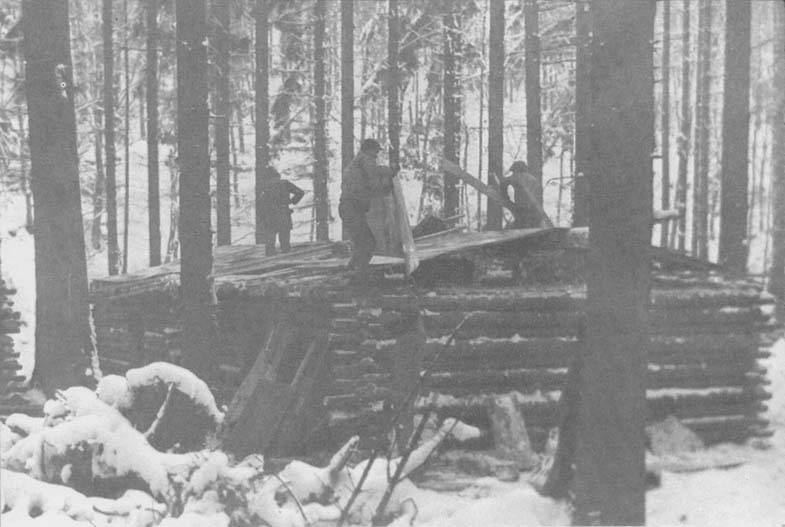
Repairing a log cabin among the pine trees, on or near the German border, in the winter of 1944. Men, seasoned troops, of the Division that 106th replaced in the line, (2nd Division), had taken the stoves and fireplaces with them when they moved out.
After the initial shock of moving into the line the 106th found their new homes not so bad. Apart from the men up front stuck in foxholes, the rest were billeted in old Siegfried Line bunkers or timber-roofed dugouts. Although cold, at least it was shelter from the appalling weather. The 2nd Division had looted fires and stoves from the houses in the villages behind the line and made themselves really comfortable, but of course, being seasoned troops, had taken them with them. Again, as always in its short history, the men of the 106th Division were unlucky.
Gaining experience was top priority; patrolling with maximum numbers was started. At first men were over-cautious, but that was to be expected. The rest of the troops settled down to the normal chores of front line soldiers.
The Tactical Problem
General Jones, the 106th Commander, sporting a dashing Don Ameche moustache, but who had never fired a shot in anger in nearly three decades as a soldier, was not happy with the positions the Division had inherited. He thought the road network was awful, especially in the area of the 422nd/423rd covered by this guide. On looking at the map, one can see that all the roads in the area lead to St Vith eventually and then fan out to all points of Belgium. In this area there are two roads from north to south, one from the Manderfeld direction that passes through Andler, Schonberg, Heuern and on to St Vith; the other from Auw down through Radscheid to Bleialf then either north to Schonberg or south west into the 424th area. The latter road was nicknamed ‘Skyline Drive’ or ‘Skyline Boulevard’ by the GIs as quite a bit of it was under observation from the German side. One part in particular, the corner just north of Bleialf where the Schonberg road meets the Skyline Drive was nicknamed ‘Purple Heart’ corner because anything that showed up there was bound to draw attention from the German guns in Brandscheid. Because of this the Engineers had built a corduroy road (log road, with tree trunks cut from the local forest) up through the woods from a spot on the Schonberg road and came out on the Skyline Drive near Radscheid. This effectively bypassed the dreaded corner, and was called ‘Engineers Cut-Off’. There were also two roads that led out of Germany, one either side of the Schnee Eifel that ran into the two north-south roads.
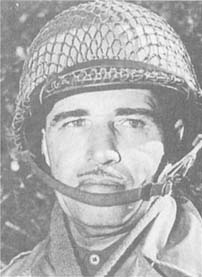
Major General Alan W Jones
Jones surmised that if the Germans attacked down these two roads, not only would it cut his Division in half but, more dangerously, actually allow the enemy to surround the two Regiments on the hills. He and his staff were told not to worry, the Germans opposite were light, and also inexperienced, although there was a panzer division lurking somewhere behind, but that was a long way away and was probably in the throes of rebuilding after its mauling in France.
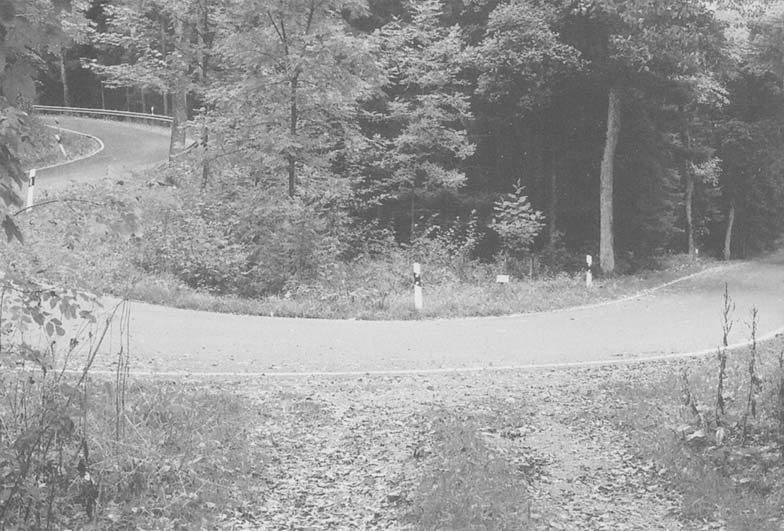
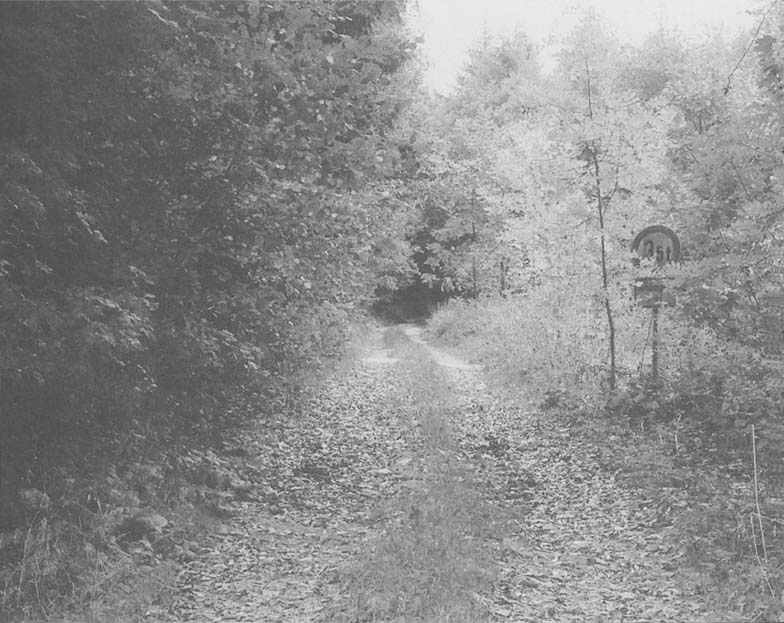
Bend in the Schonberg road where the engineers constructed a corduroy road to avoid observation and fire from the German guns in Brandscheid. This became known as ‘Engineers Cut-Off’ and the route still exists coming out on the road once known as ‘Skyline Drive’to Radscheid.
Even with this information and reassurance Jones decided to make some contingency plans and asked his Regimental Commanders to submit counter-attack and withdrawal ideas to headquarters. They never reached him in time.
The men began to improve their positions as best they could. The artillerymen obtained much-needed ammunition for their howitzers and adjusted the pits to give better registration of fire and started firing harassing rounds towards the German lines and also on target areas called for by the nervous riflemen up front. The latter were always imagining Germans lurking to their front. As one knows, if you stare long enough at an object like a tree trunk in the dark it starts to take on all sorts of guises and makes the mind race. The men were very jittery. The riflemen could do nothing to improve the poor fields of fire that lay in front of them. Most of them could see nothing but a sea of dense pine trees. From the top of the Schnee Eifel where the Battalion command posts were housed in the old Siegfried Line bunkers, towns could be observed through the murky fog to the east, but only if they were lucky. To cover the gap between the two regiments and to maintain contact with units either side, patrols were run at regular intervals.
Communications between units was by means of wire lines; in most cases this was only single cable, something else that had been inherited from the takeover. The 2nd Division had ‘obtained’ sound powered telephones which they utilized well, but of course they had taken those with them. Radios had been drawn in England but ever since the Division had left they had been under strict radio silence and this also applied to their present positions. Calibration and testing of the equipment had therefore been impossible.
Unfortunately, apart from Colonel Cavender and Brigadier General Perrin, no one else in the Divisional command structure had ever seen any real action, and that had been 27 years before in the Great War. As a result the green troops had no one to turn to for reassurance. It was a worrying time for the inexperienced men of the 106th. Trench foot cases soared, especially in the 422nd Regt. No one had found time to dry out properly, and barrack bags with dry clothing had only just caught up with them. The issue of overshoes had taken far too long. Now on 14 December strange noises were heard to their front, engine noises! Once again they were told not to worry. A patrol was captured and the German officer in charge was found to have a copy of an attack order on him. This was rushed to the rear and never heard of again. A Polish deserter caught by a patrol from the 422nd spoke of a coming offensive. Another Pole who had stepped on a mine while trying to desert to the Americans turned up at one of the 331st Medical’s clearing stations in Andler. Sergeant Thorpe was there, the man was badly hurt but was coherent and ready to talk, an American soldier was found who could speak his language. What he said amazed everybody. He had been pressed into the 12th SS and that unit had been moved up into forests, just east of the front line, under strict secrecy and would attack at night using searchlights, he was not sure quite when. Sergeant Thorpe remembers the young Intelligence officer hanging onto his every word, then scrambling for his jeep and heading off towards St Vith. Still nothing was done. German activity could be seen by the 423rd increasing in the area of Brandscheid. Company A’s kitchen burned mysteriously and an abandoned building in the area caught fire, strangely drawing no fire. The sound of German patrols deep in the forest could be heard. Then on the night of the 15th an unidentified airplane flew low up and down the line drowning out strange, worrying noises. General Jones reported these facts to VIII Corps but in return was told, ‘Don’t be so jumpy, the Krauts are just playing phonograph records to scare you newcomers’.
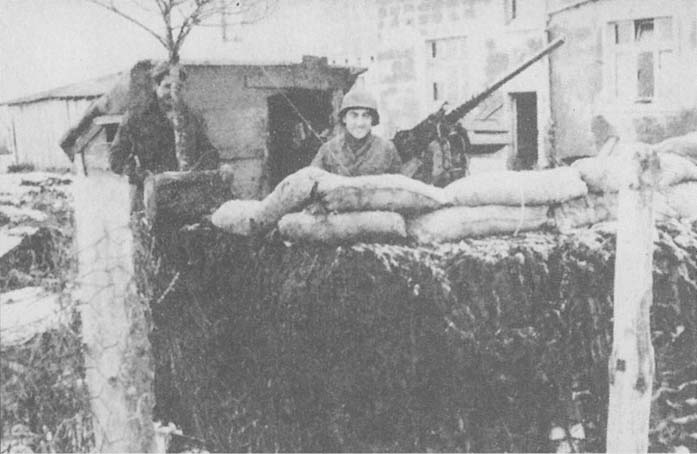
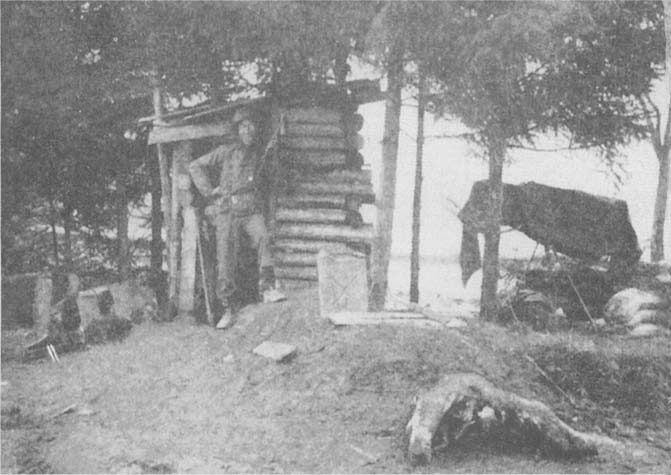
A machine-gun position and guard post of the 589th Field Artillery Battalion in the Schnee Eifel.
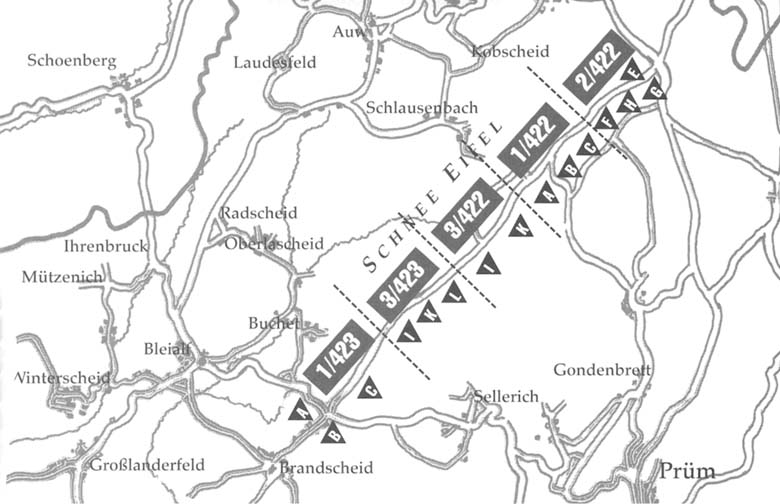
Front line position of the Line Companies
Tension mounted by the hour. Something was going on. All the indications were there, but if the Intelligence men back at Division and Corps said there was no need for concern, then surely they must be right. The front settled down for another cold, wet, bonechilling night far from home. For many in the doomed 106th it was going to be the last night they would spend at peace!
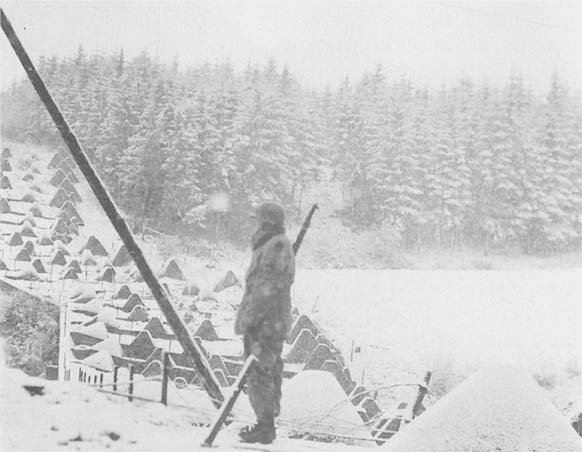
Keeping watch on the Siegfried Line. A few miles to the front German units were moving up prior to their onslaught in the Ardennes. It was here that the brand new, untried, recently arrived 106th would take the full weight of Hitler’s panzer grenadiers.