
CHAPTER THREE
We have to go back to Saturday, 16 September, 1944. After his usual briefing held at his hidden field headquarters nicknamed the ‘Wolf’s Lair’ in East Prussia, Hitler announced to his most trusted military staff, Field Marshal Wilhelm Keitel, Supreme Commander of the German Army, Alfred Jodl, Chief of Operations, Heinz Guderian, Commander of the Eastern Front and finally General Kreipe who represented an absent Air Marshal Güring that he was going over to the offensive. His plan was to counter-attack out of the Ardennes with Antwerp as the main objective. The small group of officers sat in silence; they could not believe their ears. Had the wounds received from the failed assination plot of July, when a bomb planted in a conference room exploded, finally taken their toll, along with the constant bad news from all fronts that the Germans were in full retreat?
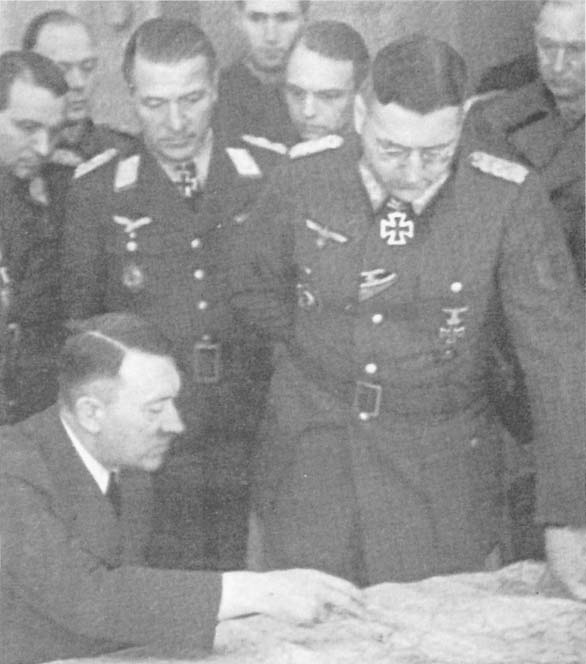
Hitler explains one of his plans to a group of dispirited officers in 1944.
The Führer did not appear to notice. He laid out his plans and ideas. As the Anglo-American armies had now stalled up against the vaunted ‘Westwall’, and the long supply columns were over-stretched to the extent that sufficient supplies were not reaching the front-line units, Hitler surmised that the Allied onslaught had petered out for the time being. He knew that the coalition between the Allies was rocky to say the least. He felt, too, that relationships between Russia and Britain were not of the best. If he could split the two armies in half, perhaps even surrounding one of them and take their key port away, the two Allied governments would fall out. Whilst this was going on he would be able to sue for peace under his terms, then turn his full attention to the main enemy, the Russians on the eastern front.
On 25 September Hitler told Jodl to start planning the new offensive. Keitel was given the job of sorting out how much fuel and ammunition would be needed and when it could be expected to be ready Hitler himself formed a new army, the Sixth Panzer, which he gave command to a great favourite of his and former friend from the beer hall fighting days, General Josef ‘Sepp’ Dietrich. Its armoured divisions were all to be made up of Waffen SS.
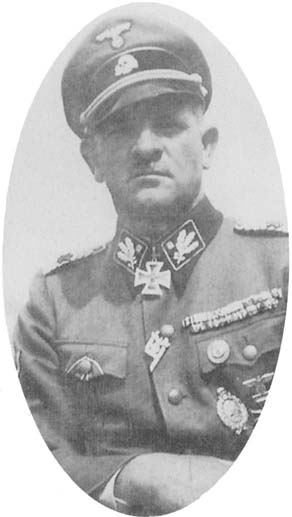
SS Colonel General ‘Sepp’ Dietrich
German industry was at an all-time high, even though the Allies were constantly bombing. Manpower for the newly formed Volksgrenadier Divisions was achieved by enlisting naval and airforce personnel who had no ships or aircraft left, into the infantry. The call up ages were changed so now boys of sixteen and men up to sixty were expected to join these Volksgrenadier (People’s) divisions. The Area from Monschau in the north down to Echternach in the south was chosen for the breakthrough. This was because it was known by German intelligence that – as we have already seen – the American line here was the weakest and most overstretched. Terrain was poor and above all there were abundant forests on the German side of the Ardennes to conceal the attacking forces during the build-up. Weather as well was an important deciding factor, the poorer the better as this would keep the Allied airforce grounded.
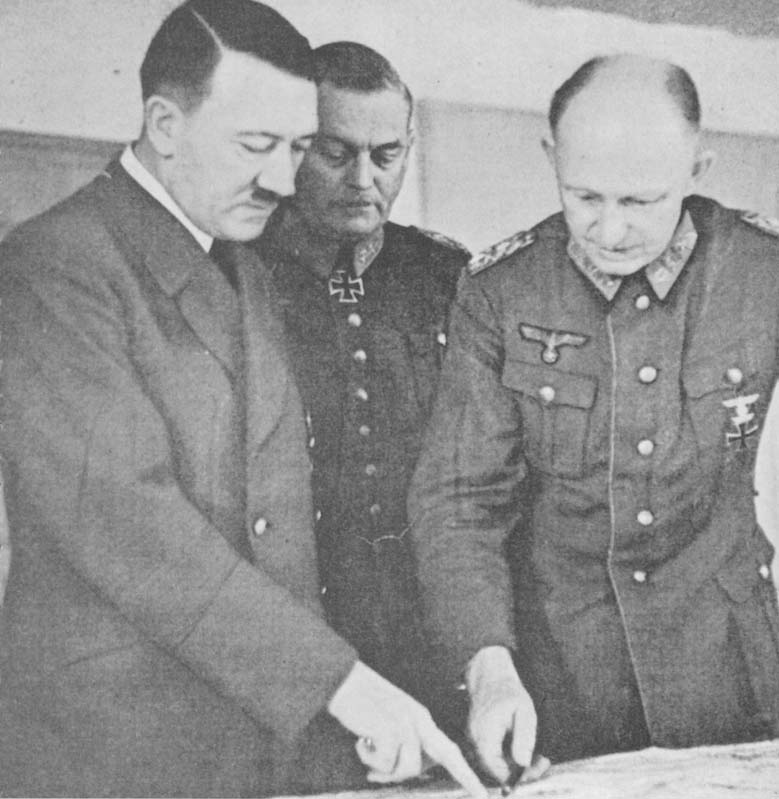
Hitler, Keitel and Jodl. The Führer would come up with the idea and then the other two would put together the details.
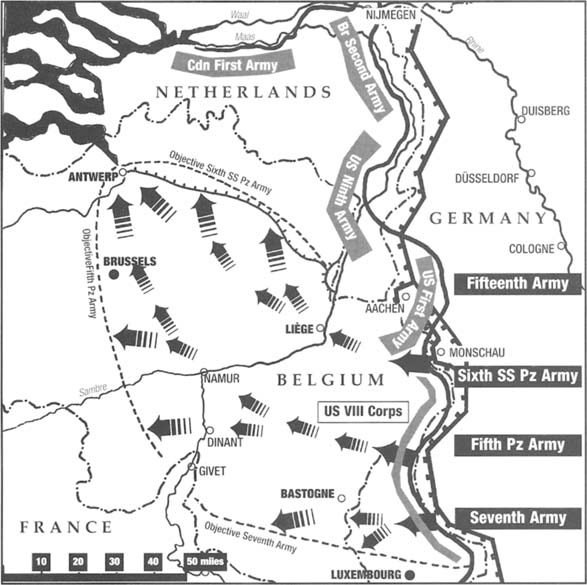
The German plan
On 11 October Jodl met Hitler and gave him a rough plan, he called it by the operations name ‘Christrose’. Three armies were to be used, the Fifth Panzer Army, the Sixth Panzer Army and the Seventh Army. These totalled twelve panzer and eighteen infantry divisions. Complete secrecy and bad weather was to play an important part; the Allied airforce must be grounded. The Armies would advance on a broad front, crossing the River Meuse by the second day and reaching Antwerp after one week. Thereupon the first of the ‘red herring’ messages was sent, announcing to all commanders of the Western Front that an offensive in that area was impossible but that a build-up of troops was necessary to block the Allied advance into Germany itself. Again the Western Allies were lulled into a false sense of security.
October 21 and Jodl met Hitler again, this time with the last and final plan, Hitler was ecstatic about it and then, as another cover, gave it his own created codename ‘Watch on the Rhine’, a name, should the Allies hear of it, would only suggest a defensive build up. That same day Hitler entertained a certain Major Otto Skorzeny who had led the equivalent to the Allied commandoes on two daring raids: one to rescue Mussolini from certain capture by the Allies and the other and more recent, to grab the head of the Hungarian Government before it surrendered. Hitler congratulated Skorzeny on his deeds and then informed him of a greater mission. He was to select and train a unit that would be able to dress and talk like Americans, travel in US vehicles and create as much havoc and confusion as possible behind the American lines. He was to capture key bridges and hold certain areas until the advancing armies could reach him. A tall order indeed but one that was very much suited to Skorzeny. At the same time Hitler promoted him to Colonel.

Major Otto Skorzeny would train and lead a commando team with orders to cause disruption behind American lines.
The following day Hitler sent plans to Field Marshal Gerd von Rundstedt, who was then Commander in Chief of the Western Front, and to Field Marshal Walther Model whom Hitler personally had selected as commander of the entire offensive. Both on seeing the plan thought it ludicrous. Model commented ‘This damned thing hasn’t a leg to stand on’. The two men then went on to configure their own plans. Rundstedt’s was called ‘Martin’ and Model’s ‘Autumn Fog’. When presented to Hitler, he threw them out saying that they should follow his example in copying Frederick the Great, who had defeated enemies of much greater strength by taking a big risk.
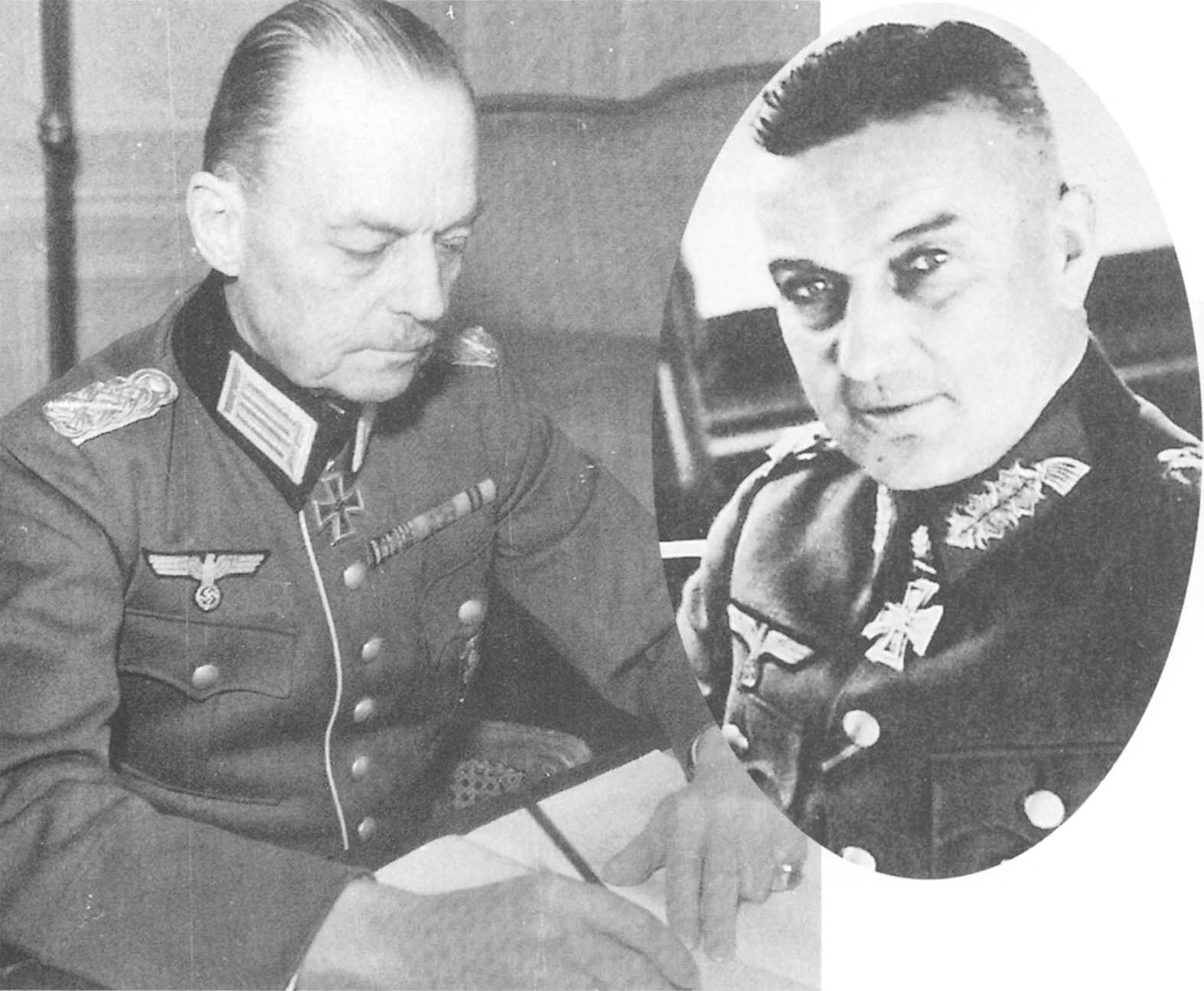
Field Marshal Walther Model
When the German Commander in Chief in the West, Field Marshal Gerd von Rundstedt, saw Hitler’s plan for attacking in the Ardennes he immediately began drawing up his own – as did Field Marshal Model. Both were rejected by the Führer who considered his own more daring.
After all the different plans and ideas had been presented to him, by 7 December Hitler had made up his own mind and could not be swayed. His original plan was the one to be used.
In the planning, security was very tight, apart from the need to leak messages to the enemy. Everything covering the offensive was entrusted to ‘officer hand mail’ only, and they themselves were sworn to secrecy under threat to their own lives or their families. Briefing began of the corps commanders but only on ‘the need to know basis’. ‘Buzzes’ were spread around soldiers’ haunts that they were only in the front line for defensive reasons, in case some might defect or there were spies about.
At the same time all tracks pointed west. The railroads worked flat out and only at night, carrying troops and supplies to pre-designated railheads just east of the Ardennes. Radio communications ceased. Germany went silent and only transmitted messages the military wanted the Allies to hear, ‘Nothing happening, all build-ups for defensive purposes only,’ Allied Intelligence at the top reported.
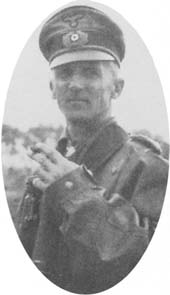
General Hasso von Manteuffel Fifth Panzer Army
The final briefings took place: Sixth Panzer Army under Dietrich to attack through the Ardennes between Monschau and the Losheim Gap, cross the River Meuse and head for Antwerp; the Fifth Panzer army commanded by General Hasso von Manteuffel was to surround the Schnee Eifel cutting off the US 106th Division and then capture the all-important road hub of St Vith, whilst the remainder of his army would attack through Luxembourg, wheel north, cross the Meuse, through Brussels and on to Antwerp, protecting the flank of the Sixth Army. The Seventh Army under General Erich Brandenberger, to the south of the other two had the job of protecting Manteuffel’s southern flank against possible threats from Patton’s Third Army.
The date was set for 16 December, 1944, H Hour 0530. The 106th waited.
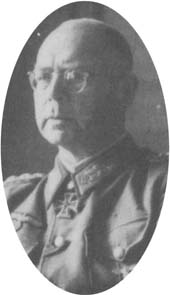
General Erich Brandenburger Seventh Army
On 13 December the last of the reports came into Hitler’s Headquarters: reportes consisting of details of manpower, fuel storage and amounts and quantities of ammunitions. Each tank had enough fuel to take it approximately 90 miles, each gun 60 rounds, etc etc. The following night the armies moved their attacking forces up to within 3 miles of the front line, German aircraft flew up and down the lines to blot out the noise of this taking place, also straw was spread thickly on the roads to muffle the sound. These were the strange noises that the men in their foxholes on the Schnee Eifel could hear, but were told not to worry about. Worry they might. Just in front of them shielded by the thick forests were some 300,000 men, 1,900 guns and 970 tanks and assault guns waiting for the signal to attack through the 85-mile Ardennes front.
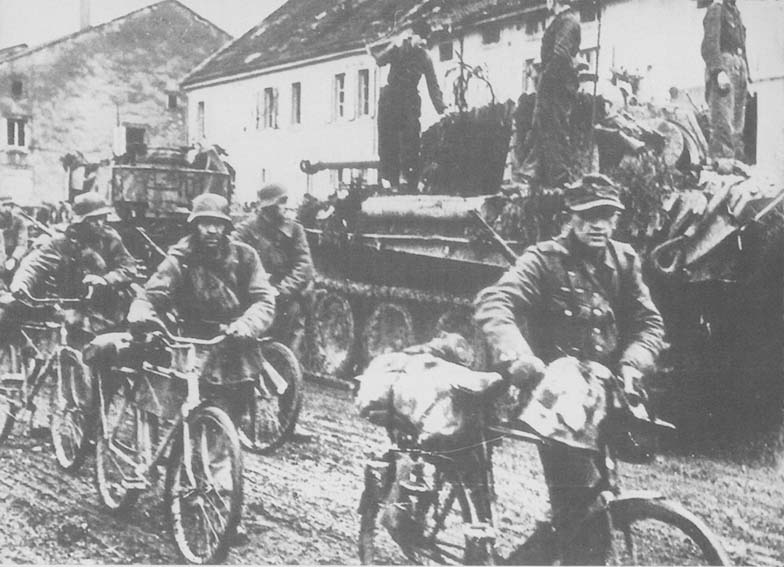
Build up of German troops behind the Schnee Eifel was hidden from the eyes of the Allies, who preferred to believe that there was no danger of attack in this sector.
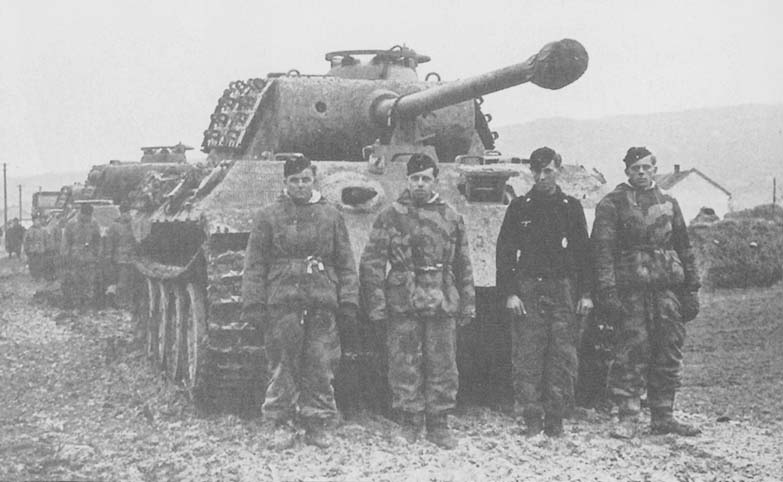
Panthers and their crews who would be used in the coming offensive.
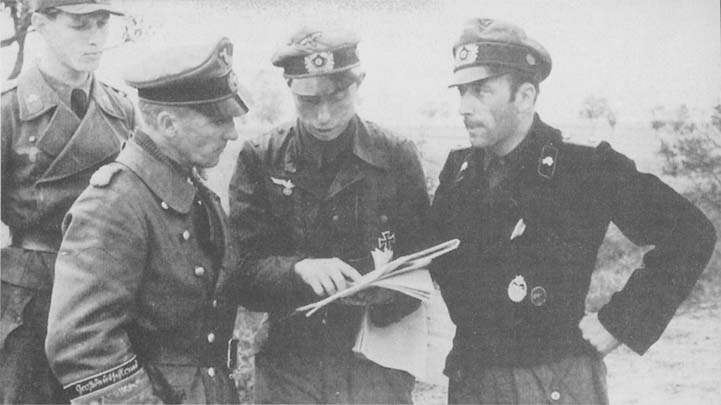
General Hasso von Manteuffel consults with junior officers prior to the attack.
The following is a selection of captured documents used to address the German troops prior to the attack.
Soldiers of the West Front! Your great hour has arrived. Large attacking armies have started against the Anglo-Americans. I do not have to tell you anything more on that. You feel it yourself:
WE GAMBLE EVERYTHING!
You carry with you the holy obligation to give everything to achieve things beyond human possibilities for Our Fatherland and our Führer!
VON RUNDSTEDT
C in C West
Generalfeldmarschall
Addition to the order of the day of C in C West. We will not disappoint the Führer and the Homeland who created the sword of revenge. Advance in the spirit of Luther. Our password will remain now more than ever: No soldier of the world can be better than we soldiers of the Eifel and Aachen area.
MODEL
Generalfeldmarschall
Dist: Feldjäger Kdo Z.B.V., G-3
66 Corps G-3, Chief of Section
Forward double time! Remember the heritage of our dead comrades as well as the tradition of our proud Wehrmacht.
VON MANTEUFFEL
General d. Panzertruppen
Dist: Feldjäger Kmdo z.B.V, G-3
66 Corps G-3, Chief of Section.
It seems strange that the Allied command did not heed the warning signs, or, did they just want to get the Germans out into the open once and for all? It is not for this book to go into deep aspects of it, but to provide an insight and guide. Only one man in Allied Intelligence was fairly certain of what was going on. He was Colonel Benjamin A. ‘Monk’ Dickson, top man of First Army Intelligence. He had read through some of the reports that were now filtering in from the front and surmised that something was wrong. He was convinced that the Germans were going to attack and even named the Ardennes. But the powers that be thought Dickson had been overworking and was getting nervous over nothing. He was sent to Paris on 15th December for a much needed rest. The last opportunity to do something was lost.